Home / Topic / Puzzle Trick Box

Puzzle trick box picks: lock puzzles with that “how did it open?!” moment

If you searched puzzle trick box, you probably want one of two things: a box/lock that opens only with a clever sequence, or a “puzzle lock” that feels like a trick box in your hands. This page curates both—picked by mechanism, skill level, and giftability.

Keyword snapshot (for SEO alignment)
puzzle trick box puzzle lock secret-opening puzzle metal lock puzzle Chinese lock puzzle giftable brain teaser
Search intent: commercial + informational — choose a trick-opening puzzle, compare difficulty, and gift confidently.
Curated picks
12 mechanisms
On-page average rating
~4.8★
Rounded from rated picks shown here.
Typical first session
10–60 min
Varies by puzzle and experience level.

Featured collection

12 product cards • price and ratings shown only when available on the product page

Big Pineapple Yellow Emperor Puzzle Lock

Big Pineapple Yellow Emperor Puzzle Lock

$17.99 ★ 4.92 (19 reviews)
A wooden “trick-unlock” style puzzle with an interlocking mechanism—great for collectors who want a story-forward build.
Collector pick Wood

Kongming Ball Lock

Kongming Ball Lock

$20.99 ★ 4.90 (15 reviews)
Sphere-shaped lock puzzle with a satisfying “alignment” feel—ideal if you want a trick-box vibe without a literal box.
Desk display Wood
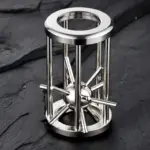
Take the Thorn Out of the Cage Puzzle

Take the Thorn Out of the Cage Puzzle

$10.99 ★ 4.40 (5 reviews)
Classic “trap” style brain teaser: the trick is finding the one motion that releases the thorn—no force required.
Pocket-sized Metal
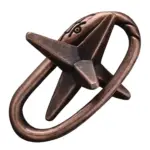
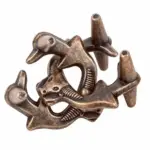
Snake Mouth Escape Puzzle

Snake Mouth Escape Puzzle

$13.99 ★ 4.68 (6 reviews)
A lock-like escape puzzle built around observation + rotation—perfect if you love “there’s a hidden move” mechanics.
Skill builder Metal
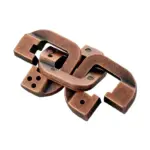
Three Brothers Lock Puzzle

Three Brothers Lock Puzzle

$11.99 ★ 4.80 (reviews N/A)
Interlocking-ring style lock puzzle with a strong “reset and try again” loop—great for patient tinkerers.
Hard mode Metal
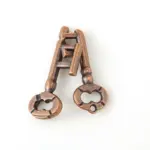
Two Key Lock Puzzle

Two Key Lock Puzzle

$11.99 ★ 4.70 (8 reviews)
Key-and-lock themed trick puzzle—good for gifting because the “goal state” is obvious, but the path isn’t.
Giftable Metal
Two Bull Head lock Puzzle

Two Bull Head lock Puzzle

$14.99 ★ 4.89 (7 reviews)
Sculptural lock puzzle with a “find the releasing angle” mechanic—feels like a trick box without the box.
Statement piece Metal
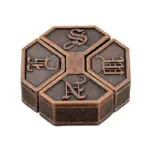
Bagua Lock Puzzle

Bagua Lock Puzzle

$12.99 ★ 4.96 (5 reviews)
An eight-sided, tactile lock puzzle that rewards careful sequencing—nice “coffee table challenge” for visitors.
Party challenge Metal
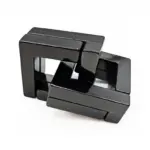
Four-Square Lock Puzzle

Four-Square Lock Puzzle

$12.98 ★ 5.00 (2 reviews)
Minimalist blocky lock puzzle—clean looks, surprisingly brainy. Great if you like “constraint” style mechanics.
Minimal design Metal
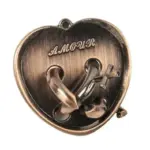
Cupid's Arrow Heart Lock Puzzle

Cupid's Arrow Heart Lock Puzzle

$12.98 ★ 4.68 (4 reviews)
Heart-shaped lock puzzle with a playful “misdirection” feel—easy to gift, hard to predict on first attempt.
Giftable Metal
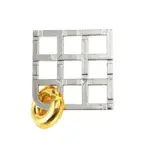
Tian Zi Grid Lock Puzzle

Tian Zi Grid Lock Puzzle

$11.98 ★ 4.97 (6 reviews)
A grid-style lock puzzle that teaches “constraint navigation”—a great stepping stone into trick-box logic.
Beginner+ Metal
Yangqin Lock Puzzle

Yangqin Lock Puzzle

$11.98 ★ 4.52 (5 reviews)
A 3D notch-and-groove “maze” lock puzzle—excellent if you like tactile feedback and repeated refinement.
Skill builder Metal

Research / Science (careful, no medical claims)

Why lock-style puzzles may support focus and mental “reset”

What studies suggest (in plain English)
  • Puzzling can engage multiple cognitive skills (attention, visuospatial reasoning, working memory) and has been discussed as a potential protective factor in cognitive aging—note: “protective factor” is not a guarantee. Read the research summary.
  • Studies on “brain teaser” style tasks often focus on attention and problem-solving. Results vary by design, and transfer to daily life is mixed, but the core idea holds: challenging tasks can practice sustained focus. See an open-access example.
  • For stress, the most reliable angle is “single-tasking”: doing one absorbing activity can feel calming. The APA has reported that leisure activities (including puzzles) are commonly used for stress relief. APA report.
This is general education, not medical advice. If a puzzle frustrates you, that’s your cue to switch difficulty or stop.
What the puzzle community tends to say (de-branded)
  • “Don’t force it” — most “stuck” puzzles are a misalignment, not a strength test.
  • Rotate and re-grip — the release often appears only at a specific angle.
  • Use tiny hints, not full solutions — it keeps the “aha” moment intact.
Sources: puzzle hobbyists discussing trick boxes and lock puzzles on Reddit — thread 1, thread 2, thread 3.

Further reading

Keep exploring (mostly on Tea-sip)

FAQ

Practical answers: choosing, getting unstuck, gifting

Which of these feels most like a real “trick box”?

If you want the strongest “hidden sequence” vibe, start with a piece that has a clear unlock mechanic: try Big Pineapple Yellow Emperor Puzzle Lock or Kongming Ball Lock. They’re tactile, display-friendly, and reward careful alignment.

How do I choose beginner vs hard mode without spoiling the fun?

Use time + temperament. If the person enjoys tinkering and repeating attempts, pick a harder lock puzzle (like Three Brothers Lock Puzzle). If they prefer quick wins, choose something with clear physical “feedback” (like Tian Zi Grid Lock Puzzle) and tell them: “Try 10–15 minutes, then take a break.”

What’s the fastest way to get unstuck without looking up a solution?

Do a three-step reset: (1) return to the start position you remember, (2) change orientation (flip/rotate), and (3) use gentle pressure while exploring directions—only one direction should feel “free.” If nothing is free, you’re not at the real decision point yet.

Metal vs wood: which is better for gifting?

Metal tends to feel more “mechanical” and durable, while wood often has warmer display appeal. If you want an heirloom desk vibe, pick wood: Kongming Ball Lock. If you want “pocket challenge” gifting, pick metal: Two Key Lock Puzzle.

Can I use lubricant if a puzzle squeaks?

Use a tiny amount of dry lubricant (like graphite) if needed—avoid oils that attract dust. Wipe the puzzle clean after sessions and keep it dry in storage. If the puzzle is plated, avoid harsh cleaners.

Do these help with focus?

Many people use puzzles as a “single-task” break. Research on puzzling and cognitive engagement suggests puzzles can exercise multiple thinking skills, and some people experience it as calming. But it’s not a treatment—if you feel stress rising, switch to an easier pick or stop for the day.