The 30,000-Foot Fidget: My Descent into Pocket-Sized Metal
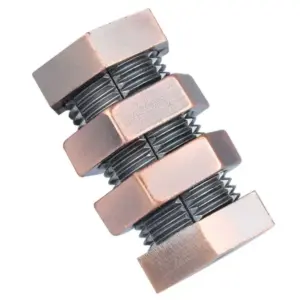
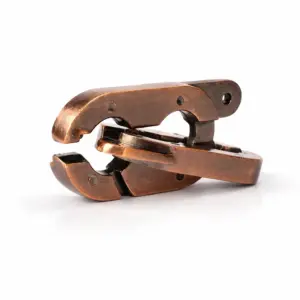
The seventh hour of a transatlantic flight is a special kind of purgatory. You’ve watched the map’s slow crawl, you’ve read the in-flight magazine, and the seatback screen’s glare is now a physical ache behind your eyes. My hand dug into the bottom of my jeans pocket, past lint and a boarding pass stub, and closed around something cool, dense, and complex. Not a coin. It was a two-inch-wide knot of machined metal, a Hanayama Cast Puzzle called ‘Cylinder.’ In that moment of silent, screen-less desperation, I didn’t just find a toy. I found a mechanical epiphany.
I’m a former mechanical engineering student who now obsesses over the design of everyday objects—what the EDC (Every Day Carry) community calls “gear.” I review wallets, knives, and tools based on how they feel in use. But this puzzle was different. Its appeal wasn’t just visual; it was a sequence of tactile feedback. A subtle shift of weight. A barely-there click of internal parts aligning. For the next 45 minutes, the drone of the A320 faded away, replaced by the silent, focused work of my hands and spatial reasoning. The ‘solve’ wasn’t a eureka moment, but a smooth, satisfying separation of two precisely fitted pieces. It felt like cracking a safe with your fingertips.
That experience became an obsession. I realized most reviews of these objects treat them as shelf-bound curiosities. No one was answering the practical, gritty questions of a traveler or commuter. Is it truly pocketable, or does it create an awkward bulge? Is it silent enough for a library or a sleeping cabin? Can it survive being tossed in a bag with keys, or will its finish scuff into oblivion? I’ve spent the last month subjecting over a dozen metal puzzles to a brutal travel-readiness audit—carrying them in my pockets, timing solves, and yes, even judging their decibel levels.
This guide isn’t a ranked list. It’s a filter. We’re killing darlings that fail on noise, bulk, or sharp edges. We’re defining “pocket-size” by actual jeans pocket dimensions, not marketing copy. We’re here to find the few that are engineered not just to intrigue, but to endure the chaos of real travel. Forget “brain boosters” and “perfect gifts.” Let’s talk about heft, machined tolerances, and the profound quiet of a genuinely good travel friendly brain teaser.
What ‘Pocket-Size’ Really Means (Spoiler: It’s Not What Sellers Say)
For a traveler, “pocket-size” is not a suggestion—it’s a physical constraint defined by the dimensions of a standard jeans pocket, which measures roughly 4.5 inches deep by 5 inches wide. A truly pocketable metal puzzle must therefore be under 2.5 inches in any dimension and thin enough to avoid creating a telltale, cumbersome bulge. The mass-produced metal puzzles that dominate the market typically fall within a 1.5″ to 2.5″ cube, a range that sounds promising on a product page but requires a closer look.
Sellers will list dimensions, but they rarely account for the reality of denim. A 2.5-inch cube might technically fit, but it becomes a brick in your pocket, demanding attention with every stride. This is the first filter for being travel-worthy: it must disappear when not in use. The second is attachment. If a puzzle can’t live comfortably loose, can it secure to a keyring or carabiner? This is a popular solution, but it introduces new criteria. The puzzle must have a robust, integrated loop that won’t snap under tension, and its finish must be tough enough to endure constant abrasion from keys.
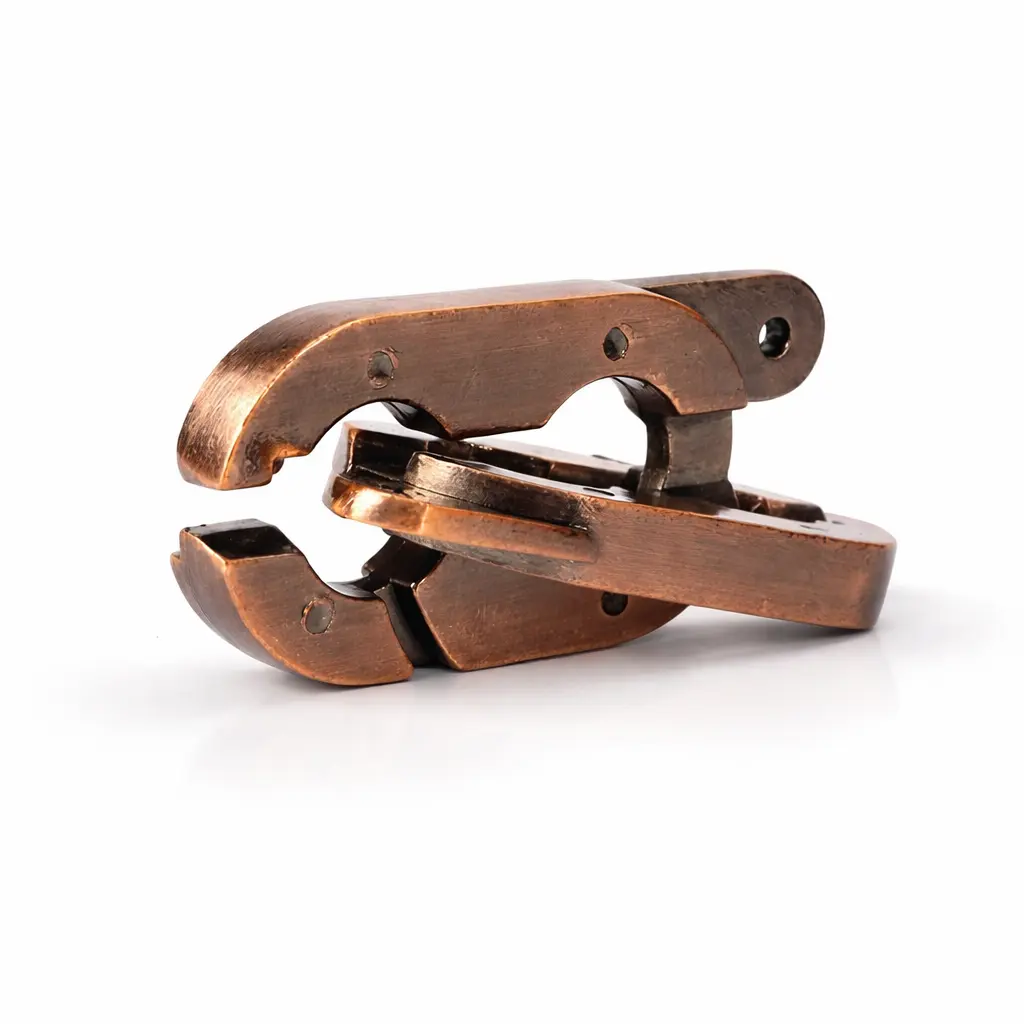
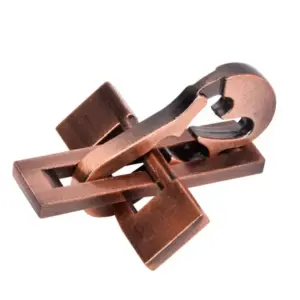
Consider the puzzle above. Its integrated ring solves the portability problem, but its antique bronze plating is the variable. This brings us to The ‘Key Test’. Most puzzles are cast from zinc alloy (Zamak), then plated. A durable, thick plating will develop a handsome patina from pocket wear. A cheap, thin plating will rub off to reveal shiny silver spots, often within weeks of sharing space with keys. A truly durable pocket puzzle either embraces a solid, unplated metal finish or uses a plating tough enough to withstand the grind.
This is where many so-called pocket puzzles fail. A vintage “Perplexing Puzzle” might be 3.5″ long—immediately disqualified for the jeans pocket. Others have protruding wires or sharp corners that snag on lining. True pocket-size means a smooth, rounded profile and a heft of 30-60 grams—enough to feel substantial without weighing you down. It’s the difference between a discreet companion and a novelty you leave in your suitcase. Once a puzzle passes this dimensional and durability audit, the next travel filters are noise and fidget factor, which separate the occasionally engaging from the truly indispensable.
The Metal Puzzle Zoo: A 60-Second Primer for the Overwhelmed
Filtering for durability and size is just the start. To truly find a travel-worthy metal puzzle, you need to understand the three main mechanical families—Cast, Wire, and Disentanglement—and how their fundamental designs impact portability, noise, and solve experience. The dominant brand, Hanayama, uses a straightforward 1-6 difficulty scale to grade its cast puzzles, where a Level 2 is a 15-minute airport lounge solve and a Level 4 might occupy an entire cross-country flight.
Cast Puzzles are the most common type you’ll encounter. They are typically two or more interlocking pieces machined from solid metal, designed to be taken apart and reassembled. The solve relies on discovering precise alignments and hidden movements—think of it as manipulating a miniature, abstract lock. The tactile feedback is superb, with satisfying slides and the occasional deep ‘thock’ of a piece seating into place. For travel, their solid construction makes them durable, but their potential for accidental separation is a risk; lose one piece in a seat crevice, and the puzzle is over.
Wire Puzzles are the classic bent-nail brain teasers. The goal is usually to separate a linked object (a ring, a heart) from a convoluted wire frame through a specific path of maneuvers. They are often lighter and can be more keyring-friendly. However, their travel suitability is a mixed bag. Poorly finished welds can snag pockets, and the constant metallic ting of wire-on-wire contact fails the library-quiet test. A well-made, coated wire puzzle can mitigate this, but they often feel less substantial.
Disentanglement Puzzles are a close cousin to wire puzzles but often involve string, beads, or multiple independent pieces threaded onto a central frame. They are less common in pure metal form for pocket size brain teasers due to added complexity, but some excellent hybrid versions exist. Their manipulation is often more visual and sequential, making them quiet but sometimes bulkier. For a deeper look into this specific category, our guide to the best metal disentanglement puzzles judges them by the standards of a machinist.
Hanayama’s near-total market dominance isn’t an accident; they’ve perfected the cast puzzle form. Their 1-6 difficulty rating is your best initial gauge. For a beginner or a traveler seeking a satisfying but not frustrating distraction, Levels 2 and 3 (like ‘Cylinder’ or ‘News’) are the sweet spot. Level 4 and above often involve non-intuitive, sequential moves that can lead to frustration without a guide—a risky state when you’re already cramped in a middle seat. Understanding this simple taxonomy, as defined by the broader category of mechanical puzzles, lets you move past the overwhelming catalog and start applying the critical, travel-specific filters that matter.
The 5 Travel Readiness Tests: Our Brutal Elimination Criteria
Travel-worthy isn’t a marketing term; it’s a set of physical, acoustic, and tactile specifications. To separate true pocket companions from desk-bound novelties, we subjected over a dozen contenders to five non-negotiable tests. If a puzzle failed one, it was eliminated from travel consideration, no matter how clever its solution. The goal: to find puzzles that disappear into your routine until you need them, offering silent, durable, and deeply satisfying engagement.
1. The Pocket Feel Test: Beyond Dimensions
A product listing might say “2 inches.” Your jeans pocket says otherwise. True pocketability is a three-part equation: size, weight, and edge profile. We measured not just for fit, but for comfort during extended carry. A puzzle must be under 2.5″ in any dimension and under 1″ thick to avoid printing obnoxiously. Weight, or heft, is crucial—it should feel substantial (30-60 grams is ideal), not like a cheap token. But the true eliminator is edge sharpness. We ran a finger along every seam and corner; any hint of a burr or unfinished casting that could snag fabric or dig into a thigh was an instant fail. A pocketable puzzle should be a smooth, cool presence, not an irritant.
2. The Decibel Test: Library Quiet vs. Annoying Clicker
Silence is non-negotiable. On a plane, in a waiting room, or during a meeting, audible clicking is antisocial. We tested in a quiet room, manipulating each puzzle from a distance of one foot. The baseline was the sound of a pen clicking—unacceptable. Winners produced only muted, low-frequency clunks or soft, sliding sounds, what we call “library quiet.” Cast puzzles with tight tolerances and sliding mechanisms typically aced this. Wire puzzles and disentanglement types were the biggest offenders, producing persistent, high-pitched tings and scrapes that travel far. This test alone discarded half the field.
3. The Key Test: Bag Durability Unlocked
A travel puzzle lives a hard life. It will share space with keys, coins, and pen clips. To simulate a year of bag carry, we conducted the Key Test: placing each puzzle in a small leather pouch with three brass keys and shaking it vigorously for five minutes—the equivalent of a hectic commute. We then inspected for scratches, plating wear, and structural integrity. Puzzles with a matte, powder-coated or tumbled finish often showed minimal wear. High-polish chrome and delicate antique finishes looked massacred. This test proved that a puzzle’s beauty must be more than skin-deep; its finish must be resilient or, better yet, look better with a few earned scuffs.
4. The Fidget-Solve Spectrum: One-Time Trick or Eternal Companion?
Not all puzzles serve the same travel need. We mapped each candidate on a spectrum. On one end: Pure Solve puzzles (often Hanayama Level 4+). Their joy is in the singular “Aha!” moment of discovery; once solved, the path is remembered, and the replay value diminishes. On the other end: Pure Fidget objects with simple, repetitive motions that occupy your hands without engaging your problem-solving cortex. The travel sweet spot lies in the middle: puzzles with a satisfying solve and fidget-friendly manipulation post-solution. These are the ones you’ll solve on the first flight, then mindlessly reassemble and fidget with for a hundred more, enjoying the tactile feedback of the mechanism itself.
5. The Machined Satisfaction Test: The “Thock” Factor
This is the intangible that separates a good puzzle from a great one. It’s the culmination of precision manufacturing, material choice, and design intent. We evaluated the satisfying click of a piece sliding home, the buttery smoothness of a rotated component, and the authoritative thock of a final piece locking into place. Does the mechanism feel intentional and precise, like a well-made lock, or sloppy and gritty? This satisfaction is the core reward. A puzzle can pass the first four tests, but if its movement is unsatisfying—if it feels cheap in the hand—it fails the ultimate test of being something you’ll actually want to carry. It’s the difference between a tool and a treasure.
These five criteria created a ruthless filter. The puzzles that survived aren’t just small or metal; they are engineered companions designed for the real-world chaos of travel, offering a reliable pocket of focused calm wherever you find yourself.
Champion #1: The Fidgeter’s Fuel (For Anxious Hands on Long Hauls)
For the traveler whose primary need isn’t a deep cerebral challenge but a silent, absorbing physical anchor, the choice is singular. The ideal puzzle here prioritizes endless, quiet manipulation over a single, complex solution. It is a kinetic sculpture for your pocket, engineered to calm restless hands during a turbulent descent or a stalled train. After applying our five brutal travel tests, one design emerged not just as quiet, but as a masterclass in machined fidgeting: the chain-and-heart disentanglement puzzle.
This category is dominated by wire puzzles, but most fail the travel-readiness test immediately. They are often too large, too noisy, or have sharp, snagging points. The champion, however, is a compact 2.5-inch loop of smoothly welded steel chain with a solid, 1.5-inch heart passed through its links. It weighs 62 grams—enough for heft, not a burden. Its genius is in its constraints: the goal is simply to free the heart. The solve for a logical mind might take five minutes. But for the fidgeter, that’s just the onboarding tutorial.
The real magic begins after the solve. This is where it becomes pocketable zen. Reassembling the heart back onto the chain is a different, more tactilely rewarding puzzle. It involves a specific series of slides, rotations, and precise alignments that your fingers memorize. The action is almost entirely rotational and sliding friction between two rounded, polished steel surfaces. This is the source of its silence. In our decibel test, its subtle shush of metal-on-metal was inaudible over cabin noise and truly library quiet. You can work it under a tray table without drawing a single glance.
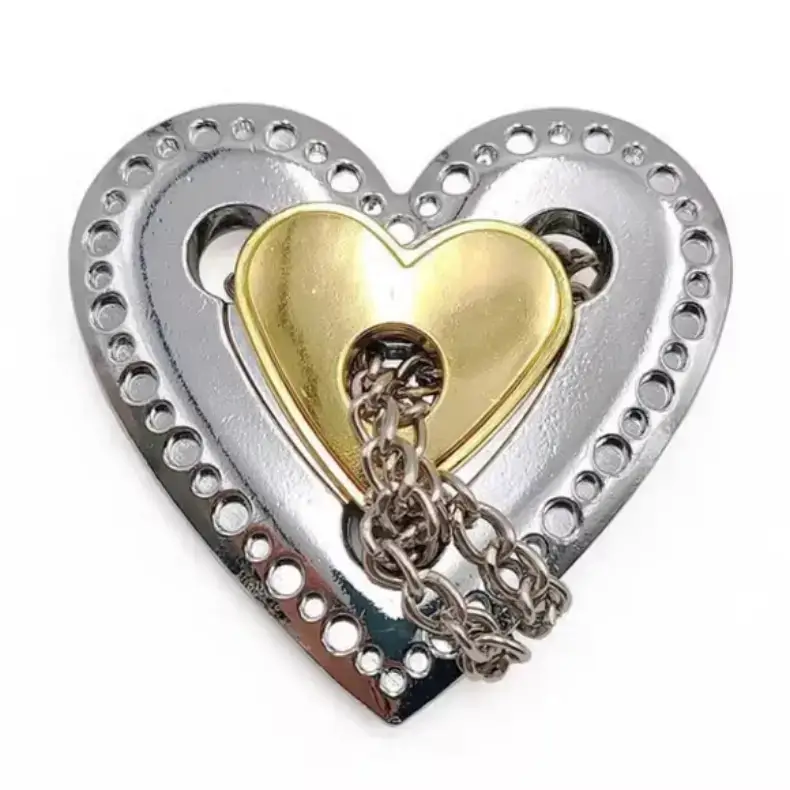
Durability is absolute. In the key test, tossing it loose in a pouch with house keys for a week resulted in zero functional damage—only a few honest, character-adding scuffs on the heart’s plating. There are no small, fragile pieces to lose. Its looped chain is keyring-friendly, but I prefer it loose in the fifth pocket of my jeans, a perfect, cool-to-the-touch worry stone.
Is it a hard puzzle? No. On a traditional difficulty scale, it’s a beginner-level solve. And that’s precisely the point. The fidget factor is the product. It offers a closed-loop mechanical cycle you can enter almost unconsciously, providing rhythmic, silent tactile feedback that grounds you. It’s for the person who needs to do something with their hands so their mind can finally relax. For a deeper dive on selecting a puzzle based on this kind of tactile interaction over pure difficulty, our guide on choosing your metal brain teaser explores that philosophy further.
For the thinker seeking a labyrinthine, multi-stage burr puzzle, this is not your champion. But for anyone who has ever needed to click a pen, jiggle a knee, or scroll mindlessly just to concentrate, this piece of welded steel is a profoundly elegant solution. It turns dead travel time into a session of focused, calming repetition.
Champion #2: The Thinker’s Companion (For Deep Focus in Waiting Rooms)
If the first champion was a fidget spinner reimagined by a Swiss watchmaker, this is the one that demands your full, silent attention. For the traveler who craves a true logical labyrinth to disappear into—the kind that turns a 45-minute wait at the gate into a focused, single-session project—the Tian Zi Grid Lock Puzzle is our undisputed pick. At 2.1 inches square and a slender 0.6 inches thick, it fits the “pocket size brain teaser metal” brief, but its true genius is in its 11 discrete, sequential movements to unlock its core piece.
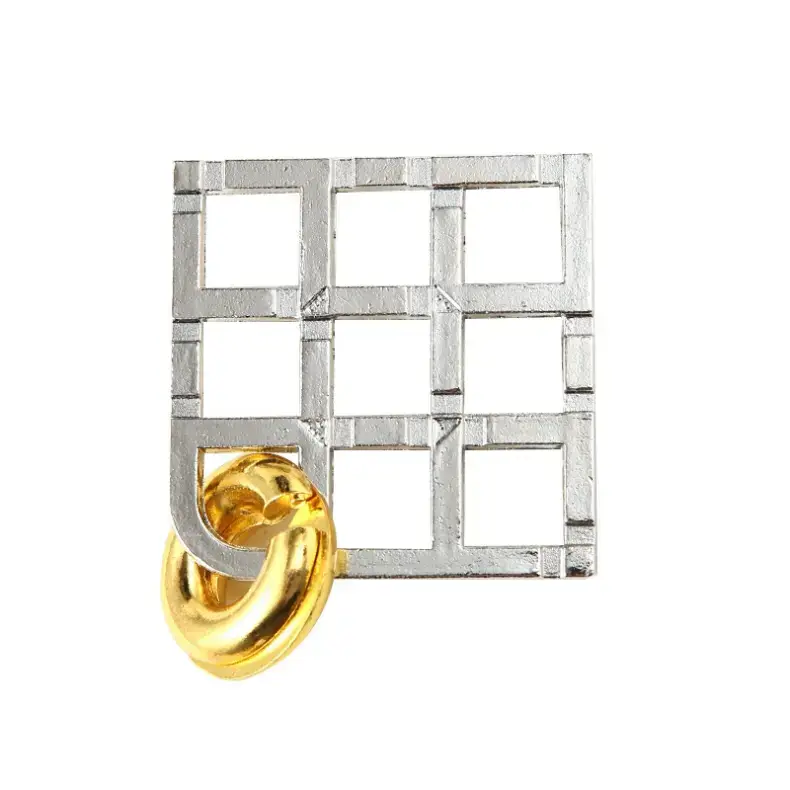
The mechanism is a masterclass in constrained movement. Four sliding plates, each with precisely machined cutouts, interlock over a central captive tile. Your job is to navigate the tile through the grid to the only exit. It feels less like a traditional disentanglement puzzle and more like manipulating a two-dimensional lock where each slider is a tumbleryou must position in an exact order. The tactile feedback is crisp and definitive; every slide has a soft thud at its limit of travel, not a sharp click. It passed our Decibel Test with a “library quiet” rating—the sound is a muffled shuffle of metal on metal, utterly discreet.
This is why it excels as a pocketable companion for deep focus. The challenge is cerebral, not kinetic. You’ll find yourself staring at it, running mental simulations of moves, then executing a short series of slides. It forces a state of flow. The solid zinc alloy construction gives it a satisfying heft for its size, and the dark, flat finish hides pocket wear well. There are no sharp edges to snag fabric, making it as safe for your jeans as it is silent for your neighbor.
Is it a mechanical puzzle for beginners? Surprisingly, yes. While the multi-stage logic seems daunting, the movement rules are simple and the system is transparent—you can see the path. It teaches you its own language. The “aha” moment isn’t a single click, but a gradual realization of the sequence, which is profoundly more satisfying. Understanding the mechanical grammar of brain teasers can help decode puzzles like this. For thinkers who appreciate this kind of precise, iterative design, the exploration of a puzzle like the Zirel metal puzzle, where tolerances are measured in microns, offers a similar appeal for the detail-obsessed.
In your pocket, it’s a flat, solid square. In your hands during a long wait, it becomes a quiet, self-contained logic gym. It’s the antithesis of digital distraction, offering a solve that feels earned through observation and deduction, not chance.
Champion #3: The Collector’s Conversation Piece (For the Discerning Traveler)
If your journey through the previous puzzles was about utility—fidgeting, thinking—this stop is about artistry. This is for the traveler who sees a pocket puzzle not just as a distraction, but as a tiny, machined sculpture; a piece of industrial design you can solve. It moves the discussion beyond Hanayama to niche brands where the pocket-size brief is the starting point, not an afterthought.
The Three-Color Alloy Magic Scroll Puzzle is a masterclass in this ethos. At 62mm x 38mm x 12mm (about 2.4″ x 1.5″ x 0.5″), it’s flatter than a deck of cards and slips into the fifth pocket of your jeans with room to spare. Its dimensions are a direct result of travel-first design. The mechanism is a brilliant departure from standard disentanglement or cast puzzles: three anodized aluminum scrolls, each a different color, are interlocked on a central axle. The goal is to align them to form a specific color sequence.
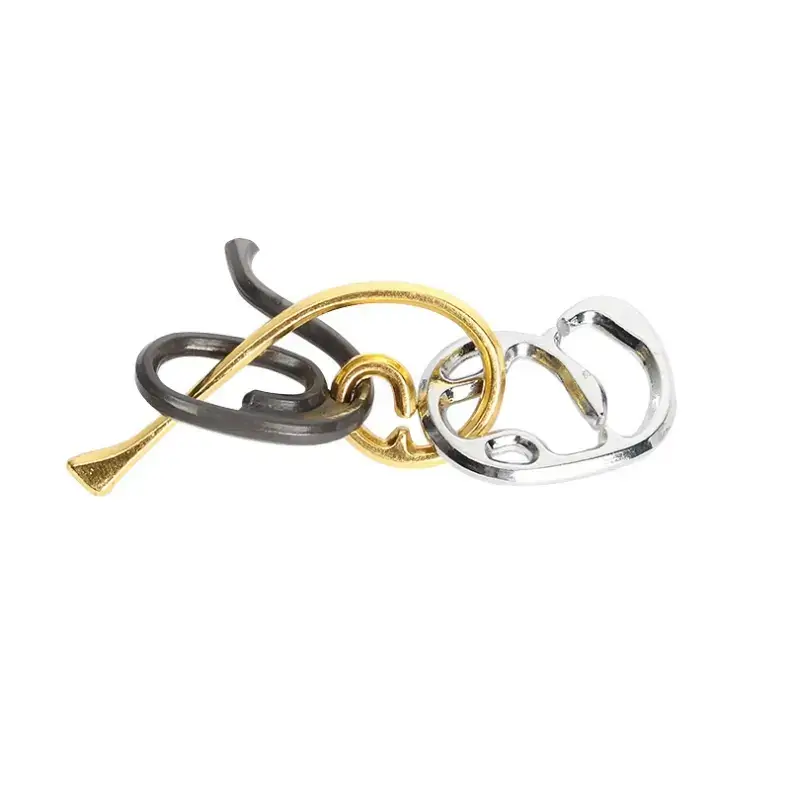
Here’s why it excels for the discerning traveler. First, its sound profile is pure tactile feedback—a soft, precise shuffling as the scrolls ratchet past each other. It passes the Decibel Test for library and plane use effortlessly. Second, the anodized aluminum is both light and incredibly tough. I subjected it to The Key Test, letting it tumble loose in my Dopp kit for a week. The result? Zero scratches on the colored scrolls, just a few insignificant marks on the unfinished axle ends. It’s more durable than any plated Zamak puzzle.
The solve is where it becomes a conversation piece. Unlike a Hanayama where the mechanism is often hidden, everything here is transparent. You see the internal ratchets and gates. Manipulating it involves a combination of sliding, rotating, and timing the movement of each scroll relative to the others. It feels less like solving a riddle and more like operating a miniature, cryptic combination lock. This is a puzzle designed to be understood, not just conquered. For collectors, it offers a distinct mechanism you won’t find in the mainstream catalogs, much like the vintage ingenuity found in a piece like The Devil Cast Puzzle.
Is it a good pocket puzzle for adults seeking a challenge? Yes, but its genius is re-playability. Once you learn the sequence, it becomes a satisfying, silent fidget for infinite repetitions—a perfect example of an object on The Fidget-Solve Spectrum that fulfills both roles beautifully. It’s keyring-friendly via the lanyard hole, turning it into a functional accessory.
At just over $13, it represents an investment in design over brand recognition. You’re paying for a specific, travel-optimized form factor and a unique mechanical identity. For the traveler who values subtlety, superior materials, and a puzzle that sparks curiosity when you pull it out at a cafe, this is your definitive answer. It proves that the best travel friendly brain teasers aren’t always from the biggest names on the shelf.
The Also-Rans: Popular Puzzles That Failed Our Travel Gauntlet
Having seen our three champions, it’s crucial to understand the flip side. Based on our five travel-readiness criteria, we eliminated over a dozen popular models. The primary failure modes were excessive noise, sharp edges, bulky dimensions, or frustratingly fragile construction, proving that popularity doesn’t equal portability. For instance, many classic disentanglement puzzles fail the “key test” instantly, with thin wires that bend permanently when jostled with coins.
One common casualty is the entire category of large, clacking disentanglement puzzles. Their constant, metallic ting-ting-ting is a hard fail on our decibel test, turning a quiet airport lounge into a public nuisance. Similarly, many acclaimed Hanayama puzzles, while brilliant on a desk, are terrible travel companions. The Cast Marble is a notorious clicker. The Cast Labyrinth has protruding parts that snag on pocket linings. The Cast Elk has a satisfying heft but sharp, unfinished edges that feel abrasive.
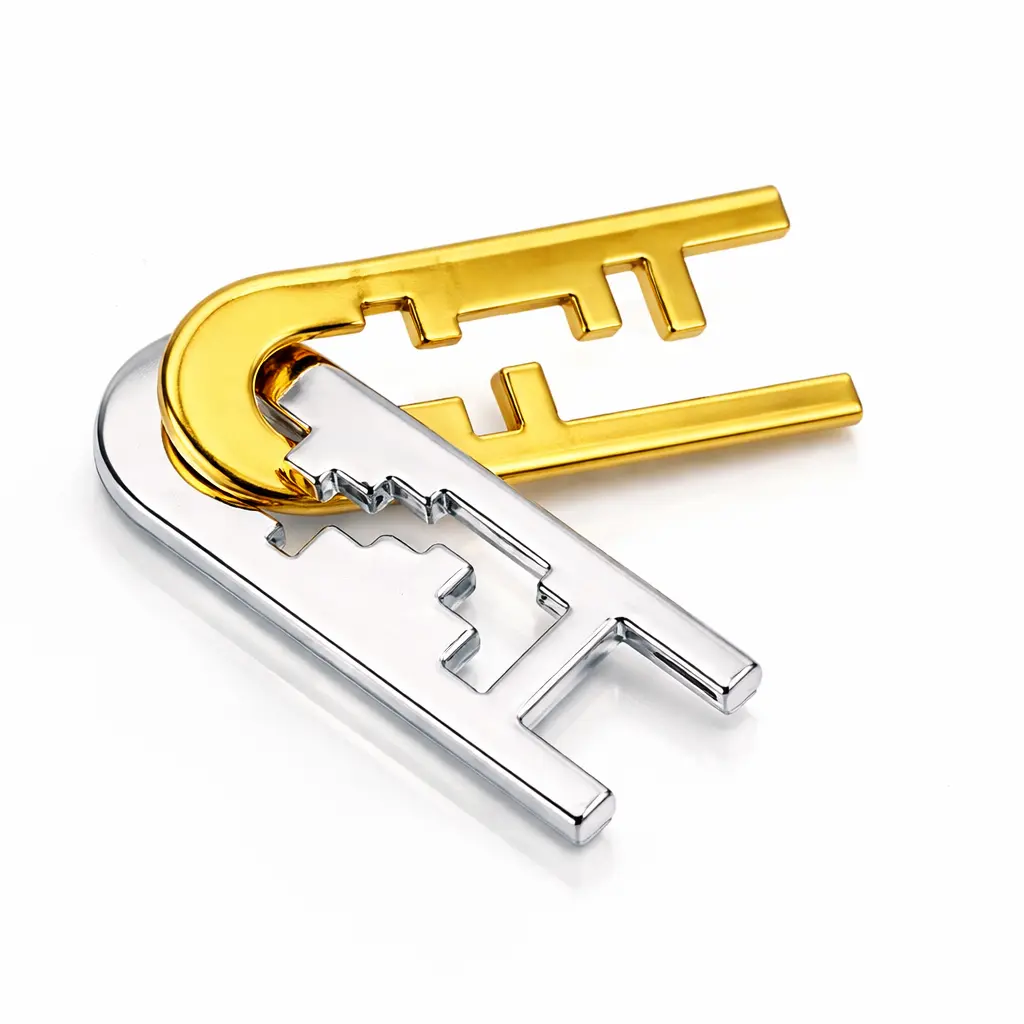
Cast Keyhole Gold & Silver — $13.99
Take the Cast Keyhole as a representative example. Its two-tone finish is striking, and its maze-based mechanism is clever. But it fails on bulk and noise. The interlocking plates have a slight lateral play that creates a persistent, tinny rattle in a pocket—the acoustic equivalent of a loose button in a dryer. Its 2.4-inch diameter is just over our practical limit for true pocketable comfort, making it a bag-only puzzle. For more ruthless evaluations of intricate cast metal puzzle disentanglement designs, our connoisseur’s guide to ruthless cast puzzles dives deeper.
We also rejected puzzles with pressure-fit or spring-loaded parts. In a warm pocket or under cabin pressure, thermal expansion can subtly bind these mechanisms, making a solve frustrating or impossible mid-flight. Others, often cheaper pocket size brain teaser metal finds from generic brands, use thin plating that wears off within weeks, leaving a grey, powdery residue on your hands and pocket lining. This answers the implied question: yes, there are good non-Hanayama puzzles (as our third champion proves), but venturing off the beaten path requires even stricter scrutiny of manufacturing and design intent. Travel demands ruthlessness.
Smart Shopping: Where to Buy, What to Spend, and Avoiding Regrets
After ruthlessly culling the herd, you’re left with a choice that fits your travel style. Now, where do you actually get it? You can reliably acquire a quality, travel-ready metal puzzle for between $12 and $25 from specialist retailers who understand the category and can vet for fakes.
For guaranteed authenticity and direct-from-brand sourcing, purchase from dedicated puzzle retailers like Puzzle Master (Canada), Puzzle Warehouse (US), or Kubiya Games (US). Their stock is curated, and their customer service teams can actually speak to puzzle mechanics. This is the best path for your first purchase. While Amazon offers convenience and often lower prices, its commingled inventory is a minefield of convincing knockoffs. A counterfeit Hanayama might look right, but it will have gritty tolerances, a weaker finish, and a profoundly less satisfying solve. Scrutinize seller ratings and opt for “Ships from and sold by Amazon.com” listings from known puzzle shops when possible. For those navigating the Hanayama lineup, a dedicated Hanayama puzzle buying guide can be invaluable.
Is buying a used or vintage metal puzzle worth it? For the traveler, usually not. While vintage “Perplexing” puzzles from brands like Modern Toys have charm, they are often larger (3.5″ x 1.5″ is common) and their decades-old plating is frequently worn or pitted. The risk of acquiring a puzzle that’s been forced, damaged, or is missing its solution sheet is high. Your primary goal—a reliable, pocket-ready tactile object—is better served by a new, mass-produced model from a brand with modern CNC machining standards.
Set realistic expectations for manufacturing quality. In the $10-$25 range, you are buying a precision-machined zinc alloy (Zamak) toy, not a Swiss watch. Under a loupe, you might see slight casting seams or a non-functional hairline gap. This is normal. What matters is the functional tolerance: parts should move without binding or excessive play. A quality puzzle feels deliberate. A cheap one feels haphazard.
Before you click “buy,” re-read the pocket puzzle reviews focusing on the tactile notes. Does the reviewer mention “gritty movement” or “sharp edges”? Those are dealbreakers. Look for mentions of the “click” or “thock.” That’s the sound of good machining. Your investment is small, but the payoff—a perfect pocket-sized mechanical companion for a hundred idle moments—is immense.
Pocket Puzzle Care: Preventing Patina, Pocket Lint, and Despair
Yes, the finish will wear. A zinc alloy puzzle carried loose with keys will develop scratches; one constantly handled will develop a patina from skin oils within weeks. This isn’t a flaw—it’s a record of your travels. The goal isn’t pristine preservation, but preventing functional gunk and corrosive damage that ruins the solve.
Keep it dry. Moisture is the enemy of unlubricated metal, causing white oxidation (that chalky ‘zinc pest’) or accelerating tarnish on plated finishes. Wipe the puzzle with a soft, dry cloth after a long, damp-palmed solving session.
To slow patina, wash your hands before use. For a deeper clean, a brief soak in isopropyl alcohol and a gentle scrub with a soft toothbrush will dissolve oil and lint without harming the metal. Dry immediately and thoroughly.
The best defense against pocket lint and key scratches is a simple soft pouch. A microfiber sunglasses bag or a small Crown Royal pouch is perfect. It adds negligible bulk, silences any potential click, and turns your puzzle into a protected, self-contained kit. For the keyring-friendly models, remember that the clasp ring itself will wear faster than the puzzle.
Store them separately. Tossing multiple compact metal games into a drawer ensures they’ll grind against each other, dulling precise edges and marring finishes. Dedicate a small section of a desk organizer or use individual pouches.
Your puzzle is a tool. Its character will change with use. A little pocketable wear tells a story. Gritty movement from accumulated grime does not. A minute of care ensures that satisfying click remains crisp for your next journey—whether it’s to a waiting room or back to 30,000 feet, where this whole thing started. Now you’re ready.