The Tuesday afternoon sun hit the half-finished translucent apple on my desk, and for a moment, I was blinded. I had been staring at thirty-four identical-looking shards of red plastic for forty minutes, trying to find the one piece with the slightly recessed groove that would allow the central locking pin to slide home. My fingertips were sore from pressing jagged edges together, and my pride was slightly bruised. You’d think that being able to see straight through a puzzle would make it easier. In reality, the transparency is a calculated distraction.
I’ve spent the better part of two decades tinkering with mechanical enigmas, from the heavy weight of precision-engineered metal brain teasers to the silent, wooden logic of Japanese Himitsu-Bako. Crystal puzzles—essentially 3D jigsaws made of interlocking plastic—occupy a strange, polarizing space in the hobby. Critics call them “one-and-done” toys. I argue they are the most honest test of spatial reasoning you can buy for twenty bucks.
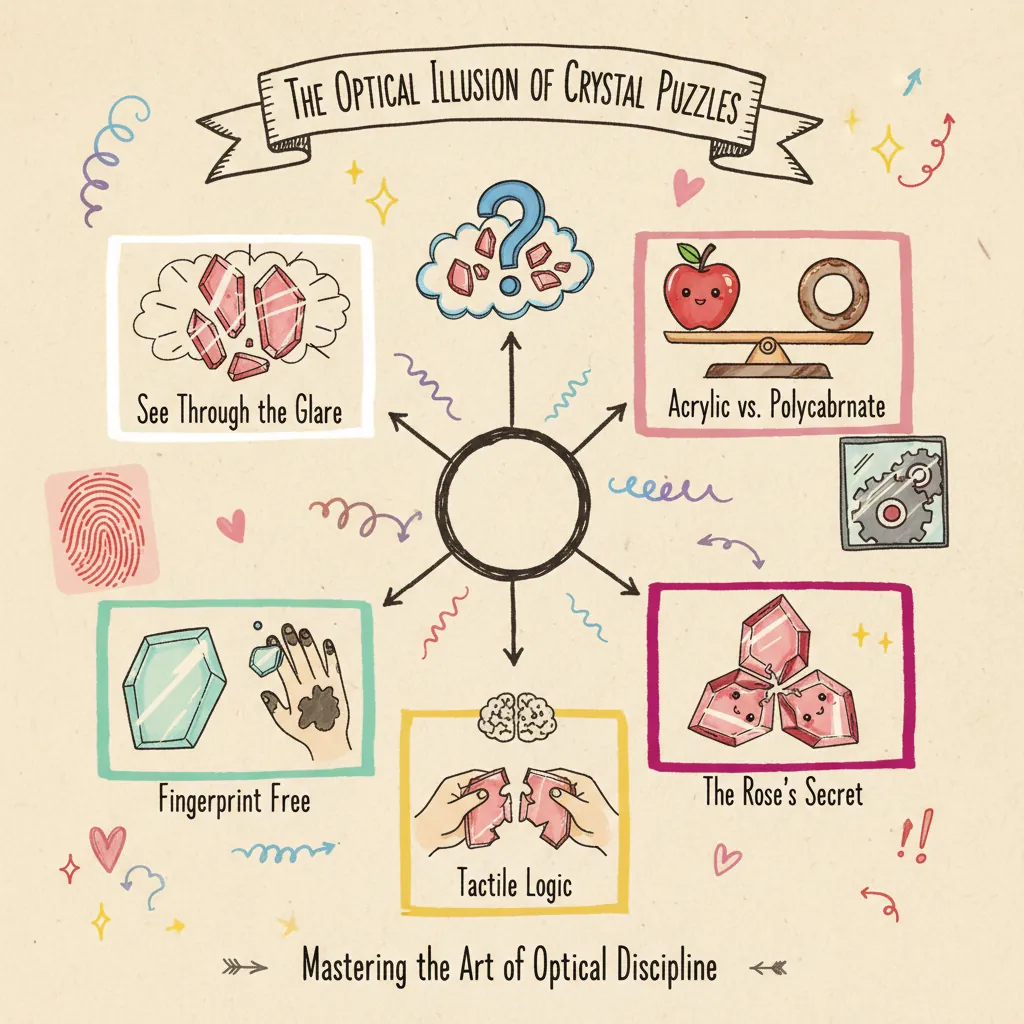
The thesis of this deep dive is simple: Crystal puzzles aren’t just about assembly; they are exercises in optical discipline. They punish the impatient and reward those who can look past the glare to see the underlying geometry. If you go into this expecting a standard jigsaw experience, you’ll end up with a pile of plastic and a headache. If you approach them as a study in structural integrity, you’ll find a unique satisfaction that solid-color puzzles simply cannot provide.
The Optical Illusion of Transparency
When you hold a piece of a crystal puzzle, your brain struggles to register its boundaries. Because the material is translucent, the shadows and highlights shift as you move it. This is the “Crystal Trap.” In a traditional 1,000-piece flat jigsaw, you have the benefit of color and print. In a 3D crystal build, you have only the shape of the interlocking tabs.
I’ve found that the best way to tackle these is actually to work in slightly lower light. High-intensity desk lamps create too many internal reflections within the plastic, making it impossible to see the “steps” of the interlocking mechanism. When I was working on a clear swan last month, I had to move to the kitchen table just to get the overhead light to stop bouncing off the internal seams.
This transparency also hides the “key” piece. Every one of these puzzles, from the simplest fruit to the most complex castle, relies on a final locking mechanism—usually a long, clear rod that threads through the entire structure. Finding the path for that rod while the rest of the pieces are held together only by friction and your own trembling fingers is the “aha!” moment that keeps us coming back.
The Material Reality: Acrylic vs. Polycarbonate
Let’s be honest about the build quality. Most crystal puzzles are made of injection-molded plastic. As a veteran who has handled $200 brass puzzles, I can tell you that the “feel” here is different. It’s light, it’s clicky, and sometimes there’s a bit of “flash” (excess plastic) on the edges.
However, the better brands—the ones we curate—ensure the tolerances are tight enough that the pieces don’t wiggle once the lock is in place. If you find yourself needing to use force, stop. You are doing it wrong. These pieces are designed to slide. If they aren’t sliding, the alignment is off by a fraction of a millimeter. I learned this the hard way when I snapped a petal off a flower because I thought I could “snap” it into place. I couldn’t.
The Structural Logic of the Rose
3D Crystal Rose Puzzle
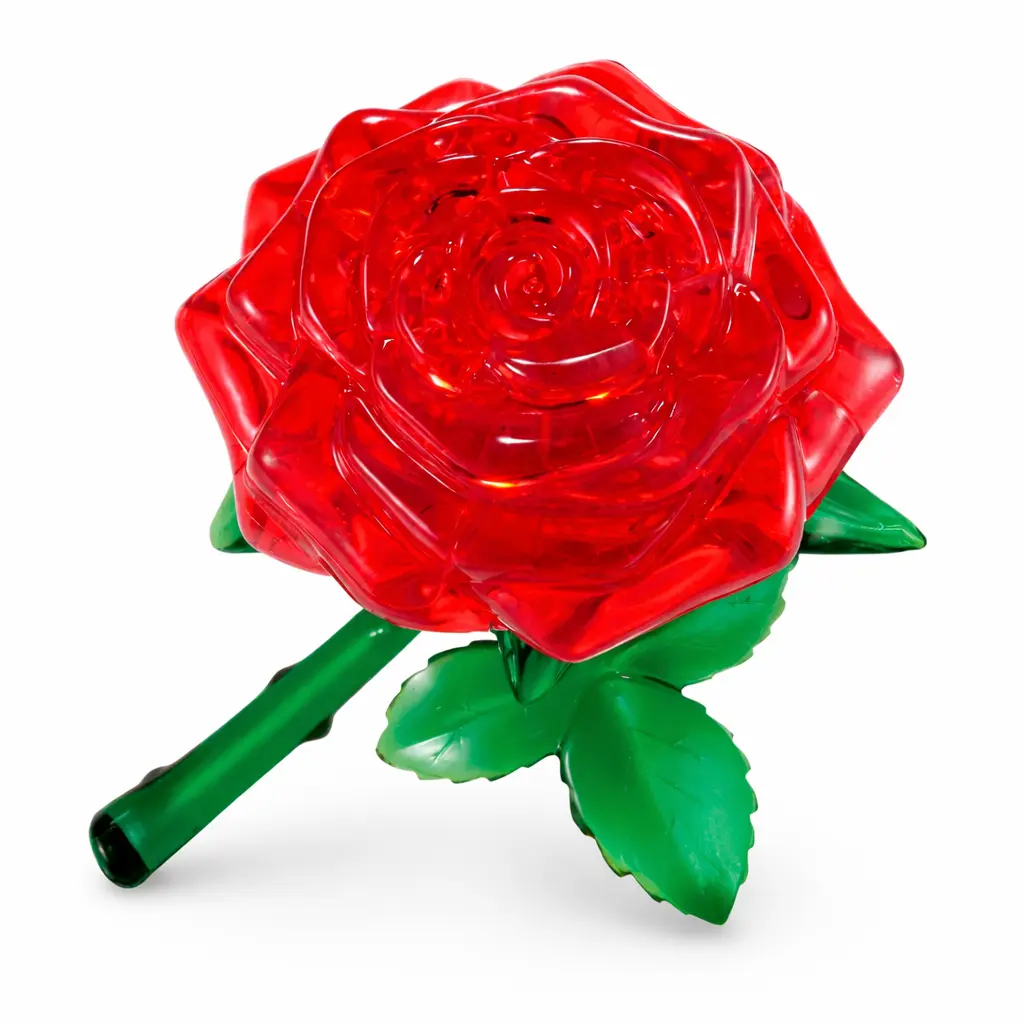
The first time I saw the finished 3D Crystal Rose Puzzle ($19.99), I assumed it was a static model. It wasn’t until I realized it was a 44-piece assembly that I understood the challenge. Unlike geometric shapes, the rose is organic. The pieces aren’t just blocks; they are curved petals that must overlap in a specific sequence to create the bloom effect.
The red translucency of this particular model is its best feature. When placed near a window, it catches the light in a way that reminds me of stained glass. The build took me about 55 minutes, most of which was spent sorting the pieces by the curvature of the “petals.” It’s a mid-tier challenge—not as punishing as a castle, but certainly more complex than a sphere. The honest negative? The base can be a bit finicky. You have to ensure the “stem” pieces are perfectly seated before the rose head goes on, or the whole thing will lean like a wilted flower. But for twenty dollars, it’s a centerpiece that actually has a story behind it.
Ancient Wisdom in a Modern Medium
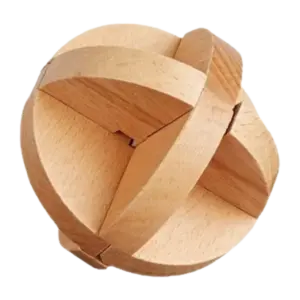
It’s easy to look at plastic puzzles and think they are a modern invention. They aren’t. The core logic of the interlocking crystal puzzle is rooted in ancient carpentry techniques that still dictate how these pieces fit together. Long before we had injection molding, builders in the East were creating “Luban Locks”—six or more pieces of wood that interlock without a single nail or drop of glue.
When you move from the representational puzzles (like the rose or apple) to the more abstract sets, you are essentially practicing a form of meditation that is centuries old. The 12-piece sets are particularly good for this because they strip away the “pretty” exterior and leave you with nothing but the problem of joinery.
12 Piece Crystal Luban Lock Set
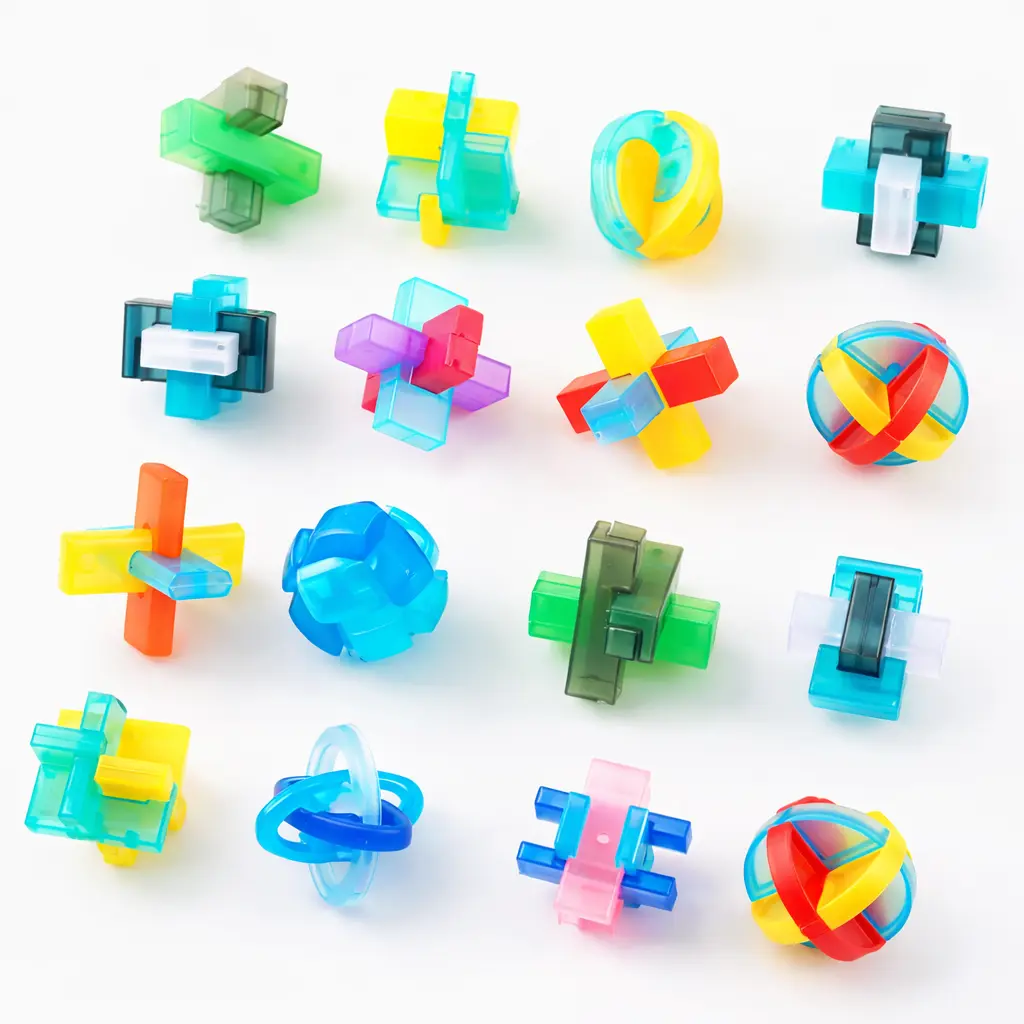
If you want to see a puzzle person sweat, hand them one of these. The 12 Piece Crystal Luban Lock Set ($28.88) is essentially a masterclass in spatial reasoning. Each of the twelve puzzles is small enough to fit in your palm, but because they are clear, the usual visual cues of “this piece goes under that one” are gone. You are looking through three layers of plastic at once.
I keep a few of these in my bag for long flights. They are the perfect “fidget” for someone who needs a mental workout rather than just a spinning toy. Each lock takes about 10 to 15 minutes to solve once you understand the “sliding” logic. Who should skip this? Anyone who gets frustrated by small parts. These aren’t large, and if you drop a piece under an airplane seat, it’s gone. But for the price of a decent lunch, you get twelve distinct challenges. It’s the best value-to-frustration ratio in the crystal category.
Why Your First Solve Will Be an Accident
There is a phenomenon in the puzzle community known as the “Accidental Solve.” You’re fiddling with the pieces, turning them over, and suddenly—click—everything falls into place. You didn’t actually solve it; you stumbled into the solution.
With crystal puzzles, this happens more often than with wood. The slickness of the plastic allows pieces to slide past each other with very little resistance. While this feels good, I always recommend taking the puzzle apart immediately and doing it again. The second solve is where the real learning happens. That’s when you start to see the “channels” and “gates” that the designer built into the plastic. You move from being a tinkerer to being an architect.
The Geometry of the Apple
3D Crystal Apple Puzzle
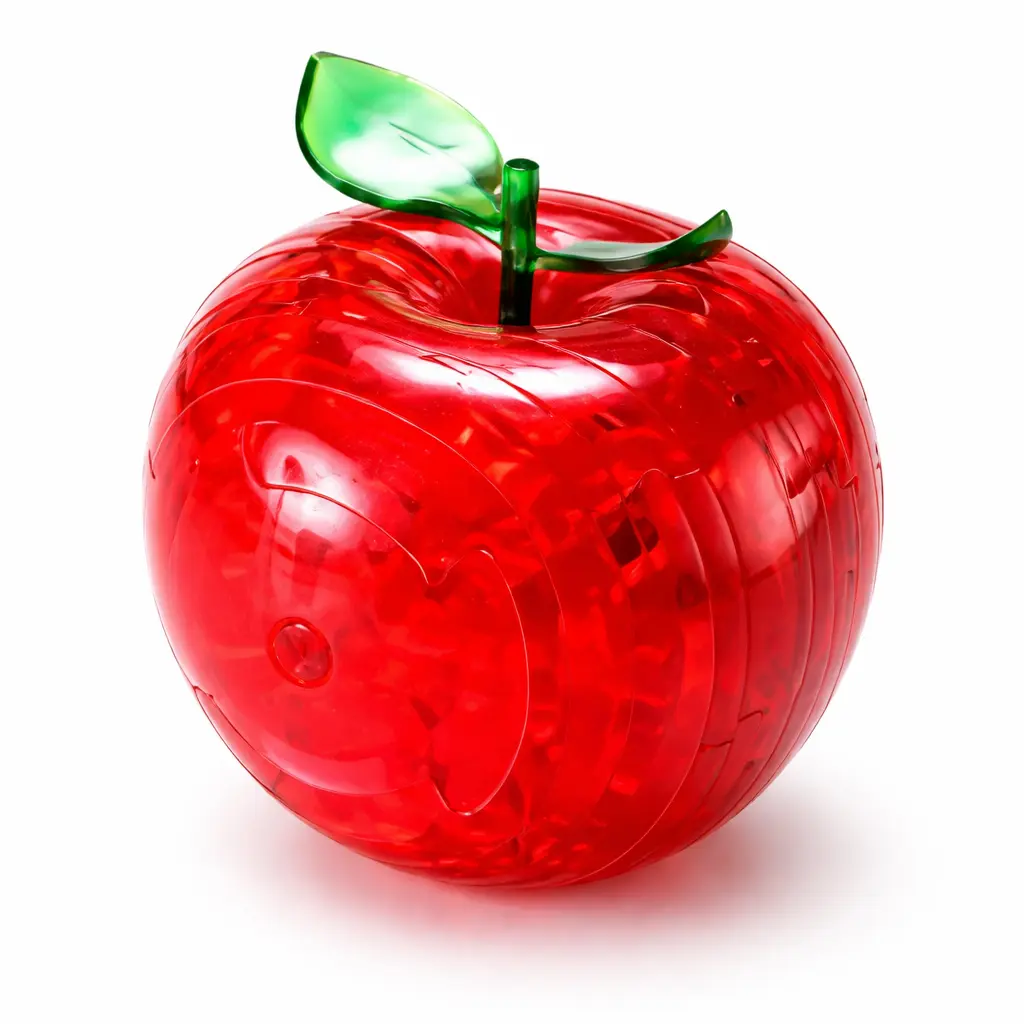
The 3D Crystal Apple Puzzle ($18.88) is the “gateway drug” of this hobby. It’s 44 pieces, which sounds manageable until you realize that an apple is basically a sphere with a dent. Many of the internal pieces look identical at first glance. I’ve had this on my desk for three weeks, and it’s the one thing visitors always pick up.
The tactile experience of the apple is its selling point. Once locked with the “leaf” stem, the object feels remarkably solid. It doesn’t rattle. I’ve actually dropped mine from desk height onto a carpeted floor, and it stayed together—though I wouldn’t recommend testing that on hardwood. The challenge here is the core. You have to build from the bottom up, layer by layer, almost like a 3D printer. If you miss one internal notch on piece #12, you won’t realize it until you’re at piece #40 and nothing fits. It teaches you to check your work constantly.
Maintenance: The Fingerprint Problem
Here is something no marketing copy will tell you: Crystal puzzles are fingerprint magnets. If you spend an hour sweating over a build, the final product is going to look cloudy.
I keep a small microfiber cloth (the kind you use for glasses) nearby. Once the puzzle is locked and finished, I give it a thorough wipe-down. It makes a massive difference in how the light hits the internal facets. If you’re planning to display these—and they do look great on a bookshelf—you might even consider using a can of compressed air to blow out any dust that settles in the internal crevices. Since you can see into the center, a stray hair or piece of lint trapped inside will haunt you forever.
Beyond the Plastic: A Broader World of Tactile Play
While I love the visual “pop” of crystal, sometimes I need a break from the transparency. When the glare gets to be too much, I usually pivot to something with more weight. If you find the logic of crystal puzzles fascinating but want something more kinetic, you might enjoy the mesmerizing physics of spinning kinetic toys that focus on movement rather than assembly.
Similarly, if you’re looking for a social experience that uses the same “balance and fit” logic, there are dexterity-based tabletop games that turn the solitary act of puzzling into a competitive one. It’s all part of the same mental ecosystem: understanding how objects occupy space and how they can be manipulated.
FAQ: Everything You’re Afraid to Ask
Are these too hard for kids?
Most are rated for ages 12 and up. I’ve seen 8-year-olds solve the apple, but they usually need help with the final locking pin. The real barrier isn’t intelligence; it’s fine motor skills and patience. If your kid tends to throw toys when they don’t work immediately, maybe wait a few years.
What do I do if I lose the instructions?
Most people toss them immediately anyway because the diagrams are often tiny and confusing. If you’re stuck, the best resource is actually YouTube. Watching someone’s hands move the pieces in 3D is 100x more helpful than a 2D drawing. However, I’d argue that using instructions defeats the purpose. The struggle is the point.
Do they come apart easily once solved?
Yes and no. Once you remove the locking “key” (like the stem of the apple or the center rod of the rose), the whole thing usually collapses into its component parts. This is why they are great for replayability. Just make sure you do it over a tray so the pieces don’t scatter.
How durable is the plastic?
It’s a hard, brittle plastic (usually polystyrene). It’s designed for display and light handling. If you step on a piece, it will crack. If you drop the finished puzzle on a hard surface, there’s a 50/50 chance it will shatter or just disassemble. Treat them like glass, even though they’re plastic.
Why are some pieces numbered?
On the sprue (the plastic frame they come on), pieces are often numbered. Once you pop them off, those numbers are usually gone or very hard to see. Some purists hate the numbers; I think they’re a necessary evil for the 100+ piece “Deluxe” models. For the 44-piece ones, you don’t need them.
Can I glue them together?
You could, but why would you? The beauty of a mechanical puzzle is its ability to be “undone.” If you glue it, it’s just a mediocre plastic statue. If you want a permanent decoration, buy a glass one.
Are crystal puzzles “real” puzzles?
This is a common debate in hobbyist forums. Some say they are just “3D jigsaws.” I disagree. A jigsaw is about image recognition. A crystal puzzle is about understanding structural interlocking. To me, that’s the definition of a mechanical puzzle.
How do I get a piece that’s stuck out?
Gravity is your friend. If a piece is misaligned and wedged, don’t pry it with a screwdriver—you’ll mar the plastic. Instead, tap it gently against the palm of your hand. Usually, the vibration is enough to unseat the piece.
Do they yellow over time?
If you leave them in direct, harsh sunlight for years, any plastic will eventually degrade or yellow. However, I’ve had a clear castle on my windowsill for three years and it’s still as clear as the day I built it. Modern UV-resistant plastics are much better than the stuff from the 90s.
Are there “knock-offs” I should avoid?
Yes. If the price seems too good to be true (like a 100-piece puzzle for $5), the plastic is likely thin and the molds are old. This leads to “wobbly” puzzles that won’t stay together. Stick to reputable sellers who curate their stock.
What’s the hardest crystal puzzle?
Usually, the ones with monochromatic, repeating patterns. A clear “Crystal Castle” or a “Pirate Ship” are notoriously difficult because every piece looks like every other piece. The rose and apple are “Level 2” or “Level 3” on a 5-point scale.
How do I clean them?
Warm water and a tiny drop of dish soap. Do not use window cleaner or alcohol; it can “craze” (create tiny cracks) certain types of plastic, turning your clear puzzle cloudy.
Can I build them with one hand?
No. You often need one hand to hold the growing structure together while the other hand slides the next piece in. It’s a very “two-handed” hobby.
What’s the best way to sort pieces?
I sort by “edge type.” Some pieces have smooth outer faces; some have tabs; some have slots. Grouping them by their “function” rather than their size is the pro move.
Are there metal versions?
Not exactly “crystal,” but you can find metal brain teasers that use similar interlocking logic. They offer a more premium, weighted feel but lack the “see-through” aesthetic.
The Final Click
The third time I tried to lock the 3D Crystal Apple, it finally happened. The stem slid in, the internal notches aligned, and the “crunch” of 44 pieces becoming one solid object was immensely satisfying. I set it back on my desk, wiped away a smudge from the side, and watched the afternoon light turn it into a glowing orb of red.
Crystal puzzles aren’t for everyone. They require a specific kind of patience—one that can handle visual confusion and the occasional “reset” when a stack of pieces collapses. But they offer something that wood and metal don’t: the ability to see the ghost of the solution inside the object.
If you’re just starting out, grab the apple. It’s a classic for a reason. If you want something that looks elegant on a shelf, go for the rose. And if you think you’re a spatial genius, the 12-piece Luban set is waiting to humble you. Just remember: don’t force it, keep a cloth handy, and try to enjoy the glare. It’s all part of the game.