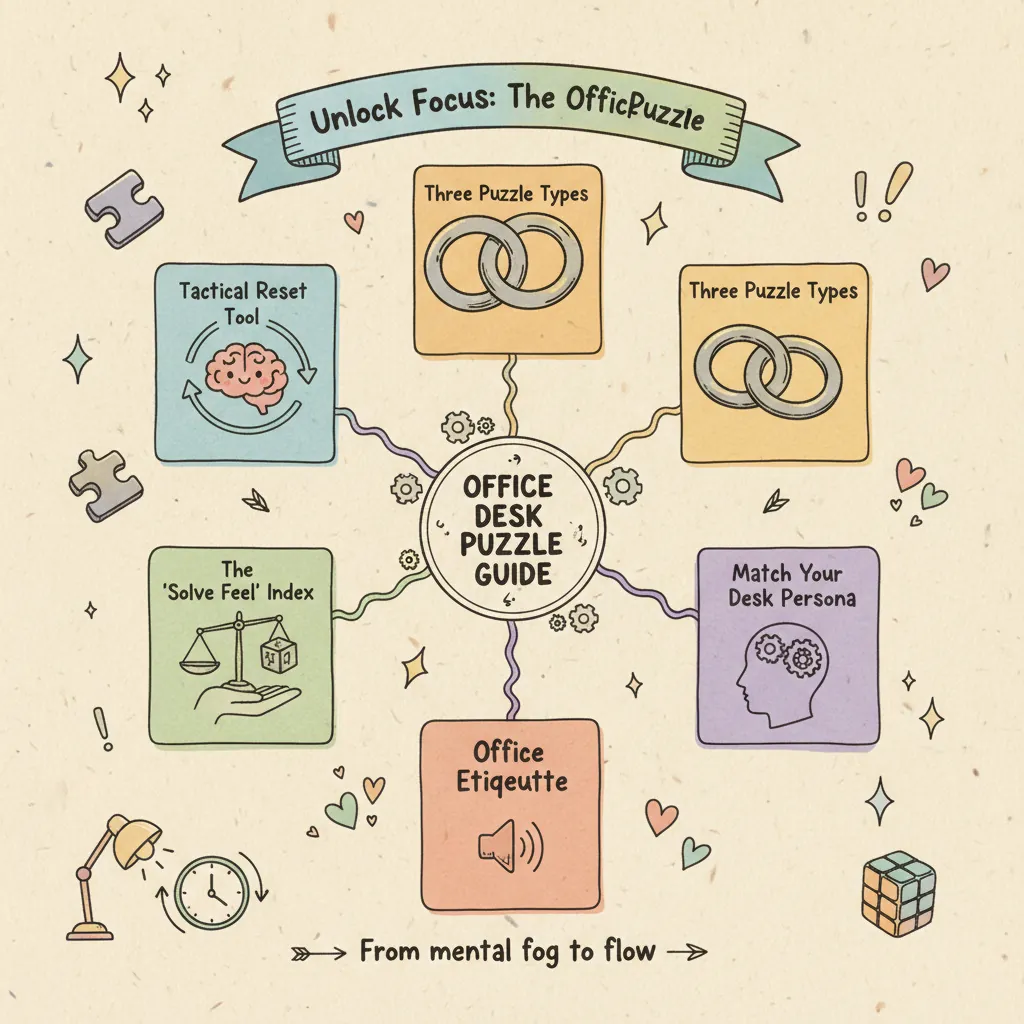
From Mental Fog to Flow: The Desk Puzzle as a Tactical Reset Tool
A metal desk puzzle is a purpose-built cognitive tool, engineered to pull your focus away from digital fatigue and into a state of tactile concentration. Studies of flow state show that engaging with a well-calibrated, hands-on challenge for just five minutes can refresh mental clarity more effectively than passive scrolling. This isn’t just a toy; it’s a tactical reset.
Your brain is tired. Not from hard labor, but from the low-grade hum of a dozen browser tabs, the ping of notifications, and the blue glow that makes 3 PM feel indistinguishable from 11 AM. Your hand drifts from the keyboard, not toward the phone, but toward the one inert, intentional object on your desk. Cold metal. A satisfying weight. A problem that fits in your palm.
This is the moment the best metal brain teasers are built for. You’ve likely seen one—perched on a manager’s desk during a video call, or being turned over in a colleague’s hands between meetings. It’s a quiet signal. It says the owner values a specific kind of break, one that involves untangling a physical knot instead of a mental one. The immediate question isn’t just “Where do I get one?” but “Will this work for me, or will it just be another source of frustration?”
Let’s clear that up first. A good desk puzzle is engineered for focus, not fury. The distinction lies in what puzzle collectors call the ‘fidget-quality’—the inherent satisfaction of manipulating the pieces even when you’re not actively solving. A puzzle with high fidget-quality offers a silent, smooth resistance that occupies just enough of your cognitive load to block out noise, without tipping into impossibility. It’s the difference between a meditative groove and a rage-quit. This is why they work for stress relief: they demand a present, physical focus that scrolling can’t replicate. Your prefrontal cortex gets a vacation from decision fatigue, and your hands take over.
In an open office, this becomes a superpower. Unlike a stress ball or a fidget spinner, a sophisticated metal puzzle reads as a contemplative object, not a distraction. The activity is slow, deliberate, and quiet. It’s socially acceptable in a way that bouncing your knee or clicking a pen is not. It becomes a quiet office toy for adults that commands a subtle respect. (The loudest part is often the soft clink as you set it down, a sound more authoritative than any notification.)
And yes, it’s a conversation starter. But not in a gimmicky way. It functions as a non-verbal cue. A visitor’s eye is drawn to it, their curiosity piqued. “What’s that?” is an infinitely better opening line than a comment on the weather. It speaks to your taste for design and mechanical intrigue without you saying a word.
This is the recognition phase. You’ve seen the object. You’ve felt the mental slump it addresses. Now comes the curiosity: How does this strange, beautiful tool actually function? Is it about brute force, delicate precision, or patient discovery? The answer, and the path to your perfect metal brain teaser for office use, lies in understanding its design language—starting with the material in your hand. It’s a tradition with deep roots; the appeal of manipulating a physical problem to quiet the mind is essentially the 4,000-year-old fidget, perfected for the modern desk.
Disentanglement, Assembly, or Secret Hunting? Decoding the Three Puzzle Personalities
Understanding the three core design philosophies—disentanglement, cast assembly, and sequential discovery—is key to choosing a puzzle that fits your mental rhythm, not just your desk. While solve times can range from a focused 5 minutes to a multi-day siege, the true distinction lies in the type of engagement each offers, a nuance often missed in simple difficult metal puzzles for adults lists. The landscape is dominated by brands like Hanayama, whose six-tier difficulty rating serves as an industry benchmark, but even within their catalogue, the experience varies wildly by type.
Your choice hinges on what you seek from that screen-free break. Do you want a rhythmic, almost meditative fidget? A spatial logic test? Or a narrative of hidden mechanics? This isn’t about raw difficulty; it’s about personality.
Disentanglement is the tactile rhythm section. Think of intertwined rings, horseshoes, and mazes of wire. The goal is singular: separate the pieces. The engagement is in the repetitive, probing motion—testing angles, feeling for slack, discovering the one precise rotation that grants freedom. It’s a kinetic, often silent, process. This is the quintessential office fidget toy metal variant. The satisfaction is in the process as much as the solution; once solved, the path back is often just as satisfying to trace. (This is the “fidget loop” in its purest form.) These puzzles live in the 30g to 100g range, often in plated zinc or stainless steel, and their difficulty is less about complex steps and more about finding the single, elegant path hidden in plain sight. As a category, they’re formally known as disentanglement puzzles, a classic form of mechanical challenge.
Cast Assembly is the silent architect’s game. Here, you’re given two or more intricately machined pieces of solid metal—interlocking gears, skewed bars, twisted shapes—that appear impossible to join or take apart. The challenge is three-dimensional spatial reasoning. You must mentally rotate, align, and visualize clearances. The payoff is a profound, often audible, click or snick as the pieces marry perfectly, transforming from a scattered handful into a single, satisfyingly heavy object. This category is the forte of brands like Hanayama, where the desk presence is substantial. The solve is a private victory of logic, and the completed form is a minimalist sculpture. The heft is deliberate; it feels like an engineered artifact, not a toy.
Sequential Discovery is for the obsessive treasure hunter. This is the premium echelon of high-end desk brain teasers. The puzzle isn’t just about taking apart or putting together; it’s about uncovering the secret how. The puzzle itself contains hidden tools, locking mechanisms, and clues that must be discovered in a specific order. Solving it feels less like puzzling and more like conducting a mechanical investigation. You’ll shake, listen, roll, and peer at seams. The “Aha!” moments are cascading and profound. These are typically heirloom-grade pieces in brass or stainless steel, with price tags and solve times to match. They’re not for casual fidgeting; they’re for deep dive sessions where you become a detective in a story written in metal.
So, map your impulse to the type. The Fidgeter seeking a tactile reset during calls? Look to disentanglement. The Purist who craves a clean, logical conclusion? Cast assembly is your realm. The patient Mind-Bender who views the puzzle as a multi-act play? Sequential discovery awaits. This is how you move beyond a generic “challenge” and select a mechanical puzzle for desk that aligns with how your brain unwinds. The material, weight, and brand follow from this fundamental choice. For a hands-on evaluation of the first category, see our machinist’s take on the best metal disentanglement puzzles.
The ‘Solve Feel’ Index: How to Judge a Puzzle by Its Click, Heft, and Finish
Now that you’ve matched a puzzle type to your mental rhythm, it’s time to judge its physical soul. The true worth of a desk puzzle isn’t found in its listed difficulty or price, but in its “Solve Feel”—the holistic, tactile experience from first pick-up to final, satisfying resolution. This is the primary metric for a serious collector, and it breaks down into three pillars: heft, finish, and sound. A premium executive desk puzzle metal should excel in all three, transforming a simple object into a tool for genuine tactile reset. Consider that weight alone can range from a feather-light 30 grams for constant fidgeting to a substantial 200+ grams that commands desk presence and belongs in the high-end desk brain teaser category.
Your brain is tired. Your hand wants something with heft. Weight classes matter. A puzzle under 50g feels insubstantial, a trinket. It skitters across your desk and offers no satisfying resistance. The 80g to 150g range is the sweet spot for most: it has a conscious presence in the palm, a deliberate weight that focuses attention without straining the wrist during long contemplation. Over 200g, and you’re in paperweight territory—these are statement pieces, often cast iron or solid brass, meant for deep, stationary solving sessions, not idle spinning. Heft implies durability and intention. A heavy puzzle promises a problem worthy of its mass.
Then, there’s finish. This is where The Material Truth becomes glaringly apparent. Run your thumb across the metal. Is it smooth, warm, and slightly soft? That’s likely brass, a classic choice that develops a rich, personal patina over time. Is it cool, hard, and impeccably smooth with a slight grain? That’s machined stainless steel or aluminum, offering a modern, precise feel. Now, feel a cheaper puzzle. That slightly gritty, lightweight, and sometimes painted surface is almost certainly zinc alloy. It’s not inherently bad—it keeps costs down—but it lacks the cold, dense sincerity of solid metal and often sounds hollow when tapped. A product photo can hint at material: a bright, almost chrome-like shine is usually plated zinc; a deeper, warmer, slightly varied luster suggests solid brass or bronze.
The sound is the punctuation mark of the solve. A faint, smooth slide of aluminum parts is nearly silent, perfect for open offices. A precise snick or crisp click from a well-toleranced stainless steel mechanism is deeply authoritative—it’s the sound of a problem being conclusively resolved. A dull clunk or a gritty grind, however, signals poor machining. This is the “click” you’re paying for in higher-end puzzles; it’s the audible confirmation of correct alignment, a tiny burst of dopamine delivered directly to your ear.
All this culminates in the ‘Solve Feel’ Index, a subjective measure of the tactile journey. It’s the buttery glide of a maze puzzle’s ball bearing, the precise drag of a perfectly fitted brass ring, the shudder and release of a sequential discovery lock giving way. It’s why the best puzzles remain satisfying long after you’ve memorized the solution—the fidget loop is in the flawless physical interaction, not the mental challenge. A puzzle with a high Solve Feel index is one you’ll unconsciously reach for during a difficult call, just to run through its satisfying motions.
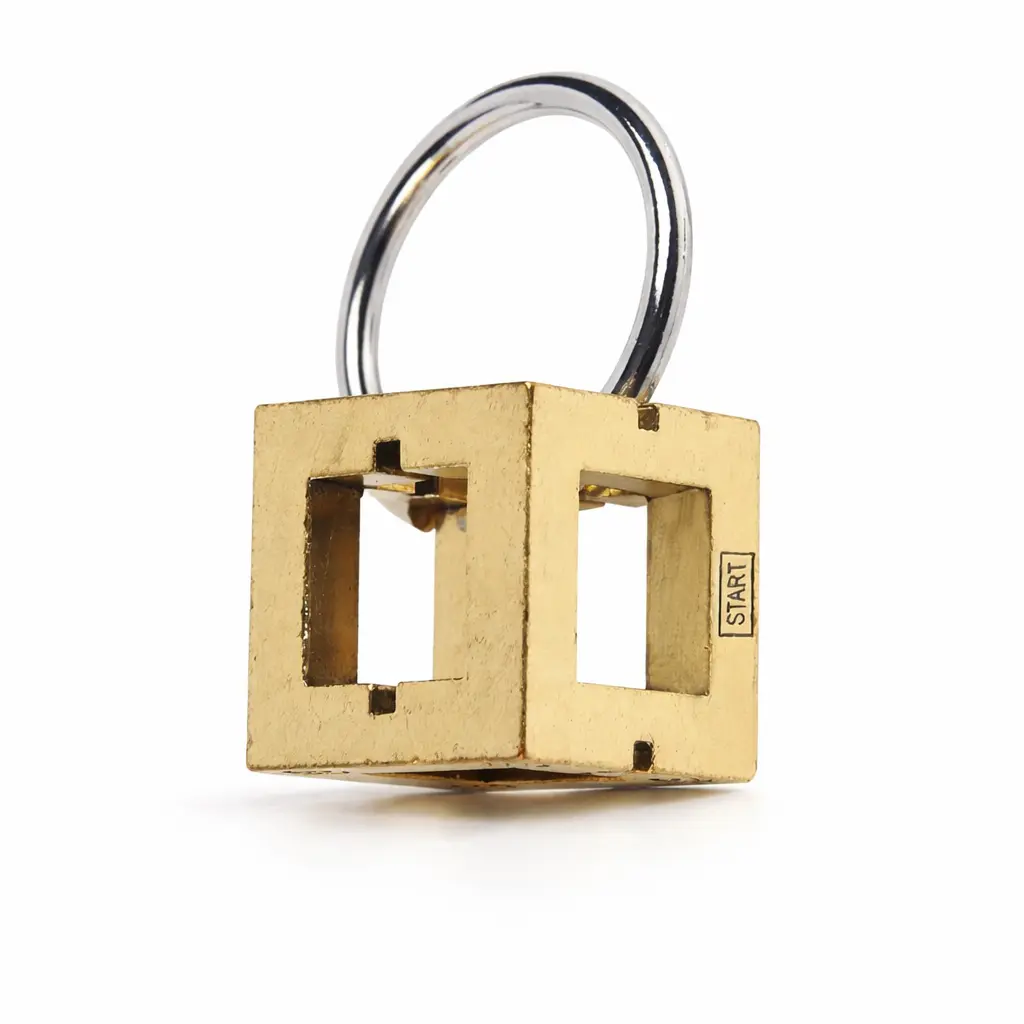
Consider the Brass Cube Maze Puzzle. Its heft is compact and keychain-friendly. Its finish is solid brass, so it starts warm and grows warmer in your hand, developing character with each use. The sound? A soft, rolling whisper as the ball navigates the internal labyrinth. Its Solve Feel is in the smooth, continuous control you exert—a quiet, meditative fidget-quality that’s entirely office-appropriate. It exemplifies how even an accessible puzzle can deliver a sophisticated tactile experience when material and machining are right.
Cold metal. A solid click. A problem resolved in your palm. This is what you’re really shopping for. Judge every metal brain teaser for office by this index, and you’ll never be left with a hollow, frustrating trinket. You’ll gain a tool engineered for focus. The entire process of choosing your metal brain teaser revolves around aligning this “Solve Feel” with your personal desk habits.
The Fidgeter, The Strategist, The Alchemist: Matching Your Puzzle to Your Desk Persona
Choosing the right metal brain teaser for office use isn’t about finding the “best” one—it’s about diagnosing your own desk habits. A puzzle is a personal tool, and the right fit depends 80% on whether you’re seeking silent motion, deep strategy, or a tactile heirloom. Forget rankings; find your archetype.
The Fidgeter: Your hand reaches for it during a tense call, not to solve, but to simply move. You need kinetic satisfaction, a silent, rhythmic distraction for your fingers while your brain is elsewhere. This is The Fidgeter’s domain. For you, the puzzle isn’t a problem to be conquered once; it’s a cycle to be repeated. The goal is a smooth, continuous, and quiet manipulative action—the office fidget toy metal ideal. You’re not looking for a week-long siege; you want a reliable, three-minute tactile reset you can perform almost subconsciously. Look for puzzles with multiple moving parts that slide or rotate, offering a predictable and repeatable “fidget loop.” Weight is secondary to fluidity. The sound should be a whisper, not a clack. This aligns with the broader category of fidget toys, but elevated to a mechanical art form.
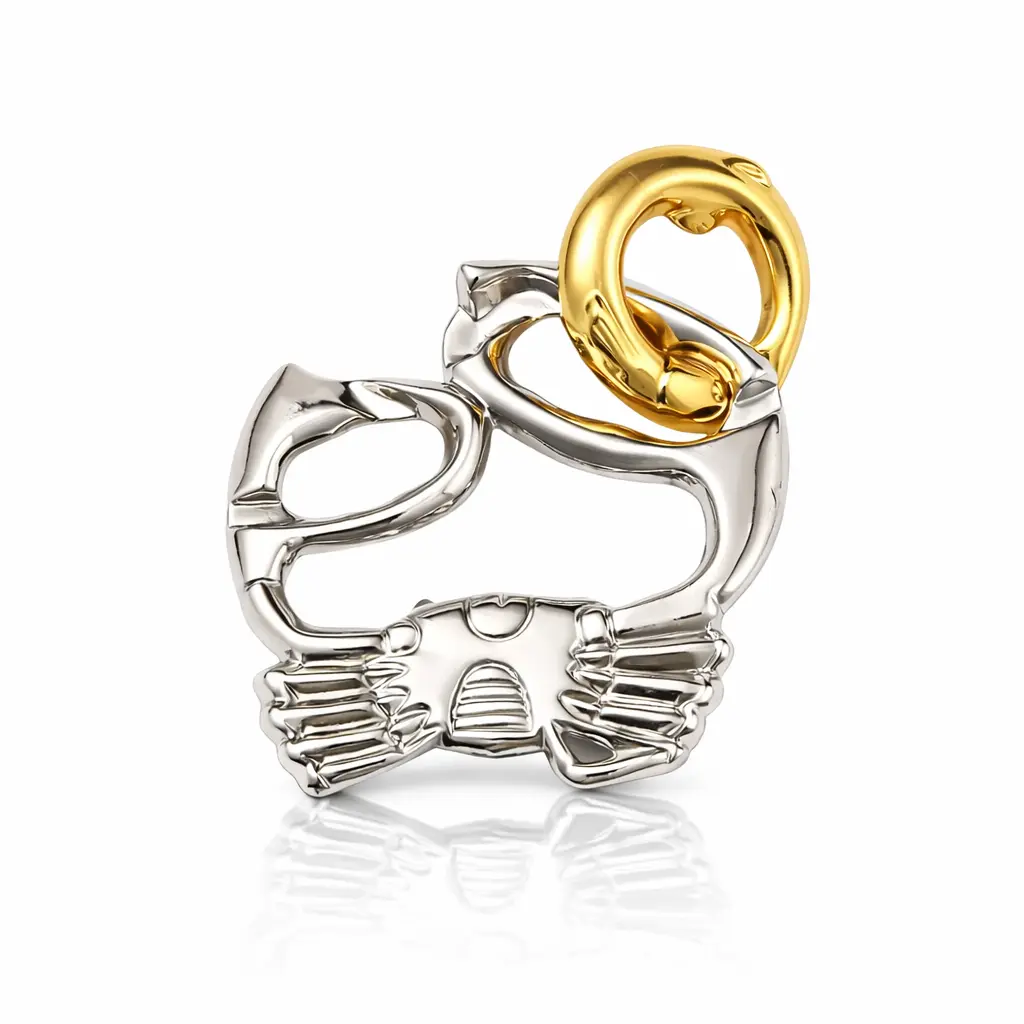
The cast-metal crab puzzle is a quintessential Fidgeter’s piece. The goal—freeing the ring—is straightforward enough to not be intimidating, but the path involves a satisfying, multi-step manipulation of the crab’s pincers and body. Once solved, the process of re-threading the ring and starting over becomes the main event. It’s a self-contained kinetic sculpture with a clear, repeatable cycle of engagement and disengagement. (A pro-tip: Zinc alloy puzzles like this are perfect for this role—they’re lightweight, affordable, and their finish is durable enough for constant handling without worry.)
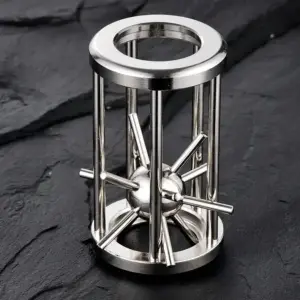
The Strategist: Your satisfaction comes from the campaign, not the skirmish. You view a puzzle as a discrete intellectual challenge to be methodically deconstructed. For The Strategist, the “fidget factor” is irrelevant; the “solve feel” is everything, but only once, at the triumphant climax. You want a labyrinth in your palm—a sequential discovery puzzle where each step reveals the next, or a complex disentanglement that maps like a logic gate. This is the realm of the difficult metal puzzles for adults like the Hanayama Cast Quartet or Enigma. Your puzzle sits on the desk as a quiet testament to a solved mystery, a trophy. When you pick it up, it’s for a dedicated, focused session, not a distracted fiddle. (If your coworker has a simple ring puzzle, counter with something like Hanayama’s Cylinder—a puzzle that looks like a minimalist artifact but unfolds into a devious mechanical choreography.)
The Alchemist: You are drawn to the object itself—its density, its thermal conductivity, the way light catches its machined edges. The Alchemist selects a puzzle primarily as a desk accessory conversation piece with inherent gravitas. The solving experience is important, but it’s secondary to the material truth. Zinc alloy feels cheap; brass, stainless steel, or aluminum have a substantive honesty. You want heft. You appreciate how brass warms in your hand and develops a patina, or how stainless steel remains cool and clinical. Your puzzle is a paperweight with a secret, a testament to material craft. For you, the $40 puzzle isn’t ten times “better” than the $15 one in terms of difficulty; it’s a different class of object. It’s about the silent authority it projects on your desk and the deeply satisfying, precise snick of well-machined parts aligning. Look for brands that list their materials specifically and showcase clean, tool-mark-free finishing.
So, ask yourself before clicking “buy”: Am I buying a motion, a mystery, or a material? Your answer dictates everything—from the appropriate price point to the sound it makes when it finally, gloriously, clicks into place. That is how you find your match. For Strategists and Alchemists drawn to the premier brand, a dedicated Hanayama puzzle buy guide is your next logical step.
Beyond the Shine: Why Material Choice Dictates Your Puzzle’s Entire Life
It dictates everything. The heft in your palm, the sound of the solve, the patina it develops over years of fidgeting, and whether it feels like a treasured tool or a forgotten trinket. The core truth is this: a zinc alloy puzzle often shows wear within 2-3 years, developing a dull, grey finish, while brass or stainless steel can last a lifetime, aging with character or staying crisply modern. That $15 to $40 gap isn’t just markup; it’s the cost of material integrity.
Your puzzle is a mechanical companion. And like any good companion, its substance matters more than its initial shine. This is the material truth that separates a fleeting diversion from a desk mainstay. Cheap zinc alloy (often listed as “mystery metal” or unspecified “cast metal”) has a lower melting point, allowing for cheaper, faster casting. The result? A lighter, often hollow-feeling object. The finish, usually a thin plating over a grey base, can chip or rub off with handling, revealing that dull underlayer. It feels toy-like. It’s the reason many budget puzzles end up in a drawer—they lack the tactile gravity to earn a permanent spot on the blotter.
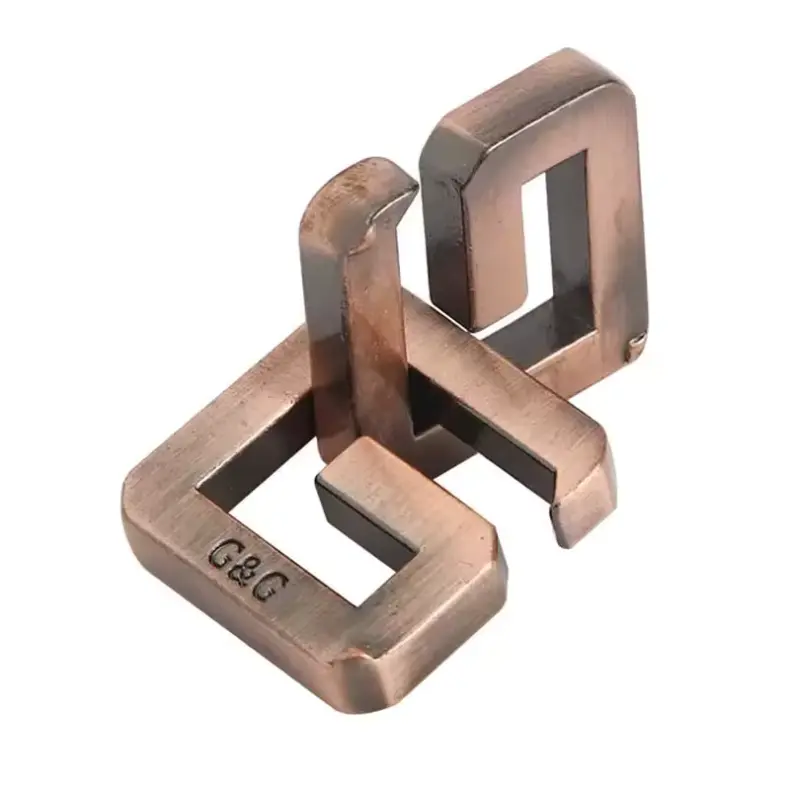
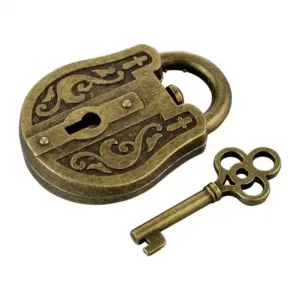
Double G Lock Puzzle — $11.99
Now, contrast that with the premium metals. Brass is dense, offering that satisfying, coin-like heft. It’s naturally antimicrobial and develops a warm, living patina from the oils in your skin—a history of every solve etched into its surface. It’s for the Alchemist. Stainless steel is cool, both thermally and aesthetically. It’s harder, so it can be machined to finer tolerances, leading to that flawless, authoritative snick in a sequential discovery puzzle. It resists corrosion and maintains its sharp, industrial look indefinitely. Aluminum is the lightweight precision option, often anodized in matte colors; it’s for fast, quiet manipulation.
You can tell from a product photo. Look for stated materials—”solid brass,” “stainless steel,” “machined aluminum.” Avoid vague terms. Examine the edges in close-ups; clean, sharp lines and a uniform, deep finish suggest machining or high-quality casting. A slightly rough texture, visible seam lines, or a finish that looks sprayed on are hallmarks of cost-cutting. The weight listed in the specs is a dead giveaway: a solid 100-gram puzzle has presence; a 30-gram one will feel insubstantial.
This choice defines your puzzle’s entire life. A zinc alloy desk accessory conversation piece may start one, but it won’t endure as one. A brass or steel puzzle becomes a artifact of your tenure at that desk. It’s the difference between buying a problem and investing in a high-end desk brain teaser that rewards not just your logic, but your senses, for years. Understanding the core principles behind these objects, the mechanical grammar of brain teasers, helps you appreciate why material and tolerances are so crucial to that perfect “Solve Feel.”
The Silent Fidget & The Loud Click: Navigating Office Etiquette with Your Puzzle
The single most practical factor in choosing an office puzzle isn’t its difficulty, but its volume. A great desk puzzle operates on a fidget spectrum from near-silent manipulation to a distinct, audible solve, with the majority of quality metal puzzles falling below 40 dB—quieter than a whisper, but louder than a deep breath.
Your puzzle’s sound signature is dictated by its type. Disentanglement puzzles with wire and rings are the quiet office toys for adults archetype. The sounds are subtle: the soft shush of metal on metal, a faint ring if a piece taps your desk. They’re perfect for the open office, offering a silent, kinetic outlet for your hands during a tense call. On the opposite end are cast puzzles with interlocking parts, like the Hanayama Cast Vortex or Cast U&U. Their solution often concludes with a precise, authoritative click or snick—deeply satisfying, but a definitive announcement to anyone within earshot that you’ve just conquered it. Then there’s the middle ground: puzzles with sliding or rotating parts that produce a series of soft, rhythmic ticks. They’re the mechanical equivalent of clicking a premium pen.
So, is it rude to fidget during a video call? Context is everything. A silent, repetitive motion—turning a ring, tracing a wire path—is often invisible on camera and can actually aid concentration, much like doodling. The risk isn’t in the action, but in the distraction. If you’re staring intently at your hands instead of the camera, you’ve checked out. The etiquette rule: your puzzle should be a subconscious activity, not the main event. Keep it below the frame, and let it be a tactile reset, not a performance.
For the truly sound-conscious, seek out puzzles with a continuous, smooth movement. Think of the Hanayama Cast Slider or any puzzle with a maze-like track. They offer what I call the “worry stone” effect—a quiet, rhythmic motion that occupies just enough mental bandwidth to silence the noise, without generating any of its own. This is the core of a true office fidget toy metal puzzle: it absorbs nervous energy, it doesn’t broadcast it.
The social signal, however, is part of the desk accessory conversation piece appeal. That final, resonant click is a tiny, personal victory you can choose to share. It’s a non-verbal cue that you’ve shifted mental gears. In a private office, it’s a perfect punctuation mark. In a sea of cubicles, maybe save the loudest triumphs for a break. Ultimately, match the artifact to the habitat. A library-quiet office demands a smooth operator. A more relaxed, private space can handle the occasional celebratory click. Choose the soundscape that fits your workplace, and you’ll have a tool that refocuses you without disrupting anyone else. For more on selecting the right puzzle for your specific environment, our list of the best office puzzles for stress relief considers noise and social context as key factors.
Where the Pros Shop (and What to Never, Ever Click On)
The final puzzle isn’t made of metal; it’s navigating the marketplace to find a genuine artifact, not a cheap clone. The pro’s rule is simple: invest in puzzles from dedicated specialty retailers or artisan makers, where a $30-$80 price tag reflects machined craftsmanship, not mass-produced frustration. Your hunt for a Hanayama desk puzzle or a substantial cast iron puzzle ends here, not in the algorithmic abyss of a generic mega-marketplace.
Your first and best stops are the boutiques. Sites like Puzzle Master, SeriousPuzzles, and Kubiya Games are the equivalent of a trusted watchmaker—they curate their shelves, understand the mechanics, and list accurate difficulty ratings. They are the primary source for brands like Hanayama, the undisputed gold standard for high-end desk brain teasers. Museum gift shops, particularly those for science or design museums, are another surprising trove, often stocking elegant, architect-designed pieces. These sources provide the “material truth”: you’ll get clear listings for stainless steel, brass, or aluminum, not the vague “metal alloy” that screams zinc.
Marketplaces, however, are a minefield. You can find gems, but you must read the listing like a detective. Major red flags are your guide. A product title boasting “Fun for the Whole Family!” is your first clue to click away—this is the vocabulary of toys, not the mechanical puzzle for desk tools we’re discussing. Vague or missing material specifications are a deal-breaker. If it only says “metal,” assume it’s a brittle, lightweight zinc alloy that will feel hollow in your hand and develop an ugly, pitted finish. Be wary of sets of six puzzles for $19.99; you’re buying quantity of confusion, not quality of experience. The photos often lie, too. A puzzle that looks matte and textured in a stock image but is described as “shiny” has likely been photo-shopped, a sign the seller has never held the actual object.
For a true desk accessory conversation piece, custom engraving is a compelling path. Several specialty retailers and independent machinists on artisan platforms offer this service. It transforms a puzzle from a product into a legacy object—a milestone gift, a branded executive item, or a personal sigil. Expect to pay a significant premium and lead time, and always choose a puzzle with a large, flat surface suitable for engraving. This isn’t for your first puzzle; it’s for the one that earns permanent desk presence.
So, you’ve chosen your retailer. Your final checkpoint is the cart. A quality single puzzle should give you pause—it’s an investment in a hundred future mental resets. If the price seems too good to be true, it is. You’re not just buying a solved problem; you’re buying the satisfying snick of precision, the cool heft of solid metal, and the silent promise of a tactile reset that waits patiently by your keyboard. For those ready to explore the most challenging tier of cast puzzles, the journey continues with connoisseur-level pieces, like those detailed in our guide to ruthless cast puzzles for 2026.
Beyond the ‘Aha!’ Moment: Why the Best Puzzles Are Never Truly Solved
The real value of a premium metal desk puzzle isn’t in its one-time, triumphant solve, but in the hundreds of subconscious, satisfying manipulations that follow—what collectors call the “fidget loop.” While a typical budget puzzle offers a single, fleeting “aha!” moment before gathering dust, a well-engineered metal brain teaser for office use delivers 80% of its utility after you’ve memorized the solution, serving as a kinetic tool for focus and a quiet desk accessory conversation piece.
Your brain is tired. It’s the 3 PM slump, or you’re eight minutes into a passive-aggressive budget Zoom call. Your hand drifts to the object at your desk’s ten o’clock position. This is where the best puzzles earn their keep. The goal is no longer solution, but ritual. Your fingers trace the now-familiar path of the disentanglement wire, finding the subtle burr you missed on the first pass. You rotate the cast-brass component, feeling for the precise alignment that yields that faint, authoritative snick. This is the tactile reset. It’s a quiet office toy for an adult that pulls your cognitive load away from the abstract frustration on-screen and into the concrete, solvable physics in your palm. Cold metal. A predictable weight. A known sequence that still demands presence.
This is the fidget-quality spectrum’s sweet spot. A puzzle that’s too simple becomes boring; one that’s perpetually frustrating stays in the drawer. The ideal candidate has a solve complex enough to feel earned, but a manipulation phase that’s smooth, intuitive, and deeply satisfying to repeat. It becomes a proprioceptive anchor—something for your hands to do so your mind can listen, think, or simply breathe. (This is also the discreet answer to “Is it rude to play with during a call?” If it’s silent and your gaze isn’t glued to it, it’s less distracting than frantic pen-clicking.)
Consider the archetype of the sequential discovery puzzle: its value explodes after the first solve. You’re no longer hunting for secrets; you’re performing a curated mechanical ballet. Each click and shift becomes a mindful meditation, a known sequence you execute for the pure joy of the mechanism’s feedback. This is beyond the solve. The object transitions from a question into an answer—an answer to the need for a screen-free, intentioned pause.
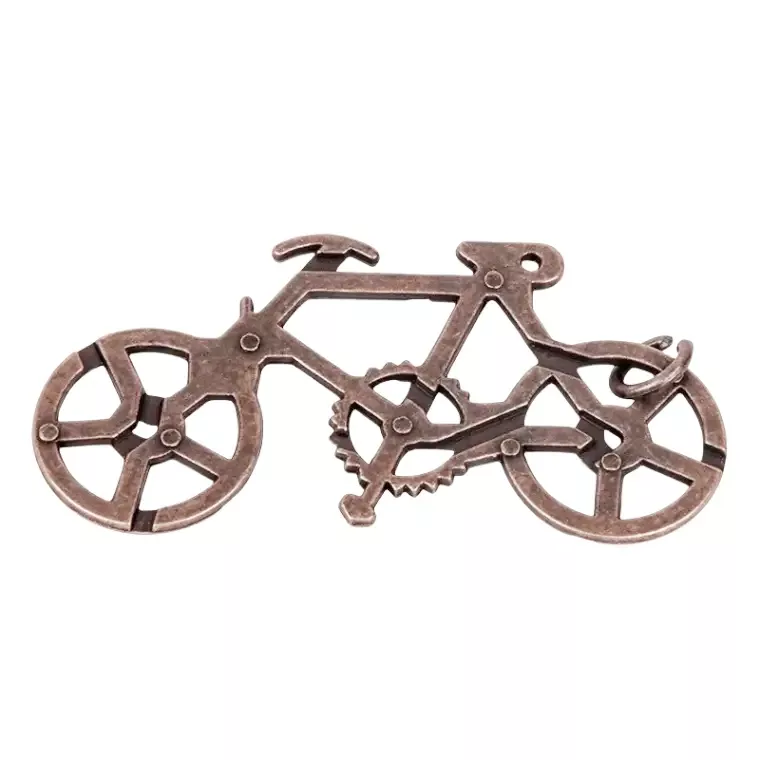
Take a piece like the Intelligent Bike Lock Puzzle above. Its charm isn’t just in figuring out the locking mechanism. It’s in the smooth, silent rotation of the dials and the solid click of the shackle—actions you’ll find yourself repeating absently while parsing an email. It’s a kinetic, almost restless object that fits the fidgeter persona perfectly, proving that a puzzle doesn’t need a high-end desk brain teaser price tag to achieve this loop. The click is the reward, not the revelation.
Ultimately, this transforms the puzzle from a challenge into a companion. Its desk presence is a promise: a guaranteed, zero-setup break that engages a different part of your brain. The patina it develops—the subtle shine on the most-handled edges—becomes a record of your focus and distraction, a physical log of a hundred minor mental resets. To learn the underlying thinking that can help you appreciate and solve even the most complex companions, explore our guide on how to unlock any metal puzzle. And for the deepest dive into puzzles designed as artful, permanent companions, the journey leads to artisan pieces like the one explored in our feature on The Devil cast puzzle, where history and heft meet in your hands. The best puzzle isn’t the one you solve once; it’s the one you never want to put down.
Preserving the Click: How to Care for Your Metal Companion
The puzzle is solved. But its life on your desk is just beginning. Proper care is less about preservation and more about ensuring it remains a ready-for-action tool for your next tactile reset. A simple trick used by collectors: keep a dedicated, shallow dish on your desk—a ‘paperclip tray’—to solve over. This single habit prevents 95% of lost-piece tragedies when a fiddly component finally pops free.
Different metals demand different touch. For common machined stainless steel or aluminum, a periodic wipe with a microfiber cloth removes skin oils and maintains that crisp, cool feel. For brass or copper puzzles that develop a patina, the choice is yours. You can let the warm, mottled finish develop as a record of use, or gently polish it with a jewelry cloth to restore its original shine (the industrial designer in me loves the lived-in look). Avoid harsh chemicals; they can strip coatings or dull precision finishes.
Handling the heft of your puzzle is part of the ritual. Always manipulate it over your tray or a soft surface, especially during the initial, frantic solving phase. If a piece does come loose, don’t force it—backtrack your steps. This respect for the mechanism ensures the ‘solve feel’, that authoritative snick, remains perfect for years. Your metal brain teaser isn’t fragile, but it is a precision object. Treat it like the focus tool it is.
Your final step? Look at your desk right now. Is there a spot for that tray?