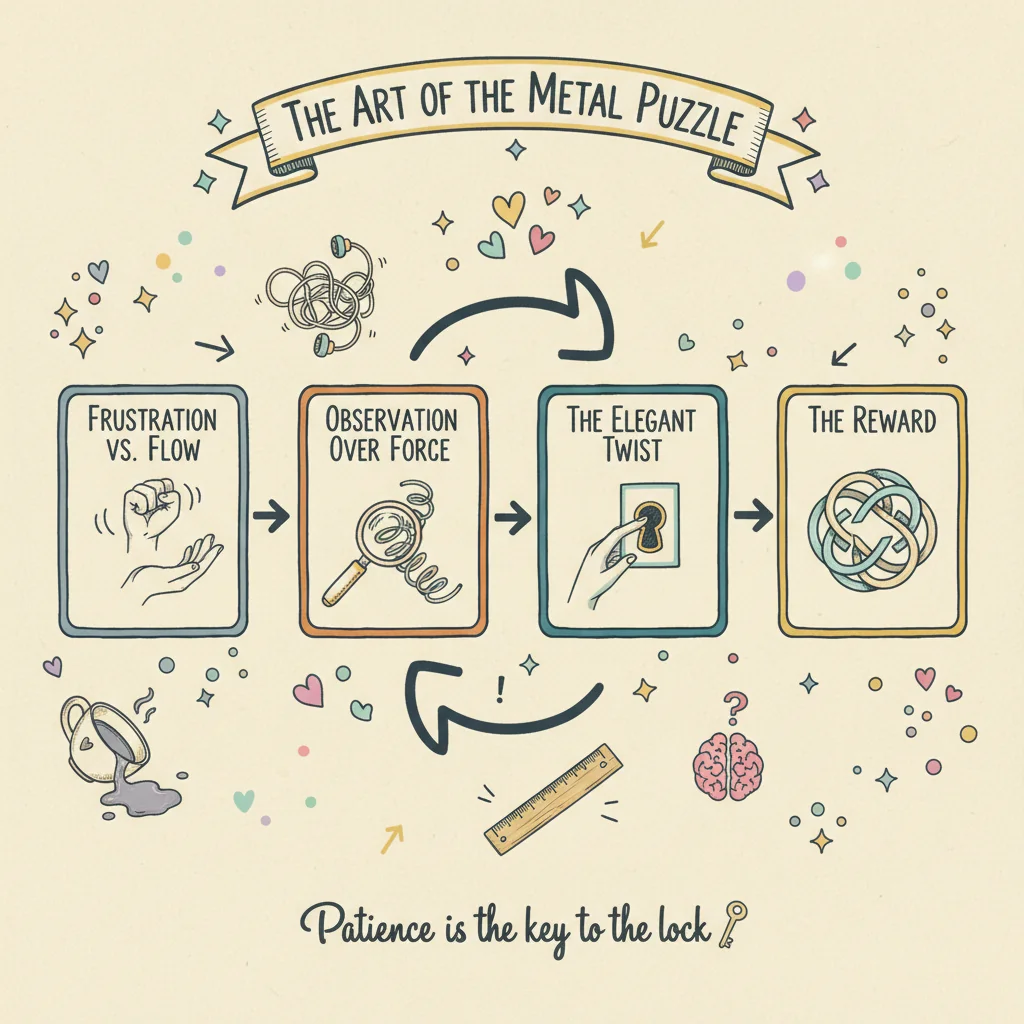
The third time the bronze piece slipped from my thumb and clattered onto the desk, I almost gave up. It was a heavy little thing, two interlocking coils of metal that felt more like a piece of industrial hardware than a toy. For forty minutes, I’d been twisting, turning, and pulling. I was trying to outsmart it, to find the logical flaw in its design. My frustration was mounting.
Then I stopped. I set the puzzle down, made a cup of tea, and just looked at it. I wasn’t trying to solve it anymore. I was just observing the way the light hit the grooves, the precise point where the two pieces met. My thinking shifted from “How do I force this apart?” to “How was this designed to come apart?” It wasn’t about intelligence; it was about empathy for the object. Five minutes later, with a simple, elegant twist I hadn’t even considered, it fell open in my palm.
This is the secret of great metal puzzles. They aren’t IQ tests. They are meditations disguised as challenges. The best metal puzzles for adults reward patience and observation while brutally punishing intellectual arrogance. They teach a mode of thinking that is increasingly rare: the quiet, tactile search for a hidden path, rather than the brute-force attack on a locked door.
This guide is for those who are tired of digital distractions and want something real to hold in their hands. We’ll explore what makes a puzzle truly satisfying, which ones are worth your money, and why the solution is often the least interesting part of the experience.
Why Most “Hard” Puzzles Are Actually Easy (And Vice Versa)
Puzzle difficulty ratings are a lie. Or, at least, they’re a well-intentioned fiction. Manufacturers often rate puzzles on a linear scale, but a puzzle’s challenge is deeply personal. A task that stumps an engineer for an hour might be solved in minutes by a sculptor, because the solution relies on spatial intuition rather than sequential logic.
The most common mistake beginners make is choosing a puzzle that looks complex. Intricate designs, like the beautiful but relatively straightforward Golden Chinese Knot Metal Puzzle, can be misleading. They often rely on one or two key moves hidden in plain sight. The real challenge comes from puzzles that look simple but operate on a principle you’ve never considered. They force you to discard your assumptions.
This is why I often recommend a puzzle that seems almost insultingly simple at first glance. It trains the right mindset from the start. You learn to respect the designer’s intent and search for the elegant, non-obvious movement that unlocks the whole system. Forget the star ratings and focus on the question the puzzle seems to be asking.
The Weight in Your Hand: What Separates a Great Puzzle from a Cheap Toy
A digital puzzle is an idea. A mechanical puzzle is an object. The difference is everything. The physical feedback—the weight, the texture, the temperature of the metal, the sound of the pieces sliding against each other—is half the experience. After testing over 200 of these things, I can tell you that material quality is not a luxury; it’s fundamental to the solving process.
Cheap, flimsy puzzles with burrs on the edges and loose tolerances don’t just feel bad; they actively work against you. You can’t tell if you’re on the right track or just fighting against poor manufacturing. A great puzzle, on the other hand, communicates with you. The pieces glide smoothly when you’re doing it right and stop dead when you’re not. There is no ambiguity.
This is where cast puzzles, which are formed in a mold rather than bent from wire, truly shine. They allow for complex, solid shapes with a heft and precision that feels incredible.
Cast Coil Pocket Puzzle
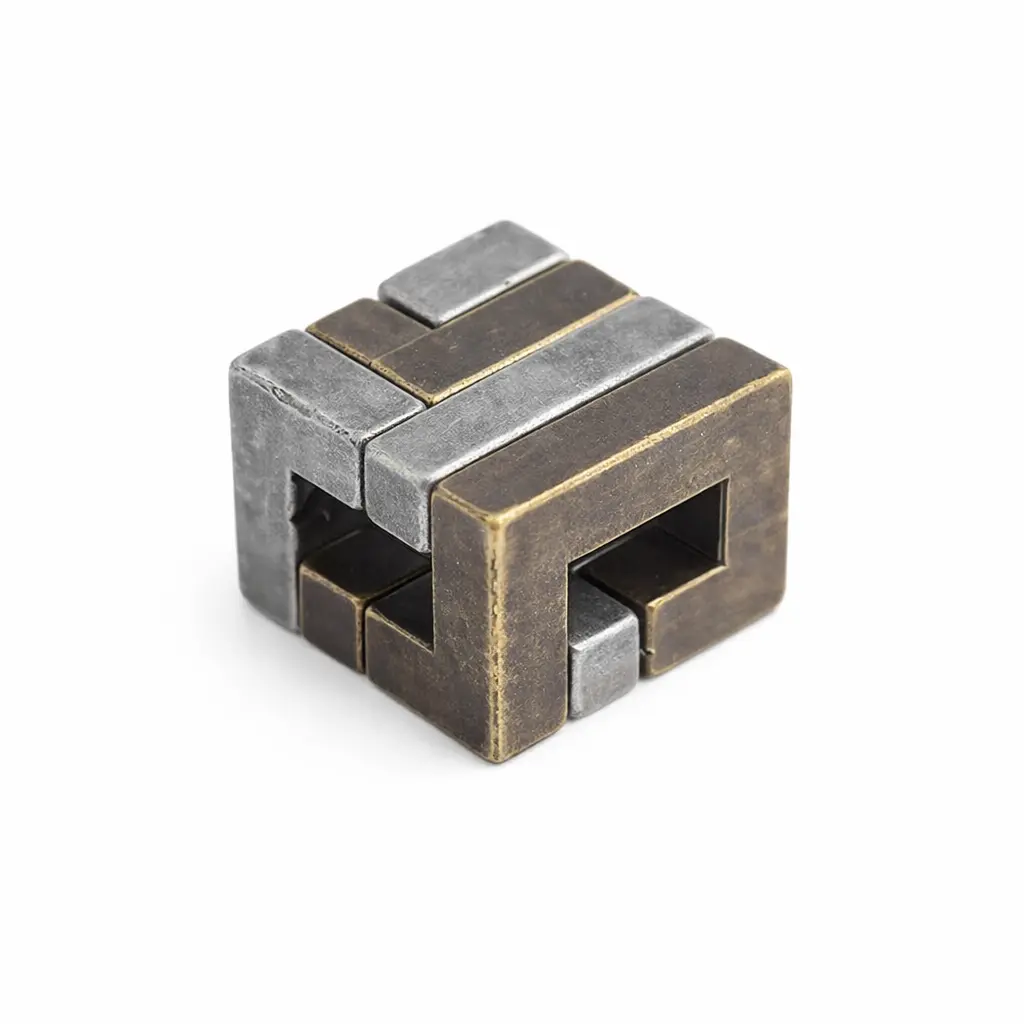
The Cast Coil is what I hand to people who think they don’t like puzzles. It feels less like a toy and more like a precision-machined component from a submarine. The two-tone finish—a dark, antique bronze against a brushed silver—gives it an immediate sense of importance. At $18.99, it has the tactile quality of puzzles that cost three times as much. The solution isn’t about wiggling or luck; it requires discovering a specific, three-dimensional “keyway,” much like cracking a vault. It’s a purely logical solve that feels like a secret handshake once you learn it. My brother-in-law, a notorious skeptic, spent a solid 20 minutes with this at Thanksgiving before reluctantly handing it back, completely hooked.
Your First Solve Will Be an Accident (And That’s the Point)
Let me spoil something for you: your first major puzzle solve will probably be a fluke. You’ll be fiddling, half-distracted, and the pieces will suddenly just… separate. You’ll be left holding them, filled with a confusing mix of triumph and bewilderment, having no idea how you did it.
Do not be discouraged. This is the most important phase.
The real challenge isn’t just to separate the pieces; it’s to understand the system well enough to do it again, on purpose, and then reassemble it. Reassembly is often harder than the initial solve. It forces you to reverse-engineer your accidental discovery, turning blind luck into conscious competence. This process of discovery is where the deep satisfaction lies. It’s the moment a jumble of metal transforms into an elegant mechanism in your mind. Many of the best brain teasers for adults and teens are designed around this very principle of accidental discovery followed by deliberate understanding.
Metal Orbit Ring Cast Puzzle
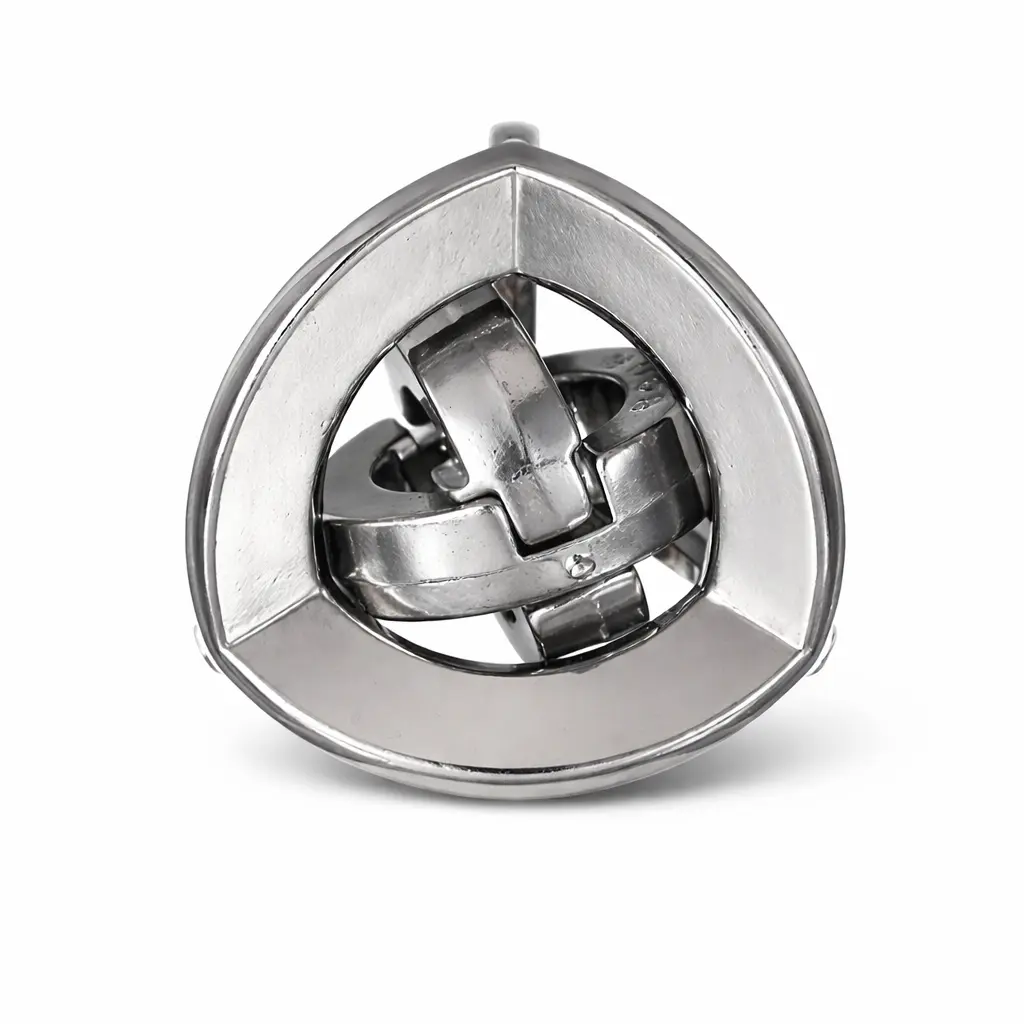
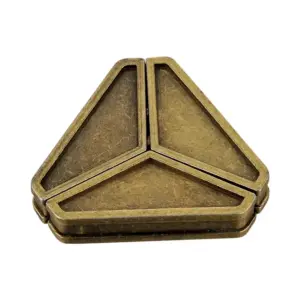
This puzzle is a masterclass in creating confusion from simple geometry. For just under fifteen dollars, you get three pieces: a triangular frame and two C-shaped rings that seem hopelessly entangled. For the first 10 minutes, it feels impossible. You can feel the seam with your fingernail, but nothing gives. The trick, which I found completely by accident while watching TV, involves an alignment that seems totally counterintuitive. The “aha!” moment is huge. Getting it back together took me another 20 minutes of focused effort. It’s a fantastic puzzle for developing spatial reasoning, and its compact size makes it a permanent fixture in my travel bag.
Beyond Brute Force: Puzzles That Punish Impatience
There’s a category of puzzle that seems to actively fight back if you try to rush it. These are the enigmas that have no “wiggle room.” They require a precise sequence of moves, and any deviation from the path leads to a dead end. They are the ultimate test of methodical thinking and observation.
These are not puzzles for fidgeting. They are puzzles for quiet contemplation. They demand your full attention and reward it with a solution that feels less like a trick and more like a revelation. When you solve one, you feel like you’ve understood a new physical law. You can see the invisible path the designer created for you. These challenges are perfect for people who need effective stress relief toys for their desk, as they force a state of intense, single-minded focus.
Gold Silver Double Fish Metal Puzzle
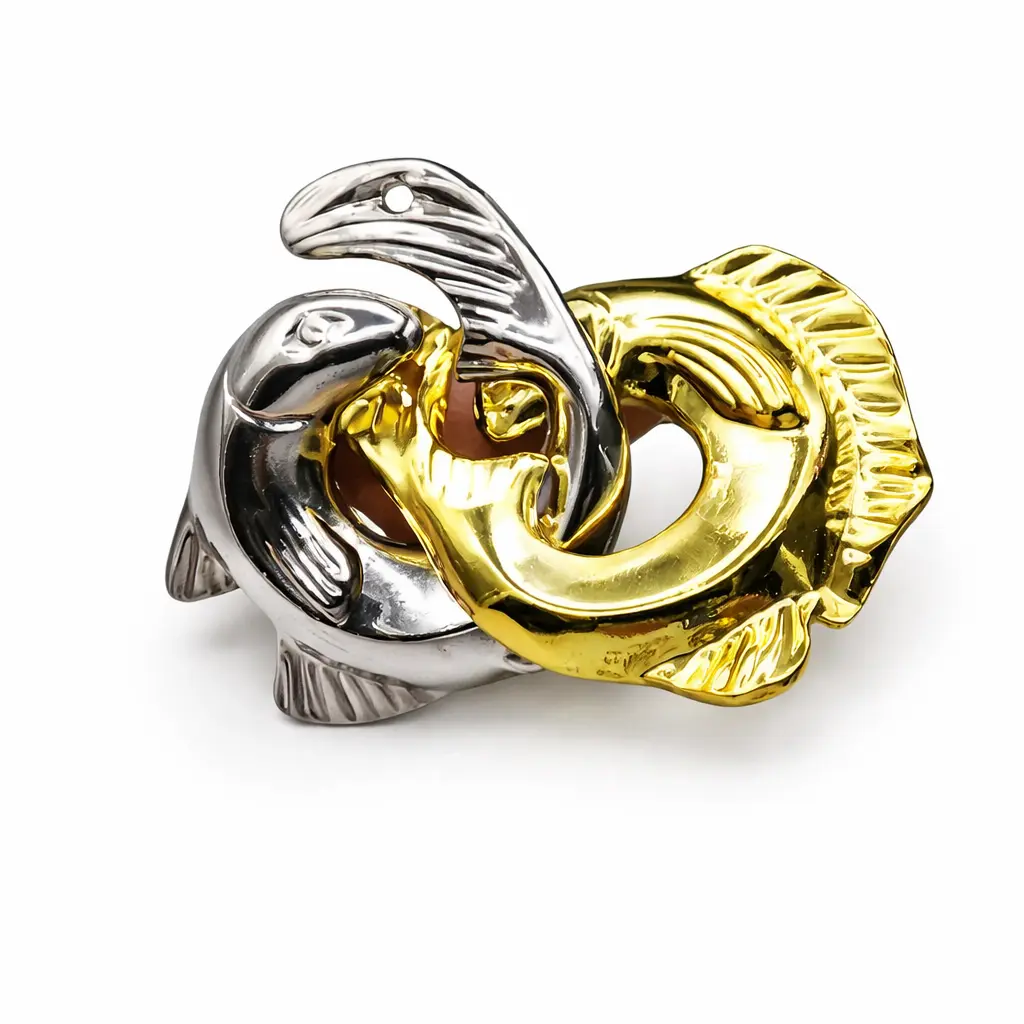
First, let’s be clear who shouldn’t buy this puzzle. If you’re looking for a multi-stage, knuckle-busting challenge to occupy you for a week, this isn’t it. The solution is relatively quick to discover once you understand the core principle. But that’s not the point of the Double Fish. This puzzle is for the person who wants a beautiful, meditative object. The polished two-tone finish on the interlocking fish gives it the appeal of jewelry. It’s one of the few puzzles I own that my partner actually allows to be displayed in the living room. Priced at $13.99, its purpose is to be solved and re-solved, the smooth, flowing movement becoming a calming ritual rather than a one-time challenge.
When Metal Isn’t the Answer: The Allure of Wood and Crystal
After you’ve spent enough time with cast metal, you start to appreciate what other materials bring to the table. Metal teaches precision, logic, and finding hidden paths. Wood and acrylic, on the other hand, introduce different kinds of challenges: assembly, mechanics, and light.
Wooden puzzles, especially laser-cut kits, are less about a single “aha!” moment and more about the steady, satisfying process of creation. You’re not discovering a pre-existing solution; you’re building the solution yourself. It’s a shift from puzzle-solver to puzzle-maker. I’ve found that building something like the

Royal Carriage 3D Wooden Puzzle or the functional
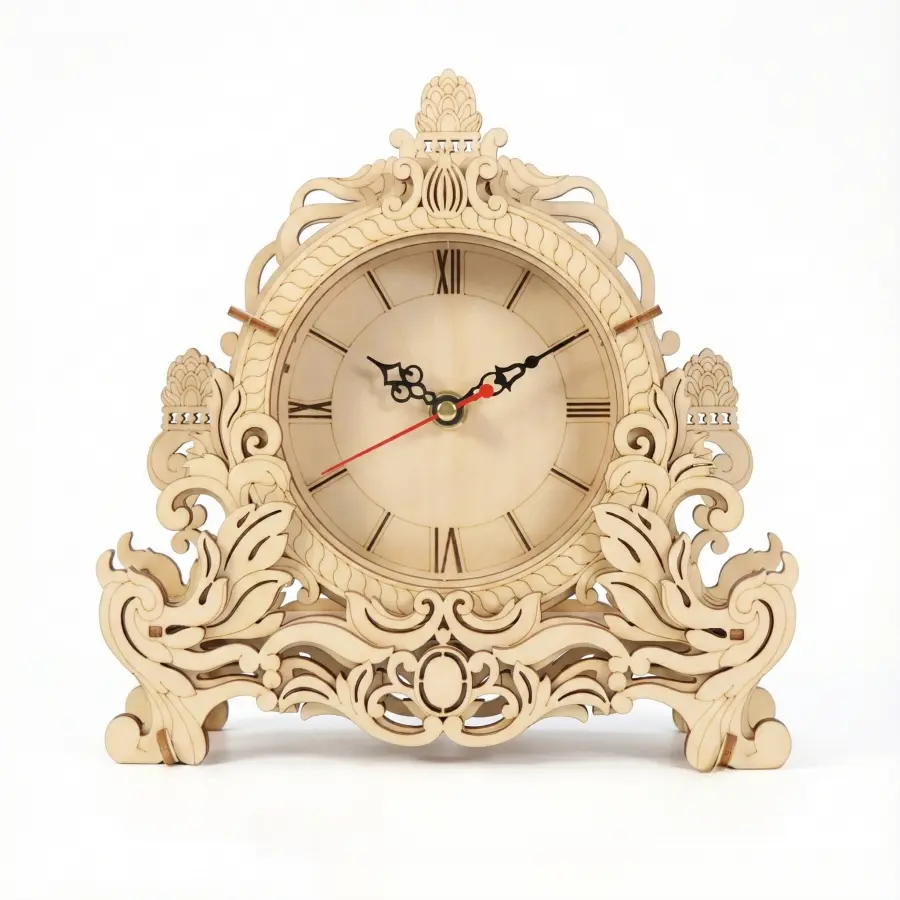
3D Wooden Puzzle Clock Diy Kit exercises a completely different part of my brain. It’s about following instructions carefully and appreciating how flat sheets of wood can transform into a complex, three-dimensional machine.
3D Wooden Perpetual Calendar Puzzle
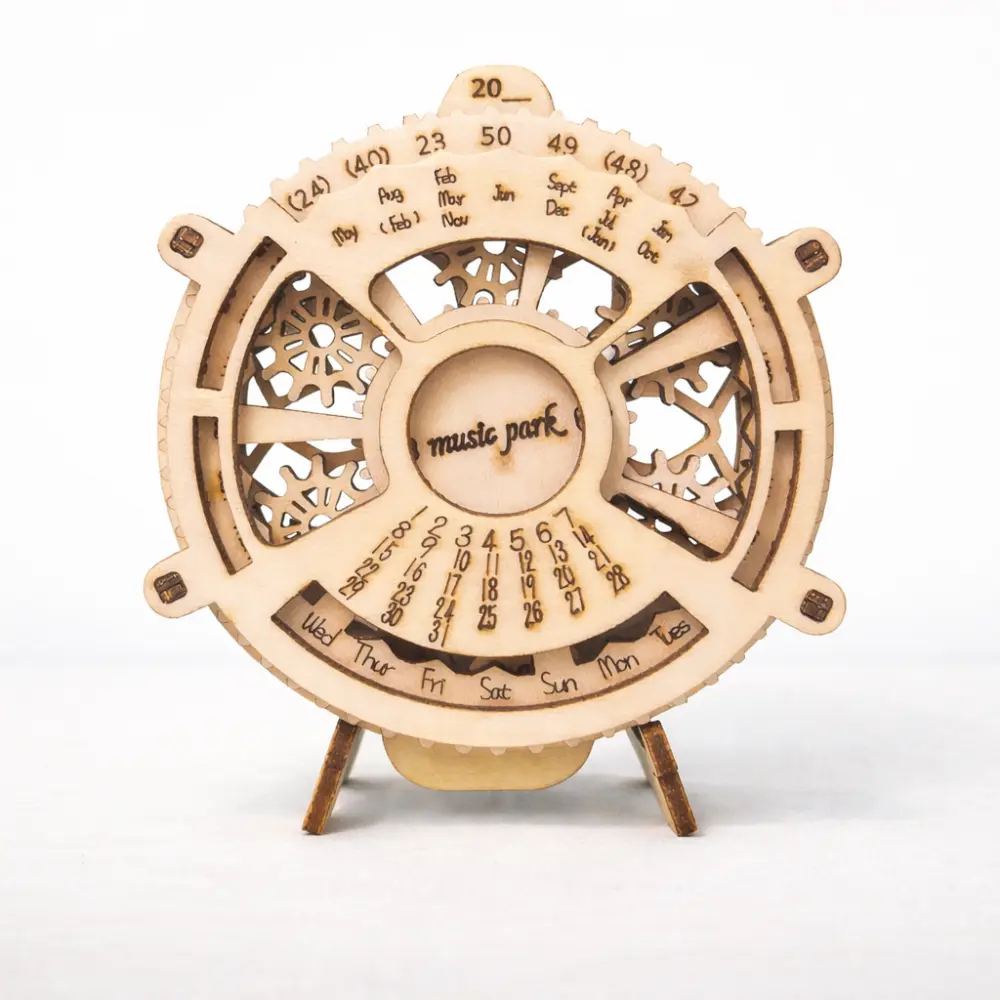
I built this on a rainy Sunday afternoon, and it was one of the most rewarding hours I’ve spent on a puzzle. Unlike a disentanglement puzzle, this isn’t a brain teaser—it’s a functional mechanical object you assemble. The laser-cut wood pieces snap together with satisfying precision (no glue needed), and the final product is a working perpetual calendar that can calculate the day of the week for any date. At $39.99, it’s a fantastic gift for someone who is more of a builder than a solver. My one gripe: the instructions for setting the initial date could be a bit clearer. But the joy of rotating the gears and watching the dates align is a unique pleasure that a static metal puzzle can’t provide.
The “Desk Puzzle” Hall of Fame: Objects You Won’t Want to Put Away
The final test of a great puzzle is whether it earns a permanent spot on your desk. Does it invite curiosity? Does it feel good to pick up and fiddle with during a phone call? Does it look like a piece of sculpture rather than a piece of clutter?
A great desk puzzle has to balance three things: it must be engaging enough to hold your attention, simple enough that you don’t need to dedicate an hour to it, and beautiful enough to justify its existence as a static object. This is a high bar to clear. Many puzzles are fun to solve once and then get tossed in a drawer. Others, like the charming
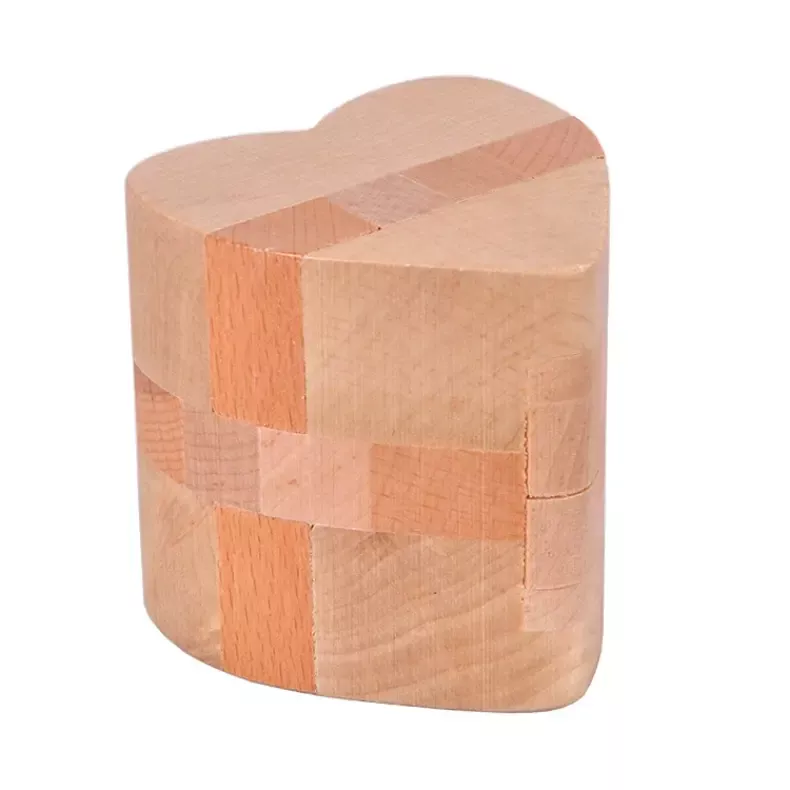
King Wen Of Zhou Heart Lock Puzzle, tell a story, making them wonderful display pieces.
Some of the best desk objects aren’t even traditional puzzles but combine functionality with a puzzle-like assembly, such as the clever
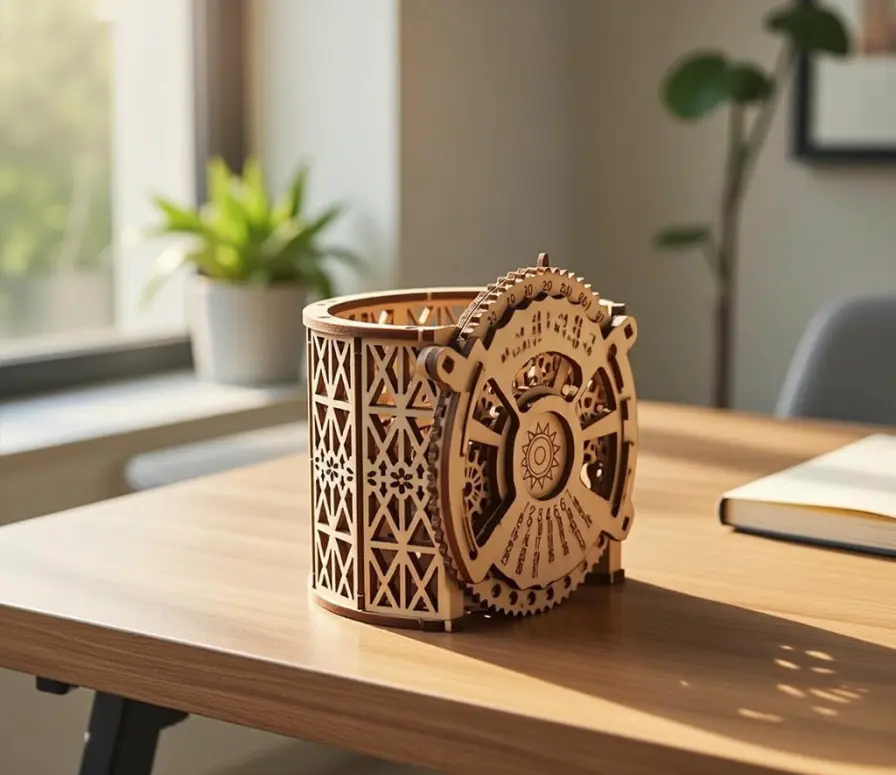
Wooden Desk Organizer With Perpetual Calendar Puzzle Pen Holder. But for pure aesthetic appeal, it’s hard to beat the way light interacts with acrylic.
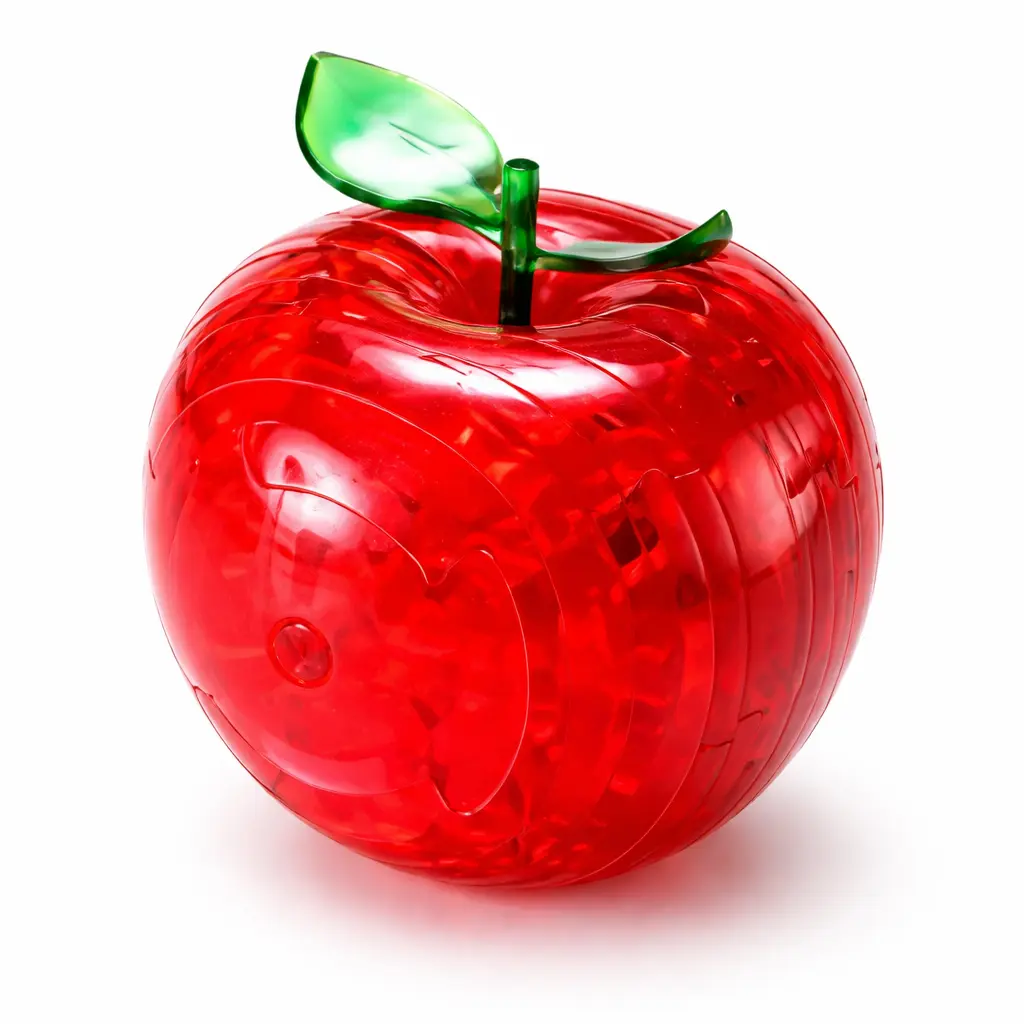
The 44-piece 3D Crystal Apple Puzzle is an outlier in this list, but it’s earned its place. It’s an assembly puzzle, not a brain teaser. You stack the translucent, crystal-like pieces in a specific order around a central rod. The process is methodical and calming. The final result, however, is what makes it special. It’s a gorgeous object that looks far more expensive than it is, catching the light on my windowsill in a way that no metal or wood puzzle can. It’s the perfect 60-minute project that leaves you with something genuinely beautiful.
Frequently Asked Questions
1. What is the hardest metal puzzle?
This is the most common question, and the answer is “it depends.” For officially rated difficulty, the Hanayama “Enigma” is famously tough. However, I find that puzzles requiring dozens of sequential moves are more tedious than difficult. The hardest puzzle is the one whose core logic you just don’t see. For some, it might be a simple ring puzzle; for others, it’s a complex sequential box. Don’t chase difficulty; chase the “aha!” moment.
2. Are Hanayama puzzles good?
Yes, they are the industry standard for a reason. Hanayama’s cast puzzle series offers exceptional quality for the price, with a huge range of difficulties and clever designs. They are a fantastic entry point and a brand that even seasoned collectors respect. Many of the puzzles we sell are inspired by the same design principles that make the Hanayama line so successful.
3. How do you solve a metal puzzle without instructions?
You’re not supposed to use instructions! The entire point is the process of discovery. If you get stuck, the best thing to do is put it down for a day. Seriously. Let your subconscious work on it. If you’re truly desperate, look for a video of only the first move, which is often enough to get you on the right path without spoiling the entire solution. When you’re really stumped and need a break, a simple digital challenge like a classic snake game can reset your brain before you try again.
4. Are these puzzles good for managing anxiety or stress?
For many people, absolutely. Their tactile nature and the demand for single-minded focus can be incredibly grounding. Fiddling with a puzzle like the Double Fish can be a meditative act. The key is to approach it with curiosity, not pressure. If you start getting frustrated, it’s no longer relaxing. The goal isn’t to solve it quickly; it’s to become absorbed in the process. We’ve curated a list of desk puzzles specifically for stress relief that are perfect for this purpose.
5. What’s a good metal puzzle to gift someone who is a total beginner?
I’d recommend the Metal Orbit Ring Cast Puzzle. It looks intriguing but not intimidating. Its solution is clever but doesn’t require dozens of steps, so the payoff comes relatively quickly. It provides a perfect introduction to the kind of non-linear thinking these puzzles require. Plus, its small size and durability make it a great pocket object.
6. How durable are these cast metal puzzles?
Extremely. You are far more likely to lose a piece than to break one. Cast zinc alloy or stainless steel puzzles can be dropped, tossed in a bag, and handled for years without issue. The finish might show some light wear over time, which I think adds to their character—like a well-worn tool. Wooden puzzles are more susceptible to humidity and pressure, but modern laser-cut kits are surprisingly robust.
7. Can my 10-year-old solve these?
Some of them, yes. But the “for adults” label isn’t just about small parts. It’s about the type of patience required. Many children are brilliant at spatial reasoning but get frustrated when a solution isn’t immediate. A better starting point for younger puzzlers might be assembly kits, where they can see constant progress.
8. What’s the difference between a disentanglement puzzle and a sequential discovery puzzle?
Disentanglement puzzles, like most of the metal ones here, present you with all the pieces at the start. The goal is simply to take them apart and put them back together. Sequential discovery puzzles, which are often intricate metal and wooden puzzle boxes, are different. You must find hidden tools within the puzzle itself to advance to the next step. They are a whole other level of challenge and expense.
9. How should I clean and maintain my metal puzzles?
A simple wipe with a soft, dry cloth is usually all that’s needed. For puzzles with intricate grooves, a soft toothbrush can remove dust. Avoid harsh chemicals or polishes, as they can damage the patina or finish. For wooden puzzles, keep them out of direct sunlight and away from extreme humidity.
10. Is “solving” a puzzle the same as “understanding” it?
This is the most important question. No, they are not the same. Anyone can accidentally solve a puzzle. Understanding it means you can visualize the entire solution in your mind before you touch it. It means you can hand it to a friend, watch them struggle, and know exactly which wrong assumption they are making. The goal should always be understanding, not just solving.
11. Do the puzzles get easier once you’ve solved a few?
Yes and no. You won’t magically know the solution to a new puzzle, but you will build up a mental toolkit of common mechanisms and tricks. You’ll learn to spot red herrings and identify the types of movement that are most likely to be part of the solution. Your hands learn what to feel for. You get better at the process of solving, which is far more valuable.
12. What do I do with a puzzle after I’ve mastered it?
This is the best part. You become its ambassador. Leave it on the coffee table. Hand it to friends when they come over. Watch them go through the same cycle of frustration, curiosity, and eventual triumph that you did. A solved puzzle isn’t a dead object; it’s a story you can now share with others.
The Secret Isn’t Inside the Box
When I finally separated that Cast Coil puzzle, the heavy bronze piece resting in my palm, I felt a quiet sense of victory. But it wasn’t the loud, fist-pumping kind. It was the calm satisfaction of a connection made, a secret understood. The puzzle hadn’t changed; I had.
These objects are more than just brain teasers or desk toys. They are teachers of a quiet, forgotten skill: the art of patient observation. They remind us that not every problem can be solved with more force or faster thinking. Some locks only open when you stop trying to pick them and simply listen for the click.
So here is my final recommendation. Don’t buy a dozen puzzles. Pick one. Pick the one that speaks to you visually, the one you want to hold. Put it on your desk and live with it for a week. Resist the urge to Google the answer. The solution isn’t the prize. The prize is the shift in your own thinking it takes to get there.