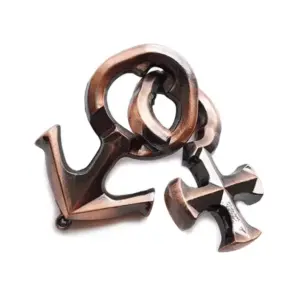
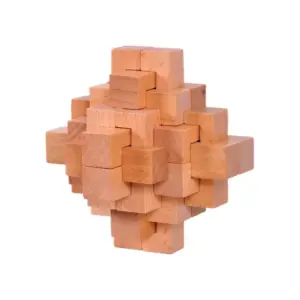
The third time the chrome-plated ring snagged on a microscopic burr inside the brass housing, I did what any sane person would do: I set the puzzle down, walked into the kitchen, and spent ten minutes staring at a bag of coffee beans. My thumbs were sore, my ego was bruised, and I was convinced the manufacturer had accidentally welded the thing shut.
That was six years and over 200 mechanical puzzles ago. Today, my desk is a graveyard of “unsolvable” metal enigmas that eventually surrendered their secrets. If you’re currently wrestling with a tangled mess of zinc alloy, let me tell you the first thing I learned: your hands are lying to you. They want to pull, twist, and force. But in the realm of high-quality cast puzzles, force is a confession of failure.
The secret to how to solve metal puzzle challenges isn’t found in the strength of your grip, but in your ability to map “negative space.” Most people look at the metal; they should be looking at the air around it. This article is the distillation of hundreds of hours spent fiddling, failing, and finally feeling that unmistakable “click” of a solve. We’re going to break down the mechanics, the mindset, and the specific pieces that will either make you feel like a genius or drive you to early retirement.
The First Rule of Metal Mechanics: Stop Pulling
When you first pick up a mechanical puzzle, your primate brain takes over. You want to pull the two pieces apart to see where they catch. This is the fastest way to get a puzzle permanently jammed. Metal puzzles, specifically those made from zinc alloy or brass, are machined with tolerances that can be thinner than a human hair.
Most disentanglement puzzles rely on a principle I call “The Gate.” There is exactly one orientation where the geometry of Piece A matches the void in Piece B. If you are applying even a pound of pressure, you create friction. That friction masks the subtle “drop” that happens when you find the gate. I’ve spent forty-five minutes on a single move only to realize the piece wanted to fall through by its own weight, but my white-knuckled grip was holding it back.
If you find yourself getting frustrated, it’s time to change your perspective. Instead of trying to “solve” it, try to “explore” it. Move the pieces to their extreme limits. Where do they stop? Why do they stop? If you can’t move forward, move backward. Often, the solution involves a move that feels like you’re putting it further together rather than taking it apart.
Mapping the Negative Space
To truly understand how to solve metal puzzle designs, you have to visualize the “voids.” Imagine the puzzle is made of water. Where could the water flow? Many beginners get stuck because they only see the solid bars. They don’t see the notches, the thinned-out sections, or the hidden grooves.
Take a look at the Alloy S Lock Puzzle. Priced at a modest $10.99, it looks like a simple “S” shape trapped in a frame. But the “S” isn’t just a shape; it’s a key. The solve requires you to align the curves of the “S” with the internal thickness of the frame. I’ve had this one on my desk for three weeks, and I still find the tactile feedback of the zinc alloy sliding against itself incredibly grounding. It’s a masterclass in spatial reasoning.
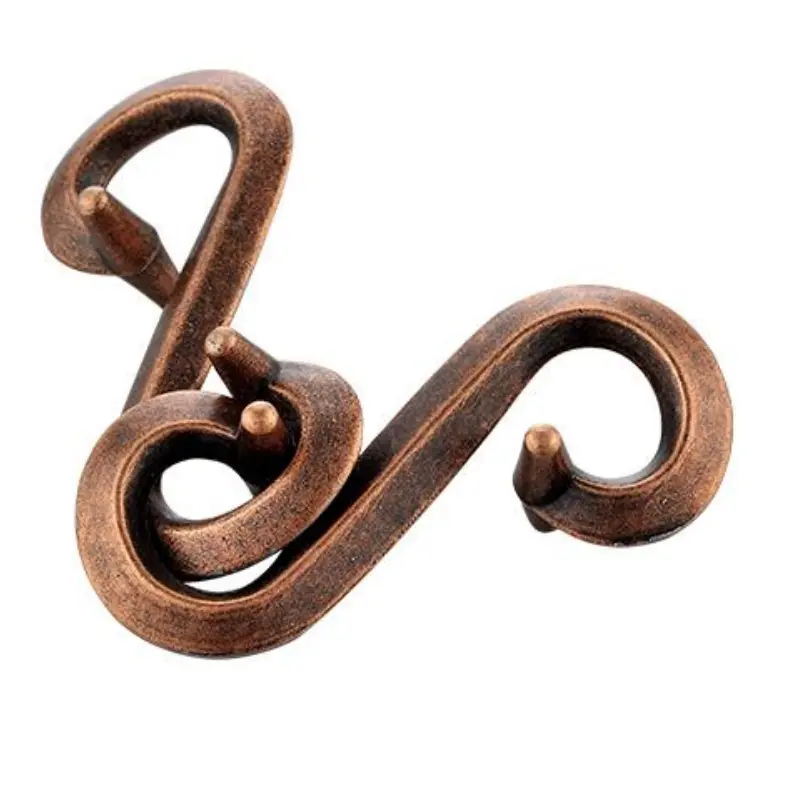
Alloy S Lock Puzzle — $10.99
If you find that your brain is hitting a wall with metal, it might be worth stepping back to look at the cognitive benefits most puzzle sellers won’t mention regarding sequential logic. Sometimes the mental block isn’t the puzzle; it’s your approach to the sequence.
Magic Golden Mandarin Lock
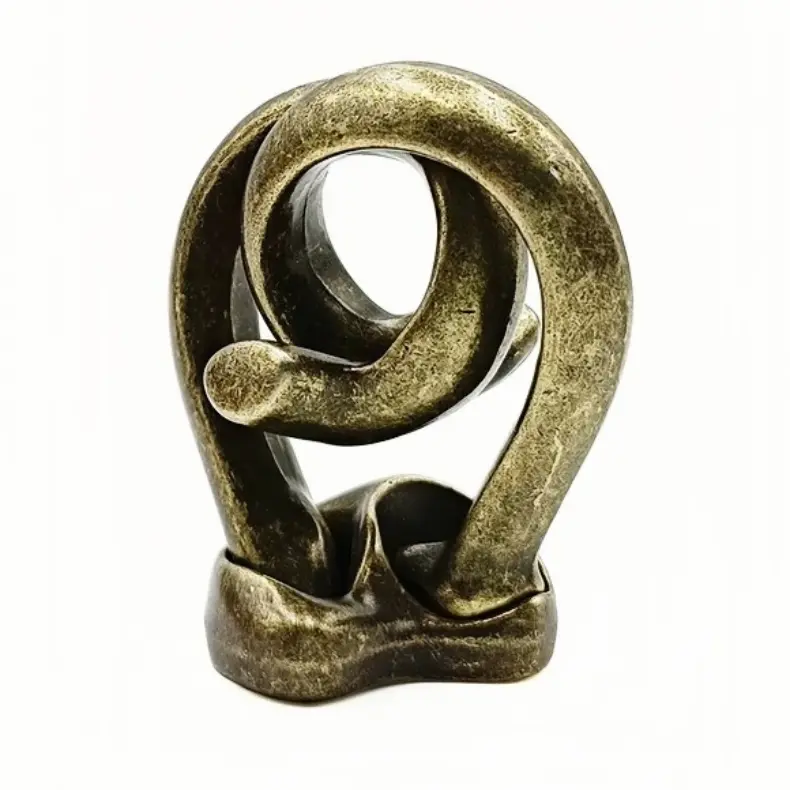
The Magic Golden Mandarin Lock ($18.98) is a perfect example of why “looking” is better than “doing.” When I first unboxed this, the three interlocked components—the base and the two curved columns—looked like a solid sculpture. It has a weight that feels significant in the palm, a hallmark of decent die-casting.
The challenge here is the “concealed path.” Unlike wire puzzles where you can see every loop, this lock hides its mechanism within the interaction of the columns. You have to rotate them in a specific sequence that feels counter-intuitive. I found that if I closed my eyes and felt for the “slack” in the metal, I could find the path faster than by looking at it. It’s a sophisticated piece for under twenty dollars, and the golden finish gives it a shelf presence that belies its price. Who should skip this? If you have very large hands, the internal clearances might feel a bit fiddly. But for everyone else, it’s a brilliant exercise in patience.
Why Your First Solve Will Be an Accident (The Peak Moment)
Here is a truth that most “expert” reviewers won’t admit: about 40% of my first-time solves happen by accident while I’m doing something else. I’ll be on a long Zoom call or watching a documentary, my hands idling with a puzzle, and suddenly—clink—it’s apart.
There is a profound lesson in this. When we focus too hard, we develop “attentional blink.” We look for the same solution over and over, ignoring the subtle movement that actually works. This “accidental solve” is actually your subconscious mind performing a “brute force” search of the physical space without the interference of your ego.
I once handed a high-difficulty puzzle to a 10-year-old and a mechanical engineer. The engineer spent twenty minutes talking about load-bearing points and tolerances. The 10-year-old solved it in three minutes because she wasn’t “solving” it—she was just playing with it. This is the “Peak Moment” of the hobby. The moment you realize that “play” is a more powerful analytical tool than “logic.” If you’re stuck, stop thinking. Start fiddling.
If you find that your “fiddling” needs a reset, I often recommend taking five minutes to play a quick digital pattern game. It clears the “spatial cache” in your brain, allowing you to return to the metal with fresh eyes.
Shuriken Dart Edition Gear Puzzle
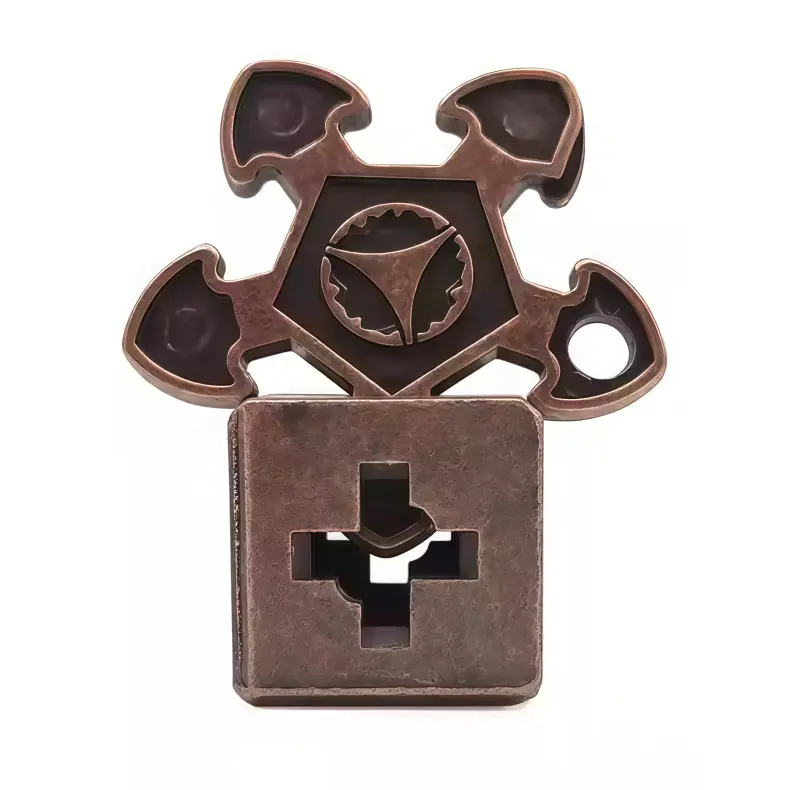
Inspired by ninja artistry, the Shuriken Dart Edition Gear Puzzle ($12.77) is one of those puzzles that looks dangerous but feels like silk. It’s forged from a high-strength alloy, and you can feel the precision in the “teeth” of the gear.
This isn’t just a disentanglement; it’s a gear-based rotational challenge. You have to align the points of the shuriken with the internal gear tracks. My personal verdict? It’s the best “fidget” puzzle in this price bracket. Most gear puzzles feel crunchy or cheap; this one has a premium weight. The limitation is the finish—after a few months of heavy use, the points of the dart might show some wear, but that just adds to the “battle-worn” aesthetic. It’s a fantastic desk toy for someone who needs to keep their hands busy during intense deep-work sessions.
The Three Pillars of Metal Mechanics
To master how to solve metal puzzle varieties, you need to recognize which “family” a puzzle belongs to.
- The Rotational Sequence: These puzzles require you to turn pieces in a specific order. If you try to do Step 3 before Step 1, the pieces won’t even budge. The Interlocking Metal Disk Puzzle ($14.99) is the poster child for this.
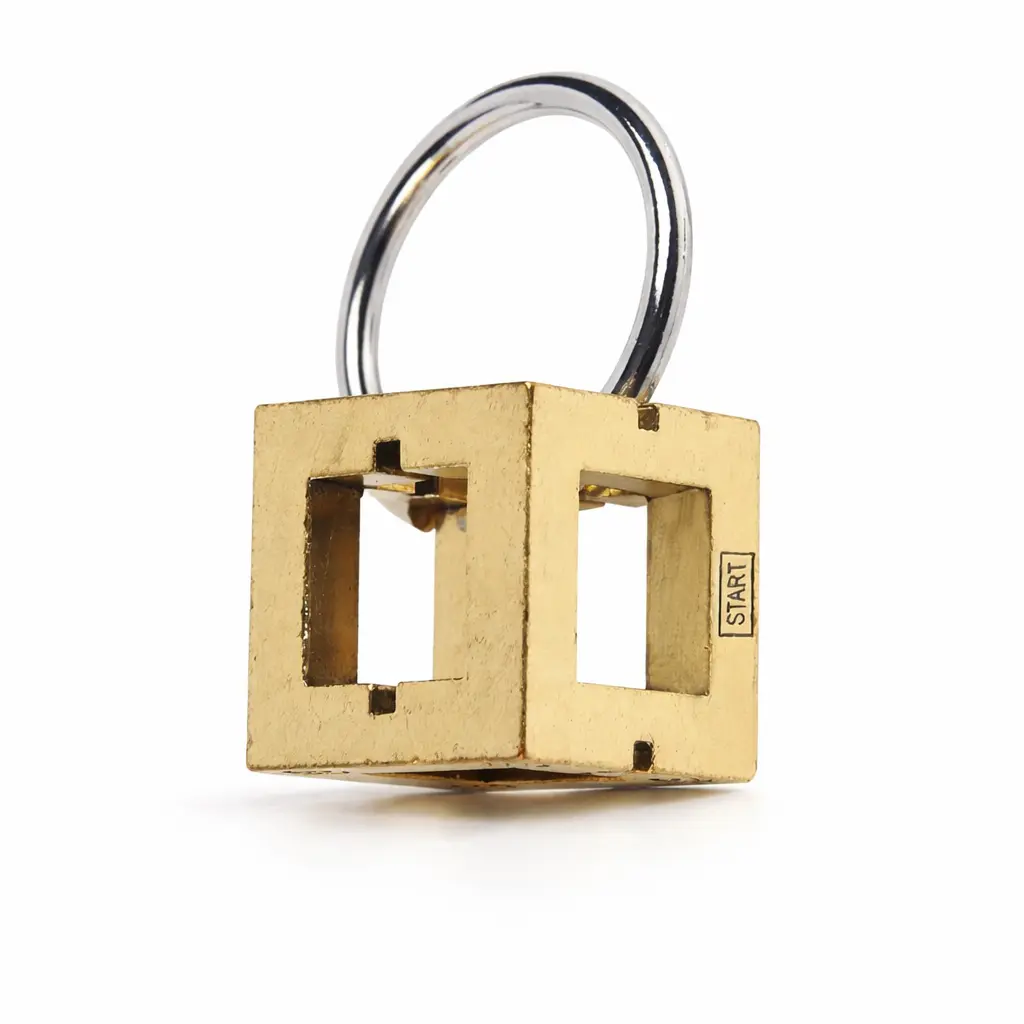
- The Maze/Path: These involve navigating a ring or pin through a hidden or visible track. The Brass Cube Maze Puzzle Keychain ($16.99) fits this perfectly.
- The Interlock (The “Burr”): These are about how multiple pieces support each other. Removing one piece “unlocks” the rest.
Interlocking Metal Disk Puzzle
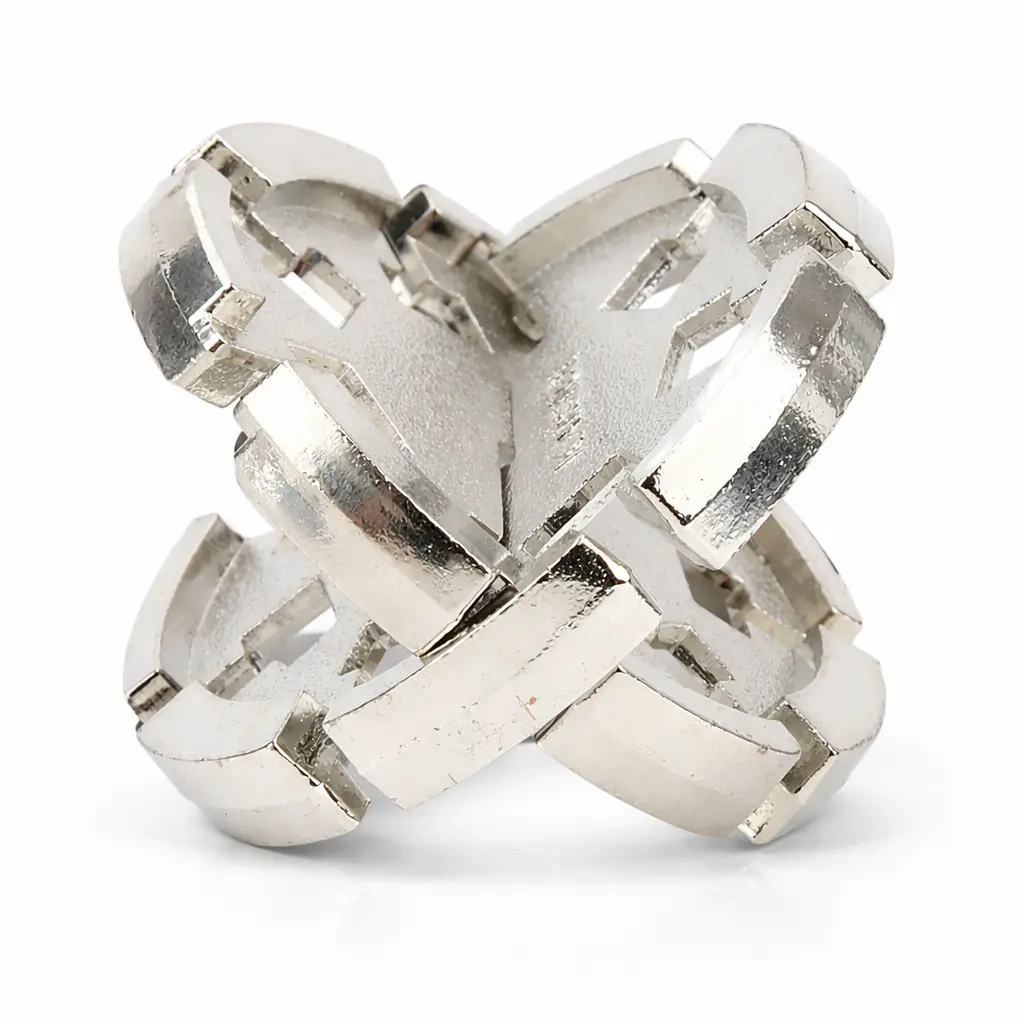
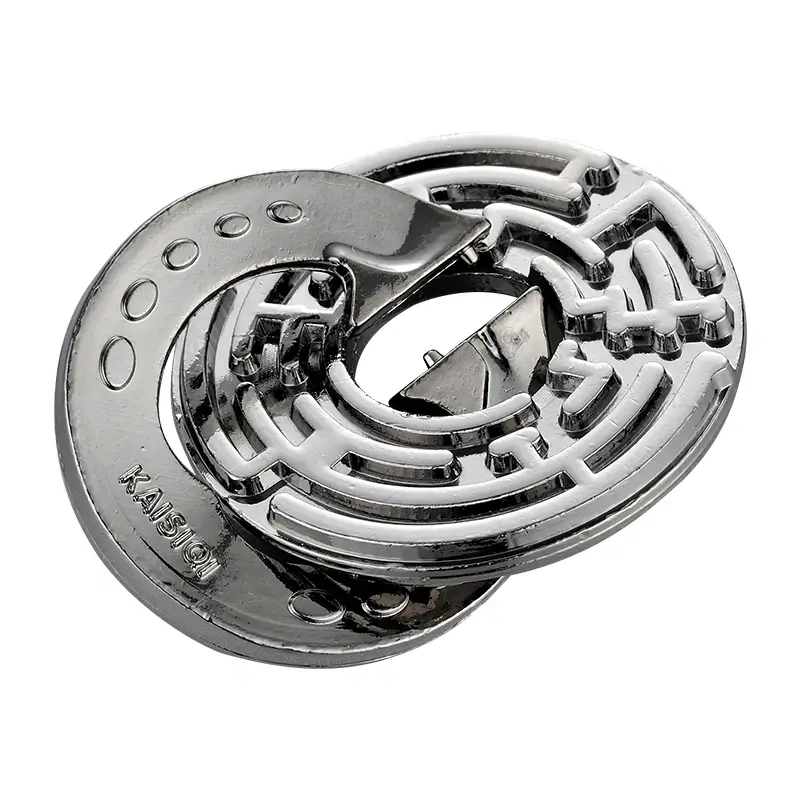
At about 1.8 inches, the Interlocking Metal Disk Puzzle ($14.99) is surprisingly heavy for its size. It consists of two disks that rotate through slotted positions. The “Aha!” moment comes when you realize that the disks don’t just rotate; they have to be at a specific “depth” to clear the next notch.
I’ve carried this in my pocket for weeks. It’s the perfect “no-screen” reset. When I’m stuck on a paragraph or a line of code, I pull this out. The sequence is logical enough that once you solve it, you can “speed run” it, which is incredibly satisfying. It’s less about a “trick” and more about a clean, mechanical sequence. If you enjoy this type of geometry, you might also find that advanced solvers often graduate to sequential discovery boxes that offer a similar, albeit more complex, path.
Metal Screw Interlock Riddle
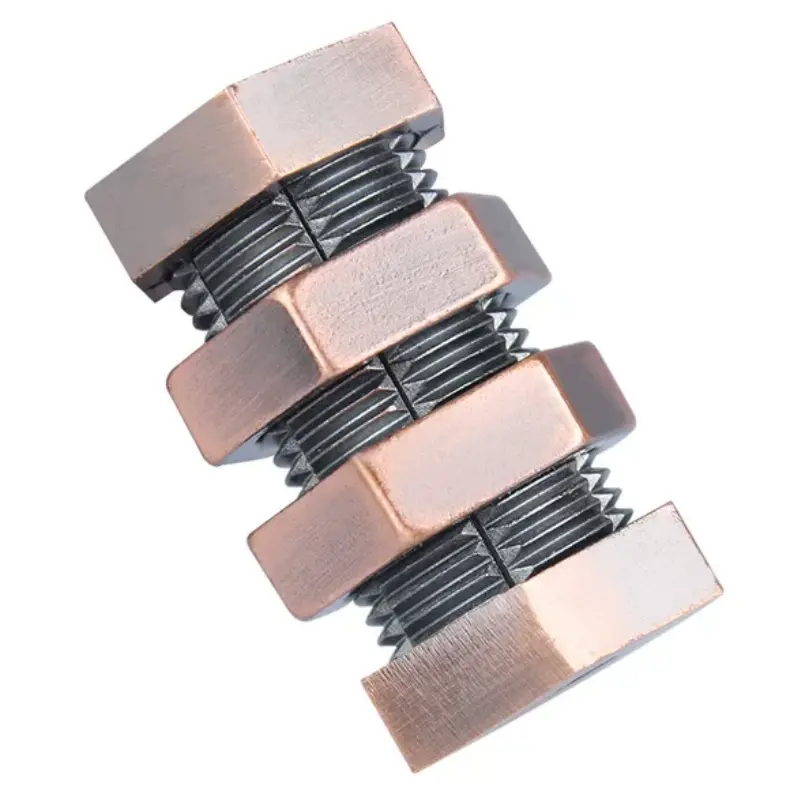
The Metal Screw Interlock Riddle ($13.98) is a bit of a devious outlier. Most people see a screw and a nut and think “Lefty-loosey.” Wrong. This puzzle uses a complex mechanical lock hidden within the threads.
One wrong turn here doesn’t just stall you; it can make the puzzle significantly harder to reset. I’ve seen friends spend twenty minutes twisting the nut the wrong way, convinced they were “almost there.” Precision is the name of the game here. Each move matters. It’s a great gift for the “handyman” in your life who thinks they know everything about hardware. Just be prepared for them to be humbled.
The Wearable Enigma: Why Rings Are Different
Puzzle rings are a separate beast. They aren’t just about taking things apart; they are about the geometry of reassembly. If a standard metal puzzle is a “lock,” a puzzle ring is a “fabric.”
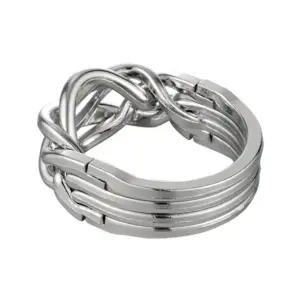
4 Band Puzzle Ring
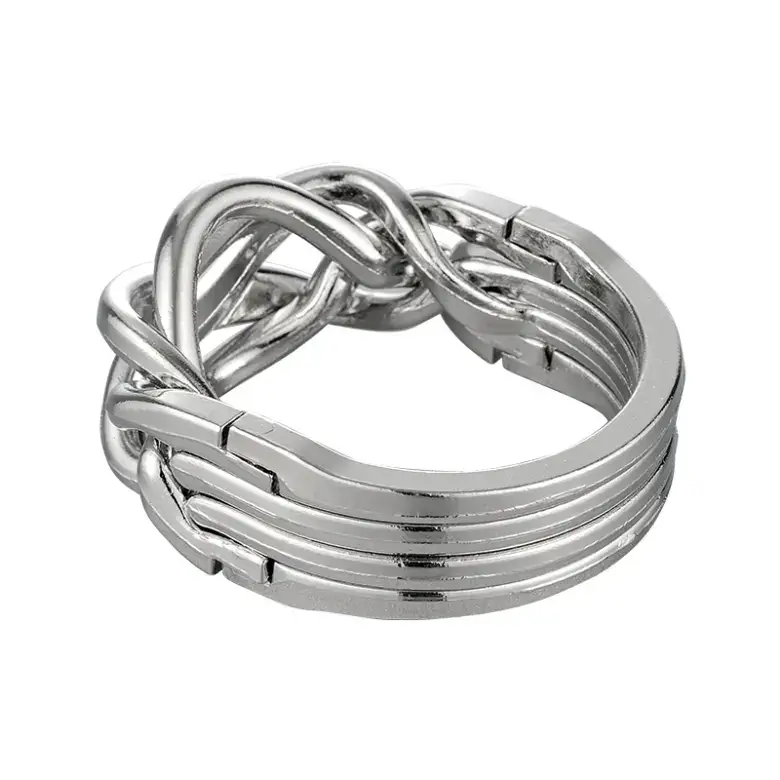
The 4 Band Puzzle Ring ($11.99) is a classic for a reason. It’s a series of interlocking bands that, when assembled, form a single ring. If you take it off and it collapses, you’re in for a long afternoon.
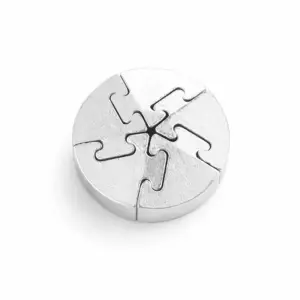
The trick to the 4-band is identifying the “anchor” bands. Two of them have a specific curve that holds the other two in place. I’ve found that the best way to solve this is to lay it flat on a table rather than trying to do it in the air. This ring is made of robust metal, so it won’t bend under the pressure of your frustrated attempts to force the bands together. For about twelve dollars, it’s one of the best value-to-frustration ratios you can buy. If you find the metal bands too restrictive, looking into the physics of a spinning metal disc can provide a different kind of tactile inspiration.
When “Metal” Meets “Lock”
Traditional Chinese-style locks and “escape” puzzles add a layer of narrative to the solve. You aren’t just separating metal; you’re “freeing” something.
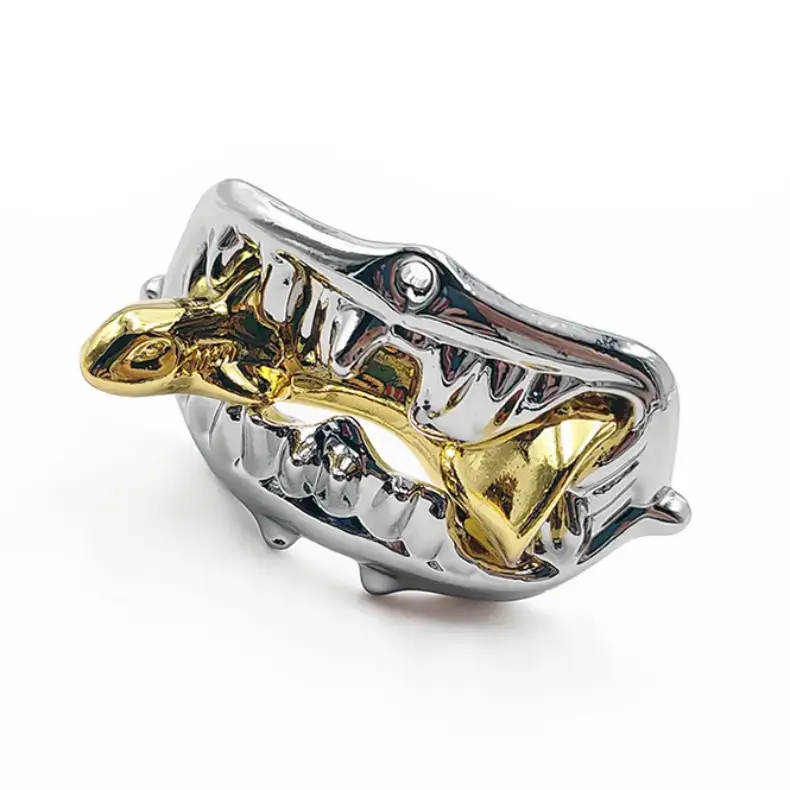
The Monster Mouth Fish Escape Puzzle ($11.89) and the Maze Lock Dual-Sided Maze Puzzle ($9.99) represent this category well. The “Fish Escape” is particularly good for beginners because the goal is visual—get the fish out of the mouth. The Maze Lock, however, requires “reverse thinking.” You have to switch between two distinct maze tracks on either side of the lock. It’s a brutal exercise in spatial memory.
If you’re feeling overwhelmed by the mechanical complexity, taking a break with classic arcade-style challenges can help reset your dopamine levels before you dive back into the maze.
Comparison of Top Metal Challenges
Metal Puzzle FAQ: Everything You’re Afraid to Ask
How do you solve a metal disentanglement puzzle?
The key is to stop pulling. Most metal puzzles rely on finding a “gate”—a specific alignment where the pieces slide past each other without friction. If you are applying pressure, you are likely missing the gate. Instead, move the pieces gently to their extreme limits and look for where the “negative space” (the gaps) align. Sometimes, the move that feels like it’s putting the puzzle further together is actually the first step to taking it apart.
Are metal puzzles harder than wooden ones?
Not necessarily harder, but they are less forgiving. Wood has a slight “give” or flex; metal does not. If a metal puzzle isn’t moving, it’s because the geometry doesn’t allow it. This makes metal puzzles more “honest”—you can’t cheat them by forcing a piece. Metal also allows for much tighter tolerances, which means the hidden mechanisms in sequential discovery boxes can be much more complex.
My puzzle is stuck. Did I break it?
It’s very difficult to break a cast metal puzzle like the Alloy S Lock Puzzle ($10.99) unless you use tools. If it’s stuck, it’s usually because a piece has rotated into a position that wasn’t intended by the designer (a “legal” but “dead-end” move). Try to backtrack by rotating the pieces without pulling them. Often, a gentle shake will realign the internal components.
What is the easiest metal puzzle for a beginner?
I always recommend the Interlocking Metal Disk Puzzle ($14.99). It has a clear, logical sequence that isn’t based on a “trick” but on simple rotational geometry. It’s satisfying to solve and even more satisfying to put back together.
How do I clean my metal puzzles?
Most are made of zinc alloy or brass. A simple microfiber cloth is usually enough. Avoid using water, as it can get trapped in the tight tolerances and cause oxidation over time. If a puzzle feels “gritty,” a tiny drop of dry PTFE lubricant can make the mechanism feel like new again.
Can these be solved by children?
Absolutely, though I’d recommend ages 8 and up. Younger children tend to try to force the metal, which can lead to pinched fingers or jammed pieces. Puzzles like the Monster Mouth Fish Escape Puzzle ($11.89) are great for kids because the goal is very visual and the pieces are large enough to handle easily.
Is the “Silver Heart” really silver?
The Silver Heart Lock Puzzle ($18.89) is silver-plated metal. It’s durable and has a lovely shine, but it’s not solid sterling silver. It’s designed as a brain teaser first and an ornament second. It’s a perfect gift for a partner because of the cultural symbolism, but the real value is in the “clever interlocking mechanism.”
What if I lose the solution?
Most enthusiasts actually throw the solution away! The fun is in the discovery. If you’re truly stuck, there are thousands of video tutorials online. However, I’d suggest trying a translucent assembly guide first to help you visualize how pieces fit together in 3D space.
Why do some metal puzzles have a “smell”?
That’s the “smell of metal”—usually a reaction between the oils on your skin and the zinc or brass. It’s perfectly normal. High-quality puzzles like the Brass Cube Maze Puzzle Keychain ($16.99) will develop a patina over time, which many collectors actually prefer.
Do I need tools to solve these?
Never. If you feel like you need a screwdriver or pliers, you are definitely doing it wrong. These are designed to be solved with fingers and brainpower alone.
What’s the difference between “cast” and “wire” puzzles?
Cast puzzles, like the Shuriken Dart Edition Gear Puzzle ($12.77), are made by pouring molten metal into a mold. This allows for complex, 3D shapes. Wire puzzles are made by bending metal rods. Cast puzzles generally feel more “premium” and often have more hidden secrets.
How long should a solve take?
A “Medium” difficulty puzzle usually takes me 20 to 45 minutes for the first solve. But the real challenge is often putting it back together. I’ve solved puzzles in five minutes and then spent two hours trying to remember how they went back.
Are puzzle rings actually wearable?
Yes! The 4 Band Puzzle Ring ($11.99) is a fully functional piece of jewelry. Just be careful—if you take it off to show a friend and they drop it, you’ll be the one spending the next hour reassembling it.
Why are some puzzles so much more expensive?
Price usually reflects the complexity of the mold and the quality of the finish. A puzzle like the Magic Golden Mandarin Lock ($18.98) costs more because it has multiple moving parts and a high-quality plating.
What should I buy if I’m a “fidgeter”?
The Brass Cube Maze Puzzle Keychain ($16.99) is the ultimate EDC (Every Day Carry) fidget. It’s small, it’s on your keys, and navigating the chrome ring through the maze is a great way to kill time in a waiting room.
Start Here, Then See Where the Rabbit Hole Goes
After 200 puzzles, I’ve realized that the “solve” isn’t the point. If you just wanted the pieces apart, you could use a hacksaw. The point is the conversation between your brain and the metal. It’s about that moment when the frustration melts away and you realize that the solution was there the whole time—you just had to stop trying so hard.
If you’re looking to start your own collection, don’t go for the hardest one first. Start with the Interlocking Metal Disk Puzzle. It taught me more about patience and rotational geometry than any of the $100 boutique puzzles I’ve bought since. It’s clean, it’s heavy, and it’s honest.
Once you’ve mastered the disk, the world of mechanical challenges opens up. You might find yourself drawn to the ancient history of the Baguenaudier or the modern engineering of gear puzzles. Whatever you choose, remember: don’t pull. Just listen to the metal.
If this clicked for you, our guide to the cognitive benefits of mechanical play goes deeper into why our brains crave these cold, silver enigmas. The “Aha!” moment is waiting—you just have to find the gate.