The third time the humidity-swollen cedar pin stuck inside my favorite Japanese trick box, I didn’t reach for a mallet. I set the box down, made a pot of strong coffee, and realized I was done fighting with organic materials. There is a romanticism to a wooden puzzle for adults—the scent of the grain, the warmth of the finish—but after testing over 200 mechanical enigmas, I’ve learned that wood is a fickle partner. It breathes, it warps, and it often lacks the sub-millimeter precision required for a truly “impossible” solve.
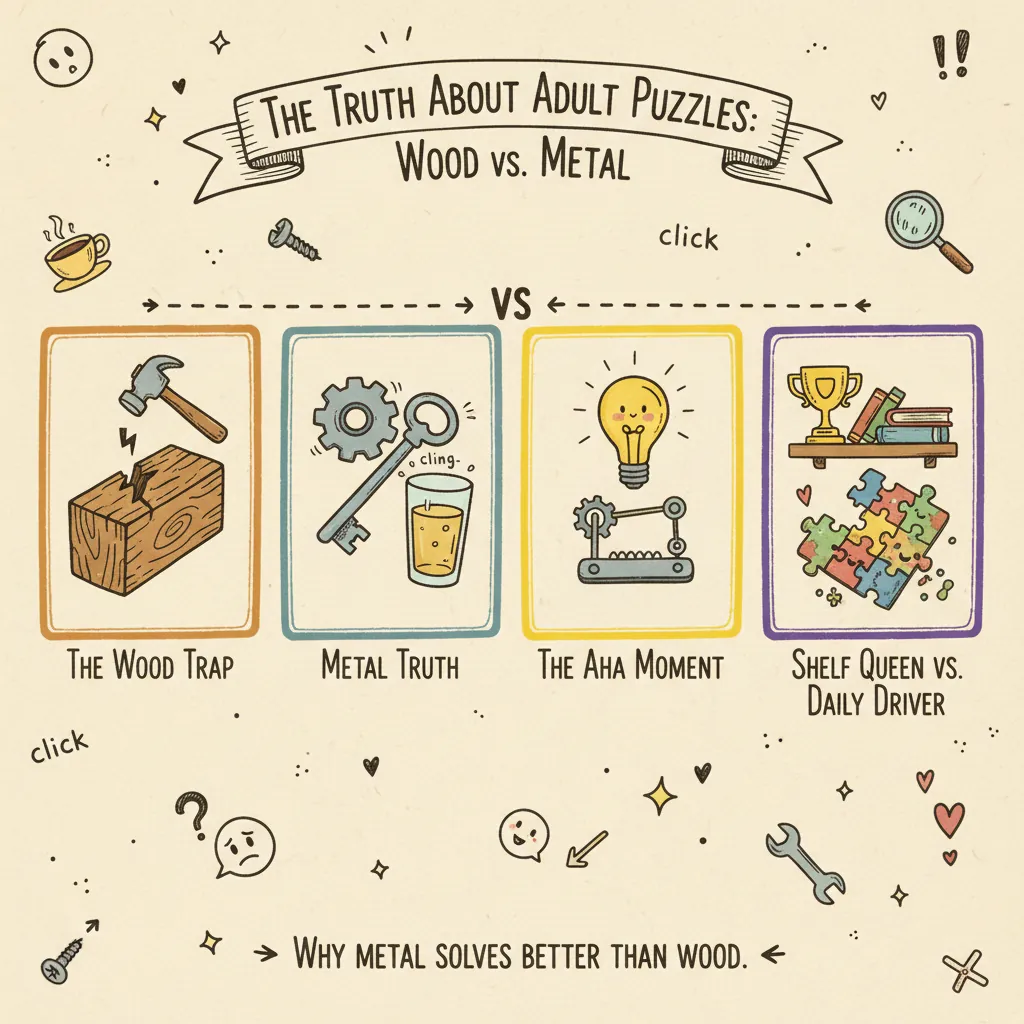
My thesis is simple: the best adult puzzles aren’t defined by their material, but by the mechanical soul of their mechanism. While we often search for “wooden puzzles” because they look sophisticated on a bookshelf, the most satisfying “Aha!” moments usually come from the cold, heavy, and unyielding world of cast metal. Metal doesn’t care about the humidity in your office. It doesn’t splinter when you apply a pound of pressure in the wrong direction. It offers a level of tactile feedback—a literal “click” of logic—that wood simply cannot replicate.
In this deep dive, I’m going to explain why your next “wooden” challenge should probably be made of zinc alloy, how to spot a puzzle that’s all style and no substance, and why the most expensive option is rarely the most rewarding.
The Tactile Lie: Why Wood Isn’t Always the Winner
We are conditioned to think of wood as the “adult” choice. It feels artisanal. It feels like something a Victorian polymath would have on their desk. And while the history of the jigsaw puzzle is rooted firmly in hand-cut mahogany and plywood, the modern landscape has shifted.
When you pick up a high-quality wooden puzzle, you’re often dealing with laser-cut plywood. It’s precise, yes, but it’s essentially a 2D solution extruded into 3D space. You’re following a path that was burned into the material. Compare that to a cast metal puzzle, where the entire geometry is three-dimensional from the moment of its birth in a mold. The mechanical complexity of modern puzzles has reached a point where metal is the only medium that can keep up with the designer’s imagination.
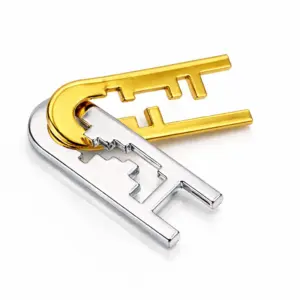
I’ve spent forty-five minutes trying to slide a wooden panel that was simply stuck due to a change in the weather. That’s not a logic challenge; that’s a carpentry problem. When I switched to testing pieces like the Cast Keyhole Gold & Silver ($13.99), the frustration vanished. There, the resistance isn’t the material; it’s your own lack of spatial reasoning. You can feel the metal sliding against metal with the smoothness of a bank vault. If it doesn’t move, it’s because you haven’t found the path yet—not because the puzzle needs to be sanded.
The “Whimsy” Factor and the History of Adult Puzzles
If you are dead-set on wood, you’re likely looking for “whimsies.” These are the specially shaped pieces—birds, tools, or figures—that are tucked into the larger image of a jigsaw. They are a delightful callback to the 19th century, but for the serious mechanical hobbyist, they are often a distraction. They make the puzzle easier, not harder.
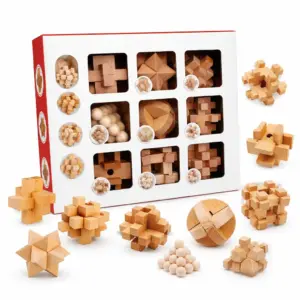
The true evolution of the wooden puzzle for adults moved away from the jigsaw and toward the “trick box” or the “interlocking burr.” These are intricate wooden trick boxes with hidden compartments that require a specific sequence of moves to open. They are the pinnacle of wooden puzzling, but they are also incredibly fragile. I’ve seen $200 Japanese Himitsu-Bako boxes ruined by a single forced move.
This is why I often steer my colleagues toward “disentanglement” puzzles. These are the “free the ring” or “separate the pieces” challenges. They occupy the same intellectual space as a complex burr puzzle but come in a much more durable, pocket-friendly format. They are the “daily drivers” of the puzzle world. You can toss them in a bag, leave them on a coffee table, or fiddle with them during a conference call without worrying about a stray drop of water ruining the finish.
When Precision Trumps Aesthetics (The Case for Cast Metal)
Most people assume that metal puzzles are for kids because they’re sold in toy stores. That is a massive misconception. The tolerances in a high-end cast puzzle are often measured in microns. If you are off by a hair’s breadth, the pieces won’t pass through each other. This creates a “gatekeeper” effect: the puzzle literally refuses to let you solve it until your logic is perfect.
Take the Cast Galaxy 4-Piece Silver ($14.88). I’ve handed this to mechanical engineers who were humbled within ten minutes. It’s four identical pieces that look like they should just fall apart. But they don’t. They nestle into each other in a way that requires you to visualize the internal voids of the metal. It’s a masterclass in spatial memory. You might get it apart by accident—I did the first time—but putting it back together? That’s where the real “adult” challenge lies. It’s a test of whether you were actually paying attention or just getting lucky.
Cast Keyhole Gold & Silver
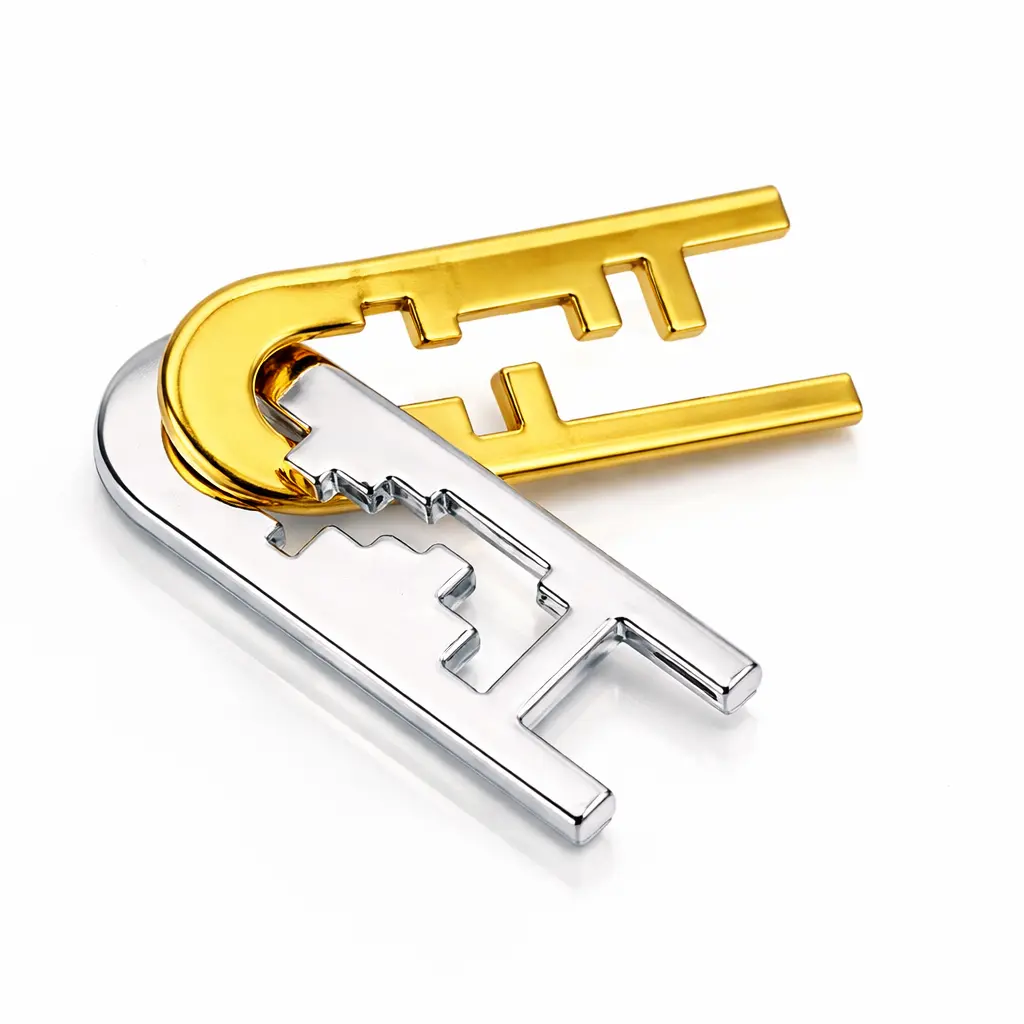
The Cast Keyhole Gold & Silver ($13.99) is the puzzle I give to people who say they “don’t do puzzles.” It looks like two keys that have been melted and merged. The finish is a high-polish chrome and gold-tone that feels substantial in the hand—none of that hollow, tinny feeling you get from cheap knockoffs.
The solve is a 3D maze hidden in plain sight. You have to navigate the notches of the silver key through the internal channels of the gold one. What I love about this piece is the “false hope” it provides. You’ll find a path that seems to lead to freedom, only to realize you’ve just looped back to the start. It’s a compact 75mm, making it the ideal desk toy for those who need to keep their hands busy while thinking through a complex problem. I’ve had this one on my desk for three weeks, and even though I know the solution, I still pick it up just to feel the pieces glide. It’s a perfect entry point for someone who wants the sophistication of a wooden puzzle for adults but the reliability of precision engineering.
Cast Galaxy 4-Piece Silver
If you want to understand the difference between “difficult” and “frustrating,” spend an hour with the Cast Galaxy 4-Piece Silver ($14.88). Most puzzles have a clear “start” and “end.” The Galaxy is a swirling mess of curves that defies easy categorization.
When I first held this, I thought it was broken. The pieces flex and rotate in ways that feel like they’re defying the laws of physics. The disassembly is actually the “easy” part; it’s the reassembly that earns this puzzle its legendary status in hobbyist forums. You have to track how each arm nests into its partner’s sleeve. One wrong orientation, and you’re back to square one. It demands a level of focus that is rare in our screen-dominated lives. It’s not about brute force—if you’re pulling hard, you’re doing it wrong. It’s about the subtle, dancing movements of the four arms. It’s the closest thing to a “flow state” I’ve found in a $15 object.
Dual Seahorse Gold & Silver
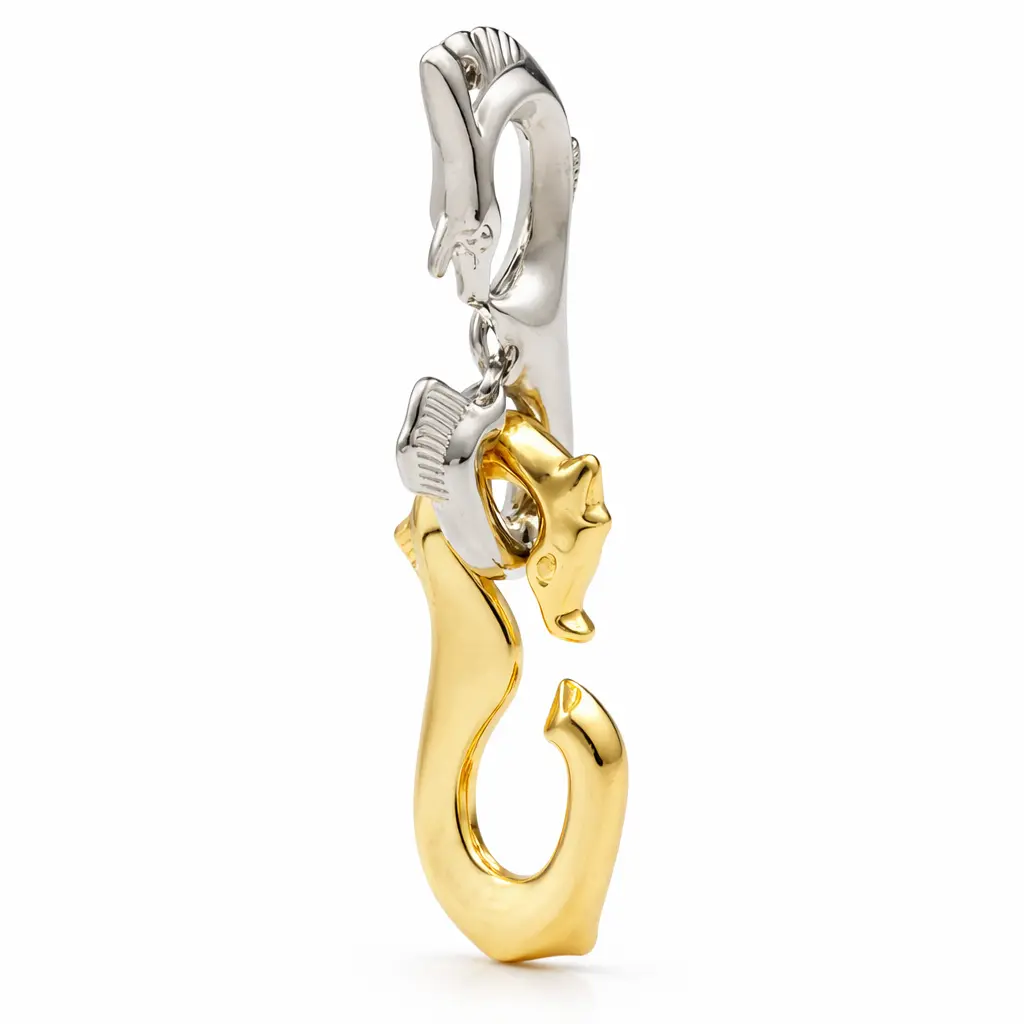
The Dual Seahorse Gold & Silver Brain Teaser ($14.99) is a masterclass in the “hidden mechanism.” At first glance, it looks like a simple disentanglement puzzle where you just need to find the right angle to slip the seahorses apart. However, once you start fiddling with it, you realize there’s a threaded element at play.
This is where the “adult” part comes in. A child will try to yank them apart. An adult will stop, observe the way the pieces rotate, and realize they are essentially unscrewing a mystery. The mirror-polished finish makes it look more like a piece of jewelry than a toy. I’ve seen these used as “worry stones” because the weight and the texture are so calming. It’s a medium-difficulty solve, but the satisfaction of that final separation is immense. It’s a great gift for someone who appreciates the finer details—the kind of person who likes triangular logic challenges for those new to 3D shapes but wants something that feels more “premium.”
Antique Bronze Metal Keyring
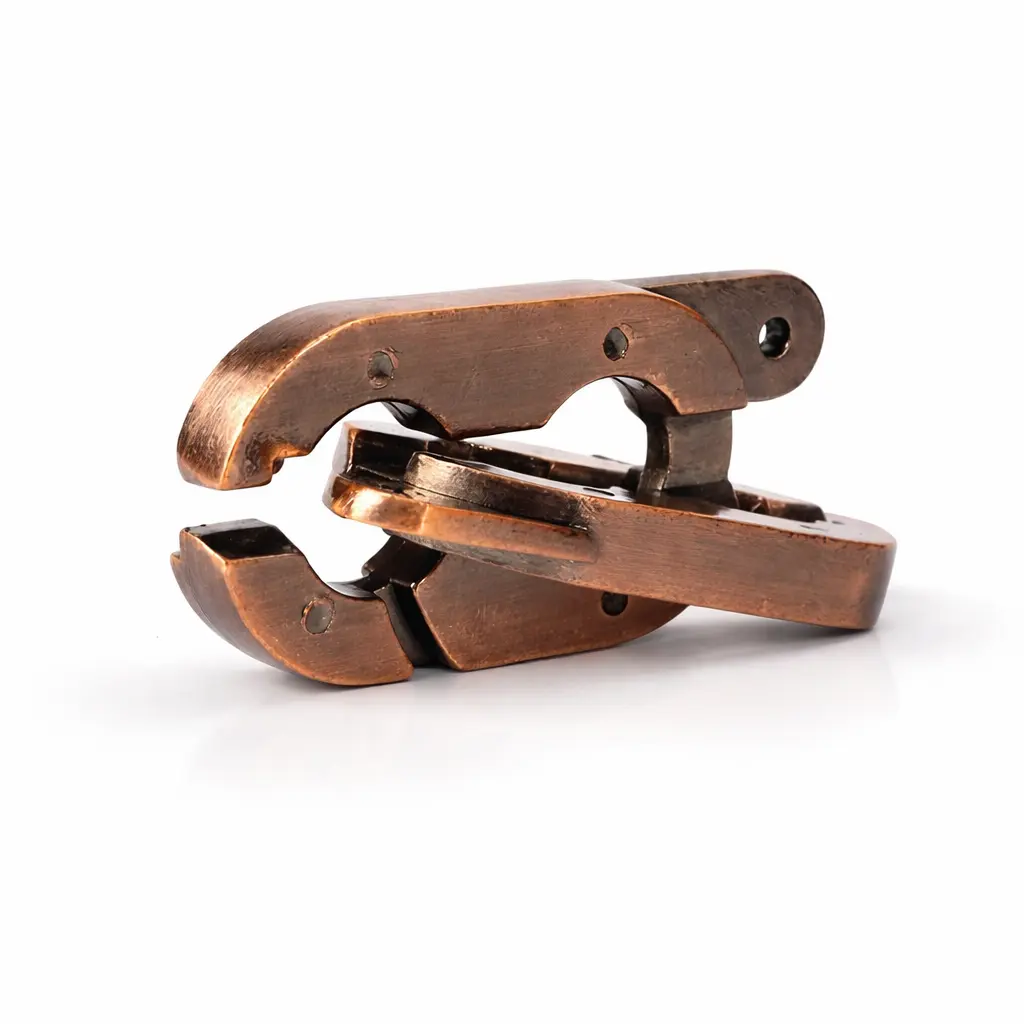
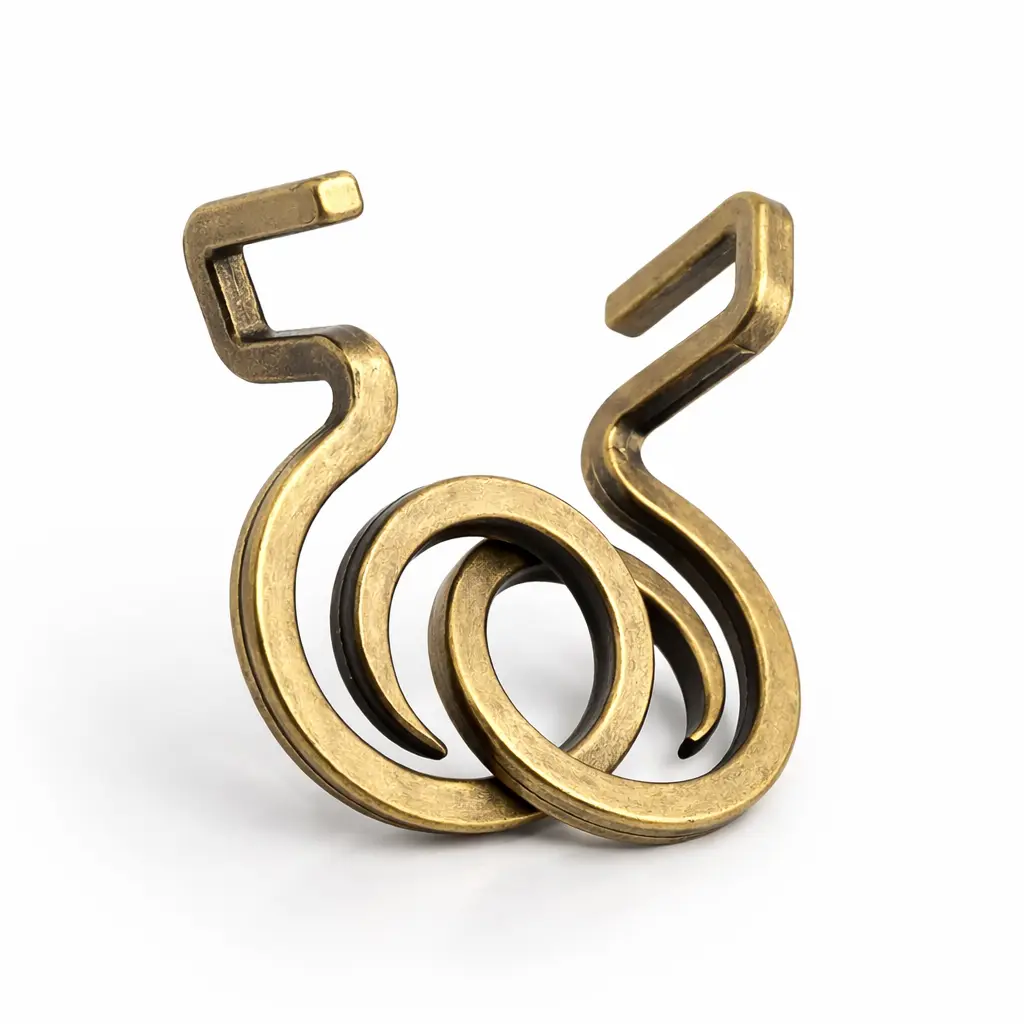
I’m a sucker for a good patina. The Antique Bronze Metal Keyring Puzzle ($14.99) is the only puzzle I actually carry on my person. Most “keychain puzzles” are junk—stamped metal that bends if you look at it wrong. This is a solid cast piece with a hand-finished patina that actually gets better as the oils from your hands wear into the bronze.
The challenge is a classic two-piece disentanglement. It’s not going to take an expert hours to solve, but it’s the perfect “reset” tool. When I’m stuck on a paragraph or a line of code, I pull this out and solve it twice. It forces the brain to switch from linguistic processing to spatial reasoning. For under fifteen dollars, it’s a piece of functional art that outlasts any fidget spinner or plastic toy. It’s the “minimalist” version of the wooden puzzle for adults, stripping away the bulk and leaving only the core logic.
Metal Orbit Ring Cast Puzzle
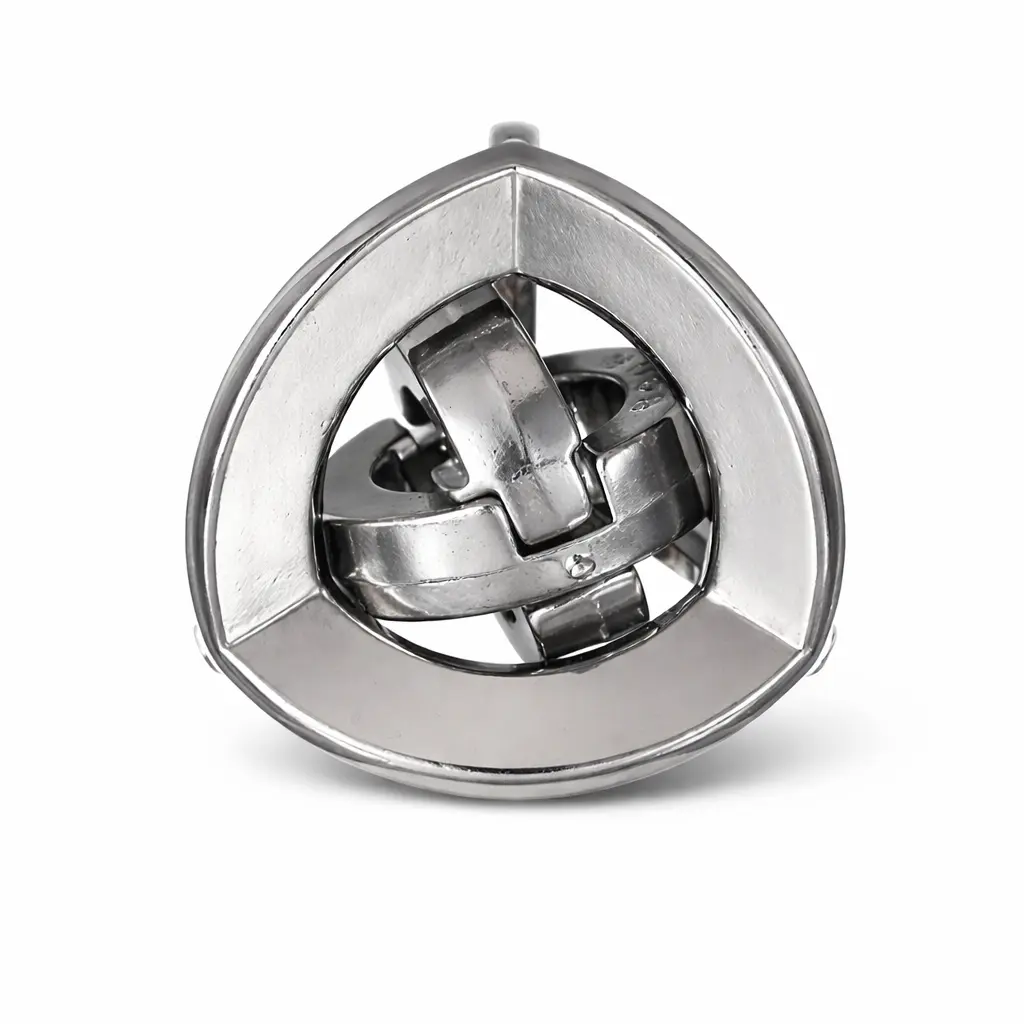
The Metal Orbit Ring Cast Puzzle ($14.99) is the one that looks the most “impossible.” It consists of a triangular frame and two nested C-rings. It looks like a solid sculpture. There is no obvious starting point.
At 44mm, it’s tiny, but it’s dense. This is a puzzle that rewards observation over action. If you just start twisting, you’ll end up in a knot. But if you hold it up to the light and look at the way the rings intersect the frame, the “orbit” path begins to reveal itself. It’s a geometric riddle that feels very “NASA-chic.” I’ve found that people who enjoy digital logic games like the sliding-tile 2048 tend to gravitate toward this one because it’s about calculating moves ahead of time. It’s a clean, modern take on the brain teaser that looks fantastic on a glass desk.
The Psychology of the “Aha!” Moment
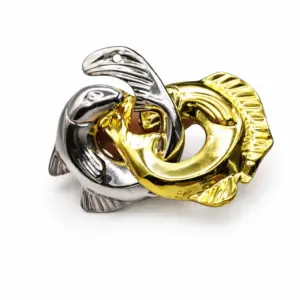
Why do we do this to ourselves? Why spend thirty minutes trying to separate two pieces of fish-shaped metal like the Gold Silver Double Fish Metal Puzzle ($13.99)?
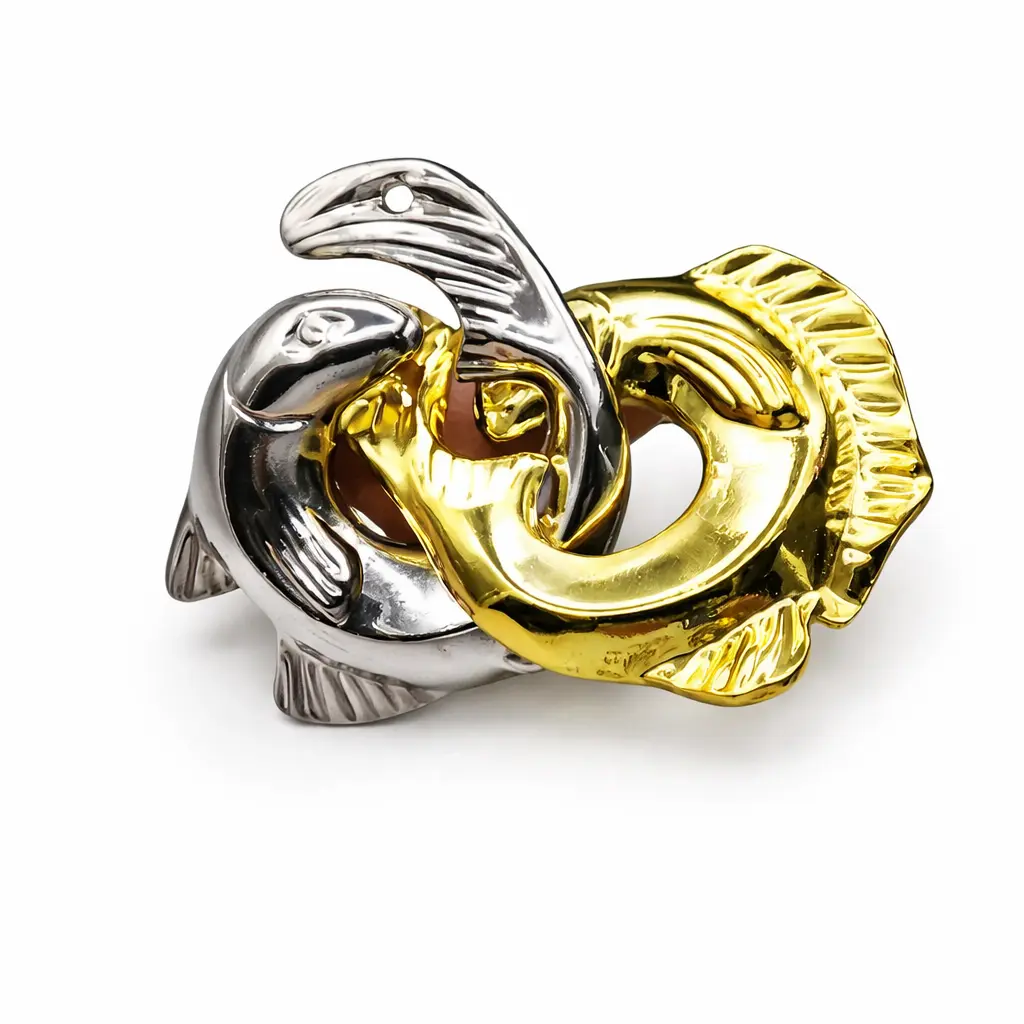
The “Aha!” moment—that sudden flash of insight where the solution becomes obvious—is a dopamine hit unlike any other. Neuroscientists have actually studied this. When you solve a mechanical puzzle, your brain isn’t just “finding the answer.” It’s restructuring its internal model of the world. You thought the pieces could only move X and Y, but suddenly you realize they can move Z.
This is why “forced” solves are so unsatisfying. If you pull a puzzle apart through sheer strength, you haven’t learned anything. You haven’t had the “Aha!” moment. You’ve just broken a toy. This is another reason I prefer metal. You can’t force a well-made cast puzzle. It forces you to be smarter. It forces you to be patient. In a world of instant gratification, a puzzle is a rare object that demands you earn your reward.
How to Spot a “Shelf Queen” vs. a Daily Driver
Not all puzzles are meant to be solved repeatedly. In the hobby, we have “Shelf Queens”—puzzles that look beautiful but are either too easy or too fragile to be played with often. Many a wooden puzzle for adults falls into this category. They are ornaments first and puzzles second.
A “Daily Driver,” on the other hand, is a puzzle you can solve, hand to a friend, watch them struggle, and then solve again yourself. It should be:
1. Durable: It shouldn’t have parts that can snap or bend.
2. Washable: If it’s being passed around, you want to be able to wipe it down.
3. Reset-able: The reassembly should be just as fun as the disassembly.
The Cast Hook Metal Brain Teaser ($13.99) is a classic daily driver. It’s two identical hooks. It looks so simple it’s almost insulting. But the sequence of rotations required to separate them is counter-intuitive. It’s the kind of puzzle that people “solve” by accident and then spend twenty minutes trying to figure out how they did it. That “reverse solve” is a hallmark of a great design.
THE PEAK: The 45-Minute Wall and the Secret of “Soft Eyes”
After testing hundreds of these things, I’ve noticed a pattern. Most adults hit a wall at the 45-minute mark. This is the point where your initial theories have failed, your fingers are a bit tired, and you start to think the puzzle is defective.
This is the most important moment of the solve. This is where you have to switch from “hard eyes” to “soft eyes.”
“Hard eyes” is when you’re looking for a specific gap or a specific move. You’re trying to force the puzzle to fit your theory. “Soft eyes” is when you stop looking for the solution and start just feeling the pieces. You let your hands explore the limits of the movement without an agenda.
I remember testing a prototype of a new disentanglement set. I was convinced it was impossible. I was frustrated. I was using “hard eyes.” I set it down, went for a walk, and when I came back, I picked it up without thinking. My hands moved in a way my brain hadn’t authorized, and the pieces just… fell apart. The solution was a diagonal slide I had dismissed as impossible because I was looking too closely at the vertical lines.
This is the hidden lesson of the mechanical puzzle: our assumptions are usually our biggest obstacles. Whether you’re working on tactile magnetic cubes that help build spatial awareness or a complex metal maze, the moment you stop trying to “beat” the puzzle is the moment it opens for you.
The Gift-Giver’s Dilemma: Wood, Metal, or Plastic?
If you’re buying for someone else, the material sends a message.
– Wood says “I think you’re sophisticated and appreciate craftsmanship.”
– Metal says “I think you’re smart and enjoy a mechanical challenge.”
– Plastic says “I forgot your birthday and stopped at the drugstore.” (Unless it’s a high-end speed cube, but that’s a different article.)
For a 30th or 40th birthday, I almost always go with a two-tone metal piece. Something like the Gold Fish & Silver Coral Reef Cast ($13.99) has that “executive gift” look but provides a genuine challenge. It doesn’t look like a toy; it looks like a sculpture that happens to be a riddle.
If the recipient is a “fidgeter,” the
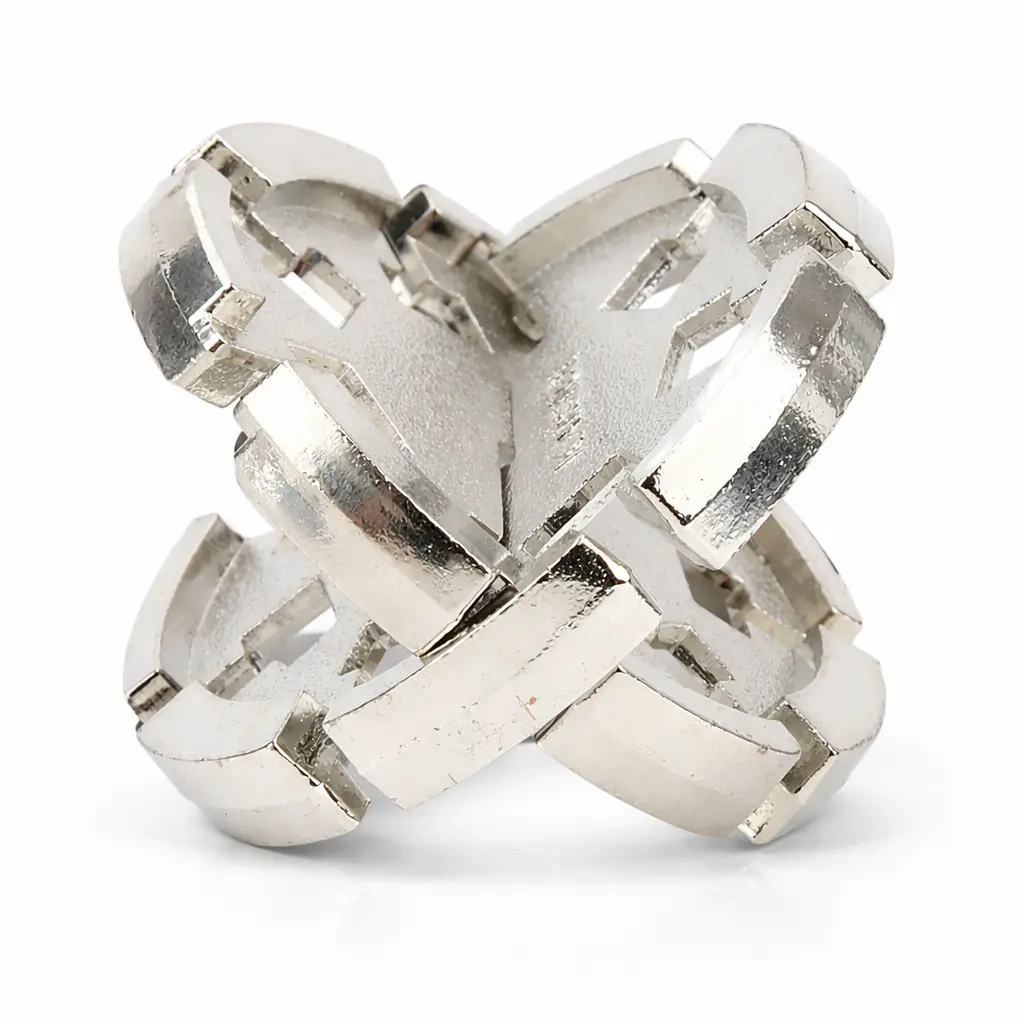
Interlocking Metal Disk Puzzle ($14.99) is the winner. It’s flat, pocketable, and has a very rhythmic solution. It’s less about a one-time “Aha!” and more about a repeating cycle of focus. It’s a great “desk reset” tool for someone with a high-stress job.
Comparing the Top Adult Brain Teasers
If you’re still torn between the options, here is how the heavy hitters stack up in terms of real-world “table time.”
Frequently Asked Questions
How do you solve a wooden puzzle quickly?
Speed is the enemy of the mechanical solve. However, if you’re stuck, the “three-step method” works for both wood and metal: 1. Map the movement (identify exactly where the piece stops), 2. Identify the gate (what specific notch or pin is stopping the movement?), and 3. Change the orientation (try the same move with the puzzle upside down or rotated 90 degrees). Most people forget that gravity plays a role in internal pins. I respectfully disagree with the “solve quickly” mindset—the value of a $15 puzzle is how many minutes of entertainment it provides. If you solve it in 3 minutes, you just paid $5 per minute for your hobby. Take your time.
Are 3D wooden puzzles for adults too difficult for beginners?
It depends on the type. A “3D puzzle” can mean a model kit (like a clock or a car) or a logic puzzle (like a burr). Model kits aren’t “difficult” in a logic sense; they just require patience and steady hands. Logic puzzles, however, can be incredibly daunting. If you’re a beginner, I suggest starting with a “Level 3” or “Level 4” cast metal puzzle before jumping into 12-piece wooden burrs. The metal pieces give clearer feedback, helping you learn the language of puzzles without the frustration of pieces sticking due to friction.
Why are some wooden puzzles so expensive?
You’re paying for the craftsman’s time and the quality of the wood. Exotic hardwoods like ebony or purpleheart are expensive and difficult to machine. Furthermore, high-end wooden puzzles are often “hand-fitted,” meaning a human spent an hour sanding the pieces so they slide perfectly. If you see a “wooden puzzle” for $5 on a big-box store shelf, it’s likely mass-produced plywood that will probably break or stick. For a reliable experience under $20, metal is almost always the better value.
Can these puzzles help with focus or anxiety?
Absolutely. Many people use them as “grounding objects.” When you are focused on the tactile sensation of the
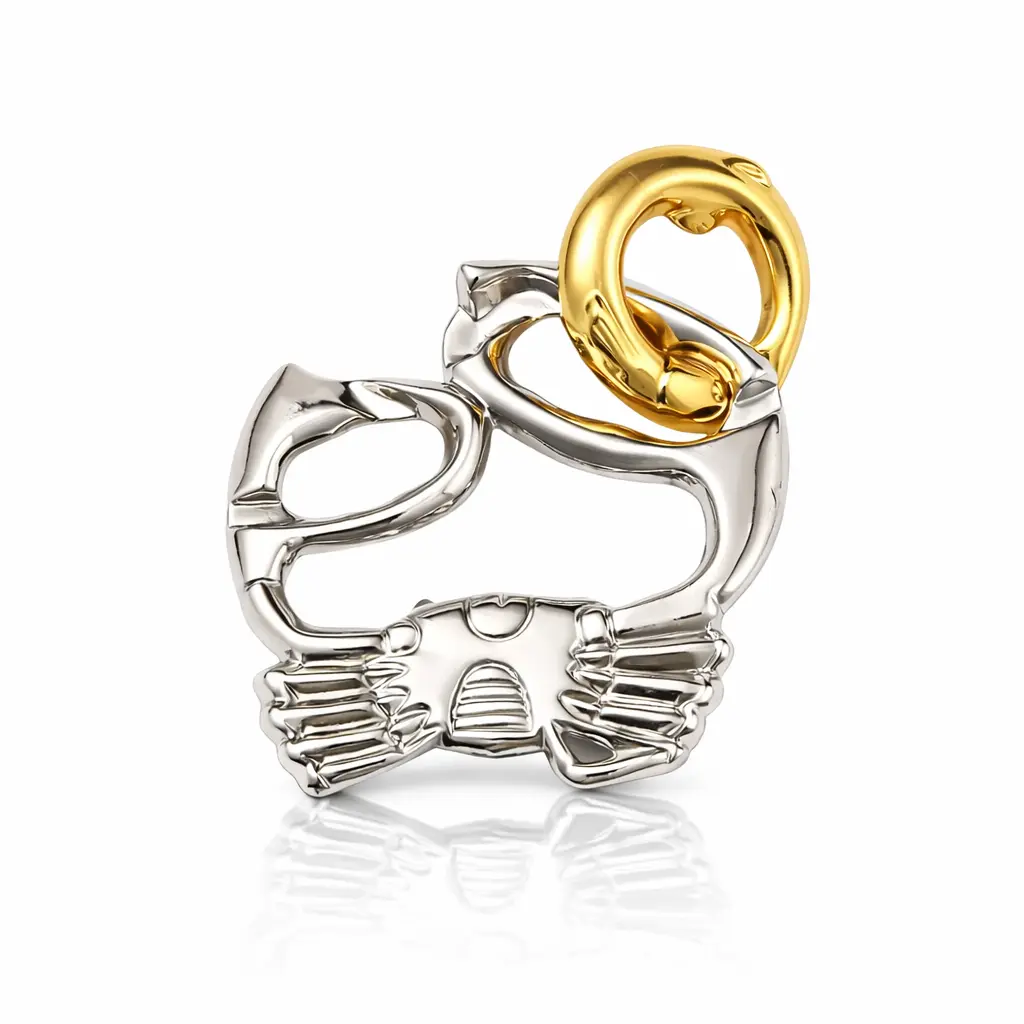
Metal Crab Puzzle ($13.99), your brain has less bandwidth for intrusive thoughts. It’s a form of active meditation. I’ve found that keeping a small puzzle in my pocket helps me stay focused during long meetings where I’d otherwise be checking my phone. It’s a way to reset your attention with rotational sequences without the blue light of a screen.
Do I need tools to solve these?
Never. If you feel like you need a screwdriver, a hammer, or even a bit of WD-40, you are definitely doing it wrong. Mechanical puzzles are designed to be solved with logic and light finger pressure. If you force a piece, you risk “burring” the metal or snapping the wood, which can permanently ruin the solution path. The only “tool” you need is a well-lit room and a comfortable chair.
What happens if I lose the instructions?
Most veteran puzzlers throw the instructions away immediately. The fun is in the discovery. If you’re truly stuck, there are “speed puzzlers” on YouTube who do walkthroughs, but I’d suggest that as a last resort. There is no feeling worse than watching a 30-second video and realizing you were only one move away from solving it yourself.
How do I maintain my metal puzzles?
Unlike wood, which needs specific humidity, metal is low maintenance. A quick wipe with a microfiber cloth is usually enough. For the antique bronze pieces, the “wear” is part of the charm. If a puzzle gets “gritty,” a tiny drop of mineral oil can help, but usually, the pieces are designed to be self-lubricating through use.
Are these suitable for teenagers?
Yes, but they are “adult” puzzles because they require a level of patience that younger children often lack. A 14-year-old who enjoys physics-based balancing games will likely find a cast metal puzzle very rewarding. It’s a great way to bridge the gap between “toys” and “hobbies.”
What is the hardest puzzle in your collection?
Hardness is subjective. Some people are “naturals” at disentanglement but struggle with interlocking pieces. For me, the
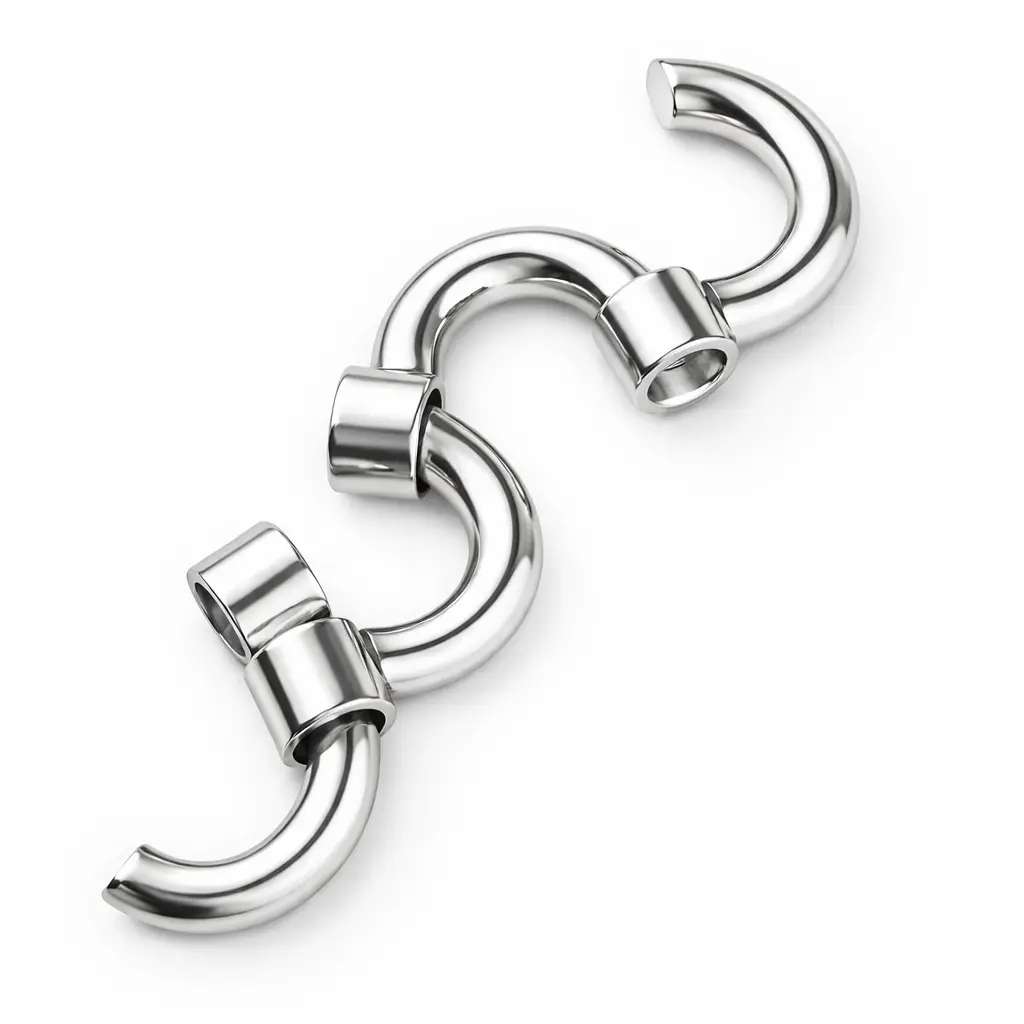
Cast Galaxy 4-Piece Silver — $14.88
Cast Galaxy ($14.88) remains one of the most intellectually taxing because the reassembly is so non-linear. It’s not a sequence of steps; it’s a simultaneous alignment of four different parts.
Is it okay to solve a puzzle once and never touch it again?
That’s how most people treat them, but the real masters “re-master” the puzzle. Can you solve it behind your back? Can you solve it while having a conversation? Can you explain the logic to someone else? A puzzle isn’t “done” just because it’s in two pieces; it’s done when you fully understand the designer’s intent.
Why do some puzzles have different colors?
In the case of the
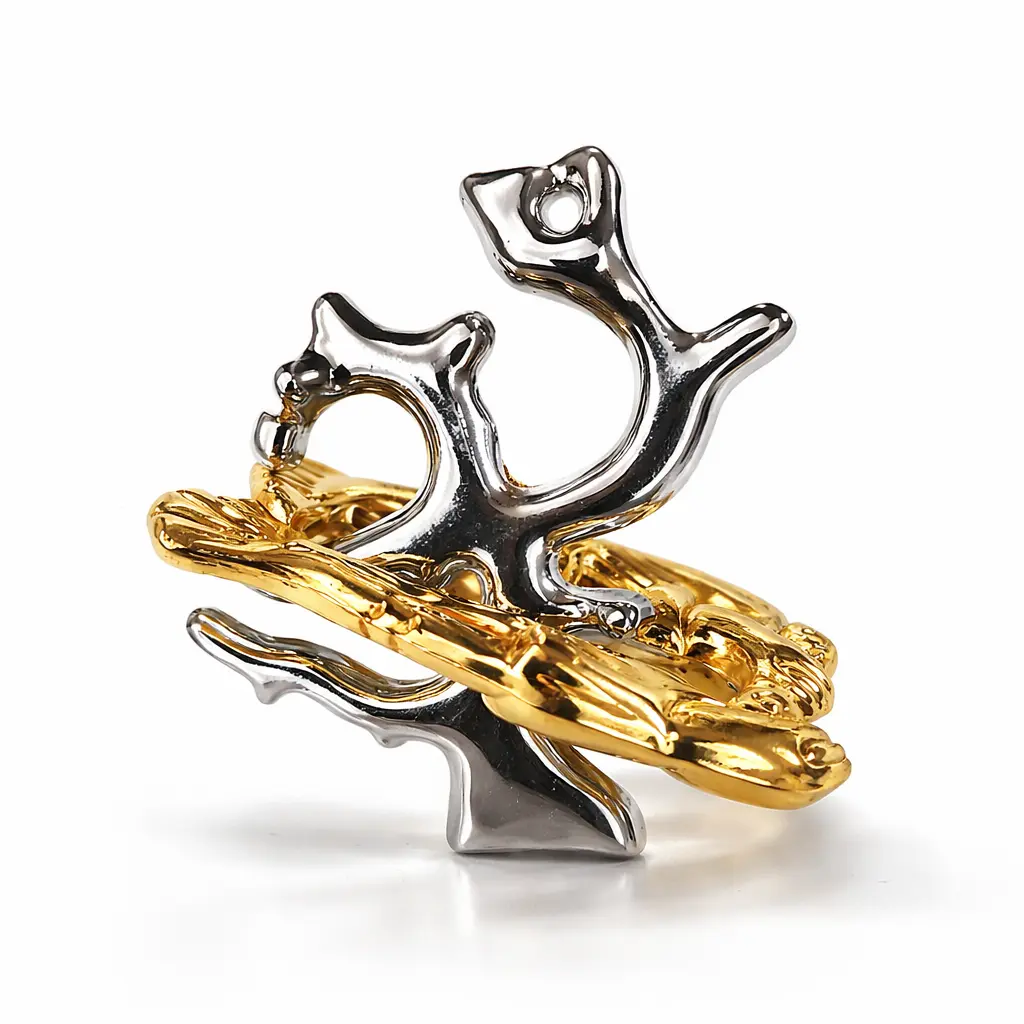
Gold Fish & Silver Coral Reef ($13.99), the two-tone finish isn’t just for looks. It helps you track which piece is which during a complex move. It’s a visual aid that prevents you from getting lost in the geometry. Plus, it just looks better on a shelf.
Are there “fake” versions of these puzzles?
Yes, the market is flooded with “cheap Chinese knockoffs” (to use the Reddit terminology). These are often made of light, brittle “pot metal” that can snap. They have rough edges that make the solve feel “crunchy” rather than smooth. It’s always worth buying from a reputable source like Tea Sip to ensure you’re getting the intended experience.
What 40 Hours of Brass and Frustration Actually Taught Me
I started this journey looking for the “perfect” wooden puzzle for adults, thinking that wood was the only material that felt “real.” I was wrong. What I was actually looking for was intentionality. I wanted an object that had been designed with a specific, hidden logic—an object that respected my intelligence enough to let me fail.
The
Cast Keyhole Gold & Silver — $13.99
Cast Keyhole Gold & Silver ($13.99) taught me more about patience than any self-help book ever could. It taught me that when you feel like you’re stuck in a loop, the answer isn’t to push harder; it’s to look at the problem from a different angle. It taught me that “impossible” is usually just a lack of information.
If you’re ready to graduate from the “shelf queens” and start building a collection that actually challenges you, don’t be afraid to leave the wood behind. Start with the Cast Keyhole ($13.99). It’s the perfect weight, the perfect difficulty, and it will never warp in the rain. Once you’ve mastered that, the advanced sequential discovery boxes will be waiting for you.
The click of two metal pieces finally sliding past each other after an hour of struggle is the most honest sound in the world. It’s the sound of your brain getting a little bit bigger. Don’t settle for a puzzle that just looks smart—get one that makes you smarter.