More Than a Padlock: What a Trick Lock Puzzle Really Is
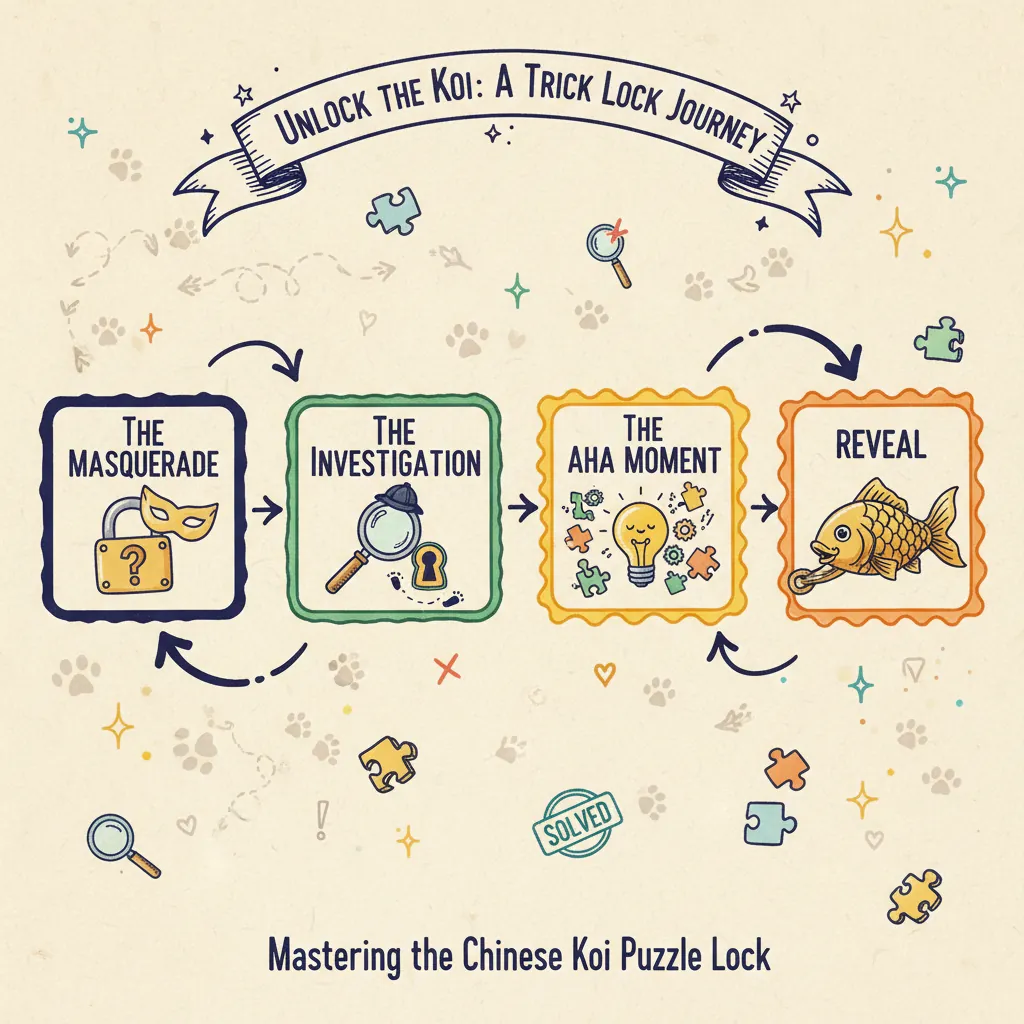
You see a padlock. Your brain immediately runs through the standard procedure: find the key, insert, turn. A trick lock puzzle looks you dead in the eye and laughs at that assumption. This isn’t hardware; it’s a brainteaser wearing a clever disguise. As described by retailers like Kubiya Games, these are objects that “masquerade as ordinary padlocks but conceal clever mechanisms.” The goal isn’t security—it’s revelation. You’re not a locksmith; you’re a detective solving a physical riddle where the “trick” is the entire point.
This places trick locks squarely in the venerable category of mechanical puzzles. Unlike a jigsaw or a Sudoku, a mechanical puzzle is a physical object you must manipulate to achieve a specific goal, often involving dexterity, logic, and aha moments. Think of the interlocking pieces of a burr puzzle or the sequential discovery of a puzzle box. Trick locks are a brilliant sub-genre of this world. They take a familiar, functional object—the lock—and subvert its very purpose. The challenge isn’t in defeating a tumbler mechanism with force or a key, but in discovering the hidden sequence, the secret latch, or the unconventional manipulation the designer baked in. As Brilliant Puzzles notes, what makes each one unique is “the way or ‘trick’ that you need to figure out.”
This is where the Chinese Koi Puzzle Lock becomes a perfect case study. At a glance, it’s a charming, antique-looking fish-shaped padlock. It has a shackle. It appears to lock. It even comes with a traditional-looking key. The masquerade is complete. A novice might spend minutes, even hours, trying to pick it or force the key to turn in the obvious keyhole, only to meet with frustrating resistance. The “trick” is that it doesn’t open like a normal lock at all. The keyhole is often a decoy, and the real mechanism is something entirely different—perhaps a hidden button, a specific twisting motion on the fish’s body, or a component that slides when pressed just so. It functions as a lock, but it solves as a puzzle.
This duality is what separates a true trick lock from a mere decorative lock or a simple brainteaser. It must convincingly play the part of a real locking device while containing a logical, discoverable secret. The pleasure isn’t just in the “click” of it opening, but in the moment your perception shifts, when you stop seeing a lock and start seeing the puzzle. The Chinese Koi exemplifies this by wrapping its trick in cultural artistry (the koi fish symbolizing perseverance and luck), making the object desirable beyond the solve. It’s more than a padlock; it’s a conversation piece, a historical nod, and a tactile brainteaser all forged into one deceptively simple piece of metal, as detailed in our hands-on review.
Unboxing the Koi: First Impressions and Build Quality
The Chinese Koi Puzzle Lock arrives in a small, unassuming cardboard box. There’s no flashy retail packaging, which actually sets the right expectation: this is a straightforward, no-frills object meant to be handled, not just displayed. Sliding the puzzle out, the first thing you notice is the weight. It’s not feather-light like a cheap zinc alloy trinket; it has a satisfying heft that suggests solid metal construction. The lock body is a dark, almost gunmetal grey with a subtle brushed texture, and the koi fish itself is a contrasting polished brass or bronze color. This two-tone finish is a nice touch—it gives the piece visual depth and makes the fish, the central character in this puzzle, stand out.
Picking it up, the metal feels cool and substantial in the hand. There’s no sharp casting flash or rough edges; the finishing is clean. When you shake it gently, there’s a faint, muffled rattle—not of loose parts, but of internal components moving with purpose. It’s a sound that immediately signals there’s a mechanism at work inside, a promise of complexity. The tactile feel is smooth but not slippery. Running your fingers over it, you instinctively search for seams, buttons, or moving parts. The initial inspection is where the deception, noted across trick lock SERPs, begins. You look for the obvious: a keyhole. There is a small, perfectly formed keyhole on the side, complete with a sculpted escutcheon. It looks utterly legitimate. A small, simple key is included, and it fits snugly into the hole. The natural impulse is to turn it. It turns slightly, then stops dead with a firm, metallic clunk. No amount of wiggling or gentle force makes it progress. The decoy is convincing, and the frustration is immediate and intentional. This is the lock’s first test: will you stubbornly focus on the fake keyhole, or will you start exploring elsewhere?
Compared to a brand like Project Genius, which often presents its historical puzzles (like the Grecian or Latch Lifter Trick Locks) with more polished, almost jewelry-like finishes, the Koi lock feels more utilitarian. It doesn’t have the same high-gloss, precision-machined aesthetic. Instead, it feels robust, like a working tool or an artifact. This isn’t necessarily a negative; it lends the puzzle a sense of authenticity, as if it were a genuine old lock you might find in a curiosity shop. The build quality is good for its price point—it feels like it can withstand the repeated handling, fumbling, and eventual eureka moments of solving without breaking. It doesn’t feel like a disposable toy; it feels like a substantial, cleverly crafted object. The deception is baked into the build: everything looks and feels exactly as a small, ornate padlock should, which is precisely what makes discovering its secret so satisfying. The weight, the sound, and the stubborn decoy keyhole all work in concert to sell the illusion before the revelation. For a deeper dive into the unboxing experience and initial handling, see our complete unboxing and first impressions.
The Frustrating (and Satisfying) Journey to the First Open
You pick up the Koi lock, and the initial, confident phase of solving any puzzle begins. You shake it. A faint, internal rattle suggests something is loose, a clue. You turn it over in your hands, inspecting every millimeter. Your eyes are drawn, again and again, to that beautifully engraved but utterly useless keyhole. You might even try to insert a paperclip, a pin, anything, hoping to trigger some hidden latch. This is the lock’s primary psychological gambit, and it works perfectly. You spend a good five minutes convinced the solution must involve that hole. This mirrors the exact frustration voiced in gaming subreddits, where players hit a wall with a puzzle mechanic, feeling the solution is just out of reach, leading to posts seeking that one elusive “tip/trick.”
The breakthrough comes when you finally abandon the keyhole as a red herring. You start pressing on the decorative elements. You slide your thumb along the lock’s curved body. You try to twist the shackle with more force than feels right. And then, you find it: a component that doesn’t just look decorative but has a distinct, subtle give. It’s not a button; it’s a cleverly disguised moving part integrated seamlessly into the lock’s aesthetic. The “aha” moment isn’t a loud click but a quiet, internal realization: “Oh, that moves.”
Executing the trick, however, introduces the dexterity challenge. It’s not enough to find the mechanism; you must manipulate it with a specific, often counterintuitive combination of pressure and precision. This is where the journey splits between pure logic and physical finesse. You understand what needs to happen, but your fingers fumble. The lock feels stubborn, almost mocking. This balance is a common point in YouTube puzzle reviews, where creators note that some trick locks are “tougher” not because the trick is more obscure, but because the action required is finicky or requires a specific, unorthodox grip. This struggle is a classic example of why your initial assumptions about locks are often wrong.
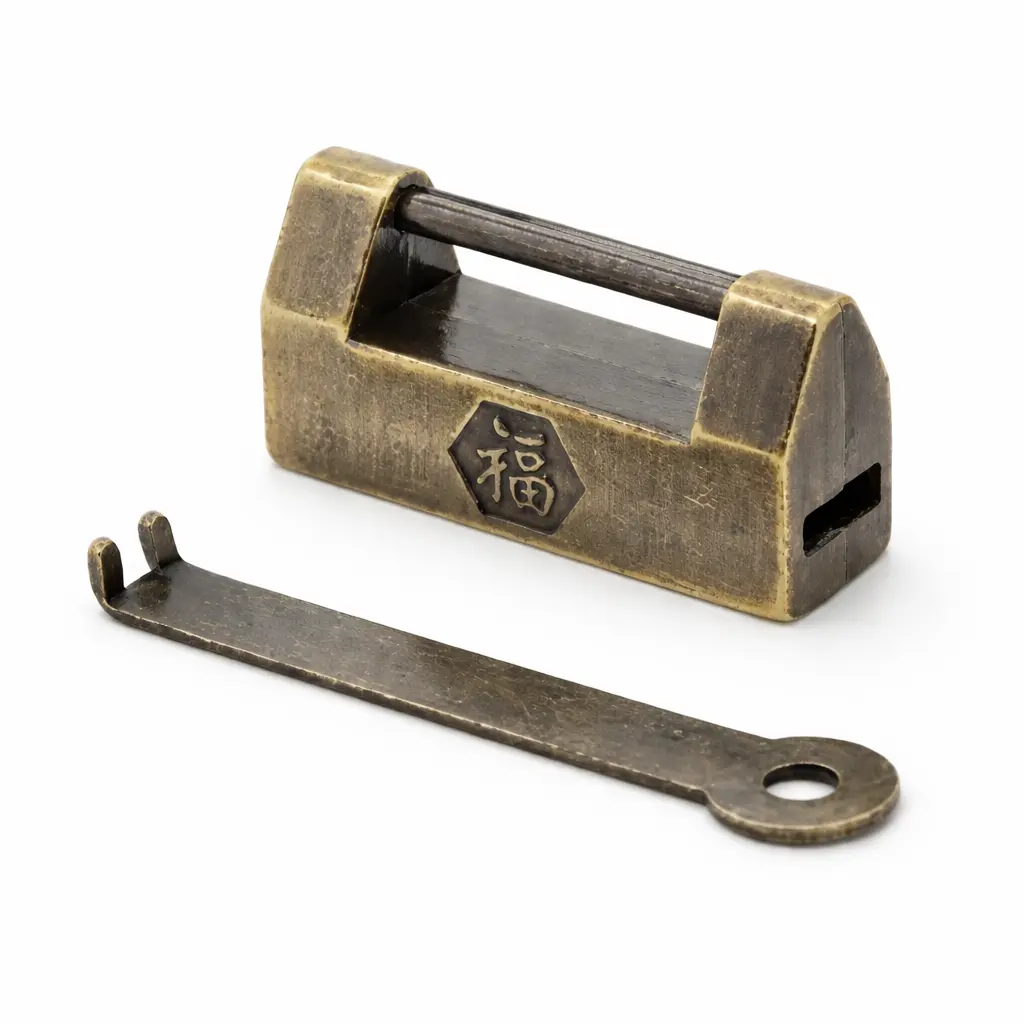
This tactile struggle is a hallmark of well-made metal puzzles. It’s what separates a fleeting brain teaser from a satisfying physical object. For comparison, a puzzle like the Chinese Old Style fú Lock presents a different challenge. While it comes with a traditional key, its trick often lies in a hidden secondary mechanism or a deceptive locking method that the key alone doesn’t address. The solving journey there involves reconciling the expectation of a normal key with the reality of a more cunning design. The Koi lock, by having no key at all, forces you into pure exploration mode from the start.
The final open, when it happens, is immensely satisfying. The shackle releases not with a spring-loaded pop but with a smooth, deliberate swing. The frustration evaporates, replaced by a smirk of admiration for the designer. You solved it not by brute force or complex algorithms, but by observing, testing, and finally out-thinking a simple, elegant deception. It’s a complete cycle of engagement: from initial confusion, through focused investigation and physical trial, to the triumphant payoff. The lock isn’t just unlocked; your perception of it is permanently altered. You now see the trick, plain as day, and wonder how you ever missed it.
Who Is The Koi Lock Actually For? A Decision Matrix
So, you’re intrigued by the Koi lock. But is it the right puzzle for you, or just a shiny object destined for a drawer? Based on the chatter from places like r/mechanicalpuzzles and r/dndnext, and compared to other popular options, here’s who will get the most out of it—and who should probably look elsewhere.
The Puzzle Newbie: A Strong “Yes.” If you’re new to trick locks, the Koi is a near-perfect entry point. It’s not intimidating like a massive, featureless steel block. Its mechanism is logical and fair, providing that crucial “Aha!” moment without the soul-crushing frustration that can turn people off the hobby. It’s the ideal training ground before you graduate to something like the notoriously deceptive Puzzlocks’ Loki or a complex sequential discovery puzzle. The Koi teaches the fundamental mindset: observe everything, assume nothing.
The Seasoned Collector (from r/mechanicalpuzzles): A Qualified “Maybe.” For the veteran with shelves of burr puzzles and trick boxes, the Koi’s solve might feel a bit straightforward. The core trick is clever but not deeply layered. Its value here is as a display piece and a loaner. Its aesthetic is unique, and it’s a fantastic, durable puzzle to hand to curious friends without fear of them breaking it. It’s a palate cleanser between more intense challenges, not the main course.
The Gift-Giver: A Cautious “Yes, but…” This is a stellar gift for the right person—someone who enjoys hands-on, screen-free challenges. It’s well-made, beautiful, and feels substantial for the price. The major objection to address: is it a one-trick pony? Once you know the secret, can you ever truly be fooled again? For most, the answer is no. The replay value is in sharing the experience, not in re-solving it yourself. Therefore, gift it with the understanding it’s a brilliant experience, not an infinite toy. For a gift with more repeatable, modular puzzling, consider something like a Tian Zi Grid Lock Puzzle, which offers a different spatial challenge.
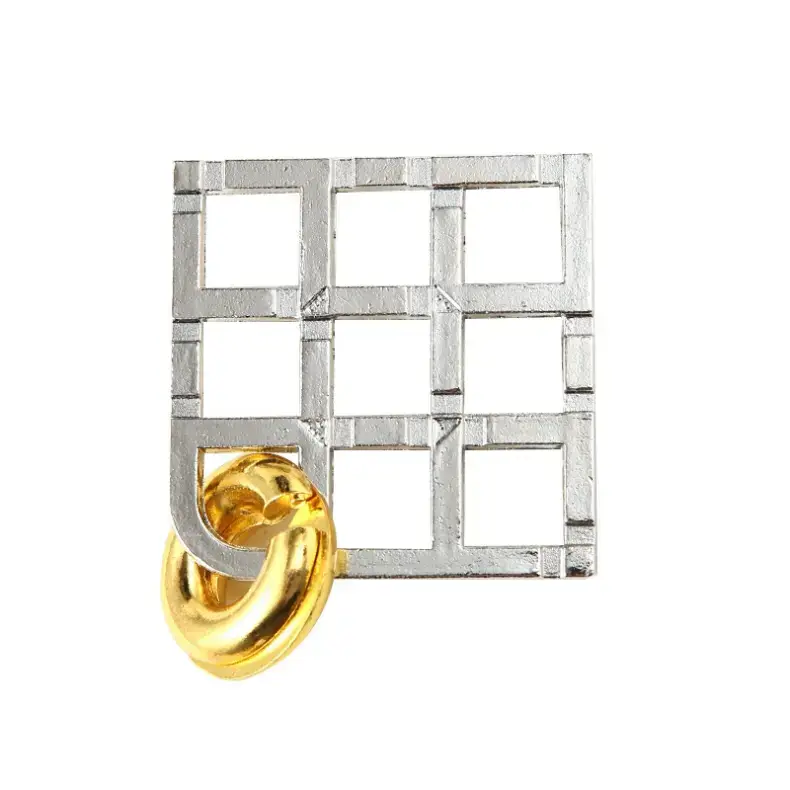
Tian Zi Grid Lock Puzzle — $11.98
The Tian Zi Grid Lock Puzzle presents a different type of challenge, focusing on aligning internal grids rather than discovering a hidden external mechanism. It’s a different flavor of logic, potentially offering more deliberate, repeatable solving for some.
The D&D DM or Prop Enthusiast (from r/dndnext): A Resounding “Yes.” This is where the Koi shines beyond pure puzzling. It’s a perfect physical prop for a tabletop game. You can literally hand your players a locked box with this on it and say, “Figure it out.” It requires no key, looks authentically ancient and mysterious, and its solution feels like uncovering a secret. It’s infinitely more immersive than describing a riddle. It’s a tactile puzzle lock that can become the centerpiece of a session.
Final Verdict vs. The Competition:
* Vs. Project Genius’s Grecian Trick Lock: The Grecian lock often leans into a historical narrative (Theodorus of Samos) and may involve more discrete, sequential steps. The Koi is more about a single, elegant deception rooted in visual perception. The Koi feels more like folk art; the Grecian feels more like a historical replica.
* Vs. “Hardcore” Trick Locks: The Koi is not trying to be the Revenge Lock or DanLock. It’s not maddeningly difficult, nor is it made of tool-grade steel. It occupies a sweet spot of approachable sophistication. It’s for those who want a genuine, satisfying puzzle challenge without needing a PhD in mechanical engineering or a $200 budget.
Buy it if: You want a beautiful, accessible introduction to trick locks, need a superb physical prop, or are looking for a high-quality gift that’s more engaging than a generic brainteaser.
Skip it if: You are a puzzle savant seeking a multi-hour torment, or you exclusively want puzzles with high replay value for a single user. For you, the deeper, more complex locks on specialty sites are the true destination.
Common Mistakes and How to Avoid Them (Without Spoiling the Solution)
The journey with the Koi Lock is one of quiet observation versus brute force. The frustration you’ll feel is real—it’s that delicious, infuriating itch that comes from knowing the answer is right in front of you. Based on common struggles with trick locks and the specific nature of the Koi, here are the pitfalls to sidestep.
The Cardinal Sin: Applying Force. This is the number one killer of the experience (and potentially the puzzle). The Koi Lock is a precision object, not a rusty barn latch. If you find yourself pushing, pulling, or twisting with increasing muscle, you are 100% on the wrong path. This isn’t a test of strength; it’s a test of wit. That satisfying click will come from finesse, not force. Remember the principle from ancient puzzle design: the solution is often a single, elegant motion, not a struggle. This is a core lesson in learning to stop forcing and start observing.
Overlooking the “Useless” Detail. Trick locks are masters of misdirection. A component that looks purely decorative, a seam that seems merely aesthetic, or a sound that appears incidental—these are often the primary clues. With the Koi, every engraving, every gap, every slight wiggle has a purpose. The puzzle’s solution is hidden in plain sight, relying on you dismissing a key element as “just part of the design.” Adopt the mindset of a detective inspecting a crime scene: nothing is there by accident.
Assuming How a Lock “Should” Work. This is a mental trap. You bring a lifetime of experience with standard locks, latches, and keys to the table. The Koi Lock actively exploits these assumptions. You might instinctively look for a keyhole, try to slide a component in a familiar way, or expect a mechanism to release when pulled. The “trick” often involves subverting these very instincts. As one Reddit user venting about a digital puzzle lock put it, the frustration comes from your brain being stuck in a conventional pattern. You must consciously reset and ask, “What can this object actually do, not what do I expect it to do?”
Giving Up Too Fast (Or Spoilering Yourself). The first session might last 20 minutes with no progress. This is normal. The “Aha!” moment often comes when you put it down, walk away, and let your subconscious work. The worst thing you can do is, in a fit of frustration, immediately search for a solution video. You rob yourself of the singular satisfaction that defines the genre. If you’re truly stuck, put it aside for an hour or a day. When you pick it up again, start from a systematic, sensory-based inspection: look closely from new angles, listen for subtle clicks or rattles, feel for differences in resistance.
How a Simpler Lock Can Train Your Brain
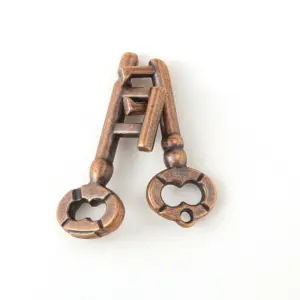
If the mental shift from “lock” to “puzzle object” is challenging, practicing with a more straightforward design can build essential skills. A puzzle like the Two Key Lock Puzzle is an excellent trainer. It presents a clear, limited set of components (two keys) and a clear goal, teaching you to question the obvious function of each piece. Solving it reinforces the systematic, non-destructive inspection crucial for tackling something as deceptive as the Koi. It’s a lesson in mechanics and mindset.
The Winning Mindset: Patience, systematic inspection, and listening are your true tools. Treat the lock not as an obstacle to be beaten, but as a conversation partner. It is giving you sensory feedback—visual, auditory, and tactile—with every interaction. Your job is to interpret that feedback without prejudice. When you finally solve it, that surge of satisfaction isn’t just about opening a lock; it’s about quieting your assumptions and seeing the world, just for a moment, exactly as it is.
Beyond the Trick: The Koi Lock as a Conversation Piece and Display Object
The true test of a great puzzle lock isn’t just the “aha!” moment of the first solve, but what happens after. Does it become a forgotten trinket in a drawer, or does it earn a permanent place in your world? The Chinese Koi Lock excels in this second act, transitioning seamlessly from a brainteaser to a compelling display object.
First, its re-playability is perfectly executed. The reset mechanism is intuitive and satisfying—a simple, deliberate action that feels like you’re arming a trap. This allows you to hand it to a friend or family member with a knowing smile, watching them fall into the same mental traps you did. It becomes a shared experience, a physical “you have to feel this” item that digital puzzles can never replicate. This social hand-off is a core part of its enduring value.
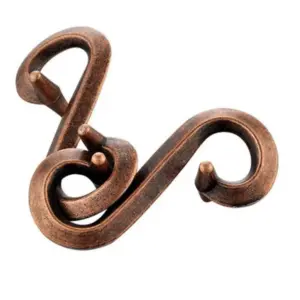
As a desk ornament, it holds its own. The brass and iron construction has a substantive heft that cheap toys lack, and the aged, antiqued finish gives it character. The “Chinese Koi” theme isn’t just a sticker; it’s integrated into the metalwork. The swirling fish and water motifs transform it from a generic lock into a specific artifact with a story. This narrative elevates it above more utilitarian or purely historical designs. While a **** Grecian Trick Lock trades on ancient Greek ingenuity, and a Roman latch puzzle on historical mechanics, the Koi Lock offers a different kind of appeal: serene, symbolic artistry. It’s not just a test of ingenuity; it’s a miniature sculpture about patience and perseverance.
This places it in an interesting category: functional decorative art. It has more personality than a standard burr puzzle but feels more intentional and culturally rooted than an abstract metal brainteaser. For a similar aesthetic that prioritizes beauty alongside trickery, consider the contrast with the more traditional Plum Blossom Lock. With its floral motif and elegant mechanism, it represents another branch of this tradition where the puzzle is also a piece of symbolic art, meant to be admired even after its secret is known. This is a prime example of when puzzles become functional art.
Ultimately, the Koi Lock doesn’t retire after being solved. It becomes a trophy for your patience, a catalyst for social interaction, and a visually interesting object that sparks curiosity. It answers the question of “what now?” with a quiet, enduring presence on your shelf—a constant, beautiful reminder that not everything is as it first appears.
Frequently Asked Questions About the Chinese Koi Puzzle Lock
Before you commit to the Koi Lock, you likely have a few practical questions. Here are the honest answers, based on real user concerns and hands-on testing.
Is a key included?
No, and that’s the whole point. Like many trick locks, the Koi Lock’s description that it “might not even require a key” is a major clue. The puzzle is entirely self-contained. The solution involves manipulating the lock’s own components—the body, the shackle, and the decorative koi fish—in a specific, non-obvious sequence. You will not find a separate, traditional key in the box.
What’s the difficulty level on a scale of 1-10?
For a complete novice to mechanical puzzles, I’d rate it a solid 7. It’s not the most brutal puzzle lock out there (some are true mind-breakers), but it’s deceptively tricky. The mechanism is clever and requires a blend of observation, logic, and gentle tactile experimentation. If you’re familiar with trick locks, it might feel like a 5 or 6. The “aha!” moment is immensely satisfying precisely because the journey there isn’t trivial.
Is it suitable for kids (ages 8+)?
This aligns with the “ages 8+” rating seen on puzzles like the . The Koi Lock is physically safe—no small, swallowable parts—and a bright, patient child could certainly solve it, potentially with some parental hints. However, the fine motor control and abstract reasoning required make it a better fit for ages 10-12 and up. It’s an excellent family puzzle: an adult can guide a child through the logical steps without spoiling the solution.
How durable is the construction?
It’s surprisingly robust. Made from cast zinc alloy, it has a good heft and feels solid in the hand, not like cheap, tinny junk. The moving parts are precise. You can fumble with it, turn it over, and apply reasonable pressure without fear of breaking it. The paint on the koi detailing is the most vulnerable part; avoid scraping it on hard surfaces. With normal puzzling use, it should last for years and countless solves.
Can it actually secure anything?
Technically, yes. Once closed, the shackle locks firmly. You could thread it through a diary hasp or a small treasure chest for thematic fun. Practically, no, you should not use it for real security. It’s a puzzle first. The locking mechanism isn’t hardened steel, and the solution, once known, allows anyone to open it in seconds. Its job is to challenge your mind, not protect your valuables.
What if I get permanently stuck?
First, don’t force it. The solution never requires excessive strength. Put it down for an hour or a day. Often, a fresh perspective is all you need. If you truly hit a wall, a quick web search for “Chinese Koi Lock solution” will yield video guides. There’s no shame in it; the goal is enjoyment. Unlike a digital puzzle, you can’t “break” it by getting stuck—the solution is always there, waiting in the physical object.
Where can I buy it reliably?
Your best bets are specialty puzzle retailers or major online marketplaces. For a reliable, curated experience, shops like Kubiya Games or Puzzle Master are excellent. For convenience and often competitive pricing, Amazon has numerous listings—but read the reviews carefully to ensure you’re getting the quality version pictured here, not a flimsy knockoff. If you enjoy the spatial reasoning of the Koi Lock but want a different style of challenge, consider the . It’s a more abstract, coordinate-based puzzle that offers a distinct kind of logical deduction for a very accessible price.
The Collector’s Corner: How the Koi Fits Into a Wider Puzzle Lock World
The Chinese Koi Lock is a fantastic standalone puzzle, but its true charm deepens when you see it as part of a rich, global tradition of mechanical trickery. The world of puzzle locks is vast, ranging from mass-produced brainteasers to coveted, artisan-crafted challenges that command respect (and higher prices) in collector circles.
On the more accessible end, you have series like the numbered Trick Lock line from Puzzle Master—affordable, varied, and great for building a repertoire of “tricks.” Then there are modern cult classics like the Voidlock from Kubiya Games, which is famous for its deceptive, almost empty interior that forces pure deductive reasoning. At the pinnacle sit legendary pieces like the DanLock from Puzzlocks, a handcrafted masterpiece often cited by enthusiasts as one of the best puzzle locks ever created. These high-end puzzles are about more than just opening; they’re about experiencing a meticulously engineered sequence of discoveries, often involving hidden tools, magnetic interactions, and multi-stage revelations.
This idea of a sequential, interlocking solution connects directly to a classic puzzle form: the burr puzzle. As defined by its Wikipedia entry, a burr puzzle is an interlocking mechanical puzzle where the removal of a key piece allows the rest to disassemble. While the Koi Lock isn’t a disassembly puzzle, it shares the burr’s core DNA: a solution that relies on a precise, often non-obvious sequence of manipulations. You can’t just push or pull; you must discover the correct order of moves, where each action unlocks the possibility of the next. Understanding this principle is a foundational skill in mechanical puzzling. You can see similar interlocking, sequential discovery mechanics found in Burr puzzles.
So, where does our Koi fit in this ecosystem? It sits perfectly as a gateway puzzle lock. Its mechanics are clever and satisfying without being overwhelmingly complex. It introduces you to the mindset of looking beyond the obvious (the visible keyhole is a decoy) and manipulating the entire object as a system. Solving it gives you the confidence and the foundational “language” to appreciate more advanced locks. It’s the ideal first step before diving into a more intricate series or saving up for an artisan piece.
If the Koi’s traditional Chinese aesthetic and sequential discovery hooked you, your logical next steps within a similar theme are worth exploring. For a slightly different take on a classic padlock form with a hidden trick, the offers a beautiful and challenging experience. For those who enjoy the cultural motif but want a puzzle that incorporates an actual (but tricky-to-use) key, the provides that distinct variant. Both continue the journey of tactile, historical-inspired puzzling that the Koi Lock so elegantly begins. To see more options, explore our full category of puzzle locks.
Ultimately, collecting puzzle locks isn’t just about amassing objects; it’s about collecting different types of thinking. The Koi Lock is a brilliant, accessible entry in that collection, teaching you to listen to the subtle clicks and shifts that are the true language of mechanical secrets.
Final Verdict: Is the Chinese Koi Puzzle Lock Worth Your Time and Money?
After spending significant time with the Chinese Koi Puzzle Lock, turning it over in my hands, and observing how others interact with it, my verdict is a clear and enthusiastic buy—but with a specific audience in mind. This isn’t a one-size-fits-all recommendation. Its value is deeply tied to who you are and what you’re looking for in a puzzle.
The core argument for buying it is its masterful execution of a single, brilliant idea. It takes the fundamental concept of a trick lock—a lock that opens not with a key but with a concealed manipulation—and distills it into a form that is elegant, intuitive once discovered, and immensely satisfying. The build quality is solid for its class, the koi fish engraving is a beautiful and thematic touch, and the “aha!” moment is perfectly pitched to be rewarding without feeling cheap or obtuse. It has high re-playability not in the sense of re-solving it yourself (the trick, once known, is known), but as a fantastic social object to hand to friends and family to watch their process. As a display piece, it’s a conversation starter that hints at hidden depths.
However, to give an honest assessment, I must outline its limitations. The primary con is that for an experienced puzzle solver or a collector of high-difficulty mechanical puzzles, the solve time may be disappointingly short. This is not a lock that will occupy you for days or weeks. It’s a clever snack, not a multi-course meal. Its niche appeal also means if you’re solely interested in historical replication or ultra-complex mechanisms with multiple stages, the Koi’s singular trick might feel too simple.
So, who should buy it immediately?
- The Puzzle-Curious Beginner: If you’ve looked at trick locks and felt intimidated, this is your perfect entry point. It teaches the essential “language” of thinking beyond the obvious keyhole in the most gentle, rewarding way possible.
- The Collector Seeking Elegant Design: For those who appreciate puzzles as aesthetic objects, the Koi Lock stands out. It’s a beautiful artifact first, a puzzle second.
- The Social Puzzle Enthusiast: If you love the experience of sharing a puzzle and watching the gears turn in someone else’s head, this is an ideal, accessible tool for that.
- The Gift-Giver: For a thoughtful, screen-free gift that isn’t overly frustrating, the Koi Lock hits a sweet spot of being impressive, solvable, and unique.
Who should skip it?
- The Difficulty-Seeking Veteran: If your benchmark is a multi-hour, intensely frustrating solve, you’ll likely find the Koi Lock underwhelming. Your money and time are better spent on a more complex series or an artisan lock.
- The Pure Historian: While inspired by traditional motifs, this is a modern puzzle creation, not a replica of an ancient Chinese lock. Seek out specialized historical reproductions instead.
- Someone Wanting a Functional Lock: This is a puzzle first. It should not be used for any real security purpose.
For the convinced reader, the next step is straightforward. The Koi Lock excels as a foundational piece in a collection. It establishes a baseline of what a trick lock can be. Once you’ve appreciated its lesson, the natural progression is to seek puzzles that add layers of complexity. If you enjoy the “keyless” concept but want a more challenging multi-step process, consider a puzzle that introduces, ironically, keys that are part of the trick.
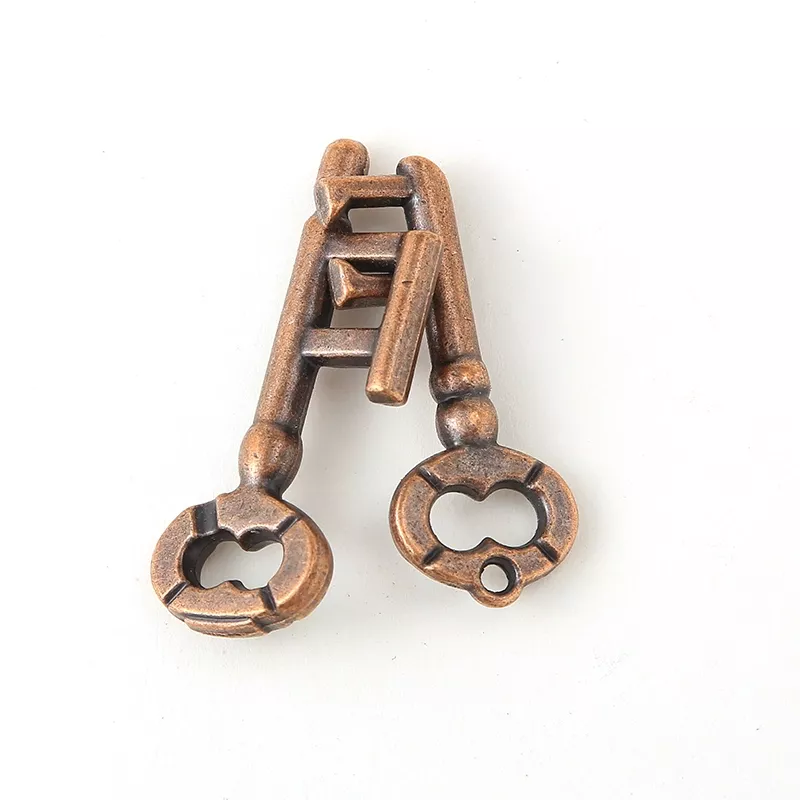
Two Key Lock Puzzle — $11.99
A logical and affordable next step is the Two Key Lock Puzzle. At around $12, it presents a different kind of deception. You’re given two keys and a seemingly straightforward lock. The puzzle lies in figuring out how to use them (or if you even need to use both), introducing sequential steps and red herrings that provide a more sustained challenge after the Koi’s elegant, single-solution reveal. Exploring a range like this helps you understand the different genres within the wider world of lock puzzles, a journey we touch on in our overview of the 10 Best Puzzle Locks For Adults Collectors.
Final Word: The Chinese Koi Puzzle Lock is worth your money if you value clever, elegant design and a supremely satisfying introductory puzzle experience. It’s not the hardest lock you’ll ever solve, but it might be one of the most memorable. It earns its place not through sheer difficulty, but through perfect execution of a simple, brilliant idea. Buy it to start a journey, to enjoy a moment of genuine discovery, and to own a beautiful piece of puzzling craft. For that, it delivers unequivocally.