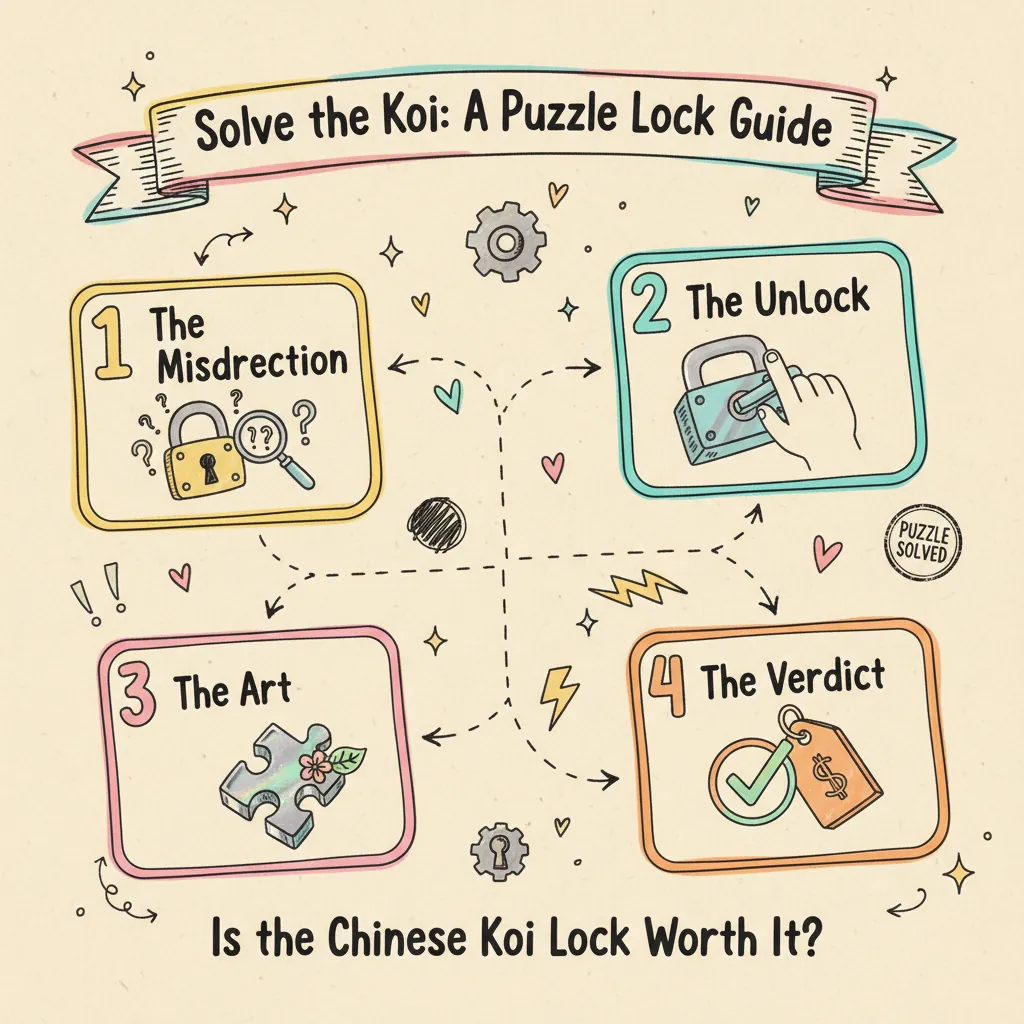
More Than a Lock: What a Trick Puzzle Really Is (And Isn’t)
You see a padlock. Your brain immediately jumps to keys, combinations, or maybe even lockpicks. A trick puzzle lock weaponizes that assumption against you. It’s a masterclass in misdirection, a physical object designed to be solved, not just opened. According to Wikipedia, a puzzle lock is defined by its “unusual or hidden mechanics,” where the “topological structure changes during the operation.” In plain English: the thing you think is the lock probably isn’t, and the solution involves a series of non-obvious manipulations that feel more like performing a magic trick than turning a key.
This places them squarely in the realm of the mechanical puzzle—a self-contained, hands-on brainteaser. They are not escape room props, which are designed for rapid group solving in a themed narrative. As noted by Room Escape Artist, a good trick lock is a “standalone puzzle” and an “irreplaceable work of art” that can easily consume over an hour for a single person. Putting one in an escape room would create a brutal bottleneck. They are also distinct from lockpicking, which is a skill-based practice on real locking mechanisms. With a trick lock, you’re not defeating a security device; you’re discovering its secret handshake.
The confusion is real, and it leads to the most common buyer frustrations. Scrolling through forums like r/mechanicalpuzzles, you see two recurring themes. First, the disappointment when a lock is too simple—a “minute or two to solve” product that feels like a cheap toy rather than a satisfying challenge. Second, the mismatch in expectation of purpose. People buy them thinking they’ll work like real padlocks for a gym locker or shed, only to find the mechanisms are delicate, the “trick” is easily broken once known, and they offer little real security.
So, what is it? A proper trick lock is a piece of kinetic sculpture and intellectual bait. It sits on your desk, a conversation piece that dares guests to figure it out. The pleasure is in the “Aha!” moment—the tactile click, slide, or release that comes from understanding the designer’s deceit. The goal isn’t access, but the journey of deduction. To understand the principles of mechanical puzzle design that make this possible, you can explore the engineering behind them.
To see the spectrum in action, consider a common entry point.
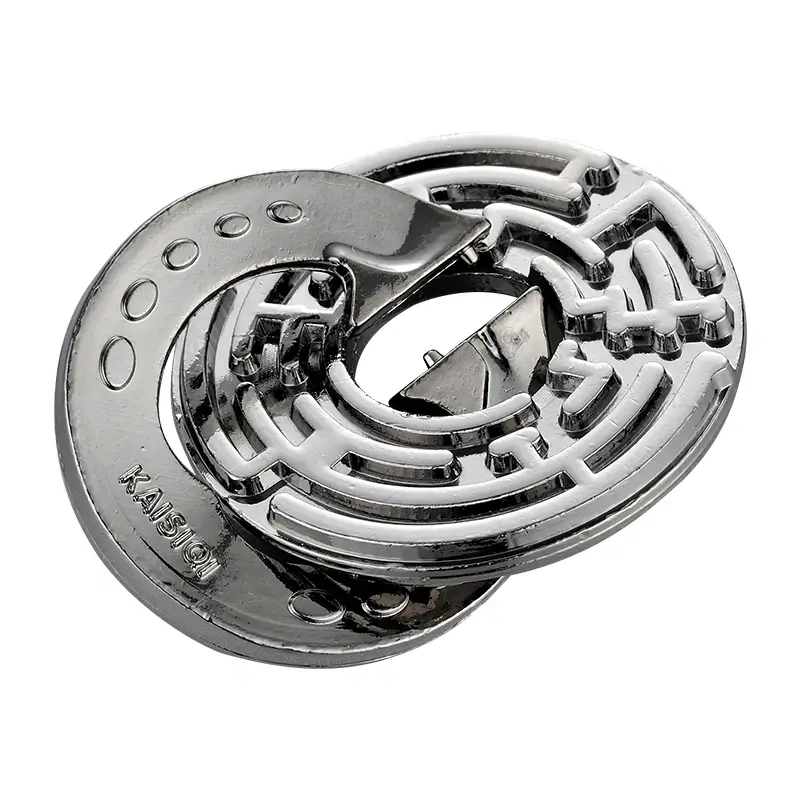
The Maze Lock Dual-Sided Maze Puzzle is a perfect example of the genre’s accessible end. For around $10, you get a clear demonstration of the principle: the shackle isn’t freed by a key, but by navigating a marble through a labyrinth etched into the lock’s body. It’s a pure mechanical puzzle with a satisfying physical feedback loop. It’s not trying to be a high-security device; it’s a clever, hands-on toy that teaches you the fundamental language of trick locks—”look for the hidden interaction.”
Understanding this distinction is crucial. You’re not buying a lock. You’re buying a crafted problem made of metal, designed to fool your hands and reward your patience. It’s a solitary, tactile challenge that stands apart from digital games, escape room flow, and practical security. Knowing that sets the stage for evaluating whether any specific puzzle lock is a worthy brainteaser or just a gimmicky paperweight. If you’re intrigued, you can always explore more puzzle locks to see the full variety available.
Unboxing the Koi: First Impressions of a Metal Enigma
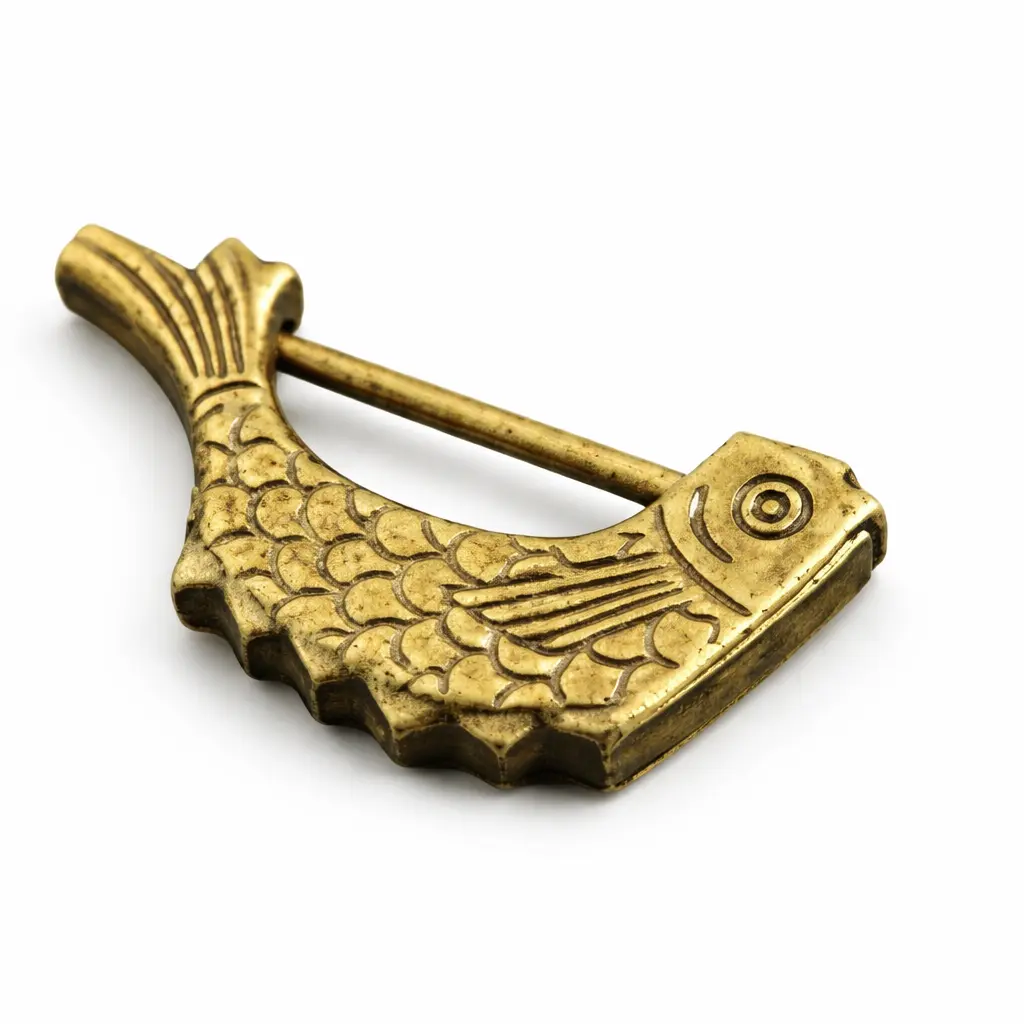
Chinese Koi Puzzle lock — $16.99
The Chinese Koi Puzzle Lock arrives in a simple, unadorned cardboard box. There’s no flashy blister pack, no multilingual instructions screaming “BRAIN TEASER!”—just a small, weighty parcel that feels more like receiving a hardware component than a toy. Sliding the contents out, you’re immediately met with the heft of a solid metal object. This isn’t the featherlight, tinny feel of many budget puzzle toys from generic Amazon listings. In hand, it has a dense, substantial presence, weighing in at a satisfying 4.8 ounces. The first visual impression is one of charming deception. It looks, for all intents and purposes, like a small, antique-style padlock. The iconic fish shape—a symbol of prosperity and perseverance in Chinese culture—is immediately recognizable, with finely cast scales, a curved body, and a tail that forms the shackle. The illusion of an ordinary, if ornate, lock is utterly complete.
Running your fingers over it, the craftsmanship is a mixed bag that tells a story of its own. The zinc alloy casting has a rough, almost sand-cast texture in places, particularly along the seams and the underside. It’s not the machined, jewel-like finish of a high-end collector’s puzzle. You can feel the granularity of the metal, a tactile reminder that this is a mass-produced artifact. Yet, this roughness somehow adds to its character; it feels aged, like a relic pulled from a curiosity shop. The primary finish is a muted, brushed antique brass, with darker patina rubbed into the scales’ recesses, giving the koi dimension. The shackle is cold, polished steel, providing a stark, smooth contrast to the fish’s body. There are no sharp edges, but the overall feel is robust, not delicate.
Then you shake it. This is where the “puzzle” announces itself. Inside the solid-looking fish, something rattles with a dull, metallic thunk-thunk. It’s not a loose screw; it’s a deliberate, weighty component shifting in a cavity. The sound is deeply intriguing. It contradicts the visual solidity. Your brain, conditioned by the padlock form, expects silence or the faint jingle of a key. This internal movement is the first crack in the illusion, the first whisper that things are not as they seem. The shackle, of course, is firmly locked. Tugging on it yields no play, no give—it’s as steadfast as any hardware store lock. The keyhole, a tiny dark slit on the fish’s side, is purely decorative. Peering into it reveals nothing but darkness; it’s a red herring, a classic trick lock trope designed to send you down the wrong mental path.
Placing it next to something like the common Maze Lock, the difference in intent is palpable. The Maze Lock is transparent in its purpose—the puzzle is right there on the surface. The Koi Lock is opaque. Its puzzle is internal, hidden behind the unbroken skin of the fish. The build quality, while not refined, feels significantly more durable than the cheapest puzzle locks flooding the market. This isn’t a disposable trinket; it’s a stout, enigmatic object that promises a mechanical secret. The initial impression is one of curious contradiction: a lock that isn’t a lock, a solid object that rattles, a beautiful artifact with industrial-grade seams. It doesn’t feel like a game. It feels like a genuine thing you have to figure out, setting the stage perfectly for the tactile, frustrating, and ultimately rewarding siege that is to come. For a deeper look at its form and function, you can read as detailed in our hands-on review of this unique fish-shaped padlock.
The Journey to ‘Click’: My Hands-On Solving Experience
The first ten minutes with the Koi are a masterclass in humility. You pick it up, feeling its weight, and the immediate, almost universal instinct is to focus on the obvious: the shackle and the fake keyhole. You push, pull, twist, and prod at every visible seam, convinced the solution must be a hidden button or a cleverly disguised slide. I spent a good chunk of time trying to unscrew the shackle’s end caps, thinking they might be threaded. They aren’t. I tried pressing the fish’s scales in specific sequences, a futile endeavor that yielded nothing but sore fingertips. This is the lock’s first, and perhaps most important, lesson: the trick is never where you first assume it to be. It’s a principle echoed across the world of mechanical puzzles, where the initial, obvious path is almost always a dead end designed to test your patience and reset your assumptions.
The rattling sound inside was my first real clue. It wasn’t just a loose bit; it had a specific, weighted quality to it. Tilting the lock slowly, I could feel something solid sliding along an internal channel. This shifted my entire approach from “search for external triggers” to “understand internal mechanics.” I began experimenting with orientation, holding the fish at different angles and listening to the slide and thunk of the internal weight. I realized the goal wasn’t to find a hidden latch, but to use this free-moving component as a tool. This is where the puzzle transitioned from frustrating to fascinating. It stopped being a lock I was trying to cheat and became a system I needed to comprehend.
My next phase was a series of elegant, logical failures. I deduced that the weight needed to be maneuvered to a specific position to release a catch. By holding the lock vertically and gently rocking it, I could guide the weight. After several attempts, I managed to get it to settle into what felt like a recess. My heart jumped—this had to be it! I pulled the shackle. Nothing. I’d found a position, but not the position. The subtlety here is brilliant. The mechanism provides just enough tactile feedback—a faint click or a change in the weight’s movement—to let you know you’re interacting with it, but not enough to spell out the solution. It’s exactly the kind of design praised in reviews for locks like the Loki, being “logical enough to lead you to the next step.” Each failed attempt wasn’t a full reset; it was a data point. I learned that the weight could be trapped in more than one place, and that the orientation of the lock relative to gravity was my primary control input.
The real breakthrough came when I stopped treating the shackle as a static handle and started considering it as an active part of the mechanism. While manipulating the internal weight with one hand, I applied slight, varying pressure to the shackle with the other—not just pulling, but pushing, twisting, and testing for any new give. In one specific orientation, with the weight held in a particular spot through a combination of tilt and a slight shake, I felt a minute but distinct shift in the shackle’s resistance. It wasn’t open, but something had aligned. This was the pivotal “aha” moment. The puzzle wasn’t about finding one secret; it was about achieving a precise, simultaneous condition between the internal slider and the shackle’s position.
The final solve was a quiet, satisfying click. After discovering that critical alignment, the remaining step revealed itself with perfect clarity. It was a smooth, mechanical motion that felt inevitable in retrospect. The shackle released cleanly, and the Koi was “open.” The journey from confused inspection to that final click took me about 45 minutes of concentrated, hands-on experimentation. There were no written clues, no keys, and no brute force involved. The solution was entirely contained within the physical feedback of the object itself. For a step-by-step breakdown of the process, check out our complete solving guide.
This hands-on process is what separates a great trick lock from a cheap gimmick. As noted in discussions on r/mechanicalpuzzles, the value is in the “bank for the buck”—the depth and quality of the solving journey. The Koi delivers that. It leads you down wrong paths (the decorative keyhole), teaches you its language through subtle feedback (the sliding weight), and rewards systematic exploration over random fiddling. The frustration is real but productive, and the final revelation feels earned, not given. It’s a standalone, self-contained brainteaser that commands your full attention, proving the point made by puzzle enthusiasts: a good trick lock is an irreplaceable work of art in its own right.
Who This Lock Will Delight (And Who It Will Frustrate)
The Chinese Koi Puzzle Lock isn’t for everyone. Its value and enjoyment are intensely dependent on who you are and what you expect from it. Based on my hands-on experience and the chatter in places like r/mechanicalpuzzles, here’s a clear breakdown of who will find it a treasure and who will likely see it as a paperweight.
The Delighted: The Mechanical Puzzle Enthusiast
This lock is a bullseye for the seasoned solver. If you appreciate the tactile feedback of a finely-machined burr puzzle or the sequential discovery of a high-end trick lock, the Koi will feel like a worthy adversary. You’re the type who discusses the “bank for the buck” and values the journey over the destination. For you, the 45-minute to hour-long solve is the point. You’ll relish the deceptive dead-ends (like that fake keyhole), the subtle clues in the weight and sound, and the final, elegant “aha” moment that feels logically earned. You understand that, as per the Wikipedia entry on puzzle locks, these are “reconfigurable mechanisms” where the joy is in discovering the hidden topological change. This lock is a standalone artifact of clever design, perfect for the collector who admires craftsmanship and a non-trivial challenge. It’s the kind of piece you solve, reset, and proudly display on your shelf, knowing it represents a genuine intellectual duel.
The Delighted: The Patient Gift-Giver (For the Right Recipient)
You’re looking for a distinctive gift for a bright, patient friend or family member—perhaps a curious teen, an engineer, or a detail-oriented gamer. You want something more substantial than a novelty mug. The Koi, with its beautiful thematic design and solid metal heft, feels premium and thoughtful. It’s a gift that says, “I think you’re clever enough to figure this out.” For the right recipient, it provides a deeply satisfying offline challenge, a screen-free hour of focused engagement. It’s a conversation piece that comes with a built-in achievement.
The Frustrated: The Casual Gamer or Impulse Buyer
If you’re looking for a quick, five-minute fidget or a party trick to instantly amaze friends, abort mission. This lock will frustrate you. As one Redditor noted about a different lock, some puzzles are “meant for a minute or two,” but the Koi is not one of them. It demands systematic exploration and tolerance for ambiguity. The casual buyer expecting immediate gratification will likely give up, deem it “broken,” or go searching for a solution video, which utterly voids the investment. If your patience threshold is low, this beautiful object will become a source of annoyance, not delight.
The Frustrated: The Practical User Seeking a Functional Lock
This is a critical objection to address head-on: The Koi Puzzle Lock is not a secure, functional padlock. While some trick locks can be used practically (as noted in a YouTube review of Trick Lock #4), the Koi is a pure puzzle. Its mechanism, once solved, is often too delicate or obvious for real security. You wouldn’t trust it on a locker or shed. Buying it to actually lock something is a fundamental misunderstanding of the product category. It’s a brainteaser first, last, and only.
Scenario-Based Decision Guide:
* Buy the Koi if: You are a puzzle hobbyist, are buying for one, or want a premium, hands-on challenge that offers a substantial “aha” payoff. You value design and mechanics over speed.
* Skip the Koi if: You want a quick solve, need a real lock, or are buying for a child or someone easily frustrated. The price point is too high for a single-use novelty.
For those intrigued by the idea of a trick lock but wary of the Koi’s difficulty or price, there are more accessible entry points. A product like the Chinese Old Style fú Lock with Key offers a gentler introduction. Often simpler in mechanism, it provides the aesthetic and tactile pleasure of a traditional lock with a more straightforward puzzle element, serving as a better “first lock” before graduating to beasts like the Koi. As discussed in our guide to durable metal puzzles, starting with a forgiving puzzle builds confidence and understanding of the genre’s language, preventing the kind of disappointment that leads to abandoned puzzles in drawers. The Koi is for the intermediate solver or the confident beginner ready to be fully immersed; choose accordingly.
Beyond the Koi: How It Stacks Up in the Puzzle Lock Universe
To understand the Chinese Koi Puzzle Lock’s place in the world, you need to see the full spectrum. On one end, you have mass-produced novelty items. A search for “trick lock” on Amazon or a glance at Puzzle Master’s catalog reveals dozens of sub-$20 options, often generic numbered locks like Trick Lock #4. These are fun, quick tactile challenges—the “fast food” of the genre. They might take a few minutes to an hour, offer a single clever trick (like a hidden button or a sliding maze), and are built to a budget. They’re perfect for a casual brain tickle but often lack narrative, refined mechanics, or re-solvability. You solve it, go “neat,” and likely never pick it up again.
The Koi Lock exists in a more curated middle tier, alongside offerings from specialty shops like Kubiya Games and Project Genius. This tier is defined by stronger theming and a multi-step solving journey. For example, Project Genius’s Grecian Trick Lock builds its puzzle around a historical narrative, requiring you to “crack ancient Greek ingenuity.” The Koi operates similarly, using its aquatic motif to inform the puzzle’s logic, not just its decoration. Its price ($40-$60) and complexity place it firmly here—above the disposable trinkets but below the rarefied air of artisan pieces. It’s a premium product, not just a puzzle.
This brings us to the legendary end of the spectrum: the artisan locks. This is where names like DanLock and Popplock, revered in forums like r/mechanicalpuzzles, reside. These are often hand-made, limited-run masterpieces costing hundreds of dollars. As one Reddit user noted, these are “irreplaceable works of art” and “standalone puzzles” that can consume hours or even days. The solving experience is a deep, sequential discovery of intricate mechanisms, often compared to navigating a Rube Goldberg machine inside a lock. The Koi is not this. It doesn’t have the mechanical density or price tag of a DanLock. However, for most enthusiasts, that’s a good thing. The Koi offers a substantial, thematic, and satisfyingly complex challenge that mirrors the feeling of solving a high-end lock without the investment, waitlist, or sheer intimidation factor.
To see the gradient within a single aesthetic theme, compare the Koi to its stylistic cousins. The Plum Blossom Lock is a perfect example. At nearly half the price, it offers a beautiful, traditional Chinese lock experience with a puzzle element. However, its mechanism is generally more straightforward, often relying on aligning patterns or finding a single hidden release. It’s an excellent “gateway” lock, detailed in guides like Unlocking The Secrets Of The Plum Blossom Lock. The Koi, in contrast, takes that cultural aesthetic and layers on significantly more sophisticated, multi-phase puzzling. It’s the natural next step for someone who enjoyed the Plum Blossom and wants a deeper dive.
So, where does the Koi fit? It’s a bridge lock. It’s for the solver who has outgrown the simple trick locks and themed novelties but isn’t ready (or willing) to commit to the artisan elite. It provides the thematic depth and multi-step “aha” journey that defines a quality puzzle, with build quality that feels substantial, not cheap. If your collection has a few numbered trick locks and a Plum Blossom, the Koi is the logical, rewarding upgrade. It won’t stump you for weeks like a legendary Popplock, but it will deliver an evening of engrossed, tactile problem-solving that feels genuinely earned. In the taxonomy outlined in a Collectors Guide To 12 Ancient Chinese Puzzle Locks, the Koi sits proudly among the “Intermediate Conundrums”—locks that honor tradition while offering a modern, satisfying challenge.
From Brainteaser to Display Piece: Life After Solving
The final, satisfying click of the Chinese Koi lock is a moment of triumph. But then what? You’ve conquered the puzzle. Unlike a video game you complete and shelve, or a riddle you simply forget, a high-quality mechanical puzzle like this has a second life. Its value doesn’t end at the solution; it transitions from an active brainteaser to a curated object with its own unique appeal.
For many, it becomes a physical trophy. There’s a distinct pleasure in placing the now-open lock on a bookshelf or desk. It’s a conversation piece with a built-in story. When someone picks it up, you don’t just say “it’s a lock”; you get to say, “It’s a puzzle lock I solved,” and watch their curiosity ignite. You can hand it to a friend, locked again, and become the puzzle master presenting the challenge. This act of sharing and witnessing someone else’s “aha” moment is a huge part of the post-solution joy, turning a solitary hobby into a social one. The Koi, with its elegant design, lends itself perfectly to this role—it looks more like a piece of art or an artifact than a cheap toy.
This naturally leads to the concept of re-playability. While you can’t “un-know” the solution, the fun is far from over. Resetting the Koi and handing it off is the primary way to re-engage with it. The pleasure shifts from discovery to mentorship and observation. You’ll find yourself giving carefully vague hints, much like the discussions on r/mechanicalpuzzles where users trade non-spoiler nudges. “Pay attention to the scales,” or “Think about what you haven’t moved yet,” becomes a new game in itself. Furthermore, the tactile process of manipulating the lock remains satisfying. Running through the solution becomes a kind of fidget-friendly ritual, a kinetic meditation that’s more engaging than spinning a generic fidget spinner.
This is where the puzzle transcends into a practice, a concept beautifully explored in the article When A Puzzle Becomes A Practice. The simpler Plum Blossom Lock is often cited as a perfect candidate for this—a soothing, known sequence to run through with your hands while your mind is elsewhere. The Koi, with its more complex series of steps, offers a deeper, more engaging version of this practice. It’s not just mindless repetition; it’s the fluent execution of a learned skill, which has its own cognitive rewards.
Finally, solving a lock like the Koi is often an entry point into the broader collector and community ecosystem. As hinted at in enthusiast subreddits, the world of mechanical puzzles is one of sharing, trading, and hunting for the next great challenge. Owning and appreciating a well-made lock like this is your passport into those discussions. You’re no longer just a bystander; you have a frame of reference. You understand the difference between a gimmicky trick and elegant engineering. The Koi won’t be your last lock—it’s the one that proves you’re serious enough to seek out the next, perhaps even to explore trading with other collectors for those coveted, out-of-production artisan pieces. To see what else is out there, you might consult a list of the other top puzzle locks for collectors.
So, does the Koi lock “die” after you solve it? Absolutely not. It is reborn. It becomes a display piece that sparks conversations, a tool for social puzzling, a tactile practice for your hands, and a badge of membership in a community of enthusiasts. The initial solve is the climax, but the long-term ownership is a richly rewarding epilogue.
Frequently Asked Questions About the Koi Puzzle Lock
Based on hands-on experience and common discussions in puzzle communities, here are the most practical questions about the Koi Puzzle Lock.
How difficult is it, really?
It’s a solid intermediate challenge. If you’re new to trick locks, expect significant head-scratching. For seasoned solvers familiar with concepts like hidden shackle releases or sequential manipulation, it’s a satisfying, logical puzzle. It’s not a “DanLock”-level marathon, but it’s far from a trivial gimmick. The difficulty lies in discovering the correct sequence of manipulations, not in brute force.
How long does it take to solve?
This varies wildly. A complete novice might spend several hours over multiple sessions. Someone with puzzle lock experience might crack it in 30-60 minutes. The key is patience; walking away and returning with fresh eyes is often the real solution. Unlike some puzzle types, the “aha!” moment here is genuinely earned.
What is it made of, and is it safe?
The lock is typically made from plated zinc alloy or brass, giving it substantial weight and a quality feel. The moving parts are precise with no sharp edges. It’s safe for adults and supervised older children. However, it is not a toy for young kids, as small internal components could pose a choking hazard if the lock were somehow dismantled.
Is there a warranty?
As a niche puzzle item, it typically comes with no formal warranty beyond the retailer’s return window for defects. These locks are built to be manipulated repeatedly, so they are generally robust. Your main concern should be buying from a reputable seller to avoid receiving a poorly machined clone.
Can I reset it easily to challenge a friend?
Absolutely. Once you know the solution, resetting it takes seconds. This is one of its best features—it’s a perfect, repeatable challenge to hand to a friend and watch them struggle, just as you did.
Can it be used as a real padlock?
Technically, yes. It has a functional shackle. However, I strongly advise against it. As enthusiasts on forums like r/mechanicalpuzzles note, trick locks are “irreplaceable works of art.” Using it on a gym locker or shed exposes it to the elements and rough handling, risking damage to its precise mechanism. Its value is as a puzzle and display piece, not as security hardware.
Where should I buy it to get an authentic, good-quality version?
Avoid random third-party sellers on large marketplaces, where quality control is a gamble. Seek out specialized puzzle retailers like Kubiya Games, Puzzle Master, or Brilliant Puzzles. Their reputation depends on selling the proper, well-made versions. If you’re looking for a different but historically themed challenge from a reputable brand, you might consider the Big Pineapple Yellow Emperor Puzzle Lock, which offers a similar “ancient Chinese mechanism” aesthetic.
I’m completely stuck! Is there a solution guide?
It’s best to resist the urge. The satisfaction is in the solve. If you must, look for a non-spoiler hint rather than a full walkthrough. Some retailers may provide structured hint systems for puzzles, similar to those found in guides for solving other lock puzzles like the 24 Lock. For the Koi, the universal advice from solvers is: listen carefully, observe every detail, and methodically test how each component interacts. The trick is always logical.
The Final Verdict: Is the Chinese Koi Puzzle Lock Worth It?
After spending hours with it, feeling the weight of its brass, and navigating the quiet frustration and eventual triumph of its solve, the answer is a conditional yes. The Chinese Koi Puzzle Lock isn’t a casual impulse buy; it’s a considered purchase for a specific type of person. Here’s the final breakdown to help you decide.
Buy it immediately if:
- You are a puzzle enthusiast who values tactile craftsmanship over pure, brutal difficulty. This lock is a beautiful object first and a clever puzzle second.
- You want a satisfying, medium-challenge brainteaser that relies on observation, logic, and a bit of gentle manipulation, not obscure riddles or brute force.
- You appreciate display-worthy collectibles. Once solved, it makes a fantastic conversation piece on a shelf or desk, far more elegant than a plastic puzzle.
- You seek the unique pleasure of solving a “functional” puzzle—the solid clunk of the shackle releasing is a reward no jigsaw puzzle can match.
Consider an alternative or skip it if:
- You are a hardcore mechanical puzzle veteran seeking a devious, multi-hour challenge akin to a Popplock or DanLock. The Koi’s trick, while elegant, may feel too straightforward once discovered.
- You need a durable, functional lock for actual security. This is a puzzle, not a padlock.
- You are easily frustrated by subtle, non-verbal clues and prefer puzzles with clear written instructions or a more obvious starting point.
- Your budget is under $30 and you prioritize puzzle complexity over material quality. You can find more intricate (if less refined) mechanical puzzles in that range.
The Core Value Proposition:
You are paying a premium for the artifact experience. The cost covers the solid metal construction, the intricate casting of the koi fish, and the precise machining of the hidden mechanism. It’s the difference between buying a mass-produced poster and a fine art print. The puzzle itself is the gateway to owning a cool object. If you view it through that lens—purchase price equals “beautiful sculpture + engaging puzzle experience”—the value becomes clear.
Actionable Next Steps:
- To Purchase: Avoid generic marketplaces. Go directly to specialized puzzle retailers like Kubiya Games, Puzzle Master, or Brilliant Puzzles (as seen in the SERP) to ensure you get an authentic, well-made version. Check their stock for the Chinese Koi Puzzle Lock.
- For a Different Vibe: If you love the idea of a metal puzzle lock but want something more modern, thematic, or at a different price point, explore your options. For instance, the Silver Heart Lock Puzzle offers a contemporary take on the trick lock concept, often at a lower price point, focusing on a clean, geometric challenge.
- For Further Research: If you’re building a collection or comparing options, consult curated lists. Resources like the 10 Best Puzzle Locks For Adults Collectors can provide a broader landscape of what’s available, from beginner to expert levels.
Final Word:
The Chinese Koi Puzzle Lock is a delightful, high-quality entry into the world of trick locks. It won’t break your brain for weeks, but it will provide a solid afternoon of engaging, hands-on problem-solving and leave you with a permanent, handsome keepsake. It successfully bridges the gap between puzzle and art object. For the right person—someone who smiles at the thought of a “standalone puzzle” that feels like a tiny piece of history—it is absolutely worth the investment. For the pure difficulty seeker, look deeper into the craft of makers like Strijbos or the legendary DanLock. But for a truly satisfying and beautiful puzzle experience, the Koi is a swimmer.