From Ancient Locks to Modern Desks: My First Encounter with the Cast Keyhole
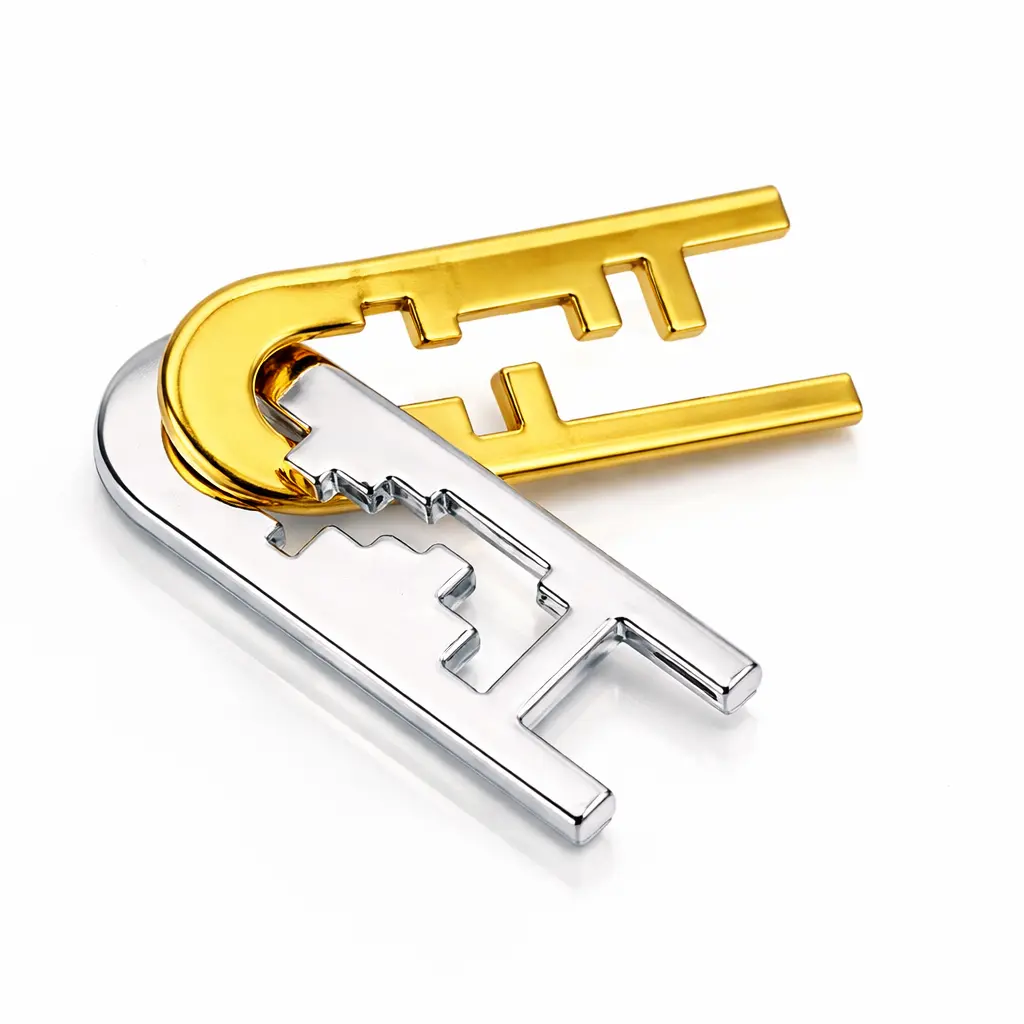
My desk is a graveyard for brainteasers. Among the ornate, multi-piece Kongming locks and the brightly colored pagoda puzzles—the kind you see all over Pinterest and Etsy listings for “traditional Chinese intellectual toys”—sat a small, unassuming box. Inside was something that looked utterly out of place: two sleek, metallic pieces. This was the Cast Keyhole puzzle. It wasn’t carved from dark, fragrant wood or painted with intricate dragons. It wasn’t a 1000-piece jigsaw of a Chinese landscape, nor was it a complex wooden burr puzzle with a dozen interlocking parts. It was just two pieces of anodized metal, one gold and one silver, shaped with a stark, geometric elegance. My first thought wasn’t about ancient metaphysics or engineering brilliance; it was a much more modern, practical question: “How hard could two pieces really be?”
That’s the immediate disconnect, and the appeal. The SERP for “Chinese wooden puzzle” is dominated by a few clear categories. There are the historical tributes, like the Kongming lock (said to be invented by Zhuge Liang), which carry the weight of 2000 years of tradition. There are the decorative 3D models—pagodas, dragons, food maps—that are as much display pieces as puzzles. And then there’s the vast sea of wooden jigsaw puzzles, where the “Chinese” descriptor often refers to the artwork or the manufacturer, not the puzzle mechanism. The Cast Keyhole exists in a different lane entirely. It’s a modern mechanical puzzle, a direct descendant of the classic disentanglement and “cast” puzzles, stripped of all ornamentation. Its lineage is closer to a Rubik’s Cube than a carved rosewood box.
Picking it up for the first time grounds you in its physicality. It has a satisfying, dense weight for its size, a coolness that warms in your hand. The finish is smooth and precise, a far cry from the sometimes-fuzzy laser-cut edges of budget wooden puzzles that Reddit users often complain about in threads discussing “cheap Chinese knockoffs.” The gold and silver aren’t gaudy; they’re matte and distinct, making it easy to track each piece’s role in the coming struggle. The objective is deceptively simple, stated right on the tin: separate the two interlocked pieces. No tilting towers to align balls, no assembling 12 blocks into a cube, no searching for a secret drawer. Just two pieces. One key. One hole. The purity of the challenge is its hook.
This first encounter frames the entire evaluation. You’re not buying a cultural artifact or a decorative conversation starter. You’re buying a direct, unadorned conflict between your spatial reasoning and a designer’s cleverness. The tradition it references isn’t ancient Chinese architecture, but the long history of mechanical puzzles designed for a single, elegant “aha!” moment. As I rolled the locked pieces in my palm, feeling the subtle clicks and shifts of internal mechanisms, I realized this was a different kind of beast from the ornate puzzles surrounding it. It wasn’t asking for admiration; it was asking for a fight. And that made me want to solve it immediately.
What You’re Actually Buying: Unpacking the Gold & Silver Experience
Cast Keyhole Gold & Silver — $13.99
Let’s cut through the marketing. When you order the Cast Keyhole, you are not buying a traditional wooden Chinese puzzle. The SERP results are flooded with them: intricate pagodas you tilt, Kongming locks made of bamboo, and ornate wooden jigsaw puzzles. This is a deliberate pivot. You’re buying a modern, metallic take on the mechanical puzzle, a category with deep roots but executed here with mass-market pragmatism. For your $13.99, you get a two-piece, zinc alloy brainteaser, one piece gold-colored, the other silver-colored, each measuring about 2.5 inches in its longest dimension. It arrives in a small, clear plastic clamshell case—the kind you might find holding a cheap pocket knife or fishing lure. This is your first clue about expectations.
The build quality sits in a definitive middle ground. It is not the heirloom-grade, finely sanded hardwood of a premium brand like Project Genius’s Chinese Pagoda or an Artifact wooden jigsaw. You won’t get the warm tactile feel or the subtle scent of laser-cut birch. Conversely, it is leagues beyond the flimsy, sharp-edged “cheap Chinese knockoffs” that Reddit puzzle enthusiasts often lament in forum discussions, where pieces warp or fit poorly. The Keyhole’s metal has a decent heft, resisting bending, and the matte powder-coat finish is uniform without visible drips or thin spots. The machining is clean; there are no burrs to cut your fingers, a common failure point for budget metal puzzles. However, don’t expect jeweler’s precision. You might find minor casting seams or a slightly gritty feel in the movement—flaws you’d never see on a $50+ puzzle but perfectly acceptable here.
The core mechanic is what truly separates it from the SERP crowd. This isn’t an assembly puzzle, a sliding puzzle, or a dexterity game. It is a disassembly/reassembly puzzle, specifically a “take-apart” type. Your sole task is to manipulate the two intricately interlocked pieces to find the precise alignment that allows the “key” to clear the “keyhole” and escape. This requires a series of pushes, pulls, and rotations that feel utterly impossible at first. It leverages the same principles of hidden pathways and sequential moves found in classic cast puzzles like those from Hanayama, but distilled to its purest form. Unlike the multi-step, colorful process of aligning balls in the Chinese Pagoda, the Keyhole offers a binary win condition: locked or free. This purity is its greatest strength and its potential frustration point.
Packaging is purely functional. The clamshell is for retail display and storage, not for gifting. If you’re looking for a “special gift that immortalizes passions” as touted by sites like Iconic Puzzles, you’ll need to provide the presentation box yourself. This puzzle is a commodity object, designed for the hands, not the shelf.
So, what are you actually buying? You are buying a robust, portable logic problem made of metal instead of wood. You are buying 10-60 minutes of focused, tactile problem-solving, not days of contemplative assembly. You are buying an object whose value is almost entirely in the mental “click” of the solution, not in its decorative appeal. For the price, the execution is competent. It won’t wow you with material luxury, but it won’t fall apart in your hands. It sets a realistic expectation: a durable, well-conceived puzzle that prioritizes the challenge over the ceremony. To understand the design philosophy behind this durability, it’s worth looking at the broader category of metal puzzles built to last, which this puzzle exemplifies.
The Solve: A Chronicle of Frustration, Insight, and Triumph
You pick up the Cast Keyhole. It feels solid, dense. The initial inspection is deceptively simple: two interlocked pieces, one gold, one silver, with a conspicuous keyhole-shaped opening. The goal is obvious—separate them. Confidence is high. This isn’t a 1000-piece wooden jigsaw where you’re “very gladly surprised” by the image quality, as one Redditor noted about a no-brand Chinese puzzle; this is a single, elegant problem. You begin manipulating, pulling, twisting. Nothing gives. The first five minutes are a festival of brute force and assumption, met with silent, metallic resistance.
This is the pivot from play to puzzle. The tactile feedback is excellent—there’s no grinding, no fear of splinters like you might get from a cheap wooden burr. But it’s utterly unyielding. You’re forced to stop and actually look. You study the angles, the channels inside the keyhole, the way the light catches the seam between the two metals. This is the stage I call “The Illusion of Progress,” where every tiny wiggle feels like a discovery but leads nowhere. It mirrors the universal puzzle experience: that shift from “I got this” to “what on earth is even moving?” It’s the same humbling moment you get with a complex burr puzzle, where the internal geometry defies your initial spatial reasoning.
A traditional Luban Lock Set 9 Piece presents a different kind of challenge. It’s an assembly puzzle, a 3D wooden jigsaw where you must deduce the correct orientation and order to build a stable structure. The Cast Keyhole is its disassembly opposite—a deconstruction puzzle where the locking mechanism is hidden within the crafted shapes. The mental muscles are related (spatial visualization, patience) but applied inversely. Where a burr puzzle asks you to build a path, the Cast Keyhole asks you to find the hidden path that’s already there.
The first genuine “aha” moment comes not from a move, but from a realization. You have to abandon the premise of a direct pull. The solution involves a sequence of precise alignments and rotations, using one piece to cam, tilt, or slide the other along a path that feels impossible until you hit it just right. There’s a specific, counter-intuitive position where the internal geometry aligns and the pieces gain a new, almost imperceptible degree of freedom. It’s a physical “click” in your brain as much as in your fingers. This is the core pleasure—the sudden transition from stuck to fluid, a moment of pure insight that no instruction sheet can provide without ruining it.
But the chronicle isn’t over. One common pitfall is the “false solve.” You’ll get a piece partway out, feel triumphant, only to find it jammed in a new, more frustrating way. This is where the quality of the machining matters. A poorly made puzzle would lock up or scratch; the Cast Keyhole’s smooth finish allows you to backtrack without damage, turning the pitfall into a learning step. It forces you to mentally map the internal channels you can’t see. You start to understand the puzzle not as two objects, but as a single system with one deliberate solution path.
The final triumph is quiet. There’s no dramatic spring-loaded release like some puzzle boxes. The pieces simply come apart in your hands, the resistance vanishing so completely it feels inevitable. The emotional arc—confidence, confusion, focused analysis, breakthrough, and resolution—is perfectly contained. It’s a short story, not an epic novel. Compared to the multi-session engagement of a detailed wooden jigsaw like the “China Food Map” from Artifact Puzzles, this is a concentrated shot of procedural logic.
This is where the puzzle reveals its true nature. Solving it once doesn’t diminish it. Because the solution is a sequence of motions rather than a trick you simply remember, putting it back together presents a fresh, reverse challenge. It becomes a kinetic ritual, a practice of spatial logic. The value shifts from the singular “solve” to the fluid understanding of the mechanism itself. For a deeper look at this transformative aspect of puzzling, where repetition breeds not boredom but mastery, our exploration of when a puzzle becomes a practice delves further.
In the end, the Cast Keyhole delivers exactly what it promises on a fundamental level: a pure, tactile, mechanical brainteaser. It won’t decorate your shelf like an intricate pagoda puzzle, and it won’t occupy a weekend like a 1000-piece jigsaw. It exists for that 20-minute window of total focus, for the physical satisfaction of a problem that yields only to understanding, not force. It’s the puzzle equivalent of a perfect chess problem—minimal components, maximum elegance, and a deeply personal satisfaction when the final move clicks into place.
Who This Puzzle Is For (And Who Should Walk Away)
The Cast Keyhole is a specific tool for a specific kind of mental itch. It’s not a universal gift, and its value is entirely dependent on the recipient’s mindset. After spending hours with it, I can clearly map out who will cherish it and who will find it a disappointing paperweight.
Buy this puzzle if you are:
- The Tactile Thinker: You don’t just want to solve a problem; you need to feel it. You prefer turning a lock mechanism over sliding puzzle tiles on a screen. The Cast Keyhole’s entire solution lives in the subtle interplay of weight, balance, and friction between its two metal pieces. If the idea of manipulating an object to understand it sounds more rewarding than simply being told the answer, this is your puzzle.
- The Minimalist Puzzle Purist: You’re drawn to elegant problems stripped to their essentials. While a complex, multi-layered pagoda puzzle is impressive, you appreciate the stark beauty of a single, cleverly designed challenge. The Cast Keyhole has zero decorative frills; its artistry is entirely in its engineered function. It’s the puzzle equivalent of a perfectly crafted haiku.
- Someone Seeking a Focused Mental Break: You want a complete, contained cognitive detour that lasts 15-45 minutes. It’s for the person who needs to unplug from a screen and engage a different part of their brain, achieving a state of flow. This puzzle is a concentrated dose of problem-solving, perfect for a desk drawer break or a quiet evening reset.
Walk away from this puzzle if you are:
- Shopping for Decorative Wooden Art: If you want a beautiful object to display after solving, look to brands like Nautilus Puzzles or Artifact Puzzles, which create intricate wooden jigsaws that are artworks first. The Cast Keyhole, once solved, is just two separate, unremarkable pieces of metal. It offers no “shelf trophy” value.
- Planning a Group or Party Activity: This is a profoundly solitary experience. It’s not a gag gift for laughs (like the “funniest gag gifts” found in SERPs), nor is it a cooperative game. Handing this to a group will result in one person puzzling while everyone else watches, bored.
- Looking for High “Price-per-Play” Value: If you measure a puzzle’s worth by hours of engagement per dollar, a traditional wooden burr puzzle or a large jigsaw offers more. The Cast Keyhole’s “aha!” moment is brilliant but finite. Once you internalize the kinetic sequence, the core challenge is gone, though the tactile ritual remains pleasing.
Key Objections, Honestly Addressed:
- “It’s just two pieces. Is it worth the price?” This is the biggest hurdle. You are not paying for material mass. You are paying for the intellectual property and precision machining of a very clever mechanism. It’s akin to buying a well-designed tool. If you view puzzles as disposable entertainment, this will feel expensive. If you view them as finely-tuned instruments for thought, the value aligns.
- “What if I get stuck and can’t solve it?” This is a real risk. The puzzle offers no progressive hints. Unlike a multi-stage puzzle box, you’re either in the void of not knowing or in the light of having solved it. If you are easily frustrated without a path forward, this might cause more stress than enjoyment. For those who enjoy the deep struggle, it’s a feature, not a bug.
- “It doesn’t look like anything when done.” Correct. This is a critical buying criterion. Its purpose is the process, not the product. Do not buy it as a gift for someone who loves to showcase completed puzzles.
Scenario-Based Decisions:
- Gift for a seasoned puzzle veteran who has done classic wooden burrs and Hanayama metal puzzles: Buy. The Cast Keyhole offers a fresh, minimalist take they likely haven’t encountered.
- Gift for a casual game night host who enjoys group activities: Skip. Get a party game instead.
- For yourself, as a desk toy for mental resets: Conditional Buy. If you love fidgeting with meaningful objects, it’s perfect. If you just need something to do with your hands, a simpler fidget toy is more suitable.
- Seeking a first step into mechanical puzzles: Skip. Start with something more approachable with a more forgiving learning curve.
For instance, if the Cast Keyhole’s singular challenge feels too limited for your money, a classic wooden burr puzzle is a compelling alternative. It’s a foundational puzzle that offers a more extended, spatially complex disassembly and reassembly process. You get more physical components to manipulate and a solving journey that can branch in different directions, arguably offering more traditional “puzzle time” for a lower investment. It represents a different, more volumetric branch of the mechanical puzzle family tree.
Ultimately, the Cast Keyhole is a niche, premium product. Its audience is the connoisseur of pure mechanism, the person who finds joy in the how more than the what. It’s not about the spectacle of the solution, but the intimate, private conversation between your hands and a cleverly designed object. If that speaks to you, it’s a brilliant purchase. If you’re after display, group fun, or long-term replayability, your money and satisfaction lie elsewhere.
The Landscape of Chinese Puzzles: Where Cast Keyhole Fits In
To understand the Cast Keyhole, you need to see the forest it comes from. The term “Chinese puzzle” in search results and stores is a sprawling category, and it helps to break it down. Based on what’s actually out there—from SERPs to Reddit threads—these puzzles generally fall into four broad types.
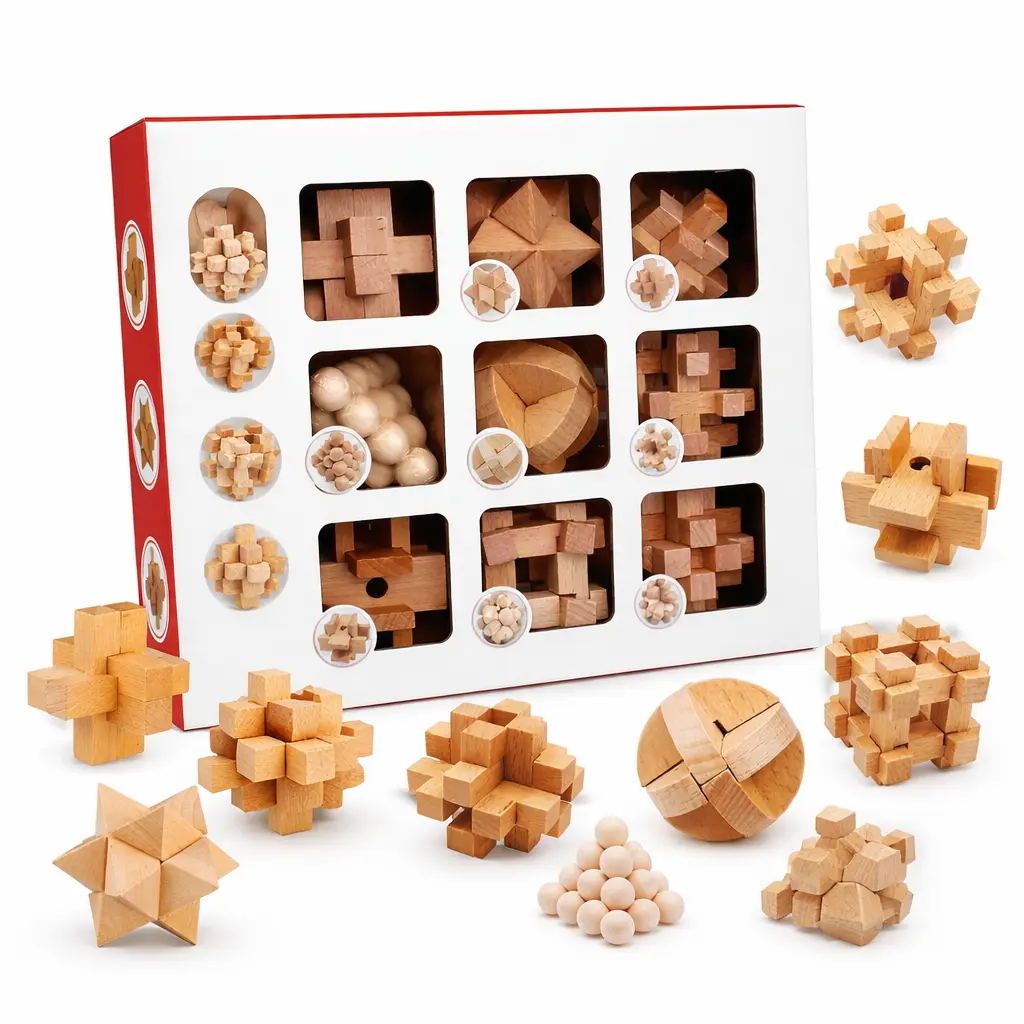
First, you have the traditional wooden brainteasers, the historical heavyweights. This is the realm of the Kongming lock (or “Chinese linking puzzle”) and the Luban lock. As the intelligence brief notes, these are often tied to figures like Zhuge Kongming and are based on principles of interlocking geometry. They are typically made of unfinished wood, feel rustic, and their challenge lies in understanding how multiple pieces relate in three dimensions to lock or unlock. They are the direct ancestors of the mechanical puzzle craft.
Luban Lock Set 9 Piece — $39.99
A product like the Luban Lock Set 9 Piece is a prime modern example of this tradition. It’s not one puzzle but a collection, offering a deep dive into classic interlocking principles. You’re buying into a heritage of craftsmanship and spatial reasoning, often with a satisfying, friction-heavy tactile feel. This is the category most people imagine when they think of “ancient Chinese puzzles.”
Second, there are modern mechanical brainteasers. These are direct descendants of the traditional form but are often designed by contemporary puzzle companies. They take the core concept—a precise, sequential mechanical challenge—and repackage it with modern materials or themes. The “Project Genius: Chinese Pagoda” from the SERPs is a perfect example: it uses the iconic pagoda shape but the mechanism involves tilting layers to align balls. It’s a modern twist on a sequential movement puzzle, leaning more into dexterity and foresight than pure disassembly.
Third, the landscape is dominated by decorative wooden jigsaws. When you see searches for “Chinese wooden puzzle” flooded with beautiful images of landscapes or food maps—like the “Liv Wan China Food Map” from Artifact Puzzles—this is what you’re getting. These are laser-cut jigsaw puzzles, often with intricate, themed whimsy pieces. The “Chinese” descriptor here usually refers to the artwork subject, not the puzzle mechanism. As noted in Reddit discussions, these can range from high-end brands to unbranded, mass-produced items where quality of cut and fit can be a gamble. The challenge is visual assembly, not mechanical revelation.
Finally, there’s the vast world of mass-market toys and gag gifts. This is the bucket for cheap, often poorly made wooden cubes, disentanglement puzzles, and prank items. They borrow the aesthetic but rarely the sophisticated engineering. They’re impulse buys, more about momentary fun or frustration than a lasting, contemplative challenge.
So, where does the Cast Keyhole sit? It’s a bridge. It is not a traditional wooden interlock like a Luban lock, nor is it a decorative jigsaw. It is a modern, metal take on precise mechanical principles rooted in the Chinese puzzle tradition. According to Wikipedia, a mechanical puzzle is “a puzzle presented as a set of mechanically interlinked pieces,” where the solver must manipulate the object to achieve a goal. The Cast Keyhole fits this definition perfectly, but it distills the concept to its absolute essence: two pieces, one flawless, hidden mechanism.
It abandons the rustic, multi-piece complexity of a traditional set for minimalist, machined metal. It swaps the thematic art of a jigsaw for the purity of the solve itself. In doing so, it positions itself closer to that modern mechanical brainteaser category—like the Project Genius Pagoda—but even more abstracted and refined. It’s for the solver who appreciates the theory behind a Kongming lock but desires the precision and permanence of a heirloom-grade object. It’s a niche within a niche: a contemporary homage to the foundational idea that a few simple parts, cleverly arranged, can create a profound and satisfying mystery. This phenomenon, where searches for wooden puzzles lead to superior metal alternatives, is explored in our article on why searches for wooden puzzles often end in metal.
Common Mistakes & Pro Tips I Learned the Hard Way
After solving the Cast Keyhole and a handful of similar metal puzzles, I’ve made every mistake in the book so you don’t have to. The frustration is real, but it’s almost always self-inflicted. Here are the specific, avoidable errors that will stall your progress, and the mindset shifts that will get you unstuck.
Mistake 1: Believing Brute Force is a Strategy
This is the cardinal sin. The Cast Keyhole is machined to tolerances where forcing anything is a dead end. You’ll feel a tantalizing “almost” fit, a slight resistance that seems to beg for a little more pressure. Don’t. Applying torque or trying to jam the pieces will, at best, lock you into an incorrect position that’s hard to reverse. At worst, you risk marring the beautiful finish or, in extreme cases, galling the soft metals. This isn’t a cheap stamped puzzle; it’s a precision object. If it’s not sliding smoothly, your alignment is off by a fraction of a millimeter. The puzzle is telling you to reset, not to push harder.
Mistake 2: Overcomplicating the “Keyhole”
Your brain wants to make this literal. You see a key-shaped piece and a hole, so you instinctively try to insert the “key” straight into the “lock.” This is a trap. The solution path is never a direct, linear insertion. You’ll spend an hour trying angles and depths that lead nowhere. The real trick is to stop thinking of them as a key and a lock, and start thinking of them as two interdependent components of a single mechanism. The “keyhole” is a red herring; the actual interaction happens along a different plane entirely. This is a core principle of many mechanical puzzles, as outlined in resources like Stop Forcing The Solution.
Mistake 3: Ignoring the Third Dimension While Staring at Your Hands
This sounds abstract, but it’s critical. You hold the puzzle in your hands, focusing on the immediate tactile feedback. This is what I call letting your hands lie to you. The subtle pressure from your fingers can mask the true alignment of the pieces. The pro move is to regularly set the puzzle down on a flat, well-lit surface. Observe it from multiple angles—top, side, eye-level. The visual cues when the pieces are resting in a neutral state are often more truthful than the feel of them in your grip. This technique, discussed in guides like Why Your Hands Are Lying To You, is a game-changer.
Mistake 4: The “One More Try” Spiral Before a Break
You hit a wall. You’re convinced the answer is just out of reach, so you run through the same three motions for 45 minutes, getting progressively more annoyed. This is the least productive thing you can do. Your brain starts reinforcing the wrong neural pathways. The single most effective tip is this: Set a 10-minute timer. Work diligently until it goes off. If you haven’t solved it, put the puzzle down and walk away for at least an hour. Do the dishes. Take a shower. The subconscious processing that happens during this break is where genuine insight forms. You’ll almost always return with a fresh perspective that cracks the code in minutes.
Mistake 5: Assuming All Puzzles in This Style Solve the Same
Solving the Cast Keyhole might make you eager to try another, like a heart-shaped variant. Beware of muscle memory. A Silver Heart Lock Puzzle (often found for around $19) looks like a thematic cousin—two interlocking silver hearts. While it shares the “two-piece metal brainteaser” DNA, its solution mechanism is fundamentally different. The mistake is to approach it with the exact same moves that worked for the Cast Keyhole. You’ll fail, and get frustrated at the “new” puzzle for not behaving like the old one. Each of these puzzles is a unique theorem. Appreciate them as such. Clear your mental cache before starting a new one.
Pro-Tip Summary:
* Listen to the Metal: Smooth movement = correct path. Resistance = wrong path. Full stop.
* Embrace the Reset: The most powerful move in your arsenal is to calmly separate the pieces and start your approach over.
* Rotate, Don’t Ram: The solution always involves a rotation or a shift along an unexpected axis. If you’re pushing, you’re wrong.
* Value the Struggle: The “Aha!” moment is directly proportional to the preceding confusion. If it was obvious, it wouldn’t be satisfying.
* Buy for the Right Reason: If you want a quick dopamine hit, get a fidget spinner. If you want a 30-minute to 2-hour journey of spatial reasoning that ends in a profound sense of personal accomplishment, this is your puzzle. Manage your expectations accordingly.
Frequently Asked Questions (FAQ)
Is the Cast Keyhole puzzle made of real gold and silver?
No. The “Gold & Silver” refers to the color of the electroplated or painted finish on the metal alloy pieces. It’s a decorative coating, not solid precious metal. This is standard for this type of puzzle and keeps it affordable.
What’s the difficulty level compared to a standard jigsaw?
They are not comparable. A jigsaw is a 2D visual matching task. The Cast Keyhole is a 3D mechanical puzzle requiring spatial reasoning, logic, and tactile feel. It’s less about seeing and more about thinking and manipulating. Most people find it significantly more challenging than a 1000-piece jigsaw, but in a completely different way.
Can it be solved multiple times?
Absolutely. Once you know the solution, you can solve and unsolve it repeatedly. However, the “Aha!” discovery moment is a one-time event. For repeated tactile enjoyment, many owners enjoy the fidget-like process of solving it from memory.
Is it good for travel?
With caveats. It’s small, silent, and doesn’t have loose pieces, making it great for planes or trains. The major risk is dropping it on a hard surface, which could dent the soft metal or damage the finish. Keep it in a soft pouch (it doesn’t come with one).
How durable is the finish?
The gold and silver plating is decent but not industrial-grade. With careful handling, it will last. The finish can wear over time with excessive friction during solving, and it can be scratched if forced or dropped. It’s a display-quality object, not a tool.
Does it come with a solution?
Typically, no. Part of the ethos of these puzzles is to solve them yourself. If you absolutely need one, you can find a detailed step-by-step solution guide online, but I strongly recommend exhausting your own mental resources first—that’s where the value lies.
My puzzle seems stuck and won’t come apart. Did I break it?
You almost certainly haven’t broken it. This is the most common panic moment. You’ve likely moved it into a “false lock” position. Don’t force it. Gently reverse your last move, try wiggling with minimal pressure on different axes, or set it down and come back later with a clear head. Forcing it is the only way to truly damage it.
Is this suitable for a child?
It depends on the child. For a patient, mechanically-inclined teen, yes. For younger children, the fine motor skills and frustration tolerance required are often too high. There are better introductory wooden puzzles, like a basic six-piece burr.
What if I want a puzzle that also has a function after solving?
If you like the mechanical aspect but want a useful end result, consider a puzzle box. For example, a 3D Wooden Puzzle Treasure Box is a DIY kit you assemble into a functional, locking jewelry box. It offers a longer building phase and a usable product, though the solving mechanism is different. For more ideas on functional brainteasers, our guide on office puzzles touches on similar concepts.
How does this compare to a traditional Kongming Lock (Luban Lock)?
The Cast Keyhole is a two-piece disentanglement puzzle. A traditional wooden Kongming Lock is an interlocking puzzle, often with 6 or 9 pieces, that you disassemble and reassemble. The thinking is similar (3D spatial reasoning), but the execution is different. The Cast Keyhole is generally more portable and has a more “elegant” single solution path. For a deep dive into traditional Luban lock sets, see our dedicated review.
Is this a good gift for a puzzle enthusiast?
Yes, but with a warning. For someone who enjoys metal brain teasers or mechanical puzzles, it’s an excellent, classy-looking gift. For someone who only does jigsaw puzzles, it’s a risky gift that they may find frustrating. Know your recipient’s taste.
I solved it once but now I can’t remember how. Is that normal?
Completely normal. The solution is often a non-intuitive sequence of motions that isn’t easily committed to muscle memory after one solve. Being unable to immediately re-solve it is part of the charm and means you get to have the “Eureka!” moment all over again.
The Final Verdict: Is the Cast Keyhole Gold & Silver Worth Your Time?
After spending hours with the Cast Keyhole, turning it over in my hands, and even letting a few friends (with varying patience levels) give it a shot, my recommendation is clear: Buy it, but only if you’re in its specific target audience. This isn’t a puzzle for everyone, and its value is entirely dependent on what you’re looking for.
Let’s weigh the scales. On the pro side, the design is undeniably beautiful. The gold and silver plating gives it a premium, jewelry-like feel that most mass-produced brain teasers lack. The solve, once you find it, is incredibly satisfying—a quiet, clever “aha” moment that feels earned. The build quality is solid; it has a good weight and the pieces move smoothly without feeling cheap. It’s a focused, elegant object.
The cons, however, are just as definitive. The price point is high for a single-solution, two-piece puzzle. If you measure value purely by hours of engagement per dollar, a complex jigsaw or a multi-piece burr puzzle will win. Its appeal is niche: if you don’t enjoy the specific frustration of tactile, 3D logic problems, this will just be a paperweight. And yes, it’s essentially a one-trick pony. Once you know the solution, the mystery is gone, though the act of solving can remain a pleasant fidget.
You should buy the Cast Keyhole Gold & Silver next if:
* You are a collector or enthusiast of mechanical puzzles and appreciate display-worthy pieces.
* You want a sophisticated, compact brain teaser for your desk that sparks conversation.
* You need a high-quality gift for someone who loves metal disentanglement puzzles and values aesthetics.
* You enjoy the meditative process of solving a single, elegant problem more than the extended campaign of a 1000-piece puzzle.
For everyone else, there are better alternatives. If you love the traditional Chinese wooden puzzle feel, seek out a wooden burr puzzle or a Luban Lock set; they offer more intricate, multi-step assembly challenges. If you want beautiful decor you can build, a high-quality decorative wooden jigsaw with unique cuts is a better artistic outlet. And if you crave moving parts and sequential discovery, something like the Project Genius Chinese Pagoda, which involves tilting and aligning balls, provides a more dynamic and repeatable challenge. For a broader look at this category, our guide to metal puzzles for the over-thinker offers more options.
If your goal is a puzzle that does something, a functional alternative might be more rewarding. The 3D Wooden Puzzle Treasure Box merges the assembly challenge of a traditional wooden puzzle with a practical outcome—a usable, secret-locking box. It provides a longer build time and a lasting functional reward, which addresses the “single-solution” drawback of the Cast Keyhole.
Final Decision: The Cast Keyhole Gold & Silver is a premium niche product. It’s not the most challenging, nor the most replayable, nor the best value. But for the right person—someone who views puzzles as tactile art and enjoys the purity of a clever, well-made problem—it is an excellent and worthy purchase. It’s a puzzle you solve, then keep on your shelf as a trophy of a quiet mental victory.
If you’re in that camp and are convinced, your next step is straightforward. Seek out a reputable seller (specialty puzzle shops or trusted online retailers are best), and prepare for a brief but beautiful battle of wits. For a deeper dive into the assembly thinking these puzzles require, our guide to another spherical puzzle alternative explores similar spatial logic. For everyone else, the vibrant world of Chinese wooden puzzles holds countless other, potentially better-fitting, challenges.