The Temple of Kong Tien vs. Your Coffee Table: Unpacking the Myth
You remember the scene. The flickering torchlight, the ancient temple air thick with dust and danger. Indiana Jones, in Indiana Jones and the Temple of Doom, stands before a mysterious artifact: the I Ching Puzzle. According to the Fandom wiki, it’s described as a device of “three interconnecting rings” and trigram patterns, a key that must be solved to progress. It’s the perfect cinematic brainteaser—visually intriguing, tactile, and shrouded in ancient mystery. For decades, that brief glimpse has lived in the minds of pop culture fans and puzzle enthusiasts alike, creating a quiet, persistent question: Where can I buy an I Ching puzzle toy like that?
The search leads to a curious digital crossroads. One path delves into the philosophical I Ching itself—virtual coin tosses and hexagram interpretations. Another dead-ends in a sea of jigsaw puzzles and, somewhat comically, recommendations for dog puzzle toys (though corgis are notoriously clever). The fictional artifact from Kong Tien’s temple seems to have no direct, purchasable counterpart. This is the gap between cinematic myth and tangible reality.
But the desire it sparks is very real. It’s not for a divination tool or a 1000-piece landscape. It’s for that specific feeling: a weighty, interlocking metal object that fits in the palm of your hand, promising a quiet, personal challenge. It’s the craving for a handheld metal brain teaser that serves as both a decorative conversation piece and a test of patience and spatial reasoning. The market for adult puzzle toys answers this call not with literal replicas, but with spiritual successors.
Enter the world of interlocking ring puzzles and mechanical brain teasers. These are the real-world descendants of that fictional challenge. They forgo the mystical trigrams but capture the essential pleasure: complex, precise parts that must be manipulated in a specific, often non-obvious sequence to separate and then reunite. They are exercises in “aha!” moments, not arcane ritual.
And here is where the myth lands squarely on your coffee table. The closest, most accessible embodiment of that Indiana Jones vibe isn’t a licensed prop—it’s a sleek, modern take on the form.
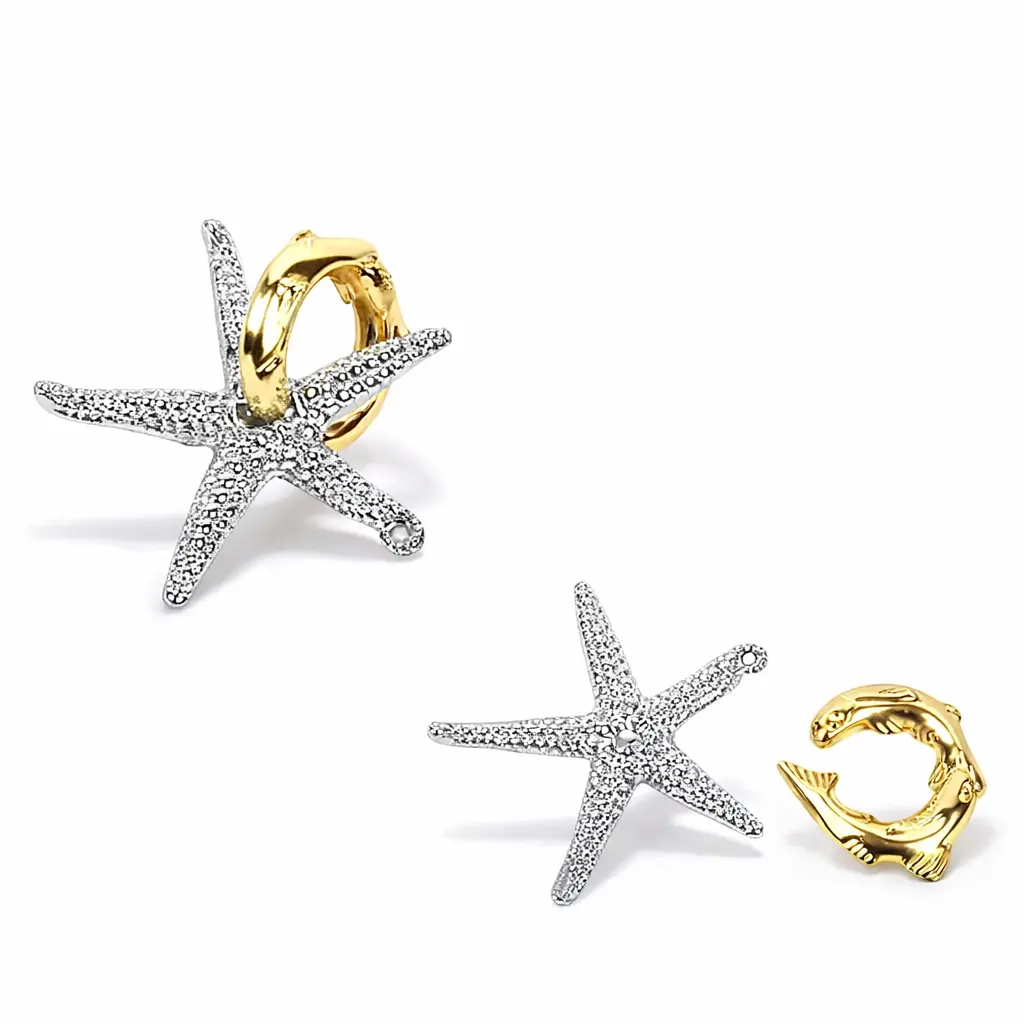
Consider the Metal Starfish Puzzle Ring. At first glance, it’s a beautiful, intricate piece of decorative puzzle jewelry—five intertwined bands forming a starburst. But pick it up. Feel the cool, satin-finished metal. Try to pull it apart. It resists. This is the core experience the movie hinted at: a self-contained, elegant mechanical mystery. It answers the “where to buy” question not with a film relic, but with a far more attainable and wearable artifact. It transforms the search for the Indiana Jones I Ching puzzle toy from a fruitless hunt for a movie macguffin into the discovery of a genuine, satisfying puzzle toy for adults.
This is the bridge. The temple puzzle was a plot device made of magic and braziers. The object in your hand is a precision-made patience puzzle toy, its magic contained in the cleverness of its design and the satisfaction of solving it yourself. The journey from the silver screen to your pocket is complete.
First Impressions: Unboxing the Metal Starfish Puzzle Ring
So, you’ve found your bridge from myth to reality. The package arrives—small, unassuming, promising no ancient curses, just a modern challenge. Sliding the contents onto your palm, the Metal Starfish Puzzle Ring immediately asserts its presence. This isn’t flimsy plastic; it’s a solid, palm-sized artifact with a satisfying heft. The weight is the first clue you’re holding a quality handheld metal brain teaser, not a disposable trinket.
The finish is a cool, matte metal, often a brushed stainless steel or a dark gunmetal grey, giving it a sleek, almost futuristic look that belies its ancient puzzle inspiration. Run your fingers over the interwoven bands. The edges are smooth, polished for handling, with no rough spots to snag on skin or pocket lining. When you shake it gently, it produces a soft, muted clink—a sound of precision parts in close contact, a whisper of the mechanical dance happening within.
Visually, it’s captivating. Five slender bands are intricately woven to form a symmetrical starfish shape, locked around a central ring. It’s clearly a single, fused object. Your brain immediately recognizes it as decorative puzzle jewelry, a piece of geometric art you could display on a shelf or a keychain. But then your fingers, driven by curiosity, instinctively try to pull the starfish free from the ring. It doesn’t budge. Not even a millimeter. The initial “obvious” solution—pulling straight apart—is met with absolute, silent resistance.
This is the moment of intriguing confrontation. The object transforms from a static sculpture into an active tactile fidget puzzle. You turn it over, peering through the gaps, trying to trace the path of a single band. The logic is hidden in plain sight. The smooth metal feels wonderful to manipulate, its cool temperature warming slowly in your hand as you rotate it, seeking a weakness, an opening, a first move. The challenge is beautifully, frustratingly self-contained. There are no instructions, no buttons, just you and this elegant, stubborn knot of metal.
It sits perfectly in the hand, its size and weight making it an ideal desk companion or pocket carry. Unlike the clunky, multi-part puzzles of childhood, this feels refined and adult. The initial impression is one of contradictory qualities: it’s both simple and complex, beautiful and baffling, a quiet ornament that screams a silent challenge. You’re not just holding a puzzle; you’re holding a conversation piece, a test of patience, and a remarkably satisfying piece of tactile engineering, all before you’ve even made the first correct move.
The Nature of the Beast: What Kind of Puzzle Is This, Really?
That initial, silent standoff with the metal starfish is your first clue: this isn’t a puzzle you solve with speed or force. It’s a world away from the image-assembly of a jigsaw or the pattern-matching of a sliding tile puzzle. So, what have you actually gotten yourself into? Understanding its classification is the key to adjusting your mindset and, ultimately, finding the path to victory.
This object belongs to the venerable family of interlocking ring puzzles, a subset of 3D disentanglement puzzles. Its core principle is deceptively simple: multiple independent pieces (in this case, metal bands) are arranged in a fixed, interlocked configuration. The solver’s task is to discover the precise sequence of rotations, alignments, and translations that will free one piece from the others without bending, forcing, or breaking anything. The logic is purely spatial and sequential. You’re not looking for a picture; you’re mentally mapping a three-dimensional maze and finding the one true thread to pull.
The required skillset is specific. It demands spatial reasoning—the ability to visualize how the bands occupy space relative to each other from multiple angles. It requires procedural logic, where move A must precede move B, which unlocks the possibility of move C. Most of all, it is the ultimate patience puzzle toy. Progress is measured not in minutes, but in the subtle, hard-won realizations that occur between long stretches of contemplative manipulation. This is a puzzle toy for adults precisely because the reward isn’t instant gratification; it’s the profound “Aha!” that comes from out-thinking a cleverly designed physical system. The frustration is part of the process, a designed friction that makes the eventual release of the first band feel like a genuine intellectual triumph.
To appreciate its place in the puzzle pantheon, consider the alternatives. A classic Hanayama Cast puzzle, like the Vortex or Enigma, operates on similar 3D disentanglement principles but often with more abstract, non-representational shapes. A burr puzzle focuses on interlocking notched sticks. The Metal Starfish (and puzzles like it) sits in a sweet spot: its form is aesthetically recognizable, which makes the mechanical deception all the more delightful. It’s a more approachable and wearable entry point than some purely abstract metal knots. For a deeper dive into why these objects serve as a profound test of spatial humility, our article on why the metal puzzle ring remains the ultimate test of spatial humility explores this concept in detail.
For those who fall in love with this specific mechanical poetry, the journey often continues. Puzzles like the Interlocking Double-Ring Lian Puzzle explore similar themes with a different form factor, presenting two interlocked rings that must be separated through a similarly non-intuitive dance of alignment and rotation. It’s a testament to the depth of this niche—a single elegant concept can spawn countless variations, each with its own unique rhythm and solution.
The takeaway is this: you are not trying to “break” the starfish. You are learning its language. Every failed twist and jammed alignment is a sentence in a dialogue you’re learning to have. The solution is never random; it is a perfect, elegant chain of cause and effect baked into the metal. Your job is to discover it, making this as much a puzzle about your own patience and perception as it is about the object in your hand. The beast, it turns out, is a teacher.
The Frustration & Flow: A Diary of My First Solving Attempt
Armed with the intellectual understanding that the starfish and ring were designed to separate, I began. The first ten minutes were a period of confident, brute-force exploration. I twisted, pulled, and turned the starfish in every obvious axis, convinced the solution was a simple matter of finding the one “weak spot.” This is the common first mistake: treating it like a stuck lid on a jar. The metal protested with faint, grating sounds, and the starfish legs would catch firmly on the inner ring, stopping progress dead. The goal of how to solve starfish ring puzzle felt miles away.
The next phase was overthinking. I laid it on a table, studying it from all angles, trying to mentally map the paths the legs would need to trace to clear the ring’s interior. I attempted to slide one leg out through the gap in the ring, but the other legs immediately blocked it. I tried rotating the starfish 90 degrees, then 45, convinced there was a specific “magic angle” I was missing. My fingers started to ache from the precise, sustained pressure. The puzzle was winning, and a low-grade frustration began to simmer. This wasn’t a test of strength, but a test of ego.
Hour one ended with me putting it down in mild annoyance. I left it on my desk—a shiny, taunting paperweight. This, I later learned, is a crucial part of the process. Walking away resets your mental model. When I picked it up again later, my hands approached it differently. Instead of forcing a single leg, I began experimenting with simultaneous, counter-intuitive motions. What if I pushed one leg deeper into the ring while twisting the entire assembly? A new kind of bind occurred. Another dead end.
The breakthrough came not from a flash of genius, but from a moment of surrender to the puzzle’s logic. I stopped trying to separate starfish from ring as my primary goal. Instead, I focused purely on discovering how the two pieces could move in relation to each other without any intent to separate. I let one leg find a natural channel, allowed the ring to tilt at an absurd-seeming angle, and followed the path of least resistance. There was a subtle, smooth shift—a new alignment I hadn’t felt before. And then, with a quiet, profoundly satisfying click of understanding in my mind more than in the metal, the path revealed itself.
The solution is a fluid, multi-step dance. It involves tilting the ring, rotating the starfish to a precise orientation where its legs align with specific openings, and then executing a gentle, twisting withdrawal. The moment the first leg slipped free, the rest followed in a cascade of elegant, inevitable motion. The starfish was in my left hand, the ring in my right. The silence after the struggle was filled with a deep, tactile satisfaction. The frustration evaporated, replaced by the pure flow of having finally listened and understood.
This emotional arc—from confidence to frustration, to resignation, to eventual epiphany—is the core experience. It’s why these puzzles are so memorable. They teach patience not through preaching, but through direct, humbling experience. If you find yourself stuck in that angry phase, the best advice is universal: put it down. Your subconscious will work on it. For a more structured approach to this kind of challenge, our general guide to solving puzzle rings offers foundational strategies.
For those who enjoy this specific flavor of struggle-triumph, the journey has many chapters. The Cast Hook Metal Brain Teaser offers a different but related challenge, presenting two interlinked hooks that must be disengaged through a similarly non-linear process of alignment and maneuver. It’s another lesson in perception over force, proving that the most satisfying clicks are those earned through persistence.
More Than a Puzzle: The Starfish Ring as a Lifestyle Object
That moment of post-solution satisfaction is potent, but it’s not the end of the story. Unlike a jigsaw puzzle you break apart and box away, the solved starfish ring doesn’t vanish. It sits there, whole and gleaming, transformed from a confounding object into a beautiful one. This is where it transcends the typical puzzle toy and becomes something more: a lifestyle object. Its true magic begins after you’ve solved it, because its form invites integration into your daily life in a way a flat puzzle never could.
First and foremost, it’s decorative puzzle jewelry. Once assembled, the five-pointed star is an elegant, geometric piece. Slip it onto a simple leather cord or a fine chain, and you have a unique, conversation-starting necklace. Clip it to your keys or backpack zipper, and it becomes a distinctive keychain that carries a secret story. It’s a piece of wearable intrigue. When someone admires it and asks, “Where did you get that?” you don’t just name a store; you begin with, “Well, it’s actually a puzzle…” That’s an instant icebreaker, a tiny portal to a shared moment of curiosity.
On your desk, it serves a dual purpose. As an ornament, its metallic sheen and intricate form add a touch of thoughtful design. But pick it up, and its secondary function emerges: it’s a superb tactile fidget puzzle. The smooth, cool metal of the rings is satisfying to handle. You can idly spin the bands, testing their paths without the pressure of solving, finding a rhythmic, focusing motion that can help channel restless energy. It occupies your hands while your mind works elsewhere, fulfilling a role similar to a fidget toy, but with a heft and mechanical intelligence that cheap plastic spinners lack. It’s a thinking person’s fidget.
This positions it starkly against single-use shelf puzzles. Many brain teasers are solved once, the solution memorized, and then they gather dust as mere trophies. The starfish ring avoids this fate because its appeal is cyclical. You can solve it, wear it or display it, then deliberately scramble it again when you crave that particular mental challenge or want to hand the “unsolvable” object to a friend. It’s rechargeable entertainment.
This concept of a beautiful, functional puzzle isn’t unique to the starfish. The tradition of puzzle rings, where the challenge is to arrange interlocking bands into a wearable ring, dates back centuries. For a thoughtful exploration of how these objects become lessons in patience and personal artifacts, read about when a simple ring becomes a masterclass in patience.
For a more classic and wearable take, the 4 Band Puzzle Ring distills this idea into a more traditional jewelry form. Comprising four interwoven metal bands, the puzzle is to assemble them into a coherent, smooth ring meant to be worn on a finger. It’s a subtler, more integrated piece of decorative puzzle jewelry, where the solution isn’t just a temporary state but the intended, final form. It embodies the same principles of alignment and patience but results in an object designed for permanent wear.
Ultimately, the metal starfish puzzle ring succeeds because it is more than the sum of its parts. It is a frustration, a teacher, a trophy, a fidget, and a piece of art. It earns its place not in a closet, but in your pocket, on your desk, or around your neck. For the gift-seeker, this makes it a standout candidate among best novelty puzzle gifts—it’s a gift that keeps giving, offering an experience, a story, and a lasting object. It bridges the gap between a fleeting challenge and a permanent fixture, proving that the best puzzles don’t just exercise your mind; they become a part of your world.
Who Is This Puzzle Toy For (And Who Should Skip It)?
So, you’ve seen it transform from a frustrating tangle to a satisfying, wearable trophy. But before you decide if this pocket-sized enigma belongs in your life, let’s get brutally honest about who will truly cherish it and who will likely toss it in a drawer after ten minutes. This isn’t just another puzzle toy for adults; it’s a specific experience that fits certain minds and lifestyles perfectly.
The Ideal User: A Portrait
The Pop Culture & Puzzle Hybrid Fan: If your search for “I Ching puzzle toy” was sparked by a memory of Indiana Jones in the Temple of Kong Tien, you’re the core audience. This ring is a tangible piece of that interlocking-ring mystery. It satisfies the itch for a physical artifact from a fictional challenge, making it a perfect best novelty puzzle gift for a fellow fan.
The Tactile Thinker & Fidgeter: This is for the person who thinks with their hands. If you habitually click a pen, spin a coin, or disassemble and reassemble things while on a call, the starfish ring is a sophisticated upgrade. It’s a challenge coin puzzle you can manipulate endlessly, offering a deep, focused fidget that engages logic, not just motor reflexes.
The Gift-Seeker for the “Hard-to-Shop-For”: Stumped by the friend who has everything? This is a brilliant solution. It’s affordable, unique, and provides an experience, not just an object. The story—from its pop-culture roots to the “Aha!” moment—is part of the gift. It’s a conversation starter that shows thoughtfulness beyond a generic present.
The Collector of Curious Objects: If their shelves hold oddities, mechanical puzzles, or EDC (Everyday Carry) gear, this fits right in. It’s a display piece with interactive credentials, a small sculpture that rewards engagement. It belongs in the same category as intricate bottle openers or vintage locks—functional art with a secret.
The Patient Perseverer: You must enjoy the process as much as the solution. This puzzle rewards a calm, methodical, almost meditative approach. If you find satisfaction in slowly understanding a system through trial, error, and observation, the journey with this ring will be deeply fulfilling.
Who Should Probably Take a Pass?
The Pure Divination Seeker: If you’re looking for a tool to consult the ancient I Ching using coins or sticks, this is not it. While inspired by the aesthetic of interlocking rings from the Indiana Jones lore, it is a modern handheld metal brain teaser, not a fortune-telling device. You’ll be disappointed by the lack of hexagrams.
The “Quick Win” Puzzle Fan: If your idea of a good time is solving a puzzle in under five minutes, the deliberate, sometimes slow unlocking of this ring will feel like a chore. This is not a Sudoku; it’s a physical knot that demands patience. The frustration phase is a feature, not a bug.
The Easily Frustrated or Impatient: If getting stuck without immediate progress leads to annoyance rather than intrigued determination, skip it. This puzzle will stump you. It requires you to sit with the problem, which can be agonizing for some temperaments.
Someone Seeking a Large Display Piece: While beautiful, this is a pocket-sized object. If you want a dramatic centerpiece for your coffee table, look to larger cast metal puzzles or puzzle boxes. The starfish ring’s charm is in its intimacy and portability.
Young Children: Despite being a “toy” in the keyword, this is firmly for teens and adults. Small parts and the need for fine motor control and logical reasoning make it unsuitable for little ones.
The Final Verdict: Buy or Skip?
Buy it if: You value the journey over the destination, enjoy tactile problem-solving, want a unique fidget or conversation piece, and are shopping for a gift that offers a memorable story. It’s a standout for those who appreciate clever design in a portable, affordable package.
Skip it if: You want a traditional I Ching tool, demand instant gratification from your puzzles, have a low frustration threshold, or are looking for a large, purely decorative item.
Consider it a litmus test for your own—or your giftee’s—patience and curiosity. For the right person, it’s not just a purchase; it’s an invitation to a quiet, satisfying challenge that fits in the palm of your hand. For more on the appeal of these kinds of cerebral, hands-on challenges, our guide to the best metal puzzles for adults delves deeper into the mindset of the tactile thinker.
Beyond the Starfish: The World of Hanayama & Metal Brain Teasers
So, you’ve decided the Starfish’s unique blend of frustration and elegance is for you—or perhaps you’ve solved it and are hungry for more. Where do you go from here? You’ve just entered the vast, satisfying universe of premium handheld metal brain teasers, a category dominated by one name: Hanayama.
Hanayama is to metal puzzles what Lego is to bricks. This Japanese brand has perfected the art of the small-scale, exquisitely machined interlocking ring puzzle and its many cousins. Each puzzle is graded on a difficulty scale (often 1 to 6), comes in distinctive packaging, and focuses on a single, elegant mechanical principle. The Metal Starfish Puzzle Ring is a perfect ambassador for this world—it’s essentially a Hanayama-style puzzle in spirit, if not always in brand. Understanding this context transforms it from a lone novelty into a gateway object.
If the Starfish (a solid Grade 3-4 in difficulty) whetted your appetite, you can calibrate your next challenge. Seeking something slightly more intuitive but equally beautiful? Consider the Cast Hook.
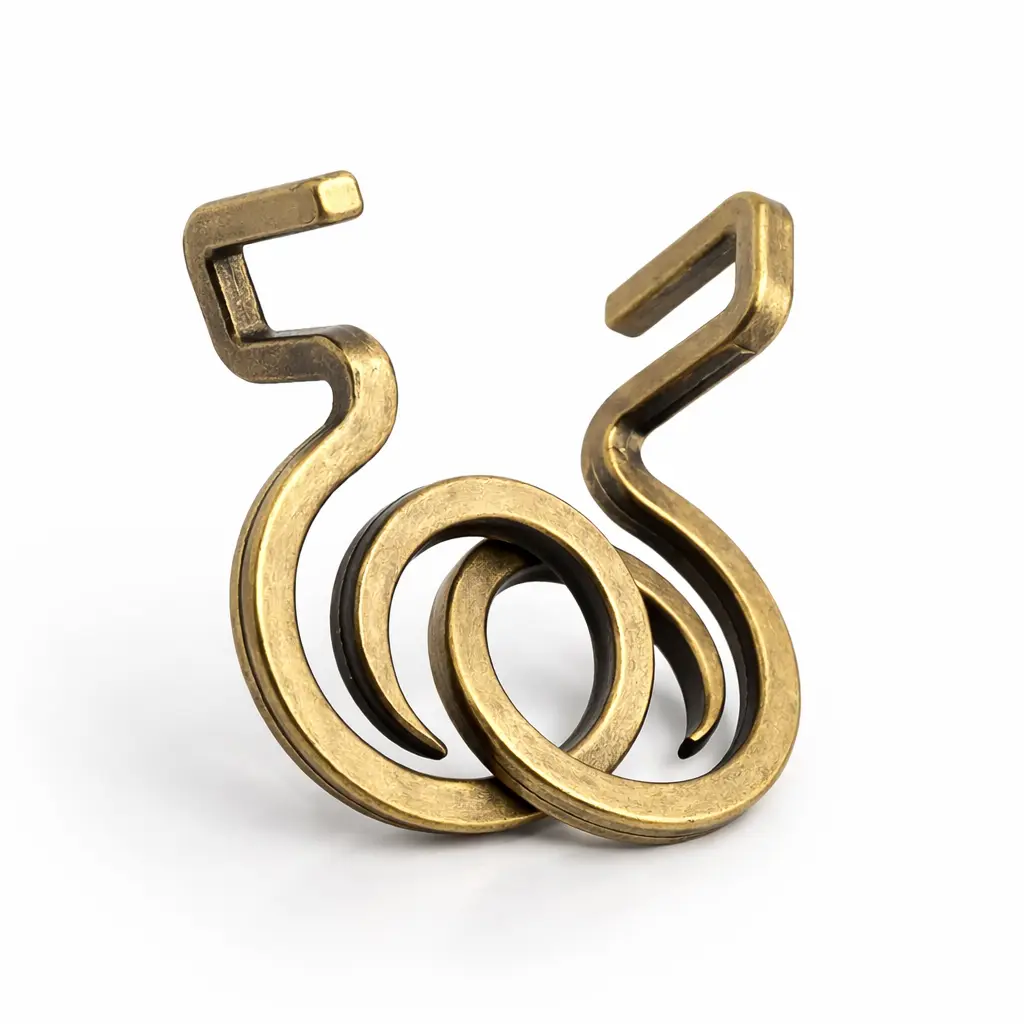
The Cast Hook is a classic entry-point. Rated a 2 by Hanayama, it involves separating and re-joining two intricately cast pieces that look impossibly linked. The “aha” moment comes quicker than with the Starfish, making it immensely satisfying and a fantastic gift for a curious beginner. It teaches you the language of these puzzles: to look for alignment, rotation, and hidden pathways.
Conversely, if the Starfish’s ring-based deception captivated you, and you want to dive deeper into that specific mechanic, the genre has stunning variations.
The Interlocking Double-Ring Lian Puzzle presents a different kind of entanglement. Instead of a starfish trapped in a ring, you have two rings that seem to be a permanent, interlocked pair. The solution is less about contortion and more about discovering the precise, counter-intuitive plane on which the rings can slide apart. It’s a brilliant lesson in spatial reasoning and a beautiful, silent handheld metal brain teaser to fidget with at your desk.
These puzzles are part of a centuries-old tradition of mechanical puzzles—objects designed to be solved through manipulation, not assembly or picture-making. They demand a different kind of patience than a jigsaw; it’s a battle of wits against the designer, a silent conversation between your fingers and the geometry of the object. For a deeper look at why these metal conundrums are so compelling, from their history to the mindset they require, our skeptic’s guide to cast metal brain teasers explores the journey from skeptic to believer.
The Starfish Ring, therefore, is more than a single toy. It’s your first step onto a well-trodden but endlessly fascinating path. From here, you can explore labyrinths (like the Cast Labyrinth), disentanglements (like the famous Cast Vortex), or deceptively simple-looking knots. Each one is a self-contained world of challenge, a masterpiece of minimalist design, and a testament to the quiet joy of solving something with your hands and mind alone.
Metal Starfish Puzzle Ring: Frequently Asked Questions
Having explored the broader world of metal brain teasers, you’re likely left with some very practical questions about the starfish itself. Let’s tackle the most common ones head-on.
Is this the same puzzle Indiana Jones solved in Temple of the Forbidden Eye?
No, but it’s a spiritual successor. The Indiana Jones I Ching puzzle was a large, thematic prop with three interlocking rings and trigrams. The Metal Starfish Puzzle Ring captures that same essence—a mysterious, interlocking metal object that feels like a relic—but in a modern, wearable, and mass-produced form. It’s the pocket-sized version of that adventure.
How hard is it to solve?
It’s a solid 4 out of 6 on the Hanayama difficulty scale. For a first-time solver, expect 30 minutes to several hours of trial, error, and revelation. It’s not impossibly frustrating, but it’s far from trivial. The “aha!” moment is deeply satisfying. If you get truly stuck, a quick search for a how to solve starfish ring puzzle video will nudge you in the right direction without fully spoiling the elegant solution. For a more hands-on breakdown, our detailed review of the metal starfish puzzle ring chronicles the solving journey step-by-step.
Is it good for fidgeting?
Absolutely. Once solved, the act of taking the starfish on and off the ring becomes a rhythmic, tactile ritual. The smooth, cool metal and the precise click of the pieces aligning make it a superb handheld metal brain teaser for idle hands. It’s more engaging than a spinner and quieter than clicking a pen. In fact, it shares some therapeutic qualities with purpose-built fidget toys, but with an added layer of intellectual satisfaction.
Will it break or wear out?
The cast metal is durable, but it’s not indestructible. Forcing pieces against their intended path is the main danger. With normal, thoughtful use—solving and fidgeting—it should last for years without showing wear. Think of it as a precision tool, not a stress ball. For advice on choosing puzzles built to last, our veteran’s guide to durable metal puzzles is an excellent resource.
Is there a solution guide?
Yes. Most retailers include a small solution card, and detailed video guides are plentiful online. My advice? Resist for as long as you can. The struggle is the point. If you must peek, look for just the first step to re-orient your thinking.
How do I get the starfish back on the ring? This is the real puzzle!
A common cry of despair! Reassembly is often harder than the initial disassembly because you’ve lost the “solved” reference point. The key is patience and remembering the precise alignment path. If it’s been days and you’re frustrated, that’s the perfect time to consult a puzzle ring solution. There’s no shame in it.
Can I actually wear it as a ring?
You can, but with caveats. As decorative puzzle jewelry, it’s a fantastic conversation starter. However, the starfish has protrusions that can catch on clothing or bags. For daily wear, a traditional puzzle ring like the elegant four-band style might be more practical.
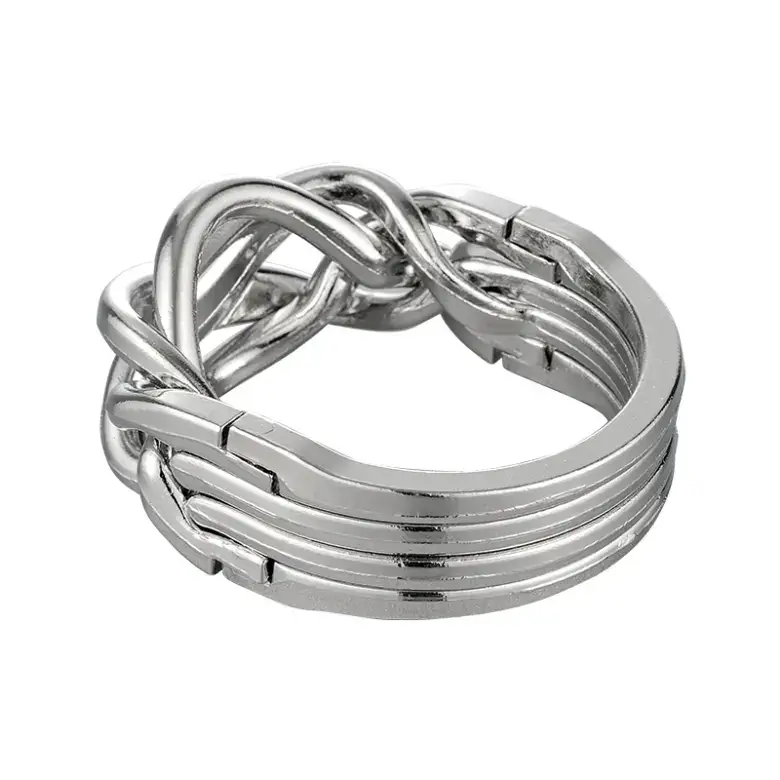
4 Band Puzzle Ring — $11.99
The 4 Band Puzzle Ring offers a similar aesthetic and mechanical intrigue but with a smoother profile, making it a more functional piece of jewelry. If you love the idea of wearable puzzling, it’s a logical next step, and we have a full solution guide for the 4-band puzzle ring for that one, too.
Is it worth the money?
For around $15, you’re buying dozens of hours of engagement (first solve, re-solves, fidgeting) and a unique object of art and intellect. Compared to a movie ticket or a cheap plastic toy, the value is exceptional for the right person. If you crave tactile challenges or unique desk decor, it’s an easy yes. If you prefer passive entertainment or get frustrated easily, you might want to admire it from afar.
The Verdict: Is This the Real I Ching Puzzle Toy You’re Looking For?
So, is the Metal Starfish Puzzle Ring the legendary I Ching puzzle from Indiana Jones? Not literally. The temple artifact was a plot device, a magical lock of three rings and trigrams. But in spirit? Absolutely. It captures the core fantasy: a mysterious, interlocking metal object that demands patience, observation, and a satisfying click of revelation. It’s the best novelty puzzle gift for anyone who wants to hold a piece of that adventure in their hand.
Our verdict is a passionate BUY—if you fit the profile. This isn’t a casual toy; it’s a commitment to a specific type of satisfaction. Buy it for the tactile thinker, the fidgeter who appreciates artful design, or the pop culture fan who values unique artifacts over mass-produced merch. It’s a bridge between cinematic myth and a real, solvable challenge you can slip into your pocket.
If the Starfish’s organic, complex shape feels daunting as a first step, consider a more geometric entry point into the world of interlocking ring puzzles.
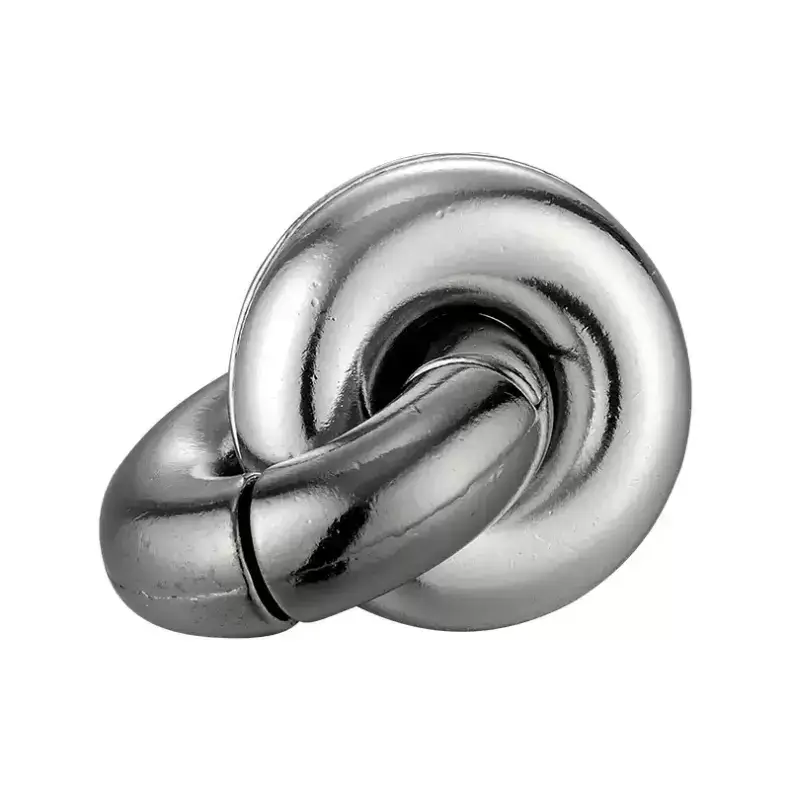
The Interlocking Double-Ring Lian Puzzle offers a similarly elegant and deceptive challenge. At $15.88, it provides a more structured, two-ring dance that teaches the fundamental “cast logic” of these beautiful brain teasers before you graduate to the starfish’s wilder form. It’s another perfect piece of decorative puzzle jewelry.
Where to buy I Ching puzzle-style toys? Skip the generic “mind puzzle toys” aisles. Seek out specialty puzzle retailers or trusted marketplaces that curate quality mechanical puzzles from brands like Hanayama. You’re not just buying a product; you’re buying into a heritage of craftsmanship and cleverness.
In the end, the real treasure isn’t avoiding frustration—it’s the moment of clarity that follows. The Starfish Ring delivers that in spades. It’s a quiet, personal victory, a conversation piece, and a tiny monument to patience. For the right adventurer, that’s worth far more than its price tag. Your quest begins with a single, deceptively simple click.