The ‘Aha!’ Barrier: Why Your First Read of the Tao Te Ching Feels Like a Beautiful Mistake
If you’ve ever picked up the Tao Te Ching, read a few lines, and thought, ‘This is beautiful… but what does it actually mean?’ you’re not alone. That feeling isn’t a failure of your intellect. It’s the text working as designed. You’ve just tried to use a compass as a hammer.
The Tao Te Ching, or the Classic of the Way and its Virtue, is an ancient Chinese classic text famously composed of 81 chapters of dense, poetic verse. Traditionally pinned to a sage named Lao Tzu in the 6th-century BCE, its origins are shrouded in the kind of mystery it seems to enjoy. Scholars debate the authorship debate, suggesting it was likely compiled later during the Warring States period. But that historical puzzle is secondary to the immediate one in your hands: why does it feel so cryptic?
Because it speaks in paradox. It defines by not defining. “The Tao that can be told is not the eternal Tao,” it declares in its famous opening. It’s like being handed a map where the key landmark is labeled “this is not the landmark.” Your analytical mind, trained to solve and dissect, hits a wall. You’re trying to understand the water by freezing it into a block and studying its cracks, when the text wants you to feel its flow.
This is the universal first-read experience. You encounter a line like “Do nothing, and nothing is left undone” and a part of you screams, That’s nonsense for my inbox, my deadlines, my life. You might skim chapters on leadership or humility, find a quote that resonates, but close the book feeling oddly empty, as if the wisdom slipped through your fingers like smoke. The top question on forums like Reddit r/taoism isn’t about deep philosophy—it’s the plain, frustrated: “I read it and feel like I’ve not learned or understood anything. What am I missing?”
You’re missing the manual. Not for the book, but for your perception.
The Tao Te Ching isn’t a treatise to be memorized. It’s a perceptual tool, a worn set of lenses for seeing the world differently. It’s less like reading a manual and more like fiddling with a puzzle that, in frustrating your usual approach, forces your mind into a new shape.
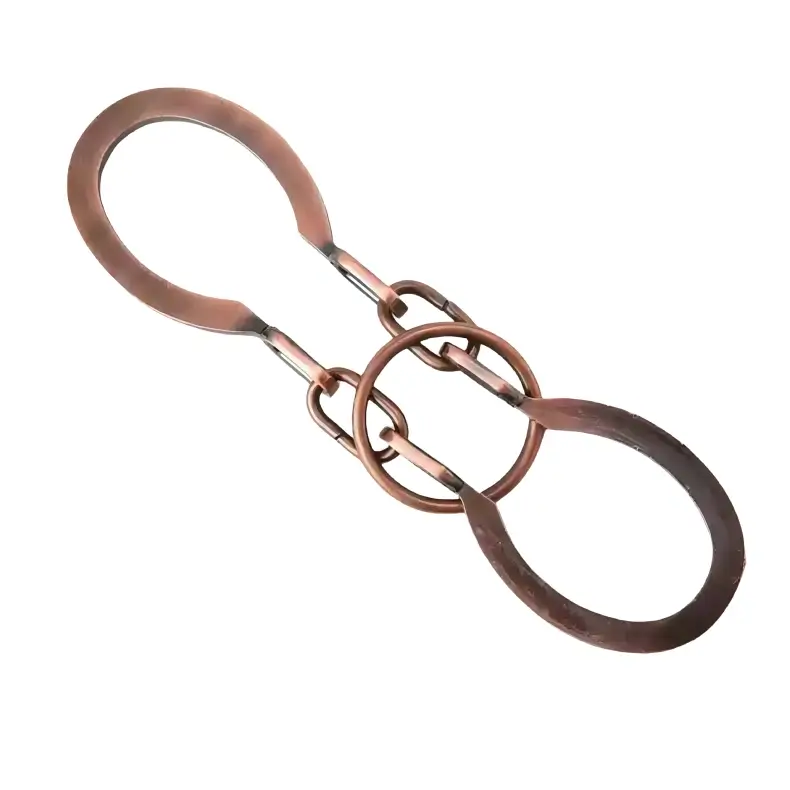
Horseshoe Lock Puzzle — $13.00
Think of it like this puzzle. Your goal is clear: separate the pieces. Your first approach—force, logic, direct effort—fails. Success comes only when you stop trying to make it happen and start feeling for the subtle give, the natural alignment. You have to listen with your hands. Reading the Tao Te Ching requires the same shift. You’re not decoding ancient secrets; you’re debugging your perception.
So, the initial confusion is not a barrier to break through, but the first lesson. The text, in its gentle, infuriating way, is showing you the limits of your usual forceful, goal-oriented thinking. It’s introducing you to Wu Wei (effortless action) by making your frantic effort to “get it” utterly fruitless.
The relief comes when you realize this is the point. The frustration is the starting block. From here, you can stop trying to conquer the text and start asking the real question: not “What does this mean?” but “How can I use this to see my day, my stress, my choices differently?” That’s when the beautiful mistake of your first read becomes the first step off the well-worn path and into the ground itself.
Debugging Your Perception: The Taoist Core Toolkit (Tao, Te, Wu Wei, Ziran)
That feeling of hitting a wall with the text isn’t a failure of your intellect. It’s a signal. The Tao Te Ching isn’t trying to add more information to your brain; it’s trying to change the operating system your brain runs on. To do that, you need a few core tools. Think of these not as dictionary definitions to memorize, but as perceptual lenses to slip on when the world feels rigid, forced, or chaotic.
Tao (The Way): The Ground, Not the Path
We instinctively think of a “way” as a route to follow, a set of instructions from point A to point B. This is the first misstep. The Tao is not a yellow brick road. It is the soil, the weather, the gravity, and the lay of the land itself. It is the fundamental pattern of how things actually unfold, not how we wish they would.
Imagine you’re hiking off-trail. You can stubbornly march straight toward your destination, fighting through thickets and scrambling over boulders. Or, you can pause, observe the contours of the land, notice where the deer have worn a subtle path through the underbrush, and see the way the water has carved a gentler route around the mountain. Following the Tao is the latter. It’s aligning your action with the existing grain of reality, not your idealized map of it. This is the foundational balance the text points to—not a static 50/50 split, but the dynamic, flowing equilibrium of a natural system, much like the yin-yang algorithm of systems thinking.
Te (Virtue/Power): The Integrity of the Uncarved Block
If Tao is the grain of the wood, Te is the inherent strength and beauty of the uncarved block. It’s not moral virtue in a prescriptive sense, but the authentic power that comes from being exactly what you are. A willow tree has Te when it bends in the storm; it doesn’t try to be an oak. A stream has Te when it flows downhill; it doesn’t strive to climb.
In us, Te is the natural authority that emerges when we aren’t performing or contorting ourselves to fit an external mold. It’s the difference between the strained charisma of a bad leader and the quiet, compelling presence of someone who is genuinely grounded. The philosophy of Taoism suggests our stress often comes from living out of alignment with our Te—trying to be a louder, harder, sharper version of ourselves when our natural power might be in listening, yielding, or adapting.
Wu Wei (Effortless Action): The Water Course Way
This is the concept everyone asks about: what is wu wei? It is not inaction. It is not laziness. It is the highly effective action that arises from complete alignment with the Tao, so it feels effortless. It’s the skilled potter whose hands and clay seem to move as one. It’s the cyclist in the peloton, drafting perfectly with the group, expending minimal energy for maximum speed.
Modern psychology calls this the “flow state.” Wu Wei is that, applied to everything. It’s answering the email with the exact right words on the first try because you’re perfectly attuned to the situation. It’s ending a pointless argument by yielding a minor point, allowing the real issue to surface naturally. It’s water, which never argues or forces, yet wears down stone and shapes continents. When you’re struggling against a problem, Wu Wei asks: “Am I trying to push the river?”

A tool like the Taiji Lock is a physical tutor for this. Your logical mind sees two pieces that must be forced apart. Wu Wei is discovered only when you stop forcing and start feeling—for the subtle alignment, the natural give. The solution emerges from following the inherent “way” of the puzzle’s design. It’s a perfect, hands-on metaphor for the perceptual shift at the heart of practical Taoism.
Ziran (Natural Spontaneity): The Suchness of Things
Finally, Ziran. It translates to “self-so” or “of itself.” It is the ultimate expression of Tao and Te combined: the uncaused, spontaneous unfolding of reality as it is. The cloud doesn’t try to drift; it drifts. The rose doesn’t strive to bloom; it blooms. This is the meaning of life the Tao Te Ching hints at—not a grand purpose to achieve, but a profound participation in the spontaneous suchness of your own existence.
In your life, Ziran might be the unplanned, perfect comment that dissolves tension in a meeting. It’s the creative idea that pops into your head on a walk, not at your desk. It’s trusting that your innate, unforced response to a situation—if you can quiet the noise of “shoulds”—will be more elegant and effective than any pre-planned script. It’s the enlightened sage not as a holy figure, but as someone who has simply remembered how to be a fully integrated part of the natural world.
These four lenses—Tao, Te, Wu Wei, Ziran—are your core toolkit. They are less about understanding Lao Tzu and more about debugging a perception that sees life as a series of problems to be solved by force and will. Try them on. Look at a stubborn problem at work not as a wall to smash, but as water would: where is the natural path of least resistance? That’s where you’ll find the flow.
How to ‘Read’ a Text That Defies Reading: A Method for Experiential Engagement
So you have your toolkit—Tao, Te, Wu Wei, Ziran. You understand, intellectually, that the philosophy of Taoism is less about acquiring knowledge and more about a perceptual shift. Yet you open the ancient Chinese classic text, read a chapter, and the old feeling returns: “What am I missing?” The words are simple, but their meaning slips away like water through your fingers. This is the critical juncture. The mistake is believing the Tao Te Ching for beginners is a book to be read like any other. It is not. It is a tool for experiential engagement, a manual on the art of living designed to debug your perception. Here is a method to move from frustrated reading to practical use.
First, abandon the goal of “understanding.” Approach a chapter not as a statement to be decoded, but as a meditation prompt. Find a single line—perhaps “Do you have the patience to wait until your mud settles and the water is clear?” (Chapter 15). Sit with it. Don’t analyze it. Let the words dissolve into the silence around them. Notice what arises in that space: a memory of a hasty decision, a current anxiety, a sudden sense of physical stillness. The text is not giving you an answer; it is holding up a mirror to your own mind’s chatter, teaching you to witness it without interference. This is one of its primary meditation purposes.
Second, journal from the contradictions. The text is famously paradoxical: “The wise person does nothing, yet nothing is left undone.” Instead of trying to resolve the paradox logically, lean into it. Write the contradiction at the top of a page. Then, from your own life, list examples of “trying hard and failing” on one side, and “effortless action that worked” on the other. You’re not solving Lao Tzu’s riddle; you’re mapping the terrain of Wu Wei in your own experience. The contradiction is a feature, not a bug—it short-circuits your linear thinking and forces a more intuitive, bodily knowing.
Third, apply a single line to a single situation. Don’t try to “live by” the whole book today. Pick one verse that resonates, even confusingly, and carry it as a lens for 24 hours. If you’re facing a conflict, hold Chapter 22: “Yield and overcome.” See what happens when you consciously yield in a small, non-critical argument. Observe the result not as “winning or losing,” but as a study in flow. This turns the 81 chapters into a living laboratory. The text becomes a prompt for action, and the learning comes from the consequence, not the commentary.
This method is about debugging your perception. We are trained to force clarity, to wrestle meaning from ambiguity. The Tao Te Ching on letting go teaches the opposite: to let meaning emerge from engaged non-striving. It’s the difference between staring at a knot to figure it out, and gently loosening it with relaxed attention, learning to stop forcing the solution, as ancient puzzle principles teach.
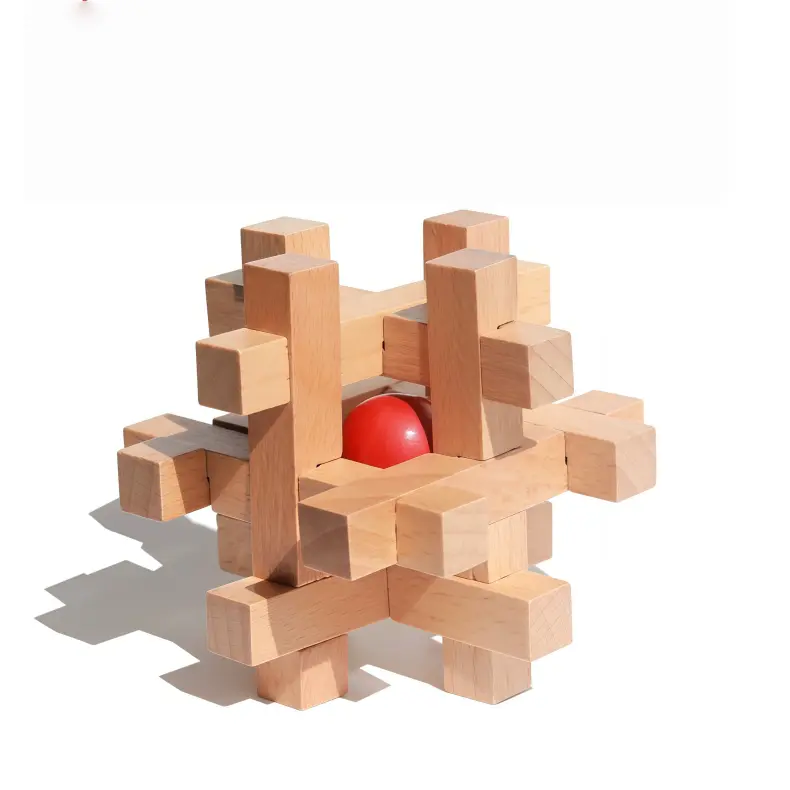
Cage of Doom — $16.99
Consider a physical puzzle like the Cage of Doom. You can’t solve it by brute force or frantic analysis. You solve it by feeling for tension, exploring slack, noticing how the pieces interact when you stop pushing and start sensing. The solution emerges from a dialogue between your hands and the object. This is a perfect analogy for reading the Classic of the Way and its Virtue. Your frantic, analytical mind is the force that tightens the knot. The method of experiential engagement—meditating, journaling, applying—is the sensitive exploration that finds the natural release. As we’ve explored in pieces like When A Puzzle Becomes A Practice, the activity itself can train the very state of mind the Tao Te Ching points toward.
Finally, embrace repetition without expectation. Read the same chapter every morning for a week. You will not “master” it. Instead, you’ll notice how its color changes with your mood, how a line you glossed over on Monday suddenly pierces you on Thursday. The text is static; you are not. This repetitive, low-pressure engagement mirrors natural cycles—the balance of day following night, not to achieve a goal, but as its own inherent rhythm.
What you’ve been missing isn’t a secret decoder ring. It’s a shift in mode from consumer to participant. Stop trying to extract the meaning of life from the page. Use the page to pay closer attention to the life already flowing through your hands. The enlightened sage isn’t the one who has memorized the 81 chapters; it’s the one who has learned to put the book down and see the world through its lenses. Start there. Read a line. Then close the book, and look at your world anew. That’s where the reading truly begins.
Navigating the Translation Maze: A Personality-Based Guide to Your First (or Next) Version
So you’ve started to engage with the text experientially. You’re sitting with its paradoxes, feeling for the flow. Now you might hit the second great barrier: which of the dozens of English versions do you actually pick up? The search for the best Tao Te Ching translation can feel like being asked to choose the best map of a forest you’ve never entered. The differences aren’t just word-deep; they are interpretive chasms.
Here’s the root of the confusion: there is no single, pristine original. The textual history is a river with many tributaries. The Mawangdui manuscripts, recovered from a tomb sealed in 168 BCE, and other archaeologically recovered manuscripts show variations in chapter order and phrasing. Later principal versions emerged, each with its own philosophical slant. Every translator is navigating these currents, making choices that shape your encounter with the ancient Chinese classic text.
Forget finding the “definitive” one. The better question is: which map suits the terrain of your mind? Your personality is your best guide.
For the Poetic Seeker: Stephen Mitchell
If you were drawn to the Tao Te Ching by a single, breathtaking line, it was probably from Mitchell’s 1988 version. He is less a strict translator and more a poetic re-interpreter, channeling the spirit of the text into lucid, modern English. His introduction is a masterpiece of accessibility. His Stephen Mitchell translation is the one people gift, the one quoted in mindfulness apps. It’s a gateway. But be aware: scholars critique its departures from the Chinese. Use it not as a scholarly text, but as a tuning fork—it vibrates with the feeling of the Way, perfect for meditation purposes or a first, inspiring read.
For the Skeptical Minimalist: Ursula K. Le Guin
A novelist with a Taoist heart, Le Guin approached the text as a lifelong conversation. Her Lao Tzu: Tao Te Ching is frank about being a “rendering” aided by literal translations. The result is stark, clear, and grounded. She strips away mystical veneer, presenting the philosophy of Taoism with a no-nonsense, almost earthy tone. If you’re allergic to “woo” and want the concepts of Wu Wei and balance presented as practical, human wisdom, this is your compass.
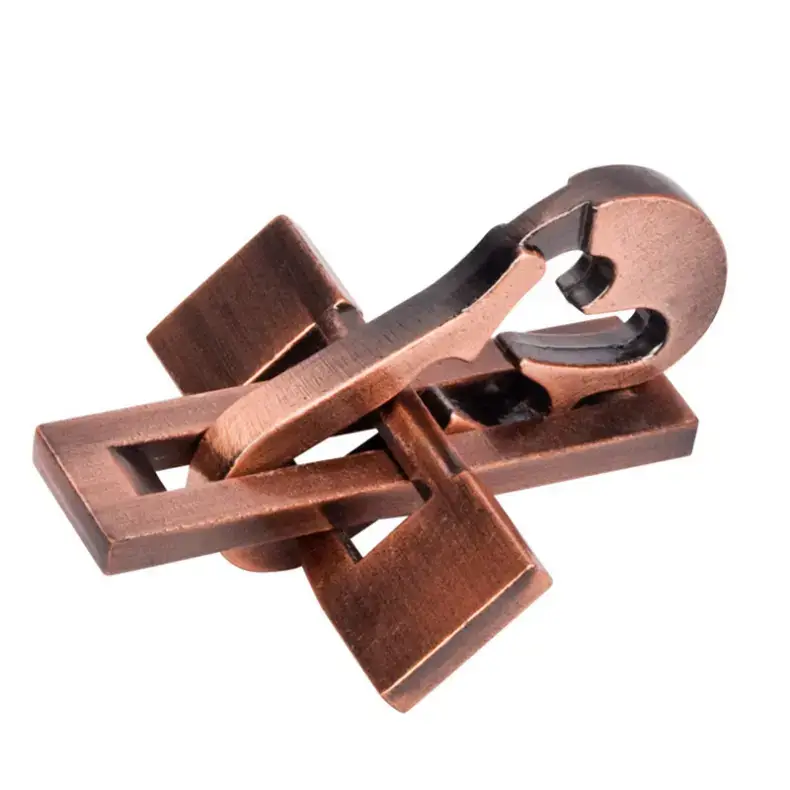
Yangqin Lock Puzzle — $12.66
For the Academic-Minded: D.C. Lau
If your instinct is to understand the machinery before you trust the output, start here. Lau’s translation for Penguin Classics is a scholarly benchmark. It’s concise, strives for fidelity to the classical Chinese, and includes a sober introduction tackling the authorship debate and historical context. It feels like a reliable field manual. You won’t find soaring poetry, but you will find a trustworthy baseline against which to measure other, freer interpretations. It answers the question, “What does the text say?” before exploring what it might mean.
For the Contemporary Practitioner: Derek Lin
Lin provides what many on Reddit r/taoism seek: a bridge from ancient text to daily practice. His translation includes the original Chinese, a literal word-for-word breakdown, and then a flowing translation, followed by detailed commentaries that apply each chapter to modern life—work, stress, relationships. If your primary need is a study guide for practical Taoism, Lin is an invaluable teacher. He treats the 81 chapters as a direct manual on the art of living.
A final note on audiobooks: they can be a profound way to experience the text’s rhythm, letting the paradoxes wash over you. Mitchell’s, read by the author, is particularly resonant. But start with the translation that matches your inner landscape. You can always change trails later. The goal isn’t to own the right map. It’s to begin walking.
The Uncanny Modernity of the Uncarved Block: Micro-Applications for Work, Stress, and Relationships
So you’ve chosen your translation and learned how to read experientially. Now what? The real test of any tool is in the using. Does this ancient Chinese classic text have anything to say to your overflowing inbox, your tense team meeting, or your spinning mind at 2 a.m.?
It does. But not in the way a typical self-help book shouts directives. Think of it as debugging your perception. The Tao Te Ching offers lenses, not laws. Let’s apply a few.
Wu Wei in the Digital Swamp: Your Inbox
The modern workplace often feels like a war of attrition, a sentiment even Sun Tzu might recognize in The Art of War. We equate busyness with virtue. Wu Wei—effortless action—is not about doing nothing. It’s about strategic non-action. It’s the art of discerning the current of the river and positioning your boat within it, rather than frantically paddling upstream.
Your email is that river. Wu Wei here means turning off notifications. It means batching replies instead of living in reactive mode. It means, before firing off a response, asking: “Is this email necessary, or is it just noise I’m adding to someone else’s stream?” It’s the perceptual shift from “I must process everything” to “I will engage only with what truly requires my Te,” my authentic power and attention. The inbox remains, but your relationship to it changes. You stop being the rock the water crashes against, and start finding the way around. It’s a key part of a practical operating system for balance.
Ziran in a Difficult Conversation: Authentic vs. Reactive
Now, imagine a brewing conflict. Your instinct is to armor up, rehearse your points, and win. Ziran—natural spontaneity—suggests a different path. It’s not about being unprepared. It’s about shedding the prepared script to respond from the uncarved block of your genuine perception.
Walk in not with a monologue, but with a question. Listen not to rebut, but to understand the shape of the other person’s reality. Your authentic response in the moment—which may be silence, a question, or a simple acknowledgment of their frustration—holds more Te than any polished argument. This is where Taoism vs. Stoicism offers a clear contrast. While Stoicism trains you to internally fortify against external chaos, Taoism encourages you to flow with it, to be supple like water. One builds an inner citadel; the other learns to be the river that needs no walls.

‘Soft Overcomes Hard’ in Leadership
This is perhaps the most powerful Tao Te Ching quote on leadership. We idolize the forceful, decisive commander. Lao Tzu praises the humble, receptive leader who “stands behind” the people. A soft approach is not weak; it is adaptive, listening, and resilient. It’s the soil that yields to the root, ultimately supporting the mighty tree.
In practice, this means leading by asking the right questions, not having all the answers. It means creating space for your team’s Ziran to emerge, rather than micromanaging every step. It’s the manager who, during a crisis, responds not with panic but with calm inquiry, lowering the temperature in the room. The hard, inflexible command breaks under pressure. The soft, adaptable guidance bends and persists. This is the enlightened sage not as a remote figure, but as an effective modern leader, applying the yin-yang framework for better decisions at work.
The Uncarved Block of Your Evening
Finally, apply simplicity to stress itself. Your mind, after a day of fragmentation, is a block carved into a thousand shapes—work, news, social media, worries. The Taoist reset is to return to the uncarved block. A walk without a podcast. Sitting with a cup of tea without a phone. It’s a deliberate non-adding. As explored in our piece on you can’t live on pure hustle—a practical yin-yang approach, clarity often comes from subtraction, not addition.
This is the contemplative calm the text points toward. It’s not a mystical state. It’s the practical result of using these lenses all day: seeing the inbox as a river, the conflict as a dance, leadership as service, and your own mind as something to be gently cleared, not furiously filled. You stop trying to understand the Way. You start to notice where you’re already, sometimes clumsily, walking it.
From Text to Terrain: Where to Go When the Map Starts to Make Sense
So you’ve started to use the lenses. You’ve felt the perceptual shift—the inbox as a river, the argument as a dance. The map is no longer a confusing scroll; you can feel the terrain under your feet. What now? The temptation is to turn this into a project, a “spiritual journey” to master. Resist it. The Tao Te Ching is a manual on the art of living, not a syllabus. Your next step isn’t to consume more, but to deepen the noticing.
First, return to your chosen translation—the one that felt like a conversation. But this time, don’t read it. Let it read you. Open to a random chapter at the end of your day and ask not “What does this mean?” but “Where did I see this today?” Did you force a solution where wu wei would have allowed space? Did you complicate a simple moment? This turns the 81 chapters from philosophy into a mirror. It’s the core of practical Taoism.
If you crave more text, proceed with a naturalist’s caution. The writings of Chuang Tzu, Lao Tzu’s brilliant successor, are the next logical exploration. He expands the philosophy of Taoism into wild, humorous parables. But be warned: where the Tao Te Ching is a compass, Chuang Tzu is a dream. It’s easy to get lost in the poetry. Read him not for doctrine, but to stretch your perception of what’s possible—to see the world from the perspective of a butterfly, a tree, or a skull. It’s a workout for the Taoist mind.
For community, seek the grounded, not the dogmatic. Online forums like Reddit r/taoism can be useful, but treat them as a mountain trail shelter: a place to share sightings and compare maps, not to find gurus. Listen for the voices that sound like your wilderness guide—practical, experiential, slightly muddy-booted. Avoid those trading in “ancient secrets.” The real insights are in the threads where someone asks, “How do you handle a manipulative coworker with wu wei?” The answers there are modern commentaries more valuable than any academic text.
Ultimately, the terrain is your own life. The next step is to observe natural spontaneity in the world—the way water pools, the way a vine finds a fence, the way a busy street has its own chaotic flow. This observation is the real study. It’s why I left the library for the forest. The Classic of the Way and its Virtue points to this, but you must look yourself.
As discussed in our piece on Why Every Wooden Puzzle Is A 2500 Year Old Argument, the deepest engagement is often hands-on and non-verbal. Consider activities that cultivate this balance of focus and release—like the puzzles in our guide, where ancient Chinese philosophy meets modern puzzles—which train the mind in effortless action. You can even play the Yin Yang puzzle game to experience balance firsthand.
Where do you go from here? You go nowhere. You stay right here, but you see it through the Taoist lens you’ve been polishing. You have the tool. The text’s job is done. The contradictions soften, not because you’ve solved them, but because you’ve stopped trying to. This is the contemplative calm at the end of the arc. You are not a master of the Way. You are simply, finally, walking on it.
The Quiet Questions: Addressing the Practical Doubts
So you’ve got the tool in your hand and a sense of