The Silent Click: Why a Piece of Wood Can Captivate an Adult Mind
It resists.
You turn it in your hands, feeling the solid weight of it. The seams are tight, the wood grain is smooth, and there is no visible lock. It is, for all appearances, a simple, elegant box. But you know it’s not. That knowledge creates a quiet tension between you and the object. This is the first hook—the silent, elegant exterior versus the intricate, hidden battle of wits happening inside.
That first moment of discovering a hidden compartment, the soft clunk of a secret mechanism giving way, is a particular kind of modern delight. In a world of digital passcodes and instant gratification, the wooden puzzle box demands a different currency: your full, undivided attention. It’s a mechanical puzzle that doesn’t beep or flash; it communicates through pressure, sound, and subtle movement. The appeal is a potent cocktail of intellectual challenge and tactile satisfaction—a brief, complete escape into a physical problem with a definite, earned solution.
This allure explains why a wooden puzzle box gift for him (or her, or yourself) often lands with such impact. It’s not just an object; it’s an experience waiting to happen. It promises a private moment of victory. But then comes the overwhelm. A quick search reveals a dizzying spectrum, from $20 trinkets to $500 collectible artworks. How do you find one that’s challenging but not infuriating, beautiful but not fragile, and actually worth your time?
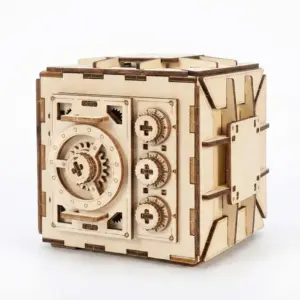
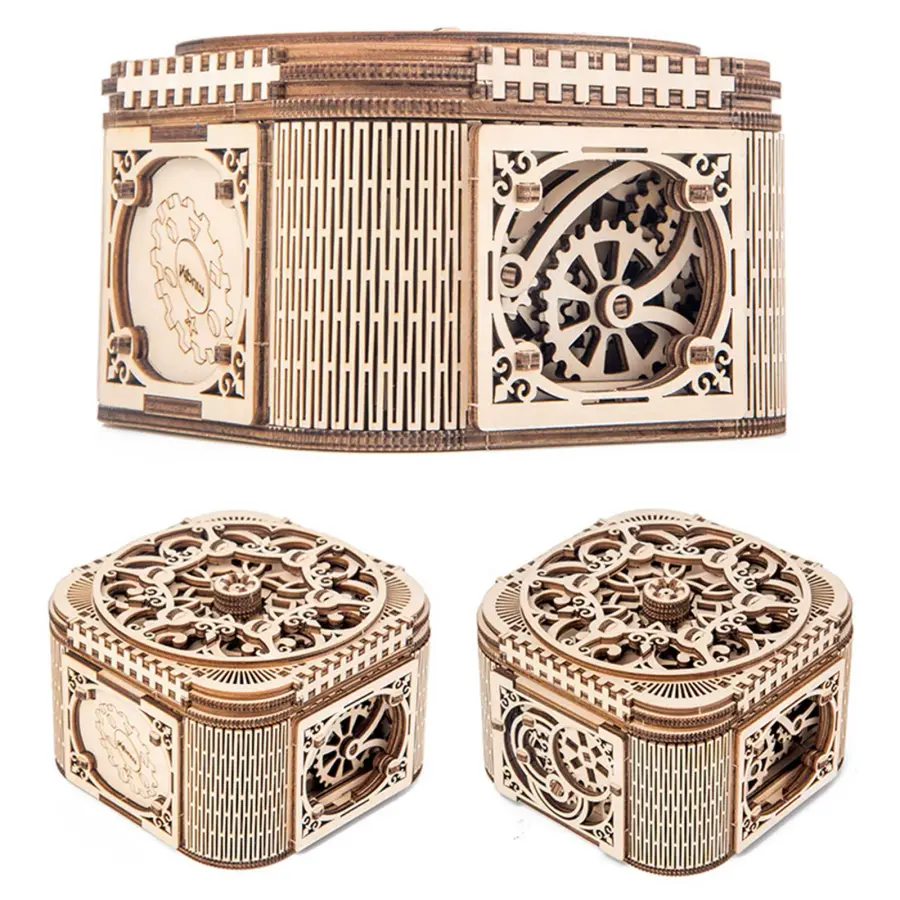
Consider the box below. It promises utility and discovery, a secret puzzle drawer for jewelry or small trinkets. It’s an accessible entry point into this world, where the “solve” unlocks actual use. But it represents just one sliver of a vast landscape.
The real draw is the conversation. A well-crafted box becomes a silent teacher. It doesn’t shout its rules. Instead, you learn its language through patient experimentation—a slide here, a tap there, a change in orientation. This process, what enthusiasts call sequential discovery, filters out the noise of the everyday. It’s a filter for your focus, as explored in our piece on the earned secret of every puzzle box with a hidden compartment. You’re not just opening a box; you’re learning a logic, feeling for the satisfying clunk that signals progress.
So, before we dive into categories and craftsmanship, remember the core sensation: the quiet click of a secret, willingly revealed. That’s the hook. The rest is learning how to find the right key for your lock.
The Puzzle Box Personality Matrix: Are You a Fidgeter, a Purist, or a Show-Off?
That feeling of the silent teacher revealing its logic—it’s magnetic. But the moment you start shopping for one, a different feeling emerges: overwhelm. Do you want a traditional Japanese puzzle box with its subtle slides, a trick puzzle box that relies on a sneaky physical secret, or a 3D wooden box puzzle you assemble? The market throws terms like “difficulty level” and “move count” at you, but they’re poor translators for the real question: Which box will actually resonate with me?
Forget generic rankings. The most useful tool isn’t a list; it’s a lens. Think of it as a Puzzle Box Personality Matrix. It maps your core motivation—why you want this object in your life—to the specific design traits that will satisfy it. Most purchases go wrong when a puzzle collector seeking intricate logic buys a box that’s really just a beautiful container, or when someone wanting a unique challenge grabs a flimsy mass-produced item that breaks on the third solve. Let’s find your coordinates.
The Fidgeter. You’re not just in it for the “aha.” You’re in it for the “click-clack.” Your ideal box has a high fiddle factor; it’s a tactile toy even after you know its secrets. You appreciate multiple compartments discovered in sequence, not because they hide treasure, but because they offer more things to do. The satisfying clunk of a magnetic lock engaging and disengaging is a reward in itself. Durability is non-negotiable—you’ll solve this one dozens of times, just for the kinetic pleasure of the secret opening mechanism. Your boxes are kinetic sculpture, and their value is measured in cycles per hour.
The Logic Purist. For you, the box is an elegant theorem carved in wood. You seek the clean, intellectual satisfaction of a sequential discovery path where each step logically unlocks the next. You’re skeptical of boxes that rely on tricks requiring brute force or obscure outside knowledge. A well-designed box, to you, feels fair; it teaches you its rules through consistent interaction. You might be the puzzle collector who appreciates the mathematical purity of a Karakuri-inspired design, where the mechanism is the art. The exterior can be simple—your joy is the internal revelation.
The Patient Artisan. The journey is your meditation. You’re drawn to the story of traditional Japanese secret boxes, the handcrafted wooden feel of oiled cedar, and a solve time measured in hours or days, not minutes. You don’t just want to open a box; you want to be apprenticed by it. The silent teacher concept speaks to you deeply. You’re willing to invest in heirloom quality from a known artisan, because the object is a companion for a long, thoughtful dialogue. For you, a puzzle box is the antithesis of a quick dopamine hit.
The Show-Off (The Gift Giver). Your primary goal is the reveal. You might be buying for a friend who loves escape room puzzle box experiences, or you want a centerpiece that sparks conversation. You’re drawn to dramatic, unexpected openings—a panel that swings out, a drawer that pops from nowhere. While secret compartments are a must, their craftsmanship matters because they’ll be witnessed. This persona often overlaps with others, but its driving force is social: the shared “Wow!” It’s about finding a well built and challenging piece that delivers a memorable performance.
So, where do you land? Often, it’s a blend. The best puzzle box for beginners often sits at the crossroads of Fidgeter and Purist—something with clear, learnable feedback that’s still fun to fidget with after solving. Understanding your primary driver cuts through the noise of price range and hyperbolic marketing. It turns a bewildering array of modern mechanical puzzles into a shortlist of candidates that speak your language. Now, with your coordinates roughly plotted, we can start decoding the landscape itself.
Beyond Hakone: Decoding the Puzzle Box Landscape
Knowing your primary driver—whether it’s the tactile satisfaction for a Fidgeter or the logical elegance for a Purist—is your first filter. Now, let’s map those personal inclinations to the actual types of wooden puzzle boxes you’ll encounter. Think of this not as a hierarchy, but as a menu of distinct experiences. Each category speaks a different language of craft, challenge, and intent, and understanding their dialects is key to finding one that won’t sit on your shelf, silently judging you.
The Traditionalist: Japanese Himitsu-Bako
This is where the secret began. Originating in Hakone, Japan, Japanese puzzle boxes (himitsu-bako) are the silent, elegant ancestors. Their aesthetic is minimalist: often a rectilinear box made of fragrant cedar or birch, adorned with a geometric yosegi pattern. The experience is meditative. The mechanism is pure, sequential sliding. You push a panel here, slide another there, following a hidden path dictated by precise internal pins and grooves. There’s no shaking, no magnets—just the quiet, frictional whisper of wood on wood. The secret opening mechanism is earned through patience and observation, not force. For the Purist who appreciates history and clean logic, or the Art Lover drawn to understated craftsmanship, a traditional himitsu-bako is a direct line to the art form’s roots. Be mindful: many mass-market boxes borrow the “Japanese” label loosely. A true artisan piece from Hakone represents a specific heritage and heirloom quality, while a puzzle box not made in China might still be a well-crafted homage from a modern artisan elsewhere. If you’re intrigued, our exploration of Japanese puzzle boxes that will humble your IQ delves deeper into specific designs.
The Performance Artist: The Modern Trick Box
If the Japanese box is a haiku, the modern trick puzzle box is a magic trick. This category is defined by dramatic effect. It uses magnets, gravity, misdirection, and sometimes gentle force (a strategic tap or squeeze) to conceal its secret compartments. The goal is the “Aha!” moment of revelation—a drawer that pops out from an impossible location, a lid that unlocks only when tilted just so. The tactile feedback here is often more pronounced: a satisfying clunk of a magnet releasing, the smooth swing of a hidden panel. This is the natural home for The Show-Off and the escape room puzzle box enthusiast. It’s less about a long sequential discovery path and more about a clever, often shorter, but deeply surprising solve. Brands like IDventure have popularized this style, creating well built and challenging pieces that feel like interactive sculpture. When comparing a Ravensburger puzzle box vs wooden artisan trick box, consider the medium: Ravensburger’s are often composite board with plastic mechanisms, offering a different, more accessible kind of theatrical puzzle experience.
The Architect: 3D Assembly & Sequential Discovery Boxes
This is where the line between a puzzle box and a mechanical puzzle blurs. Often, you don’t start with a closed box; you start with a pile of beautifully machined wooden pieces and a goal. The puzzle is the assembly itself, which builds the locked container. The sequential discovery element is paramount: each step reveals a tool or clue needed for the next. The fiddle factor during the solve is extremely high, making this a paradise for Fidgeters who are also Purists. The challenge is spatial and logical, and the reward is the profound understanding of how every pin, lever, and panel interlocks to create a functional object. These are typically complex, difficult wooden puzzle box experiences from specialist artisans or brands like Creative Crafthouse. They offer immense re-solve value because reconstructing the secret mechanisms from memory is a puzzle in itself.
The Gallery Piece: The Decorative Box
Some boxes prioritize form, but haven’t forgotten function. A decorative puzzle box might feature stunning marquetry, exotic woods, or elegant shapes that beg to be displayed. The puzzle mechanism is present, but often simplified—a clever but accessible lock that protects the secret compartment. This is the box for someone who wants a beautiful object first and a pleasant surprise second. It’s for The Gift Giver seeking a stunning personalized gift, or the Art Lover who wants a conversation piece that holds a literal secret. The key is to ensure the craftsmanship matches the beauty; a poorly fitted panel on a showpiece is a constant frustration. These boxes answer the question, “Can you actually use them to store things?” with a resounding yes, often safeguarding small treasures in style.
Recognizing these categories strips away the confusion. You’re no longer just looking for a “hard box.” You’re deciding between the silent slide of Hakone cedar, the magnetic click of a modern trick, the engineered assembly of a sequential discovery challenge, or the polished beauty of a decorative secret keeper. This clarity is your defense against the generic, mass-produced options that fail to excel at any one experience. It guides you to the specific secret puzzle boxes that align with the personality you discovered in yourself. Now, let’s get tactile and look under the hood—or rather, inside the joint—to understand what separates a lasting treasure from a soon-to-be kindling.
The Hidden Symphony: A Layman’s Guide to Puzzle Box Mechanisms
With the landscape mapped, the real intrigue begins. You hold a box. It looks simple. Solid. Yet you know, beneath that silent exterior, a tiny, intricate machine is waiting. Understanding these inner workings—the secret mechanisms—is what transforms you from a confused buyer into an informed one. It’s the difference between fearing the challenge and respecting the craft. Think of it as learning to hear the hidden symphony inside the wood.
Let’s start with the classic: the Japanese puzzle box (Himitsu-Bako). Its mechanism is one of elegant friction. Thin, precisely planed panels of cedar or birch slide along hidden grooves. There’s no click, no spring. Just the whisper of wood on wood. The solution is a sequence of these slides, a dance of pressure and release that can range from 4 to over 100 moves. This is the origin of the term sequential discovery, where each successful action reveals the possibility of the next. The box itself becomes a silent teacher; its resistance and eventual, almost imperceptible give are your only clues. Solving one is a lesson in patience and subtle tactile feedback. You don’t force it. You listen to it.
Then, there are the modern trick puzzle box mechanisms. These are the showboats, often relying on magnets, hidden latches, or gravity. A magnetic lock might require you to place the box on a specific metal surface or orient it just so, releasing a panel with a distinct clunk. Gravity-based tricks involve tilting, shaking, or turning the box to let a hidden weight fall into place. The feedback is immediate and satisfying—a definitive confirmation that you’ve triggered the mechanism. This is where fiddle factor is high; the action itself is a joy. But beware boxes that rely on a single, obscure trick. Once you know the secret, the magic can fade, turning a unique challenge into a decorative paperweight.
Some of the most engaging modern mechanical puzzles blend these ideas into a grand narrative. This is sequential discovery at its best: a journey where you use tools you find inside the box to unlock further compartments. It mimics the feel of a miniature escape room, creating a story in wood and metal.
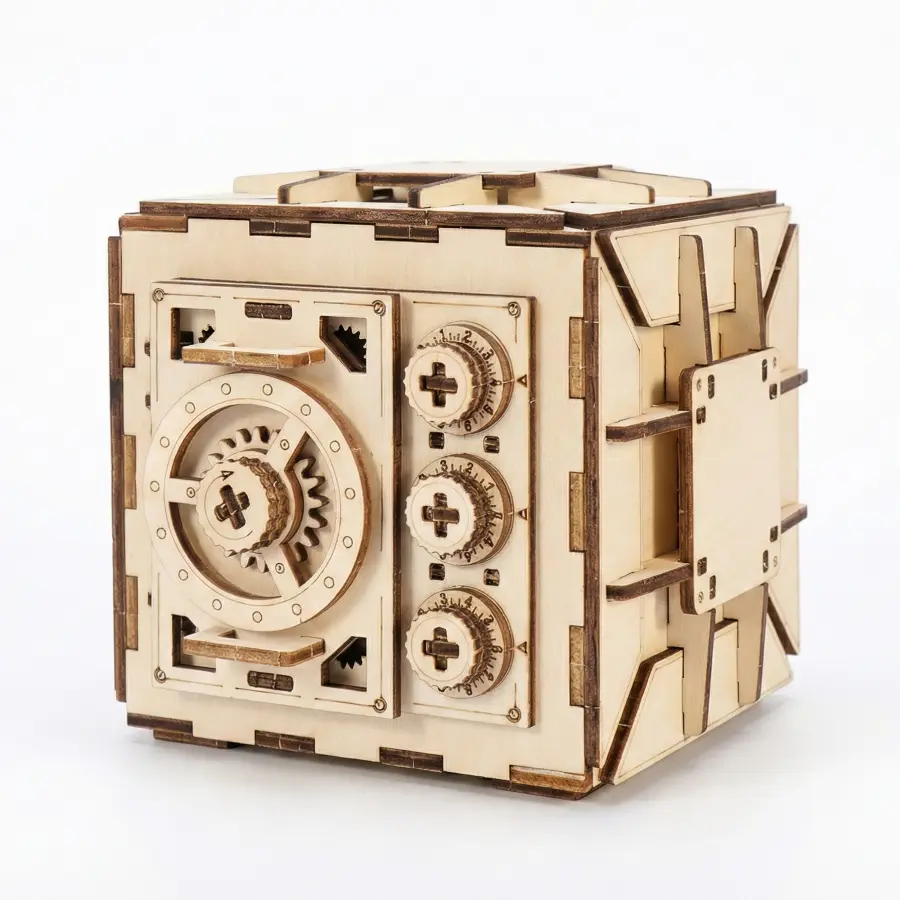
Finally, there are the 3D wooden box puzzles—the assembly projects. The mechanism here is you. You build the secret compartments from a set of interlocking pieces, effectively constructing the mystery before you can solve it. The challenge is spatial reasoning and following complex instructions without error. The reward is deep familiarity with the box’s anatomy; you’ll know every groove and pin that makes its secret opening mechanism work.
So, how does this translate to your choice? If you love quiet, meditative engagement, seek the sliding panels of a traditional Japanese box. If you crave immediate, audible feedback, explore magnetic and gravity-based trick boxes. For a multi-stage adventure, look for boxes advertising sequential discovery. And if you want to truly own the mechanism, an assembly puzzle lays everything bare. This knowledge is your decoder ring. It lets you read between the lines of product descriptions and see past marketed “move counts” to the true heart—and hands-on experience—of the puzzle box in question. For a more hands-on breakdown of applying this logic, our guide on how to solve a puzzle box without losing your mind builds on these principles.
Ultimately, the best mechanism is one that speaks to you. It resists. Then slides. Clunks. Or reveals. And in that moment, the silent box finally sings.
Grain, Glue, and Gimmicks: The Craftsmanship Red Flags and Green Lights
Understanding the mechanism tells you how a puzzle box thinks. But judging the craftsmanship tells you how it lives—whether it will be a satisfying companion for years or a frustrating trinket that fails on the third solve. This is where the silent language of wood, joinery, and tolerance speaks volumes.
For a woodworking enthusiast like me, who learned the hard way after that first cheap box shattered a sliding panel, this is the most critical filter. A well-built box isn’t just durable; it’s the “silent teacher.” Its movements are clear, its feedback honest. A poorly built one obfuscates its own secrets with sloppy construction.
Let’s start with the Amazon Warning. The marketplace is flooded with mass-produced, often laser-cut boxes at tempting price points. The common pitfalls? Sloppy tolerances—the gaps between moving parts are either too tight (causing binds) or too wide (creating wobble and dead ends). Weak, poorly aligned magnets that fail to engage properly. And wood choice: many use brittle, unfinished plywood or soft woods that splinter under the pressure of repeated solves. You’re not battling a clever secret mechanism; you’re fighting bad machining. The “challenge” becomes one of gentle force and frustration, not logic.
True craftsmanship announces itself. Run your fingers along the seams. They should be tight, even, and free of visible glue squeeze-out. Listen to the action. A slide should have a consistent, smooth resistance, not a gritty, catching feel. Look at the finish. A hand-rubbed oil or wax reveals the wooden puzzle box’s grain, protecting it while letting you feel the wood. A thick, plasticky lacquer often hides inferior wood and can gum up fine mechanisms.
So, what does “handmade” mean here? It rarely means one artisan carving a block for a week. For most reputable puzzle box artisans, it means precision laser or CNC cutting paired with meticulous hand-finishing. The machine ensures accuracy; the human hand ensures fit, finish, and final assembly. This hybrid approach is your sweet spot for a well built and challenging piece that’s also attainable. The green lights? Solid hardwoods like walnut, maple, or cherry. Discrete, powerful neodymium magnets. Joinery that respects tradition, like the finger joints and sliding dovetails you can explore in resources like our piece on ancient carpentry manual and joinery wisdom. And weight. A good box has a deliberate heft, a sense of substance.
What about kits? A 3D wooden box puzzle assembly kit is a fantastic way to understand craftsmanship from the inside out. You become the artisan, learning how each piece relies on the other.
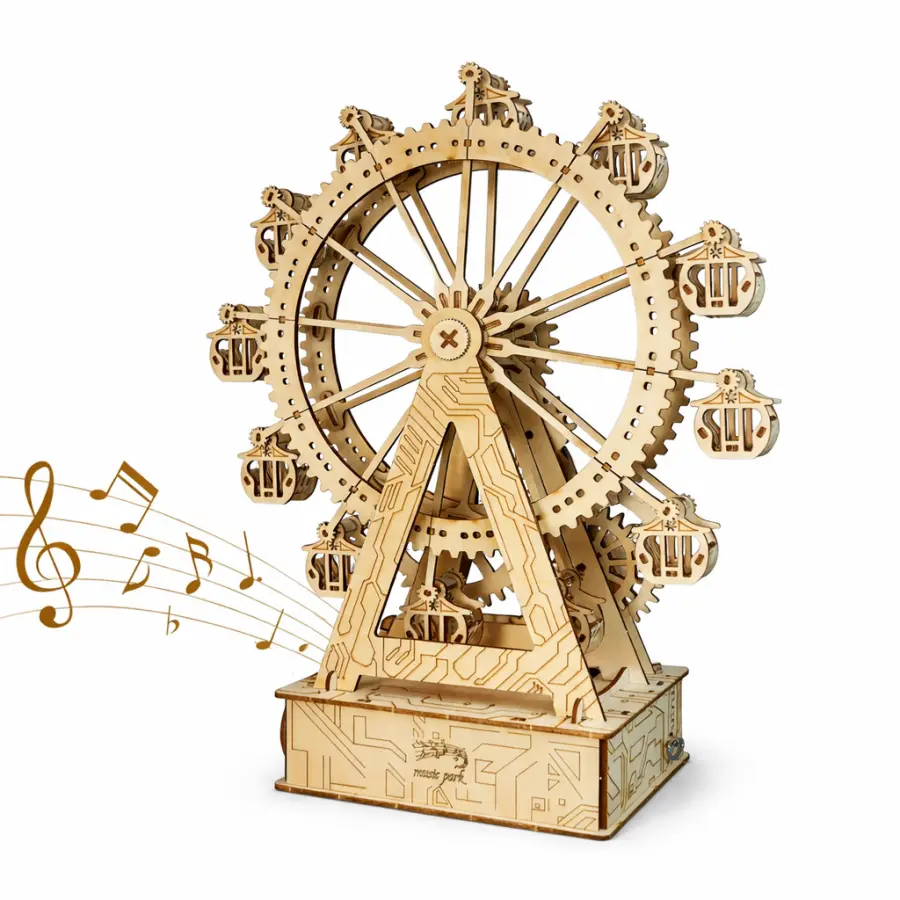
The final test is the “Fidget Factor” after the solve. A box with heirloom quality craftsmanship begs to be re-solved, just to feel the satisfying clunk of a magnetic lock engaging or the whisper of a perfectly fitted panel. A bad box becomes a decorative paperweight, its one secret spent, its flaws too apparent. Your goal is to find the former—a puzzle that respects both your mind and your hands, built by someone who cared about the journey as much as the solution.
The 64-Move Mirage: Why Puzzle Box Difficulty is a Beautiful Lie
So you’ve learned to spot a well-joined corner and feel the smooth action of a hidden mechanism. Now, let’s talk about the most misleading spec on any product page: the move count. After assessing a box’s physical integrity, the natural next question is, “But how hard is it?” And the market’s go-to answer—a neat number like 12, 42, or 64 moves—is often a beautiful, elegant lie.
A high move count suggests a long, intricate dance. But what if the dance is just shuffling your feet in the same pattern for ten minutes? Conversely, a “4-move” label screams simplicity. Yet some of the most diabolical mechanical puzzles I own boast single-digit move counts. The advertised number typically just quantifies physical manipulations, not the mental leaps required between them. The true difficulty level isn’t in the steps, but in the gaps between them.
Consider two boxes. One is a sequential-discovery monster with 30 moves. Each step is logical, each new tool discovered clearly leads to the next obstacle. It’s a marathon, but the path, while long, is well-lit. The other is a five-move trick puzzle box. The first four moves are obvious. The fifth is utterly invisible, relying on a secret mechanism so deviously integrated into the design or requiring such a counterintuitive action (a specific tilt, a push on what seems like decoration, a held breath) that you’ll stare at it for hours. Which is harder? The “simpler” one, every time.
Here’s what to look for instead of a big, flashy number.
The Logic Leap: This is the core of a satisfying, unique challenge. How big is the conceptual jump between one step and the next? A box with small leaps feels fair and fluid. One with a giant chasm in its solve path can feel either brilliantly clever or frustratingly obscure. The best boxes are silent teachers—they let you stumble, but the design subconsciously guides you toward the type of thinking required.
The False Solve: A masterstroke of psychological trickery. This is when a sequence of moves feels incredibly promising, aligns pieces satisfyingly, and then… nothing. The lid stays shut. It’s the puzzle box equivalent of a dead-end hallway in an escape room puzzle box. It teaches you to question your assumptions, a far more valuable lesson than just following a long sequence.
Mechanism Obscurity: This addresses the user question directly: Is there a puzzle box that’s hard but doesn’t require brute force? Absolutely. The answer lies in camouflage. Is the locking mechanism purely magnetic, or is it a hybrid with a gravity drop? Is that sliding panel on a diagonal track you can’t see? The challenge comes from not knowing what you’re manipulating, not from forcing a stuck component. Elegant difficulty hides its workings in plain sight.
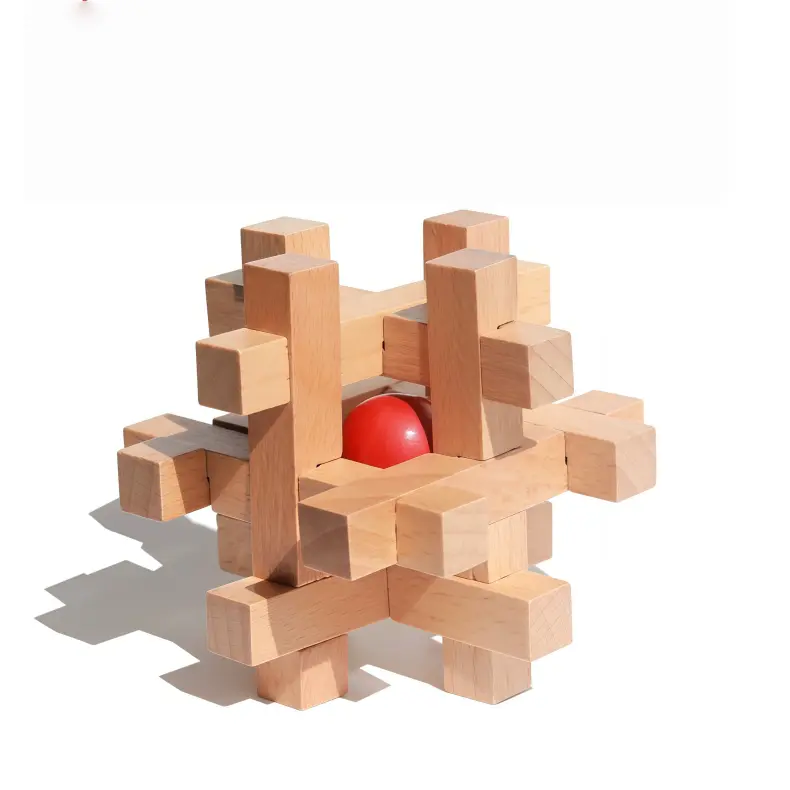
Cage of Doom — $16.99
Take a box like the Cage of Doom. Its move count is low. Its goal is simple: free the ball. Its difficulty is well built and challenging precisely because the mechanism is a masterclass in obscurity. You can’t see the internal tracks. You’re working by feel and inference. It resists brute force utterly. This is the essence of a challenging trick box—it outsmarts muscle, not mind.
So, how do you gauge true challenge when shopping? Ignore the headline number. Read between the lines of reviews. Look for phrases like “I had to think outside the box,” “the solution was unexpected,” or “it requires a specific type of pressure.” These hint at the logic leaps and obscured mechanisms that create real, satisfying difficulty. That’s how you find a difficult wooden puzzle box for adults that rewards patience, not just persistence. For a structured approach to the solving process, a good step-by-step guide to solving the secret can be a helpful companion.
The Curated Shortlist: A Box for Every Personality (Not Just a Price Point)
Now that we’ve dispelled the myth of the move count, the real question emerges: with so many types of mechanical puzzles in the world, which one will you actually enjoy? The answer lies not in a ranked list, but in matching a box’s character to your own. This is where our Personality Matrix comes to life. Forget browsing by price range alone; here’s a guide to finding the wooden puzzle box that feels like it was made for your hands and your head.
For The Fidgeter: The 3D Zodiac Owl
You want something that feels alive in your hands, offering continuous tactile feedback long after the initial ‘aha!’ moment. You need a high fiddle factor.
Look for a puzzle that isn’t a box at all, but an interactive kinetic sculpture. The goal here isn’t a hidden compartment, but the pure pleasure of making a complex mechanism work.
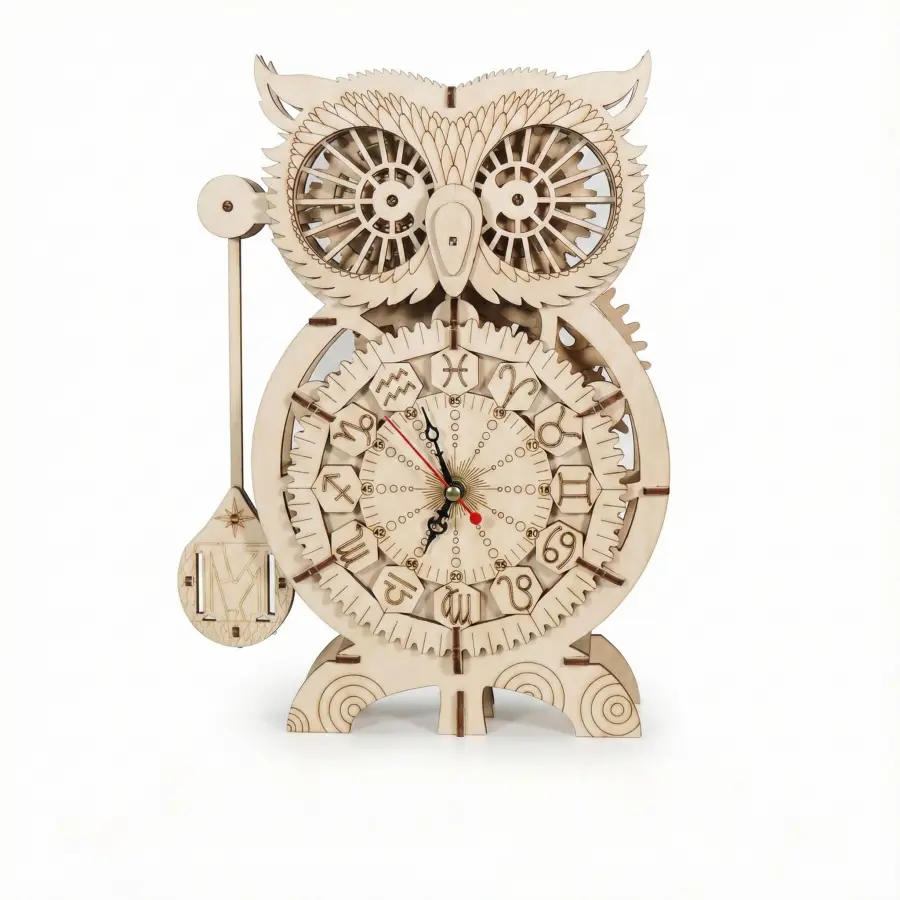
The Zodiac Owl is a prime example. It presents a classic puzzle box under $50 challenge—assembling a complex 3D model from interlocking wooden pieces—but its real magic is what happens after. Once built, its gears and moving parts create a functional, mesmerizing clock. This is sequential discovery through assembly, culminating in a toy you’ll return to spin and adjust just for the satisfying clunk and whir of its motion. It’s a secret mechanism made gloriously visible.
For The Art Lover & Gift Giver: The Heirloom Himitsu-Bako
Your priority is handcrafted wooden beauty. You see a puzzle box as an objet d’art that happens to hold a secret. Durability and timeless design are key, whether it’s for your own shelf or as a personalized gift that conveys deep thought.
This is where true Japanese puzzle boxes from Hakone shine. Seek out artisans using fine woods like walnut or cherry, with intricate yosegi-zaiku (wood mosaic) patterns on the surface. The mechanism is the quiet, subtle slide of panels—no rough movements, just elegant precision. For a truly special piece, look for modern Karakuri creations from individual craftsmen, where the artistry is in the flawless joinery and the poetic nature of the secret opening mechanism. The solve is often meditative rather than brutally complex. It whispers its clues. This is a box you solve once, then display forever as a testament to heirloom quality craftsmanship. It’s a collectible first, a puzzle second.
For The Logic Purist: The Sequential Discovery Specialist
You love the narrative of an escape room puzzle box. You want a clear, logical solve path where each solved step reveals the tool or clue for the next. You crave that “aha!” chain reaction and value re-solve value over pure ornamentation.
This is the domain of brands frequently championed on forums for being well built and challenging. Think IDventure or Ravnspine. Their boxes are narrative-driven; they might tell a spy story or a treasure hunt. The mechanisms are often a brilliant mix of magnets, sliders, and hidden compartments that require observation and deduction. An IDventure puzzle box review will often highlight this logical progression. The satisfying clunk of a lock disengaging feels earned. These boxes are less about abstract beauty and more about engineered storytelling—they are the silent teacher at their best, rewarding a systematic mind. For more examples that fit this profile, see our list of puzzle boxes for adults that actually reward your patience.
For The Patient Artisan (on a Budget)
You appreciate the journey as much as the destination. You want to feel every grain, understand every joint, and don’t mind a project. You seek the unique challenge of building the secret yourself.
Consider a DIY puzzle box kit from a specialist like Creative Crafthouse. For a modest sum, you receive precisely laser-cut pieces of maple or birch. The puzzle is the assembly itself—figuring out how the interlocking parts form not just a box, but its concealed opening. The result is a handmade puzzle box by your own hand. You’ll know its every weakness and strength, and the tactile feedback will be deeply personal. It’s the ultimate way to understand the craftsmanship behind the trick.
The right box is the one whose personality echoes your own. The impatient fidgeter will be bored by a static art piece. The logic lover will be frustrated by a box that relies on a single, obscure trick. By looking past the price and into the experience—the feel, the rhythm of the solve, the object’s life after its secret is known—you find more than a trick puzzle box. You find a companion for countless quiet, curious moments. For a broader selection vetted for quality, our guide on the best wooden box puzzles that actually deliver offers further trustworthy options.
The Hunter’s Field Guide: Where to Find Your Box (and Traps to Avoid)
So you’ve met the personalities and felt the grain. You know you want a companion, not a paperweight. Now comes the hunt. This is where the landscape shifts from fascinating to fraught. The difference between finding a lifelong collectible and a frustrating splintered mess often comes down to where you look. Let’s map the territory.
The Artisan’s Atelier: Buying Direct. This is the premier league for the puzzle collector. You’re buying the story as much as the object. Platforms like Etsy or direct artisan websites (search for Karakuri creators or modern makers like Eric Fuller’s CubicDissection) are your ground zero. The green lights: detailed process photos/videos, specific wood types listed (walnut, maple, not just “wood”), and descriptions that speak to the secret opening mechanism. You’re not just buying a trick puzzle box; you’re commissioning a slice of someone’s skill. Expect to wait. And pay. But here, you find the well built and challenging pieces that forums whisper about. The trap? Scarcity. The best drop in batches and sell out in minutes.
The Specialty Retailer: Curated Confidence. Think of shops like PuzzleMaster, Mr. Puzzle, or UncommonGoods. These are your expert guides. They’ve filtered out the worst, offer a clear price range, and often provide reliable difficulty ratings. This is where you find consistent access to reputable brands like IDventure or Siebenstein-Spiele. You get a return policy and customer service, which is invaluable when you’re staring at a 3D wooden box puzzle for weeks. It’s the middle path—more accessible than tracking an artisan, more reliable than the open marketplace. The trap? The markup for curation. You may pay more than buying direct from the maker, but you’re paying for the vetting.
The General Marketplace: The Amazonian Jungle. This is where the Amazon Warning hook earns its keep. Search “wooden puzzle boxes” here and you’ll be buried in algorithmic chaff. The traps are numerous: misleading “move count” marketing, photoshopped images, and the dreaded “fun for all ages” tag (a phrase to avoid, as per our blueprint). Many are mass-produced, poorly machined copies that rely on a single, flimsy trick. The tactile feedback is a depressing crunch, not a satisfying clunk. They break. They disappoint. They are the opposite of heirloom quality. If you must hunt here, your compass is the customer images, not the promotional ones. Look for real photos showing dovetail joints or solid wood edges. Read reviews for the words “flimsy,” “loose,” or “broken.” And manage expectations: a puzzle box under $50 from this jungle is likely a simple trinket, not a unique challenge.
The Afterlife: Display & Legacy. For the true puzzle collector, the solve is only chapter one. After the secret is yours, the box becomes a sculpture, a conversation piece, a handcrafted wooden artifact. This is where the puzzle box display case consideration enters. A simple glass cloche or a dedicated shelf protects it from dust and signals its value. It’s a nod to the object’s dual life—once a fierce, silent teacher, now a testament to a solved mystery. Maintenance is simple: a light dusting and perhaps a rare touch of beeswax for the finish. Avoid oils or polishes; they can gum up the very hidden mechanisms you admire.
The hunt is part of the ritual. By choosing your sourcing ground wisely—prioritizing transparency, craftsmanship photos, and seller reputation over algorithmically boosted convenience—you bypass the traps. You find the box that was worth the search. The one that waits, not on a warehouse shelf, but in a workshop, for its rightful owner.
After the Final Slide: When the Solve is Just the Beginning
So you’ve found your box, navigated the marketplace, and the secret is finally yours. The last panel slides home. A satisfying clunk echoes in a now-quiet room. Now what? For many, this is where competitor guides end, but for the true enthusiast, this is where a box’s second life begins.
This moment separates a mere diversion from a lasting artifact. Some wooden puzzle boxes become static trophies—beautiful, but solved. Others possess deep re-solve value. The difference often lies in the mechanism. A simple trick box, once understood, reveals its single gag. But a complex sequential discovery box with interlocking steps, or one with such sublime tactile feedback, becomes a ritual. It’s a path you walk again not to remember the secret, but to savor the journey—the precise pressure, the order of operations, the silent, mechanical conversation. This is the ultimate test of the ‘Fidget Factor’ Scale.
Which brings us to the practical question: Can you actually use them to store things? Absolutely. Many are designed as secret chests. The best are not just solved and abandoned; they are entrusted. A significant ring, a handwritten note, a single meaningful coin—transforming a solved puzzle into a personal vault adds a narrative layer no display case can match. Look for boxes with hidden compartments that are genuinely accessible and sized for small treasures. Avoid boxes with internal mechanisms that would snag or crush your item.
For display, think of it as curating the silent teacher. A clean shelf, a simple glass dome, or dedicated cabinet spot honors its dual identity. It’s a sculpture that whispers of the battle within. As our reference on displaying wooden puzzles sensibly advises, keep it simple. Let the craftsmanship speak. Maintenance is minimal: a soft brush for dust, and maybe a dab of pure beeswax on the exterior annually to nourish the wood. Never use silicone-based polishes; they can invade and clog the very secret mechanisms you admire.
The final, most personal step is the one you define. Let the box hold a secret worth keeping. Or place it back on the shelf, not as a conquered challenge, but as an old friend whose handshake you remember perfectly. Then, perhaps, begin the hunt for its more complex cousin. The puzzle box that holds something is never just a container. It’s a story with a lock. And you’re now the author.
For general classifications, see Wikipedia entries on Mechanical Puzzles, Puzzles, and the specific category of Puzzle Boxes. The high fiddle factor of some boxes aligns them conceptually with the category of Fidget Toys, though with a far more deliberate, craft-oriented purpose.