The Sliding Lid Problem: Reclaiming Your Puzzling Real Estate
You’ve cleared the table, poured your beverage of choice, and dumped the pieces. The puzzle box lid, with its essential reference image, gets propped precariously against a candlestick. You lean in to study a section of sky, and… flop. There it goes. Again. The lid slides, consuming precious puzzling real estate, its corners getting bent, your view of the picture now blocked. It’s the universal, low-grade annoyance of the puzzle lid stand that doesn’t exist.
This is the lid flop. It interrupts flow, risks tearing the box, and inevitably ends up with you holding the lid in one hand while sorting with the other—a comically inefficient posture. For years, I used books, mugs, and sheer hope. Then came the aha moment: a simple, dedicated stand. Not a stack of coasters, but a purpose-built accessory designed to do one thing perfectly: hold your puzzle box lid upright, at a gentle angle, right where you need it.
Suddenly, the clutter had a cure. The box lid transforms from a table-hogging nuisance into a clean, stable display. Your workspace opens up. Your reference image is always at a glance, oil-free from snack fingers and safe from toppling catastrophes. It’s a quiet revelation in the puzzle storage ecosystem.
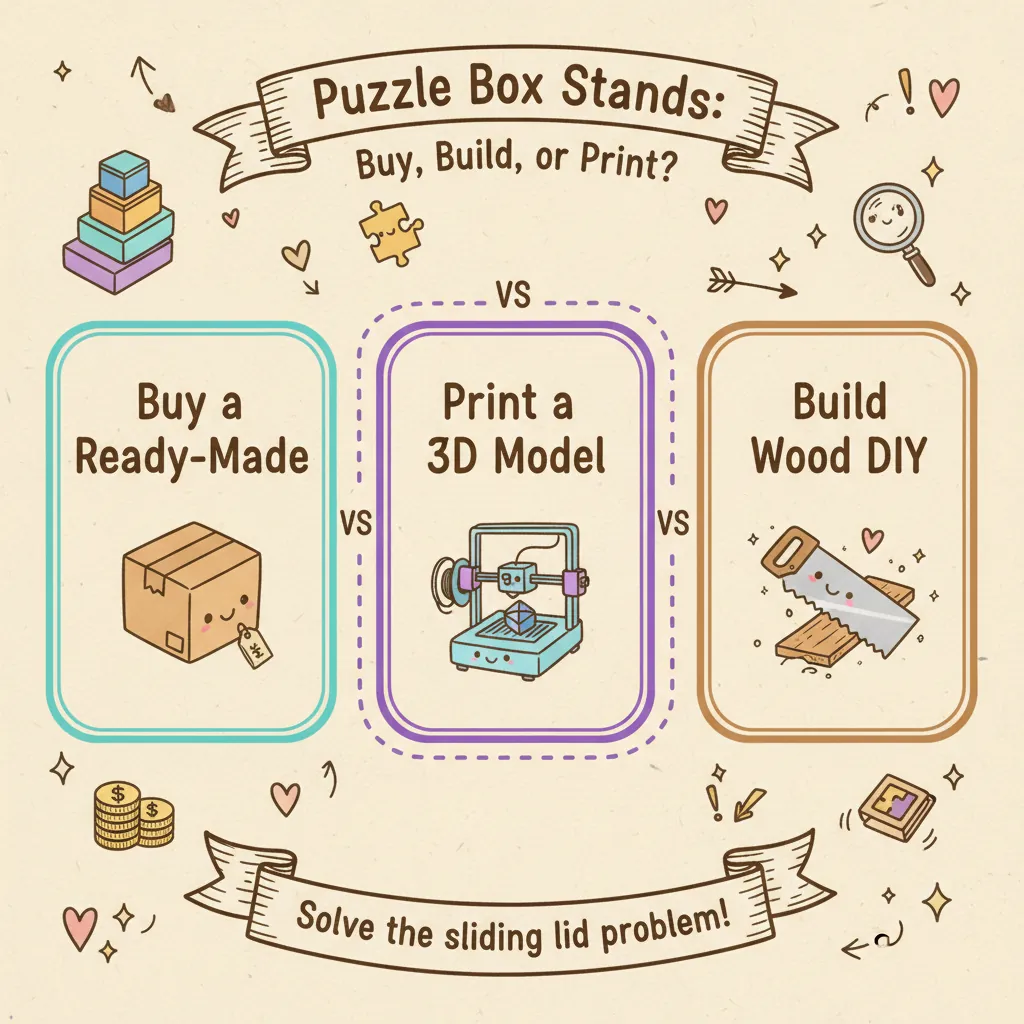
Which brings us to the core question this guide tackles: once you’ve decided your puzzling life needs this order, how do you get one? The landscape splits neatly in two. You can buy a ready-made puzzle box stand, a small luxury from the world of puzzle accessories. Or, you can embrace the maker’s spirit and build one yourself. This is the classic buy-versus-build dilemma, and the right path depends entirely on your budget, your tools, and how much satisfaction you get from a bespoke solution.
My goal is to walk you through both avenues with the pragmatic eye of a retired designer. We’ll move from the shared annoyance of the sliding lid, through the curiosity of discovering these niche tools, and into a practical analysis of what makes a good holder—whether it’s a foldable plastic model from a big brand or a handmade walnut piece from a craftsperson. The journey from clutter to a secure hold starts with recognizing the problem, and the simple elegance of the solution. If you’re tired of the chaos, exploring dedicated puzzle box stands that solve lid-sliding chaos is the first step to a tidier table.
Choosing Your Stand: 5 Criteria for the Perfect Prop
So, you’re intrigued by the idea of a dedicated puzzle box stand. The mental image of a tidy, angled reference is compelling. But before you click ‘buy’ on a commercial puzzle accessory or fire up a saw, you need a framework. As a designer, I know that even the simplest tool succeeds or fails on a handful of core principles. Choosing the right path—buy or build—starts with understanding what makes a good puzzle lid stand in the first place.
Think of these five criteria as your checklist. They’re the shared language between a mass-produced plastic stand and a custom walnut masterpiece. Use them to evaluate any option you encounter.
1. Stability: The Non-Negotiable Foundation
This is where the rubber meets the road—or rather, where the stand meets your table. An unstable prop is worse than no prop at all; it’s a liability. The goal is a secure hold that laughs off an accidental table bump or a curious cat.
- Weight & Base Design: A good stand has a low center of gravity and a base wider than the lid it’s holding. Many commercial plastic stands use a wide, flat footprint. A wooden stand’s stability comes from its inherent mass and the angle of its construction. For a 3D printed stand, the infill density and base shape are critical—a flimsy, narrow base will lead to the dreaded lid flop.
- The Grip: How does the lid stay put? Most stands use a simple channel or groove for the box lid to slide into. This passive hold is usually sufficient. Check if the channel has any texture or a slight lip to prevent sliding. Some high-end handmade stands line this channel with soft felt, which adds friction and acts as a scratch-free barrier for your box.
Stability directly answers the user question about uneven surfaces or wobbly tables. A heavier base and thoughtful design will compensate. It’s a fundamental principle of good tool design, much like the precision needed when solving a puzzle box without losing your mind.
2. Material & Durability: Plastic, Wood, or PLA?
The choice of material dictates feel, longevity, and aesthetics. It’s a three-way split in the puzzle storage world.
- Durable Plastic (Injection-Molded): This is the workhorse. Lightweight, easy to clean, and often quite affordable. Brands like Puzzle Peak and MasterPieces use this for their foldable models. It’s resistant to spills and won’t warp, but it can feel utilitarian and may not have the heft to handle the largest, heaviest box lids without careful placement.
- Wood (Hardwood/Plywood): This is the premium, handcrafted path. A stand made from walnut, oak, or maple has substantial heft, beautiful grain, and a timeless feel. It’s a permanent addition to your puzzle supplies. The felt lining often mentioned in reviews of Uncommon Goods stands isn’t just for looks; it prevents tears at the box corners and prevents staining from the wood finish. Durability is exceptional, but cost and care (avoiding prolonged moisture) are higher. Its beauty could perfectly complement a collection of the best wooden box puzzles to match a wooden stand.
- 3D Printed (PLA/PETG): This is the customizable middle ground. A well-designed print file, like the popular Thingiverse model #2350089, can be surprisingly robust. Durability depends on print quality and material. PLA is common and fine for indoor use, while PETG offers more heat resistance. The feel is unique—textured, modern, and clearly “maker-made.” It bridges the gap between the mass-produced and the artisan.
3. Size & Adjustability: From 1000 Pieces to Giants
Will it fit? This is the most common puzzler’s panic. A standard jigsaw puzzle box stand is built for the classic 1000-piece box, but our collections are rarely that uniform.
- Fixed Size vs. Range: Most commercial stands list a maximum width (often around 11-12 inches). Measure your tallest box lid. The Oversized Box Problem is real for 2000-piece puzzles, unusual shapes, or premium brands. Some wooden stands on Etsy are made-to-order for your specific box. For DIY, this is your chance to build for your exact needs.
- Adjustable Angle: This is a luxury feature. A fixed angle around 60-70 degrees is typical and works well. An adjustable angle mechanism, however, lets you fine-tune the lid for your exact sightline from your chair, reducing glare. It’s a detail hard core puzzlers will appreciate, adding another layer to the puzzle image reference experience.
- The Poster Holder Question: Some stands incorporate a separate clip or groove to hold the thin poster that often comes in larger puzzles. If you rely on that poster for detail work, this integrated puzzle poster holder feature is a significant space-saver.
4. Storage & Footprint: The Life Between Puzzles
A puzzle box lid holder isn’t a perpetual display piece for most of us. When the puzzle is done and boxed up, where does the stand go? This is where compact design philosophies diverge.
- Foldable vs. Solid: The primary advantage of many durable plastic stands is that they fold flat for storage. They can tuck into a drawer or slide between books on a shelf, taking up almost no space. This is the clear winner for table space that’s at a premium or for puzzlers who don’t have a dedicated station.
- The Permanent Display: A beautiful wooden stand or a sleek 3D-printed one often becomes part of your decor. You might leave it on a side table or shelf, ready for the next project. Its storage “footprint” is its own aesthetic footprint. This works if you puzzle frequently and have the space to spare.
5. Aesthetics: From Utilitarian to Heirloom
Finally, how do you want it to look? This is subjective but important. Your puzzle accessory can be a purely functional piece of puzzle storage, or it can be an expression of personal style.
- Utilitarian & Unseen: A simple, white plastic stand that folds away is a tool. It solves the problem and disappears. There’s an elegance in that.
- Craft Showcase: A handmade walnut stand with a oiled finish and felt lining is an object of beauty. It celebrates the hobby. Platforms like Etsy thrive on this, offering personalization with engraved names or puzzle-themed motifs, making it a thoughtful gift for a puzzler.
- Modern Maker: A 3D-printed stand in a bold color or geometric pattern has its own tech-forward charm. It says you appreciate smart, customized solutions.
By holding any potential puzzle box stand—whether a link on Amazon, a template on Thingiverse, or a sketch on your notepad—against these five criteria, you move from a vague desire to a clear specification. You’ll know if you need a foldable, adjustable workhorse or a stately, fixed-angle display piece. This clarity is what empowers you to confidently navigate the next step: the deep dive into the specific products and plans that await.
Plastic, Wood, or PLA? A Material Deep-Dive for Puzzlers
Now that you’ve considered the five key criteria for your perfect puzzle lid stand, the next logical question is: what is it actually made of? The material is where the rubber meets the road—or rather, where the stand meets your table. It defines the object’s feel, function, and longevity in your puzzle storage ecosystem. Let’s move beyond the sales copy and examine the real-world performance of the three primary contenders: injection-molded plastic, solid wood, and 3D-printed PLA.
Commercial Plastic: The Functional Workhorse
When you think of a commercial puzzle box stand from brands like Puzzle Peak or MasterPieces, you’re likely picturing this. Typically made from a durable plastic like ABS or polypropylene, these stands are exercises in pragmatic design. Their primary superpower is their lightweight nature and their ability to fold flat. For puzzlers with limited table space or those who tuck their setup away between sessions, this is a huge win. You can slide it into a drawer with your sorting trays, barely noticing it’s there.
In use, a good plastic stand offers a surprisingly secure hold. The lid slides into a channel, and a gentle back tilt keeps it upright. The adjustable angle on some models is a nice touch, letting you fine-tune the puzzle image reference to your sightline. Cleanup is trivial—a quick wipe removes any dust or snack crumbs. The trade-off is in presence and perceived stability. While perfectly stable on a level surface, its light weight means a bump from a pet or an enthusiastic gesture might send it skittering. Aesthetically, it’s pure utility. It solves the lid flop problem efficiently but doesn’t necessarily enhance your puzzling ambiance. It’s a tool, not a centerpiece.
Solid Wood: The Heirloom-Quality Anchor
For a hard core puzzler who sees their hobby station as a personal sanctuary, a wooden stand is often the grail. Often handmade by artisans on Etsy or sold by retailers like Uncommon Goods, these stands are defined by mass and grace. Crafted from woods like walnut, maple, or oak, they provide an immovable, stable base that laughs at accidental elbows. This is the stand you don’t have to think about.
The quality touches are what elevate it. Many feature a scratch-free felt or velvet lining in the channel where the box lid rests. This isn’t just for luxury; it actively prevents tears and wear on the box corners and keeps the lid’s finish oil-free from your fingers. The aesthetic warmth is undeniable. A beautiful wooden puzzle accessory sits proudly on your table, complementing a wooden puzzle board or a nice table. It transforms the holder from an accessory into a display piece, making it a classic gift for a puzzler. The downsides? Cost, obviously, and it won’t fold away. It’s a permanent resident of your puzzling real estate.
3D-Printed PLA: The Customizable Contender
This is where the modern maker community enters the chat. 3D-printed stands, using filament like PLA, occupy a fascinating niche between the commercial and the fully DIY. The value proposition is customization. You can find free DIY templates on sites like Thingiverse (model #2350089 is a popular, no-support-required file) that can be scaled up or down in your slicer software before printing. Need a deeper channel for an oversized Ravensburger box? A wider stance for stability? You can tweak it.
The resulting stand is lightweight yet rigid, and you can choose any color under the sun—match your puzzle mat or go for a bold accent. The layered print texture gives it a distinct, tech-forward look. For the true enthusiast, printing your own stand feels like a badge of honor, a perfect fusion of hobby and toolmaking. However, PLA has limitations. It can be brittle under sustained stress or in hot environments (like a sunny window sill). While durable for its purpose, it lacks the heft of wood or the engineered flexibility of commercial plastic. It’s a brilliant solution for a specific, tweaked need, or for someone who enjoys the process as much as the result.
So, which material serves your puzzling style? The foldable plastic for the space-conscious minimalist, the handmade walnut for the ritualistic collector, or the 3D printed bespoke piece for the tinkerer. Each solves the core problem of how to hold a puzzle box lid, but they each speak a different design language in your puzzle supplies collection.
The Commercial Route: A Close Look at Ready-Made Stands
So you’ve weighed the merits of plastic, wood, and PLA in the abstract. Now, let’s see how those materials translate into the actual products you can buy, crafted by someone else’s hand (or injection molding machine). This is the path of instant gratification—no sawdust, no printer calibration, just a package arriving at your door. But not all stands are created equal. Your choice here hinges on what you value most: space-saving utility, artisanal warmth, or custom flair.
The Space-Saver: The Plastic Folding Stand
This is the workhorse of the commercial world, the one you’ll find branded by names like Puzzle Peak or MasterPieces. It’s a simple, elegant solution born from classic engineering principles.
- What it is: A single piece of durable, flexible plastic, often polypropylene, with a living hinge and a channel at the base. You unfold it, slide your box lid into the channel, and the whole assembly becomes a self-supporting, angled display.
- The Genius Move: It folds flat. Completely. When not holding your 1000-piece Monet, it collapses into a slab about the thickness of three credit cards. This is the undisputed best puzzle box stand for limited table space, both during puzzling and after. Store it in a drawer, slip it inside a puzzle box, or tuck it on a shelf—it practically disappears. The compact design is a masterclass in user-focused design.
- Real-World Performance: User reviews consistently praise it for solving two unspoken puzzler problems. First, it prevents tears on the box corners, which inevitably fray from constant sliding and propping against coffee mugs. Second, by keeping the lid upright and handled less, it keeps lids oil-free and smudge-free—a small but real victory for the collector.
- The Caveat: The size is fixed. While it accommodates most standard 1000-piece boxes beautifully, the oversized box problem is real here. A hefty 2000-piece Ravensburger or a long, thin eeboo box will overhang or feel unstable. Always check the inner channel width against your favorite box style.
The Heirloom Piece: Crafted Wooden Stands
If the plastic stand is your reliable utility player, the wooden stand is your starting pitcher. It’s a statement piece for your puzzle station. Brands like Uncommon Goods offer these, but the true heart of this category beats on Etsy, where woodworkers craft stands from walnut, cherry, maple, and oak.
- What it is: A solid, often beautifully finished piece of joinery. It feels substantial in the hand. The design is typically a two-part affair: a wide, stable base and a separate backing piece that slots or hinges into place at a fixed angle. The lid rests against the backer, with the base providing a wide footprint to prevent any dreaded lid flop.
- The Luxury Touch: Many include a soft, scratch-protective felt layer where the box lid makes contact. This is a small detail that screams care. It’s not just a stand; it’s a preservation tool. The adjustable angle is less common here than you might think—these are often designed for an optimal, fixed viewing tilt.
- Why You’d Buy One: You’re investing in an accessory that feels like part of your home’s decor. It’s for the puzzler who savors the ritual—the careful setup, the aesthetic of natural grain next to the vibrant box art. It’s also a phenomenal gift for a puzzler who seems to have everything. On puzzle box stand Etsy shops, you can often request personalization, like a burned-in name or a favorite puzzle quote, transforming it from a tool into a treasure. It shares the same thoughtful appeal as those 11 commercially available puzzle boxes designed for patient, rewarding engagement.
- The Trade-off: It doesn’t fold. It’s a dedicated object that needs a home on a shelf when not in use. It also commands a higher price, typically starting around $30 and climbing with wood quality and craftsmanship. You pay for the material and the human hands that shaped it.
The Niche Innovator: The Poster Holder Hybrid
A small but clever subcategory addresses a specific pain point: what about puzzles that come with a separate, large poster for reference? Some commercial stands, and many Etsy creators, have devised a solution.
- What it is: Essentially a puzzle box stand with a poster holder. The design incorporates a clear acrylic sleeve or a set of clips atop the stand. You slide the box lid into the main channel as usual, then tuck the flimsy poster into the acrylic sleeve right above it. Everything you need—the detailed box art and the larger reference image—is consolidated in one vertical, easy-to-scan spot.
- The Utility: This is for the hard-core puzzler who works from the poster but still wants the box art for color tone reference. It eliminates the second piece of paper fluttering around your workspace, claiming more precious puzzling real estate.
- Where to Find: These are less common in mass retail. Your hunt will lead you back to the inventive makers on Etsy or specialty puzzle accessory shops online. They might be crafted from wood with an integrated acrylic sleeve or be a more modular 3D-printed design.
Choosing Your Commercial Ally: The plastic folder wins on pure, brilliant function and price (that $10-$25 range is easy to swallow). The wooden stand appeals to the senses and the soul, elevating the accessory itself. The poster-holding hybrid solves a complex workflow issue. Each is a valid answer to the core question of how to hold a puzzle box lid, but they cater to different mindsets within our tribe. Do you prioritize the puzzle, the ambiance, or the intricate logistics of your hobby? Your answer points you to the right shelf.
The $5 DIY Wooden Stand: A Step-by-Step From the Workshop
So, the commercial options look good, but a part of you wonders: could I just build this? If you’ve ever felt the itch to solve a problem with your hands, not just your wallet, you’re in the right place. This is the path from passive consumer to empowered maker. It’s for the puzzler who sees a puzzle box stand not just as an accessory, but as a satisfying Saturday afternoon project.
The beauty of this build is its elegant simplicity. You’re not crafting a mechanical secret like in those intricate puzzle boxes (though if that’s your next goal, you’ll find fascinating guides like this one on first principles). You’re creating a tool—a dedicated, stable, and surprisingly handsome way to prop up your puzzle box lid.
Here’s how to build a classic, angled stand that will outlast any store-bought plastic and cost you less than a fancy coffee.
The Workshop Checklist: What You’ll Need
Materials (The $5 Breakdown):
* Wood: One 1×3 or 1×4 pine board, 2 feet long. This is your primary expense and source. Avoid warped pieces. Total cost: ~$3.
* Sandpaper: A variety pack (80, 120, 220 grit). You might have this already.
* Finish: A small can of Danish oil, clear wax, or even a sample pot of wood stain. Leftover polyurethane works too. ~$2.
* Optional but Recommended: Two small self-adhesive felt pads (for the scratch-free base contact points).
Tools:
* A saw (a miter saw is ideal, but a handsaw or circular saw works with careful measuring)
* A ruler/tape measure and pencil
* A drill with a 1″ spade bit or Forstner bit (for the lid channel)
* Clamps (helpful, but not strictly mandatory)
* Safety glasses (non-negotiable)
Cutting to Size: The Anatomy of a Stand
This design is essentially two pieces: a base and a back support, joined by a clever channel that holds the lid.
- The Base: Cut a 9-inch length from your board. This provides a stable base wide enough to prevent lid flop.
- The Back Support: Cut a 7-inch length. The height difference between the base and back creates the viewing angle.
- The Channel: This is the key. On the 9-inch base piece, measure and mark a line 1.5 inches from one end. Using your drill, carefully bore a groove along this line. Don’t drill all the way through; aim for a depth of about 1/4 inch. This slide into channel cradles the bottom edge of your puzzle box lid, holding it securely. A few passes with a chisel or sandpaper can clean up the channel if needed.
Assembly & Finish: From Pieces to a Puzzle Accessory
Now, the satisfying part. Place the 7-inch back piece upright against the opposite end of the base from your channel. You should have a base with a channel at one end and a vertical support at the other. The angle will be roughly 15-20 degrees—perfect for reference at a glance.
- Join: Apply wood glue to the mating edge of the back support and clamp it firmly to the base. For bulletproof strength, you can drill pilot holes and add two small screws from the underside of the base up into the support.
- Sand: This is where your stand goes from “homemade” to “handmade.” Start with 80-grit to smooth any rough cuts, move to 120, and finish with 220 until the wood feels silky. Pay extra attention to the channel edges—they should be smooth to avoid scraping the box.
- Finish: Apply your chosen oil or stain with a rag, following the grain. Let it dry completely. This protects the wood from the occasional tea splash and elevates its look from workshop pine to a proper piece of your puzzle storage ecosystem.
Solving The Oversized Box Problem
Your new stand is sized for a standard 1000-piece box (about 20″ x 14″). But what about that 2000-piece monster or a panoramic Ravensburger?
The fix is simple scaling. The critical dimension is the width of your base board. For a larger box lid, simply start with a wider board (a 1×6, for example). Keep the 9-inch base length and 7-inch back height, but that extra width provides the necessary lateral stability. The channel depth and placement remain the same. The principle is identical; you’re just giving a bigger sail a wider keel. If you’re working from scratch, it’s no more work. If you’ve already built the standard size, consider it a prototype and build a second, scaled-up version—you now have a puzzle box stand for every occasion.
There’s a distinct satisfaction in using a tool you crafted yourself. This stand does more than just keep the lid handy; it’s a quiet nod to the DIY spirit that runs deep in many puzzlers. It’s stable, adaptable, and carries the marks of your own work. And when someone admires it, you get to say, “Oh, that? I threw that together.”
The 3D-Printed Solution: From Digital File to Physical Prop
The satisfaction of building a wooden stand is hard to top. But what if your skills lean more toward digital design than a table saw, or you simply want a perfectly consistent, lightweight prop? Enter the world of the 3d printed puzzle box stand. This path merges modern fabrication with niche problem-solving, offering a clean, customizable alternative.
Think of it as the bridge between the commercial product and the bespoke DIY project. You aren’t buying a mass-produced item, nor are you starting from raw lumber. Instead, you’re downloading a blueprint and creating a precise, functional object. For the tech-inclined puzzler, it’s a perfect weekend project.
Finding the Right File: Your Digital Starting Point
Your journey begins on repositories like Thingiverse or Printables. Search for puzzle box lid holder 3d print or similar terms. You’ll find dozens of designs, but focus on a few key features:
* No-Support Design: Look for models engineered to print without temporary support structures. This saves material, time, and post-processing hassle. The popular Thingiverse model #2350089 is a prime example—a clean, single-piece print that’s ready to use straight off the bed.
* Size & Angle: Check the listed dimensions. Most are sized for standard 1000-piece box lids, but some designers offer scalable files or versions for larger boxes. A fixed, gently angled back is common and usually sufficient.
* Stability Features: A good design will have a base wide enough to prevent lid flop. Some incorporate textured grips or a small lip on the base channel to securely hold the puzzle box lid.
Downloading the STL file is just the start. Now you need to turn it into a physical object.
Material and Printing: PLA and Practicalities
For a puzzle lid stand, material choice is straightforward. PLA (Polylactic Acid) is the go-to. It’s strong enough for this application, lightweight, and comes in a vast array of colors. You can match your decor or print in a bold hue to accent your puzzle storage ecosystem.
A few quick printing tips from the workshop:
* Bed Adhesion is Key: A good first layer ensures your print doesn’t warp or detach mid-job. A clean, level bed and a bit of glue stick go a long way.
* Infill Density: You don’t need a solid, heavy block. An infill of 15-20% provides more than enough strength while conserving filament and reducing print time.
* Orientation: Print the stand upright, with the back support on the build plate. This orientation maximizes strength along the stress points and typically yields the cleanest surface finish.
The result is a uniquely modern puzzle accessory—sleek, functional, and a conversation piece about how technology serves our analog hobbies. It’s a different kind of satisfaction, watching a practical tool materialize layer by layer.
“But I don’t own a 3D printer!”
This is the most common hurdle, and it’s easily cleared. Online 3D printing services (like Craftcloud, Xometry, or even local makers via 3DHubs) allow you to upload a file, select a material like PLA, and have a finished 3D printed stand shipped to you. While the per-unit cost will be higher than printing it yourself, it’s often comparable to a mid-range commercial stand, and you get a unique, on-demand product. It’s an excellent option for a one-off.
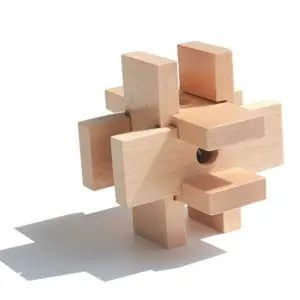
This digital path shares a spirit with other modern hard core puzzlers who enjoy tactile, engineered solutions. It’s about the joy of a precise, physical object born from a digital idea. Whether you print it yourself or order it in, a 3D-printed stand is a testament to the fact that today, even the most niche puzzler problems have a designed solution waiting in a global community’s library. The same meticulous, hands-on ethos applies to assembling intricate mechanical puzzles, a concept explored in depth with resources like the 3D crystal Luban lock set for precision assembly.
Decision Matrix: Is Buying, Building, or Printing Right For You?
By now, you’ve seen the landscape. You’ve poked at the neat engineering of a commercial plastic stand, admired the warmth of a handmade walnut piece, and considered the precise potential of a 3D printed template. The core question remains: which path transforms your own cluttered table? This isn’t about finding the single ‘best’ puzzle box stand. It’s about matching the right solution to your puzzling style, workspace, and willingness to tinker.
Let’s move from analysis to action. Use this framework to guide your choice. Consider your budget, your access to tools and skills, the time you want to invest, and the look you want living on your puzzling real estate.
| Your Priority | Buy a Commercial Stand | Build a Wooden Stand | Print or Order a 3D Stand |
|---|---|---|---|
| Budget | Low to Mid ($10 – $25) | Very Low (Scrap wood, ~$5) | Low to Mid ($2-$15 for filament; ~$25-40 for a service print) |
| Skill/Tools Needed | None. Unbox and use. | Basic woodworking: saw, sandpaper, drill. Moderate comfort with tools. | Option A: Access to a 3D printer (yours, a friend’s, a library’s). Option B: Ability to use an online print service. |
| Time Investment | Minutes (to receive and unfold). | An afternoon. Cutting, sanding, finishing. | Option A: Print time (~3-5 hours hands-off). Option B: Days for shipping. |
| Key Aesthetic | Utilitarian (plastic) or simple woodgrain. Functional. | Customizable. Raw, rustic, or stained to match your decor. Personal pride. | Modern, techy. Often has a geometric, engineered look. |
| Ideal For You If… | You want a zero-fuss, immediate solution. You value compact design and folds flat storage. You puzzle in varied spaces. | You enjoy hands-on projects. You have scrap wood and tools. You want a unique, sturdy piece and love the phrase “I made that.” | You love digital fabrication or modern design. You need a solution for non-standard puzzle boxes and can modify a file. You’re a hard core puzzler who geeks out on niche tools. |
The Indecisive Puzzler’s Shortcut: If your head is still spinning, ask yourself these two questions in order.
“Do I need this solved before my next puzzling session, with zero effort on my part?”
- If YES, Buy. A commercial plastic stand is in your cart and on your doorstep in two days. It’s a proven, lightweight tool that solves the lid flop problem instantly. This is the path of least resistance, and for many, it’s the perfect one. Your puzzling satisfaction starts faster.
“Does the idea of a custom, hands-on project add to my hobby’s enjoyment?”
- If YES, you’re choosing between Build and Print. Now, look at your resources.
- Do you have a workshop (or a garage with a saw) and enjoy wood’s warmth? Follow the DIY template for a simple wooden stand. It’s meditative.
- Are you digitally savvy, fascinated by makerspaces, or need a very specific fit? The 3D printed route is your modern workshop. It’s about precision and community-sourced design.
- If YES, you’re choosing between Build and Print. Now, look at your resources.
Remember, this accessory is part of your puzzle storage ecosystem. Think about where it lives when not in use. The commercial plastic champion folds flat in a drawer. The wooden one might sit proudly on a shelf. The 3D-printed version is a lightweight conversation starter.
Ultimately, the “best” puzzle lid stand is the one you’ll actually use to keep your lid handy and your table clear. Whether you buy the immediacy of a mass-produced tool, earn the pride of a handmade creation, or embrace the digital-physical bridge of a print, you’re making a choice to streamline your focus onto the pieces themselves. That’s the real victory—less fuss, more flow. Now, with your decision mapped out, you can finally stop worrying about the box and get back to what matters: the satisfying click of the next piece finding its home.
P.S. For those who love the engineering behind such niche solutions, the philosophy of a perfectly designed tool extends to puzzles themselves. The meticulous craft of a physical puzzle box, for instance, represents another level of mechanical mastery for the truly curious mind, as explored in the ultimate guide to puzzle box challenges and mastery.
Pro Puzzler Tips: Care, Usage, and Maximizing Your Holder
So you’ve chosen your path—bought, built, or printed. Excellent. Now, let’s ensure your new puzzle lid stand earns its keep on your puzzling real estate. The right care and placement turn a good accessory into a seamless part of your workflow.
First, placement is key. Position your stand just outside your primary piecing zone, angled to avoid casting a shadow on your workspace. The goal is reference at a glance, not a neck cramp. For a secure hold on slippery surfaces, a small adhesive felt pad on the base of a wooden or plastic stand prevents frustrating slips and protects your table.
Care is simple but material-specific. For durable plastic stands, a damp cloth wipe-down removes dust and prevents oils from your hands from making the surface slick. For handmade walnut or other wooden stands, avoid soaking them; dry dusting maintains their finish and the scratch-free felt liner. A 3D printed stand can be cleaned with compressed air or a soft brush to dislodge dust from its layers.
Integrate it into your ritual. Unbox your puzzle, slide the box lid into the channel, and prop it up before you pour your first piece. This small act keeps your lid handy and immediately declares a tidy, intentional workspace. It’s a signal to your brain: focus time.
When your puzzle is done, don’t just stash the holder. If it’s a compact design that folds flat, tuck it into the puzzle box itself or with your puzzle supplies. A wooden stand can become a display piece on a shelf. This way, it’s part of your puzzle storage system, ready for next time.
The true satisfaction comes from that clean line of sight. No more lid flop, no more squinting at a box on the floor. It’s a quiet victory of order over clutter. Your stand isn’t just holding cardboard; it’s holding your focus. This focus, the deep engagement with a tactile challenge, is part of why a puzzle box makes a great gift—it’s an invitation to this same state of flow.
P.S. For those who appreciate the engineering in a perfectly designed tool, the meticulous craft extends to puzzles themselves. The philosophy behind a physical puzzle box, for instance, represents another level of mechanical mastery for the truly curious mind, as explored in discussions on why the best brain teaser puzzle boxes punish impatience. These objects, like a good lid stand, reward a thoughtful, patient approach. For a broader understanding of the category, you can always refer to authoritative sources like the Wikipedia entries for Mechanical Puzzle and Puzzle Box.