The First Click and the First Lesson: My Disappointment with a ‘Lock’ Box
The first time I opened a real lock puzzle box, I was disappointed. Not because it was easy, but because the solution was over too quickly. I’d spent weeks imagining the complex ritual, and it clicked open in two moves. That’s when I learned the first rule: not all ‘lock’ boxes are created equal.
My hunt began, like many do, with a simple need. I was designing a prop—a Loch Ness Monster egg that had to open with a satisfying, mysterious clunk. I ordered a beautiful wooden box, sold as a ‘secret lock box’. It arrived, a handsome thing with smooth seams. I turned it over, listening for rattles, feeling for shifts in weight. I pressed. I slid. On the third tentative push, a hidden panel gave way with a soft snick. Inside was empty space and the faint smell of laser-cut birch plywood. The mechanism was a simple sprung latch, invisible from the outside but fundamentally straightforward. The ‘puzzle’ was just a matter of finding the right spot to press. The lock was a secret, not a true test.
This is the chasm you step into when you search for a lock puzzle box. On one bank, you have the world of gift card holders and clever stash boxes. These are wooden puzzle boxes built for a delightful ‘aha!’ moment, not a multi-hour siege. Their hidden compartments are perfect for a cash surprise. On the far bank lies the realm of the sequential discovery puzzle box, where the box itself is a dense, mechanical narrative. Here, the lock isn’t a single point; it’s a series of interwoven clues, tools concealed within the structure, and discoveries that must be made in a specific order. One is a charming container. The other is a world in a box.
That first box taught me to decode the language. A product page boasting a ‘magnetic locking mechanism’ is often describing a cleverly placed magnet that releases a catch. It’s a single-step solution. A product page mentioning ‘sequential discovery’ or referencing designers like Eric Fuller is speaking a different dialect entirely. It promises a mechanical puzzle where the journey is the point. The confusion sets in because both are honestly marketed as ‘lock puzzle boxes’. One is for a five-minute presentation. The other is for a solitary, deeply focused evening.
So, what’s the difference between a puzzle box and a lock box? Semantics blur, but here’s the distinction from the workshop floor. A lock box implies a singular barrier to access, even if that barrier is cleverly hidden. A puzzle box makes the process of defeating that barrier the primary experience. The former hides its mechanism. The latter is its mechanism.
My disappointment faded into curiosity. I needed to understand the spectrum, from that simple click to the complex symphony of moving parts that would eventually become my Nessie egg. Let’s map that territory.
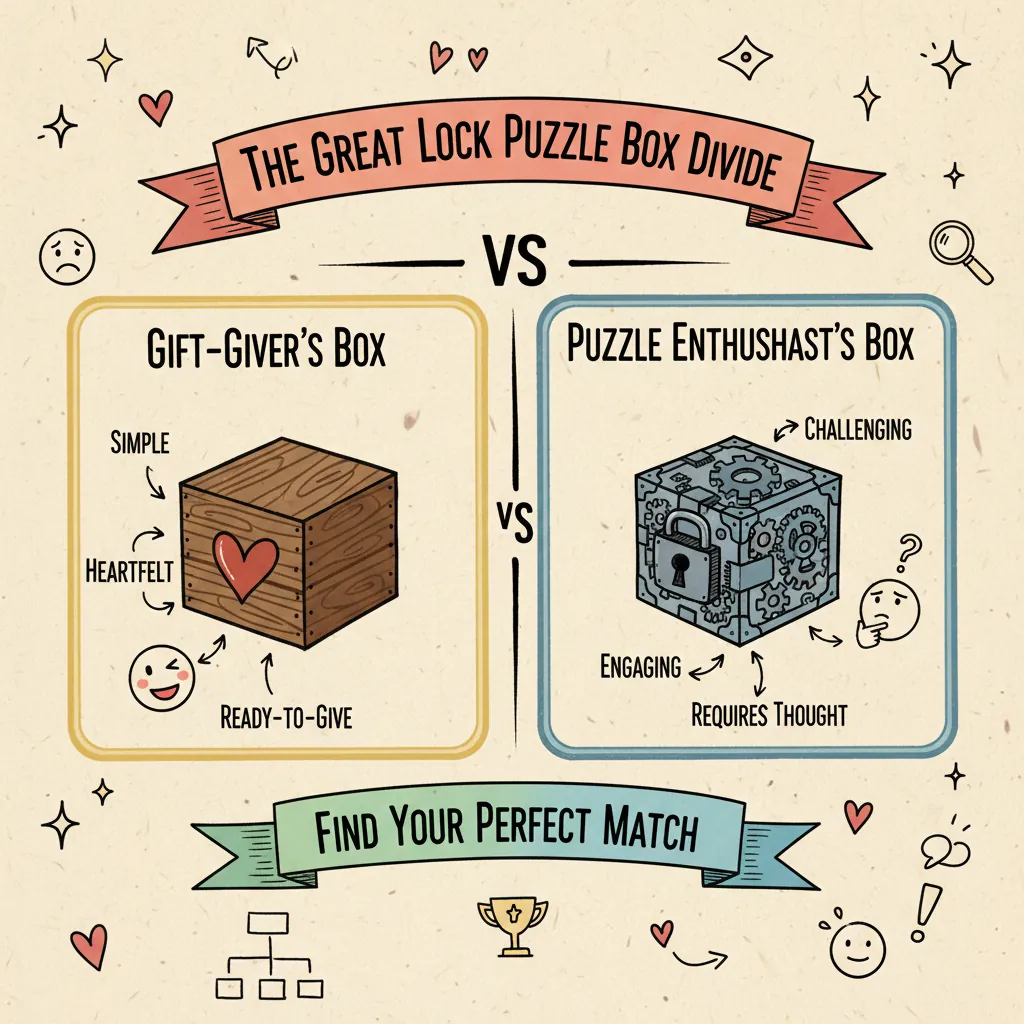
The Two Tribes: Gift-Givers vs. Puzzle Enthusiasts (And Why Product Pages Confuse Them Both)
That distinction between a hidden barrier and the process itself is the canyon that separates the two primary audiences for these objects. Understanding which side of that canyon you’re on—or which side your intended recipient inhabits—is the single most important step before you buy. The product pages, with their overlapping jargon, are designed to appeal to both, often leaving everyone a bit misled.
On one bank, you have the Gift-Givers. Their goal is elegant presentation leading to a quick, satisfying reveal. The object is a vessel—for a gift card, cash, a piece of jewelry—and the “puzzle” is the wrapping paper. Success is measured in the recipient’s smile, not in their hours of frustrated contemplation. They want a secret lock box that feels clever and substantial, but whose solution is intuitive enough to be discovered in minutes, not days. The common price range of $28 to $50, typified by brands like Creative Crafthouse, caters to this intent. These are the boxes you’ll see marketed as gift card holders or secret stash boxes. Their mechanism is usually a single, well-hidden magnetic latch or a clever slider. The joy is in the “Aha!” not the arduous “How?”
On the opposite bank stand the Puzzle Enthusiasts. For them, the box is the gift. The contents are secondary, if they exist at all. Their goal is the prolonged intellectual challenge, the tactile conversation with a mechanical puzzle. They seek sequential discovery, where each step reveals the tool or clue for the next, creating a structured narrative in wood and metal. Success is a deep, quiet satisfaction, often followed by an immediate urge to reset it and solve it again to appreciate the craftsmanship of the solve path. This tribe shops at places like Cubic Dissection or seeks out Japanese puzzle box Karakuri groups, where prices start in the hundreds. A box like Eric Fuller’s Lock Box (Cubic Dissection, edition of 133) isn’t bought to hide a ring; it’s bought to be studied, solved, and displayed as a trophy of a battle won.
The confusion arises because both tribes use the same search terms. A wooden puzzle box from Amazon and a sequential discovery puzzle box from a niche artisan are both “lock puzzle boxes.” A product page for a trick box designed for a five-minute surprise will still list “difficulty rating: 3/5,” a term borrowed from the enthusiast world but utterly unmoored from its meaning there. That “3/5” likely means “slightly trickier than a simple hinged lid,” not “requires intermediate puzzle-solving skills.”
This is why a buyer must read between the lines. If the page emphasizes personalization, laser engraving, and internal dimensions for a gift card, it’s speaking to the first tribe. If it name-drops designers (Eric Fuller, Wil Strijbos), discusses specific woods (figured sapele, walnut), or details the number of distinct moves in the solution, it’s courting the second. One market values sentiment and presentation. The other values feedback and tolerance.
Bridging this gap is possible. A savvy gift-giver buying for a curious-minded recipient might step up from a basic magnetic latch box to a simpler Karakuri puzzle box with a few sliding panels. A new enthusiast might start with a well-regarded, mid-tier mechanical puzzle before investing in a masterpiece. The key is to know the languages. One speaks in the warm, broad terms of a gift. The other speaks in the precise, cool jargon of the workshop. Your job is to interpret which conversation you need to have.
Decoding the Mechanism: From Hidden Latches to True Sequential Discovery
So you’ve identified your tribe. Now, let’s talk tooling. To truly navigate the market for these objects, you need to understand the hidden language of their guts. The mechanism is everything. It defines the experience, the price, and the shelf it belongs on. It’s the difference between a nice box and a mechanical puzzle.
Let’s start with the simplest and most common: the hidden magnetic latch. This is the engine inside probably 80% of the boxes you’ll see marketed as secret lock boxes or gift card holders. A small, powerful magnet is embedded in a sliding panel or a specific spot on the lid. Another magnet or a piece of steel in the corresponding body piece holds it shut. The “puzzle” involves finding the release spot—often by sliding a panel, pressing a disguised button, or manipulating an external element to disengage the magnetic bond. It’s clever, satisfying in its own click, and perfect for its intended use. But it’s a one-trick mechanism. Once you know the move, you know it. For a gift-giving moment, that’s often enough. For an enthusiast, it’s a dead end.
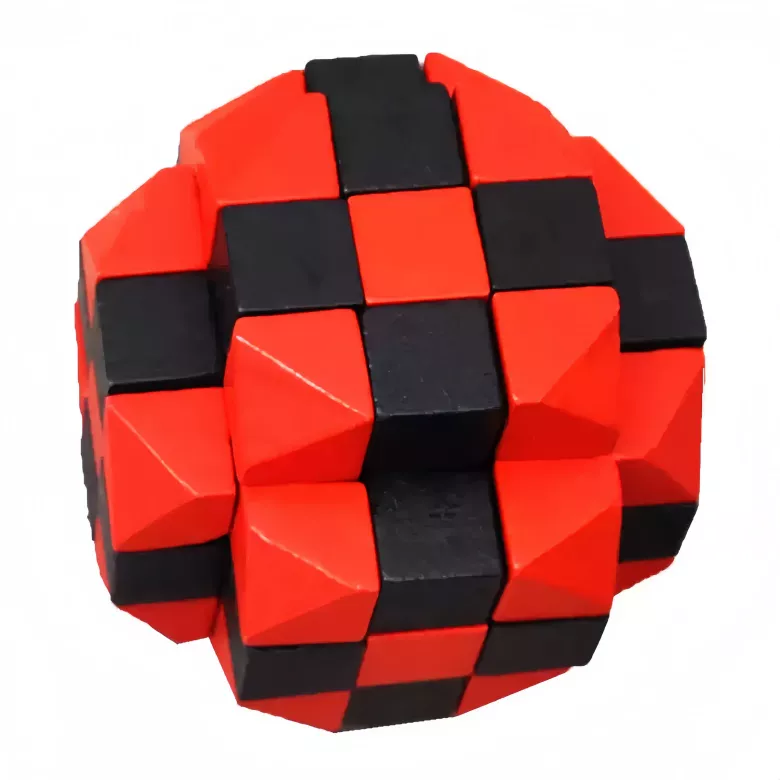
Landmine Lock Puzzle — $18.99
A box like the one above relies on this principle. It’s a gateway. Understanding this magnetic locking mechanism demystifies a huge swath of the market. If you’re considering a DIY puzzle box lock mechanism for a project, this is where you’d likely start.
Next tier: sliders and internal rods. This is where many Japanese puzzle boxes (Karakuri) and better-quality commercial trick boxes live. Instead of a single magnetic point, the opening sequence requires manipulating several external panels in a specific order. These panels are connected to internal rods or blockers that physically prevent the lid from sliding open until the correct configuration is achieved. You get a solve path—Step A enables Step B, which unlocks Step C. There’s a logical, often spatial, progression. The quality here is defined by tolerance: the precision of the cuts and fits. Sloppy boxes have wide gaps that give away the sliders. A well-made one feels solid, its secrets held tight until the exact, deliberate motion is made. The feedback—the subtle sound and feel of a rod retracting or a panel sliding home—is the solver’s reward.
Then, we reach the gold standard: true sequential discovery. This term, borrowed from the highest echelons of puzzle design, is often misused. It doesn’t just mean “has multiple steps.” A true sequential discovery puzzle box integrates the tools into the puzzle. You don’t just move panels; you discover a pin inside a compartment that must then be used to depress a hidden lever elsewhere on the box. The mechanism itself provides the key to its next stage. It’s a narrative in wood and metal. The Lock Box by Eric Fuller, from Cubic Dissection, is a canonical example. Solving it isn’t about finding a latch; it’s about understanding a self-contained, multi-act machine. The craftsmanship is non-negotiable, as the mechanism must perform flawlessly through dozens of interactions. This is where puzzles cease to be mere boxes and become kinetic sculptures with a single, elegant solution.
This is the critical gap no product page clarifies. A box with a “hidden latch” asks where. A box with “sequential discovery” asks how, and then with what, and then why. One is a scavenger hunt. The other is a locksmith’s apprenticeship inside a wooden puzzle box.
Running your fingers along the seams of a well-made sapele box, you feel for the whisper of a gap, the hint of a slide. In a magnetic latch box, you’re searching for a location. In a slider box, you’re learning a sequence. In a sequential discovery box, you’re reverse-engineering a logic. Your choice depends entirely on which of those conversations you, or your recipient, wants to have. Avoid sloppy boxes. Seek out those that speak clearly through their craftsmanship. For more on this tactile conversation, our complete guide to opening a puzzle box breaks down the philosophy of engagement. The next step is learning to hear what they’re saying.
The Quality Checklist: How to Judge Craftsmanship from a Product Photo
So you know the difference between a hidden latch and a sequential discovery mechanism. The jargon is decoded. Now comes the real test: separating a well-made mechanical puzzle from a disappointing trinket when you’re staring at a product page. You can’t feel the seams or hear the action online, but you can learn to read the signs. This checklist is what I use before I ever let a box near my workbench.
First, look for wood grain continuity. In a quality wooden puzzle box, the grain pattern should flow logically across seams and lid lines. If the front panel’s grain runs vertically and the side panel’s grain runs at a 90-degree mismatch, that’s a sign of construction from scrap or low-grade sheet stock. It tells you the maker prioritized cheap assembly over integrity. A box where the grain wraps around a corner like a continuous ribbon shows respect for the material. It’s your first, silent indicator of craftsmanship.
Second, and most critical: demand to see the guts. A product page that only shows glossy exterior shots is hiding something—often, a crude mechanism. Look for a photo of the hidden compartment or, better yet, the internal mechanism itself. A maker proud of their work will show you the intricate channels, the precisely placed magnets, the cleanly routed pathways. If all you see is a closed box, assume the inside is as basic as the photography.
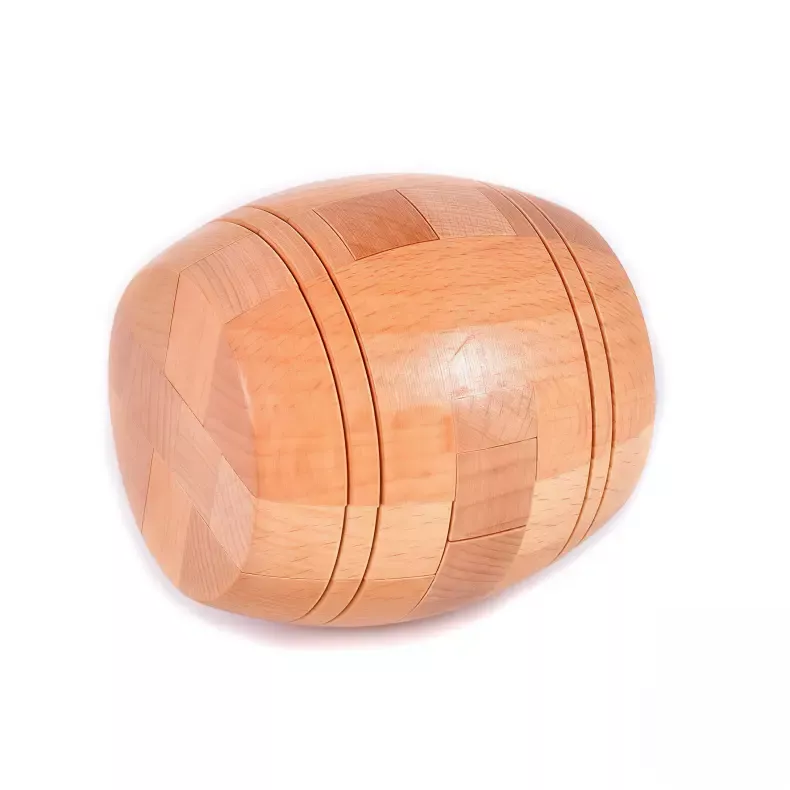
The Barrel Luban Lock — $19.77
Third, listen for the language of materials. Descriptions should name specific hardwoods: sapele, walnut, cherry, jatoba. These are dense, stable, and pleasing to the touch. Vague terms like “premium wood” or “solid wood” are red flags. The same goes for the mechanism. Does the description specify “neodymium magnets,” “brass rods,” or “aluminum sliders”? Specificity suggests a designer who sources components, not one who assembles generic kits. If you’re curious about the builder’s mindset, our guide on how to build a puzzle box delves into this material-focused philosophy.
Fourth, assess the description of tolerance and action. This is where enthusiast-grade boxes separate themselves. Does the text mention “snug fit,” “smooth slide,” or “precise milling”? These words address the microscopic gap between moving parts—the difference between a satisfying, authoritative movement and a wobbly, ambiguous one. A sloppy magnetic locking mechanism will grind or stick; a good one will have a clean, decisive pull. The product page can’t show you this, but it can tell you the maker cares about it.
Finally, read for sound and feel. Seriously. A great product description for a sequential discovery puzzle box will often mention the acoustic feedback—the “solid clunk,” the “soft click,” the “absence of rattle.” This isn’t poetry; it’s forensic engineering. The sound tells you everything is seated correctly, that springs are taut, and that latches are engaging fully. It’s the closest you can get to touching the thing through a screen.
Avoid sloppy boxes. Your checklist is simple: grain continuity, interior photos, named hardwoods, discussion of tolerance, and acknowledgment of sound. A page that fails most of these is selling you a secret, but not a satisfying one. The real puzzle is finding the maker who built the box to be solved, not just sold.
Demystifying ‘Difficulty’: What a ‘Level 9’ Really Means for Your Sanity
So you’ve found a box with grain that flows and photos of a clean interior. Good. Now you’re staring at a number: “Difficulty: 4/5,” or “Level 9,” or simply “Challenging.” This is where the real confusion begins. In the unstandardized world of wooden puzzle boxes, a “4” from one maker is a leisurely afternoon, while a “4” from another is a multi-day siege on your sanity. Understanding this gap is the difference between giving a delightful brain teaser and delivering a weapon of mass frustration.
First, a hard truth. The difficulty rating on most commercial sites is marketing, not mechanics. It’s calibrated for the gift-giver, not the solver. A “Level 9” on a mass-produced secret lock box often translates to “you’ll find the main trick in under ten minutes, but there are a few red herrings.” For the enthusiast, a true “Level 9” from a craftsman like Eric Fuller is a promise of sequential discovery—a multi-stage mechanical puzzle where each solved step unlocks the tool or knowledge for the next. One is a single clever idea stretched thin; the other is a condensed escape room in your palm.
Let’s translate ratings into reality.
The “3-Minute Gift” (Often rated 1-3/5): This is the domain of the gift card holder. The solve path is short, intuitive, and heavily reliant on a single magnetic locking mechanism or a simple hidden slider. The goal isn’t challenge, but the “aha!” moment. The box is a ritual wrapper, making the act of retrieving a gift card feel like a tiny heist. Perfect for a non-enthusiast. If your primary question is “Which box is best for a gift card that won’t frustrate the recipient?”, aim here. The solve should be a pleasure, not a test.
The “30-Minute Engagement” (Often rated 3-4/5): This is the tricky middle ground. It often involves 2-3 distinct steps. Maybe a slide reveals a pin, which releases a panel, which exposes the latch. There’s a logic to follow. This is where many adults find their sweet spot—a satisfying engagement that doesn’t devour an entire evening. Brands like Puzzle Master and Creative Crafthouse operate here.
The “3-Hour Ordeal” (Often rated 5/5 or 9/10+): Welcome to the enthusiast’s arena. Here, you will find sequential discovery puzzle boxes from Cubic Dissection or intricate Japanese puzzle boxes from Karakuri creators. The rating is a warning. You will get stuck. You will put it down. You will pick it up and notice a detail you swore wasn’t there before. The solve time isn’t a linear half-hour; it’s cumulative, fractured hours of experimentation and revelation. This is the answer to “Are there any lock puzzle boxes that are actually hard to open?” Yes. Abundantly. They just live in a different ecosystem, often with three-figure price tags and sold in limited editions.
How do you survive the ordeal? Instructions and hints. A quality maker provides a sealed hint envelope or a URL to a gradual hint system. This isn’t cheating; it’s part of the design philosophy. My rule from escape room design holds: frustration is the enemy of engagement. A good puzzle makes you feel smart, not stuck. If you buy a fiendish box, immediately seek out its intended hint structure. It’s the difference between a rewarding journey and throwing a beautifully crafted stash box against the wall.
So, when you see a difficulty rating, ask what world it’s from. Is it meant to reassure a gift-giver, or to tantalize a collector? The number alone is meaningless. Context is everything. The real difficulty isn’t in the rating—it’s in choosing the right box for the human who will hold it. For more on the mindset needed to tackle the harder end of the spectrum, consider reading Why The Best Brain Teaser Puzzle Boxes Punish Impatience, and if you do find yourself stuck, this guide on solving approaches can be a lifeline.
Remember, the best puzzle is the one that gets solved. Not abandoned.
The Matchmaker: A Flowchart for Your Perfect Lock Puzzle Box
That’s the crucial lesson from our look at difficulty—context is everything. The right box for you isn’t the hardest one, or the prettiest one. It’s the one that matches the specific ritual you have in mind. So, let’s play matchmaker. Forget scrolling through hundreds of listings. Answer these questions in order, and your path will narrow to the precise category of lock puzzle box you need.
Start Here: Is this primarily a gift for someone else?
- If YES, proceed to Gift-Giver Questions.
- If NO, proceed to Enthusiast Questions.
GIFT-GIVER PATH:
Who is this for?
* A non-puzzle person (or child) receiving a token inside (gift card, cash, jewelry): Your goal is delight, not ordeal. Stick with wooden puzzle boxes from the gift-focused market. Look for keywords like “hidden latch,” “sliding panel,” or “simple mechanism.” Aim for a published solve time under 5 minutes. The Creative Crafthouse Secret Lock Box is a benchmark here—it provides a satisfying “aha!” without frustration. Magnetic locking mechanism boxes are also excellent here; they feel clever but aren’t cryptic. This is a gift card holder with ceremony, not a test.
* A puzzle-curious friend or escape room fan: You can dial up the challenge slightly. Look for boxes with multi-step solutions or difficulty ratings of 3-4 out of 5 from brands like Puzzle Master. These often involve a combination of slides, pushes, and maybe a simple tool. Ensure it’s still resettable easily. The solve should feel like a fun 10-15 minute activity, not a week-long siege.
What is your budget?
* Under $50: You are squarely in the commercial gift box zone. This is perfect. Craftsmanship varies wildly—apply the Quality Checklist ruthlessly. Many excellent options exist here.
* $50 – $150: You are in a hybrid zone. You might find artisan-made simpler boxes or highly regarded commercial designs (some Karakuri-inspired pieces). This is a great range for a meaningful, well-crafted gift for someone special.
ENthusiast PATH:
What is your experience level?
* New but committed, ready for a real challenge: Welcome. Step away from Amazon. Begin your search at specialty retailers like Kubiya Games or Puzzle Master’s higher-end section. Look for respected names in mechanical puzzles—think Wil Strijbos’ simpler boxes or entry-level sequential discovery puzzle box designs. Your first goal is to learn the language of mechanisms. Expect to spend $80-$200. The “Lock Box” by Eric Fuller (when available) is a legendary starting point into true sequential discovery.
* Seasoned solver, seeking a masterpiece: You know the sequential discovery drill. Your hunt is for limited editions, Cubic Dissection releases, or complex Japanese puzzle boxes from the Karakuri Creation Group. Your budget stretches into the hundreds. You’re not just buying a stash box; you’re buying a 3-5 hour narrative told in wood and metal. You judge by the designer’s reputation, the novelty of the mechanism, and the tolerance in the photos. The community is your best resource.
What is your goal?
* The satisfying solve: You want a beautiful, intricate journey. Focus on the puzzle-as-art. Internal dimensions matter less than the elegance of the solve path.
* A functional secret keeper: You plan to actually hide keys and clues or a small valuable inside long-term. You need a box that locks securely post-solve, often via a separate internal compartment or a re-locking mechanism. Some trick boxes are puzzles to open but don’t remain “locked” afterward. Read descriptions carefully.
Final Junction: The Physical Reality Check.
No matter your path, ask: What must fit inside?
Measure it. Then, add at least a quarter-inch to every dimension. A box listed as “3-inch cube” has an internal cavity far smaller. A standard gift card is 3.375″ x 2.125″. Many charming small boxes won’t fit it. If you’re hiding a ring, a USB drive, or a rolled bill, you have more options. This single, practical step prevents the ultimate disappointment: a brilliant puzzle solved, revealing a treasure that doesn’t fit.
Follow this pathway, and the noise fades. You’re no longer just browsing “lock puzzle boxes.” You’re hunting for a specific type of experience, with the vocabulary to find it. You’ve moved from confusion to a confident search. Now, let’s look at what that search might actually yield.
Curated Picks with Reasoning: Not Just a List, But a Why
Now, with your intent and the vocabulary to express it, the marketplace sharpens into focus. The flowchart leads to destinations; these are specific landmarks you might find there. Each box below embodies a distinct philosophy of what a lock puzzle box should be.
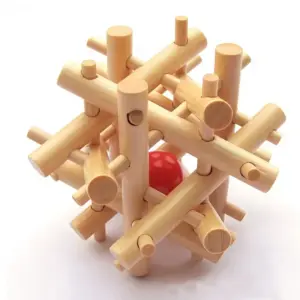
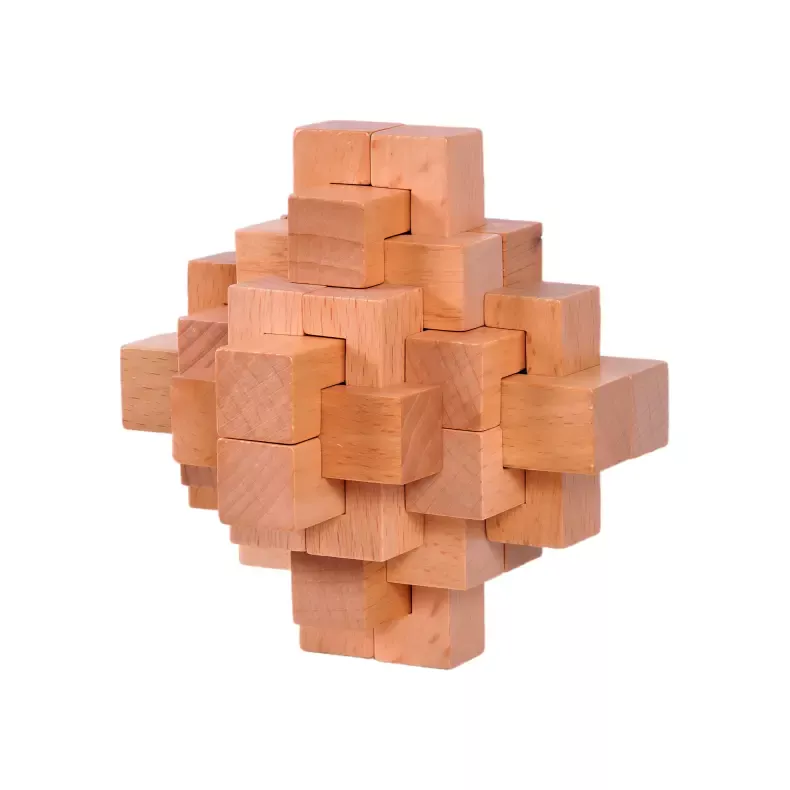
1. The Mass-Market Gift Giver: The 24 Lock Puzzle
This is the archetype you’ll find everywhere. It’s a wooden secret lock box built for a single, delightful purpose: to be a clever gift card holder. Its mechanism is straightforward—a classic set of sliders and a hidden latch. The solve path is short, maybe three to four deliberate moves, designed for a satisfying “aha!” without frustration. The craftsmanship is functional; it’s a prop for a moment, not an heirloom. The feedback is clear, the tolerances are adequate for its job. It resets simply. This is the box you buy when the experience of giving is more important than the puzzle itself. The recipient gets a small, engaging ritual before the real gift. It’s for the office Secret Santa, the nephew who likes escape rooms, or anyone who appreciates a touch of ceremony.
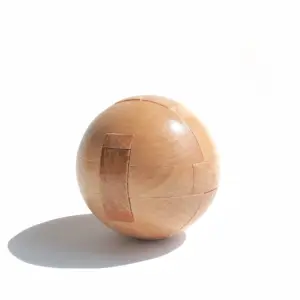
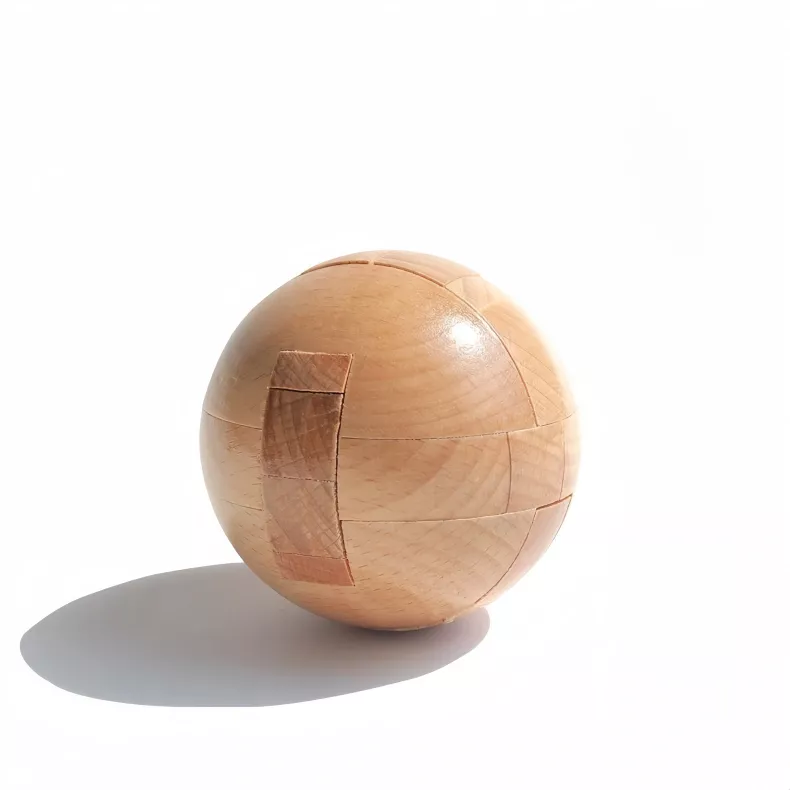
2. The Gateway Enthusiast Box: The Kongming Ball Lock
Here is your first step beyond the gift. This pick isn’t a box in the traditional sense—it’s a spherical mechanical puzzle with a locking secret compartment. That’s the point. It breaks the “rectangular crate” expectation and introduces more abstract thinking. The mechanism often involves aligning internal channels or manipulating balls bearing; it’s a brain teaser that demands spatial reasoning over simple slider hunting. The solve time stretches into tens of minutes. It’s a tactile, pleasing object that sits on a desk, begging to be fiddled with. This is the box for the person whose curiosity was piqued by a simple trick box and who is now ready for a deeper, more elegant challenge. It whispers about the wider world of Burr puzzles and sequential discovery without the intimidating price tag. For a broader exploration of this category, see our curated list of rewarding puzzle boxes for adults.
3. The Collector’s Challenge: The Lock Box by Eric Fuller
This is the benchmark. When you ask for a difficult puzzle box for adults, this is what you hope to find. The Eric Fuller lock box from Cubic Dissection is a pure sequential discovery puzzle box. Its materials—Figured Sapele and Jatoba—are chosen for beauty and structural integrity. The mechanism isn’t just hidden; it is the puzzle. You must discover tools within the puzzle to progress, each step logically—and sometimes deviously—leading to the next. The tolerance is exquisite; parts move only when and how they are meant to. The “clunk” is deeply satisfying. With an edition of just 133, it exists at the intersection of art, engineering, and intellectual sport. This box isn’t for hiding a gift card; it is the gift, a multi-hour ordeal of revelation. It’s for the solver who has graduated from standard wooden puzzle boxes and seeks the pinnacle of the form.
4. The Thematic Experience: Japanese Karakuri
Not a single box, but a tradition. A Japanese puzzle box Karakuri represents a different philosophy. The puzzle is often woven into a beautiful narrative object—a chest, a temple, a treasure globe. The craftsmanship is paramount, with intricate laser engraving or fine joinery. The mechanisms can range from elegant magnetic locking mechanisms to complex systems of rods and springs. The experience is less about brute-force deduction and more about appreciating a curated, often poetic, solve path. The difficulty varies widely, but the focus is on the journey as a meditative, tactile art. This is for the collector who values story and form as much as function, who sees a puzzle box as a display piece that occasionally offers a deeply satisfying conversation with its maker. It bridges the gap between a secret stash box wooden and a museum artifact. To dive deeper into this world, our look at Japanese puzzle boxes that will humble your IQ explores specific designs.
Beyond the Solve: Care, Resetting, and Finding Your Next Fix
So you’ve found the perfect match—be it a thematic Karakuri chest or a brutal sequential discovery puzzle. The final clunk of the lock was satisfying. Now what? This is where most product pages go silent, but for you, the real relationship with the mechanical puzzle is just beginning. Let’s talk about what happens after the solve time elapses.
First: resetting. This is non-negotiable. A good puzzle box is a conversation, and resetting it is the other half of the dialogue. For a simple magnetic locking mechanism or hidden latch box, it’s often just a matter of closing it. But for a true sequential discovery puzzle box, the reset is the solve in reverse. You must retrace your steps, re-engaging sliders, re-hiding tools, and re-locking panels in the correct order. It’s a second, quieter puzzle that cements your understanding of the mechanism. A sloppy reset is the fastest way to break the solve path. Do it with intention. For a more detailed walkthrough on this process, consult our step-by-step guide to solving a wooden puzzle box, which covers reset logic.
Then, care. Your wooden puzzle box isn’t a plastic toy. It’s a crafted object, sensitive to its environment. Avoid extreme humidity and direct sunlight; they can warp thin internal components or crack beautiful finishes. Dust it with a soft cloth. The tolerance you prized during the solve depends on the wood staying stable. For boxes with metal components, a very occasional, microscopic dab of fine clock oil on a pivot point is all that’s needed—never spray lubricant. The goal is to preserve the crisp feedback, not gum it up.
Perhaps the most common question I get is, “Is a lock box or a Cryptex better for a gift?” It depends on the ritual. A Cryptex offers a single, direct challenge: crack the code. It’s theatrical, obvious in its intent. A puzzle box is more subtle, its challenge hidden within a deceptively simple form. The Cryptex asks for a word; the puzzle box asks for your curiosity. For hiding a gift card, the box often provides a more elegant reveal.
When you’re ready to dive deeper, you leave the commercial marketplace behind. You enter the world of artisans and small-batch editions. This is the domain of Eric Fuller’s Cubic Dissection, or the legendary creations of Wil Strijbos. Here, a puzzle box is a collectible, released in editions of a few hundred, often sold out in minutes. To find them, you don’t just shop—you join a community. Forums like Puzzle Place or the Mechanical Puzzles subreddit become your newsfeed. You sign up for mailing lists. You might even explore a puzzle box subscription to receive a curated, challenging puzzle every few months. This journey toward mechanical mastery is its own rewarding puzzle.
Your appetite for manipulation might also lead you sideways, to Burr puzzles—interlocking 3D assemblies that feel like solving the skeleton of a box—or to full-blown escape room kits you can play at home. The skills are transferable: a sensitivity to pressure, a logic for movement, a patience for dead ends. The broader category of mechanical puzzles encompasses all of this, from simple trick boxes to complex sequential discovery.
This is the true fix. The first box opens a door. The sound of that final mechanism engaging isn’t an end. It’s the starter’s pistol for a deeper, more tactile curiosity. You’ll start reading puzzle box reviews not for a purchase, but to understand a maker’s philosophy. You’ll run your fingers along the seams of every wooden box you see, professionally or not, feeling for the whisper of a gap, the hint of a slide. You’re not just buying a secret lock box anymore. You’re learning a language. And the next conversation is always waiting.
The Vault: Security, Value, and the Real Purpose of a Lock Puzzle Box
That deep curiosity inevitably bumps into a practical wall. If you’re learning the language of wooden puzzle boxes, you’ll eventually ask: can this secret stash box actually secure anything of value?
The short answer is no.
A lock puzzle box is a mechanical puzzle, not a security device. Its mechanisms are designed for discovery, not deterrence. The satisfying magnetic locking mechanism on a gift-tier box is a clever trick, not a vault door. A sequential discovery puzzle box by a master like Eric Fuller is a narrative in wood and metal, its hidden compartments a reward for intellect. Its tolerance is precise to ensure the solve path works, not to resist force. A determined thief with a screwdriver, or even just a firm shake, would bypass your hours of deliberate manipulation in seconds. It offers no more security than a standard jewelry box; its defense is obscurity, not strength. It is to lock picking what a corn maze is to a fortress wall.
This reconciles the ‘secret lock box’ desire with reality. The value you’re securing isn’t the cash or the gift card inside—it’s the experience of finding it. The puzzle is the product. The craftsmanship is the heirloom. The story of the solve is the treasure. When you give one, you’re not giving a container; you’re giving a moment of revelation, a private victory. For a gift card holder, that’s the perfect flourish. For a collector, that’s the entire point. As a category, the puzzle box has always been about intellectual engagement over physical security.
So, choose your box based on the experience you want to lock inside it. Let the mechanism, the wood, the feedback guide you. My initial disappointment—the box that opened in two moves—stemmed from expecting a vault and getting a pamphlet. When you understand the true purpose, you can’t be disappointed. You’re not buying a lock. You’re commissioning a key—a key to a specific, tactile, deeply satisfying kind of wonder.
Your next step is clear. Revisit the flowchart. Now, with the confident resolution of knowing what these objects truly are, decide: are you orchestrating a three-minute surprise or a three-hour ordeal? Then go find that box. For a final, expert-led breakdown of what makes the cut, our expert review of the best wooden box puzzles can be your final checkpoint. The right one is waiting to click open for you.