A Test of Victorian Minds: The Real Cambridge Labyrinth
My fingers trace the fine, almost silky birch wood grain of the closed box, feeling the subtle ridges and valleys where the laser-cut pieces interlock with silent precision. It has a sober, substantial weight in the palm—not heavy, but dense, promising layered secrets within. A faint, metallic rattle answers the tilt of my wrist, a solitary metal marble rolling against some hidden channel. This object, the Cluebox Cambridge Labyrinth, is cool and quiet, yet it hums with a borrowed history. What does a 19th-century Cambridge professor’s initiation test feel like in your hands in the 21st century? To understand that, you must first leave your living room and step into the gaslit, intellectual ferment of Victorian England.
The man behind the original mystery was William Whewell—a giant of his age. Pronounced “hyoo-ul,” he was a polymath force: a philosopher of science, a master of Trinity College, Cambridge, and a coiner of words like “scientist” and “physicist.” His mind was a cabinet of curiosities, endlessly categorizing and connecting. In the early 1800s, Whewell helmed the Cambridge Philosophical Society, a crucible where the era’s greatest minds debated and demonstrated the frontiers of knowledge. Membership was a privilege, and Whewell, believing that abstract theory must be tempered by practical manipulation, devised a physical rite of passage. New members were presented with a contrivance of wood and metal: a locked box, a maze, a series of baffling interferences. This was the real Cambridge Labyrinth, an initiation test that demanded not just knowledge, but a particular kind of tactile, sequential discovery.
It was not a mere parlor game. This wooden puzzle box was a three-dimensional argument, a physical manifestation of the Society’s ethos. The aspirant was faced with a logical deduction problem made material. Success required observing clues, forming hypotheses, and testing them through interaction—a direct parallel to the scientific method Whewell championed. The labyrinth was a gatekeeper, ensuring that those who entered the Society’s ranks possessed a hands-on, puzzle-solving intellect. It was a mechanical puzzle box serving as a silent examiner.
As a former architectural model maker, I see Whewell’s creation as a profound prototype. We built models to make abstract plans tangible, to test spatial relationships and structural logic before committing to stone and steel. Whewell’s labyrinth did the same for the mind. It externalized cognitive process into a kinetic object. The modern escape room game inherits this spirit, but the Victorian original was purer, stripped of narrative garnish, focusing solely on the raw mechanics of problem-solving. The goal wasn’t entertainment for entertainment’s sake; it was a calibrated assessment of one’s ability to navigate complexity.
This history is the soul pressed into the 167 pieces of birch and acrylic that form the iDventure Cluebox on my desk. The company didn’t just borrow a quaint name; they aimed to recreate the intellectual ritual. The original Whewell labyrinth is lost to time, its specific mechanisms unknown. But its philosophy—the marriage of aesthetic craft to cerebral challenge, the use of kinetic elements like rolling marbles to guide discovery—is meticulously translated. Holding this box, you are not just solving a puzzle; you are participating in a reconstructed fragment of intellectual history, a tabletop escape game that channels the ghost of a Cambridge don.
The real Cambridge Philosophical Society puzzle was about earned understanding. The satisfaction wasn’t in a final click or a revealed prize, but in the journey of the mind through a designed obstacle course. This is the essence of sequential discovery that the Cluebox Cambridge Labyrinth captures. When you hear that marble rattle, you are hearing the echo of Whewell’s challenge, repackaged for your hands. The initiation test has been democratized, but its core demand for patient, logical deduction remains uncompromising. The labyrinth is no longer a gate to an elite society, but to a personal moment of ‘aha!’—a connection across centuries forged through the turn of a hidden gear or the solved path of a maze.
From Cambridge to Coffee Table: Unboxing the Physical Artifact
That echo of a Victorian initiation test becomes solid reality the moment the Cluebox Cambridge Labyrinth is placed in your hands. It’s a translation from abstract history to a dense, tactile object measuring 11x11x12 cm—a compact cube that feels heavier than its dimensions suggest, its heft born from the 167 individual, interlocked pieces of Baltic birch wood. This isn’t a hollow shell; it’s a solid-feeling machine, its mass hinting at the intricate internal architecture you’ve been tasked to explore. As someone who has built architectural models, I appreciate this density immediately. It speaks to a considered layering of parts, a logical structure waiting to be understood, not just a veneer of complexity, much like the principles in a guide to choosing quality wooden puzzle boxes.
Running your fingers over the surfaces, the laser-cut precision is evident. The wood grain is subtle, sealed with a clear finish that protects but doesn’t obscure the natural material. Each edge is crisp, each joint tight. The six acrylic face plates are inset seamlessly, their transparency offering teasing, partial views into the inner workings—a design choice that mirrors the Cambridge Society’s ethos of demonstration through observation. You can see channels, gears, and the titular labyrinth walls, but their full context and function remain obscured. This is your first clue: the puzzle communicates through limited transparency, demanding you piece together a whole from fragmented visual data. It’s a lesson in observation before action.
The core kinetic element announces itself with a soft, purposeful rattle—the sound of metal marbles rolling within their hidden channels. This isn’t just an auditory garnish; it’s primary feedback. Tilting the box changes the sound, a direct, physical clue system that roots the entire sequential discovery puzzle in real-world physics. It forces you to engage with the object not as a static brain teaser, but as a dynamic, interactive mechanical puzzle box. The marbles are your guides and your obstacles, central actors in the drama about to unfold.
The build quality answers a primary user question about durability: this feels robust. The birch wood has a satisfying rigidity, and the laser-cutting ensures parts move with a precise, friction-fit tolerance that avoids any sense of fragility. It can withstand the thoughtful, probing manipulation it requires. However, its heft and precision also mean it’s not a fidget toy for careless handling—it demands the respect of a finely-tuned instrument. This is a wooden puzzle box with marble mechanisms designed for deliberate interaction, which makes the eventual discovery of its secrets all the more rewarding, and far more satisfying than escaping the frustration of a stuck lid on a poorly made box.
As an object, it’s a handsome artifact. The interplay of warm wood and cool, clear acrylic gives it a modern yet timeless aesthetic that fits on a bookshelf or coffee table without screaming “game.” It sits quietly, a dignified enigma. You notice small, cryptic symbols laser-etched into certain wooden panels, and perhaps a number or arrow that seems out of place. These are your initial footholds. The Cambridge Labyrinth doesn’t start with a written narrative; it starts with these subtle, embedded clues on the very fabric of the box, inviting you to question every surface, every marking, every sound. Is it a two-person endeavor? Absolutely. The need to share observations, to debate the meaning of a symbol while another person tests a theory on the box’s orientation, creates a collaborative, workshop-like atmosphere perfect for the intellectually curious pair.
Before a single piece slides, the Cluebox has already begun its dialogue. It has established rules through its materiality: look closely, listen intently, think in three dimensions. The promise of a hidden compartment feels both literal and metaphorical—you are seeking a physical space, but also the intellectual revelation that grants you access to it. The labyrinth, it turns out, is as much in your perception as it is etched in acrylic and birch.
The Loop of Discovery: How an ‘Escape Room’ Unfolds in Wood
From that initial state of observation—tracing the grain, puzzling over the etched symbols—the Cambridge Labyrinth demands a shift from passive scrutiny to active interrogation. This is where the core concept of sequential discovery transforms from a product feature into a tangible, sometimes maddening, conversation between you and the box. Unlike a traditional board-game escape room game, where clues are often cards to be read and codes to be input, here every clue is a physical component. The discovery isn’t just mental; it’s kinetic. Solving one step doesn’t just give you an answer; it physically alters the box, revealing a new tool, loosening a panel, or changing the path of the metal marbles inside. One puzzle literally builds the key for the next.
The learning curve, especially for someone new to this genre, is less a slope and more a series of discrete plateaus. You’ll spend minutes, perhaps tens of minutes, in a state of focused exploration, feeling every seam, testing every acrylic face plate for movement, listening to the roll and click within. Then, a connection is made. A symbol aligns with a number; a shift in the box’s orientation causes a marble to drop into a new channel. This triggers a physical change—a panel slides, a compartment pops open. That’s your plateau: a moment of clear success. And in that new compartment lies not the finale, but the next set of constraints, the next nested puzzle. This loop—observe, hypothesize, test, trigger a physical change, observe anew—is the heartbeat of the experience. It embodies the nested logic of puzzle-in-puzzle challenges. The box is cooperative, but only if you learn to speak its precise, mechanical language.
This physicality makes the Cluebox a profoundly different beast from its tabletop cousins. You’re not managing a deck of cards and a padlock; you’re manipulating the wooden puzzle box itself. The marble maze isn’t a side activity; it’s the central nervous system. Your success depends on understanding cause and effect in three dimensions: tilting the box this way allows a ball to roll there, which unblocks a slide here, which finally exposes a hidden latch. The tactile feedback is your primary guide. A faint click is a monumental clue. A reluctant slide is a sign you’re on the right path, applying the right kind of pressure.
For two people, this process is exceptionally well-suited. It becomes a workshop of deduction. One person can theorize about the symbolic clues while the other manipulates the box, calling out changes. “Tilt it left—stop! I heard a click.” The need to articulate physical sensations and visual anomalies fosters a collaboration that feels less like playing a game and more like conducting a joint investigation. The Cambridge Labyrinth doesn’t just allow for two solvers; its design encourages a dialogue that can cut through frustration.

Contrast this with a simpler mechanical puzzle box like a ball lock, which often has a single, linear solution path. The Cambridge Labyrinth is an ecosystem of interconnected parts. This nested logic, where puzzles exist inside other puzzles, is what defines the highest tier of sequential discovery puzzle design. It’s a philosophy where the journey of unlocking is as meticulously crafted as the final hidden compartment. You aren’t just finding keys; you are assembling the master key piece by piece, mechanism by mechanism, from the very fabric of the puzzle.
The advertised 60-90 minutes playtime is, therefore, a fascinating metric. It measures not just mental stamina, but your adaptability to this form of physical logic. For some, the loop is intuitive and thrilling. For others, the staccato rhythm of progress—long periods of stagnation punctuated by sudden leaps—can feel jarring. The box can be stubborn. It will not yield to force or guesswork. It demands precise, reasoned action. This is the essence of an escape room puzzle box for adults: a challenge that respects your intelligence but is utterly indifferent to your frustration, trusting that the sheer elegance of the next revealed mechanism will reset your determination entirely.
The Kinetic Heart: Why the Metal Marble Isn’t a Gimmick
This stubborn ecosystem of nested logic requires a unifying agent, a physical thread to guide you through its layered channels. That thread is a rolling, sliding orb of steel. The faint, enticing rattle you hear upon first picking up the box is its kinetic soul—a metal marble that many might dismiss as a decorative touch. In the Cambridge Labyrinth, it is the protagonist. It is not an accessory to the escape room game; it is the primary tool, the moving key, and the most honest source of tactile feedback you will receive.
In lesser mechanical puzzle box designs, a rolling element is often a finale, a reward for solving the main event. Here, from nearly the first moment of engagement, the marble is an active participant. Your initial logical deductions grant you access to it, and it immediately becomes a payload. You are not just placing it; you are engineering a path for it. This is where the marble maze distinction becomes critical. You are not navigating a fixed, printed labyrinth for entertainment. You are using the marble’s weight, its sound, and its roll to probe the internal architecture of the box itself. Does it drop with a solid thunk or a hollow clack? Does it roll freely or catch? This isn’t guesswork; it’s diagnostic. The box communicates its internal state through the behavior of this single kinetic element.
The genius lies in how this bridges discrete mechanisms. Solving one segment of the sequential discovery puzzle often doesn’t yield a static clue or a physical key. Instead, it reconfigures the internal landscape for the marble. A new channel opens. A previously dead-end compartment now has a subtle incline. The marble’s role transforms: it was a probe, then it becomes a trigger, then a counterweight. This iterative repurposing is the core of the Cluebox experience. You are learning the language of the box through a continuous, physical conversation with this steel ball. When you finally guide it to its precise destination and hear the definitive, satisfying click of a lock disengaging, the ‘Aha!’ satisfaction is profound. It’s the victory of orchestrating cause and effect in three dimensions.
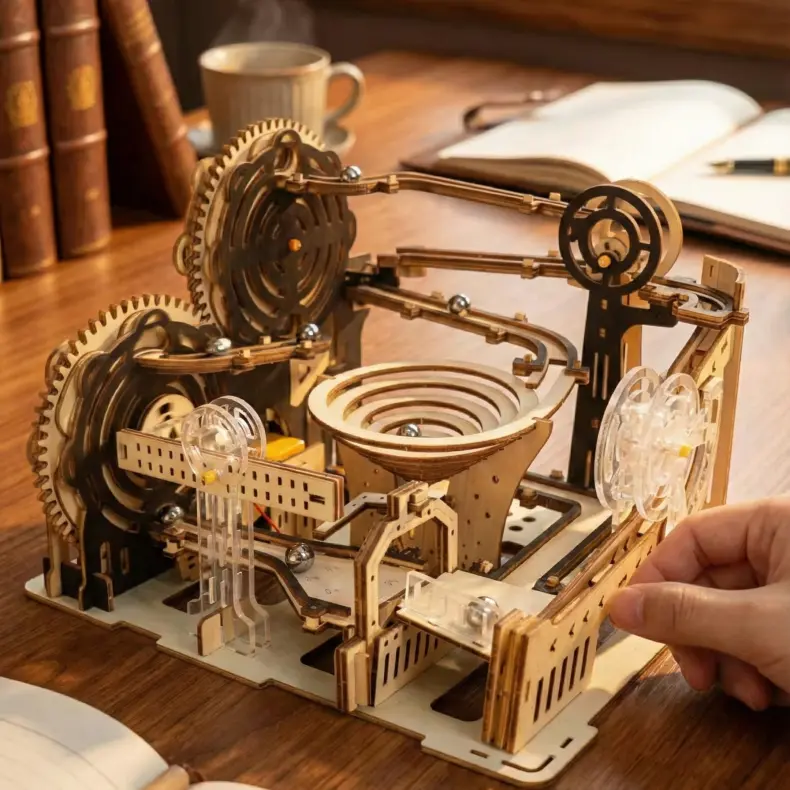
Contrast this with a standard marble run toy, where the path is predetermined and the joy is in observation. The Labyrinth inverts that relationship. You are the architect of the marble’s path, but you must discover the blueprint the hard way. This ties directly back to the historical Whewell labyrinth inspiration—a test not of rote learning, but of applied physics and spatial reasoning. The Victorian initiate would have used demonstration apparatus to prove a concept; you use the marble to demonstrate your understanding of the box’s layout. It’s a brilliant, silent Socratic dialogue conducted in birch wood and steel.
This is also what defines the idventure cluebox 5‘s particular brand of challenge. The marble introduces an element of physical precision. A shaky hand or an impatient tilt can undo progress. It demands a calm, deliberate demeanor. Is this frustrating or fun? It is both, cyclically. The frustration is the friction necessary for the eventual, earned glide of solution. Like what lasts after solving hundreds of wooden puzzles, your relationship with the marble evolves from clumsy interrogation to deft partnership.
It transforms the box from a static container of secrets into a dynamic machine. You don’t just unlock it; you operate it. And in doing so, you complete the metaphor of the labyrinth. The winding path isn’t drawn on a map—it’s the trajectory you and the marble carve through the puzzle, one logical deduction and gentle nudge at a time.
The Stubborn Threshold: Gauging the True Difficulty
This delicate dance with the marble is just the opening act of a performance graded as ‘Extreme.’ iDventure’s difficulty level 5 rating isn’t hyperbole—it’s a promise of friction. Yet, the true nature of the cluebox difficulty level isn’t about brute-force confusion. Its challenge is architectural. It’s a masterclass in what collectors call the ‘nested’ sequential discovery puzzle.
Your progress is a series of locked rooms within locked rooms. The initial clues and mechanisms you discover rarely present a direct solution. Instead, they grant access to the next puzzle, which in turn yields a piece that makes sense of the first. This feedback loop requires a specific mental discipline: the willingness to hold incomplete information, to backtrack not physically but conceptually, and to trust that every element, from the faintest engraving to the weight of a metal marble, is a deliberate breadcrumb. This is not a brain teaser you solve in a moment of insight; it’s a structured argument you must build, piece by logical deduction. For the puzzle-soaked mind, it’s a deeply satisfying intellectual ritual. For the impatient, it’s a wall.
So, where do most solvers get irrevocably stuck? The thresholds are predictable. The first major gate is often the transition from passive observation to active, kinetic interaction with the core marble maze. The box gives you a tool, but the tool’s purpose is obscured. This is the Cambridge Labyrinth’s first real test of Whewellian applied reasoning. The second major choke point comes later, involving the synthesis of multiple discoveries into a single, non-obvious action. This is where the puzzle sheds its escape room game skin and reveals its true identity as a sophisticated mechanical puzzle box. It stops asking “what does this clue mean?” and starts demanding “what can you now build with what you know?”

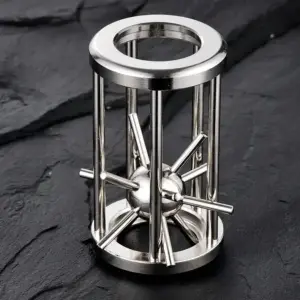
This brings us to the essential question: Is the Cambridge Labyrinth for beginners? If you are entirely new to sequential discovery, this is not a gentle introduction. It’s a dive into the deep end, reminiscent of spending hours with a notoriously difficult cube puzzle. A puzzle like the Cage of Doom offers a more contained, singular mechanical challenge—a satisfying appetizer. The Cluebox is the full, multi-course meal. It is, however, a superb first major puzzle for those aged 14+. Its clues are impeccably fair. Nothing is random. The 60-90 minutes playtime is a realistic estimate for a solo solver with a logical mind, though it can easily double if you fight the box’s language. Partner-solving is highly effective, as one person’s stubborn fixation is often unlocked by the other’s fresh perspective on the same birch wood and acrylic face plates.
Compared to other boxes in the iDventure lineup, the Cluebox #5 sits at the pinnacle of complexity for their consumer line. It lacks the sheer physical deconstruction of some artisan puzzles but replaces it with a denser, more interwoven logic. It’s less about finding hidden seams and more about understanding the machine you’re already holding.
The frustration is real. There will be moments where you are certain the box is defective. It is not. It is merely waiting for you to ask the right question. This extreme difficulty is a filter.
The ‘aha’ moments, therefore, are not just flashes of clarity. They are seismic shifts in your understanding of the entire system. Each one feels earned, a victory wrested from a stubborn, beautifully crafted adversary. This is the core of its value proposition. You are not paying for a trinket. You are funding a personal intellectual expedition, a tabletop escape game that leaves a tangible sense of accomplishment in its wake. The difficulty isn’t a barrier—it’s the source of the satisfaction.
The Philosophy of the Reset: From One-Time Experience to Heirloom
That tangible sense of accomplishment—the final, satisfying clunk of the last mechanism—leads to an inevitable, almost melancholy question. What now? For most narrative-driven escape room game kits, the answer is a shelf-bound trophy or the recycling bin. But here, the Cambridge Labyrinth reveals its most profound design intelligence. The reset isn’t an afterthought; it’s the entire thesis.
The process is a mirror-image of the solve. Each sequential discovery step you unlocked must be walked back in reverse order, tucking the metal marbles into their starting chambers, sliding panels shut, and re-engaging locks until the box is once more an enigmatic cube. It feels less like erasing your work and more like carefully re-arming a benevolent trap. This reversibility transforms the object. It ceases to be a consumable experience and becomes a tool for transmission. You are not just a solver but a curator, responsible for preparing the mechanical puzzle box for its next initiate. This inherently makes it a superior puzzle box gift for engineer or any serious enthusiast—it carries the potential for infinite re-gifting, functioning as why your brain craves the mechanical click of a puzzle box, again and again.
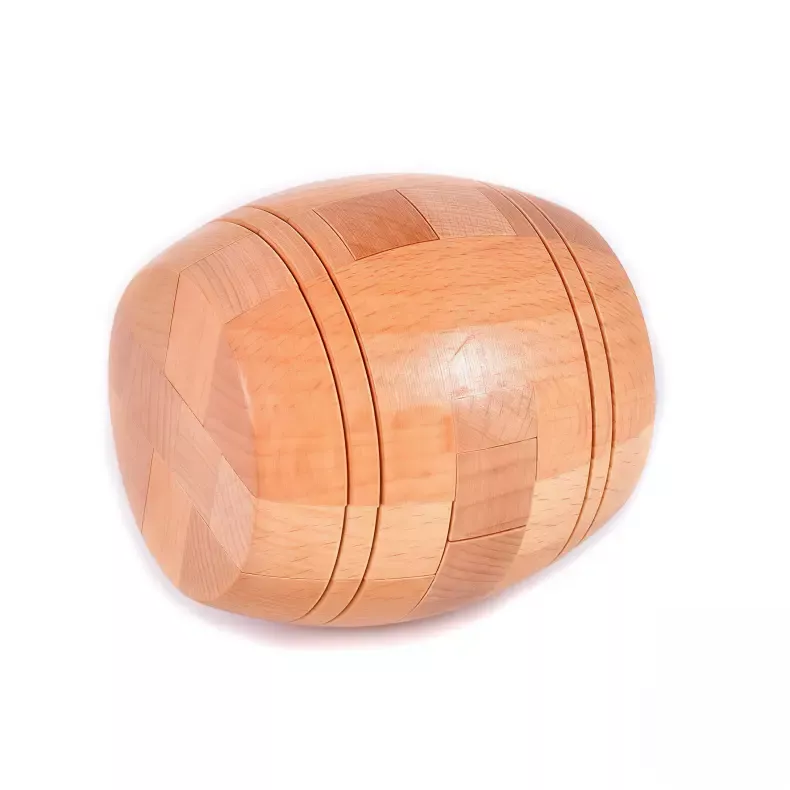
The Barrel Luban Lock — $19.77
This philosophy elevates it above disposable entertainment. It becomes a library item. You can lend it to a trusted friend with the solemnity of passing on a rare book, knowing they will undergo the same rigorous logical deduction you did. It builds a community of solvers, bound by a shared, secret understanding of the machine’s inner life. The hidden compartment, once discovered, underscores this. While too small for anything but a micro-SD card or a tightly folded note, its utility isn’t physical storage. It’s ceremonial. It’s a space for leaving a message for the next solver—a modern twist on the earned secret of a hidden compartment puzzle box, a filter for focused attention.
Consider the alternative: a stunning, laser cut birch wood puzzle that becomes a paperweight after its single 90-minute climax. That feels almost wasteful. iDventure’s commitment to a fully resettable and reusable system argues for a different value calculus. You are investing in a durable, interactive artifact. The 11x11x12 cm form factor is no longer just a packaging decision; it’s the dimension of a future heirloom. Its birch wood and acrylic face plates will show the gentle patina of thoughtful handling, not the wear and tear of degradation.
In a world of fleeting digital experiences, this is a deliberate argument for permanence and ritual. It echoes the original Cambridge Philosophical Society test—not a one-off trick, but a repeatable rite of passage. The Cluebox isn’t played. It is conducted. And like any good instrument, its purpose is fulfilled each time it is mastered and carefully prepared, or reassembled, for the next player. The reset is the quiet, respectful bow at the end of the performance. It’s what allows the Cambridge Labyrinth to whisper, not just “solve me,” but “pass me on.”
The Verdict: Pricing the Intellectual Ritual
That final, respectful bow of the reset process brings us to the inevitable, practical question. With a price point hovering around $55, the Cluebox Cambridge Labyrinth asks you to value an experience, not an object. You are not buying 167 pieces of birch wood and six acrylic face plates. You are purchasing a ticket to a tactile, time-bound performance where you are both audience and lead actor, re-enacting a sliver of 19th-century intellectual history. The question of whether it’s “worth it” dissolves when you stop comparing it to commodity toys and start assessing it as a curated, participatory ritual.
For the puzzle connoisseur, the value is self-evident. This is a sequential discovery puzzle of notable cleverness and physical heft. The marriage of the rolling metal marbles with the laser cut wooden mechanisms represents a specific school of mechanical puzzle box design that is often far more expensive. The ~90 minutes of engagement is dense, free from filler, and resets into a pristine state for future challenges or to baffle a worthy friend. As a library item for a collection, its reusable nature makes its cost-per-solve plummet with each new initiate. For this audience, the Cambridge Labyrinth isn’t a purchase; it’s an acquisition.
For the curious gift-giver, the calculation is different but equally compelling. This is not a passive gift. It is a challenge issued, an invitation to focus. You are gifting a specific, uninterrupted block of time dedicated to logical deduction and tactile exploration, acting as why the best puzzle box is a Trojan horse for focus. Compared to a night out or a tabletop escape game booked for a group, the $55 is competitive for a solo or duo experience that leaves a physical artifact behind—a conversation piece that carries the story of its own solution. Its heft and craftsmanship signal thoughtfulness far beyond its price tag.
However, let’s be unequivocal about who should walk away. If you or your giftee seeks light, casual entertainment, this is not your box. Its extreme difficulty and demand for patient, systematic thinking will frustrate anyone looking for a quick brain teaser. This is not a party game. It is a private audience with a stubborn, brilliant machine. The cluebox vs. other escape rooms debate ends here: this is less a frantic race against a clock and more an archaeological dig into a device. It is for the engineer, the historian, the contemplative solver who finds joy in the “why” of a mechanism as much as the “how.”
So, is cluebox cambridge labyrinth worth it? My verdict, from the bench of a model maker who prizes intention above all, is a calibrated yes. It is worth it precisely because it dares to be more than a diversion. It is a tangible bridge to William Whewell’s Cambridge, a masterclass in kinetic feedback, and a testament to the philosophy that the best puzzles are meant to be shared across time. You aren’t paying for momentary amusement. You are funding a specific type of focused satisfaction—the quiet click of a hidden latch, the smooth roll of a marble into its destined channel, the profound respect for a design that outwitted you fairly. That ritual, packaged in an 11x11x12 cm birch wood chamber, has a value that, for the right mind, far exceeds its monetary cost.
Your Expedition Notes: Sourcing, Hints, and Avoiding Dead Ends
Having weighed the value of that intellectual ritual, your next step is to prepare for the initiation. The journey from admiring the concept to ordering your own wooden puzzle box and successfully navigating its interior requires some logistical forethought. Think of this not as mundane advice, but as the final page of your expedition manual.
First, sourcing. To ensure you receive an authentic iDventure product with the correct, fully functional sequential discovery puzzle mechanisms, purchase directly from the iDventure official website or their authorized retail partners like SeriousPuzzles or PuzzleMaster. This guarantees you’re getting the genuine Cluebox Cambridge Labyrinth and not a flawed imitation. The price is typically consistent across these channels, hovering around the $55 mark.
Once the box is in your hands, environment matters. This is not a brain teaser to solve in dim light or on a cluttered couch. You will need a stable, well-lit tabletop—a proper arena for an escape room game of this caliber. Good, direct light is crucial for spotting subtle visual clues on the acrylic face plates and within the birch wood channels. Have a soft surface, like a felt pad or a towel, ready to catch the metal marbles when they eventually emerge; their kinetic journey is central, and you don’t want them rolling into oblivion.
The most critical tool, however, is the official hint system. Every Cluebox has a dedicated online hint page. For the Cambridge Labyrinth, this tiered system is your lifeline, structured to prevent rage-quitting without robbing you of discovery. It begins with gentle, non-spoiler nudges, progresses to more direct clues, and only as a last resort reveals full solutions. Bookmark it on your phone before you start. The question of whether cluebox cambridge labyrinth hints are accessible is answered here: they are brilliantly managed, respecting the puzzle’s integrity while acknowledging that even Whewell’s initiates probably needed a nudge now and then. If you find yourself truly lost, consulting a complete guide to opening a puzzle box without frustration can provide a helpful mindset reset.
Can two people solve it together? Absolutely. In fact, a collaborative approach can be highly effective—one person manipulates the box while another observes from a different angle, catching details the first might miss. The 60-90 minutes playtime is a solid estimate for a solo solver; a pair may move faster, or they may spend more time in delightful debate.
If you find yourself completely stuck, walk away. Let the subconscious work. The sequential discovery puzzle is designed to create ‘aha’ moments, and they often arrive when you’re not straining for them. And when you finally solve it and hear that final, satisfying movement, the ritual is complete. You have passed the test.
Your next step is clear. Visit the iDventure site. Examine the Cluebox series. Read the specifications for the 11x11x12 cm chamber that awaits. Then, place your order for the Cambridge Labyrinth. Your audience with a piece of intellectual history is just a few days away.