The First Thunk: When a Box Stops Being a Box
It lands. Not a sound, but a sonic event. A dense, resonant thunk that settles into the table, vibrating up through your palms. The air in the room shifts, weighted by this new object. This is your first encounter with a huge wooden puzzle box. It is nothing like the cardboard shell of a jigsaw.
That flimsy container asks a single question: What’s inside? It yields instantly to a thumb-flip of the lid. Transactional. The puzzle is the picture, the box merely a vessel.
This object asks something else entirely.
It weighs. It sits. It dares you. The seams are precise, the grain a topographical map of its arboreal past. You run a finger along a joint—tight enough to disappear, a whisper of craftsmanship. There is no visible lock. No clasp. No obvious point of entry. The sheer heft of it suggests something within, but the silence of its construction guards that secret fiercely. This is not a container; it is a conversation with a maker you will never meet, conducted through pressure, slide, and hidden mechanism.
As a former set designer, I learned that objects on stage must tell a story before an actor speaks a word. A secret box like this is a complete three-act play in wood. Act I: The presentation. Its mass makes it a desk anchor, a conversation piece. Act II: The confrontation. Your fingers probe, seeking the narrative hidden in its joinery. Act III: The revelation—if you can find it. This is an escape room experience condensed into a solid, palpable form, a mechanical puzzle that engages not just your logic but your sense of touch and spatial intuition.
And here lies the first, fundamental fork in the road for any prospective buyer. The core tension that most product listings gloss over with generic adjectives.
Is this beautiful, formidable thing primarily an art object? A handmade sculpture of walnut or maple whose true value is in its silent, imposing presence on a shelf? Or is it a brain teaser of the highest order, a challenging sequence of precise movements meant to be solved, played with, and eventually mastered?
Many are seduced by the former—the intricate, silent furniture of it—only to discover the latter’s brutal demands. (This is what I call The ‘Furniture’ Fallacy: purchasing a stunning, complex box only to find its mechanisms are inscrutable, leaving you with a beautiful, permanently locked block of wood. For some, that’s perfectly acceptable. For others, it’s a unique form of frustration.)
The Japanese puzzle box, often smaller and based on precise sliding panels, offers a different lineage. The huge Western-style 3D wooden puzzle box we’re discussing is a descendant of that tradition, but amplified. It’s bolder in scale, often more architectural, and can incorporate a wilder array of locks, magnets, and sequential discovery steps. The size changes everything. It transforms the puzzle from a handheld diversion into a centerpiece.
So before you consider where to buy, or what the difficulty level might be, you must listen to that first thunk. It’s asking you a question. Are you buying a solvable enigma, or a story-filled artifact? The path diverges from that very sound.
Defining ‘Huge’: It’s Not Just Inches, It’s Intention
That opening thunk is the first clue. It tells you about mass, about density, about the reality of the object now occupying your space. To define a huge puzzle box, then, you must start with its physical imposition. A piece like the popular ‘Stargazer’ measures approximately 10” x 5” x 5”. Set it on a desk and it becomes a desk anchor; on a shelf, a conversation piece. Its interior, perhaps 7.5” x 5.5” x 3.75”, is not an afterthought—it’s a genuine void, capable of holding a watch collection, a pair of spectacles, or a bundle of letters. This is an extra large wooden puzzle box that crosses the threshold from trinket to vessel.
But ‘huge’ is a modifier of experience, not just dimension. The giant secret puzzle box announces its enigma. You cannot palm it. You cannot casually fidget it open on a train ride. Solving it is a deliberate act, a conference between you and the object. The heft implies consequence; the scale promises a longer, more intricate narrative hidden within its seams. This is where intention fractures. For the maker, ‘huge’ is a canvas for more complex hidden compartments and sequential discovery mechanisms. For you, the buyer, ‘huge’ must answer a question: Is the primary reward in the solving, or in the silent, impressive ownership?
This leads us directly into The ‘Furniture’ Fallacy. A box can be massive, beautifully crafted from walnut or cherry, with flawless joinery—and be virtually unsolvable for anyone but a savant. Its bigness can be an aesthetic choice, not a promise of an accessible escape room experience. Some of the world’s most stunning examples are less IQ wooden puzzle box and more sculptural homage to the idea of secrecy. The biggest puzzle box in the world is likely a one-off art installation, its mechanism secondary to its statement. Size does not correlate with solvability; often, it complicates it.
This is the critical divergence from the classic Japanese puzzle box tradition. Those are typically smaller, focused on precise, rhythmic sliding movements—a patterned dance. The modern 3D wooden puzzle box in the large Western style is more architectural. It may incorporate pins, rods, rotational elements, and magnetic locks alongside slides. The ‘puzzle’ is less about pattern recognition and more about sequential discovery, where each step reveals the tool or clue for the next. It’s a story written in wood and mechanism.
So, when you hear ‘huge,’ think in two registers. First, the physical: a object with substantial presence and usable internal space. Second, the intentional: does ‘huge’ here mean a grander stage for a solvable mechanical puzzle, or does it signify a shift into the realm of bespoke wooden art, where the only ‘solution’ is appreciation? Your answer determines everything that follows.
The Double Life: Display-Worthy Art vs. Brutal Sequential Discovery
That final question of intention—art object or solvable story?—isn’t academic. It cleaves the world of huge puzzle boxes into two distinct tribes, each with its own language, logic, and reason for being. Choosing your path here is the most important decision you’ll make, for it dictates the nature of your relationship with the object. Will it be a companion in quiet contemplation, or an adversary in a battle of wits?
The Desk Anchor: When the Puzzle Is Presence
Walk the path of the art object first. Here, the ‘puzzle’ is an aesthetic proposition, a whisper of mechanism that serves the narrative of craftsmanship. This is the realm of the decorative puzzle box. Its primary function is to be seen, touched, and admired as a handmade wooden sculpture that happens to contain a secret.
The value is in the surfaces. You’re paying for the joinery—dovetails so precise they vanish into the grain, a sign of hours spent by a maker who respects the material. The finish is a deep, oil-rubbed satin that invites your hand to trace the patterns in the wood. The heft is substantial, a quiet authority. These boxes are desk anchors and conversation pieces; their locked nature is a personality trait, not a problem to be solved. Opening them is often a simple, elegant motion—a single clever slide or a disguised button press—that feels more like a reveal than a conquest. The joy is in the possession of a beautiful, enigmatic thing. (A warning, which we’ll call The ‘Furniture’ Fallacy: many stunning large boxes from general decor sites are exactly this—beautiful shells with trivial, often frustratingly cheap latches. The ‘puzzle’ is finding the hidden button; the disappointment is in the hollow plastic click that follows.)
The Labyrinth: Sequential Discovery as a Language
Now, turn to the other path. Here, the wood is merely the vessel for a mind. This is the domain of the brutally clever mechanical puzzle box difficult by design. It is a 3D wooden puzzle of the highest order, where the box itself is an escape room experience condensed into a static form. Its beauty is often utilitarian, the grain a backdrop to the machinations within.
The core mechanic here is sequential discovery. This is a specific, revered term in puzzle circles. It means each step forward is gated by the step before it. Solving one hidden mechanism doesn’t open the box; it reveals a tool—a pin, a slider, a key—that you must then understand how to use on another part of the box. It’s a logic tree built in hardwood. You are not searching for a single trick; you are learning a silent, tactile language. The multi-step lock is the heart of the puzzle, and the number of “steps” (often 5, 7, 10, or more) is a rough analog for difficulty. Brands like Pelikan or Puzzle Master craft for this audience, where the sole metric is the elegance and deviousness of the interlocking puzzle sequence.
The feel is different. The box may protest. It might require taps, precise pressures, or sequences that feel counterintuitive. The finish is often less pristine, as it must withstand manipulation and occasional frustration. This path is not about passive display; it’s about active, often arduous, dialogue. Forums like r/PuzzleBox are filled with tales from this front—the week-long stalemate, the eureka moment at 2 a.m., the profound respect for the designer’s mind. The object becomes a trophy of mental endurance.
Bridging the Divide: The Rare Unification
The most compelling, and often most expensive puzzle boxes, exist in the narrow land between these two continents. They are the pieces that marry exquisite materiality—a flawless walnut burl, intricate laser engraved patterns—with a deeply satisfying, solvable mechanical puzzle. Think of a Japanese puzzle box scaled up and reimagined with Western complexity, where the rhythmic slides are part of a larger, more demanding ritual. Or consider a piece from a maker like Creative Crafthouse, where the external form is clean and modern, but inside lurks a meticulously engineered sequence of moves. Here, the hidden compartments feel earned, and the final opening is a crescendo that satisfies both the sense of aesthetics and the itch for intellectual victory.
So, ask yourself before you buy: Am I seeking a secret box that elevates a room, its sealed nature part of its mystique? Or am I seeking a brain teaser of profound depth, where the journey is the entire point? Your answer will immediately filter the market, the price, and the ultimate experience. One path ends with a quiet nod of appreciation. The other ends with the profound, satisfying clunk of a final mechanism yielding—a sound felt in the hands and the mind.
Anatomy of a Giant: What to Look for Beneath the Finish
That decision between art object and brutal puzzle hinges entirely on what lies beneath the veneer. The external form may whisper its intentions, but the truth is locked in the joinery, the choice of material, and the silent, hidden mechanism ticking inside. To understand the price tag—and the promise—you must learn to read the box like a blueprint.
Heft is your first clue. A proper huge puzzle box has a gravitational presence. This comes from dense hardwoods: walnut with its chocolate depth, maple with its tight, pale grain, or cherry that mellows with time. These are not decorative foils glued over particle board; they are solid planks, milled and fitted. This mass does more than impress; it dampens vibration, allowing you to feel the subtlest click of a sliding panel or the precise alignment of an internal latch. A lightweight box is often a hollow box, both in construction and in mechanical ambition.
Inside the workshop of a premium maker, the term ‘multi-step lock’ is a covenant. It signifies sequential discovery, a choreography of concealed moves. One action unlocks the possibility for the next. A magnet releases a pin, allowing a panel to slide, revealing a key that rotates a hidden cam. This is the escape room experience distilled into silent wood and metal. It’s engineering designed to deceive the eye and delight the fingertips. The cost justifies itself here, in the hundred hours of design and the hand-fitted tolerance that makes the sequence feel inevitable upon solution, yet utterly invisible upon first inspection.
This stands in stark contrast to the mass-market approach. If you want to understand the spectrum of what’s available, a deep dive into The Best Wooden Box Puzzles: Why Most Trick Boxes Fail And Which 8 Actually Deliver reveals the crucial divide between art and challenge.
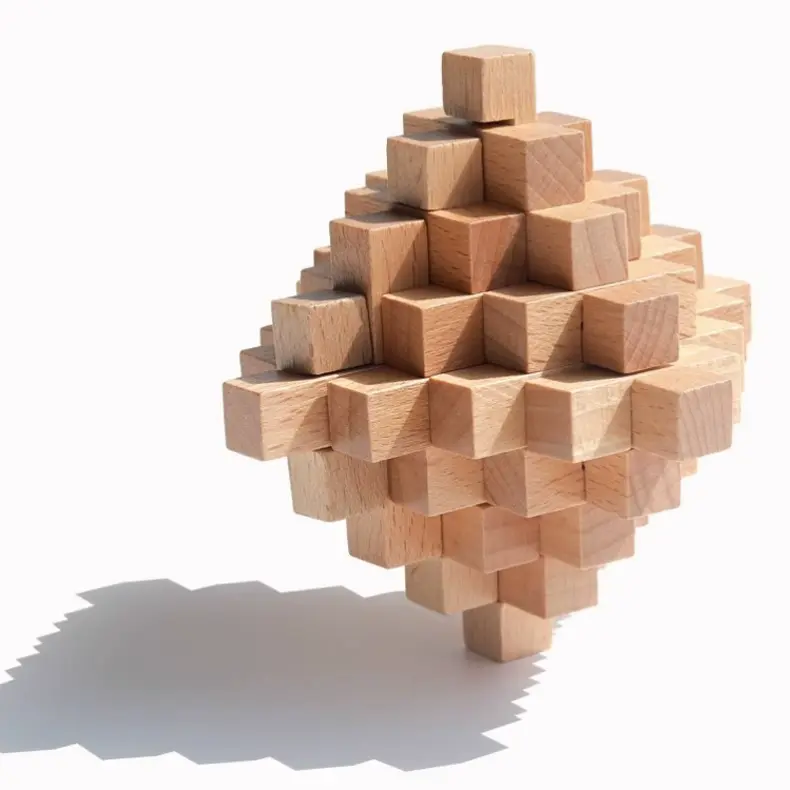
Pieces like this serve a purpose: an accessible entry into the idea of a puzzle lock. But understand what you’re trading. The mechanism is typically simpler, the material a lighter, softer wood or even MDF, and the solves more direct. It is a brain teaser, not an heirloom. For many, this is perfect. But it is not bespoke.
The true markers of a legacy-grade handmade wooden puzzle box are in the details a catalog won’t mention. Run your finger along every seam. The joinery should be tight enough to disappear, yet the moving parts must have the slightest breath—a thousandth of an inch—to function. Check the finish. Is it a thick, plastic-like coat that fills the grain, or a hand-rubbed oil that lets the wood speak? (A true oil finish will smell of the workshop, a scent that lingers). Laser engraved patterns can be stunning, but inspect their depth and crispness; on premium pieces, they enhance, rather than hide, the wood beneath.
Durability is a silent question in every purchase. A well-made box can withstand a lifetime of solving and resets. Its failure point is rarely the wood itself, but the internal mechanism. This is where cheap boxes earn the frustration voiced on forums like r/PuzzleBox: glued magnets come loose, thin sliding panels warp, and crude pins snap under force. The Reddit verdict on premium makers is consistent: you pay for resilience. The mechanisms are over-engineered, using brass, stainless steel, and hardened woods to endure both eager and frustrated hands.
So, is an expensive puzzle box worth it? It is if you value the narrative of the object itself—the story of its grain, the intelligence of its lock, the certainty that its hidden compartments will operate with satisfying precision for decades. You are not buying fancy wood. You are buying quiet, tangible proof that complexity can be held in your hands.
The Reality of the Void: What Actually Fits Inside (and Why It Matters)
That resilience—the silent promise that the internal mechanisms will hold—leads to the next, inevitable question. Once you solve it, once the final panel slides back with a whisper, what then? You are left with a void. A space.
A large puzzle box with a hidden compartment presents a delightful paradox. It is an object that demands interaction to reveal a space that, by its very nature, discourages casual access. The interior is not a drawer. It is an earned secret. According to specs from makers like Creative Crafthouse, a typical interior in a huge puzzle box might measure around 7.5” x 5.5” x 3.75”. This is the critical dimension. It is not trivial, but it is intentional.
Hold that volume in your mind. It is not for files. It is not for sweaters. It is a chamber for curated objects. A few rolls of vintage maps. A signed first edition of a novella. A handful of polished stones collected from different coastlines. Or, most classically, jewelry. A puzzle box for jewelry storage transforms the ritual of adornment into a private ceremony of sequential discovery. The act of unlocking becomes part of the story of the piece you select. This concept of the earned secret is explored in depth in our piece The Earned Secret: Why Every Puzzle Box With A Hidden Compartment Is A Filter For Your Focus.
But here lies the ‘Furniture’ Fallacy in practice. That beautiful, imposing box on your shelf? If its mechanism is fiendishly complex, its interior may as well be a vault. You will not be storing your daily watch inside. The interior becomes a conceptual space, a narrative reward for solving the mechanical puzzle. The value is in the revelation, not the rental. For a gift, this distinction is everything. Are you gifting a storage solution, or are you gifting an experience capped with a tangible, secret hollow?
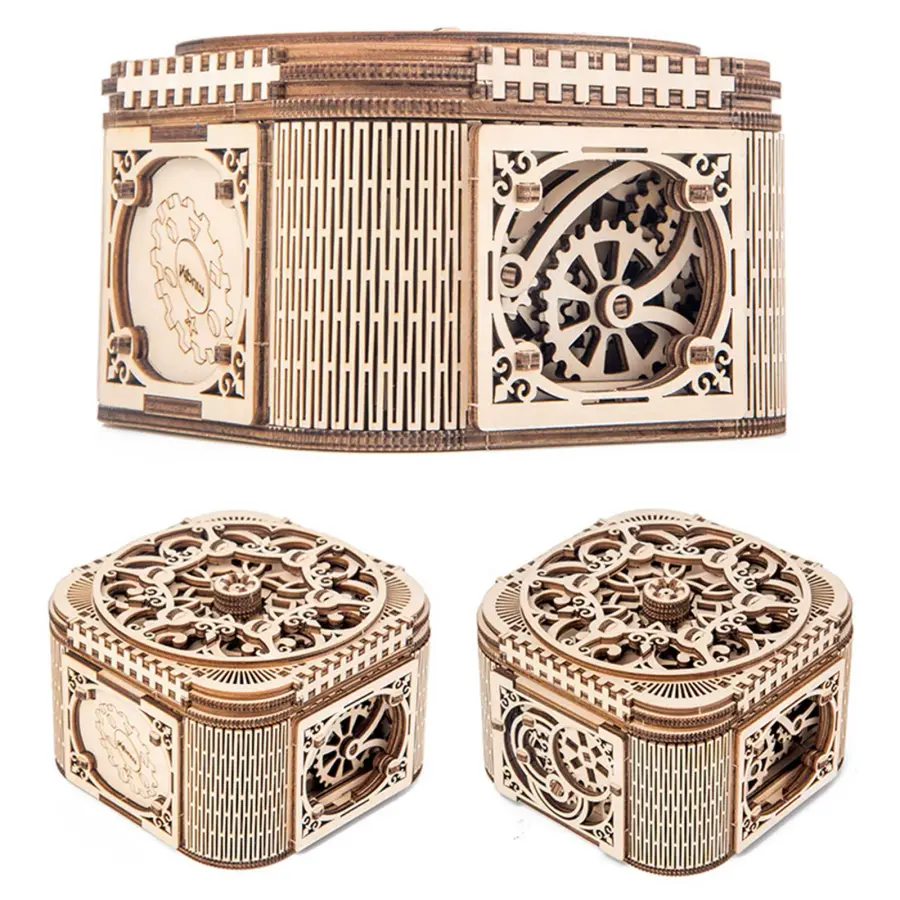
This is why purpose-built designs, like the treasure box above, are compelling. They acknowledge the storage intent upfront. The 3D wooden puzzle is the lock, but the function—holding rings, chains, trinkets—is clear. The challenge and the utility exist in a more balanced equation. It is a puzzle box as a gift that offers repeated, practical engagement.
For other boxes, the void has a different purpose. It is a physical manifestation of potential. In my own collection, one box holds a single, obsolete key. Another contains a fragment of a script from a play I designed years ago. The contents are not valuable. They are symbolic. The box provides the ceremony, the weight, the hidden compartment that elevates a mundane object into a relic. This is where the escape room experience collapses into a single, personal artifact. You are both the puzzle master and the participant.
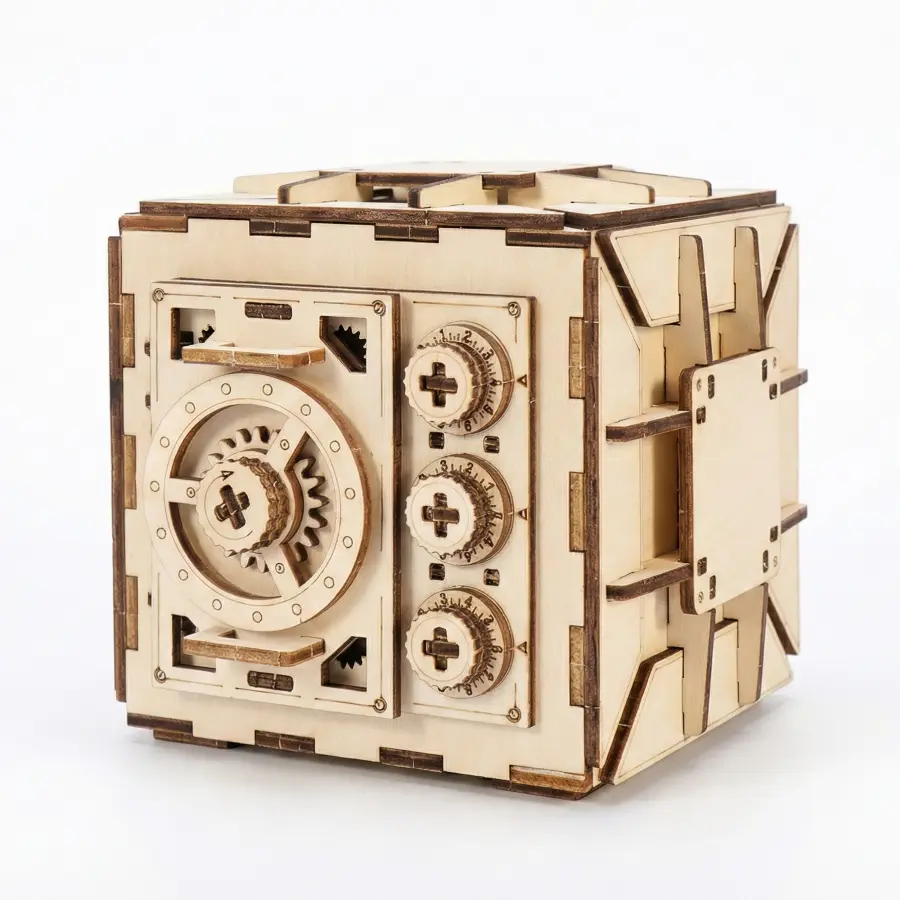
So, what actually fits inside? It depends on the box’s character. A challenging large puzzle box for adults might only hold the satisfaction of solving it—its interior is a bonus room. A decorative puzzle box with a simpler mechanism offers its cavity freely, for tea bags, for coins, for the small, sharp tools of a hobby. Ask not only “What will fit?” but “How often will I earn the right to place it there?” The answer defines whether you are buying a vault, an altar, or a simple, clever container. The void waits. It is up to you to give it meaning.
Mapping the Maze: From IKEA to Heirloom
That void—the space you choose to fill or leave empty—is ultimately defined by its container’s origin. And the journey to find that perfect container is a maze in itself. One path leads to a clever, mass-produced novelty. Another winds toward a true heirloom, a story in wood. The market for huge puzzle boxes is a fractured landscape, where understanding the geography is the first step to avoiding disappointment.
At the wide, accessible entrance, you find the mass-market novelties. Think of the extra large wooden puzzle box sold alongside board games and jigsaw puzzles. They are often made from lighter woods or composites, finished to a high, uniform sheen. Their mechanisms tend to be direct: slide a panel, twist a knob, find the latch. They are gateways. They offer the form of a secret box—the heft, the hidden compartment—without the soul-scouring challenge. For a gift where the spectacle of unwrapping is the point, they serve. But they often fall prey to the ‘Furniture Fallacy’: impressive to look at, solvable in an afternoon, and rarely built to withstand a decade of curious hands. This is the IKEA tier. Functional, stylish, transient.
Ascend a level, and you enter the realm of enthusiast brands. This is where names like Idventure, Puzzle Master, and Pelikan circulate with reverence on forums like r/PuzzleBox. Here, the mechanical puzzle is paramount. Boxes from these makers are engineered for sequential discovery; they are escape room experiences condensed into wood and metal. The Stargazer, with its celestial laser engraving and multi-step lock, is a prime example from Creative Crafthouse. The Reddit Verdict on these boxes is clear: the joy is in the brutal, elegant logic of the solve. The frustration, frequently noted, is real—but it’s the frustration of a worthy opponent. These boxes are not merely well built; they are thought-built. The price reflects the R&D behind the hidden mechanisms, not just the materials.
This brings us to the artisans. When Redditors seek the truly exceptional, the conversation shifts to individual craftspeople or tiny workshops. This is the domain of the handmade wooden puzzle box as a bespoke art object. Materials are premium hardwoods—walnut that drinks the light, maple with a bird’s-eye figure, cherry that will darken with age. Joinery is hand-cut. The mechanism might be a unique interlocking puzzle that the maker has patented in their mind. The cost climbs from hundreds into the thousands. You are no longer buying a product; you are commissioning a piece. The puzzle box display case in a museum often starts here. (A note: finding these makers requires leaving Amazon. Search specialty puzzle retailer sites, artisan woodworking forums, or platforms like Etsy where the maker’s story is part of the listing.)
So, where to buy high-end puzzle boxes? Your intent is your compass.
* For the Pure Challenge: Go directly to enthusiast puzzle retailers (Puzzle Master, Brilliant Puzzles’ specialty lines) or the sites of makers like Creative Crafthouse. Read the puzzle box reviews on their blogs and community sites. Look for explicit difficulty level ratings.
* For Jewelry-Storage-Art: Seek out boxes marketed for that purpose, but scrutinize the mechanism description. A simple locking clasp isn’t a puzzle. Brands that bridge this gap often advertise puzzle boxes for jewelry storage with a modest, elegant solve.
* For an Heirloom: Prepare for a hunt. Follow woodworking galleries, attend craft fairs focused on turned and joined objects, or seek commissions. The object’s story begins with your search.
The maze, then, clarifies into a choice. Do you want a disposable novelty or a legacy? A brain game, or a piece of furniture that contains a secret? The path from IKEA to heirloom is measured in dollars, yes, but more so in intention, patience, and the profound respect for the silence a great box holds before it finally, reluctantly, opens. This entire category falls under the broader umbrella of mechanical puzzles, a formal classification for objects like these that require manipulation to solve.
The Solver’s Curse: How to Gauge a Puzzle’s True Difficulty
Having navigated the market’s maze, you arrive at the final, most personal question. That beautiful, hefty object you’ve selected—will it open? The curse for the enthusiast is the beautiful deception of a closed box. Its silence offers no clues about the struggle within. Marketing copy is a poor map; a box labeled “challenging” can mean a satisfying hour of exploration or a months-long siege on your sanity.
This is the core dilemma every buyer faces, especially when choosing a challenging large puzzle box for adults as a gift. The Reddit Verdict, aggregated from countless threads on r/PuzzleBox and enthusiast forums, reveals a clear pattern of joy and frustration. The joy comes from a fair, logical, if complex, mechanical puzzle. The frustration almost always stems from a mismatch between expectation and reality.
Deciphering the craftsmans’s language is your first tool. “Sequential discovery” is the true hallmark of depth—it means each step reveals the tool or clue for the next. A “multi-step lock” might simply require repeating the same action in different places. Ask directly: Is the solution a series of distinct, logical mechanisms, or is it a singular, obscure trick? For a true escape room experience in wood, seek the former. When you’re in the thick of it, our guide on How to Solve a Puzzle Box Without Losing Your Mind offers a tactical mindset for facing brutal sequential discovery.
The community’s wisdom surfaces unspoken criteria. A common praise: “The solution felt inevitable in retrospect.” A common warning: “I had to apply force and now it’s stuck.” This highlights two pillars: logical elegance and durable joinery. A well-designed wooden puzzle box should withstand fumbling, even moments of frustration. Another frequent note: “Beautiful, but the solution was online in two minutes.” This speaks to the value of novelty. A bespoke design from a known handmade artisan offers a unique struggle, whereas many mass-produced boxes share well-documented solutions.
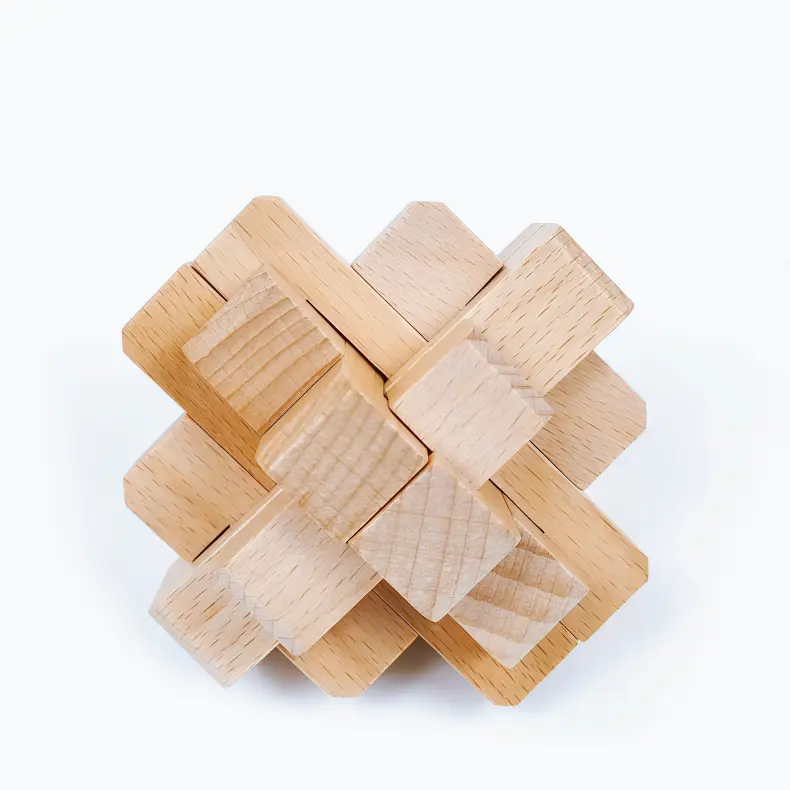
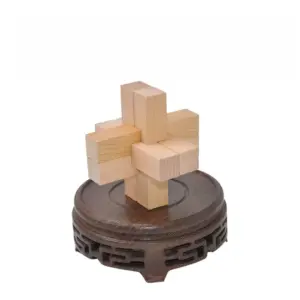
This is the weight of anticipation. A simpler interlocking puzzle or IQ wooden puzzle box (like the Blockade shown) serves as a perfect primer. Its goal is transparent: disassemble and reassemble. It teaches the language of movement and constraint without the mystery of a hidden compartment. It’s a calibration tool. If this feels good, you’re ready for a more opaque box. If it frustrates, consider a decorative piece with a simple clasp.
The gift-giver’s quandary is acute. The impulse is to buy the most impressive, intricate box. This is often a mistake. Gifting a high-difficulty puzzle box for gift purposes is like giving someone a marathon registration when they’ve only walked around the block. The object becomes a desk anchor of guilt. Instead, choose based on the recipient’s proven patience, not your hope for their curiosity. A box with a moderate, solvable challenge and generous storage space succeeds far more often than an unsolvable masterpiece.
Which brings us to the final resort: the solving guide. Its very existence is a relief valve. Premium makers often provide a sealed solution or a URL to one, acknowledging the struggle. There is no shame in it. The true experience is in the attempt, the tactile conversation with the wood. Peeking at the final page of a novel ruins the story, but consulting a map when truly lost can renew appreciation for the journey’s landscape. For a deeper meditation on this, our piece Puzzle Solving Isn’t About Speed, It’s About Insight explores the philosophy behind true difficulty.
So, to gauge true difficulty, triangulate. Read between the lines of the product description for mechanical honesty. Seek out the puzzle box reviews on specialty retailer sites and forums, where veterans dissect move counts and logic. And most importantly, be honest about intent. Is the goal the triumphant click of revelation, or the quiet dignity of a sealed secret on the shelf? Only one of those paths requires a solution.
The Decision Matrix: Finding Your Box in the Labyrinth
So you’ve triangulated the difficulty, weighed the void inside, and mapped the market from mass-market to bespoke. Now comes the final, personal calculation. This isn’t about finding the “best” box. It’s about finding your box. The one that aligns intent with outcome, so its final resting place—whether solved open on a desk or sealed as a secret box on a shelf—feels like a resolution, not a regret.
Let’s strip the choice to its bones. You are standing at a three-way fork. Your primary intent is your compass.
Path One: The Art Object. Your north star is craftsmanship, presence, grain. The puzzle mechanism is a beautiful footnote, not the thesis. You seek a desk anchor, a conversation piece. Here, the ‘Furniture’ Fallacy is not a warning but a feature. Your criteria skew heavily toward materials (solid walnut, not laminate), finish (hand-rubbed oil, not lacquer), and aesthetic narrative. Does it suggest a story? Look to the true heirloom end of the market or artists on platforms like Etsy. The budget acknowledges you are buying a sculpture. This is where expensive puzzle boxes justify their price through joinery and silence, not just mechanical complexity. It will sit. It will beautify. It may never open. And that is perfectly okay.
Path Two: The Solvable Challenge. The click is everything. You want the escape room experience distilled into wood. Your focus is mechanism: sequential discovery, multi-step locks, clever misdirection. Here, the interior space is trivia; the journey is the destination. Prioritize brands with reputations for devious, fair engineering—Pelikan, Puzzle Master, certain Idventure designs. Read the puzzle box reviews on specialty forums for unvarnished takes on logic and frustration. Your budget is an investment in hours of focused engagement. Accept that the wood might be utilitarian, the finish simple. You are paying for the labyrinth inside. For a curated list that respects the solver’s intellect, see our guide to 7 Wooden Puzzle Boxes for Adults That Don’t Insult Your Intelligence.
Path Three: The Considered Gift. This is the most delicate path, a balance of spectacle, solvability, and sentiment. The goal is to create a moment, not a monument to frustration. For a puzzle box as a gift for him (or her), the safest bet is a celebrated, medium-difficulty piece with clear solving cues and a tangible reward inside. Think of the Stargazer or similar—impressive heft, elegant mechanism, and a final compartment generous enough for a watch, a pen, a piece of jewelry. It says, “I value your curiosity.” Avoid the siren call of the purely decorative or the brutally difficult; you are gifting an achievable triumph. A personalized touch, like laser engraved initials, can elevate it from puzzle to keepsake.
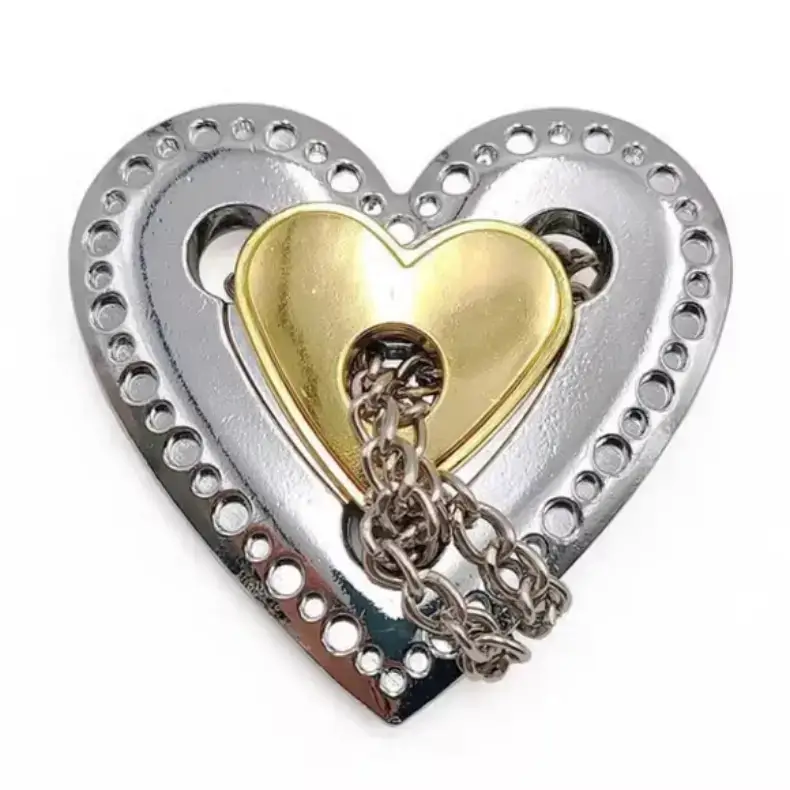
Cupid’s Heart Chain Puzzle — $13.15
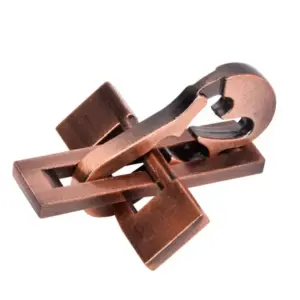
Consider this piece: not a box, but a related mechanical puzzle. It’s a reminder that for a modest gift, the principle is the same. Offer an engaging, tactile challenge with a clear endpoint. It’s a thoughtful placeholder, a test of the waters before commissioning a handmade wooden puzzle box.
Now, crosshatch your primary intent with two final filters: Skill Level and Budget. Be ruthlessly honest. If you are a novice on the Art Object path, a simple, beautifully made Japanese puzzle box is a wiser entry than a bespoke monster with 50 moves. For those intrigued by that precise, historical form, our exploration of 7 Japanese Puzzle Boxes That Will Humble Your IQ is essential reading. If your budget for a Solvable Challenge is limited, seek out respected makers’ smaller, no-less-clever designs—the ingenuity is often in the mechanism, not the mass.
Where to buy crystallizes from this matrix. The Art Object path leads to artisan marketplaces, gallery sites, or direct commissioner contact. The Solvable Challenge path points to specialty puzzle retailers (Puzzle Master, Brilliant Puzzles) and forums where collectors trade. The Gift path is best served by retailers that curate for experience, like Creative Crafthouse, or the thoughtful selections discussed in our guide, The Artisan’s Riddle: Your Guide to Choosing Wooden Puzzle Boxes for Adults.
Your box awaits in the labyrinth. The path is now clear. The final step is to move from analysis to action. Begin your hunt with confidence, remembering that the perfect choice is the one whose purpose—to awe, to challenge, to delight—aligns perfectly with your own. For a deeper reflection on that delightful intent, explore our thoughts on Why the Best Puzzle Box for a Gift is a Trojan Horse for Focus. Then, go find it. And when you do, when that final mechanism yields, you’ll understand that you haven’t just solved a box. You’ve completed a story that began with a single, resonant thunk.