The Great Escape Puzzle Identity Crisis
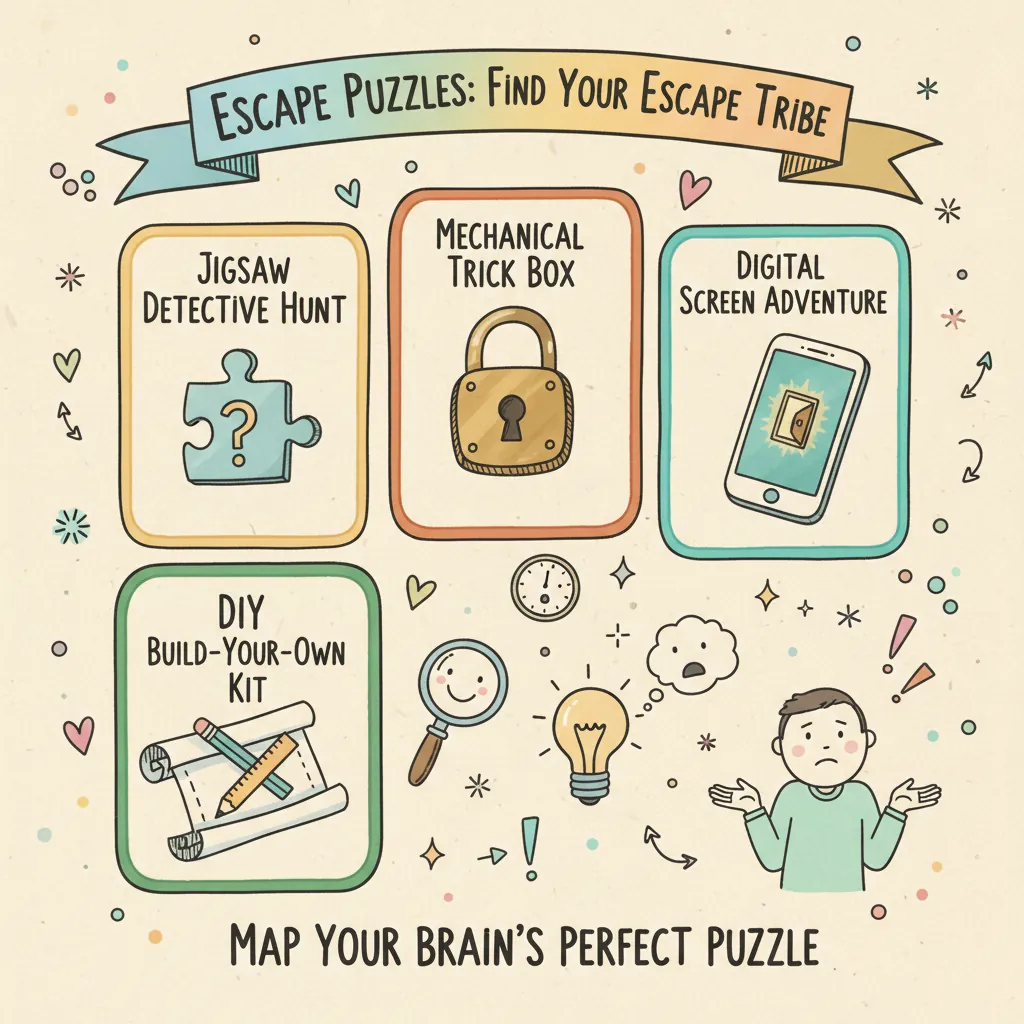
You’ve probably seen ‘escape puzzle’ pop up on Amazon, in board game shops, and on mobile app stores. They all use the same two words, but one is a 759-piece jigsaw, another is a devilish metal lock, and a third is a free online game. So, what are you actually getting into? Welcome to the confusion. It’s not you—the term has been stretched to cover four distinct universes of play, each promising a different kind of ‘escape.’
Let’s map the territory. Think of these not as products, but as tribes. Each one scratches a fundamentally different brain itch.
The Jigsaw Escape. This one fits. Led by Ravensburger’s dominant line, this tribe merges a classic jigsaw puzzle with a hidden-narrative clue hunt. You assemble the image (often a richly detailed, 759-piece scene for adults), then scour it for codes, symbols, and hidden paths to solve puzzles and unlock a final mystery. The satisfaction is twofold: the meditative click of piece-into-piece, followed by the collective “aha!” of detective work. (It’s also where you’ll first encounter the infamous false fits—a piece that seems perfect but isn’t, a special kind of torment we’ll dissect later.)
The Mechanical Escape. This one clicks. This is the realm of trick locks, puzzle boxes, and brass contraptions that beg to be fidgeted with. It’s the direct descendant of the escape room puzzles you physically manipulate—find the hidden lever, align the magnetic seams, discover the secret compartment. The feedback is immediate and tactile. Your victory is a literal, satisfying snick of a lock opening, a far cry from the silent ‘snap’ of a jigsaw piece.
The Digital Escape. This one unlocks. Found in apps (like the renowned Cube Escape series) or browser-based online escape rooms, these translate the escape room experience into pure logic and pixel-hunting. They trade physical heft for atmospheric storytelling and clever, often surreal, logic leaps. The challenge is visual and deductive, with no worry about lost pieces or broken mechanisms.
The DIY Escape. This one builds. These are kits or collections of escape room puzzle ideas designed for you to stage an experience at home. Think printed cipher wheels, disguised keys, and narrative documents. The puzzle is partly in the solving, but largely in the design and presentation—you become the gamemaster, crafting your own puzzle hunt.
A quick, crucial sidebar on escape puzzle vs Exit: The Game. While both are tabletop, Exit games are consumable adventure kits: you fold, cut, and draw on components to solve a linear story. They’re one-and-done. A Ravensburger jigsaw escape puzzle, however, is reusable (once you forget the puzzle solution!). A mechanical puzzle box is forever. This reusability factor is a major fork in the road.
So, before you buy anything, ask: are you craving a quiet, visual assembly that blooms into a scavenger hunt? A fidget-object for your hands to decipher? A digital brain-burner for your commute? Or a project to build for friends? The escape puzzle you need depends entirely on which of these four doors you’re trying to open.
Now, let’s step through the most popular one first: the world of Ravensburger.
The Meditative Assembler: Inside the Ravensburger Escape Puzzle
That first door—the most common one you’ll see on store shelves—opens onto a vast landscape of 759 pieces. Welcome to the Ravensburger Escape Puzzle universe, a hybrid beast that asks a fundamental question: what if a jigsaw puzzle was just the opening act?
Here’s how it clicks together. You’re not just assembling an image; you’re constructing the escape room experience itself. Phase one is pure, familiar meditation: sort edges, find corners, build the sky or the bookshelves. The final picture is your game board, dense with potential clues. This is where the genre twist kicks in. Once the last piece snaps into place, you shift from assembler to detective. The poster-sized image becomes a hidden object scene, a coded map, a logic grid. Your goal is to find a sequence of numbers or a secret path (like the notorious extract arrow puzzles) hidden in plain sight within the art. The included solution envelope holds the final answer, letting you validate your aha moment without a walkthrough.
So, is it for you? Let’s decode the experience.
The Time Sink & The Team Dynamic.
Reviewers’ solve time ranges wildly, but for the standard 759-piece adult themes, budget 5 to 7 hours total—split between assembly and clue-hunting. This makes it a superb long-form, solo project for a rainy weekend. Contrary to the box art showing laughing groups, the puzzle difficulty of the jigsaw phase often makes group work chaotic. (The classic escape room design principle of “parallel play”—where a team can tackle different puzzles at once—fails here when everyone is digging for the same blue piece.) It’s social in the way a traditional jigsaw is: quiet companionship, not a collaborative scramble. For a true group escape game, you’d be better served with a DIY kit later on.
The Reusability Question, Answered.
A major advantage over consumable exit games: yes, you can reuse it. Once you’ve solved the meta-puzzle, the magic is spent, but you can absolutely re-assemble the jigsaw years later or lend it to a friend who doesn’t know the solution. The puzzle solution is tied to the image, not destroyed components.
Now, let’s address the elephant in the room: The ‘False Fit’ Problem. This is the core friction point for enthusiasts and the key to understanding the real puzzle difficulty. As a former room designer, I see this as a fundamental clash of design goals. An escape room clue must be unambiguous; a satisfying ‘solve’ hinges on the certainty that your logic is correct. A jigsaw piece, however, often is ambiguous. Ravensburger’s premium cut usually prevents this, but many of their escape puzzle images are deliberately murky—shadowy dungeons, night-time cityscapes, cluttered attics. This creates false fits: pieces that seem to lock together perfectly but are in the wrong place, corrupting the image and sabotaging the subsequent clue hunt.
It’s not a bug for everyone; it’s a brutal feature. If you relish the pure challenge of a challenging jigsaw, this adds a devious layer. If you’re here primarily for the “escape” clue hunt, it’s a frustrating barrier. (My pro tip: assemble under bright, neutral light and be ruthlessly skeptical of any fit that isn’t snug across all neighboring pieces. The false fit often feels almost right.)
Who wins and who groans?
* Love it if: You want a two-stage mental holiday—first, a visual, tactile unwind, then a focused scavenger hunt across your own creation. You don’t mind a minimalist puzzle narrative (the “story” is usually thin atmosphere). You value a reusable, physical artifact.
* Frustration awaits if: You dislike traditional jigsaws. The false fit issue will feel like manufactured hardship, not legitimate challenge. You crave immediate, constant tactile feedback from solving discrete puzzles (you’ll wait hours for your first real “solve”).
The Ravensburger model is a specific, slow-burn flavor of escape room puzzles. It’s for the patient architect who finds joy in building the labyrinth before they try to escape it. But if your fingers are itching for a logic leap you can feel in your hands right now, you’re looking for a different tribe entirely.
The Tactile Fidget-Solver: Mechanical Puzzle Boxes & Trick Locks
If the silent, visual patience of a jigsaw felt like a slow walk, this is where your brain starts to sprint. You just left the world of the meditative assembler, where the reward is deferred. Here, the aha moment is immediate and visceral. This one clicks.
Welcome to the domain of mechanical puzzles: trick locks, puzzle boxes, and cryptic contraptions. Forget assembling a scene; your goal is to break free by decoding a physical object. The satisfaction isn’t in a picture coming together, but in a mechanism finally yielding under your fingertips—a lever depresses, a panel slides, a shackle springs open with a tangible snap. This is the pure fidget-solve.
The core appeal is direct tactile feedback. Unlike the potential false fits of a cardboard jigsaw, the logic leaps here are physical and unambiguous. You can’t force a mechanical puzzle. It either moves or it doesn’t. The designer’s craft is in creating a sequence of non-destructive operations (slide, twist, press, tilt, probe) that feel impossible until the internal logic reveals itself. It’s a 3D spatial riddle you hold in your palm.
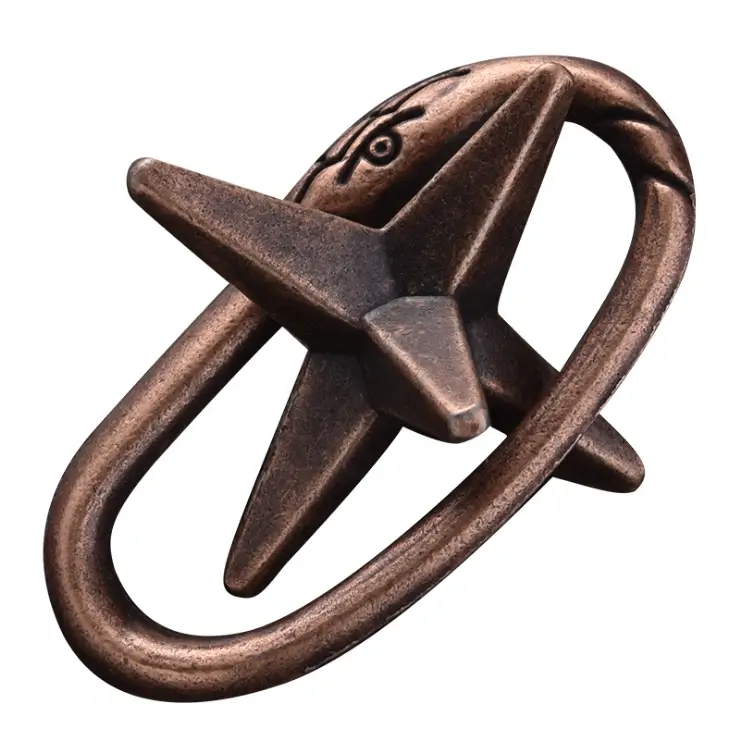
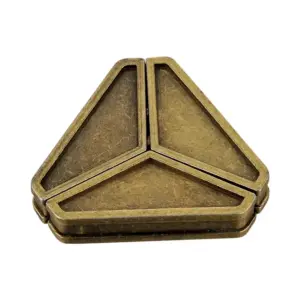
A piece like the Snake Mouth above exemplifies this. It’s a single-objective escape room experience distilled into a handheld artifact. There is no assembly phase, no box of 759 pieces. The entire puzzle difficulty is encoded in its crafted metal or wood. Your hands become your primary tools for a clue hunt that relies on sound, weight, and resistance as much as sight.
So, are these good for beginners? (I see you, looking at sites like Kubiya Games.) It’s a spectrum. A simple three-step trick lock is a phenomenal starting point. But some trick boxes, with their sequences of 20+ hidden movements, are expert-level marathons. The key is to check the manufacturer’s puzzle rating. Start with designs labeled for “beginners” or with a low move-count. Our guides on solving classics like the Chinese Koi Puzzle Lock or the Cast Keyhole Puzzle start with the fundamental mindset, not just the steps.
Themes vs. Pure Mechanics: Unlike the scenic Ravensburger puzzles, the “theme” here is often just an aesthetic shell—a dragon, a treasure chest, a padlock. The real narrative is the mechanism itself. The story is the “aha” of understanding why pressing that groove allows this pin to slide. It’s a minimalist puzzle in the best sense, a hallmark of the broader category of mechanical puzzles.
And this leads to the critical difference: reusability. While a Ravensburger is a one-and-done narrative, a quality trick lock puzzle box is an indefinite object. Once solved, you can reset it and pass it to a friend, or let it sit on your shelf for a year until you’ve forgotten the solve path and can challenge yourself all over again. It’s a permanent piece of interactive art for your desk, a challenging fidget toy with a secret. To display your collection properly, consider functional puzzle box stands that keep them accessible and secure.
This is the tribe for those who crave constant, physical engagement. You’re not building the labyrinth; you’re feeling your way along its walls in the dark, listening for the click that means you’ve found the door.
Digital Escapes & DIY Kits: The Other Halves of the Universe
So you’ve held the brass lock and sorted the cardboard pieces. But the world of the escape puzzle doesn’t end on your coffee table. Two more distinct galaxies exist: one made of silent code and glowing pixels, the other built from printer paper and your own frantic imagination. One you play. The other you build.
The Digital Domain: Logic Leaps & Instant Feedback
This one beeps. This one loads.
If the tactile mechanical puzzle is a weighted lock in your palm, the digital escape is a ghost in the machine. Your clues are pixels, your locks are passcodes, and your solve path is a sequence of logic leaps executed with a click or a tap. The tactile feedback is gone, replaced by the immediate, silent validation of a door swinging open on screen or an inventory item snapping into place.
This is the purest form of the escape room experience distilled into code. Think of series like Cube Escape or apps like The Room—you’re presented with a contained, often surreal space and must find clues and solve puzzles through observation and deduction. The “aha moment” here is frequently visual or auditory: realizing a pattern in a painting matches a frequency dial, or that the Morse code in the soundtrack spells out the safe combination.
The puzzle difficulty can be intense, but the friction is different. You’ll never suffer from a false fit or a stiff hinge. Instead, you might hit a pixel-hunt wall or a logic gate that feels arbitrary. The joy is in the unfettered flow of ideas, the instant test-and-reset, and the often-brilliant, impossible mechanics that only a digital space can create (like rewinding time or manipulating gravity). It’s perfect for the solo solver who wants a challenging mental workout in a 20-minute burst or a multi-hour dive, with no cleanup. And yes, they are infinitely reusable—just close the app and reopen it.
The DIY Universe: From Player to Designer
This one prints. This one plans.
Now we flip the script entirely. This isn’t about solving a pre-made escape game; it’s about building one. DIY escape room kits and puzzle hunt guides are for the person who, after their third Ravensburger puzzle, thought, “I could design a better clue.” It’s the natural next step for the former escape room designer (ahem) or the enthusiastic host who wants to create a scavenger hunt for a birthday or party.
Here, you’re buying a framework—a PDF of escape room puzzle ideas, templates for hidden object clues, cipher wheels, and backstory templates. Your living room becomes the venue. You are the curator of the escape room experience, hiding clues in bookshelves, wiring up lanterns to act as locks, and orchestrating the grand reveal.
This connects directly to our hook: From Escape Room to Your Living Room. But the translation is active, not passive. You’re not just experiencing design principles; you’re implementing them. It’s a social scramble by design, but the creation process is often a deeply satisfying solo project. You wrestle with puzzle difficulty pacing, plant red herrings, and engineer those triumphant “aha moments” for your friends.
It answers a question no other format can: “What’s a good escape puzzle for a group of 8?” The answer is the one you tailor to them. The solve time is what you design it to be. And the puzzle solution is a secret you hold until the final, glorious minute.
Where does the fidget-solver’s beloved physical object fit in this digital/DIY landscape? It serves as a reminder of what’s absent. A digital puzzle can’t replicate the satisfying heft of a mechanism finally giving way. For a perfect blend of engineering and art, explore collections like the Luban Lock Set or the stunning Crystal Luban Lock Set.
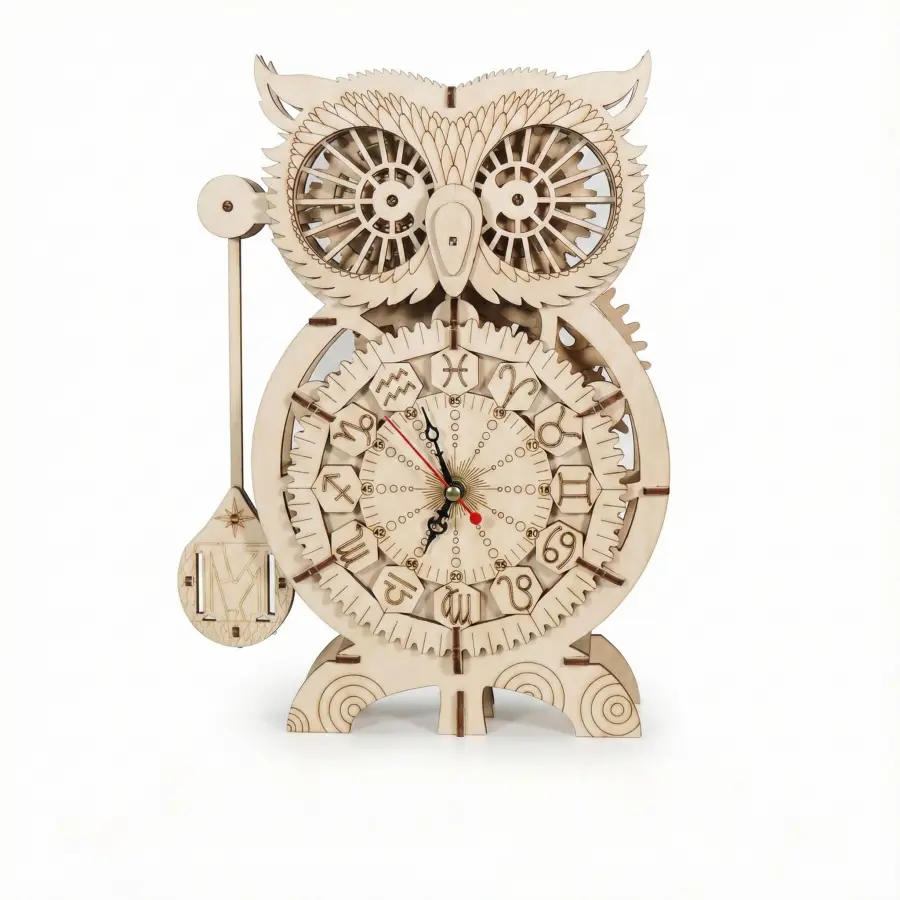
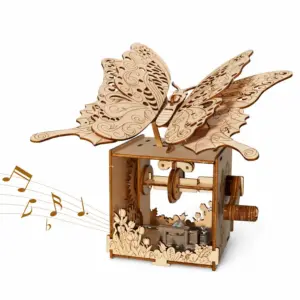
A piece like the 3D Zodiac Owl Clock is the antithesis of a digital escape—it’s a complex, decorative puzzle box that demands physical manipulation and exists as a centerpiece. You can’t Ctrl+Z a move here. The satisfaction is irrevocably tied to the object itself.
So, which half calls to you? The digital realm offers boundless, reset-able worlds of pure logic. The DIY path offers the ultimate meta-puzzle: designing the escape room experience itself. One asks for your quick mind. The other asks for your creative soul.
The Solo vs. Social Split: What the Box Never Tells You
That choice between digital logic and creative design isn’t just about the puzzle—it’s about who’s in the room with you. Marketing copy loves to promise a communal thrill. The reality? Most escape puzzles deliver their best, most focused satisfaction when you fly solo. Let’s pull back the curtain on the social dynamics the box never mentions.
The Ravensburger Jigsaw: A Surprisingly Solitary Meditation.
The box art shows a happy duo pointing at pieces. Don’t be fooled. A Ravensburger escape puzzle is, at its core, a personal journey. The assembly phase is a quiet, methodical process where a committee only breeds frustration (especially when hunting for those infamous false fits in dark corners). The subsequent clue hunt requires following a single, internalized solve path—too many voices will scramble the narrative logic and spoil the aha moment density. This is a challenging, deeply personal jigsaw puzzle first, an escape game second. It’s perfect for the adult who wants to unwind alone, not orchestrate a team.
The Mechanical Puzzle: A One-on-One Conversation.
Your relationship with a trick lock or puzzle box is intimate. It’s you versus the craftsperson who built it. These mechanical puzzles thrive on sustained tactile focus and intuitive leaps that get diluted in a group. (Imagine four people trying to fidget-solve a single lock at once—it’s a recipe for dropped pieces and crossed wires). The joy is in the private struggle and the personal, satisfying click. They are the definitive escape puzzle single player experience.
Digital Escapes: The Solo Player’s Playground.
From the Cube Escape series to browser-based hidden object games, digital escapes are engineered for one screen, one mind. The interface funnels you down a single logic leap at a time. Adding observers usually just creates backseat drivers. They are the purest form of solo escape room experience you can have, anytime, anywhere.
So Where’s the Social Scramble? Enter the DIY Kit.
This is the exception that proves the rule. If you crave the authentic, chaotic teamwork of an escape room, you don’t buy a pre-made escape puzzle—you create one. The DIY escape room kit (or crafting your own from scratch) is inherently social. Its success depends on dividing tasks, debating ideas, and orchestrating a scavenger hunt across physical space. This format embraces the “committee,” turning it into a collaborative engine. It’s the only category where more people genuinely equals more solved puzzles and a better experience. For a ready-made social option that bridges puzzles and play, something like the Looking Back game can be a fantastic family puzzle toy.
The Verdict: Match the format to your desired social friction. For a quiet night of focused flow, choose the jigsaw or mechanical box. For a lively game night with friends, skip the puzzle review of a solitary challenge and head straight for a DIY escape room design. The “best escape puzzle for adults” depends entirely on whether you’re looking for a personal retreat or a party catalyst. Now you can choose with confidence, knowing exactly whose company you’ll actually enjoy.
Your Escape Puzzle Decision Matrix (No Flowchart Needed)
Now that you know where each type falls on the social spectrum, the real choice begins. Forget product categories. The question isn’t “jigsaw or app?” but “what itch does my brain want scratched today?” Imagine four doors. Behind each is a different kind of satisfaction. Your job is to pick the right one for your mood, your setting, and your patience level.
Door A: The Quiet Assembly.
You’re craving a long, meditative burn. You want to spread out, sort pieces, and enter a state of flow where the world fades away for 5-7 hours. The primary joy is the tactile hunt for the right fit, building a detailed scene piece by piece. The escape room puzzles and clue hunt are a secondary, interwoven layer—a bonus mystery that unfolds as the picture completes. This is the realm of the Ravensburger escape puzzle. Choose this door if: You find solace in the methodical process of a jigsaw puzzle, you have a dedicated space to leave a project out, and you view potential false fits as a frustrating but surmountable part of the challenge (and you’ve heeded our warnings about darker, muddier themes). The solve time is long, but the satisfaction is in the journey, not just the final puzzle solution.
Door B: The Tactile Click.
Your hands need to be busy. You want an object you can hold, turn over, shake, and fidget with until a hidden mechanism releases with a supremely satisfying clunk. The puzzle isn’t built; it’s discovered through manipulation. The aha moment is direct and physical. This is the world of mechanical puzzles, trick locks, and puzzle boxes. Choose this door if: You love tactile feedback, you want a challenging object that lives on your coffee table for repeated attempts, and you prefer instant cause-and-effect over a long assembly phase. Your logic leaps are tested through your fingertips. (A pro tip from escape room design: start with a sequential discovery box, where each step reveals the tool for the next).
Door C: The Digital Logic Sprint.
You want pure, uncluttered logic served fast. You crave the clean interface of a Cube Escape series game or a minimalist app, where the environment is designed solely for the solve path. There’s no piece-sorting, no stubborn mechanism—just you and the logic leap. The escape game is distilled to its essentials: find clues, make connections, break free. Choose this door if: You want to solve puzzles in a 30-minute burst, you appreciate stark, clever design, and your budget is low (many great online escape rooms are free). The satisfaction is cerebral and quick, perfect for a mental coffee break.
Door D: The Social Scramble.
You’re looking for a shared event, a collaborative chaos. The puzzle is a catalyst for conversation, debate, and triumphant shouts. This isn’t about buying a single product; it’s about orchestrating an experience using a DIY escape room kit or your own crafted scavenger hunt. The escape room experience is replicated through hidden objects, layered clues, and a space your team can physically search. Choose this door if: Your goal is a lively game night, you enjoy the role of gamemaster or enthusiastic participant, and the joy is in the collective “we did it!” rather than a solitary triumph.
Your Quick-Reference Guide:
- For the Solo, Patient Artisan: Door A (Ravensburger). Embrace the assembly.
- For the Fidgeter Who Needs a Click: Door B (Mechanical Box). Seek the tactile payoff.
- For the Purist Logic Lover on a Budget: Door C (Digital). Enjoy the minimalist puzzle hunt.
- For the Party Planner & Social Catalyst: Door D (DIY). Mastermind the escape room design.
The best escape puzzle is the one that aligns with your desired friction. Do you want the friction of a thousand pieces to sort, leading to a grand reveal? Or the friction of a stubborn lock that finally yields in your hand? Your perfect match is waiting behind one of these doors. Now, let’s talk about how to walk through it successfully.
Pro Tips from a Former Escape Room Designer
You’ve picked your door. Now, how do you ensure it opens smoothly, without the hinge of frustration squeaking? The difference between a satisfying solve and a table-flipping moment often comes down to mindset. As someone who’s built escape room puzzles and then spent years pulling them apart, here’s the advice I give friends before their first escape game.
1. Map the “Solve Path” Before You Start.
Every good puzzle has a designed journey—a solve path. For a Ravensburger jigsaw puzzle, it’s assembly first, then clue hunt. For a mechanical trick box, it’s inspection, then manipulation. Before diving in, spend five minutes asking: “What’s the obvious first step? What tools or information do I have?” This simple audit prevents you from brute-forcing a mechanical puzzle with logic meant for a hidden objects game. (In escape rooms, we call this “establishing the grammar” of the space.)
2. Embrace the “Pivot Point” — It’s Okay to Walk Away.
The brain works in the background. When you’re stuck in a logic leap—staring at a minimalist puzzle app or a sea of false fits—the most productive thing you can do is step away. Make tea. Take a walk. This isn’t quitting; it’s a necessary pivot point. Your subconscious will keep churning, and you’ll often return with the missing connection. I’ve seen more puzzles solved during a bathroom break than during an hour of glaring.
3. Hunt for the “Ah-Ha” Engine, Not Just Answers.
A great clue doesn’t just give you a code; it teaches you how to think for the next step. When you find clues, ask: “What is this showing me?” Is it demonstrating a pattern (colors, shapes, numbers), a physical principle (magnetism, balance, reflection), or a linguistic trick (puns, homophones)? In a well-designed puzzle hunt, the first major clue establishes the rulebook. If a puzzle feels arbitrary or unfair, it might be poorly designed—don’t blame your skills.
4. Manage the “Friction” of Your Format.
Each category has its own unique friction. The key is not to fight it, but to work with it.
* Jigsaw Friction (Ravensburger): The puzzle difficulty here is often in sorting. Don’t just look for edge pieces; sort by color and texture (glossy vs. matte) to combat dark, muddy sections. If the solve time is ballooning, you might be forcing false fits. Step back, use the poster, and reassess the image logic.
* Mechanical Friction (Trick Locks): Your hands are a tool. If something won’t budge, don’t force it—re-examine. Is there a hidden seam, a subtle weight difference, a sound when shaken? For more on this tactile patience, our guide to metal puzzles that don’t break dives deeper into “cast logic.”
* Digital Friction (Apps & Online Escape Rooms): The friction is often purity of logic. If stuck, systematically test every interactive element on the screen. There are no red herrings in a good Cube Escape series game—every pixel has purpose.
5. The “One-and-Done” Myth: How to Revisit.
“Are escape puzzles reusable?” Yes, but with a catch. For physical puzzles, once you know the puzzle solution, the aha moment is spent. But the pleasure can shift from discovery to appreciation—studying the clever engineering of a trick box, or gifting it to a friend to watch their journey. For DIY escape room kits, you’re often buying a consumable story, but the escape room design principles you learn are reusable forever.
Ultimately, the pro tip is this: Your goal isn’t just to break free or finish the puzzle. It’s to enjoy the texture of the struggle itself—the silent scavenger hunt through a thousand pieces, the satisfying click in your palm, the elegant deduction on a screen. That’s the real escape.
Where to Begin: A Curated Starter for Each Tribe
So, you understand the textures of the struggle. You know your solve time tolerance and whether you’re hunting for a silent, solo scavenger hunt or a social escape room experience. The final, thrilling step is choosing your first move. Let’s cut through the noise with one confident starting point for each tribe, picked to maximize that initial aha moment and minimize early frustration.
For the Jigsaw Enthusiast: A Ravensburger Escape Puzzle with Clarity.
Skip the false fits. Your best entry is a Ravensburger Escape Puzzle theme with lighter, more distinct artwork. While many gravitate towards the spooky mansions, the vivid colors and clear object separation in themes like The Wizard’s Workshop or The Sunny Villa make the clue hunt far more intuitive. You’ll still get the signature 759-piece assembly, but the logic leaps from image to puzzle feel earned, not obscured by muddy pieces. This is the best escape puzzle for adults who love the meditative build but want the escape-room twist to shine. (And yes, once solved, you can reassemble it as a beautiful jigsaw puzzle—or pass it to a friend. The solution is known, but the assembly pleasure remains.)
For the Fidget-Solver: The Three Brothers Lock Puzzle.
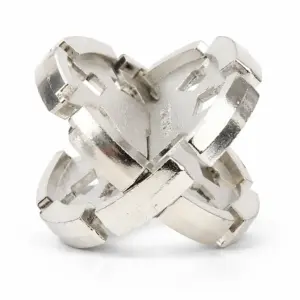
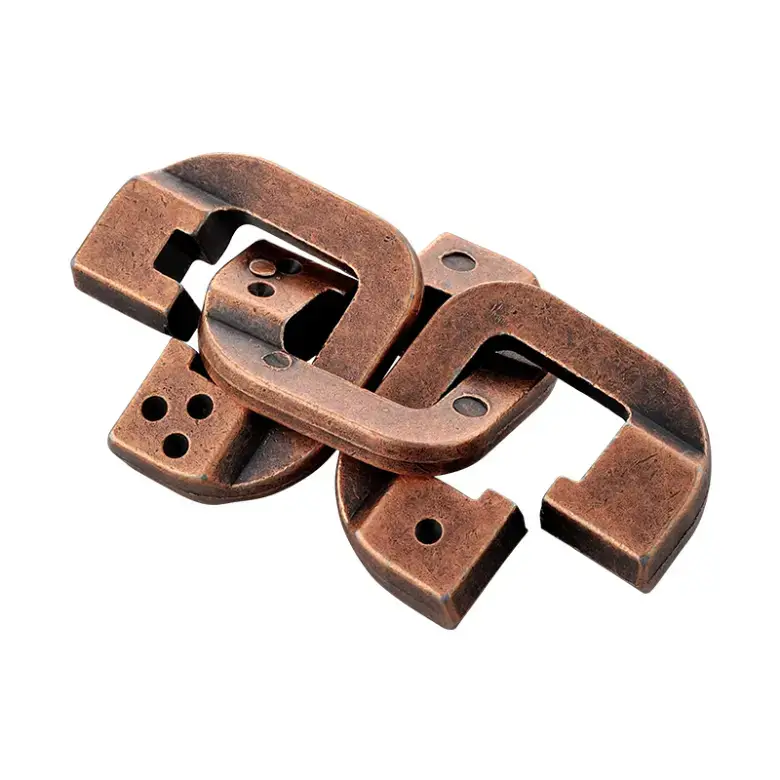
You crave tactile feedback. You want to hear a click. Start with a classic mechanical puzzle that teaches the language of trick locks without requiring Herculean strength or cryptic manuals. The Three Brothers Lock is a foundational piece in any collection—a hands-on lesson in sequential discovery where every action has a clear, physical response. It’s a minimalist puzzle in the best way, focusing on a clever mechanism rather than ornate decoration. The satisfaction is in the direct cause and effect, a perfect primer before diving into more complex puzzle boxes or exploring our curated list of the best puzzle locks for adults.
For the Digital Logician: The Cube Escape Series.
Your entry point is free, atmospheric, and brilliantly designed. Start with Rusty Lake: Cube Escape. These browser-based games are masterclasses in environmental storytelling and pure logic. Every pixel is a clue; there are no red herrings. They teach you to interact with everything, to combine items, and to think in the game’s own surreal logic. It’s the purest form of the digital escape game, and the puzzle difficulty scales beautifully across the series. If you love it, the mobile apps expand the universe.
For the Aspiring Game Master: A Thematic DIY Kit.
You want to craft the escape room experience for others. Begin with a small-scale, story-driven kit. Look for one that focuses on a clear narrative and a handful of interconnected puzzles, rather than a mountain of props. A kit centered on a single mystery, like a locked diary or a secret compartment, lets you focus on the flow of the puzzle hunt without being overwhelmed. It’s a practical lesson in escape room design—you learn how clues chain together, what “too hard” feels like for a player, and how to pace revelation.
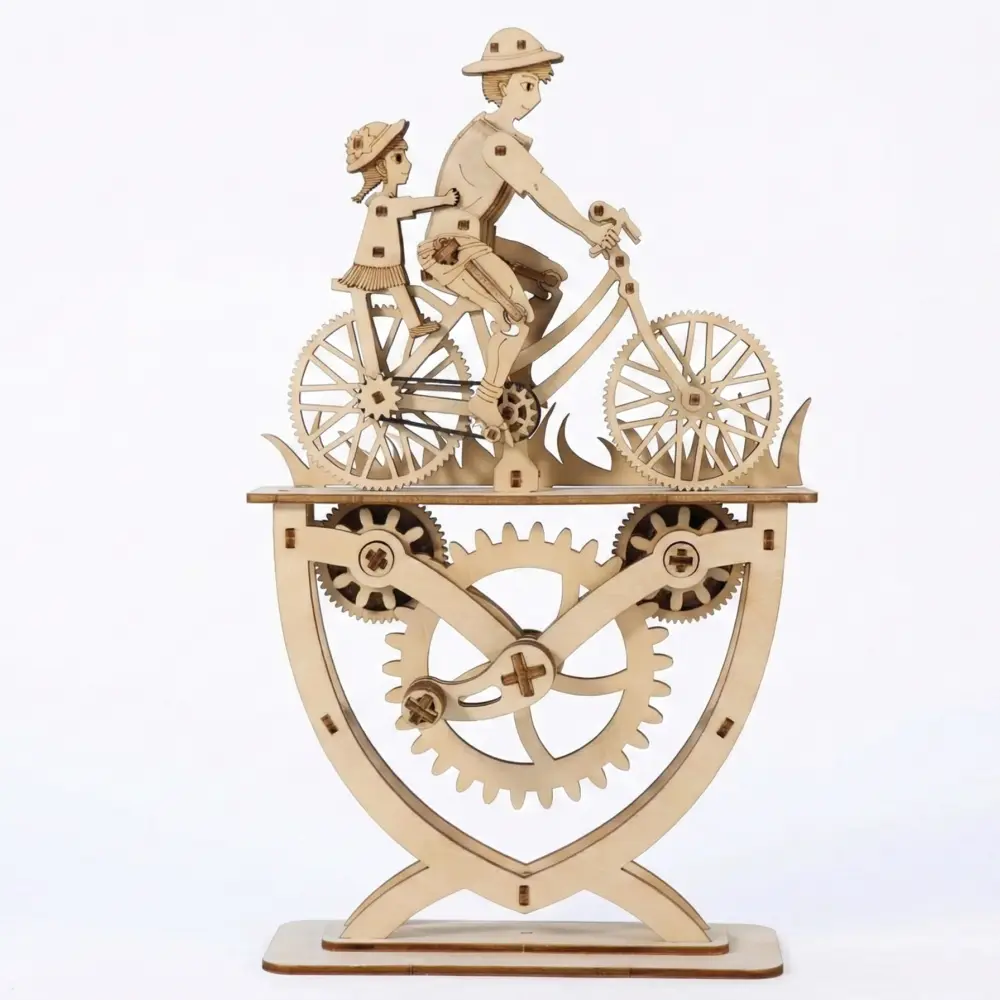
And if your heart is set on a beautiful object that doubles as a mechanical challenge, consider a step up from a basic lock. A puzzle like the Father and Daughter Bicycle offers a more intricate 3D wooden mechanical puzzle experience, where the goal is charmingly clear but the solve path is a delightful physical negotiation. For more inspiration across categories, our guide to the best brain teasers for adults can point you to other stellar starting points.
Your first escape puzzle shouldn’t be a battle against opaque instructions or impossible fits. It should be a clean, satisfying introduction to the particular itch it’s meant to scratch. Pick the tribe that called to you in the matrix, start with its champion here, and let that first, genuine click—whether of a piece, a lock, or a logic gate—be your invitation to dive deeper. The real game begins now.