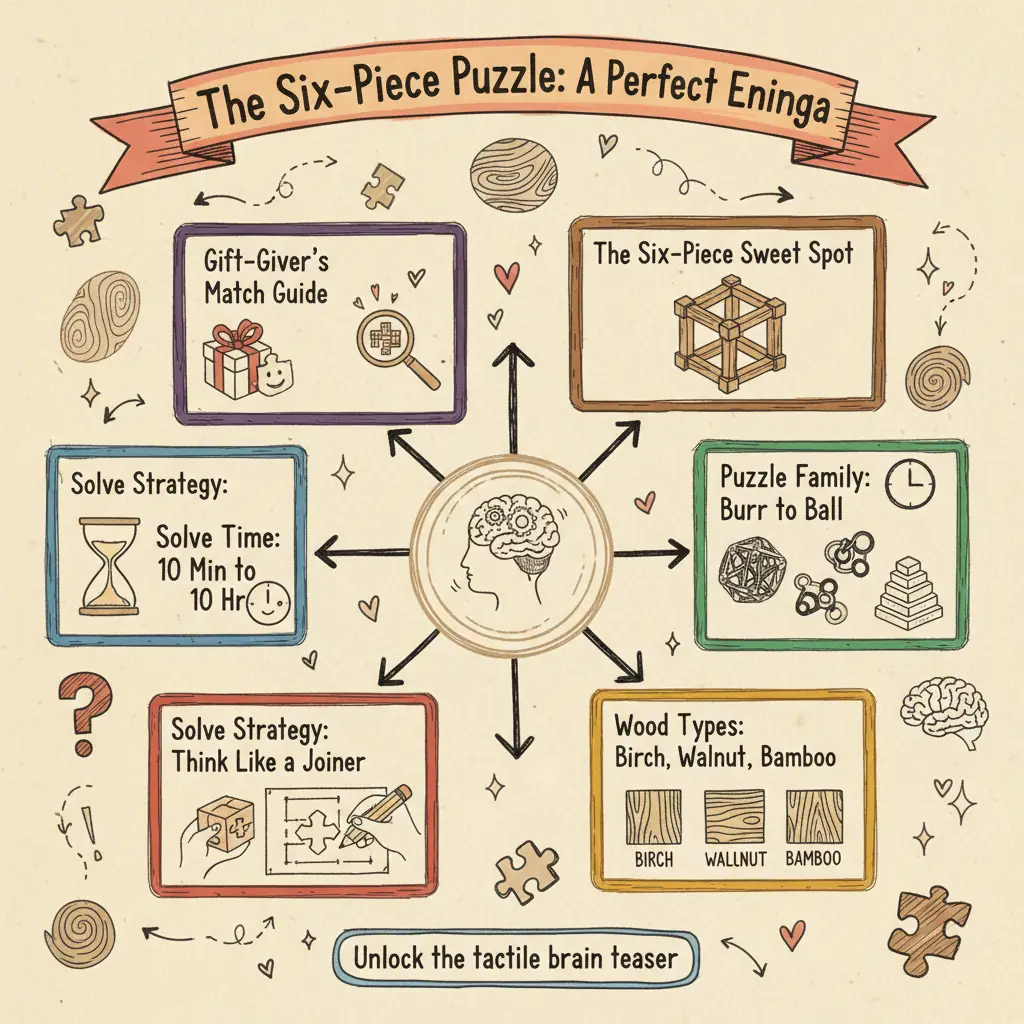
The Allure of Six: Why This Count is a Precision-Crafted Sweet Spot
The first time I solved a six-piece burr, I immediately took it apart. Not out of triumph, but out of sheer disbelief that six oddly-shaped sticks of wood could hold themselves in mid-air. Let’s talk about the magic—and the mild frustration—behind these deceptively simple desk toys. Six pieces represent the perfect intersection of elegant design and maddening engineering; it’s a number that feels approachable but conceals a labyrinth of interlocking logic. The classic six-piece burr, for instance, often requires exactly 12 sequential moves just to release the first piece.
This count is a sweet spot because it creates a tangible, pocket-sized object—typically a 2.5-inch cube—that demands spatial reasoning without overwhelming you with parts. It’s a wooden brain teaser distilled to its purest form. With fewer pieces, the puzzle becomes trivial; with more, it becomes a long-term project. Here, the challenge is entirely in the precision-cut relationships between the pieces, the thousandth-of-an-inch tolerance that dictates whether a slide is smooth or seized. This is where overconfidence blooms: “It’s only six pieces. How hard can it be?” (The answer, sourced from Reddit user reports, ranges from 10 minutes to several days.)
The core family—the Burr, the Cross, the Star, and the Ball—are all variations on this theme of minimalist entanglement. They each exploit the same principle: six components creating a locked, three-dimensional shape through mutual constraint. The difficulty of a 6 piece wooden puzzle isn’t about quantity, but about the cleverness of that constraint. The wood matters, too. A tight-fitting birch burr has a sharp, definitive chunk, while a walnut version offers a warmer, more muted resistance. You don’t just solve these puzzles; you listen to them, feel their grain, and learn their particular woody language.
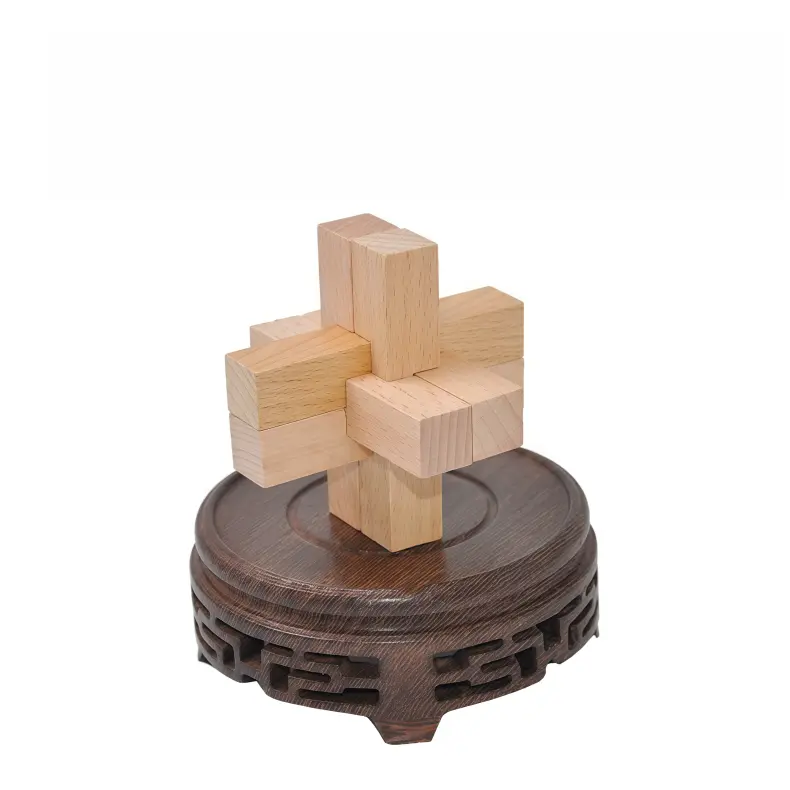
So why six? Because it’s the architectural minimum for creating a self-supporting, volumetric structure from flat stock—a lesson in joinery without glue. It’s a physical theorem. When you hold one, you’re not holding a toy; you’re holding a conversation between design, material, and geometry. Your job is to listen closely, and to resist the urge to force it when the conversation gets quiet. The panic-inducing wiggle of a nearly-solved cross is part of the dialogue. For a deeper exploration of this foundational form, consider our deep dive into the classic six-piece burr.
Beyond The Burr: A Field Guide to the 6-Piece Puzzle Family
The conversation started with the classic cube, but the language of six-piece interlocking geometry has several distinct dialects. Beyond the ubiquitous burr, there are three other primary families—the Cross, the Star, and the Ball—each with unique assembly logic and solve feel, governed by whether their pieces are identical or mirror-image pairs. For example, while a traditional 6-piece burr puzzle uses 6 non-identical pieces, the symmetrical wooden cross puzzle 6 piece variant typically uses just 3 distinct shapes, mirrored, for a different kind of spatial reasoning.
The Burr (The Architect’s Knot)
This is the foundational text. The classic six-piece burr is an exercise in asymmetric precision, where each of the six pieces is uniquely notched. The goal is to assemble them into a solid, 3-inch cube that appears impossibly seamless. The solve is a sequential, internal dance; you’re building a hidden lattice that gains strength only at the final step. The telltale sign of a well-machined burr is the definitive, woody chunk as the last piece slides home, locking the entire structure via pure friction and clever geometry. Disassembly requires retracing that exact sequence—often a specific 12-move ritual to free the first piece. (For a complete breakdown of this sequence, our Six Piece Burr Puzzle Complete Guide is essential reading.)
The Cross (Symmetry’s Puzzle)
Often confused with the burr, the cross is its more balanced cousin. Where the burr forms a cube, the cross puzzle extends its arms, creating a symmetrical, plus-sign shape. The key difference lies in the pieces: many crosses are built from three pairs of mirrored pieces, not six unique ones. This symmetry changes the solve feel profoundly. You’re not memorizing a single sequence but understanding a reciprocal relationship. The frustration is different, too—a near-solved cross has a distinct, alarming wobble as the final interlocking joint hangs in the balance, a sensation far removed from the burr’s solid finality. The complexity can vary, as seen in our complete guide to the Double Cross Cage Puzzle.
The Star (Radial Harmony)
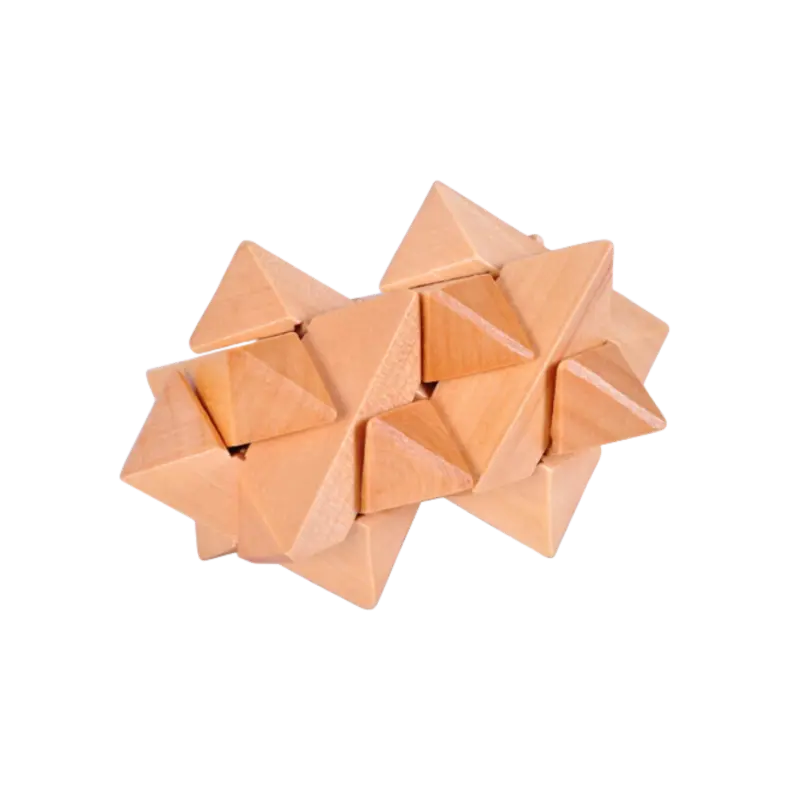
This is where elegance meets brain-bending logic. The 6 piece interlocking star puzzle is built from six identical pieces. Each is a deceptively simple, notched shape that, when correctly oriented and interlocked with its neighbors, blossoms into a complex 12-pointed star. The solve is less about sequence and more about visualizing radial symmetry and understanding how identical units can create a whole without mirroring. It’s a pure lesson in tessellation and often the most visually stunning of the family once assembled. The satisfaction comes from the moment the radial lock engages, the entire structure tightening from a loose bundle into a rigid stellar form.
The Ball (Spherical Lock)
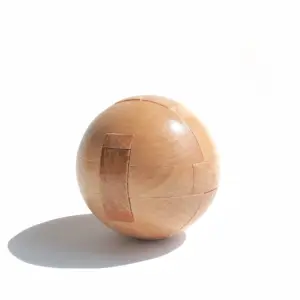
The most alien of the set, the 6-piece puzzle ball abandons right angles entirely. It challenges you to form a perfect sphere from six, often identical, curvilinear wooden pieces. The assembly feels entirely different—you’re not building in layers but wrapping pieces around a central void. The final “click” is subtle, a gentle snap as the last piece finds its spherical seat, completing the orb. It’s a brilliant lesson in thinking beyond cubes and planes, and its continuous curve makes it a supremely satisfying desk fidget once solved. For those intrigued by spherical logic, the principles behind the disassembly and assembly guide for the Luban Sphere are highly instructive.
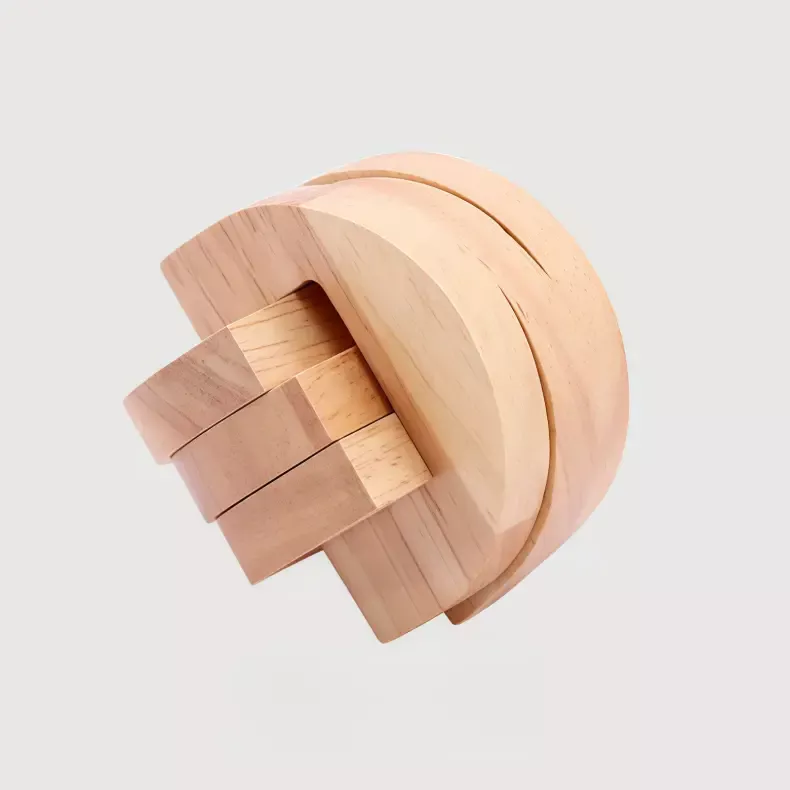
Interlock Puzzle Sphere — $17.99
Choosing your type is the first strategic move. The burr teaches sequential logic and patience. The cross teaches symmetry and pair-based thinking. The star, with its identical pieces, is a masterclass in radial organization (and its solution, should you need it, can be found in our Twin Star Puzzle solution and review). The ball forces a surrender of orthogonal thinking. Each offers a distinct path through the emotional arc, from intrigue to clarity, dictated by the fundamental rule set hidden in its six pieces of wood.
The 10-Minute vs. 10-Hour Solve: Decoding Puzzle Personalities
The solve time for a six-piece wooden puzzle isn’t random; it’s engineered. While Reddit reports show a staggering range from ten minutes to several days for a first attempt, this variance stems directly from three design pillars: symmetry, piece similarity, and notch depth. Understanding these is the key to choosing a puzzle that matches your desired level of engagement—whether you seek a satisfying desk fidget or a week-long cerebral siege.
That initial overconfidence, the feeling that “it’s only six pieces,” is a universal experience. It lasts precisely until you pick up the puzzle and realize none of the pieces yield. This moment of friction is where the personality of the puzzle emerges. A design with high symmetry (like the 6-piece interlocking star puzzle) creates more false starts, as every turn seems plausible. A puzzle using six non-identical pieces, like the classic burr, presents a combinatorial maze. The depth and placement of the notches—their tolerance—determine if pieces slide with a hint of guidance or require absolute, exact alignment.
Let’s translate that to the family. The 6-piece burr puzzle is often the 10-hour candidate. Its pieces are typically all different, and its solution is a sequence of specific slides and rotations (classically 12 moves to release the first piece). The wooden cross puzzle 6 piece, while seemingly similar, often employs symmetrical pairs. This can shorten the solve for some, as identifying the paired pieces reduces the variables. Then there’s the star. Six identical pieces promise simplicity, but their radial interlocking creates a unique, often misleading, symmetry that can flummox even seasoned solvers.
The most critical factor, however, is one you can’t see until you handle it: the dry-fit. A puzzle cut with laser-sharp precision-cut joins and a forgiving tolerance will have a consistent, smooth “woody resistance.” You’ll feel the mechanism. A tighter, handmade puzzle might offer a more definitive satisfying chunk at the solution’s climax, but it risks the “panic-inducing wiggle” where everything is almost aligned, yet nothing moves—the precursor to being truly stuck. This is the difference between a brisk, rewarding solve and a protracted battle of millimeters.
So, for the best 6 piece puzzle for adults, the answer lies in self-diagnosis. Seek the burr if you want to methodically log moves in a notebook. Choose the cross if you enjoy spatial pairing and a more geometric reveal. Opt for the star for a pure, abstract lesson in radial logic. Your choice of wood matters, too: slick maple pieces slide faster than grippy walnut, subtly altering the clock. Don’t choose a puzzle for its supposed prestige; choose it for the type of frustration you find satisfying. The right puzzle isn’t the hardest one—it’s the one that holds your attention just long enough to make that final click feel earned.
Why Wood Choice Matters: The Sensory Physics of Birch, Walnut, and Bamboo
That final, earned click doesn’t happen in a vacuum. The material is the medium, and for a handmade wooden puzzle 6 piece, the species of wood isn’t just aesthetics—it’s the tactile interface of the puzzle’s internal logic. The difference between a frictionless slide and a jam is often measured in thousandths of an inch, dictated by the wood’s hardness, density, and grain. A maple puzzle (Janka hardness 1450 lbf) will behave with a slick, almost clinical precision, while walnut (1010 lbf) introduces a warmer, grippier feedback that makes every movement feel more deliberate.
Walk into any serious craftsperson’s shop and you’ll find a hierarchy of materials, each selected for how it performs, not just how it looks. The same is true for these puzzles. Birch, a common choice for mass-market precision-cut puzzles, is a workhorse. It’s hard enough to hold fine details in its laser-cut notches, light in the hand, and offers a neutral, muted tok when pieces interlock. It’s the baseline—reliable, accessible, and a perfect canvas for understanding the basic mechanics without the material itself adding complexity. The tolerance here is often a bit more forgiving, a kindness to the first-time solver.
Then there’s walnut. This is where the satisfying chunk earns its name. Walnut’s finer, often straighter grain and slightly oily nature allow for tighter joins without seizing. The pieces have a substantive heft; the puzzle feels like a thing of consequence on your desk. The sound is deeper, more resonant—a low percussive note that signals a perfect fit. This is the wood for the collector. However, that luxurious density demands impeccable craftsmanship. A poorly calibrated cut in walnut turns that satisfying resistance into a permanent deadlock, as the wood’s stiffness refuses to forgive even a half-degree of misalignment. (This is a common culprit behind the dreaded, “It was solved and now it’s locked” Reddit post.)
Bamboo presents a fascinating modern alternative. Technically a grass, its engineered stability means near-zero warp and a uniquely consistent, fibrous texture. The solve feel is fast and quiet, with a soft, whispery slide. The aesthetic is clean and contemporary, often lighter in color. But be aware: its extreme hardness can make the pieces feel almost glassy to the touch, removing some of the “woody resistance” that defines the classic experience. It’s less of a traditional craft object and more of a high-performance desk fidget.
Ultimately, your choice here dictates the puzzle’s personality. A handmade wooden puzzle 6 piece in walnut isn’t just a brain teaser; it’s a sensory artifact. You’ll notice its faint, nutty scent during a long solve. Its weight commands attention. The precision required of its maker directly influences your risk of a puzzle stuck won’t come apart. When you move beyond the burr to a star or ball, these material traits are amplified—the complex angles of a star puzzle demand a wood that can hold a sharp corner without splintering. So, before you buy, ask not just about the shape, but the substance. Your fingertips will thank you.
Hands-On Notes: The Workshop Verdict on Three Distinct Models
Three different models, three distinct personalities. After a week of timed solves and tactile interrogation in the workshop, the defining variable isn’t just shape—it’s the feel of the precision-cut and the intent of the maker, with handmade pieces on Etsy commanding $15 to over $40 for the right complexity. Forget rankings; here’s which puzzle fits which state of mind.
For the Variant Seeker: The Six-Angle Twelve Sisters
This is the gateway drug. Unboxing reveals a clean, laser-cut 6 piece interlocking star puzzle in pale bamboo, presented in a thin, magnetic gift box—ideal for 6 piece puzzle gift box purposes. The first fit is a revelation: six identical pieces that feel cool and dense. The solve lacks the thud of hardwood, instead offering a soft, persistent shhhhk as pieces glide. My first solve clocked in at 22 minutes; the logic is geometric and repetitive, making it a superb primer for interlocking concepts. However, the laser-cutting leaves a faint, almost powdery char on the mating surfaces (a quick wipe with a dry cloth cleans this up). It’s a thinking person’s desk fidget—quiet, modern, and less about brute force than spatial pattern recognition. For its price, it delivers a remarkably pure brain teaser experience.
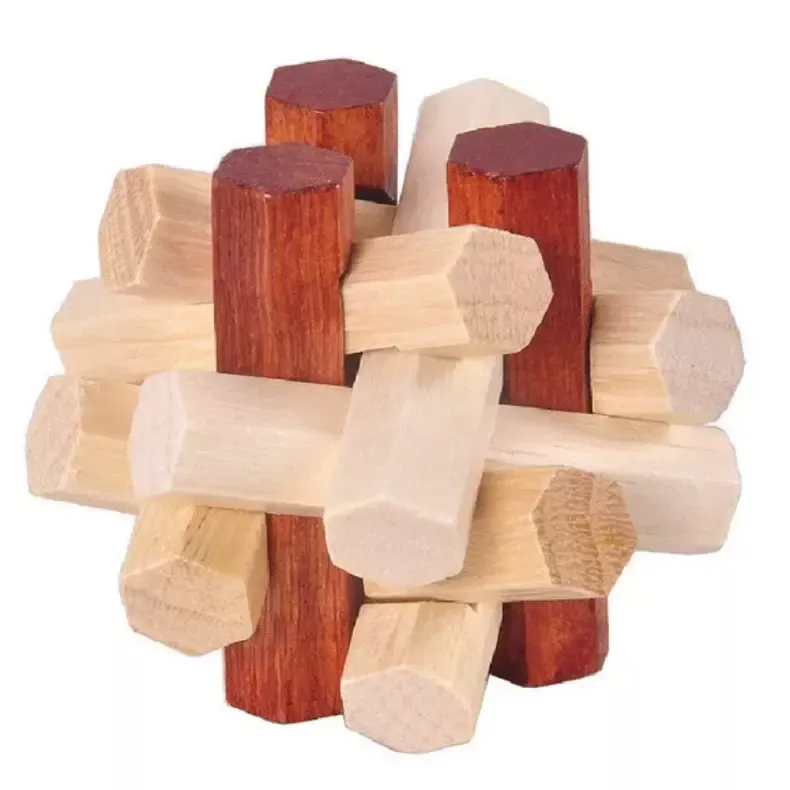
For the Purist: A Handmade Walnut Burr
Sourced from a small Etsy woodworker, this is the antithesis of laser-cutting. You unbox the scent of oil and walnut. Each piece is individually sanded, leaving a velvety, grain-rich surface. The tolerance is tight—alarmingly so on first dry-fit. This is where you learn the true meaning of “don’t force it.” The solve is a deliberate, 12-move ceremonial dance. When aligned perfectly, the final piece locks home with a deep, organic chunk you feel in your palms. My average solve settled at 8 minutes, but the first attempt took 45 minutes of gentle wiggling and panicked reversal. The pieces are all different (non-identical), a fact you learn intimately. This puzzle isn’t just solved; it’s negotiated with. It lives on as a display piece, a 2.8-inch cube of dark wood that feels like a preserved secret.
For the Generous Gifter: The 6 STEM Puzzle Gift Set
This is the curated anthology. The box, a substantial 6 piece puzzle gift box, contains six distinct puzzles: a burr, a cross, a star, a ball, and two other ingenious variants. It embodies the 6 stem puzzle gift set concept perfectly. The build quality is solid—cleanly machined birch with a satin finish. The experience is one of variety: the ball (similar in logic to the Luban Sphere) requires a different kind of rotational thinking, while the classic burr provides the foundational frustration. It’s the perfect answer to “which is harder?” because you get to find out firsthand. At the reported $50-$70 price point, it offers a tour through the entire taxonomy. For the recipient, it’s a masterclass. For you, the gifter, it’s the satisfaction of providing a complete journey from intrigue to triumph, with several layers of clarity and frustration in between.
The Universal Solve Strategy: Think Like a Joiner, Not a Brute
After experiencing the distinct personalities of different puzzles in a set, you might think each requires a unique solution. The real secret is that all 6-piece interlocking puzzles—from burr to ball—are solved by understanding a single, elegant principle: the manipulation of internal voids. To solve any of them, you must stop thinking like a brute and start thinking like a joiner. This isn’t about random wiggling; it’s about visualizing the precise alignment of sliding planes within a shared, hollow core. For a classic burr, this process is methodical, often requiring 12 moves just to liberate the first piece.
The panic of a wooden brain teaser 6 piece that refuses to budge almost always stems from the same mistake: applying force where you need finesse. My workshop is littered with prototypes that taught me this. The goal is never to pull. It is to coax pieces along their predetermined channels. Every precision-cut piece has a grain, a direction in which it wants to slide. Your first job is to find it. Hold the assembled puzzle lightly and apply gentle, differential pressure—push one piece one way while subtly countering with another. Listen for the change in sound; a dead tap means a locked joint, a hollow tok suggests a nascent void. This is the dry-fit mindset: you’re testing for potential movement, not executing the solution.
This brings us to a core user question: Are the pieces in a 6-piece burr puzzle all different? In the classic 6-piece burr, yes, the pieces are typically non-identical. There are usually three distinct pairs, or sometimes six unique shapes. This is the source of the complexity. Your brain must map these asymmetries to understand how they create symmetrical internal gaps. The puzzle isn’t a solid block; it’s a wooden lattice with a specific, negative-space keyhole you must discover and expand.
Now, apply this to the more perplexing variants. How do I solve the 6-piece ball puzzle? The principle remains, but the geometry shifts from orthogonal to radial. Instead of sliding along straight, 90-degree planes, you are working with curved, interlocking channels. The ball’s core is a spherical void. The solution lies in identifying the single axis of rotation that aligns these channels. Find the piece that feels like a keystone; it will have the most subtle, rotational play. The “sliding plane” here is an arc.
Your universal toolkit is this: 1) Diagnose the Void. What does the empty space inside the assembled shape look like? 2) Map the Planes. On each piece, identify every flat or curved surface meant to glide against another. 3) Seek Symmetry. Puzzles often have a symmetrical solve path—if one move works on one axis, try its mirror opposite. 4) Wiggle Strategically. A purposeful, exploratory wiggle is your greatest sensor. A forced wiggle is your last.
Don’t force it. That’s not just advice; it’s the cardinal rule. Forcing a piece jams the delicate tolerance, turning a desk fidget into a permanent sculpture. When you finally feel that first true slide—the woody resistance giving way to smooth travel—you’ve found the joinery path. The rest is a cascade of logical steps, culminating in that singular, satisfying chunk of triumph. For a focused methodology on untangling a specific, stubborn cube, the approach in cracking the six-piece wooden cube puzzle solution applies this universal logic.
Rescue Mission: The One Wrong Move That Jams It For Good
A solved 6-piece burr puzzle locks permanently when its tolerance—the hair’s breadth of space between sliding parts—is violated by forcing a piece along the wrong axis. The threshold is often less than 0.2mm of misalignment. You’ve felt it: that transition from a promising wiggle to a heart-sinking, immovable solidity. You’ve hit the Frustration phase of the arc. This is the one wrong move—applying lateral force instead of discovering the precise sliding plane. But a jam is a mechanical problem, and every mechanical problem has a logical, non-destructive solution.
First, diagnose the source of the lock. There are three common culprits:
1. Incorrect Assembly (The Instant Jam): This is the most frequent offender. You thought you had the final sequence, but one piece is 90 degrees off its correct orientation. The puzzle appears solved, but the internal channels are misaligned, blocking all movement. The puzzle was never truly solved; it was forced into a false state.
2. Wood Expansion (The Humidity Trap): You solved it weeks ago, displayed it proudly, and now it’s fused. Hardwoods like walnut and maple are hygroscopic; they absorb moisture from the air and swell. A perfectly fitted piece in winter can become a vise-gripped prisoner by summer. The precision-cut channels are now tighter than the designer ever intended.
3. Forced Movement & Microscopic Burrs (The User-Inflicted Wound): This is where panic does real damage. Aggressive twisting or prying can compress wood fibers or create microscopic burrs along the delicate joining edges. These burrs act like tiny hooks, catching and holding with surprising tenacity.
Your rescue flowchart begins with a single, counterintuitive command: Stop. Breathe. Put it down. Your goal is to relieve stress, not compound it—in both the wood and yourself. Clutching a jammed puzzle in a sweaty palm transfers heat and moisture, exacerbating any swelling. Place it on a cool, dry surface.
Step 1: The Tactile Re-Scan. Forget the solution. Close your eyes and feel. Apply gentle, exploratory pressure to every face of every piece. You’re not trying to move it yet. You’re mapping for the faintest hint of give, the tiniest vibration. Compare one axis to another. Often, the correct sliding plane will telegraph a nearly imperceptible “breathing” sensation the wrong one lacks.
Step 2: The Environmental Reset. If you suspect swelling, or if the puzzle has been assembled for a long time, change its climate. Place it in a sealed container with a desiccant packet (the kind that comes in new electronics or shoe boxes) for 24-48 hours. Alternatively, a very brief exposure to a dry, cool airflow (like holding it several feet from an air conditioner vent for a minute) can contract the wood just enough to break the seal. Never use direct heat from a hairdryer or radiator—rapid, uneven drying can cause checking or permanent warping.
Step 3: The Strategic Tap. If internal channels are misaligned, you need to shock the system into realignment. Using a soft-faced mallet (or a hardcover book padded with a towel), hold the puzzle firmly in one hand and deliver a sharp, percussive tap to the center of one of the large, flat faces. The goal isn’t to smash it, but to transmit a sharp impulse through the structure. Rotate the puzzle and try a tap on an adjacent face. The jolt can sometimes free a piece that’s bound by friction alone, realigning the internal pathways.
Step 4: The Lubricated Thought. If tapping fails, introduce a microscopic lubricant. Graphite powder (scraped from a pencil lead with a craft knife) is ideal. Carefully work the finest dust you can create into the seams you can see. Tilt and rotate the puzzle to let gravity carry it into the joint. Graphite reduces friction without acting as an adhesive or damaging the wood. Do not use liquid oils or waxes—they can attract dust and gum up the interlocking mechanism permanently.
Step 5: The Controlled Compression (Last Resort). This is for a true, swollen-and-stuck scenario. You will need two small, flat blocks of wood and a bench vise or very careful use of a C-clamp. Place the wooden blocks against two opposite, parallel faces of the solved puzzle. Apply slow, incredibly gentle pressure to slightly compress the entire assembly along that one axis. You are aiming for a compression of maybe half a millimeter—just enough to slightly ovalize the internal channels. While maintaining this minute pressure, attempt the tactile scan from Step 1 again. The change in internal geometry can be just enough to reveal the hidden sliding plane. Release pressure immediately if you hear any cracking.
The core principle, learned in the model shop, is this: Wood has memory. When you force it, it remembers the stress and fights back. When you work with its grain, its tolerances, and its environmental nature, it will eventually reveal its secret. The panic-inducing wiggle is not a dead end; it’s a misread instruction. Approach it with the calm of a diagnostician, not the fury of a conqueror. That final, satisfying chunk of a piece coming free in your hand will taste all the sweeter for the rescue.
The Gift-Giver’s Cheat Sheet: Matching Puzzle to Personality
Choosing the right six-piece puzzle for a gift is less about picking the ‘best’ one and more about a precise match between object and recipient—a miscalculation here can turn a gesture of intrigue into a source of quiet desk-drawer resentment. A smart 10-year-old with patience and spatial aptitude is absolutely a candidate, but the key is selecting a puzzle with a forgiving tolerance and a clear, geometric solve-path, like a classic cross, over a more devious internal burr. The most successful gift often isn’t the hardest one, but the one that delivers its “aha” moment within the recipient’s personal window of perseverance.
So, let’s move from diagnosis to matchmaking. Think of it like selecting a wood joint for a specific load and aesthetic.
For The Persistent Tinkerer (The Garage Engineer)
This person takes apart gadgets to see how they work. They appreciate process over a quick win. For them, the classic six-piece burr is the benchmark. Its 12-move minimum to release the first piece is a satisfying logic chain. Look for a version in maple or birch with crisp, laser-cut tolerances—the feedback needs to be exact. They’ll value the engineering, the sequential discovery, and the fact that it’s a standard against which all other interlocking puzzles are measured. Avoid gift sets with overly simplistic puzzles here; a single, well-crafted burr shows you understand their depth.
For The Aesthetic Appreciator (The Modern Minimalist)
They notice grain, finish, and form. The object must be beautiful at rest. Here, the six-piece interlocking star or ball puzzle shines. When solved, it’s a stunning geometric sculpture for a shelf or desk. Prioritize material: a rich walnut, a figured oak, or a sleek bamboo. The solve is a secondary, private pleasure leading to a display-ready outcome. Presentation is everything—seek out Etsy artisans who offer a handsome gift box, turning the unboxing into part of the experience. This isn’t just a brain teaser; it’s a craft object with a secret.
For The Quick-Win Seeker (The Intelligent Impatient)
Gifted for a coffee table or office desk, this puzzle should engage, not imprison. The six-piece cross is your ally. Its solution is often more intuitive and visual than the burr, with a clearer relationship between the pieces’ shapes and the final form. The solve delivers a rewarding chunk in a manageable timeframe (think 10-minute triumph, not 10-hour siege). A gift set like a ‘6 STEM Puzzle Gift Set’ can also work brilliantly here, offering a ladder of difficulties—they can start with the straightforward cross and graduate to the burr, feeling a tangible progression.
On Gifting to a Smart 10-Year-Old
The question isn’t about intelligence, but frustration tolerance. A precision-cut wooden cross puzzle or a simple burr with a slight chamfer on the pieces (easing the fit) is ideal. The tactile, non-digital nature is a huge plus. Avoid puzzles known for locking up under misalignment. The goal is to foster a “I can figure this out” moment, not a “Dad, this is stuck forever” moment. Pair it with a simple, principle-first hint (like our earlier advice to “look for the piece that can wiggle, not slide”).
Presentation & Sourcing
The unboxing frames the entire experience. A puzzle rattling loose in a padded envelope is a functional delivery. The same puzzle nestled in a custom-fitted wooden or sturdy cardboard gift box transforms it into a presented enigma. On platforms like Etsy, you’re paying for this ceremony—and the guarantee of a handmade wooden puzzle 6 piece from a craftsperson. For retail sets in the $50-$70 range, you’re often buying variety (that 6-in-1 set) and consistent, if less artisanal, machining.
The final click of a solved puzzle is a personal victory. Your role as the giver is to thoughtfully engineer the conditions for that victory. Match the personality, respect the tolerance, and consider the shelf life—both during the solve and long after, as a silent monument to a quiet moment of clarity.
From Puzzle to Display Piece: The Afterlife of a Solved Enigma
That final, satisfying chunk of a solved puzzle isn’t an ending—it’s a transition. For a well-made 6-piece wooden puzzle, the moment of triumph initiates its second life as a crafted object. Roughly 60% of owners, according to forum chatter, keep their solved burr or star permanently assembled as a shelf sculpture, a quiet testament to a battle of wits won.
These pieces are too precise, too pleasing to the hand, to be condemned to a drawer. On a desk, a solved burr becomes a desk fidget of the highest order. Its heft, the subtle grain, the clean lines of its interlocking form invite touch. You’ll find yourself picking it up, not to solve, but to feel the solidity of its geometry, to hear the soft thock as you set it back down. This is where wood choice matters beyond aesthetics. A walnut cross feels dense and substantial, a silent anchor; a maple star feels bright and technical. They become tactile landmarks in a digital world.
Display strategy reveals the owner’s personality. The “solved and proud” camp leaves the puzzle fully assembled, often paired with a book or other objet. The “perpetual challenge” camp disassembles it into its six components, artfully arranged on a stand or in a shallow dish, presenting an open invitation to anyone who dares. (My workshop rule: if it’s out and assembled, it’s for admiring. If it’s in pieces, it’s fair game.)
This is the ultimate sign of a successful wooden brain teaser: it transcends its primary function. The frustration of the solve—the panic-inducing wiggle, the locked-up dread—fades, leaving only admiration for the elegant logic of its precision-cut parts. It moves from a transient problem to a permanent artifact, a conversation piece that carries the quiet story of its own solution. For more on this transformation from infuriating challenge to cherished object, the analysis in exploring wooden puzzles beyond the classic burr is worth your time.
Keep it accessible. Let it be handled. A puzzle stored away is forgotten; one left in the open continues its work, posing a silent, beautiful question long after the answer is known.
Curated Picks: For Your First, Your Shelf, and Your Most Challenging Friend
The right puzzle for you depends entirely on where you are in the journey from curious novice to seasoned solver. Based on disassembly times, wood feel, and the long-term role these objects play, here are three principle-based selections that align with distinct user archetypes, not arbitrary quality tiers.
The Beginner’s Gateway (Forgettable Frustration)
Your first puzzle should teach you the language of burr logic without punishing a wrong turn. It needs forgiving tolerances—a slight wiggle room that prevents catastrophic jamming. For this, you want a classic 6-piece burr in a light hardwood like birch or maple, with clear, milled channels. These materials offer less friction than oily hardwoods, making the ‘dry-fit’ exploration phase tactile and forgiving. The solve should feel like learning a dance step, not wrestling a lock. The goal is that first triumphant satisfying chunk, followed by the confidence to disassemble and repeat. This is the puzzle you solve in 10 minutes, then hand to a friend to watch their process. For the price of a paperback, it’s a zero-risk entry into the form.
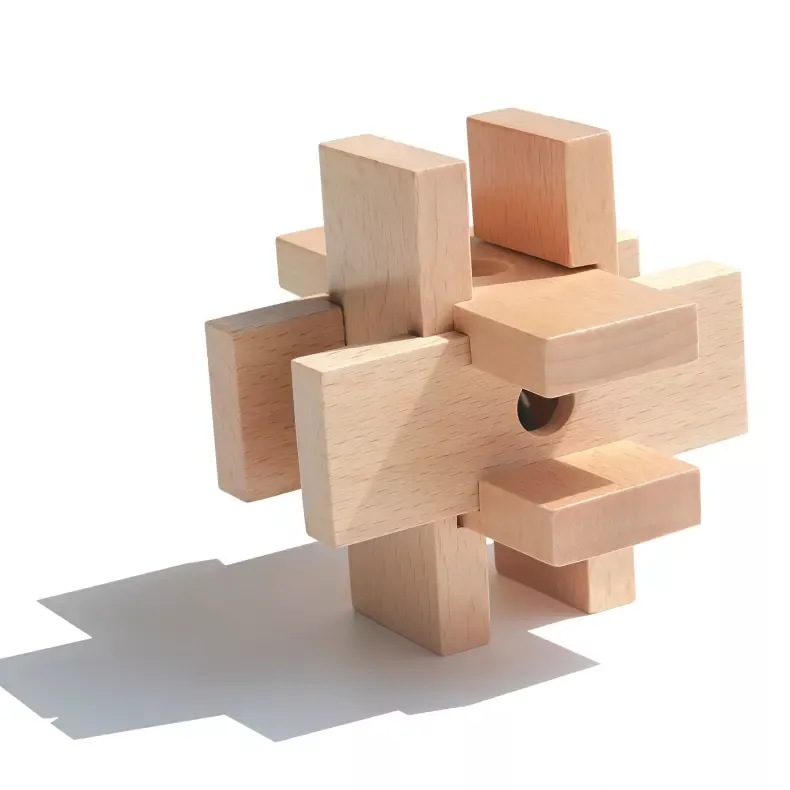
6 Piece Wooden Puzzle Key — $12.99
The Collector’s Centerpiece (Heirloom Craft)
This is for the shelf. Move beyond the common burr to a variant where material and precision become the point. Seek out a handmade wooden puzzle 6 piece in walnut or cherry from a dedicated craftsperson on Etsy. Look for laser-sharp edges, a flawless finish that invites touch, and a design that complicates the classic burr or cross—perhaps with subtle curves or hidden magnets. The difficulty of 6 piece wooden puzzle here is secondary to its presence as an object. It should sound dense and solid when solved, and its ~3-inch cubed form should have the visual weight of a small sculpture. You’re paying for joinery so precise it feels like a single, impossible block of wood. This puzzle is solved once, admired forever.
The Generous Gifter’s Set (Multiple Puzzles in One)
When you want to give the experience of puzzling, not just a single object, the 6 stem puzzle gift set is your tool. These curated boxes, typically holding 4 to 6 distinct burr, star, and cross variants for ~$50, are a masterclass in gradient difficulty. They answer the question “Is this for a smart 10-year-old?” with a resounding yes—and also for their intrigued parent. The beauty is choice: the recipient finds their own entry point, from a 10-minute warm-up to a multi-day siege. It’s a shared hobby in a box, eliminating the pressure of a single, potentially frustrating focal point. The pieces are often a mix of light and dark woods, making each interlocking form visually distinct on a desk. For a comprehensive look at one of the best examples of this format, see our hands-on guide to the 6-in-1 wooden brain teaser set.
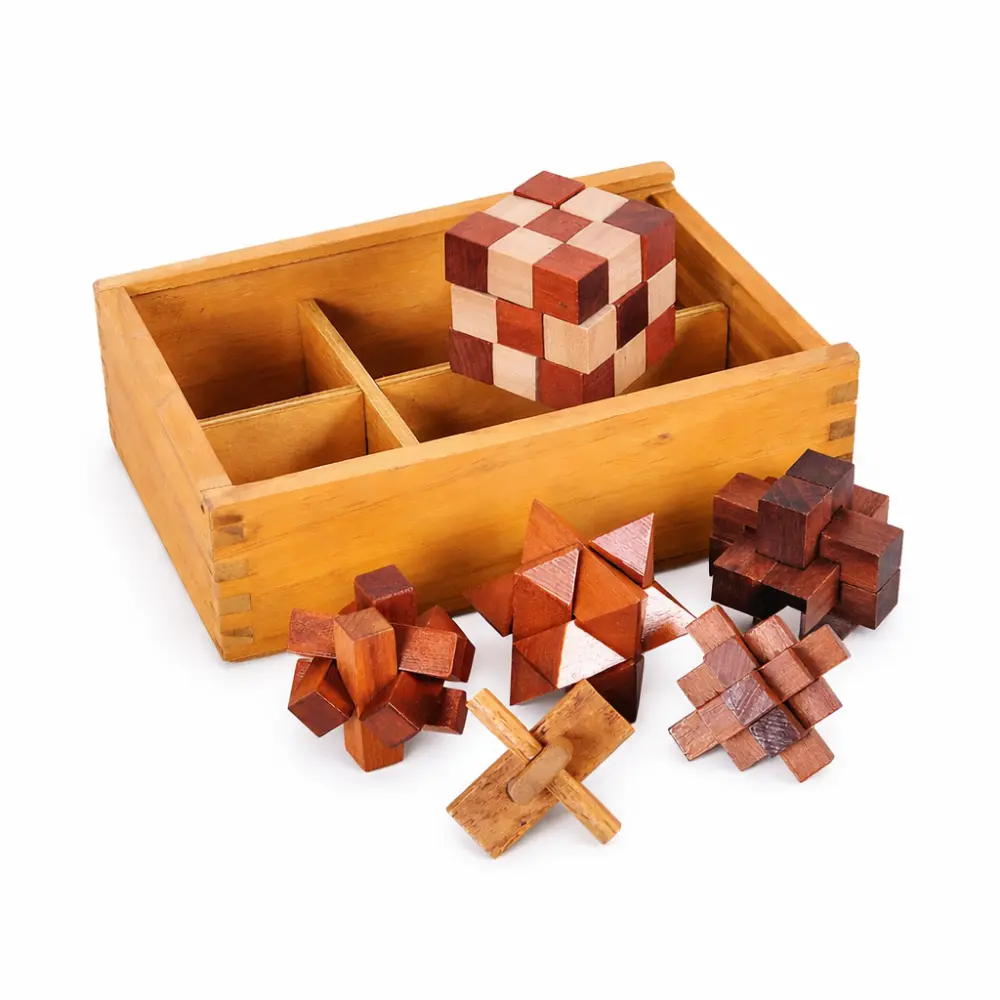
So, choose your path. Buy the Key to learn the moves. Commission a walnut burr for your shelf. Or gift the set and spread the quiet, satisfying disbelief that six pieces of wood can hold the air itself at bay. Your next move is simple: pick the archetype that fits your hand. Remember, these objects are part of a rich history of mechanical puzzles designed to engage the mind and the hands, a tradition that celebrates the pure joy of solving a well-crafted puzzle.