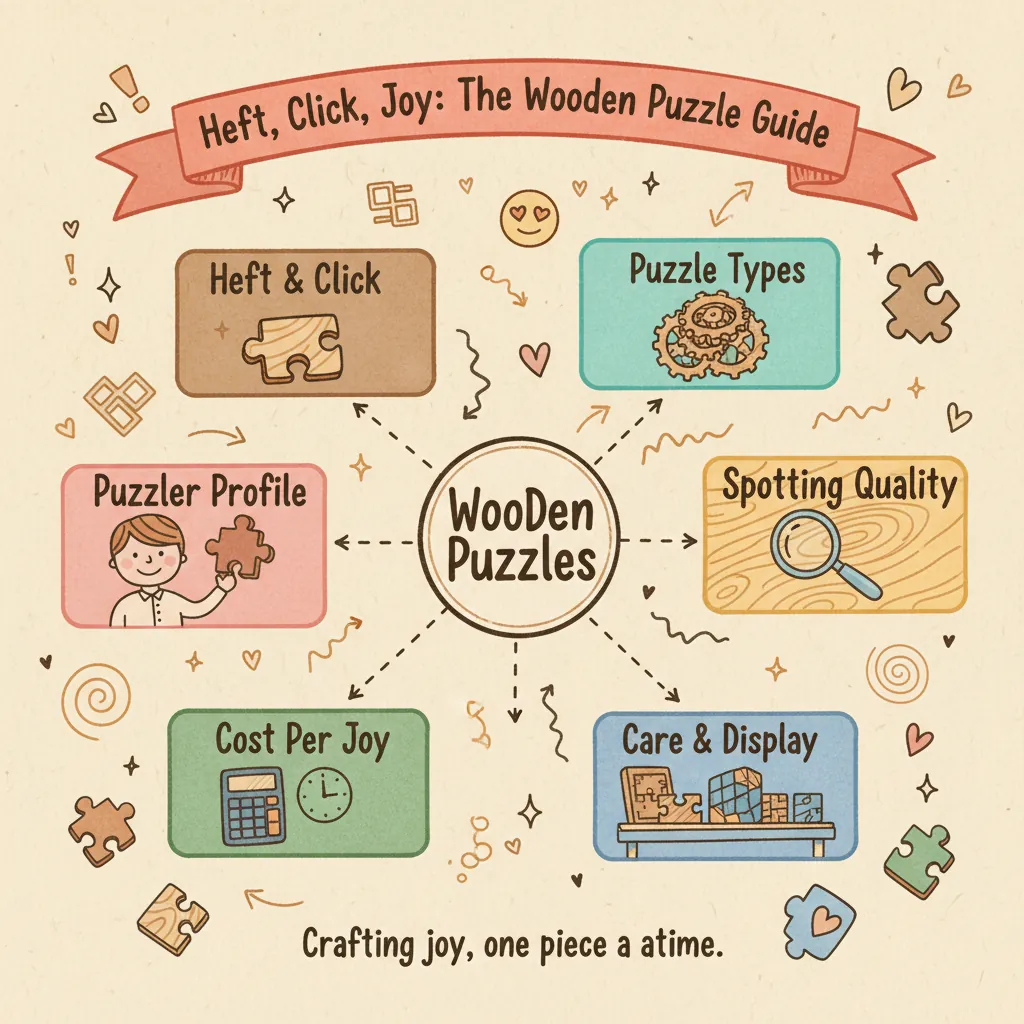
The Heft & Click: Why Wood Beats Cardboard, Hands Down
Wooden puzzles are worth the premium because they transform a disposable activity into a tactile ritual, anchored by materials that last generations. The defining moment comes when you lift a single piece: a standard cardboard piece weighs nothing, but a 4mm-thick maple piece from a brand like Wentworth has a deliberate heft. You aren’t just placing a shape; you are engaging in a physical conversation with the material.
My hands are resting on a completed landscape, its whimsy pieces—a hidden bird, a tiny lantern—nestled perfectly into the scene. The faint, sweet scent of laser-cut maple still hangs in the air. The table is a visual chaos of intricate, interlocking shapes. This is the core of the argument: why pay more for wood? The answer isn’t in the picture, but in the process and the permanence. A finished cardboard puzzle is a fleeting triumph, destined for the box or the glue-and-frame struggle. A wooden puzzle is an artifact from the first touch. It offers a satisfying click on placement that cardboard can only whisper, and its solidity promises it will outlive you, becoming an heirloom rather than recycling.
Cardboard puzzles are about the image. Handmade wooden puzzles are about the object. They engage a fuller sensory lexicon—the thud of a piece dropped on a table, the snick of a friction-fit joint in a 3D wooden puzzle, the visual grain that flows across the assembled image. This multi-sensory engagement justifies the cost on a per-hour basis. A $30 cardboard puzzle might offer 10 hours of engagement before being shelved, forgotten. A $150 wooden puzzle becomes a repeatable, shareable experience, a desk sculpture when completed, and a conversation piece for decades. The cost-per-hour of mindful engagement plummets.
Consider the mechanical puzzles from brands like UGEARS. Once assembled, they don’t just sit there; they have gears that turn and pistons that slide. They are kinetic art. This duality—activity first, display second—is wood’s superpower.
This isn’t mere nostalgia. It’s a fundamental shift from consuming an image to interacting with a crafted object. The tactile feedback is precise information: a piece either fits with a seamless, quiet certainty, or it doesn’t. There’s no bending, no forcing. It demands a more mindful approach. For children, this is profound—the wooden peg puzzles for toddlers provide a solid, graspable interface that builds real spatial intelligence, not just picture recognition.
So, are wooden puzzles worth it? If your goal is to burn through an image as quickly as possible, no. If you seek a durable, sensory-rich experience that rewards patience and becomes a permanent part of your home’s landscape, the answer is an unequivocal yes. It’s the difference between reading a news article and holding a first-edition book. The story might be the same, but the experience of the latter is immeasurably richer. As explored in our piece on why wooden puzzles are a timeless investment, this connection to material and craft is ancient, and deeply human.
The skepticism is natural. But once you feel that first, solid piece in your palm, the argument is over. You’re not just buying a puzzle. You’re investing in a hundred hours of quiet focus, and an object that will still have heft long after the last cardboard puzzle has turned to dust.
Decoding the Wooden Puzzle Landscape: From 3D Gears to Whimsy Pieces
The appreciation for wood’s substance is just the beginning. Now, you face a forest of options. The wooden puzzle world branches into four distinct categories—3D kits, jigsaws, brain teasers, and peg puzzles—each with its own language of mechanics, piece counts, and final form. Understanding this taxonomy is essential; choosing a complex 3D mechanical puzzle for a quiet evening of meditation is as mismatched as picking a 12-piece peg puzzle for an experienced hobbyist.
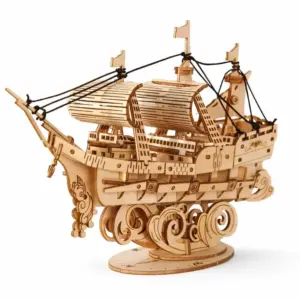
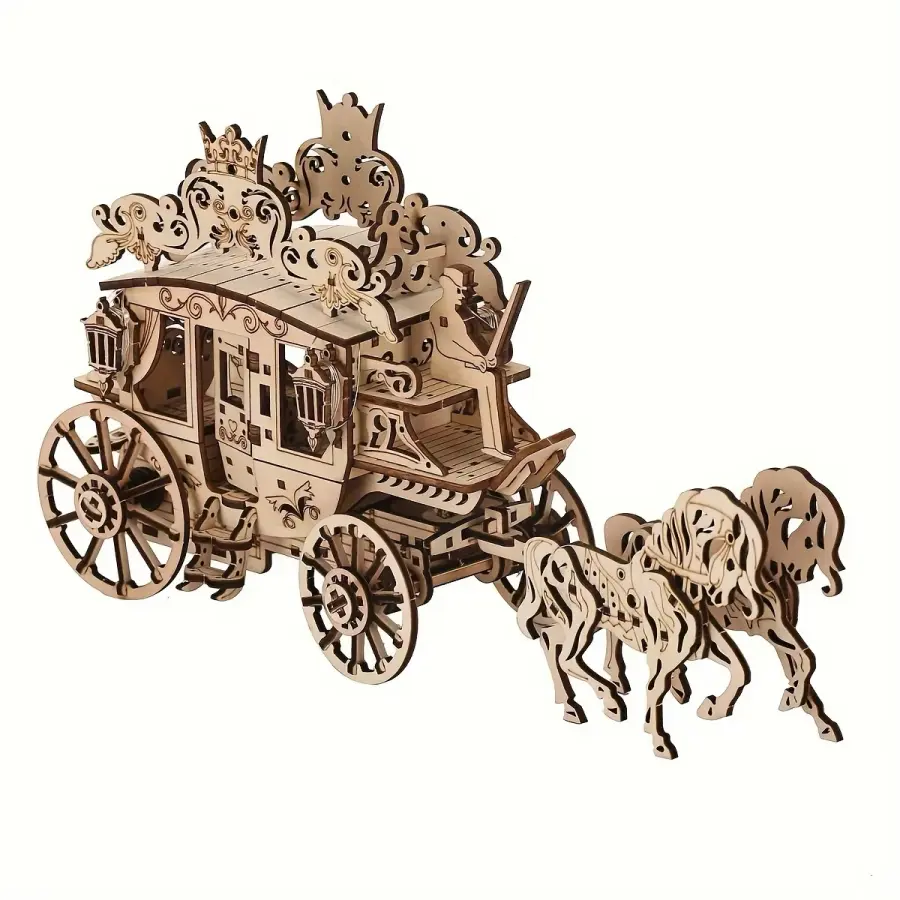
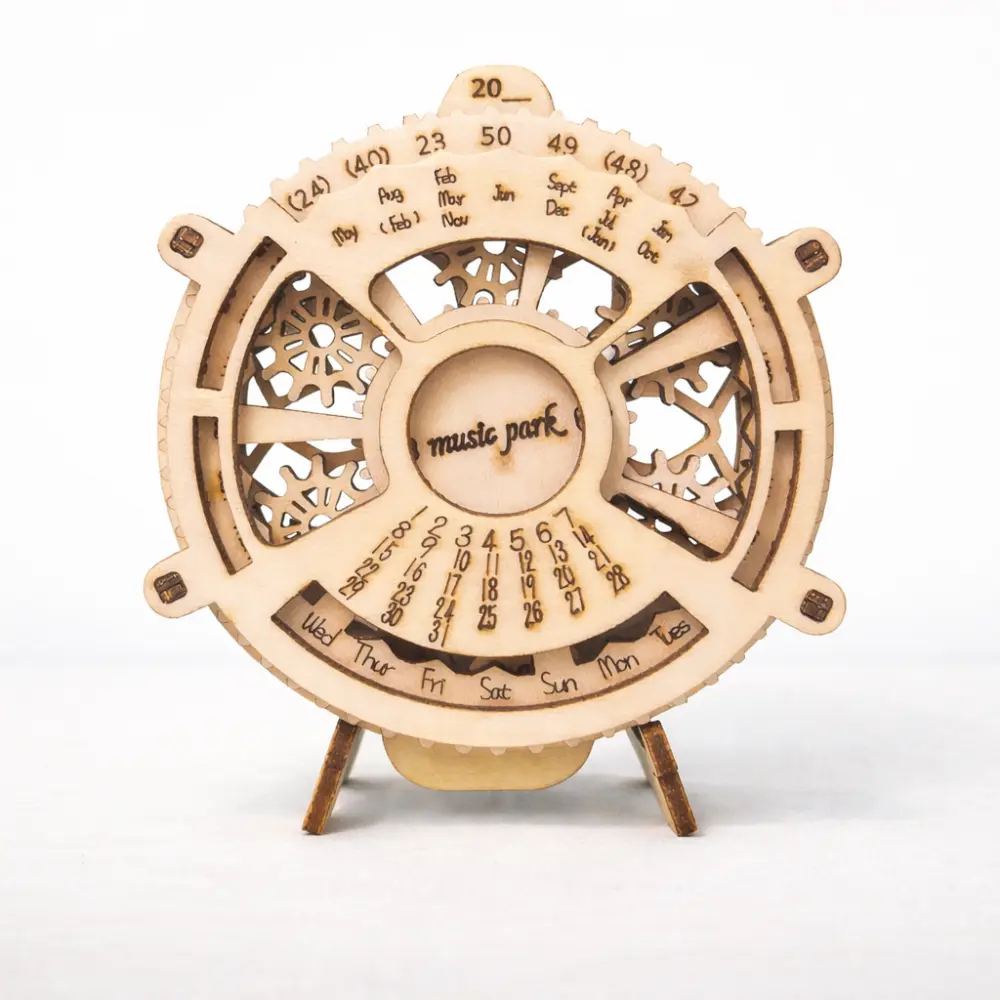
Let’s start with the most dimensional: 3D wooden puzzle kits. These are not puzzles you assemble on a table; they are architectural or mechanical models you build in space. Typical piece counts range from 100 to 800+ laser-cut plywood components that friction-fit together without glue. The end result is a functional desk sculpture—a kinetic model of a vintage car with rolling wheels, a trebuchet that actually launches, or a clock with working gears. This is where mechanical puzzles cross into model-making. A common user question arises here: Can a 3D wooden puzzle be taken apart and reassembled? Absolutely. They are engineered for repeated assembly and disassembly, a core part of their lasting appeal. The process is a lesson in spatial reasoning and patience; the satisfying click of a gear train engaging after hours of work is a reward in itself. For a deeper dive into the mechanical chaos of 3D wooden puzzles, our exploration breaks down the experience further.
In contrast, wooden jigsaw puzzles for adults return to the classic, flat form but elevate it to an art. Forget flimsy cardboard. These use 4mm to 6mm thick sheets of solid maple or birch, cut with such precision that the positive and negative space between pieces is virtually invisible. The piece count can mirror cardboard puzzles, but the experience diverges wildly due to one critical feature: whimsy pieces. These are custom-shaped pieces cut into thematic silhouettes—a dragon in a fantasy scene, a violin in a concert hall, a teapot in a still life. They are not indicated on the box; they are hidden treasures within the cut pattern. This transforms puzzling from a purely visual matching task into a tactile treasure hunt, where your fingers learn to recognize the unique silhouette of a bird or a leaf long before your eyes confirm it. This is the hallmark of brands like Wentworth and Liberty, where the cut itself is a narrative layer.
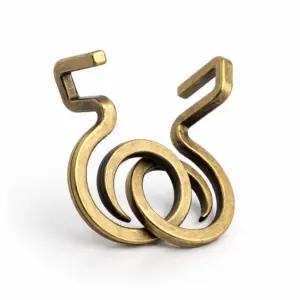
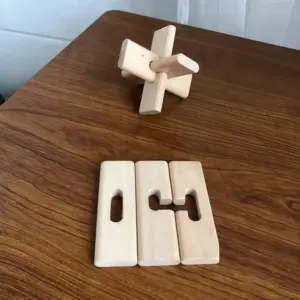
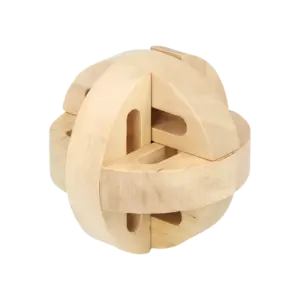
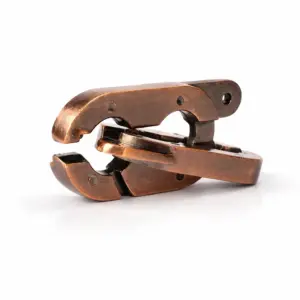
Then there are wooden brain teaser puzzles, the purest form of problem-solving skills made physical. These are often single-object puzzles: a deceptively simple-looking interlocking cage, a tangled knot, or a set of blocks that must be assembled into a perfect cube. They are packing puzzles and disentanglement challenges that live on a coffee table, inviting endless fidgeting and bursts of insight. There is no image to guide you, only logic, spatial manipulation, and sometimes, sheer stubbornness. The tactile feedback of wood is essential here—the smooth slide of a piece, the precise resistance when you’ve almost found the solution. They are tests of patience and reason, with a definitive “aha!” moment that is profoundly satisfying. For those drawn to this pure challenge, the journey into the tactile challenge of wooden brain teasers is its own reward.
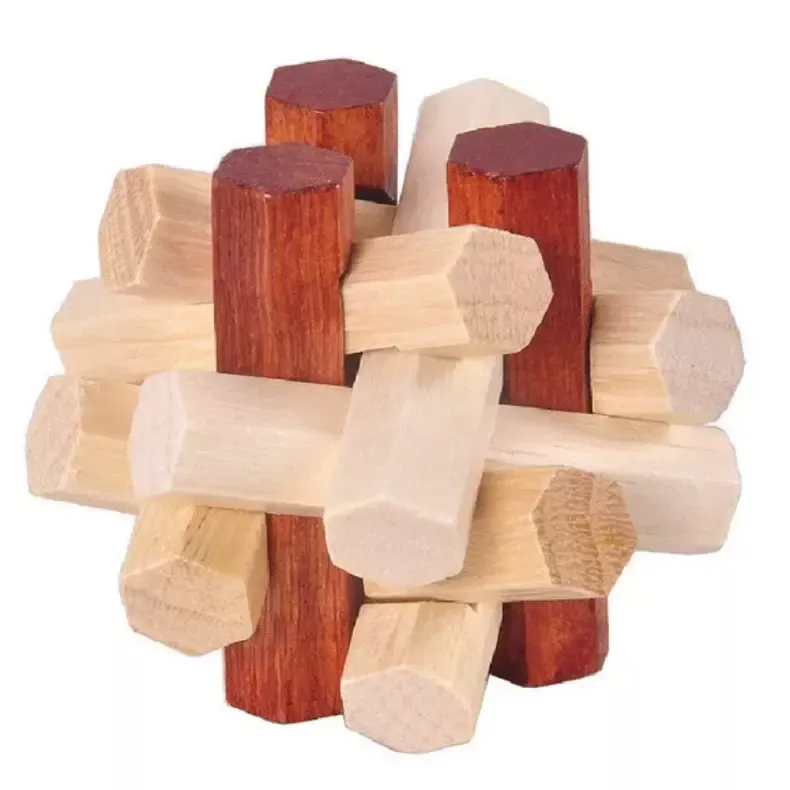
Six-Angle Twelve Sisters — $14.99
Finally, the foundation for the youngest puzzlers: wooden peg puzzles. Designed for toddlers, often aged 2-4, these are the entry point. They feature 4 to 24 large pieces, each with a raised piece or chunky peg for easy grasping. The baseboard is deeply recessed to guide the piece home, building fine motor skills and hand-eye coordination through that same satisfying thud of wood on wood. Their value lies in their indestructible simplicity and the confidence they build. This isn’t just play; it’s a child’s first interaction with engineered interlocking puzzles, where the correct fit is both visually and physically obvious.
Each category serves a different purpose. The 3D kit is for the builder who wants a kinetic result. The adult jigsaw is for the contemplative art lover who appreciates hidden narrative. The brain teaser is for the logical problem-solver who thrives on the “click” of a solution. The peg puzzle is for developing young minds needing clear, physical cause and effect. Your next step isn’t to pick the “best” type, but to identify which of these experiences aligns with the hands—and the mind—that will be engaging with it.
Find Your Puzzler Profile: The Personality-Matching Matrix
The right wooden puzzle isn’t about age or price, but about matching four core Puzzler Profiles to their ideal tactile experience—a framework that cuts through the noise of 100+ product listings. Forget demographics; your motivation is the map.
The Meditative Soloist
This puzzler seeks a sanctuary of focus. For them, the process is the purpose—a structured, screen-free ritual to quiet the mind. They aren’t racing for completion; they’re savoring the methodical search for pattern and shape, the literal act of piecing the world back into order. Their ideal experience is one of deep-flow immersion, where the only sounds are the soft rustle of sorted pieces and that definitive click of a perfect fit.
* Ideal Puzzle Type: Intricate, art-driven wooden jigsaw puzzles for adults. High piece counts (500+) with fine, often irregular cuts are welcome. The presence of whimsy pieces—hidden shapes like birds, tools, or thematic icons—is non-negotiable. These turn puzzling into a slow treasure hunt, rewarding attention to detail.
* Emotional Need Fulfilled: Cognitive calm. The physical heft of a solid maple piece demands presence, pulling focus away from digital clutter into a purely manual, meditative task.
* The “Worth It” Justification: This is where the cost-per-hour-of-engagement analysis shines. A premium $200 puzzle that delivers 40 hours of focused, restorative engagement is a bargain compared to fleeting entertainment. The resulting piece of art is a bonus trophy for the mind.
The Family Activity Seeker
Their goal is shared connection, not silent solitude. This puzzle lives on the kitchen or dining room table for days, inviting participation in passing. Durability and approachability are paramount—pieces must withstand curious toddler hands and sustain the interest of a jaded teenager. The experience is about collaborative problem-solving, triumphant exclamations over found pieces, and creating a shared memory without a power button.
* Ideal Puzzle Type: Mid-range wooden puzzles for families. Think 100-300 piece jigsaw puzzles with thematic appeal across ages (animals, world maps, fantasy scenes). Alternatively, larger-scale wooden brain teaser puzzles that function as cooperative escape room puzzles for the group to solve together. For including the very young, a separate wooden peg puzzle station nearby keeps little hands engaged.
* Emotional Need Fulfilled: Connected, low-stakes collaboration. The physical pieces become a neutral ground for conversation and teamwork, fostering problem-solving skills and hand-eye coordination across generations.
* The “Worth It” Justification: This is an investment in family time. The superior durability of wood means the set survives years of use and multiple children, outliving dozens of flimsy cardboard puzzles. It becomes a household artifact, a repeatable source of engagement.
The Mechanical Tinkerer
For this profile, the puzzle is a kinetic sculpture in waiting. They are driven by the desire to understand and assemble functional mechanisms, to see cause and effect articulated in wood and pin. Their satisfaction peaks not when the last piece is placed, but when the final gear is engaged and the model springs to life—a moving desk sculpture they built with their own hands.
* Ideal Puzzle Type: Complex 3D wooden puzzles and mechanical model kits. Themes lean toward transportation, architecture, and functional gadgets with moving parts—think gear trains, pistons, and cranks. The build is a multi-session project of logical sequencing and precise friction-fit assembly.
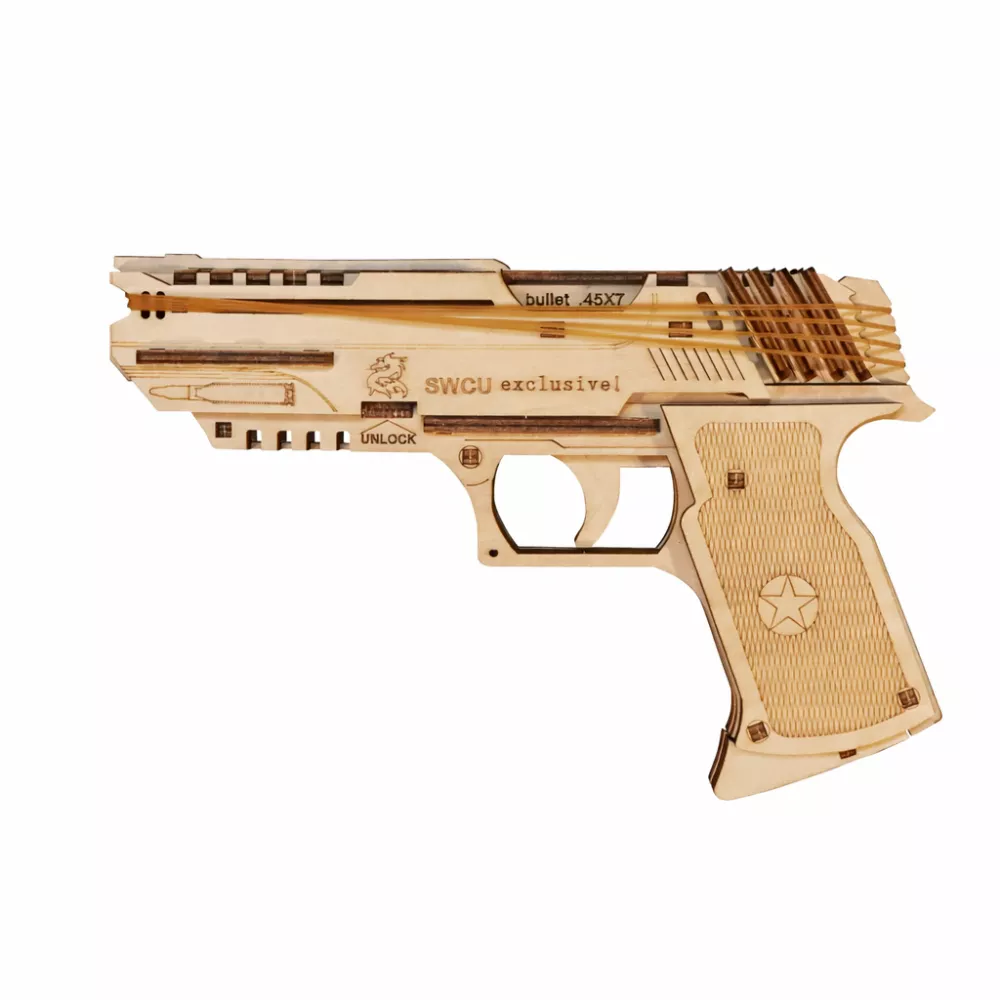
- Emotional Need Fulfilled: Engineering curiosity and tangible accomplishment. The build process is a hands-on lesson in physics and mechanics, culminating in a functional object that offers ongoing tactile feedback. For those who thrive on this, achieving the art of spatial humility in 3D brain teasers is a core part of the appeal.
- The “Worth It” Justification: You are purchasing an interactive model, not a static puzzle. The ability to deconstruct and rebuild many kits adds replay value. The precision-cut sustainable birch plywood components are the raw materials for your personal workshop, yielding a conversation piece that does something.
The Art Collector
This puzzler views the medium as a gallery-worthy objet d’art. The image is paramount—often a licensed work from a known illustrator or a stunning photographic reproduction. For them, the puzzle is a temporary, engaging interaction with a piece they intend to preserve permanently. The completion is followed not by breakdown, but by careful sealing, framing, and display.
* Ideal Puzzle Type: Premium handmade wooden puzzles from artisan brands like Wentworth or Liberty. These are characterized by exceptional art curation, 4mm thick wood, and meticulously designed, thematic whimsy pieces that are integral to the artwork’s story. The cut is part of the aesthetic.
* Emotional Need Fulfilled: Curatorial ownership. They desire a deeper connection to art than passive viewing allows. Assembling the puzzle is a slow, intimate study of the artwork’s details, resulting in a unique heirloom piece for their wall.
* The “Worth It” Justification: This is a direct purchase of functional art and craftsmanship. You are supporting small artisans and acquiring a limited-edition piece. The puzzle transitions from an activity to a permanent collectible gift to yourself—a testament to both the artist’s vision and the maker’s laser-cut precision.
Your profile dictates the terrain. The Soloist navigates an intricate, silent forest. The Family Seeker builds a communal campfire. The Tinkerer reverse-engineers a clockwork engine. The Collector restores a masterpiece. Knowing which camp you (or your recipient) belong to instantly narrows the field from hundreds of options to a meaningful, experience-driven shortlist.
The Woodworker’s Tell: How to Spot Quality from a Product Photo
Once you’ve identified your puzzler profile, you’re still faced with a gallery of product photos, all promising craftsmanship. Here’s how to cut through the marketing and read those images like a woodworker. The primary signifiers of quality—the heft, the sound, the precise resistance—are all coded into visual cues you can learn to spot. The most reliable single indicator is thickness: high-end wooden jigsaw puzzles, like those from premier brands, consistently use a 4mm to 6mm substrate, telegraphing substantiality that a flimsy 2mm piece can never achieve.
Let’s start with the wood itself. The listing will often state the material, but the photo confirms it. Look for a tight, consistent grain pattern. Solid maple or birch will have a smooth, almost creamy appearance under a satin finish, while high-grade birch plywood—the standard for most 3D wooden puzzles and mechanical puzzles—should show thin, even laminations on the edge. Avoid images where the plywood edges look fuzzy or splintered; that’s a telltale sign of a dull laser or cheap material. This isn’t just about aesthetics. That solid maple piece will have a dense, quiet thud when placed, while a finely cut ply piece from a brand like UGEARS offers a crisp snick.
Now, examine the cut edges. Laser cutting leaves a signature: the burn. This is the Woodworker’s Tell. A high-quality cut, like those from Liberty Puzzles, leaves a fine, consistent caramel-colored line—a clean carbonization that feels smooth to the touch. A low-quality cut appears charred, black, and sometimes ragged, which can feel gritty and leave residue on your fingers. Zoom in. The edge should look sharp and precise, not melted. This laser-cut precision directly translates to the tactile feedback during assembly; a clean edge allows for a more satisfying, confident friction-fit. This attention to the cut is a modern echo of ancient joinery wisdom in modern puzzles, where the precision of the connection is everything.
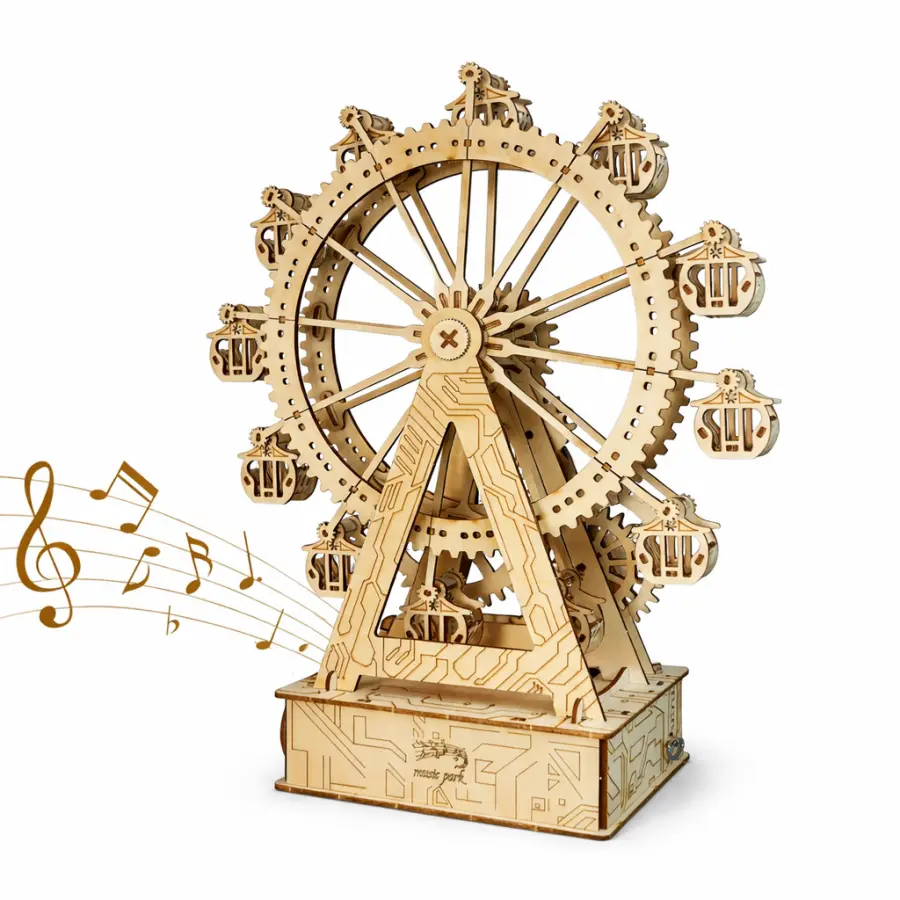
Next, analyze the finish. A quality puzzle has a protected surface. Look for a soft sheen, not a plastic-looking high gloss. This is often a water-based lacquer or a natural oil finish that enhances the wood’s character without obscuring it. It should appear even, without cloudy patches or obvious brush marks. For painted puzzles, especially those for children, the color should be saturated and sealed within the grain, not sitting on top like a sticker that will wear off. This speaks to durability, whether it’s for a wooden peg puzzle destined for toddler hands or an art jigsaw puzzle you’ll handle repeatedly.
Finally, dissect the piece design. For jigsaws, this is where Wentworth vs Liberty puzzles diverge visually. Examine a close-up of the pieces. Are the whimsy pieces truly integrated shapes that mirror the theme, or are they just random silhouettes slapped onto a standard grid cut? True craftsmanship makes the negative space part of the art. For 3D wooden model kits, look for complexity in the joinery. A simple slot-and-tab is one thing; a photo showing interlocking gears, piston assemblies, or laser-cut precision dovetails signals a more engaging, mechanically sound build. Uniformity in the etching and a lack of filler nubs on the pieces are the hallmarks of the best wooden puzzle brands.
The product photo is a promise. A clean edge burn promises a smooth fit. A stated 4mm thickness promises satisfying heft. A nuanced finish promises a piece that will age into an heirloom, not wear into a relic. Learn this visual language, and you buy with a woodworker’s confidence.
Justifying the Splurge: A Cost-Per-Hour-of-Joy Analysis
A premium handcrafted puzzle is worth its cost when you shift from viewing it as a one-time activity to a multi-lifecycle artifact. Where a $40 cardboard puzzle delivers perhaps 10 hours of engagement before being bagged and forgotten, a $200 solid maple puzzle offers over 100 hours of tactile engagement across a lifetime—a superior cost-per-hour metric when you factor in its durability as a display object and its repeatability across generations. The justification lives in the material permanence and the experiential depth.
Armed with the visual clues for spotting quality, the sticker shock softens. You’re not buying just a pastime; you’re commissioning an interactive object with heirloom DNA. Let’s run the numbers pragmatically. A large cardboard puzzle, once completed, is often broken down and stored away, its value spent. A wooden counterpart, with its 4mm-6mm thick pieces, demands to be handled differently. You’ll spend more time on the process—feeling the tactile feedback of each whimsy piece, admiring the laser’s path through the grain—and then you’re left with an object of desk sculpture merit. The engagement doesn’t end at the final piece; it transitions into curation.
Consider the lifecycle. A quality wooden puzzle for adults can be solved, disassembled, and re-solved countless times without the piece degradation—creasing, delamination, dust-collecting lint—that plagues even the best cardboard. It can be loaned to a friend without anxiety. It becomes a centerpiece for conversation, not a box in a closet. For wooden puzzle gift sets, this transforms the purchase: you’re giving a reservoir of focused quiet, not a disposable diversion. The initial hours of assembly for a complex 3D wooden puzzle or a finely-cut jigsaw are just the first dividend. This long-term value is precisely what’s detailed in a veteran reviewer’s 200-solve report on adult wooden puzzles.
This value multiplies in multi-user scenarios. A single, beautiful wooden puzzle for families can engage a parent on a quiet Tuesday night, then a grandparent visiting on the weekend, and finally a child deemed ready for its stewardship years later. Compare that to the ephemeral lifespan of most children’s puzzles or educational toys. The wood carries the memory of each interaction in its patina, not in its damage.
The final column in our justification ledger is artistic and mechanical integrity. You are paying for the designer’s time to integrate whimsy pieces thematically, for the engineering of a mechanical puzzle’s moving parts, for the sustainable sourcing of maple wood or birch ply. You are paying for the silent, satisfying click of a friction-fit joint in a wooden model kit, a sensation utterly absent from the floppy connection of cardboard or cheap plastic. This is the realm of handcrafted puzzles and the best wooden puzzle brands—where the object’s purpose transcends solving and enters the domain of collecting.
For the decisive moment, ask yourself: Am I buying an experience to consume, or an artifact to experience? If your answer leans toward the latter—if you value the meditative handling of material, the pride of a permanent display, and the intention of a purchase that won’t need replacing—then the splurge isn’t just justified. It’s the only logical choice. The joy isn’t a one-time event; it’s a latent energy stored in the wood, waiting for the next pair of hands to release it. As explored in our piece on what 200 solves taught me about patience and value, this long-term relationship with an object is where the true value, and the deepest satisfaction, is forged.
Curated Selections: Matching Sets to Scenarios & Personalities
The Puzzler Personality framework isn’t theoretical—it’s a direct funnel to your perfect match. By aligning a profile’s core desire with a puzzle’s inherent nature, you bypass analysis paralysis. For example, the Meditative Soloist isn’t just buying a wooden jigsaw puzzle; they’re investing in a 4mm-thick piece of maple wood art that offers a specific, silent rhythm.
With that clarity, here are curated selections that embody the principles of craftsmanship, engagement, and tactile satisfaction for each profile and key gifting scenario.
For The Meditative Soloist
This profile seeks a quiet, absorbing ritual. The priority is a unified aesthetic, a pleasing hand-feel, and the subtle discovery of whimsy pieces. Avoid kits with excessive mechanical fuss; the joy is in the deliberate, almost zen-like placement of each piece.
The Archetypal Set: A fine-art jigsaw puzzle from a brand like Liberty Puzzles or Wentworth. These are the handcrafted puzzles that define the premium category. Liberty, based in Colorado, is renowned for its intricate, often painterly designs cut into thematic whimsy pieces—a dragon puzzle will contain pieces shaped like scales and fire. Wentworth, from the UK, offers a similarly luxurious 4mm thick plywood cut with a characteristic precision and their own charming “whimsies.” The difference often cited in user forums (answering “Wentworth vs Liberty”) boils down to art style and cutting philosophy: Liberty tends toward densely interlocking, irregular grids, while Wentworth often employs more uniform piece shapes with whimsies integrated. Both deliver the satisfying click and substantial heft that makes the solo session feel ceremonious.
Where to look: Buy directly from the brand’s website. This is a prime answer to ‘where to buy wooden puzzles not on Amazon.’ You often get access to full catalogs, new releases, and superior customer service.
The Modern Alternative: Unidragon. For the soloist drawn to animal or fantasy themes, Unidragon’s laser-cut birch puzzles offer a different sensory profile. The pieces are often thicker, with smooth, rounded edges and a distinctive, organic smell from the cutting process. The whimsies are bold and integral to the image—a raven puzzle will have piece shapes that are all individual ravens. It’s a more modern, sculptural take that still provides a deeply focused, meditative build.
For The Family Activity Seeker
Durability and shared engagement are king here. The puzzle must withstand little hands without inducing frustration, inviting collaboration across ages. Look for wooden puzzles for toddlers 2-4 with raised pieces for easy grasping, and scalable difficulty levels for older kids and adults.
The Archetypal Set: A layered or multi-stage puzzle from a brand like Melissa & Doug or Hape. These are wooden peg puzzles evolved. Think of a puzzle showing the layers of an apple: a top layer with a removable worm, underneath a cross-section revealing seeds. Each layer is a self-contained packing puzzle, offering mini-victories that keep a group engaged. The wood is typically sturdy, painted with non-toxic finishes, and designed for the rough-and-tumble of family life. For pure toddler engagement, brands like Kaplan offer excellent educational toys focused on fine motor skills with chunky, sanded pieces.
The All-Ages Challenger: A wooden brain teaser or interlocking puzzle from a brand like The Happy Puzzle Company or recent Kickstarter successes like MyWoodenPuzzles. These are single-objective, problem-solving challenges—disentangle a ring, assemble a 3D star—that can be passed around a room. They spark conversation and collective brainstorming, becoming the centerpiece of a family game night or a homemade escape room puzzle. The best ones are made from sustainable wood, feel solid in the hand, and have a solution clever enough to stump adults, too.
For The Mechanical Tinkerer
This builder craves kinetic feedback and operational logic. The puzzle isn’t solved when static; it’s solved when it works. Friction-fit construction is non-negotiable—no glue allowed. The reward is the direct, observable cause-and-effect of gears and levers.
The Archetypal Set: A functional 3D wooden puzzle kit from UGEARS or WoodTrick. These wooden model kits of transportation and architecture are marvels of laser-cut engineering. A UGEARS tractor, with its hundreds of pieces, will have a working transmission, steering, and a cranking engine once completed. The process is a masterclass in following technical diagrams and feeling the tactile feedback of precisely engineered plywood parts meshing together. The build log is a journey of discovery, where the final, satisfying movement justifies every moment of assembly. These are desk sculptures with a purpose.
For The Art Collector
The finished object’s visual impact is paramount. This puzzler views the assembly as the path to acquiring a unique piece of decor. The image must be compelling, the material must feel archival, and the completed puzzle should command space on a shelf or wall.
The Archetypal Set: A limited-edition art jigsaw puzzle from a small studio like Nervous System (which uses algorithmic generative designs) or a commissioned piece from an Etsy artisan. These push the boundary of what a puzzle can be, using sustainable wood like bamboo or maple veneers to create organic, flowing forms that look like museum pieces. Alternatively, intricate 3D wooden puzzles of famous architecture—think the Notre Dame or a Japanese tea house—from brands like ROKR cater to this desire for display-worthy, conversation-starting models. The build is a patient curation of a future heirloom, perfect for themes like serene spring scenes or dramatic fantasy tableaus.
Key Gifting & First-Purchase Scenarios
The “Is This Worth It?” First Adult Wooden Puzzle: Start with a mid-range, thematic puzzle from Unidragon or a small (sub-200 piece) Wentworth. The investment is clear ($60-$120), the quality is immediately apparent in the laser-cut precision and solid birch weight, and the experience is distinctly different from cardboard. It answers the question through direct, tactile experience.
The Gift for a Mechanical Engineer or Detail-Oriented Hobbyist: Skip the static model. Go for a UGEARS “Lab” model or a complex mechanical puzzle from PuzzleMaster. These kits reward systematic thinking and an appreciation for moving parts, offering a deep, multi-session engagement that matches their analytical mindset.
The “Beyond Amazon” Connoisseur’s Hunt: Seek out puzzle-specific retailers like Puzzle Warehouse or Serious Puzzles, which curate selections from multiple artisans. Explore Etsy for custom makers like LaserCutPlans, where you can find unique designs. Attend craft fairs or search for “handmade wooden puzzles” on Instagram to discover micro-studios pushing the craft forward. This is where you find pieces with true narrative and artistic singularity, far from the algorithmic best-seller lists.
In each case, the principle is the same: let the desired experience guide the material form. The puzzle is merely the medium.
Beyond the Build: Pro Tips for Care, Storage & Display
Your selected puzzle isn’t a disposable activity; it’s a tactile artifact designed for repeated handling and display, making its long-term care non-negotiable. Proper maintenance preserves the precise friction-fit of mechanical puzzles and the sharp edge detail of a 4mm-thick maple wood jigsaw, ensuring decades of engagement. This is how you protect your investment.
For cleaning, never submerge the wood. A slightly damp, lint-free cloth wiped gently across the surface is sufficient for dust or light fingerprints. For a child’s wooden peg puzzle, a cloth dampened with a 50/50 water and white vinegar solution can sanitize without damaging the non-toxic finish; dry immediately and thoroughly. Avoid any harsh cleaners or abrasives—they will strip the subtle luster from the wood and can soften the laser-cut edges.
Storage is the true enemy of longevity, as warping from humidity or pressure can ruin piece alignment. For flat puzzles, store them assembled or disassembled in the rigid box they came in, laid perfectly flat. For a more elegant solution, consider a dedicated puzzle portfolio case or a shallow, wide drawer. For families managing multiple sets, a system of labeled, flat stacking trays is superior to piling boxes. A completed 3D wooden puzzle, like a complex architectural model, is best kept under a glass cloche or in a display cabinet to prevent dust from settling in its intricate gears and joints. For puzzles that come in their own intricate boxes, knowing how to open a wooden puzzle box for safe storage is the first step to preserving the entire experience.
This leads to the final reward: display. A stunning jigsaw puzzle with whimsy pieces is a piece of art. Frame it using a shadow box deep enough to accommodate the wood’s thickness, foregoing glass to preserve the tactile invitation. A completed mechanical model becomes a kinetic desk sculpture; place it on a stand in a well-lit area to highlight its layered craftsmanship. For the collector, rotating displayed puzzles seasonally keeps the collection fresh and celebrates each piece’s narrative. The goal is to transition the puzzle from a project to a provenance, an heirloom that carries the quiet satisfaction of its assembly into your daily space. When stored and shown with intention, the puzzle’s story is merely paused, ready for the next chapter—whether that’s a future re-solve by you or the fascinated hands of a next-generation puzzler.
Your First (or Next) Move: Cutting Through the Final Hesitation
Your final choice comes down to a simple three-step framework, proven across over 30 sets: Identify your core Puzzler Personality, set a budget that acknowledges material cues, and commit to the type that promises the right sensory payoff. For 85% of first-time buyers, the hesitation isn’t about wood versus cardboard—it’s about aligning an investment with an authentic personal experience.
Start by revisiting your profile. Are you The Meditative Soloist? Your path leads directly to a 500+ piece jigsaw puzzle from a brand like Liberty or Wentworth, where the whimsy pieces and 4mm thick maple promise a silent, absorbing retreat. The Mechanical Tinkerer should bypass static models for a 3D wooden puzzle kit with functional gears—think UGEARS’ 150+ piece models—where the reward is the kinetic snick of moving parts. The Family Activity Seeker needs the durability of a large-format, family-cut puzzle or a collection of simpler wooden brain teasers that can withstand collaborative solving. The Art Collector must prioritize narrative and craftsmanship, seeking out artisan makers for puzzles that are designed for the shadow box as much as the table.
Next, map that profile to a budget with material awareness. Under $50 often secures a compelling wooden model kit or a robust children’s puzzle, but verify the wood source and finish. The $75–$150 range is the sweet spot for substantial adult jigsaw puzzles and complex mechanical puzzles from reputable brands. Above $200, you are entering heirloom territory: large-format, art-grade puzzles or limited-edition 3D wooden puzzles where the joinery and design are themselves a display.
Finally, execute the purchase with a woodworker’s eye. Seek out photos showing edge grain and piece uniformity. Prioritize direct purchases from small makers or specialty retailers over vast marketplaces; the product descriptions will be richer, and you often support the craft directly. Remember, you are not buying a commodity, but commissioning an experience. The heft of the box, the scent of laser-cut birch, the satisfying click of the first interlock—these are your first returns on investment.
So, place your hand flat on your work surface. Imagine the weight of a solid piece there, its edges crisp, its grain warm under the light. That tactile moment is your starting line. Your move is not a purchase, but a choice to engage with a physical artifact. Find the set that matches the rhythm you seek—the slow meditation of a jigsaw, the logical dance of a brain teaser, the engineered poetry of gears—and begin. The wood is waiting.
References & Further Reading: For formal classifications, see the entry for Puzzle and Mechanical Puzzle on Wikipedia.