The Desk Trophy: When a Puzzle Stops Being Fun and Starts Being Personal
A puzzle becomes a desk trophy when its solve time is measured in weeks, not hours, and its presence shifts from a challenge to a quiet, personal provocation. This occurs around the 40-hour mark of cumulative effort, when the zinc alloy feels less like a game and more like a component you’ve been tasked to debug. For the adult who breezes through standard brain teasers, this is the only territory left to explore—a realm where the metric isn’t fun, but formidable, friction-filled engineering.
You know the sensation. The cool, dense weight in your palm, a mass typically between 40 and 200 grams of machined metal. Your fingers trace the same burr-finished ridges for the hundredth time, applying the “obvious” pressure, hoping for a telltale shift. Instead, you get a stubborn, silent resistance, or worse, the hollow clack of a dead end. Patience is not enough. Logic is not enough. You are facing a device where the difficulty is a deliberate, multi-faceted design philosophy, not a number on a box.
Competitors will talk about difficulty levels. Hanayama’s Level 1 to 6 scale is a useful legend, but it’s a topographic map for a mountain that changes its rock composition. Two different Level 6 Grand Master puzzles can demand entirely different currencies of intelligence. One might tax your spatial visualization to its limit; the other might be a logic trap that resets with a single misstep. The question isn’t “How hard is it?” but “How is it hard?” This is what separates a tough puzzle from one that stays on your desk for months, silently mocking you.
The allure for the seasoned solver is this precise, almost perverse, shift in purpose. You’re not looking for a diversion. You’re seeking a calibrated instrument of cognitive friction. You want fidget-resistance. A child’s toy is designed to yield eventual delight; a high-end cast puzzle is designed to withstand brute force intuition, to conceal its non-intuitive axis of movement, and to create what I call solution lag—that deliberate, often agonizing delay between intellectually understanding the mechanism and physically executing the flawless sequence of maneuvers to prove it.
This is the core of the search for challenging brain teasers that aren’t jigsaws. It’s a tactile, spatial, and sequential duel. The heft matters. A brass puzzle has a warmer, softer click, a subliminal suggestion of give. A zinc alloy or steel piece delivers a sharp, high-pitched clink of finality, a sound that speaks of tighter machined tolerances and unforgiving pathways. This isn’t just aesthetic; it’s psychological warfare waged through materials science.
If your collection has outgrown common challenges, you’re no longer shopping for a puzzle. You’re curating obstacles. You are selecting the specific type of wall you wish to scale: the optical illusion of hidden seams, the betrayal of false symmetry, or the sheer, meticulous memory test of a sequential lock. The following guide is built on that dissection. We will move past ratings and into the anatomy of defiance, preparing you to acquire not just a product, but a personal benchmark.
For a foundational look at the visceral frustration of a high-difficulty cast puzzle and the durable logic behind it, explore the principles in Metal Puzzles That Don’t Break: A Veteran’s Guide to Cast Logic.
Deconstructing the Machine: The Three True Engines of Difficulty
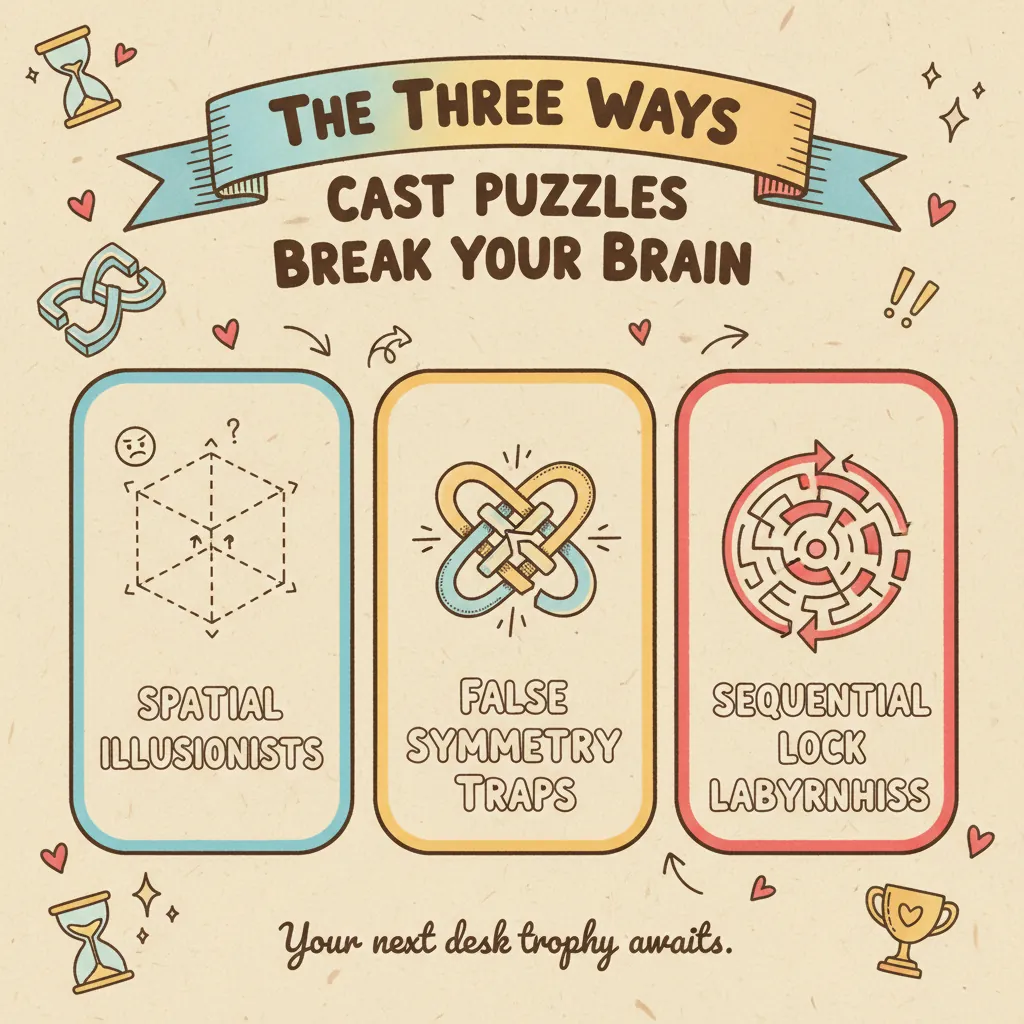
The difference between a tough puzzle and an unconquered desk trophy isn’t patience or time. It’s mechanical language. To move from frustrated to fluent, you must learn to diagnose the specific type of defiance encoded in the metal. A Hanayama Level 6 rating tells you that it’s hard, but categorizing its difficulty by mental barrier reveals why and how it will break your approach. For the expert mechanical puzzles for adults, difficulty boils down to three distinct engines: Spatial Illusion, False Symmetry, and Sequential Lock.
Understanding this taxonomy is the first real tip for solving advanced cast puzzles. It changes your initial interrogation of the object. You’re no longer asking “How do I take this apart?” but “What principle is this designed to exploit?” Let’s disassemble each engine.
Spatial Illusion: When Your Hands Are Lying to You
This engine preys on your brain’s hardwired spatial reasoning. The puzzle pieces appear to move along one axis, but the true, non-intuitive axis is hidden by design. It’s the mechanical equivalent of an optical illusion, a core challenge in many mechanical puzzles. Your fingers trace the grooves, feeling for a linear slide or a simple rotation, while the actual solve path requires a compound tilt-and-turn motion that feels physically impossible. The pieces are machined with such precision that the seams of movement are visually erased. The hallmark here is solution lag—you might intellectually grasp the necessary alignment after hours of study, but physically coordinating the precise, often counter-gravity maneuver to achieve it remains a separate, motor-skill challenge. Think of aligning two gyroscopes inside a shared cavity. A classic example is the Hanayama Cast Vortex, where the solution feels less like disentanglement and more like convincing two reluctant spirals to swap places in fourth-dimensional space.
False Symmetry: The Betrayal of Pattern Recognition
Humans are exceptional pattern-finders. This engine weaponizes that strength. You are presented with a form that appears perfectly symmetrical or comprised of identical, repeating elements. Your brain locks onto this perceived order, constructing mental models based on mirrored movements. The trap is that the symmetry is a lie. One notch is milled 0.5mm shallower; one internal channel follows a subtly different radius. The puzzle solves not through mirrored, simultaneous actions, but through a deliberate, asymmetric sequence that feels wrong to initiate. The frustration hits when you’ve executed the “logical” symmetric move a hundred times, only to discover progress demands you favor one side, break the pattern, and trust the anomaly. This is where a burr finish isn’t just aesthetic; it hides visual cues, forcing you to rely on pressure and sound—the clink of a correct, if asymmetrical, engagement.
Sequential Lock: The Memory Labyrinth
Here, the individual moves aren’t necessarily hidden. You might even find the first few steps quickly. The engine of difficulty is procedural amnesia. This is a sequential discovery gauntlet where each movement opens a new, temporary vector, which must be used before another element resets the state. It’s a Rube Goldberg machine in reverse. One wrong move doesn’t just block progress; it often collapses the path back to the start, forcing a complete reset. The challenge is holding a complex, non-linear sequence in working memory while your hands execute it. Fidget-resistance is a key feature; you cannot mindlessly play with a true sequential lock puzzle. It demands total cognitive engagement for every manipulation. The infamous Hanayama Cast Infinity operates on this principle, as do many high-end disentanglement puzzles where the act of “threading” one piece shifts the relationship of three others in a non-reversible way.
This framework explains why one solver’s “impossible” puzzle is another’s weekend project. If you have an engineer’s mind for spatial transforms, a False Symmetry puzzle may break you while you ace Spatial Illusions. This is also the answer to comparing cast metal to wooden take-apart puzzles. Wood puzzles often rely on friction fits and broader tolerances; their “aha” moment is usually spatial. A high-end cast puzzle, with its sub-millimeter machined tolerance, can layer spatial challenges with sequential traps and material deception, creating a denser, more unforgiving experience.
Furthermore, this is the critical distinction between a quality cast puzzle and a 3D-printed counterpart. Injection-molded or die-cast metal allows for that flawless, seamless finish that enables Spatial Illusion and False Symmetry. 3D printing, while excellent for prototyping, often leaves layer lines that inadvertently telegraph movement axes and breaking points, stripping away the very illusion that creates the difficulty.
So, is the Hanayama scale accurate? Within its bounds, yes. But a Level 6 puzzle can be a 6 for three different reasons. One might be a brutal Spatial Illusion (Vortex), another a mind-bending Sequential Lock (Infinity). They are equally “Grand Master” level, but they challenge entirely different cognitive muscles. Recognizing this is how you select your next, perfect personal benchmark. To understand why your hands are lying to you when solving metal puzzles, the tactile analysis in Why Your Hands Are Lying To You is essential.
The 2026 Arena: New Challengers and Evolved Classics
The distinction between Spatial Illusion and Sequential Lock is the foundation, but the 2026-level challenge is built upon it with tighter tolerances, radical material choices, and designer philosophies that weaponize the solver’s own assumptions. This year, the hardest cast puzzles aren’t just about complexity—they’re about achieving a near-perfect marriage of deceptive geometry and machined interference, with prices reflecting the precision, generally spanning $20 to $50 USD for weights from a dense 40g to a substantial, palm-filling 200g. The competitive landscape often treats these as static products, but for the connoisseur, they are evolving organisms.
Precision is no longer just a luxury; it is the primary engine of modern difficulty. A variance of even half a millimeter in a critical channel can turn an elegant sequential discovery into a brute-force struggle. High-end metal puzzle brands are now leveraging CNC milling and advanced casting techniques once reserved for aerospace components to achieve this. The result is a burr finish so seamless that your fingers cannot differentiate between a fixed surface and a potential slider, and internal channels with tolerances so tight they create a deliberate, maddening solution lag. You’ll comprehend the move, but executing it requires a specific, counter-intuitive angle of pressure—a physical whisper where a shout is expected. This is where the hobbyist-grade puzzle parts ways with the grand master challenge.
Material choice has evolved from mere aesthetics to active psychological warfare. The classic zinc alloy offers a cool, substantial heft and a dull, final clunk when solved. Brass, increasingly popular in limited runs, provides a warmer weight and a more resonant, satisfying clink—a tiny auditory reward that becomes crucial during a long solve. Some 2026 prototypes are experimenting with aluminum for its deceptive lightness, making inertial cues useless, or with two-tone anodized finishes that visually camouflage the very seams you need to find. The sound of the metal-on-metal contact, its pitch and resonance, becomes a diagnostic tool, or a deliberate red herring.
Within this arena, the quest for the hardest Hanayama cast puzzle 2026 has a new dimension. While classics like Vortex and Infinity remain benchmarks, their difficulty is now a known quantity. The new challengers are those that layer the three difficulty types or introduce a fourth: procedural ambiguity. These puzzles don’t just have a hidden axis; they have a sequence that feels physically impossible based on visual and tactile feedback, requiring a leap of faith that contradicts basic mechanical intuition. They are level 6 grand master metal puzzles designed not just to be solved, but to be believed.
This forward-looking analysis is absent from most retailer pages, which simply list products. To understand the trend, one must look at the designers’ intent. The philosophy is shifting from “puzzle” to “mechanical artifact.” The goal is to create an object that feels inevitable in its solved state and utterly inscrutable in its assembled state, with no visible means of deconstruction. It’s the difference between a lock you can pick and a sealed vault that appears to have no door.
Yet, the landscape isn’t solely defined by three-figure art pieces. The core ethos of tactile deception is trickling down. You can find engaging designs that focus on one pure difficulty type, offering a concentrated dose of spatial or sequential challenge without the premium materials, perfect for those exploring the best metal puzzles for adults seeking a 2026 challenge.
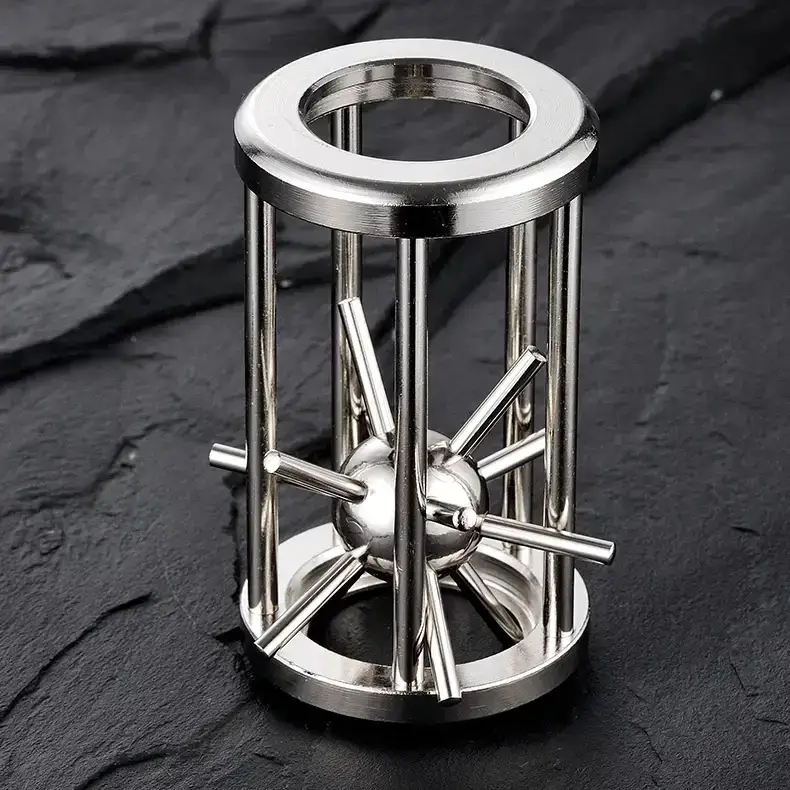
For the solver who conquered Vortex and asks, “What’s harder?”, the answer in 2026 lies not necessarily in a single mythical puzzle, but in targeting your specific cognitive blind spot with a tool engineered to exploit it. It’s about choosing between the brutal, minimalist elegance of a perfected classic and the multi-layered, almost narrative complexity of a new challenger. The arena is set, and the battles are increasingly personal. To navigate it, you need more than a list; you need the breakdown that follows.
Deep Dive 1: The Spatial Illusionists (Puzzles That Hide Their Axes)
The most ruthless cast puzzles don’t fight your strength; they exploit your brain’s blind spot for rotation and translation. A Spatial Illusionist disguises its fundamental movement axis, forcing you to apply force in a direction that feels mechanically impossible. The reigning champion of this deceptive art is Hanayama’s Cast Vortex, a Level 6 puzzle that leverages a triple-helix structure to confound, but the category is evolving with new, devious geometry in 2026.
The Reigning Champion: Hanayama Cast Vortex
* Difficulty Type: Pure Spatial Reorientation
* Estimated Expert Solve Time: 5 hours to 3 days
* Heft & Sound: This is a dense, 72g zinc alloy paperweight. The pieces slide with a firm, gritty resistance—no satisfying clink here, just a stubborn, muted grind. The psychological effect is profound: the lack of auditory or tactile feedback makes every micro-movement feel inconclusive, deepening the sense of being lost.
* The ‘Aha!’ Moment: It arrives only after you abandon every earthly concept of linear motion. The solution requires you to reconcile three separate helical paths simultaneously, rotating and translating each piece along a non-intuitive axis that isn’t aligned with any obvious groove or slot. The moment of unlock feels less like a discovery and more like a dimensional shift.
* Frustration Forecast: At the 45-minute mark, when you’ve traced every groove to a dead end and the symmetrical design seems to mock you. This is when you’ll question the puzzle’s integrity, convinced the pieces must be fused. It’s a lie. The path exists in a plane your mind hasn’t yet constructed.
If Vortex is your benchmark, know that its difficulty is a masterclass in minimalist, mechanical deceit. It has no pins, no springs, no tricks—just perfect geometry weaponized against intuition.
The 2026 Contender: Four-Dimensional Triangle Puzzle
This isn’t a Hanayama, but it’s a compelling next step for the solver who believes they’ve mapped every spatial trick. It presents as an equilateral triangle dissected into four smaller, identical triangles—a simple geometric premise that belies a fiendish mechanical truth.
- Difficulty Type: Constrained Spatial Illusion
- Estimated Expert Solve Time: Several hours to multiple days
- Heft & Sound: Lighter and often with a smoother, almost silent slide than a cast zinc puzzle. The lack of auditory cues and the deceptive simplicity of the shapes increase the cognitive load, making you doubt your manipulations are even affecting the internal state.
- The ‘Aha!’ Moment: It involves realizing that the “four-dimensional” in its name is a clue, not just marketing. The solve path requires you to conceptually manipulate the pieces through a sequence of positions that feel impossible within the 3D object’s apparent constraints, as if accessing a hidden degree of freedom. The final separation feels like a quiet, unexpected concession from the metal.
- Frustration Forecast: Within the first 20 minutes. The initial, obvious moves lead nowhere, and the identical pieces offer no unique landmarks. You’ll experience intense “solution lag”—you’ll feel a correct alignment long before you can physically capitalize on it, a hallmark of elite design.
For a deeper exploration of the Four-Dimensional Triangle Puzzle, a master of spatial illusion, its history and unique mechanics are detailed here.
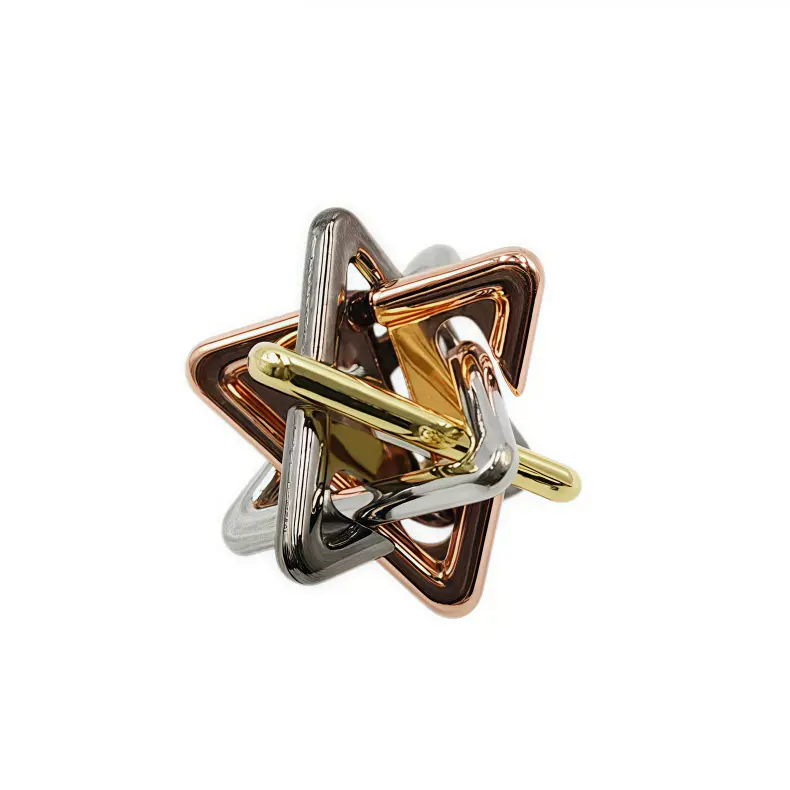
Acquisition Note: Finding the true hardest Hanayama cast puzzle like Vortex or the oft-asked-about Cast Infinity requires checking specialist stock. While Amazon has basics, retailers like Puzzle Master and Kubiya Games are your best bet for consistent Level 6 inventory and newer imports like the Four-Dimensional Triangle. This is where you buy puzzles that take days to solve; they’re not typically on big-box shelves.
Deep Dive 2: The False Symmetry Traps (Puzzles That Exploit Your Pattern Recognition)
False symmetry is a deeper, more insidious form of difficulty than spatial illusion. Where an Illusionist hides a gear, a Symmetry Trap hands you the blueprints—and they’re a perfect lie. These puzzles present components that appear identical, encouraging your brain’s efficient pattern-matching to assume interchangeable functions. The difficulty isn’t in finding the mechanism; it’s in abandoning the fundamental assumption that is visually screaming at you. If you conquered the spatial warps of a Vortex, your next true test lies here, in puzzles where the pieces are your enemy.
Consider the classic and brutal Hanayama Cast Hashtag. Its key fact is its curse: four seemingly identical, interlocked pieces. Your mind immediately categorizes them, seeking a symmetrical, repeating sequence to disentangle them. There isn’t one. The true solve path exploits minuscule, deliberate variations in the milling of each piece’s internal channels—differences your fingers might detect but your eyes refuse to believe. The frustration forecast hits at the 45-minute mark, when you’ve cycled every piece through every position in the “logical” order for the tenth time and the puzzle remains stubbornly locked. This is a masterclass in non-intuitive axis movement; the separation occurs along a plane your brain has already dismissed as impossible because it violates the presented symmetry. It’s a disentanglement puzzle impossible to solve if you trust your eyes over your fingertips.
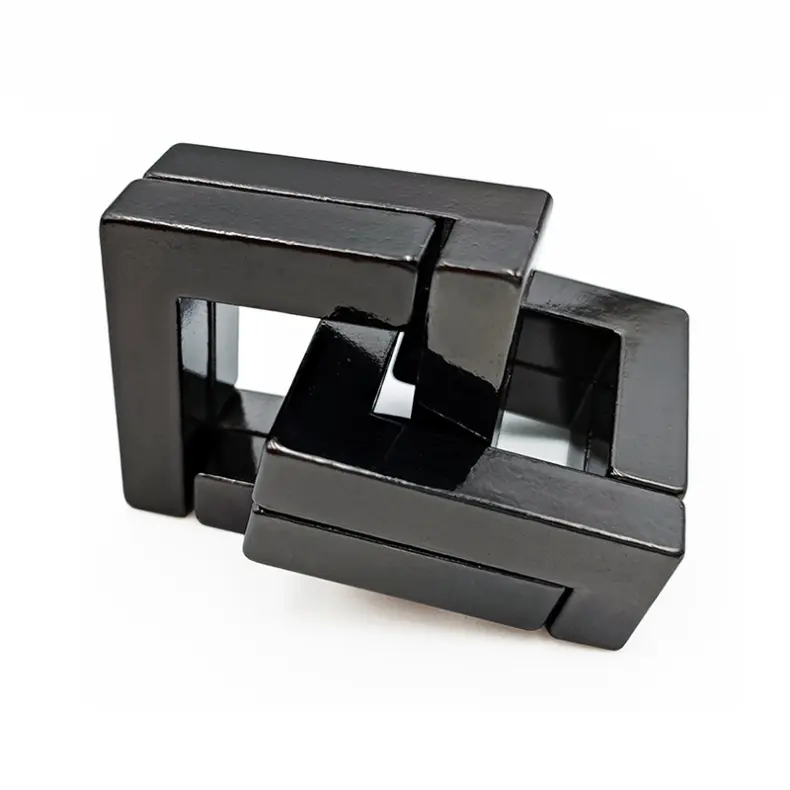
This brings us to a 2026-accessible challenger like the Four-Square Lock Puzzle. It presents four blocks in a satisfying, square formation—a geometry that promises order. The trap is one of false equivalence. While the blocks may look uniform, their internal locking mechanisms are not; they are sequential keys to one another in a specific, hidden order. This is sequential discovery dressed in a symmetrical costume. The solution lag here is profound. You may intellectually grasp that the blocks must be manipulated in a sequence, but physically finding and executing that sequence without a visual cue is a tactile nightmare. The burr finish provides just enough grip to encourage forceful, wrong moves, while the muted clack of zinc alloy offers no sonic clue. It’s a puzzle that transforms from a static object into a silent, logical argument you must feel your way through.
Why does this category break seasoned solvers? It attacks cognitive efficiency. We are wired to see patterns and apply them. These puzzles weaponize that instinct. The “Aha!” moment is not a discovery, but a surrender—a conscious decision to ignore overwhelming visual evidence. The heft of these puzzles, often a satisfying 100+ grams of solid metal, becomes an anchor for your frustration. A brass puzzle in this category feels like a treasured artifact refusing to yield its secret; a zinc alloy one feels like a cold, industrial test. The deceptive elegance of the Four-Square Lock Puzzle, a trap of false symmetry, is worth a closer study, which you can find here.
For the solver who beat Vortex, this is the next frontier. You’ve mastered navigation in warped space. Now, can you overcome a perfectly crafted lie? This is the realm often whispered about when discussing the most difficult puzzle in the world metal—not because of complexity alone, but because of the profound psychological reversal it demands. The victory isn’t just over the puzzle, but over your own most reliable sense.
Deep Dive 3: The Sequential Lock Labyrinths (One Wrong Move Resets Everything)
While false symmetry attacks your perception, sequential discovery targets your memory and procedural discipline. This category answers the user’s pointed question: “Are there any puzzles that are literally impossible to solve without the solution?” The answer is yes—if you lack the patience to map a branching maze of mechanical states. These puzzles are not merely disentanglements; they are expert mechanical puzzles for adults that function like physical algorithms, where a single misstep reverts you to the starting condition. The hallmark is not complexity, but consequence. It’s the domain where Hanayama’s Level 6 rating is truly earned, where reported solve times aren’t measured in hours, but in days or weeks of iterative deduction.
The core mechanism is sequential discovery: each action reveals access to the next, but the path is a labyrinth of dead ends and mandatory resets. The precision, or machined tolerance, here is not about smoothness, but about deliberate ambiguity. A pin moves 0.5mm—is that intentional play, or the first step of a fifty-step sequence? It’s lockpicking at a fundamental level, where you must deduce the manufacturer’s internal blueprint through feel and failure. This creates immense solution lag; you may intellectually grasp the principle of a locking pin, but the physical execution requires flawless navigation of a dozen prior states.
The infamous ABC Maze Lock is a masterclass in this agony.
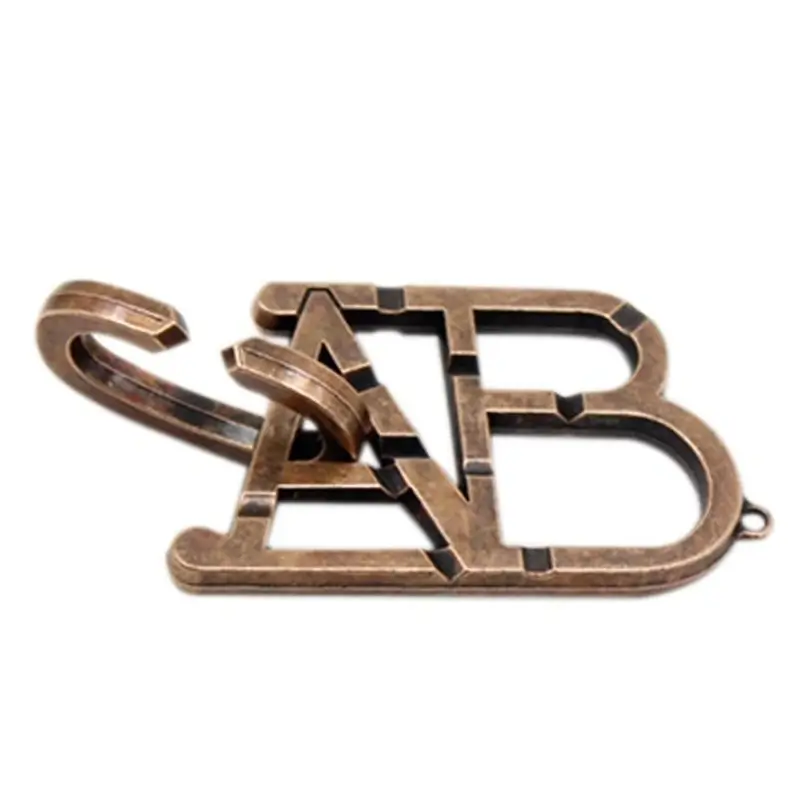
At first glance, it appears to be a simple padlock with three rotating alphabetic dials. The deception is immediate. The letters are a red herring. The true mechanism is a series of internal gates and detents that must be aligned in an exact, non-intuitive order. The Frustration Forecast hits at minute 45, when you’ve aligned the letters correctly for the twentieth time, yet the shackle remains stubbornly locked. This is the moment you realize you’re not solving a word puzzle, but navigating a purely mechanical maze. The zinc alloy body, light for a cast puzzle at around 60g, becomes a maddening weight in your palm. You can find guidance on the initial mindset shift for navigating the ABC Maze Lock, a sequential labyrinth, in our companion guide here.
For the ultimate expression of this type, however, the community often points to the Hanayama Cast Infinity. It is a prime candidate for the title of hardest Hanayama cast puzzle 2026, an evolved classic that remains a pinnacle. Comprised of four interlocked, identical pieces (reminiscent of the ‘Hashtag’ concept but vastly more intricate), its sequential lock is four-fold. Each piece’s movement is constrained by the others in a cascading dependency. The machined tolerance is so fine, the burr finish so subtle, that the correct axis of movement feels indistinguishable from a dozen wrong ones. One wrong shift doesn’t just block progress; it silently collapses your entire sequence. The heft—a weighty and substantial feel—belies the delicate internal ballet required. The “Aha!” moment is silent and procedural, a final, satisfying alignment that feels more like cracking a safe than playing a game.
Solving a sequential lock labyrinth rewires your approach. It demands documentation, hypothesis testing, and a willingness to destroy hours of work with one exploratory nudge. The victory leaves you with a deep, tactile understanding of a hidden system. It is the purest form of mechanical deduction, transforming a $25 object into a personal desk trophy that represents not just ingenuity, but immense operational patience.
The Puzzler’s Self-Diagnosis: Matching Your Mind to the Machine
Choosing your next puzzle based on a generic “Level 6” rating is like selecting a wrench by color. True selection requires a diagnostic of your own mental machinery. The right puzzle doesn’t just challenge you; it aligns with your cognitive architecture—your spatial visualization bandwidth, your tolerance for cryptic sequencing, and your appetite for the deliberate delay known as solution lag.
Start with a brutal truth: the common advice for how to solve cast puzzles tips—”just fiddle with it”—is a recipe for months of resentment against a piece of metal. Effective solving is a targeted assault. Your first diagnostic question: Which of the three difficulty archetypes—Spatial Illusion, False Symmetry, or Sequential Lock—caused you the most authentic frustration on your last major solve? Your answer reveals your latent skill. We are often most infuriated by the puzzles that target our strongest, yet most rigid, cognitive habits. The spatial thinker is undone by symmetry; the pattern-recognizer is lost in a labyrinth.
Now, calibrate your patience for solution lag. This is the critical gap between intellectual understanding and physical execution. In a Sequential Lock puzzle like the hardest Hanayama cast puzzle 2026 contenders, you may deduce step four while still stuck on step one, forced to slowly, meticulously navigate the precise path to get there. This lag isn’t a flaw; it’s a designed tension. Ask yourself: Does the promise of that delayed gratification excite you, or does it sound like tedium? Your answer determines if you should seek puzzles with high fidget-resistance (where random manipulation is useless) or those with more forgiving, exploratory movement.
Finally, assess your desired end state. Is the puzzle purely a problem to be cracked, after which its magic is spent? Or do you want a desk trophy that offers lasting tactile satisfaction—a piece with smooth, perpetual motion or a pleasing heft to handle post-solve? This decides the importance of material and machined tolerance. A brass puzzle with a silent, butter-smooth slide offers a different reward than a zinc-alloy puzzle that concludes with a definitive, heavy clunk.
Use this matrix to self-prescribe:
- If you excel at visualizing rotations in 3D but hate blind repetition, target Spatial Illusionists. Your weakness is likely False Symmetry, which exploits your urge to find order. A puzzle like Cast Vortex (once solved) would be your ideal fidget-resistant trophy.
- If you solve through systematic, note-taking deduction and love lock-and-key mechanisms, embrace Sequential Lock Labyrinths. You’ll find Spatial Illusion puzzles annoyingly directionless. Your post-solve satisfaction is intellectual, not tactile.
- If you are pattern-driven and trust your instincts, only to have them fail, you are ripe for a False Symmetry Trap. Your hurdle is unlearning assumptions. Sequential Locks will feel artificially constrained to you. Your “Aha!” moment will be a paradigm shift, not a procedural step.
The goal is not to avoid frustration, but to choose the flavor of it that will most satisfyingly reconfigure your thinking. Match your mind to the machine, and the ensuing struggle transforms from aimless struggle into a precise, personal workshop. For a broader selection framework, including options beyond the most extreme, check out The Best Metal Puzzles for Adults: A Guide for the Over Thinker.
Acquisition & Aftercare: Sourcing the Trophy and Preserving the Finish
Your final challenge is not on the desk, but in the acquisition. Sourcing a true Grade-5 puzzle requires navigating a marketplace cluttered with mass-produced trinkets. For a collector or a serious solver, the $20-$50 USD investment must secure not just a brain teaser, but a precision-machined artifact. The difference lies in where you shop and what you look for.
General retailers like Amazon function as a broad, often muddy net. You might catch a common Hanayama, but product listings are generic, photos are stock, and descriptions lack the nuance to distinguish a Level 5 from a true, community-vetted Level 6 monster. For a puzzle like the Cast Infinity—consistently cited as a pinnacle of difficulty—you need a specialist. Retailers like Puzzle Master and Kubiya Games are the equivalent of a machinist’s tool crib. Their catalogs are curated by enthusiasts, product descriptions detail the specific type of challenge (e.g., “sequential discovery,” “non-intuitive axis”), and they often stock limited runs and high-end brands you won’t find elsewhere. This is where you go to find the hardest Hanayama cast puzzle of 2026 and its ilk. Scrutinize product photos for machined finishes; look for the subtle sheen of a burr finish on steel or the warm patina of brass, not the cheap, overly polished look of pot metal.
Value here is measured in fidget-resistance and tolerances, not just weight. A $30 puzzle that solves via one obvious trick is a toy. A $45 puzzle with interlocking components machined to within thousandths of an inch, creating a flawless solution lag, is a desk trophy. For collectors, the value appreciates in the craftsmanship and the scarcity of the solve experience.
Once acquired, the metal demands respect. Unlike wooden puzzles, these will not warp, but they can corrode or wear. The answer to “Do these puzzles break or wear out?” is nuanced. The mechanisms themselves are incredibly durable—you cannot ‘break’ a solve path. However, the finish is vulnerable. The oils and acids from your skin will slowly tarnish untreated zinc alloy and brass. After a long solving session—or once you’ve finally conquered it—a gentle wipe with a microfiber cloth and a rare, light application of a metal polish designed for fine finishes will preserve the audible ‘clink’ and visual appeal. Avoid harsh chemicals. For aluminum or stainless steel puzzles, a simple wipe-down is sufficient. The goal is to maintain the precise feel and look, ensuring the puzzle remains a satisfying fidget-resistant object long after its secrets are yours.
Display your solved conquest not as a spent challenge, but as a kinetic sculpture. Let it sit on your desk, a heavy, silent monument to a reconfigured mind. Its preserved finish will catch the light, a permanent reminder that you sourced, solved, and stewarded a piece of mechanical art.
Life After the Click: Display, Collection, and the Next Conquest
The puzzle is solved, its internal logic laid bare. This is not an end, but a transformation. A conquered puzzle shifts from a locked enigma to a kinetic sculpture and a calibrated benchmark for your next challenge. For the true connoisseur, the solve path is just the first half of the experience.
That heavy piece of machined metal on your desk is now a desk trophy. But its value isn’t just symbolic; it’s tactile. The best difficult puzzles retain fidget-resistance even when solved, their movements maintaining a satisfying, precise complexity. Puzzles like the Cast Vortex or a well-made sequential discovery variant offer a deeply pleasing, repetitive manipulation—a tactile reward for the cognitive work you invested. They become worry stones for engineers, their weight and audible ‘clink’ a constant, grounding pleasure, blurring the line between puzzle and fidget toy.
Display is an extension of respect for the object. Unlike static wooden puzzles (which have their own display ethos, as covered in guides like displaying your solved puzzles as desk trophies), these are dynamic. Present them in their solved state on a stand, yes, but don’t encase them in acrylic. Leave them accessible. The point is to pick them up, to run through the now-obvious sequence, to feel the mastery in your fingertips. This active display reinforces the neural pathways you forged and keeps the mechanical dialogue alive.
This leads to the inevitable question: I solved Cast Vortex in a week. What should I try next? This is where your collection gains purpose. Use your solved puzzles as a difficulty ladder. Did you excel at the spatial illusion of the Infinity but rage-quit a sequential lock? Target that weakness. Move from mass-produced hardest Hanayama cast puzzles to the artisan realm of high-end metal puzzle brands like PuzzleMaster’s in-house designs or bespoke pieces from independent machinists found on r/mechanicalpuzzles. These often feature more exotic metals, tighter machined tolerances, and diabolical new principles that make a Level 6 feel like a warm-up. If you’re looking to expand your skillset, you might even explore foundational techniques like how to solve the Cast Hook metal brain teaser to understand a different style of mechanical interaction.
The final step is the reset. To truly own a puzzle, you must be able to return it to its unsolved state without the solution sheet. This is the ultimate test of comprehension. Can you reverse-engineer your own solve? If not, the puzzle still holds a fragment of mystery. Master this, and you are ready.
Your desk is now a gallery of defeated giants, each with a distinct weight and sound. The cycle completes, but the hunt doesn’t. You’ve moved from seeking a challenge to curating an experience. The resolve is quiet, the anticipation sharp. You know the feel you’re after, the type of difficulty that gnaws at you. You know where to look. Now, go find the next perfect click.