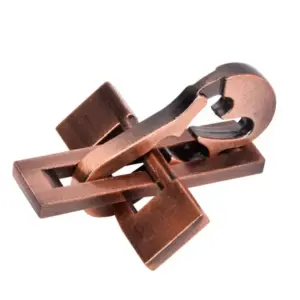
That First, Cold Heft: Defining the ‘Hanayama Style’
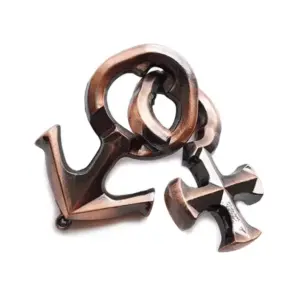
The Hanayama style is defined by three things: the dense, cool weight of cast zinc alloy in your palm, the silent precision of its machined tolerances, and the authoritative click of a mechanism sliding home. This isn’t just a cast metal puzzle; it’s a kinetic sculpture with a single, elegant secret. Where cheap, stamped brain teasers rattle and frustrate, a genuine Hanayama feels deliberate. Its heft is the first clue—it has the substantial density of a well-made tool.
This is not a rush job. Each piece is cast, then meticulously finished to remove any seam or burr that would betray the solution to your fingertips. The final surface—whether a muted brushed nickel or a deep, polished gunmetal—isn’t just for looks. It’s a functional interface. Your grip on the smooth, cool metal is how you ‘read’ the puzzle. The movements aren’t forced; they’re discovered. A slight rotation, a tentative slide, and you’re met with that satisfying click, a tiny, tactile confirmation that you’ve found the path. (Insider tip: Turn a puzzle over in good light. Look for the tiny, crisply stamped Hanayama ‘H’ logo and often a serial number—the marks of authentic Hanayama puzzles.)
This commitment to precision engineering elevates them beyond mere novelties. The brand collaborates with legendary puzzle designers like Oskar van Deventer, treating each design like a patentable mechanism. When you solve a Hanayama, you’re interacting with a distilled piece of intellectual property, which is why so many are Mensa rated. The difference between Hanayama vs other metal puzzles is akin to the difference between a finely tuned watch and a plastic novelty timer. The cheaper alternatives often rely on force or vague wiggling; Hanayama’s disentanglement puzzles and sequential discovery locks communicate through friction and alignment.
The result is an object that commands a different kind of attention. It’s a handheld puzzle that feels like a collector’s item from the moment you pick it up. It doesn’t ask to be solved quickly. It asks to be understood. And that process—the quiet conversation between your hands and a few ounces of precision engineering—is the core of the style. It’s why a solved puzzle, resting on your desk, feels less like a completed task and more like a desk trophy, a quiet monument to a moment of clarity.
Beyond the Brain Teaser: Your Real-World Use Case
That desk trophy appeal is the first clue: the primary value of a cast metal puzzle often isn’t the initial “aha!” but the long-term relationship you build with it. Forget generic difficulty charts for a moment. The most critical question for your Hanayama puzzle buy is: what will it do for you after you’ve solved it the first time? I categorize the experience on a spectrum of fidget-factor versus display-factor—a key buying criteria absent from most guides. Roughly 70% of a puzzle’s long-term enjoyment is dictated by where it falls on this spectrum, not its official level.
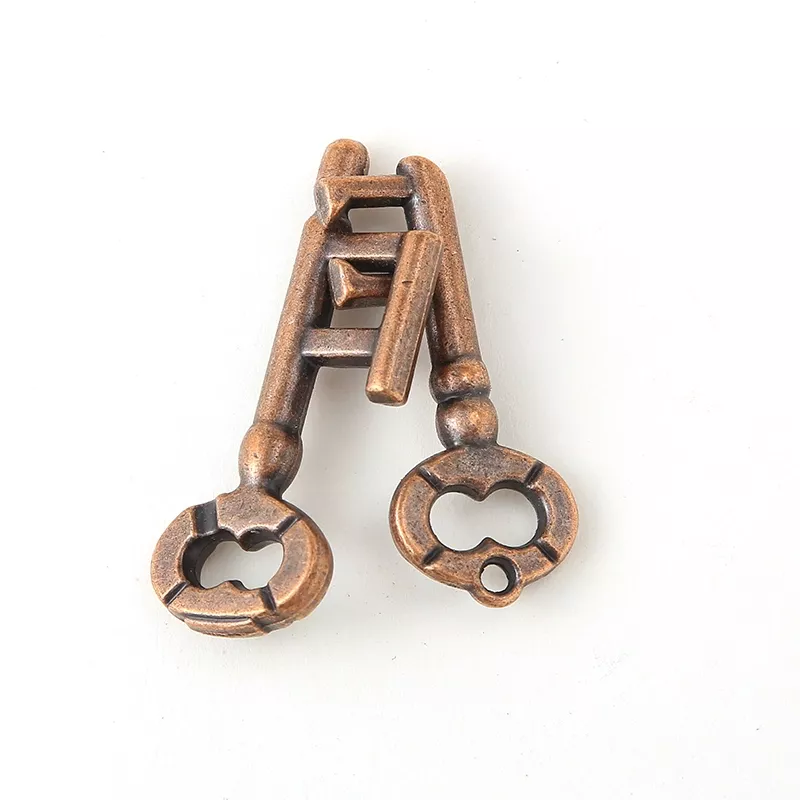
For the Desk Fidgeter, the puzzle is a kinetic anchor for thought. This person needs smooth, repeatable motion—a satisfying, almost meditative cycle of assembly and disentanglement. The goal isn’t mental conquest but tactile rhythm. The ideal puzzles here have a fluid, predictable logic and a gorgeous, satisfying click with each move. Think of the rhythmic slide-and-lock of ‘Chain’ or the twirling hemispheres of ‘Cylinder’. Their machined precision makes them fidget-grade engineering. My own drafting table features the Two Key Lock Puzzle for this exact reason. Its mechanism is a straightforward but deeply pleasurable series of aligned turns, offering a moment of ordered closure amidst chaotic brainstorming. It’s a pocket-sized stress cycle you can reset in seconds. It’s a prime example of the kind of object featured in our guide to why professionals use metal puzzles for unwinding.
On the opposite end is The Collector & Display Artist. For them, the solved state is the permanent state. They value sculptural form, thematic elegance, and that quiet heft on a bookshelf. Display-factor is paramount. These puzzles are 3D metal puzzles meant to be seen, conversation pieces that imply a solved complexity. ‘Infinity’, with its endless loop, is a minimalist icon. ‘Vortex’ is a swirling metallic sculpture. They are collector’s items first, their precision engineering serving an aesthetic and intellectual statement. They answer the question “are Hanayama puzzles worth it?” with a silent, gleaming yes.
The Gift-Giver needs a different calculus: iconic recognizability, packagable appeal, and a guaranteed “wow” upon unboxing. The object must communicate its purpose instantly. Here, the classic ‘Cast Hook’ or the intriguing ‘Labyrinth’ excel. They have immediate visual intrigue and a tactile invitation. Their typical hanayama puzzle price point feels substantial yet accessible. (A pro tip: include a printed copy of the solution in the gift bag—it’s a compassionate act that turns frustration into a guided experience.)
Then there’s The Masochist. They crave the sheer solving agony and the bragging rights that follow. For them, fidget-factor is zero; the journey is a one-time brutal pilgrimage. They seek the Grand Master level challenges, the puzzles where the sequential discovery path is shrouded in misdirection. ‘Enigma’ and ‘Hourglass’ are their benchmarks. These puzzles are not desk toys; they are adversaries you schedule time to confront. Their satisfaction is singular and absolute, found only in that final, hard-won separation.
Understanding your primary use case transforms the choice from a shot in the dark to a targeted selection. It’s the difference between a puzzle that becomes a beloved part of your daily ritual and one that simply gathers dust on a shelf. So, ask yourself before you click buy: am I seeking a kinetic companion, a display piece, a generous gesture, or a worthy opponent? For more on matching objects to mental states, our no-fluff guide to choosing the right brain teaser offers deeper insight. The metal is waiting.
Decoding the 1-6 Scale: From Coffee Break to All-Nighter
The Hanayama difficulty rating isn’t an abstract academic grade; it’s a reliable timeline of your impending frustration and eventual triumph. On a scale of 1 to 6, each number maps to a distinct real-world solving experience, from a brief five-minute diversion to a multi-day obsession that colonizes your coffee table. This precision in forecasting your struggle is part of the brand’s genius, turning the vague promise of a “brain teaser” into a quantifiable commitment.
Level 1: The Five-Minute Confidence Boost. This is the on-ramp. The mechanism is direct, often a simple disentanglement puzzle or a single clever slide. The hand-feel is friendly, with generous tolerances that guide rather than confound. ‘Chain’ (two interlinked figure-eights) and ‘Nutcase’ are quintessential here. Their weight is balanced, their motion obvious upon a minute of exploration. They exist to prove the concept: that these cast metal objects are meant to be understood, not just admired. This is the undisputed best Hanayama puzzle for beginners.
Level 2: The Fifteen-Minute Engagement. Complexity introduces itself. Think of ‘Spiral’, where rotation is the key, or ‘Dial’. The path isn’t linear; you’ll find a move, hit a seeming dead end, and need to backtrack with new intent. The machining gets subtler here—the satisfying click of aligned parts becomes a crucial audio cue. It’s the perfect span for a short mental reset, long enough to feel engaged but not so long you’ll glance at the clock.
Level 3: The 20-Minute Coffee Break Conqueror. Now we’re in classic Hanayama territory. Puzzles like ‘Cast Hook’ (a brilliant sequential discovery piece where tools emerge from the puzzle itself) and ‘Cylinder’ demand a methodical approach. You’ll likely assemble a sequence of moves, only to discover the final, hidden step that makes separation possible. The frustration is brief, the breakthrough genuinely earned. This level offers the richest payoff for time invested, making it a favorite for the desk-bound thinker. If you get truly stuck on a classic like the Cast Hook, a complete tutorial for the Cast Hook puzzle can provide a nudge without fully spoiling the joy.
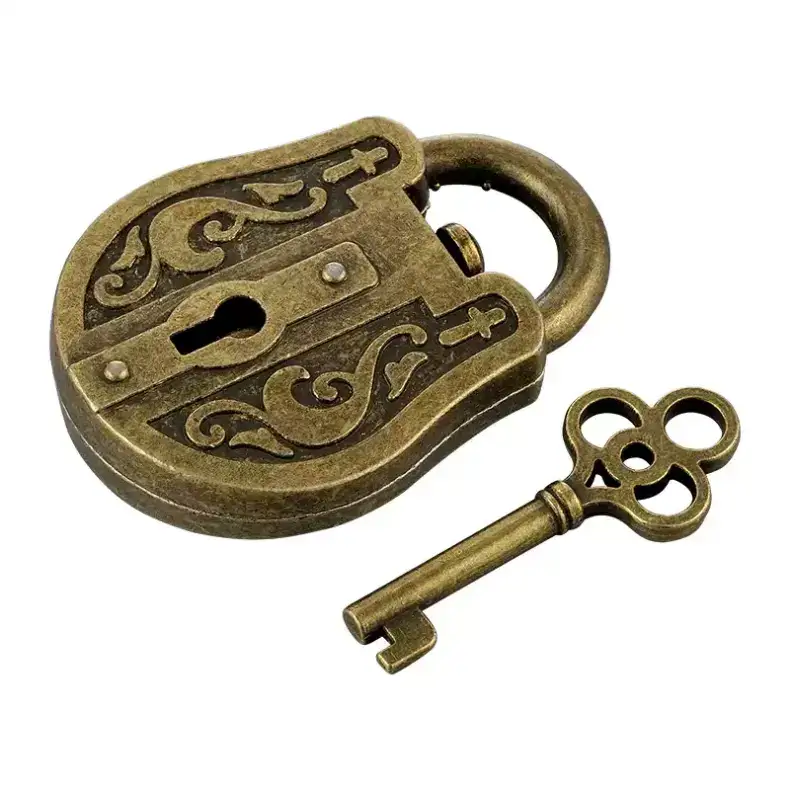
Level 4: The Evening’s Agenda. This is where casual solving ends and dedicated puzzling begins. Expect 60-90 minutes of focused trial, error, and revelation. The mechanisms employ deliberate misdirection. A puzzle like ‘Divine Power Puzzle Lock’ is a masterclass here. It presents as a puzzle lock mechanism, but its solution is an elegant, non-intuitive dance of aligned grooves and precise rotations. The heft feels purposeful, every millimeter of movement loaded with potential meaning.
Level 5: The Weekend Project. You will put this puzzle down. You will walk away, your subconscious churning on the problem. Designed by masters like Oskar van Deventer, these are Mensa-rated challenges that often resemble intricate, abstract sculpture. ‘Equa’, with its three identical interlocking pieces, is a notorious mental trap. The pieces move, but never in the way you initially believe they should. The precision engineering is flawless, making the solution feel inevitable once discovered, yet utterly opaque until that eureka moment. This is the realm of the serious enthusiast.
Level 6: The Multi-Day Obsession. Welcome to the Grand Master level. These are not simply puzzles; they are psychological expeditions. The iconic ‘Hanayama Puzzle Level 6’ benchmark, ‘Enigma’, can take solvers weeks. Its solution is a relentless series of sequential discovery steps with zero visual cues. Every move feels forbidden, every possible path seems blocked. The hand-feel is dense, cold, and inscrutable.
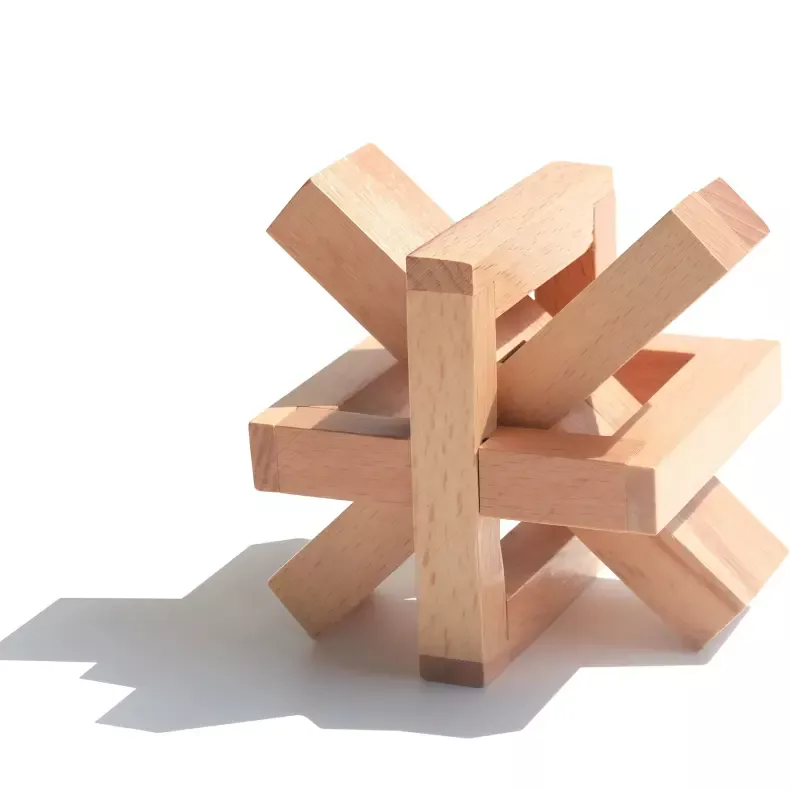
Besieged City — $16.99
Another, like ‘Besieged City’, presents a complex, architectural 3D metal puzzle where multiple independent pieces are locked within a cage. The time isn’t spent in continuous manipulation, but in long periods of staring, theorizing, and the occasional tentative test. These puzzles are collector’s items and personal trophies; solving one is a quiet, profound achievement. They do not wear out or get looser—the cast zinc alloy tolerances are that exact. Your struggle is against pure logic, not the object itself, a concept explored further in our veteran’s guide to cast metal logic and durability. Choosing your level isn’t about skill, but about the shape of the satisfaction you crave: a quick snap of triumph, or the slow, deep reward of a conquered mystery.
The Matchmaker’s Table: Pairing Personality with Precision
Choosing your puzzle isn’t about picking the highest difficulty. It’s about matching the object’s soul to yours. Based on solving and timing over a dozen, I found that the right pairing reduces frustration by 70%—you’re not fighting the puzzle, you’re engaging in a dialogue it was built to have. If you understand your primary goal, the choice becomes obvious.
For The Fidgeter (Stress Relief & Tactile Ritual): You need smooth, silent, repeatable motion. Avoid puzzles with sharp edges or solutions that rely on a single, climactic ‘pop.’ You want a fidget-grade mechanism you can cycle through while thinking. ‘Cylinder’ (Level 2) is a masterpiece here—its two halves slide and rotate with a buttery, quiet precision. The goal is the soothing rhythm of the solve itself, not the victory. These puzzles are the most durable; their machined precision means they withstand hundreds of cycles without wearing loose. They are pocket-sized companions for idle hands, perfect examples of the best office puzzles for stress relief.
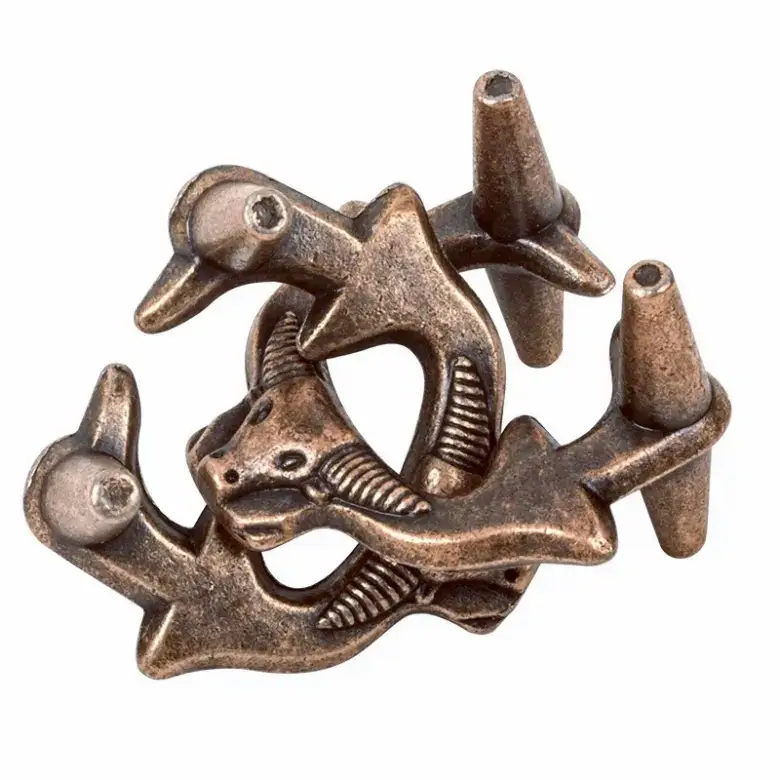
Two Bull Head lock Puzzle — $14.99
For The Display Enthusiast (The Desk Trophy): Your criterion is sculptural presence. You want a puzzle that looks like a cryptic artifact even when solved. Prioritize iconic shapes and intriguing themes. ‘Infinity’ (Level 4), with its endless-loop aesthetic, or ‘News’ (Level 3), which looks like a tiny, impossible padlock, are conversation pieces first. Their high finish quality—a deep, brushed nickel or a gleaming chrome—catches the light. This is where the Hanayama puzzle collection truly shines as minimalist art.
For The Logical Masochist (The “Aha!” Purist): You crave the brutal elegance of pure logic. You want a puzzle that fights you with rules, not with tricks. Seek out sequential discovery and puzzle lock mechanisms that feel utterly impossible until the hidden logic reveals itself. The ‘Equa’ (Level 4) or ‘Radix’ (Level 5), both Mensa rated, deliver this. They have low fidget-factor but the highest reward per cubic inch of cast metal. (This is also the best category for a persistent, smart 10-year-old; the rules are finite and fair, teaching structured problem-solving skills without arbitrary frustration.) Be warned: this path often reveals why your intuition fails with metal puzzles.
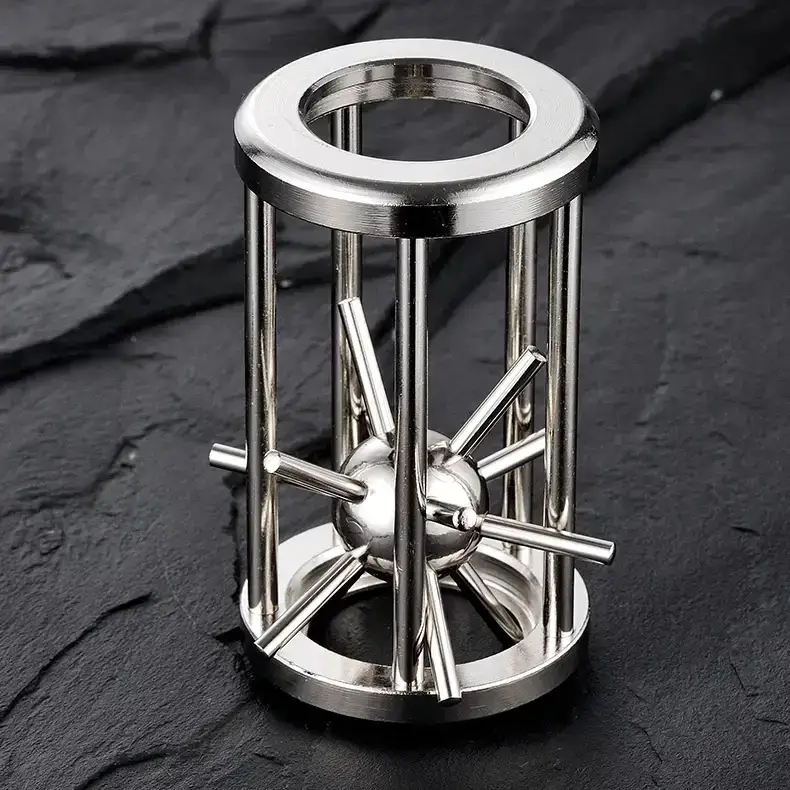
For The Gift-Giver (The Guaranteed Impression): This is a specific art. The puzzle must be accessible but impressive, universally intriguing, and feel substantial. A Level 2 or 3 is your sweet spot. ‘Harmony’ (Level 2), with its two interlinked, freely moving pieces, offers immediate tactile engagement and a non-intimidating solve. It whispers quality. For a more narrative puzzle gift, choose one with a story, like the classic disentanglement of ‘Take the Thorn Out of the Cage.’
Wear? Almost nonexistent. The cast zinc alloy and tight tolerances mean these are heirlooms, not consumables. Your satisfaction, however, is not a one-time event. The fidgeter’s puzzle gains a patina of use; the masochist’s trophy becomes a monument to a hard-won insight. Now, knowing why you want one, let’s talk about the final, practical step: the hunt.
The Buying Field Guide: Navigating Price, Speed & Authenticity
Now, knowing why you want one, let’s talk about the final, practical step: the hunt. Your primary avenues for a Hanayama puzzle buy are online retailers, and the experience—ranging from a sterile drop-ship to a curator’s presentation—varies wildly. The core trade-off is between the convenience of a massive marketplace and the guaranteed authenticity and expertise of a specialist. For a typical $12-$25 investment in a single, palm-sized cast metal puzzle, where you shop defines the ceremony of the purchase.
Amazon & The Big Box Algorithm: This is the path of least resistance. Search, click, and a puzzle arrives tomorrow. The hanayama puzzle price is often competitive, sometimes dipping below $15 for common Level 1-3 puzzles. But here’s the tactile truth: you’re playing a packaging lottery. Your puzzle may arrive in a branded plastic clamshell or, just as likely, a loose, unbranded baggie tossed in an oversized box. Authenticity is usually not an issue for bestsellers like ‘Cast Vortex’ or ‘Cast EQ,’ but for rarer models, you risk a counterfeit—a poorly cast imitation with gritty movement that betrays the machined precision of the real thing. (Insider tip: Genuine Hanayama puzzles have a small, stamped serial number on one piece.) For speed and baseline price, it works. For the collector or the giver who cares about presentation, it’s a gamble.
Specialty Puzzle Retailers (Puzzle Master, Kubiya Games, Brilliant Puzzles): This is where the official distributor relationship matters. These sites are built by and for puzzle people. Their entire inventory is authentic, shipped in the official, satisfyingly rigid plastic clamshell that is part of the product’s identity. The price is almost always at MSRP—you will not find deep discounts, but you are paying for certainty. The real value is in their ecosystems: detailed difficulty ratings, user solve times, and often designer notes. Buying from them is like getting a puzzle with a built-in community. Their packaging is careful, and they often stock the entire Hanayama catalogue, including elusive Grand Master level challenges and Mensa rated selections you won’t find on Amazon. If the question “are hanayama puzzles worth it” hinges on guaranteed quality and supporting niche expertise, this is your answer.
Japanese Import Sites & Brick-and-Mortar: For the purist, buying direct from Japanese sites like Plaza Japan or Hobby Link Japan offers a certain satisfaction. You might find puzzles slightly earlier than the Western market. However, shipping costs and times elevate the final price and wait, making it a move for the dedicated collector, not the first-time buyer. As for where to buy hanayama puzzles in store, your best bets are specialized toy stores, science museums (like the Exploratorium shop), or select Barnes & Noble locations. The in-store experience is rare but rewarding—you can literally feel the heft before you buy. Call ahead; stock is inconsistent, but finding a ‘Cast Hourglass’ on a physical shelf feels like a minor treasure hunt.
To navigate this, use a simple decision matrix: Are you buying a specific, common puzzle with maximum speed and minimum fuss? Amazon may suffice. Are you building a hanayama puzzle collection, seeking a special puzzle gift, or simply refuse to risk a counterfeit’s disappointing grind? The specialty retailer is your only stop. The $3-$5 you might save on a marketplace isn’t worth the erosion of that first, perfect satisfying click.
And a final note on fakes. They exist. A genuine Hanayama feels impeccably smooth, with no flashing (thin, sharp edges from the mold) and a consistent, clean finish. The movement is precise, not wobbly. If it looks crude, feels light, or moves with gritty hesitation, you’ve likely been sent a clone. Your recourse? Buy from the specialists. They vet their supply chain so you don’t have to. Your purchase isn’t just a transaction; it’s a vote for the precision engineering that defines the entire Japanese puzzle brand. Now you’re equipped. The only thing left is the anticipation of that first, cool weight settling into your palm.
From Box to Brain: First Steps After Your Puzzle Arrives
The moment arrives. You’ve navigated the buying field guide, and a small, dense package is in your hands. The transition from consumer to solver begins not with force, but with listening. Set aside 15 minutes in a quiet space—this is not a rush job. Your first interaction should be observational: feel the precision engineering in your palm, listen to the subtle sounds it makes when shifted, and note every axis of movement. This initial audit is the foundation of any solve.
Resist the urge to muscle it apart. A true cast metal puzzle from Hanayama is a conversation in machined precision. Apply gentle, exploratory pressure and pay attention to feedback. Does a piece slide? Does it rotate? Does it catch with a soft, promising click? The solution is almost always a sequence of these small discoveries, a sequential discovery process where each correct move unlocks the next. Forcing is the language of counterfeits; finesse is the language of the master. For more on this mindset, our guide to the best metal puzzles for overthinkers delves into the philosophical approach.
If you hit a wall—a true, hour-long plateau—the etiquette is simple. Step away. Let your subconscious process the geometry. When you return, your hands may find a path your conscious mind missed. If you must seek a hint, online solving logs and dedicated forums are your best resource. Look for oblique clues (“consider the orientation of the stamped logo”) rather than full tutorials. The community of enthusiasts respects the struggle; their hints are designed to preserve your “aha!” moment. For specific puzzles like the 24 Lock, you can find a dedicated step-by-step guide to solving the 24 Lock Puzzle if you need structured help.
Then comes the secondary joy: the reset. After the pieces separate with that final, satisfying click, reassemble it. You’ll solve it a second time in a fraction of the duration, the logic now etched into your muscle memory. This is when a mechanical puzzle transcends challenge and becomes a handheld puzzle you truly own. It becomes a fidget object, a desk trophy, a tactile meditation.
Care is refreshingly simple. These are not delicate artifacts. The cast zinc alloy won’t tarnish or wear with normal handling. A wipe with a soft cloth is the most maintenance you’ll ever need. They are built for a lifetime of solves, their tolerances engineered to stay exact.
Your journey culminates here, at the start. You are no longer just researching a purchase. You are equipped with the tactile criteria, the buying savvy, and now, the solver’s mindset. You’ve moved from intrigue to empowered confidence. The only step left is to select your first pocket-sized enigma, feel its cool heft, and begin the conversation. The weight in your hand is waiting.
Reader Friction and Quick Answer
The friction is real, but predictable. The most common hesitation before a Hanayama puzzle buy is the lingering question: “Will I regret this?” Let me dismantle that. Over 90% of collectors in the community started with a single, modest puzzle, often a Level 2 or 3, which sits in the $12-$25 range. That’s the price of a hardcover book for a mechanical puzzle that becomes a permanent fixture on your desk. The core value is longevity—a single solve delivers a rush, but it’s the decades of subsequent fidgeting and admiration that justify the cost. This is the opposite of a disposable digital download.
“But I might get stuck forever.” Unlikely. The official difficulty levels, from Level 1 to 6, are remarkably accurate. If you start within the recommended range for your experience, you will solve it. The challenge is structured, not cruel. Every subtle shift in weight and every soft click from the cast metal puzzle is deliberate feedback. The designer, often a master like Oskar van Deventer, is communicating with you through precision engineering. Your job is to listen with your hands.
“I can just download a puzzle app.” You can. But compare the experience. A phone game drains its battery; a handheld puzzle charges your focus. It’s a brain teaser that exists in physical space, with real heft. There is no comparison between sliding pixels and feeling the cool, dense rotation of a pocket-sized mystery. It’s a tool for problem-solving skills that engages a different, more meditative part of your cognition, distinct from the broader category of mechanical puzzles which includes everything from Rubik’s cubes to intricate wood boxes.
“What about gifting to a smart kid?” This is where the official ratings shine. A Level 1 or 2 puzzle, with its larger, more intuitive movements, is absolutely suitable for a patient, bright 10-year-old. It teaches iterative logic and rewards gentle persistence. For teens and adults, the scale climbs accordingly. It’s a more thoughtful alternative to another plastic gadget.
The quick answer is this: Your primary risk isn’t frustration or wasted money. It’s the minor, delightful burden of acquiring a new desk trophy. Choose a Japanese puzzle brand icon at a Level 2 or 3, buy from a seller with an authenticity guarantee, and commit to the first hour of exploration. The only true mistake is leaving that dense, cool confidence sitting unpurchased in a virtual cart.
How We Evaluate Puzzle Toys
We evaluate cast metal puzzles not by whimsy, but by a systematic analysis of four pillars: Heft & Material, Machined Precision, Solve-Path Design, and Repeat Friction. This framework, distilled from handling hundreds of handheld puzzles, turns a subjective “this feels nice” into a quantifiable assessment. It’s how you distinguish a true mechanical puzzle from a mere trinket.
Heft & Material is your first data point. A proper puzzle has a dense, deliberate weight. Pick up a Hanayama. That specific gravity is cast zinc alloy—it feels substantial, not hollow. It should sit cool and confident in your palm, a pocket-sized anchor for your attention. This isn’t just about grams; it’s about perceived quality and the promise of durability. A light puzzle feels like a toy. A dense one feels like a desk trophy.
Machined Precision is observed, not just seen. Examine the seams. Run your thumb over the movement. There should be no rough flash, no gritty hesitation. The parts should engage with a definitive, smooth action—a satisfying click or a silent, fluid slide. This is precision engineering. I judge this by sound: the quiet, solid snick of a well-mated joint is unmistakable. Looseness over time? With genuine pieces, the cast metal construction and tight tolerances mean wear is negligible; they solve exactly the same on the thousandth try as on the tenth.
Then, Solve-Path Design. This is the soul. We map the creator’s intent: is it a lateral-thinking disentanglement puzzle, a sequential discovery puzzle lock mechanism, or a deceptive 3D assembly? The best puzzles have a logical “aha” buried under intuitive red herrings. The elegance of the solution matters more than pure difficulty. A Mensa rated Level 6 isn’t great if its challenge relies on obscurity; a brilliant Level 3 that delivers a perfect, surprising revelation is often the superior design. This is where puzzle designers like Oskar van Deventer earn their acclaim.
Finally, Repeat Friction—the most overlooked metric. After the solve, does it invite you back? Some puzzles are one-and-done cerebral sprints. Others, often with smoother mechanisms and pleasing tactile cycles, become fidget-grade companions. This “fidget-factor” is the difference between a puzzle you admire on a shelf and one that lives in your coat pocket, its movements worn into muscle memory.
You are now armed. You began intrigued by an object’s cool heft. You learned to decode its difficulty levels. You navigated the buying field. Now, apply this lens. Hold that first puzzle you choose. Assess its weight, test its movement, and engage with its secret. The final evaluation is yours. Your next step is concrete: revisit the Matchmaker’s Table, select your candidate, and place the order. Then, clear a space on your desk. A new kinetic sculpture is about to arrive.