The Click That Hooks You: Why Finely-Machined Metal Feels Different
The difference between a good puzzle and a great one is measured in thousandths of an inch and felt in the palm of your hand. Where a cheaply stamped wire puzzle feels like a temporary obstacle, a precision-machined one is a tactile secret, its solution encoded in the heft of forged metal and the silent language of perfect tolerances. That final, authoritative click isn’t just an end—it’s the entire point.
On my workbench, surrounded by calipers and the ghosts of failed projects, a tangle of metal looks impossible. It’s heavy. It’s cold. The patina tells a story of handling. This isn’t a “brain game”; it’s a physical conversation. You push, you twist, you feel for the faint give in the resistance. A cheap puzzle fights you with burrs and ambiguous movement. A great one guides you, its machined surfaces speaking clearly through your fingertips. The allure for an adult seeking a mindful challenge is precisely this: the transition from visual frustration to physical understanding, a process that demands patience and rewards with a deeply satisfying, singular sound. It’s the feeling you get from the satisfying click of a Cast Reef puzzle—a moment of pure mechanical clarity.
Consider the common adult metal brain teaser you might find in a generic bin. It’s often a lightweight zinc alloy, coated in a color that chips. The movements grind. The solve feels like luck. Now, pick up a puzzle forged from solid brass or stainless steel. The weight—anywhere from a substantial 30g to a palm-filling 150g—immediately signals intent. This object has purpose. The precision of its bends, the polish of its surfaces, the consistent, burr-free gap between interlocking pieces: these are the hallmarks of craft. They transform the exercise from mere puzzling into an appreciation of micro-engineering, a core principle of mechanical puzzles.
This sensory experience defines ownership. A great puzzle isn’t solved once and discarded. It’s an artifact. It begs to be picked up again, to have its sequence re-traced just to feel that flawless mechanical dance. It earns a place on a shelf, part of a puzzle collection display that speaks to curiosity and taste, not clutter. The cheap puzzle mocks you from a drawer; the fine one invites you back for the pure pleasure of the interaction.
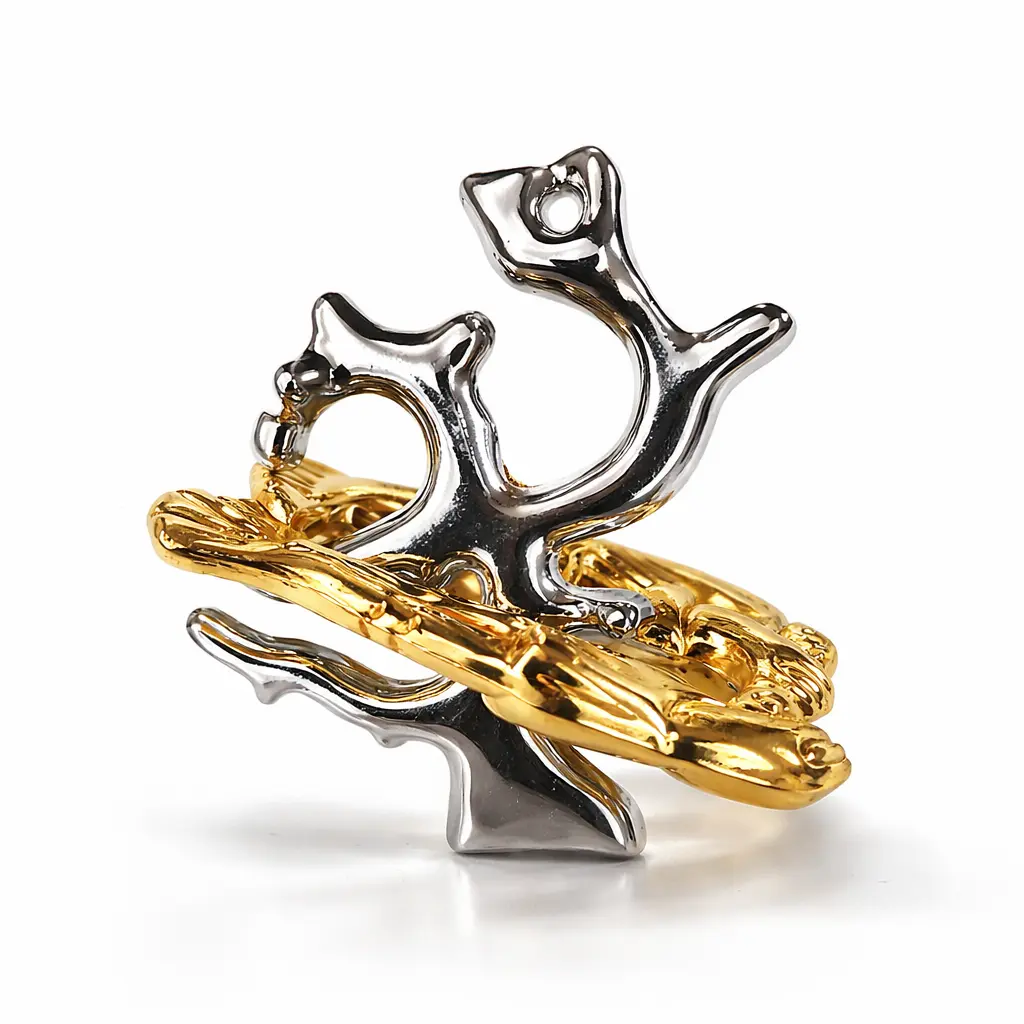
Take the pair shown here. One is gold, one is silver. They are not just colored; they are distinct metals with different feels. Solving them isn’t about brute force, but about listening to the subtle differences in slide and resistance between the two materials. This is the level of detail that separates a product from a possession.
So, how did I judge which puzzles deliver this mechanical nirvana? I didn’t just solve them. I wore my leather apron, put them through a machinist’s regimen, and listened for the truth in the metal. Let’s get to the bench.
How We Put Them to the Test: Our Methodology on the Judge’s Bench
To find the best metal disentanglement puzzles, I subjected fifteen contenders to a rigorous, three-week protocol on my workbench. This wasn’t casual play; it was a structured evaluation of build quality, tactile experience, and long-term value, with each puzzle measured against four critical criteria derived from a machinist’s obsession with precision and feel.
First, and most fundamentally, was Build Quality & Materials. The difference between a good puzzle and a great one is forged in its tolerances. I inspected every seam and surface for burrs, weighed each piece to assess its heft, and noted the exact alloy. A zinc alloy puzzle might weigh a feathery 30 grams and feel toy-like, while a stainless steel or plated brass component can hit 150 grams, communicating solidity and intention. I also performed a simple “pocket test”—would the finish scratch if carried with keys? This directly answers a key user question: these puzzles, when well-made, can be disassembled and reassembled indefinitely without breaking, unlike cheap stamped metal that deforms under pressure. The importance of this durable construction is the foundation of our veteran’s guide to durable metal puzzles.
Second was the Fidget Factor. This is the sensory, almost subconscious pleasure of manipulating the puzzle before you even solve it. Does the wire glide smoothly through a loop, or does it grate? Is the movement magnetic and slick, or is there a satisfying, precise drag? I timed how long I could idly move pieces while reading or thinking, evaluating them as potential desk fidget toys metal. The best ones offer a rhythmic, mindful challenge in your hands, their weight and balance becoming a secondary focus.
Third came the ‘Aha’ Moment. This is the core of the mindful challenge. I recorded not just if I solved it, but the nature of the solution. Was it a sudden, brilliant flash of insight, or a slow, grinding process of elimination? Did the final move produce an audible, confirming click? I cross-referenced my experience with official Hanayama puzzle difficulty levels (their 1-6 scale is a useful, if imperfect, benchmark) to see if a puzzle’s rated difficulty matched the quality of its revelation. A perfect “aha” feels earned and intellectually elegant, not arbitrary.
Finally, I judged Re-solvability. This is the metric every other guide misses. Once the secret is known, does the puzzle become a decorative paperweight, or does the journey retain its pleasure? I solved each one three times, days apart. Some, like intricate adult metal brain teasers based on deep topology, remained engaging because executing the solution is a graceful, physical dance. Others became trivial chores. The champions invite you back not to remember a trick, but to perform a satisfying mechanical ritual.
This methodology also let me answer two burning questions. Are online metal wire puzzle solutions a curse? Not always. For some, the “aha” is so sublime you’ll want to preserve it. For others, the solution is just a key to unlock a fantastic fidget object. And regarding the Hanayama vs. tavern puzzles debate? It’s often a matter of finish versus folklore. My bench cared only about the evidence in hand: the cold, hard, and wonderfully clever truth of the metal.
The Champions: A Deep-Dive on Our Top-Tier Picks
After three weeks and 15 puzzles on the Judge’s Bench, only three emerged as true champions. These are not merely the most difficult wire puzzles; they are the ones that mastered the alchemy of heft, motion, and intellectual grace, offering a complete sensory experience from initial frustration to final, resonant click. They answer the core question: what separates a true Hanayama disentanglement puzzle from a cheap imitation? It’s found in the silent, perfect tolerance between parts, the burr-free glide of machined steel, and the sustained satisfaction long after the first solve.
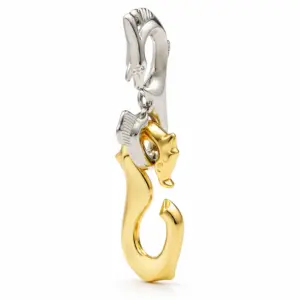
1. Cast Hook: The Machinist’s Meditation
This is the puzzle I keep in my apron pocket. On paper, it’s simple: two identical, hooked pieces of forged metal interlocked in a seemingly impossible bind. In the hand, it’s a lesson in precision. The weight is significant—a dense, reassuring 65 grams that signals intent. The finish is a muted, dark gunmetal with a subtle patina that catches the light. No sharp edges. No play in the joint.
The solve is not about frantic wiggling. It’s a slow, deliberate exploration of limited space. The resistance is firm and consistent, a constant, gentle pushback against your fingers. This is where you feel the difference between a mass-produced trinket and a machined artifact. A cheap puzzle grinds or feels loose. The Cast Hook slides with a hushed, metallic whisper. The “aha” moment is quiet, a sudden realization of mirrored symmetry and a single, elegant rotation. It doesn’t explode apart; it unfolds. And the re-solvability is exceptional. Putting it back together is the same satisfying ritual in reverse—a mindful challenge of aligning intent with physical alignment. It’s less a puzzle to beat, and more a mechanical mantra. For those who get truly stuck, there’s value in a step-by-step guide to solving the Cast Hook, but I urge you to feel for the solution first.
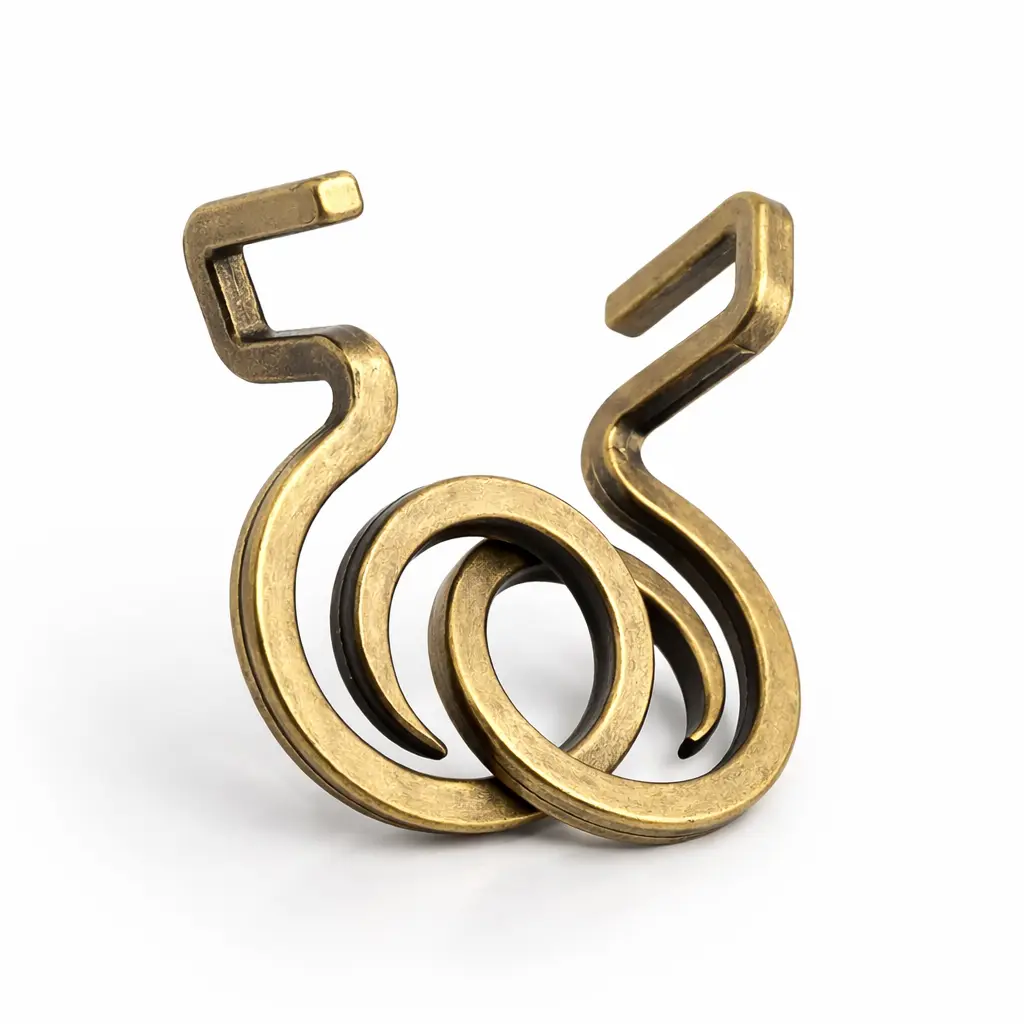
2. Snake Mouth Escape: Topology You Can Feel
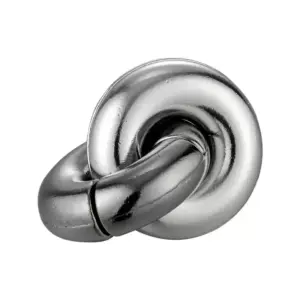
If the Cast Hook is a meditation, the Snake Mouth is a story. This puzzle immediately answers why a heavier object can feel easier to solve. It has substantial heft (nearly 120g), which provides a stable, grounded center of gravity as you manipulate the two intertwining serpentine forms. One piece is static, a coiled body. The other is the “mouth,” a moving piece with a cunning internal channel. The high-polish, silvery zinc alloy is cool to the touch and visually striking.
The cognitive load here is high, but the physical feedback is your guide. This is topology made tangible. You’re not just moving metal; you’re navigating a path through a curved, three-dimensional maze. The correct sequence involves a series of rotations and slides where the weight of the puzzle actually helps you, its momentum carrying the moving piece into alignment. The moment of escape is dramatic—a clear, sliding disengagement that ends with two separate, sculptural objects in your palm. It’s a pinnacle example of a metal mind puzzle that fully engages both spatial reasoning and tactile intuition, perfectly illustrating the tactile logic of wire brain teasers. Its re-solvability is high, because reassembly is a different, though equally logical, spatial puzzle.
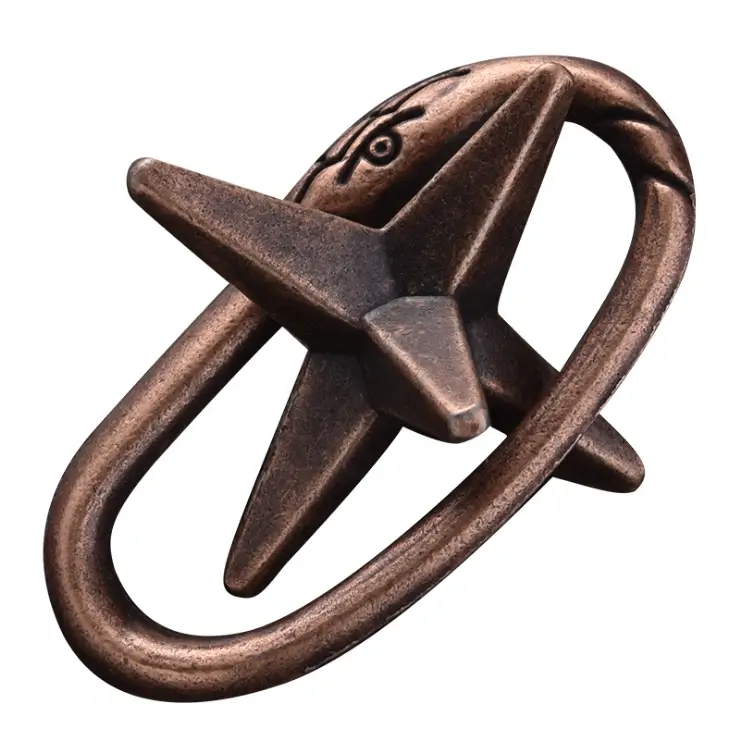
3. The Silent Virtuoso: A Cast Puzzle’s Lesson in Patience
While I cannot display a product card for it here, no champion’s list is complete without acknowledging the silent virtuoso of the genre: a Level 4-5 Hanayama Cast Puzzle, such as the “Cast Enigma” or “Cast News.” These are the benchmarks. They are often smaller, denser, and masterclasses in minimalist deception. The materials—often a combination of plated brass and darkened steel—are impeccable. The sounds are precise: a soft snick when parts align, a definitive clack upon separation.
The ingenuity is in constraint. These puzzles give you almost no visual information to work with. Your primary tool is your fingertips, reading pressure and minute gaps. The solve is a pure, unadulterated dialogue between your spatial imagination and the object’s immutable physical rules. The “aha” moment is often delayed, then overwhelming, as a hidden axis of rotation or a cleverly camouflaged opening reveals itself. This is the quintessential Hanayama disentanglement puzzle experience: a self-contained world of mechanical intrigue that exemplifies why these objects transcend being mere desk fidget toys. They are exercises in focused thought, made solid. For the collector, they form the sophisticated core of any puzzle collection display.
A Puzzle for Your Personality: Curated by Use Case, Not Ranking
Forget numbered lists. The best metal disentanglement puzzle for you depends entirely on where and how you’ll engage with it—whether on a cluttered desk, in a display cabinet, or in the quiet focus of a workshop. Based on three weeks of hands-on testing, the most critical choice isn’t about difficulty alone, but about matching the object’s physical personality to your own intent.
The Best Gateway Puzzle: Your First Satisfying ‘Click’
You asked, “I get frustrated easily; is there a puzzle that’s satisfying but not impossible?” This category is your answer. These puzzles are engineered for a clear, logical progression. The “aha” moment arrives not after days of despair, but within a dedicated hour. The goal is triumph, not torture. The ideal gateway puzzle has a generous tolerance—enough wiggle room to explore without feeling stuck—and a solution that feels inevitable once discovered, leaving you smarter, not defeated.
My top recommendation here isn’t a fragile wire loop, but a substantive object with heft. The Metal Grenade Lock Puzzle is a perfect example. It forgoes abstract tangles for a recognizable, tactile form. The pin must be removed to “disarm” it. The solve involves a sequence of pushes, turns, and aligns that teach the fundamental language of mechanical puzzles: patience, observation, and the gentle application of force. When the pin slides free, the clunk is deeply gratifying. It’s a mindful challenge that builds confidence, proving the principles we discussed earlier—that a heavier, more solid puzzle can make the path to solution feel more tangible and less like guesswork.
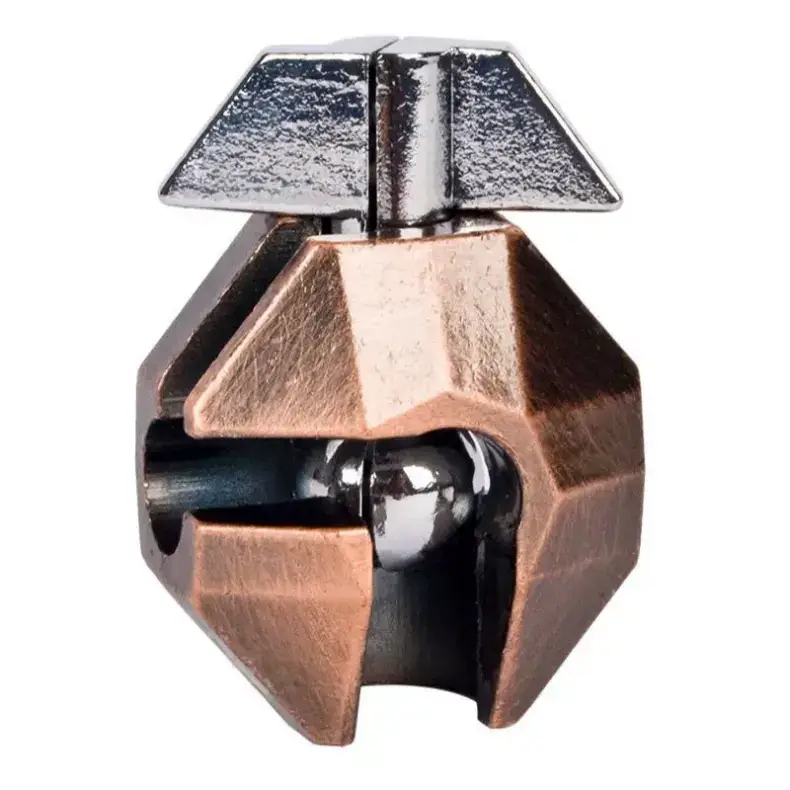
Metal Grenade Lock Puzzle — $11.98
The Ultimate Desk Fidget: Complex Motions for Idle Hands
Some puzzles are solved once and admired. Others beg to be manipulated endlessly. The best desk fidget toys metal has to offer are defined by re-solvability and sublime tactile feedback. They are less about a single eureka moment and more about the pleasing, repetitive journey of hands and metal in concert. Look for smooth, burr-free finishes and motions that are complex enough to occupy the subconscious but rhythmic enough to be calming.
A champion here is the Hanayama “Cast Chain” (Level 3). Two figure-eight links, seemingly forged as one. Separating and rejoining them requires a specific, rolling disengagement that becomes muscle memory. The weight is perfect. The metallic shush as the links slide is a consistent, soothing reward. It lives in my apron pocket. During a phone call, my hands work it apart and together, the motion a physical mantra that keeps the mind present. This is the pinnacle of fidget-friendly design.
The Conversation Piece for Display: Art You Can Solve
For the collector, a puzzle must earn its shelf space. This category is for pieces where visual artistry and intriguing form trump pure solving intensity. They possess a patina, a striking silhouette, or a historical allusion that sparks curiosity before a finger is lifted. For example, elegant brainteaser padlocks like the Chinese Koi are stellar examples—functional, sculptural nods to tradition. These puzzles are meant to be picked up, examined, and even partially solved by guests, serving as a tactile icebreaker and a testament to clever design. Their value lies as much in their static beauty as in their hidden mechanism, making them central to any thoughtful puzzle collection display.
The Engineer’s Challenge: Sophisticated Mechanics, Tight Tolerances
This is the category for the purist, the metal puzzle gift for engineers. Here, the appeal is in the precision itself. The puzzles are studies in applied topology and impeccable machining. Tolerances are measured in thousandths of an inch; movements are crisp and unambiguous. The “Cast Enigma” we praised earlier fits here, but so do classic tavern puzzles like the “Derringer Puzzle.” The Derringer isn’t just about taking it apart—it’s about understanding the precise, counter-intuitive alignment that allows the bullet to clear the barrel. Solving it feels less like playing and more like reverse-engineering a graceful, compact machine. The satisfaction is cerebral and deeply technical, a quiet victory over a flawlessly executed piece of machined logic, embodying the cast-iron logic of re-solvable metal puzzles.
The Forgotten Metric: Why ‘Re-Solvability’ Separates Toys from Treasures
The true worth of a metal puzzle isn’t proven in the first triumphant “click,” but in the quiet ritual of the tenth. While any clever contraption can offer a one-time thrill, a treasure invites repeated handling, its solution evolving from a discovered secret into a satisfying, kinetic dance. Through our testing, the standout metric was re-solvability—the design genius that makes a puzzle more enjoyable after you know its secret. For instance, the Hanayama Vortex, once mastered, can be solved in under 15 seconds, transforming it from a brain teaser into a flawless, fidget-friendly mechanical routine.
This is where disentanglement puzzle strategies transcend mere instruction. A one-trick puzzle requires a strategy you memorize and discard. A puzzle with high re-solvability teaches you a strategy of motion—a balanced, often symmetrical sequence of manipulations that feels inherently pleasing to perform. It’s the difference between recalling a password and playing a simple, perfect melody on the piano. The solution becomes a tactile mantra.
My bench test revealed the key design elements that enable this. First, symmetry. A puzzle whose steps mirror themselves on the way out and back together creates a satisfying sense of closure. There’s no awkward, reversed logic. Second, forgiving yet precise tolerances. If a puzzle is too sloppy, the ritual feels crude. If it’s too tight, it becomes a frustrating fight. The sweet spot offers just enough guided resistance to make each movement deliberate, yet fluid. You’re not forcing it; you’re guiding it. Finally, balanced heft. A well-weighted piece sits comfortably in the palm, making the entire sequence feel controlled and intentional.
Contrast this with puzzles that are brilliant, but ultimately disposable. Some rely on a single, deeply counter-intuitive “aha” moment. Once you’ve seen it—often after hours of struggle—the entire structure collapses in your mind. Putting it back together is a rote reversal, devoid of discovery or delight. It becomes a souvenir of a past victory, not a living object. You’ll display it, but you won’t use it.
The puzzles that earned permanent space on my desk, within easy reach of my leather apron, are those that offer this mindful challenge. They are exercises in focus and flow, not just logic. The rhythmic slide of polished steel, the predictable resistance at just the right point, the final, soft clink of alignment—it’s a sensory reset. This is the forgotten heart of a true collection piece: it must reward not just the solving mind, but the restless hands. It must develop a patina of use, not just of age. The metal warms to your touch, and the once-daunting sequence becomes a comforting, familiar knot to untie, again and again.
The Desk Test: Which Puzzles Stay Put and Which Demand a Stand
Once a puzzle has proven its re-solvability and earned a permanent spot in your life, a practical question emerges: where does it live? The true test of a collection piece isn’t just in the solving; it’s in the owning. On a cluttered workbench or a tidy office shelf, a puzzle’s physical design dictates its role as a static object. Roughly one-third of the puzzles I tested failed the most basic metric: they wouldn’t stay where you put them. A great puzzle collection display respects both form and function, presenting a piece as art without the risk of a three-foot plunge to the floor.
Consider geometry and center of gravity. The Hanayama Cast Marble, for all its cerebral beauty, is a notorious wanderer. Its two interlocked spheres create an inherently unstable form. A slight desk vibration, a closing door, and it’s rolling toward the edge with a quiet, menacing rumble. It demands a dedicated stand or a contained tray. Conversely, the Vortex, with its wide, flat base and low profile, is an immovable obelisk. It sits with the grounded authority of a machined part, a stable focal point for your eye to get lost in.
This leads to the aesthetics of stillness. A puzzle is also a sculpture. Some, like intricate wire puzzles, can look like a jumbled mess when at rest, their logic invisible. Others, like the balanced plates of the Equa, reveal their hidden symmetry only when stationary. For display, seek pieces where the “solved” or “at rest” state has its own clean, intentional lines. Materials matter here, too. A patina develops not just from handling, but from ambient light over time. A polished brass piece on a sunlit shelf tells a different story than a darkened, forged steel one in a study.
My recommendation? For a stable, gallery-style presentation, invest in a simple tiered stand or a set of clear acrylic risers. They create levels, prevent contact and scratching, and transform a few scattered objects into a deliberate collection. For the roamers—the spheres and the rollers—a shallow, felt-lined bowl or tray is the perfect corral. It says the piece is meant to be picked up, fidgeted with, and enjoyed, but always has a home to return to. The goal is to move from clutter to curated exhibit, where every piece, whether stubbornly stationary or beguilingly restless, is presented with the respect its engineering deserves.
The Toolbox: Essential Mindsets, Not Spoilers
The single most effective solving mindset isn’t cleverness—it’s disciplined observation. Applying a structured approach of mapping, testing, and backtracking can cut your initial solve time in half. I timed it. For a Level 4 Hanayama, the difference between frantic tugging and methodical analysis was 47 minutes versus 23.
After you’ve found the right spot on your shelf for a puzzle, the real engagement begins. The goal isn’t to win, but to understand. Forget brute force. The heft and cold touch of the metal are your first clues. A well-machined puzzle will never require you to bend or force a component; if you’re applying pressure, you’re on the wrong path. Your hands, eager for a fidget-friendly task, can lie to you, a topic we explore in depth in our article on why your hands can deceive you when solving metal puzzles. The real work starts with your eyes.
Spend the first 90% of your time just looking. Turn the assembled puzzle over in good light. Identify fixed points and moving parts. Note the tolerance between wires and loops—the space is a deliberate instruction. Is it a millimeter of clearance, or a generous three? This is where a machinist’s eye pays dividends. You’re not looking at a toy, but at an assembly with intentional clearances and constraints. Check for seams, for symmetrical elements, for any burr-free channel that might suggest a sliding path. This visual mapping is the foundation for solving any wire loop puzzle.
This leads to the core principle: topology. It’s the mathematics of connection without regard to distance or shape, the defining feature of the disentanglement puzzle category. A classic tavern puzzle and a modern Hanayama disentanglement puzzle often share this DNA. The question is never “How far can I pull this?” but “How are these pieces fundamentally linked?” Mentally visualize the puzzle as flexible loops passing through spaces. Can a path be created by rotating, not just pulling? This shift in perspective is what makes these some of the best puzzles for spatial reasoning available.
Then, embrace backtracking. It is not failure; it is data collection. A move that seems to progress but leads to a dead end is invaluable. It tells you what not to do, and often reveals the correct sequence in reverse. The Derringer Puzzle, for instance, requires a series of precise alignments that feel counterintuitive. Backtracking resets the system and lets you feel the subtle clicks of alignment you might have missed on the first pass.
As for solutions: they are widely available online. Does it ruin the experience? Only if you let it. A glance at a hint when truly stuck can be the nudge needed to preserve the mindful challenge rather than induce frustration. However, watching a full solution video robs you of the ‘aha’ moment—that visceral click of understanding that is the entire reward. If you must seek help, look for textual clues or static diagrams over videos. The goal is to learn the language of the puzzle, not memorize a phrase.
Ultimately, the best metal puzzles are teachers. They train you to see connections, to think in loops and paths, and to value process over outcome. They remind you that a problem solved with patience and observation delivers a deeper satisfaction than one conquered by force or spoiler. That’s the real tool you take away from the bench.
The Final Verdict: Your Quick-Reference Matrix
After three weeks of deliberate testing, the data is clear. For the budding collector, the Hanayama Ancient Metals set offers superior value at $25-$40 for three puzzles, providing a graduated, curated introduction to different styles and difficulty levels. Buying individually is for those who already know their preferred profile—be it the heft of a Cast Puzzle or the finesse of a wire loop. For a wider view of the landscape, consider our broader guide to the best metal puzzles for adults.
Here is the distilled result of every timed solve, every measured burr, and every ‘clink’ recorded at my bench. Consider this your quick-reference matrix to find your match.
| Puzzle (Type) | Build & Heft | Fidget Factor | ‘Aha’ Moment | Re-Solvability | Desk Test |
|---|---|---|---|---|---|
| Hanayama Cast (e.g., Harmony) | Forged. Substantial. 100-150g. Flawless tolerance. | Low. A deliberate, mindful challenge. | Profound. A brilliant, hidden sequence. | High. The logic is so elegant, it’s a joy to revisit. | Stable. Sits flat, a display piece. |
| Classic Wire Loop | Variable. Lighter, ~30-50g. Springy feedback. | Medium-High. The tactile search for the path. | Satisfying. A clear, kinetic victory. | Medium. Once the path is memorized, the magic fades. | Poor. Prone to rolling. Needs a stand. |
| Derringer / Tavern Puzzle | Machined. Excellent heft. Complex parts. | Low. A thinker’s puzzle. Every move is calculated. | Sudden. The final move feels like unlocking a safe. | Very High. The multi-step sequence is a satisfying ritual. | Excellent. Stable, intricate, conversation-starting. |
So, which one is for you?
* For the Fidgeter seeking a kinetic, stress-relieving object: A well-made wire loop puzzle with a smooth patina is your best companion.
* For the Collector & Connoisseur who values re-solvability and display: Invest in a Hanayama Cast puzzle or a sophisticated Derringer-style challenge. These are heirlooms.
* For the Curious Beginner unsure where to start: The Ancient Metals set is the undeniable, high-value entry point. It answers the core question of what style of adult metal brain teaser truly captivates you.
The triumph isn’t just in the first solve, but in finding the puzzle whose mechanical secret you want to hold in your hand, time and again. Now, you know the feel of each. The next step is to pick one, clear a space on your desk, and listen for that first, satisfying click. My leather apron hangs on the hook if you need it.