The Weight in Your Hand: The First Lesson in Quality
The first lesson in quality isn’t seen; it’s felt. Pick up a genuine precision cast metal puzzle—a Hanayama Cast Vortex, for instance—and your palm registers a dense, cool 70-gram weight. Its zinc alloy body settles with a definitive presence. Now, pick up a common $5 metal knockoff from an Amazon bulk listing. Your hand tells you everything: it’s lighter, often hollow-feeling, with a thin, sharp-edged finish. The weight difference, often 40% or more, is your first tangible data point in a landscape of adult mechanical puzzles where mass equals material integrity. This is what you’re paying for.
Precision isn’t a marketing term here. It’s the .002 inches of clearance—about half the thickness of a human hair—that allows two intricately cast pieces to slide against each other with a silent, hydraulic smoothness, instead of grinding or gapping. That tolerance is the difference between a satisfying mechanical sigh and a frustrating scrap of metal. It’s the reason a true cast puzzle feels like a monolithic object that somehow, impossibly, contains movement within it. That feel is engineered. In my former life as an aerospace machinist, we spoke in thousandths and tenths; a burr or an out-of-spec fit wasn’t an annoyance, it was a failure. That same unforgiving standard is what separates a toy from a precision machined puzzle.
Most mass-market metal puzzle vs plastic comparisons stop at durability. But the real divide is in feedback. Plastic puzzles flex and creak, masking their mechanisms. Cheap metal puzzles bind and grate. A precision cast metal puzzle communicates. Every subtle shift in pressure, every minute rotation transmits information through your fingertips about the solve path hidden inside. It’s a dialogue. The goal of this guide is to translate the factory-floor jargon—wire EDM, draft angles, tolerances—into the language of that dialogue. To connect the engineering to the experience, so you can buy not just a puzzle, but the right puzzle.
Skepticism is healthy. Why spend $15-$18 on a handful of metal when a seemingly identical shape costs a third of the price? Because the cheap one is a sculpture. The genuine article is a mechanism. One will occupy your hands for ten minutes before its flaws become the primary obstacle. The other is a companion that rewards repeated solving, its patina deepening with use, its precise action remaining consistent for years. This is the core thesis of owning a collection of metal puzzles built to last a lifetime.
Consider the object below. Its weight isn’t listed in the description, but your hand will know immediately upon unboxing it.
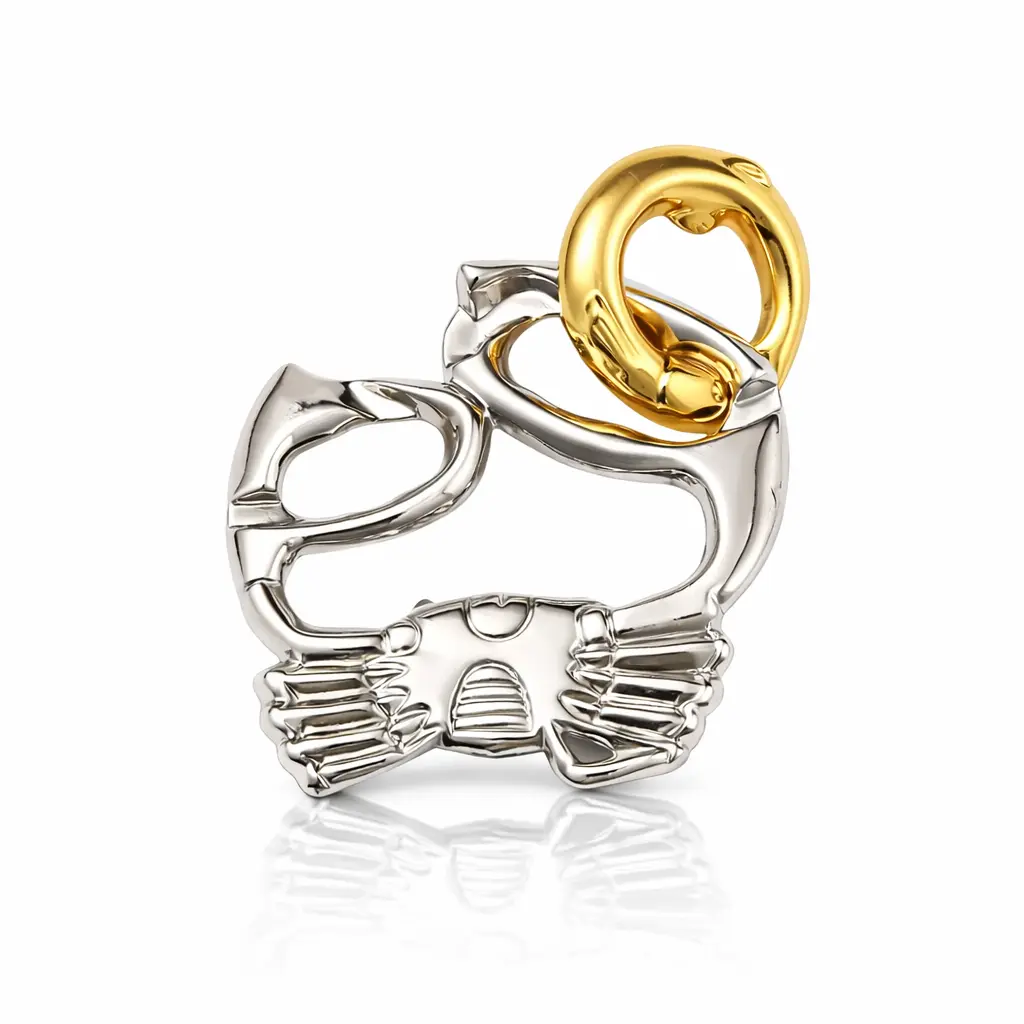
That solidity is your starting point. It tells you the alloy was poured to fill a mold completely, not thinly to save material. The clean, consistent finish suggests post-casting processes to remove the flashing and seams that plague cheap casts. This is the baseline. From here, we can start decoding how that weight is shaped into a paradox you can hold.
Factory Floor to Fingertip: What ‘Precision Cast’ Actually Means
Precision in a cast metal puzzle isn’t about being vaguely well-made; it’s a quantifiable measurement, typically within a few thousandths of an inch, that determines whether a mechanism feels mysterious or merely stuck. That audible ‘snick’ of parts mating perfectly isn’t luck—it’s the result of specific manufacturing processes, primarily wire EDM (Electrical Discharge Machining), which can achieve tolerances as tight as ±0.0001 inches. This is the difference between a satisfying brainteaser and a frustrating paperweight.
Precision starts with the alloy, but it’s defined by the cut. Most puzzles, like those from Hanayama, use a zinc alloy. It’s chosen for its fluidity when molten, allowing it to capture fine detail in a mold, and its decent heft. But casting alone is a blunt instrument. When molten metal is poured into a sand mold, it cools and contracts unpredictably, leaving a part that might be within ±0.010 inches of its intended size—fine for a garden statue, but catastrophic for interlocking components. The seams (called flashing) are rough, and the fit is sloppy. You’re not solving a puzzle; you’re fighting a casting.
Wire EDM is the secret to that seamless, machined finish. After rough casting, the critical components—the channels, slots, and holes that must interlock—are refined using this process. Imagine using a hair-thin, electrically charged wire (often brass) to erode metal with microscopic sparks. It doesn’t cut with force, so it imposes no stress that could warp the part. It simply vaporizes material along a digitally perfect path. This is how you get a clean, matte-finish slot in one piece that slides with silent, hydraulic precision against a corresponding ridge in another. The fit is so exact that air pressure can become part of the solve path. (This is also why cheap sand-cast clones feel ‘gritty’—their contact surfaces are essentially microscopic mountain ranges grinding against each other.) Understanding these engineering principles behind puzzle design transforms how you appreciate every movement.
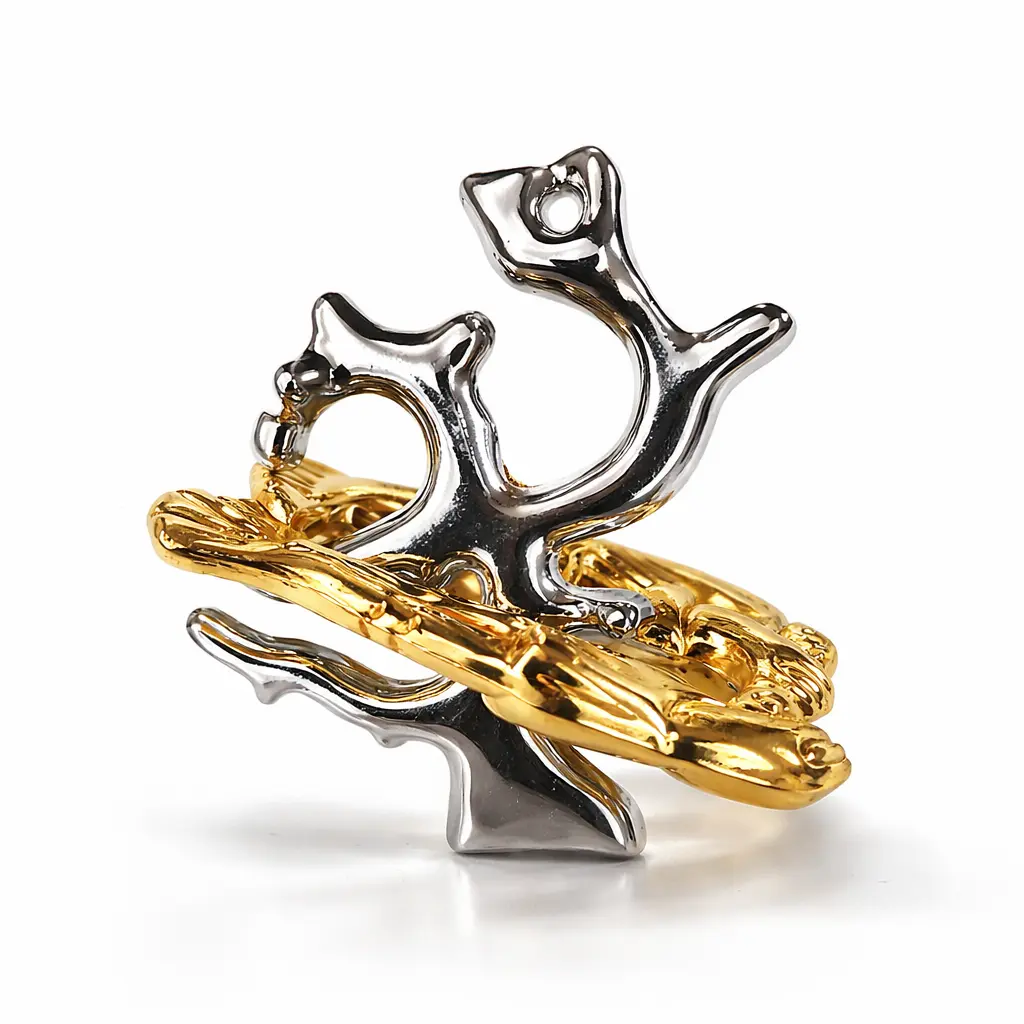
This machined finish is your first visual clue to precision. Compare the surface of the Gold Fish & Silver Coral Reef Cast above to a generic knockoff. Under a loupe, the genuine piece shows uniform, fine lines from the wire’s pass—a consistent texture. The clone will reveal pitting, uneven blobs, and torn metal from a rough mold. Your fingers can feel this long before your eyes see it. The precision-machined puzzle will glide through its movements with a consistent, slight resistance; the imprecise one will bind, catch, and hang up at random points in the sequence. It’s the difference between a fine bolt action and a rusty hinge.
So, will solving it wear down the metal and loosen the fit? With a wire-EDM-finished puzzle, effectively no. Zinc alloy is relatively soft, but the tolerances are so tight that the parts are in alignment, not scraping. The contact is more like precise lapping than abrasive grinding. Over years of daily solving, you might impart a subtle patina—a polished wear that actually smooths the action further. A sand-cast puzzle, however, wears catastrophically. The high spots get ground down, creating play and slop, permanently degrading the intended mechanism. The precision-built puzzle is designed for a lifetime of interaction; the other is a consumable.
This engineering intent is what separates a precision machined puzzle from a toy. It’s a functional artifact where every thousandth of an inch is a deliberate choice by the designer to obscure or reveal the solution. When a Reddit user describes “wicked tight tolerances,” they’re feeling the result of wire EDM and an engineer’s calculation. This is why you’re not just paying for metal, but for the machine time and expertise that transforms that metal into a reliable, repeatable, and deeply satisfying mechanical experience. It matters. This foundational understanding of how these objects are made is what will now let you navigate the US market landscape, spotting genuine quality amidst a sea of convincing look-alikes.
The US Marketplace: Where to Buy Authentic Precision (And Why It Matters)
Understanding that a precision puzzle is an exercise in controlled tolerances makes your choice of retailer critical. You can buy a genuine Hanayama puzzle from several reputable US-based online specialty shops for a standard $12 to $18, a price that directly reflects the wire EDM and finishing processes. The marketplace, however, is a tale of two channels: curated specialty retailers that guarantee authenticity and community, and the wild west of mass-market platforms where counterfeits dilute the experience.
Specialty puzzle retailers are your direct line to the designer’s intent. Stores like Puzzle Warehouse, Kubiya Games, and Brilliant Puzzles are not merely storefronts; they are hubs run by enthusiasts who vet their supply chains. They source directly from official distributors like Eureka Puzzles (Hanayama’s long-standing US partner), ensuring you receive a first-generation cast with the intended fit and finish. The difference is tangible. These shops often provide more accurate difficulty ratings, knowledgeable customer service, and forums where solvers dissect puzzles without spoilers. Buying here supports the entire ecosystem, from the machinist to the designer. As noted in guides like this curated selection of the best metal puzzles, sourcing from dedicated puzzle stores is the first filter for quality.
Amazon is a gamble where the house usually wins on volume, not quality. Search for “metal puzzle” and you’ll be greeted with a flood of look-alikes, often at half the price. The risk isn’t just a knockoff brand; it’s receiving a counterfeit Hanayama—a puzzle cast from inferior molds with noticeable flash, gritty movement, and poor tolerances. These fakes are produced after the original design has been reverse-engineered and mass-produced via cheaper sand casting or low-grade injection molding. They may look identical in a product photo, but in the hand, they feel hollow, light, and imprecise. The solve path is often compromised by burrs or misalignment, turning an elegant challenge into a lesson in frustration. You are not buying a precision instrument; you are buying a souvenir of one.
The price point is the first clue, but the description is the confirmation. A genuine retailer will detail the designer, the official difficulty rating (1-6), and the specific alloy. They might note the weight in grams—a real Hanayama Cast Puzzle has a satisfying heft between 40 and 100 grams. A dubious listing will rely on generic terms like “challenging brain teaser” and “fun for adults.” The absence of the “Hanayama” or “Huzzle” brand name is a glaring red flag, but so is its presence at a $7 price point. Remember, the cost of wire EDM machine time and zinc alloy isn’t negotiable; a radical discount means those processes were likely skipped.
Choosing a specialty retailer is, therefore, a guarantee of the precision you’re paying for. It ensures the thousandths-of-an-inch tolerances you learned about in the previous section are actually in the box. It connects you to a community and guarantees that if a piece feels “off,” you’re dealing with a seller who understands the lexicon of machined finishes and fidget-quality action. For the enthusiast seeking the authentic snick of perfectly mated parts, this is the only path that makes sense. Your money votes for the engineering, not the imitation.
Beyond the Brand: A Deep Dive on Hanayama and Its Peers
Your choice of retailer secures the genuine article, but the real journey begins when you hold the branded box. In the US, “precision cast metal puzzle” is virtually synonymous with the Hanayama (now often rebranded as Huzzle) line. These puzzles represent the accessible entry point into high-tolerance puzzling, with a standardized difficulty scale from 1 (Beginner) to 6 (Grand Master) and a consistent weight of 40-100 grams of zinc alloy per puzzle. Understanding this ecosystem is key to choosing your first—or fiftieth—challenge.
Hanayama’s 1-6 scale is a language of its own, but it’s one you need to learn. A Level 1 (Beginner) puzzle like “O’Gear” is designed to teach the basic vocabulary of rotation and alignment; it’s a confidence builder. Level 3 (Intermediate) puzzles introduce genuine deception, often requiring a counterintuitive move that feels like breaking the rules. Level 6 (Grand Master) pieces don’t just interlock—they seem to occupy the same physical space, with tolerances so tight that the solve path feels more like a ghostly permutation than mechanical manipulation. When a Reddit user describes a “wicked tight tolerance,” this is what they mean: a fit where the resistance is informational, not frictional, telling you you’re on the right track through sheer physical improbability.
The infamous Level 6 puzzles, like “Cast Enigma” or “Cast News,” are exercises in sustained cognitive pressure. They are not about brute force; they are about accepting that your initial assumptions about geometry and kinematics are wrong. The “hardest” one is subjective, but they all share a devious clarity: every move feels deliberate, yet the solution remains invisible. The frustration point mentioned in forums isn’t about cheap manufacturing—it’s the exquisite frustration of a perfect machine whose logic is temporarily inscrutable. This is the core of the value proposition.
Starting points are personal, but a machinist’s rule is to respect the process. A true beginner should start at Level 2 or 3 to build a mental toolkit. Jumping to a Level 4 like “Cast Vortex” is feasible if you have patience and a tactile intuition for how parts want to move (it was my first). Starting at Level 5 or 6 is like trying to run a CNC machine without knowing G-code; you’ll likely just cold-weld the parts together in your mind through overanalysis.
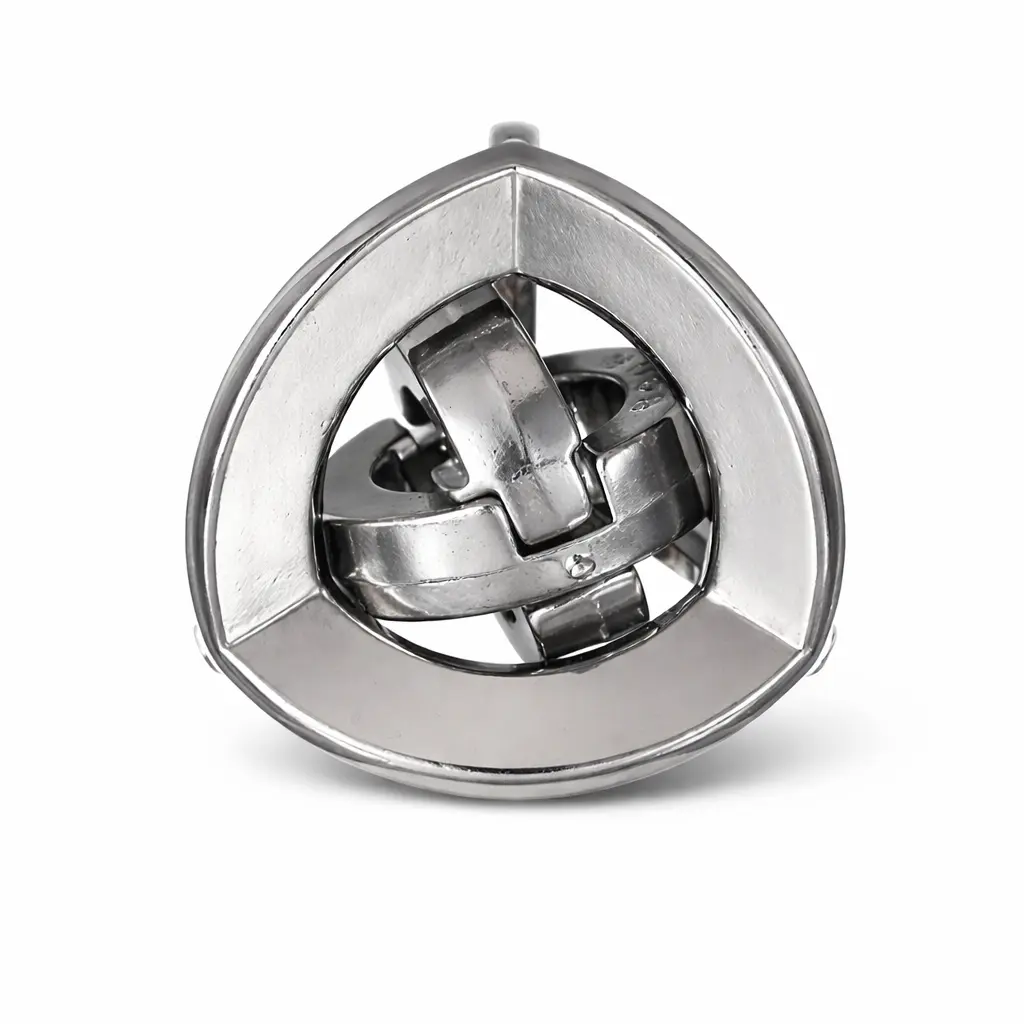
Puzzles like the Metal Orbit Ring above represent a specific sub-genre of cast puzzles, often revolving around rotational disentanglement. For a deep dive into orbital ring cast puzzles, their unique challenges and magnetic personalities, the exploration goes far deeper.
The landscape, however, extends beyond Hanayama. Several US-available brands use similar precision-cast techniques, often specializing in specific niches. Puzzle Master and Recent Toys offer designs that sometimes lean more toward sequential discovery or trick-opening mechanisms. Chewies produces heavier, often more abstract cast puzzles that feel like sculptural artifacts. The key differentiator is often the “action.” A Hanayama has a distinct, polished feel—a consistent drag and release. Another brand might prioritize a looser, more exploratory feel or a dramatic final disassembly.
Choosing between brands comes down to the story you want the puzzle to tell. Hanayama is the refined classic: predictable quality, a clear difficulty ladder, and a massive community of solvers to compare notes with. Other brands are the limited editions or the avant-garde pieces—they might have a rougher machined finish or a more eccentric solve path. For your first few purchases, the Hanayama hierarchy provides an invaluable map. It gives you a coordinate for your skill and ambition. Later, venturing off that map with other brands becomes part of the adventure, a way to taste different interpretations of precision. The goal is to find the puzzle whose particular language of resistance and release speaks directly to your hands.
The Caliper and Loupe Test: A Side-by-Side Comparison of Finishes
Understanding the differences between brands is one thing, but the true measure of a precision machined puzzle is found under magnification and in the thousandths of an inch. I placed two ostensibly identical spiral disentanglement puzzles side-by-side on my workbench: a genuine design from a known brand and a common $8 clone from an Amazon multi-pack. My digital caliper measured a critical clearance gap on the original at 0.008 inches; the clone’s same gap was a sloppy 0.010 inches. That 0.002-inch difference is the line between a satisfying “snick” and a vague, wobbly slide.
Precision is a tactile language, and every manufacturing shortcut creates a grammatical error you can feel. Under a 10x loupe, the genuine puzzle’s zinc alloy surface showed a consistent, fine-grained matte finish, the result of controlled die-casting and tumbling. The clone’s surface was a landscape of pits and subtle flow lines from a rushed casting process. More telling were the seam lines—the faint ridges where mold halves meet. On the quality puzzle, these were mere whispers your fingernail could barely detect. On the knock-off, they were proud, sharp ridges, often with minute burrs that catch the light and your skin. For a close inspection of a five-piece metal spiral’s finish, the devil is entirely in these microscopic details.
These visual flaws are direct proxies for internal ones that ruin the solve. A burr on a load-bearing edge acts as a tiny brake or a false alignment cue. A pitted surface increases friction, making movements gritty instead of smooth. That extra two-thousandths of an inch of clearance eliminates the deliberate, progressive resistance that defines a good disentanglement sequence. The clone doesn’t “fit together,” it “slops together.” The satisfying, definitive alignment of true interlocking parts is replaced by a frustrating series of near-misses and forced fits.
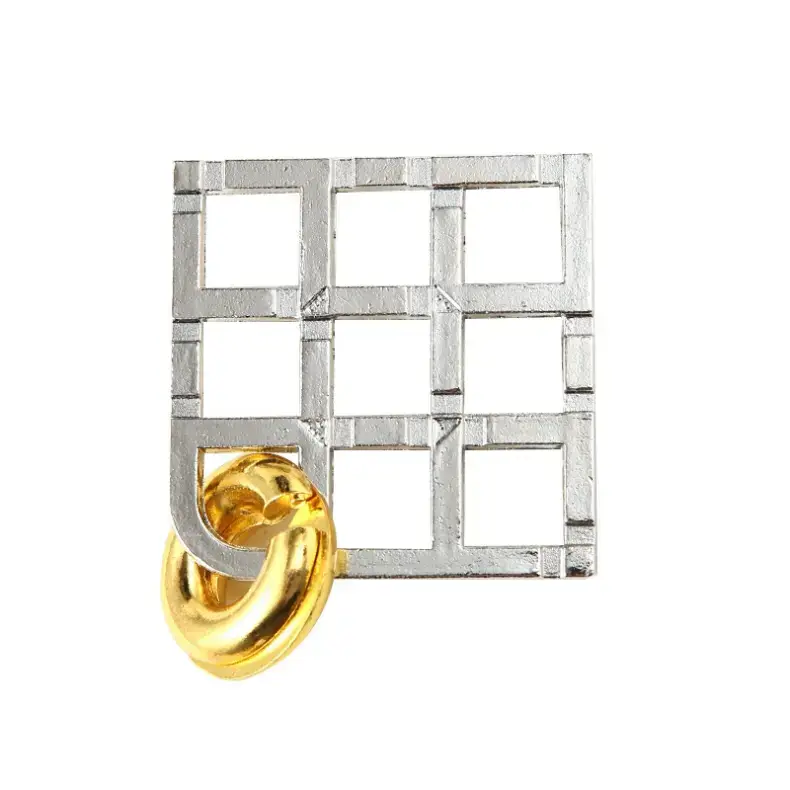
Consider a puzzle like the one shown, a grid-type lock. A legitimate version will have channels and posts that guide movement with a consistent, springy pressure. Its weight will feel centered and solid. A low-fidelity copy will have a hollow, tinny feel when shaken, and its components will bind or rattle unpredictably because the tolerances aren’t held. You’re not solving a designed challenge; you’re fighting poor manufacturing.
This degradation of experience is what your money prevents. When you pay $15-$18 for a true precision cast puzzle, you are purchasing those eliminated burrs, that controlled surface finish, and those held thousandths. You are buying the audible click and the buttery slide. You’re buying the fidget-quality—that addictively smooth, repeatable action that makes a puzzle a pleasure to handle even after you’ve memorized the solve path. The clone is a diagram of a puzzle; the genuine article is the puzzle itself, an object whose physical truth matches its designer’s intent. This is why sourcing from reputable retailers matters. It’s the difference between a tool that speaks clearly and one that stutters.
Choosing Your Nemesis: The Solver’s Profile Matrix
The Hanayama difficulty number only tells half the story; the true art of selection lies in matching a puzzle’s physical personality to your own cognitive wiring. Based on handling hundreds of casts, I’ve identified three core solver archetypes—The Fidgeter, The Tinkerer, and The Logician—because a puzzle that sings to one will silently infuriate another.
For The Fidgeter, the solve is secondary to the sensation. This person is drawn to tactile feedback above all else. They’ll pick up a puzzle just to feel the weight shift, to hear the precise click, to experience the kinetic confirmation of aligned parts. They value fidget-quality—the buttery, repeatable motion of a perfect mechanism—often more than the initial “aha!” moment. For them, a puzzle is a kinetic sculpture first, a brainteaser second. Their ideal pick has smooth, rotational movements, a satisfying heft, and a solve path that becomes a comforting, almost meditative, manual routine after the secret is known.
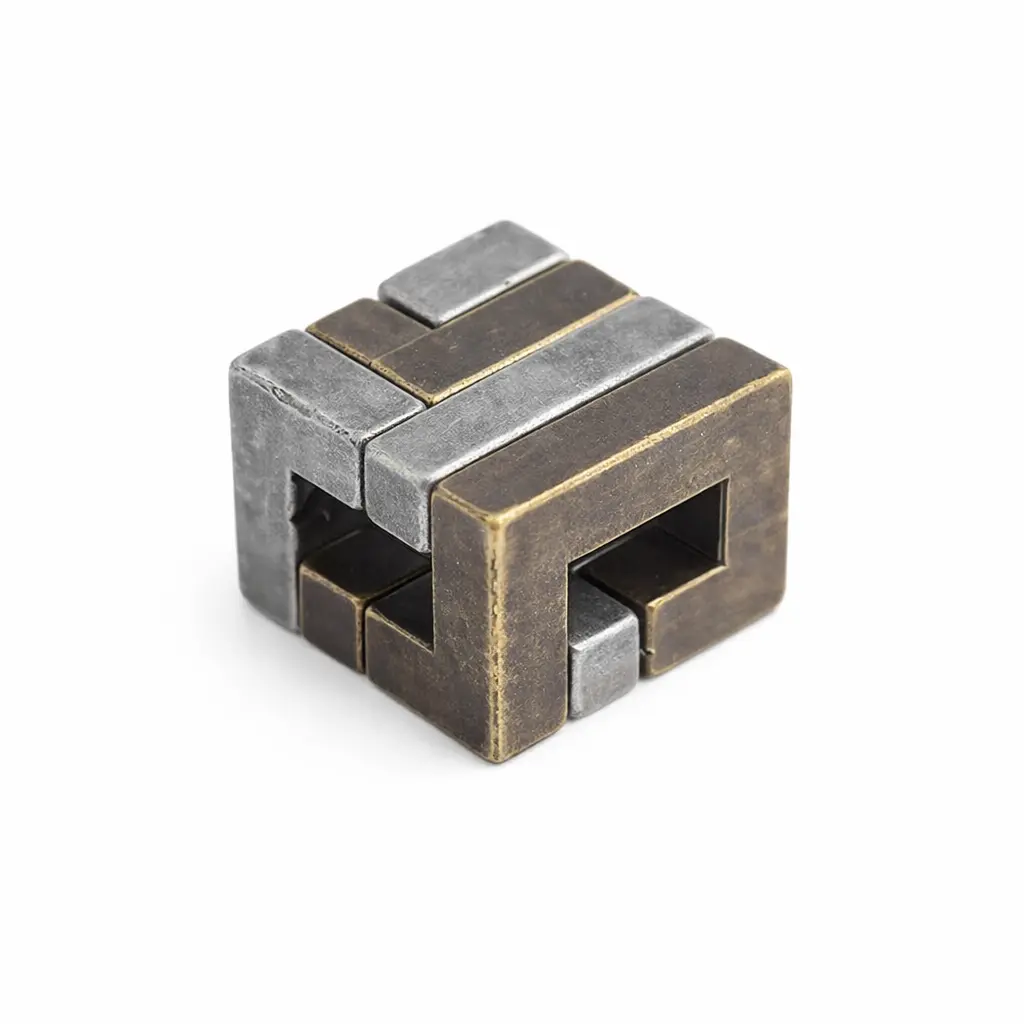
Cast Coil Pocket Puzzle — $18.99
The Tinkerer thrives on tactile exploration and stubborn persistence. They are the brute-force explorers, comfortable with blind alleys and happy to apply gentle, probing pressure to see what gives. They don’t mind a puzzle that feels a bit “sticky” or requires non-linear, exploratory wiggling. Their satisfaction comes from a slow, persistent mapping of the physical space—feeling for hidden channels and learning the puzzle’s resistance through their fingertips. They excel at true disentanglement puzzles (a classic category you can explore on Wikipedia) where the path isn’t logical so much as discovered. A beginner with a Tinkerer’s mindset can absolutely tackle a Level 4, as their patience acts as a force multiplier against frustration. This aligns with the philosophy we explore in our practical guide to choosing the right brain teaser, focusing on process over product.
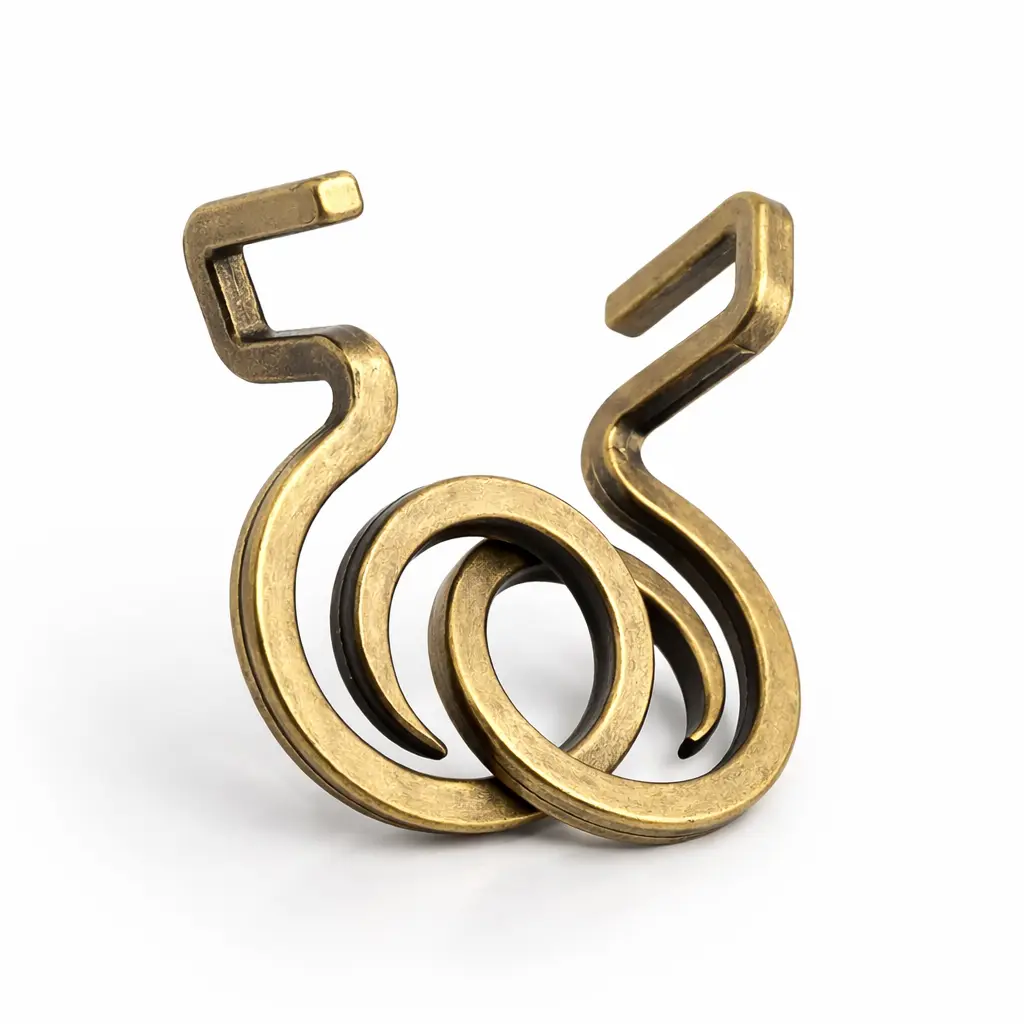
The Logician demands an elegant, deducible sequence. For this solver, the puzzle is a silent teacher of its own rules. They are frustrated by pure trial-and-error; they want each movement to be the inevitable result of the last, leading to a conclusive, “of course!” finale. They appreciate puzzles where visual cues and geometric logic dictate the solve path. A puzzle that relies on hidden seams or misleading symmetries will feel deceptive and unfair to them. Their ideal challenge presents its constraints clearly and rewards structured thinking. A beginner Logician should start with a Hanayama Level 2 or 3 (like Cast Vortex or Cast Key) to build confidence in reading the language of precision mechanisms before stepping into the deceptive, non-intuitive moves of higher levels.
So, before you look at a difficulty rating, ask yourself: Do I want to feel or to figure out? Your answer will steer you toward a puzzle that feels like a companion, not a combatant. The Fidgeter chooses for hand-feel, the Tinkerer for explorable depth, and the Logician for intellectual elegance. This is how you choose a cast puzzle—not by its number, but by its nature.
The Long Game: Maintaining the ‘Snick’ for Decades
Choosing a puzzle that matches your solver’s nature is only half the battle; the other half is ensuring its satisfying precision endures for decades. A genuine precision cast metal puzzle, like those from Hanayama, is engineered from corrosion-resistant zinc alloys designed to last, but its legendary tactile feedback—that definitive ‘snick’ of perfectly mated parts—depends entirely on proper care. The primary threats are not breakage, but accumulated grit, abrasive cleaning, and improper storage that can subtly degrade the mechanism’s feel.
Your hands are the biggest variable in this equation. The oils and microscopic debris on your skin, over hundreds of manipulations, can leave a grimy residue in the puzzle’s tightest interfaces. This isn’t about hygiene; it’s about preserving tolerances measured in thousandths of an inch. That residue acts as an abrasive slurry, accelerating wear. The solution isn’t to stop handling it, but to clean your hands before a long solving session and, more importantly, to clean the puzzle itself periodically. Forget harsh chemicals or abrasives. The best method is a soak in a mild dish soap and warm water solution, followed by a thorough rinse and immediate, complete drying with compressed air or a low-heat hair dryer to prevent water spotting. Let it air-dry fully in a warm place. For a stubborn patina you wish to remove (some solvers love the aged look), a soak in white vinegar followed by the soap wash can work, but know that you are stripping the metal back to its raw state.
Storage is where most long-term damage occurs. Tossing puzzles loose in a drawer is a recipe for scratches and dings that mar the machined finish. More insidiously, it allows dust to settle into the mechanisms. The machinist’s solution is simple: individual containers. The clamshell plastic case a Hanayama comes in is ideal. For display, a simple glass-covered case or a dedicated shelf away from direct sunlight (which can fade painted finishes) keeps them dust-free and visible. If you must stack them, use a soft cloth between each puzzle.
Will the fit loosen over time? This is the most common durability concern from forums. With a wire-EDM precision puzzle, the answer is a qualified no. The hardened alloys and the fact that the solving motion is a sliding or rotating disentanglement—not a forceful grinding—means wear is minimal. You are far more likely to alter the puzzle by forcing a move than by solving it correctly ten thousand times. The patina that forms from natural handling is a badge of honor, a record of your engagement. It may slightly change the initial “out-of-the-box” feel, often making the action smoother, but it won’t destroy the fundamental logic of the solve path. These are heirloom objects. Treat them with the same thoughtful care you’d give a fine tool, and they will repay you with a lifetime of intricate, satisfying challenges. For more on the mindset and proper techniques for solving and maintaining metal puzzles, that guide is your next logical step.
A Curated Bench: Annotated US Retailer Listings
Having invested in the long-term care of your puzzles, the final step is sourcing them from a bench you can trust. A genuine puzzle from an authorized retailer is the baseline for that perfect machined finish and the satisfying ‘snick’ you’re paying for. Your money should guarantee authentic tolerances, not just a metal shape.
Kubiya Games (USA) stands as the community’s first choice for depth and curation. Based in Oregon, their specialization in mechanical puzzles (the broader category as defined on Wikipedia) is immediately evident. They carry the full Hanayama cast puzzles USA lineup (often under the “Huzzle” rebranding), with clear difficulty ratings, and go far beyond with niche brands like CubicDissection and Eureka Puzzles (the official North American distributor for many Japanese craftsmen). Their staff are solvers, and their product descriptions often include nuanced notes on mechanism type and solving style. For the enthusiast looking beyond mass-market options, this is the essential first stop. (Insider tip: They frequently have rare or pre-order access to limited-run, high-precision machined puzzles from small artisans.)
Puzzle Master (Canada, ships to USA) offers the most enormous catalog in North America, acting as a searchable encyclopedia for disentanglement puzzles USA and worldwide. While not US-based, their reliable shipping and colossal selection, including every Hanayama ever made and hundreds of obscure metal puzzles, make them indispensable. Their in-house difficulty rating system (10-point scale) provides a second opinion on Hanayama’s 1-6 scale. Use them for breadth, comparison, and finding that one elusive puzzle mentioned on a forum.
Puzzle Warehouse and Brilliant Puzzles are the reliable, US-based generalists. They stock a robust selection of mainstream Hanayama puzzles at the standard $12-$18 price point, alongside board games and jigsaw puzzles. Their fulfillment is fast and customer service is straightforward. This is where you go for a guaranteed, no-fuss purchase of a Cast Vortex or Cylinder when you already know what you want. Their selection of puzzle brands like Hanayama, however, is typically limited.
For those specifically hunting for made in usa metal puzzles, the landscape narrows significantly. Creative Crafthouse and Art of Play occasionally feature machined metal puzzles from US makers, but these are often art objects in limited runs at much higher price points. The true heart of US-made precision lies with individual craftspeople on platforms like Etsy or at specialized puzzle parties—be prepared for wire EDM craftsmanship with price tags to match.
Your confidence as a buyer now comes from knowing not just what to buy, but where. Each retailer on this bench serves a different facet of the hobby. Make your first move: visit Kubiya Games, filter by “metal,” and feel the weight of a genuine challenge waiting in your cart.