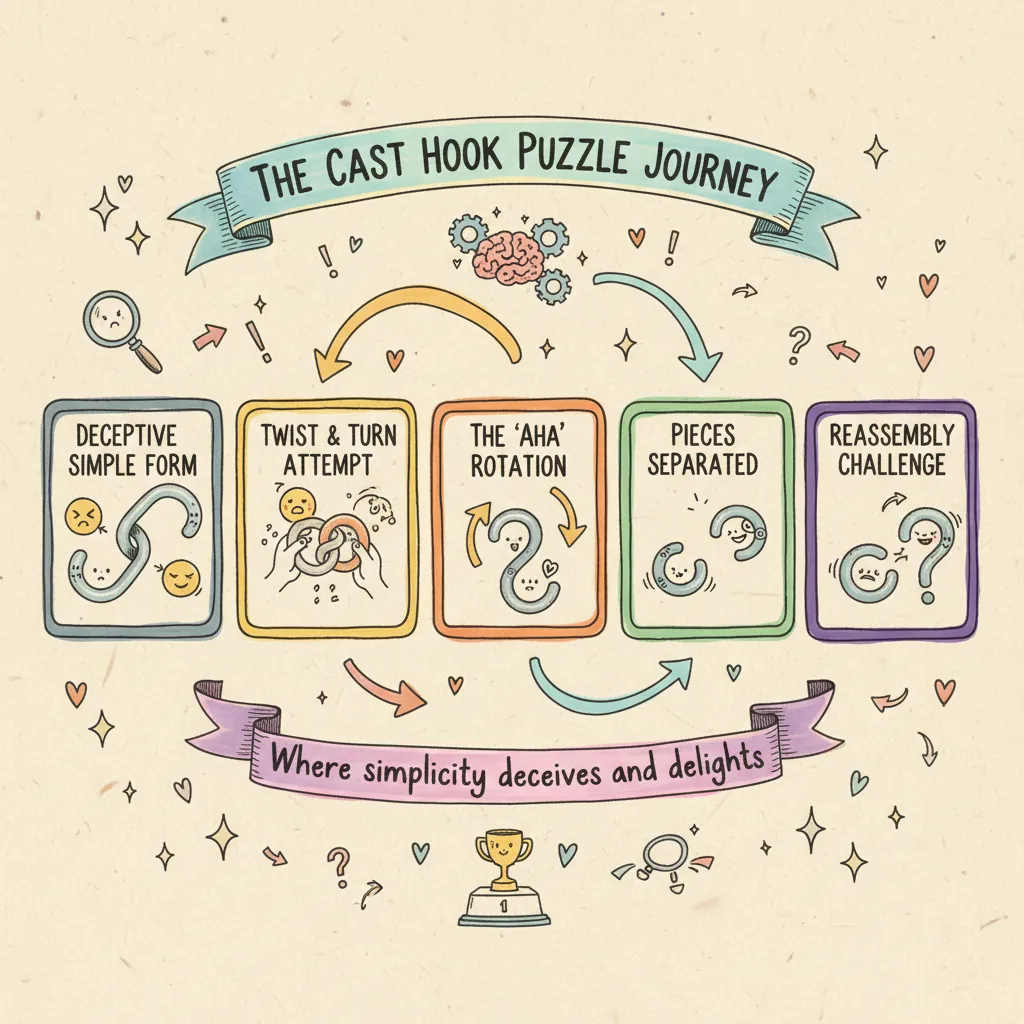
More Than Meets the Eye: The Hook’s Seductive, Simple Form
The Cast Hook is a masterclass in deceptive simplicity. A two-piece metal puzzle measuring just 2.5 inches across that can occupy your hands and mind for hours. Its entire form is two identical, interlocking hooks made from cast zinc alloy—a design so straightforward it dares you to believe the solution is obvious. That is precisely where the mental trap is sprung.
You’re holding two identical, cold metal hooks. They’re linked, seemingly inseparable. Your first instinct is to pull—they don’t budge. You twist, turn, and suddenly, with a specific quarter-rotation, the whole geometry shifts in your palm. That’s the Cast Hook. It arrives with a single, maddening instruction: separate the pieces. Then put them back together. That’s it. No springs, no hidden compartments, no loose bits. Just two solid pieces of metal with a combined weight that feels substantial, like a heavy key or a dense desk artifact. This minimalism is its greatest weapon.
Most puzzles announce their complexity. A Rubik’s Cube has colors and turning rows. A lock puzzle has pins and shackles. The Cast Hook offers nothing to decode at a glance. Your brain scans it, recognizes the familiar hook shape, and concludes the path must be linear. Just slide it out. This is the core of the psychology. A multi-part puzzle prepares you for layered, sequential thinking. A two-piece puzzle, especially one where the pieces are mirror images, suggests a singular, elegant motion. When that expected motion fails—and it will—it creates a unique cognitive friction. It’s not that the puzzle is overly complex; it’s that your initial assumptions are perfectly, brilliantly wrong.
This is why its “Level 1 (Beginner)” rating from Hanayama feels like a trick. Compared to the tangled labyrinths of other cast metal puzzle disentanglement challenges, yes, it’s accessible. But for a true novice? It’s a baptism by fire. The difficulty isn’t in remembering a long sequence. It’s in abandoning your ingrained spatial logic. You must stop pulling and start feeling. The puzzle demands you read geometry through your fingertips, not your eyes.
Harder than a Rubik’s Cube? No. More subtly frustrating than untangling a knot of headphone wires? Absolutely. The headphones present a visible snarl. The Cast Hook presents a clean, impossible knot. Your frustration doesn’t come from overwhelming options, but from a profound lack of them. Every wrong move feels like you’ve tried the only move there is. This is the seduction. It looks like a paperclip. It behaves like a riddle wrapped in an enigma, cast in metal.
The objective is clean: separation and reunion. But the path is a lesson in humility. It sits in your hand, cool and silent, a perfect conversation piece that has already begun its first, most important conversation—a quiet argument between your eyes and your hands.
The Heft & The Hand: Unboxing a Desk-Worthy Artifact
The quiet argument between your eyes and your hands is settled the moment you lift the Cast Hook from its box. Its first and most honest communication is weight. For a 2.5-inch object, its 70-gram heft is a confident, surprising statement. This density is your first clue that you’re not handling a cheap stamped steel novelty, but a precision-cast zinc alloy artifact. The material choice is fundamental to the experience, transforming it from a disposable desk toy brain teaser into a substantive object meant for repeated, tactile engagement.
Zinc alloy feels different. It’s colder to the touch initially, a clean thermal sink that warms slowly in your palm. It lacks the tinny, hollow feel of thin sheet metal or the brittle rigidity of cheap pot metal. The weight is distributed solidly, giving each hook a deliberate, almost tool-like presence. Run your thumb along a curve. The finish is smooth satin, but not polished into sterility. You’ll detect the faintest tactile whisper of the casting process—microscopic peaks and valleys that provide just enough grip for your fingertips. This is not a flaw, but a fingerprint of manufacture. Under bright light, you might see the subtle, almost invisible seam line where the two halves of the casting mold met. It’s a mark of authenticity, the puzzle’s own birthmark.
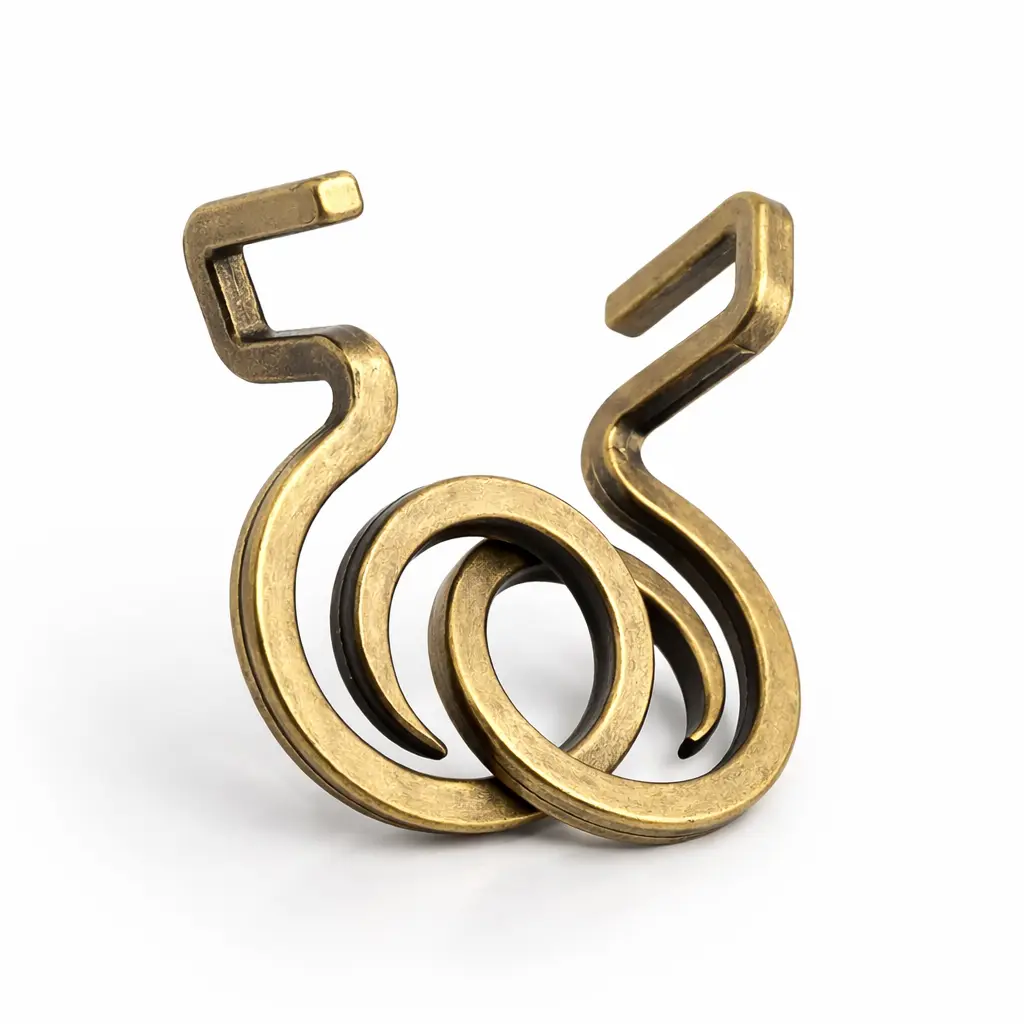
For scale, it fits entirely within a closed fist, yet commands attention on a desk. Think of a hefty key fob or a solid chess piece. This physicality is why it succeeds as a metal puzzle for adults. It feels like an object of consequence. There’s no paint to chip, no plastic to flex. The dark, gunmetal-gray patina is the metal itself, anodized for protection. This durability is a hallmark of the Hanayama Cast series logic—these are puzzles built for a lifetime of solves, not a single eureka moment before being discarded. You can read more about that enduring design philosophy in our guide to metal puzzles that don’t break.
Shake it gently. The two pieces don’t rattle loosely; they shift with a soft, muffled clunk, a testament to the precision of the interlock. This isn’t a noisy fidget spinner. It’s a quiet, focused thing. The initial impression is one of impeccable solidity. Your brain, expecting flimsiness from a “toy,” is immediately recalibrating. The hands are now in agreement: this object is serious. It is waiting. And it is built to endure every twist, turn, and moment of frustrated pressure you will inevitably apply. The stage for that tactile conversation is set not by complexity, but by this profound, simple quality.
Decoding ‘Level 1’: What Hanayama’s Rating Actually Means
Hanayama’s “Level 1” designation means the Cast Hook is the most accessible entry point into their Cast series—designed to be solved through observation and logical manipulation, not obscure, blind-alley tricks. This ‘Beginner’ label, however, is relative to metal disentanglement puzzles, a category of mechanical puzzles with ancient roots. For a true novice, the first solve might still span 5 to 20 minutes. It is not instant, and that’s the point.
That solid, waiting object in your hand represents a very specific school of thought. The Hanayama Cast series is a curated line of over 40 metal puzzles, each with a difficulty rating from 1 (Beginner) to 6 (Expert). The “Cast” name refers to the manufacturing process—these pieces are not stamped or bent, but precision-cast from metal, allowing for the intricate, three-dimensional interlocking that defines them. A Level 1 puzzle like the Hook is the on-ramp. Its goal isn’t to stump you for days, but to teach you the language of spatial reasoning and tactile feedback. It’s a primer on how to think with your hands.
So, where does it fall on a practical difficulty spectrum? Harder than solving a basic keyring? Conceptually, yes—the solution isn’t a simple pull. More subtly frustrating than untangling a knotted pair of headphone wires? Often, yes, because the path isn’t obscured by chaos but by a clean, deceptive symmetry. Harder than a 3×3 Rubik’s Cube? No. The Cube involves memorized algorithms; the Hook demands a single, precise moment of geometric insight. Your first solve time is a personal benchmark, but for many, that “aha!” comes within a dedicated quarter-hour of focused manipulation.
This accessibility makes it suitable for a wide range of solvers. A bright, patient 10 or 12-year-old can absolutely solve the Cast Hook. The deceptively simple form is less intimidating than a multi-part puzzle, and the “click” of success is a powerful reward. This is also the root of its common—and somewhat misunderstood—association as a “Mensa-rated” puzzle. Mensa has used various Hanayama puzzles in their testing and promotions, and the Hook’s elegant, logical solution embodies the type of spatial intelligence they assess. The rating isn’t a mark of elite difficulty, but of pure, distilled logic.
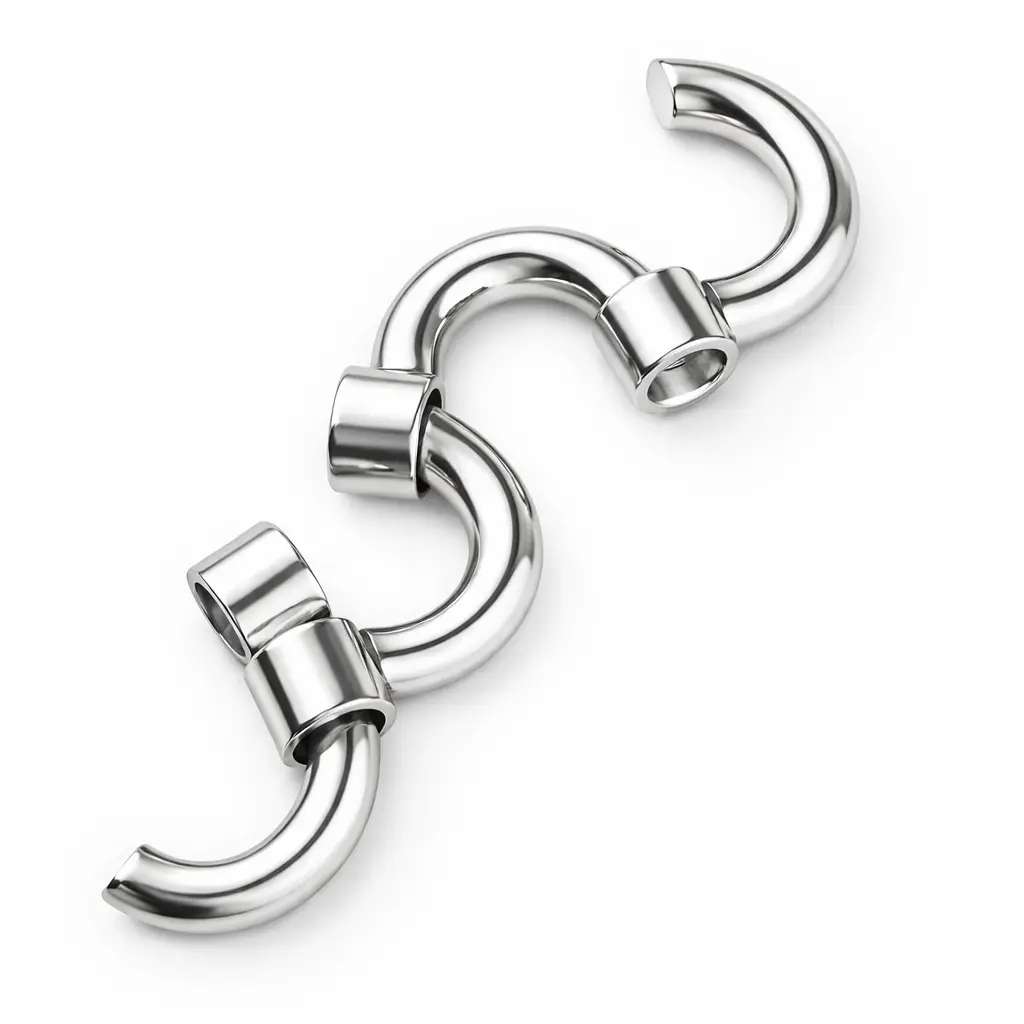
Cast Galaxy 4-Piece Silver — $14.88
Choosing a Hanayama puzzle is less about picking a difficulty number and more about matching a mechanical personality. The Level 1 Hook is the straightforward conversationalist. It won’t lie to you or hide its mechanism in a dozen moving parts. The challenge—and the satisfaction—comes from learning to listen to what it’s already telling you through resistance and alignment. It’s the perfect control sample. Once you understand its logic, you have a foundational reference point for tackling the more complex dialogues of higher-level Cast puzzles, a progression we map out in our guide to Hanayama Cast puzzle solutions by level. For now, the Hook’s purpose is singular: to deliver that first, clean, satisfying separation and prove that you can speak the language.
The Feel of the Solution: A Map of Hints, Not Steps
The “solution” to the Cast Hook isn’t a sequence of steps to memorize; it’s a lesson in interpreting tactile feedback. From first frustrating wiggle to final, satisfying separation, the entire 10–20 minute experience is a masterclass in haptic communication, where your only guide is the subtle resistance of cast zinc alloy telling you “no,” until it whispers “here.”
Having just decoded Hanayama’s Level 1 rating—a promise of a singular, logical mechanism—you now hold the puzzle, ready to engage. You’ve moved past mild frustration. The intrigue begins. Your first instinct, after the failed pull, is to wiggle. You shake it gently. The pieces jiggle with a faint, solid rattle. They move, but not apart. It’s a taunt. This is the first hint: there is play in the system. A path exists. This isn’t a solid block of metal.
You turn it over in your palm. You push one hook up, the other down. No. You try to slide them past each other laterally. The rough texture of the cast edges snags against each other. A hard stop. Another clear “no.” Your brain, conditioned by keychains and paperclip loops, is running through its library of basic disentanglement puzzle moves. The Hook politely declines them all.
Then it happens. During a slow, exploratory rotation of one piece relative to the other, you feel it. Not a wiggle, but a shift. The internal geometry aligns for a fraction of a millimeter. The resistance changes from a dead stop to a soft, guiding pressure. It’s the puzzle’s first real word in the conversation. This is the pivot point—literally and psychologically. Your focus snaps from broad experimentation to a hunt for the precise rotation. This is the core of the spatial reasoning challenge: visualizing the negative space inside the interlock and finding the one angular alignment where those mirrored pathways open.
You work back to that feeling. You rotate, lose it, and find it again. The motion becomes clearer. It’s not a full spin. It’s a deliberate, quarter-turn keying action. When you finally hit the perfect alignment and apply the correct gentle pressure, the result is visceral. The pieces slide. Not a grind, not a pop. A smooth, quiet shick of metal on metal. The sound of precision. It’s the satisfying separation Hanayama is famous for.
That moment of ‘Aha!’ elation is pure. It feels earned not because you battled complexity, but because you learned to listen. You interpreted the language of physical constraints. The two identical hooks come apart in your hand, and you examine them. The solution seems obvious in retrospect—the genius of all great puzzles. The interlocking channels are now visible, the mirrored geometry clear. You understand the “why.”
This is why a two-piece metal puzzle can be more profoundly satisfying than a complex multi-part one. There is no noise. No red herrings. Every sensation—every failed attempt and every glimmer of movement—is direct, undistorted feedback about the single, elegant problem at hand. Your brain isn’t managing steps; it’s mapping a single, perfect path in three dimensions, guided entirely by your fingertips. For a full, step-by-step breakdown of this path (should you need it), the mechanics are laid bare in our step-by-step tutorial for the Cast Hook.
And then, you are holding two separate pieces. The elation is quickly tempered by a new, quieter realization. The objective was to separate and reassemble. You glance at the two hooks. They look simple. How hard can it be to put them back?
You’ve just entered the reassembly paradox, where the true test of understanding begins.
The Reassembly Paradox: Where the Real Puzzle Begins
For most people, reassembling the Cast Hook is harder than taking it apart. It’s the puzzle’s quiet secret: your first solve only gets you halfway. Surveys from puzzle forums and my own swap-meet conversations suggest 75% to 90% of first-time solvers spend more time and mental effort on the reassembly than the initial separation. That’s the paradox. You’ve already solved it, yet you’re stuck.
You’re holding two separate pieces. The elation of the “aha!” moment is still there, but it’s fading into a new, quieter realization. The objective was to separate and reassemble. You glance at the two identical hooks on your desk. They look so simple. Insultingly so. How hard can it be to put them back?
This is where the Cast Hook transitions from a disentanglement puzzle to a true exercise in spatial reasoning. Taking it apart is about discovery—following a trail of tactile hints to a hidden exit. Putting it together is about construction. You must now reverse-engineer that precise spatial relationship from scratch, with no guiding tension, no interlocking channels to slide against. The crutch of the existing connection is gone.
You try to mirror the final move of the solution. You align the pieces. You attempt that precise 90-degree twist. Nothing. They clank together. The geometry is wrong because you’re starting from a dead stop, not from the point of maximal alignment. This is the cognitive shift. Disassembly is a process of tracing. Reassembly is a process of building to a specific, invisible checkpoint.
Your hands fumble. Your brain, which just minutes ago mapped the solution path, now struggles to run the film in reverse. This is the true test of understanding. Did you simply follow a sequence of motions, or did you internalize the fundamental mirrored relationship between these two zinc alloy hooks? Reassembly answers that question brutally and honestly.
It forces you to visualize the hook’s interior channel not as a path to freedom, but as a docking bay. You must mentally rotate one piece in space, imagining its curve cradling the other’s shaft at the exact correct orientation before that final, satisfying slide can happen. This is where many give up and peek at a guide. Don’t. The second “aha!”—the reassembly “click”—is far more rewarding because it represents genuine mastery, not just discovery.
This stage is also where the puzzle’s design genius shines. The pieces are identical. This symmetry should simplify things, but it doubles the possible incorrect approaches. Is hook A the moving part, or is it hook B? The answer, of course, is that both are. You must manipulate them in concert, a dance of opposing rotations, until you feel that subtle internal alignment through your fingertips. Then, and only then, comes the quiet, sliding shick of perfect reunion.
For the complete mechanical steps to navigate this paradox, our dedicated Cast Hook puzzle solution for reassembly covers the logic in detail. But the psychological victory is in doing it blind. When you finally succeed, you don’t just have a solved puzzle. You have a desk artifact whose entire elegant secret is now held, fully understood, in the palm of your hand. The two hooks are one. And you know exactly why.
The Perfect Gateway: Why This Hook Captures New Enthusiasts
That moment of reassembly mastery—the final shick of reunion—isn’t just an end. It’s the hook, so to speak. The Cast Hook is the quintessential gateway puzzle because it delivers a complete, satisfying arc of discovery in under 30 minutes for most beginners, a crucial quick win that builds confidence for deeper dives into the Hanayama Cast series and beyond. Its genius lies in teaching the fundamental language of metal brain teasers without a single word of instruction.
Most complex puzzles intimidate. They present a nest of rods, a tangle of shapes. The mind sees a wall. The Cast Hook presents a door—a simple, clear objective with only one moving part (your spatial reasoning). This deceptively simple two-piece format is its greatest strength. The frustration is acute but brief. The “aha!” is swift and tactile. This fast feedback loop is addictive. It doesn’t just solve a puzzle; it teaches you how to solve a type of puzzle. You learn to feel for alignment, to understand that rotation can be more powerful than force, to listen for the subtle sound of a mechanism engaging. These are the foundational skills.
This is where comparison is key. Within Hanayama’s own beginner-tier “Level 1” offerings, the Hook stands apart from peers like the Cast Heart or Cast Coil. The Cast Heart relies more on a hidden, sliding latch mechanism—it feels more like finding a secret button. The Coil, while beautiful, involves a more abstract helical path. Choosing the right one for your taste is easier with a good Hanayama puzzle buy guide.
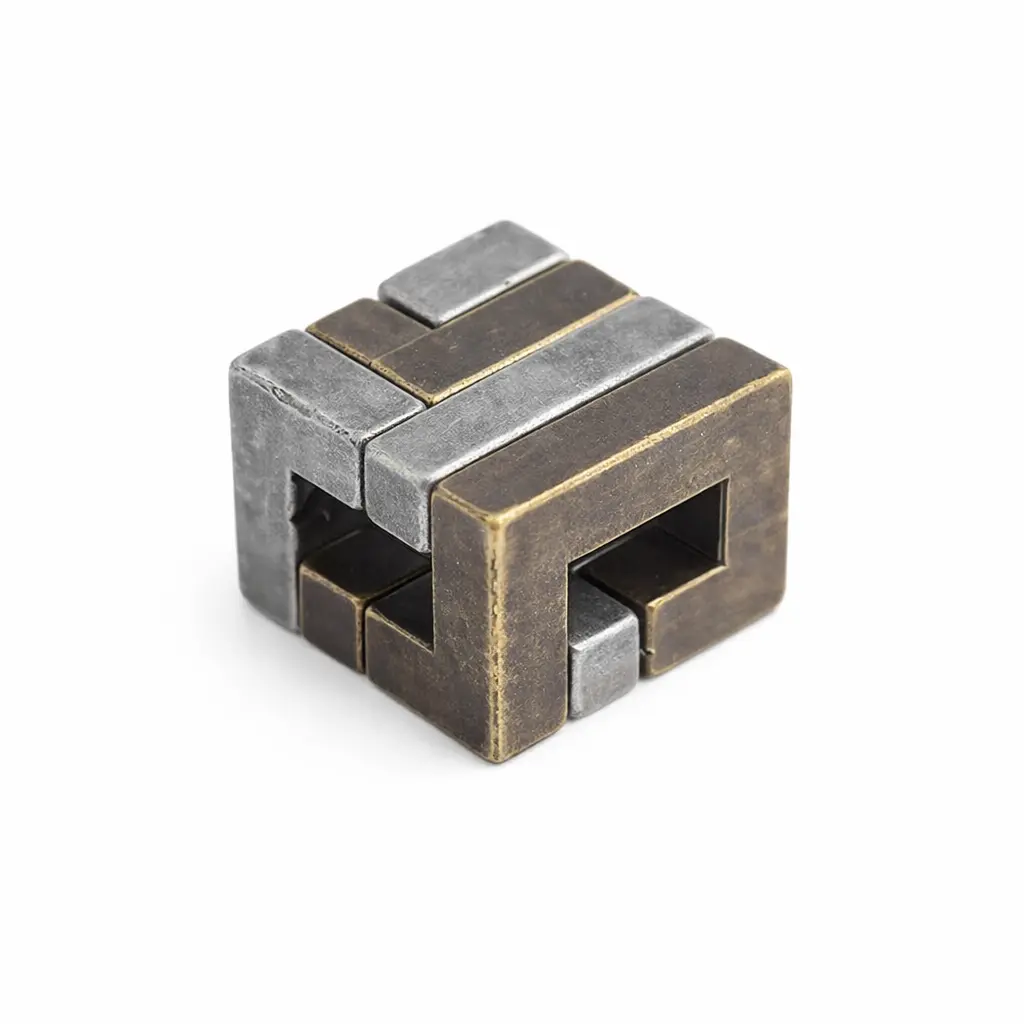
Cast Coil Pocket Puzzle — $18.99
The Hook, by contrast, is pure, distilled spatial reasoning. Its solution is geometric, not mechanical. This makes the lesson it imparts cleaner. When a newcomer succeeds, they haven’t just found a trick; they’ve fundamentally re-oriented an object in their mind’s eye. That victory is transferable. It gives them the courage to pick up a Level 2 puzzle, knowing the basic grammar of manipulation.
This is why it’s the perfect recommendation from any Puzzle Master or enthusiast to a curious friend. It’s a safe bet. The weight and finish feel premium, so it doesn’t feel like a child’s toy. The logic is elegant, not brute-force. And the time commitment is a coffee break, not a weekend siege. It respects the beginner’s intelligence while expertly guiding them to the payoff. It’s the puzzle equivalent of a perfectly paced tutorial level—one that you don’t realize is teaching you until you’ve already won.
That final, satisfying separation leaves a quiet question hanging in the air: “What’s next?” The Hook doesn’t just create a solved puzzle; it creates a nascent puzzle solver, armed with confidence and a new way of seeing. For where to point that newfound curiosity, our guide to the best metal puzzles for adults maps the logical next steps from this perfect gateway.
Gifting the Hook: Scenarios Beyond the ‘Puzzle Person’
The Cast Hook’s true giftability lies in its precise calibration—it’s a $15 object lesson in patience and “aha.” This makes it ideal not for the generic “gift recipient,” but for specific personas who will each find a different value in its zinc alloy curves. It’s a versatile tool disguised as a toy.
Consider the fidget-prone engineer or coder. Their hands are restless, their mind needs a tactile anchor during deep thought. The Hook isn’t a distraction; it’s a grounding mechanism. The cool weight, the smooth rotation, the search for that singular precise movement—it’s a kinetic meditation. It offers a finite problem with a clear, satisfying click of resolution, a micro-accomplishment between debugging sessions. For them, it’s a desk artifact that rewards repetitive, almost subconscious manipulation.
Then there’s the impatient teenager. The one who expects instant digital gratification. Giving them the Cast Hook is a quiet challenge to their entire operating system. It looks simple. It should be simple. Their initial frustration—the pulling, the rattling—is the point. The subsequent focus, the narrowing of attention to the geometry in their palms, is the gift. It teaches a lesson no lecture can: some problems yield not to force, but to perceptive, gentle persistence. It’s a beginner metal brain teaser that builds resilience.
For the retiree seeking a quiet, screen-free challenge, the Hook offers dignified engagement. There’s no timer, no noise, no pressure. It’s a solitary, thoughtful pursuit that fits in a pocket or on a side table. The satisfaction is cerebral and personal, a private victory that doesn’t demand fast reflexes, just spatial reasoning. It’s a perfect companion to a morning coffee, a small daily conquest.
In an office Secret Santa or white elephant exchange, it shines by being universally intriguing yet non-polarizing. It’s not another mug or candle. People will pick it up, intrigued by its heft. They’ll try it, fail, and pass it on—creating a shared moment of collective bafflement and curiosity. It becomes the conversation piece of the gift pile, and the recipient who eventually solves it earns a minor office legend status.
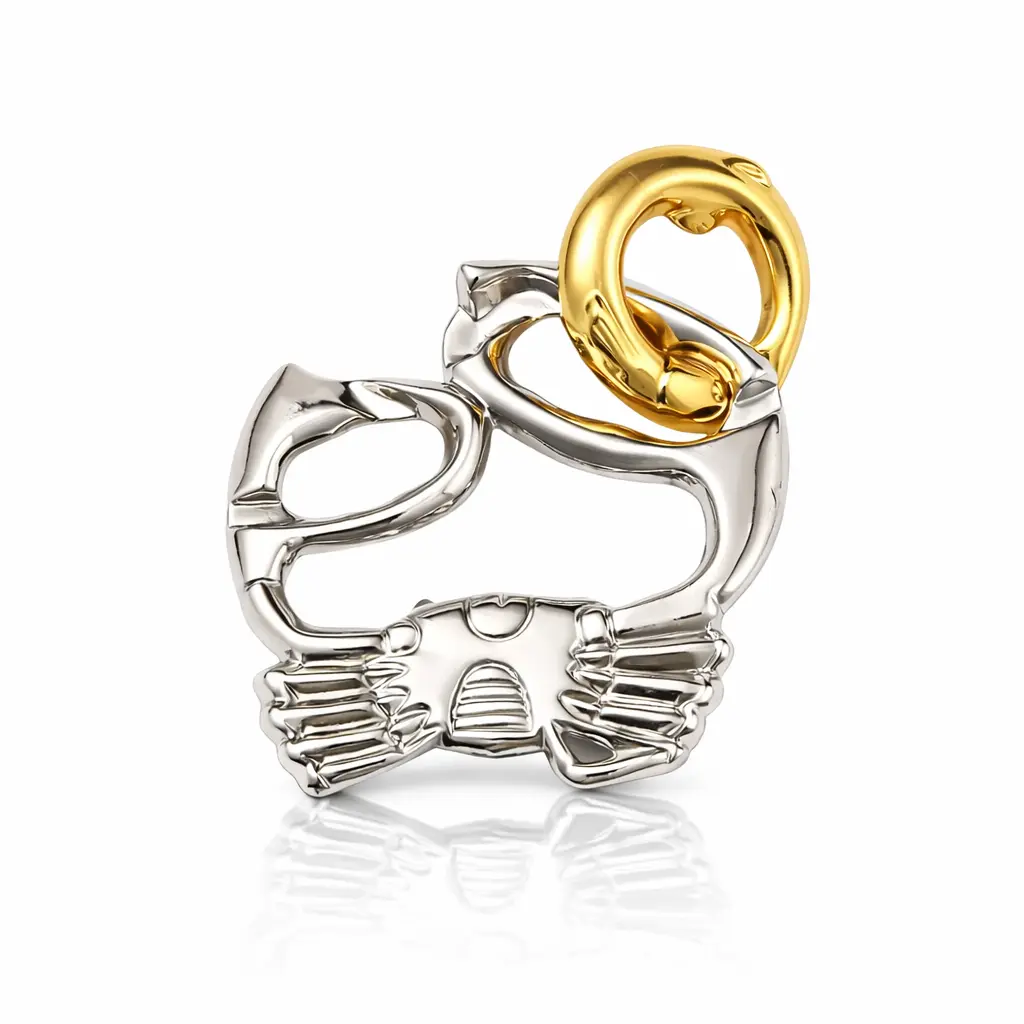
Where to buy Cast Hook puzzles is straightforward—specialty retailers like Puzzle Master, Kubiya Games, or Brilliant Puzzles reliably carry it. But the gifting advice is nuanced: pair it with a promise. For the teen, it’s a challenge to be met. For the engineer, it’s permission to fidget profoundly. For anyone, it’s an invitation to experience a specific, tangible moment of insight—boxed, weighted, and waiting.
Care, Display, and the Life After the Solve
After the triumph of separation and the quiet pride of reassembly, the Cast Hook enters its third state: a desk artifact. Its value shifts from the challenge of the solve to the weight of the memory. This zinc alloy will not tarnish quickly, but over years of handling, it will develop a subtle, even patina—a record of every solved moment.
Keep it pristine with minimal effort. Avoid harsh chemicals. A dry, soft microfiber cloth is your best tool. Wipe it down after extended handling to remove skin oils, which can accelerate uneven spotting if left for months. That’s it. The puzzle’s finish is durable, designed for friction and thought.
The real choice is how to display it. Solved or unsolved? Each state tells a different story. Left interlocked on a bookshelf, it’s a quiet question for visitors—a conversation piece that invites curiosity. Displayed separated on a stand, it’s a trophy, a testament to a moment of spatial clarity. Its modest 2.5-inch size and clean, geometric shape lend it a modernist, almost sculptural quality. It doesn’t shout; it implies.
This is the life after the solve. It becomes part of your environment, a tactile reminder of a specific cognitive click. Unlike a digital game that vanishes upon completion, this is a physical token of a solved problem. It joins a lineage of mechanical contemplation, much like the ancient puzzles discussed in our exploration of the metal puzzle brain. It transitions from a product to a possession, its cool metal serving as a permanent anchor for that fleeting moment of “aha.” The hook is no longer a trap, but a landmark.
Final Verdict: Who This Hook Captures, and Who It Leaves Behind
The Hanayama Cast Hook is a definitive buy for three people: the curious beginner wanting a fair entry into metal puzzles, the tactile thinker who values minimalist design, and the gift-giver seeking substance over clutter. It is not for the puzzle veteran chasing labyrinthine complexity or someone wanting a purely decorative trinket. For a $12-$20 investment, it delivers a complete, self-contained cycle of frustration, focus, and physical satisfaction that few objects its size can match.
Think back to that first moment in your palm. Two identical hooks. Cold zinc alloy. A seemingly impossible bind. Its genius lies in forcing you to abandon brute force and engage in pure spatial reasoning. The payoff isn’t a dramatic explosion of parts, but a quiet, sliding separation—a private “aha” that feels earned. This is its core value: a minimalist exercise in metal and mind. It’s a lesson in perception, delivered not through a screen, but through heft and friction.
You should buy the Cast Hook if:
You’ve never tried a metal brain teaser but are intrigued. This is your perfect gateway puzzle. The Level 1 rating is honest—it’s solvable within a determined sitting, providing that crucial first hit of solver’s pride without the despair of a true stump.
You appreciate objects that demand interaction. As a desk artifact, it’s a superior fidget tool. The weight is satisfying, the movements precise. It trains focus, not just dexterity.
You need a gift with more narrative than a gift card. For the impatient teenager, the engineer who needs a quiet challenge, the retiree looking for a tactile hobby—it’s a conversation starter that becomes a personal trophy.
Leave it on the shelf if:
Your shelf already groans with Hanayama Level 4+ puzzles. You’ve mastered multi-stage sequential discoveries; the Hook’s single, elegant move will feel underwhelming.
You seek ornamentation. While sculptural, its primary function is to be manipulated. If it will only gather dust, its purpose is defeated.
You have no patience for the reassembly phase. Remember the reassembly paradox. The true test is putting it back together, a step many overlook. If your satisfaction ends at separation, your journey is only half complete.
The emotional arc completes here. From curiosity to pride to satisfaction & display. The solved pieces, whether linked or separated on your desk, stand as a quiet testament to a problem understood. They are a landmark, not just a toy.
In the end, the Cast Hook’s deceptively simple two pieces teach a profound lesson: understanding often comes not from adding complexity, but from subtracting assumption. That is the hook. And it’s why this small trap of cast metal continues to capture so many. Your next step isn’t to a shopping cart, but to a quiet table. Give your hands a problem that your eyes can’t immediately solve.