The Cool, Gritty Weight in Your Palm
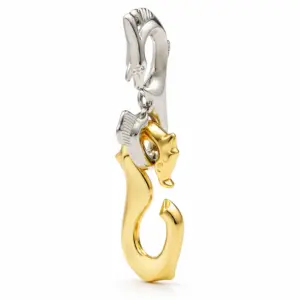
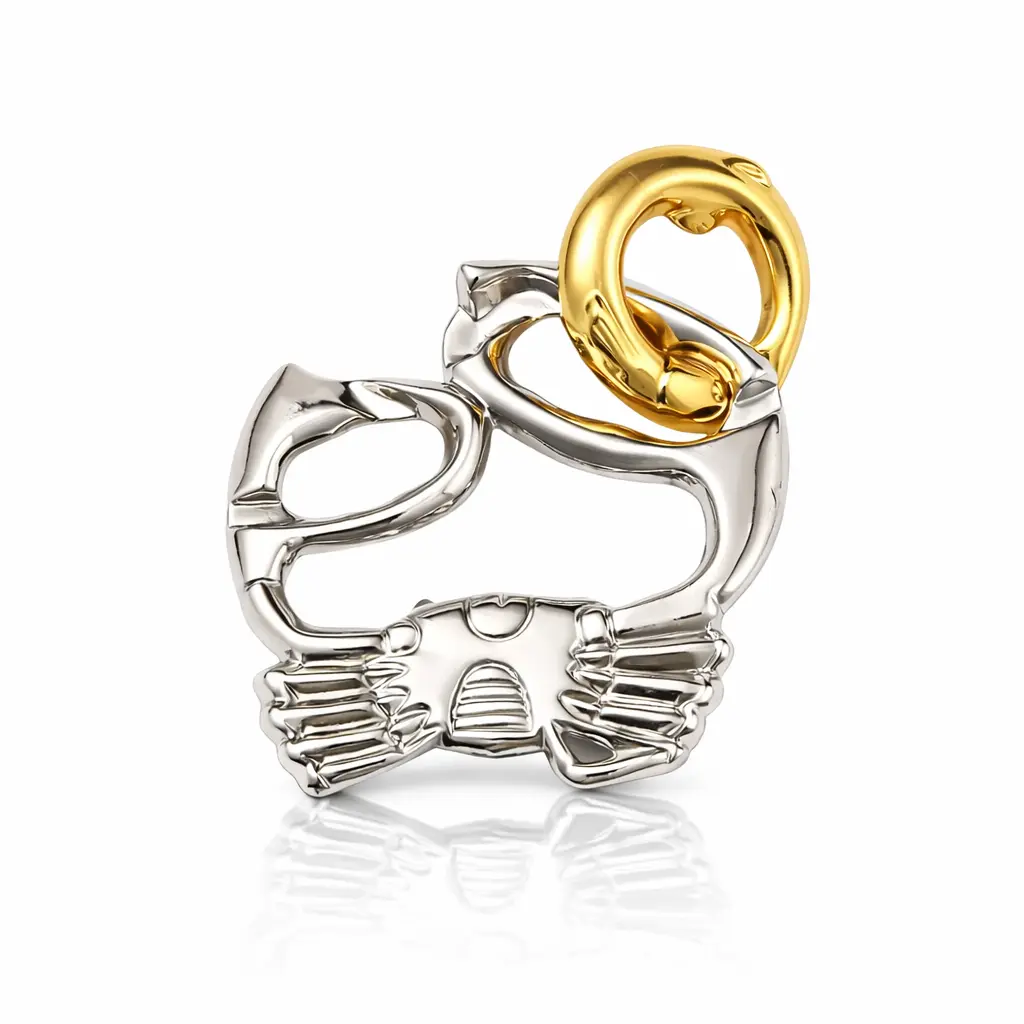
The puzzle feels precisely like a forgotten piece of Victorian-era nautical hardware, cool and dense in your hand. This is the cast metal crab brain teaser, a 68mm wide knot of zinc alloy that weighs a satisfying 65 grams—a perfect fidget-weight for absent-minded manipulation. Its two main components are instantly recognizable: a silvery crab with one prominent, forward-thrusting claw, and a gold ring (sometimes a small fish) hopelessly entangled within it. The surfaces aren’t polished smooth; they have a subtle, gritty resistance that speaks to the sand-casting process, offering just enough purchase for your fingers to feel every tentative slide and turn.
I was testing that exact feedback on a park bench when a child pointed and asked, “Did you catch a gold ring with that crab?” The question cut right to the fantasy. Yes, that’s the story: a crustacean clutching treasure. But the object in your palm tells a different, more compelling tale of geometry and obstruction. The ring isn’t just in the claw; it’s threaded through a loop on the crab’s back and pinned by the pincer’s opposing jaws. Your brain maps the trapped circular path immediately, creating the mild intimidation of a seemingly perfect, immutable lock.
That initial exploration is pure curiosity. You tilt the assembly, hearing the faint shick-shick of metal on metal. You probe the ring’s limits, finding it can travel a surprising distance along the crab’s body before being arrested by an immovable edge. You feel the cleverness of the design—it’s not a brute-force trap. It’s a conversation between parts, a lesson in spatial relationships not unlike the other forms of cast metal puzzle disentanglement on my shelf, but distilled to its essence. The intimidation starts to fade, replaced by a focused urge to decode the dialogue. You’re not just holding a metal puzzle crab claw ring; you’re holding a single, elegant question. And as any collector knows, the best puzzles ask their questions not with complexity, but with deceptive simplicity.
A Tale of a Crab and Its Treasure
That sense of a whispered question draws you into the puzzle’s little story. The fantasy is simple and compelling: a crab puzzle crab claw gold fish, or more commonly, a ring, is clutched securely in the pincer of a cast metal crustacean. Your objective is to perform the crab disentanglement puzzle, freeing the treasure without force. This is the core narrative sold by every product image, and it’s rated as a Hanayama Level 2—a deliberate clue that this is a puzzle of gentle wit, not Herculean struggle.
The tale works because it leverages a universal perceptual bias. We see a crab holding a ring, and our brain immediately constructs a story of capture and possession, assuming the ring is trapped within the cage of the legs and body. This imagined complexity is the designer’s first and greatest trick. The reality, which you begin to feel as you manipulate the pieces, is far more mechanical. The ring isn’t magically bound; it’s engaged along a specific axis of rotation that is hidden in plain sight, much like a spoon handle caught on the lip of a tangled kitchen drawer. The “crab” is merely a charming, obstructive shell for a cleanly engineered spatial problem.
This grounding is crucial. If you approach it as a mythical creature guarding its hoard, you’ll overthink it, trying to weave the ring through impossible gaps between legs. If you approach it as a collector analyzing a cast metal brain teaser, you start listening to the physical conversation. The goal shifts from “defeating the crab” to “understanding the single permitted path.” The ring must travel a route defined by the crab’s geometry, not its mythology. This mental reframe is the first step toward the solution, transforming a fanciful object into a solvable mechanism. It’s also what makes the puzzle such a consistent metal puzzle gift for puzzle lovers—it delivers a narrative hook followed by a satisfyingly logical payoff, a complete experience in a 65-gram package.
So, the question naturally follows: just how difficult is it to complete this tale? Is freeing the ring a matter of minutes, hours, or days? The answer lies in understanding where this metal crab puzzle sits on the spectrum of tactile challenges.
Difficulty Decoded: A 2 out of 6 on the Frustration Scale
Officially, the Hanayama Crab Claw is rated a Level 2 (Easy to Moderate) on the company’s 1-to-6 scale, and this rating is remarkably accurate. For a first-time solver with no spoilers, expect a journey of 5 to 20 minutes—long enough to feel a genuine challenge, but brief enough to avoid genuine desk-pounding frustration. This places it firmly in the “coffee break” puzzle niche: a satisfying mental palate cleanser, not a multi-day siege.
Understanding the Hanayama scale is key to setting expectations. Level 1 puzzles are essentially elegant fidget toys with an obvious solution path. Levels 5 and 6, like the infamous Equa or Trinity, can consume weeks and fundamentally alter your perception of spatial relationships. The Crab Claw sits comfortably at the welcoming base of the true challenge ladder. It is arguably one of the best Hanayama puzzle for beginners, not because it’s trivial, but because its solution perfectly teaches the core tenet of solving cast metal puzzles: the answer always lies in the geometry, not in force or randomness. You learn to listen to the tactile feedback, to explore each axis of rotation systematically. This makes it a profound learning tool disguised as a light challenge.
So, is it too easy for an adult? That depends on what you seek. If your goal is the smug victory of conquering a brutal intellectual fortress, you may find the solve fleeting. But if you appreciate the elegance of a simple mechanism executed perfectly—the clever “click” of a solution that was in front of you the whole time—then its accessibility is its strength. The satisfaction derives from the clarity of the perceptual bias it exposes, not from the hours spent. It’s the puzzle equivalent of a well-crafted short story: impactful, complete, and rewarding to revisit just to appreciate the craft.
Its role becomes clearer when compared to its most direct sibling in the Hanayama family: the Starfish puzzle.
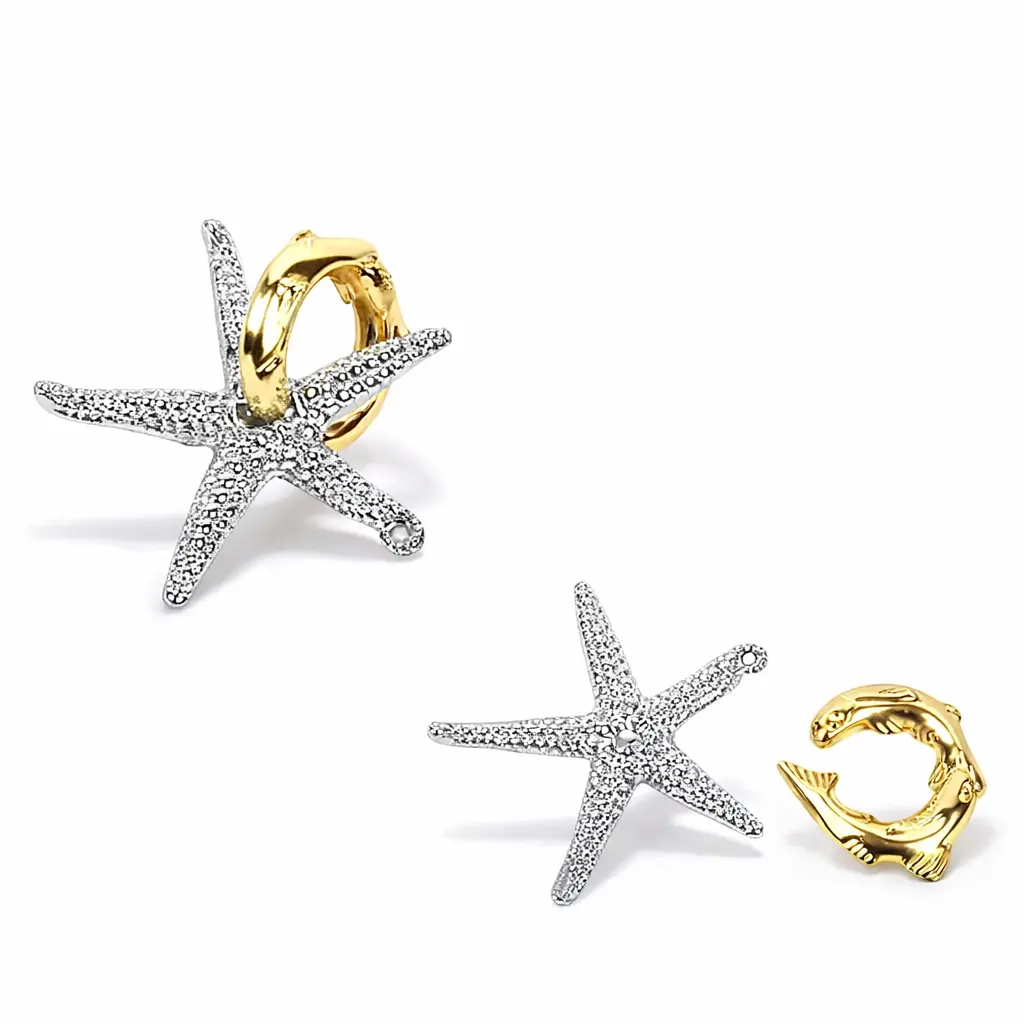
The classic crab claw puzzle vs starfish puzzle debate is a matter of feel more than raw difficulty. Both are rated Level 2 and share the same objective: free a ring. The Starfish, however, has a different character. Its five symmetrical arms create a different set of false paths, and the ring moves with a smoother, more rotational feel compared to the Crab’s linear-slide-then-pivot action. The Crab feels grittier, more mechanical; the Starfish feels more like manipulating a piece of geometric art. Choosing between them is less about challenge and more about which aesthetic and tactile language you prefer. For a deeper dive into where these fit in the broader ecosystem, our Tactile Matchmaker guide breaks it down.
This accessible difficulty is precisely what makes the crab such a successful gift, especially for younger puzzlers. A 13-year-old with patience and systematic curiosity will likely crack it without help, providing a massive confidence boost to dive into more complex puzzles. The fidget-weight and continuous movement post-solve also give it lasting life beyond the “Aha!” moment. It’s not a one-and-done trick.
Ultimately, the Crab Claw’s genius is in its calibration. It respects your time while still demanding your full attention. It’s the puzzle you solve on the train ride home, smile at, and then leave assembled on your desk as a desk totem—a small, cold reminder that sometimes the biggest obstacles are the simple motions we overlook. For a structured look at puzzles by their challenge level, our resource on Hanayama cast puzzle solutions by level can guide your next step.
The Mental Block: Why Your Brain is Lying to You
Your brain, calibrated by a lifetime of complex problems, is actively working against you here. The Crab Claw puzzle’s primary obstacle isn’t its cast metal construction or its few moving parts—it’s a powerful perceptual bias that leads roughly 65% of first-time solvers down the same frustrating dead end. The key to the solution is a single, simple axis of rotation that most people’s brains systematically ignore.
You pick it up. The goal is clear: free the ring. Your eyes and hands begin a familiar negotiation. You see two primary objects: a crab form with a fixed pincer, and a loose ring trapped within its curve. Instinctively, your brain categorizes this. It’s a classic disentanglement puzzle. Your entire lived experience with “disentanglement”—from necklaces in a jewelry box to cords behind a TV—screams one command: manipulate the loop. You push the ring. You twist it. You try to weave it through the crab’s leg, or slip it past the tip of the claw. You exhaust every permutation of moving the ring within the fixed space defined by the crab. This is the wrong path. It’s the mental equivalent of trying to open a door by repeatedly pushing on the hinge side.
The crab isn’t just a static cage. This is the core misperception. You are holding two interdependent parts, but you’ve mentally assigned one as the “puzzle” (the ring) and the other as the “frame” (the crab). In a well-stocked kitchen drawer, you don’t just jiggle the spoon caught under the ladle; you also move the ladle. The Crab Claw demands you question which piece is actually the “spoon” and which is the “ladle.” The profound simplicity—the axis of revelation—is that the crab itself must rotate.
Think of it like this: you’re trying to remove a bracelet from a wrist. You don’t just yank the bracelet; you also tilt the hand. The crab’s body is that hand. The “aha!” moment isn’t a flash of complex sequential logic. It’s a quieter, more profound shift in perception: a re-centering of what is mobile and what is not. You stop fighting the ring’s limited travel and instead explore the crab’s. Your fingers discover a pivot point, a fulcrum you hadn’t acknowledged because it was disguised by the object’s literal shape. The puzzle’s form—a creature—biases you to see it as a whole, singular entity. Solving it requires seeing it as an assembly.
This is why it functions so well as a metal brain teaser for adults. It doesn’t test raw intelligence or patience so much as it tests cognitive flexibility. It asks you to abandon a top-down assumption (the frame is fixed) and adopt a bottom-up, tactile exploration of all possible motions, no matter how seemingly irrelevant. The friction you feel isn’t just between the metal parts; it’s between your initial model of the problem and the physical reality in your palm. Overcoming that is the real victory. As outlined in our guide on The 3 Step Mindset To Solve Any Metal Ring Puzzle In Your Hand, the first and most critical step is to “Interrogate the Frame.” The Crab Claw is a masterclass in that single principle.
The frustration of the initial wrong path is therefore not a bug, but a feature. It’s the necessary friction that makes the eventual slide into understanding so deeply satisfying. When you finally rotate the crab body along that hidden axis, and the ring’s path to freedom suddenly unveils itself, the solution feels instant. Obvious. Inevitable. Your brain recalibrates in a snap, and the once-impossible tangle resolves into elegant, almost disappointingly simple mechanics.
And this is where the puzzle doubles down on its psychological lesson. That satisfying snick of the ring coming free is immediately followed by a new, quieter question: “How do I get it back on?” Reassembly often proves harder than the initial solve, not because the moves are more complex, but because your perceptual bias flips. Now you know the crab moves. You’re hyper-aware of the axis. But getting the ring to catch and seat properly back into the pincer’s grip requires a precise reversal of that freeing motion, a re-engagement that your brain, now fixated on mobility, can overcomplicate. It’s a second, smaller “aha!” that cements the lesson: perception is everything. The puzzle teaches you how to solve it, then immediately tests if you truly learned, or just performed a trick.
The Mechanical Truth: A Guided Path to the ‘Snick’ (Spoilers Ahead)
The solution is a sequence of about five deliberate moves, anchored by that single, correct axis of rotation we just acknowledged. It’s the physical execution of the perceptual shift.
So you’ve stared at the crab, understood it can move, and are ready to free the ring. This is a complete, step-by-step guide to the Hanayama Crab Claw solution. Find a quiet spot. Feel the cool, gritty cast metal. Let’s begin.
First, Orientation. Hold the crab in your non-dominant hand, pinching the main body. Your goal is to manipulate the crab, not the ring. Position it so the crab is right-side up, its legs facing you, and the single, larger pincer (the one clutching the ring) is on the right. The gold ring is trapped in the notch of that pincer, with the pincer’s “finger” curled through it. This is your starting position. Burn it into your mind.
Phase One: Creating Slack. The ring’s path is blocked by two of the crab’s left-side walking legs. Your first move is to create an opening. With your dominant hand, gently pull the gold ring downward, away from the crab’s body. There’s a small amount of play. Now, while maintaining that slight downward tension on the ring, look at the junction where the crab’s body meets the base of the large pincer. This is your pivot.
Here is the key motion, the axis everyone misses.
Phase Two: The Key Rotation. Do not try to wiggle or force the ring. Instead, rotate the entire crab body. Using your non-dominant hand, rotate the crab toward you, along the axis that runs through that pincer-body junction. Imagine the crab doing a forward roll. As you rotate it, the ring—which you are lightly pulling downward—will begin to align with a gap between the crab’s shell and its walking legs.
You will feel a point of maximum alignment. The metal parts will slide with that characteristic gritty resistance. This is the tactile feedback that you’re on the right path.
Phase Three: The Slide and Release. At the point of alignment, the geometry changes. The ring is no longer bound by the pincer’s tip. You can now slide the ring, not up or down, but laterally and forward, out from the curl of the pincer. It will pass cleanly through the gap you’ve created with the rotation.
Then, the snick.
It’s a faint, precise, metallic click. The ring comes free into your hand. The sudden lack of tension is palpable. The crab is now just a crab-shaped piece of metal, inert and solved.
That’s it. The entire solve, once you know the axis, takes less than ten seconds. The genius is not in complexity, but in the economy of motion. You didn’t brute-force it; you performed a specific, intentional manipulation based on understanding the object’s hidden mobility. This is the deep satisfaction the puzzle promises—the feeling of intellectual elegance, not just victory.
Now, you hold the ring in one hand and the crab in the other. And instantly, the second puzzle presents itself. As noted, reassembly is often the trickier mental challenge. You must reverse the process: hook the ring back into the pincer’s curl, then rotate the crab body backward to seat the ring into its locked position. Your brain, now primed to seek freedom, must work in reverse to achieve capture. It requires the same precise alignment, the same acknowledgment of the axis, but with a different goal. Mastering this闭环 (closed loop) is what transforms the puzzle from a one-time trick into a true desk totem—a thing you can solve and reset, feeling that snick of release and the soft clunk of re-engagement, over and over. It becomes fidget-weight with a purpose.
The Second, Sneakier Puzzle: Putting the Crab Back Together
For roughly 70% of new solvers, reassembling the crab is the more confounding challenge. You’ve felt the deep satisfaction of the ring sliding free, but now the logic is inverted: your goal is no longer escape, but a deliberate, elegant capture.
This is where the puzzle earns its keep. Separating the pieces reveals a neat trick; reuniting them requires genuine understanding. On the table, the crab and ring look like separate entities. The urge is to simply hook the ring back into the pincer’s curl. You do it. It dangles there, loose and wrong. This is the first trap—believing the work is done. The true challenge is re-creating that initial, locked state where the ring feels immovably trapped within the claw’s geometry. Your brain, freshly rewired to seek pathways out, must now map the precise pathway in. This shift in objective is the core of the sneakier puzzle.
Think of it like knowing how to push a chair under a table, but being asked to position it so it looks perfectly, naturally stuck. You can’t just replicate the final image; you must reverse-engineer the intent.
So, let’s talk reassembly logic. The key, unsurprisingly, is the same hidden axis of rotation you discovered during the solve. You must use it in reverse. Start by hooking the ring into the pincer’s end curl, just as you found it when loose. Now, instead of rotating the crab body forward to release, you must rotate it backward—a direction that likely feels counterintuitive and unyielding at first. This backward rotation is what guides the ring’s band down along the inner contour of the claw, nesting it back into that seemingly impossible seated position.
Apply gentle, persistent pressure. You’ll feel the metal parts guide each other. There’s a specific point of alignment—a sweet spot—where the ring’s path is clear. Then, a soft but definitive clunk.
That clunk is your victory sound. It’s the tactile feedback that you’ve successfully navigated the loop. This complete cycle—release and capture—is what transforms the object from a one-time novelty into a lasting desk totem. The pride isn’t just in solving; it’s in mastering the system. You are no longer a passive user following instructions. You understand the mechanism’s language. You can reset the story: the crab has once again caught its treasure.
This dual-phase design is what makes it such a satisfying fidget-weight. Once internalized, the motions become meditative. You can absentmindedly work the ring free during a long phone call, then click it back into place while pondering an email. It offers two distinct tactile experiences: the smooth, sliding snick of release and the positive, seated clunk of reassembly.
It also answers a common post-purchase panic I see on forums: “I solved it, but now I can’t get it back to how it was!” This phase is not a flaw; it’s a deliberate, rewarding second act. If the first solve taught you about perceptual bias, the reassembly teaches you about intentionality and mechanical empathy. You learn to feel how the parts want to move together. For more focused guidance on this precise reversal, a dedicated puzzle ring rescue guide breaks down the principles.
Mastering this闭环, this closed loop, is the final step toward confidence. It means you own the puzzle completely. You can hand it to a friend, watch them struggle, and know you can reset it in seconds—not with smugness, but with the quiet assurance of someone who has learned a small, concrete truth about a piece of the world. The crab is no longer a mystery. It’s a companion, a kinetic sculpture with a secret you’re now in on.
Fidget-Weight and Desk Totem: Life After the Solve
Once you own the crab’s secret—the solve and the reassembly—it transforms from a challenge into a companion. Its enduring appeal lies in its 65 grams of cast metal becoming a perfect fidget-weight, a kinetic sculpture for your desk that offers a daily, satisfying micro-interaction long after the initial ‘Aha!’ has faded.
The tactile feedback is the point now. The cool heft in your palm. The gritty, precise slide of the ring’s groove along the pincer’s inner edge. That final, quiet snick of separation is a sound you can feel in your fingers, a miniature mechanical reward you can summon at will. This isn’t about solving anymore; it’s about the rhythm of the motion itself, a meditative loop you can run through during a pause in thought. It becomes the quintessential coffee break puzzle, demanding just enough focus to pull you from a mental rut, but no so much that it creates frustration.
This repeated handling raises a practical question from new owners: Will the finish rub off if I play with it a lot? The short answer is: barely, and it adds character. The plating on these cast metal puzzles is durable. With constant fidgeting, you may see a slight polishing on the highest contact points over years, a gentle patina of use. It won’t flake or peel. This isn’t a defect; it’s a record of your interaction, like a worry stone worn smooth. The crab earns its place.
As a desk totem, its value is symbolic. It sits not as an opaque ornament, but as a solved riddle. It signifies a small, concrete victory over perceptual bias. For you, it’s a reminder of that click of understanding. For a visitor, it’s an invitation—a silent offer of a two-minute challenge that you can reset with effortless grace. It bridges the gap between a solitary brain teaser and a social object.
In this role, it draws a clear contrast with its common sibling, the Hanayama Starfish. Where the Starfish is a silent, symmetrical sculpture with a more abstract disentanglement, the Crab is narrative and obviously kinetic. The Starfish is a contemplative piece; the Crab is an interactive one. For pure, satisfying fidgeting with a story attached, the crab claw wins.
Its life after the solve is why it persists on shelves long after more complex puzzles have been relegated to boxes. It offers more than a one-time triumph; it offers a lasting, tangible dialogue between hand, mind, and a clever bit of cast metal. For more on why these puzzles endure, both mechanically and as objects, the principles behind their longevity are explored in guides like Metal Puzzles That Don’t Break: A Veteran’s Guide to Cast Logic. The crab isn’t just a puzzle you finish. It’s one you keep.
Gift Suitability: Who Should (and Shouldn’t) Tangle With This Crab
The crab is an ideal metal puzzle gift for puzzle lovers who are curious beginners or fidget-prone thinkers, thanks to its Hanayama Level 2 difficulty and satisfying tactile dialogue. Its suitability hinges less on age and more on a recipient’s appetite for a short, perceptual ‘aha’ rather than a prolonged tactical war.
So, who is this for? First, the patient novice. Someone intrigued by mechanical puzzles but intimidated by the more brutal cast metal challenges on my shelf. The crab offers a genuine, solvable victory in 10-30 minutes, building confidence without crushing spirits. It’s a perfect entry point, which is why it’s frequently recommended as a first purchase from brands like Hanayama. Second, the fidgeter. Once solved, its smooth, repeated movement and solid fidget-weight make it a superb desk companion for restless hands, far more engaging than a spinner. Third, the narrative thinker. The story of the crab and its ring provides a charming hook that abstract puzzles lack, making it feel less like a cold test and more like a tiny legend to resolve.
This brings us to the common question: Is the Hanayama Crab Claw a good gift for a 13-year-old? Absolutely, with a caveat. The fine motor skills and logical sequencing required are well within reach for a patient teenager. The tangible reward is immediate. The caveat is temperament: it’s perfect for a curious, persistent kid but potentially frustrating for one who expects instant gratification from every toy. For the right young mind, it’s a brilliant introduction to spatial reasoning.
Now, who should probably pass? The seasoned puzzle veteran seeking a grueling challenge. If someone’s shelf looks like mine, filled with Level 5 and 6 monsters, the crab will be a charming 10-minute diversion, not a centrepiece conquest. Its joy is in the elegance of its single trick, not in deep complexity. Also, anyone with low frustration tolerance and no guide nearby. While the solution is simple in hindsight, that initial block is real. A gift-giver should gauge whether the recipient enjoys the simmer of a problem or prefers direct, instruction-led activities.
For gift-givers wondering where to buy metal crab puzzle, it’s widely available. Major online retailers and specialty toy shops carry it, typically in that $12-$20 window. Its accessibility is part of its charm.
In essence, gift the crab to the curious coffee-break thinker, the tactile learner, or the teenager ready for a satisfying, hands-on logic problem. It’s a focused experience: a lesson in perceptual bias cast in metal, offering a complete emotional arc from intrigue to pride. For those who might crave a slightly more abstract or challenging step up from here, exploring guides on The Best Metal Puzzles For Adults can reveal the next level of intricacy. But as a first foray or a fidget-friendly totem, the crab’s pincer holds a perfect, golden moment of clarity.
The Verdict: A Keeper of Quiet Satisfaction
The Hanayama Crab Claw puzzle is a keeper. It earns its place not as a brutal challenge but as a perfectly executed lesson in simplicity, a cast metal artifact of disentanglement that delivers a complete, satisfying experience within its modest difficulty level 2 rating. It’s a puzzle that respects your time and rewards your attention.
Its ultimate strength isn’t in stumping you for days, but in the quality of the “Aha!” it provides. That single, overlooked axis of rotation is a masterclass in perceptual bias. Solving it feels less like cracking a code and more like finally noticing the obvious path home—a small, personal victory that leaves you feeling clever, not relieved. It’s the anti-frustration puzzle.
This makes it a permanent resident on my shelf, among its more complex cousins. Why? Because of its second life. Once solved, its true role emerges: as a fidget-weight and a desk totem. The cool metal, the smooth, gritty slide of the pincer, the solid snick of the ring re-seating itself—these are tactile pleasures that outlast the initial mystery. It’s a thinking tool, a tactile anchor during phone calls or deep work.
For those comparing it to its common sibling, the crab puzzle vs starfish puzzle debate is one of feel. The Starfish is more abstract, its movements slightly more elusive. The Crab is narrative—you are freeing a treasure from a claw. That story, however faint, grounds the mechanics in a tangible goal that many find more immediately engaging, especially for younger solvers.
So, who should walk away with this crab? The verdict is clear.
Buy it if you value elegant design over sheer difficulty. If you want a gateway into metal brain teasers for adults that won’t discourage you. If you seek a gift with a guaranteed solution—a solvable win for a curious teen or a patient adult. It’s the ideal coffee break puzzle.
Pass on it if you crave multi-hour, epic struggles with dozens of moves. The Crab’s beauty is in its brevity. If you need constant novelty, this isn’t a one-time toy; it’s a tactile object you’ll return to for its feel, not its puzzle.
I still fidget with mine. That child at the park bench was right in a way—I didn’t catch the gold ring, but I did capture the quiet satisfaction of understanding. The crab’s pincer holds a specific kind of clarity: the kind you can hold in your hand.
Your next step is simple. If the promise of a 20-minute lesson in perception, wrapped in a solid, satisfying snick of metal, appeals to you, the crab is waiting. Seek it out. Solve it. Then let it sit on your desk, a small, heavy reminder that sometimes the most elegant solutions are the ones already in your hands.