The Contradiction in Your Palm: A Solid Object That Whispers
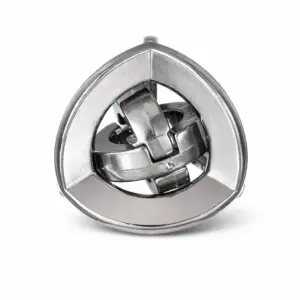
The Hanayama Spiral is a deceptively simple artifact: a five-piece cast metal puzzle forged into a single, intricate coin that feels both impossibly solid and faintly alive in your hand. Your first impression is weight. At just over two inches across, its bedded finish carries a dense, substantial heft that immediately communicates quality—this is no plastic trinket. Your fingers trace the grooves of its namesake spiral, a continuous channel that seems to wind endlessly into itself, suggesting motion where none should exist.
Yet, it moves.
A subtle, almost imperceptible shift occurs when you cradle it. One of the outer arms yields a fraction of a millimeter. Another piece follows with a silent, smooth slide. This is the core contradiction you now hold: your eyes see a static sculpture, a gorgeous mechanical puzzle meant for display, but your fingertips report a hidden, precise machinery at work. The brain shouts that this beautiful object is complete and whole; the faint wobble in your palm promises a secret. So, what is this thing? Is it a locked door, or is the door itself the key?
We must stop calling it a toy or a game. That language undersells the experience. This is a mechanical artifact for personal exploration. Its purpose isn’t to be “beaten” in a single sitting but to be understood through persistent, tactile inquiry. The tactile feedback is the primary interface—the cool metal, the precise machined tolerance between pieces, the faint tick of alignment that you feel more than hear. This is why it’s often cited as a tool for stress relief; it demands a present, physical focus that pulls you away from screens and into a state of manual problem-solving.
The initial intrigue is this elegant confusion. It looks solved. It feels complete. But your probing touch reveals the truth of any great disentanglement puzzle: the solution is a path already built into the object, waiting for your mind to map it through your hands. The journey from seeing a solid mass to perceiving its five independent components is the first, and perhaps most important, solve.
Anatomy of a Spiral: From Kennet Walker’s Mind to Cast Metal
That journey from perceiving a solid mass to sensing its five independent components begins with understanding its origin. The Hanayama Spiral is a cast metal brain teaser designed by Swedish puzzle craftsman Kennet Walker, brought to life by Japan’s renowned Hanayama brand—a company whose Mensa rated puzzles are benchmarks for quality and inventive mechanics. This specific collaboration yielded a palm-sized artifact, precisely 2 inches in diameter and weighing a satisfying 3.5 ounces, where five interlocking zinc alloy pieces are arranged in a deceptively simple spiral cast puzzle.
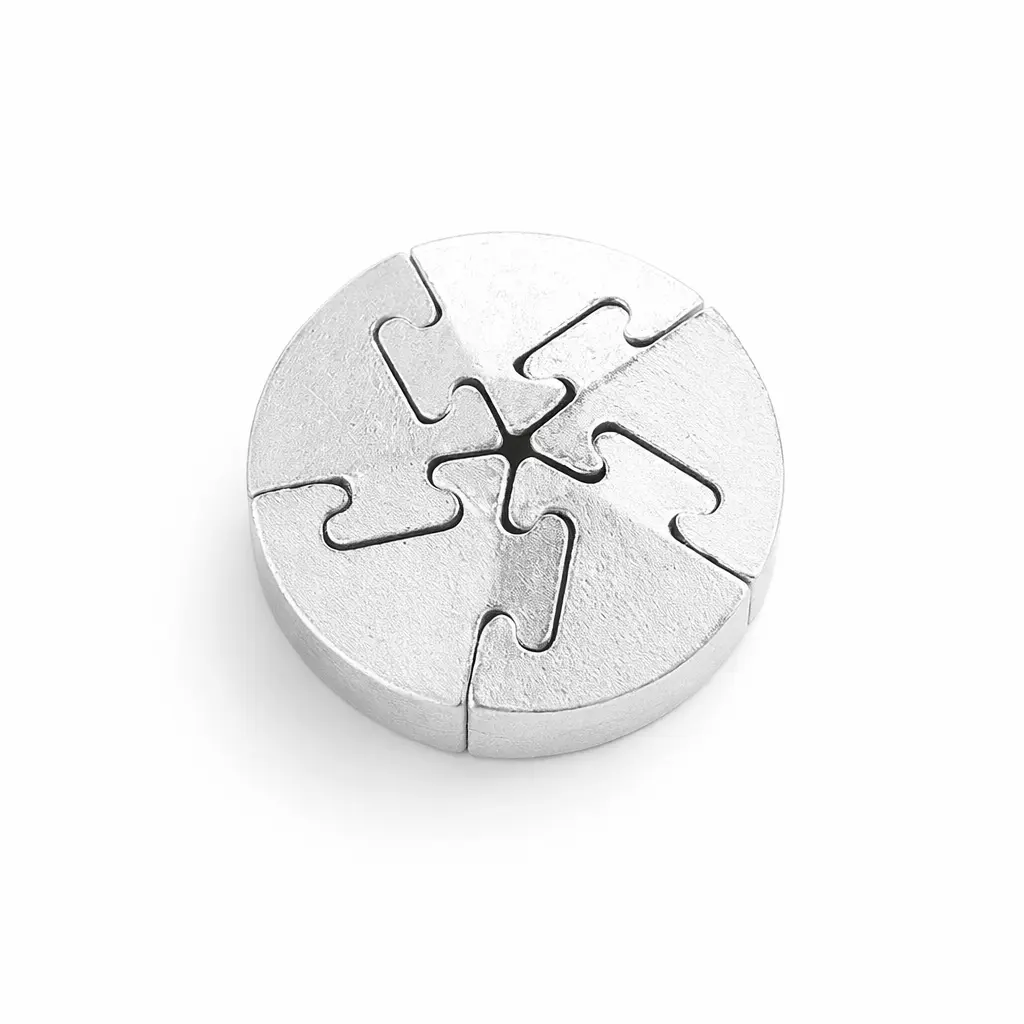
The zinc alloy gives it that cool, substantial heft, while the bedded finish—a matte, pewter-like coating—provides just enough grip for your fingertips. This isn’t a shiny trinket; it’s a tool for spatial reasoning. To demystify its core mechanic, think not of abstract puzzles but of familiar objects. Its movements are akin to the simultaneous push-and-turn of a stubborn jar lid, or the specific, non-intuitive rotation needed to unhook two linked key rings. Nothing moves freely. Every subtle shift of one piece is conditional on the precise position of another. This is the essence of a sequential discovery puzzle: you cannot simply force a piece out. You must find the exact, non-obvious sequence of alignments and rotations that the designer engineered into the geometry.
This is where the Spiral differentiates itself from, say, Hanayama’s Vortex puzzle. While both are elegant disentanglement puzzles, the Vortex often involves aligning symmetric grooves in a more radial, turning motion. The Spiral’s solution path feels more like navigating a three-dimensional thread—a continuous, winding loop where progress is made through a series of backtracks, quarter-turns, and patient realignments. The genius is in how Walker designed these pathways to feel impossible until the moment they feel inevitable. The machined tolerance is critical here; the gaps are fractions of a millimeter, so the tactile feedback from each movement is crisp and unambiguous. When something is aligned correctly, the pieces slide with a quiet, mechanical certainty.
It’s this physical precision, married to a deeply logical sequential discovery path, that defines the Spiral’s character. It transforms the object from a mere metal puzzle into a kinetic teacher of patience and problem-solving. For more on the subtle art of decoding these intricate objects, our guide on the mechanical grammar of cast metal puzzles delves deeper into the tactile language shared by this entire class of mechanical puzzles.
The Level 5 Reality Check: What ‘Hard’ Actually Feels Like
So, if the Vortex is a symmetrical lock, the Spiral is a continuous, deceptive corridor. Where does that place it on the promised scale of challenge? A Hanayama Level 5 rating translates to a tangible investment: for a first-time solver with no guide, expect a dedicated effort spanning 2 to 6 hours, often spread across multiple sessions. This is not a five-minute coffee break diversion. It’s the cognitive equivalent of assembling a piece of flat-pack furniture with pictogram instructions—frustrating moments of apparent impossibility are punctuated by sudden, intuitive leaps that get you to the next step.
Hanayama’s 1-6 scale is less about raw genius and more about the time, patience, and type of logic required. Level 1 puzzles are essentially fidgets with a single, obvious move. Levels 2-3 introduce basic separation logic, solvable in under an hour. Level 4 puzzles, like the Cast Loop, demand genuine spatial reasoning and a methodical approach. Then comes Level 5. This is the tier where puzzles stop being simple disentanglement games and become true mechanical puzzles of sequential discovery. Every move depends on the precise state set up by the last. There is no trial-and-error shortcut; your hands must learn the language of the mechanism. Level 6 exists, but it’s reserved for the truly esoteric. The Spiral’s ‘5’ is a sincere label: this is a profound challenge, but a fair one. It is a Mensa-rated test of sustained focus, not an impossible trick.
Is it possible to solve without a guide? Absolutely, if your definition of “solve” includes the journey of discovery. You will hit walls. You will convince yourself the pieces are permanently fused. You will set it down, only for your subconscious to nag at you hours later. The breakthrough comes not from frantic shaking, but from calm observation—noting how one piece’s bedded finish catches the light differently at a specific angle, or feeling for the faintest increase in tactile feedback when pressure is applied just so. For a beginner, this process is daunting but not out of reach. It’s less about innate puzzle skill and more about cultivating a meditative patience. Think of it not as solving a riddle, but as learning to manipulate a small, complex, silent machine.
What does this level 5 difficulty feel like in practice? The logic isn’t mathematical; it’s spatial and kinetic. Your primary tool is your sense of touch, learning to interpret minute clashes and clearances. It’s a 3D maze where the walls themselves are moving. Disentanglement puzzle strategies here are less about grand plans and more about micro-adjustments: a quarter-turn counter-clockwise, a slight shift in elevation, a patient backtrack to the start to find the one alignment you missed. This is where the cast metal puzzle format shines—the precision machining means every stuck point is a real, designed obstacle, not a flaw. The frustration is intentional, making the eventual, smooth slide of a piece along its hidden pathway immensely rewarding.
How does this compare to other common challenges? It lacks the algorithmic repetition of a Rubik’s Cube. It’s more tactile and discovery-based than a logic grid. Its closest real-world analog might be troubleshooting a mechanical object blind—like figuring out how to free a tangled keyring in your pocket, or reassembling a pen mechanism you took apart without watching. The problem-solving is physical and persistent. For a deeper look at navigating Hanayama’s entire spectrum of challenges, our resource on Hanayama puzzle solutions structured by difficulty level provides context for where the Spiral sits within the broader pantheon.
This is the core of the Spiral puzzle experience: the difficulty is the feature. It forces a digital detox, demanding hours where your phone is ignored and your entire world reduces to the cool metal brainteaser in your hands. The “hard” is not a barrier, but the very substance of the mechanical meditation. It’s designed to make you slow down, to pay attention, and to ultimately trust your fingertips as much as your brain. For the right person, that process isn’t frustrating—it’s the entire point.
The Two Lives of the Spiral: Puzzle First, Fidget-Toy Forever
Once the final, satisfying separation of its five pieces clicks into place, the Hanayama Spiral transforms. Its core identity shifts from a formidable level 5 difficulty test to a permanently compelling desk toy for fidgeting. This duality is its most undervalued feature. For the first owner, it offers 3-10 hours of intense sequential discovery; for the rest of its life, it serves as a flawless tactile puzzle for stress relief, its machined cast metal components offering endless, silent interplay.
The post-solve experience is all about tolerance and texture. The initial, frustrating “stuckness” is replaced by a fluent understanding of the path. You now feel the tactile feedback not as cryptic clues, but as a known language. The smooth, bedded finish of the zinc alloy slides against itself with a precise, almost hydraulic resistance. The faint wobble you first sensed becomes a predictable, rhythmic dance of interlocking spirals. This is where the mechanical puzzle reveals its second soul: as a superlative fidget device. Its movements are complex enough to engage the subconscious, yet known enough to be meditative, perfect for focusing a wandering mind during a call or untangling a mental knot. It’s a digital detox tool you can hold in one hand.
I keep mine on my drafting table. During intense brainstorming, my fingers will find it, tracing the now-familiar grooves and guiding the pieces through their loops without conscious thought. This isn’t idle play; it’s a form of kinetic thinking. The spatial reasoning required to solve it the first time becomes muscle memory, leaving a rhythm that helps sustain focus. Unlike a stress ball, it offers structured interaction. Unlike a spinner, it has a defined beginning and end in its cycle, a miniature mechanical journey you can complete in 30 seconds, then reset and begin again.
This is the true legacy of its design. Kennet Walker and Hanayama didn’t just create a problem to be solved and shelved. They built a self-contained kinetic sculpture. The cast metal puzzle, once conquered, becomes a personal artifact. The metal brainteaser pressure is gone, replaced by the quiet pleasure of operating a well-made thing. Its weight and coolness are calming. Its silent, gliding motion is a direct counterpoint to the ping and buzz of modern distraction.
Of course, not every disentanglement puzzle earns this permanent desk real estate. Many are solved, admired, and retired. The Spiral earns its keep because its mechanics are inherently pleasing to repeat. The spiral path is visually and tactilely interesting, more so than a simple ring or hook. For those seeking a dedicated fidget object with this aesthetic, purpose-built options exist that prioritize seamless, silent movement over puzzle challenge. This taps into a deep-seated human behavior; as defined by Wikipedia, a fidget toy is an object used to provide sensory input, and the post-solve Spiral fits this role perfectly.
So, who wins in this dual life? The patient tinkerer, absolutely. The person who appreciates precision for its own sake. It’s for someone who needs a physical anchor for their thoughts, a portable puzzle that evolves into a companion. This isn’t a new concept, but a return to a very old one—the human desire for tactile, repetitive manipulation of a complex object, a theme explored in our look at how metal puzzles function as ancient fidget tools. The Hanayama Spiral is a modern, masterful entry in that ancient lineage. It asks for your full attention once, and in return, offers a lifetime of quiet, satisfying distraction.
A Brutally Honest Fit Guide: Who Will Love It (And Who Will Lob It)
The Hanayama Spiral is a perfect fit for a specific, narrow personality: the process-oriented tinkerer who values tactile exploration over swift victory and isn’t frustrated by a 30-minute session yielding only a millimeter of progress. It fails utterly for the quick-win seeker who expects a “Eureka!” moment in under five minutes. The difference isn’t intelligence, but temperament.
Your ideal puzzler is the person who finds satisfaction in the how, not just the what. They are the patient deconstructionist. You’ll find them methodically cleaning a gear cluster, taking apart a pen to see the spring, or endlessly opening and closing a well-made pocket knife just to feel the mechanism bed in. For them, the Spiral isn’t a problem to be brute-forced, but a mechanical puzzle to be understood through its tactile feedback. The faint wobble of a cast metal piece, the precise resistance before a sequential discovery—this is the language they enjoy deciphering. It’s a desk toy for deep work breaks, a stress relief tool for restless hands that need a complex, not mindless, task.
Conversely, this puzzle will end up in a drawer (or against a wall) if given to someone whose primary joy comes from rapid solution and closure. If their idea of a good brain teaser is a Sudoku they can finish in a coffee break, the Spiral’s opaque, non-verbal logic will feel like a wall. They are visually frustrated; they need to see the path. The Spiral hides its path in feel and memory. It asks for blind, spatial faith. For them, what feels like a profound problem-solving experience to one person feels like being locked in a featureless room to another.
So, is it a good gift for men or non-puzzle-person tinkerers? Cautiously, yes—but with a critical caveat. For the garage putterer, the model-kit builder, the person who fixes things, the inherent quality and mechanical intrigue can be a compelling entry point. Frame it not as a “puzzle” but as a “precision mechanical object you decode with your hands.” The level 5 difficulty is a feature, not a bug, promising substance. However, you must pre-warn them about the two-phase challenge: disassembly is only half the battle. Re-assembly is often cited as the harder, more mentally taxing task for a first-timer. This is where many tinkerers either fall in love or walk away.
My mindset tip for both phases is the same: stop trying to solve it. Start trying to map it. During disassembly, don’t yank. Note which pieces impede others. During reassembly—the true test—don’t try to remember the reverse steps. Instead, understand that the five pieces form a closed-loop chain. Your goal is to reconstruct that chain’s specific, interlocked order. It’s less like retracing your steps and more like learning the secret handshake from scratch. This is where the puzzle solver is separated from the solution-follower. If this process sounds intriguingly arduous, you’ve found your best Hanayama puzzle for adults. If it sounds like tedious homework, consider a lower-level disentanglement puzzle like the Cast Loop or a classic wire puzzle.
In the end, the Spiral is a merciless filter. It doesn’t measure logic alone, but resilience, patience, and one’s appetite for ambiguous, physical problem-solving. It rewards the journey-enthusiast and swiftly punishes the destination-seeker. Know which you, or your giftee, truly are.
The Hanayama Constellation: Where Spiral Fits Among Cast Metal Puzzles
The Spiral is a filter, but it’s not the only world in Hanayama’s cast metal puzzle cosmos. To understand its true position, you must see it among its siblings—specifically the two it’s most often confused with: the Vortex and the Cast Loop. The Spiral sits firmly at a level 5 difficulty, a deliberate, sequential challenge meant for patient tinkerers, not casual fidgeters seeking a quick win. It’s a mechanical puzzle of order and precision, not speed.
So, how do you choose? Consider the Vortex. It shares the spiral aesthetic, a coiled dance of two intertwined pieces. But it’s a Level 4. The difference is profound. Where the Spiral’s five pieces demand you discover a precise chain of movements, the Vortex is more about finding the single, elegant rotation that unlocks everything. It’s a shorter, more intuitive “aha” moment. The Vortex is for someone who wants the visual appeal of a spiral with a moderately challenging disentanglement puzzle experience. The Spiral is for those who want to inhabit the puzzle for hours, even days.
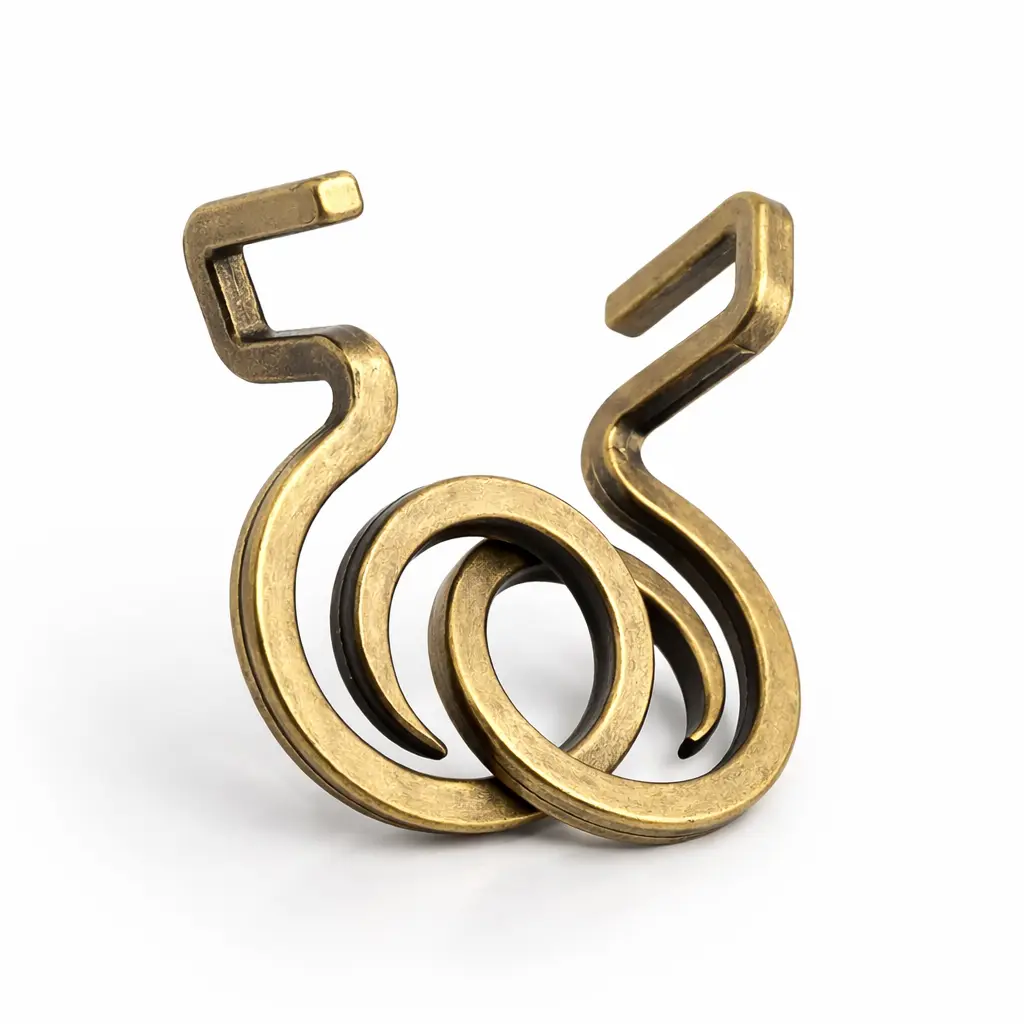
Then there’s the Cast Loop. This is a classic two-piece ring puzzle and a common entry point at Level 2. Its charm is immediate, solvable in minutes, yet endlessly satisfying to manipulate. It’s pure, soothing fidget. This is the key distinction in the Hanayama lineup: some puzzles are primarily challenges (like the infamous Level 6 Padlock), some are fidget tools first (Cast Loop), and a rare few, like the Spiral, are both—but sequentially. You earn your fidget phase by conquering the challenge phase.
This brings us to the “best Hanayama puzzle for adults” question. It’s subjective, but the Spiral is a top contender for a specific adult: the one who values process over product. It’s not the hardest, but it’s arguably one of the most rich. It offers more tactile feedback and exploratory movement than a static wire puzzle, and a more satisfying heft than a rope or tavern puzzle. For the person who disassembles pens or studies the mechanics of a retractable leash, the Spiral is a perfected metal brainteaser. For someone seeking a desk toy for fidgeting from day one, the Cast Loop or Vortex is a kinder choice. For a broader perspective, see our roundup of expert-ranked metal disentanglement puzzles to see how the Spiral stacks up.
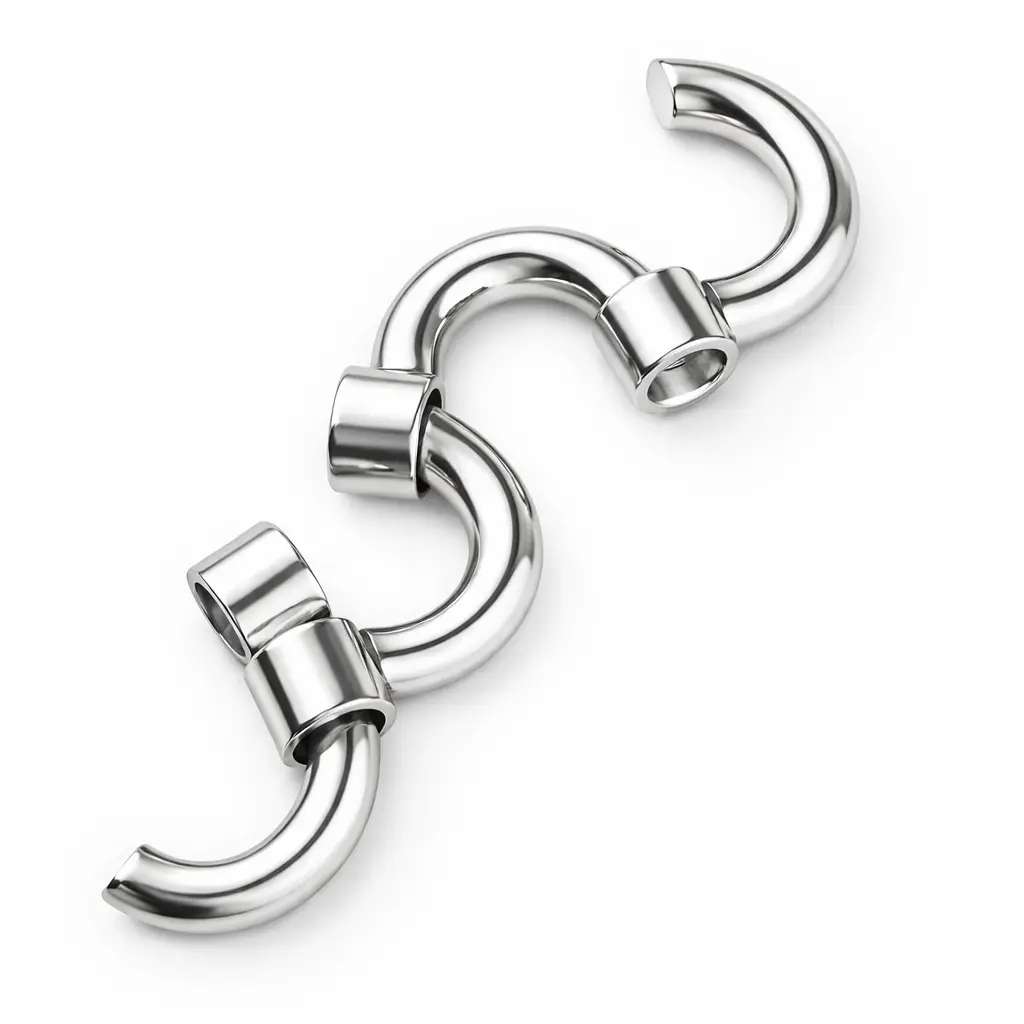
Cast Galaxy 4-Piece Silver — $14.88
In the end, selecting a puzzle is about matching a mindset to a mechanism. The spiral puzzle vs vortex puzzle debate resolves to this: Vortex is a brilliant sculpture you solve. The Spiral is a mechanical system you learn. It demands more spatial reasoning and rewards with deeper, long-term satisfaction. For a broader map of this territory, our definitive guide to choosing a Hanayama puzzle can help you navigate. But if the allure of a sustained, quiet battle of wits against five interlocked pieces calls to you, the Spiral isn’t just a point in the constellation—it’s a destination.
Acquiring the Artifact: Trust, Pouches, and Fair Value
After deciding that the Spiral’s specific brand of quiet, mechanical challenge is for you, acquiring one is straightforward—if you know what to look for. The Hanayama Spiral is widely available, with trusted sources ranging from specialty puzzle shops to major online retailers like Amazon, typically priced between $12 and $20 USD. For that investment, you are not just buying a puzzle; you are procuring a complete, crafted object.
Your primary decision point is retailer type. Specialty online puzzle stores offer the assurance of authenticity, often carry the full Hanayama line for comparison, and provide curated difficulty ratings. Amazon and other large marketplaces offer convenience and speed, but require a more discerning eye. Here, authenticity is generally reliable for the Spiral, but always check seller ratings and reviews for red flags like missing pieces or poor casting.
Regardless of where you shop, a genuine article comes with two non-negotiable components. First, the iconic Hanayama clamshell plastic case, which features the puzzle’s name and designer. Second, the velveteen drawstring pouch. This pouch is critical. It transforms the puzzle from a one-time brain teaser into a permanent desk toy or pocket companion. Without it, the cast metal puzzle becomes a loose, scratch-prone item. When evaluating a listing, the phrase “complete with pouch” is your benchmark for a proper, new-in-box purchase.
This brings us to value and longevity. In the $12-$20 range, you are paying for precision machined tolerance and durable materials, not precious metals. The zinc alloy has a substantial, cool feel and a matte, pewter-like finish. It will not stay pristine. With frequent handling—the very fidget-grade use we’ve championed—the high-contact ridges of the spiral cast puzzle will develop a soft, shiny patina. This isn’t a defect; it’s the object recording your interaction with it, becoming a mechanical puzzle with a personal history. As outlined in our guide to a veteran’s guide to durable, well-made metal puzzles, this wear is a sign of robust construction, not a flaw.
As a gift for men or anyone with a tinkering mindset, presenting the Spiral in its full packaging communicates thoughtfulness. It says you’ve chosen an object of substance, not a disposable novelty. You’re giving a contained experience: the intense first-solve problem-solving session, followed by a lifetime of satisfying tactile feedback. So, when you click “buy,” you’re not just completing a transaction. You’re securing a well-crafted artifact designed for sustained exploration, ready to begin its dual life on a desk, in a pocket, or in the curious hands of its new owner.
The Solve Mindset: How to Approach the Spiral Without a Spoiler
Your acquisition is complete. The artifact rests in your palm, a compact enigma of cast metal. Now, the real work begins. Approaching a Level 5 disentanglement puzzle like the Spiral is less about brute-force problem-solving and more about cultivating a specific, patient mindset. Think of it not as a lock to be picked, but as a mechanical puzzle whose language is whispered through tactile feedback and faint, metallic ticks.
The first and most crucial strategy is to listen with your fingers. Forget your eyes for a moment. Close them. Let your thumbs and forefingers explore the independent movement of each piece. Apply gentle, rotational pressure. The goal isn’t to force anything, but to map the hidden channels and pathways within that seemingly solid form. As noted in our guide to the three-step mindset for tackling metal ring puzzles, your primary tool is attentive touch. When you feel a subtle shift or hear a soft click, you’ve found a point of potential movement. Mark it mentally. That’s your first clue in a chain of sequential discovery.
This leads to the core difference between seeking a solution guide and embracing the process. A guide gives you the map. The Hanayama Spiral is designed to make you draw the map yourself. Each correct alignment unlocks access to the next subtle movement, a physical logic puzzle unfolding in real time. It’s a spatial reasoning exercise where the answer is built from a series of “ah-ha” moments, not a single revelation. When frustration mounts—and at a level 5 difficulty, it will—put it down. This is the managing principle. Let your subconscious work on the geometry. The solution often arrives not when you’re straining, but in the quiet moment after you’ve stepped away.
Resetting is not failure; it’s rehearsal. A common question is whether putting together metal puzzle pieces is harder than taking them apart. With the Spiral, reassembly is arguably the true test of understanding. If you’ve merely memorized a series of twists to disassemble it, putting it back together will feel impossible. But if you’ve internalized the relationship between the pieces—the mechanical grammar, as we call it in universal principles for solving any metal brain teaser—reassembly becomes a satisfying proof of your comprehension. Don’t rush to the end. Savor the process of taking it apart slowly, then immediately try to rebuild. This cycle is the meditation.
So, how do you start? Hold the cool alloy. Feel its weight. Explore every micron of play. Listen for the ticks. When you find a movement, ask: “What did that just unlock?” This is your mechanical meditation. Your next step isn’t to search for a spoiler. It’s to accept the invitation to explore, to engage in a quiet, focused dialogue with a beautifully machined tolerance. The Spiral isn’t a problem to be ended, but a state of flow to be entered. It is, at its heart, a masterful example of the disentanglement puzzle form—an object whose sole purpose is to be understood through manipulation. Now, begin.