The Grunt and the Grin: What Defines a Truly Difficult Wire Puzzle
A truly difficult wire puzzle is defined by sub-millimeter tolerances, deceptive spring tension, and a complete absence of intuitive movement. It’s the difference between a stiff lock and a welded door. When Puzzle Master labels a puzzle ‘Level 10 – Mind Boggling,’ they’re not being cute; they’re promising you a fight measured in days, not hours, against an object engineered for confusion. The goal isn’t to occupy your hands for a few minutes, but to completely restructure your spatial reasoning.
My hands were cramping, the coffee had gone cold, and this twisted piece of stainless steel was laughing at me. This wasn’t a puzzle; it was a personal grudge match. You know you’ve graduated from the toy tier when the first thirty minutes of manipulation yield nothing. Not a hint. Not a wiggle. Just the cold, polished silence of machinist-grade wire.
Most people think a hard puzzle is just a tricky sequence. It’s not. A brutal wire puzzle is a physical argument built on three principles: tolerance, tension, and treachery.
Tolerance is everything. We’re not talking about loose hoops on a keyring. In the best challenging wire puzzles for adults, the gap between wire and obstacle is often less than the wire’s own diameter. It’s a precision fit. One piece cannot pass another unless held at an exact, non-obvious angle. You don’t “figure it out” so much as you stumble upon the single vector in three-dimensional space where the path opens. This is where burr puzzle logic invades the wire world—it’s about finding the hidden, interlocking solution path through a series of calculated, tight clearances. This principle is core to the tactile logic of wire brain teasers.
Spring tension is the designer’s dirty trick. A high-quality puzzle uses the inherent springiness of heavy gauge wire to create false gates. You’ll push a loop, feeling it flex, convinced you’ve found the critical bend. It’s a trap. The wire is resisting not because it’s the right move, but because you’re applying force in the wrong direction. Release the pressure and it snaps back, mocking you. This teaches you a brutal lesson: force is not the answer. Finesse is. Learning to distinguish between a ‘hard push’ and an ‘impossible shove’ is the first major hurdle.
Then there’s the treachery—the false solution. This is what separates the hard from the mind-boggling. A clever puzzle will present a sequence that feels logical, even inevitable. You’ll work one piece through a maze, achieving a new, promising configuration. It’s only after ten more minutes of fruitless probing that you realize, with sinking dread, you’ve entered a dead-end state. You must retrace every step. The puzzle just wasted your time and eroded your confidence. This is the Hopelessness phase of the emotional arc. You’re not stuck; you’ve been led astray.
So, can you damage one by forcing it? Absolutely. With plier-like hands and frustration, you can permanently deform a loop, wrecking the precise tolerances and making the puzzle either impossible or trivial. A good rule from the machine shop: if you’re applying enough force to whiten your knuckles, you’re doing it wrong. The metal should be doing the work, not your bicep. For more on this, see our veteran’s guide to cast logic and durability.
This is why the most difficult wire puzzle ever creations from designers like Jean-Claude Constantin command a $25 to $60 price tag. You’re not paying for metal. You’re paying for calculated cruelty—for hours of precise CAD work and prototyping to find the exact bend radius and wire thickness that maximizes bewilderment. The HIGH FIVE puzzle’s legendary “1 hour to 1 year” solution time isn’t a joke; it’s a warning. The puzzle is a conversation with the designer, and they are several moves ahead of you.
That’s the grunt. The grind. The grin comes later. It’s the sudden insight, the ‘click’ in the mind when you finally perceive the hidden symmetry or the necessary quarter-turn shuffle you’d dismissed a hundred times. The satisfying separation feels earned. You don’t just solve it. You defeat it. And then, in the quiet afterwards, you hold the two pieces apart and feel a flicker of respectful satisfaction for the engineered frustration now sitting, solved, in your palm. You’ve learned its language. Until the next one arrives.
Deconstructing the ‘Impossible’: A Machinist’s Eye for What Actually Makes It Hard
A wire puzzle becomes “impossible” not through random tangle, but by violating one of three core mechanical principles: clearance, continuity, or symmetry. Where Puzzle Master slaps a generic “Level 10 – Mind Boggling” label, I measure hardness by a Difficulty DNA profile—the specific mix of Physical Finesse, Logic Leap, and Patience Required that dictates how you’ll fail before you succeed.
Physical Finesse is the fight against spring tension and micron-level tolerance. It’s the puzzle demanding you hold a component in a precise, unstable position with one hand while executing a sub-millimeter slide with the other. Your fingers cramp. The wire fights back, flexing just enough to block the path. This is the domain of heavy gauge wire puzzles where the challenge isn’t figuring out what to do, but executing the physically improbable move. Think of it like aligning a stripped screw: you know the thread, but the tool won’t catch.
Logic Leap is the true mind boggling component. The puzzle presents a closed loop, a symmetrical form with no apparent entrance or exit. The solution path is hidden by false gates—moves that look promising but lead to dead ends, breeding that “I’m missing something fundamental” despair. This is where wire puzzle design borrows from burr puzzle logic and real-world escape routing problems. The key isn’t force, but a perceptual shift: you must visualize the wire not as a barrier, but as a moving channel through which another piece must navigate. It’s the mental equivalent of threading a needle by rotating the thread, not the needle. Mastering this requires understanding the mechanical grammar of brain teasers.
Patience Required is the slow burn. Some puzzles aren’t solved in a single sitting. They demand repeated, systematic exploration of a limited state space. You make a discovery—a new alignment—but it doesn’t lead to immediate satisfying separation. You must shelve it, let your subconscious process the geometry. This is the truth behind the myth of solution time. For puzzles like the HIGH FIVE, that “1 hour to 1 year” range isn’t hyperbole; it accounts for this necessary incubation period. The wire puzzle solutions reddit threads are testaments to this, filled with posts titled “Solved after 3 months on my shelf!”
The cruelest disentanglement puzzles weaponize symmetry. Two identical-looking loops create a mirrored maze, tricking your brain into exploring the same dead-end sequence on both sides. The designer’s genius is in placing the one asymmetrical bend—the key fact—where you’ll least expect it. This is the eureka-moment logic, the sudden inversion of the problem that leads to the sudden insight.
This brings us to the Frustration Budget. Not all difficulty is created equal. You must ask: do you want to feel smart, or just relieved? Some puzzles are logic-heavy; solving them grants a pure, intellectual high—you’ve out-thought the designer. Others are endurance tests of physical manipulation and stubborn trial-and-error; their separation brings mostly relief that the ordeal is over. Your choice should match your tolerance for each type of struggle. This is the unspoken calculus before buying any challenging wire puzzles for adults. Know what kind of pain you’re signing up for.
The Contender’s Bench: Hands-On Reviews of Fiendish Steel
Understanding the theory of difficulty is one thing; facing it in your hands is another. After a month of deliberate frustration with the market’s most notorious offerings, I’ve narrowed the field to a handful of difficult wire puzzles that genuinely deliver on their brutal reputation. My bench of contenders isn’t ranked—it’s categorized by the specific flavor of agony they serve, from logic-grid lockups to thumb-cramping physical marathons. For reference, Puzzle Master’s “Level 10 – Mind Boggling” is the baseline here; these are the puzzles that define that category. This is the essence of judging disentanglement puzzles with a machinist’s eye.
Jean-Claude Constantin’s HIGH FIVE: The Logic Labyrinth
If any puzzle embodies the myth of solution time, it’s this one. Its advertised “1 hour to 1 year” range isn’t a joke; it’s a design specification. At first glance, it’s a pleasing, symmetric tangle of five independent loops. The difficulty level here is almost purely cognitive. Your hands aren’t the problem—the puzzle has generous tolerance. Your assumptions are. Each loop is a red herring, leading you down endless, identical-looking solution paths that go nowhere. The aha! moment comes not from a sudden move, but from a conceptual inversion: you must stop trying to free a loop and start understanding how all five loops collectively bind each other in a static knot. It’s a lesson in topological interdependence. Build quality is impeccable—the metal wire is stout, the bends are precise. Is it worth the high price tag? For a pure, elegant, and maddening logic puzzle that functions more as a philosophical object than a fidget toy, absolutely. Difficulty DNA: Physical Finesse: 2/10 | Logic Leap: 10/10 | Patience Required: 10/10.
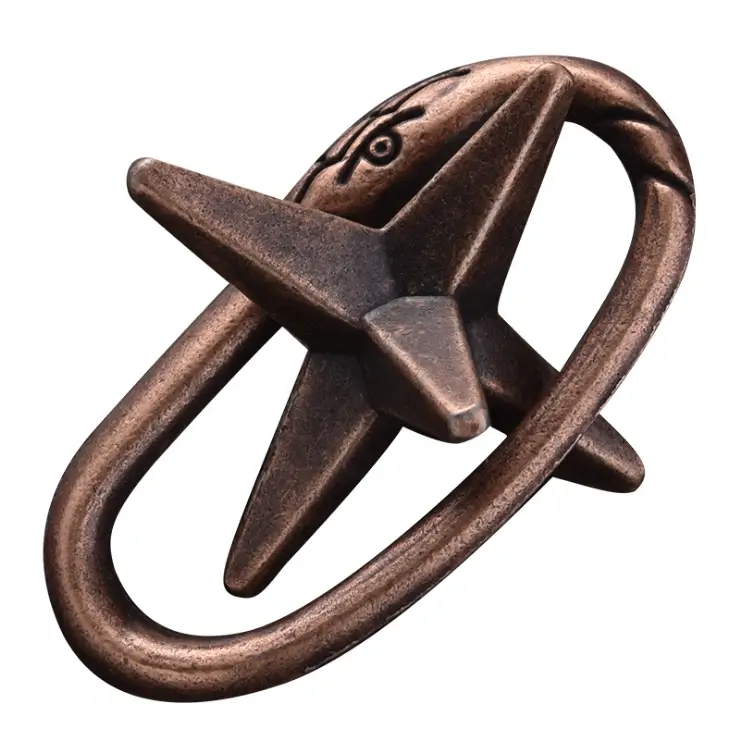
Snake Mouth Escape Puzzle — $13.99
The Deceptively Simple Animal Trap: Monster Mouth & Snake Mouth
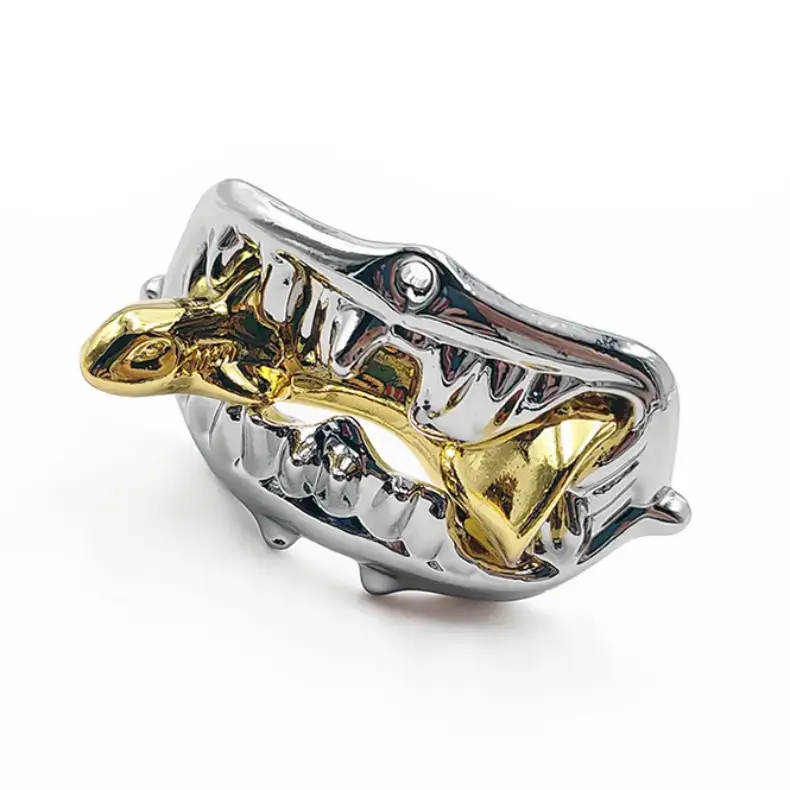
Don’t let the whimsical names fool you. These are entry points into high-difficulty disentanglement puzzles that teach a cruel lesson: visibility means nothing. In the Monster Mouth Fish Escape, the fish is trapped inside a cage with a single, obvious opening. The solution seems clear. It is a false gate. The real mechanism is hidden in the relationship between the fish’s tail curve and the internal geometry of the monster’s jaws. You will try to slide it out the front for an hour. It resists. The sudden insight arrives when you discover the mandatory series of rotations and tilts that use the top of the cage as the true exit path. The Snake Mouth operates on similar principles, with a slightly more forgiving tolerance. These are fantastic for solvers who want to graduate from beginner puzzles into real mechanical puzzles—they look approachable but pack a serious logical punch. Their lower price makes them a low-risk, high-reward frustration. Difficulty DNA (Monster Mouth): Physical Finesse: 6/10 | Logic Leap: 8/10 | Patience Required: 7/10.
Hanayama Cast Vortex: The Machinist’s Nemesis
This isn’t a pure wire puzzle; it’s a cast puzzle, but it belongs on this bench for its sheer, mechanical perversion. Designed by Oskar van Deventer, it consists of two interlocked, spiraling pieces that appear to have been forged together. The tolerances are near-zero. You will find no visible movement for the first thirty minutes. The challenge is a hybrid: you must first deduce the axis of separation through patient probing, then execute a series of micro-adjustments along a helical path under constant spring tension. Big, clumsy hands struggle here. It requires the delicate yet firm touch of adjusting a carburetor jet. The satisfying separation, when it finally comes, feels like a minor mechanical miracle. For those asking if expensive designer puzzles are harder or just prettier, Vortex is the answer: the aesthetic is the difficulty. Its beautiful, seamless complexity is what makes it one of the best impossible wire puzzles in spirit. Difficulty DNA: Physical Finesse: 9/10 | Logic Leap: 7/10 | Patience Required: 8/10.
Hanayama Cast News: The Silent Partner
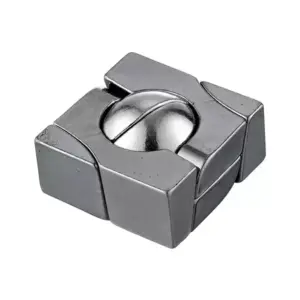
Another Hanayama puzzles heavyweight, often rated a 6 on their scale but performing like a 10 in the wild. Two identical, twisted rectangles are mated together. The difficulty stems from perfect symmetry and a deceptive solution path that feels counterintuitive. You’ll swear the pieces should slide apart laterally. They won’t. The aha! moment involves understanding that the separation is a three-stage rotational dance, not a pull. You must align, rotate, and then translate. It’s a lesson in sequential constraints—a common real-world mechanical engineering problem in assembly and disassembly. The finish is superb, offering just enough slickness to allow the precise movements it demands. This is the puzzle that makes you feel smart, not just relieved, once solved. For those who need a nudge, a structured escape with Hanayama cast puzzle solutions can be found.
The “Level 10” Generic: A Warning
The market is flooded with anonymous, heavy gauge wire puzzles stamped “Level 10.” I bought several. Their incredible difficulty often stems from poor manufacturing, not clever design. Rough weld spots, asymmetrical bends, and spring tension from cheap, poorly tempered wire create false gates the designer never intended. Solving them feels like fighting a rusty bolt, not outwitting an engineer. You might force it and cause permanent deformation. This answers a key user question: you can absolutely damage a puzzle by forcing it, and these are the most likely candidates. They are the relief-only end of the Frustration Budget, with little rewarding spatial reasoning payoff.
So, what is the single hardest disentanglement puzzle you can buy? It’s a personal match. For pure, abstract logic: HIGH FIVE. For tangible, machinist-grade precision under tension: Cast Vortex. For the bridge between the two, at a friendlier price: the Monster Mouth. Each one demands a different part of your mind and hands, proving that true difficulty is not a number, but a spectrum of engaging torment.
The Solver’s Grind: A Candid Map of Physical and Mental Endurance Required
The journey from picking up a difficult wire puzzle to its satisfying separation is not a straight line; it’s a gauntlet of psychological states and physical feedback loops that takes most solvers an average of three distinct phases over days, not hours. You don’t just solve these puzzles—you endure them.
You start with Confident Curiosity. The puzzle feels solid, promising in your hands. You examine the intricate manipulation points, give the pieces a few exploratory wiggles. You’ve solved tricky mechanical puzzles before. I can see the path, you think. This lasts about fifteen minutes.
Then comes Frustrated Determination. The coffee goes cold. You’ve found a promising sequence—a twist, a slide—but it dead-ends. You try it backwards. Dead end. Your fingers, now slightly sore, begin to push harder against the spring tension. You’re no longer thinking; you’re fidgeting with increasing force. This is a classic example of why your hands lie when solving metal puzzles. They want to muscle through, but these are puzzles of finesse and spatial reasoning, not strength. It resists.
This bleeds into Hopelessness. You put it down. You stare at it on the desk. The elegant loops of metal wire now seem like a smug, closed system. You question the premise—is it even supposed to come apart? This is the most critical phase. Walking away is not surrender; it’s letting your subconscious chew on the problem. This is the “days of subconscious processing” I mentioned earlier. The puzzle is working on you as much as you are on it.
And then, often when you’re not trying—while driving, showering—the Sudden Insight arrives. A click in the mind. Not a guess, but a cold, logical certainty about an alignment you’d overlooked. You pick the puzzle up again with fresh purpose.
This initiates the Triumphant Flow. Your movements are deliberate. Rotate counterclockwise. Feel for the catch. Use gravity to drop the ring into the narrow false gate. You are no longer fighting the metal; you are collaborating with the designer’s hidden geometry. The pieces slide, turn, and finally, separate.
What’s left is Respectful Satisfaction. You hold the two pieces, studying the path they took. The designer’s cruelty reveals itself as elegance. You appreciate the machinist-grade precision, the flawless tolerances.
The Toolkit: Mindsets and Mechanics
To navigate this arc, you need more than stubbornness. You need technique.
* The Quarter-Turn Shuffle: Don’t yank or pull. On puzzles like the HIGH FIVE, progress is measured in millimeters and degrees. Apply gentle rotational pressure through the entire assembly, listening and feeling for a shift in resistance. This is how you find the hidden channel.
* Listen for the Click: Your ears are as important as your fingers. A soft tick often indicates a piece has seated into a new position within the complex mechanism, a cue to change your approach.
* Manage Spring Tension: High-tension puzzles (like the Cast Vortex) store energy. You must control the release. Use your off-hand to stabilize one piece, applying counter-pressure to prevent a sudden, chaotic snap-back that resets your progress.
* Map, Don’t Meme: When stuck, don’t just repeat motions. Put it down and visually trace the solution path of one piece through the other. Sketch it if you must. This shifts the work from your muscles to your problem-solving skills.
Your Frustration Budget is real. A puzzle that makes you feel smart after solving rewards logical insight. A puzzle that only brings relief rewards persistence. Know which you’re buying into. And when the hopelessness phase hits, truly walk away. Let the wire brain teasers hard enough to break your initial approach work on your back-brain. The solution, when it comes, will be that much sweeter. This is the solver’s grind—the true cost and value of a puzzle master wire difficulty 10 experience.
Choosing Your Nemesis: Matching Puzzle Cruelty to Personality
So you’ve accepted the solver’s grind. Good. Now, buying the right puzzle isn’t about grabbing the one labeled ‘impossible’; it’s about matching the designer’s specific brand of cruelty to the solver’s mental wiring. A hardest disentanglement puzzle for a fidgeter will be torture for an abstract thinker, and vice versa. The key metric isn’t minutes to solve, but alignment of torment. Here’s how to diagnose a person’s puzzle tolerance and pick their perfect nemesis.
For The Engineer (or the one with big, clumsy hands):
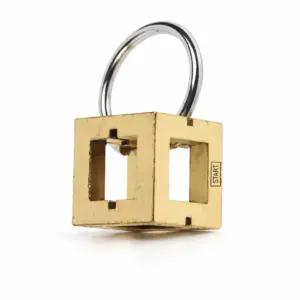
This solver trusts physics and visible mechanics. They think in clearances, force vectors, and sequential steps. They get frustrated by vague wiggling and hidden pivots. Their ideal puzzle presents a seemingly logical, gear-like problem that then subverts it with one devious false gate. Look for puzzles with obvious, chunky components that promise a mechanical solution—like Jean-Claude Constantin‘s designs, which often mimic locks or interlocking frames. The difficulty comes from a single, non-intuitive move buried in an otherwise straightforward process. The Four-Square Lock Puzzle is a prime example of this ethos. It looks like a solid block of intersecting squares, begging for a systematic approach. The struggle is profound, but the final satisfying separation feels like cracking a safe, not untangling a knot. These are the metal wire puzzles that respect strength but outwit linear thinking.
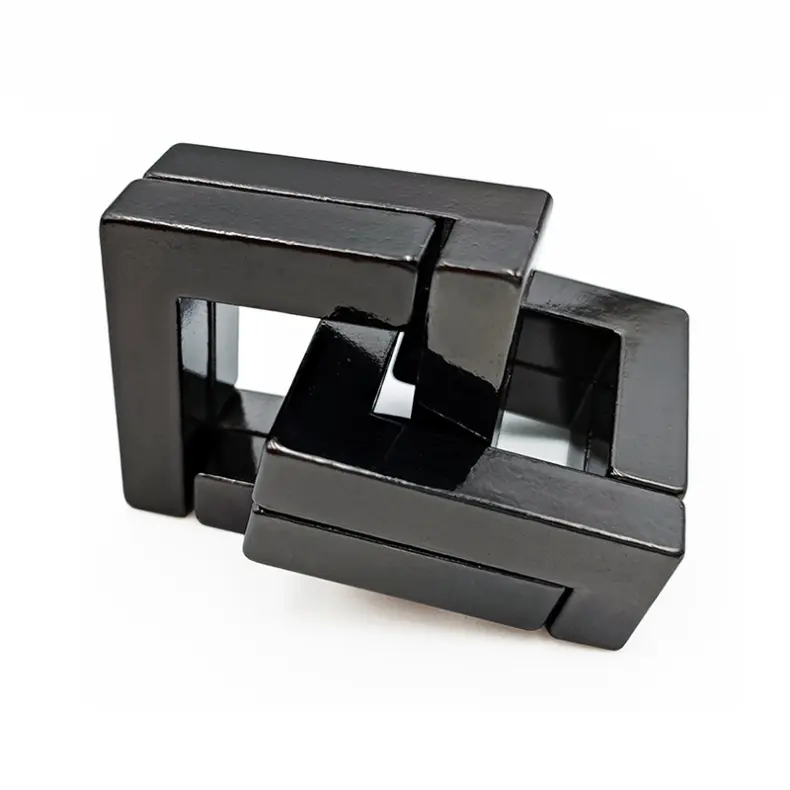
Four-Square Lock Puzzle — $12.98
For The Persistent Fidgeter:
This person needs constant tactile feedback. They solve with their hands, not a map. They’ll mindlessly manipulate a puzzle for hours, relying on muscle memory and chance discovery. For them, a true metal wire puzzle impossible to solve is one with zero slack, no exploratory movement, and a solution requiring absolute stillness. Their kryptonite is the symmetrical, high-tension puzzle with identical pieces, like the Hanayama Cast Vortex. The goal is to match their restless energy with a puzzle that allows—even demands—endless rhythmic manipulation, but only reveals its secret through a specific sequence of pressures and releases felt in the fingertips. The solution time expands over days, solved in moments of distracted fidgeting. Avoid puzzles that punish experimentation; seek those that reward it with subtle, auditory clicks and shifts.
For The Abstract Thinker (The Philosopher):
This solver is undone by brute force. They see the idea of the puzzle first. They need a concept to unravel. For them, the most demanding wire brain teasers are those that look like pure chaos, offering no logical entry point—until a sudden perceptual shift reveals an elegant, often topological, solution path. Think of the infamous HIGH FIVE puzzle. Its Gordian Knot appearance defies traditional disentanglement logic. The breakthrough isn’t a move, but a realization about the space between the wires. This type requires patience for true hopelessness, the willingness to put it down and let the back-brain work. The triumph is cerebral, not tactile. For a deeper dive into this spatial reasoning, our comprehensive wire metal brain teaser guide explores the principles further.
Gifting one of these challenging wire puzzles for adults is an act of intimate understanding. It says: “I know how your frustration works.” Match the torment to the mind. That’s where real satisfaction—for both giver and solver—is forged. They make profound gifts for men, adults & teens who have moved past simple desk toys.
Forging Your Collection: Where to Find Quality and Community
Once you’ve chosen your nemesis, the hunt begins. This is not about finding a puzzle; it’s about sourcing a precision object built to withstand months of fumbling aggression. My rule is simple: invest in one machinist-grade puzzle over a handful of cheap imitations. Expect to pay $25 to $60+ for a serious designer piece—the price of a good tool, which is what this is.
Decoding Quality: The Machinist’s Checklist
Forget “heavy gauge.” That’s marketing. Look for precision of the bends. A sharp, crisp 90-degree angle or a smooth, consistent coil tells you the wire was formed on a jig, not bent by hand in a garage. The finish should be uniform, often a brushed or polished stainless steel, with no sharp burrs to cut you. The real test is spring tension. Cheap wire is dead; it deforms. Quality wire has memory. It fights you, then returns to true. This resilience is what creates the maddening false gates and tight tolerances that define a mind-boggling challenge. When you feel that live-wire resistance, you know you’re holding something built for a grueling fight.
Trusted Sources: Where the Serious Solvers Shop
Avoid the big-box toy aisles. For difficult wire puzzles, you need specialty retailers. Puzzle Master is the canonical source, with a vast inventory and a reliable difficulty scale—their “Level 10” is a serious benchmark. For designer works, search for the names: Jean-Claude Constantin, Oskar van Deventer, Aaron Wang. Sites like Puzzle Workshop and Sloyd.fi often carry their creations. Hanayama Cast puzzles, while sometimes cast rather than pure wire, are a major brand staple you’ll find everywhere; their beauty and consistency are a great entry into high-end metal puzzles. Always scrutinize product photos. You should be able to see the clean lines of the metal wire.
The Value of the Designer Puzzle
Is a $45 Constantin harder than a $15 generic? Often, yes, but not just because it’s more complex. The expense buys intentionality. Every curve is a calculated obstacle. The solution path is a crafted experience, not a random tangle. You’re paying for the elegance of the problem itself. Solving it connects you to the puzzle-maker’s mind—a specific, beautiful cruelty. It’s the difference between a riddle scribbled on a napkin and one etched in steel.
Finding Hints Without Surrender
You will get stuck. The solution time for puzzles like the HIGH FIVE is famously measured in months. When the hopelessness sets in, the community is your lifeline. Reddit’s r/mechanicalpuzzles is a thriving hub for respectful, spoiler-tagged discussion. For a specific example of working through a tough puzzle, you can find a step-by-step solve for a cast hook brain teaser online. Use these resources like a machinist’s manual: consult only the specific diagram you need to get past your mental block, then close it. The goal isn’t just separation; it’s the learning. As explored in our guide to metal puzzles that don’t break, this community knowledge preserves the puzzle’s integrity for the next solver.
Collecting these puzzles becomes a dialogue—with the designer, with the metal, and with a global guild of frustrated, determined minds. Your shelf of solved disentanglement puzzles isn’t just a trophy case. It’s a ledger of private battles won, and a promise of more to come. For the broadest view, the Wikipedia entry on Mechanical Puzzles provides excellent context on the category’s history.
Reader Friction and Quick Answer
The biggest friction point for a new solver isn’t the puzzle—it’s the expectation. You’ll assume a puzzle labeled ‘difficult’ will yield after an hour of determined focus. It won’t. The real barrier is a mental one, rooted in a universal engineering principle: the 80/20 rule. You will spend 80% of your time on a single, non-intuitive move that defines the entire solution path. Accepting this is your first victory.
The Grind Is Real: Common Points of Failure
Your hands will cramp. This isn’t poor design; it’s a feature. Wire puzzles at this tier demand sustained, precise pressure in awkward positions to test spring tension and find false gates. If your fingers aren’t complaining, you’re likely brute-forcing and missing the subtlety. The second wall is perceptual. Staring at the same intricate manipulation for an hour creates a mental blind spot. You cease to see the object and see only your failed hypotheses. This is when forcing it becomes a real risk. A machinist-grade puzzle won’t break, but you can work-harden a bend or create a burr that ruins the satisfying separation.
The Quick Answer: How to Actually Start
Stop trying to solve it. Your goal for the first session is not separation, but cataloging. Pick it up. Heft it. Listen. Do the pieces clink loosely or are they tension-locked? Map every point of contact. Rotate each component slowly along every axis, feeling for the slightest increase in resistance—that’s a false gate. Now, walk away. Put it on your desk. Your subconscious spatial reasoning needs to chew on the geometry. The eureka moment rarely comes while white-knuckling the steel. It arrives when you’re doing the dishes, understanding the burr puzzle logic in a flash. Return with fresh eyes and empty hands. That’s when the difficulty level transforms from a barrier into a dialogue.
How We Evaluate Puzzle Toys
We judge a wire puzzle’s true worth by how it fights back, not by how it shines on a shelf. For this guide, that meant a four-point inspection: tolerance, tactile feedback, logical coherence, and the quality of the frustration. A puzzle that earns a place on the contender’s bench doesn’t just resist; it teaches through intelligent resistance.
Tolerance is the first truth. This is machinist-speak for the gap. The space between wire and loop, the clearance for a pivot, the margin for error—which is often zero. Measure it with your fingernail. A high-difficulty puzzle has tolerances measured in thousandths of an inch, not millimeters. That’s what turns a gentle nudge into a complex mechanism requiring absolute precision. It’s the difference between a challenging shuffle and an impossible lock.
Tactile feedback is the conversation. Does the steel mumble or does it shout? A good puzzle communicates. A false gate announces itself with a hard stop. The correct path offers a subtle, smooth glide—a “click” in the hand, not just the mind. We dismiss puzzles that are simply stiff or gritty; that’s poor finishing, not clever design. The spring tension must be intentional, a designed part of the solution path, not a manufacturing defect.
Logical coherence separates art from torture. Any blacksmith can weld two pieces together and call it difficult. A designer like Jean-Claude Constantin builds a one-way maze. The puzzle must have an internal logic—a sequence that, once discovered, feels inevitable. The struggle should be in finding the key, not in forcing a fit. Does the satisfying separation feel earned by insight, or just by exhausted luck? The former leaves respectful satisfaction. The latter just leaves relief.
The quality of the frustration is the final metric. This is your Frustration Budget. Does the puzzle make you feel stupid, or does it make the puzzle seem smart? The best designs lead you through cycles of doubt and miniature breakthroughs, building toward the final eureka moment. They reward persistence with progressive understanding. A bad difficult puzzle is a flat wall; a great one is an intricate climb with hidden handholds. This focused engagement can even serve as a unique form of stress relief, by fully occupying the mind and hands.
We apply this rubric so you can find a worthy opponent, not just a shiny trinket. It’s how you move from collecting desk toys to curating a cabinet of mechanical puzzles that genuinely test your problem-solving skills. Now, with the map drawn and the tools in hand, your only job is to begin. Pick your first nemesis from the bench. Feel its weight. Start the catalog. Your hands will cramp, your coffee will go cold, and the dialogue will begin. That’s where the real spatial reasoning starts. Find the community on the dedicated forums, share your struggles, and when that final piece comes free, you’ll know exactly what you’ve accomplished. For a formal definition of the genre, the Wikipedia page for Disentanglement Puzzles is a solid reference point.