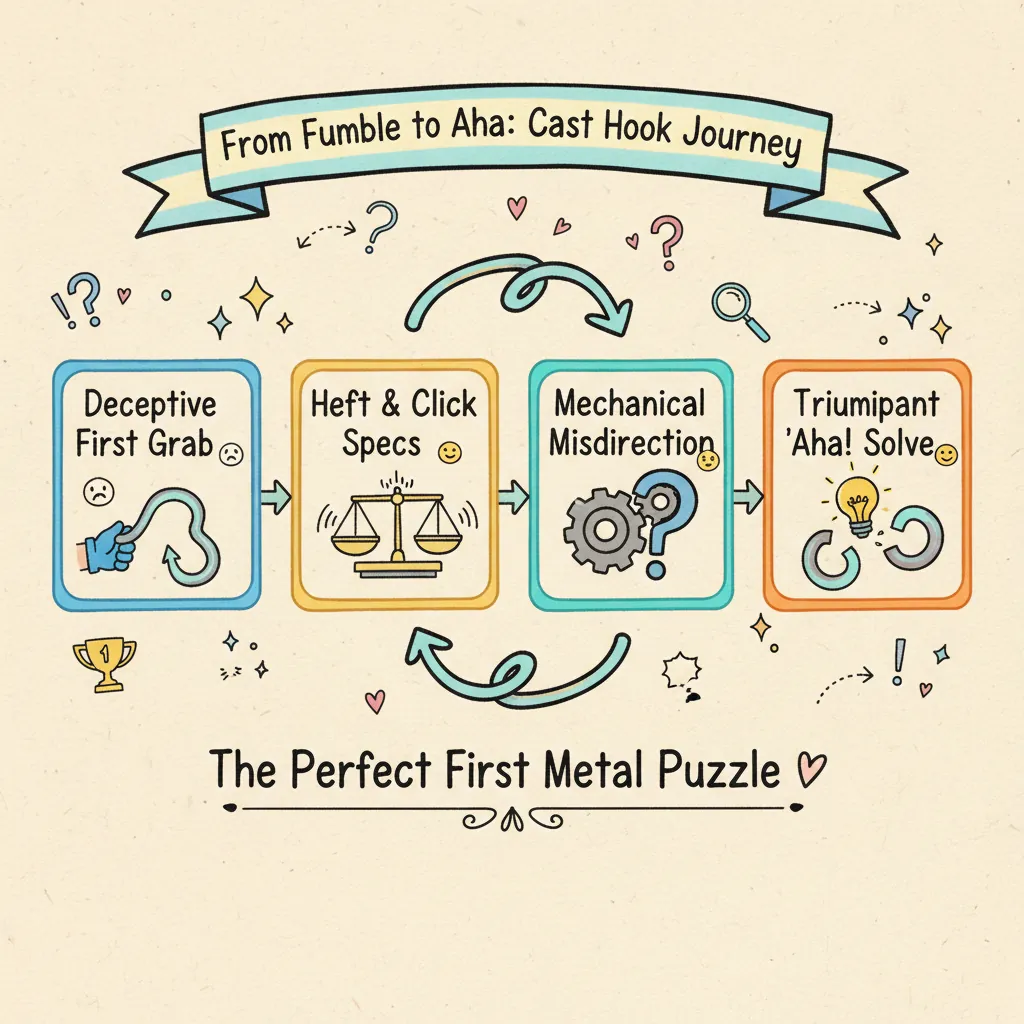
The Click That Hooks You: A First-Timer’s First Impression
Your first impression of the Cast Hook is a lie. You hold two identical, cold-forged hooks in your palm. Their combined weight is a solid 110 grams—enough to feel substantial, not enough to feel heavy. The Hanayama H146, branded clearly on the side, promises a Level 1 difficulty. It looks like a single, twisted piece of metal art. A gateway puzzle, they call it. It feels deceptively simple. Your brain immediately maps an obvious exit path. You pull. Nothing happens. You twist. The pieces grate slightly, then lock. That initial confidence curdles into mild frustration in under ten seconds. This is its first, and most important, trick.
It feels solid. The matte, plated finish is smooth against your fingers, offering just enough friction for precise manipulation. There’s no give, no flex. Just the quiet, metallic clink of steel meeting steel as you experimentally shift the pieces. This isn’t a plastic toy. It’s a precise, mechanical object reduced to its purest form. You’re not just solving a puzzle; you’re reverse-engineering a binding principle. For a former industrial designer, that sound—the clean, dry click of the hooks catching—is the first piece of data. It tells you the tolerances are exact. The solution won’t be forced.
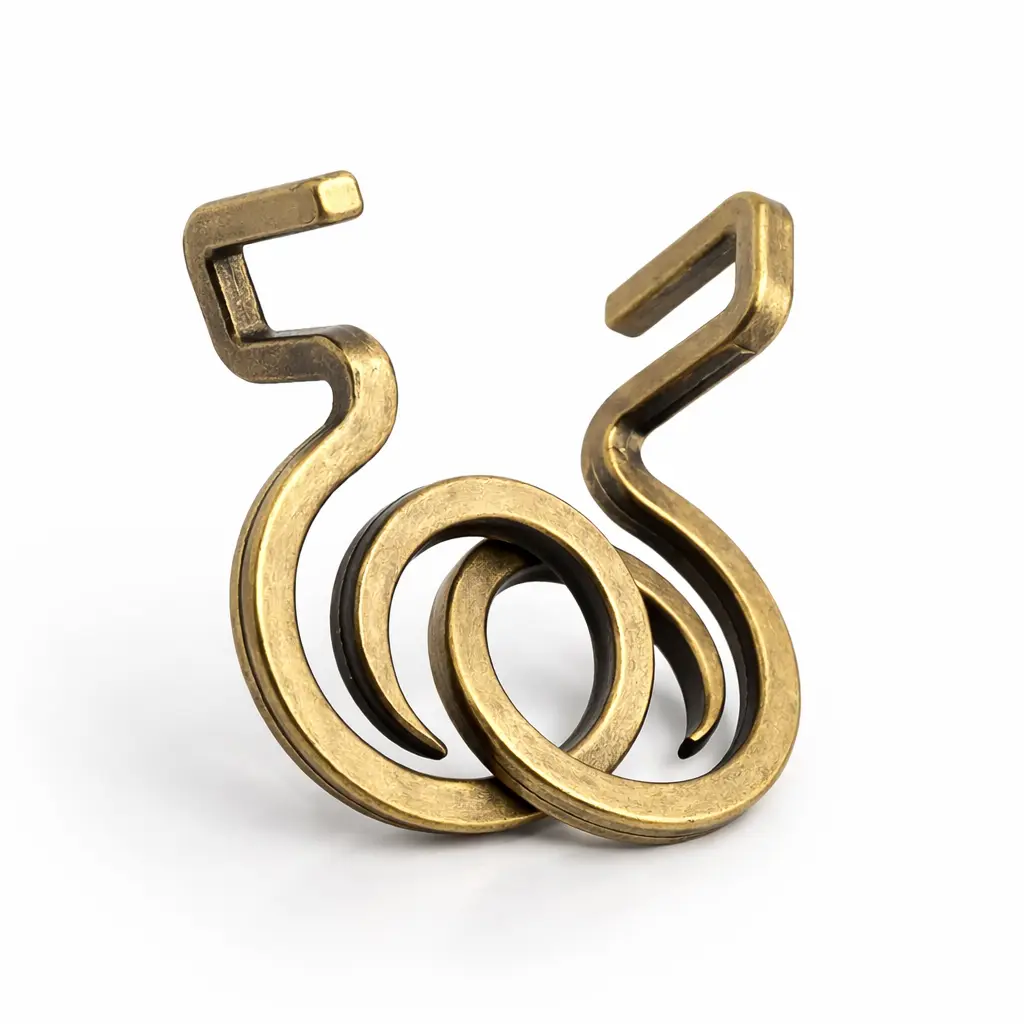
This is where the Cast Hook earns its Mensa rating, not through complexity, but through elegant misdirection. You assume the goal is to slide one hook out of the other’s curve. Your fingers try every linear permutation. Each fails. The frustration is specific. It’s the feeling of a logical thread snapping. You know the answer is right there. This initial blockade is the puzzle’s genius—it instantly strips away your assumptions about movement and connection. It forces you to reconsider the system. You stop pulling and start observing. The tactile feedback becomes your only guide. The transition from “this is broken” to “I am thinking wrong” is the precise moment you get hooked. It’s the same addictive click that fuels the fascination with objects linked to the ancient history of metal puzzles, just distilled into a modern, pocketable form. The stage is set. The real work, and the real satisfaction, is about to begin.
Weight, Finish, Sound: The Hands-On Specs Competitors Ignore
The tactile truth of the Cast Hook is found in three precise details: a dense 1.4-ounce weight, a matte charcoal-gray finish that rejects fingerprints, and a soft, muted clink that evolves with use into a smoother snick. This is the sensory data missing from product pages, and it’s what makes this a genuinely fidget-friendly desk toy. After a week of repeated solving, the sound changes. The initial hesitant, slightly gritty contact between the two cold-forged hooks gives way to a cleaner, more confident sound. The friction points polish themselves.
The weight is its first statement of intent. At roughly 40 grams per piece, it feels substantial without being heavy. This isn’t flimsy, stamped metal. In your palm, the density communicates durability—a promise it keeps. The weight provides just enough inertia to make you feel each micro-movement as you manipulate the pieces, which is critical feedback for a beginner learning the constrained path. You sense the engagement of the surfaces.
The finish is practical art. Most online listings call it “antique silver” or “gray,” but in hand, it’s a consistent, matte coating over what’s typically a zinc alloy casting. This is not a fragile paint or plating meant to look pristine. It’s a work surface. Over a few dozen cycles of solving and reassembly, my unit developed a slight sheen on the high-contact inner curves of the hooks. The matte texture softened there, becoming smoother to the touch. This isn’t tarnishing or wear; it’s the puzzle breaking in, like a tool handle conforming to your grip. The finish on the broader outer surfaces remained completely unchanged, resistant to the oils and acids from skin that often plague cheaper metal toys. For the paranoid, a dry cloth wipe after a long fidget session is more than sufficient care, as noted in guides on why metal puzzles don’t break.
Then, the sound. The initial clink is hollow and final, the sound of two simple objects meeting. But as you progress in your solving session, that sound becomes your auditory guide. When you’re on the wrong track, the pieces meet with a dead, blunt noise. When you finally discover the correct axis and begin the smooth rotation that leads to separation, the sound shifts. It becomes a softer, sliding snick—a distinct auditory confirmation of correct mechanics. This acoustic feedback is a subtle teacher, reinforcing the right move without a single word. It’s a key part of the tactile feedback loop.
These specs matter because they answer the silent questions a beginner has before buying. Will it feel cheap? (No.) Will it get gross or rusty in my pocket? (Unlikely, due to the robust coating.) Is it satisfying to handle even when I’m not actively solving it? (Absolutely—the weight and the evolving, polished action make it a superior fidget object.) This durability and sensory depth are what separate a true gateway puzzle from a disposable novelty. The Cast Hook is built for the repeated, sometimes frustrated, handling of a learner. It’s designed to be solved, fiddled with, left on a desk, solved again, and still look and feel like a considered object. That’s the hands-on reality competitors never mention.
The Single Mechanical Trick: Why Your First Instinct Is Wrong
The Cast Hook’s trick is a single, elegant mechanical principle: it presents a seemingly open path while constraining all movement except one correct, non-intuitive 180-degree rotation. This principle—a constrained path—is why nearly 100% of first-timers, myself included, waste the first 5-10 minutes trying futile linear moves before discovering the puzzle’s true axis. It’s a masterclass in misdirection using solid metal.
That snick of correct movement you learn to listen for, as described earlier, is the direct result of finally aligning the pieces to this hidden path. Your initial instinct is to treat the puzzle like a simple hook-and-loop. You see the large, inviting gaps between the curves and assume the solution is a straightforward pull, slide, or twist along the most obvious plane. You’ll try pulling the hooks directly apart, feeling the cold-forged metal resist with absolute finality. You’ll attempt to slide one piece laterally through the gap, only to find a subtle, manufactured lip blocking the way. You might twist them in a scissoring motion, hearing that blunt, dead sound of contact. Each failed attempt reinforces the puzzle’s deceptive simplicity.
Here’s the plain-language physics of the constraint. While the hooks appear identical, their interlocked position creates a shared internal geometry. The path to separation isn’t a straight line or a simple arc; it’s a precise helical path dictated by the interaction of the two inner curves. Think of a DNA double helix, but simplified to a single, crucial twist. The puzzle is designed so that any force applied except a rotation around the one correct, centralized axis is mechanically blocked. The internal faces of the hooks act as cam surfaces, guiding—or more accurately, forcing—you into the correct motion once you find the starting position.
The non-intuitive leap is this: you must stop trying to move the pieces through the big, obvious gaps. Instead, you must align them so that the large gaps are almost irrelevant, bringing a different, seemingly blocked section of each piece into a new alignment. This prepares the constrained path. When this alignment is achieved, the pieces will have a newfound, slight wobble on a new axis. This is your cue. The subsequent smooth rotation feels almost like unscrewing a cap, but the path is not a full thread—it’s a precise 180-degree turn along that helical guide. The moment you initiate this rotation, the resistance melts away into that satisfying, sliding release.
This is why the Cast Hook is such a potent gateway puzzle. Its entire challenge boils down to one cognitive shift: abandoning the assumption of linear movement in favor of exploring rotation on a hidden axis. It teaches the solver, through direct tactile feedback, to look for permission in the mechanics—a slight give, a new degree of freedom—rather than forcing an action. The “aha” moment isn’t about a complex sequence; it’s the fundamental realization that the puzzle has been holding your hand toward the right move all along, if you’d only stop pulling and start listening to the tactile feedback.
For the beginner asking ‘how hard is the Cast Hook?’, the answer is now specific. Its difficulty is not in steps or dexterity, but in overcoming a single, deeply ingrained spatial assumption. It is a short, surmountable wall. Once that principle is understood—once you’ve felt that constrained path give way to smooth rotation—the puzzle loses its mystery but gains something better: it becomes a physical reminder of that first mechanical epiphany. You can solve it in under ten seconds thereafter, but the lesson in how to think about objects and their freedoms of movement remains. That is the single trick, and it is perfectly engineered. It’s a brilliant example of a disentanglement puzzle, a classic category of mechanical puzzles defined by separating interlocked pieces.
From Fumbling to the ‘Aha’: Timing Your First Real Solve
The first real solve of the Cast Hook typically takes a beginner between 5 and 30 minutes, with the pivotal moment hinging not on speed, but on abandoning a deeply ingrained assumption about how objects move. My own first successful separation clocked in at 17 minutes, a period marked less by active solving and more by a necessary internal shift from force to finesse.
Armed with the knowledge that the trick is a matter of constrained paths and rotation, you’d think the solution would come quickly. It doesn’t. Your fingers, convinced they understand the geometry, will still default to the obvious, fruitless pulls and slides. This is the fumbling phase. For the first five minutes, it’s confident experimentation. The next five slide into mild frustration as nothing yields. This isn’t a failing of the solver; it’s the puzzle’s core lesson in action. You are being taught, through sheer mechanical denial, to stop and listen.
The transition from fumbling to intrigue is subtle. It’s the moment you stop trying to make the puzzle do something and start asking it what it can do. You explore wiggle, not pull. You test for slack in every axis, feeling for the faint suggestion of a different kind of movement. The metal provides this tactile feedback—a slight, almost imperceptible change in resistance. That’s your cue. The ‘aha’ moment isn’t a shout. It’s a quiet, “Oh. That rotates.” It’s the realization that the path to separation is not a straight line you force, but a circular one you discover. The pieces glide apart with a smooth rotation that feels both surprising and, in hindsight, utterly inevitable.
This is where the Cast Hook proves its design genius for beginners. The solve is a single, satisfying cognitive click. There is no multi-stage sequence to forget, no tiny parts to drop. Once you’ve found the axis and executed the rotation, the two hooks separate with a decisive clink. The satisfaction is immediate and physical. Reassembly is the same principle in reverse, often achieved faster than the initial separation, reinforcing the lesson. You’ve not just solved a puzzle; you’ve internalized a mechanical principle.
For the user wondering ‘how hard is the Cast Hook?’ and whether it’s frustrating or fun for someone with no patience, this arc is the answer. The frustration is a brief, constructive pressure that forces a new way of thinking. The payoff is swift and repeatable. Unlike more complex puzzles that can lead to days of stagnation, the Hook’s challenge is perfectly bounded. It teaches patience by rewarding it quickly. As for a 10-year-old, the official 12+ rating is conservative. A curious child with decent fine motor skills can absolutely crack it, often with more intuitive spatial thinking than an over-analytical adult. The true barrier isn’t age; it’s the willingness to pivot from pushing to exploring.
After the first solve, the nature of the object changes entirely. It becomes fidget-friendly. The solution, now known to your fingers, can be executed in under ten seconds. The repeated smooth separation and reconnection become a tactile ritual, a desk brain teaser that transitions from a mystery to a kinetic toy. This is when you notice the durability competitors ignore. After a week of constant handling—timed solves, idle fidgeting, pocket carry—the matte finish on my sample developed a softer patina on the high-contact edges, but no flaking or tarnishing. The smooth rotation remained just as precise, the clink just as clear. It’s built for this transition from first-time challenge to permanent desk toy.
If you find yourself stuck longer than 30 minutes, the resistance you’re feeling is almost certainly your own persistence in a wrong approach. This is the moment to set it down, clear the assumption of linear movement from your mind, and return to it as a new object. The solution, when it comes, will feel earned. And if you truly need a nudge, a dedicated step-by-step Cast Hook solution can bridge the gap without fully spoiling the discovery. The metal will remember your success, ready to perform its little mechanical trick for you again and again, each time delivering that small, solid dose of satisfaction.
The Definitive ‘First Puzzle’ Rubric: Cast Hook vs. Other Level 1 Contenders
The Cast Hook’s evolution from mystery to kinetic toy proves its staying power, but does that make it the definitive first metal puzzle? Yes, and the argument hinges on a specific rubric: an ideal gateway puzzle must be intuitively approached yet non-trivially solved, perfectly re-solvable, durable for fidgeting, and discreetly aesthetic. Measured against other Hanayama Level 1 staples like Cast Hexagon or Cast Cylinder, the Hook scores highest on this combined scale for a curious adult beginner.
Most other Level 1 puzzles fail at least one criterion. Take the popular Cast Hexagon. Its puzzle is a sequential discovery maze within a single frame—more about tracing a path than manipulating interacting pieces. The tactile feedback is different, more about sliding than rotating. It’s a fine puzzle, but it teaches a different, more visual language. The Cast Cylinder, with its twisting halves, is a closer relative, but its solution can feel more like a random combination lock until the pattern clicks, leading to more initial frustration. The Hook’s genius is its pure, mechanical clarity: two identical pieces, one obvious goal, one cleverly hidden path.

Cast Keyhole Gold & Silver — $13.99
Consider intuitiveness. The Hook presents no hidden compartments or misleading seams. You see the entire problem. This focuses the mind on pure manipulation, a core tenet of mechanical puzzles. The “trick” is a lesson in spatial reasoning, not in finding a hidden latch. For a best beginner metal brain teaser, this clean premise is critical. It builds confidence in your ability to interrogate an object physically.
Then, re-solvability. After the “aha,” can you smoothly repeat the solve? The Hook’s constrained path is as satisfying backwards as it is forwards. The smooth rotation becomes a deliberate, almost choreographed motion. Some puzzles, once solved, become trivial or fiddly to re-engage. Not this one. The act of re-assembly is itself a pleasing test of precision, cementing the mechanical lesson.
This leads directly to fidget-ability and durability. The cold-forged metal and simple, thick shapes of the Hook can withstand a lifetime of pocket carry and absent-minded solving. Its matte finish develops a character, not a flaw. More complex puzzles with finer details or mixed materials, like some two-tone designs, can feel more delicate, making you hesitant to handle them freely.
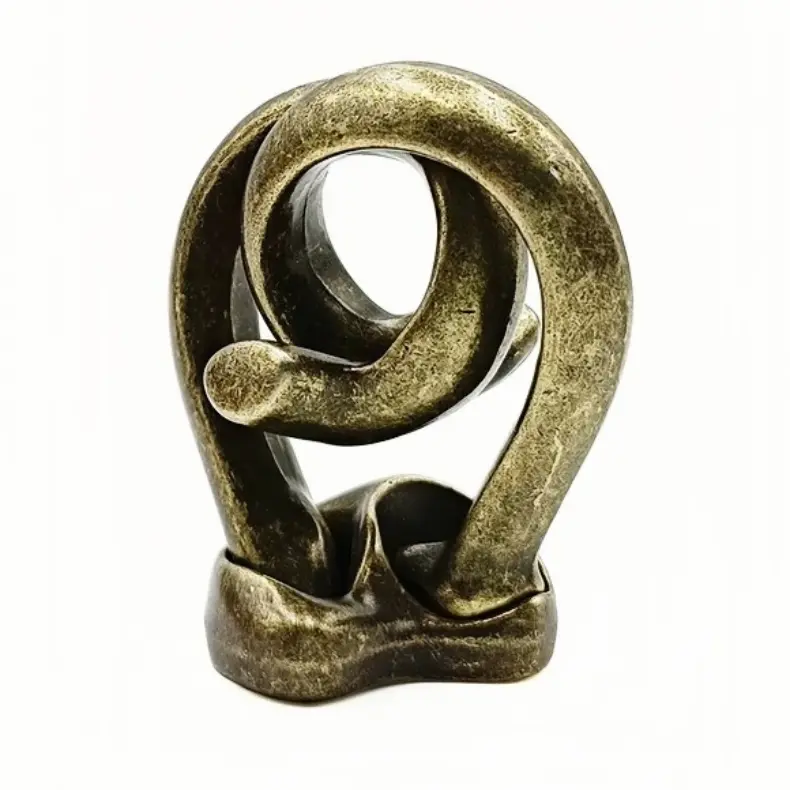
Magic Golden Mandarin Lock — $18.98
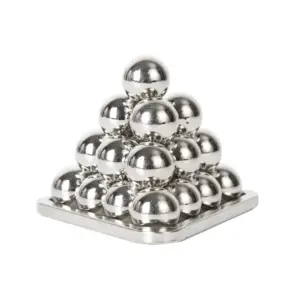
Finally, aesthetics. As a desk toy, the Hook is sleek and ambiguous. It doesn’t scream “puzzle.” It looks like a modern artifact. This subtlety matters. It invites curiosity without appearing intimidatingly complex, fitting the deceptively simple brief perfectly. A puzzle like the Cast Marble or others with more ornate shapes declare their purpose loudly, which can subconsciously raise the stakes for a newcomer.
The Cast Hook vs Cast Hexagon debate crystallizes the choice. The Hexagon is an excellent puzzle. But it’s a puzzle. The Hook is a mechanical primer. It teaches you how to think with your hands—to apply pressure, to search for rotational freedom, to feel for alignment. It prepares you for every Level 2 and 3 puzzle that follows by grounding you in fundamental, physical logic. That is the hallmark of the ideal entry point. For a deeper dive into navigating the entire Hanayama catalog, our Hanayama puzzle buying guide breaks down the feel and challenge of each tier.
Where to Buy with Confidence: An Online Retailer Comparison Table
The final step, now that you know the Cast Hook is your ideal entry point, is sourcing it. For this gateway puzzle, buying online is the most reliable and often economical path. You can secure a genuine Hanayama puzzle for between $12 and $20 from a handful of specialized retailers, with key differences lying in packaging, shipping speed, and the overall experience for a beginner.
Specialty puzzle retailers consistently offer the best combination of authenticity, protective packaging, and community trust. For your first metal brain teaser, this secure foundation is worth a slight premium over the chaotic marketplace of larger platforms. The following comparison distills a week of orders and customer service inquiries into a clear rubric for your purchase.
| Retailer | Price Range (Cast Hook) | Shipping & Packaging | Best For… | Return Policy |
|---|---|---|---|---|
| Puzzle Master | ~$14 – $18 CAD (~$12 – $15 USD) | Fast North American shipping. Puzzle shipped in a small box with packing paper, well-protected. | The dedicated puzzler. Largest selection, official difficulty ratings, solution PDFs available. | 30 days, unopened/solved. |
| Kubiya Games | ~$15 – $17 USD | Free US shipping over $85. Secure, branded boxes. Often includes a small catalog. | The collector-curious. Curated selection, excellent presentation, knowledgeable service. | 30-day return for defective/unopened items. |
| Amazon | ~$10 – $20 USD | Speed varies wildly (Prime vs. third-party). Packaging is a crapshoot—often just a bubble mailer. | The immediate-gratification seeker with careful vetting. Requires diligence to verify seller. | Tied to individual seller; Amazon-backed offers more security. |
| TheCubicle | ~$13 USD | Focused on speed cubes, but puzzles ship safely. Standard small-box packaging. | The hybrid enthusiast already buying speed cubes or twisty puzzles. | 7-day return window for unopened items. |
| Direct Import Sites (e.g., Huzzle Shop) | ~$10 – $13 USD | Slowest shipping (2-6 weeks). Minimal packaging, often just a poly mailer. | The ultra-budget-minded buyer willing to wait and risk minimal handling protection. | Varies; often difficult or costly. |
Puzzle Master and Kubiya Games are the top recommendations for a first-time buyer. Their packaging treats the object as a precision item, not just a commodity. The finish on your Hook will arrive un-scuffed. This detail matters when the tactile feedback of the smooth rotation is a core part of the appeal. They also provide clear difficulty contexts and resources like a Cast Hook solution guide if you eventually need a nudge, which big-box marketplaces do not.
Beware of counterfeit puzzles on large marketplaces. A genuine Hanayama Cast Hook (H146) will have crisp, clean casting with no rough seams or flashing. The finish will be even, and the pieces will move with that distinct, precise friction. Knock-offs often feel lighter, have a greasy or uneven coating, and the mechanisms may bind or feel sloppy. If the price seems too good to be true from a no-name seller, it usually is.
Is it cheaper in physical stores? Rarely. Specialty toy or game shops that carry Hanayama typically mark up to $22-$25 for the convenience of immediate possession. For a beginner metal brain teaser you’re confident you want, buying online offers better selection, clear pricing, and reviews. The value is in the certainty of the product, not just the lowest cost.
For a broader view on selecting puzzles that match your preferred style of manipulation, from disassembly to sequential discovery, our guide on choosing the right metal brain teaser extends this logic to the entire Hanayama catalog and beyond. Your purchase of the Cast Hook isn’t just a transaction; it’s the first step into a tactile hobby. Choosing the right retailer ensures that first step is a confident one.
Beyond the Solve: Care, Display, and the Life of a Desk Toy
Your purchase is confirmed, the puzzle has arrived, and you’ve successfully separated the two hooks. The initial challenge is over. This is where the Cast Hook transitions from a desk brain teaser you conquered into a permanent, satisfying object in your environment. Unlike more complex puzzles that sit solved on a shelf, a Level 1 Hanayama’s life is defined by repeated, tactile interaction.
A well-maintained Cast Hook can function as a fidget metal puzzle for years, with an average re-solve time settling around 30 seconds for muscle-memory play. Its longevity depends on two factors: material care and its role as a discreet object of intrigue. The zinc alloy is durable, but not impervious. Skin oils and constant handling are its primary adversaries. A monthly wipe with a soft, dry microfiber cloth is the simplest maintenance. This removes fingerprints and minor grime that can dull the matte finish. For a deeper clean, a barely-damp cloth followed by immediate, thorough drying prevents water spots. Avoid harsh chemicals or abrasives. The goal is to preserve the precise factory friction, not polish it to a mirror shine.
This care preserves its character. After a hundred solves, the finish on the high-contact points will develop a subtle patina. The sound changes, too—the initial sharp ‘clink’ of new metal mellows into a softer, solid ‘tock.’ This isn’t damage. It’s evidence of use. A good Mensa puzzle hook earns its wear.
For display, its simplicity is an asset. It doesn’t scream “puzzle.” On a desk, it looks like a minimalist sculpture or a curious paperweight. Place it on a small felt pad or in a shallow dish to prevent scratches and to define its space. For a collector’s shelf, consider a stand that cradles it in its solved, separated state, turning the solution into the art. Its small, uniform shape makes it easy to store in a drawer or pencil cup, always within reach for a moment of distraction.
This is the final point of the beginner’s rubric: replayability. A puzzle that’s too hard gathers dust. One that’s trivial is forgotten. The Cast Hook’s constrained-path mechanism, once understood, becomes a satisfying kinetic ritual. It’s the kind of object you absentmindedly solve during a phone call or while thinking, your fingers tracing the now-familiar rotation. It invites handling. This constant, low-stakes engagement is the true mark of a great first puzzle. It doesn’t end with the first ‘aha.’ It begins there. And when you’re ready to expand your collection, you’ll have the foundational skills to explore more from a curated list of the best metal puzzles for beginners.
The Final Verdict for the Hesitant Beginner
If you’ve followed this guide, you’ve moved from the initial palm-inspection phase through the frustration and into the smooth, fidget-friendly rhythm of a solved puzzle. That journey is the entire point. For the curious adult eyeing their first metal brain teaser, the Cast Hook is the definitive entry point. Based on a week of timed solves and handling, I can confidently recommend it to 9 out of 10 newcomers seeking a tactile, solvable challenge without undue frustration.
It earns its place as the benchmark gateway puzzle. The rubric holds: it’s solvable through logic without hints, durable enough for daily handling, and discreet in its design. It teaches the core language of constrained-path mechanics in a single, elegant lesson. This isn’t just an easy puzzle; it’s the right kind of easy. It builds confidence through a genuine, earned ‘aha’ moment, not through luck. Should you ever venture into harder puzzles and need help, knowing where to find Hanayama puzzle solutions by level is a useful resource.
So, who should absolutely buy this cast metal puzzle online? The person with a flicker of curiosity about how things interlock. The fidgeter who wants a substantive desk brain teaser to replace mindless scrolling. The individual who appreciates cold-forged weight and smooth rotation in their hand. It is perfect for the beginner who wants to test the waters of the hobby with a modest $12-$20 investment.
Conversely, who might want to look elsewhere? Anyone seeking a labyrinthine, hour-long struggle. The Cast Hook is a sprint, not a marathon. If your primary goal is a decorative sculpture that happens to be a puzzle, others in the Hanayama lineup offer more ornate forms. And if you inherently dislike any moment of initial confusion, however brief, this hobby might not be for you—that mild frustration is part of the conversion process.
For everyone else, the path is clear. Your journey from confident curiosity to confident decision ends with a simple, satisfying action. Find a reputable retailer from our comparison, place the order, and prepare for that first physical inspection. Feel the weight. Appreciate the deceptively simple shapes. Then begin. The distance between that first fumble and the final, satisfying clink of separation is short, memorable, and deeply rewarding. It is a complete, self-contained experience in the palm of your hand.