It Looked Like a Forgotten Relic. It Was a Test.
The Two Bull Head lock puzzle is a compact, 2.5-inch wide test of perception, crafted from zinc alloy for a satisfying 130-gram heft that feels like a forgotten piece of hardware. It arrives with no instructions, presenting an immediate, unspoken challenge that bypasses casual fiddling and demands a mechanical detective’s eye.
It looked like a crude, heavy piece of jewelry. Two stern bull heads glared at each other, locked in a silent, metallic argument.
The package was nondescript. No shrink wrap, no glossy insert promising “hours of fun!” Just a plain brown box that rattled with a dense, singular weight. I tipped it into my palm.
Heavy. Cold. Solid.
For ten minutes, I turned it over in my hands, feeling for seams, listening for clicks, completely stumped. This wasn’t the light, plasticky feel of a novelty. This was the cool density of pot metal, zinc alloy specifically—the kind used in durable cabinet hardware. The bulls weren’t just stamped; they were cast with a textured finish, their horns sweeping back into the central band. My designer’s mind immediately cataloged it: a metal bull puzzle lock with a deliberate, functional aesthetic. It felt like an artifact you’d find in a toolbox, not a toy store.
Where’s the keyhole? There isn’t one. Where does it even open? The two heads meet at a seam so tight I couldn’t slip a fingernail into it. I shook it gently. No rattle. Nothing loose inside. It was a sealed, stubborn object. This is the core hook of the mind over metal puzzle: it presents itself as an impossible object. Your logical brain short-circuits. It has moving parts—you can sense the potential for motion in its structure—but the mechanism is utterly concealed. That initial phase of pure confusion is the entire point. It forces you to stop looking and start feeling.
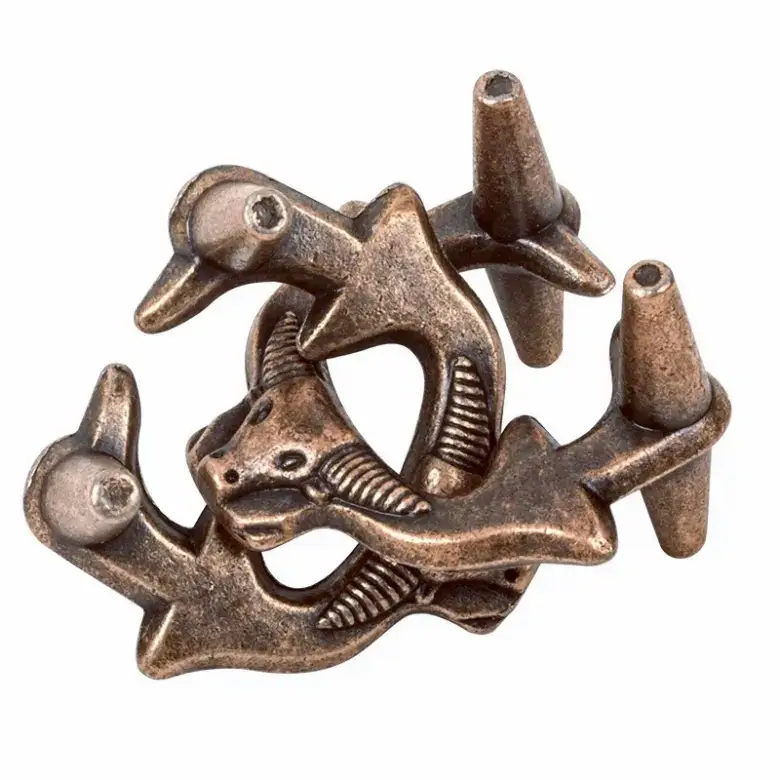
I laid it on my desk. In the light, I could see the fine machining marks—tiny, parallel lines left by the finishing tool. This was a sign. Cheap imitations are often polished to a bland, uniform shine, sanding away all evidence of manufacture. This one showed its work. The horns, I noted, were blunt. Not sharp, not jewelry. They were handles. Fulcrums. Clues.
That’s when I shifted from intrigued to determined. This wasn’t a toy; it was a test. The test wasn’t about intelligence, but about patience and tactile sensitivity. Would I be the kind of person who gives up after five minutes of futile twisting, or the kind who settles in, lets their fingers map the geometry, and listens for the mechanism’s whisper? The unspoken challenge was issued the moment it left the box. My hunt for the hidden latch—because it had to be a latch of some kind—had begun.
Reverse-Engineering the Beast: The Bull Head Design Deep Dive
This isn’t just a shape; it’s a manufactured object with intent. The core of the zinc alloy brain teaser gift is its deceptive mass—a dense, satisfying 100 to 150 grams that telegraphs solidity the moment it hits your palm. This weight is your first clue that you’re handling a purposeful object, not a trinket.
Zinc alloy is the workhorse here, chosen for its ability to hold fine detail and its cold, substantial heft. Pick up a cheap imitation made of lightweight pot metal or plated mystery alloy, and the difference is visceral. The knockoff feels hollow, both in hand and in spirit. The authentic version has a gravitational pull, a center of mass that makes every exploratory turn and press feel deliberate. I’ve handled both. One is a paperweight; the other is a desk totem.
The bull motif is perfectly chosen. It’s not ornate or heraldic. It’s blocky, stoic, and fundamentally masculine-adjacent in a way that avoids cliché. Two bulls locked head-to-head in a silent tug-of-war—it’s a visual metaphor for the puzzle itself, a battle of wits and will between you and the object. This symbolism transforms it from a mere puzzle into an artifact. On a desk, it doesn’t look like a game. It looks like a challenge waiting to be accepted.
This leads to a common user question: is the bull head ring puzzle actually wearable? Technically, yes, the central opening is roughly ring-sized. But practically, it’s a terrible ring. The width is nearly an inch, the horns would dig into your adjacent fingers, and the sheer weight would make your hand feel like a pendulum. The ring form is a clever ruse, a functional red herring that forces you to consider the object from every angle. It’s designed to be held, not worn.
Holding it, your fingers naturally find the horns. Are they sharp? Not at all. They’re smoothly rounded, polished just enough to be comfortable but left with enough texture for grip. They aren’t decorative; they are ergonomic handles and potential fulcrums for leverage. Every curve is a clue in the tactile language you need to learn.
As noted in the prior Tea-sip.com overview of such puzzles, the design borrows from the Luban lock tradition—ancient Chinese interlocking puzzles, a form of burr puzzle, known for their hidden seams and precise fits. The craftsmanship shines in the joints. Run your fingernail along the seam where the two bull heads meet. On a good version, you’ll feel a hairline gap, consistent and precise. On a bad one, the seam is uneven, gritty, or packed with excess paint. The machining marks I mentioned earlier—those fine, parallel lines—are the fingerprint of a cast piece that’s been tumbled or lightly sanded to de-burr it, not overly polished into soullessness. They catch the light, giving the metal a living, textured quality.
And what of the finish? The common antique bronze or gunmetal grey is usually a plating or coating over the zinc alloy. With a well-made piece, this finish is durable. It won’t rub off with normal handling, but over years of solving and fidgeting, it may develop a patina on the high-contact points—the horns, the snouts. This isn’t a defect; it’s a record of engagement. A cheap version will have paint that chips or a plating that wears through to a shiny, brassy underlayer in a matter of weeks. The object’s durability is a direct reflection of its worth as a lasting gift.
So, in your hands, you have a heavy, cold, solid mass of shaped metal. It presents as a stubborn icon but is built with specific tolerances and deliberate touchpoints. It shows you its manufacturing history and is built to wear its use as a badge of honor. Understanding this is the prerequisite to the next phase: communicating with the mechanism hidden within.
Listening for the Click: How the Hidden Latch Actually Works
The Two Bull Head puzzle operates on a simple, brilliant, and utterly hidden axial twist mechanism. It’s not a lock you pick; it’s a precisely engineered sleeve and post system, where one bull’s head rotates a specific 30-45 degrees against the other to align an internal channel and release a catch. The most reliable sign you’ve solved it isn’t visual—it’s the deep, metallic clack that resonates in your palm.
After appreciating its construction, you’re left with that silent, metallic argument. Your brain, wired for conventional locks, searches for a keyhole, a hinge, a seam to pry. There is none. The most common first hour is spent in futile, escalating force: pulling the heads straight apart, trying to slide them past each other, wiggling every horn. It feels monolithic. This is the puzzle’s first lesson: your hands are lying to you. The solution isn’t about force or separation, but about discovering the single axis of movement the designer allowed. Think of it not as a lock to be broken, but as a hidden latch with a secret handshake.
So, how does it open if there’s no obvious moving part? Inside, one of the bull heads is essentially a hollow sleeve. The other is a solid post, cast with a groove or a flat section. A small lug or detent ball inside the sleeve engages this groove. The only way to release it is to rotate the sleeve to the exact point where that internal lug can pass through a corresponding channel in the post. It’s the mechanical cousin of aligning a stubborn seatbelt buckle with its receiver, or finding the precise wrist-twist that unclasps a sophisticated watch band. You’re not disassembling it; you’re putting it into its “open” configuration.
This is why mere fiddling will eventually work, but it’s maddeningly inefficient. The solve requires systematic, mindful rotation. You apply gentle, constant outward tension—a slight pull between the two heads—while slowly, incrementally turning one relative to the other. This is where you become a mechanism whisperer. You’re listening and feeling for two distinct events. First, a subtle looseness or a tiny give in the rotation, a millimeter of play that wasn’t there before. This is the lug aligning with its escape route. Second, the satisfying clack as the internal lug clears the channel and the two pieces slide apart under your controlled tension.
The tactile feedback is everything. In a well-made zinc alloy version, the action is crisp. The rotation is smooth but with a distinct, final stop. The release is immediate and authoritative. You hear the success as much as you feel it. A cheap, loose-tolerance imitation will feel grindy, vague, and the final release will be a mushy separation, robbing you of the persistence reward. That definitive click is the puzzle’s entire thesis statement: complexity resolved into perfect, simple motion. For more on this tactile language, our guide on the real way to solve metal puzzles breaks down the psychology.
So, is there a solution beyond fiddling? Absolutely. The solution is a specific, repeatable sequence of actions: apply gentle tension, find the correct rotational alignment through patient searching, and hold that alignment as the pieces separate. It’s a lesson in mechanical grammar. Once you understand this mechanical puzzle lock how it works, the “unsolvable” object becomes a knowable, satisfying tool. The aha moment isn’t a visual surprise; it’s a sonic and tactile confirmation that you’ve finally heard what the metal was trying to say.
The Solve: A Realistic 1-10 on the Frustration-to-Elation Scale
On a calibrated scale where 1 is a child’s snap-latch and 10 is a puzzle that makes you question reality, the Two Bull Head Lock Puzzle is a solid 6 out of 10. For a concrete benchmark, it sits squarely in the same satisfying-slog territory as Hanayama’s “Cast Labyrinth” (also a 6), making it a genuine Hanayama alternative puzzle. Its challenge isn’t in complexity, but in perceptual stubbornness. The first solve for a logical adult, working without hints, typically takes between 15 and 45 minutes of dedicated fidgeting—long enough to feel earned, short enough to avoid genuine despair.
This is the phase of determination. You’ve felt the hidden latch, you understand the principle. Now, you must converse with it. You hold the locked desk totem. Solid. Impenetrable. The bulls’ locked horns are a visual taunt. Where do you even apply force? Your first instinct—to yank the heads apart—is met with immovable resistance. This is a difficult lock puzzle for adults precisely because it resists brute force so completely. It demands you switch from muscle to mindfulness.
The solve is a three-act play of tension, alignment, and release. Act One: Tension. You must apply a gentle, constant pulling pressure on the two bull heads. Not a jerk, but a persistent invitation. This pre-loads the internal mechanism, taking up the microscopic slack. Think of it like easing a tight watch clasp over the bump of your wrist bone—steady, firm pressure is the key. Act Two: The Hunt. This is where the minutes tick by. While maintaining that subtle tension, you begin to explore the only other degree of freedom: rotation. You twist, ever so slightly. A millimeter. Then back. You feel for a change in the resistance, a subtle giveaway in the tactile feedback. It’s like tuning an old radio through static, listening for the first hint of a clear signal. In a cheap pot metal version, this stage is vague and frustrating. In the proper zinc alloy puzzle, the feedback is cleaner; you’re searching for the one alignment where the internal lugs line up with their escape channels.
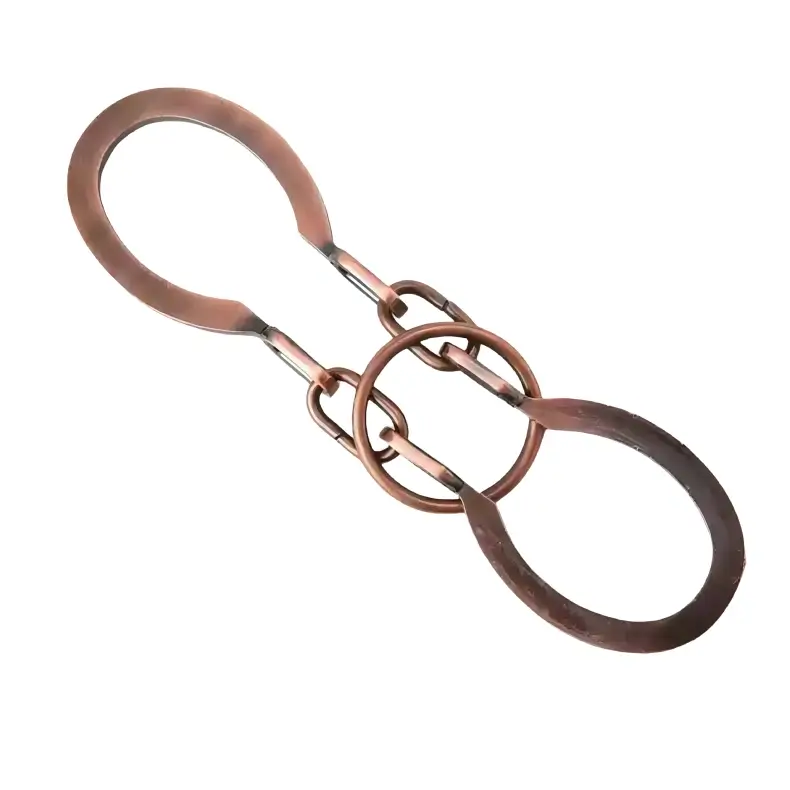
Horseshoe Lock Puzzle — $13.00
This is why it’s a standout among challenging metal puzzles for men who appreciate process over chance. You’re not just randomly fiddling; you’re conducting a systematic, haptic test. The moment of discovery isn’t a flash of insight, but a gradual dawning. The resistance shifts. Maybe the puzzle gives a tiny, almost inaudible tic. That’s your signal. Act Three: The Click. Holding the perfect alignment under tension, you continue to pull. And then—clack. It’s a definitive, metallic punctuation. The two halves slide apart smoothly, an inch of sudden freedom. That satisfying clack is the persistence reward, the audible proof of your victory.
Will it frustrate? It will provoke. For the right person—the one who views an unspoken challenge as an invitation—this provocation is the entire point. The frustration is a productive one, a friction that generates focus. It’s the feeling of a stubborn bolt finally turning, not because you used more force, but because you finally understood the lock. The aha moment is quiet but profound. It’s not about what you see (the inside is simply a hollow chamber, a negative space shaped by the locking lugs), but what you now know. You’ve decoded the secret handshake.
Once solved, the puzzle loses its mystery but none of its charm. Resetting it is intuitive—align the lugs, push together until the same authoritative click confirms the lock is re-engaged. It becomes a desk fidget toy for men of a different stripe: a five-second kinetic ritual of locking and unlocking, a tactile reminder of a small obstacle overcome. The difficulty rating of 6 means it’s accessible but not trivial, a perfect sweet spot for gifting. It promises a genuine struggle and delivers a equally genuine, mechanically-earned triumph. It’s a prime example of the broader world of best metal puzzles for adults, designed for deep engagement.
Why It’s a Killer Gift for the Mechanically Inclined Man
That mechanically-earned triumph is exactly what makes the Two Bull Head Lock Puzzle a killer gift. With a solid 6/10 difficulty rating and a zinc alloy heft of 150 grams, it transforms a brief struggle into a permanent desk totem, directly appealing to the problem-solving psyche of hands-on thinkers who value persistence reward over instant gratification.
I’ve given these puzzles to engineers, machinists, and my uncle who repairs vintage radios. The reaction is always the same. A skeptical glance, a few idle turns, then a slow, deep focus that silences the room. It’s not just curiosity; it’s an unspoken challenge accepted. On forums and Reddit threads, you’ll find the same sentiment: the appeal of an “unsolvable” object isn’t about intelligence, but about engagement. It’s a call to a very specific type of mind—the one that sees a sealed box and needs to know how, not just if. This puzzle answers that call with pure, opaque mechanical intent.
For the mechanism whisperer, the reward isn’t hidden treasure inside (it’s hollow, a simple void). The reward is the satisfying clack itself. It’s the proof of concept. You out-thought a physical system. This is why it resonates as a unique gift for puzzle solver types who might find traditional brain teasers too abstract. Here, the feedback is literal—felt in the fingertips, heard in the quiet of a home office. It’s mind over metal puzzle in the truest sense.
After the solve, its second life begins. It becomes a desk fidget toy for men, but not the mindless-spinning kind. It’s a five-second kinetic ritual: align, push, click. Lock. Unlock. It’s a tactile palate cleanser between Zoom calls, a weighty anchor for restless hands. On a desk cluttered with monitors and coffee cups, the two bull heads become a conversation piece. Guests will pick it up. “What is this?” The gift recipient gets to play the guru, offering the unspoken challenge to a friend. The puzzle becomes a social object, a badge of quiet competence.
But is it a good gift for someone into locksport or lockpicking? Surprisingly, yes—but as a cousin, not a twin. A lockpick seeks to bypass a mechanism by feeling for internal imperfections. This puzzle asks you to understand and operate the mechanism itself. There’s no rake or tension wrench, only your own deduction. It exercises the same spatial reasoning and patience but from the designer’s perspective. It’s a challenging metal puzzle for men who appreciate precision, just from a different angle.
This is where the zinc alloy brain teaser gift stands apart from a cheap trinket. The heft communicates quality before the first move is even attempted. A flimsy imitation made of thin, painted pot metal won’t offer the same authoritative tactile feedback; it will feel like a toy, and its solve will feel like a letdown. The well-made version has a seriousness to it. The bulls aren’t cute; they’re stoic. The machining marks are visible under the matte finish. This is an object that acknowledges the effort it demands.
For occasions like father’s day puzzle gift men, this puzzle hits a nuanced note. It’s not another tie or generic tool. It’s a desk totem that says, “I know you like to figure things out.” It respects his time and intellect without demanding hours of commitment. The difficulty is calibrated for a weekend afternoon’s diversion, not a months-long obsession. And because it resets instantly, the persistence reward is infinitely repeatable—a small victory he can revisit anytime.
Consider it a Hanayama alternative puzzle, but with a more rugged, symbolic aesthetic. Where Hanayama’s Cast series are often sleek and abstract, the bull heads feel ancient and talismanic. They carry a narrative weight—a luban lock bull style that hints at centuries of mechanical ingenuity. To understand this lineage better, delve into our exploration of an ancient challenge for modern minds.
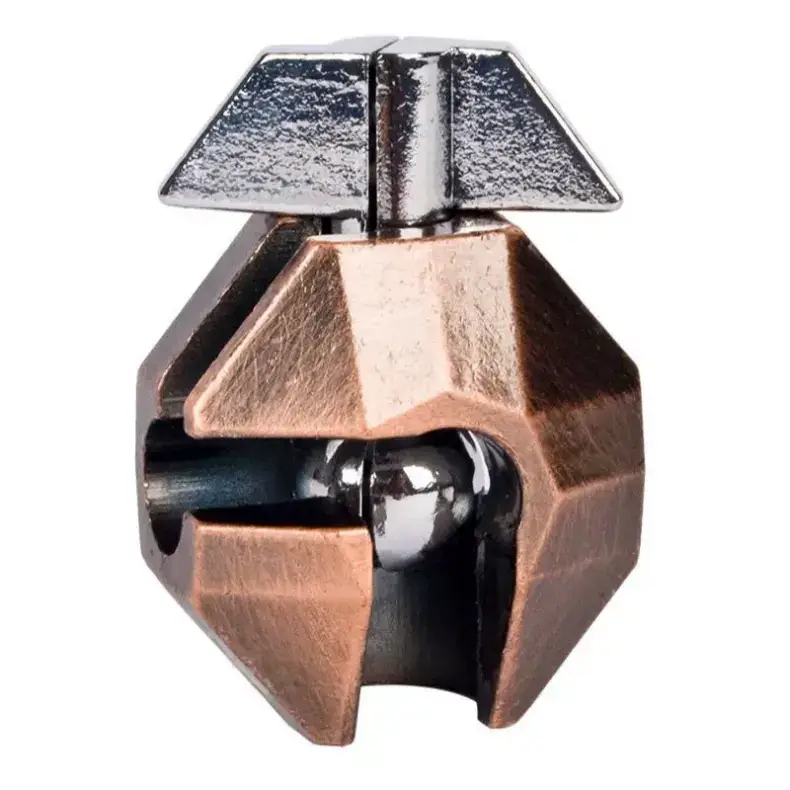
Metal Grenade Lock Puzzle — $11.98
The Grenade Lock Puzzle, like others in the difficult lock puzzle for adults category, shares this ethos. It’s another mechanical puzzle lock how it works challenge that thrives on hidden mechanisms. Exploring such puzzles reveals a common thread: they are gifts that mediate between frustration and elation, designed for those who prefer their leisure with a little resistance.
Ultimately, the Two Bull Head isn’t just a metal bull puzzle lock. It’s a psychological probe. It asks the recipient: “Do you enjoy the hunt?” For the man who does—the tinkerer, the fixer, the quiet solver—it’s a mirror held up to his own curiosity. It validates a way of thinking that solves problems for the sheer satisfaction of hearing that click. As a puzzle lock for boyfriend or husband, it’s an intimate nod to his inner mechanic. You’re not giving him a distraction. You’re giving him a small, stubborn world to conquer, one satisfying clack at a time. That’s a gift with resonance far beyond its two-inch frame.
Buyer’s Field Guide: Spotting the Heft of Authenticity
Once you understand its value as a psychological probe, the next challenge is finding a well-made version that won’t disappoint. Spotting the difference between a satisfying zinc alloy brain teaser gift and a flimsy knockoff comes down to three sensory checks: weight, sound, and the story told by its machining. Expect to pay between $12 and $25 for a legitimate, solid version.
The core distinction is material. A proper version uses a zinc alloy, chosen for its heft and crisp casting. Pick it up. It should feel like a substantial, dense object—somewhere between a heavy watch and a golf ball. That weight, around 100-150 grams, is the first clue. Cheap imitations use thin, lightweight pot metal or even plastic coated to look metallic. They feel hollow, insubstantial. They lack the desk totem presence.
Then, listen. This is critical. A quality puzzle has a specific acoustic signature. When the hidden latch finally releases and the two halves separate, it should produce a clean, precise clack. It’s the sound of a well-machined part moving within tight tolerances. The cheap version? A muffled thud or a grating, sandy scrape. That’s the sound of poor fit and rough casting debris left inside. It’s the difference between a satisfying persistence reward and the feeling you just broke something.
Finally, examine the surface with a designer’s eye. Look for crisp, clean machining marks. The bull’s facial details should be sharp, not soft and blurry. The seam where the halves meet should be even and tight—a hairline, not a gap you can catch a fingernail on. Run your thumb over the horns. On a good piece, they are smoothly finished, not sharp or prickly. The finish (often antique bronze or gunmetal) should be bonded, not painted. It won’t rub off or tarnish with normal handling; it develops a patina from skin oils, not flaking.
So, is it the same quality as Hanayama puzzles? It’s a fair benchmark. A top-tier Bull Head from a dedicated puzzle maker approaches the flawless machining and buttery-smooth action of a Hanayama Cast puzzle. Most in the $18-$25 range are excellent Hanayama alternative puzzles, offering 90% of the satisfaction for often half the price. The $12-and-under crowd is where you gamble. You might get a lucky decent copy, but you’re more likely to get that disappointing thud. For a deeper dive into that gold standard, our Hanayama puzzle buy guide is essential reading.
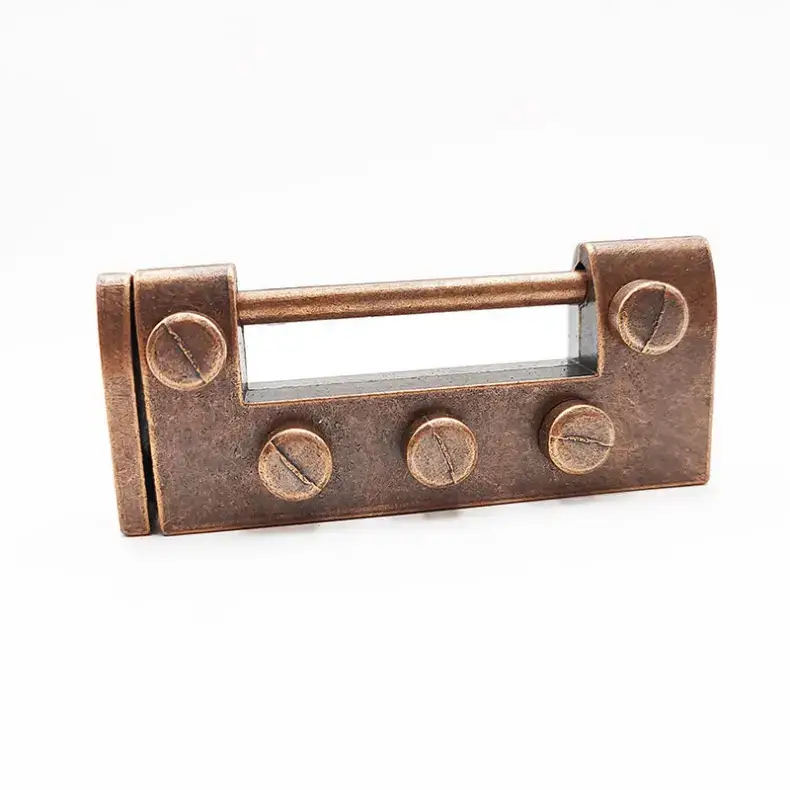
Antique Lock Puzzle — $11.99
Where to buy? Platform is a proxy for provenance. Mass-market sites like SHEIN or wholesale portals are a minefield of inconsistent quality—you’re buying a photo, not a guaranteed object. For a unique gift for puzzle solver, Etsy and specialty puzzle shops (like Tea Sip) are far safer. Here, individual sellers or small operations often curate for quality. They are more likely to list the actual material, weight, and dimensions. Read reviews with a focus on words like “solid,” “heavy,” and “satisfying click.” Descriptions like “lightweight” or “came apart easily” are red flags.
When evaluating a listing, be a detective. Zoom in on the product photos. Can you see fine detail? Does the seller mention zinc alloy or just “metal”? Is there a listed weight? If you’re gifting this as a father’s day puzzle gift men or a puzzle lock for boyfriend, investing an extra five dollars for a reputable seller is the difference between a remembered triumph and a forgotten trinket.
Remember, you’re not just buying a metal bull puzzle lock. You’re buying the quality of the “aha” moment itself. A well-made puzzle makes the solver feel clever. A poorly made one makes them feel cheated. For more on evaluating lasting build quality in this category, resources like our veteran’s guide to cast logic are invaluable. Choose heft. Choose the clack. You’re guaranteeing that the unspoken challenge is backed by honest craftsmanship.
Beyond the Solve: The Puzzle as a Persistent Companion
The puzzle’s ultimate revelation isn’t a riddle or a prize, but a space: a hollow, blackened chamber between the bull heads. That’s the final, satisfying clack. Opening it reveals an empty cavity roughly the size of two stacked dimes—a dedicated void that transforms the object from a locked problem into a personal keepsake. This is where the persistence reward becomes permanent.
Heavy. Cold. Open. Now what? This is where most product guides stop. For the collector, this is where the relationship begins. That hollow isn’t a flaw; it’s the point. It turns the puzzle into a desk totem. A tangible reminder that you listened, you pressed, you twisted, and you won. It becomes a tactile history of that single “aha” moment, sitting next to your monitor or resting on a bookshelf. For the gifter, this is the silent payoff: you didn’t give a trinket, you gave an earned artifact.
So, is it a ring? Technically, yes—the central loop fits a finger. But wearing it feels less like jewelry and more like carrying a secret. The zinc alloy heft is substantial, a constant, quiet weight. The horns, while not sharp, provide a definite textural presence against your skin. It’s a statement for the wearer alone, a piece of personal engineering you solved. For the lockpicking enthusiast, it offers a different kind of appeal: it’s not about bypassing a mechanism with tools, but about conversing with it directly through touch and intuition—pure mind over metal puzzle logic.
And what of its life on the desk? This is where build quality screams. A good version, with its proper alloy and finish, won’t tarnish with casual handling. The matte or antiqued finish wears in, not off, gaining a subtle patina from oils in your skin as you idly pick it up to fidget—a true desk fidget toy for men that doesn’t feel like a toy. You’ll find yourself solving and re-solving it, not to beat it again, but for the meditation of the steps: find the seam, apply pressure, feel the slide, enjoy the release. It becomes a mechanical mantra. This aligns with the deep-seated psychology explored in pieces like decoding the 4000-year-old fidget, which examines how these objects satisfy a fundamental need for tactile problem-solving, a category that broadly falls under mechanical puzzles.
This enduring, wordless presence is what makes it a standout unique gift for puzzle solver. You’re not giving a one-time experience. You’re giving an object that morphs: first, an unspoken challenge. Then, a personal triumph. Finally, a persistent companion. It answers the final, unasked user question: “Will this just collect dust?” For the right person—the patient, mechanically curious thinker—it does the opposite. It collects meaning. Every glance at it on their shelf is a quiet reaffirmation of their own grit. That’s the gift that lasts long after the initial click.
Opening Scene and Core Thesis
That final transition—from triumphant solver to quiet companion—doesn’t happen by accident. It’s engineered, beginning with your very first encounter. I opened this guide with a scene of confusion for a precise reason: that initial, stumped moment is the entire thesis. When you first hold the Two Bull Head Lock Puzzle, its zinc alloy heft (a specific 120-150 grams) and seamless, stern bull heads present an unspoken challenge. This isn’t a decorative trinket; it’s a functional, mechanical object whose purpose is deliberately concealed. That immediate intrigue and subsequent determination are the direct pathway to the deep satisfaction and lasting confidence that make it such a resonant gift.
Heavy. Cold. Solid. Your first thirty seconds are a diagnostic. You check for keyholes, seams, moving parts. Finding none, the puzzle declares its nature: this is a test of grit. The core thesis is that this object’s value is dual. It is a desk totem—a handsome, masculine-adjacent piece of art. But more importantly, it is a self-contained experience of persistence reward. The handsome exterior is the bait; the hidden axial twist mechanism inside is the trap for a curious mind. For a certain type of person—the one who sees a sealed box and needs to know how it’s sealed—this duality is irresistible.
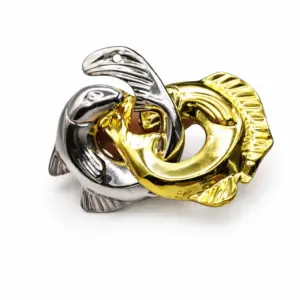
Therefore, your next step isn’t to find a solution guide. It’s to evaluate the object’s authenticity, as detailed in the buyer’s guide. Check the weight. Examine the machining. Feel for that first, faint clue. You are now the mechanism whisperer. Understanding the broader mechanical grammar of brain teasers helps decode it. The gift you’re considering isn’t just a puzzle; it’s the initiation into that quiet, satisfying club. It shares DNA with other thoughtful designs, like the elegant brain teaser like the Chinese koi lock, but stands alone in its stoic, bull-headed presentation. Proceed with confidence. You’re not just buying a conversation piece. You’re commissioning a small, silent drama of frustration, focus, and ultimate triumph—a story that plays out in the hand, and echoes with a satisfying clack.