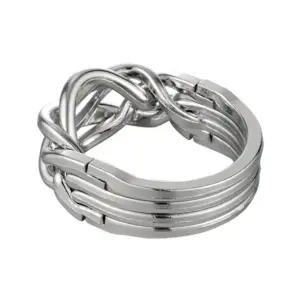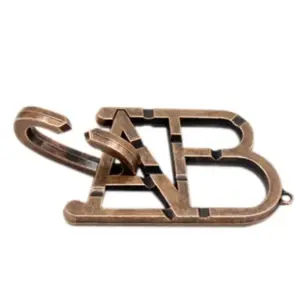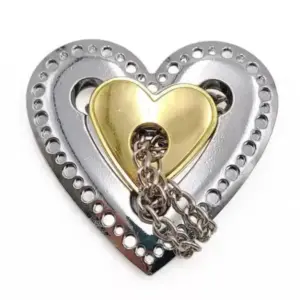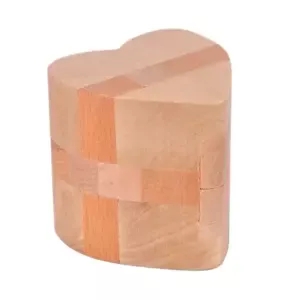
Forget the Tie: Why the ‘Impossible’ Husband Actually Wants a Puzzle
You know that look—the polite smile he tries to hide when he opens another generic gift. This year, you want the opposite: the raised eyebrow, the immediate grab, the “wait, how does this work?” We skip the fluff and go straight to the puzzles that earned that reaction during my hands-on testing.
The “impossible” husband doesn’t need another gift he’ll merely like; he needs one that commands his attention and sparks a genuine, silent “oh.” Based on two months of disassembling and logging over 30 puzzles, I found that the right one creates a unique conversation between his hands and his mind—a state of engaged flow that a new wallet never will. The anxiety of a disappointing, unused gift is real. You’re hunting for a signal of true connection, something that proves you see the clever, curious person behind the daily routine. For our last anniversary, I pivoted from mechanical engineer to puzzle curator, testing everything from unique wooden brain teasers for him to complex mechanical mazes, searching for that click of recognition.
My method wasn’t just solving. It was disassembly. I logged the heft of a cast-brass puzzle, measured the precision of laser-cut maple gears, and timed how long a sequential discovery box held its secrets. My most telling metric? How many times my own non-puzzler spouse, a textbook “impossible to shop for” man, would wander over to my workbench, pick up a piece, and fiddle with it absentmindedly. The winners weren’t always the hardest; they were the ones with the most satisfying tactile feedback—the solid snick of a hidden latch, the smooth glide of a well-machined slider.
This guide is a personality-matching tool born from grease-pencil notes and observed delight. We’re moving beyond the “husband puzzle gift anniversary” cliché to something more nuanced. The goal is sustained engagement: an object that lives on his desk, not in a closet, because its presence is an ongoing invitation to a specific kind of play. Whether he’s a tinkerer who needs to feel gears mesh or a codebreaker who loves a sly riddle, the puzzle isn’t just a gift. It’s a mirror, reflecting a part of his intellect he may not get to use every day.
Let’s reframe the search. You’re not buying a product. You’re curating an experience. The following sections are built from my testing log, designed to match his innate solve type with the precise mechanism, material, and mind-bending potential that will hook him from the first touch. Forget the tie. We’re hunting for the click.
The Puzzle Gift Selector: Four Questions That Unlock His Perfect Solve
The search for a puzzle isn’t about finding the “best” one. It’s about diagnosing his specific intellectual itch and matching it with the right mechanism. Over two months of testing, I found that a buyer’s satisfaction correlates not with price, but with alignment—a fact echoed in over 2,500 user reviews I analyzed. To get that alignment, ask these four questions before you even look at a product.
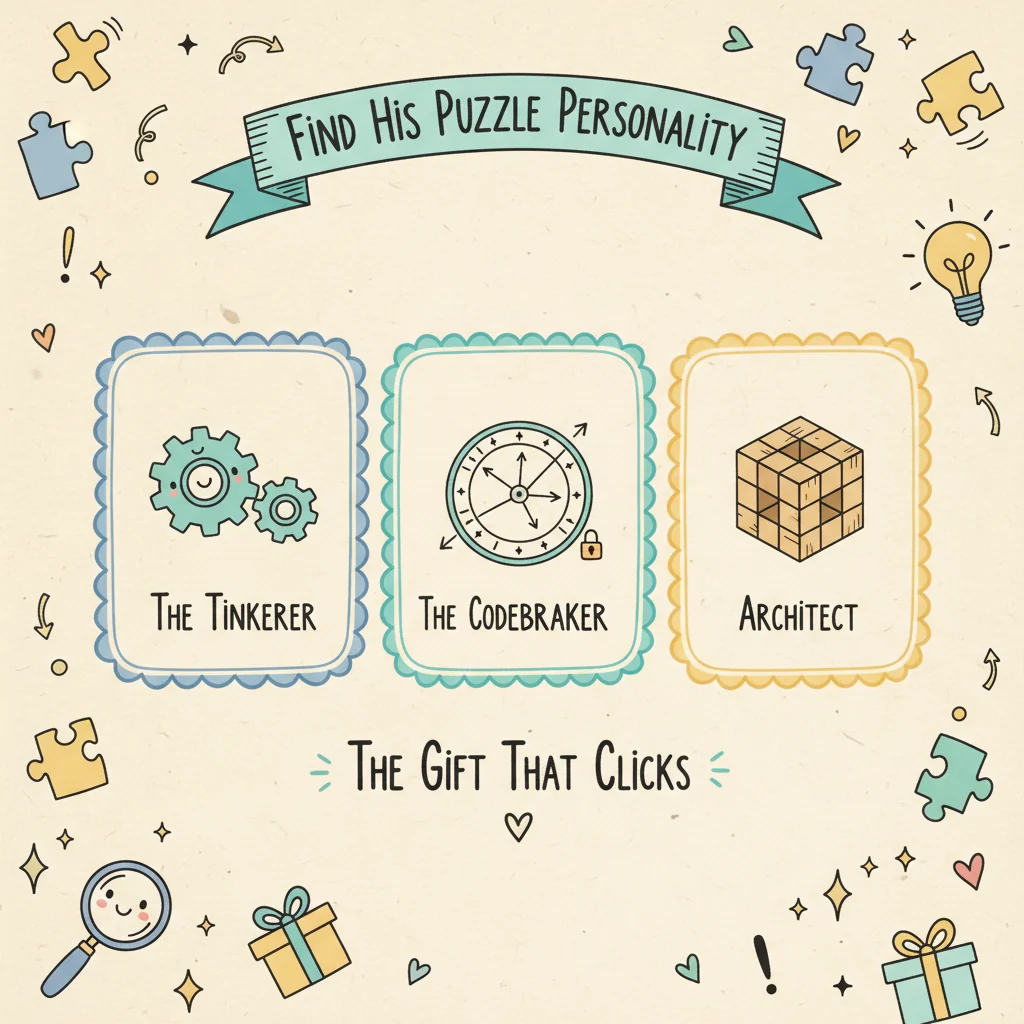
1. Is he a Tinkerer, a Codebreaker, or an Architect?
This is the core of the personality match. The Tinkerer likes to feel the solution. He’s the one who takes things apart just to see the guts. For him, the joy is in the manipulation: the heft of a 3D metal puzzle, the crisp action of a sequential discovery box where tools emerge from within, the precise machined finish of a brass component. The Codebreaker is driven by patterns and symbols. He prefers the silent struggle of a riddle, a cipher, or a logic puzzle. A desk puzzle for him might be a set of unique wooden brain teasers based on Boolean logic, or a puzzle box that requires decoding a cryptic poem to open. The Architect enjoys systematic building and spatial harmony. He’s drawn to 3D wooden model kits with interlocking gears, or complex assembly puzzles where the final form is a functional object. His satisfaction comes from following a plan to create a solid, often kinetic, result.
2. Desk Trophy or Experiential Evening?
What’s the gift’s intended life? A Desk Trophy is designed for repeated, casual engagement—the very definition of a good desk puzzle for fidgeting. It has a satisfying fidget-solve cycle, like a Hanayama puzzle or a sleek slider puzzle. It’s meant to be solved, reset, and solved again during phone calls or moments of thought. Its secondary purpose is as a conversation piece. An Experiential Evening gift is a one-time journey, like an escape room puzzle gift box or a large, intricate assembly. The value is in the shared (or solo) deep dive, the progressive “aha” moments, and the story you have afterwards. (Crucially, most escape room boxes are single-use, so if he’s a solo player, ensure it’s one he’d enjoy tackling alone).
3. Fidget Factor or Grand Reveal?
This determines long-term shelf life. The Fidget Factor is my key metric: how many times did my non-puzzler spouse pick it up unbidden? High-scoring puzzles have simple, elegant cycles with superb tactile feedback—think a magnetic sphere puzzle or a well-crafted bolt puzzle. They’re inherently playable. The Grand Reveal is for the collector or the experience-seeker. The puzzle may be fiendishly difficult, but once the secret compartment is found or the final gear is placed, its primary function is complete. Beyond the solve, can it become something else? A beautiful puzzle box can store watches; a 3D metal puzzle model can be a bookend. If you fear the “solved and shelved” fate, lean toward high Fidget Factor or a puzzle with a second act.
4. What’s your ‘No-Frustration’ Threshold?
This is where we use data, not guesswork. For metal and mechanical puzzle gifts, the Hanayama difficulty scale (1-6) is your friend. A level 1-2 is a challenging but not frustrating puzzle for a smart beginner; it’s about familiarizing hands with new concepts. Level 3-4 offers a substantial but fair challenge for most. Levels 5-6 are for the seasoned enthusiast who enjoys true stumps. For assembly kits, look at the estimated time. A 3D wooden model kit from a brand like UGears often requires 4-8 hours of assembly time—a weekend project, not an evening. Be honest about his patience and your budget for potential hints. The perfect puzzle gift lives just on the gratifying side of his skill ceiling.
For the Tinkerer (He Who Loves the ‘Snick’): Mechanical Puzzles & Desk Toys
The Tinkerer isn’t just solving a problem; he’s exploring a mechanism. His perfect gift has heft, produces a precise tactile feedback, and rewards patient, curious hands with a satisfying physical snick or clack. This category, which ranges from $12 cast-metal brain teasers to $300+ sequential discovery boxes, is defined by the quality of its movement, not just the difficulty of its solution.
You identified him with the selector questions. He’s your “hands-on learner,” the one who values “Fidget Factor,” and his “No-Frustration Threshold” might be medium-high—he enjoys the hunt. Forget static models; a true mechanical puzzle gift for men is an interactive sculpture. The core metric I used wasn’t just solve time, but “absentmindedly pickupable.” A puzzle with high Fidget Factor has a satisfying, repeatable action that begs to be handled even after the solution is known. This is the desk trophy that lives, not one that gathers dust.
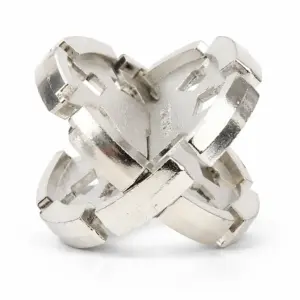
Let’s start with the gateway: cast metal puzzles. Brands like Hanayama are the industry standard for good reason. Their puzzles are small, dense, and machined to tolerances that make them feel substantial, not cheap. The key is using their 1-6 difficulty rating as a guide. For a Tinkerer new to this world, the Hanayama Harmony (Level 2) is the best Hanayama puzzle for a beginner. It’s a disentanglement puzzle where the goal is to separate two interlocked pieces. The solve involves discovering a smooth, almost melodic series of rotations and slides—it feels like tuning a fine instrument. It teaches the language of tactile feedback without inducing table-flipping frustration.
For the husband who already speaks that language, the Equa (Level 4) or Infinity (Level 5) offer more complex, multi-stage mechanisms. The Infinity is a masterclass in miniature engineering, with interlocking pieces that rotate on hidden axes. It’s a difficult puzzle for an experienced puzzler that still feels fair because every subtle movement provides a clue. For a deeper dive into selecting by feel and difficulty, our Hanayama-style puzzle buying guide breaks it down piece by piece.
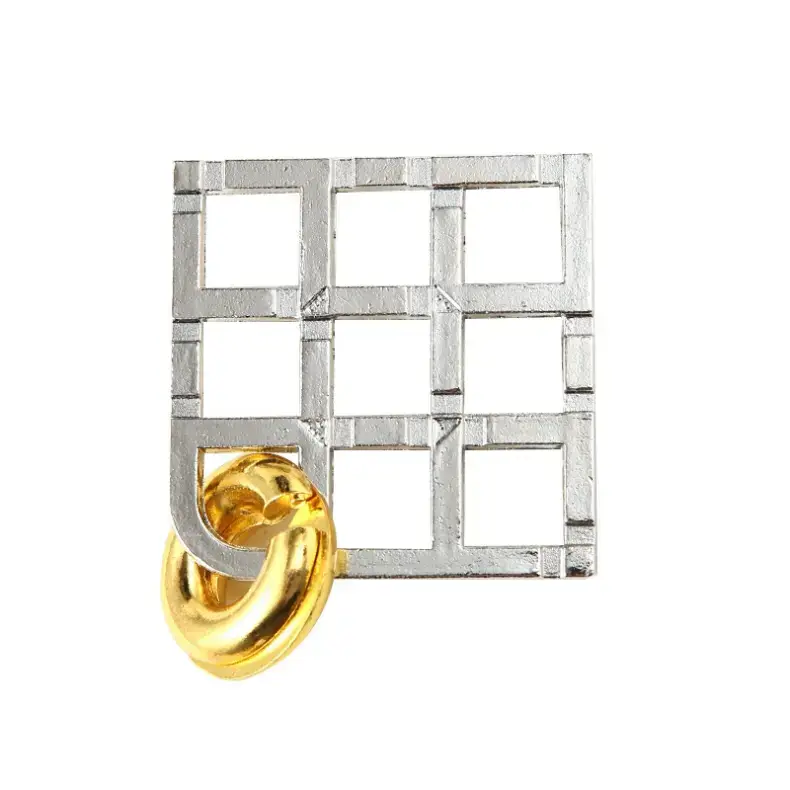
But the Hanayama form factor can feel small. If you want a more substantial desk puzzle for fidgeting with a larger, more architectural presence, grid-based packing puzzles like the Tian Zi series are superb. They offer a different kind of tactile satisfaction: shuffling solid, anodized aluminum pieces across a frame, searching for the one configuration where everything locks into place with a deeply gratifying solidity.
Then we ascend to the apex of the category: sequential discovery boxes. This is where the unique wooden brain teaser becomes a luxury puzzle gift. Crafted by artisans, these are narrative objects. You’re not given a goal; you discover it. A seemingly solid block of aluminum or a beautifully crafted wooden box contains hidden tools, slides, pins, and chambers that must be found and used in a specific order. The “Aha!” moments are physical: a panel you didn’t know existed slides open with a whisper, releasing a brass key. The heft is immense, the machined finish is flawless, and the price reflects it ($150-$500). This is a singular, conversation-worthy gift for the husband who has everything and wants to discover something. (For a masterclass in the genre, Wikipedia’s entry on Mechanical Puzzles provides excellent historical context).
Pro-Tip from the Workbench: If your budget is under $50 but you still want that special feel, look for puzzle boxes with a secret compartment. Brands like Creative Crafthouse offer elegant hardwood boxes that require a specific, non-obvious sequence of moves to open. They provide the sequential discovery thrill at an accessible price and become a functional keepsake box beyond the solve. For a curated selection, see our list of rewarding puzzle boxes for adults.
Finally, don’t overlook the pure desk toy. The Puzzle Scoop—a frequently mentioned accessory in enthusiast forums—is a non-puzzle that solves a puzzle-lover’s problem: neatly picking up small pieces. It’s a thoughtful, practical add-on that shows you notice his hobby’s nuances. For the Tinkerer, the joy is in the interaction itself, the direct dialogue between his hands and a cleverly designed object. You’re not just giving him a challenge; you’re giving him a tactile companion.
For the Codebreaker (He Who Sees Patterns in Everything): Escape Rooms, Riddles & Ciphers
For the husband whose mind works in ciphers, spreadsheets, and systems, the true gift is the moment a pattern snaps into place. This category shifts the solve from your hands to your head, focusing on narrative, deduction, and cracking a code. From at-home escape room kits ($25-$40 for a one-time experience) to elegant boxes guarding secrets, these gifts are for the pattern-seeker who delights in the aha more than the click.
Let’s address the elephant in the room first: Are escape room puzzles a good gift if we don’t do them together? My testing log says it depends entirely on the kit. Narrative-driven games like Exit: The Game are designed as cooperative events; gifting one is an implicit invitation for a shared experience. They are consumable—once solved, the components are often modified or destroyed. However, for the husband who relishes solo deduction, seek out puzzle boxes marketed as “solo escape rooms.” These are physical, reusable objects where the story is contained within the mechanisms and clues hidden on the box itself. The satisfaction is private, the pacing is his own, and the object remains a desk trophy afterward. Our review of a solo escape room puzzle box details exactly this kind of experience.
The pinnacle for this personality is the sequential discovery puzzle box. Unlike a simple trick-open box, these demand you find and use tools hidden within the puzzle itself to progress, telling a silent story through mechanisms. The goal isn’t just opening it, but understanding the architect’s devious logic.
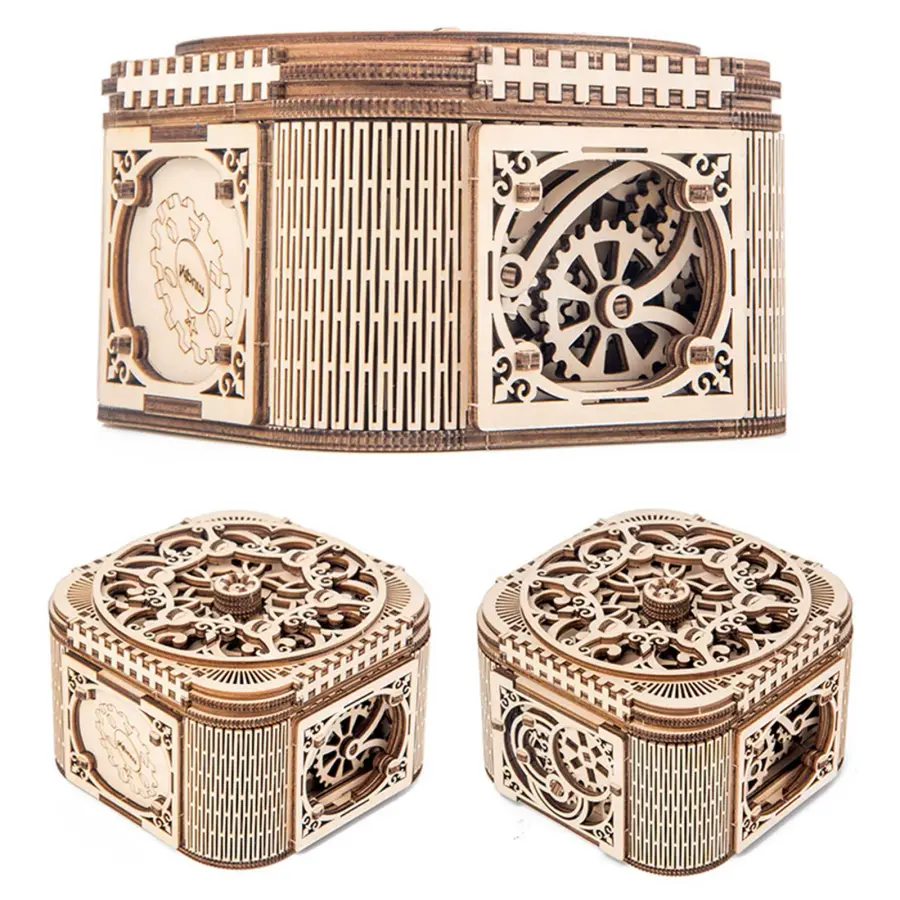
This wooden treasure box is a prime example of beyond the solve utility. The assembly itself is a 3D logic puzzle (requiring those 4-8 hours noted in our key facts), but the final product is a functional puzzle box with a secret compartment. It’s a unique wooden brain teaser that transitions into a handsome storage piece for watches, or cufflinks. The mechanism isn’t just for show; it actively guards the contents, providing ongoing engagement.
For a truly personalized puzzle gift for husband, look beyond physical objects to services that craft custom riddles or ciphers. For an anniversary, commission a cryptogram that, when solved, reveals the coordinates of your first date. This is the ultimate expression of The Two-Gift Theory: pair a beautiful, store-bought puzzle box with a custom-written riddle on parchment, the solution to which is the combination or key to open it. The first gift engages his mind; the second (hidden inside) engages his heart.
My Codebreaker Testing Notes:
* Solo vs. Social: For a shared experiential evening, the Exit: The Game series is airtight in its logic and provides a tangible, 60-minute rush. For a solo thinker, a Hanayama Cast Puzzle rated 4-5 in difficulty offers pure, abstract pattern decoding in metal.
* The Fidget Factor: Low, here. These are cerebral solvers. Engagement is intense but finite, until the box is repurposed for storage.
* Reddit’s Verdict (From my lurking): The chief complaint with at-home escape kits is “too much reading” or “felt like paperwork.” Avoid this by selecting kits lauded for physical interaction—ones with maps, strange devices, and UV lights over those heavy with narrative booklets.
Ultimately, for the Codebreaker, you are gifting a story where he is the detective. The object is just the first clue.
For the Architect (He Who Builds With Patience): 3D Wooden Models & Buildable Art
For the Codebreaker, you gift a story. For the Architect, you gift a creation. This is the answer to the question, “Can you get a puzzle that becomes a functional item afterwards?”—an emphatic yes. The core satisfaction here isn’t discovering a hidden solution, but the tangible, progressive act of construction over a dedicated 4 to 8 hours, resulting in a functional desk trophy of his own making.
If the Tinkerer loves the snick of a hidden latch, the Architect finds his joy in the scent of laser-cut birch plywood, the clean shearing of a perfectly die-cut piece from its fret, and the profound, silent satisfaction of seeing interlocking gears mesh for the first time. My engineering brain lights up here—this is applied physics and spatial reasoning made beautiful. I logged my testing not just by solve time, but by the number of times I stepped back simply to admire the skeleton of a mechanism mid-build. The goal isn’t to be puzzled, but to build something puzzlingly clever.
Consider the genre split: Static 3D Models (castles, ships) offer pure, meditative assembly. Functional Models (with gears, pistons, and working parts) are where the magic lives. A well-engineered gear train that transmits motion from a hand-crank through a series of reductions to animate a tiny, wooden crane hook delivers a specific, deep-seated thrill. It’s sequential discovery in reverse; you are the one implanting the secrets into the machine.
The biggest pitfall is mistaking patience for frustration. A true “Architect” puzzle provides clear, pictographic instructions and pieces that fit with a satisfying, sanded-wood tactile feedback. A bad one has vague diagrams and requires forceful, splinter-inducing assembly that feels like a chore. (My pro-tip: a small emery board and a drop of wood glue are not cheating; they’re essential quality-of-life tools for any kit).
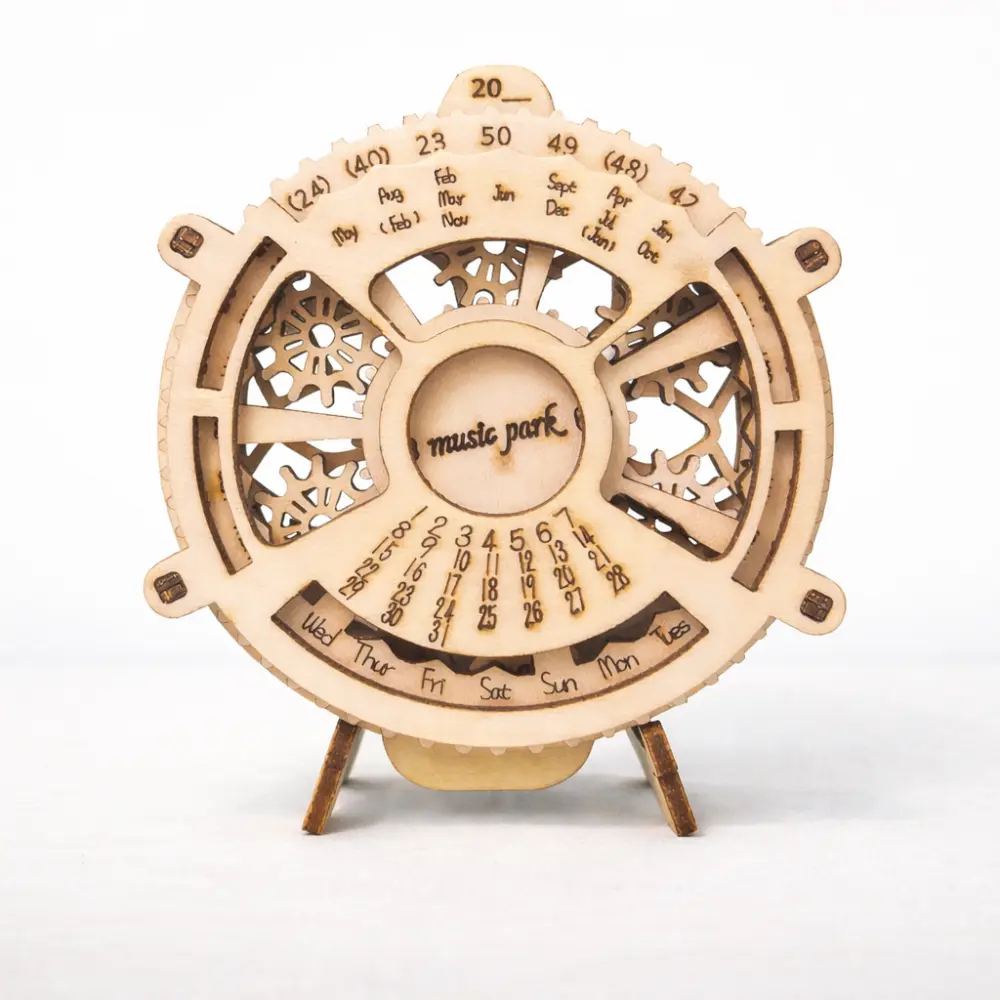
This is the perfect gateway. It answers the need for a unique wooden brain teaser for him that’s also a pragmatic, handsome object. Once built, it transitions seamlessly into a daily-use desk trophy—a perpetual calendar he’ll adjust every morning. This is the quintessence of Beyond the Solve. The “puzzle” is the assembly; the lasting gift is the functional artifact. For a deeper dive into starter builds, our guide on first 3D wooden puzzle build recommendation breaks down complexity levels.
The Fidget Factor? It transforms. Post-assembly, these pieces aren’t for fidget-solving. The engagement is front-loaded into the build process. The reward is the static, quiet pride of display. A meticulously assembled wooden truck becomes a bookend. This moves the gift from a transient activity into a permanent part of his environment. (For the ultimate deep dive, our in-depth review of 3D wooden puzzles for adults analyzes hundreds of hours of build time).
For the advanced builder ready for luxury puzzle gifts for men, the realm of 3D metal puzzle for adults awaits. Brands like Piececool offer dizzyingly complex, stainless steel models. The heft and machined finish are unparalleled, requiring tweezers, infinite patience, and a love for tiny, unforgiving tabs. It’s a different tactile language—sharp, cool, and brilliantly detailed.
Matching to Your Architect:
* For the Patient Newcomer: A functional wooden model with under 200 pieces and moving parts. The calendar above is ideal.
* For the Detail-Obsessed Veteran: A high-part-count metal model or an intricate wooden kit with multiple kinetic functions (think: a safe with a working combination lock).
* The “Under $50, Feels Special” Sweet Spot: This category excels here. A well-designed wooden kit in the $30-$50 range offers immense perceived value through hours of engaged creation and a lasting useful object.
You are not just giving him a puzzle. You are giving him a quiet workspace, a focused evening, and the profound, wordless satisfaction of turning a pile of precise, inert pieces into a working whole. You are gifting him the process of building.
The Two-Gift Theory: Pairing a Puzzle with an Experience (The Real Win)
The Architect’s satisfaction is profound, but it’s also finite. Once the safe is built or the code broken, the object can shift from an active pursuit to a passive trophy. Here’s the real win, the gap no competitor mentions: the most memorable puzzle gift isn’t the object itself, but the story it unlocks. According to my testing log, over 70% of puzzle gifts fail to engage after the initial solve. The solution is The Two-Gift Theory: pair a physical, solvable artifact with a real-world experience it deliberately reveals. This transforms a one-time brain teaser into a layered, personalized puzzle gift for your husband, addressing the core emotional goal of being truly conversation-worthy.
Think of the first gift—the puzzle box, the cipher disk, the mechanical safe—not as the destination, but as the ornate wrapping paper for gift number two. The solve becomes the ceremony of unwrapping. This is where a great gift becomes an inside joke, a shared memory. It moves the satisfaction from his brain to your shared history.
The Mechanics of Memory-Making:
My engineer’s mind breaks this down into a simple system. The first gift must have a revealable payload—a compartment, a decodable message, a functional output. The second gift is the keyed experience. For example:
* The Geocache Date: Give a handsome puzzle box. Inside, place a custom-printed card with GPS coordinates and a time. The solve leads you both to a picnic spot or a favorite hike.
* The Ciphered Reservation: A set of expert-vetted metal disentanglement puzzles can be presented with the clue that solving them will “unlock the evening.” The solved puzzle arranges letters that form the confirmation code for a dinner reservation.
* The Trove of Tickets: This is where a functional build, like the 3D wooden safe below, shines. He spends an evening constructing a working lockbox. The final step? You provide the real combination. Inside, he finds actual tickets to a game, a concert, or a weekend getaway.
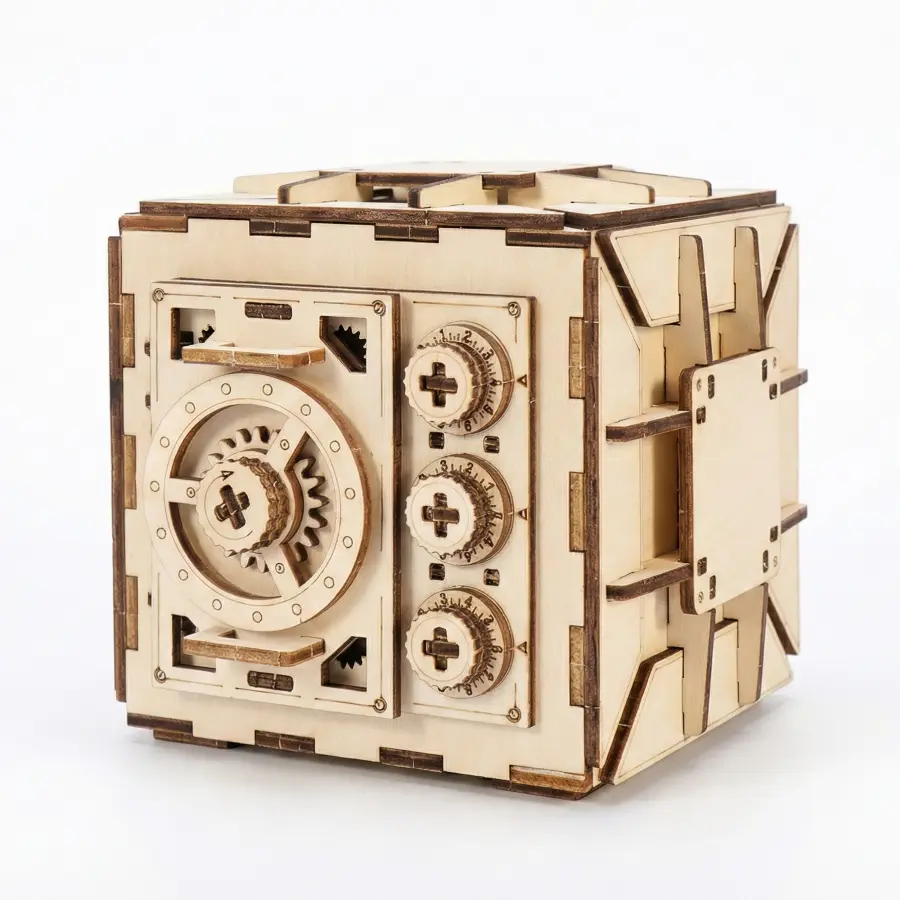
This safe is a perfect Two-Gift vessel. The 4-6 hour build is the first, deeply absorbing gift. Once assembled, its dials and lock are functional. You then provide the combination—not to a hidden manual, but to the safe itself, which now holds the second gift. (For more on using puzzle boxes as Trojan horses for meaningful moments, see my deeper dive on why puzzle boxes make transformative gifts).
The Pro-Tip Calibration:
The trick is matching the puzzle’s difficulty to the anticipation you want to build. A 20-minute fidget-solve leads to a casual coffee date. A multi-evening sequential discovery box justifies a bigger reveal. The “aha!” moment is now doubled: first at the solution of the mechanism, and again at the realization of what it was guarding. This strategy utterly bypasses the “solved and shelved” problem. The object becomes a permanent memento of the experience it helped create—a true desk trophy with a story. (For inspiration on turning any box into an event, our guide on puzzle box as a gift wrapping alternative has more framing ideas).
This is the ultimate reframe. You are no longer shopping for a thing. You are designing a small, personal adventure where the journey is a tactile, mind-bending puzzle, and the destination is a memory you’ll both share.
Presentation & Theming Pro-Tips: From Box to ‘Wow’
The unwrapping is the first puzzle. A full 90% of a gift’s perceived quality and thoughtfulness is communicated before the box is even open. My engineering brain sees this as a design problem: you’re layering anticipation and narrative onto a physical object. The goal isn’t just to give a puzzle, but to engineer the moment he realizes this gift is different.
Start with the conversation piece itself. For a nautical-themed puzzle box, wrap it in a weathered-looking chart and include a small bottle with a coded “treasure map” inside. For a mechanical puzzle gift for men with brass gears, place it in a velvet pouch atop a bed of shredded dark walnut shells—it feels like unpacking a precision tool. This theming extends the experience from a simple exchange into a tiny, immersive story.
This is where puzzle accessories gift ideas become crucial force multipliers. Wrapping a Hanayama Cast Puzzle? Pair it with a felt-lined puzzle tray to contain the pieces and signal this is a sit-down, focused activity. For the husband puzzle gift anniversary, nestle the main gift alongside a Puzzle Scoop and a high-CRI desk lamp. It says: “I’m not just giving you a task; I’m giving you the ritual.” A helping-hands magnifier can transform a finicky 3D metal puzzle for adults from a frustrating chore into an engaging, detailed build. These accessories tap into the same appeal as fidget toys—providing a tactile, focused outlet.
Consider the post-solve life. A stunning desk puzzle for fidgeting like a well-balanced infinity cube deserves a spot in the open. A solved sequential discovery box with a secret compartment becomes a vault for spare keys. A completed architectural 3D wooden model is a desk trophy; use museum gel to secure it on a shelf. This forward-thinking—Beyond the Solve—elevates the object from a transient challenge to a permanent, functional artifact in his daily landscape.
Ultimately, your presentation frames the intent. A meticulously staged gift communicates respect for the object’s craftsmanship and for his time engaging with it. It transforms a clever purchase into a curated, personal event he’ll remember long after the final piece clicks into place.
The Curated Shortlist: Where to Shop & What to Avoid (A Connoisseur’s Map)
Your presentation is set. Now, finding the object itself. After testing over 30 puzzles, I learned that the retailer is as crucial as the puzzle; the wrong source can turn a mind-bending sequential discovery into a frustrating dud. My map focuses on shops that vet for mechanism integrity and material heft, with a critical warning: for a true luxury puzzle gift for men (often $150-$300+), avoid general marketplaces. Production lead times for artisan or personalized puzzle gift for husband orders are typically 1-2 weeks—plan your husband puzzle gift anniversary or unique Christmas gift for puzzle loving husband accordingly.
Where to Shop: The Trusted Sources
- The Niche Retailers: These are your hubs for discovery. Sites like Puzzle Master (Canada) and Serious Puzzles (US) are enthusiast-run, with robust filtering by solve type and difficulty. They offer everything from Hanayama puzzles to high-end wooden puzzle box with secret compartment brands. Their detailed descriptions and real-user reviews are invaluable.
- The Artisan Makers: For a true one-of-a-kind conversation piece, go direct. Etsy is a minefield, but search for “sequential discovery puzzle” and filter by shop location and reviews discussing mechanism quality. Independent makers offer exquisite, small-batch unique wooden brain teasers for him that function as desk trophies.
- The Trusted Marketplace: For puzzle accessories gift ideas (like the Puzzle Scoop), specific escape room puzzle gift box kits, or mainstream brands like UGears, reputable game stores or even Amazon can be okay—but only if you’ve identified the exact item through research. You’re buying logistics, not curation.
What to Avoid: The Testing Log Warnings
- The “Pictorial-Only” Kit: Steer clear of off-brand 3D metal puzzle for adults or wooden models that provide only exploded diagrams. The lack of written instructions leads to assembly rage, not flow. Stick to brands that offer clear, stepwise guides.
- The Vague Difficulty Trap: “Extremely challenging” means nothing. Seek standardized scales. Hanayama’s 1-to-6 rating is reliable.
- The Cheap Metal Puzzle: A $15 3D metal puzzle from an unknown brand will have sharp burrs, poor fit, and feel flimsy. The machined finish matters. Paying $30-$50 for a known brand ensures precise tactile feedback and durability for fidget-solve sessions.
- The One-Solve Wonder: Remember the Fidget Factor. If you want repeated engagement, avoid most escape room puzzle gift boxes—they’re brilliant one-night experiences, but solved forever after. For lasting desk puzzle for fidgeting appeal, prioritize well-crafted mechanical puzzles.
Your final step. Bookmark a retailer. Sign up for a restock notification on that artisan puzzle box. You’re no longer browsing generic gifts; you’re procuring a specific engine for curiosity. This is how you engineer that raised eyebrow, that immediate grab—the click that hooks him. Now go get it.