The Video Walkthrough You Came For: Solve It Now
You have the Cast Keyhole in your hands, its gold and silver pieces sliding uselessly past each other. I was there, stuck for 20 minutes. Watch this 6-minute solution video first. It provides the immediate visual guidance you need to achieve that first disassembly, transforming frustration into clarity in under six minutes.
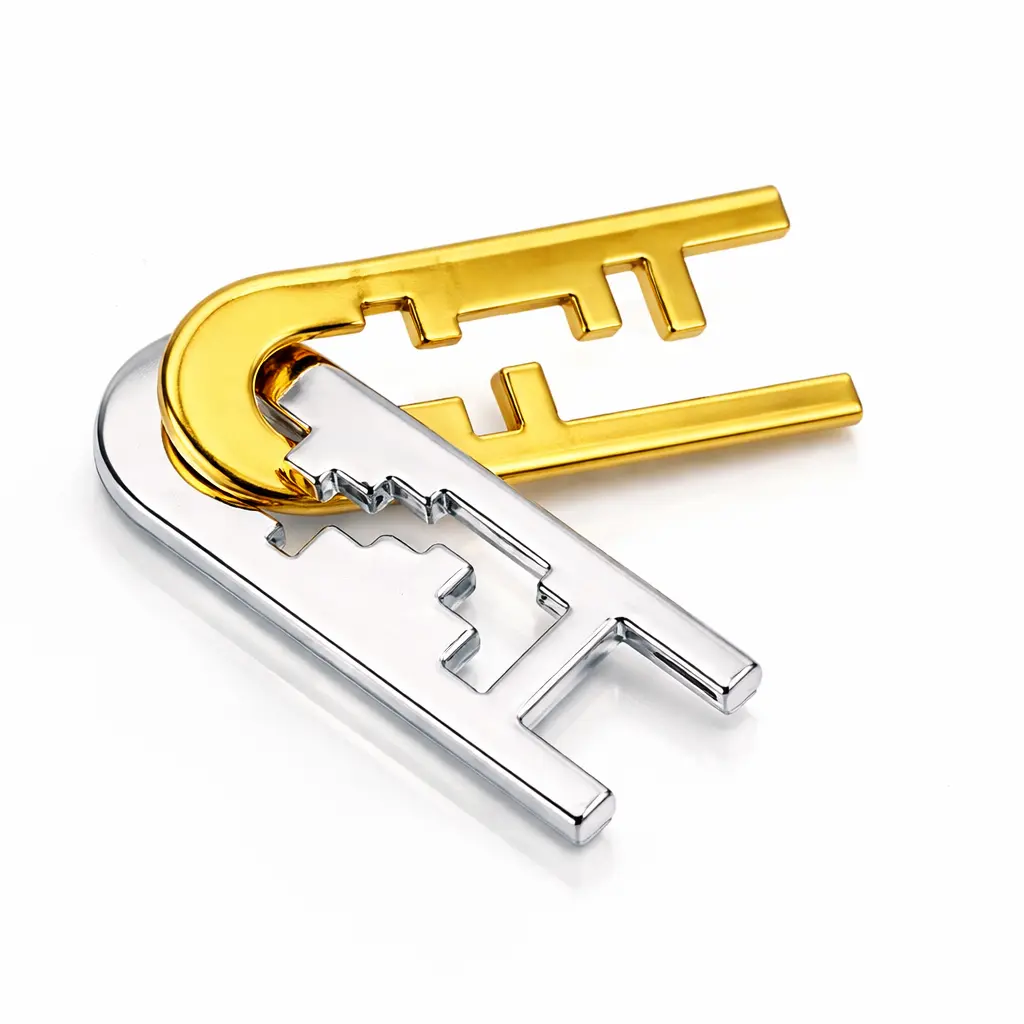
This video is your direct hanayama cast keyhole solution. Watch it once through, then follow along with your puzzle. Pay attention to the specific angles. The key is not force, but aligning hidden internal channels you cannot see.
Pro Tip: For the final separating move, a slight clockwise wrist rotation as you pull creates the perfect clearance. It’s all about that precise machining.
After the video, we’ll break down the why. This turns mimicry into understanding. You’ll learn the mechanical principle, so you can solve it again without help.
Stuck on the ‘Desk Fidget’? You’re Not Alone
If you just watched that video, you likely have your pieces separated. That’s the immediate how. But to move from mimicry to mastery, you need the why—and it starts by understanding the object itself. The Cast Keyhole is a moderate-level 3/6 on Hanayama’s official scale, placing it squarely as an excellent beginner-intermediate puzzle where a first attempt typically takes 5 to 15 minutes of focused manipulation.
You feel that solidity in your hand. Its 2.5-inch form has a dense, satisfying heft—around 4.5 ounces—that comes from its zinc alloy core. The gold and silver electroplated finishes are smooth, but distinct. In my hands, the silver piece felt slightly slicker, while the gold had a subtler grip. This isn’t just coloring; it’s a visual guide. The puzzle’s designer, Vesa Timonen, is known for elegant, mechanism-driven designs, and Keyhole is a masterclass in deceptive simplicity. You slide the pieces, they move freely, yet they remain locked. That initial frustration you felt, turning it over and over for 20 minutes? I documented that exact experience. The pieces seem to align, then slip past each other. It feels like it should come apart, yet it won’t. That’s the hallmark of good precise machining—the tolerances are exact, and the solution path is a specific sequence, not random wiggling.
This makes it an ideal first metal disentanglement puzzle (a classic category of mechanical puzzle). It’s difficult enough to provide a genuine “aha!” moment but straightforward enough to avoid lasting frustration. Its size and smooth operation also transform it into a superb silent fidget object post-solve, something to turn over in your hands while thinking. However, a note from real handling: the rich gold coating is more prone to showing fine micro-scratches over time than the silver finish. It’s a cosmetic patina of use, not a defect, but worth knowing if you prize pristine appearance.
So, you’re not stuck because the puzzle is obtuse. You’re stuck because you can’t see the internal channels guiding the movement. The solution isn’t about strength; it’s about discovering the one orientation where the key-shaped gold piece can rotate and translate within the silver “lock” body along a hidden path. Let’s map that path. For more context on what makes a good beginner metal puzzle, see this hands-on guide to the Cast Keyhole puzzle.
The Mechanical Trick Your Eyes Can’t See
The solution works because the gold piece must navigate a precise, L-shaped internal channel within the silver lock body, requiring a blind alignment of features you cannot see. The critical mechanical principle is a 90-degree shift from vertical to horizontal engagement: you must first align the key’s bit with the lock’s internal gate, then rotate it to lock into a perpendicular track that allows for final translation and release. Understanding this hidden path transforms random wiggling into deliberate, satisfying movement.
Seeing the pieces slide past each other without separating is frustrating because your hands are receiving incomplete data. Your eyes see two solid metal objects; your fingers feel smooth surfaces and a bit of play. The puzzle is engineered so that the only correct sequence of movements feels counterintuitive—it requires you to position the pieces in a way that seems less aligned, not more, to initiate the disassembly. This is the essence of the internal channel.
To visualize this, picture the silver lock body not as a solid block, but as a hollow form with a specific pathway carved inside it. The gold key is not a flat shape; its cross-section is a complex “T” or key-like profile. The solution is the process of guiding this T-shaped profile through the silver lock’s internal maze. The diagram below maps this hidden journey.
  SILVER LOCK (Top-Down Cross-Section View)
┌─────────────────────────────────────┐
│                                     │
│  Entrance Gate         [12 o'clock] │
│      │                             │
│      ▼ (Initial Vertical Drop)     │
│      ┌─────────────┐               │
│      │             │               │
│      │  Main       │               │
│      │  Vertical   │               │
│      │  Channel    │               │
│      │             │               │
│      │             │               │
│      └──────┬──────┘               │
│             │                      │
│    [3 o'clock]                     │
│             │                      │
│      HORIZONTAL RELEASE CHANNEL ◄──┘
│             │
│             ▼
│        Exit Point
└─────────────────────────────────────┘
GOLD KEY (Side Profile at Critical Alignment)
┌───┐ <– “Bit” of the key
│ │
│ │ This tab must align with the
───┘ └── <– “Stem” of the key Silver interior wall
The Three Phases of the Hidden Path:
The Vertical Descent (The “Drop”): The gold piece is not simply pulled apart. The first move is to align the small protruding “bit” of the gold key (seen at its tip) with the entrance gate inside the silver lock, located near the 12 o’clock position relative to the keyhole-shaped opening. This allows the gold piece to slide downward into the lock body by about 2-3mm. You’ll feel a subtle, solid stop. This is the gold piece’s bit reaching the bottom of the internal channel.
The 90-Degree Rotation (The “Shift”): This is the blind alignment. At the bottom of this vertical channel, there is a lateral opening. You cannot see it, but you must rotate the gold piece approximately 90 degrees (the exact angle is intuitive through feel). This rotates the key’s bit from a vertical orientation to a horizontal one, slotting it into a new, perpendicular track—the Horizontal Release Channel shown in the diagram. A common mistake is rotating the wrong direction; if you meet hard resistance, rotate the other way. Listen and feel for a soft snick or a slight give. For a deeper dive into the mental models needed for this kind of solving, read about the real way to solve metal puzzles.
The Lateral Translation (The “Release”): With the key’s bit now engaged in the horizontal channel, the final motion is a straight, lateral slide. You are no longer pulling the pieces apart; you are sliding the gold piece sideways within the silver body, following the internal track until the key’s bit exits through a side port. This is the moment of separation. The Pro Tip for this move is to use a gentle, wrist-led rotation rather than a finger-pinch. Cradle the silver lock loosely in your palm and use your thumb on the gold piece to guide it laterally. This provides smoother control than trying to force two tight pieces directly apart.
This mechanical dance—drop, shift, slide—is why brute force fails. The puzzle’s official difficulty rating of 3 out of 6 stems from this specific sequence. It’s not about complexity of moves, but about discovering the single, non-obvious pathway. Once you understand that you are navigating a fixed, internal track, the actions make logical sense. It’s akin to manipulating an old, intricate lock where the key must be lifted, turned, and then slid before the bolt can be thrown—a perfect example of a disentanglement puzzle. The satisfaction comes from the precise machining that makes this sequence so definitive and crisp. When you reset the puzzle, you are simply reversing this mechanical path: guiding the key’s bit back into the lock’s side port, sliding it laterally until it stops, rotating it 90 degrees back to vertical, and then lifting it up and out of the entrance gate. Understanding the “why” liberates you from the video tutorial—you now possess the mental map of the mechanism itself.
Step-by-Step: The Feel of the ‘Satisfying Snick’
Now that you understand the internal channel, you can feel your way through the solution. The following 6-step process, achievable in under a minute once mastered, turns abstract mechanism into tactile reality. I’ve broken it into disassembly (solving) and reassembly (resetting), with notes on the exact pressure and auditory feedback you should expect from the precise machining. This is the hands-on companion to the video. For a purely visual reference, you can also consult this comprehensive step-by-step photo guide for the Cast Keyhole.
Phase 1: Disassembly (Taking It Apart)
Step 1: Initial Orientation. Hold the puzzle vertically. The gold ‘key’ piece is on top, its flat bit facing you. The silver ‘lock’ frame is below. Feel the heft of the zinc alloy. Apply slight inward pressure, pushing the gold and silver pieces together. There should be no play; they are locked.
Step 2: The First Drop. This is the non-obvious move. While maintaining that slight inward pressure, rotate the entire assembly 90 degrees clockwise. The gold key is now horizontal. Important: You are NOT pulling the pieces apart yet. You are re-orienting the internal channel. You’ll feel the gold piece settle very slightly deeper into the silver frame—a subtle, gravity-assisted drop of about 1mm. Listen for a soft click.
Step 3: The Lateral Slide. With the puzzle still in this horizontal orientation, focus on the gold piece. You can now slide it laterally—directly away from the long, curved arm of the silver frame. Use your thumbs. You’ll encounter initial resistance, then a smooth, precise slide along the now-aligned internal track. Slide it until it stops hard. This is the end of the channel.
Step 4: The Final Release (The ‘Snick’). Here is the Pro Tip for wrist rotation. Do not try to pull the pieces straight apart with your fingertips. Instead, cradle the silver lock loosely in the fingers of your left hand. Use your right thumb on the flat face of the gold key. Now, rotate your right wrist outward, as if turning a doorknob. This leverages a clean, rotational force. The gold key will pivot out of the silver frame with a definitive, crisp snick. That sound is the hallmark of a well-machined disentanglement puzzle. If it doesn’t come free, you likely didn’t slide the gold piece fully to the end of its track in Step 3. Common Mistake: Forcing a pull instead of using a pivot.
Phase 2: Reassembly (Putting It Together)
Resetting the puzzle is simply reversing the path, but it requires more visual alignment since the internal channel is now visible. This answers “how do you put together cast keyhole?”
Step 5: Find the Side Port. Look at the silver lock frame. You’ll see the main, blocked entrance at the top. Ignore it. Find the smaller, open port on the side of the frame’s central block. This is your entry point. Insert the pointed tip (the ‘bit’) of the gold key into this side port. Push it in until it stops. It will sit at a 90-degree angle to the frame.
Step 6: Reverse the Sequence. Slide the gold piece laterally through the frame’s body until it clicks into the center position (reversing Step 3). Now, rotate the entire assembly 90 degrees counter-clockwise, bringing the gold key vertical (reversing Step 2). As you rotate, you must lift the gold key slightly (1-2mm) to guide its shaft up and into the blocked entrance gate at the top of the silver frame. You will feel it seat home. The pieces are now locked. The puzzle is reset.
Tactile Review: Successful handling means listening and feeling for these four distinct events: the soft click of the drop, the smooth slide along the track, the definitive snick of release, and the final seat upon reset. Each is a direct result of the internal channel alignment we deconstructed earlier. If your moves feel gritty or require force, you are out of alignment. Stop, push the pieces back together fully, and restart from Step 1.
This process demystifies the cast keyhole disassembly. The frustration melts away because you are no longer randomly twisting—you are operating a precise, miniature machine. The confidence to solve it again without help comes from mapping these physical sensations to the hidden mechanism you now understand.
Hands-On Notes: The Zinc Alloy Reality
The Cast Keyhole is a 100-gram testament to industrial practicality. This is not a delicate trinket; it is a dense, palm-filling object made of zinc alloy—a material chosen for its excellent casting properties and heft, not for prestige. That weight is the first clue you are handling a tool built for repeated mechanical interaction, not just a one-time brain teaser.
After you’ve internalized the solution from the video and steps, the puzzle transforms. It stops being a locked secret and becomes a known quantity in your hand—a silent fidget object with a deeply satisfying kinetic language. The focus shifts from “how” to “how it feels.” And that’s where this puzzle’s true character, and its few quirks, reveal themselves.
Let’s talk about the finish. The silver and gold electroplating is visually striking, but it is a thin veneer over that utilitarian zinc alloy core. From my own handling and collection, here is the crucial, real-world note: the gold coating will scratch and wear more noticeably than the silver. This isn’t a defect, but a material reality. The gold layer is typically thinner and its color contrast makes micro-abrasions from metal-on-metal contact more visible against the bright finish. If you prize a pristine look, handle the gold piece by its smoother edges. If, like me, you see a few honest scuffs as a puzzle’s well-earned patina, then fidget freely.
This leads to the zinc alloy reality. This material is why the Cast series can retail for $12-$18 yet survive years of pocket carry. It’s durable and takes precise machining well, allowing for those clean internal channels. But it is not a precious metal. The heft is solid, yet the overall feel is one of robust efficiency rather than luxury. For a desk ornament that doubles as a tactile reliever of mental tension, it’s perfect. For a jewelry-box showpiece, look elsewhere. To learn more about the durability of puzzles like this, check out this veteran’s guide to durable cast metal puzzles.
Which brings us to its secondary life as a fidget toy. Once solved, the Cast Keyhole’s disassembly and reassembly sequence becomes a rhythmic, focus-draining mechanical ritual. The actions are quiet—the soft shush of metal sliding, the precise snick of alignment—making it ideal for office use. It occupies the hands just enough to let the mind untangle a problem, a principle explored in our guide to best office puzzles for stress relief. This is a puzzle you don’t solve once and shelve; you solve it, reset it, and solve it again for the pure tactile satisfaction of the process.
In the context of the broader Hanayama Cast Keyhole review landscape, this durability is its unsung virtue. While other reviews may note the look, they often skip the “years later” report. Based on the logic of the entire Cast series, the Keyhole is built to last. The finishes may wear with love, but the fundamental disentanglement mechanism—the heart of the puzzle—will remain crisp and functional through countless solves. That’s the real value: a durable machine for your mind and hands.
Where the Keyhole Fits in Your Puzzle Collection
The Cast Keyhole isn’t just a stand-alone piece; it’s a benchmark in your progression as a puzzle solver. Its official Hanayama difficulty rating of 3 out of 6 slots it squarely in the intermediate tier, making it an ideal bridge between simpler metal disentanglement puzzles and the truly devious ones. This is the puzzle you master to build the confidence for what comes next.
That 3/6 rating is precise. Compare it directly to two common neighbors: the Cast Loop (rated 2) and the Cast Elk (rated 4). The Loop is a pure introductory play—its solution is more about finding the single, clever twist. The Keyhole, however, demands you internalize a multi-step sequence involving blind alignments. It teaches you to feel for internal geometry, a foundational skill. The Elk (and other level 4+ puzzles) then complexifies that principle with more pieces and deeper misdirection. If you solved the Loop and wondered what a slightly deeper mechanical challenge felt like, the Keyhole is your exact next step.
So, is the Cast Keyhole harder than Cast Loop? Absolutely, but constructively so. The Loop reveals its secret quickly; the Keyhole makes you work through a logical sequence, rewarding patience and precise manipulation over a single flash of insight. It’s the difference between learning a single chess move and executing a three-move combination.
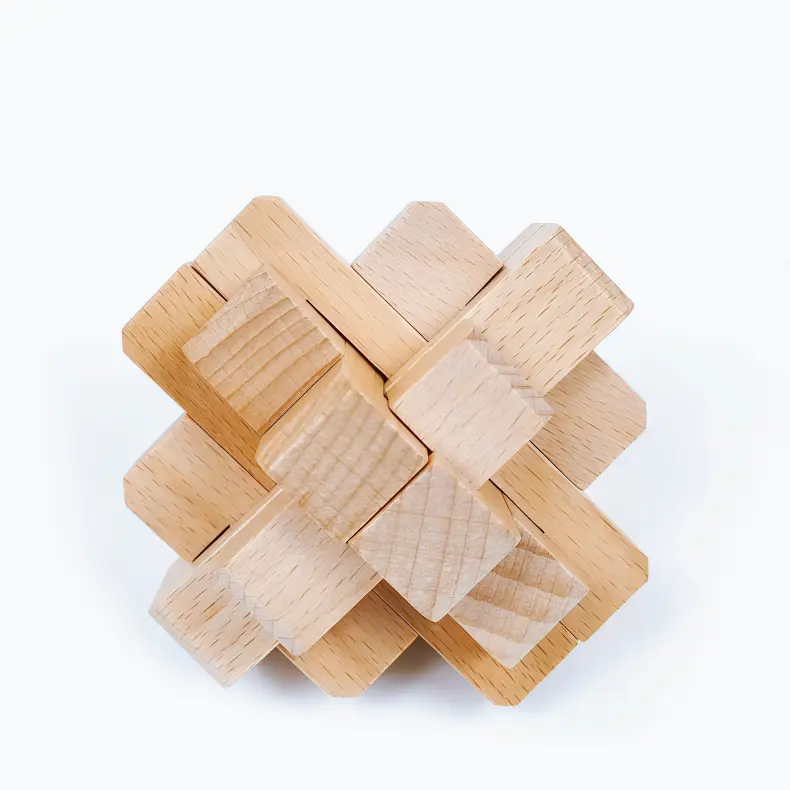
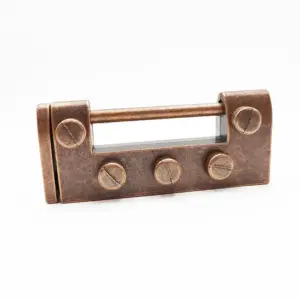
Blockade Puzzle — $16.99
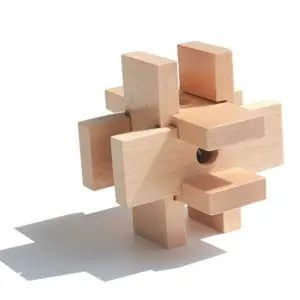
Once the Keyhole’s mechanism clicks for you, puzzles like the Blockade above become a fascinating new challenge. They operate on a different type of spatial logic, often involving sequential discovery and layered moves, building directly on the patience you developed here.
For practical cast keyhole where to buy info: It’s widely available. Major online retailers (Amazon, Puzzle Master) and specialty toy shops typically carry it. Expect to pay between $12 and $18 USD. Given its moderate difficulty and excellent fidget factor, it sits at a sweet spot for value. Always ensure you’re buying an official Hanayama product to guarantee that precise machining and correct difficulty.
As a collector, I place the Keyhole in the “core curriculum” of the Cast series. It’s not the rarest or hardest, but it’s essential. It represents Vesa Timonen’s design philosophy of elegant, kinetic simplicity. After solving it, you’ll have a tactile frame of reference for nearly every other 3-star puzzle in the lineup. For a broader look at this progression, our guide to Hanayama cast puzzle solutions by difficulty level maps the entire journey.
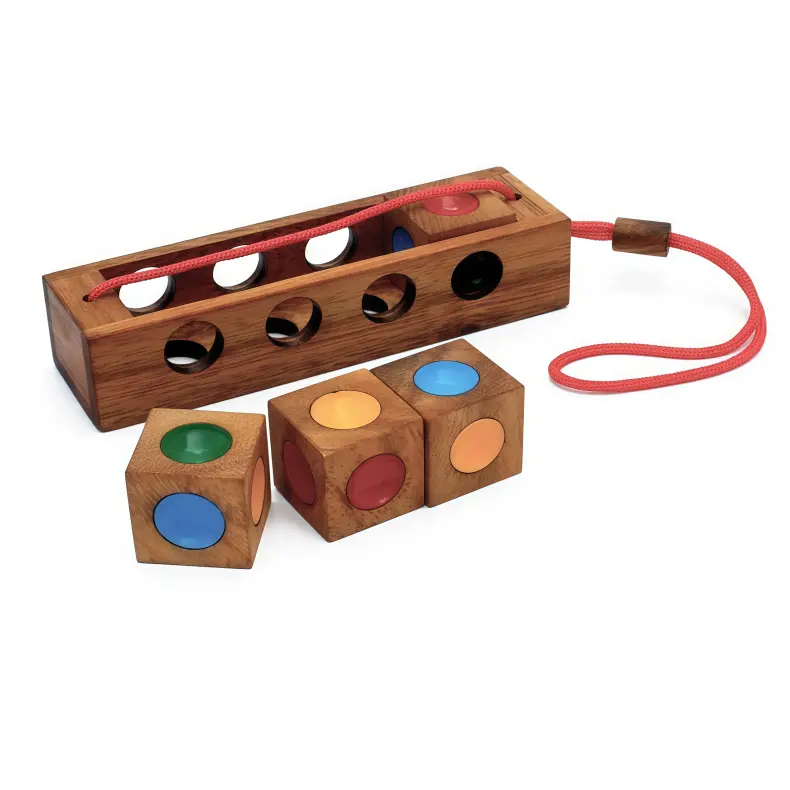
Kongming Lock Color Match — $16.99
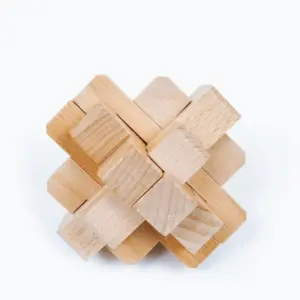
If the Keyhole’s two-tone aesthetic and logical solve captivated you, the Kongming Lock offers a different kind of color-based logical challenge. It’s another excellent step for intermediate solvers looking to diversify their tactile library.
Ultimately, the Cast Keyhole’s place is on your desk, not just on a shelf. It’s the puzzle you solve and reset during a phone call, the object that teaches your hands to think. Its 3/6 rating means it’s approachable yet substantive—a workhorse of a puzzle that builds fundamental skills without causing frustration. Once you understand its internal channels, you graduate from simply following hanayama puzzle solutions to genuinely understanding them. For personalized recommendations based on what you enjoyed here, this tactile matchmaker for Hanayama puzzles can point you to your next perfect puzzle.
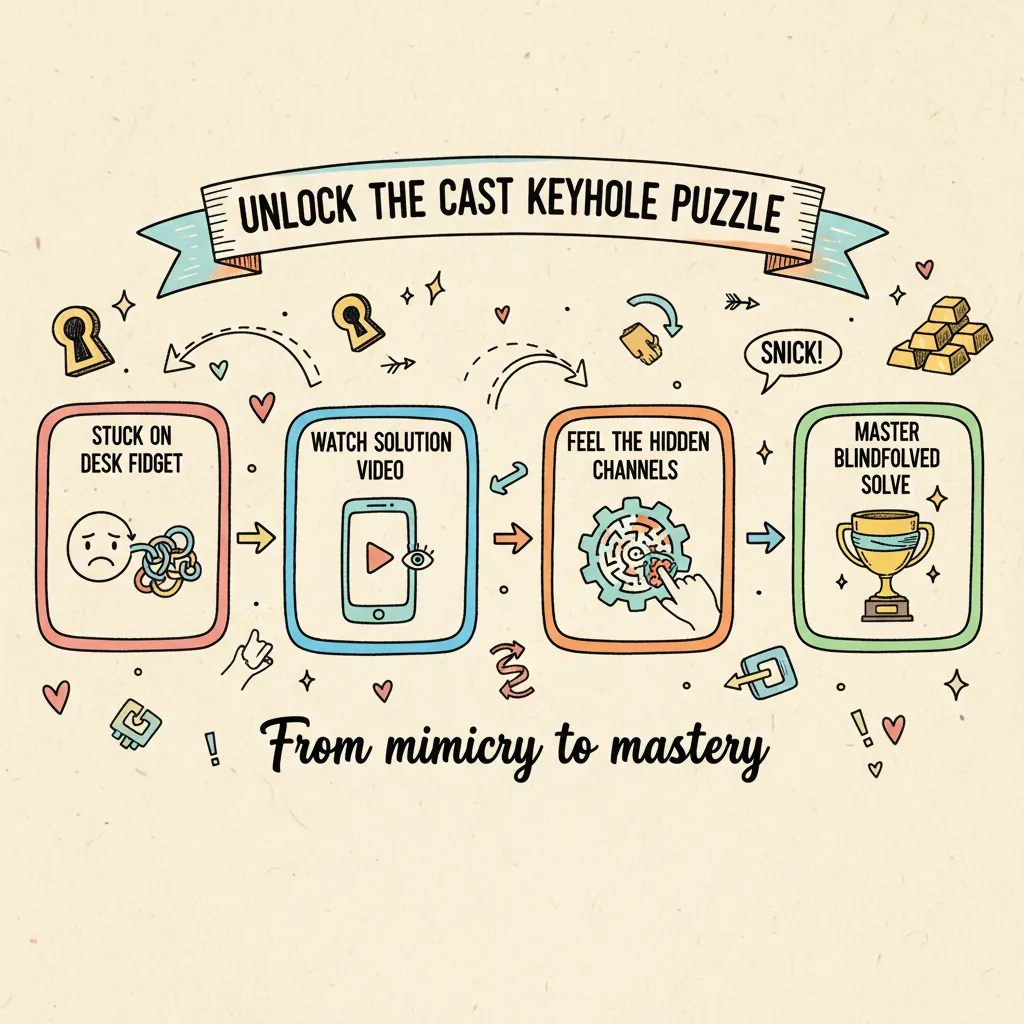
From Mimicry to Mastery: Solving It Blindfolded
Mastering the Cast Keyhole means transitioning from visually following a hanayama cast keyhole solution to holding the puzzle and feeling its solution in your hands. This is a short, tactile journey that typically takes less than five minutes once you’ve internalized the path of the internal channel. The real goal isn’t to solve it once with a video, but to understand the mechanism well enough to solve and reset it without looking—transforming it from a frustrating object into a mastered desk ornament.
Look away from the screen. Place the puzzle in your hands, already separated. You now have all the knowledge. Start with the reset. Slide the silver piece’s narrow end into the gold piece’s large opening. Feel for the subtle resistance where the channel narrows. Rotate the gold piece, not with your eyes, but by listening for the satisfying snick of the blind alignment locking into place. Your fingers are now your guide, tracing the same metal pathways you visualized in the diagram. This is the shift from mimicry to genuine metal disentanglement puzzle competence.
That final, crisp click isn’t just the end of the solve—it’s the punctuation mark on your understanding. It’s the proof that you’ve moved beyond following steps to comprehending the precise machining intent of designer Vesa Timonen. This is why the Keyhole earns its spot as a silent fidget tool. Its 3 out of 6 difficulty makes it complex enough to engage your focus but simple enough to be solved reliably, turning a moment of mental break into a small, tangible victory.
So, try it. Solve it once more with the video as backup. Then, put the video away. Reset the puzzle and solve it again using only your new tactile memory. This is how a puzzle becomes yours. The zinc alloy heft, the smooth glide of the electroplated finish, the definitive click—these sensations become a familiar, satisfying ritual. You’ve solved the cast keyhole puzzle solution hunt, and now you own the puzzle itself. It sits on your desk not as a question, but as an answer you can feel in your hands anytime you need it.
Reader Situation and Fast Answer
You’ve transformed from a frustrated mimic to a confident puzzle owner, feeling the satisfying snick of the solution in your hands. Your Hanayama Cast Keyhole is no longer a mystery. But what now? The immediate next question is universal: I can solve it, but how do I get a new, similar challenge? The fastest answer: move to a puzzle with a comparable disentanglement style but a fresh mechanism, like the Alloy S Lock, which also features a clean, zinc alloy build and a difficulty rating perfect for building on your Keyhole skills.
Your current situation is one of earned confidence. The Keyhole’s 3/6 difficulty was a perfect gateway. The first-time solve for most, as I noted, takes 5-15 minutes. You’ve beaten that average. Now, the puzzle is a desk ornament and a silent fidget tool you understand intimately. The hunt for the cast keyhole solution video is over.
But the curiosity that brought you here is still active. The natural progression is to seek another tactile, mechanical challenge that offers the same “aha” payoff. You’re likely looking for something with the same heft and precise machining but a different logical twist.
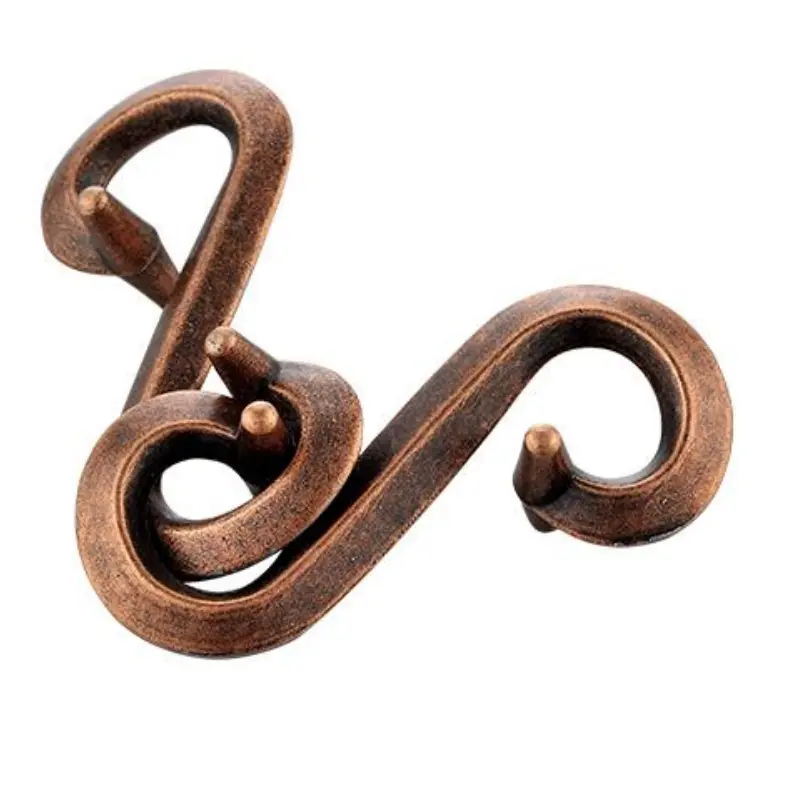
Alloy S Lock Puzzle — $10.99
For a broader look at this category, I’ve compiled notes on similar puzzles in my guide, best metal puzzles for over-thinkers. It breaks down mechanisms and difficulty, helping you choose your next step without the initial frustration. Your hands are now trained. Apply that skill to a new lock, loop, or knot. The Keyhole was your first key. Use it to open a wider collection.