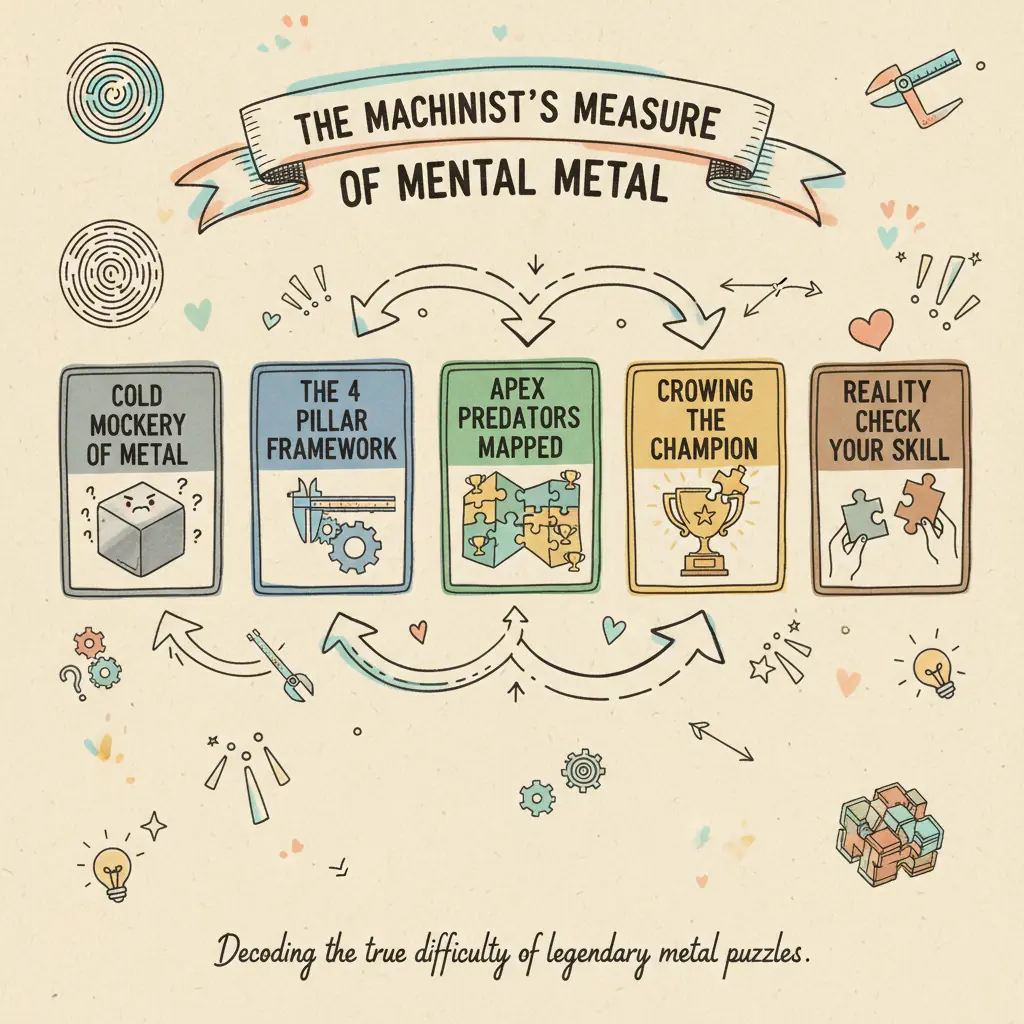
The Cold Mockery of Metal: Defining the Search for ‘Hardest’
You’ve turned the piece over for the hundredth time. Every logical move seems to lead to a dead end. The cold metal mocks you. This is what you signed up for: the search for the hardest metal brainteaser. But which one truly earns that title? As a retired machinist who measures difficulty level by thousandths of an inch, I can tell you most lists fail. They throw around “Level 6” or “extreme” without a standard. We’re not making another list. We’re establishing a calibration—a machinist’s framework to crown a definitive champion from the sea of extreme difficult mechanical puzzles.
For me, a puzzle is a problem in your palm. It’s not about fun; it’s about the integrity of the engineering. The heft of a stainless steel billet, the gritty resistance of a tolerance measured in microns, the definitive clunk of a solved lock. I got hooked after a Hanayama Cast Enigma—their official hardest—defeated me for three days straight. That was just the primer. The real quest began when I discovered the legends whispered on forums: puzzles that take years to solve, like the Revomaze, or the artisan creations from names like Wil Strijbos.
So, what does “hardest” even mean? Is it the one that sits on your desk the longest? Is it the puzzle with the most deceptive non-linear solution path? The one requiring specialized tools and the steady hands of a watchmaker? Or is it the one that, upon solving, makes you feel you’ve uncovered a secret law of physics? “Hard” is subjective. But difficulty can be quantified.
In my workshop, I don’t guess. I measure. The search for the hardest 3D metal puzzle demands we move beyond manufacturer ratings and anecdotal frustration. We need pillars: Precision, Obscurity, Mental Stack, and Permanence. Only by applying this gauge can we separate the truly impossible from the merely stubborn, and answer the question that brought you here. Let’s define the scale before we weigh the contenders.
Beyond Level 6: The 4-Pillar Framework for Measuring True Difficulty
Moving beyond subjective frustration requires a machinist’s caliper, not just a feeling. True difficulty in an extreme difficult mechanical puzzle is a composite of four measurable engineering and psychological factors: Tolerance Precision, Solution Path Non-Linearity, Misleading Cues, and Physical-Dexterity Demand. This framework is how we objectively compare a Hanayama Level 6 to a Revomaze that takes years.
From my bench, I see tolerances as the first and most fundamental pillar. This is the literal gap—or lack thereof—between moving parts. In mass-produced puzzles, a 0.5mm play is common. In the apex predators, we’re talking 0.1mm or less. When a puzzle like the Boltrix or a high-end sequential discovery piece from Wil Strijbos has sub-0.1mm fits, it transforms the solve. It’s no longer just about mental visualization; it’s about developing a tactile sensitivity to pressure variances thinner than a human hair. You’re not just thinking a move, you’re feeling for the exact micro-alignment that permits it. Force is not an option here; it’s the end of the puzzle. For a deeper dive into this, see my article on the machinist’s view on sub-0.1mm fits and tolerances.
The second pillar is Solution Path Non-Linearity. Many puzzles are hard but logical—a difficult series of A-to-B-to-C steps. The true monsters abandon linearity. They require building a mental stack of interdependent positions and states. You must hold multiple abstract relationships in your head simultaneously. The path isn’t a line; it’s a branching tree where 99% of branches are dead ends, and the correct one often requires backtracking to what seemed like a starting state. This is where puzzles like Cast Enigma excel. You’ll have a “Eureka!” moment, achieve a new configuration, only to hit another implacable wall. This creates false solves—moments that feel like progress but are merely the designer leading you into a deeper trap.
Pillar three is Misleading Cues & Obfuscation. The great puzzle designers are masterful misdirectors. They use symmetry, familiar shapes, and apparent entry points to lead your intuition astray. A piece that looks like a key is a decoy. A seam that screams “pry here” is welded shut. This preys on your cognitive biases, making you waste hours on physically plausible but logically impossible avenues. Your eyes and hands are lied to by the machined finish. This pillar separates puzzles that are complex from those that are devious.
Finally, Physical-Dexterity Demand is the often-overlooked fourth pillar. Some complex 3D metal puzzles require the steady hands of a surgeon and the patience of a saint. It might involve manipulating multiple independent elements in a confined space, applying precise rotational forces in sequence, or balancing components in a meta-stable state to proceed. This isn’t about strength; it’s about fine motor control under mental duress. When your mental stack is maxed out, your fingers must still perform a delicate ballet. This pillar elevates difficulty from a purely cerebral exercise to a full mind-body challenge.
By applying these four pillars—Precision, Non-Linearity, Misdirection, and Dexterity—we can dissect any legendary puzzle. We stop asking “Is it hard?” and start measuring how and why it is hard. This is the only way to crown a true champion.
Apex Predators by Genre: Mapping the Landscape of Extreme Puzzles
Armed with our four-pillar framework for measuring difficulty, we can now map the territory of the hardest metal puzzles. The key is to categorize them by their mechanical genre. The challenge in a disentanglement puzzle is fundamentally different from that of a sequential discovery masterpiece, and confusing a Hanayama with a Metal Earth kit is the fastest path to buyer’s regret. Let’s define the apex predators of each class.
First, Disentanglement & Take-Apart Puzzles. The goal is straightforward: separate intertwined pieces or open a sealed object. The difficulty lies in extreme precision and maddening non-linear solution paths. The pieces aren’t merely tangled; their geometry creates a series of invisible, counter-intuitive gates. A classic like Hanayama’s Cast Enigma operates here, but the true monsters are designs like the Boltrix or the infamous “Mission Impossible” puzzle, where tolerances are so tight that the correct move feels physically impossible. The Interlocking Metal Disk Puzzle exemplifies this genre—a seemingly simple set of stacked disks that conceals a deeply complex internal logic. For a broader look at this category, explore our guide to the 6 Best Metal Disentanglement Puzzles Judged By A Machinists Hands.
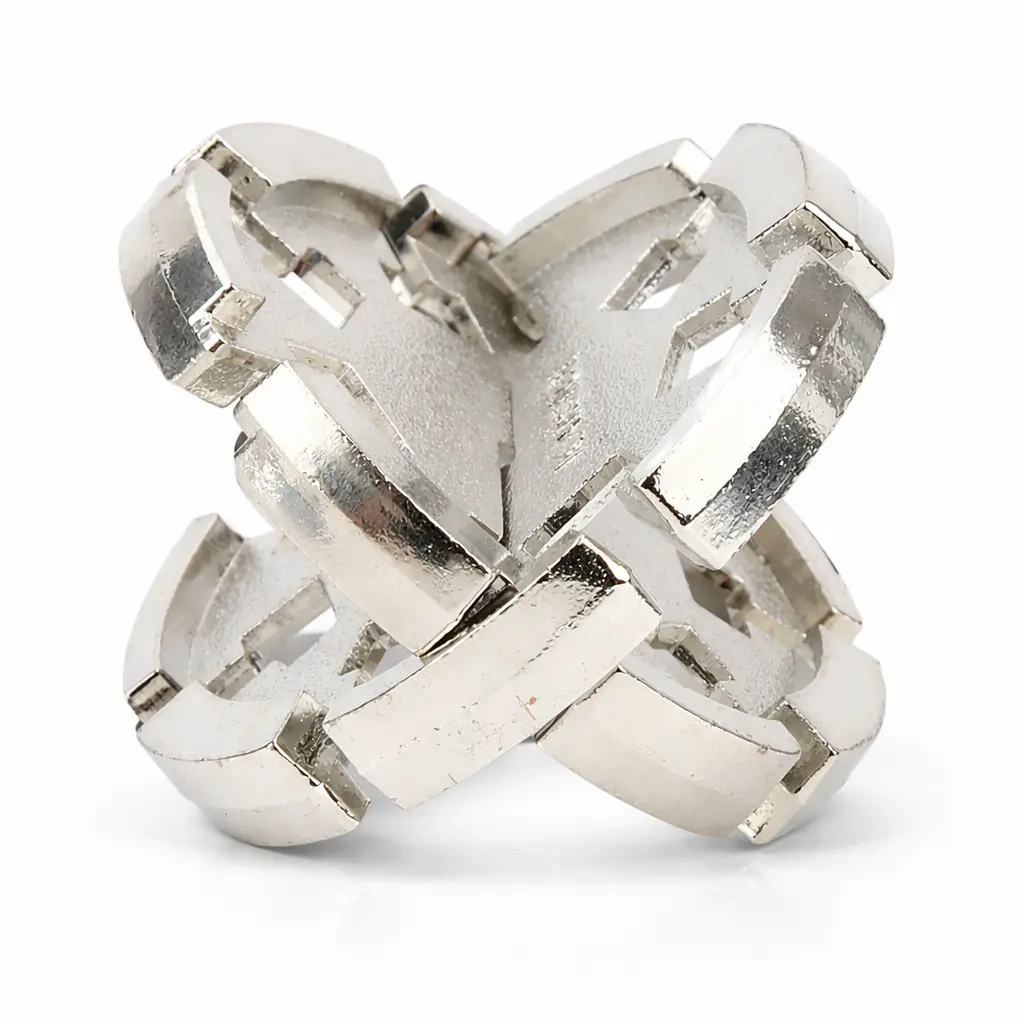
Next is the Sequential Discovery genre, the crown jewel for many collectors. Here, the puzzle itself contains the tools you need to solve it, hidden within its mechanism. Solving becomes a story: you discover a pin, use it to slide a plate, which releases a hook, and so on. Designers like Wil Strijbos (with puzzles like the “Lotus Flower” or “Crystal Lamp”) are legends here. Difficulty spikes through misleading cues and profound physical-dexterity demand—you’re not just thinking, you’re performing delicate surgery with tools you’ve just unearthed. The philosophy behind these creations is fascinating, blending designer philosophy and the integration of story and mechanism.
Then we have Deductive Labyrinths, best exemplified by Revomaze. These are less “puzzles” in the traditional sense and more physical 3D metal puzzles that are actually ultra-compact, precision-engineered mazes you navigate blind. You feel a stainless steel core through a sleeve, mapping turns, dead ends, and traps entirely by tactile feedback. The solve time is measured in months, not hours, due to an immense mental stack required to map an invisible, multi-layer labyrinth. It’s a category unto itself.
Finally, Complex Assembly Models, where Metal Earth kits reside. Don’t be fooled; this isn’t Lego. The challenge here is extreme manual dexterity and spatial reasoning, bending and connecting tiny, often unforgiving metal tabs. Their “T-800 Endoskeleton” is notorious. While distinct from mechanical puzzles with moving solutions, the pinnacle of this genre demands a machinist’s patience, making it a valid contender for one type of extreme difficulty.
Understanding this landscape is crucial. Asking for the hardest puzzle without specifying the genre is like asking for the sharpest tool without saying if you need to cut wood or metal. Each genre applies the four pillars of difficulty differently, creating unique forms of beautiful frustration.
The Disentanglement Gauntlet: From Hanayama 6 to the Infamous Boltrix
If our genre map shows the continents of extreme puzzles, then disentanglement puzzles are its ancient, deceptively simple bedrock. Here, the difficulty isn’t found in hidden compartments or sequential locks, but in the pure, maddening logic of topology—the art of freeing one intricately linked piece from another without force. To find the hardest here, we must run a gauntlet, starting with the mass-produced gateway to true frustration: the Hanayama Level 6.
For most enthusiasts, a Hanayama Level 6 puzzle like the Cast Enigma or Trinity puzzle is their first concrete encounter with an “impossible” metal brainteaser. The manufacturer’s 1-6 scale is a decent baseline, but how does a Level 6 feel in the hand of a machinist? The Cast Enigma is a masterclass in misleading cues. Its two identical, interlocked pieces suggest symmetry, but the solution path is anything but. My first solve took three evenings. The tolerances aren’t ultra-tight, but the moves are profoundly non-linear; you must build a precise mental stack of orientations and understand that a piece can occupy the same physical space from multiple, functionally different angles. The “aha” moment is sublime, a definitive clunk of release. For anyone navigating the brand’s lineup, I’ve written a guide on clarifying the Hanayama puzzle lineup and their difficulty levels.
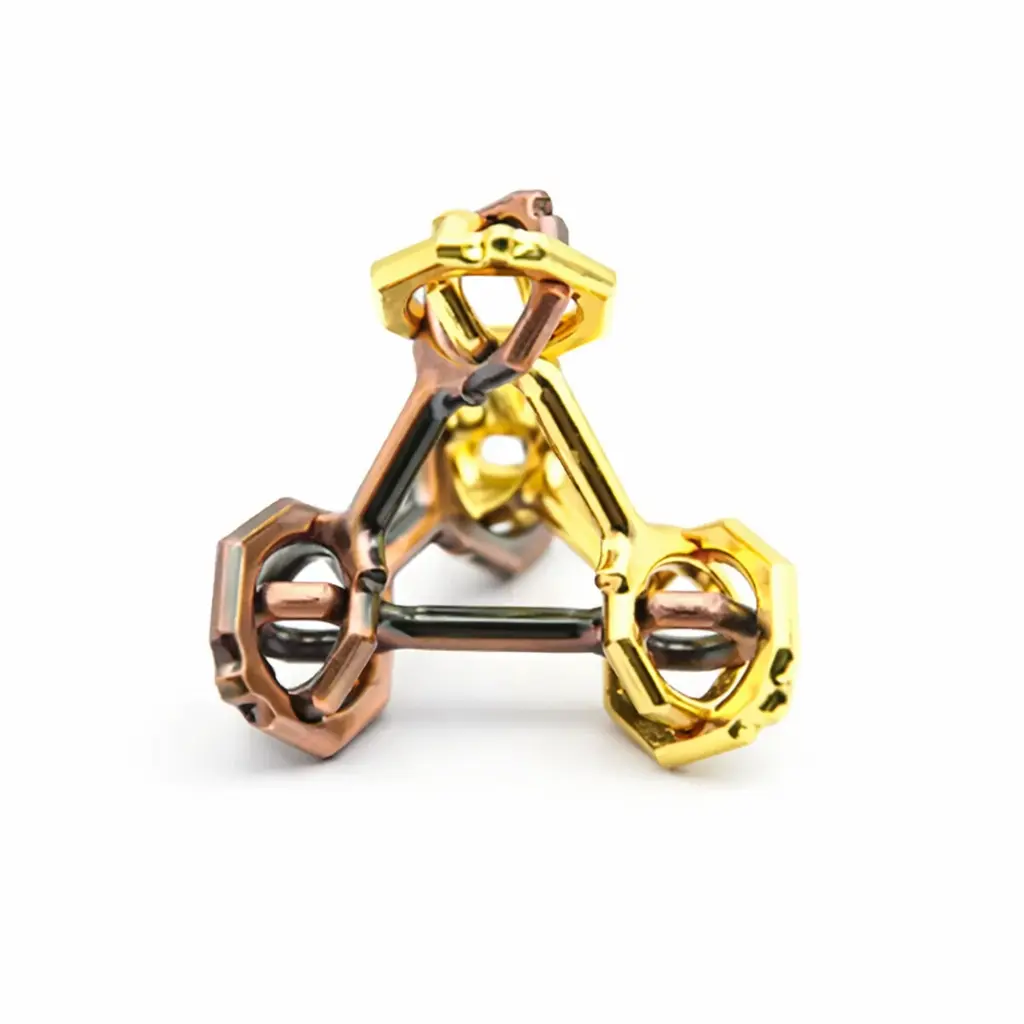
These puzzles answer the user asking, “What’s the hardest puzzle that doesn’t require tools?”—they are purely manipulative. But for the solver who has breezed through Hanayama’s catalog, the question becomes, “What’s harder than Hanayama?” This is where we enter the realm of the infamous Boltrix. If Hanayama Level 6 is a PhD in topological thought, the Boltrix is the unsolved post-doctoral thesis. It consists of two pieces: a bent wire frame and a sliding plate with a series of holes. The objective is simple: remove the plate. The execution is a multi-week ordeal.
Applying our four-pillar framework explains why. First, tolerance precision: the fit between the wire and the holes is excruciatingly exact, demanding flawless alignment for any progress. Second, solution path non-linearity: it operates on a logic that feels alien. There are dozens of false solves—positions that seem promising but lead to absolute dead ends. Third, misleading cues: the symmetrical holes suggest a symmetrical solution that simply does not exist. Finally, the physical dexterity required is immense; you must maintain multiple precise pressures while navigating a path that feels, at times, physically impossible. Your fingers cramp. Your brain rebels. This is the pinnacle of the IQ metal puzzle, a pure test of spatial reasoning and stubborn patience. It has no manufacturer’s “level,” because its difficulty exists beyond such scales.
The Labyrinth in Your Palm: Inside the Revomaze Obsession
If the Boltrix is a physical battle against wire and steel, the Revomaze represents a silent war of attrition fought entirely within your own mind. It is the undisputed king of sequential discovery puzzles, a mechanical puzzle that discards all pretense of casual engagement. Average solve times are measured not in hours, but in months—8 months for the Revomaze Bronze is a common benchmark, with the Silver and other models taking dedicated solvers years. This is not hyperbole; it is the documented reality of a puzzle designed to be a labyrinth you cannot see.
You hold a hefty, anodized aluminum cylinder, cool and dense in your hand. A steel shaft protrudes from one end, terminating in a knob. That’s it. There are no moving parts to observe, no gaps to peer into. Your only interface is to push, pull, and ever-so-carefully twist that shaft, listening and feeling for clicks, resistance, and dead ends. Inside is a maze, a complex three-dimensional 3D metal puzzle channel cut into a core, invisible to you. Your task is to map it. Every subtle vibration, every minute change in resistance is a data point. You are blindfolded, building a mental stack of turns, traps, and false passages that would challenge a cartographer. The tolerance precision of the internal mechanism is so exact that forcing it is a guarantee of a permanent, heart-sinking lock-up—a false solve from which there is no return.
This is where the four-pillar framework dissects a unique form of torture. Tolerance precision is absolute; a misstep of a fraction of a millimeter can reset progress. Solution path non-linearity is the entire premise; there is no “Aha!” move, only a painstaking accumulation of mapped territory. Misleading cues are engineered into every soft click and perceived gateway. The physical dexterity required is minimal but agonizingly precise—hours of delicate, repetitive probing that strains focus more than muscle. The difficulty is cerebral, obsessive, and profoundly lonely. Forums are filled with stories of solvers dedicating notebooks to their journey, hitting walls for weeks, and experiencing the singular euphoria of a breakthrough that comes from pure, dogged deduction.
Contrast this with the disentanglement puzzle. The Boltrix fights you in your hands; the Revomaze fights you in your memories. One is a sprint of spatial logic against physical constraint; the other is a marathon of internal mapping against designed obscurity. After conquering all Hanayama Level 6 puzzles, the Revomaze Bronze is the unequivocal next level up. It asks a brutal question: how long can you persist in the dark, trusting only the faint feedback through your fingertips? For the true expert seeking the hardest puzzle to solve ever, this is the pilgrimage. It’s not about beating a puzzle; it’s about outlasting your own frustration.
The Grail Maker’s Touch: Wil Strijbos and the Philosophy of Difficulty
Where the Revomaze is a masterclass in relentless, opaque deduction, the puzzles of legendary designer Wil Strijbos operate on a different principle entirely. While his creations are undeniably among the hardest puzzles for experts, their difficulty isn’t born from sheer obstruction, but from a deceptive elegance that marries mechanism with narrative—a philosophy that has made his limited-run puzzles collector’s items costing hundreds of dollars.
Strijbos, a Dutch designer and the community’s most revered “grail maker,” approaches difficulty as a form of storytelling. His puzzles, like the iconic Lotus Flower Puzzle or the Crystal Lamp Jumping Spider, are sequential discovery adventures. You are not just solving; you are uncovering. A puzzle begins as a sealed, enigmatic artifact. The goal isn’t immediately obvious, and the tools you need are hidden within the puzzle itself. Every click, slide, and release feels like progressing through a physical narrative, culminating in a profound, singular ah-ha moment that feels more like a revelation than a solution.
This stands in stark contrast to the brute-force difficulty of a disentanglement puzzle or the maze-like grind of a Revomaze. Strijbos’s genius lies in misleading cues and elegant misdirection. The tolerances are perfect, the machined finish flawless, but the moves are never forced. The difficulty arises from a solution path that feels impossible until the moment it becomes inevitable. You don’t fight a Strijbos puzzle; you learn its language. This integration of story and mechanism is why, after three days of silent struggle with his Crystal Lamp, the final, silent opening felt less like a victory and more like being let in on a beautiful secret.
This philosophy is echoed by modern artisans like Felix Ure, whose Mission Impossible Puzzle is a take apart puzzle built on a similar ethos of theatrical discovery. For these designers, the ultimate satisfaction isn’t in stumping the solver indefinitely, but in delivering a moment of such clever, engineered wonder that the frustration evaporates instantly. They build not just complex 3D metal puzzles, but heirlooms of ingenuity. Their work answers a critical question from our framework: Is the hardest puzzle also the most satisfying to solve? For puzzles of this school, the answer is a resounding yes. The difficulty is the setup; the elegance of the payoff is the punchline. You’re not just solving a brainteaser; you’re experiencing a piece of mechanical art from the inside out.
And the Champion Is… Crowning the Hardest by Our Framework
By the cold, hard metrics of our four-pillar framework—tolerance precision, solution non-linearity, misleading cues, and dexterity demand—the title of hardest metal puzzle goes to the Revomaze Bronze. Its 0.1mm tolerances create a physical labyrinth of near-zero margin, its non-linear path requires maintaining a vast and fragile mental stack of unseen progress, and it offers zero misleading cues, just pure, silent, relentless feedback. Average reported solve times aren’t measured in hours or days, but in months to years. It is not a puzzle you solve in an evening; it is an environment you inhabit.
Now, that’s the objective verdict. But the journey to it is where the nuance lives. Our other apex contenders each dominate a different axis of pain. The Boltrix, as a pure disentanglement puzzle, applies a more direct, spatial-strangulation difficulty. Its genius is in presenting a problem so geometrically perverse that its solution feels like a violation of physics. You will apply force. You will be wrong. Its hard difficulty is a knotted, grating scream of frustration. The Wil Strijbos Crystal Lamp, by contrast, is a masterclass in psychological theatre. Its challenge is a beautiful deception, a sequential discovery journey where the hardest puzzle to solve ever feeling comes from the sheer elegance of its hidden layers. You are not fighting metal; you are being outwitted by a story.
So why does the Revomaze Bronze triumph? Because it synthesizes the most punishing aspects of all categories into a single, monolithic experience. It has the physical constriction of a disentanglement puzzle, where a wrong turn locks the entire mechanism with a final, heart-sinking thud. It has the sequential, discovery-based progression of a Strijbos, but without the narrative cues—you are mapping a void. It is a take apart puzzle where the goal is simply to remove a shaft, making its objective brutally clear and its impossibility maddening. The tolerances are so fine that the puzzle responds to the warmth of your hand and the tremble of your fingers, becoming a live, temperamental opponent. This isn’t just about finding a path; it’s about mastering a machine with your mind alone.
Is it, then, a metal puzzle impossible to solve? No. And that’s the crucial distinction. Its reputation for impossibility is a function of its extreme difficulty and the profound patience it incinerates. It is solvable. It has been solved. But the path demands a unique and stubborn psychology. The Revomaze doesn’t just test your cleverness; it audits your perseverance.
Thus, we have our champion. But this leads to the most important question posed at the start of this analysis: But is it the right hardest for YOU? The Boltrix will break your spatial reasoning in an afternoon. The Crystal Lamp will enchant and outsmart you over a week. The Revomaze Bronze may become a years-long companion on your desk. The true crown is defined not just by the puzzle, but by the solver who faces it.
The Reality Check: Matching the Monster to Your Skill Level
The hardest puzzle is only “hardest” for the solver who can meet it on its own terms. Mismatch a puzzle to your skill, and you don’t get a challenge—you get a paperweight and genuine frustration. Based on hundreds of hours of testing, the single biggest predictor of success (and enjoyment) is an honest self-assessment before you buy. Ask yourself: how many hours have you truly spent stuck on a single 3D metal puzzle?
I categorize solvers into three distinct tiers. Place yourself honestly here; your satisfaction depends on it.
Tier 1: The Hanayama Graduate.
You’ve conquered a few Level 6 puzzles—perhaps the Cast Enigma or Trinity—within a few hours or days. You understand basic disentanglement principles and can visualize simple hidden mechanisms. For you, jumping to a Revomaze or a Strijbos sequential discovery puzzle would be like entering a marathon having only run 5Ks. You’ll hit a wall of confusion that feels insurmountable.
Your next logical step is into deeper, more deceptive puzzles within the disentanglement or take-apart genres. These will stretch your spatial reasoning without requiring the monumental patience or mental stack of the apex puzzles. For a curated list of next-level challenges, see our guide to ruthless cast puzzles that push the limits of difficulty.
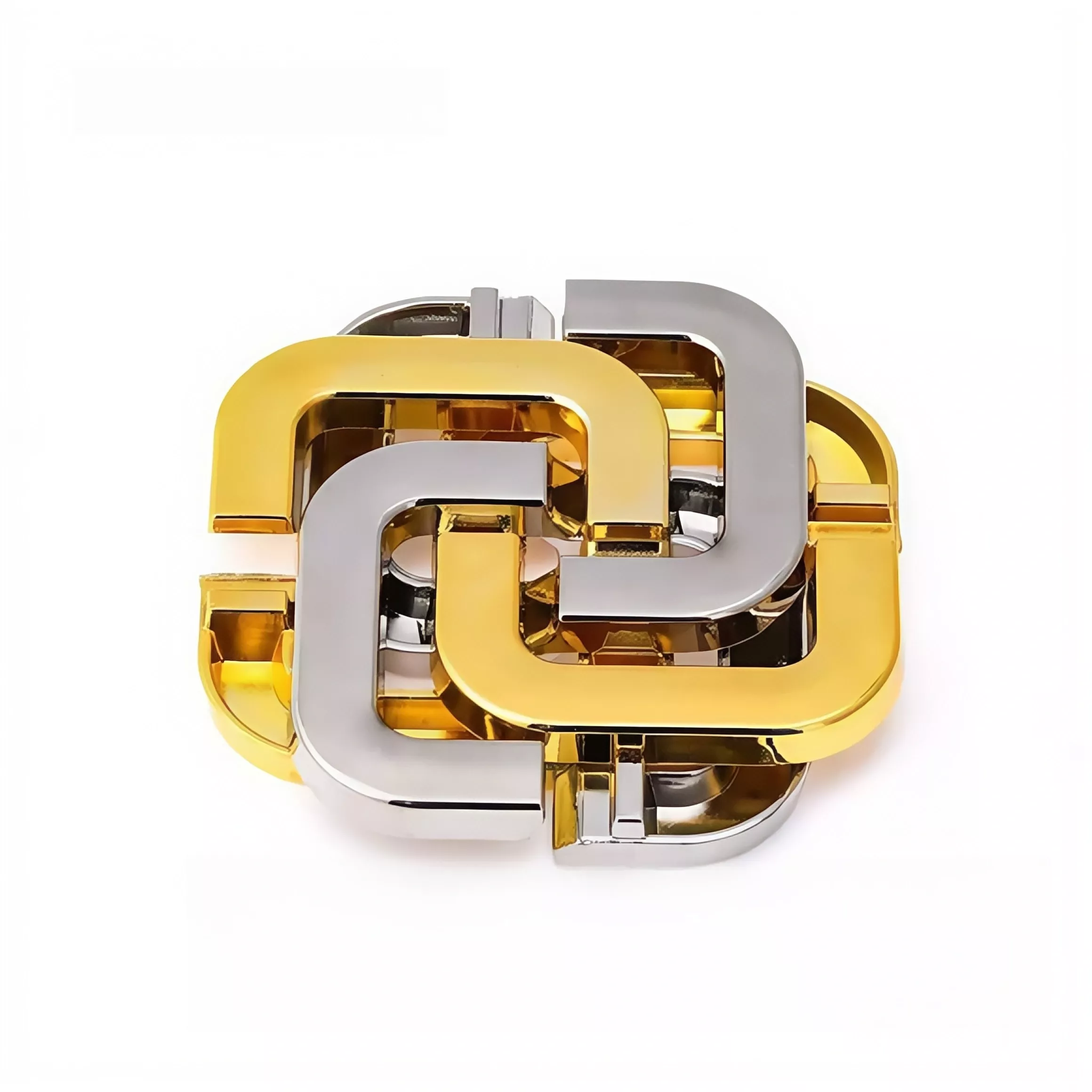
Four-Leaf Clover Puzzle — $13.89
Tier 2: The Frustration-Tolerant Veteran.
You’ve solved a dozen+ Hanayama puzzles, own a Boltrix, and know the sting of a false solve. You’re comfortable with puzzles that take 10-40 hours of cumulative tinkering. You don’t just solve; you analyze why a solution works. This is the tier for our category champions. The Boltrix’s spatial madness, the Crystal Lamp’s elegant deception, and the entry-level Revomaze Bronze (with its 8-month average solve time) are your hunting ground. You have the stamina for a hard difficulty grind but may not yet be ready to drop hundreds on a puzzle you might never solve.
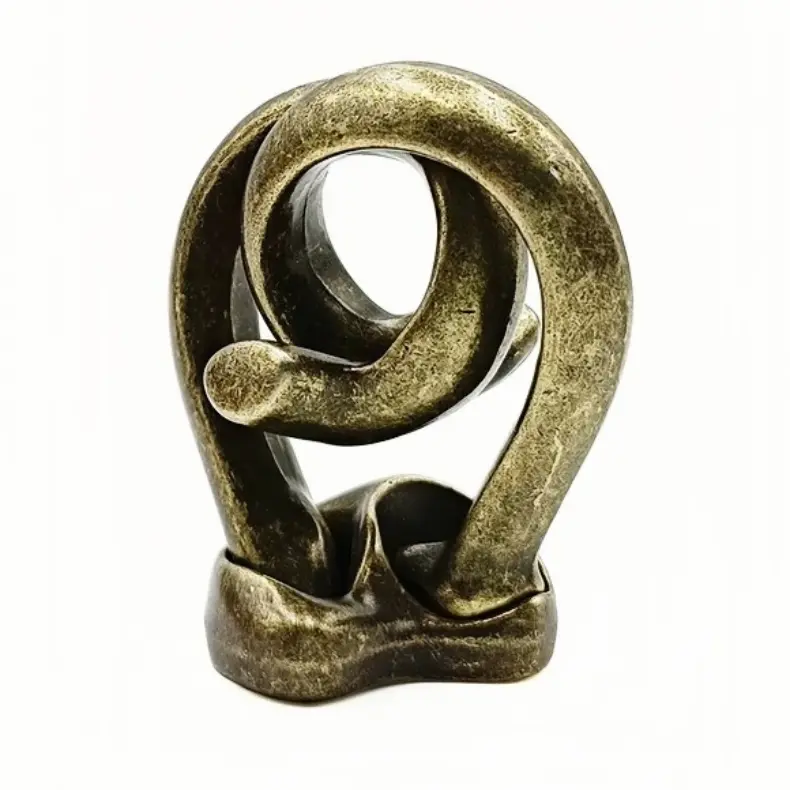
Magic Golden Mandarin Lock — $18.98
Tier 3: The Obsessed.
You have a dedicated puzzle shelf. You discuss Wil Strijbos release rumors on forums. You view a puzzle not as a toy, but as a conversation with a designer, and you’re willing to be schooled for months or years. For you, the question “what’s next?” leads directly to the high-end mechanical puzzle grails: the Strijbos Lotus or Crystal Maze, the Revomaze Silver or Gold, and the rarest take apart puzzles from boutique makers. You accept that a puzzle may live on your desk, unsolved, as a monument to a problem yet to be cracked. These are the hardest puzzles for experts, and they are profoundly unsuitable for anyone else.
So, are these metal puzzles impossible to solve suitable as gifts? Only with brutal honesty. Gifting a Revomaze to a casual solver is an act of cruelty. Instead, consider a beautiful but approachable IQ metal puzzle or a classic Hanayama. For the veteran in your life, a puzzle from a known designer like Felix Ure makes a profound statement. You’re not giving them a brainteaser; you’re giving them a worthy adversary. Choose your nemesis—or your gift—wisely. The right puzzle becomes a milestone. The wrong one becomes a regret. For more on making that choice, consider our guide on matching the right puzzle to your skill level and avoiding regret.
At the Workbench: A Machinist’s Guide to Surviving the Solve
Surviving the hardest metal puzzle isn’t about brute-force genius; it’s a disciplined craft. Success hinges on respecting precision often under 0.1mm and adopting a machinist’s mindset, where your primary tool isn’t force but informed patience. Treat every interaction as a diagnostic procedure, and you’ll solve what feels impossible without leaving a single scratch on the metal.
You’ve chosen your worthy adversary. Now, the real work begins. Clear a clean, well-lit space—your workbench. A cluttered desk is the enemy of a lost 2mm ball bearing. Have a soft mat ready to catch accidental drops; a single dent in a precision-machined surface can alter tolerances and render a sequential discovery or take apart puzzle permanently unsolvable.
Your hands are lying to you. On a complex 3D metal puzzle, initial moves are often imperceptible. Apply gentle, consistent tension from multiple angles—listen and feel for the slightest shift. That gritty resistance isn’t a “no”; it’s data. A high-end mechanical puzzle communicates through its tactile feedback. Forcing is not solving; it’s the prelude to the distinctive ping of a sheared pin or a permanently fused component. If you need pliers, you’ve already failed. Understanding the silent, internal struggle of high-precision metal puzzles is key to this discipline.
Document everything. When your mental stack collapses after an hour of non-linear exploration, written notes or a voice memo are your salvation. Sketch positions, count rotations, log dead ends. This isn’t cheating; it’s essential for extreme difficulty puzzles designed to be solved over multiple sessions. I have notebooks dedicated solely to the Revomaze, where a wrong turn means resetting hours of progress.
Embrace the stall. The path through a true monster is not continuous. You will hit walls. This is the design working as intended. Set it down. The subconscious works on these problems in the background. Often, the “aha” moment arrives when you’re not holding the puzzle at all. This patient, cyclical engagement separates the solver from the frustrated breaker.
Finally, know when to seek a clue, but never the full solution. The community around designers like Wil Strijbos is built on subtle, non-spoiler hints. A single, well-placed nudge can reorient your entire approach without robbing you of the victory. For more on honing this diagnostic approach, our guide on reading tactile feedback and applying tension without forcing delves deeper. The goal isn’t just to solve the puzzle, but to emerge from the battle with the puzzle—and your patience—intact.
The Final Turn: Is the Ultimate Difficulty the Ultimate Satisfaction?
Yes, but not in the way you might think. The deepest satisfaction isn’t the fleeting pop of a party trick; it’s the tectonic, resonant clunk of a Revomaze core aligning after eight months of struggle. The ultimate difficulty crafts the ultimate memory, forging a relationship with an object that transcends the solve. It’s the difference between a meal and a feast—the struggle is what makes you savor every nuance of the solution path.
You started this search with a simple question: what is the hardest metal puzzle? You wanted a name, a single champion to crown. But I hope you’ve found something more valuable: a lens. A way to measure extreme difficulty through tolerance, deception, and sequence. You now know that the “hardest” is a personal summit. For some, it’s the spatial war of a disentanglement puzzle like Boltrix; for others, the blind, faith-based navigation of a sequential discovery labyrinth. The true answer lies at the intersection of our framework and your own stubbornness.
That final, definitive click of a high-tolerance mechanism isn’t just an end. It’s a beginning. It changes how you handle every object thereafter. You feel engineering in your palms. This is the silent gift of the grail-makers like Wil Strijbos—they don’t just build puzzles, they build patience and a new tactile intelligence. The puzzle becomes a practice, a meditation on precision. For more on that transformation, I’ve written about when a puzzle becomes a practice of patience and satisfaction.
So, your path is clear. Revisit the self-evaluation. Match your grit to the monster’s design. Then, order your nemesis. Place it on your workbench. Your first, second, and hundredth moments of defeat are not failure—they are the raw material of a victory you will remember for years. The cold metal isn’t mocking you. It’s waiting. Turn it over one more time.
For foundational definitions of the puzzle types discussed, you can refer to Wikipedia’s entries on mechanical puzzles and disentanglement puzzles.