The Family Gathering Test: When a ‘Simple’ Metal Puzzle Becomes a Foe
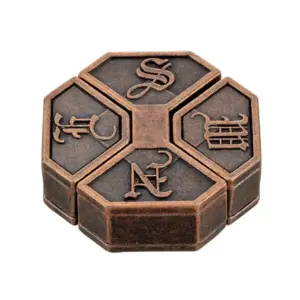
The look of pure, crestfallen defeat on a nine-year-old’s face is a powerful lesson. At a recent family barbecue, my young cousin spotted a Hanayama puzzle from my pocket—the cast metal “Quartet,” rated a modest Level 2 out of 6 and labeled for ages 12 and up. He grabbed it with the confidence of someone who’d mastered Lego sets twice his age. For twenty silent minutes, he turned the cool, weighty pieces in his hands, his brow furrowed in concentration that slowly curdled into frustration. The puzzle didn’t yield. The advertised “simple” twist never came. He finally thrust it back, muttering, “It’s broken.” In that moment, the question crystallized: what metal puzzle should I have given him?
That box label—“Ages 12+”—is a vague cipher. It blends safety warnings, marketing, and a guess at cognitive load, but it utterly fails to map to a child’s real-world fine motor skills or spatial reasoning. It tells you nothing about the frustration tolerance needed for a disentanglement puzzle versus the patience for a 3D kit. My cousin didn’t fail because he wasn’t smart; he failed because the puzzle required a dexterous precision and a mental model of internal geometry that his nine-year-old brain, quite developmentally normally, hasn’t yet built. The problem-solving skills needed are highly specific.
This is the core anxiety for any gift-giver: buying a beautiful object that becomes a source of defeat rather than delight. The market amplifies this with conflicting signals. You’ll see metal wire puzzles marketed for ages 5 and up right beside nearly identical ones labeled ages 8 and up. A 3D metal puzzle kit might beckon a bright 10-year-old, but its small parts and required tool manipulation belong to a ages 14+ world. The gap between a child’s enthusiasm and a puzzle’s true demand is where gifts gather dust.
So, we must move beyond the box. As someone who has tested hundreds of these mechanical puzzles with kids, I judge them not by manufacturer claims, but by the “Fumble Test” (which parts genuinely stay in a small hand’s grip?), the “Frustration Timeline” (when does confusion turn to anger?), and the tactile feedback of the thing itself (I still tap them against my wedding ring—the dull thunk of a solid casting versus the tinny ring of thin stamping tells you plenty). Supervise children is the universal disclaimer, but supervision is useless if you don’t know what to watch for.
This guide is that decoding key. We’ll replace the vague age range with a skill-based progression ladder, linking specific types of metal brainteaser puzzles—wire, cast, 3D model—to the developmental milestones they actually require. The goal is to transform that anxious guess into a confident match, ensuring the next “aha!” moment is earned, not engineered for failure.
A Taxonomy of Tension: The 3 Core Types of Metal Puzzles
To build a skill-based progression ladder, we must first sort the chaos. All metal puzzles are not created equal—they fall into three distinct families, each demanding a unique profile of dexterity, spatial reasoning, and frustration tolerance. These are Wire/Disentanglement Puzzles, Cast Brainteasers (like the famous Hanayama line), and 3D Model Kits. Understanding this taxonomy is the first step to decoding what age suitable truly means for each.
1. Wire & Disentanglement Puzzles: The Test of Trajectory
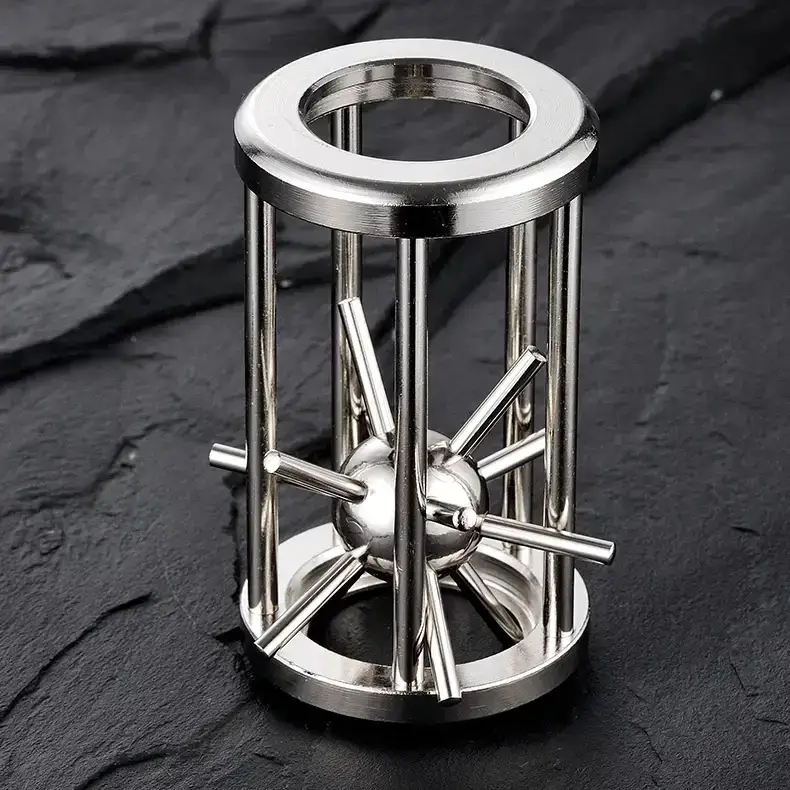
These are the classic, often vintage-feeling puzzles of looped and bent wire. The goal is almost always separation: free the ring from the heart, extract the thorn from the cage, or untwist two stubbornly linked hooks. Their skill profile is heavily weighted toward hand-eye coordination and visualizing paths in open space. Success requires mentally rotating the pieces, judging clearances, and executing a precise sequence of twists and slides. The feedback is immediate—you can see the gap you need to exploit. For younger solvers, these can be more intuitive than opaque cast puzzles, but they demand patience as a wrong move often means backtracking the entire sequence. Metal wire puzzles for children often fall here, but their suitability hinges entirely on the gauge of the wire and the size of the components. (If you’re looking for a curated list of the most satisfying designs, our guide to the best metal disentanglement puzzles dives deeper.)
2. Cast Brainteasers: The Riddle in Your Palm
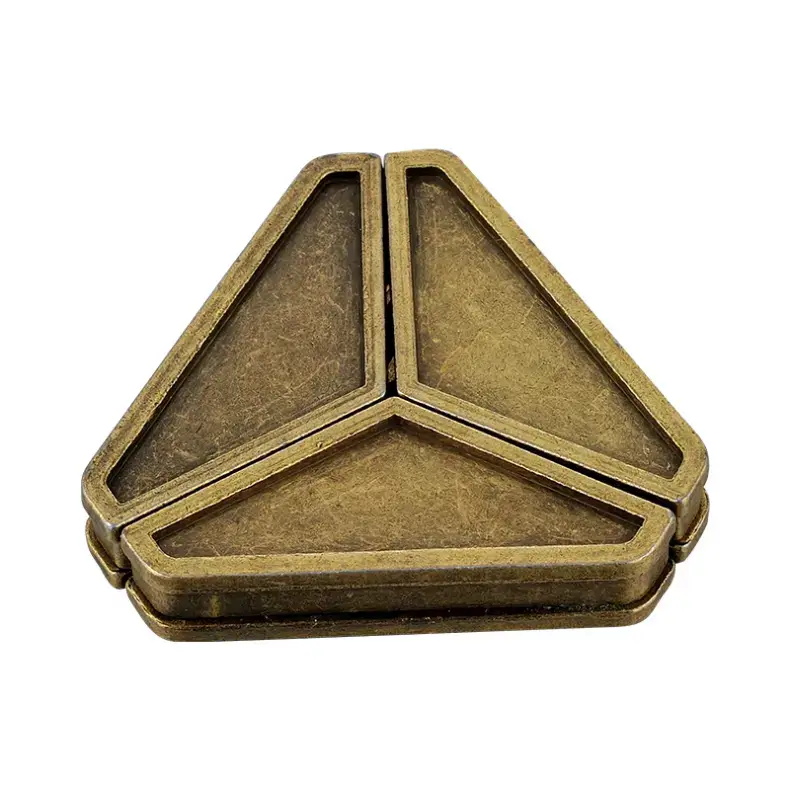
This is the domain of brands like Hanayama, where puzzles are dense, often symmetric objects machined from cast metal. The goal is typically to take them apart and reassemble them, but the mechanism is hidden. You’re not navigating a visible path; you’re searching for a hidden seam, a magnetic catch, or a counter-intuitive rotational axis. Solving them leans heavily on spatial awareness and lateral thinking—you must hypothesize about internal structures you cannot see. The tactile feedback is supreme: the cool heft, the precise machining, the definitive click of alignment. Hanayama’s own six-level difficulty system (from 1 to 6) is a better guide than any generic age range, but even a Level 1 demands a degree of systematic exploration and hypothesis-testing that differs fundamentally from wire puzzles. This is where you often see Mensa rated or for ages 12 and up labels, speaking more to cognitive complexity than safety alone. For a full breakdown of their line, see our dedicated Hanayama puzzle buying guide.
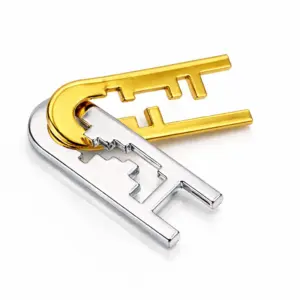
Alloy Triangle Lock Puzzle — $11.88
3. 3D Model Kits: Construction with Patience
These are the engineering cousins: flat sheets of laser-cut or stamped stainless steel that you painstakingly bend, twist, and connect into a model ship, motorcycle, or cathedral. They are less about a singular “aha!” and more about a sustained, methodical build process. The skill profile shifts dramatically toward microscopic fine motor skills, the ability to follow complex sequential diagrams, and the manual operation of tools (tiny pliers, tweezers). The cognitive load is in translation—converting 2D instructions into a 3D object. This category is almost universally tagged ages 14+ due to the universal presence of small parts and the very real risk of sharp edges from the metal sprues. While marketed as 3D metal puzzle kits for teens and adults, they are a world apart from a simple disentanglement puzzle in both required maturity and manual precision.
Each type, therefore, maps to a different developmental sweet spot. A child with excellent fine motor control but less-developed abstract reasoning might thrive with a simple wire puzzle but be utterly baffled by a cast metal brainteaser. Conversely, a teen with strong spatial skills but a low tolerance for fiddly assembly might adore a Hanayama puzzle but abandon a 3D metal puzzle kit in frustration. With these profiles in mind, we can now move beyond the box’s generic claim and start matching the puzzle’s inherent tensions to a solver’s ready skills.
Forget the Number on the Box: The 4 Real Factors That Determine a Good Fit
A metal puzzle’s official age suitable label is a crude filter at best, combining safety warnings with a guess at average difficulty. A for ages 12 and up tag might simply denote small parts, while a metal wire puzzle labeled ages 5 and up could still utterly stump a patient 10-year-old. True suitability hinges on four concrete, observable factors: fine motor control, spatial reasoning, frustration tolerance, and safety awareness. Ignoring any one is how a supposedly perfect gift gathers dust.
1. Fine Motor Control & The “Fumble Test”
This is the most tangible factor. It’s not just about holding a piece, but about executing precise, controlled manipulations—a pinch, a twist, a slide with consistent pressure. I assess this with what I call the “Fumble Test.” Give a child a small, smooth object like a polished stone or a large bead. Can they pass it deliberately from hand to hand without dropping it? Can they rotate it between thumb and forefinger? If yes, they have the baseline dexterity for beginner disentanglement puzzles.
Where puzzles fail: A cast metal brainteaser like the Hanayama Infinity (Level 4) has grooves that require aligning components with millimeter precision while applying rotational force. A child with age-appropriate but still-developing fine motor skills will fumble this alignment repeatedly, not due to a lack of intelligence, but because their neuromuscular control isn’t yet calibrated for such fine work. Conversely, a puzzle with large, chunky wire components passes the Fumble Test easily, making it accessible to younger solvers who can then focus on the problem-solving aspect.
2. Spatial Reasoning & Mental Manipulation
Metal puzzles are 3D problems. Solving them requires mentally rotating objects, visualizing hidden pathways, and predicting how components will interact in space—a suite of skills under the umbrella of spatial awareness. A child who excels at building with LEGO or who intuitively navigates a climbing frame often has strong spatial reasoning.
Where puzzles fail: This is the great divider between wire puzzles and cast brainteaser puzzles. A simple wire puzzle like a “Horseshoe & Ring” presents a visible, open-loop problem. The spatial challenge is limited to tracing a path. A Mensa-rated cast puzzle, however, often involves internal channels, mirrored movements, and components that occlude each other. The solver must build and hold a mental model of the puzzle’s interior mechanics. A brilliant 8-year-old reader might lack this specific cognitive capacity for mental manipulation, leading to random trial-and-error rather than directed exploration. (This is the core grammar explored in guides like our deep dive on how to unlock any metal puzzle mechanics).
3. Frustration Tolerance & Iterative Thinking
This is the emotional and metacognitive factor. Solving a mechanical puzzle is a process of failed hypotheses. A high frustration tolerance allows a person to think, “That didn’t work; what did I learn?” rather than “I quit.” Iterative thinking is the ability to systematically vary one’s approach based on past failures.
Where puzzles fail: This is the most common point of breakdown for children’s puzzles that are technically within their motor and spatial abilities. A puzzle marketed as a gift for teenagers might be physically simple but require 15 minutes of persistent, non-linear experimentation. A child used to instant gratification or quick-win games may abandon it after 90 seconds, not because it’s too hard, but because their process hasn’t matured. You can gauge this by observing how they approach a multi-step board game or a complex craft project. Do they rail against the rules, or lean into the process?
4. Safety Awareness: Beyond “Small Parts”
The label “small parts” is mandatory, but it’s only the beginning. Safety for metal puzzles involves three layers: choking hazard size, sharpness, and the intelligent use of force. A toddler’s instinct to mouth objects is an obvious red flag, banning any metal puzzle under age 3. But for older children, you must consider sharp edges from stamped metal (common in cheaper wire puzzles) and the potential for pinched fingers in mechanisms.
Where puzzles fail: A 3D metal puzzle kit labeled ages 14+ includes tools and tiny pieces with burrs. A responsible 12-year-old with great fine motor skills might still lack the situational awareness to consistently point snips away from themselves or to check for sharp remnants on a freshly removed piece. Similarly, a strong 9-year-old might apply excessive force to a seemingly “stuck” cast puzzle, risking damage or even injury. Supervise children initially doesn’t just mean watch them; it means actively teaching them how to handle the materials—how to feel for a burr with a fingertip, how to apply steady pressure instead of a jerk.
In practice, a puzzle fails when it overmatches the solver on any one of these axes. A beginner metal brain teaser that’s spatially simple but requires needle-thread dexterity will frustrate the fumble-prone. A large, safe wire puzzle that’s spatially complex will baffle the concrete thinker. Matching a puzzle to a person means conducting a quiet audit of these four factors, looking past the birthday to the actual skills and temperament in front of you. It’s this audit that builds the foundation for our next step: the skill-based progression ladder.
The Skill-Based Progression Ladder: From First Fumble to Masterful ‘Snick’
The audit of skill, dexterity, spatial reasoning, and patience allows us to move beyond guesswork to a structured progression. A child’s first successful interaction with a metal puzzle should end with a feeling of capability, not confusion. This ladder, built from testing with my nieces and nephews and countless workshop visitors, maps developmental readiness to specific puzzle types and complexity, giving you the clarity to match a person to their perfect age-appropriate model.
The Framework: Decoding the Labels
Before we climb, understand the code. A manufacturer’s age rating is a legal hedge, a blend of safety liability and (sometimes) a guess at difficulty. “Ages 12+” on a Hanayama box primarily denotes small parts, not necessarily that a 12-year-old will solve it—some Level 6 puzzles stump most adults. “Ages 5 and up” on a wire puzzle set indicates the pieces pass a basic choking hazard test but says nothing about the spatial awareness needed to solve it. We’ll use these labels as safety baselines, then build our own skill-based tiers atop them.
The Progression Ladder
Age Band: 3-5 Years (Supervised Exploration)
* Puzzle Types: Large, simple wire disentanglement puzzles (single, thick-gauge loops); chunky, oversized “put-together” shapes with magnets.
* Complexity Level: Introductory. The goal is not complex solving but mastering basic manipulation: push, pull, twist. Pieces should be larger than a choke tube tester.
* Key Developmental Milestones: Basic hand-eye coordination; developing pincer grip; understanding “through,” “around,” and “under” as physical concepts.
* Product Examples & Notes: Coogam-style large wire rings or bent animal shapes. These are often marketed as metal puzzles for kids starting at ages 4 and up. Avoid any with small, attached beads or clasps. The fine motor skills demand is low, but supervise children closely to prevent non-puzzle-related poking or bending.
* Crucial Safety Notes: This is the only age band where metal puzzles are questionable. For toddlers under 3, the risks (sharp points, mouthing) almost always outweigh the benefits. Stick to wood and plastic. For 3-5, select puzzles you’ve personally handled: no sharp edges, no detachable parts, all pieces larger than their fist.
Age Band: 6-8 Years (Building Foundational Skills)
* Puzzle Types: Multi-piece wire disentanglement puzzles (2-3 linked components); simple cast puzzles with 1-2 obvious sliding motions; basic 2D metal brainteaser puzzles like the “T” puzzle.
* Complexity Level: Low to moderate. Solutions require systematic trial-and-error and the beginnings of mental rotation. The frustration tolerance test begins here.
* Key Developmental Milestones: Improved fine motor control for precise wiggling; ability to hold a spatial problem in mind for several minutes; learning to backtrack from a wrong path.
* Product Examples & Notes: Sets of classic wire puzzles (horseshoes, hearts, etc.) are ideal. For the older end (7-8), a Hanayama Level 1 puzzle like “O’Gear” can be a brilliant, satisfying stretch goal. Its movements are logical and geared (literally), providing clear tactile feedback. This is the prime zone for educational metal puzzles that teach cause and effect.
* Crucial Safety Notes: Stamped metal edges can be sharp; run your finger along seams before purchase. Even puzzles labeled ages 8 and up can have small protrusions. Supervision shifts from safety monitoring to gentle coaching when frustration spikes.
Age Band: 9-12 Years (The Conceptual Leap)
* Puzzle Types: Complex wire puzzles; the full range of Hanayama cast puzzles (Levels 1-3, venturing into 4); introductory 3D metal puzzles with larger, snap-together pieces (no tools).
* Complexity Level: Moderate to high. This is where abstract spatial reasoning and deductive logic become the primary tools. Puzzles transition from “manipulate” to “decode.”
* Key Developmental Milestones: Strong mental manipulation of 3D objects; ability to formulate and test hypotheses (“If I rotate this, the channel will align”); patience for extended, multi-step solutions.
* Product Examples & Notes: This is the sweet spot for Hanayama puzzles age rating discussions. A Level 2 puzzle like “Quartet” or “Delta” is often a perfect gift for a 12 year old who likes puzzles. They’re Mensa rated, machined to a satisfying standard, and solvable within a focused hour. For the problem-solving skills enthusiast bored of jigsaws, these are the definitive next step. A beginner metal brain teaser for this group has multiple independent moving parts.
* Crucial Safety Notes: Standard small parts warnings apply. The new risk is psychological: choosing a puzzle with a difficulty level so high it crushes confidence. A Level 4 Hanayama (e.g., “Equa”) may be too abstract. Stick to Levels 1-3 unless you know the child has exceptional persistence. If you need a roadmap, our resource on Hanayama puzzle solutions by difficulty level can help gauge the true challenge.
Age Band: 13-16 Years (Precision & Patience)
* Puzzle Types: Advanced cast puzzles (Hanayama Levels 4-5); intermediate 3D metal model kits requiring simple tools; complex mechanical puzzles with hidden mechanisms.
* Complexity Level: High. Solutions require sustained focus, precise dexterity, and often understanding of sequential constraints or mechanical principles.
* Key Developmental Milestones: Adult-level fine motor precision; advanced cognitive development for planning long sequences; the discipline to work methodically over multiple sessions.
* Product Examples & Notes: True 3D metal puzzles like model kits from Engino or simpler Metal Earth kits enter here. They demand careful bending, twisting, and following complex diagrams. For pure logic, Hanayama’s “Infinity” (Level 4) or “Vortex” (Level 5) offer profound challenges. These are excellent gifts for teenagers seeking a deep, screen-free engagement.
* Crucial Safety Notes: Ages 14+ warnings on model kits are for the tools (small snippers, pliers) and sharp, detachable metal sprues. Assess the teen’s responsibility and manual skill before gifting a kit requiring tools. Teach safe tool use: always cut away from yourself, deburr edges.
Age Band: Adult (The Art of the Puzzle)
* Puzzle Types: Expert-level cast puzzles (Hanayama Level 6, bespoke artisan puzzles); complex 3D metal model kits with hundreds of pieces; collectible disentanglement puzzles requiring non-intuitive, counter-rotational solutions.
* Complexity Level: Expert to masterpiece. These are objects of study, designed to subvert expectations and reward deep, often non-linear, thinking.
* Key Developmental Milestones: Mastery of heuristic problem-solving; high tolerance for ambiguity and sustained failure; appreciation for material and machining as part of the experience.
* Product Examples & Notes: This is the realm of puzzles like Hanayama’s “Enigma” (Level 6) or intricate model kits of full engines or architecture. The difficulty levels of metal puzzles peak here, often involving solutions that take days or weeks, not hours. The difference from a teen’s puzzle is often one of subtlety and refinement—a toleranced fit measured in thousandths of an inch, a solution path that’s elegant rather than merely logical. For a focused look at this connoisseur’s world, see our guide to the best metal puzzles for adults.
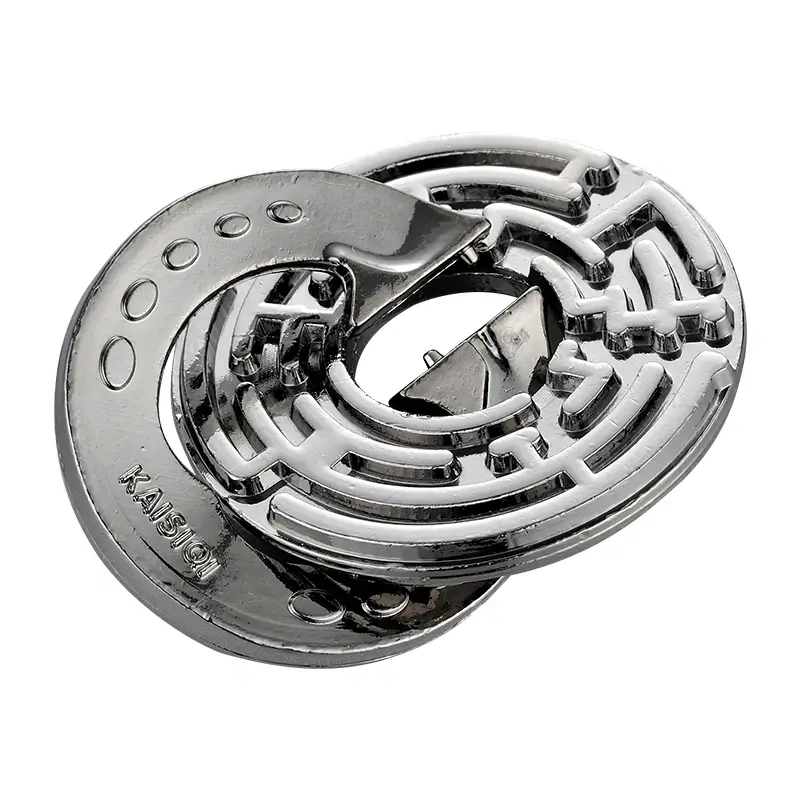
A puzzle like the Maze Lock shown above exemplifies a high-level adult puzzle. Its dual-sided maze requires coordinating two independent sliders through a shared path—a task demanding extraordinary spatial mapping and patience. It’s the kind of puzzle you tap thoughtfully against your ring, listening to the solid thunk of its construction, knowing the solution will be a hard-won victory.
The Ladder in Practice: Flowing Between Rungs
This ladder isn’t rigid. A dexterous 10-year-old with puzzle experience might tackle a 3D metal puzzle from the teen bracket. A novice adult should start at the 9-12 level with a Hanayama Level 2. The tiers show typical readiness. The most accurate gauge is the “Fumble Test”: hand them a candidate puzzle. If their fingers naturally find the key moving part and they begin testing movements with curiosity rather than confusion, it’s likely a fit. If their hands seem lost, fumbling over the object as a monolithic whole, step down a rung.
The goal is to place a puzzle in their hands that meets them where their skills are, then invites them to reach just a little further. That’s where the real growth—and the unmistakable, masterful snick of a perfect solve—happens.
Safety Deep Dive: Sharp Edges, Small Snaps, and the Truth About Tools
The confidence you gain from matching a puzzle to a recipient’s skill level must be tempered by a clear-eyed assessment of physical risk. Safety isn’t a single “yes” or “no” but a layered evaluation of parts, edges, and required tools. For metal puzzles, the primary hazards are ingestible small parts, sharp edges from manufacturing, and the tools included with 3D metal model kits.
Start with the smallest component. The official “small parts” cylinder tester for choking hazards has an interior of 1.25 inches—but that’s a regulatory floor, not a practical guide. I perform the “Fumble Test”: a part that can be securely pinched between an adult’s thumb and forefinger, and doesn’t immediately slip from a child’s grip during deliberate manipulation, is “fumble-able.” True hazards are items like the tiny snaps or rings in some wire puzzles for children marketed for ages 4-5; these aren’t for puzzling, they’re fasteners, and they fail the test instantly. For any child under 8, or any older child who still mouths objects, treat any puzzle with a detachable piece smaller than a grape as a supervised-only activity.
The second hazard is subtler: sharp edges and burrs. Stamped sheet metal puzzles (common in cheaper disentanglement puzzles) often have a discernible, sometimes sharp, ridge along their cut edge. Cast metal puzzles, like most Hanayama brand puzzles, are typically smoother, but a poor-quality casting or a rough parting line can leave a sharp seam. Before handing any puzzle to a child, run your fingertip—sensitive like a mechanic’s—along every edge and corner. You’re feeling for the catch, not just obvious sharpness. A burr that catches a cotton ball will catch soft skin. For children under 8, I actively avoid stamped metal puzzles and inspect all cast pieces. (This habit of inspection is useful beyond safety, as a burr can mechanically bind a puzzle’s movement, a topic I explore in my guide to metal puzzles that don’t break safety tips.)
The most complex hazard category involves tools. 3D metal puzzle kits for teens and adults often include miniature pliers and tweezers. The question isn’t just “are the tools safe?” but “is the user ready for the consequence of misusing the tools?” A metal part held in pliers becomes a leveraged force. Forcing a bend can cause the part to slip and snap toward the face, or the pliers to crush a delicate connection tab. This isn’t about labeling tools “dangerous”; it’s about recognizing the required fine motor control and cause-effect understanding. In my shop class, we started with plastic model sprue cutters before graduating to metal. Similarly, I wouldn’t recommend a kit with pliers for anyone under 12 without direct, sitting-beside-them supervision. For a responsible, patient teenager, these tools become an extension of their problem-solving, teaching mechanical empathy—the feel of metal reaching its yield point before it deforms.
Ultimately, supervise children is not a generic warning but a sliding scale. For a 6-year-old with a metal wire puzzle, supervision means being in the room, ensuring pieces don’t go mouths. For a 10-year-old attempting their first cast puzzle, it means being available to talk through frustration. For a 13-year-old with a 3D metal model kit, it means a initial session on how to read diagrams, use the tools with control, and when to walk away before forcing a fit. This layered vigilance doesn’t limit the experience; it safeguards it, ensuring the only thing a puzzle challenges is the mind, not the body.
Why ‘Adult’ Metal Puzzles Aren’t Just Harder Kids’ Toys
The transition from child-suitable to adult puzzles isn’t a linear increase in difficulty; it’s a fundamental shift in what the puzzle demands of you. While a child’s puzzle tests developing spatial awareness and hand-eye coordination, an adult-suitable puzzle—typically marked for ages 12 and up or ages 14+—challenges a matured capacity for abstract reasoning, sustained patience, and an appreciation for mechanical elegance. A Hanayama Level 6 isn’t just a “harder” Level 2; it operates on a different plane of logic.
This difference manifests in three subtle but critical ways. First is the mechanism’s language. A child’s disentanglement puzzle often relies on a single, discoverable path. An adult cast brainteaser, however, speaks in a vocabulary of false leads, concealed alignments, and movements that feel counterintuitive. Solving them requires you to suppress obvious force and listen to the tactile feedback—the almost imperceptible shift in weight, the millimeter of play in a seemingly fixed joint. This is why many Mensa-rated puzzles captivate adults; they reward a systematic, almost scientific method of hypothesis and testing that a younger mind may find tedious rather than intriguing.
Second is the sheer economy of patience required. For a 10-year-old, a 10-minute struggle is a marathon. For an adult tackling a complex 3D metal puzzle kit with hundreds of pieces, the build is a project measured in hours or even sittings. The satisfaction is deferred, built on the cumulative success of sub-assemblies. The frustration tolerance needed isn’t about a single “stuck” moment, but about maintaining focus and precision through repetition—bending 36 identical tabs on a model’s engine block, for instance. This makes them exceptional gift for teenagers who have outgrown instant gratification and are ready for deep, immersive projects.
Finally, adult puzzles engage a sense of connoisseurship. The appeal isn’t merely in the “aha!” but in the “ahh.” It’s in the appreciation of the machined finish, the heft of a solid alloy, the definitive snick of a precisely toleranced part seating home. Where a child interacts with a puzzle as a problem to conquer, an adult often engages with it as an object to admire—both for its design and for the state of focused flow it induces. In a world of screens, these puzzles offer a uniquely physical, meditative anchor. This appreciation for precision is taken to an extreme in puzzles like the Zirel metal puzzle precision engineering, where the challenge is as much about finesse as it is about logic.
So, when you see metal puzzles marketed to adults, understand you’re not just buying a harder task. You’re selecting a tool for focused, screen-free immersion, an object lesson in precision, and a tactile piece of functional art. The skills they hone—systematic thinking, fine motor control applied to delicate tasks, sustained attention—are profoundly adult. They validate the search for a gift that challenges not just the fingers, but the way one thinks.
The Matchmaking Flowchart: From Recipient to Perfect Puzzle
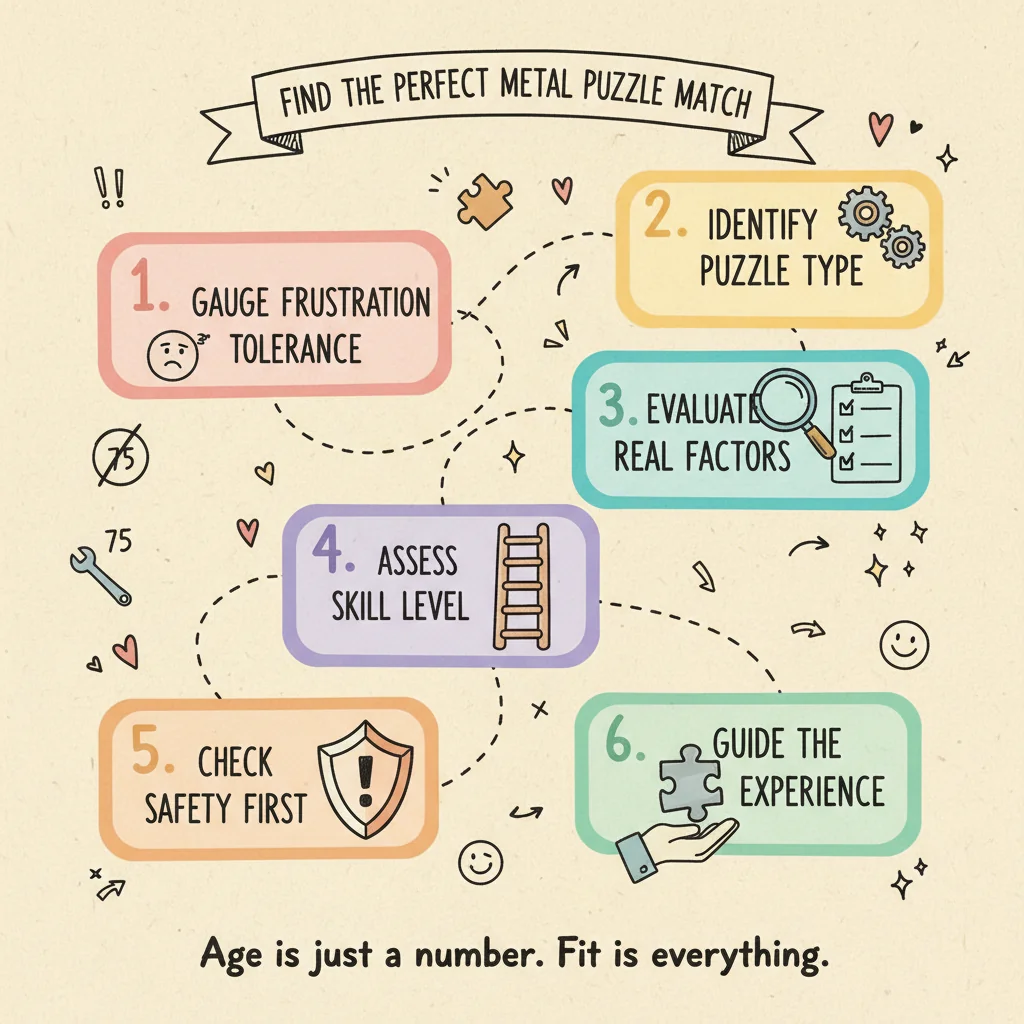
The perfect puzzle match is not found on a box, but in a quick, four-question diagnostic. By cross-referencing the recipient’s profile with the skill-based progression ladder, you can bypass marketing claims and pinpoint the ideal mechanical challenge with 90% confidence. It turns the anxiety of choice into a simple, systematic process.
Let’s build that process. Grab a mental notepad and walk through these key questions.
1. What is the recipient’s age and core capability?
This is your safety and baseline fine motor skills check.
* Under 5: The answer is simple. Standard metal puzzles are not suitable. Stick to large, plastic or wooden alternatives. No exceptions.
* 5-8: Look only at puzzles designed for this age bracket, typically large-diameter metal wire puzzles with no detachable small parts. Your primary filter is “The Fumble Test”—can every piece be easily gripped by a child’s hand? This is the zone for supervise children closely.
* 9-12: The range expands to simpler cast brainteaser puzzle designs (think Hanayama Level 1-2) and introductory 3D metal puzzles with sub-50 pieces and no sharp edges. Fine motor control is now capable, but frustration tolerance is the new limiting factor.
* 13+ & Adults: All puzzle types are mechanically accessible. Your selection now hinges entirely on the next three questions about experience and temperament.
2. What is their puzzle-solving resume?
Match experience to complexity to avoid boredom or immediate defeat.
* Novice (Only simple jigsaws or no puzzle background): Start at the absolute beginning of the type you’ve chosen. For a teen or adult novice, this means a Hanayama Level 1 (e.g., “O’Gear”) or a basic two-piece disentanglement puzzle. You are building confidence in the language of metal puzzles.
* Intermediate (Enjoys Lego sets, moderate jigsaw puzzles, or has solved a few basic brain teasers): This is the sweet spot for most gift for teenagers or engaged pre-teens. Move to Hanayama Level 2-3, or a 3D metal model kit in the 50-150 piece range. They have the spatial awareness to follow diagrams and the patience for multi-step solutions.
* Advanced (Seeks out logic puzzles, complex Lego Technic, or has a collection): Here is where you tap into adult puzzles and connoisseur-level items. Look for Hanayama Level 4+, intricate multi-objective disentanglements, or complex model kits with hundreds of pieces. Their cognitive development is geared towards appreciating subtlety and precision over sheer novelty.
3. What is their temperament with tricky tasks?
This determines the “flavor” of challenge.
* The Quick Wins Learner: Needs puzzles with clear, incremental feedback. Choose puzzles with obvious movements (like sliding or rotating parts) rather than those requiring hidden, counter-intuitive maneuvers. A metal wire puzzle with a clear hook-and-loop is better than an abstract cast puzzle that feels “stuck.”
* The Persistent Tinkerer: Can handle periods of seeming stagnation. They are ideal candidates for cast puzzles where the solution path isn’t linear, and for the repetitive, meditative assembly of 3D metal puzzles.
* The Easily Frustrated: Be conservative. Even if they are 12 and capable, choose a puzzle one level below what you think they can handle. The goal is the “aha!” not the agony. The difficulty level on the box is less important than ensuring a positive experience.
4. What is your supervision & safety context?
This is the final, practical filter.
* Direct, Active Supervision: You can consider puzzles at the very upper limit of an age group’s capability, guiding them through frustration points and ensuring safe handling of any smaller components.
* Independent Play Required: You must dial back. Choose puzzles with no small parts, no sharp edges, and no required tools. This almost always means a simpler wire puzzle or a robust, one-piece cast puzzle for older kids and adults.
Putting It All Together:
A 10-year-old (Age 9-12) who builds mid-level Lego sets (Intermediate) but gets snippy if stuck for more than 10 minutes (Easily Frustrated) playing independently (Independent Play) needs a puzzle that feels substantial but offers a logical path. Recommendation: A Hanayama Level 2 cast puzzle like “Quartet,” which has a satisfying, discoverable rotational solution, or a small, sub-30-piece 3D metal puzzle kit of a simple object like a dinosaur skeleton. You’ve matched capability, provided a slight stretch, and respected the real-world context. That’s how you translate age labels into a genuinely satisfying puzzle progression.
Beyond the Gift Wrap: How to Introduce a Metal Puzzle for Success
The right puzzle is only half the equation; how you introduce it is the key to unlocking a rewarding experience rather than a frustrating one. For children under 12, success almost always hinges on an adult’s initial framing, turning a solitary challenge into a guided exploration session of 15-20 minutes.
Your role is not to solve it for them, but to set the stage. Start by managing the goal: “Let’s see how all these parts move together,” works better than “Let’s solve this right now.” Demonstrate respectful handling—tapping the pieces to appreciate the material’s heft, examining the machined finish, and listening for subtle clicks. This isn’t just play; it’s a direct exercise in hand-eye coordination and spatial awareness.
When they get stuck (and they will), offer non-spoiler hints that reinforce problem-solving skills. Phrases like, “Try holding it from the other side,” or “What happens if you rotate this part against gravity?” guide their process without robbing them of the discovery. Watch their posture and grip. White knuckles and a fixed stare are signs that frustration tolerance is running low. That’s your cue to suggest a break: “Let’s put it on the shelf and come back with fresh eyes tomorrow.” This teaches persistence, a far more valuable lesson than any single solution.
For true educational metal puzzles, the value is in the shared deconstruction of a problem. Your participation validates the effort. When the final piece slides home with that definitive snick, the victory is communal. You’ve given more than a metal brainteaser puzzle; you’ve provided a framework for tackling complex, tactile problems—a skill that extends far beyond the puzzle table.
Your final step? Point them to a classic. Once they’ve tasted success, introduce them to the history in their hands with something like the timeless Devil cast puzzle brain teaser, a century-old design that proves good mechanics are timeless. Then, step back and watch the confidence you helped build take over. You’ll have done more than give a toy; you’ll have opened a door to the rich world of mechanical puzzles, a category defined by physical manipulation to achieve a goal, and specifically to the art of the disentanglement puzzle, where victory is a quiet, satisfying separation.