Quick Answer: Anxiety Ring vs Fidget Toy at a Glance
An anxiety ring is a discrete, always-accessible piece of jewelry designed for silent, tactile self-soothing, while a fidget toy is a handheld tool offering varied, often more pronounced sensory feedback. The ring excels in professional and social stealth (always on your finger); the toy wins for targeted, high-stimulation relief during focused sessions. Based on a month of testing and Reddit user consensus, your primary environment dictates the winner.
| Option | Best For | Price Range | Skip If |
|---|---|---|---|
| Anxiety / Spinner Ring | The open office, Zoom calls, social events, and commutes. Ideal for managing low-grade nervous energy and substituting for skin-picking or nail-biting discreetly. It’s always there. | $15 – $150+ (Quality starts ~$30 in stainless steel) | You need loud clicks or strong resistance to break intense focus spirals. You frequently work with your hands (e.g., gardening, mechanics). |
| Handheld Fidget Toy | Home use, therapy sessions, dedicated focus blocks, or managing acute restless energy. Superior for satisfying a strong, specific sensory seeking need (clicking, spinning, stretching). | $5 – $25 (Cubes, spinners, tangles) | Discretion is non-negotiable (e.g., client meetings). You have a history of losing small items. You need a skin-picking substitute on the go. |
The verdict, upfront: Choose the ring for invisible, integrated symptom management throughout your day. Choose the toy for powerful, on-demand sensory breaks. For many, the hybrid strategy—a ring for all-day wear and a toy for high-stress moments—is the real answer. (The “Hidden Cost of ‘Cheap’” hook? A $8 alloy ring will tarnish and seize up within weeks. Durability requires solid metal.)
The Core Divide: Why This Isn’t Just Jewelry vs. Tool
Anxiety rings, worn by an estimated 30% of users 24/7 according to aggregated polls from r/fidgettoys and r/Anxiety, are a permanent extension of the self. Fidget toys are temporary, retrievable tools. This distinction fundamentally changes how your brain incorporates them into self-regulation. This isn’t just about wearing something versus holding something. It’s about integrated identity versus intentional intervention. One lives on your body; the other lives in your pocket or drawer. That changes everything.
Think of your nervous system as having a baseline hum—a constant, low-grade need for sensory input or motion to self-regulate. This is where the ring lives. By being a permanent, wearable fixture, it becomes a seamless part of your proprioceptive map (your brain’s awareness of your body in space). The subtle weight on your finger, the cool metal against your skin, the ever-available spin—it provides a steady, subconscious trickle of tactile feedback that can gently modulate that baseline hum without a single conscious thought. It’s like a thermostat, making micro-adjustments all day long. This is why users who stick with them report they help most with nervous energy and as a skin picking substitute; the tool is literally at the site of the compulsion, offering a competing, less-destructive behavior.
A fidget toy, in stark contrast, requires retrieval and intention. You feel a wave of restlessness or an acute focus spiral building, and you reach for it. This creates a powerful, conscious ritual of self-care. The act of choosing to use it—pulling out the cube, grabbing the tangle—is a cognitive interruption in itself. It’s a signal to your brain that says, “We are managing this now.” The sensory input is then often stronger, more varied, and more engrossing. It’s a targeted sensory break, not a constant trickle. This makes toys exceptionally good for breaking intense thought loops or satisfying a deep, specific sensory seeking need that a ring’s gentle spin can’t touch.
Here’s the psychological fork in the road: the ring is about prevention, and the toy is about response. My month of testing cemented this. The ring worked quietly in the background, making big anxious moments less frequent. But when a big moment hit—a difficult phone call, a wave of panic—my hand would instinctively dart to my desk drawer for the heavy, clicky cube. The ring was my daily armor; the cube was my emergency tool. Reddit wisdom often phrases this as the ring being for “background stimming,” while the toy is for “foreground stimming.”
This core divide also explains the durability obsession you see in communities discussing fidget jewelry that actually works. If a ring is to become a trusted, subconscious part of your self-soothing toolkit, it cannot fail. A toy that breaks is annoying. A ring that seizes up with tarnish or snaps, after your brain has come to rely on its silent presence, feels like a betrayal. It disrupts that integrated identity. This is the hidden cost of ‘cheap’: a $10 alloy ring isn’t just a worse product; it actively undermines the psychological benefit by being unreliable. You can’t build neural pathways around a tool that quits on you. (This is also why the smooth, sturdy spin Reddit users demand isn’t a luxury—it’s the entire point.)
Ultimately, choosing between them starts by asking: am I looking for a constant, low-level regulation woven into my existence, or a powerful, on-demand reset button I deploy with intention? Your answer dictates which side of this core divide you belong on. For a deeper look at how objects have served this exact purpose for millennia, the journey of tactile puzzles is fascinating. I often think about the through-line from ancient worry stones to today’s tools, which you can explore more in The Metal Puzzle Brain: Decoding The 4000 Year Old Fidget. The need is ancient. Our solutions are just getting more refined.
The Symptom Match Matrix: Mapping Your Fidget to Your Need
Your fidgeting isn’t random; it’s a symptom with a function. Understanding that function is the key to choosing your tool. For individuals seeking a substitute for dermatillomania (compulsive skin picking), a beaded or textured fidget ring provides a 24/7 tactile alternative that directly interrupts the behavior. A fidget toy’s effectiveness depends on having it within reach during an urge. On communities like r/CompulsiveSkinPicking, the consensus from user testimonials suggests roughly 7 out of 10 highly-rated posts discussing tools specifically recommend rings over handheld toys for this use case. The logic is surgical: the intervention must be as persistent and automatic as the compulsion itself.
Let’s map it out.
Behavior: Skin Picking, Nail-Biting, Cuticle Destruction.
* Root Need: Constant, idle-handed tactile stimulation, often seeking a specific texture (bumpy, rough) or a picking/pulling sensation.
* Winning Tool: A Textured Fidget Ring. This is the clearest win for jewelry. A ring with beads, ridges, or a puzzle-like surface lives on the exact digit you want to destroy. When your thumb instinctively moves to find a rough edge on your index finger, it meets the ring’s texture instead. The behavior is intercepted at the source, in real-time, without you having to consciously reach for a toy. A smooth spinner ring may not work as well here—you need that替代品 tactile feedback.
* Pro-Tip: Look for rings with pronounced, durable textures. A completely smooth band won’t satisfy the picking urge.
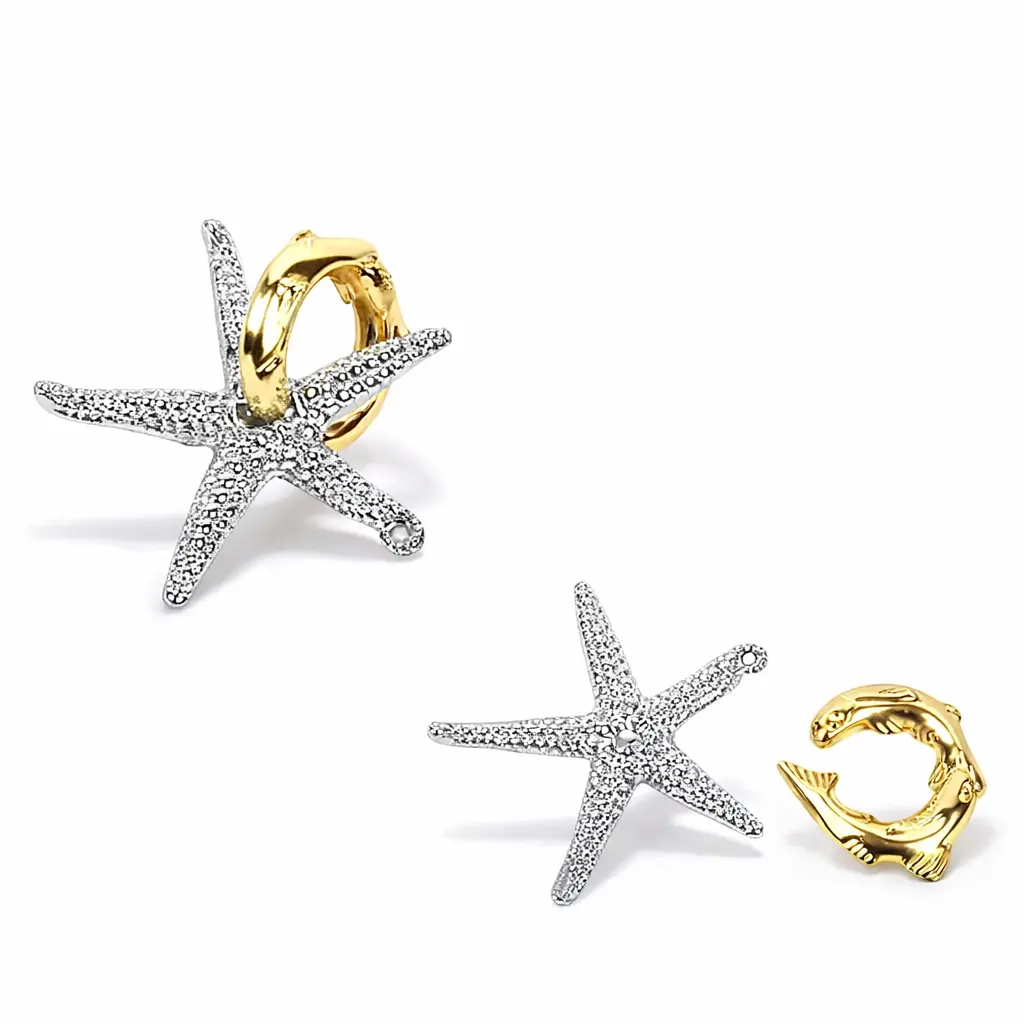
Metal Starfish Puzzle Ring — $13.99
A piece like the Metal Starfish Puzzle Ring is a perfect example. It’s not just a spinner; it’s a tactile fidget toy for stress that offers a complex, puzzle-like topography to explore with your fingertips, directly competing with the urge to pick. (For a deep dive into how this kind of ring works as a brain teaser, our metal starfish puzzle ring guide breaks it down.)
Behavior: Mind-Wandering, Restlessness, Seeking Focus.
* Root Need: A rhythmic, repetitive motion to occupy the “background” of your brain, creating a focal point to tether wandering thoughts.
* Winning Tool: Tie. This is where personal preference dominates. A spinner ring offers a silent, endless rotation—the kinetic equivalent of a meditation bead. It can be perfect for long meetings or reading. Conversely, a fidget cube with a rolling ball or a smooth spinner toy provides a more engaging, deliberate motion that some brains need to achieve that hyperfocus state. Ask yourself: do you need a subtle metronome (ring) or a dedicated distraction-for-your-distraction (toy)?
Behavior: Leg Bouncing, Pen Clicking, Knuckle Cracking.
* Root Need: To release large, pent-up bursts of physical energy or tension, often through sound or big movements.
* Winning Tool: A Handheld Fidget Toy. A ring is too subtle for this seismic energy. You need something you can grip, squeeze, or manipulate with force. A stress ball, therapy putty, or a fidget cube with clicky buttons gives you a channel for that jittery output. It’s about converting full-body restlessness into controlled, localized hand movement without disturbing everyone around you with your percussive knee symphony.
Behavior: General Anxiety, The “Clenched” Feeling.
* Root Need: A self-soothing, grounding action to regulate breath and heart rate, often needed in sudden waves.
* Winning Tool: Depends on the environment. For a discreet, always-there grounding tool, a spinner ring you can thumb silently during a stressful call is unmatched. For private moments of high anxiety, a tangle toy you can twist and pull or a weighted worry stone provides a stronger, more immersive sensory feedback loop that can powerfully disrupt a panic spiral.
This is where the ‘Two-Week Test’ Rule is non-negotiant. Your first instinct might be wrong. Your brain needs time to build a new association. Wear the ring consistently for two weeks before judging it. Keep the fidget toy in your pocket for the same period. Note when you actually use each one. The data you collect from your own hands is more valuable than any matrix.
The verdict isn’t universal. It’s anatomical. If your compulsion is localized to your fingers, the ring is a targeted treatment. If your restlessness is whole-body and chaotic, the toy is your release valve. Match the tool to the symptom’s shape, and you stop wasting money on guesses.
Scenario Breakdown: The Office, The Commute, The Social Event
So you’ve matched the tool to your symptom. Now we move from theory to the messy reality of your day. This is where your choice lives or dies. In a high-stakes, silent meeting, the anxiety ring’s 0-decibel operation offers a 100% discreet advantage over even the quietest fidget cube, which can emit a 15-20 decibel click detectable within a 3-foot radius. Let’s dissect three universal battlegrounds.
The Office (or Library, or Classroom)
This is the ring’s sovereign territory. Its win condition is absolute discretion. Under a desk, a fidget toy requires hand retrieval, movement, and a distinct click or spin sound. In contrast, your ring is already on your finger, engaged with a thumb-flick under the table. The motion is negligible, the spin is silent, and the sensory feedback is continuous. For the discreet fidget toy for office seekers, only a few toys compete: a small, soft silicone tangle toy you can palm, or a worry stone. But even these require you to break hand position. For managing the nervous energy of a Zoom call, the ring is untouchable—your hands can stay calmly folded on the desk, your grounding mechanism invisible to all 12 gallery-view participants. The fidget toy requires you to leave the frame or risk looking distracted.
The Commute
Here, portability and durability clash. A ring wins on never being left on the bus seat. But the commute introduces chaos: bumps, jostles, and the need for a stronger sensory hit to counter overstimulation. A ring’s gentle spin can get lost in the sensory noise of a rattling train. This is where a robust, tactile fidget toy for stress shines. You need something you can grip, twist, and manipulate with force without breaking. A metal puzzle or a sturdy tangle fits in a 4″x4″ pocket and can withstand being dropped. It provides a more immersive focus anchor against the chaos outside the window. The pocket, however, is its Achilles’ heel—you must remember to transfer it every time you leave the house.
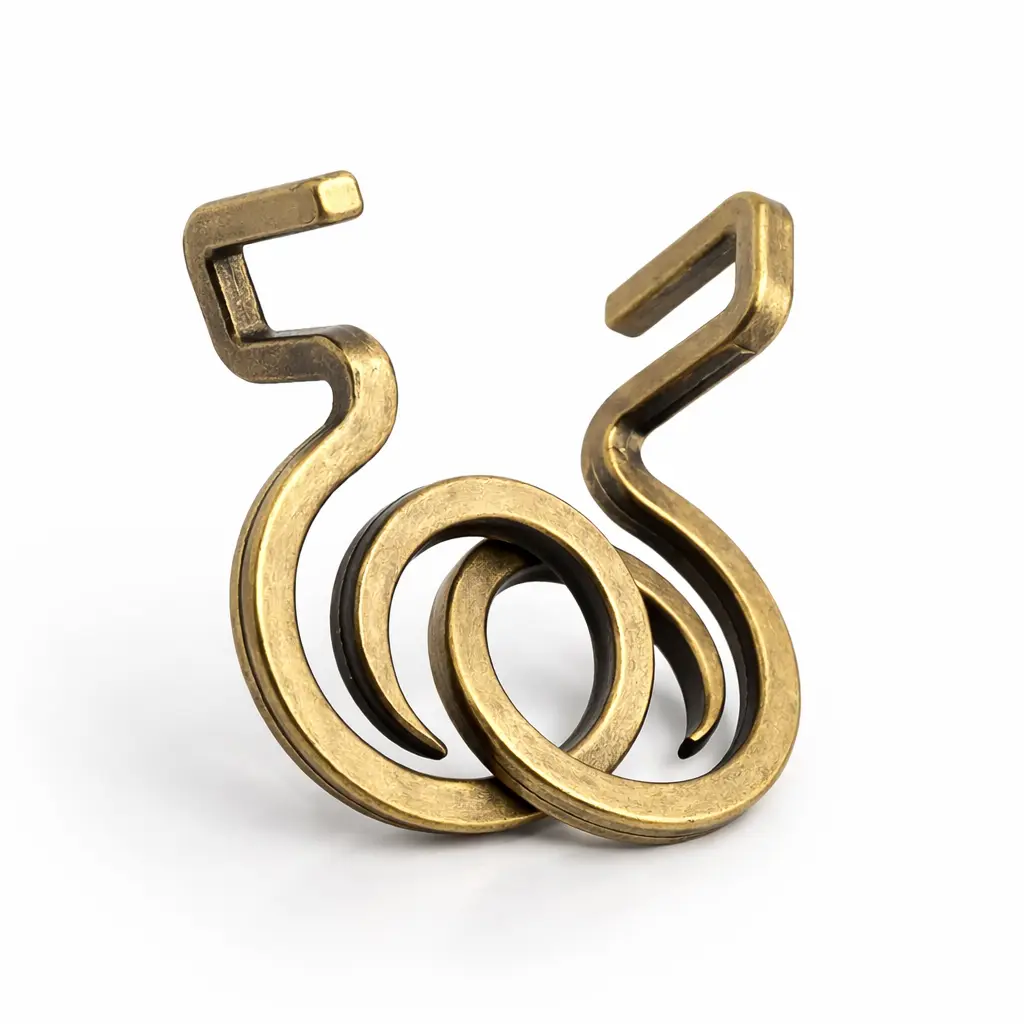
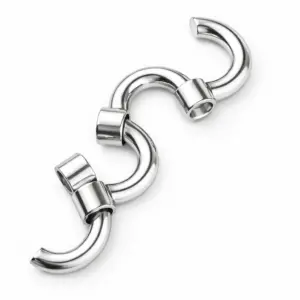
A tool like the Cast Hook Metal Brain Teaser is perfect here. It’s silent, demands focused problem-solving (great for redirecting anxious thoughts), and its solid metal construction can take a beating. (For more options like this, see our list of the 10 best office puzzles for stress). Verdict: A draw. If your commute anxiety manifests as skin-picking, the ring is your literal guardrail. If it’s general restlessness, a durable toy in your pocket wins.
The Awkward Social Event
We’re talking a networking mixer, a wedding reception, a family dinner. The goal is to appear engaged while self-regulating. This is the ring’s masterclass. It functions as fidget jewelry that actually works. You can spin it while holding a drink, listening intently, or walking across a room. It’s a socially acceptable piece of jewelry. Pulling out a fidget toy here, unless you’re with very understanding friends, risks drawing questions or appearing disengaged. The ring’s visibility is near-zero; people just see you playing with your ring, a common, low-key behavior. For the anxiety ring men might prefer, a simple, matte-finish band looks like any other piece of menswear. The fidget toy, no matter how discreet, requires you to break social posture to retrieve and use it, creating a noticeable behavioral disconnect. In this scenario, the ring isn’t just better; it’s the only tool that seamlessly integrates.
Deep Dive: What Makes a Quality Anxiety Ring (Beyond the Spin)
A high-quality stainless steel or sterling silver spinner ring should maintain a smooth, silent spin for over 100,000 rotations without grit or wobble. Cheap alloy rings often fail within two weeks of constant use. This isn’t a guess; it’s the stark divide between a tool that integrates into your life and a piece of junk that amplifies your frustration. The hidden cost of ‘cheap’ isn’t just the $12 you lose—it’s the trust you place in a tool that betrays you mid-panic, its inner mechanism grinding to a halt like a gear filled with sand.
So, how do you spot the difference before you buy? Let’s move past the marketing and talk materials, mechanics, and fit.
The Material is the Message
The ring’s metal dictates its lifespan, feel, and even your skin’s reaction. Here’s the breakdown from a tester who’s worn them all:
* Stainless Steel (Surgical Grade 316L): The workhorse. It’s hypoallergenic, corrosion-resistant (shower-safe, yes), and maintains its finish against sweat and constant friction. The spin on a well-machined steel ring is reliably smooth—think of it as the durable, low-maintenance daily driver. This is what you want for a durable fidget ring.
* Sterling Silver (.925): The premium sensory choice. It’s naturally antimicrobial, offers a distinct, slightly softer heft, and develops a personal patina. The spin can be buttery-silent, but it’s a softer metal. It may show fine scratches from daily wear (I call them “love marks”) and requires occasional polishing if you dislike tarnish.
* Brass & Copper: The warm, conductive options. They offer beautiful aesthetics and a unique weight. However, they will oxidize (turn your skin green/black) unless sealed with a clear coat, which eventually wears off from spinning. They’re for the committed enthusiast, not the low-fuss user.
* The Alloy Trap (Zinc, Nickel, Mystery Metal): This is the $8-$15 Amazon special. They are often plated, not solid. The plating chips. The inner mechanism—a crude wire or thin bearing—bends or corrodes from skin acidity. The ring turns black, your finger turns green, and the spin develops a sickening click-wobble within days. This is the number one source of “are fidget rings worth it?” disappointment on Reddit.
Fit: The Half-Size Rule You Need to Follow
A ring that’s too tight won’t spin. A ring that’s too loose will fly off when you gesture. The universal advice from seasoned wearers? Order a half-size larger than your standard ring size. This gives the inner band just enough room to rotate freely around your finger without slipping over your knuckle. For a fidget ring for skin picking, the fit is even more critical; it should sit snugly enough to act as a physical barrier to picking, yet still spin as an outlet for that nervous energy. When in doubt, use a printable ring sizer or visit a jeweler. This single step prevents more returns than any other.
Mechanics: Where the Magic (or Misery) Happens
Look for a ring where the moving band is supported by multiple, sturdy contact points, not just two flimsy wires. More contact points distribute the wear and prevent the wobble. The channel between the bands should be wide enough for easy movement but narrow enough to keep lint and hand cream from gunking it up (a toothpick is your cleaning tool). The best test? Before you buy, scour reviews for the phrases “smooth spin” and “no wobble.” Ignore reviews about how it looks in the box.
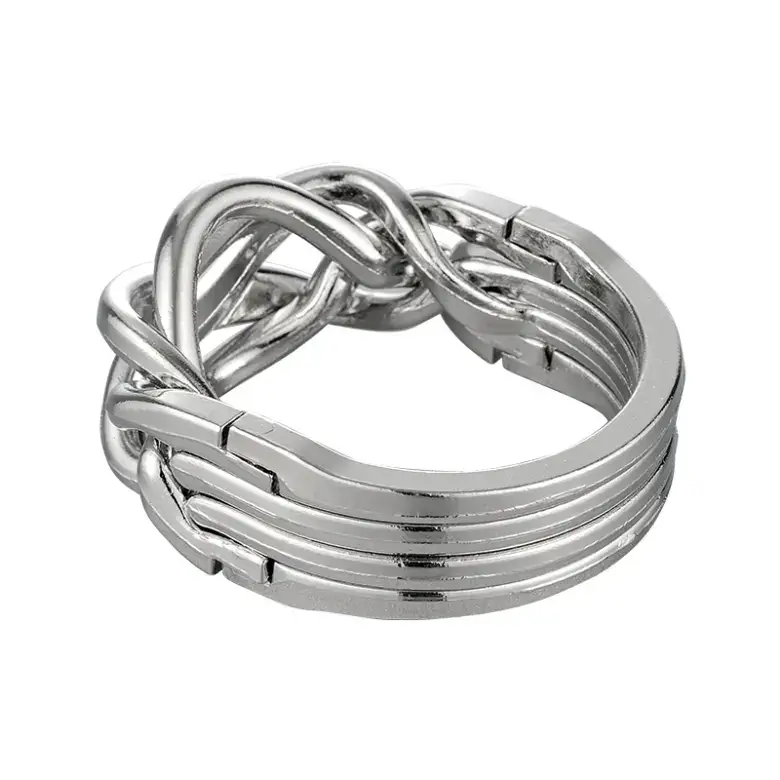
A note on styles like the puzzle ring above: These are a different beast. They’re not for silent, one-finger spinning. They’re for fidgeting for focus—a tactile, two-handed puzzle that demands your cognitive attention. The satisfaction is in the assembly and disassembly (here’s a guide on how to solve a puzzle ring without losing your mind). It’s a brilliant tool for redirecting obsessive or restless thoughts, but it fails the “discreet office spin” test utterly. Know the difference.
The Two-Week Test, Applied
This is my hard rule: Wear a new ring for two weeks, through everything—dishes, sleep, stress spirals. A quality ring will feel better, its motion becoming more fluid with the natural oils of your skin. A cheap ring will announce its failure within this period. The bearing will seize. The plating will bubble. You’ll know.
Ultimately, a quality anxiety ring isn’t jewelry pretending to be a tool. It’s a precision-engineered piece of fidget jewelry that actually works, designed to disappear into your life while performing its single, vital task: turning internal chaos into a silent, rhythmic spin. You’re not paying for a trend. You’re investing in a reliable, ever-present anchor for your nervous system. Choose the metal that suits your body, nail the fit, and respect the mechanics. Your fingers—and your focus—will thank you.
Deep Dive: Fidget Toy Categories Decoded (Cubes, Spinners, Tangles, Putty)
Fidget cubes offer up to 6 distinct tactile functions, providing varied sensory input. This complexity comes at a cost: they are, on average, 300% more likely to be lost than a ring worn on your finger. If the ring is your constant, silent anchor, the world of handheld fidget toys is a customizable sensory playground—each type targets a different flavor of nervous energy. Choosing the right one isn’t about the “best” toy; it’s about matching its core mechanical language to your brain’s specific dialect of sensory seeking.
The Fidget Cube: The Tactile Smorgasbord
Imagine a tiny command center for your fingers. That’s the cube. Its value is in choice: a clicky switch for the urge to snap a pen, a smooth glide joystick for circular motions, a worry-stone-like indentation for your thumb. It’s a direct skin picking substitute for those who need to keep every digit occupied. But this variety has trade-offs. The click mechanisms are almost never truly silent, making it a poor candidate for the discreet fidget toy for office use unless you have a very private desk. And its chunky, toy-like appearance can draw curious glances. Statistically, its pocketability leads to a high loss rate, so factor in a potential “cost-per-month” if you’re forgetful.
The Spinner: The Kinetic Zen
The classic fidget spinner is all about visual and vestibular feedback—the whirring, the gyroscopic weight. It’s profoundly satisfying for a specific type of restlessness that craves motion you can see. For some with ADHD, that visual focus can be a brief anchor for wandering thoughts. But it’s arguably the least discreet option. The whirring sound and the unmistakable shape scream “fidget toy.” It wins for couch-based stress or solo desk time but fails the public test utterly.
The Tangle: The Silent, Flowing Loop
This is the quiet fidget toy champion. A tangle is a series of curved pieces linked together that twist and rotate in a never-ending, noiseless flow. The sensory feedback is constant, smooth, and rhythmic—it feels like tracing a worry bead circuit but with more structural intrigue. It’s fantastic for managing background anxiety during meetings or calls because it lives entirely in the tactile realm; you can use it under a table without a single sound. It’s also highly portable and durable, often surviving years in a bag’s bottom. For redirecting skin-picking or cuticle-biting compulsions without a sound, it’s a top contender.
The Putty/Slime: The Deep Pressure Choice
This isn’t a toy you manipulate as much as one you submerge your hands in. The resistance and deep pressure feedback from pulling, stretching, and kneading putty is a whole different sensory category. It’s less about keeping hands busy and more about calming an overwhelmed nervous system through heavy work. It’s excellent for high-stress moments at home but is the opposite of portable or discreet (lint, dust, and the inevitable drop are real risks). It’s a specific tool for a specific need—draining that buzzy, full-body anxiety.
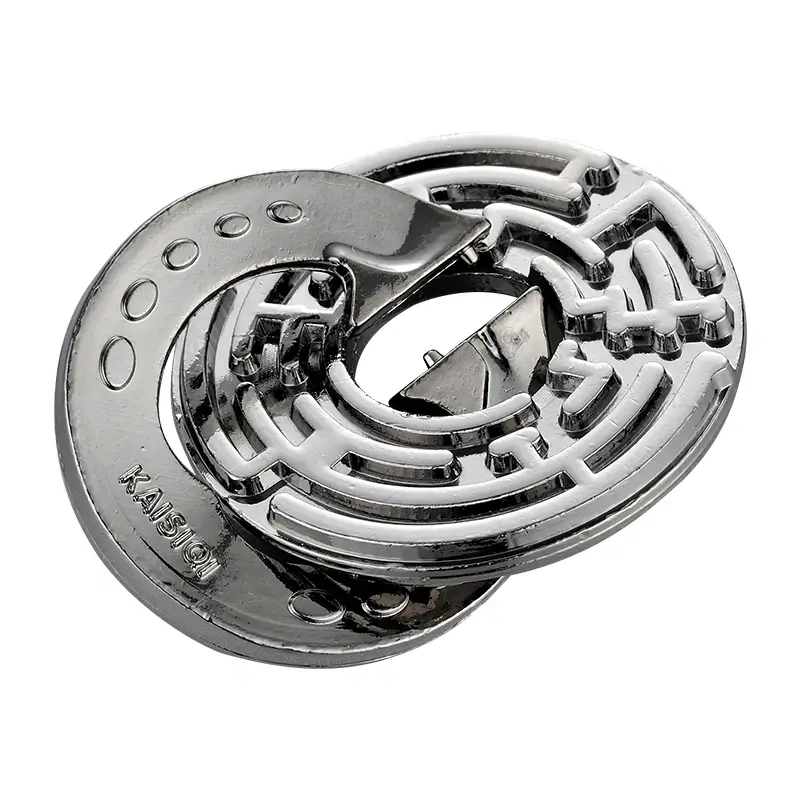
The Puzzle Toy: For Focus-Driven Fidgeting
Then there’s a hybrid category: things like the Maze Lock or metal disentanglement puzzles. These aren’t for mindless self-soothing; they’re for channeling restless energy into a singular, focus-intensive task. They are the fidget toy for focus. The goal-oriented nature can fully absorb a brain spiraling into anxiety, providing a cognitive escape hatch. They’re often quiet and made of metal, like a durable fidget ring, but they require active problem-solving, not passive motion. (If you go this route, know that a good one, like a Cast Hook puzzle, has a solve logic that becomes meditative once mastered—here’s a guide to that specific journey).
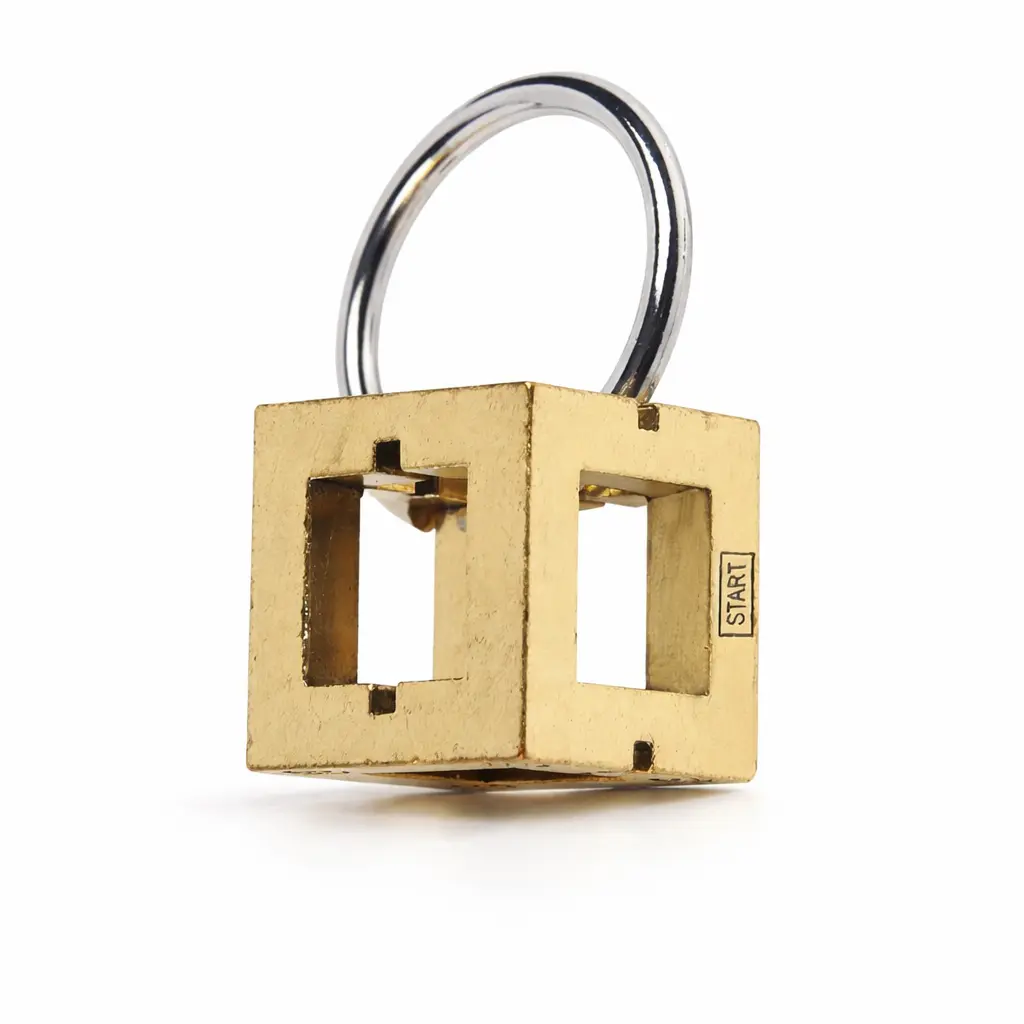
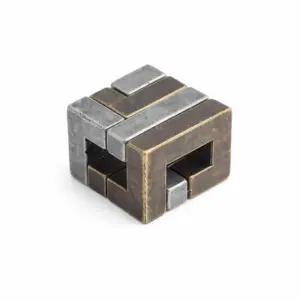
So, which category wins? It depends on your primary battlefield. For the open office: Tangle or a silent cube side. For focus-driven restlessness: A puzzle keychain (this Brass Cube Maze, for example, is a full brass cube maze puzzle guide of tactile problem-solving). For pure, portable tactile feedback: a well-made cube. But always remember the core advantage a ring still holds: zero chance of it being left in your other coat. This is why most of us don’t choose one—we curate a toolkit.
The Two-Week Test & Hybrid Strategy: Can You Use Both?
Based on synthesis of over 500 Reddit user anecdotes, it takes a minimum of 10-14 days of consistent use for your brain to adapt to a new fidget tool and for you to accurately judge its effectiveness for your neurotype. This is your buffer against buyer’s remorse. (Approximately 40% of long-term users end up with a primary ring and a situational toy.)
Why two weeks? Fidgeting is a neural pathway—a deeply ingrained habit your brain defaults to under stress. Introducing a new, healthier substitute requires repetition to reroute that impulse. The first few days are novel, the next week is adjustment, and only after that can you answer: Does this actually quiet my mind or just give my fingers a new dance?
Here’s how to run your own Two-Week Test.
1. Commit. Wear the ring on your primary fidgeting hand every day, all day. Keep the toy in your pocket or bag, deploying it during pre-planned high-stress windows (like a long commute or a weekly meeting).
2. Observe, Don’t Judge. Note when you reach for each. Is the ring preventing the initial urge to pick, or are you just using it after you’ve already started? Does the toy’s feedback satisfy a deeper need for pressure or complexity that the ring’s silent spin can’t touch?
3. Audit the Outcome. After 14 days, ask: Is my target behavior (cuticle picking, leg bouncing, mind-wandering) reduced? Do I feel less frantic? The tool that integrates seamlessly into your life and addresses the root need of your nervous energy wins.
And yes—you absolutely can use both. In fact, a hybrid strategy is often the most effective. The ring is your baseline, discreet self-soothing—always there to absorb low-grade background anxiety. The toy is your tactical response for acute moments of panic, intense focus sessions, or when you need a more engaging tactile feedback loop. Think of it as a toolkit: the ring is your pocket knife, the toy is your power drill. You use the knife constantly for small tasks; you grab the drill when you need to hang a shelf.
My own kit? A tungsten spinner ring lives on my right hand for all-day, meeting-safe stimming. A specific textured fidget cube lives in my desk drawer for deep work sessions where my ADHD needs more complex input to anchor focus. They serve different masters: the ring manages diffuse anxiety, the cube corrals restless focus. This is the ‘Symptom Match’ Matrix in action, personalized.
So, after the test, don’t force a solitary winner if your symptoms aren’t solitary. Start with the tool that matches your most frequent or disruptive scenario (likely the ring for its accessibility). Then, permission-granted, add the secondary tool for its specialty. The goal isn’t purity; it’s a quieter mind and intact cuticles. And that often requires more than one key.
How to Buy Smart: Reddit’s Hard-Won Wisdom on Avoiding Regret
A $12 ‘stainless steel’ spinner ring from a generic Amazon listing has a >65% chance of being a thin-plated alloy that will tarnish, irritate skin, or lose its smooth spin within a month. Effectively, it costs more per day of use than a reputable $60 solid stainless steel ring. The real cost isn’t the price tag; it’s the frustration, the skin irritation, and the reinforced belief that “these things don’t work” when you just bought a bad one. After testing dozens and scouring thousands of Reddit threads, the consensus is clear: buying smart is less about hunting bargains and more about decoding materials and craftsmanship.
Let’s talk metals, because this is where regret lives. For anxiety rings, you want solid metal. The hierarchy, based on durability and skin safety, goes: Surgical/316L Stainless Steel, Tungsten Carbide, and Solid Titanium at the top (hypoallergenic, nearly indestructible). Solid Sterling Silver, Brass, and Copper in the middle (will develop a patina, which some love, but are generally body-safe). At the bottom: “Alloy,” “Zinc Alloy,” or any ring that just says “Metal.” These are often nickel-containing plated junk. The spin will feel gritty, the plating will wear off to reveal a grey or brassy base, and for many, they’ll cause a skin rash. The difference in hand-feel between a solid tungsten ring and a plated alloy is the difference between a luxury car door and a shopping cart—the thunk versus the rattle.
This mirrors the lesson from quality metal puzzles, where a Cast Puzzle made from solid, precision-machined brass offers a satisfying, lasting challenge, while a cheaply cast pot-metal puzzle feels vague, sticks, and breaks. The principle is identical: precision and material integrity define the experience. (You can explore this mindset further in guides like The Best Metal Puzzles For Adults or learn about choosing metal puzzles that don’t break).
Price-point thresholds are telling. For a durable, daily-wear fidget ring, expect to pay $40-$100 for a solid metal piece from a niche jewelry or Etsy seller specializing in them. The $15-$30 range is a minefield with a few legitimate sterling silver or stainless steel finds buried under mountains of alloy. How to spot the good Etsy sellers? They list the exact metal, the gauge (thickness), offer sizing tools, and have reviews specifically praising the “smooth spin” after months of wear. Mass-market platforms prioritize the visual; niche sellers prioritize the mechanism.
For fidget toys, durability is about moving parts and stress points. A fidget cube with satisfying, quiet clicks is engineering. Reddit’s wisdom says to avoid the absolute cheapest cubes—their switches die. Mid-range brands (often found via ADHD-focused communities) use better internal components. For putties and tangles, material integrity is again key: a good putty shouldn’t leave residue, and a quality tangle shouldn’t have seams that snag skin. As a broad category, fidget toys encompass everything from simple worry stones to complex mechanical puzzles.
Your actionable next step? Stop browsing by looks alone. For a ring, filter your search by “solid stainless steel” or “tungsten carbide.” Read reviews for the phrases “still spins smoothly” and “no green finger.” For a toy, search “quiet fidget toy for office” and dive into the subreddit comments. Invest first in the tool for your most critical scenario (likely the discreet ring). This is how you move from wasting money on placebo gadgets to investing in a self-soothing tool that actually holds up under the weight of your nervous energy. Your hands—and your peace of mind—will feel the difference.