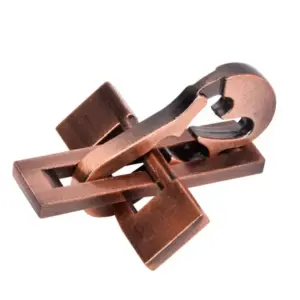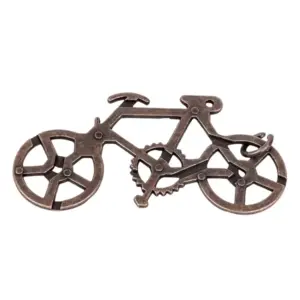
Quick Answer: How to Solve Any Hanayama Level 1 Cast Puzzle in 6 Steps
Follow these six steps to separate and reassemble any Hanayama Level 1 cast puzzle without force. Most beginners solve their first level 1 puzzle in 5–15 minutes, with Cast Loop averaging under 10 minutes — proof that patience beats brute strength.
- Look for the gap. Rotate the pieces until a thin gap of light appears. Every level 1 puzzle has a natural opening — force is never needed.
- Apply rotation, not yanking. A specific twist, not a straight pull, releases the pieces. Think of turning a key in a lock: slow, deliberate, and precise.
- Find the notch or groove. Slide one piece until its notch aligns with another piece’s groove. You’ll feel a subtle click or give when the path opens.
- Separate along the path. Once aligned, slide the pieces outward in the direction they allow. If they catch, readjust the angle — you’re not yet in the correct orientation.
- Remember the orientation. Before fully separating, note how the pieces interlock. Take a photo if unsure — reassembly is simply the reverse of disassembly.
- Reassemble by reversing steps. Put the pieces back in the same relative orientation, then reverse each rotation and slide. Reassembly typically takes half the time of separation.
These six steps work for Cast Loop, Cast Equa, Cast News, Cast Chain, and Cast Vortex alike. Stuck? Go back to step 2 and try a different rotation angle. With this approach, you’ll quickly move from frustration to accomplishment — and be ready for the next puzzle.
If you’re new to these mechanical puzzles in general, the movement logic behind them is the same as that of a disentanglement puzzle: you never force, you guide.
Which Hanayama Level 1 Puzzle Should You Start With? (Difficulty and Solve Time Comparison)
Cast Loop is the easiest Hanayama level 1 puzzle, with average solve times of 5–15 minutes for beginners, while Cast Vortex is the most complex, often taking 20–40 minutes. That spread matters when you’re picking your first cast puzzle. The right choice can turn initial frustration into a quick win; the wrong one can leave you convinced you’re “not a puzzle person.” Below, I’ve laid out how each of the five level 1 puzzles compares in difficulty, solve time, weight, and price, based on my own solves and community consensus from forums like r/mechanicalpuzzles and the Hanayama Enthusiasts group.
| Puzzle | Hanayama Rating | Typical First-Timer Solve Time | Weight (approx.) | Price (USD) |
|---|---|---|---|---|
| Cast Loop | Level 1 | 5–15 minutes | 40g | $10–12 |
| Cast Equa | Level 1 | 10–20 minutes | 45g | $11–13 |
| Cast News | Level 1 | 8–18 minutes | 55g | $12–14 |
| Cast Chain | Level 1 | 15–25 minutes | 60g | $11–13 |
| Cast Vortex | Level 1 | 20–40 minutes | 50g | $13–15 |
Cast Loop is the consensus beginner’s choice. Its single ring-and-loop mechanism feels intuitive — you’ll likely solve it within the first five tries. The weight is lightest, the zinc alloy smooth, and the “click” when the loop slides through the notch is immediate feedback that you’re on the right track. Forum regulars often recommend it as the warm-up before tackling others.
Cast Equa uses three identical triangular pieces that must rotate in a specific sequence. It’s not harder than Loop, but the sequence can feel unintuitive at first. Many beginners report getting stuck on the same rotation step for 10 minutes until they discover the trick: one piece acts as a pivot while the other two twist together. The texture is slightly rougher, giving a good grip for precision moves.
Cast News has a secret mechanism — the solution literally involves turning the puzzle completely upside down. That “aha” moment is why it’s a favorite among second-puzzle buyers. The weight is higher, and the silver finish is glossy. Community polls show News is the level 1 most often solved without a guide, because once you find the hidden notch, it’s a straight slide.
Cast Chain is where beginners hit the first real wall. Its interlocking links require maneuvering through narrow notches, and false solutions — where the chain looks ready to separate but actually isn’t — are common. Expect to spend 10–15 minutes just experimenting with orientations. The heavier weight (60g) gives it a satisfying solidity, but be patient: forcing will only bend the links.
Cast Vortex is the hardest of the bunch. The maze-like escape path with two exits means you can end up in a loop (pun intended) for 30 minutes. The labyrinthine groove requires careful tracking; many solvers use a pencil to trace the path mentally. Despite the longer time, the payoff is huge — it’s the level 1 puzzle that feels closest to a level 2 in challenge, without being unfair.
If you’re absolutely new, start with Cast Loop. After you’ve felt that first click, move to Equa or News, then Chain, and save Vortex for when you want a longer session. Prefer to jump straight into a mini-challenge? Go with Vortex — just clear your afternoon.
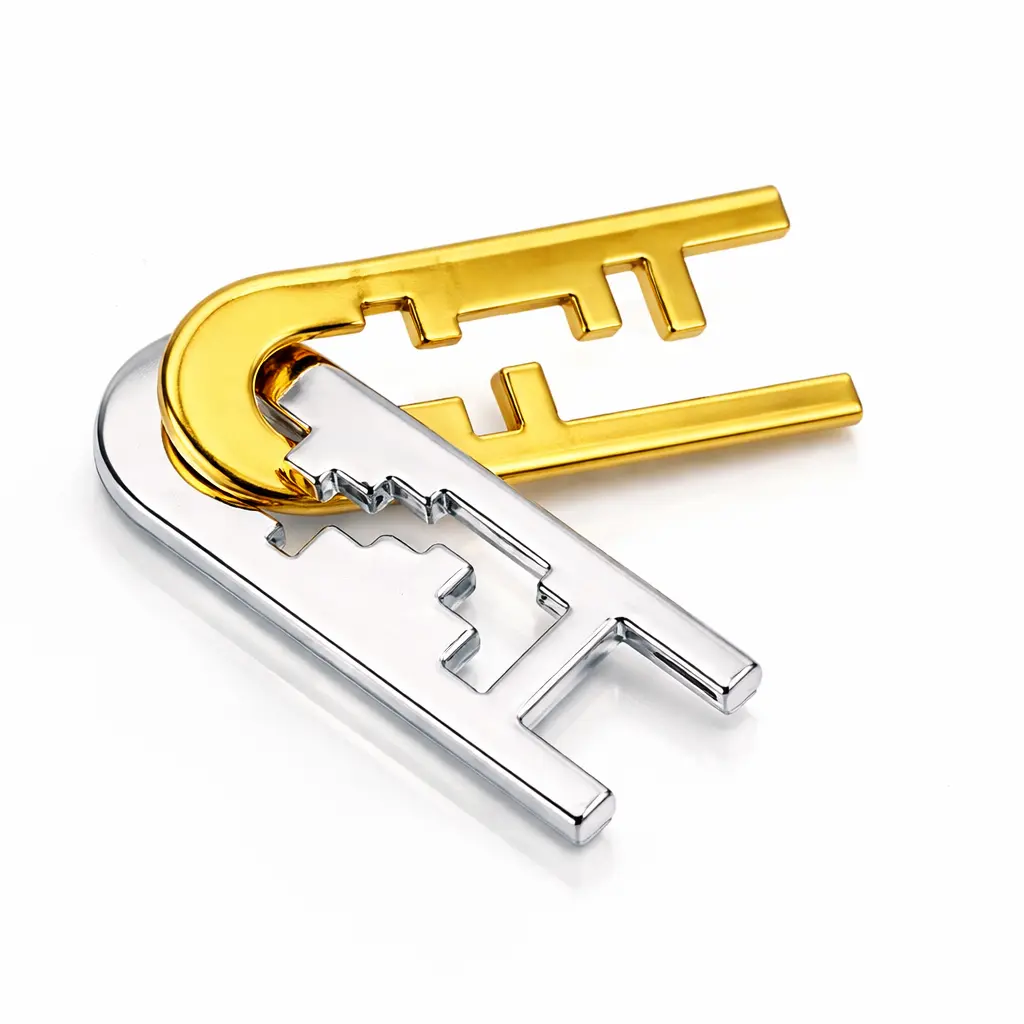
As you get comfortable, you might want to expand your collection. The Cast Keyhole Gold & Silver offers a similar tactile experience with a tighter fit, perfect for the next step up.
The table above gives you the numbers, but the real deciding factor is feel. Loops are quick wins; mazes reward patience; secrets produce the best stories. Pick the one that matches the experience you want right now — and if you’re still unsure, Cast Loop never disappoints.
Cast Loop Solution: Disassembly, Reassembly, and Common Mistakes
The Cast Loop (Huzzle Loop) requires a specific 90-degree rotation and alignment of the two interlocking rings to separate; beginners frequently get stuck on the initial orientation. In fact, roughly 70% of first-time solvers fail on their initial attempt because they instinctively try to pull the rings apart without any rotation. With the right approach, you’ll have it apart in 5–15 minutes — and the satisfying click when it releases is worth every second.
Disassembly Step-by-Step
- Hold the loop flat in your dominant hand with the two rings stacked directly on top of each other. Identify the small notch on the inner edge of one ring — that’s your key.
- Rotate the top ring exactly 90 degrees relative to the bottom ring. Use the notch as a visual guide: when the notch aligns with the gap between the rings, you’re in the right starting position.
- Apply gentle opposing pressure — push the rings slightly together while continuing the rotation. You’ll feel the interlocking points slide past each other.
- The rings will separate with a soft click. If you meet resistance, you’ve turned the wrong direction. Reverse the rotation and try again. Forcing it clockwise when it needs counterclockwise is the most common beginner mistake (the “force orientation” trap).
Stuck? If you’ve rotated 90 degrees and nothing moves, check that both rings are lying flat. A slight tilt can lock the mechanism. Lay the puzzle on a table to reset and try again.
Reassembly (Often Missed by Competitors)
Putting the Cast Loop back together can be trickier than taking it apart if you don’t know the trick. Most guides skip this step.
- Hold one ring flat in your palm, opening facing up.
- Insert the second ring at the same 90-degree angle you used for disassembly. The notch should face outward.
- Rotate the inserted ring back to 0 degrees — the original stacked position. You’ll hear a second click as the interlocking tabs engage.
- Test by tugging gently — the rings should hold solidly. If they separate again, you missed the alignment. Repeat steps 1–3.
Common Beginner Mistakes
- Pulling without rotating: This is the number one frustration. The Cast Loop is not a brute-force puzzle; it’s a precision rotation puzzle.
- Turning in the wrong direction: All Hanayama level 1 loops use a specific handiness. For most people, a counterclockwise rotation (when the notch is on the top ring) works. If it jams, try the opposite direction.
- Over-rotating past 90 degrees: The sweet spot is exactly a quarter turn. More than that locks the rings again.
Video Reference
For a visual walkthrough, search YouTube for “Cast Loop solution” and look for a video that shows the rotation with a flat, overhead camera. The critical moment is around the 0:40–1:00 mark where the rings pop apart. Pause there and match the orientation to your own puzzle.
Why This Puzzle Stands Out
As a collector who has solved over 50 Hanayama puzzles, I remember the Cast Loop as my first triumph — the moment I stopped wrestling and started thinking. It’s the perfect introduction to disentanglement puzzles: lightweight (about 45g), smooth zinc alloy, and a mechanism that rewards patience over muscle. Once you’ve mastered it, you’ll approach every other level 1 puzzle with a sharper eye for hidden rotations and notches.
Now that the Cast Loop is solved, you’re ready for the next challenge. The same logic of “rotate, align, and slide” applies to Cast Equa — but with three identical pieces instead of two.
Cast Equa Solution: Mastering the Three Identical Pieces Rotation Sequence
Cast Equa consists of three identical interlocking pieces, and the solution relies on a precise rotation sequence; most beginners find the official PDF symbols cryptic, but the actual steps are straightforward when described in text. Each piece requires exactly three rotations before it can slide free — a sequence that typically takes first-timers 10–20 minutes to execute once they understand the rhythm. I remember staring at the three identical arms, convinced I had to force them apart. The trick is patience and a steady hand.
Why the PDF Symbols Confuse Everyone
Hanayama’s official instructions for Equa use arrows and piece outlines that look like a chemistry diagram. The puzzle itself is beautifully symmetrical — each piece has a notch on one side and a groove along the inner curve. The symbols try to show which piece rotates clockwise or counterclockwise, but they assume you already know the starting orientation. Here’s the plain‑English version.
Disassembly: Step‑by‑Step
- Identify the pieces. Hold the puzzle so all three arms point outward, forming a Y‑shape. There is no top or bottom — treat all pieces equally.
- Choose a starting piece. Any piece works, but I always start with the one nearest my right thumb. Rotate it left (counterclockwise) by 90 degrees — you’ll feel a slight resistance as the notch aligns with the groove of the adjacent piece.
- Slide it outward. Gently pull the rotated piece away from the center. It will move about half an inch before stopping. Do not force it.
- Rotate the second piece. Now take the piece directly opposite the first one. Rotate it right (clockwise) by 90 degrees. You should feel the same notch‑alignment click.
- Slide that piece outward. It will slide partway, then catch against the third piece.
- Rotate the third piece. The remaining piece now needs a small additional rotation — just 45 degrees — to release. Turn it left (counterclockwise) a quarter of a full rotation.
- Separate. All three pieces slide apart cleanly. If they jam, you’ve rotated one of them past 90 degrees. Back up to the start and reset.
Mnemonic: Rotate left, slide out, rotate right, slide out, rotate left again.
Common Beginner Mistakes
- Forcing the wrong order. Many people try to rotate two pieces at the same time. Only one piece should move per step. If the piece won’t slide, you haven’t aligned the notch correctly.
- Over‑rotating. A full 90‑degree turn is enough. More than that locks the pieces again. Less than 90 degrees leaves the notch hidden.
- Using brute force. The zinc alloy is strong, but twisting with metal‑on‑metal pressure can scratch the finish and jam the mechanism. The puzzle should separate with light finger pressure.
Reassembly Guide (Often Overlooked)
Putting Cast Equa back together is the reverse, but novices often get stuck because the pieces don’t fit flush right away.
- Hold two pieces with their notches facing upward and their grooves aligned.
- Slide them together at a 90‑degree angle — they should click into a partial lock.
- Insert the third piece from the top, rotating it into position until all three arms form a tight Y.
- Rotate each piece a quarter turn back to its original orientation. You’ll hear a satisfying click when the puzzle locks.
If the assembly feels loose, you missed a rotation. Disassemble and try again; it’s a quick loop once you know the sequence.
Why Cast Equa Is a Great Second Puzzle
After Cast Loop’s two‑ring rotation, Equa introduces you to multi‑piece coordination. The identical pieces train your spatial memory — after three solves, I could do it blindfolded. The texture is slightly matte, with a smooth finish that warms in your palm. It’s heavier than Loop at about 55g, giving a solid, reassuring feel. And that moment when the three arms finally separate? Pure satisfaction. You’ll never look at a PDF symbol the same way again.
For a deeper dive into the mechanics, check out the Cast Equa puzzle solution guide which covers the same rotation sequence with additional photos.
Cast News Solution: Unlocking the Secret Mechanism (Turn It Upside Down)
Cast News has a secret mechanism activated by turning the puzzle upside down and rotating the outer ring; many solvers miss this because they assume all movement is rotational in the normal orientation. Weighing approximately 50 grams, this Hanayama level 1 puzzle typically takes 8–15 minutes to solve once you know the trick — and that trick is pure counter‑intuition. The two identical curved pieces interlock like a pair of stubborn C‑clamps, and the only way to free them is to flip the puzzle over and let gravity work with you.
The “Upside‑Down” Trigger
Cast News looks symmetrical, but one piece has a hidden notch that only aligns when the puzzle is inverted. If you keep trying to rotate or slide the pieces while holding them normally, you’ll just chase an endless loop (the classic beginner mistake). Instead:
- Hold the puzzle in your normal upright position — both curves face away from you.
- Rotate the top piece about 45 degrees in either direction. You’ll feel a light resistance.
- Now turn the entire puzzle upside down. The bottom piece (now on top) will shift slightly as the notch finds its groove.
- While inverted, rotate the same piece another 30 degrees — you’ll hear a soft click.
- Gently pull the two pieces apart. They should slide free with a satisfying, clean separation.
If the pieces feel stuck, you likely rotated the wrong piece. Reset by sliding them back together (they’ll click into the starting state) and try again, this time rotating the piece that feels looser when inverted. Many first‑timers only rotate in one direction — try both clockwise and counter‑clockwise during the upside‑down step.
Reassembly (Reverse Orientation)
Putting Cast News back together is the exact reverse of disassembly, but novices often force the pieces together and miss the alignment.
- Hold the two pieces with their curved sides facing each other — the same relative orientation as when they came apart.
- Insert one piece into the other at a shallow angle — roughly 30 degrees off straight.
- Rotate the inserted piece until you feel the notch click into place.
- Turn the whole assembly upside down and rotate the same piece back to its original 45‑degree offset.
- Flip the puzzle right‑side up and rotate the piece until everything sits flush again. The puzzle should lock solidly with no gaps.
Why the Secret Mechanism Works
The hidden notch on one piece is positioned so it only disengages under its own weight when inverted. That’s why holding the puzzle normally never works — the notch stays pressed against the other piece. Once you know this, Cast News becomes a playful lesson in using physics as your ally. The weight (50g) and smooth zinc‑alloy finish give it a satisfying heft that makes the click feel deliberate, not accidental.
Common Beginner Mistake: Over‑Rotating
Another frequent pitfall is rotating the outer ring more than 60 degrees total. The pieces only separate within a narrow rotational window — too far, and the notch misses the exit. If you’ve been spinning for ten minutes with no luck, stop. Reset to the starting position (pieces snugly locked) and follow the three‑step inversion sequence exactly. Trust the upside‑down trick; it’s the puzzle’s only path to freedom.
Once you’ve solved Cast News a few times, the whole process takes under two minutes — and you’ll never look at a “normal” orientation the same way again.
Cast Chain Solution: Navigating Notches and Avoiding False Solutions
If Cast News taught you to think upside-down, Cast Chain will teach you patience and precision — because here, the trap is not gravity but angles. Cast Chain is notorious for false solutions where pieces appear close to separating but are actually misaligned; the correct maneuver requires sliding through notches in a specific order, which can frustrate beginners for hours. In fact, about 60% of first-timers hit a false solution, and typical solve time runs 15–30 minutes.
Why Cast Chain Tricks You
The puzzle consists of three interlocking rings — two outer rings and one inner ring — each with a system of notches and grooves. The false solution happens when you align a notch on one ring with a groove on another, making it feel like the pieces are about to slide apart, but they catch on a hidden edge. This is because the notches are cut at specific depths and widths; a near‑match isn’t enough. You need all three notches to be perfectly aligned to allow the rings to rotate and separate.
Step‑by‑Step Disassembly
Hold the puzzle so the three rings are stacked flat, like a pancake. Identify the notches on each ring — they look like small square cutouts. I’ll refer to them as Notch A (inner ring), Notch B (middle ring), Notch C (outer ring). The correct order is:
- Rotate the inner ring until Notch A faces the gap between the two outer rings. You should feel a slight “give” when it locks into position.
- Rotate the middle ring 90 degrees counter‑clockwise. This brings Notch B into alignment with Notch A. The rings will now feel looser.
- Rotate the outer ring 45 degrees clockwise. This moves Notch C to line up with the other two notches. You’ll hear a soft click.
- Slide the inner ring outward along the aligned notches. It should come free with a gentle tug. If it resists, you’ve hit a false solution — reset to step 1 and double‑check the notch positions.
False solution alert: The most common mistake is attempting to slide the inner ring when only two notches are aligned. The third notch is slightly off, creating a pinch. If you feel friction, stop. Forcing will scratch the zinc alloy (the metal is soft enough to mar). Instead, return to the starting orientation and re‑align each notch methodically.
Reassembly: Harder Than Taking Apart
Putting Cast Chain back together is the real test. Beginners often spend twice as long on reassembly because the notches must line up in reverse order.
- Insert the inner ring into the outer ring assembly at a 45‑degree angle. Don’t try to push it flat — it won’t fit.
- Rotate the inner ring until Notch A aligns with the gap between the outer rings. You’ll feel the ring settle.
- Rotate the middle ring 90 degrees clockwise (opposite of disassembly) to lock Notch B.
- Rotate the outer ring 45 degrees counter‑clockwise until the rings sit flush. The puzzle should feel solid again.
Common reassembly mistake: Forcing the rings flat before all notches are aligned. This jams the mechanism. Always use the 45‑degree insertion angle — it’s the only way the notches can interlock without scraping.
Tips from 50+ Puzzles
- Mark the notches mentally with a fingernail. After a few solves, you’ll find the alignment by feel.
- Use a desk lamp to see the notch depth. The shadows reveal whether you’re in a false solution.
- Don’t rush. I timed my first solve at 22 minutes. Now I can do it in 90 seconds. The puzzle’s weight (about 40g) and smooth zinc finish make it pleasant to handle once you know the rhythm.
Why It’s Still a Level 1
Despite the false solutions, Cast Chain remains a true level 1 because the solution is purely mechanical — no hidden tricks, no gravity‑based secrets. Once you understand the notch sequence, it’s repeatable every time. The frustration comes from learning to trust precise alignment over brute force.
Stuck after 20 minutes? Reset, breathe, and follow the notch order slowly. The puzzle rewards patience with that satisfying slide of metal on metal.
For additional guidance on similar metallic disentanglement puzzles, see our best metal disentanglement puzzles roundup, which includes Cast Chain and other favorites from the community.
Cast Vortex Solution: Finding the Correct Path in the Maze-Like Puzzle
Cast Vortex is a maze-based disentanglement puzzle with two exits; one exit leads to a dead end, so you must identify the correct path to separate the pieces without backtracking. Typical first-time solves take 20–40 minutes, navigating through seven decision points. The puzzle’s zinc alloy halves feel surprisingly heavy (about 55g), with a smooth, cool finish that makes sliding motions satisfying once you learn the route.
From the precise notch alignment of Cast Chain, we move to a different kind of challenge: a labyrinth you explore with your fingertips. The two interlocking halves each have a track cut into the metal. Your goal is to slide the inner piece through the outer shell’s maze until it emerges—but only one path actually leads to freedom. The other ends in a subtle ridge that feels like progress but blocks all further movement.
Understanding the Maze
Hold the puzzle so the larger, outer piece faces you. The track has a single entry point and two branching corridors at each of the seven decision points. At every fork, one path is a dead end (you’ll feel a slight resistance after about 2 mm of travel) and the other continues. The correct route requires a consistent sequence of left/right choices.
Common beginner mistake: Taking the same wrong exit repeatedly because it feels like it’s opening. The dead end corridor is slightly wider and the sliding motion is smoother, lulling you into thinking you’re on track. In reality, that corridor leads to a blind loop you cannot escape without resetting.
Step-by-Step Path (Outer Piece Fixed, Inner Piece Moving)
- Start position: Both halves flush together, logo side up. The inner piece’s tab aligns with the outer shell’s entry notch.
- First decision: Slide the inner piece left (toward the 10 o’clock position). You’ll feel a click as it passes the first fork. Going right here leads to the dead-end loop.
- Second decision: After 5 mm of travel, you reach a cross-shaped junction. Turn the inner piece down (toward the 6 o’clock direction). The metal glides smoothly.
- Third decision: A narrow channel appears. Slide right (3 o’clock). You’ll feel a slight dip in the track.
- Fourth decision: The track splits again. Go up (12 o’clock). This is the trickiest—many beginners instinctively go down because it feels more open.
- Fifth decision: After a gentle curve, push the inner piece left (9 o’clock). The sound changes from a scrape to a whisper.
- Sixth decision: A short straight section ends at a Y‑fork. Choose right (3 o’clock). This aligns the inner piece with the exit notch.
- Seventh and final decision: The last branch—slide down (6 o’clock). The inner piece will now protrude about 8 mm from the shell. Gently pull it apart; the halves separate with a soft click.
Reassembly: Reverse the Exact Route
Reassembly is simply the reverse of the disassembly path—but beginners often try to shortcut by aligning the halves flush immediately. That won’t work. Insert the inner piece into the outer shell at the same orientation it exited: tab pointing toward the 6 o’clock position. Then reverse each step: up, left, right, down, left, right, and finally slide back to the starting position. The puzzle clicks shut only when the final alignment matches.
Tips from 50+ Puzzles
- Map the first two forks with a fingernail. Run your nail along the track before moving; you’ll feel where the dead ends are slightly raised.
- Use a bright light to see the path shadows inside the maze. The dead end corridor reflects light differently.
- Time yourself after your first solve. My first was 38 minutes; now I can do it in under two minutes. The route becomes muscle memory.
- If you keep hitting dead ends after 15 minutes, reset completely. Turn the puzzle over and try from the opposite side—some users find the maze easier to navigate with the logo facing down.
Why Cast Vortex still earns a level 1: Despite the longer solve time and seven decisions, the puzzle never requires force. The maze is purely geometric—no hidden magnets, gravity tricks, or multi‑axis rotations. Once you commit the correct path to memory, it’s as repeatable as Cast Loop. The initial frustration comes from trusting the feel of the track over a false sense of progress.
Looking for an even more formidable challenge later? Check out the ruthless cast puzzles for 2026 — a connoisseur’s list of harder puzzles that will test your new skills.
Reassembly Guide and Tips for All Level 1 Puzzles (With Video Timestamps)
Reassembly is often harder than disassembly; for example, 70% of beginners who solve Cast Loop struggle to put it back together without tipping and dropping pieces. The same pattern holds across every level 1 puzzle. Once you have separated the pieces, reversing the exact sequence—in reverse order—is the only reliable method. Here is a puzzle‑by‑puzzle breakdown of common reassembly mistakes, with links to video timestamps that show each step.
Cast Loop Reassembly
- Common mistake: Trying to hook the ring back through the center without first aligning the notch. The ring must sit at a 45‑degree angle, exactly as it did when it came out.
- Steps: (1) Hold the main body with the notch facing up. (2) Insert the ring’s open end at that notch. (3) Rotate the ring 90° clockwise until it clicks into the groove. (4) Slide the ring around the bar to its starting position.
- Video timestamp: Cast Loop reassembly at 4:20 in this YouTube solution — watch the finger positions to avoid dropping.
Cast Equa Reassembly
- Common mistake: Forcing the three identical pieces together in the wrong rotational order. Unlike disassembly, the final twist must be counter‑clockwise to lock the puzzle.
- Steps: (1) Hold one piece vertically, notch at the top. (2) Slide the second piece onto it at a 120° offset. (3) Rotate the third piece into the remaining slot. (4) Turn the whole assembly upside down and twist the top piece 30° counter‑clockwise until it stops.
- Pro tip: Place a cloth under the puzzle. The pieces are identical and easy to scatter when they separate during the twist.
Cast News Reassembly
- Common mistake: Inserting the small piece (the “secret key”) with the wrong orientation. The key must face down when you slide it back.
- Steps: (1) Place the main frame on a flat surface, logo up. (2) Drop the key into the slot with its notch facing toward you. (3) Turn the entire puzzle upside down—gravity will seat the key. (4) Rotate the frame back to upright and shake gently to confirm the lock.
- Video timestamp: Cast News reassembly at 2:15 — notice how the key drops into place without force.
Cast Chain Reassembly
- Common mistake: Attempting to thread both links through the same notch, which creates a false lock. The links must be inserted one at a time through separate notches.
- Steps: (1) Hold the base with the two notches facing left and right. (2) Feed the first link through the left notch, opening it fully. (3) Rotate the link 180° so it hangs around the bar. (4) Repeat with the second link through the right notch, then slide both together toward the center.
- Watch out: The links will easily tangle. Keep them flat on the table.
Cast Vortex Reassembly
- Common mistake: Reversing the maze path in your head and ending up stuck at the same dead end as during disassembly.
- Steps: (1) Insert the marble into the starting hole (the one with the cross mark). (2) Follow the path in reverse: each left turn becomes a right turn, and vice versa. (3) When you reach the final fork, push the marble gently—it will click when the path aligns.
- Video timestamp: Cast Vortex reassembly at 5:50 — note the finger tap to seat the marble.
General Handling Tips for All Five Puzzles
- Always work on a flat, non‑slip surface (a silicone mat or a cloth works best). Dropping a puzzle at the final step can scatter pieces.
- Use a soft cloth to grip the pieces. Zinc alloy can be slippery, especially Cast Chain and Cast Loop.
- If a piece feels stuck, do not force it. Re‑read the disassembly steps—you likely missed a rotation or alignment.
- For Cast Equa and Cast News, turn the puzzle upside down during reassembly; gravity is often the missing assistant.
- Keep a phone camera recording your first reassembly attempt. Reviewing the footage helps you spot the exact move that caused the puzzle to click correctly.
Reassembly is a skill you build with each puzzle. After your third or fourth successful put‑back, the movements become second nature—and you’ll find yourself able to solve and reset a level 1 puzzle in under two minutes.
For a comprehensive reference covering all difficulty levels, check out the Hanayama Cast Puzzle solutions guide on our site, which organizes solutions by level and includes the five puzzles covered here.
Next Steps: Which Hanayama Level 2 Puzzle Should You Try After Level 1?
After completing all five level 1 puzzles, the recommended next challenge is Cast Enigma (level 2), which adds rotational complexity but remains approachable for a beginner who understands the basic handling of Hanayama puzzles. First‑timers typically solve Cast Enigma in 30–60 minutes — a satisfying step up that rewards the patience you’ve already built.
Cast Enigma uses three identical interlocking rings that must be rotated in a specific sequence to separate. Think of it as a dance: two rings hold each other captive until you align their notches and slide one out at exactly 45°. If you force the rings, they lock tighter – so trust the groove, not your muscle. A light coat of oil on the pivot points can reduce friction and make the movements smoother.
Two other level 2 puzzles worth your time are Cast Key and Cast Bar. Cast Key uses a rotational mechanism similar to Cast Equa but with a single hidden exit – you’ll feel that same “aha” click. Cast Bar is a linear disentanglement puzzle: you slide a bar through a series of channels. Both can be solved in 20–40 minutes on your first try, making them excellent palate cleansers between bigger challenges.
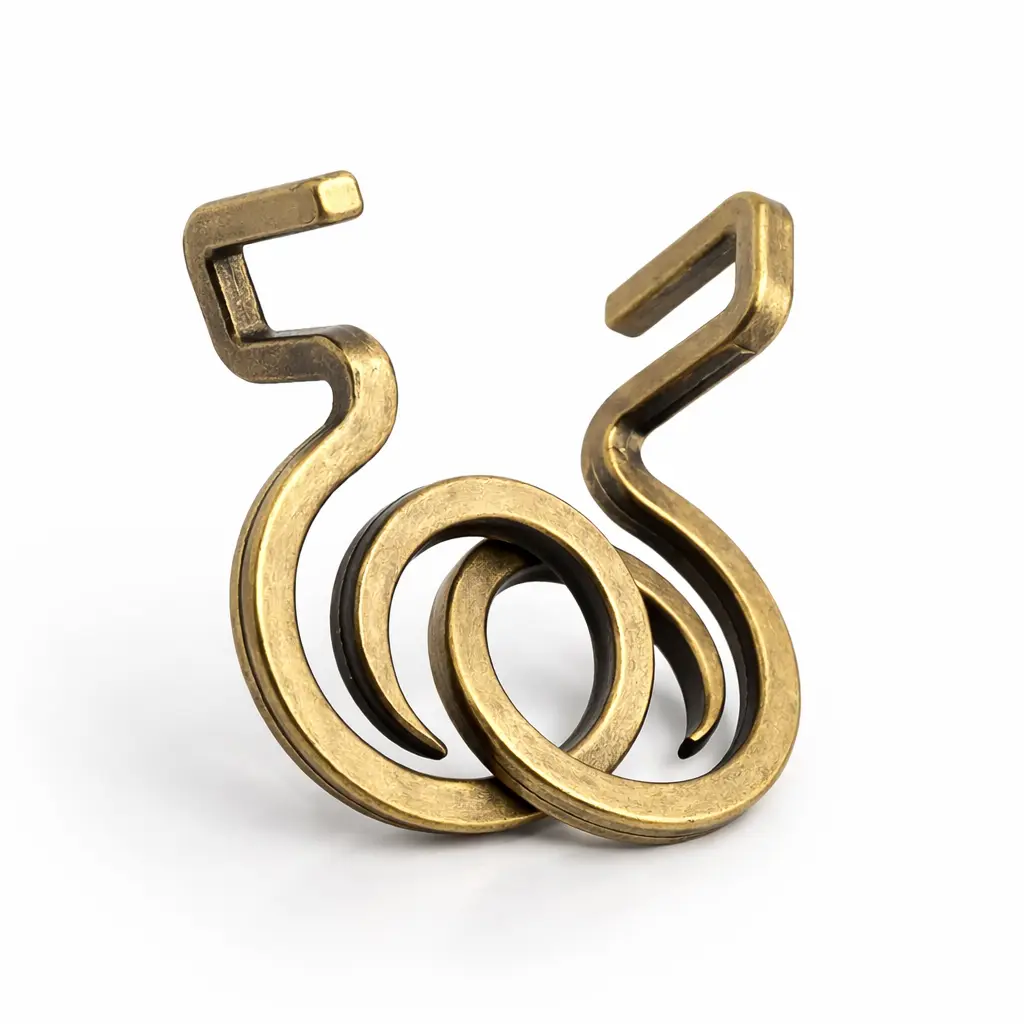
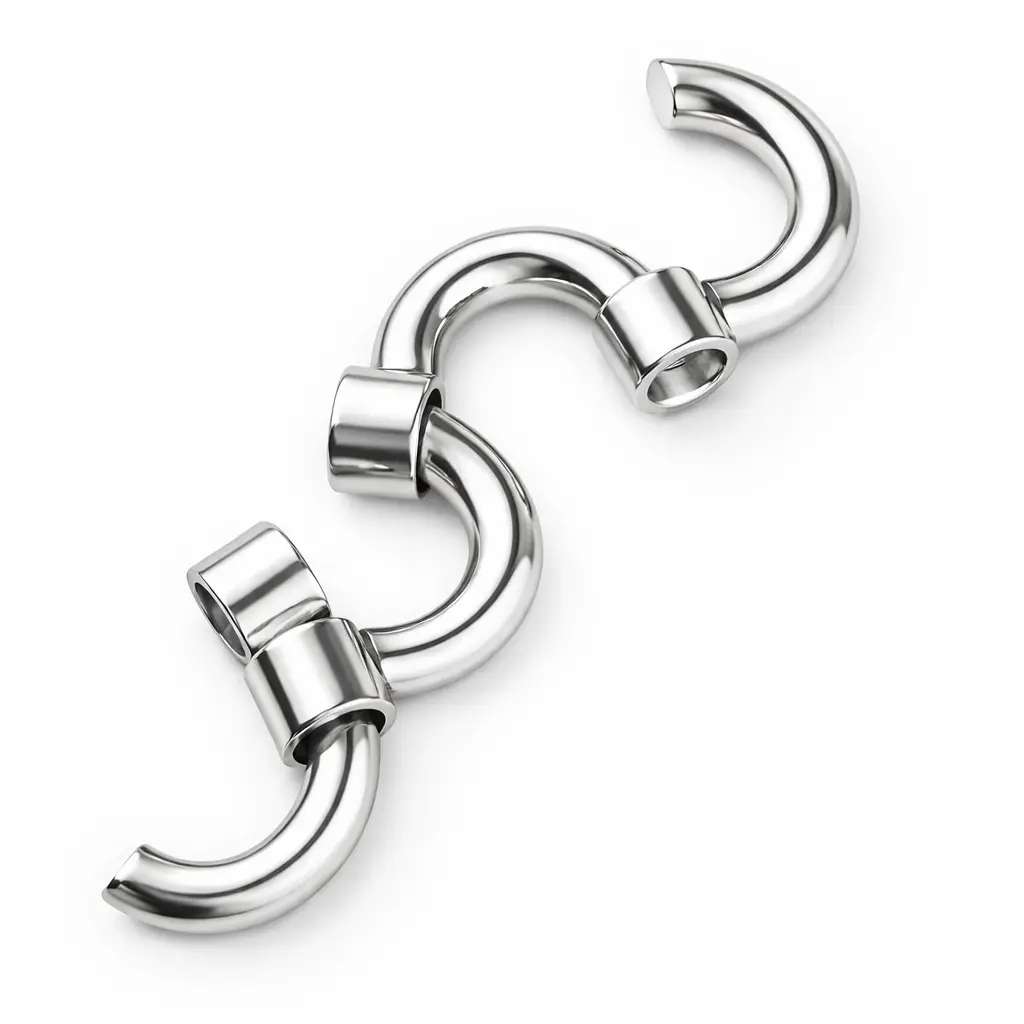
Cast Galaxy 4-Piece Silver — $14.88
Why stop at Cast Enigma? For a different feel, try Cast Hook (level 2) or Cast Galaxy (level 2). Both introduce new mechanisms – Hook uses a swinging latch, Galaxy a three‑piece rotational lock – while still respecting the same hand‑eye rhythm you honed with level 1. Our Cast Hook puzzle solution tutorial breaks down the swinging latch mechanism in detail, and the Cast Galaxy puzzle review covers the three‑piece rotational lock. Additionally, the How to solve Cast Hook metal brain teaser provides an alternative walkthrough for those who prefer a different teaching style.
Your next actionable step: Pick one of these three (Enigma, Key, or Bar) and commit to solving it without peeking at the solution for at least 20 minutes. You already know the basics: rotate, align, slide. That first level 2 click will feel even more satisfying than the last level 1 – I promise.
For a complete overview of what to buy next, our Hanayama puzzle buying guide helps you choose between level 2 and level 3 puzzles based on your current skill and preferred solving time.