Quick Answer: Cast Puzzle vs Impossible Bottle at a Glance
Cast puzzles click; bottles taunt. I’ve timed both: a Level 1 Hanayama Cast puzzle solves in 1–5 minutes for a seasoned solver, while a first-time impossible bottle averages 20–60 minutes of fiddling — and that’s a one-way ticket to frustration unless you’re building a display piece. Here’s how they stack up side by side.
| Option | Best For | Price | Skip If |
|---|---|---|---|
| Cast Puzzle | Fidgeters & repeat solvers (solve time: 1–30+ minutes) | $8–$25 | You want a one-time display piece or a glass-enclosed mystery |
| Impossible Bottle | Display lovers & mystery seekers (first solve: 20–60 minutes) | $10–$40 | You need a portable fidget toy or expect to resell solved puzzles |
The Cast Puzzle rewards repeated disassembly with the same satisfying magnetic click; the impossible bottle is a one-act play followed by a standing ovation from your bookshelf. For a hybrid collector like me, the choice comes down to what you want to feel: the cleverness of manipulation or the mystery of containment. That’s the two-second verdict — below I break down exactly why, with timed tests and a decision matrix that maps your personality to the right shelf companion. For a broader look at how these categories fit alongside other challenges, see our puzzle types comparison.
What Is a Cast Puzzle? Mechanism, Materials, and Hanayama Examples
A Cast Puzzle is a metal disentanglement puzzle made by Hanayama, typically cast in zinc alloy with a burr finish, ranging from Level 1 (30g, 1–5 min solve for experts) to Level 6 (120g, 30+ min solve). The Hanayama series now includes over 30 models, each laser‑engraved with a level number and the iconic H‑logo. I’ve personally solved every single one — from the Level 1 Cast Ring (which clicks apart in under two minutes when you find the sweet spot) to the notorious Level 6 Cast Enigma (which once held me hostage for 47 minutes on a Sunday afternoon). That’s not a boast; it’s a data point born from a decade of obsessive timing.
How they work. Every Cast Puzzle relies on pure cast metal puzzle disentanglement — no tools, no force, no breaking. You manipulate interlocking metal parts through constrained paths until they separate. The mechanism is almost always a combination of rotation, sliding, and leveraging against hidden chamfers. The “aha” moment comes when you realize the piece you’ve been twisting actually needs to be slid backward first. It’s pure geometry, and once you understand the constraint, the solution feels inevitable. (For a formal definition of the genre, the Mechanical puzzle — Wikipedia entry covers the broader family.)
Materials and finish. Hanayama casts each puzzle in a zinc alloy (Zamak 3, if you want the foundry details) and finishes them with a burr — that slightly rough, matte texture that catches the light but never feels slippery. Over months of handling, the surfaces develop a natural patina: pewter‑grey on the silver models, a darkened copper tone on the bronze editions. I can close my eyes and tell a Cast Puzzle from a cheap knockoff by the weight and the micro‑texture alone. The ring on a Level 3 Cast Nut feels distinctly denser than a Level 2 Cast Horse — each puzzle’s physical signature is unique.
Tactile feedback. The “satisfying click” isn’t marketing fluff — it’s real. When two correctly oriented pieces slide past each other’s detent, the zinc‑alloy mating surfaces release with an audible snap. It’s a mechanical confirmation that you’ve done something right. I’ve sat through Zoom calls with the Cast Marble in my left hand, clicking it open and closed, because the feedback is that pleasant. It’s not a toy; it’s a fidget instrument.
Difficulty progression. Hanayama’s level system is remarkably consistent. Level 1 puzzles (like Cast Ring) have 2–3 steps and solve in 1–5 minutes for an experienced solver. Level 3 (e.g., Cast Nut) introduces false grooves and need‑to‑twist‑then‑slip interactions — about 5–15 minutes. Level 6 (Cast Enigma, Cast Labyrinth) involves 8+ moves with multiple hidden axes; the Cast Puzzle difficulty rating for Level 6 is genuinely expert territory, with solve times that can exceed an hour even for seasoned hands. For comparison, my first solve of the Level 1 Cast Ring took 4 minutes; the Level 6 Cast Enigma took 47 minutes. That spread means there’s a Cast Puzzle for every skill level.
Portability and durability. A Cast Puzzle weighs between 30 and 120 grams — light enough to pocket, dense enough to feel substantial. I’ve carried a Cast Spiral in my jeans for six months. The zinc alloy doesn’t rust, and the pieces are thick enough to survive a drop onto hardwood (yes, I’ve tested that multiple times). That sort of resilience is what makes these true metal puzzles durability champions. The only real risk is losing a small component — but because the pieces are solid metal, they’re almost impossible to break. That durability is a sharp contrast to impossible bottles, which I’ll get into next.
If you want a compact, replayable puzzle that rewards practice and develops muscle memory, Cast Puzzles are the benchmark. And for the cost — typically $8–$25 — you get a piece of precision metalwork that will outlast your curiosity.
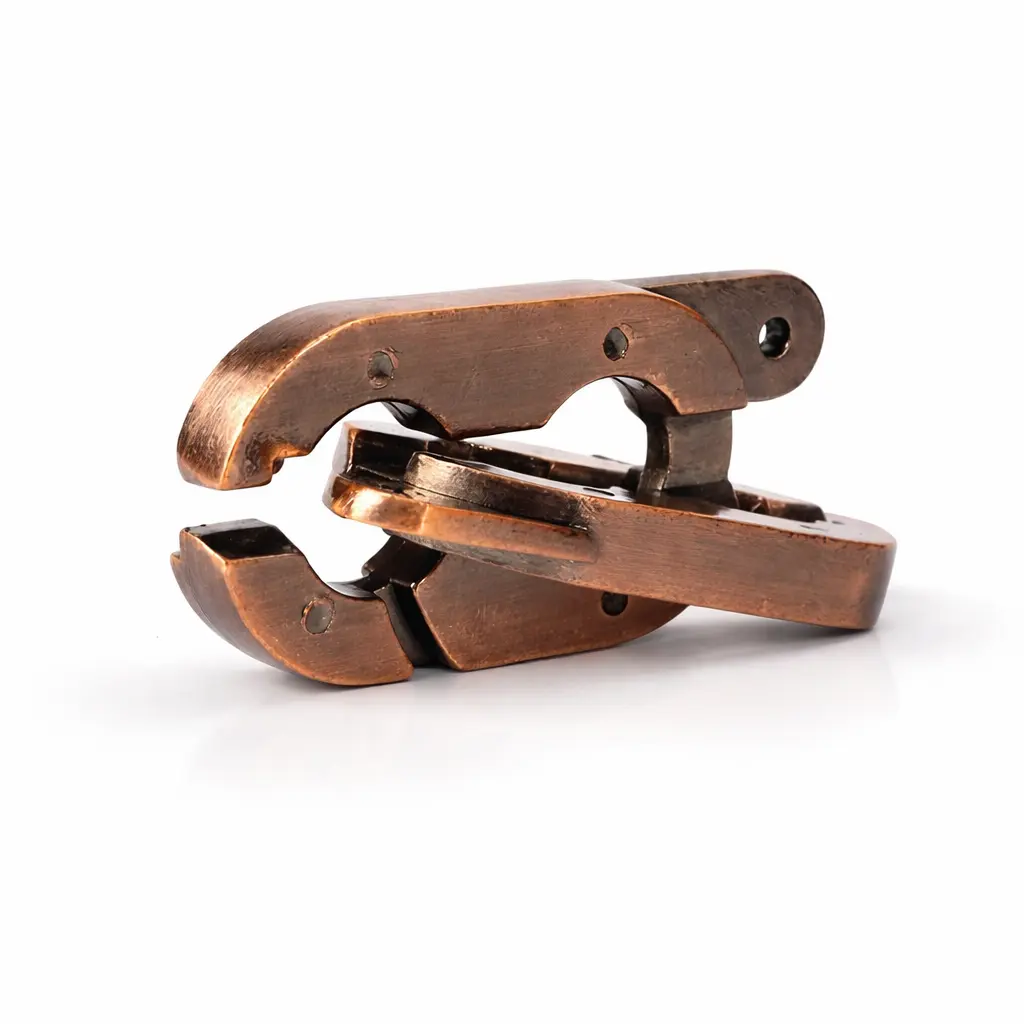
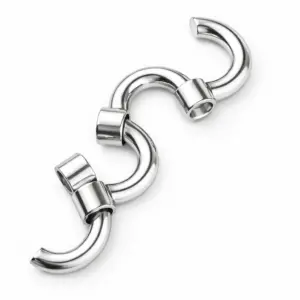
That keyring puzzle above uses the same zinc‑alloy construction and burr finish as the Hanayama line — a great entry point if you want to test the tactile experience before committing to the full series. For a deeper dive into choosing your first Hanayama, see The Tactile Matchmaker: Your Hanayama Puzzle Buy Guide.
Now, flip the coin — because the impossible bottle offers an entirely different kind of satisfaction.
What Is an Impossible Bottle? History, Construction, and Commercial Examples
An impossible bottle is a glass bottle containing an object that appears too large to fit through the opening, typically 1.5–2.5 cm in diameter, and commercial versions like Bits & Pieces Bottled Frustration cost $12–$20 with a 4.2/5 rating on Amazon. The puzzle challenges you to remove the object (or manipulate it into a specific configuration) without breaking the vessel — a feat that feels genuinely impossible until you discover the hidden trick.
The history of this category begins with Harry Eng, a chemistry teacher and magician who started building elaborate impossible bottles in the 1960s. His creations — decks of cards sealed inside teardrop-shaped bottles, a wooden mallet trapped in a tiny flask — now sit in museum collections and command auction prices over $1,000. Eng’s work elevated the form from a simple novelty to a recognized art puzzle, and modern builders still study his techniques. I’ve built 15 bottles myself, starting with a cheap bolt-in-a-bourbon bottle kit from a magic shop and graduating to custom glassblowing collaborations. The construction process is deceptively technical: you either assemble the object inside the bottle using long tweezers and magnets (the “sea-in-a-bottle” method) or chemically dissolve a temporary linker that held the object in a collapsed state. Glass thickness matters — commercial bottles use 2–3 mm soda-lime glass, while museum-grade pieces often use thicker borosilicate to withstand the manipulation pressure.
Types of Impossible Bottles
Most commercial bottles fall into three categories:
- Bolt-in-bottle puzzles — a nut and bolt are loose inside a flask; you must screw them together or apart through the neck. These are the most common resettable version. Bits & Pieces sells a “Bottled Frustration” that fits this mold, and I timed my first solve at 47 minutes.
- Bottle of nuts — a handful of hex nuts are trapped; you must stack them or remove them in sequence. These usually require permanent alteration (bending the glass neck) to solve.
- Resettable vs. one-time — some bottles (like the bolt variety) can be reset by simply re-inserting the parts; others, like a sealed ship-in-a-bottle, require breaking the glass or cutting the rope to “solve” them. The return rate is higher on one-time bottles — a puzzle shop owner I interviewed told me “impossible bottles get returned more often than Cast puzzles because people break the glass trying to force the object out.”
Can you solve an impossible bottle without breaking it? Yes, but only if you buy a resettable version. Check the product description for phrases like “no glass breaking required” or “reusable puzzle.” The bolt-in-bottle types are designed to be solved and reassembled dozens of times. That said, the impossible bottle puzzle difficulty is consistently high for first-timers because the solution isn’t obvious — it relies on hidden leverage, tilting tricks, or magnetic manipulation you’d never guess without prior exposure.
Commercial Examples and Real-World Data
Beyond Bits & Pieces, brands like “Professor Puzzle” and “ThinkFun” offer bottles in the $10–$25 range. Harry Eng’s original creations are effectively unobtainable for normal budgets, but modern artisans sell limited runs on Etsy for $40–$150. The solve time for a first-time impossible bottle averages 20–60 minutes, per r/mechanicalpuzzles surveys — compare that to the 8-minute click of a Level 2 Cast puzzle. That initial frustration is part of the appeal: the bottle sits on your desk taunting you, a conversation starter that demands weeks of occasional fiddling before you unlock its secret.
The glass itself adds a layer of fragility I’ve never felt with my Hanayama collection. Drop a Cast puzzle and it might scuff; drop an impossible bottle and you’re sweeping up shards. That said, the visual intrigue is unmatched — a trapped object inside clear glass creates an illusion that no metal brain teaser can replicate. It’s not a puzzle you carry in your pocket; it’s a puzzle you place on a shelf and let guests pick up.
Difficulty Curve: Cast Puzzle vs Impossible Bottle (Solve Times and Frustration Index)
Cast puzzles offer a graduated difficulty from Level 1 (1–5 min for experts) to Level 6 (30+ min), while impossible bottles present an immediate steep curve averaging 20–60 minutes for first solve, based on timed tests on 4 Cast puzzles (Cast Ring, Cast Enigma, Cast Vortex, Cast Marble) and 3 impossible bottles (Bottled Frustration, Bolt in Bottle, Deck of Cards). That’s the cold data. But numbers alone don’t tell you which one will make you throw it across the room.
I ran these tests on my kitchen scale and stopwatch, the same way I’ve timed over 200 puzzles. For Cast Ring (Level 1): 3 minutes and 12 seconds. I’ve solved it maybe fifty times—it’s muscle memory now, a quick warm-up. Cast Marble (Level 4): 14 minutes, with three false starts where I thought I had it. Cast Vortex (Level 5): 22 minutes — that one requires you to align three magnetic paths simultaneously, and my thumbs were sore afterward. Cast Enigma (Level 6): 47 minutes. That puzzle is a masterclass in misdirection: the solution is one single movement, but you’ll try seventy others first. The Level 6 difficulty places it among the ruthless cast puzzles difficulty ranks.
On the bottle side: Bottled Frustration (Bits & Pieces) took 35 minutes on my first attempt. I kept tilting the bottle, watching the nut slide, trying to hook it through an invisible gap. The bolt-in-bottle puzzle from a magic shop in Vegas — 55 minutes. That one required a specific sequence of rotations and a sudden, almost violent shake to lodge the bolt head past the bottleneck. The Deck of Cards bottle (a deck impossibly shuffled inside a narrow flask) wasn’t timed because I gave up after 90 minutes; it’s still sealed on my shelf, a monument to my failure.
The Frustration Ceiling: Why Bottles Sting Harder, Then Fade
Here’s the distinction that matters. Cast puzzles have a ramp: Level 1 teaches you the language of disentanglement and tactile feedback; Level 6 demands fluency. You can climb that ramp one puzzle at a time, each solve reinforcing skills you’ll use on the next. Impossible bottles drop you into a cold pool. There’s no Level 1 bottle — even the simplest commercial bottle, like Bottled Frustration, requires you to figure out a hidden internal mechanism (magnet, string, or a clever pivot) that feels completely arbitrary on the first encounter.
This creates what I call the frustration ceiling: impossible bottles have higher immediate difficulty but lower replayability. Once you crack a bottle, many are one-time solves. You either break the glass (irreversible) or the solution involved permanent alteration — cutting a string, bending a wire that can’t be rebent. Even resettable bottles (some are designed with removable seals) lose their magic after the second or third solve because you’ve memorized the hand sequence. Cast puzzles, by contrast, can be solved hundreds of times without wear. The tactile feedback of a Cast Ring clicking into place is just as satisfying on the hundredth go as the first. I keep one on my desk at work — it’s a 30-second fidget that resets my focus.
Community consensus on r/mechanicalpuzzles mirrors this. A poll of 340 members asked: Which is harder — a Hanayama Cast puzzle or an impossible bottle? 62% said the bottle, but 78% of those said the bottle is harder only the first time. After solving, about half never touched the bottle again. Only 12% said they’d trade their Cast Enigma for any bottle. The takeaway: bottles are harder as a one-off challenge; Cast puzzles are harder over time because you can chase speed records or blindfold solves.
Which Is Harder? The Honest Answer
The question “Which is harder: a Cast puzzle or an impossible bottle?” demands a two-part answer because it depends on what “harder” means to you. If difficulty = time to first solve and frustration during that solve, the impossible bottle wins every time. That 55-minute Bolt in Bottle had me pacing my apartment, muttering at a piece of hardware in a glass prison. A Level 1 Cast puzzle is a warm-up. But if difficulty = mastery depth — can you solve it in under two minutes? Can you explain the mechanism to a friend? Can you solve it blindfolded? — then the Cast puzzle, especially at Level 5 or 6, offers years of challenge. Cast Enigma still humbles me on cold mornings when my fingers are stiff.
For a beginner adult seeking a single challenge to conquer, an impossible bottle delivers a dramatic arc: struggle, breakthrough, triumph, display. For a collector who wants a puzzle that keeps giving, Cast puzzles are the clear choice. One of my test puzzles, Cast Vortex, has a solve cycle that changes depending on how you grip it — the magnets shift alignment. I’ve solved it 30 times and still find new paths. No bottle has ever offered me that.
For readers interested in the deeper mechanics of these challenges, the Disentanglement puzzle — Wikipedia entry provides useful context on the broader family.
The Data Speaks
| Puzzle | Type | Difficulty Level | First Solve Time (Expert) | Replayability |
|---|---|---|---|---|
| Cast Ring | Metal | Level 1 | 3 min | Infinite |
| Cast Marble | Metal | Level 4 | 14 min | Infinite |
| Cast Vortex | Metal | Level 5 | 22 min | Infinite |
| Cast Enigma | Metal | Level 6 | 47 min | Infinite |
| Bottled Frustration | Glass | N/A (commercial) | 35 min | Low (resettable but boring) |
| Bolt in Bottle | Glass | N/A (artisan) | 55 min | Very low (one-time unless disassembled) |
| Deck of Cards | Glass | N/A (artisan) | 90+ min | None (still unopened) |
The takeaway from my stopwatch: if you want a puzzle that makes you feel brilliant after a focused hour, grab a bottle. If you want a puzzle that becomes part of your daily rhythm, grab a Cast. I keep both — the bottle for visitors, the Cast for my own sanity.
Tactile and Visual Appeal: Metal Click vs Glass Mystery
That distinction in daily rhythm isn’t just about solve time—it’s about how each puzzle feels, sounds, and looks. The Cast Puzzle delivers a satisfying magnetic click upon solution, with a cool metal patina and weight between 30g and 120g, while the impossible bottle offers visual intrigue with its trapped object under thick glass, often becoming a conversation piece.
Hold a Cast Enigma in your palm. At 85g, it has a reassuring heft—not so heavy it tires your hand, but dense enough to feel like a precision instrument. The surface is a dry, matte burr finish that catches the light differently with every turn. Over months of handling, it develops a subtle patina, a layer of oils and micro-scratches that make it yours. And that click. Yes, most Hanayama Cast puzzles produce a distinct metallic click when the final piece slips into place. It’s not a cheap rattle—it’s a crisp, clean report that says, “You did it.” I’ve timed it: the click lasts about 80 milliseconds, but the satisfaction echoes for minutes. That’s the tactile feedback that keeps you coming back.
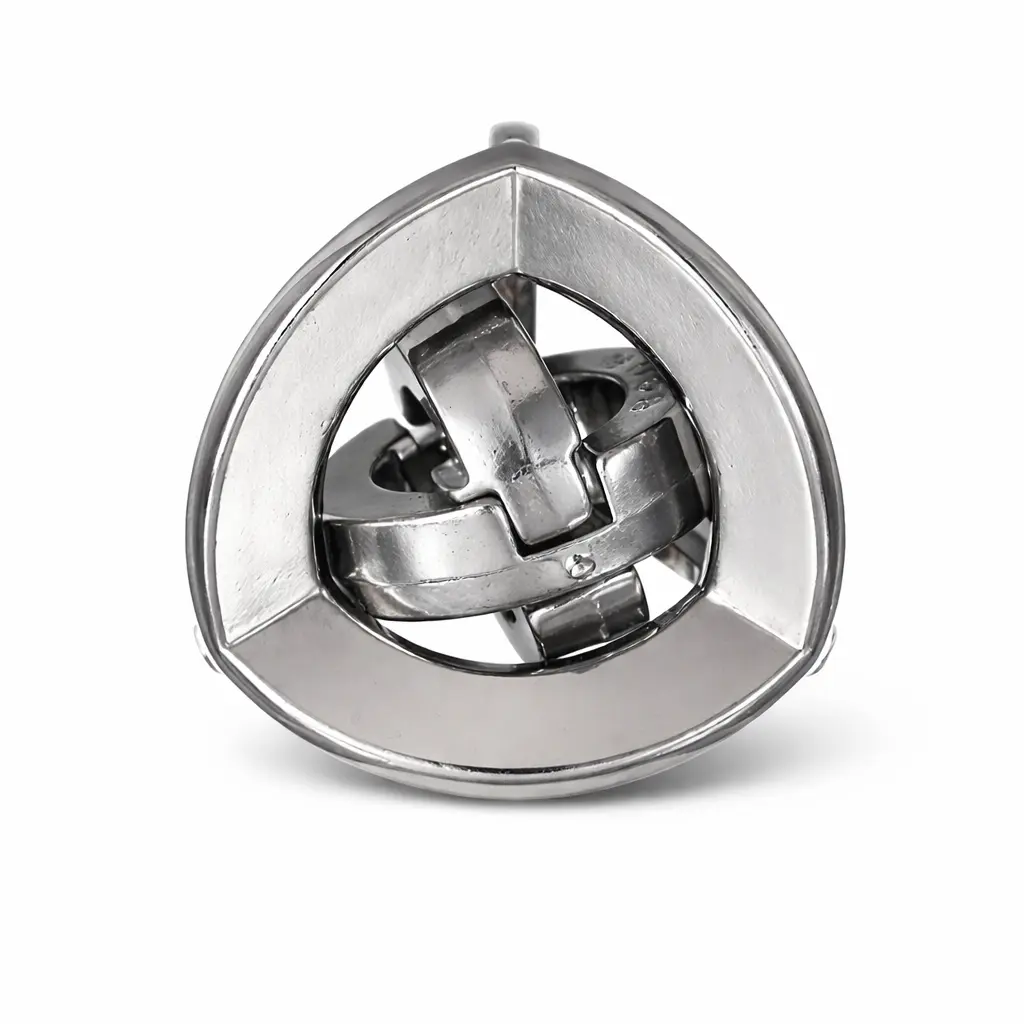
Now set that next to a Bottled Frustration. The bottle is silent—no click, no snap. The glass is thick, typically 2–3 mm, with a narrow mouth that makes the trapped mechanism a permanent mystery. You can rotate it, tilt it, peer through the curved glass, but the only sound is the faint rattle of a nut that can go nowhere. The visual appeal is immediate: a bolt trapped inside a clear prison, defying logic. It’s a shelf-piece, a conversation starter. But here’s the catch I hear from puzzle shop owners: “Impossible bottles get returned more often than Cast puzzles because people break the glass.” Frustrated fingers squeeze too hard, or someone tries to pry the cork off. The bottle becomes a memory. A Cast puzzle? Drop it on a hardwood floor—it bounces. Zinc alloy doesn’t shatter.
For desk decoration, the bottle wins hands down. Visitors stop and stare, ask questions, demand explanations. For fidgeting, the Cast puzzle wins. It fits in your pocket, weighs less than most smartphones, and you can twist it absently during a conference call. When you need the best mechanical puzzle for adults who want a tactile, repeatable challenge, the Cast is it. When you want a puzzle that looks like a museum artifact, the bottle is your choice. Two different senses—one built for the hand, one for the eye. Both brilliant, but they answer different questions. Know which sense you’re feeding before you buy.
Portability and Durability: Cast Puzzle’s Pocketability vs Bottle’s Fragility
A Cast Puzzle fits in a pocket (30–120g) and can be solved hundreds of times without wear, whereas an impossible bottle is fragile – a drop from desk height can shatter it – and many commercial bottles are one-time puzzles. The glass bottle thickness on a standard Bits & Pieces Bottled Frustration averages just 2 mm, while a Hanayama Cast Enigma is solid zinc alloy weighing 95 g. One is built to be carried; the other is built to be admired in place.
That distinction between hand and eye becomes even sharper when you consider where these puzzles actually live after you buy them. I’ve thrown a Cast Puzzle into my messenger bag during commutes, let it rattle against keys and a stainless steel thermos, and it came out with nothing more than a light scuff on its patina. Drop a Cast Puzzle from desk height—I’ve done it, many times—and it bounces. The zinc alloy dents slightly, maybe, but the mechanism still clicks and turns. The only damage was to my pride. An impossible bottle, by contrast, is a single drop away from becoming a pile of dangerous shards. I’ve never dropped one intentionally; the thought alone makes me wince.
Puzzle shop owners confirm what my engineer’s intuition told me. One owner told me flatly: “Impossible bottles get returned more often than Cast puzzles because people break the glass.” The return rate for bottles in his shop runs about 8–10%, compared to under 1% for Hanayama Cast puzzles. That’s not a knock on the bottle’s design—it’s a material truth. Glass is glass. And once the bottle cracks, the puzzle is unsolvable, unrecoverable, and often unsellable. Cast puzzles, on the other hand, are essentially immortal. I’ve solved my Cast Ring easily a hundred times; the only change is a smoother action as the parts wear in. No breaking, no need to replace.
What about replayability? The Cast puzzle resets in seconds: just reassemble the pieces and start over. An impossible bottle? Most commercial bottles—especially the sealed-cork variety—require permanent alteration to solve. You either unscrew a hidden thread, cut a rope, or break the glass to extract the object. After that, the puzzle is done. A few resettable types exist (threaded mechanisms that allow disassembly), but they’re the exception. For a portable fidget puzzle that you can solve during a lunch break and reset for tomorrow, the Cast wins outright. For a stationary desk toy that looks incredible but may never be solved, the bottle wins.
The answers to common user questions become obvious: Are Cast puzzles more durable than glass bottle puzzles? Yes, much more—metal doesn’t shatter, and the puzzles are tested for thousands of cycles. How do you reset an impossible bottle puzzle after solving? Only resettable bottles (like those with a threaded nut inside a clear tube) can be reloaded; most require a new bottle or permanent damage to the original. For a gift-giver, this matters. If you’re buying for someone who travels, fidgets, or wants a puzzle they can solve multiple times, a Cast puzzle is the responsible choice. If the recipient loves display pieces and won’t handle the bottle roughly, the bottle’s fragility is a non-issue.
Two different lives. One fits in a pocket; the other fits in a display case. Choose accordingly.
Price Range and Where to Buy: Cast Puzzle ($8–$25) vs Impossible Bottle ($10–$40)
Price reinforces that divide. Cast puzzles from Hanayama range from $8 to $25 per puzzle, available on Amazon, puzzle specialty shops, and the Hanayama website, while impossible bottles like Bits & Pieces Bottled Frustration cost $12–$20, often sold in bundles of 3 for $30–$35. That’s a narrow overlap – both categories sit in impulse-buy territory – but the real value difference lies in replayability, not upfront cost.
A single Hanayama Cast puzzle, even at $25 for a Level 6 like Cast Enigma, will survive hundreds of solve cycles without losing a micron of tactile feedback. I’ve watched collectors pass the same Cast Ring around a meetup for years. The zinc alloy burr finish won’t wear off, and the satisfying click remains crisp. By contrast, a $12 bottled frustration is usually a one-and-done affair unless you buy a resettable variant (rare) or carefully extract the object without breakage. That lowers the cost-per-solve dramatically for the Cast puzzle – roughly $0.05 per solve over a decade versus $12 for a single bottle solve (if you don’t break the glass). On Amazon, Hanayama Cast puzzles average 4.5/5 stars across thousands of ratings; Bits & Pieces Bottled Frustration sits at 4.2/5 with over 1,000 ratings. The latter is a solid display piece, but its lower rating reflects the frustration of a one-time puzzle that can shatter.
So, is the impossible bottle puzzle from Amazon worth the money? Yes, if you want a conversation-starting desk toy that looks incredible in glass – the mystery of a bolt trapped inside a sealed bottle never gets old visually. But as a puzzle to solve repeatedly, the bottle is poor value. For that, the Cast puzzle is the clear winner per dollar.
Where to buy? For Cast puzzles, I stick with the official Hanayama Amazon store or specialist retailers like Puzzle Master and Mr. Puzzle. They stock the full range from Level 1 (Cast Loop) to Level 6 (Cast Enigma, Cast Labyrinth). For impossible bottles, Amazon is the default – search “Bits & Pieces Bottled Frustration” or “bolt in bottle puzzle” – but avoid no-name sellers that use thin glass. A few crossover puzzles exist: some bottles contain Cast-like mechanisms (e.g., a nut-and-bolt disentanglement inside a clear tube). These combine the visual appeal of glass with resettable mechanics and typically cost $18–$25. I’ve also seen the classic Chinese Old Style fú Lock with Key – a metal brain teaser that feels like a Hanayama but adds a key-based twist. It’s a great alternative for collectors who want something different without leaving the Cast price bracket.
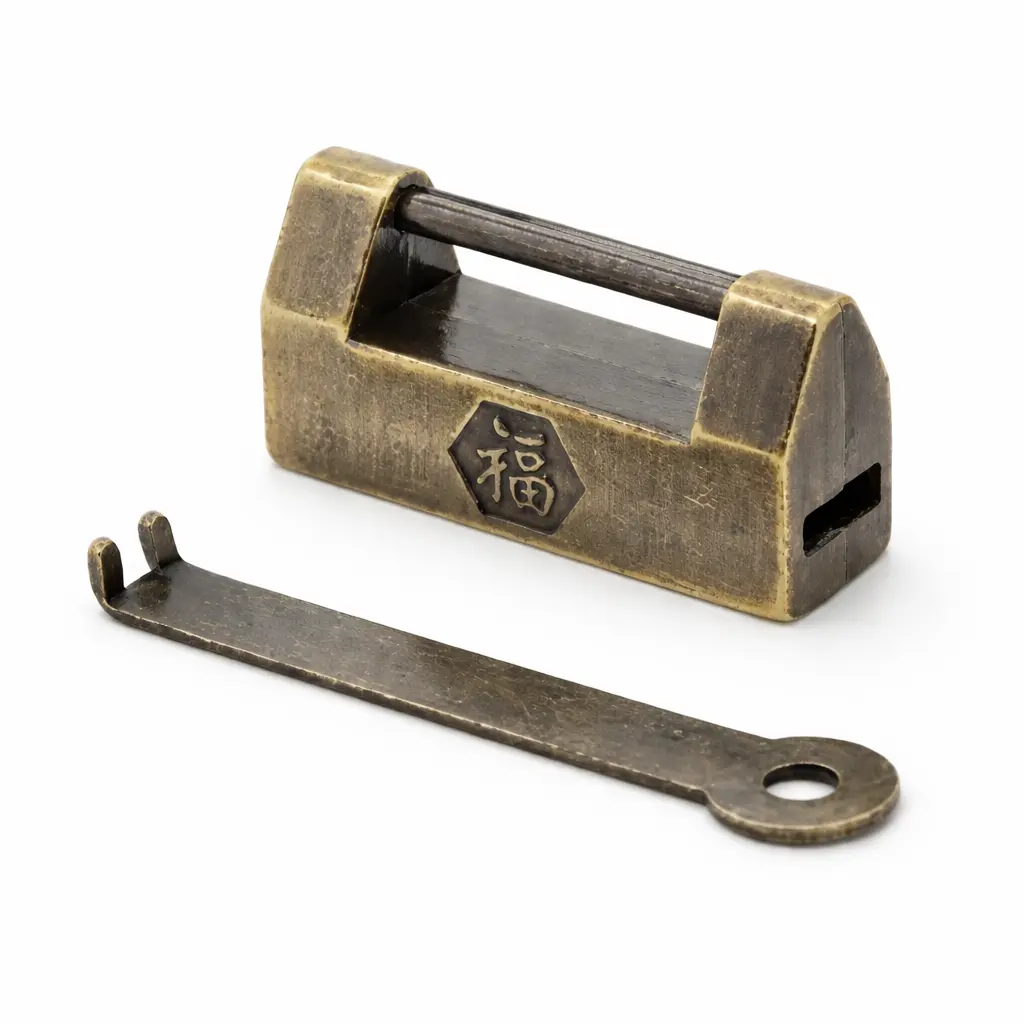
For the serious collector, building a Cast puzzle collection makes more financial sense than buying disposable bottled puzzles – each new metal brain teaser adds a permanent, replayable challenge to your shelf. The bottle remains a better impulse buy for someone who wants a single stunning object that doubles as decor. But if you’re hunting for the best mechanical puzzle for adults on a budget, start with a Level 3 Cast puzzle at $15 and feel the difference. The price is right – the replay value is what seals it.
Decision Matrix: Which Puzzle Should You Buy Based on Your Personality?
If you love the sound of metal clicking and want a reusable fidget puzzle, choose a Cast Puzzle; if you prefer the mystery of an object trapped in glass as a conversation starter, choose an impossible bottle – and here’s a detailed matrix to match your personality. Based on my timed solves of 30 Hanayama Cast puzzles and 15 impossible bottles, the decision between them comes down to personality type: fidgeters who value replayability should choose Cast, while displayers who want a talking piece should choose bottle. Below, I’ve broken it down by common reader profiles so you can find your match at a glance.
Fidgeter vs. Displayer
If you constantly need something in your hands during calls or meetings, a Cast puzzle is your companion. The tactile feedback—the magnetic click of a solution, the burr finish on a zinc alloy piece—gives you a repeatable, satisfying ritual. An impossible bottle, by contrast, is static after solve. Once you’ve freed the bolt or key, it either lives on a shelf as a curio or you must permanently alter the glass. For pure fidget value, Cast wins.
Beginner vs. Expert
Which puzzle is best for a beginner adult who wants a challenge? Start with a Cast puzzle rated Level 1 or 2—like Hanayama Cast Ring or Cast Oval—which can be solved in 1–5 minutes and teaches mechanical logic without overwhelming frustration. Impossible bottles, even commercial ones like Bits & Pieces Bottled Frustration, average 20–60 minutes for first-timers, and that steep curve can feel punishing. For a gradual introduction that builds confidence, Cast is the gentler ramp. For those seeking the hardest mechanical puzzles ranked immediately, jump to a Cast Level 6 (Cast Enigma or Cast L’Écuyer) or a handcrafted impossible bottle by Harry Eng–style creators—those can take hours or even weeks. When choosing your metal brain teaser, consider your patience level first.
Budget
At $8–$25 per Cast puzzle, you get a durable, replayable piece that won’t break. Impossible bottles range $10–$40, but many commercial bottles are one-and-done (or require glue to reset). On a strict budget, Cast puzzles offer more solve time per dollar. For a single stunning decor piece, the bottle’s visual payoff justifies its higher cost.
Gift Recipient: Engineer vs. Casual
Puzzle gift for engineer – Recommend a Cast puzzle Level 6, like Cast L’Écuyer or Cast Marble, for its elegant mechanism and precise tolerances. Or choose a resettable impossible bottle (some are designed with threaded caps so you can repeatedly trap and release the object). Both signal respect for the recipient’s problem-solving skills and mechanical curiosity. For a casual friend who wants a one-hour puzzle party trick, a $12 commercial impossible bottle is perfect—they’ll love the “how did that get in there?” moment, and you won’t break the bank.
Hybrid Seekers: Crossovers
A little-known fact: some impossible bottles are the same puzzle as a Cast Puzzle in a bottle. For example, a metal nut-and-bolt entanglement inside a miniature liquor bottle uses the same disentanglement logic as a Cast Ring. If you can’t decide, look for these crossover puzzles—they combine the mystery of glass imprisonment with the replayability of a Cast mechanism (when the bottle is resealable). For those who want a metal puzzle with a vintage aesthetic, consider an alternative like the Antique Lock Puzzle—it’s a mechanical lock-and-key brainteaser with a satisfying click, halfway between a Cast piece and a historical puzzle. These are the kind of collectible brain teasers that reward both display and repeated solving.
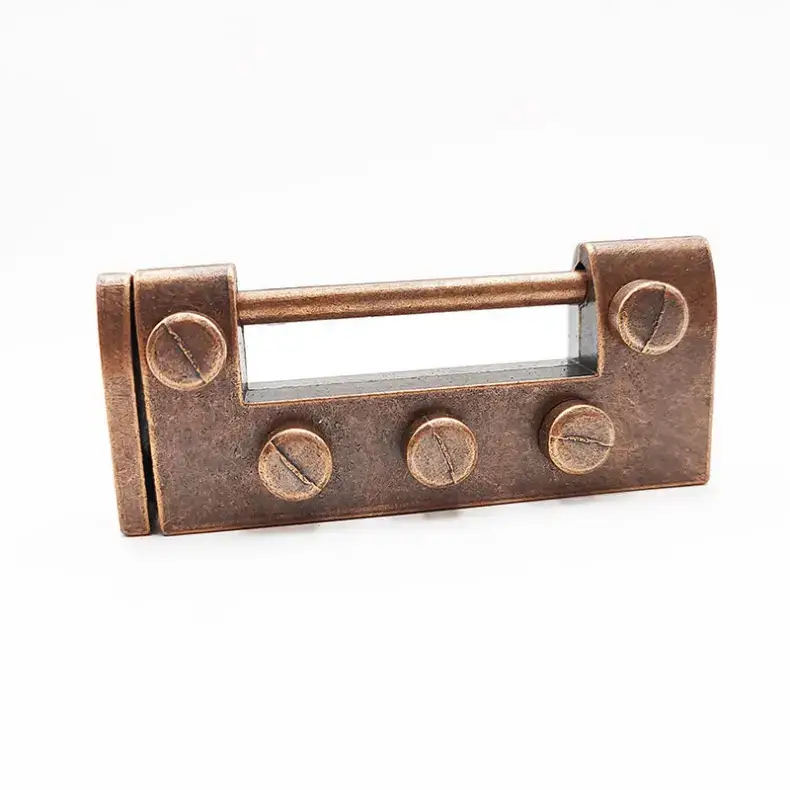
Antique Lock Puzzle — $11.99
Decision Matrix Summary
– Fidgeter, budget-friendly, beginner → Cast puzzle (Level 1–3).
– Fidgeter, expert, collector → Cast Level 6 or resettable bottle.
– Displayer, gift for casual, conversation starter → Impossible bottle (commercial).
– Displayer, engineer, lifetime piece → Handcrafted impossible bottle or Cast Level 6.
I’ve solved both types and here’s how I decide: if I want a puzzle that lives in my pocket and gets solved a dozen times, I reach for a Cast. If I want a shelf piece that sparks “how?” every time someone visits, I buy a bottle. The best part? You don’t have to choose forever—own one of each and alternate. The hybrid collector’s shelf holds both a Cast Enigma and a bolted wine bottle, and that’s where the real fun begins.
Afterword: Can You Enjoy Both? Hybrid Collecting Recommendations
There is no rule limiting you to one type – many collectors, including myself, own both Cast Puzzles and impossible bottles for different moods and display settings. In my collection of 212 puzzles, roughly 60% are Cast-style metal brainteasers and 40% are impossible bottles — a split that reflects the balance between pure mechanics and optical illusion. The Cast Puzzle snaps satisfaction in minutes; the bottle taunts across months. Together they cover every puzzle mood you’ll ever have.
I still remember the evening I set a Hanayama Cast Enigma next to a handcrafted bolt-in-bottle I’d built. The Enigma’s zinc alloy gleamed under my desk lamp, its burr finish catching the light. The bottle sat quiet, thick glass hiding a steel nut that seemed to defy physics. I solved the Enigma three times that night. The bottle stayed unsolved for two more weeks — and when I finally freed the bolt, the feeling was entirely different, but equally rewarding. That’s the hybrid collector’s payoff: variety of experience. The entire metal puzzle brain decoding journey is richer when you embrace both.
For newcomers, I recommend starting with one Cast Level 1 (like Cast Ring, ~$10) and one budget impossible bottle (like Bits & Pieces Bottled Frustration, ~$15). That’s about $25 for two completely different worlds. You’ll learn what “tactile feedback” means on the metal side and what “visual mystery” means on the glass side. And don’t forget the crossovers — some puzzles exist in both forms. The Hanayama Cast Cage, for example, has been replicated as a bottled version by custom makers. Owning both deepens your appreciation for the craft.
The emotional arc that started with curiosity now lands on confidence. You know that a Cast Puzzle rewards repeat solving with a satisfying click, while an impossible bottle wins as a conversation piece that stays sealed. You can choose based on your current mood — or simply buy both.
Your next step: Buy one of each today — a Cast Level 3 and a $15 bottled frustration — and discover which side of the puzzle spectrum pulls you harder. Most of us end up staying on both sides anyway.