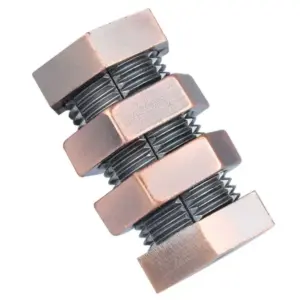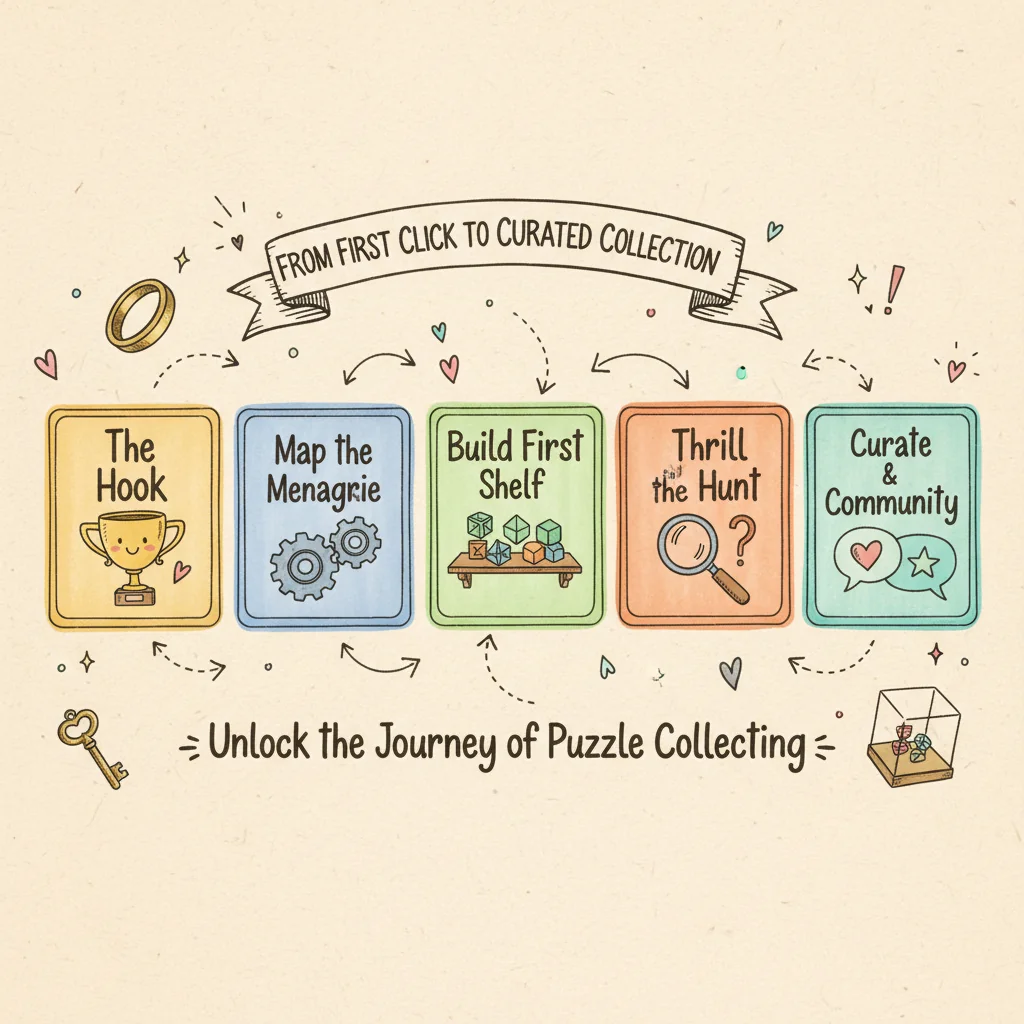
The Click That Hooks You: From Solver to Collector
The journey from a curious solver to a dedicated collector often begins with a single, cool-to-the-touch object and the quiet, definitive click of its first solved mechanism. This shift in mindset is marked by moving from viewing a puzzle as a problem to be conquered to appreciating it as the first artifact in a tangible, tactile collection. The moment you decide not to put it back in the drawer, but to give it a place of honor on your desk, you’ve crossed the threshold.
I found mine in a dusty cigar box at an estate sale, nestled between a broken watch and a bundle of foreign coins. It was a small, tarnished piece of brass, two intertwined loops with a captive ring. The simple objective—”free the ring”—was etched right into the metal. For the first hour, it was a silent, stubborn companion on my couch. My fingers learned the geometry through sheer repetition, mapping the subtle curves and the frustratingly perfect clearance between parts. The brass had developed a warm patina from years of handling, and it grew warmer in my palm.
Then came the shift. Not a grand, cinematic moment, but a tiny, internal snick. A pressure I hadn’t fully perceived released, a path cleared, and the ring slid free with a smooth, metallic sigh. The satisfaction was profound, but fleeting. Immediately, it was replaced by a deeper curiosity. I reversed the process, relishing the precise alignment needed to re-trap the ring. I solved it again. And again. The object was no longer a question. It was an experience—a kinetic sculpture with a secret handshake.
This is the hook. The puzzle ceased to be just a diversion. It became a desk trophy, a monument to a small, hard-won victory. I looked at its elegant, worn form and realized: this isn’t something you discard after solving. You keep it. You fidget with it. You appreciate its weight and its sound—the soft shush of metal on metal. And you inevitably ask, “What else is out there?” It’s the same moment of discovery that makes people seek out the 4000-year-old tactile fidget that starts collections.
A quick, overwhelmed online search that evening revealed not just a few more puzzles, but a universe. Hundreds of shapes: knots, animals, impossible objects, and sleek abstract forms. Brands like Hanayama with their cryptic difficulty ratings (1 to 6, I would learn). This was the catalyst for how to start a metal puzzle collection—not by buying everything in sight, but by recognizing that first puzzle as a foundational piece. It taught me to value the “solve feel,” that ineffable combination of tactile feedback, precision, and mechanical empathy that separates a rewarding artifact from a frustrating trinket.
The initial intrigue—can I solve this?—blossoms into a collector’s curiosity: What other mechanisms exist? What stories do these objects tell? The puzzle in your hand is no longer an endpoint. It’s a key, and you’ve just heard the first lock turn.
A Collector’s Taxonomy: Mapping the Mechanical Menagerie
To build a meaningful collection, you must first understand the landscape. For the new collector facing a dizzying array of shapes, a functional taxonomy is not academic—it’s your roadmap. It turns a wall of shiny objects into a curated shelf of distinct experiences. Fundamentally, metal puzzles fall into four primary categories, each defined by its core interaction and the unique solve feel it delivers.
The most accessible gateway, and a pillar of many collections, is the Cast Puzzle. Typically made from zinc alloy, brass, or aluminum, these are single, intricate objects designed to be taken apart and reassembled. Brands like Hanayama have mastered this form, producing iconic designs graded on a clear 1-6 difficulty scale (1 being easiest). A Cast Puzzle, like the beloved ‘Cast Heart’, is an exercise in quiet observation and subtle manipulation. The goal is often deceptively simple: find the single, precise sequence of moves to separate two seemingly fused pieces. The tactile feedback is solid and quiet, the experience intimate. These are the perfect desk trophies, their forms often beautiful enough to stand alone as sculptural objects once solved. The difference between cast and wire puzzles is profound; where cast puzzles ask for patient, internal exploration, their cousins demand a more spatial, external finesse.
Those cousins are the Disentanglement Puzzles. Crafted from steel wire or rod, their history stretches back centuries. As defined on Wikipedia, a disentanglement puzzle involves “freeing a piece of the puzzle from the rest, or separating the pieces entirely.” Solving them feels like a physical negotiation. You learn the language of slack, leverage, and rotation. The solve feel is springy, with gentle pings and the smooth glide of steel on steel. While cast puzzles hide their mechanisms, wire puzzles wear their logic on the surface, challenging you to see the path through the obstruction.
A more modern and deeply satisfying category is Sequential Discovery. This is where a puzzle becomes a story. To solve it, you must discover tools and passages hidden within the puzzle itself, using each discovered element to unlock the next step. It’s the closest you get to a tactile escape room. The Wikipedia page for Mechanical Puzzle defines it as a puzzle where “the solver must perform a series of manipulations to reveal a hidden mechanism or component.” The experience is one of revelation and narrative. The clicks and shifts aren’t just steps; they’re plot points. These puzzles command higher prices and are often sought-after limited editions, prized for their clever engineering and theatrical solve feel.
Finally, there is 3D Metal Assembly. These are not puzzles to take apart, but to build from hundreds of laser-cut steel or brass sheets. They require patience, fine tools like needle-nose pliers, and a steady hand. The reward is a permanent, astonishingly detailed model—a cathedral, a ship, an engine. The solve feel here is one of creation. The feedback is the definitive snap of a tab locking into its slot, the gradual emergence of form from a flat plane. It appeals to the model-builder and the architect within, resulting in a display piece that speaks to patience and precision.
So, how does a collector use this map? I sketched a simple “Collector’s Progression” flowchart on a napkin once. It starts with a Level 1-2 Hanayama cast puzzle to learn the language of mechanical empathy. From there, the path branches: move to harder cast puzzles (Levels 3-4) and classic wire disentanglements to hone spatial reasoning. The next tier introduces sequential discovery concepts and complex 3D models. The apex is the pursuit of rare, designer-limited editions. This framework prevents overwhelm. It allows you to diagnose your own preferences—do you crave the elegant simplicity of a cast puzzle or the theatrical journey of sequential discovery?—and build a collection with intentionality, rather than by accident. Your shelf becomes a living document of your journey through the mechanical menagerie.
Building Your Foundation: The Essential First Shelf
With a taxonomy in hand, the overwhelming landscape of metal puzzles becomes a navigable map, leading to the most critical step: acquiring your first curated pieces. Your foundational shelf isn’t about amassing quantity; it’s about selecting 4-5 puzzles that, together, offer a complete education in the language of metal. They should teach you to distinguish not just shapes, but the very quality of tactile feedback and build your mechanical empathy—the intuitive sense of how parts want to move relative to one another. This suite will span key categories and metal puzzle difficulty levels explained by the Hanayama scale, from the accessible (Level 2) to the thoughtfully complex (Level 4).
Start with Hanayama’s Cast Heart (Level 2). Ignore the instructions. The objective is simple: separate the two interlocked pieces. This is your primer in mechanical empathy. Its weight is substantial, its finish smooth. As you manipulate it, you’ll learn to feel for internal channels and listen for the subtle shifts of components sliding past one another. The solution is elegant and logical, providing that first profound “aha!” without excessive frustration. It teaches that force is never the answer; finesse is. This puzzle often becomes a permanent desk trophy, its patina deepening with each handling, a testament to the start of your journey.
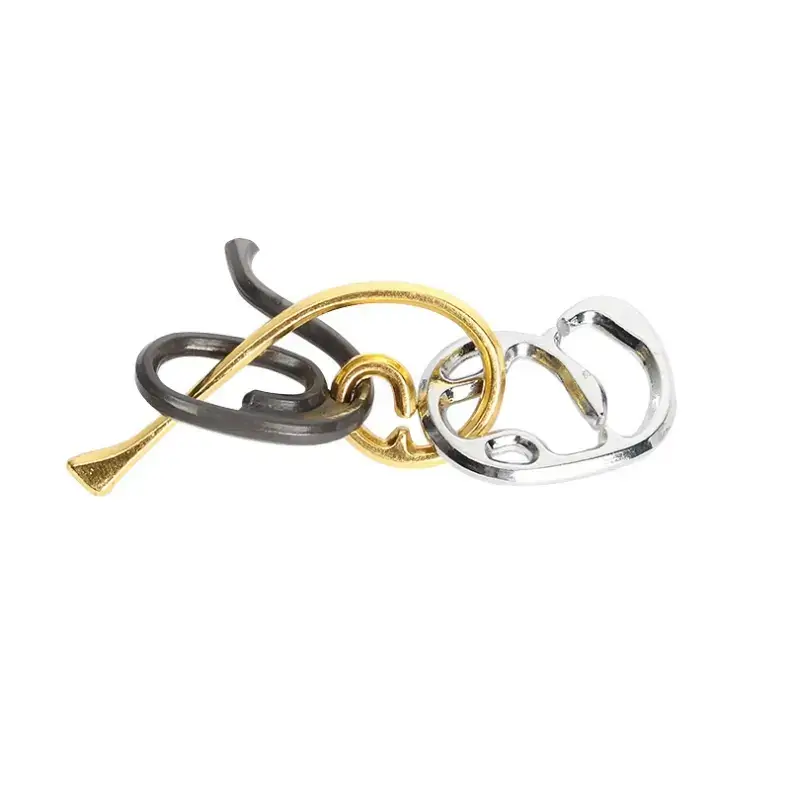
Next, introduce a classic wire form. Hanayama’s Cylinder (Level 3) is a masterclass in elegant constraint. Two identical wire loops are trapped within a slotted barrel. The solve feel here is distinct from the cast puzzles; it’s about navigating rigid paths in three dimensions, feeling the precise alignment needed for an exit. It builds the spatial reasoning essential for more complex disentanglements. For a pure, traditional wire puzzle, seek out a well-crafted Horseshoe Nail or Double M puzzle. Their clinking, springy resistance offers a different sonic and tactile signature entirely, rounding out your sensory palette.
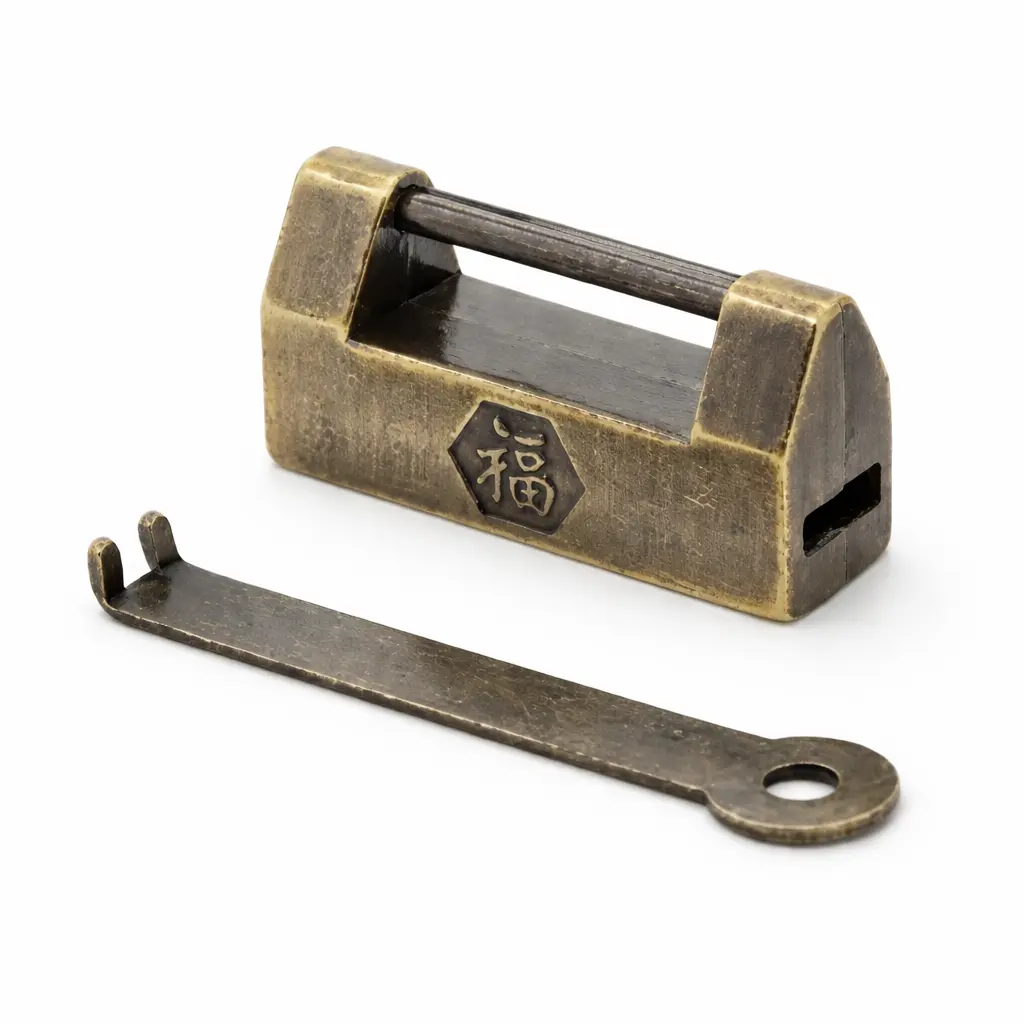
Your collection needs a touch of history and narrative, which is where a puzzle like the Chinese Old Style fú Lock with Key excels. It represents the ancient lineage of puzzle locks, where the goal is to retrieve the key. This isn’t just a disentanglement; it’s a story in your hands. The mechanism often involves discovering a hidden slide or a counter-intuitive rotation, introducing the foundational concept of sequential discovery—where solving one step reveals the tool or path for the next. It demonstrates how puzzles can be cultural artifacts, moving the hobby beyond pure abstraction.
Finally, choose one Hanayama Level 4 puzzle, such as Cast Loop or Cast News. This is your first deliberate step into sustained challenge. The mechanism will be less immediately apparent, requiring periods of rest and mental rotation. The satisfaction of solving it will be deeper, reinforcing that the value lies in the struggle itself. Among the best Hanayama puzzles for beginners, this tier teaches patience and the art of setting a puzzle down, only to return with fresh eyes and a new hypothesis. For a deeper dive into selecting these foundational pieces, consider your tactile matchmaker for Hanayama-style puzzles.
This foundational shelf—Cast Heart, Cylinder, a classic wire puzzle, a historical lock, and a Level 4 cast puzzle—is your toolkit. Each time you solve and re-solve them, you’re calibrating your intuition. You are learning to judge craftsmanship by the precision of the machining, the absence of rough seams, and the consistency of the plating. This curated start ensures your first acquisitions are not random souvenirs, but the deliberate, enduring cornerstones of a living collection. And if you ever get truly stuck on a classic, resources like a step-by-step guide to solving the Cast Hook brain teaser can provide a helpful nudge without spoiling the entire journey.
The Hunt: Provenance, Platforms, and the Thrill of the Find
Once your foundational shelf is set, your relationship with puzzles changes. You are no longer a casual solver browsing an algorithm’s suggestions; you become a hunter. The hunt for metal puzzles unfolds across two primary landscapes: the curated, well-lit shelves of dedicated shops for new acquisitions, and the shadowy, fascinating bazaars of the secondary market for rare finds, where a puzzle’s history—its provenance—becomes part of its value.
Provenance is the story etched into the metal itself. It’s the difference between a mass-produced cog and a collectible artifact. On a modern Hanayama, look for the tiny designer’s mark—the initials “NK” for Nob Yoshigahara, or “O” for Oskar van Deventer—often hidden on an inner surface. For vintage or artisan puzzles, provenance might be a maker’s hallmark, a serial number, or even a slight variance in finish that indicates a first, limited run. I once spent a week authenticating a worn six-piece burr puzzle, finally identifying it as a mid-70s prototype from a now-defunct Japanese workshop by comparing its unique, hand-filed chamfers to archival forum photos. That story is now part of my collection’s lore. Packaging is provenance. Keep those solution sheets and branded tins or boxes; for a collector, they are the puzzle’s certificate of authenticity and can significantly affect its trade value.
Your hunting grounds are specialized. Beyond major retailers, dedicated online shops like Puzzle Master (Canada) or CubicDissection (US) are the community’s trusted suppliers. Their catalogs are curated by enthusiasts, offering thoughtful filters by designer, mechanism, and metal puzzle difficulty levels explained. They are where you’ll reliably find the best Hanayama puzzles for beginners and beyond. For the artisan edge, Etsy is a vibrant source for handcrafted disentanglement puzzles and custom 3D models from individual machinists. Prices here reflect craftsmanship, often ranging from $50 for a beautifully finished single-concept piece to several hundred for complex, limited-run sequential discovery puzzles. For a broader view of sourcing, our curated guide to finding puzzles beyond Amazon maps this terrain in detail.
But the true hunter’s thrill is the secondary market. This is where you answer the question, “where to buy rare metal puzzles?” eBay is the obvious, sprawling archive where patience is key. Set alerts for designers like “Yamamoto” or “Bakker.” The International Puzzle Party (IPP) exchange puzzles, highly sought-after and rarely sold publicly, sometimes surface here. For the connoisseur, dedicated auction houses like Bertoia’s occasionally feature historic puzzle estates. Yet the true insider’s network is the mechanical puzzle forums on Reddit (r/mechanicalpuzzles) and standalone communities like PuzzleWorld’s forum. Here, collections are traded, sold, and discussed with a focus on “solve feel” and historical detail that you’ll find nowhere else. A “For Sale” post from a trusted member might offer a puzzle from the personal collection of a famed designer—that’s the pinnacle of provenance.
Knowing a puzzle’s value isn’t about retail price. It’s a formula of condition, rarity, designer reputation, and the elegance of its mechanism. A $200 puzzle from a celebrated contemporary maker that offers a sublime, multi-stage “aha” moment may be a better value than a $80 vintage puzzle that is merely old, not ingenious. Ask: Does it advance your collection’s theme? Does its mechanism feel satisfyingly novel? Does it have a story? When you shift from judging a puzzle as a problem to be solved to evaluating it as a collectible object, the hunt gains its deepest, most satisfying dimension. The next puzzle you acquire won’t just be a purchase; it will be a find, with its own history waiting to be integrated into your own.
The Display Dilemma: When Your Collection Demands a Showcase
Once your collection grows beyond the first dozen acquisitions—let’s say, around the 20-puzzle mark—a subtle but significant shift occurs. The simple shoebox or drawer that once sufficed for storage begins to feel like an indignity. You’re not just housing problems; you’re curating a set of mechanical artifacts, each with its own solve feel and history. The display dilemma, then, is the inevitable pivot from hiding your puzzles to integrating them into your environment as a curated shelf of tactile intrigue.
This transition is a declaration: your puzzles are desk trophies, not forgotten toys. The most straightforward upgrade is the humble toolbox, with its gridded compartments offering organized, portable storage. But for the true collector, display is an active part of the hobby. It’s about creating a tableau that invites interaction and showcases material contrasts—the warm glow of brass against the cool sheen of steel, the intricate filigree of a disentanglement puzzle beside the solid, enigmatic geometry of a Hanayama cast piece. For practical no-fluff advice on displaying wooden and metal puzzles, the principles of accessibility, protection, and aesthetics are universal.
Consider the Three-Color Alloy Magic Scroll Puzzle. Its vibrant, layered appearance isn’t just part of the challenge; it’s a visual statement. A piece like this doesn’t belong in darkness. It demands a spot where light can play across its colored segments, turning the puzzle into a kinetic sculpture even at rest.
For display ideas for mechanical puzzles, think in layers. Simple floating shelves offer clean lines and easy access, encouraging casual handling. For delicate or finished 3D metal models, glass-fronted cabinets or even clear acrylic display cases are essential to guard against dust—the true nemesis of any detailed collection. Grouping is an art in itself: by designer, by mechanism type, or simply by an aesthetic harmony you feel. The goal is to make the collection legible to you, telling the story of your journey from beginner puzzles to complex sequential discovery treasures.
Practicality must underpin the aesthetics. Direct sunlight will fade and heat metals unevenly. Humid environments can encourage tarnishing on brass and copper alloys. A simple, regular dusting with a soft microfiber cloth is the best maintenance. For intricate pieces, a can of compressed air can dislodge dust from crevices without the risk of bending delicate wires. As your collection matures, consider a puzzle collection inventory app or a simple spreadsheet. Documenting each piece—its designer, date of acquisition, material, and any unique provenance—transforms your shelf from a display into a living archive. This record becomes invaluable, not for insurance, but for the deep mechanical empathy it fosters. You’re not just looking at objects; you’re recalling the stories in your hands.
Grading the Experience: The Anatomy of a Great Puzzle
The curated shelf and documented archive are the frame. The true art lies in the object itself—understanding why one puzzle, once solved, is set aside, while another demands a permanent place of honor. The difference between a cheap trinket and a treasured collectible hinges on craftsmanship, a tangible quality experienced in the hands, not just seen by the eyes. This solve feel is defined by four pillars: material integrity, precision, acoustic feedback, and the long-term relationship with the object, and it explains why prices range from ~$10-20 for standard cast puzzles (Hanayama) to $50-$200+ for complex 3D models or limited editions.
Material choice is the first and most honest indicator. High-quality metal puzzles are typically made from steel, brass, zinc alloy, or aluminum, each singing a different song. A mass-produced, thin-gauge steel puzzle feels light, hollow, and may carry sharp, unfinished edges. A solid brass or machined aluminum puzzle, however, has a satisfying, authoritative weight—it feels like an object of consequence. This heft isn’t just for show; it provides the inertia and tactile feedback crucial for navigating subtle internal mechanisms. Over time, brass and copper alloys will develop a rich patina from the oils in your skin, a unique history etched onto the puzzle itself, turning it into a personal artifact. Cheap plated puzzles, in contrast, will chip and reveal a base metal beneath, like faded gilt.
Precision is the silent language of quality. It’s the absence of slop, wobble, or grating resistance that comes from poor tolerances. In a great disentanglement puzzle, wires glide against each other with a smooth, fluid drag—you feel the geometry of the solution path. In a cast puzzle, pieces should fit with a definitive, crisp snick, not a mushy shove. I recall a review of a famously precise puzzle that highlighted the 0.002mm gap that separates art from agony in metal puzzles, a testament to the engineering obsession that separates a gag from a gem. This precision is expensive; it requires better materials, finer tooling, and often, hand-finishing.
Sound is the forgotten dimension of solve feel. Shake a poorly made puzzle and it rattles with loose parts. Manipulate a finely machined one and it whispers. The “click” of a solved sequential discovery step in a high-end puzzle is a clean, singular note. The slide of a precision-milled aluminum piece has a low, almost hydraulic whisper. This acoustic profile is the direct result of tight tolerances and material density.
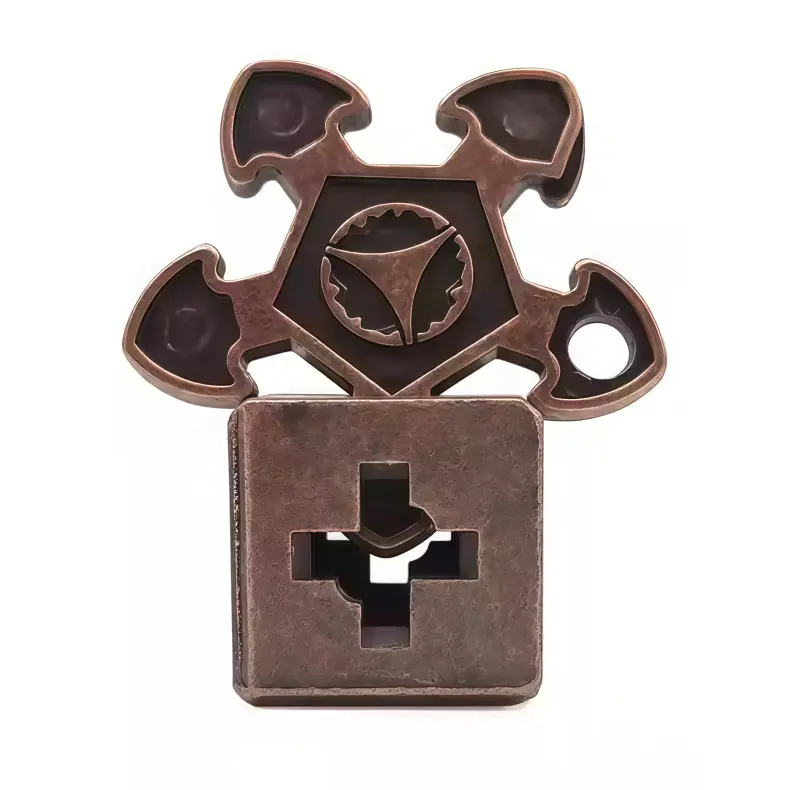
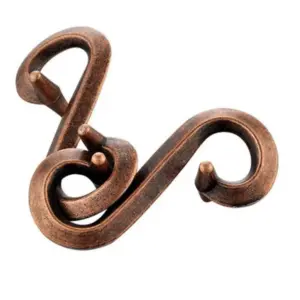
Consider the puzzle above. At its price, it represents an accessible entry into this world of feel. Is it a desk trophy for the ages? Perhaps not. But does it offer a more refined experience than a dollar-store ring puzzle? Absolutely. It’s in this mid-range—the $10 to $30 zone dominated by brands like Hanayama—where you train your senses. You learn to appreciate the powder-coated finish that resists fingerprints, the cleanly cast edges, and the deliberate, if not exquisite, movement of its parts. These are your study pieces.
So, what are you paying for in a $150+ puzzle? You are paying for the designer’s intellectual labor, for limited production runs, for aerospace-grade aluminum or stainless steel, and for tolerances measured in microns. You are paying for a puzzle where the process of solving is as pleasurable as the solution, where every interaction builds mechanical empathy. It becomes less a problem to be cracked and more a kinetic sculpture to be understood. The expensive puzzle isn’t just harder; it’s better. It’s built to be solved, handled, displayed, and solved again for generations, its solve feel remaining a constant, perfect delight. That is the anatomy of a true collectible.
The Curated Shelf: Principles for a Personal Collection
A great puzzle is a singular joy, but a collection is a statement of intent. Moving beyond a simple pile of solved challenges requires a shift from acquisition to curation—the deliberate act of shaping a group of objects to reflect a personal narrative. For the serious collector, this means evolving from a solver who owns puzzles to a curator who understands their collection as a cohesive whole. A well-curated shelf of 20 puzzles will always be more compelling than a random assortment of 50.
The first principle is to find your theme. This transforms hunting from a vague search for “hard puzzles” into a focused mission. You might collect exclusively by a renowned designer like Oskar van Deventer or Stewart Coffin, tracing the evolution of their ideas. Others focus on a single mechanism, amassing the finest examples of sequential discovery or disentanglement puzzles. Some are drawn to a material, seeking out the warm patina of aged brass or the cold, precise sheen of machined aluminum. Your theme becomes your guide, filtering the overwhelming market and giving each new acquisition purpose. For instance, a theme of “elegant interlocking” would naturally include Hanayama’s Cast Harmony, but it would also send you hunting for more obscure pieces that embody the same principle.
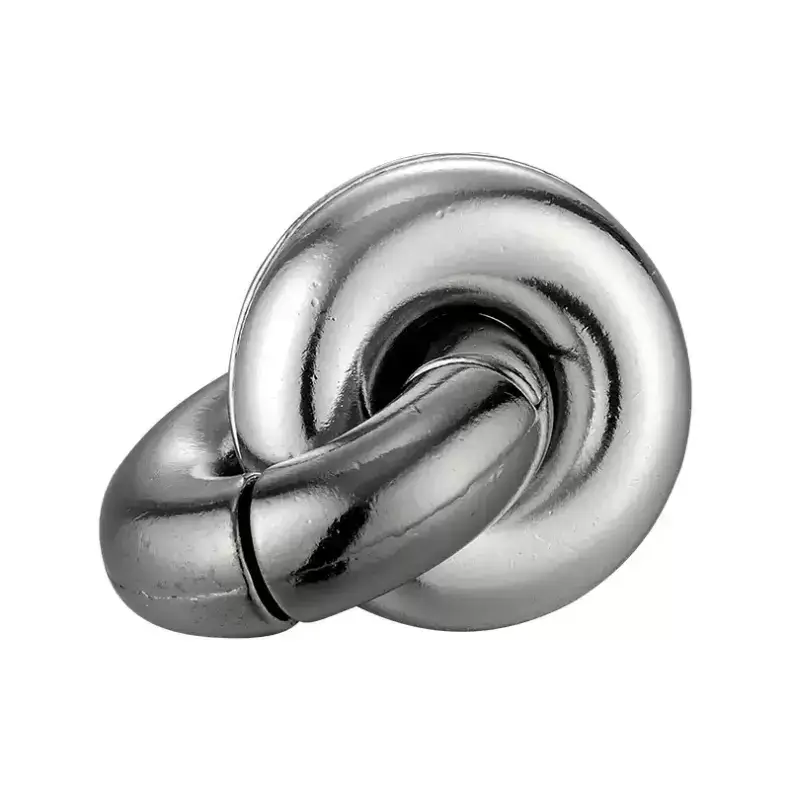
This leads to the second principle: know when to cull. A curated shelf has breathing room. If a puzzle no longer sparks joy, offers a unique solve feel, or fits your theme, it’s a candidate for trade or sale. This is not failure; it’s refinement. The secondary market on forums and at puzzle parties thrives on this circulation, allowing you to upgrade a standard piece for a rarer edition. Which brings us to a common question: Are Hanayama puzzles collectible, or just to solve and put away? The answer is both. For a new collector, they are foundational—the “canon” of modern cast puzzles. For an advanced collector, specific Hanayama puzzles become collectible within themes (like Akio Yamamoto’s designs) or as early, mint-condition editions with unique packaging. They are the gateway, and for some, they remain a beloved subset.
This ties directly to another perennial debate: Should I keep the original packaging and solution sheets? For puzzles you consider true collection pieces—limited runs, designer-signed works, or vintage finds—the answer is an unequivocal yes. The box, solution, and any certificates are part of the puzzle’s provenance and can significantly affect its value and story. For your common, in-production workhorse puzzles that you handle daily, the practical need for easy access may outweigh archival concerns. I keep solutions digitally, but for my prized pieces, everything stays together, stored away from light and moisture.
Finally, curate for the balance that satisfies you. This is the synthesis of everything prior. It’s the equilibrium between sheer challenge and pure aesthetic, between the puzzle you love to fidget with and the one that looks stunning on the shelf. A collection that skews too far toward unsolvable enigmas can become a source of frustration; one that is purely decorative loses the essential tactile feedback that defines the hobby. The goal is a shelf where every object has a reason for being there, a story behind it, and a role in the larger, personal museum you are building—a concept explored in depth in our guide on the real way to build a puzzle collection. Your collection is not a trophy case of conquered difficulties, but a physical dialogue between your mind, your hands, and the quiet ingenuity of metal.
The Living Collection: Community, Maintenance, and Deepening the Craft
A curated shelf is not an endpoint, but a living archive that demands care and thrives on conversation. The true depth of this hobby unfolds when your private collection connects to the global network of enthusiasts who trade stories, puzzles, and mechanical empathy. This final evolution—from curator to community member—transforms a solitary pursuit into a lifelong craft.
Start by finding your people. The metal puzzle collecting community is active and welcoming, primarily online. The subreddit r/mechanicalpuzzles is a vital hub with over 50,000 members discussing new releases, trading valuable vintage metal puzzles, and offering non-spoiler hints. For deeper dives, dedicated forums like Puzzle Place and the Discord server “The Puzzle Parlour” host designers, veteran collectors, and lively auctions for rare pieces. The annual International Puzzle Party (IPP), founded in 1978, is the pinnacle event, where limited-edition exchange puzzles are created and the community gathers in person. These spaces answer the vital question of where to find puzzles and people who understand why you’d spend a month testing a plating’s durability. They are places where the lore of pieces like the 1905 Devil Cast Puzzle that lives in your hands and connects collectors is kept alive and shared.
A living collection also requires practical stewardship. Maintenance is straightforward but essential. For zinc alloy or steel puzzles (like most Hanayama), a dry microfiber cloth is sufficient for dust. For brass or copper, which develop a patina, decide if you want to preserve that history or restore a shine; a light polish with a jewelry cloth works, but know that you’re erasing the evidence of its journey. Never use harsh chemicals. Storage for active puzzles should be dry and consistent—a simple toolbox with divided compartments works for dozens. For display, as covered earlier, the goal is to minimize dust accumulation and direct sunlight, which can fade colors and degrade materials over decades.
Your engagement can deepen beyond acquisition and display. Document your solves in a notebook or a dedicated puzzle collection inventory app, noting the “aha!” moment and the estimated time. This log becomes a personal index of your growing skill. Learn to recognize designers’ signatures and company marks; understanding a puzzle’s provenance adds layers to its ownership. For the hands-on, consider simple restoration: a drop of lubricant on a stiff mechanism, or carefully removing rust from a flea-market find with a precision tool. 3D metal model kits can contain 50 to 300+ pieces and require specialized tools like needle-nose pliers and bending jigs—mastering these builds is a hobby in itself, a testament to patience and dexterity.
This journey, which may have begun with a single, cool-to-the-touch piece in a dusty box, ultimately becomes a continuous dialogue between your mind, your hands, and centuries of ingenious design. Your collection is your map in that conversation. It charts a path from the initial intrigue of a first click, through the clarifying overwhelm of choice, to the deep satisfaction of a personalized, displayed archive, and finally to the connection found in a shared passion. So, take one puzzle from your shelf—the one with the most satisfying solve feel—and share its story online. That is the next, natural click.