The Lure of the Locker: More Than Just a Pirate’s Tale
Its weight is the first surprise. Solid, dense, like a small timber block salvaged from a shipwreck. Then the sound—a soft, muffled shifting from within, as if something restless is waiting. This isn’t just a wooden puzzle box; it’s a captured artifact. The iDventure Cluebox – Davy Jones Locker asks you to release the souls trapped inside, and from the moment you pick it up, the nautical theme is no longer decoration. It’s the entire premise.
The legend of Davy Jones, the sailor’s devil of the deep, is about finality. His locker is the ocean floor, the end of all voyages. But this puzzle box cleverly inverts that myth. Here, the locker is a prison you can open. The goal isn’t burial, but liberation. It frames the 60-90 minute sequential puzzle experience not as a game, but as a quest. You’re not solving for the sake of it; you’re working against the grim finality of the legend itself. This narrative layer, borrowed from the best escape room game designs, transforms the mechanical puzzle into a story told by your own hands.
This promise of a tactile adventure is what drew over 3,400 backers to its Kickstarter campaign, pledging a quarter-million euros to see it built. They weren’t just funding a product; they were commissioning a physical piece of a pirate tale. The result is a palm-sized vessel for discovery, officially recommended for age 14 plus and a team size 1-2. It’s a brain teaser built from laser cut birch wood, comprising 72 individual parts all working in concert to guard its secret.
The term “sequential discovery” is key. It means each step reveals the tool or clue for the next. You’re not just finding a hidden lever; you’re learning the language of the locker itself. This creates a profound connection between the pirate theme and the mechanism. Every click, slide, and turn feels less like manipulating a toy and more like deciphering the workings of a ghost ship’s brig. The journey from intrigue to the final secret lock is meticulously charted.
For those captivated by the romance of wooden ships and intricate craftsmanship, the allure of such puzzles is timeless. It’s the same draw that calls one to a modeler’s bench, patiently building a historic galleon ship model.

Building the Galleon Ship 3D Wooden Puzzle Model Kit is about constructing history with your hands, a different but related kind of maritime satisfaction. Where the model kit is an act of assembly and admiration, the Davy Jones Locker is an act of archaeology and deduction. Both speak to a deep-seated fascination with crafted wood and seafaring lore.
So, before you even glimpse the first clue, the stage is set. You’re holding Davy Jones’s legend, condensed into a pirate puzzle box. The voyage of your own sequential discovery is about to begin. The only question is: are you ready to listen to what the wood and mechanisms have to say?
The Weight of a Soul in Your Hands: First Impressions of the Artifact
That transition from myth to physical object is immediate. You lift the box. It has a satisfying heft for its palm-sized dimensions, dense and purposeful. It doesn’t rattle loosely; instead, you hear a subtle, solid shift of internal components—a precise, mechanical whisper. The wood smells faintly of laser smoke, a scent familiar to anyone who handles modern crafted puzzles, which quickly fades to reveal the clean, neutral aroma of birch. This is your first clue: you are not handling a relic, but a carefully engineered contemporary escape room in a box for adults.
My conservator’s eye immediately appraises the laser-cut birch wood. The edges are clean, with only the faintest, almost imperceptible charring that speaks of a well-calibrated machine. The 72 individual parts fit together with joinery as tight as a ship’s hull, a testament to precise digital drafting. The aesthetic, noted by some critics like Room Escape Artist as ‘plain’ compared to other, more ornate Cluebox puzzles, is worth defending. It’s not plain; it’s authentic to its nautical theme. This isn’t a gilded treasure chest. It’s a functional locker, a sailor’s box, weathered by legend rather than ornament. The dark-stained top with its porthole-esque design and metallic-looking latch feels utilitarian, like a piece of shipboard equipment. The craftsmanship is in the precision of the mechanism, not in applied filigree.
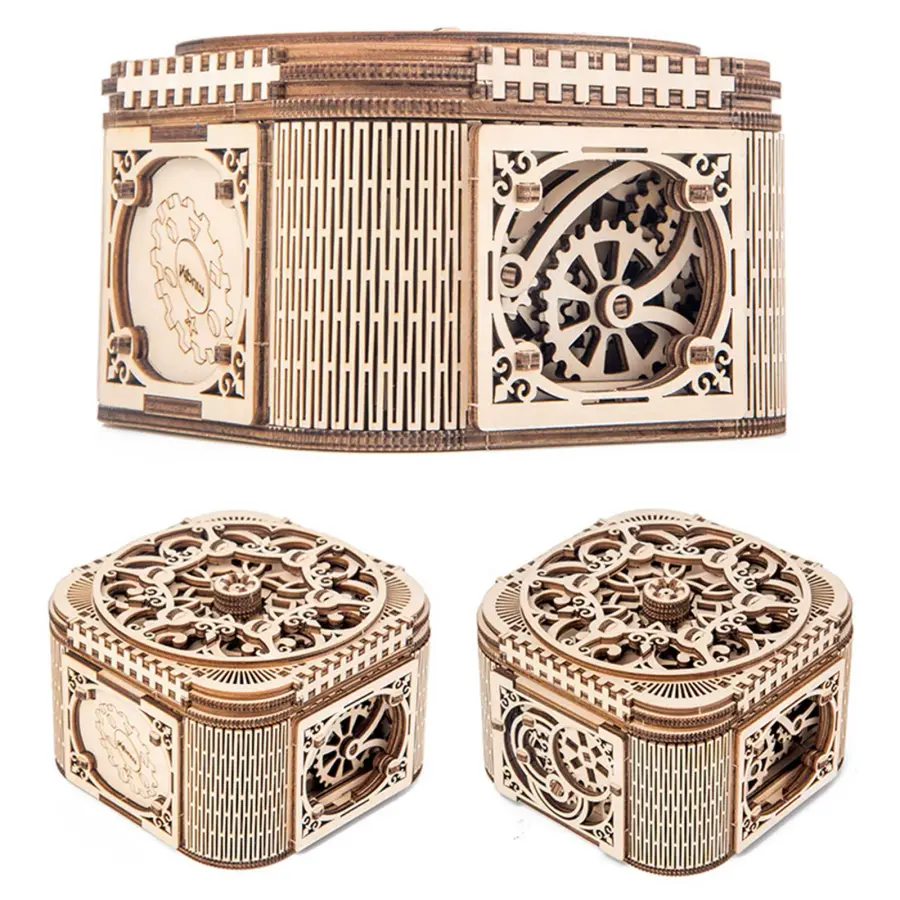
This focus on function over flourish extends to the promised secret compartment. Knowing its dimensions (a slender 1 x 4.5 x 6 cm) from the outset frames expectations. This isn’t a jewelry box; it’s a cache for something flat and meaningful—a note, a single coin, a slim USB drive. It’s a narrative vault, not a storage solution. For those seeking a puzzle box with more overt utility, a dedicated mechanical wooden treasure box designed for jewelry might be a better fit. The Davy Jones Locker is about the revelation of the space itself, a perfect example of the allure of a puzzle box with a hidden compartment.
Holding it, you begin to map the known facts against your senses. The price, approximately $49.99 USD, feels justified in the hand. The play time of 60-90 minutes seems a plausible promise, given the solidity and complexity hinted at by its weight. The age recommendation of 14+ is sensible, not for theme but for the fine motor skills and logical patience required. This iDventure Cluebox presents itself not as a toy, but as an artifact awaiting interrogation. Every shake, every inspection of a seam, every press on a panel is a question. And the box, for now, holds its answers as tightly as Davy Jones holds his souls. The sequential discovery begins not with a clue, but with this quiet, tactile dialogue between the puzzler and the puzzle.
Charting the Course: A Spoiler-Free Map of the Puzzle Genres Within
This tactile dialogue soon gives way to a mental cartography. As a conservator, you learn to identify an object’s function by its construction; here, the 72 individual parts and precise laser cut birch wood suggest not just a container, but a sequenced journey. The iDventure Cluebox series specializes in sequential discovery, where each solved step grants you a tool or clue essential for the next. The Davy Jones Locker is a masterclass in this form, but its internal landscape is varied. It’s not a single-type brain teaser, but a curated expedition through several distinct puzzle genres.
The voyage begins with pure physical manipulation. The box presents solid, unyielding faces. Your first task is to learn its language—which surfaces shift, which sounds are red herrings, and which subtle alignments whisper of progress. It demands the patience of a shipwright fitting joints. This phase is deeply satisfying for those who appreciate mechanical puzzle nuance, where the tactile feedback is the primary clue. For solvers accustomed only to paper-based logic challenges, this can be the first, gentle barrier. It asks you to think with your fingers.
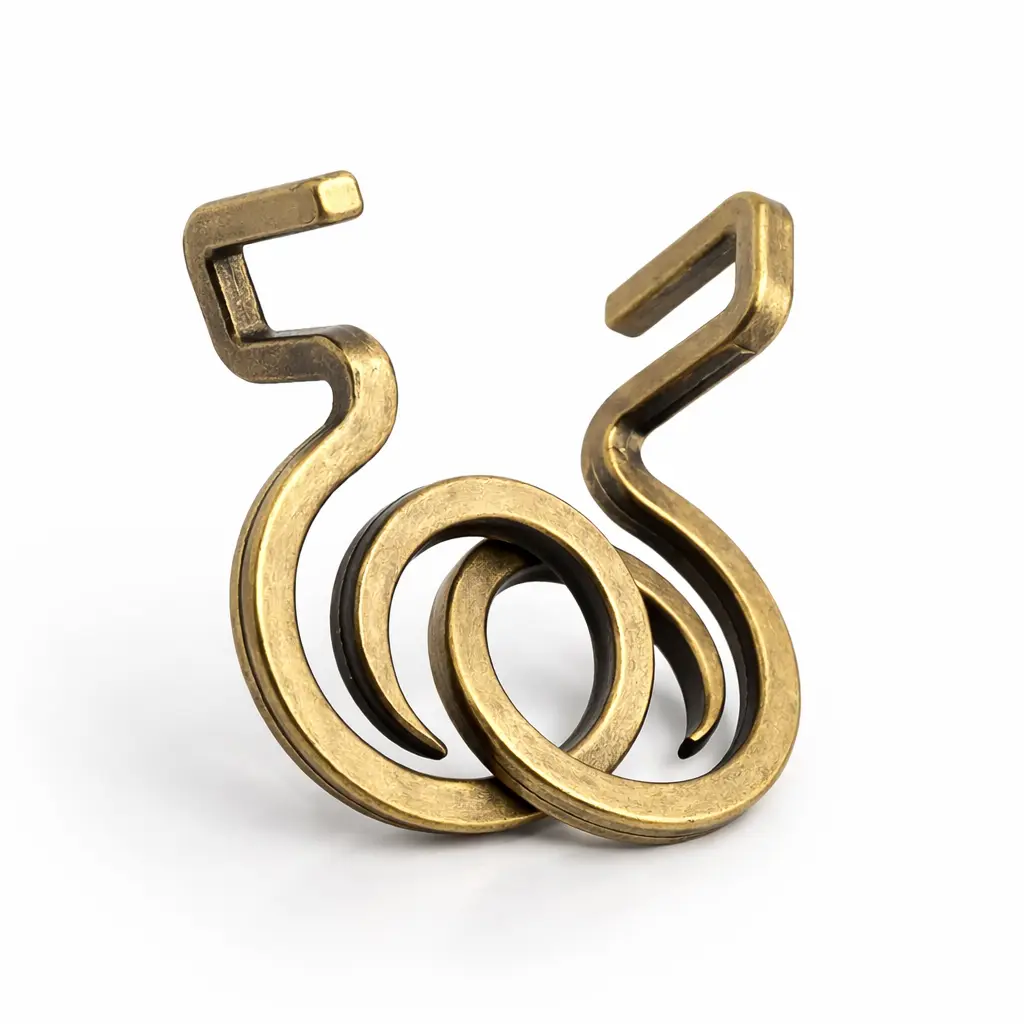
Successfully navigating this initial manipulation unlocks the next sea, which introduces more traditional escape room game elements: spatial reasoning and symbolic logic. Here, the nautical theme integrates beautifully. You aren’t just moving parts arbitrarily; you’re navigating a system that feels congruent with the lore of Davy Jones. The puzzles ask you to deduce, to correlate, and to perceive relationships. The “aha!” moments come in steady waves during this phase, creating a compelling rhythm that firmly answers the user question about cluebox puzzles difficulty: it’s accessible but engaging, scaffolding complexity in a way that feels earned, not arbitrary. It’s the kind of structured, satisfying challenge that stands apart from the more freeform dexterity of a step-by-step cast hook puzzle solution.
The final leg incorporates a genre beloved in pirate tales: decoding. This is where the puzzle demands external recording. A notepad isn’t a sign of weakness; it’s your ship’s log. This segment provides a tangible shift in cognitive gear, pulling you from purely physical interaction into a more cerebral, pattern-matching space. The integration is clever—it doesn’t feel like a sudoku glued to a box, but a necessary step to decipher the locker’s final secret.
So, is it too easy for experienced puzzlers? A seasoned sequential discovery enthusiast might find the initial lock mechanisms straightforward, but the middle and later stages offer legitimate, satisfying complexity. It’s not the most deviously difficult puzzle box in existence, but it is impeccably polished in its escalation. For a beginner, the advertised 60-90 minute play time is optimistic but not impossible for a diligent, logical thinker; plan for 90-120 minutes for a more relaxed, observational solve. Two people can work on it comfortably, with one often handling the physical manipulation while the other maps the logic—a perfect dynamic for the team size 1-2 recommendation.
Compared to other iDventure Clueboxes, the Davy Jones Locker stands out for its cohesive pirate theme and excellent pacing. Where some in the series have a single standout “wow” moment, the Locker offers a more consistent density of smaller revelations, making the entire journey feel substantial. The escape room in a box for adults label fits, as the satisfaction derives from the holistic unraveling of a themed mystery, not just the final opening. The journey itself—charting this map of genres from manipulation to logic to decoding—is the true treasure hidden within this wooden puzzle box.
The Voyage Itself: Navigating the Emotional Currents of Solving
Having charted the puzzle genres you’ll encounter, you now stand on the deck with the wooden puzzle box before you, ready to sail. This is where the map ends and the sea begins. The journey from first touch to final reveal is a masterclass in paced sequential discovery, a 60 to 90-minute emotional voyage that fits on a coffee table.
Your voyage begins with curiosity. The box is closed, silent, and complete in your hands. That initial investigation—turning it over, listening for shifts, inspecting every seam and marking—is a tactile conversation. The laser cut birch wood is cool and precise. You’re not just looking for a trick; you’re learning the language of its construction, the same way you’d study the joinery on an old sea chest. The first mechanism yields, not with a dramatic click, but with a subtle, satisfying give. It’s a permission slip. The nautical theme ceases to be decoration and becomes instruction. The story of Davy Jones isn’t just printed on the box; it’s embedded in the logic. This early phase is a gentle, inviting current, building confidence that you’re a capable sailor on these puzzling seas.
Then, the water deepens. Challenge arrives, often wearing the cloak of elegant simplicity. One particular step—a deceptively straightforward logic challenge—is where many solvers drop anchor for a while. The puzzle’s feedback is honest but not verbose. It won’t shout when you’re wrong; it will simply not proceed. This is the core of the escape room in a box for adults experience. It demands observation and deduction, not force. Here is where my conservator’s habit of working at a clean, well-lit table proved essential. This isn’t a lap puzzle. You need space to lay out discrete elements, to rotate the box under a good lamp to catch a faint engraving, to step back and think. A notepad isn’t optional for most; it’s your ship’s log. Jotting down symbols, sketching orientations, and noting dead ends prevents you from running mental aground on the same sandbar repeatedly. It’s the kind of practical mindset explored in guides on how to solve a puzzle box without frustration.
This mid-point is where frustration can crest, but it’s a productive, never cruel, frustration. The mechanisms are robust, so you can test theories without fear of breaking the 72 individual parts. The difficulty spike feels earned, a direct result of the puzzle asking you to synthesize earlier clues in a new way. For a solo solver—and as a puzzle box for one person, it excels—this is a deeply personal, meditative struggle. For a duo, it becomes a dynamic brainstorming session. One person often becomes the “hands,” manipulating the box, while the other becomes the “logician,” mapping the connections. The team size 1-2 recommendation is perfect; more hands would crowd the deck.
The breakthrough, when it comes, delivers a surge of pure satisfaction. It’s rarely a shout, more often a quiet “oh.” The elegance of the solution retroactively justifies the struggle. This cycle—observe, struggle, deduce, click—repeats with varied pacing, each “aha!” moment a small treasure chest of its own. Compared to other iDventure Cluebox puzzles, the Locker may lack a single, explosive revelation, but it compensates with a consistent, rewarding rhythm that makes the entire journey feel substantial. The tactile feedback of wood sliding against wood, of a hidden panel shifting, is profoundly more satisfying than plastic or cardboard.
Finally, the locker opens. The secret compartment is revealed. Let’s be practical: its dimensions (1 x 4.5 x cm) are specific. You’re not hiding a ring. You could fit a small, folded bill, a micro USB drive, or a single, meaningful coin—a perfect final touch for a gift box. This compartment isn’t about utility; it’s about narrative closure. You’ve freed the souls. The box is now a trophy and a functional object.
Which leads to the inevitable, post-voyage question: is davy jones locker worth it? The value isn’t just in the wood or the 60-90 minute play time. It’s in the crafted emotional arc. It respects your intelligence, challenges you fairly, and rewards you with a tangible, mechanical story. It’s not the most brutally difficult brain teaser on the shelf, but it might be one of the most holistically satisfying. For the enthusiast, it’s a beautifully executed example of themed sequential discovery. For the newcomer, it’s a flawless and engaging introduction to the genre. The voyage itself is the treasure.
Ship’s Log: Interrogating Build Quality, the Secret, and Replayability
Having freed the souls and revealed the compartment, the adventure shifts from discovery to interrogation. You hold a solved artifact. Now, as a conservator, you start to assess its bones: the joinery, the material memory, its life beyond that first 60-90 minute play time. This is where a good mechanical puzzle box proves its worth, transitioning from a one-time thrill to a lasting object.
The reset mechanism is the first test. A puzzle that can’t be gracefully returned to its virgin state is a dead-end artifact. Here, iDventure’s engineering shines. Resetting the Davy Jones Locker isn’t a disassembly; it’s a reversed sequence. You perform the final actions in reverse order, feeling the same satisfying clicks and shifts. It takes about a minute once you know the path. The process feels intentional, not like forcing components. This makes passing it to a friend genuinely viable—the core of its escape room game ethos. But the conservator in me watches for wear. Repeatedly sliding the key wooden panels and rotating the central mechanism will inevitably polish the laser-cut birch wood edges. Over dozens of cycles, this could lead to a subtly looser fit, a micron of slop. It’s the nature of wood on wood. Yet, the 72 individual parts are cut with precision; the joints are as tight as a ship’s hull, suggesting this wear would be measured in years, not sessions. For those concerned, a broader review of the best wooden box puzzles often highlights reset integrity as a key differentiator.
Let’s talk about that secret compartment. Its dimensions are a practical punchline. At 1 x 4.5 x 6 cm, it’s a slender void. You won’t stash a treasure map. You can, however, slip in a single wheat-back penny, a slip of paper with coordinates, or a microSD card—the digital soul of a modern pirate. This isn’t a money box in the traditional sense. It’s a reliquary. Its value is symbolic, a narrative flourish that completes the nautical theme. It transforms the solved puzzle from a static object into a gift box with a hidden layer, perfect for presenting a coin or a note to the next adventurer.
Build quality, beyond the mechanisms, is in the hand. The laser-cut birch is smooth, free of splinters, and has a pleasing heft. The faint scent of laser smoke from the box fades, leaving just the clean smell of wood. The engraved graphics are crisp and won’t rub off. Compared to antique puzzles with hand-cut dovetails, it lacks that artisanal variance. But for a mass-produced 3D wooden puzzle, its consistency is commendable. It feels more substantial than cardboard escape room in a box kits, yet more accessible than a bespoke, hundred-dollar Burr puzzle.
So, what is its life after solving? It sits on the shelf, a handsome pirate puzzle box conversation piece. It functions as a unique container for a small trinket. Its true replayability isn’t in solving it again yourself—the sequential puzzle magic is a one-time spell—but in the genuine joy of handing it, reset, to someone you want to witness on that same voyage. The brain teaser resets, but the experience of discovery is a gift you can give anew. The box endures not as a repeated challenge for you, but as a curated experience for others.
Davy Jones Locker vs. The Fleet: Placing This Cluebox in the Puzzle Armada
Its life as a handsome shelf piece and a giftable experience is clear. But where does it dock within a broader collection? To understand the Davy Jones Locker’s true berth, you must line it up alongside other vessels in the iDventure fleet and similar-tier wooden puzzle boxes. It’s here, in comparison, that its specific character—and its most common critiques—come into sharpest focus.
Among its siblings, the most frequent comparison is to the earlier iDventure Cluebox (often called Cluebox 2). Both are laser cut birch wood, both utilize sequential discovery, and both promise a 60-90 minute adventure. The difference is one of narrative density and physical presence. Cluebox 2 feels like a compact, modern tech artifact; the Davy Jones Locker is a themed relic. The former’s puzzles are abstract and digital-age logical. The Locker’s are ingrained in its pirate theme—a rope here, a compass rose there. For the collector who values a seamless story-mechanism marriage, the Locker is the more cohesive escape room game. For the pure logic-seeker, Cluebox 2 might be the leaner challenge. Some reviews, like the one from Room Escape Artist, found the Locker’s exterior “a little plain” compared to its sibling. They’re correct, if your metric is flashy graphics. But the Locker’s aesthetic is intentional: it’s meant to feel like a worn, found object, not a brightly labeled game box. Its narrative is carried more by interaction than by external art.
Against other Clueboxes, the Locker occupies a sweet spot in complexity. It is generally considered more accessible and intuitive than the formidable Cluebox: Schrödinger’s Cat, yet it offers more varied logic challenges than the more straightforward Professor Cluebox. It is the quintessential mid-weight champion of the line—approachable for a motivated beginner, but still offering enough clever “aha!” moments to satisfy a seasoned solver without overwhelming them. It is not the hardest mechanical puzzle in the series, but it might be the most elegantly themed.
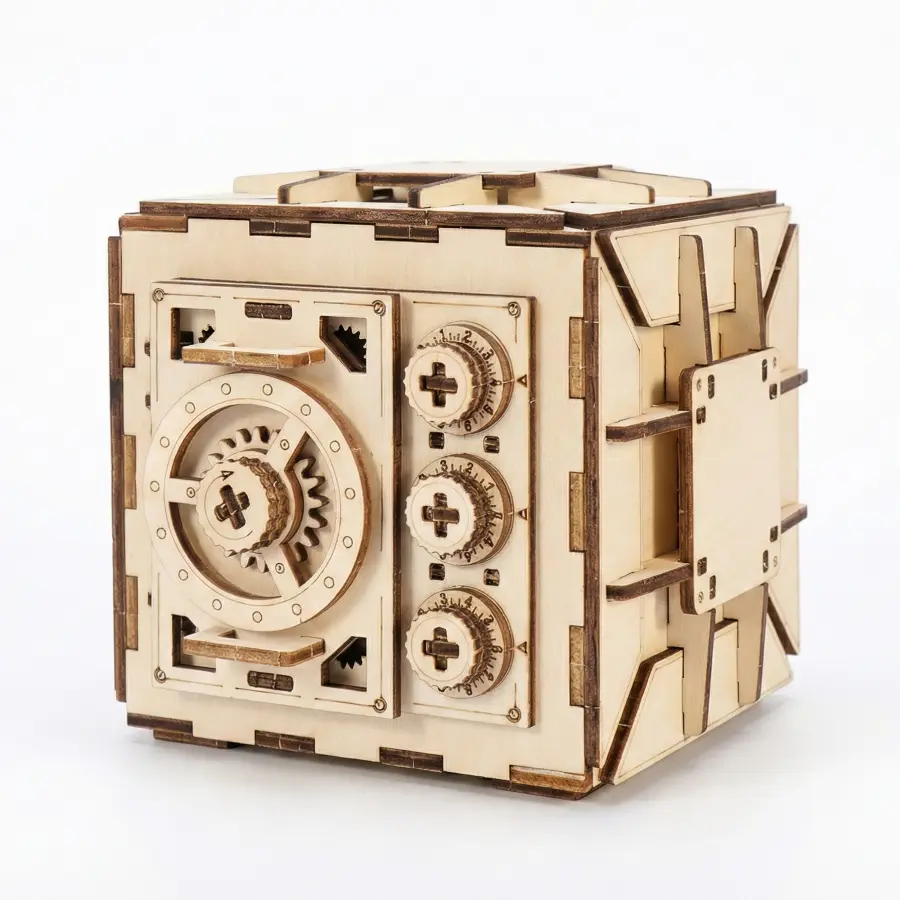
Venture outside the iDventure harbor, and the value for money question gets interesting. For around $20 less, you can find simpler 3D wooden puzzles like combination-lock safes. These are often pure assembly challenges or single-mechanism tricks. They lack the curated narrative journey, the layered sequential puzzle design, and the satisfying click of multiple integrated discoveries. They are toys; the Locker is an experience. Conversely, for $100 or more, you enter the realm of artisan Burr puzzles and intricate Japanese puzzle boxes. These offer unparalleled craftsmanship and deep, often brutal, logical challenges. The Locker cannot compete on that level of material heft or fiendish complexity. Its genius is in its balance: it borrows the tactile satisfaction of a wooden puzzle box and marries it to the guided, story-driven pacing of an escape room in a box.
So, is the puzzle master cluebox worth its ~$49.99 anchor? The answer hinges on what you’re sailing for. If you seek a dense, abstract logic grind, you might feel short-changed. If you desire a polished, one-hour narrative adventure you can hold in your hands—a pirate puzzle box with a beginning, middle, and end—it delivers efficiently. Its 72 individual parts are orchestrated toward a specific emotional voyage, a feat of design that cheaper boxes don’t attempt. It’s not the most challenging puzzle in the sea, nor the most ornate artifact. It is, however, one of the most successfully integrated thematic brain teasers at its price point, a self-contained story of curiosity and release that makes its $50 voyage feel like a complete and satisfying expedition.
The Right Crew for This Chest: Who Will Love It (And Who Should Walk the Plank)
Having charted its course against the broader fleet, the ultimate question remains: does this pirate puzzle box belong on your shelf, or in your hands as a gift box? Its value isn’t universal, but for the right crew, it’s a treasure.
The Ideal First Mate: A Thematic Sequential Discoverer.
This iDventure Cluebox will sing for the person who values the journey as much as the destination. The ideal solver appreciates a nautical theme woven into the mechanics, not just painted on. They enjoy the process—the tactile logic of sliding panels, the quiet deduction, the narrative of freeing trapped souls. This is not a puzzle for the speed-runner; it’s for the person who will savor the weight of the laser cut birch wood, ponder the clues, and appreciate the engineering of its 72 individual parts. It’s perfect for the escape room enthusiast seeking a tangible, escape room in a box experience they can control, pause, and enjoy without a timer ticking down. If they relish the “aha!” of sequential discovery over brute-force dexterity, they’ll find this 60-90 minute play time voyage deeply satisfying.
Gift Scenarios: More Than a Brain Teaser.
As a gift, the Davy Jones Locker excels as a focused experience, a kind of Trojan Horse for engagement, as explored in discussions on why a puzzle box makes a perfect gift. Consider it for:
* The Curious Teen (14+): It’s a superb alternative to screen time. The age 14 plus rating is accurate; it requires logical reasoning and patience, offering a substantial reward for perseverance.
* The Couple or Duo: As a team size 1-2 activity, it works beautifully. The puzzle box is palm-sized, so collaboration means heads together, passing the box back and forth, debating theories—a shared, tactile project.
* The Nautical or History Buff: Even if not a dedicated puzzler, the integration of lore and artifact-like design can be a compelling entry point. It’s a conversation piece that also contains a secret.
* The “Hard to Shop For” Person: It’s an experience, not clutter. For someone who values clever design, this wooden puzzle box offers a memorable hour of engagement they likely haven’t had before.
Who Should Walk the Plank?
This chest won’t please every sailor. Steer clear if the recipient:
* Seeks Purely Ornamental Craftsmanship: While well-made, this is a 3D wooden puzzle from a production line, not a bespoke heirloom. If they desire a decorative sculpture, this isn’t it.
* Thrives on Abstract, Punishing Logic: Fans of supremely difficult Burr puzzles or purely mathematical brain teasers may find the logic challenges here too guided and narrative-driven. The challenge is moderate, not extreme.
* Dislikes Reading or Symbolic Clues: Some steps require observation and deduction from symbols and text. If they want solely physical manipulation of locks and latches, parts of this voyage may feel like a slog.
* Expects a Large, Group Activity: This is an intimate, focused mechanical puzzle. It’s not a party game for a group.
The Final Verdict on Gifting.
So, is this a good gift for someone who isn’t a ‘puzzle person’? With caution. Its success hinges on the recipient’s curiosity and patience. It’s a fantastic gift for the curious person—the one who likes to tinker, solve riddles, or explore stories. For the purely action-oriented, it may collect dust. For two people, it can be a delightful collaborative escape room game, though its size ultimately makes it a solo-centric experience. The reset mechanism means you can truly pass it on, a gift that keeps giving. In the end, the Davy Jones Locker isn’t trying to be everything to everyone. It’s a specific, well-executed experience. For the right person, it’s not just a brain teaser; it’s a small, perfect storm of story, craft, and discovery.
Docking at Port: Final Verdict, Where to Berth, and Setting Sail
So, we’ve determined it’s for the right person. For that person—the curious, patient, tactile solver—the Davy Jones Locker delivers a concise, well-crafted adventure. It isn’t the most visually ornate iDventure Cluebox on the shelf, but its strength lies in how its nautical theme is mechanically encoded into the sequential discovery process. For the price of a nice dinner out, you’re not buying a toy; you’re commissioning a 60-90 minute intellectual expedition that fits in your palm.
The Final Log Entry.
Strengths: Clever, thematic integration that makes the solving journey feel like a story. Solid, satisfying build with excellent tactile feedback. A well-paced mix of puzzle types that avoids feeling repetitive. The secret compartment, while tiny, provides a genuinely rewarding finale.
Limitations: The minimalist, laser-smoked aesthetic may underwhelm those seeking intricate carvings. Its moderate difficulty might be a touch straightforward for veteran solvers, though the journey remains enjoyable. It is, at its heart, a puzzle box for one person.
For the approximately $49.99 USD investment, you receive a dense, purpose-built interactive box. Its 72 individual parts are assembled into a deceptively simple-looking 3D wooden puzzle that belies the clever mechanisms within. It’s a sterling example of a modern mechanical puzzle that honors its thematic roots.
Where to Berth Your Treasure Chest.
Purchase directly from iDventure’s official site for the best assurance of a new, complete product and direct support. It’s also stocked by major puzzle retailers like Puzzle Master and niche game shops. The price is remarkably consistent, so shop based on shipping cost and reliability. This Kickstarter campaign success is now a mainstream entry, readily available.
Setting Sail.
Ultimately, the Davy Jones Locker transcends being a mere money box or brain teaser. It’s a self-contained story of discovery. The reset mechanism works flawlessly, allowing you to pass the fully charged experience to a friend without wear. When you finally solve it, the box doesn’t feel “used up.” It feels like a restored artifact, its secrets known but its integrity intact, ready to challenge the next willing soul. The process of unlocking it, of learning its hidden language, is a skill that applies to many such puzzles—a foundational guide to opening a wooden puzzle box lies in the patience and observation this one teaches.
Your next step isn’t to overthink it. If the legend, the craft, and the promise of a tactile, spoiler-free voyage appeal, weigh the wooden puzzle box in your mind’s hand. Then, chart a course for the iDventure store. A 60-minute journey to the locker—and back—awaits.