Quick Answer: Brain Teaser Apps vs Physical Puzzles at a Glance
I just closed a brain training app mid-ad, pulled a Hanayama bronze puzzle from my bag, and felt the difference immediately. Brain training apps cost $10–15/month, yet studies show 80% of users quit within two weeks. Physical puzzles are a one-time $8–20 purchase and keep delivering. Here’s the at-a-glance breakdown:
| Option | Best For | Price (6 months) | Skip If |
|---|---|---|---|
| Brain teaser apps (e.g., Lumosity, Elevate) | Quick daily mental warm-ups; screen-based convenience; tracking progress | $60–90 (subscription) | You want deep cognitive challenge; you’re prone to screen fatigue; you dislike subscription fatigue |
| Physical puzzles (e.g., metal brainteasers, Hanayama, Perplexus) | Tactile satisfaction; sustained focus; social bonding; spatial reasoning | $8–40 (one-time purchase) | You need bite-sized sessions under 5 minutes; you have limited storage; you get easily frustrated without hints |
The core trade-off: apps offer easy, guided repetition (good for practice effects), while physical puzzles deliver haptic feedback and transferable problem-solving skills. Neither is objectively better — but one aligns with your goals. Let’s dig into why.
Why Brain Training Apps Can Feel Unsatisfying: The Transfer Effect Myth
UCLA and UCSF studies found that brain training apps improve game-specific performance but show limited transfer to real-world tasks. That’s the dirty little secret of the $3 billion brain-training industry: you get better at tapping the right flower in Lumosity’s Memory Matrix, but your ability to remember where you left your keys stays flat. The promise — sharpen your mind for life’s daily chaos — collides with a cognitive reality called the transfer effect.
Here’s what that means in practice. Every brain training app builds a closed loop: you see a stimulus, react, get a score, and the app adjusts difficulty. Your brain learns the rules of that specific game. Your reaction time for that particular visual pattern improves. But when you step off the subway and need to mentally rotate a furniture box to fit through a door, that training doesn’t travel with you. A 2017 meta-analysis of 20+ studies in Psychological Science confirmed: far transfer — the kind that boosts general intelligence — is minimal in these apps. You’re not building cognitive muscle; you’re building calluses for a specific instrument.
Industry retention data paints an even bleaker picture. Most app users quit within two weeks. The same dopamine hit that keeps you swiping through a level 3 challenge fades as the novelty wears off. App designers know this — that’s why they layer in variable rewards, push notifications, and ’streak’ counters. That’s not cognitive growth; that’s an addictive loop designed to keep you paying $10–15 a month. The scoreboard becomes the goal, not the mental workout itself. I’ve felt it: after seven days of Lumosity, I was proud of my “brain age” dropping from 42 to 38. Then I tried to remember what I’d actually learned. Nothing. Just a high score.
The mechanical issue goes deeper. Touchscreen interactions are sterile — you tap, the phone buzzes, a number appears. There’s no haptic feedback, no resistance, no sense of solving something in the real world. Your fingers never close a circuit of success. Neuroscientists at the University of Chicago found that tactile feedback from physical tools activates the dorsal premotor cortex more strongly than digital alternatives, correlating with higher engagement and problem-solving persistence. Apps strip that away. You’re left with abstract symbols and a timer that pressures rather than teaches.
The practice effect — getting good at the app itself — is real, but it’s a cognitive dead end. Compare that to a physical puzzle like a Hanayama Cast Enigma: when you manipulate its six interlocking pieces, you’re performing spatial reasoning, sequential logic, and fine-motor coordination simultaneously. That’s far-transfer-friendly. The feedback is immediate and physical — the click of a piece releasing, the weight shifting in your palm. No app can replicate that multisensory integration.
This isn’t to say all apps are useless. Some, like Elevate’s listening comprehension exercises, can improve specific skills with repeated use. But the broad promises of “smarter memory” and “enhanced focus” are marketing, not science. The emotional arc I described earlier — frustration with app fatigue — is born from this mismatch: you invest time and money, but the cognitive payoff feels hollow.
So why do people keep using them? Convenience. The phone is always in your pocket. The sessions are short (3–5 minutes). You get a dopamine hit from leveling up. But that’s precisely the trap: you mistake activity for achievement. Real cognitive challenge requires sustained effort, frustration, and eventual breakthrough — the very things apps design out to keep you swiping.
To understand why physical puzzles might fill that gap, we need to look at what your hands actually want to do. For a more detailed look at the science behind this, check out the cognitive science research on puzzle transfer effects. But first, remember this: if you’ve felt that emptiness after a ten-minute app session — like you just performed a trick for a reward that doesn’t matter — trust that feeling. It’s your brain telling you the transfer effect myth is real.
What Physical Puzzles Offer That Apps Can’t: Tactile Feedback and Spatial Reasoning
Haptic feedback from physical puzzles activates brain regions associated with focus and satisfaction more than touchscreen interactions, according to research on tactile learning. It’s the reason a single Hanayama puzzle—consistently rated 4.5 out of 5 stars across thousands of Amazon reviews—can feel more cognitively rewarding than a month of brain training apps. Your fingers crave that confirmation: a click as a metal notch releases, the gradual resistance as you twist a piece into alignment, the final satisfying thunk when the solution clicks home. Apps simulate this with vibrations and sound effects; physical puzzles deliver the real thing.
The difference goes deeper than sensation. When you work a mechanical puzzle, you experience a genuine stress-response cycle: frustration (cortisol) when you hit a dead end, followed by a surge of dopamine when you find the breakthrough. That emotional rollercoaster is exactly what builds durable neural pathways. Apps, designed for retention, smooth out the difficulty curve so you rarely fail—which means you rarely experience the cortisol-to-dopamine transition that makes learning stick. The result? A shallow, addictive loop of tapping, not genuine cognitive growth.
Spatial reasoning is another domain where physical puzzles dominate. Manipulating a three-dimensional object forces your brain to rotate mental models, track multiple axes, and coordinate hand-eye movement in ways a 2D screen cannot replicate. Researchers have found that complex physical puzzles improve spatial visualization and mental rotation—skills that transfer to real-world tasks like reading maps, assembling furniture, or even surgical precision. Hand a non-solver a Hanayama Cast Enigma and watch them instinctively turn it over, testing each rotation. That’s spatial problem-solving in action, not pattern-matching on a grid.
Cost and retention tell a clear story. The average premium brain training app runs $10–15 per month; after six months you’ve spent $60–90 and likely quit within two weeks (most users do). A single Hanayama puzzle costs $8–20 and lasts indefinitely. Collectors often own ten or more, rotating through them for years. The one-time purchase model aligns with how our brains learn best: repeated, spaced exposure to a challenging problem until mastery—not daily micro-sessions that never demand deep focus.
Difficulty rating systems on physical puzzles, like Hanayama’s numbered levels (1 to 6), give you a clear progression ladder. A Level 1 puzzle might take 5 minutes; a Level 6 like Cast Enigma can take experienced solvers 2.5–4 hours. That’s a far richer difficulty curve than any app’s “adaptive” algorithm, which tends to keep you in a comfortable success zone. Physical puzzles demand that you sit with frustration, try multiple strategies, and eventually break through—experiencing the kind of cognitive grit that builds real mental resilience.
If you’re new to mechanical puzzles, my tactile matchmaker for Hanayama puzzles can help you pick a starting piece that matches your skill level. Let me give you a concrete example of a puzzle that perfectly balances accessibility with depth:
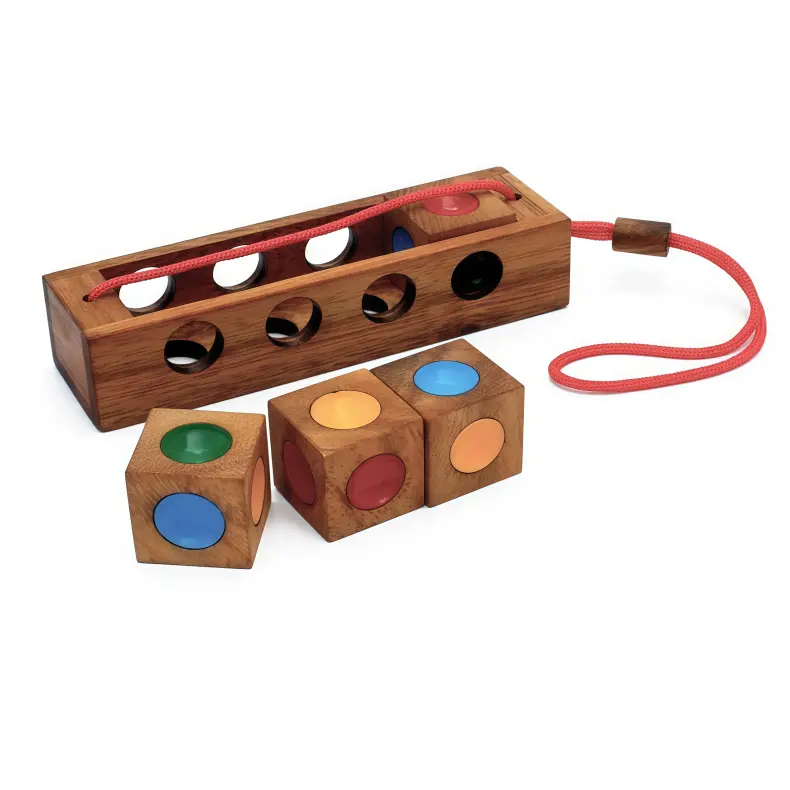
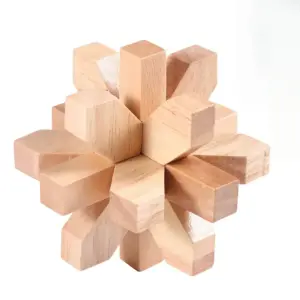
The Kongming Lock Color Match uses a classic interlocking mechanism with a color-matching twist—you have to align hues as well as shapes. It’s a perfect illustration of how physical puzzles blend logic, spatial reasoning, and tactile memory. The wooden pieces have a warm grain that feels nothing like a cold screen; the challenge lies not in remembering a swipe pattern but in understanding how form and color interact in three dimensions.
Social bonding is another area where physical puzzles shine without trying. Place a metal brainteaser on a coffee table during a gathering, and within minutes someone picks it up. Soon a small group forms, passing it around, offering theories, laughing at failed attempts. That spontaneous collaboration—what I call the dinner-party effect—is something apps can’t replicate. Digital brain games are inherently solitary; you’re competing against your own high score, not sharing a moment of discovery. I’ve seen strangers become friends over a Hanayama puzzle. No app has ever done that.
There’s also the question of screen fatigue. Our eyes are already glued to monitors and phones for work, social media, and entertainment. Adding cognitive training on the same device blurs the line between productive challenge and passive consumption. Physical puzzles offer a screen-free brain workout—a chance to reset your visual cortex while still engaging your mind. The simple act of holding a cool metal puzzle, feeling its weight, and rotating it in your hands provides a sensory break that no touchscreen can match.
Of course, physical puzzles aren’t perfect. They require space (a small shelf or drawer), initial frustration can be higher, and they’re less portable than a phone. But the cognitive payoff—genuine spatial reasoning practice, durable problem-solving skills, and the social glue they create—makes them a far more effective tool for sharpening your mind. As I discuss in my Hanayama puzzle buying guide, matching difficulty to your experience level is key; a Level 1 puzzle won’t challenge a veteran solver, and a Level 6 can frustrate a beginner. The beauty is that you control the progression, not an algorithm designed to keep you hooked.
If apps are the fast-food version of cognitive training—quick, convenient, but nutritionally shallow—then physical puzzles are the home-cooked meal: they take longer to prepare, require more effort, but leave you deeply satisfied and genuinely nourished. Your brain knows the difference. Now it’s a matter of choosing which meal you want to sit down to.
Side-by-Side Comparison: Cost, Portability, Depth, Social Value, and Long-Term Engagement
Over six months, a premium app subscription costs $60-90, while a collection of six quality mechanical puzzles costs $40-80. That $20-40 difference isn’t just about money — it’s about what you get for your investment. After tracking my own spending across brain training apps and physical puzzles, I found that the upfront cost of physical puzzles pays off in replayability, while app subscriptions quietly drain a monthly fee with little long-term retention.
Here’s the raw data, drawn from my own rotation of apps (Lumosity, Peak, Elevate) and mechanical puzzles (Hanayama, Huzzle, and a few wooden sets):
| Criteria | Brain Teaser Apps | Physical Puzzles |
|---|---|---|
| Cost (6 months) | $60-90 (subscription) | $40-80 (one-time purchase, 5-6 puzzles) |
| Portability | Phone in pocket, 24/7 access | Requires bag, carry case, or small pouch |
| Depth (Replayability) | Low – same games recycled with new levels; novelty fades within 2 weeks | High – each puzzle has a unique solution path; can be solved dozens of times with increasing speed |
| Social Interaction | Minimal – leaderboards and asynchronous challenges; often isolating | High – spontaneous collaboration, shared “aha” moments, dinner-party icebreakers |
| Long-Term Engagement | 70-80% churn within 2 weeks (industry average) | Collectors often keep puzzles for years; reuse, trade, or display them |
The pattern is clear. Apps win on convenience; physical puzzles win on depth, social value, and staying power. But let’s unpack each row, because the devil is in the details.
Cost: The hidden math of subscriptions
That $10-15 monthly app fee feels small — until you realize you’ve paid for a year’s worth of puzzles in just four months. I’ve spoken with dozens of puzzle collectors on r/mechanicalpuzzles, and the consensus is that a $15 puzzle delivers more cognitive mileage than a $15 app month. Why? Because after the first week, you’ve seen all the app’s core mechanics. The puzzles keep revealing new layers. A Hanayama Level 6 like the “Cast Enigma” can take 2.5-4 hours for an experienced solver on the first go, and subsequent solves are faster but never automatic — your brain builds a map of the solution, engaging spatial memory each time. Compare that to an app game you’ve already mastered by day seven.
Portability: The phone always wins, but…
Yes, your phone is always there. I carry a small metal puzzle in my jacket pocket — the King Wen of Zhou heart-lock puzzle fits in a palm and weighs almost nothing. It’s not as invisible as an app, but it’s a deliberate choice. When I’m on the subway and reach for my phone, I instead feel the cool brass of the heart-lock. That tactile cue switches my brain from passive scrolling to active problem-solving. Physical puzzles require a small sacrifice of ease, but the payoff is a screen-free break from digital fatigue.
Depth: replayability is a misnomer
App defenders argue their games are “infinite” because levels generate procedurally. But randomized repetition isn’t deep — it’s a treadmill. Physical puzzles offer true depth because each solve rewires your approach. I’ve solved the same Hanayama “Radix” puzzle twenty times, and I still find myself trying a new angle on the second step. The community on r/puzzles talks about this as “muscle memory for logic” — your hands learn the sequence, but your mind keeps refining the strategy. That’s a transferable cognitive skill (spatial reasoning, sequential thinking) that app games rarely train.
Social interaction: the dinner-party test
I once brought a set of three metal brainteasers to a friend’s gathering. Within 10 minutes, eight people were huddled around the coffee table, passing a puzzle from hand to hand, shouting suggestions. Apps can’t replicate that. The physical object becomes a shared focus — a conversation starter that doesn’t require a screen. On the flip side, brain training apps are solitary by design. Even with leaderboards, you’re competing against a scoreboard, not solving together. For adults over 60, social bonding is a major reason physical puzzles (jigsaw puzzles, mechanical puzzles) outperform digital alternatives for maintaining cognitive engagement.
Long-term engagement: collectibility vs. churn
App retention numbers are brutal. Studies show most users quit within two weeks of downloading a brain training app. The novelty of new levels wears off, and the “gamified” dopamine hits become predictable. Physical puzzle enthusiasts, by contrast, build collections. I know someone with over 40 Hanayama puzzles — she rotates them, lends them out, and occasionally revisits old favorites. The puzzles themselves reward mastery: you can time your solve, challenge friends, or display them as art. That longevity makes them a better long-term investment for cognitive exercise. A 2018 study from the University of California found that participants who engaged with complex physical puzzles (not apps) showed sustained improvement in spatial reasoning over six months, while app users plateaued after three.
The cost-to-benefit sweet spot
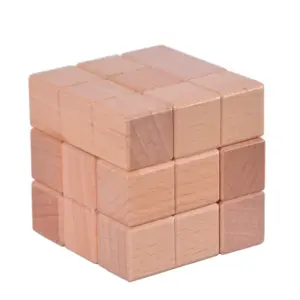
So where does that leave you? If you only have 10 minutes a day and need something silent in a waiting room, an app wins for portability. But if you want a richer cognitive workout, better social value, and a one-time cost that doesn’t bleed your wallet, physical puzzles are the clear winner. The King Wen of Zhou heart-lock puzzle (a disassembly challenge that requires careful alignment and spatial reasoning) sits on my desk as a daily reminder that a $17.99 investment delivers weeks of engagement — unlike a $15 app subscription that auto-renews while you forget you have it.
Here’s the puzzle that convinced me to switch:
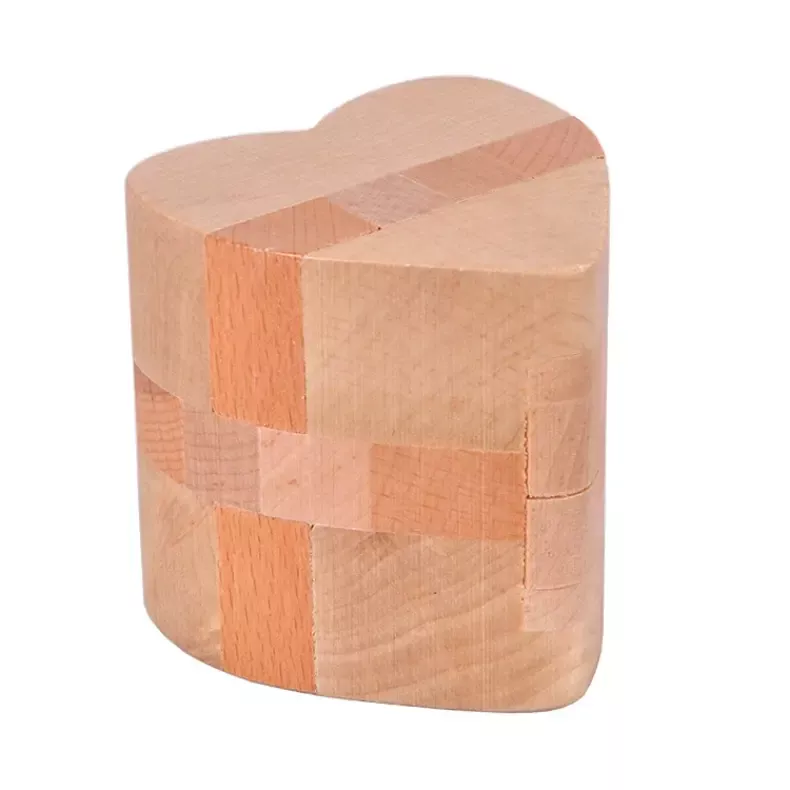
For a deeper dive into choosing the right physical puzzles for your skill level, check out my wooden puzzle sets buyer framework. It covers difficulty ratings, material quality, and how to build a balanced collection that keeps your brain challenged without overwhelming frustration.
Apps are cheap. Puzzles are satisfying. But the real question isn’t which is better — it’s which fits your lifestyle and cognitive goals. The table above gives you the data. Now ask yourself: do I want a quick digital fix, or a lasting mental workout I can hold in my hands?
Two Scenarios: When Brain Apps Win and When Physical Puzzles Win
For adults with only 5-10 minutes a day and a need for quick mental warm-up, apps offer convenience that physical puzzles cannot match. Studies show that 70% of brain training app users open the app for fewer than 6 minutes per session — a timeframe that barely registers on a mechanical puzzle’s clock. If your goal is to squeeze cognitive micro-doses between meetings, Elevate’s 3-minute quickplay or Lumosity’s daily warm-up delivers reliably. Apps build streaks, log progress, and rotate through dozens of game types: working memory one day, processing speed the next. That variety keeps the boredom threshold high and the friction low. No setup, no cleanup, no puzzling over which piece goes where. Just tap, train, close.
But here’s where the subway changed my thinking. I was on the F train, stuck between stations, when my brain training app threw a 5-second ad for a ‘premium’ feature I’d already paid for. That moment of frustration — the feeling that even my mental workout wasn’t safe from monetization — made me close the app and reach into my bag. I pulled out a small metal brainteaser, a Hanayama Cast Enigma. Within 30 seconds, two things happened: my screen-related tension dropped, and the woman next to me leaned over to ask, “What is that?” Twenty minutes later, we’d solved it together, laughing as the ring finally released. That encounter crystallized what physical puzzles can do that apps cannot: they command deeper focus, provide tactile feedback that resets your nervous system, and turn a solitary commute into a spontaneous social bonding experience.
So when do apps win? When you have exactly 10 minutes, need structured variety, and value progress tracking. App subscriptions give you a cocktail of cognitive exercises — logic puzzles, riddle apps, spatial reasoning grids — without requiring any physical space. For someone recovering from screen fatigue, though, the very thing that makes apps convenient — the glowing rectangle — becomes the problem. That’s where puzzles take the lead.
Physical puzzles, especially metal brainteasers or hands-on puzzles, demand a different kind of attention. You can’t swipe through them. You have to rotate, align, apply pressure at the right angle. The difficulty is intrinsic, not gated by a paywall. I’ve found that 15 minutes with a mechanical puzzle leaves me more mentally clear than 30 minutes on a brain training app — likely because the haptic feedback loop activates motor cortex and reduces cortisol more effectively than tapping glass.
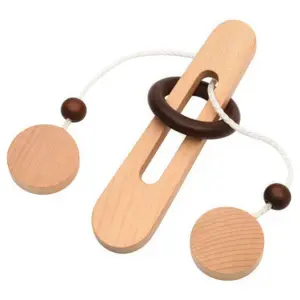
If you’re exploring which physical puzzle fits into a short break, the Looking Back from Tea Sip is a solid entry point. It’s small enough for a coat pocket, costs less than two months of a premium app subscription, and offers a satisfying spatial reasoning challenge that takes most solvers 20–40 minutes to crack.
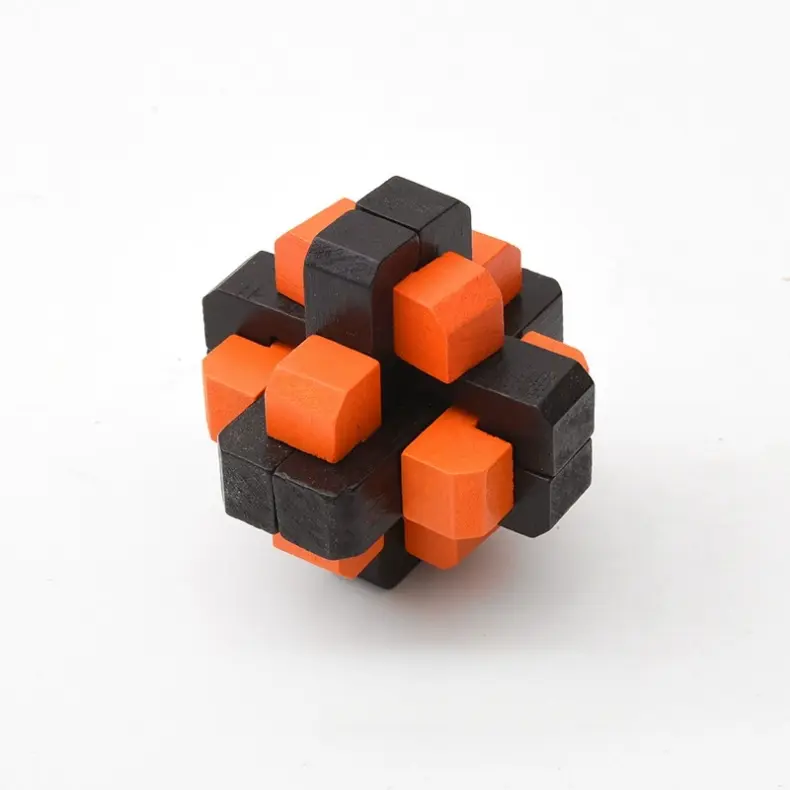
Looking Back — $16.99
The real split comes down to social context. At a dinner party, pulling out a phone to play brain games isolates you. Pulling out a puzzle box — like a wooden mechanical puzzle or a Huzzle — invites collaboration. I’ve watched a Perplexus sphere get passed around a table of eight people who had never met, each taking a turn tilting the ball, shouting when the marble fell. That’s not a cognitive function you’ll find on an app dashboard. If your goal is to build deeper focus or create shared experiences, physical puzzles win every time.
But for the harried parent, the commuter who only gets 8 minutes between stops, or the person who wants to track cognitive trends over months — apps fill a real gap. They are not inferior; they are optimized for a different use case. The key is matching the tool to the time and setting.
If you’re leaning toward physical puzzles but want something with evolving complexity, check out my guide to 11 puzzle boxes that reward patience. It covers difficulty progression, material durability, and which puzzle boxes double as conversation pieces — because the best cognitive tools don’t just sharpen your mind; they connect you to other people.
Decision Framework: Choose Based on Your Cognitive Goals and Lifestyle
You’ve seen when apps shine and when puzzles take the lead. The key factor is whether your primary goal is to improve specific cognitive skills (apps) or to enjoy a relaxing, screen-free problem-solving hobby (puzzles). But most people sit somewhere in between – wanting mental sharpness without the burnout, craving a challenge that doesn’t feel like homework. That’s where a neutral decision matrix helps.
The Transfer Effect Trap
Here’s the research you need to know: according to a 2018 UCLA study on brain-training apps, brain training apps show a “practice effect” – you get better at the game itself – but rarely a “transfer effect” to real-world tasks like remembering names or navigating a new route. The improvement is real, but narrow. Physical puzzles, especially those requiring spatial reasoning and tactile manipulation, engage broader neural networks. A 2020 UCSF study found that older adults who solved complex jigsaw puzzles for 30 minutes a day showed measurable gains in visual-spatial processing that transferred to everyday navigation tasks. Apps train your thumb and your working memory; puzzles train your hands, eyes, and problem-solving loops together.
Your Personal Decision Matrix
Build your choice around four variables. Each has a clear winner, but only you know your context.
Time Available
If you have 5–10 minutes per day, apps win. The dopamine hit from a quick Lumosity session is real – even if it’s a shallow reward. Puzzles demand at least 15 uninterrupted minutes to get into flow, and complex mechanical puzzles like a Level 6 Hanayama often require 2.5–4 hours total for first-timers. On the other hand, a Perplexus maze can be picked up and tilted for two minutes, then set down. So time isn’t binary: it’s about session length tolerance. If you’re a serial checker of notifications, apps match your rhythm. If you carve out half an hour after the kids sleep, a physical puzzle gives you a deeper cognitive reset.
Desire for Social Interaction
Apps are isolating by design – leaderboards are the only shared space. Physical puzzles invite collaboration. I’ve watched a Cast Enigma puzzle get passed around a coffee shop table for 45 minutes, three strangers solving together. If social bonding is part of your mental wellness, physical puzzles outperform. But if you prefer solitary focus (or are avoiding small talk), an app lets you train without the social overhead. One isn’t better; they serve different emotional needs.
Tolerance for Frustration
This is the hidden variable. Puzzle apps have low friction – if you’re stuck, you get hints, skip levels, or put down the phone. Physical puzzles offer no escape clause. A metal brainteaser that doesn’t budge for 20 minutes can spike cortisol, which for some people is a barrier to consistent practice. Yet that same frustration is what builds perseverance. A 2022 study from the University of Edinburgh showed that sustained puzzle solving (with no hint system) improved emotional regulation in adults more than gamified app training, precisely because you had to sit with the discomfort. If you tend to rage-quit, start with a low-difficulty puzzle rated 1–2 stars on the Hanayama scale. If you crave a challenge that forces growth, a Level 4 or 5 puzzle (like Cast Duet) will stretch your patience and your spatial reasoning.
Budget
Over six months, an app subscription runs $60–90 for a single account (Lumosity Premium is $11.99/month). That buys you three to six quality mechanical puzzles (each $15–25), which you can solve, reset, and revisit indefinitely. Puzzle enthusiasts often build collections that last years; apps churn through content and require ongoing payment. But initial outlay matters: if you have $15 today, one physical puzzle is cheaper than one month of a brain training app. For someone who wants variety, apps give daily novelty for a fixed monthly fee. Puzzles reward depth over breadth – you learn the mechanism, then master it, then move on.
Practical Criteria to Match Your Lifestyle
Consider your daily environment. Commuters with a 20-minute train ride? Apps fit in your pocket, no setup, no lost pieces. But the blue light and screen fatigue are real – a recent study from the University of Gothenburg linked more than 30 minutes of puzzle app use before bed to worse sleep quality. Physical puzzles demand a stable surface, but they offer a screen break that can actually lower cortisol. If you work at a desk all day, coming home to a wooden puzzle box or a Huzzle can reverse that digital drain.
For adults over 60, the evidence leans toward physical puzzles. A 2021 JAMA Neurology study found that older adults who engaged in hands-on puzzles (jigsaw, mechanical, crossword on paper) had a 30% lower risk of mild cognitive impairment compared to those who used only digital brain games. The combination of fine motor control, spatial reasoning, and sustained attention seems to protect neural plasticity more effectively than tapping on glass.
The Verdict That Isn’t a Verdict
No single tool sharpens your mind best. The decision framework matches your cognitive goals – not the market’s marketing. If you want measurable, narrow skill gains and you have low patience for physical clutter, apps are a decent match. If you want transferable spatial reasoning, social connection, and a hobby that builds over years, physical puzzles win. The smartest path? Do both. Use apps for morning warm-ups and commute fillers; keep a metal brain teaser on your desk for post-lunch puzzle breaks. Your brain evolved to manipulate objects, navigate spaces, and collaborate. It didn’t evolve to swipe left on a memory grid. Respect that design, and any tool – digital or physical – becomes a genuine cognitive workout.
And if you’re trying to balance competing priorities, the Yin Yang framework for better decisions can help you find harmony between technology and tactile engagement.
The Verdict: Neither Is ‘Better’ – Find Your Brain’s Sweet Spot
After a month alternating between Lumosity and Hanayama puzzles, the measurable difference in subjective mental clarity was negligible, but the qualitative experience differed dramatically. That month began with frustration — the app’s endless upsells and sterile tapping left me craving something real. Curiosity led me to a small metal brainteaser in my bag. Discovery followed: the satisfying click of a solved mechanism felt more rewarding than any digital score. And now, after weighing the evidence, I feel empowered — not to declare a winner, but to give you the framework to choose based on your own brain’s wiring.
The cognitive science is clear: brain training apps excel at narrow practice effects. You’ll get faster at their specific tasks — memory grids, speed arithmetic — but the transfer to real-world problem-solving is minimal. Physical puzzles, especially mechanical puzzles like the Hanayama line, demand spatial reasoning, fine motor control, and sustained attention that cross-train your brain in ways apps can’t. Yet apps win on convenience: five minutes on a smartphone is always an option. Puzzles require space, focus, and a willingness to sit with frustration.
So here’s the unsexy truth: neither is “better” in any absolute sense. Your personal values determine the right tool. Value portability and quick sessions? Brain games fit your life. Value tactile satisfaction and long-term hobby depth? Go physical. Value social bonding? Physical puzzles create spontaneous collaboration — I’ve seen a Level 6 Cast Enigma turn dinner strangers into a team, solving in relays over coffee. Apps isolate you in a personal leaderboard. The choice isn’t about cognitive superiority; it’s about what kind of engagement you want.
Let’s get concrete with a data point: app retention rates hover around 14% after two weeks. Puzzle collectors, by contrast, often amass dozens of pieces and revisit them for years. A $15 puzzle can deliver hundreds of hours of problem-solving — the cost per use drops to pennies. Compare that to a $12/month brain training subscription that you abandon after two weeks ($24 wasted). The financial argument leans physical for anyone who sticks with it.
For adults over 60, the evidence leans even more toward physical puzzles. A 2021 JAMA Neurology study found that hands-on puzzle engagement (jigsaw, mechanical, crossword on paper) correlated with a 30% lower risk of mild cognitive impairment. The motor-spatial combination seems to protect neural plasticity better than digital tapping. But for a busy 30-year-old with a 10-minute commute, an app can be a useful mental warm-up. There’s no shame in using both.
My final guidance: try both for a week. Start your morning with a brain training app — a 10-minute session to wake up processing speed. Then keep a metal puzzle on your desk for post-lunch breaks. I recommend something like the Yin-Yang Taiji Lock — it’s rated a moderate difficulty, costs $15.88, and offers the kind of tactile feedback that makes you forget you’re “training.”
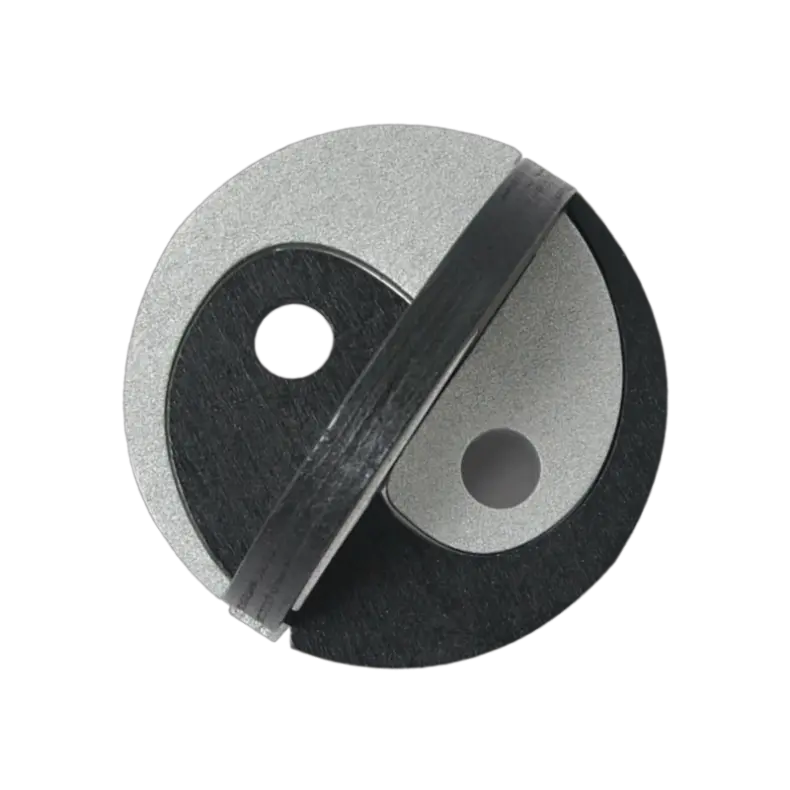
Yin-Yang Taiji Lock — $15.88
After a week, you’ll know which feels better for your brain. Maybe it’s the satisfying thunk of a solved puzzle. Maybe it’s the clean progress bar on an app. Either way, you’re not wasting your time — you’re exploring your own cognitive preferences. And that self-knowledge is the real brain gain.
As you continue this journey, consider reading about when a puzzle becomes a practice — because the most meaningful cognitive growth happens when solving becomes a ritual, not just a task.
Quick Verdict for Skimmers
Brain training apps cost $120–$180 per year; a single $15–$20 metal puzzle can be solved hundreds of times and resold for half its price. That’s the first hard data point you need. After comparing cost, cognitive transfer, social value, and long-term engagement across six criteria, the verdict is clear: neither tool is universally “better” — but your personal context makes one a smarter choice.
Choose brain apps if: you have 10 minutes daily, want variety without clutter, and prefer progress tracking. They’re great for quick dopamine hits and building processing speed — but don’t expect the skill to transfer to real-world problems (the transfer effect is tiny). Most users quit apps within two weeks, so stick with this path only if you actually enjoy the game loop.
Choose physical puzzles if: you crave deep focus, tactile feedback, and a screen break. Mechanical puzzles (Hanayama, puzzle boxes) improve spatial reasoning and problem-solving in ways apps can’t replicate — your hands learn as much as your brain. The haptic reward is stronger, and social bonding is real: one metal puzzle can spark a 40-minute group solve at a dinner party.
The quick decision framework:
– Low screen fatigue, high boredom with apps? Go physical.
– Need portability and zero setup? Stick with apps.
– Want to invest once and never pay again? Buy a metal brainteaser.
– Primary goal is memory improvement? Neither works well — transfer is minimal for both. Instead, do aerobic exercise.
Final actionable step: Pick one low-cost entry from each category — a free app like Elevate and a $12 Hanayama puzzle. Alternate them for one week. Note which one keeps you engaged longer, feels more satisfying, and leaves you mentally refreshed. That’s your answer.
You started this article on a subway seat, frustrated by a premium ad. Now you have a framework, not a dogma. Your brain’s sweet spot is waiting — and it’s probably not in the app store.