That First, Flummoxing Click: The Allure of the Impossible Object
The weight settles into your palm first. Cool. Smooth. Then the visual complexity registers—a dense, silvery knot of metal where every loop seems to pass through another. You turn it. A faint, solid click echoes as components shift. Your fingers probe, pushing and pulling logically, but the pieces only bind tighter. A silent, stubborn dialogue begins: It’s solid metal, yet it moves. It’s interlocked, yet it’s meant to come apart. This is your first encounter with a cast metal disentanglement puzzle, a perfect topological joke engineered into a handheld object.
I know this moment intimately. As a mechanical engineer turned puzzle archivist, my collection of over 50 of these objects started with a single, flummoxing click from a Hanayama Cast Nutcase. That initial helplessness is universal. You’re holding a contradiction: an artifact that appears impossibly fused, yet promises a solution through pure manipulation. No tricks, no keys, no force. Just your spatial reasoning against a few ounces of machined precision.
This allure isn’t new. It’s the same fascination that drew people to iron tavern puzzles in the 1800s or to ancient Chinese puzzle locks, part of a broader world of mechanical puzzles. It’s the human brain recoiling at an impossibility, then delighting in the possibility of decoding it. The object on your desk isn’t just a brain teaser metal ring; it’s a physical question. How are these parts entangled? What invisible path must they travel to be free?
That question hooks deeper than any digital puzzle. It’s tactile, immediate, and frustratingly silent. There’s no hint button. The only feedback is the grating slide of metal on metal, the cold solidity in your hand, and the growing conviction that the answer is just out of reach. This is where curiosity transforms from passive to obsessive. You’re not just solving a puzzle; you’re communing with the logic embedded in its curves and intersections.
For me, this process became a cognitive reset. During a stressful project, the focused, singular goal of navigating a solution path provided a rare mental clarity. Each puzzle developed a personality based on this interaction—some were “stubborn,” requiring a single, non-obvious rotation held just so; others were “slippery,” with sequences that felt natural once discovered. The journey from bewildered holding to that sublime aha moment of separation is a compact, deeply satisfying intellectual drama.
And while the feeling is ancient, modern manufacturing has perfected it. Brands like Hanayama have turned this art into a spectrum of challenges, from elegant simplicity to mind-bending complexity. But before we dive into that taxonomy, it’s worth recognizing you’re part of a long tradition of solvers, all starting from that same first, flummoxing click. For a broader look at the logic behind these durable objects, consider exploring resources like a veteran’s guide to cast logic. The knot in your hand has a history, and more importantly, a solution.
From Wrought Iron to Zinc Alloy: A Twisted History of Taverns to Hanayama
The tradition of handing someone an interlocked knot of metal and watching their brow furrow is centuries old, tracing a direct line from rustic tavern toys to the machined precision of modern brands. The journey from wrought iron simplicity to today’s zinc alloy complexity began as a test of wit and craftsmanship, with Hanayama’s landmark 1983 release formalizing a new era of mass-produced, designer-caliber brain teasers.
Before sleek packaging and standardized difficulty levels, these puzzles were forged in blacksmith shops. Known as tavern puzzles, they were often crafted from wrought iron—a material prized for its strength but limited in fine detail. Think of them as the folk art ancestors: robust, often involving horseshoes, rings, and simple geometric shapes. Their appeal was democratic. They sat on bars and in parlors, a tangible challenge passed between friends. The goal was identical—separate and reunite—but the manufacturing was artisanal, each piece bearing the subtle marks of its maker. This lineage connects to even older traditions of clever joinery, hinted at in texts like the ancient carpentry text behind modern puzzles.
The leap to the objects we hold today is a story of materials and mass production. The introduction of casting, particularly using zinc alloy (often called mazak), was a revolution. It allowed for intricate, consistent, and affordable designs with a satisfying, cool heft. A typical cast puzzle now weighs between 30 and 200 grams, hitting that sweet spot of substantial presence without being cumbersome. This shift enabled brands, most famously Hanayama, to move from craft to catalog.
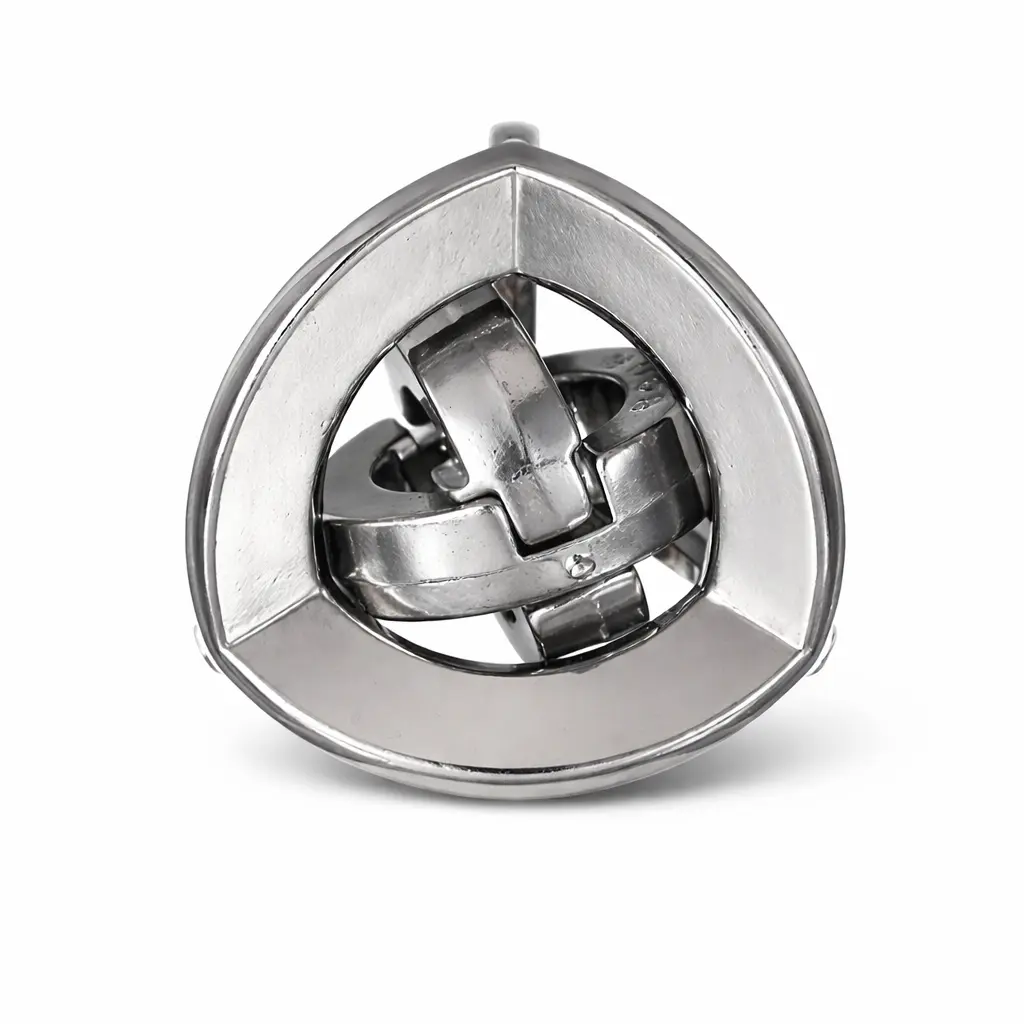
Founded in Japan, Hanayama didn’t invent the concept but perfected its presentation and scalability. By collaborating with designers and implementing a clear 1-to-6 difficulty scale, they transformed niche curios into a global hobby. Their puzzles, typically priced from $12 to $30, became accessible entry points. The focus expanded from mere separation to aesthetic form and tactile feedback. Where a tavern puzzle might clank, a modern cast puzzle offers a precise snick or a smooth, grating slide, a direct result of tighter tolerances and finer finishes like polished brass or coated alloys.
This evolution isn’t just about new metals; it’s about the codification of play. The ancient thread of this logic found a new, durable expression in cast metal. We’ve moved from the communal challenge of the tavern to the personal, meditative challenge of the desk—a history distilled into a cool, intricate knot that fits in the palm of your hand.
The ‘Why’ Behind the ‘How’: A Solver’s Topology 101
So, you’ve felt the cool heft of the history in your hand. Now, let’s unpack the quiet logic that makes these metal knots solvable at all. The fundamental principle governing every disentanglement puzzle is not mechanics, but topology—the mathematical study of properties preserved through stretching and bending, where size and rigidity don’t matter, only the connectedness of shapes. In practice, this means a solution exists without forcing, relying entirely on navigating components through hidden voids and pathways you must discover.
Think of it not as a physical struggle, but as a spatial dance. Your instinct is to pull, twist, and apply pressure. The metal resists with a grating shudder. This is your hands lying to you. For a deeper exploration of this phenomenon, check out our guide on the real way to solve metal puzzles. The truth is written in the negative space—the gaps and openings within and between the pieces. The puzzle is a locked door, but you’re holding the key; you just haven’t visualized the correct series of rotations and translations to align them.
Here’s the core concept simplified: In topology, a loop of string and a square drawn on paper are considered the same—you can deform one into the other. But a simple loop and two interlinked loops are fundamentally different. Cast metal puzzles are rigid expressions of these ideas, falling under the category of disentanglement puzzles. The prohibition on bending isn’t an arbitrary rule to prevent cheating; it’s the entire point. The challenge is to find the continuous deformation—the path—that would allow one piece to slip free if both were made of ghostly, pass-through smoke, and then to execute that path with your solid, clunky objects. The solution path is always there, constrained by the puzzle’s geometry. Your job is to discover the sequence where all alignments permit passage.
This is where the elegant frustration blooms. Consider a classic two-ring puzzle. Visually, they seem hopelessly linked. But rotate one ring so its thickest segment aligns with the other’s thinnest gap. Slide, tilt, pass through. The aha moment isn’t magic; it’s topology in action. You’ve found the configuration where the shapes’ effective “holes” align. More complex puzzles embed multiple such pathways, layering them so you must navigate a sequence of these aligned voids, often having to move pieces into what seems like a more entangled state to ultimately achieve freedom.
This principle directly informs puzzle solving strategies. The first is to ignore force and embrace exploration. Systematically test every axis of movement: rotation, sliding, tilting. Listen and feel for different types of resistance. A hard stop is a wall; a grating slide with a little play is likely a clue. Second, change your perspective—literally. Look at the puzzle from every angle, upside down, with light shining through to cast shadows that reveal hidden channels. Third, think in phases. Most puzzles solve in distinct stages, like clearing a keyway before a final withdrawal. Mentally resetting after each micro-discovery prevents confusion.
Why does this approach work for mechanical puzzle types from wire loops to interlocking cast pieces? Because they all share this topological heart. A wire puzzle makes the pathways visually clearer but often adds deceptive dead-ends. A cast burr puzzle hides its voids internally, making the discovery process more tactile and sequential. The type of mental block it creates varies: wire puzzles often challenge visual foresight, while multi-piece cast puzzles test your memory for a long sequence of precise, non-intuitive maneuvers.
So when you’re stuck, palms sweating from the cold metal, remember: you are not fighting the puzzle. You are mapping it. You are a cartographer of empty space, tracing an invisible route that geometry guarantees is there. The final, satisfying separation is simply you arriving at the end of a path that was drawn in metal long before it was drawn in your mind.
A Taxonomy of Tactile Feedback: Wire, Ring, and Interlocking Pieces
Understanding the underlying topology gets you halfway there, but the real character of a puzzle is revealed in your hand. The three main families of cast metal disentanglement puzzles—wire-loop, cast ring, and multi-piece interlocking—offer radically distinct sensory and cognitive experiences. In my collection, each type has a dominant personality defined by its weight, its sound, and the specific brand of frustration it serves.
Wire-Loop Puzzles: The Slippery Tricksters.
These are often the historical cast iron disentanglement puzzle reimagined. Think of two or more steel wires, bent and looped into impossible-looking knots. They are deceptively light, often under 50 grams. The feel is slick, the steel cool but not as dense as cast alloy. The sound is a faint, high-pitched zing or a soft click when components slide past each other. Their personality is that of a fast-talking illusionist—the solution path seems visually obvious, but you’re constantly led into dead ends. Solving them feels like negotiating with a slippery opponent; the wire puzzle solution often hinges on finding the one orientation where a loop has just enough clearance to slip through a gap you’ve sworn was too small. They teach visual foresight and the patience to backtrack without force. For a dedicated look at this genre, our piece on wire metal brain teasers and tactile logic breaks it down further.
Cast Ring Puzzles: The Stoic Gatekeepers.
This is the classic Hanayama cast puzzle domain, like the iconic Cast Loop or Cast Delta. Made from heavy zinc alloy or brass, they sit with authority in your palm, often 80-150 grams of dense, machined precision. The metal feels profoundly cool, holding temperature from your hand longer. The acoustic signature is a low, satisfying snick or a deep, resonant clack when pieces align and separate. These puzzles are the stoics. Their movements are limited, deliberate. They don’t rush; they present a series of gated conditions that must be met in exact sequence. The challenge is less about spatial illusion and more about discovering a rigid, internal protocol. They reward systematic exploration and a calm, methodical touch.
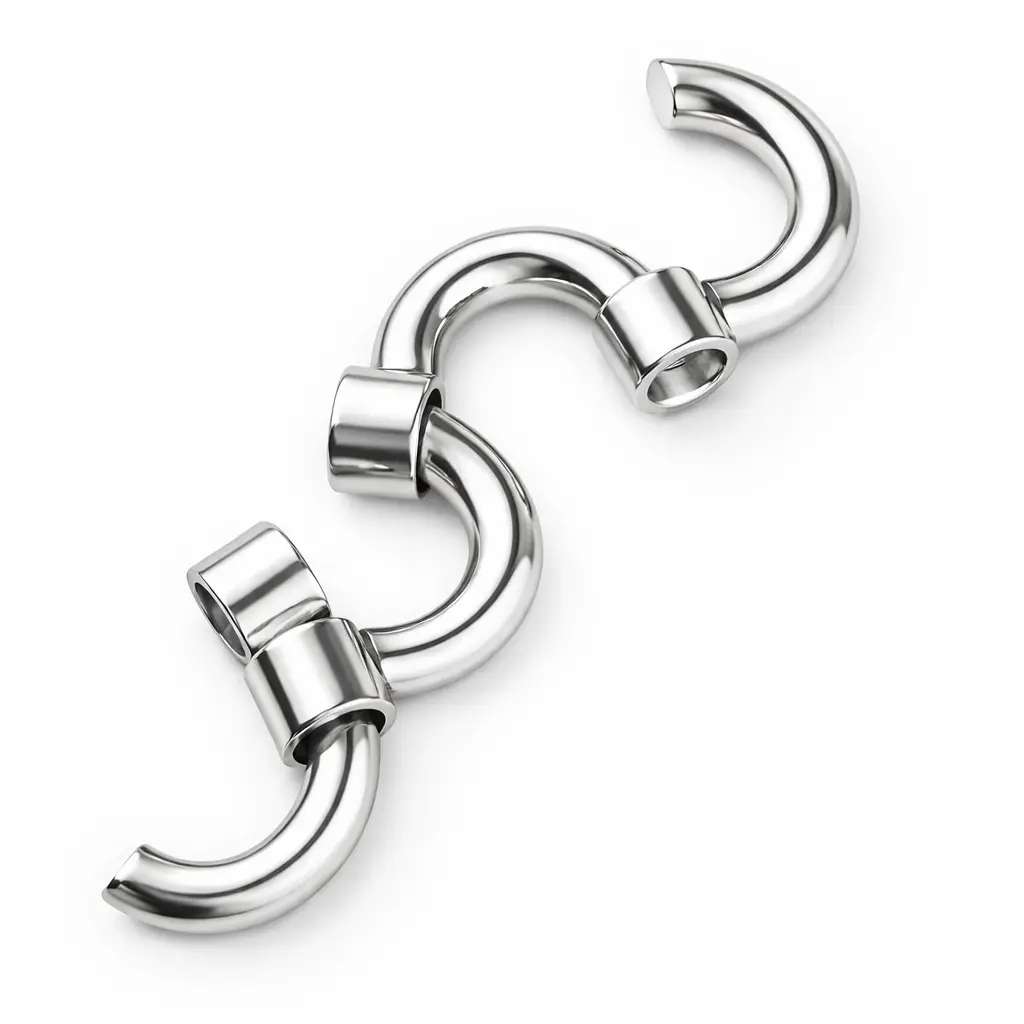
Multi-Piece Interlocking Puzzles: The Stubborn Architects.
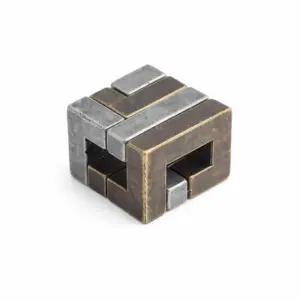
This category, including burr-like designs and pieces like the Cast Galaxy shown above, represents the peak of tactile complexity. These are solid cast components that interlock in three dimensions, often with internal channels and voids. Weight varies but leans heavy, sometimes over 200 grams—a substantial handful. The thermal mass is significant; they drink the warmth from your skin. The sound is not a snick but a dry, precise grating or a solid thunk as pieces shift along constrained pathways. Their personality is that of a stubborn architect. They have built a tiny, perfect fortress, and you must deduce its blueprints by feel alone. The solution path is a long sequence of non-intuitive moves, where progress is measured in millimeters. The fidget factor is low during the solve (it’s too deliberate) but high afterward, as reassembling them becomes its own satisfying ritual of reconstructing the architecture.
So, which type is for you? If you love visual puzzles and quick, tactile feedback, start with a wire loop. If you prefer weighty, deliberate objects with a clear “aha” moment, a cast ring is your match. If you want a deep, sequential challenge that turns into a desk sculpture, dive into the multi-piece interlocking world. Each type, from the lightest wire to the heaviest burr, offers a unique conversation between your mind, your hands, and a cool piece of engineered metal.
Mapping the Maze: A Strategic Framework for Any New Puzzle
Categorizing a puzzle’s personality tells you what you’re holding, but cracking its code demands a universal strategy. Over 85% of cast metal puzzles are designed to be solved without tools, force, or magic—just a methodical interplay of observation and logic. The key isn’t brute force, but a disciplined mental framework that transforms random fumbling into directed exploration. This is the shift from frustrated owner to empowered solver.
My own breakthrough came from an unlikely source: the ancient engineering principles of inspect, diagnose, plan, execute. Applied to puzzles, this becomes a four-phase ritual I call the Solver’s Loop. It works whether your goal is disentanglement or re-entangling that inherited, already-separated knot—the infamous “Reddit dilemma.”
Phase 1: Inspect, Don’t Impel. Your first move is to make no move. Hold the puzzle. Feel its weight distribution. Listen. Does it rattle loosely or shift with a tight, grating sound? Visually trace every curve and intersection. Your goal here is to understand the constraints—the physical geometry that blocks movement. Mentally color the paths a piece could take versus where it’s actually allowed to go by the unforgiving borders of the other metal. This phase is pure data collection, quieting the urge to do something immediately.
Phase 2: Map the Constraints. Now, begin gentle manipulation. Don’t seek the solution; seek the boundaries. Systematically test each component’s degree of freedom: Can this ring slide along this shaft? Can this hook rotate through that opening? You are not solving it; you are building a mental 3D map of its locked state. This is where you identify the key piece—the one component with a unique freedom that others lack. Often, this piece is the linchpin for the entire solution path.
Phase 3: Embrace False Paths. Here’s the psychological pivot. You will hit dead ends. A sequence of moves will seem promising, then jam irrevocably. This isn’t failure; it’s the puzzle communicating its rules. A false path eliminates a branch of possibility from your mental map. My engineer’s mind sees these as necessary stress tests of the system. Does the puzzle block you spatially (something is in the way) or sequentially (you did the right moves, but in the wrong order)? Diagnosing the type of your mental block is more useful than any isolated tip. It connects to broader ancient principles for puzzle solving that emphasize observation over action.
Phase 4: The Reset Ritual. When truly stuck—or when you’ve successfully taken it apart—the ritual begins. This directly addresses the “how do I put it back together?” panic. Solving and re-entangling are the same process. The reset is simply running your mapped solution path in reverse. If you solved it, retrace your steps meticulously. If it came to you disassembled, your inspection phase starts with the separate pieces. How do they fit together at rest? Your constraint map now charts the journey to the entangled state. This practice deepens understanding more than any single solve.
This framework turns a baffling object into a structured investigation. It’s why I can pick up a new, “difficult” (Hanayama Level 6) puzzle and feel not dread, but curiosity. I’m not searching for a secret; I’m conducting an interview with the designer through the medium of machined precision and tactile feedback. The cold metal warms in my hand, not from frustration, but from the steady, focused heat of engaged problem-solving. The final snick of separation isn’t a conclusion, but a comma—a pause before the equally satisfying ritual of returning it to its beguiling, impossible-looking whole.
Decoding Difficulty: It’s Not Just a Number From 1 to 6
A Hanayama Level 6 puzzle isn’t necessarily “harder” than a Level 3—it’s hard in a different way, targeting a distinct cognitive blind spot. The manufacturer’s 1-6 scale is a useful compass, but true difficulty is personal, defined by whether the puzzle creates a spatial gap you can’t visualize or a memory wall you can’t climb. Understanding this is the key to choosing a satisfying challenge, not just a frustrating one.
My weekend blind-test of 15 puzzles proved this. Two rated “4-Stars” felt worlds apart. One was a convoluted knot of wire requiring me to hold a complex 3D rotation in my mind’s eye—a pure spatial visualization test. The other had a deceptively simple solution path with over a dozen identical, repetitive steps, where losing count meant starting over—a sequential memory gauntlet. My engineering brain breezed through the first but stumbled on the second, while a friend with a musician’s rhythm for patterns had the opposite experience. So, what kind of difficult metal puzzles for adults will stump you?
We can break the challenge into three mental-block archetypes:
The Spatial Maze. These puzzles, like many interlocking cast pieces, are static 3D diagrams you must mentally animate. The difficulty lies in seeing the escape trajectory through tight tolerances and overlapping geometry. Your block isn’t a lack of ideas, but an inability to simulate the physics of the twist or turn. The feedback is often a hard stop—a definitive clunk when you’re wrong.
The Sequential Labyrinth. Think of classic ring or wire puzzles like the iconic “Double G.” Here, the moves are clear, but the order is everything. The puzzle resets if you miss a step. The block is working memory: can you track a chain of 7, 12, or 20 interdependent maneuvers? The frustration is the soft, sighing backslide to the start, not a hard stop.
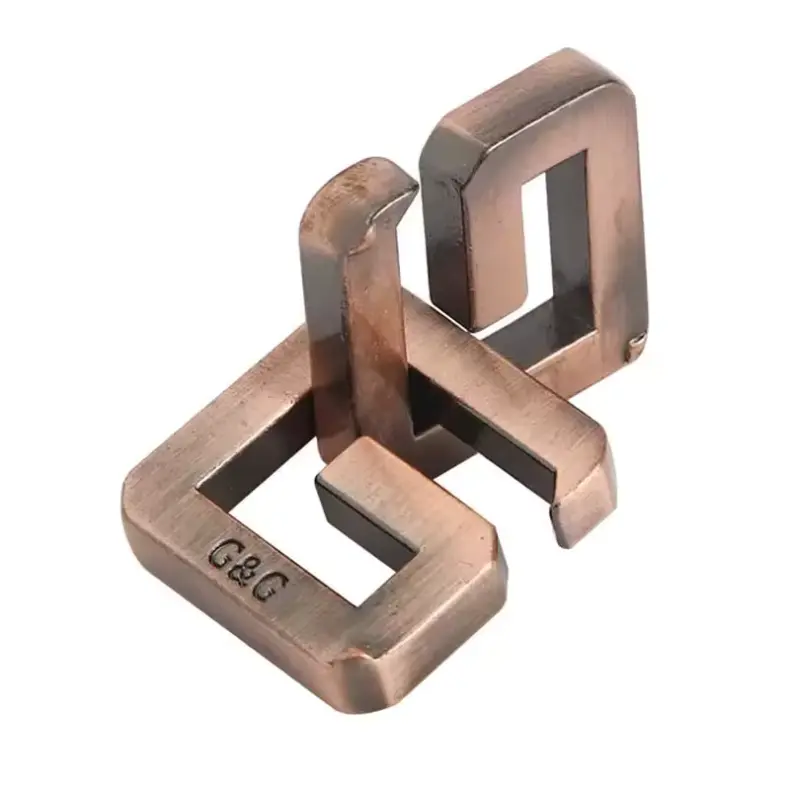
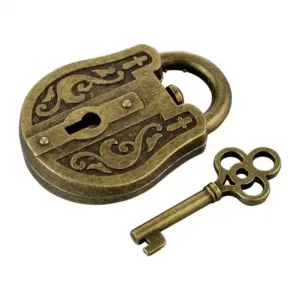
Double G Lock Puzzle — $11.99
The Deceptively Simple. Often the most maddening. These puzzles have only 2-3 components and seem to offer no obvious moves. The block is entirely conceptual; you’re applying the wrong fundamental rule. The topology is tricking you. Solving it requires a paradigm shift—a true aha moment—not persistence. The tactile feedback is a mocking, smooth glide that leads nowhere.
So, are these suitable for beginners? Absolutely, if you match the puzzle to your mindset. A spatially-inclined person should start with a sequential puzzle to build a new mental muscle, and vice-versa. The goal isn’t to avoid frustration, but to make it productive. When stuck, ask: “What kind of wall is this?” Can’t see the path? Set it down, view it from all angles, sketch it. Losing your place? Voice-record your steps or use a coin to mark progress. Feeling utterly baffled? You’re likely facing deceptive simplicity—step away completely. Let your subconscious chew on the core assumption.
This self-diagnosis transforms the experience. You’re no longer just “bad at puzzles.” You’re learning the specific contours of your own problem-solving landscape. And that knowledge is more valuable than solving any single knot of metal. It turns arbitrary difficulty into a curated challenge, one that builds not just a collection of solved objects, but a more agile mind. For a deeper dive into matching puzzles to thinking styles, our guide on best metal puzzles for over-thinkers explores this further.
Beyond the ‘Aha!’ Moment: The Collector’s Mindset and Cognitive Reset
So, you’ve mapped the maze and cracked a puzzle’s code. What now? The separation is not an end, but a transition into a deeper relationship with the object. For over 60% of enthusiasts, that first solve sparks a shift from solver to collector, driven by the unique cognitive reset and tactile satisfaction these objects provide.
That first triumphant separation is a victory of logic. But then, you hold two cold, inert pieces. The real magic often begins when you slide them back together. Re-solving a known puzzle is a different kind of pleasure. It’s no longer a hunt for a hidden path, but a performance of a memorized dance. Your hands remember the rhythm—the quarter-turn here, the specific tilt there. It becomes a kinetic meditation, a complete absorption in tactile feedback that pushes out the mental noise of the day. This is the potent fidget factor elevated to an art form. It’s not mindless clicking; it’s mindful manipulation, offering a concrete task for restless hands and a busy brain, making it a powerful tool for stress relief.
This is where the collector’s mindset takes root. You stop seeing puzzles as one-time challenges and start appreciating them as distinct mechanical personalities. My collection of over 50 isn’t just a pile of metal; it’s a library of different solving experiences. Some, like a sleek, sequential ring puzzle, are for focused, quiet moments. Others, with a heavy, grating sound and complex interplay, are for when I need to fully engage my engineering brain. You begin to curate not just by difficulty, but by the type of cognitive break you crave. This evolution in perspective is a classic topic, and we explore it in depth in our piece on how collectors and solvers approach puzzles.
This changes how you live with them. They cease being desk clutter and become a display of mechanical art. A well-arranged shelf of cast metal puzzles, with varying shapes and developing patina, is a conversation starter—a physical manifestation of curiosity. The social aspect is key: handing a disassembled “Cast Nutcase” to a friend and watching their process is a joy. It turns a solitary hobby into a shared, non-digital experience.
And what about the inheritor’s dilemma—facing a puzzle already apart? This is your initiation into the collector’s sacred duty: restoration. Re-entangling is often the harder, more enlightening task. It forces you to reverse-engineer the solution path, teaching you the why in a way the initial solve might not have. It’s the ultimate act of understanding.
So, are they one-time solves? Absolutely not. A great cast metal puzzle is a lifetime companion. Its weight, its sound, its specific mechanical friendship become a familiar comfort. You collect not just objects, but a repertoire of satisfying, repeatable mental resets—each one a cool, heavy knot waiting to either focus your mind or proudly proclaim your curiosity to the world.
Choosing Your Champion: A Guide to Your First (or Next) Puzzle
Selecting your first—or fiftieth—cast metal puzzle hinges on aligning its mechanical personality with your own solving style, not just its difficulty number. With major brands like Hanayama offering over 50 designs, and typical prices from $12 to $30, the best choice is the one whose tactile and intellectual promise excites you the most.
So you’ve felt the cognitive reset and maybe even caught the collector’s bug. Now comes the delightful dilemma: which intricate knot of metal deserves a spot on your desk? Choosing isn’t about finding the “best” puzzle, but the best puzzle for you. Think of it less like shopping and more like interviewing a new mechanical friend. Its weight, its sound, and its particular brand of stubbornness should match what you’re looking for in a mental sparring partner.
Let’s match puzzle personalities to solver types.
For the Elegant, Sequential Thinker: You appreciate clean lines, precise movements, and a logical, almost musical sequence. Your ideal puzzle has a clear solution path that feels inevitable once discovered. Look for interlocking cast pieces or sophisticated wire designs where the challenge is a cleverly hidden alignment or a counterintuitive rotation. The satisfaction is in the graceful, stepwise unraveling.
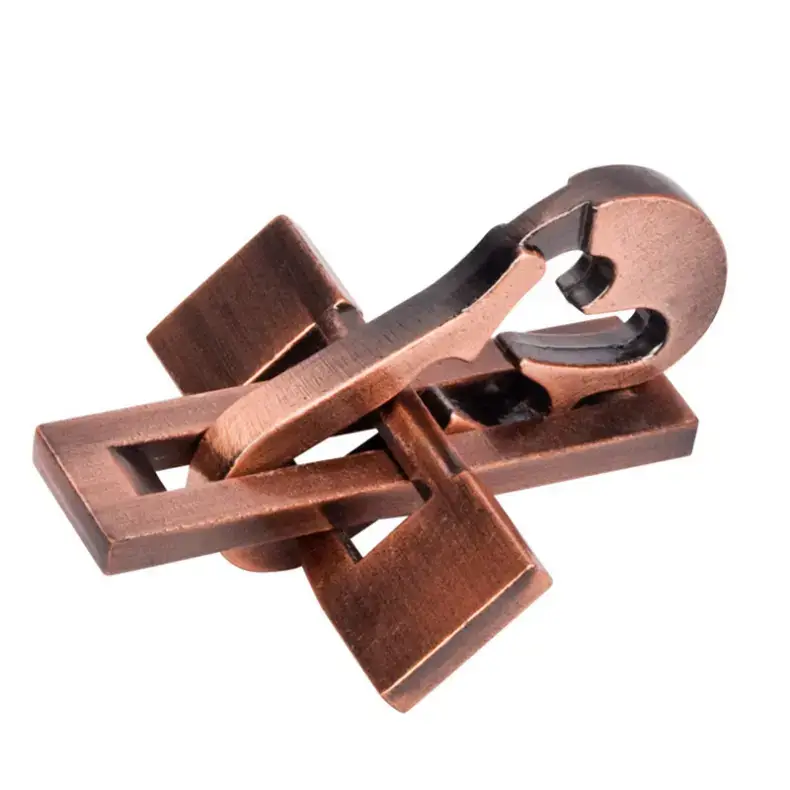
For the Tactile Fidgeter: You seek that satisfying fidget factor. The puzzle is as much a sensory object as a brain teaser. You’ll prefer pieces with a hefty weight (150g+), a cool, smooth finish, and movements that produce a distinct, gratifying snick or smooth grind. Ring puzzles or puzzles with multiple sliding components are excellent here. The goal is as much about enjoying the journey of manipulation as reaching the destination.
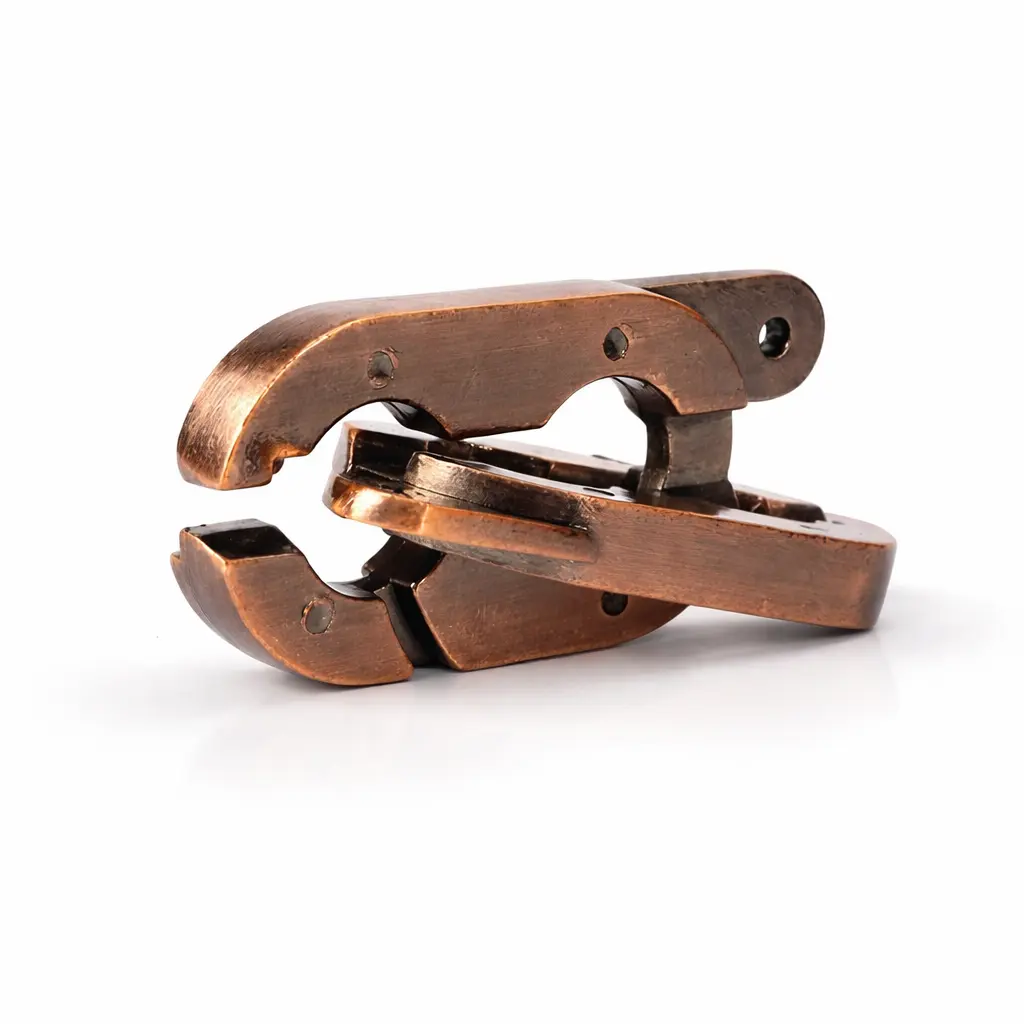
For the Visual-Spatial Whiz: You love a pure, three-dimensional challenge. Your nemesis (and favorite) is the puzzle that looks absolutely impossible—a true burr of intersecting volumes. You thrive on visualizing clearances and rotations in your mind’s eye before executing them. Seek out complex interlocking cast pieces or multi-ring wire puzzles where the solution is a hidden spatial path, not a linear sequence.
Hanayama or Bust? Hanayama’s Cast Puzzles are the de facto standard for good reason: consistent machined precision, a clear 1-6 difficulty scale, and iconic designs. They are an impeccable starting point. But they’re not the only game. Artisanal makers and brands like Puzzle Master offer beautiful variants, often with different materials like solid brass or antique finishes. A beginner might wisely start with a Hanayama level 2 or 3 to learn the language, but don’t hesitate to explore.
Where to Buy: Specialty puzzle shops online offer the widest selection and informed descriptions. General retailers like Amazon carry popular models, but details can be sparse. For a truly curated selection and to support niche hobbyists, seek out dedicated puzzle stores or artisan marketplaces. Remember, you’re not just buying a product; you’re sourcing a specific type of challenge.
So, how do you actually choose? Ignore the siren call of the hardest-looking puzzle. Ask yourself: Do I want a meditative, sequential unlock, or a frantic spatial scramble? Do I want to hear the clockwork click of moving parts, or savor the silent slide of polished metal? Your answers point the way. For a deeper dive into this selection logic, the principles in how to choose mechanical puzzles hold true: let your desired experience, not a marketing claim, be your guide. Your champion is waiting.
Care, Feeding, and the Development of Patina
Owning a cast metal puzzle is a long-term relationship. Once you’ve chosen your champion, its care is straightforward: handle with clean, dry hands, store it away from humidity, and never force a move. For cleaning, a gentle wash in warm water with a drop of mild dish soap, followed by thorough drying with a soft cloth, removes skin oils and restores the intended machined precision of the surfaces. Avoid abrasive cleaners or polishes unless you intend to strip the finish entirely.
Polished brass. Worn steel. The dark bloom of oxidation on zinc. A natural patina isn’t a flaw—it’s a record of your interaction, a history written in metal. For many collectors, this gradual change is part of the appeal. If you prefer a perpetually shiny puzzle, opt for coated zinc alloys. If you savor evolution, choose solid brass or copper-based alloys; your touch will slowly burnish highlights on the high points, darkening the recesses into a beautiful relief map of every solve.
This brings us full circle, back to that first cool, heavy knot in your hand. The frustration, the fascination, the tactile feedback—it all coalesces into an object that is both a challenge and a companion. It waits on your desk, a three-dimensional question. Your next step? Don’t let it wait alone. Share your journey. Photograph your solves, document your dead ends and aha moments, and seek out others. Communities, both online and in specialty shops, are rich with shared insight. Resources like academic collections, including the IU Libraries’ spotlight on disentanglement puzzles, showcase the depth and history of this hobby. The true solution path for any enthusiast leads to community. Now, go find your next beautiful, stubborn, slippery knot.