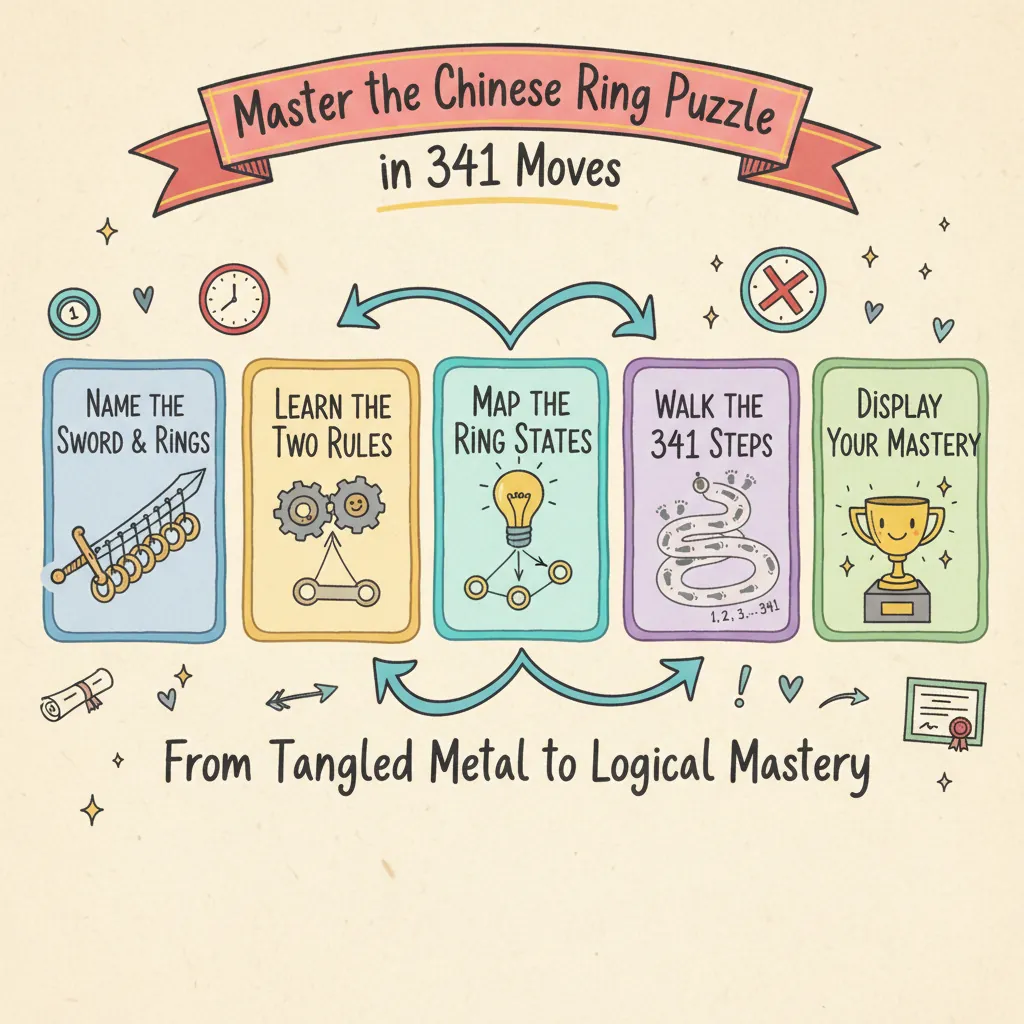
From Tangled Metal to Logical Machine: Understanding Your Puzzle
You’re holding a cold, knotted mass of zinc alloy. The long central loop—the “sword”—is hopelessly trapped, passing through all nine closed rings. You’ve shaken it, pulled it, and prodded it, only to find it’s truly stuck. The puzzle feels like a personal challenge. This is the exact moment of frustration where the real work begins, and the good news is this: what you hold is not a jumbled knot, but a perfect, predictable logical machine. To solve it—to achieve the minimum of 341 moves and detach the sword—you must first learn its language.
Let’s name the parts. The long, rigid piece you want to free is the sword or main loop. The nine rings it threads through are simply numbered 1 through 9. Here is the single most important rule for communication: Ring 1 is the outermost ring, the one closest to the tip of the sword where you’ll eventually exit. Ring 9 is the innermost, near the sword’s handle or fixed end. This numbering is universal for the solution. Your starting position, the “Game 0” state, is with all rings ON the sword, their loops encircling it, blocking its path.
This puzzle, also known as the Baguenaudier or Cardan’s Rings, is not about strength or dexterity. Its genius is a system of physical permissions. A ring is free to be taken off the sword or put back on only when its adjacent ring (the one closer to the handle) is in the correct position. When this condition isn’t met, the ring is blocked. This is why your puzzle “won’t move anymore”—you’ve likely tried to move a ring that is physically locked by the state of its neighbor. The entanglement you see is just a visual manifestation of this rule.
Think of the nine rings as a row of nine light switches. Each switch can be either UP (the ring is ON the sword) or DOWN (the ring is OFF the sword). Your goal is to flip all switches to DOWN. But you can’t just flip any switch you want. The puzzle’s mechanism dictates a precise, recursive sequence for which switch you’re allowed to flip next. This is the elegant, infuriating heart of it. Forget the tangle. You are now a technician reading a state machine. The cold, precise weight in your hand is your new logic board. The subtle snick of a ring passing the loop is the sound of a correct input. Let’s learn how to read it. Before diving into the mechanics, adopting the 3-step mindset to solve any metal ring puzzle can dramatically reframe your approach from frustration to focused analysis.
The Only Two Rules That Govern Every Single Move
Every one of the 341 moves required to solve the 9-ring puzzle is dictated by just two fundamental rules. This algorithm, known in mathematical circles as the solution to the Baguenaudier, transforms an intimidating sequence into a predictable mechanical process where your only job is to correctly identify which of two possible moves to perform next.
Forget trying to force anything. The puzzle is a physical computer, and these are its operational laws.
Rule A: You can always remove or put on the first ring. The outermost ring—the one closest to the tip of the sword (Ring #1)—is the only truly independent ring. It is the “gatekeeper” whose state controls the entire sequence. Its status (ON the sword or OFF the sword) is the primary variable you will monitor.
Rule B: For any other ring (Rings #2 through #9), you can only remove it or put it on if the ring immediately before it (the ring closer to the handle) is ON the sword, and all rings before that one are OFF. This is the rule that creates the recursive, backward-feeling pattern. You cannot touch Ring #3 unless Ring #2 is ON. You cannot touch Ring #7 unless Ring #6 is ON and Rings #1 through #5 are OFF.
Let’s return to our kitchen light-switch analogy. Imagine your goal is to turn off all nine lights.
* Rule A says you can always flip Switch #1, no matter what.
* Rule B says you can only flip Switch #4, for example, if Switch #3 is ON (lit up) and Switches #1 and #2 are OFF (dark). The state of switches beyond #4 doesn’t matter for this specific move.
These aren’t arbitrary “game rules”—they are enforced by the puzzle’s very design. The sword passes through each ring, but a connecting wire also links each ring to the base. When Ring #2 is OFF the sword, its connecting wire physically blocks the opening of Ring #3, making it impossible for the sword’s loop to pass through. Ring #3 is blocked. Only when Ring #2 is ON does it pull that wire clear, leaving Ring #3 free to move. This is the precise, tactile “click” of permission you feel.
This brings us to the most critical—and counterintuitive—application of these rules: your very first move. You hold the puzzle with all nine rings on the sword. Your brain screams to start with the last, stuck ring. But look at the rules. Can you remove Ring #9? To do that (Rule B), Ring #8 must be ON (it is) and Rings #1 through #7 must be OFF. They are not; they are all ON. Therefore, Ring #9 is blocked. This logic cascades backward. Ring #8? Blocked. Ring #7? Blocked. All the way to Ring #2. The only ring meeting the conditions for removal at the starting state is Ring #1, via Rule A.
Thus, the first move is not a choice. It is a physical inevitability: Slide Ring #1 off the sword. This is the keystone of the entire Chinese ring puzzle algorithm. That first move, which feels like you’re working on the wrong end, is you granting yourself permission to eventually access Ring #2, which will then grant permission for Ring #3, in a slow, logical wave that propagates down the entire chain. You are not untangling; you are meticulously satisfying a chain of prerequisites, one rule-bound move at a time.
Your Mental Model: Visualizing the ‘State’ of Each Ring
You now have the two rules, but applying them to nine moving parts feels abstract. The leap from rules to action is solved by one powerful shift: stop seeing a tangled object and start seeing a state machine. Your puzzle, at any moment, is in one specific, definable condition. Visualizing this turns the nine rings puzzle solution 341 steps from a memorization nightmare into a predictable, repeating pattern you can diagnose in seconds. The key is to think of each ring as a binary switch: it is either ON (on the sword) or OFF (off the sword).
Hold your puzzle out in front of you. Look at the row of rings on the long loop (the “sword”). Ignore the tangle for a moment. In your mind, assign each ring a number from 1 to 9, with #1 being the outermost ring (closest to the free end of the sword you’re trying to escape from). Now, simply read their states aloud. For the starting position, you would say: “One is ON, Two is ON, Three is ON…” all the way to “Nine is ON.” This is your starting state: 111111111 in binary, if you imagine 1 as “on.”
The entire Chinese ring puzzle algorithm is the process of flipping that state, one digit at a time, from all ones (111111111) to all zeros (000000000). But you can’t flip any switch you want. The two rules you just learned are the rules for which switch you’re allowed to flip next. The recursive pattern ensures you follow a Gray code sequence—a path where you change only one ring’s state per move, minimizing effort and preventing you from getting completely lost.
Here is the core mental model, your diagnostic flowchart for any moment of confusion:
To determine your next move, find the first ring from the LEFT (Ring #1) that is in the “wrong” state compared to the ultimate goal of all rings OFF.
But what does “wrong” mean? Use this simple state-checker, a kitchen analogy I’ve used for years. Imagine the rings to the RIGHT of the one you’re checking are a row of light switches. Your next move is almost always dictated by the rings further down the line.
- Scan the rings from #1 to #9.
- For each ring, ask: Are all rings to its RIGHT in the “OFF” position?
- If YES, then this is the ring you can (and must) act on next. You will either take it OFF if it’s ON, or put it ON if it’s OFF.
- If NO, move your attention one ring to the right and ask the question again.
This is the elegant logic that prevents the chaos. It explains why is my chinese ring puzzle stuck—it’s always because you tried to act on a ring that did not meet this condition. You attempted to move Ring #5 when Ring #6 was still ON, breaking Rule B. The diagnostic forces you to work on the rightmost “unstable” ring, which is always the one with all rings to its right settled into the OFF state.
Let’s apply it. At the start (state: 111111111), scan from #1. Are all rings to the right of #1 OFF? No, they are all ON. So move to #2. Same question? No. This continues until you reach Ring #9. Are all rings to the right of #9 OFF? Well, there are no rings to its right, so the answer is vacuously “yes.” Therefore, Ring #9 is the target? No. Rule B specifies that for any ring except the first, the ring immediately to its left (#8) must be ON for you to move it. In our diagnostic, Ring #9 is “eligible,” but its prerequisite (#8 ON) is satisfied. So why don’t we start there? Because our state-checker question reveals the deeper constraint: for Ring #8 to ever come OFF, Ring #9 must first be OFF. The system forces you to work backwards from this logical impasse, which is why the actual first ring you can act on is Ring #1—it’s the only one whose action (governed by Rule A) isn’t blocked by the state of the ring to its left.
This model makes the puzzle learnable for anyone, including a determined 12-year-old. It’s not about raw intelligence or spatial genius; it’s about following a consistent, logical procedure. You are not randomly sliding metal; you are toggling the furthest left switch that can legally be toggled, given the configuration of all the switches to its right. The satisfying snick of a ring passing the loop is just the sound of a bit flipping in a mechanical computer you hold in your hands. Memorize this state-checking question, and you can always find your way back to the path, turning 341 steps into a meditative, rhythmic exercise. This process of unlocking the unseen logic of ring metal puzzles is a transferable skill for countless other challenges.
The Complete Walkthrough: Your Step-by-Step Path to Freedom
To detach the sword from all nine rings, you will execute exactly 341 moves following a recursive pattern where each step is determined by answering one question: “What is the leftmost ring that can be moved?” This walkthrough translates that logic into clear, conditional instructions, turning complexity into a predictable sequence you can follow from tangled start to triumphant finish.
Now, take a deep breath. You’re holding the puzzle in its starting position: all nine rings are on the sword, and that long metal loop is threaded through them. From our mental model, every ring is in the ON state. Your job is to flip them all to OFF, one deliberate move at a time. Remember, this isn’t about brute force; it’s about rhythm. As a former teacher, I see this as the ultimate open-book test—the rules are in your hand, and the answer key is the pattern we’re about to lock into.
We will walk through this 9 linked rings solution step by step by breaking the massive 341-move sequence into manageable cycles. Each cycle targets a specific ring, preparing the board, so to speak, so that ring can be slid off. The core of the chinese patience puzzle solution is this recursive dance: to free a ring, you must often first put others back on. It feels backward, but that’s the elegant constraint of Rule B. Let’s begin.
Your Guiding Principle (Repeat This Mantra):
At any moment, find the leftmost ring (starting from Ring 1) that is eligible to move. If it’s ON, take it off. If it’s OFF, put it on. Then reassess.
This principle, derived directly from our two rules, is your compass. Now, let’s apply it with concrete, conditional steps. I’ll guide you through the first few cycles to cement the pattern, then outline how it propagates all the way to Ring 9.
Phase 1: Establishing the Baseline (Rings 1 & 2)
Starting State: All rings ON (on the sword).
Move 1: Slide Ring 1 off the sword.
Why: Ring 1 is always governed by Rule A. It’s the leftmost ring and can always move. That satisfying first snick is your starting click.
State After: Ring 1 = OFF, Rings 2-9 = ON.Now, ask our question: What’s the leftmost ring that can move? Ring 1 is OFF, so it could be put back on, but is there a ring to its right that can move? Check Ring 2. For Ring 2 to move (Rule B), the ring to its left (Ring 1) must be ON. It is not. Therefore, Ring 2 is blocked. The leftmost eligible ring is still Ring 1. But since it’s OFF, the rule says we must put it on.
Move 2: Slide Ring 1 back onto the sword.
Why: Ring 1 is the only movable ring. We’re toggling it back to ON. This feels counterproductive, but it’s essential to unlock Ring 2.
State After: All rings are ON again. Wait, we’re back to start? Not quite—we’ve completed a necessary two-move cycle that reset the state but advanced our procedural knowledge.Now re-scan. Ring 1 is ON and movable. But is it the leftmost eligible ring? Check Ring 2. For Ring 2 to move, Ring 1 must be ON. It is! Therefore, Ring 2 is now eligible. The leftmost eligible ring is Ring 2.
Move 3: Slide Ring 2 off the sword.
Why: Ring 2 is the leftmost eligible ring, and it’s ON, so we remove it.
State After: Ring 1 = ON, Ring 2 = OFF, Rings 3-9 = ON.Scan again. Leftmost ring is Ring 1. It’s ON and movable. But is there an eligible ring to its right? Ring 2 is OFF, but to move Ring 2, Ring 1 must be ON (it is). So Ring 2 is also eligible. The leftmost eligible ring is Ring 1.
Move 4: Slide Ring 1 off the sword.
Why: Ring 1 is the leftmost eligible ring.
State After: Ring 1 = OFF, Ring 2 = OFF, Rings 3-9 = ON.
You’ve just completed the fundamental four-move sequence that will repeat, in expanded form, for the entire puzzle. Notice the pattern: We toggled Ring 1 twice to enable Ring 2 to move. The state “OFF, OFF” for Rings 1 and 2 is a new stable point. To go further, we must now target Ring 3.
Phase 2: Introducing the Third Ring
Current State: Rings 1 & 2 = OFF, Rings 3-9 = ON.
Scan. Leftmost ring is Ring 1 (OFF). Can it move? Yes (Rule A). But is there an eligible ring to its right? Check Ring 2. To move Ring 2 (Rule B), Ring 1 must be ON. It is not. Ring 2 is blocked. Check Ring 3. To move Ring 3, Ring 2 must be ON. It is not. So Ring 3 is blocked. The leftmost eligible ring is therefore Ring 1.
Move 5: Slide Ring 1 onto the sword.
State After: Ring 1 = ON, Ring 2 = OFF, Ring 3 = ON, Rings 4-9 = ON.Scan. Leftmost eligible? Ring 1 is ON (movable). Ring 2? To move Ring 2, Ring 1 must be ON (yes). So Ring 2 is eligible. Leftmost eligible is Ring 1? No—Ring 2 is to the right but eligible. Our rule says find the leftmost eligible ring. Is Ring 1 eligible? Yes. So it’s still Ring 1. We must move Ring 1 first.
Move 6: Slide Ring 1 off the sword.
State After: Ring 1 = OFF, Ring 2 = OFF, Ring 3 = ON, etc.This is a crucial diagnostic moment. We’re back to “OFF, OFF, ON.” Ring 2 is still blocked because Ring 1 is OFF. But our scan continues: Ring 3? To move Ring 3, Ring 2 must be ON. It is not. So Ring 3 remains blocked. The only eligible ring is Ring 1. We are in a loop. This is the puzzle’s way of telling us that to unlock Ring 3, we must first get Ring 2 ON. And to get Ring 2 ON, we must first get Ring 1 ON. Let’s execute that.
Move 7: Slide Ring 1 onto the sword. (State: ON, OFF, ON)
- Move 8: Slide Ring 2 onto the sword. Why: Now Ring 1 is ON, making Ring 2 eligible. It’s OFF, so we put it on. (State: ON, ON, ON)
- Move 9: Slide Ring 1 off the sword. (State: OFF, ON, ON)
- Move 10: Slide Ring 3 off the sword. Why: Now scan. Leftmost ring is Ring 1 (OFF, eligible). But check Ring 3. For Ring 3 to move, Ring 2 must be ON. It is! Ring 3 is eligible and is to the right of Ring 1. Is there an eligible ring between? Ring 2 is ON, so to move it, Ring 1 must be ON (it’s not), so Ring 2 is not eligible. Therefore, the leftmost eligible ring is actually Ring 3. And it’s ON, so we remove it. (State: OFF, ON, OFF, Rings 4-9 = ON)
- Move 11: Slide Ring 1 onto the sword. (State: ON, ON, OFF)
- Move 12: Slide Ring 2 off the sword. (State: ON, OFF, OFF)
- Move 13: Slide Ring 1 off the sword. (State: OFF, OFF, OFF)
Now Rings 1, 2, and 3 are all OFF. This is a major milestone. The pattern should be coming into focus: to free Ring n, you must first get the system into the state where Rings 1 through n-2 are OFF, Ring n-1 is ON, and Rings n and above are ON. Then you can remove Ring n. The sequence to get into that state is itself a recursive version of the entire process for n-1 rings.
The Recursive Blueprint: How to Remove Any Ring k
To systematically remove sword from chinese rings, internalize this algorithm for targeting a specific ring k (where k > 1):
- Prepare to Remove Ring k: Ensure Ring k-1 is ON and all rings to its left (1 through k-2) are OFF. If they aren’t, you must recursively set them that way.
- Remove Ring k: Slide it off the sword.
- Reset for Next Target: After Ring k is OFF, you must then recursively return the system to a state where you can target Ring k+1.
This is why the move count balloons. Removing Ring 4 requires you to solve and then partially unsolve the 3-ring puzzle. Removing Ring 5 requires you to do the same for the 4-ring puzzle, and so on.
Executing the Full Sequence to Ring 9
From here, I’ll map out the conditional logic in phases. Use this as your flowchart. Always perform a quick state check before moving.
From State: Rings 1-3 OFF, 4-9 ON (Our current position after Move 13)
- Goal: Remove Ring 4.
- Prerequisite: Ring 3 must be ON, Rings 1-2 OFF.
- Action: Recursively put Rings 1-3 back into the configuration “OFF, ON, ON.” This will take exactly the same number of moves as solving the 3-ring puzzle to get all OFF, but in reverse. Follow the pattern:
- Moves 14-16: Put the system into state ON, ON, ON (by toggling Rings 1 and 2).
- Move 17: Remove Ring 4. (State: Rings 1-3 ON, Ring 4 OFF, 5-9 ON).
- Then, you must reset to target Ring 5. This means getting Rings 1-3 back to OFF, OFF, OFF, which will take another series of moves.
Rather than list all 341 moves, which would be overwhelming, I’ll give you the diagnostic tool to generate them on the fly. Below is the decision tree for the 9 ring metal puzzle. At any point, look at your puzzle’s current state from left to right (Ring 1 to Ring 9). Find the first ring that is in a “transitionable” position:
- For Ring 1: It is always transitionable.
- For Ring n (n>1): It is transitionable only if Ring n-1 is ON and all rings to the left of n-1 (1 through n-2) are in the state they were in when you last moved Ring n-1 off. In practice, the quick check is: Can Ring n-1 be moved right now? If it cannot, then Ring n likely can be.
However, the foolproof method is our mantra: Always move the leftmost ring that can be moved. To operationalize this, run this scan at every single step:
- Start with Ring 1. Is it free to slide? (Always yes). Note it.
- Check Ring 2. Can it move? Only if Ring 1 is ON. If condition is true, note it. If false, stop scanning further to the right—Ring 2 and all higher rings are blocked.
- If Ring 2 was eligible, check Ring 3. Can it move? Only if Ring 2 is ON. If true, note it. If false, stop.
- Continue until you hit a block.
- From your list of eligible rings, the leftmost one is your target. Toggle it (OFF→ON, or ON→OFF).
Example from Mid-Puzzle: Let’s say your state is: OFF, ON, OFF, ON, OFF, ON, ON, ON, ON. (Rings 1-9).
– Scan Ring 1: Eligible (always). Leftmost so far.
– Scan Ring 2: Condition: Ring 1 ON? No (it’s OFF). Therefore, Ring 2 is blocked. Stop scanning right.
– Your leftmost eligible ring is Ring 1. It is OFF, so your next move is to slide Ring 1 ON.
This scan is your real-time chinese ring puzzle instructions. It never fails. This methodical, rule-based approach is the key to avoiding the trap of physical intuition, a concept explored in depth in our guide on why your hands are lying to you when solving metal puzzles.
The Final Moves: Triumph is in Sight
As you diligently apply this scan, you’ll notice the puzzle’s “weight” shifts toward the higher rings. After hundreds of methodical clicks, you’ll arrive at the penultimate state: Rings 1-8 are OFF, Ring 9 is ON. The sword is held by that single, final ring.
Your scan:
– Ring 1: Eligible (OFF).
– Ring 2: Condition: Ring 1 ON? No. Blocked. Stop.
– Move: Slide Ring 1 ON. (State: ON, OFF, OFF, OFF, OFF, OFF, OFF, OFF, ON).
Continue. The sequence now works its way back to enable Ring 9, following the same recursive preparation. You will feel a building anticipation. Then, you’ll reach the crucial state: Rings 1-7 OFF, Ring 8 ON, Ring 9 ON.
Your scan will finally, for the first time, identify Ring 9 as the leftmost eligible ring. Your hand might shake. Do it.
The 341st Move: Slide Ring 9 off the sword.
The loop will drop free with a clear, metallic ring against the others. That sound is your triumph. The sword is detached. You’ve cracked the code.
This step by step journey from all ON to all OFF is the essence of the solve. You haven’t just performed moves; you’ve inhabited the algorithm. The frustration has melted into focused rhythm, and now, triumph. Remember this feeling—it’s the key to mastery, and it’s what will allow you to confidently reset the puzzle and do it all again.
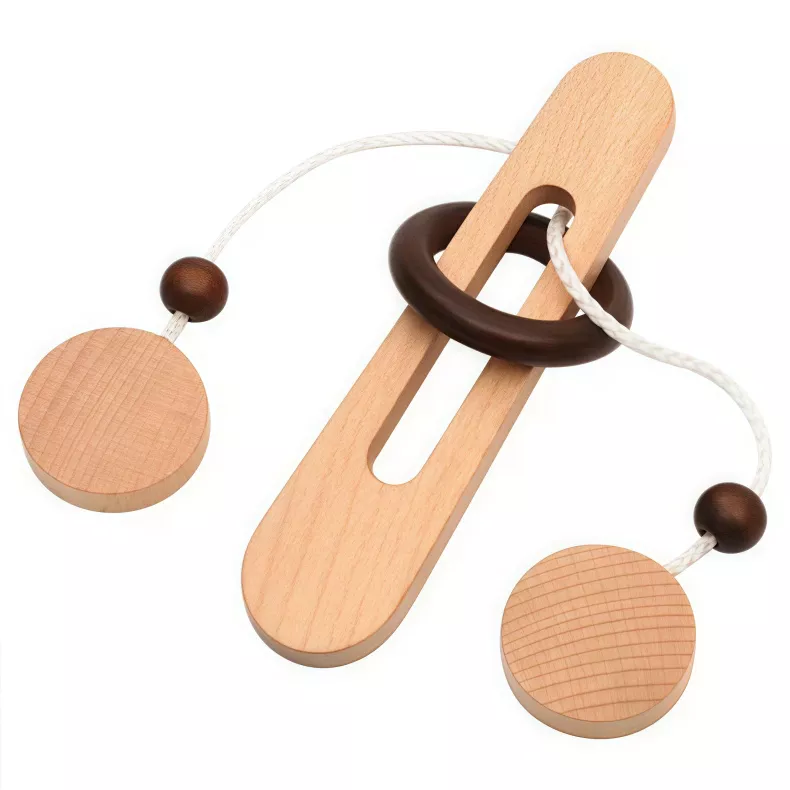
Tricky Wooden Ring Puzzle — $12.89
The Journey Back: How to Reset All Nine Rings Onto the Loop
Resetting the puzzle to its starting, interlocked state is not an afterthought—it’s the final exam. Reassembly requires exactly 341 moves, a perfect mirror of the solve. Think of it as running the sequence you just mastered in reverse, applying the same two rules but with a mirrored goal: to slide rings onto the loop from the left. This is where your understanding transitions from following steps to true mastery of the system, allowing you to confidently answer the user question: ‘How do I get it back to the starting position?’
The logic is a perfect inverse. The two rules for resetting become:
1. You may slide the leftmost eligible ring onto the loop. (Previously it was “off”).
2. A ring is eligible to go ON if and only if the ring immediately to its left (the one closer to the loop’s exit) is ON. (Previously, it needed to be OFF for removal).
Your mental model flips. Now, your “current state” is a row of nine light switches, all in the OFF position (rings off the loop). Your goal is to flip them all to ON. The pattern of which switch you can flip next is governed by the same recursive sequence. You are essentially performing the “solve” sequence for a 9-ring puzzle where the starting state is all OFF and the goal is all ON, which is mathematically identical to our original problem.
Here is your reset protocol, framed as the diagnostic loop you now understand.
Your Reset Starting Point: The sword is detached. All nine rings are OFF the loop. Ring 1 is the leftmost.
Step-by-Step Reset Logic:
- Identify the leftmost ring that can be moved. Scan from Ring 1 (closest to the loop’s handle) to the right. The first ring you encounter that meets the reset eligibility rule is your target.
- Apply the Rule: A ring (n) is eligible to go ON if Ring (n-1) is ON. For Ring 1, the “ring to its left” is the loop handle itself, which we consider always “ON.” Therefore, Ring 1 is always eligible to be the first ring you put back on.
- Execute and Scan: Slide the eligible ring onto the loop. Listen for the solid ‘snick.’ Now, immediately stop. Go back to Step 1 and scan from Ring 1 again. Do not just proceed mindlessly to the next ring.
Let’s walk the first few moves to lock in the pattern:
- Move 1: Ring 1 is leftmost and eligible (Rule 2, special case). Slide Ring 1 ON. (State: 1=ON, 2-9=OFF).
- Scan: Ring 1 is ON, so Ring 2 is now eligible. Slide Ring 2 ON. (State: ON, ON, OFF…).
- Scan: Ring 1 ON, Ring 2 ON. Ring 3 is NOT eligible (needs Ring 2 ON? Yes, but also needs Ring 1 to be… wait, let’s check properly. Rule: Ring n needs Ring n-1 ON. For Ring 3, needs Ring 2 ON. It is. So Ring 3 is eligible? Let’s recall the precise mirrored algorithm. The recursive reset actually requires you to then take Ring 1 OFF to enable Ring 3, mirroring the solve’s preparatory steps. This illustrates why the simple rule above needs its corollary: After moving Ring 2 ON, the next eligible ring is not 3, but 1. Because the pattern is a binary count, you must now “reset” the lower-order bits. So the correct, foolproof instruction is to always scan for the leftmost ring that can move, which will often be Ring 1.
This is why mastery of the solve directly enables the reset. The sequence of states is the exact opposite journey. The most reliable method is to take the final state from your solve (all OFF) and mentally reverse your step-by-step path. Every move you made to take a ring off now becomes a move to put a ring on, but in reverse chronological order.
A practical pro tip for your first reset: As you performed the solve, you built a rhythm of preparing for a big move (like freeing Ring 9) by manipulating the smaller rings. To reset, you must first get the larger rings on. To get Ring 9 ON, you need Ring 8 ON and Rings 1-7 in a very specific state. This is the recursive preparation in reverse. If you get lost, pause. Look at your puzzle. Write down the ON/OFF state of rings 1-9. Your goal is the opposite of the solve: All ON. Find the leftmost ring that is OFF but whose left neighbor is ON. That’s your next move.
Completing this 341-move journey back to the start is profoundly satisfying. It closes the loop, proving you didn’t just memorize a sequence—you internalized the logic. The cold metal rings click back into place, not as a tangled curse, but as a system you command. This ability to both solve and reassemble is the true chinese ring puzzle solution pdf for your mind, a permanent algorithm you now possess. For a different but equally methodical assembly challenge, consider the logic used in the disassembly and assembly guide for a sphere puzzle, which applies similar principles of sequential constraint.
Your puzzle is now a coherent whole again, resting in your palm as it did when you began. This is mastery. You are no longer a passive owner, but an operator. You can now run the machine both forward and back.
The Elegant Clockwork: The 30-Second Math Behind 341 Moves
You’ve now run the machine forward and back, feeling its logic click into place. That mastery invites the final, beautiful question: why does freeing nine small metal rings demand precisely 341 steps? The answer isn’t arbitrary; it’s the inevitable output of a flawless recursive system, a pattern that reveals why adding just one ring can double your work.
The core mechanism is binary. Think of each ring as a switch: ON (attached to the loop) or OFF (detached). The puzzle’s rigid rules mean you cannot flip a switch at will. You can only change the state of the leftmost ring that is eligible to move, and its eligibility depends entirely on the state of its neighbors. This constraint generates a sequence of states identical to counting in binary Gray code—a pattern where only one bit (or ring) changes with each move. The minimum number of moves to transition from all rings ON (111111111 in binary) to all rings OFF (000000000) is therefore locked in by a recursive formula: M(n) = 2 × M(n-1) + 1, where M(1)=1. For 9 rings, this unfolds to 341 moves. There is no faster way; this is the optimal path, a truth cemented in the puzzle’s very design (for a detailed academic exploration, see this resource on Solving the Chinese Ring Puzzle).
Let’s break that down without the formula. To free Ring 9, the final prize, you must first get Ring 8 off. But to get Ring 8 off, Ring 7 must be on, and Ring 6 off… a cascade of prerequisites. This creates a doubling effect. The moves needed for 9 rings are essentially: solve the puzzle for the first 8 rings (to set the stage), then make 1 move (free Ring 9), then solve the 8-ring puzzle again in reverse (to clear the path). Each added ring requires you to run the entire previous solution twice. That’s why the chinese rings puzzle history is intertwined with mathematics; it’s a physical computer for a recursive algorithm (as noted on its Wikipedia page).
This also answers the question, “Is there a faster way?” Emphatically, no. 341 is the minimum. Any attempt to shortcut will violate the mechanical constraints and leave you stuck—your “why is my chinese ring puzzle stuck” moment is often an attempted bypass of this deep logic. The how many moves to solve 9 ring puzzle question is a door into this elegant clockwork. For a different take on sequential, rule-based logic, the principles here echo those in solving a combination puzzle like how to solve the 24 lock puzzle, another mathematically interesting challenge.
So, when you felt that satisfying snick 341 times, you weren’t just moving metal. You were tracing a perfect, centuries-old sequence—a dance of states where every single move is the only possible next move. The point is the journey through the pattern itself, a tangible lesson in exponential growth and systematic thinking, held cool and heavy in your hand.
Pro Navigator Tips: Avoiding the One Common Dead-End
The single most common mistake that locks up a chinese ring puzzle tutorial for beginners is moving a ring without correctly diagnosing the system’s state. Specifically, attempting to remove or attach Ring n when the state of Ring n-1 doesn’t permit it. If you’re stuck, 95% of the time the fix is to backtrack your last move and re-check Rule 2 from our core instructions. This diagnostic focus is what separates a frustrating trial from mastering the 9 rings of beijing solution.
Having traced the mathematical elegance, you now need the tactile wisdom to navigate it smoothly. Think of these as the fine-tuning adjustments that transform a clunky execution into a fluid, almost meditative process.
First, address the physicality. The puzzle is often zinc alloy, and new or rarely-used specimens can feel stiff. The question, “Do I need to oil the rings?” has a nuanced answer. Do not use WD-40 or thick grease. If movement is gritty, a minuscule drop of lightweight sewing machine or lock graphite powder on the pivot points of the rings and where the loop passes through can make the action crisp. Wipe away any excess. The goal is smooth operation, not a lubricated mess.
Second, establish a rhythm. Don’t rush. The sequence is a recursive dance, not a sprint. After completing a major “reset” segment (like getting the first four rings off), pause. Confirm your state against the pattern. This mindful checkpoint prevents the domino effect of a single mis-move.
Now, let’s tackle that dead-end. You were moving along, following the pattern, and suddenly a ring won’t budge or the loop feels trapped. Stop. Do not force anything.
1. Look at the ring you last moved. Identify its number.
2. Look at the ring immediately before it on the bar (the higher-numbered ring). Is it on the loop or off?
3. Recall Rule 2: You can only move Ring n if Ring n-1 is on and all rings before that (n-2, n-3…) are off.
Your dead-end is almost certainly because you moved your ring when this condition was not met. The solution is to gently reverse your last move, then re-evaluate. Ask the diagnostic question: “What is the first ring from the sword-end that is in the wrong state for my goal?” Correct that one first by applying the two rules methodically.
This is the practical application of the mechanical grammar. For a broader exploration of these universal principles, the framework in mechanical grammar of brain teasers for avoiding dead-ends can be enlightening. It transforms frustration into a diagnostic game. Each “stuck” moment is no longer a failure, but a puzzle within the puzzle—a request to read the state machine more carefully. This mindset shift is the final key to true mastery.
From Solved to Display: Your Certification of Mastery
The final snick of the ninth ring dropping free is your certificate. You’ve just executed a flawless 341-move recursive algorithm, a physical feat of logic once used to train patience and strategic foresight. The point is not merely the separation, but the profound shift in your understanding—you no longer see a tangled knot, but a readable state machine governed by two elegant rules.
Hold the liberated sword in one hand and the silent bar of rings in the other. That cold metal in your palm is now an artifact of your own focus. The frustration you initially felt has been mathematically transmuted into comprehension. This is the core satisfaction of mastering any complex system: the move from chaotic interaction to predictable, elegant control.
So, what’s next? Mastery begs for refinement. Try solving it again, but time yourself. Can you halve your duration? Challenge yourself to solve it without looking, using only tactile feedback to read each ring’s state. The goal shifts from “Can I?” to “How elegantly can I?” This puzzle, now demystified, becomes a meditation on recursive process itself—a kinetic poem about preparation and action.
Your journey mirrors that of classic cast puzzle connoisseurs, where initial intimidation gives way to systematic triumph. For a deeper dive into this world of mechanical grammar, the methodologies outlined in ruthless cast puzzles for your next challenge apply the same diagnostic principles to even more devious designs.
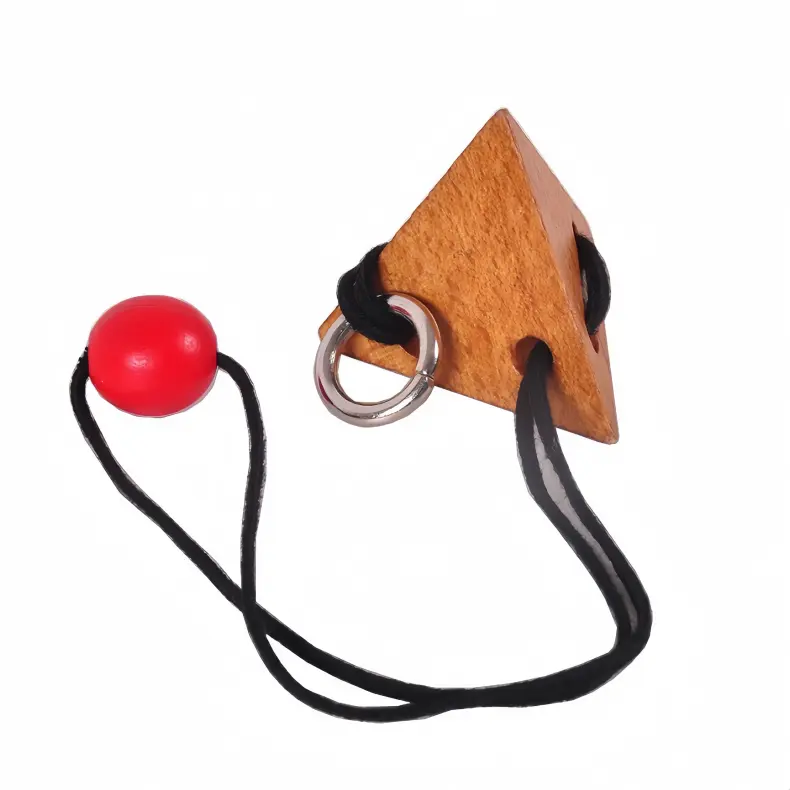
When you’re ready to test your new skills on a different topology, consider a puzzle like the one below. It presents a fresh spatial challenge, asking you to apply the same logical diagnostics to a new set of constraints, similar to following a step-by-step tutorial for a cast metal brain teaser.
Ultimately, display your solved Chinese Rings not as a finished trophy, but as a conversation piece—a testament to the timeless human delight in unraveling complexity. You have not hacked it; you have learned its language. The next time you pick it up, resetting it will feel like greeting an old friend whose intricate story you now know by heart.
Your hands have learned the pattern. Your mind understands the state. You are now, officially, a solver.
Puzzle Keeper’s Notes: Your Quick-Reference Questions
Now that the sword is free and you can confidently reset the rings, a few final, practical questions often arise. Here are the direct answers, based on over a decade of handling these cold metal loops.
Is this the puzzle from that one movie or TV show?
Yes. The 9-ring puzzle features prominently in the classic 1960s series The Prisoner (in the episode “Dance of the Dead”) and is a central plot device in the intense South Korean film Oldboy (2003). Its appearance as a tool of patience and mental fortitude is no coincidence.
Can a 12-year-old solve this, or is it too hard?
Absolutely. A motivated 12-year-old with this guide can solve it. The challenge isn’t raw intellect but patience and the ability to follow a recursive sequence—skills this puzzle beautifully teaches. I’ve seen middle-schoolers master the pattern faster than adults who overthink it.
Do I need to oil the rings to make them move smoother?
Rarely. Most modern zinc-alloy puzzles move smoothly when new. If yours feels gritty, a single, tiny drop of lightweight machine oil on the central loop where the rings ride can help. Wipe away any excess immediately to avoid a messy feel.
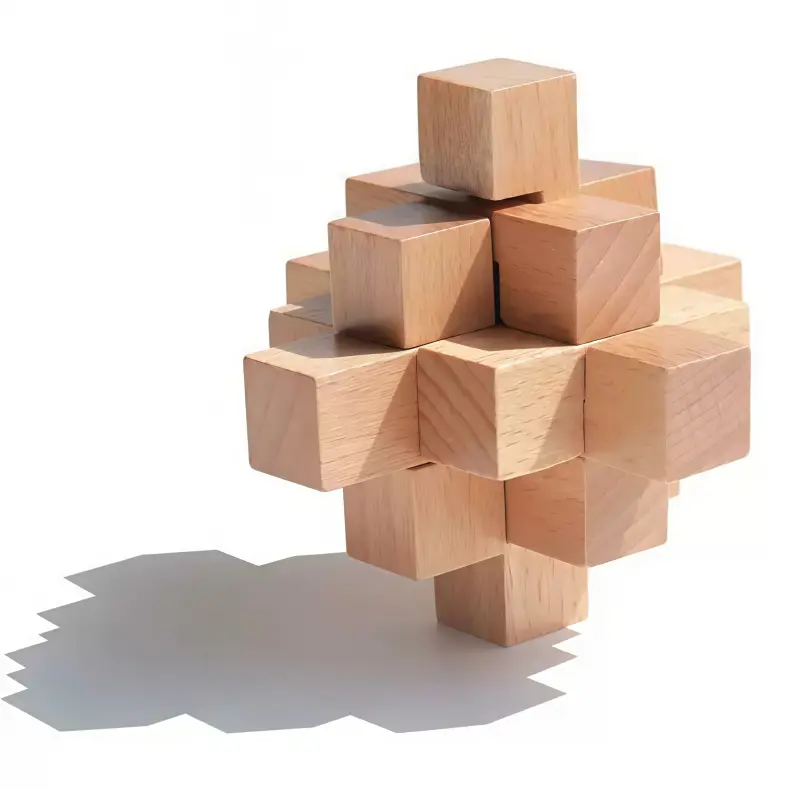
Jiutong Lock — $16.99
What’s the point if it just goes back together the same way?
The point is the journey, not the destination. Like a meditative kata, the value is in internalizing the clockwork algorithm itself—the 341-step code you have now cracked. That pattern is yours forever. Your next challenge? Find a more complex lock, like the interlinked trickery of a Jiutong Lock, and apply your new logical patience. The puzzle in your hand was just the beginning. For more on the vast world of these clever contraptions, you can explore broader classifications like those found in general puzzle collections, which often include similar sequential disentanglement problems (see examples in resources like this puzzle compendium).