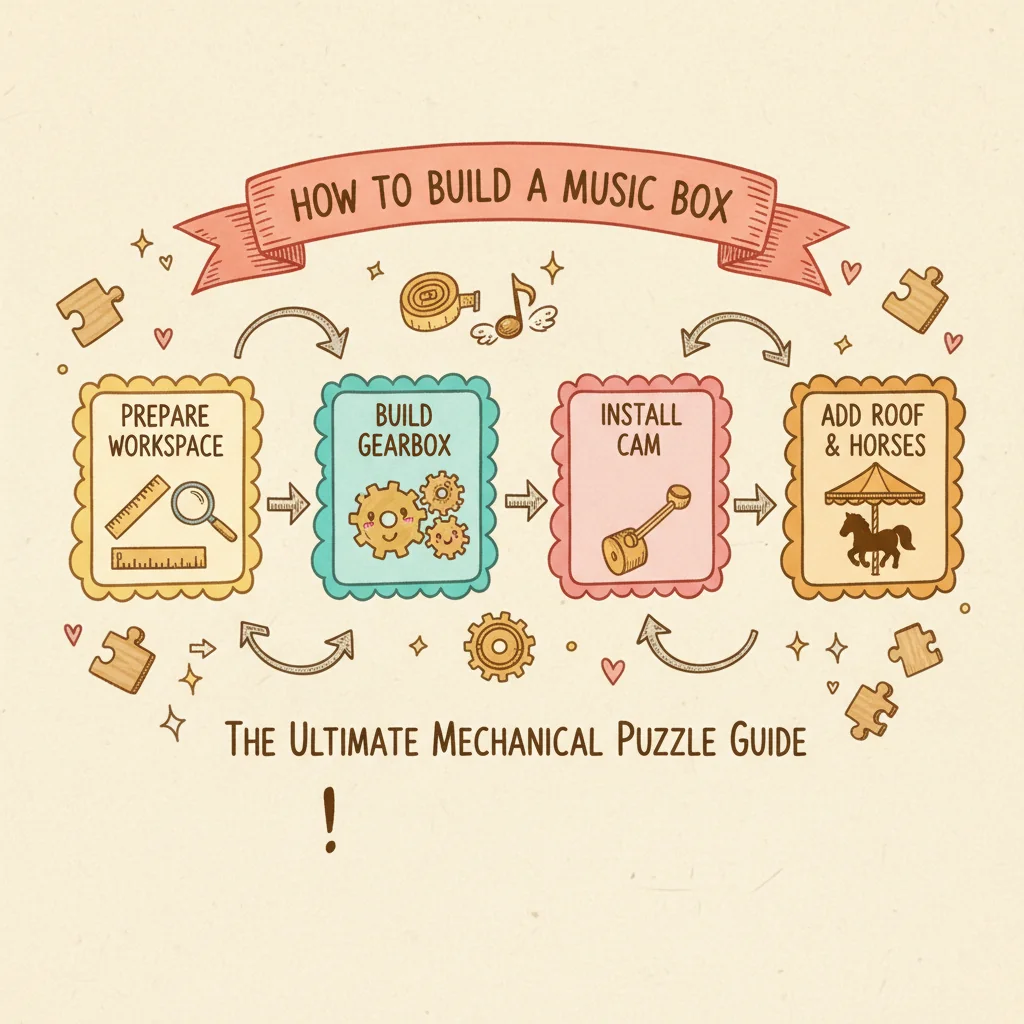
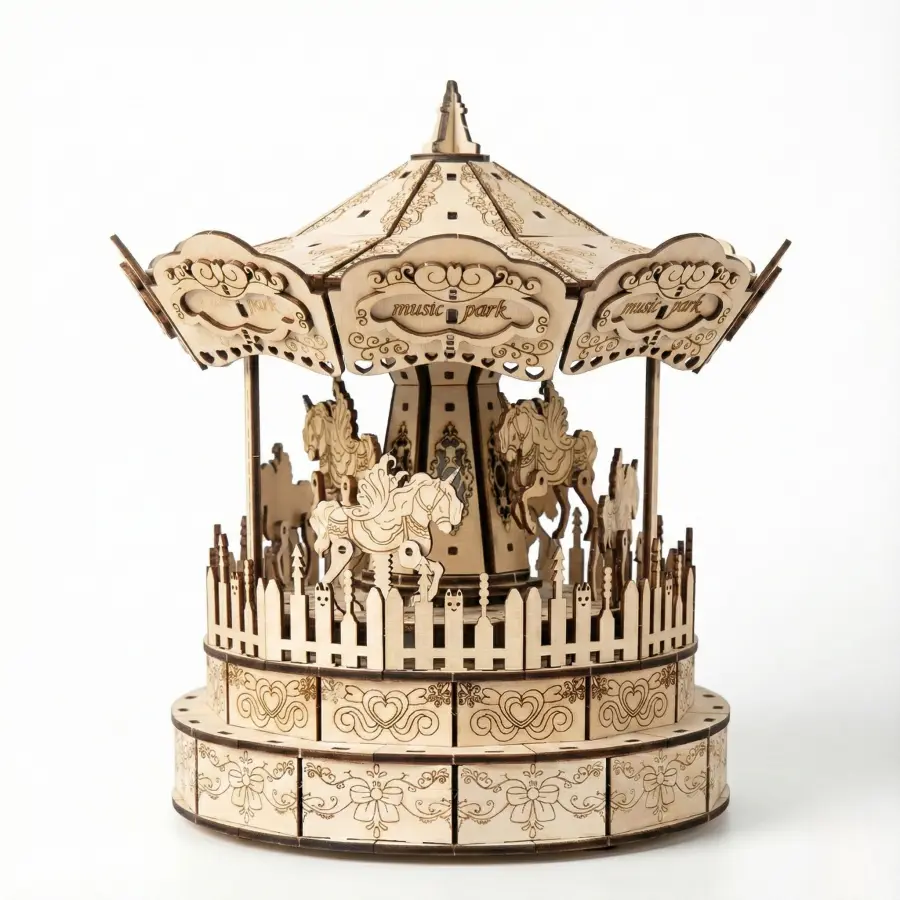
If you’re reading this, you’ve probably been staring at a beautiful pile of 281 laser-cut wooden pieces, wondering how this intricate jumble transforms into a spinning, musical carousel. Maybe you’ve started assembling and hit a wall, or perhaps the finished masterpiece is sitting before you, and you can’t get the mechanism to work smoothly. Take a deep breath. You’re not stuck; you’re just missing the method. This isn’t a simple snap-together model—it’s a precise mechanical puzzle that rewards patience and observation.
This guide is your hands-on companion. We’ll walk through the entire process, from unboxing to that first magical rotation, focusing on the tactile cues and logical sequences that guarantee success. The expected build time is 2–4 hours, but rushing is the enemy. The real solution isn’t just following steps; it’s understanding why each piece goes where it does. By the end, you won’t just have a stunning decorative piece; you’ll have mastered the mechanics behind it.
Quick-Answer Summary: To solve the 3D Wooden Carousel Music Box, follow a strict sequential, layered assembly: build the gearbox foundation first, install the main drive axle and meshing gears, add the rotating platform, then integrate the music box cam mechanism before closing the structure with the decorative roof and horses. Success hinges on ensuring gears mesh with 1-2mm of tooth depth and the music box actuator lever is cleanly engaged by the rotating cam. Never force pieces; if stuck, check for wood burrs or misalignment.
Before You Start: Setting the Stage for Success
Resist the urge to dive in. A successful build is 90% preparation. First, claim a clean, well-lit workspace with a flat surface. A dining table with a protective mat or a large desk is ideal. Good lighting is non-negotiable—you’ll be identifying subtle engravings and tiny connection points. Lay out all the wooden sheets and separate the pieces gently. Do not force them out; press evenly from the back to avoid snapping the delicate laser-cut tabs.
Gather your tools: the included sandpaper (for smoothing any stubborn nubs), a small bowl for organizing tiny parts, and your full attention. Clear the next few hours of distractions. This is a meditative exercise, not a race.
The most common misconception is that all pieces are interchangeable or that force is required. This puzzle operates on principles of precision engineering. Every piece has a specific orientation and mating partner. The core governing principle is sequential, layered assembly. You must build the foundation before the facade, the internal gears before the external decorations. Think of it like building a clock from the inside out.
Before touching anything, spend five minutes observing the wooden sheets. Notice the different patterns: some pieces have gear teeth, others have slots for axles, and many have tiny numerical engravings or directional arrows. These are your guides. The puzzle is already telling you how to solve it; you just need to learn its language. This process of observation before action is a cornerstone of mechanical puzzle-solving, a tradition explored in resources like the Wikipedia entry on puzzle boxes.
Step-by-Step Solution: Building the Mechanical Heart
Follow these steps in order. Each step builds upon the last, creating the internal framework that brings the carousel to life.
Step 1: Free and Sort All Pieces
Carefully pop out all pieces from their wooden frames. Do this over the provided plan sheet or a large tray to catch small parts. Sort them into loose categories: large base plates, small gears, long axles, decorative horses and mirrors, and the various structural walls. This initial organization saves countless minutes of searching later. Lightly sand any pieces with noticeable burrs or rough edges from the laser-cutting process, especially the edges of gear teeth and axle holes. I learned the hard way that skipping this sanding on a previous kit led to a gritty, grinding gear that nearly seized.
Step 2: Assemble the Central Gearbox Foundation
Locate the large, rectangular base plate. This is your foundation. Identify the four short, vertical support walls that have half-circle cutouts at their tops. These will hold the main drive axles. Slot these walls into their corresponding tabs on the base plate. They should fit snugly with gentle pressure—no glue needed. Ensure they are perfectly perpendicular to the base. This assembly forms the sturdy box that houses the primary gears.
- Checkpoint: You should now have a three-sided open box structure standing on the base plate. The half-circle cutouts on the two opposing walls should align perfectly. Run your finger along the top edges; they should be level.
Step 3: Install the Main Drive Gears and Axles
Find the two largest gears. One will have a square hole; this is the drive gear that connects to the wind-up key. The other is a transfer gear. Also locate the long, thin metal axle and the wind-up key mechanism.
1. Insert the metal axle through the aligned half-circles in the support walls.
2. Slide the square-holed drive gear onto the axle inside the gearbox, ensuring it sits flush against the inner wall.
3. Place the transfer gear so it meshes with the drive gear. It will rotate on a fixed pin on the base plate.
4. Finally, attach the wind-up key mechanism to the end of the metal axle protruding from the gearbox’s exterior side. It should click into place or be secured with a small provided fastener.
- Common Mistake: Forcing the gears. They should mesh smoothly. If they bind, check for stray wood fibers in the teeth or ensure the axle is seated fully in its half-circle mounts. A drop of beeswax on the axle ends can reduce friction.
- Checkpoint: Turn the wind-up key slowly. You should see the large drive gear turn the transfer gear smoothly and silently. If anything grinds or catches, stop and realign. This silent rotation is your first major win.
Step 4: Build the Carousel Turntable Platform
This is the rotating stage for the horses. Find the circular platform piece with a central hole and several smaller holes around the perimeter. Also find the small pinion gear that attaches beneath it.
1. Attach the pinion gear to the underside of the circular platform. It will fit onto a small dowel or peg.
2. Now, locate the vertical axle that rises from the transfer gear. Place the assembled carousel platform onto this axle so the pinion gear meshes with the transfer gear below. The platform should now sit level and spin freely when you turn the wind-up key.
- What to Feel: As you turn the key, you should feel consistent, moderate resistance—the sound of gears engaging, not grinding. The platform should rotate without wobbling. If it wobbles, the platform isn’t seated flat on its axle.
- Checkpoint: A few turns of the key should result in several rotations of the carousel platform. This confirms your gear train is correctly assembled and provides the “speed reduction” that makes the display last.
Step 5: Add the Decorative Horses and Upper Structure
Retrieve the intricately cut horse pieces and the slender support rods. Each horse consists of two mirrored sides. Slot them together, then attach them to the carousel platform by inserting the rods into the holes on the platform and the corresponding slots on the horses. They should stand upright and secure.
Next, assemble the ornate roof structure. This typically consists of a central spire and several arched frames. Follow the layered diagram, connecting the arches to the central spire before carefully lowering this entire assembly onto the central axle, above the carousel platform. It should lock into place, enclosing the mechanics but allowing the platform to spin beneath it.
- Common Mistake: Installing the roof before the horses, making it impossible to place the horses correctly. Sequence is everything. Another pitfall is forcing the roof assembly down; if it doesn’t drop into place easily, check for a horse rod blocking its path.
- Checkpoint: The structure should now look like a classic carousel. Gently spin the platform by hand to ensure no horse or rod interferes with the stationary roof. Listen for any scraping sounds.
Step 6: Integrate the Music Box Mechanism
Find the small, pre-assembled music box unit with a metal comb. There will be a lever or pin on this unit that needs to be actuated by a cam (a small, off-center disc) on one of the rotating axles.
1. Position the music box within the gearbox structure, usually in a dedicated slot.
2. Identify the cam on the main axle or a secondary axle. As the axle rotates, this cam should periodically lift and release the music box’s actuator lever.
3. Secure the music box in place. The actuator lever must move freely when touched by the cam.
- What to Observe: Manually rotate the wind-up key and watch the cam. It should cleanly engage and disengage the music box lever with each rotation. You may hear a faint click or pluck. If the lever only jiggles, the cam isn’t making full contact.
- Checkpoint: Wind the key fully and release. The carousel should turn and the music box should play its melody continuously until the spring unwinds. A silent spin means revisiting this step.
Step 7: Apply the Final Decorations and Mirrors
The final step is aesthetic. Attach the small, pre-cut mirror pieces to their designated spots on the roof and base. These often have a protective film—peel it off for a brilliant shine. Add any remaining decorative filigrees or crests. These pieces press-fit into place and complete the Victorian fairground illusion.
Your 3D Wooden Carousel Music Box is now complete. Wind the key, set it down, and watch the magic you built with your own hands come to life.
When You’re Stuck: Troubleshooting the Mechanism
Even with careful assembly, things can go awry. Here’s how to diagnose and fix common issues.
The wind-up key turns but nothing moves.
- Diagnosis: The gear train is disconnected. The square hole of the drive gear is not properly engaged with the metal axle, or the pinion gear under the carousel is not meshing with the transfer gear.
- Fix: Carefully remove the roof and carousel platform. Check that the drive gear is locked to the axle (it should turn with the key). Then, re-mesh the pinion and transfer gears, ensuring they interlock by at least 1-2mm of tooth depth. A flashlight helps see this engagement clearly.
The mechanism is very stiff or grinds loudly.
- Diagnosis: Friction or misalignment. A gear is pressed too tightly against a wall, an axle is bent, or wood debris is caught in the teeth.
- Fix: Stop winding. Inspect each gear pair for proper alignment. Gently sand the sides of any gear that appears to be rubbing on a wooden wall. Use a can of compressed air or a soft brush to clear any dust from the gear teeth. If an axle is bent (rare), you may need to contact the seller for a replacement.
The carousel rotates but the music box doesn’t play.
- Diagnosis: The cam is not properly engaging the music box actuator lever. This is the single most common post-assembly issue.
- Fix: Open the structure enough to see the cam and lever. The cam’s high point must make full contact with the lever to push it. You may need to slightly reposition the music box unit forward or backward by a millimeter. Do not bend the metal lever. Sometimes, the music box unit itself needs to be wound via its own small key on the side.
The music box plays erratically or slows the carousel down.
- Diagnosis: The music box spring is too tight, the mechanism is gummed up, or the cam is causing excessive drag.
- Fix: First, ensure the music box is not jammed against any other part. Let the music box run down completely, then re-wind it only halfway to reduce spring tension. If the problem persists, a single drop of lightweight lubricant (like sewing machine oil) on the music box’s internal gears only can work wonders. Apply with a toothpick, not directly from the bottle.
A decorative piece won’t fit or keeps falling off.
- Diagnosis: A tiny burr or nub is blocking the slot, or the piece is slightly warped.
- Fix: Use your sandpaper to gently smooth the connecting tabs on the loose piece and the inside of the slot it fits into. For warped pieces, hold them over steam from a kettle for a few seconds (do not soak), then press flat under a heavy book for an hour. Test-fit frequently.
The whole structure feels wobbly.
- Diagnosis: The foundational vertical support walls are not fully seated into the base plate, or a key structural joint is loose.
- Fix: Methodically press down on every major connection point, especially where the walls meet the base. Ensure all tabs are fully inserted into their corresponding slots. The structure should have no lateral flex when complete. If wobble persists, the surface it sits on may be uneven.
The Reassembly Challenge: Why It’s Harder (And How to Do It)
So you’ve disassembled it to move it or show a friend the inner workings, and now you can’t get it back together. Welcome to the second, often more difficult, puzzle. Reassembly is harder because you must reconstruct the precise spatial relationships and assembly order from memory, without the guide of numbered sheets. It tests whether you internalized the “why.”
The key is reverse engineering. Before taking anything apart, if possible, take photos of each stage from multiple angles. If you’re already stuck, start by grouping pieces by subsystem: all gearbox parts, all carousel platform parts, all roof trusses. Rebuild each subsystem independently on the table before attempting to integrate them. This modular approach breaks the problem into manageable chunks.
The most common reassembly hang-up is the gear meshing. Remember the principle: the gear train must be assembled in sequence inside the structural walls. You often cannot insert a gear into an already-closed box. This means rebuilding the foundation (Step 2), then adding the axles and gears (Step 3), then adding the next layer, and so on. I’ve found that reassembling the music box cam mechanism is the trickiest part; it requires dry-fitting the roof without fully locking it to observe the cam-lever interaction before final closure.
A pro tip: Use the music as your guide. If you can get the carousel to spin silently but the music doesn’t play, your cam-lever alignment is off. If the music plays but the carousel is stuck, your platform pinion gear is jammed. Treat reassembly not as a chore, but as the ultimate test of whether you truly understood the mechanism. Mastering this makes you not just a builder, but a true mechanic of your own creation. For more on the mindset needed for such challenges, our guide on solving intricate wooden puzzles without frustration offers valuable perspective.
What to Try Next: Your Puzzle Progression Path
The satisfaction of completing the Carousel Music Box is a powerful catalyst. If you loved the process of mindful assembly and mechanical revelation, here are your logical next steps, each offering a new type of challenge.
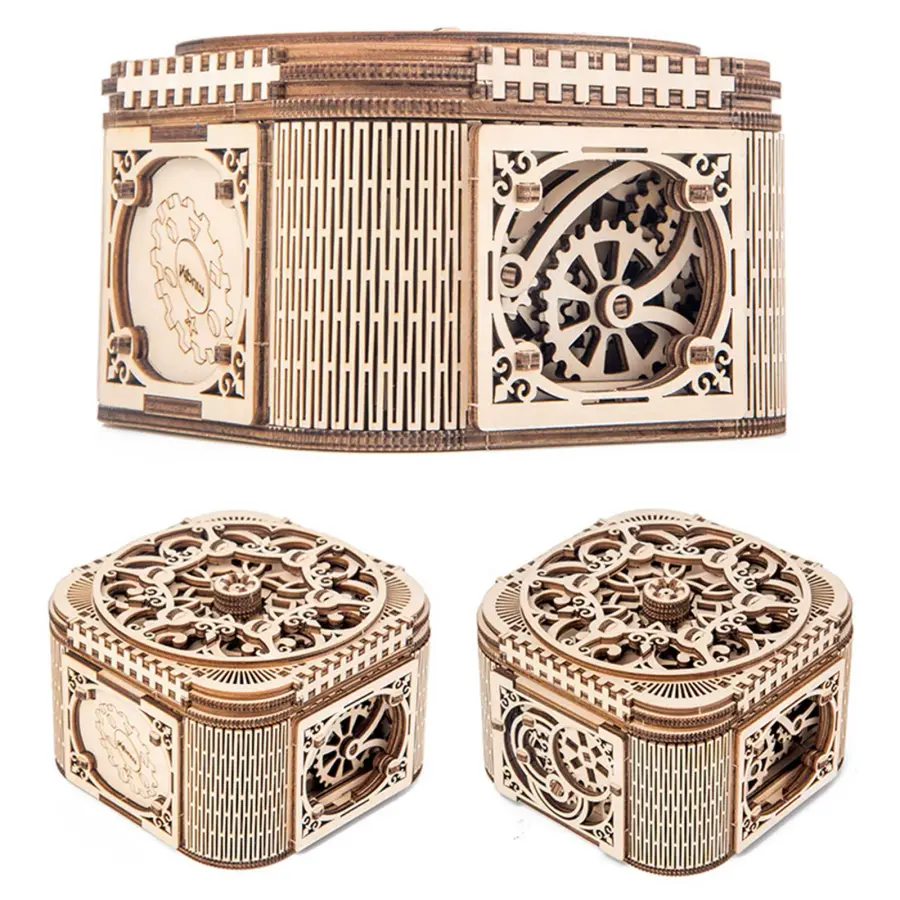
For a direct step up in functional puzzling, build the 3D Wooden Puzzle Treasure Box – Mechanical Jewelry Storage Gift ($29.99). It shares the laser-cut, glue-free assembly but focuses on creating a secure container with a mesmerizing visible gear lock on the side. It teaches you how rotational motion is translated into a linear locking action, deepening your understanding of practical mechanism design. After building a carousel, constructing a box with a secret feels like a natural progression.
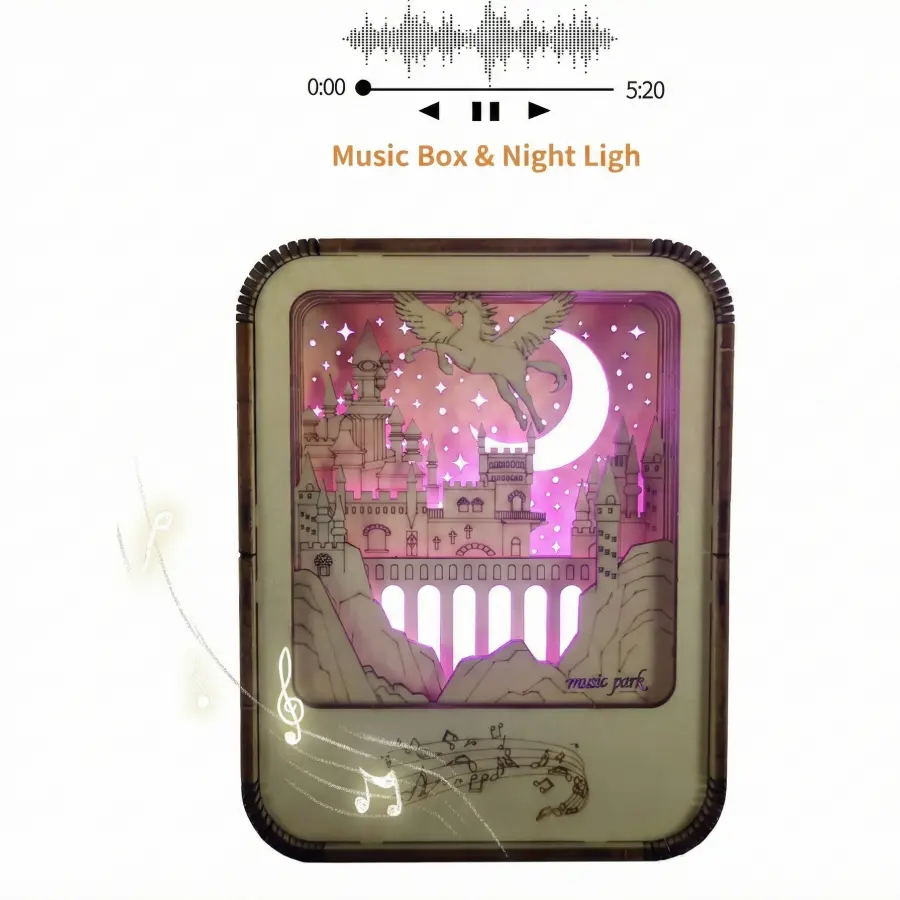
If the decorative and multi-functional aspect captivated you, the DIY Castle Music Box Night Light Shadow Box Kit ($33.99) is your next masterpiece. It involves assembling layered panels to create stunning 3D depth, while again integrating a music box and adding six-color LED lighting. It’s less about moving gears and more about architectural assembly and integrated electronics, expanding your skills into visual storytelling and circuit integration.
To train the pure problem-solving part of your brain—the part that visualizes how things fit together in space—shift to metal disentanglement puzzles. These are the calisthenics for your spatial reasoning and require zero assembly, just pure deduction.
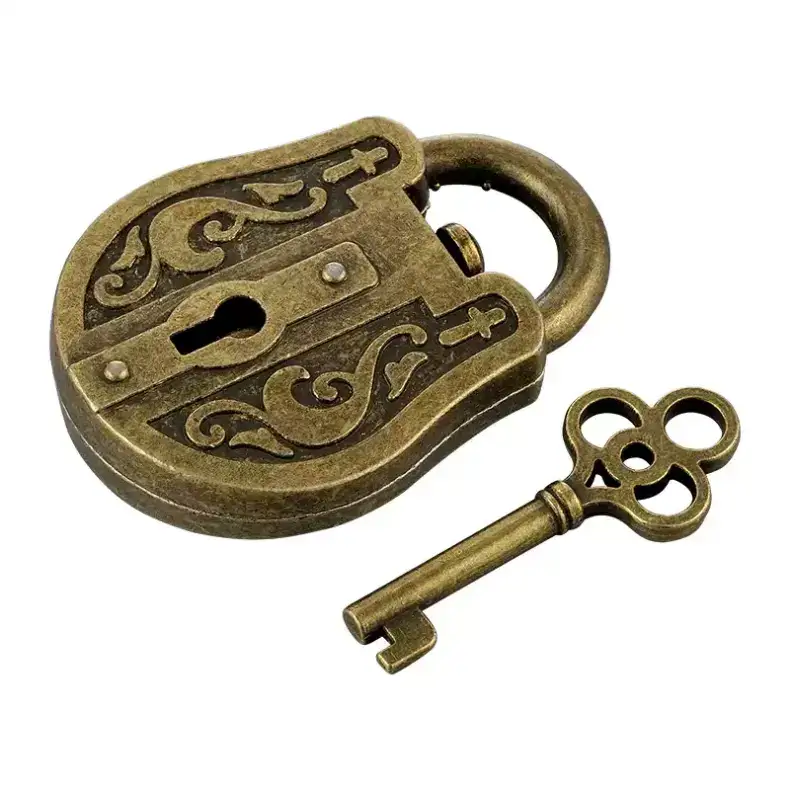
Divine Power Puzzle Lock — $12.98
The Divine Power Puzzle Lock ($12.98) is a historical brain-teaser with a rotating column and deceptive traps. Solving it requires understanding a sequence of moves where each action enables the next, directly mirroring the logic of sequential discovery in advanced puzzle boxes. It’s a compact lesson in misdirection and mechanical sequencing.
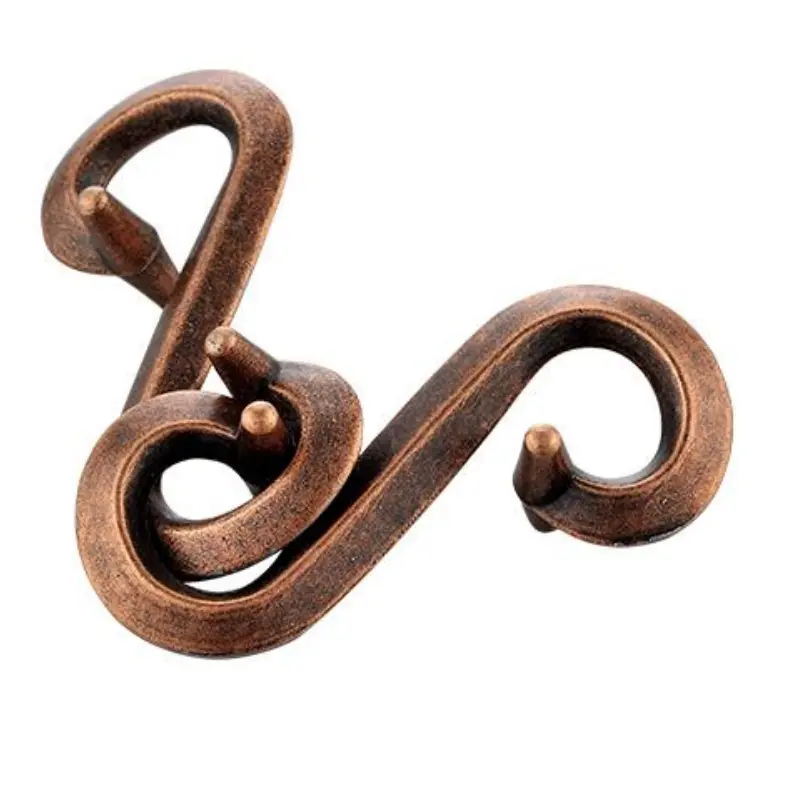
Alloy S Lock Puzzle — $10.99
For a minimalist, elegant challenge, the Alloy S Lock Puzzle ($10.99) is a classic. Two sleek pieces are interlocked in a seemingly impossible way. Finding the single axis of rotation and twist that frees them is a lesson in leverage and clearance that directly applies to designing moving parts within a confined box. Its solution is deeply satisfying in its simplicity.
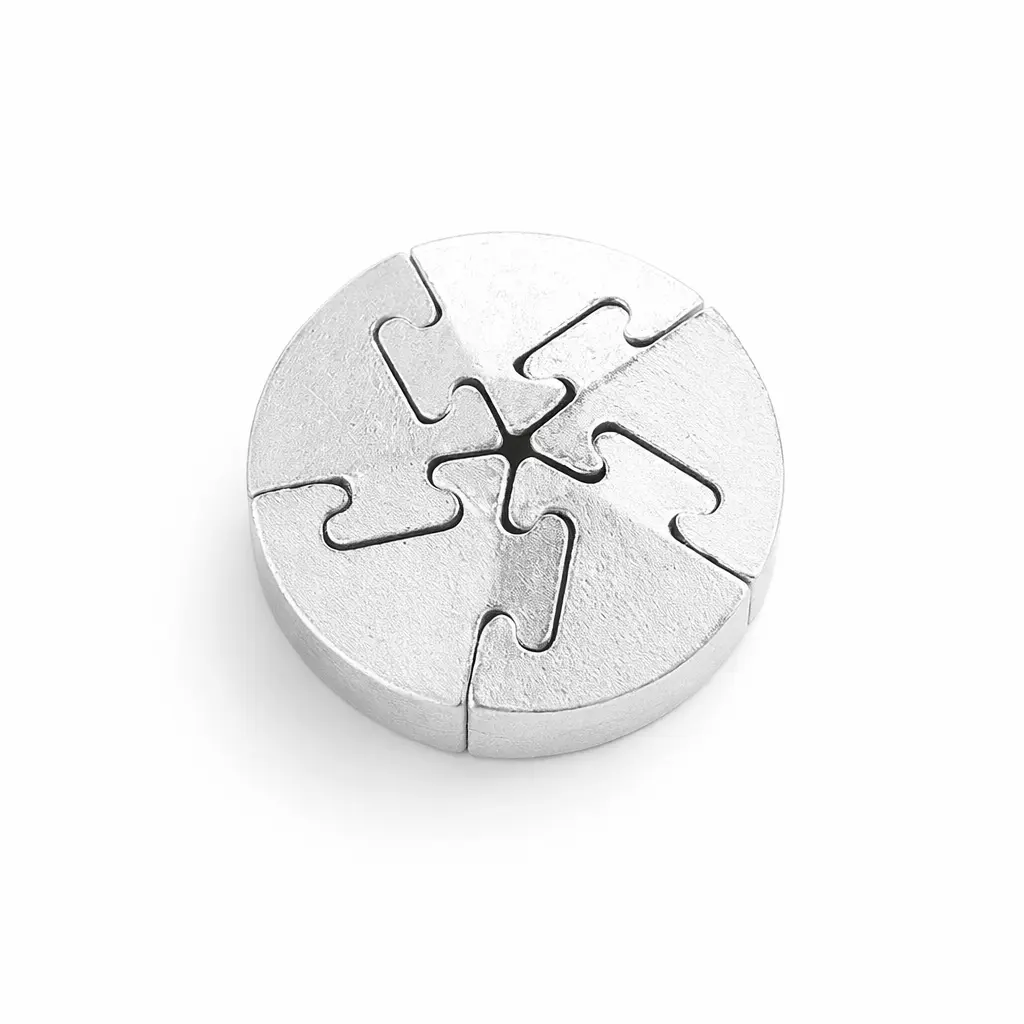
Finally, if you want to understand the fundamental principle of interlocking parts in its purest form, try the 5 Piece Cast Spiral Metal Puzzle. Five near-identical wedges form a solid disc. Finding the one that moves and the specific configuration to reassemble it is a masterclass in symmetry, observation, and tactile feedback. It’s a puzzle you can solve in minutes but will remember for years.
Understanding the “Why”: The Engineering Principles You Just Mastered
Completing the carousel does more than create a pretty object. You’ve intuitively learned core mechanical concepts. Recognizing them transforms you from a follower of instructions into a creator who can anticipate how things work. This understanding is what separates a puzzle assembler from a true enthusiast.
- Gear Reduction & Speed: The gear train you built (drive gear -> transfer gear -> pinion gear) is a simple speed reducer. The wind-up key turns a few times, but the smaller pinion gear, attached to the large platform, turns many more times. This is why a little winding creates a long, graceful spin. It’s the same principle in old clocks and modern transmissions—controlling output speed relative to input.
- Cam-Follower Mechanism: The cam on the axle lifting the music box lever is a classic way to convert smooth rotary motion into a timed, intermittent linear motion. Every time the cam’s high point passes, it triggers an event—in this case, plucking a tooth on the music comb. This mechanism is everywhere, from car engines (operating valves) to sewing machines (moving the needle bar). You’ve built a miniature version of a fundamental machine component.
- Modular, Self-Supporting Structure: The entire model stands without glue because of clever joinery. The tabs and slots create a monocoque structure, where the outer skin provides the strength. This is advanced woodworking and architectural design simplified into a puzzle. Understanding this helps you see why certain pieces must be placed in a specific order to lock the framework together—a concept directly applicable to designing your own simple puzzle boxes.
Grasping these principles makes you a better solver and opens the door to designing your own simple mechanisms. For a deeper dive into the history and ingenuity behind these concepts, exploring the historical development of mechanical puzzle boxes is fascinating. The carousel is a direct descendant of centuries of tinkerers and craftsmen, a lineage documented in resources like Britannica’s look at the craft of puzzle-making.
3D Wooden Carousel Music Box FAQ
How long should it take to assemble?
A first-time builder should allocate 3 to 4 hours for a relaxed, enjoyable pace. Rushing often leads to mistakes that take longer to fix. Experienced puzzle assemblers might complete it in 2 hours. The time is part of the therapeutic value—it’s a project for a quiet afternoon or a couple of focused evenings. If you find yourself taking much longer, don’t fret; it likely means you’re being meticulous, which leads to a better final result.
Is this puzzle suitable for beginners?
Yes, but with a caveat. It’s an excellent ambitious first project for a patient beginner. If you’ve never assembled a 3D puzzle before, you might start with a smaller, sub-100 piece kit to get a feel for the snap-fit assembly style. However, the instructions for the Carousel are typically pictorial and clear. If you are methodical, observant, and willing to proceed step-by-step without skipping ahead, you can absolutely succeed as a beginner. For foundational tips, our guide on approaching complex wooden puzzles with confidence can set you up for success.
Can kids build this alone?
This kit is recommended for ages 14+. Younger children can certainly help and contribute under close adult supervision, especially with sorting pieces and applying decorative elements. The fine motor skills and patience required for the gear assembly and axle placement are best suited for teens and adults. For a more kid-focused puzzle activity, you can explore simple craft-based puzzle box projects like those outlined by PBS Kids in their Create a Puzzle Box craft guide, which is a fantastic introduction to the concept.
What if I lose or break a piece?
First, don’t panic. Carefully check the packaging, your workspace, and the floor. Often, small pieces cling to the wooden frame sheets or get tucked under the instruction manual. If a piece is genuinely lost or arrives broken, contact the retailer (like Tea-Sip.com) directly. Reputable sellers often have spare parts programs or can provide digital templates for you to craft a replacement from thin wood. Taking a photo of the broken piece alongside the kit’s packaging usually speeds up the support process.
How do I maintain and clean the finished carousel?
Dust it gently with a soft, dry brush or a can of compressed air. Avoid using water or liquid cleaners on the wood, as it can warp the pieces or loosen the friction-fit joints. For the mirror pieces, use a microfiber cloth. To keep the mechanism smooth, you can apply a minuscule amount of dry graphite powder (used for locks) to the gear teeth and axles every year or so. Never use oil on the wooden parts themselves.
Why won’t my music box play after assembly?
This is almost always an alignment issue between the cam and the actuator lever, as described in the troubleshooting section. The lever must be moved through its full range of motion by the cam. Open the structure slightly to observe this interaction. Also, ensure the music box unit itself is fully wound. There is usually a winder on the side of the unit; give it several turns. If it still doesn’t play, the music box unit may be faulty and require replacement.
Can I glue the pieces for permanent stability?
It is strongly advised not to use glue. The design is engineered for a precise friction fit. Glue can warp pieces as it dries, prevent future repairs, and most critically, it can seep into the gear mechanisms and permanently freeze them. The satisfaction of this puzzle comes from it being a solid, functional object held together by engineering alone. If you desire a permanently fixed model, you’re better off buying a pre-assembled decor item. Gluing it defeats the purpose of the puzzle.
Is the finished model sturdy enough to handle?
Yes, once fully assembled, it is surprisingly robust. The layered wooden construction creates a strong lattice. You can pick it up and move it carefully by the base. However, it is still a delicate decorative item, not a toy. Avoid picking it up by the roof spire or the horses, and keep it away from direct sunlight or high humidity to prevent the wood from warping over time. On a stable shelf, it will last for years.
Where can I learn more about the mechanics inside?
To understand the broader history and principles of mechanical puzzles like this, reading about the fascinating engineering behind traditional puzzles is enlightening. For more hands-on guidance specific to wooden puzzles, our resource on solving complex 3D wood puzzles without frustration offers additional strategies and mindset tips. You can also learn about the intricate Japanese art of Yosegi-zaiku, which involves assembling wooden mosaics, a different but related craft of precision woodworking that shares the puzzle box’s heritage.
What’s the best way to wind and use it?
Wind the key slowly and steadily until you feel moderate resistance—do not force it past this point. Over-winding can damage the spring. Place the carousel on a level surface before releasing the key. For display, winding it once a day to enjoy a full cycle of music and motion is a perfect ritual. It makes for a wonderful, conversation-starting centerpiece. If you won’t use it for a long time, let the spring unwind completely to relieve tension.
Who This Puzzle Is NOT For (And What to Get Instead)
While the Carousel Music Box is a fantastic project, it’s not the perfect fit for every situation. Being honest about this saves time, money, and frustration. Making the right choice upfront ensures the puzzle experience is a joy, not a chore.
- For the Impatient Gift-Giver: If you need a last-minute, under-30-minute activity, this isn’t it. The recipient needs to want the build process itself.
- For Very Young Children: As noted, the fine details and patience required are beyond most kids under 12. Opt for a simpler, chunkier building set or a ready-made music box.
- For the Pure “Solver” Who Hates Instructions: If your joy comes exclusively from deducing a solution with zero guidance, this assembly kit will feel like following a recipe. Your thrill would be better served by a true sequential-discovery puzzle box or a non-intuitive metal brain teaser.
- For Someone Seeking a Durable Toy: This is a display model. If it’s for a high-traffic shelf where it might get knocked over or for regular play, it’s too fragile.
Alternatives by Scenario:
* Quick Satisfaction: A metal puzzle like the Alloy S Lock offers a solve measured in minutes, not hours, with that immediate “aha!” moment.
* Child’s First Build: Look for a family-friendly puzzle project with fewer than 50 pieces and larger components.
* Pure, Instruction-Free Challenge: The Divine Power Puzzle Lock provides a historical enigma to decode through experimentation alone, perfect for the solver who loves the struggle.
* Functional, Everyday Use: The Wooden Treasure Box becomes a usable jewelry storage item after its one-time assembly, blending puzzle fun with practical utility.
The Final Turn of the Key
Completing the 3D Wooden Carousel Music Box is an accomplishment that engages your hands, focuses your mind, and rewards your patience with a spectacle of motion and melody. You haven’t just assembled a kit; you’ve constructed a tiny, functional universe of gears and levers, proving that complexity can be mastered one precise step at a time.
That moment when the horses first begin their graceful spin, accompanied by the soft, familiar tune, is a small kind of magic—a magic you built. It’s a testament to the timeless appeal of mechanical puzzles: the joy of creating order from chaos and witnessing the hidden logic of the world click into place. This project stands as a beautiful reminder that some of the most rewarding experiences require us to slow down, observe, and build piece by piece.
Ready to begin your build or gift this experience to another curious mind? You can find the 3D Wooden Carousel Music Box ($43.99) right here. Set aside an afternoon, clear your table, and prepare for one of the most satisfying projects you’ll ever undertake. The solution, and the symphony, await.