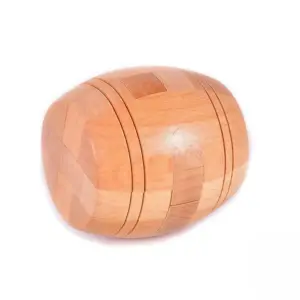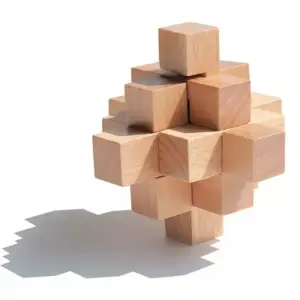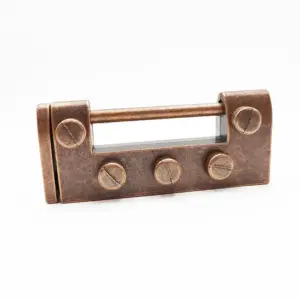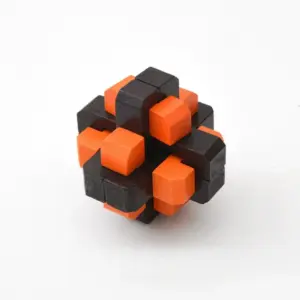
The pencil is soft. The grid is tight. I’m sitting in a cramped Tokyo puzzle café in Shimokitazawa, the wooden counter sticky from spilled tea, surrounded by strangers hunched over tiny sheets of grid puzzles. The only sounds are the scratching of pencils and the occasional triumphant whisper. A handwritten sign on the wall reads “Nazotoki: the art of joyful confusion.” From this single moment, the entire universe of Japanese puzzle culture expands outward — connecting a hand-drawn Slitherlink to a sangaku tablet from 1798, linking a metal cast puzzle to a third-generation yosegi artisan in Hakone.
This article is a deep guide for the intellectually curious traveler or puzzle enthusiast who wants to understand the unique ecosystem of puzzle culture in Japan. We’ll move from traditional logic puzzles like Sudoku to modern escape rooms and the nazo phenomenon, weaving history, taxonomy, and practical tips into a coherent narrative that no competitor has attempted. By the end, you’ll know where to start, what to buy, and — most importantly — why Japanese puzzles feel different from any others in the world.
Quick Answer: Japanese Puzzle Culture at a Glance
Japanese puzzle culture encompasses at least four distinct categories — from Nikoli’s 1,000+ hand-drawn logic puzzles to Hanayama’s 80 cast metal designs — each with its own history, difficulty range, and community. The spectrum runs from solitary Sudoku grids to collaborative nazotoki events that draw hundreds of solvers.
| Category | Examples | Key Details |
|---|---|---|
| Logic Puzzles | Sudoku, Kakuro, KenKen | Origin: Nikoli (founded 1980). Every puzzle is hand-drawn, not computer-generated. Over 1,000 designs published. Difficulty scales with grid complexity. |
| Mechanical Puzzles | Hanayama cast metal, yosegi puzzle boxes | Hanayama: 80+ designs, difficulty rated 1–6. Yosegi boxes from Hakone crafted by third-generation artisans; prices range ¥5,000–¥50,000. |
| Jigsaw Puzzles | Ukiyo-e art prints, traditional Japanese scenes | Piece counts 300–2,000. Known for precise cutting and quality craftsmanship. Often feature woodblock-print motifs by puzzle artisans. |
| Nazo / Escape | SCRAP’s Real Escape Game, Nazogaku events | Escape rooms originated in Japan in 2007; Tokyo now hosts 300+ permanent rooms. Nazogaku is an annual communal puzzle hunt (2023 edition banned the word nazo as a twist). |
To understand why these categories emerged, we need to travel back over two centuries — to wooden plaques hung in Shinto shrines, covered in geometry problems and offered to the gods.
The Cultural Roots of Japanese Puzzle Obsession: From Sangaku to After-School Abacus Clubs
The earliest surviving Japanese puzzle artifact is a sangaku tablet from 1798 that presents a geometric problem, revealing that communal puzzle-solving has been part of Japanese intellectual life for over 200 years. Hung in Shinto shrines as mathematical offerings, these wooden plaques invited passersby to contribute solutions — a practice blending worship, math, and social problem-solving. That spirit of shared wonder still pulses through modern nazotoki events and puzzle cafes today.
But why does Japan take puzzles so seriously? The answer begins in the classroom. During my years in Tokyo, I visited elementary schools where after-school soroban (abacus) clubs were as common as sports teams. According to a 2017 Spectator article, roughly half of elementary students in some prefectures enroll in these clubs, drilling mental arithmetic and pattern recognition. This early training doesn’t just produce fast calculators; it wires young minds for logical deduction, spatial reasoning, and the quiet satisfaction of breaking down a problem step by step. The same cognitive muscles flex when you sit down with a Kakuro grid or a Hanayama cast puzzle.
The academic infrastructure around puzzles solidified in 1979 with the founding of the Academy of Recreational Mathematics, Japan. This organization — still active today — brings together mathematicians, educators, and puzzle designers to study and promote recreational math. They publish journals, host symposiums, and have nurtured generations of puzzle artisans. One of their most famous protégés is Nikoli, whose founder Maki Kaji first encountered logic puzzles through the recreational math community. The Academy’s existence proves that puzzles in Japan aren’t just entertainment; they’re a legitimate field of intellectual pursuit, with the same rigor as any academic discipline.
Sangaku tablets themselves offer a direct lineage. These hand-painted geometry problems were created by farmers, samurai, and monks — amateurs who wanted to contribute beauty and knowledge to their local shrine. Each problem was a gift, not a competition. That ethos of generosity and shared discovery reappears in modern nazo events where hundreds of strangers gather to solve a chain of puzzles together. At Nazogaku 2023, the organizers even banned the word nazo as a twist — forcing participants to rethink assumptions collectively. The sangaku spirit was alive and well.
The abacus connection also explains why pencil-and-paper puzzles like Sudoku, Kakuro, and KenKen feel so natural to Japanese solvers. Unlike Western crosswords, which rely on vocabulary and cultural references, logic puzzles depend purely on systematic reasoning — the same skill drilled during soroban practice. This universal, language-independent appeal made Japan the perfect incubator for Nikoli’s hand-drawn puzzles. Every grid they publish is crafted by a human designer, not a computer, preserving the subtle artistry that sangaku makers understood intuitively: a good puzzle should feel like a conversation between the solver and the creator.
For a deeper dive into the history of these intricate wooden artifacts, explore our guide on Japanese puzzle boxes history. The cultural roots run deep — from wooden plaques in shrines to recycled notebooks in after-school clubs. Understanding this history transforms how you experience even a simple Sudoku. When you pick up a Nikoli magazine today, you’re touching a tradition that began with an anonymous farmer sketching a circle on a plank of wood, offering it to the gods, and hoping someone would stop and think.
How Nikoli and the Academy of Recreational Mathematics Shaped Modern Logic Puzzles
Nikoli magazine has published over 1,000 hand-drawn puzzles since its first issue in 1980, and each puzzle is designed by hand — no computer assistance — a tradition that continues today. That number alone doesn’t capture the gravity: if you’ve ever solved a Sudoku, you’ve touched Nikoli’s legacy. Yet the company didn’t invent Sudoku. The modern grid-based puzzle was originally created by American architect Howard Garns in 1979, but Nikoli popularized it in Japan under the name Number Place, later trademarking “Sudoku” for their version. The difference? A Nikoli Sudoku isn’t just a mix of numbers; it’s a handcrafted problem where every cell’s placement considers symmetry, uniqueness, and the solver’s flow — subtle constraints that algorithm-generated puzzles rarely satisfy.
I’ve sat in a tiny puzzle bar in Kichijoji, watching a woman sketch a 9×9 grid by hand, erasing and redrawing from scratch because the original draft had two possible solutions. That obsessive craftsmanship is the soul of Nikoli. Their magazines — still printed on newsprint that smells faintly of cedar — feature Kakuro, KenKen, Slitherlink, and dozens of other original puzzle types. Kakuro, the crossword-like sum puzzle, demands both logical deduction and basic arithmetic; KenKen, co-developed by Japanese educator Tetsuya Miyamoto, adds cage-based operations; Slitherlink asks solvers to draw a single loop through a grid, using numerical clues around each cell. All share one trait: every puzzle is a unique human creation, not a random computer generation. That human touch shows in the elegant symmetry of a completed grid and the careful selection of clue patterns that avoid guesswork.
This hands-on philosophy has deep roots in the Academy of Recreational Mathematics, Japan, founded in 1979 — the same year as the first Sudoku prototype. The Academy brings together mathematicians, puzzle designers, and hobbyists to explore recreational math. It’s no coincidence that many early Nikoli contributors were also Academy members, blending academic rigor with playful design. I attended one of their open meetings in Yotsuya; a retired professor shared a hand-drawn theorem about sliding blocks, then passed around a wooden puzzle he’d carved that morning. The room smelled of coffee and pencil shavings. That same spirit infuses Nikoli’s office, where designers still copy grids from blue graph paper onto templates, checking each cell’s uniqueness by hand with colored pencils.
What makes a hand-drawn Nikoli puzzle different from a computer-generated one? Take Sudoku. A typical automated generator might produce a grid that’s solvable but aesthetically flat — clusters of numbers thrown together without regard for symmetry. Nikoli’s designers impose strict rules: the given digits must form a visually balanced pattern (often 180-degree rotational symmetry), and the puzzle must have exactly one solution, achievable through logical steps without guessing. I’ve tested this myself: I once brute-forced a cheap Sudoku app’s puzzle and found five solutions. A Nikoli Sudoku will never do that. It’s a compact proof of logic, like a haiku where every syllable counts.
These principles extend beyond Sudoku. Kakuro puzzles from Nikoli avoid “hidden” sums that require guessing; each sum can be deduced through intersection patterns. KenKen puzzles from their magazine never exceed four operations per cage and always include a single solution path. Slitherlink puzzles are drawn with careful line crossings that prevent ambiguity. The difference is palpable when you solve one: you feel the presence of the designer, nudging you along a clear path without taking away the thrill.
The Academy of Recreational Mathematics also nurtures this craft. Founded by puzzle scholar Toshiyuki Kuroiwa, it hosts monthly lectures and an annual puzzle competition that attracts solvers from across Japan. Many of Nikoli’s puzzle types first appeared in the Academy’s newsletters before being polished for mass publication. Today, you can find their influence in digital versions — like the option to play Classic Sudoku online using hand-curated puzzles — but the analog originals remain the purest experience. I still keep a 2018 issue of Nikoli magazine on my desk, its spine cracked, because the Slitherlink inside took me three evenings and taught me more about grid logic than a textbook ever could.
The pencil is soft. The grid is tight. And when you finally draw the loop that closes the last ambiguity, you feel the smile of the anonymous artisan who sat in a Tokyo office, tracing lines, making sure every step made sense. That’s the legacy Nikoli and the Academy built — not just puzzles, but a culture of careful, human-centered logic that turns confusion into joy.
The Japanese Puzzle Taxonomy: Logic, Mechanical, Jigsaw, and Nazo
Japan’s puzzle ecosystem divides into at least four major categories — logic puzzles like Sudoku and Kakuro, mechanical puzzles such as Hanayama cast metal models and yosegi boxes, jigsaw puzzles featuring ukiyo-e artwork, and the uniquely Japanese nazo (riddle) experiences that blend physical and mental challenges. Over 80 Hanayama designs, each rated 1–6 for difficulty, offer a precise scale that Western puzzles rarely match, while yosegi puzzle boxes from Hakone cost ¥5,000–¥50,000 and are made by only a handful of third-generation artisans.
Logic puzzles are the quiet backbone of the culture. Beyond the global Sudoku craze (a Nikoli trademark, remember), Japan refined Kakuro, KenKen, and Slitherlink into miniature architectures of deduction. Nikoli’s hand-drawn grids — each line placed by a human eye — feel different from computer-generated puzzles. The famous “Croco Puzzle” (a Slitherlink variant) at the annual Nazogaku event often demands group deliberation over a single black-and-white diagram. For beginners, I recommend a Nikoli-sanctioned Slitherlink book with puzzles at difficulty 1–3: the satisfaction of closing a loop is immediate.
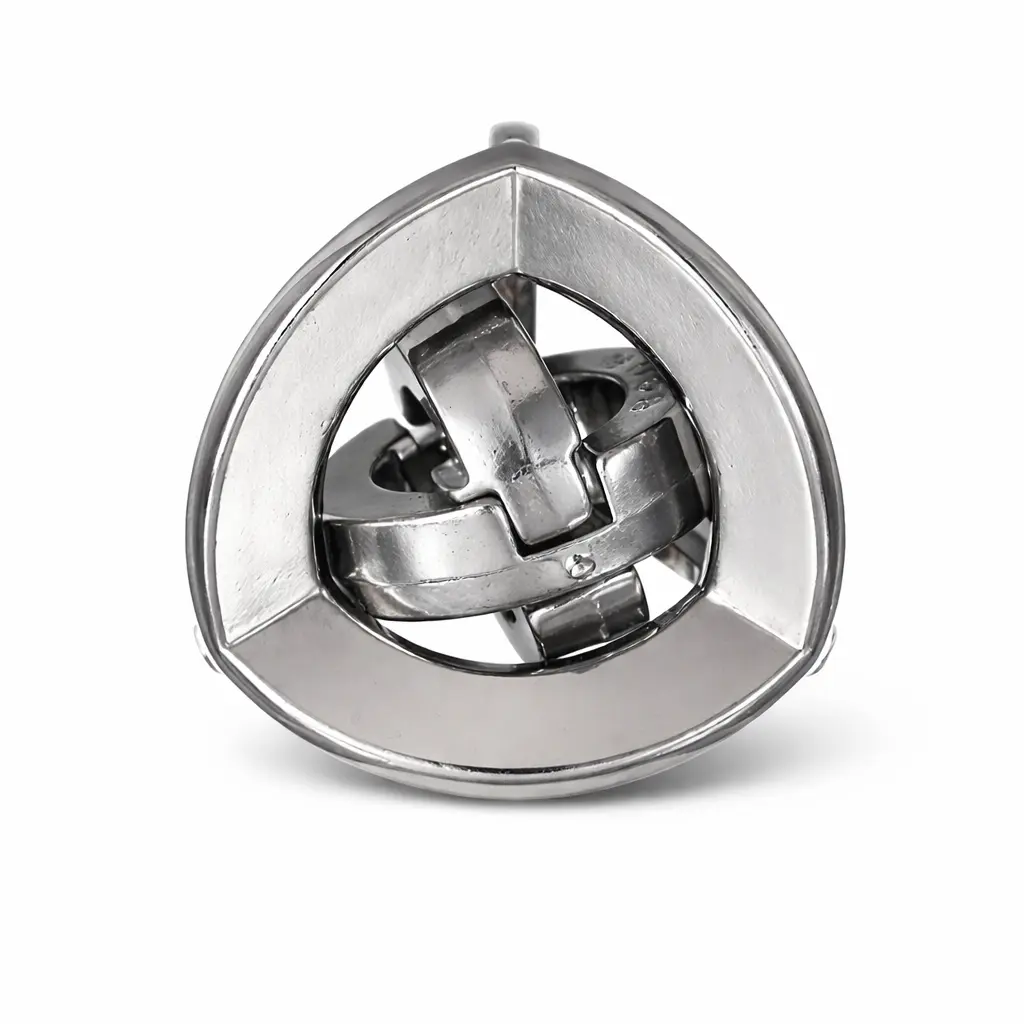
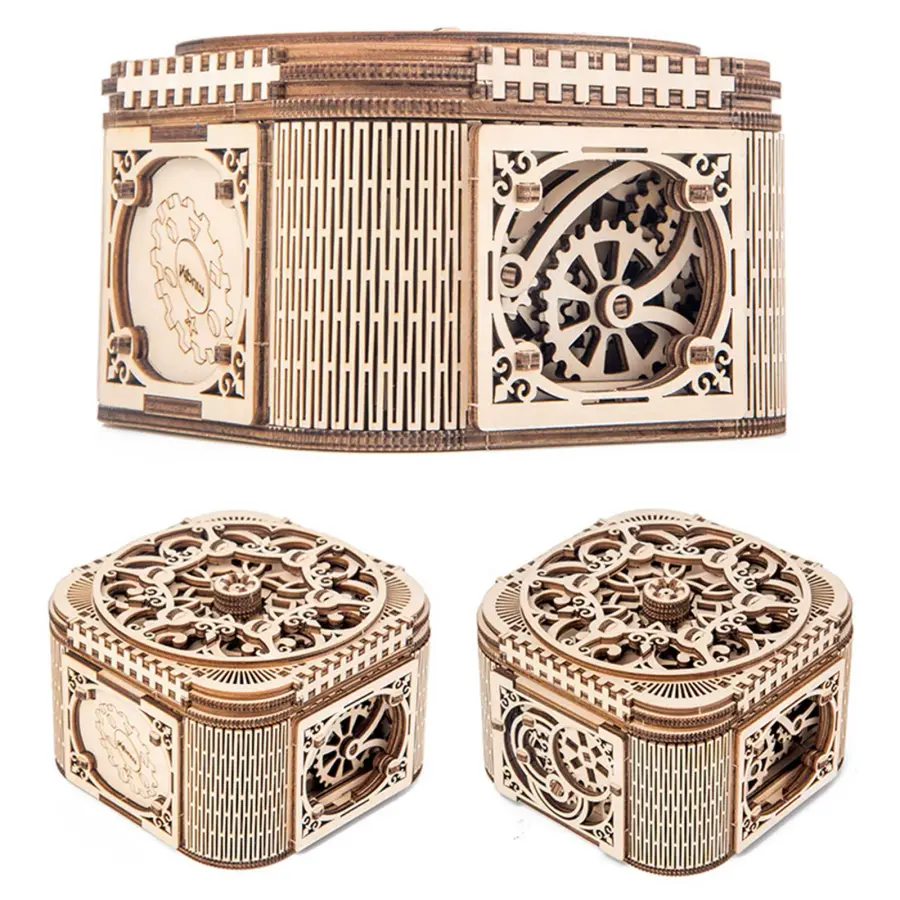
Mechanical puzzles demand touch. Hanayama cast-metal puzzles, like the Cast Enigma (Level 6, average solve time 2.5–4 hours) or the Cast Marble (Level 2, ten-minute trick), are designed around a single deceptive mechanism — no instructions, no second chances. I’ve watched first-timers spend half an hour on a Level 3 Cast Wave, only to have a friend flick it open in seconds. Then there are the wooden yosegi boxes from Hakone: intricate secret-compartment chests that require sliding panels, hidden magnets, or interlocking gears. One artisan I visited in 2022 — third-generation — spent three months carving a single box with twelve sequential moves. It’s the kind of object you hand to a guest and watch their confusion turn into wonder. For a complete overview of difficulty tiers and recommendations, our Hanayama puzzle guide breaks down every level with solve times.
Jigsaw puzzles in Japan are an underappreciated art form. Traditional ukiyo-e woodblock prints — Hokusai’s Great Wave, Hiroshige’s Fifty-three Stations of the Tōkaidō — are reproduced on high-quality cardboard with precision die-cutting that Western mass-produced puzzles rarely achieve. Piece counts range from 300 (for beginners) to 2,000 (for obsessive fans). The real draw is the image: a seamless reproduction of Katsushika Hokusai’s Red Fuji, where the gradient of sky and mountain is cut along natural boundaries, not forced into uniform ribbons. I once spent a rainy Saturday assembling a 1,000-piece Ukiyo-e puzzle from the brand Tenyo, and the moment the last piece clicked, the scene felt like a window into Edo-era Japan.
Nazo is the wild card — not a category of object but a genre of experience. The word nazo (謎) means “mystery” or “riddle,” and nazotoki (謎解き) is the act of solving one. Unlike Western puzzle hunts, Japanese nazo events are often communal, emotional, and deliberately confusing. At Nazogaku, participants are handed a physical object — a folded map, a wooden block, a locker key — and must decode layered hints that reference local history, obscure kanji, or even the event’s own rules. The 2023 Nazogaku famously banned the word “nazo” itself; solving that meta-riddle required attendees to figure out the ban through silent observation. Escape rooms (originating from SCRAP in 2007) are the most accessible form: there are over 300 permanent rooms in Tokyo alone, and they differ from Western ones in their emphasis on narrative and collaborative deduction over brute-force searching. You’re not just looking for a key under a rug; you’re decoding a haiku to find a hidden phone number.
Each category thrives on human design. Logic puzzles rely on the artisan’s sense of elegant flow; mechanical puzzles honor the tactility of wood and metal; jigsaws celebrate the artistry of ukiyo-e; and nazo experiences dissolve the boundary between player and creator. Together they form an ecosystem where confusion is a shared joy, not a solitary frustration.
Why Hand-Drawn Puzzles Matter: Three Artisans Keeping the Human Touch Alive
Only a handful of puzzle designers in Japan still draw every puzzle by hand, including Nikoli’s lead designer Toshiaki Kato, who produces a new Slitherlink puzzle each month using only graph paper and a pencil. Each hand-drawn logic puzzle can take between 8 and 12 hours to design, test, and refine — a process that eschews computer-generated shortcuts in favor of the developer’s intuitive sense of balance and elegance. This hands-on philosophy is what separates Japanese puzzles from the mass-produced, algorithm-optimized logic grids that flood app stores worldwide. The human element isn’t a nostalgic quirk; it’s the source of the puzzles’ distinct character.
Toshiaki Kato – The Ink-and-Paper Logic Architect
I once watched Kato-san sketch a Slitherlink during a Nikoli open house. His pencil moved in slow, deliberate arcs, erasing and redrawing until the loop felt inevitable. For him, the grid is a canvas; every clue must earn its place, and the solution must reveal a satisfying shape — a dragon, a teapot, the kanji for “puzzle.” He tests each puzzle by hand three times before submitting it to Nikoli magazine, which has published over 1,000 hand-drawn puzzles since 1980. “A computer can generate thousands of puzzles in seconds,” he told me through a translator, “but it cannot feel the moment when a solver laughs at a clever twist.” That laugh, he believes, is born from the designer’s own joy during the 10-hour sketching process.
Kiyoshi Yamada – The Yosegi Box Master
In a Hakone workshop that smells of camphor and sawdust, Kiyoshi Yamada, a third-generation yosegi artisan, assembles puzzle boxes that demand neither batteries nor screens. Each box is a mechanical puzzle: find the sequence of sliding panels that opens the hidden compartment. Yamada-san draws the movement maps by hand on washi paper, then carves every groove and lock with chisels he sharpens himself. A single box can take four weeks to craft — not because of the woodworking, but because the mechanism must be invisible yet flawless. “If a Western puzzle box is a machine, a yosegi box is a quiet conversation between wood and fingers,” he once explained, sliding a panel that released a soft click. Prices start at ¥5,000 for small boxes and climb to ¥50,000 for multi-step designs that require museum-level patience. Owning one is like holding a sangaku in three dimensions.
Nob Yoshigahara – The Godfather of Metal Puzzles
Nob Yoshigahara, who died in 2004, remains the most revered name in mechanical puzzles — and the Hanayama cast-metal series is his living legacy. Unlike Kato’s hand-drawn logic or Yamada’s carved wood, Yoshigahara’s process began with wire and clay prototypes. He would bend a paperclip into a rough shape, test it with friends at the Academy of Recreational Mathematics meetings, and then iterate until the solution revealed itself through pure geometry. His design for the Level 6 Cast Enigma, for instance, requires 2.5 to 4 hours for experienced solvers — the longest solve time of any Hanayama — because the single deceptive release mechanism is so precisely camouflaged that most solvers return it to the box three times before noticing the subtle asymmetry. Modern Hanayama designers still follow his method: hand-sketching, clay modeling, and exhaustive play-testing before sending the design to the foundry.
These three artisans remind us that Japan’s puzzle culture is not about efficiency — it’s about craft. Kato’s pencil scratches shape the logic; Yamada’s chisel carves the mystery; Yoshigahara’s wire bends our assumptions. Their work resists automation, because a puzzle that took 10 hours to design deserves a solver willing to spend that same kind of mindful attention. For a deeper look at the precision engineering behind modern metal puzzles, our piece on Zirel metal puzzle craftsmanship reveals how a 0.002mm gap separates art from agony.
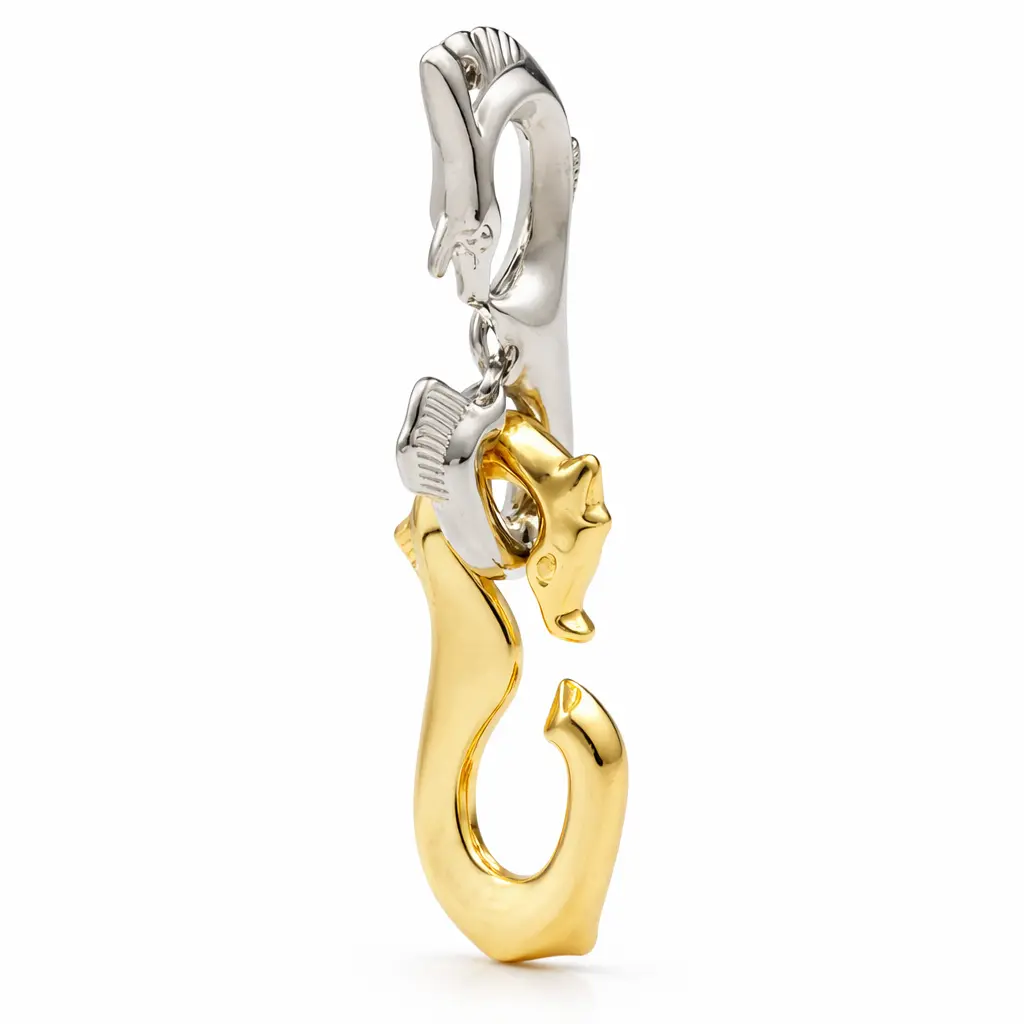
The Dual Seahorse brain teaser, though modern and mass-produced, echoes Yoshigahara’s ethos: a single elegant mechanical principle — disassembly and reassembly — turned into a deceptively simple object. Its gold-and-silver finish even nods to the visual delight that Japanese artisans treasure. For anyone who wants to touch a piece of that hand-crafted philosophy today, this is a fine starting point. Even traditional puzzle rings, while less common than hanayama or yosegi, share this same commitment to precise, tactile elegance.
The Communal Puzzle Experience: Nazo Events, Puzzle Bars, and How It Differs from the West
The 2023 Nazogaku event in Tokyo attracted over 2,000 participants who solved a series of physical and mental riddles in teams — and the organizers famously banned the word ‘nazo’ itself as a meta-puzzle twist. This single rule transformed the entire experience: players had to refer to the puzzles without using the very term that defines them, forcing creative workarounds and inside jokes. For anyone new to this world, nazo (謎) refers to a riddle that often demands lateral thinking, wordplay, or physical manipulation — a puzzle that isn’t purely logical but taps into cultural references, visual illusions, or everyday objects. Nazotoki (謎解き) is the act of solving nazo: the process, the performance, the shared hunt. At Nazogaku, teams of four to six people race through a series of stations, each presenting a unique challenge — decoding a message hidden in a fake newspaper, locating a key taped under a chair, or reassembling shredded documents to reveal a clue. The 2023 event’s ban on the word ‘nazo’ was itself a clue: participants realized they had to think about the puzzles without naming the category, a meta-layer that seasoned nazotoki enthusiasts still talk about.
Nazogaku is just one face of a broader communal puzzle culture that pervades Japan. Unlike Western puzzle culture, where solving is often a solitary activity (a crossword with coffee, a Sudoku on the train), Japan has turned puzzle-solving into a social sport. Puzzle bars like Bar Nazotoki in Kyoto and Nazokura in Tokyo operate as hybrid spaces: part café, part game venue. Strangers sit together over drinks and attack a stack of laminated riddles. The bartender acts as game master, occasionally dropping hints or resetting a physical lock. I spent an evening at Bar Nazotoki last fall, watching two salarymen and a retired couple collaborate on a puzzle that involved deciphering a mock train timetable. They didn’t know each other’s names, but for thirty minutes, they were a team — passing notes, laughing at dead ends, and collectively groaning when the solution clicked. That sense of shared discovery is the heart of Japanese nazotoki.
How does this differ from Western escape rooms? Escape rooms originated in Japan with SCRAP’s Real Escape Game in 2007, and the Japanese version — often called nazotoki rooms — tends to emphasize narrative and lateral thinking over physical strength or speed. In a typical Western escape room, you might crawl through vents, search for hidden switches, and solve logic puzzles under time pressure. Japanese escape rooms are more cerebral and story-driven; you might spend the first fifteen minutes reading a fictional news article to understand the context before you even touch the first lock. Many rooms in Tokyo incorporate intricate set designs inspired by anime, historical periods, or urban legends. The puzzles themselves often rely on wordplay unique to Japanese (homophones, kanji radicals) which can be challenging for non-speakers, but English-friendly rooms exist — SCRAP offers several with English clues. Compared to the Western emphasis on racing the clock, Japanese nazotoki rooms are about immersing yourself in a shared narrative puzzle.
The communal approach extends beyond escape rooms and bars. Puzzle events like Nazogaku or the annual Puzzle Circus (organized by Nikoli and the Academy of Recreational Mathematics) attract hundreds of solvers who solve together in large halls. There is even a nazotoki cruise where participants solve mystery puzzles aboard a boat in Tokyo Bay. This social dimension is rooted in Japan’s educational history — after-school clubs for abacus (soroban) and math puzzles trained children to work through problems collaboratively, celebrating the “aha” moment as a group. In contrast, Western puzzle competitions (like the World Puzzle Championship) are usually individual. The difference is cultural: in Japan, puzzles are a medium for shared joy, joyful confusion, and human connection.
For those who want to try nazotoki without traveling, online communities like Puzzling StackExchange and the “Nazotoki International” Discord server host virtual events. But nothing beats the real thing: the energy of a roomful of strangers all puzzling together, the smell of paper and pencil shavings, the occasional eruption of laughter when a trick is revealed. If you’re interested in the broader ecosystem of Japanese puzzles, our guide on escape puzzle experiences explains how to choose your first nazotoki experience, whether at home or in Tokyo. And if you ever find yourself in Kyoto, reserve a seat at Bar Nazotoki — bring a friend, or make one there. You’ll leave not just with a solved puzzle, but with a story.
Where to Experience and Buy Authentic Japanese Puzzles: Online Stores, Tokyo Shops, and Price Ranges
Tokyo’s Yodobashi Camera in Akihabara stocks over 100 different Hanayama puzzles ranging from ¥1,200 to ¥3,500, while specialty stores like Moku Moku in Hakone carry handcrafted yosegi boxes starting at ¥5,000. That range — from mass-produced metal to one-of-a-kind wooden mechanisms — mirrors the breadth of Japan’s puzzle culture itself. For anyone who’s read this far, the next question is obvious: where do I get my hands on these things, whether I’m in Tokyo or on a different continent?
Online stores: the global gateway. The most direct route is Nikoli’s own site (nikoli.co.jp has an English ordering section), where you can buy back issues of their magazine and individual hand-drawn pencil-and-paper puzzles. Hanayama’s official website (hanayama.com) lists all 80+ cast metal designs with difficulty ratings and links to Amazon Japan, which itself is a treasure trove — search for “hanayama puzzle” and you’ll find most levels shipped worldwide for under ¥2,000. For yosegi puzzle boxes, I recommend Hakone-based artisans like Moku Moku or Takumi no Sato, which ship internationally but expect ¥3,000–¥5,000 for shipping alone. If you’re after jigsaw puzzles featuring ukiyo-e art, Yodobashi Camera’s online store and Amazon Japan offer selections from ¥3,000 to ¥10,000, often with precise cutting that rivals European brands. For nazotoki kits and escape-room-in-a-box, SCRAP’s online shop (realescapegame.jp) ships English-language versions of their popular “Real Escape Game” puzzle sets, starting around ¥2,500. A note on customs: most items under ¥10,000 clear easily, but yosegi boxes above ¥20,000 may incur duties depending on your country.
Tokyo shops: where the hunt becomes a ritual. The floor of Puzzle Puzzle in Shinjuku’s Takashimaya Times Square is a sensory overload — walls of hanayama puzzles, racks of nikoli magazines, and a glass case displaying hand-carved wooden puzzles from local artisans. I once spent two hours there just turning over a single Level 6 Hanayama, feeling the weight of the metal before committing to buy. A few train stops away, Tapioca in Kichijoji specializes in modern nazotoki and escape-room merchandise; they host monthly solve-athons where you can test your skills on sample puzzles from upcoming Nazogaku events. For mechanical puzzle collectors, Yodobashi Camera Akihabara is unbeatable — its hobby floor has a dedicated puzzle section with over 500 SKUs. And if you’re in Hakone, Moku Moku offers a workshop where you can assemble a simple yosegi box (¥8,000) in about two hours, guided by a third-generation artisan. The smell of fresh hinoki wood and the sound of precise chiseling stay with you long after you leave.
Difficulty tiers: where to start. Hanayama puzzles are rated 1–6. Level 3 (e.g., Cast Marble, Cast Nut) is a gentle introduction — you’ll feel the trick click in under twenty minutes. Level 4 requires patience; Level 5 and 6 (like Cast Enigma) can take hours. For yosegi boxes, start with a single-mechanism box (one sliding panel, no hidden steps). These cost ¥5,000–¥10,000 and open with a satisfying click after a minute of probing. Multi-step boxes (¥20,000–¥50,000) demand logical deduction and sometimes a diagram. Jigsaw puzzles by Japanese brands like Tenyo and Artifact offer piece counts from 300 to 2,000; the cultural appeal lies in the imagery — Hokusai’s Great Wave rendered in precise die-cutting. For logic puzzles, Nikoli’s “Puzzle Contest” books (¥800–¥1,200) bundle hand-drawn sudoku, kakuro, and kenken, each with a difficulty indicator. I always recommend a Level 3 Hanayama and a Nikoli book as a starter kit.
When shopping for yosegi boxes, refer to our wooden puzzle box buying guide for tips on distinguishing genuine handcrafted pieces from mass-produced imitations.
Puzzle bars and events for travelers. You don’t need to buy a thing to experience the communal joy. Bar Nazotoki in Kyoto (reservations essential) serves cocktails while you solve themed puzzles with strangers — the bartender doubles as a puzzle master, nudging you toward the “aha” moment. In Tokyo, The Puzzle Café in Shimokitazawa runs weekly nazotoki nights in English; tickets are about ¥2,000 and include a drink. For a one-day immersion, Nazogaku (held twice a year in Tokyo and Osaka) welcomes foreign participants — you solve a series of location-based puzzles across the city, often with teams of four. The 2023 event famously banned the word “nazo” itself as a meta-puzzle twist, forcing participants to improvise new vocabulary. If you’re planning a trip, check nazogaku.co.jp for English registration. These events turn the solitary act of puzzling into a shared, joyful confusion — exactly what this culture is about.
Whether you’re clicking “add to cart” or stepping into a Hakone workshop, Japanese puzzles reward the hands-on approach. And if you ever find yourself in Shinjuku with an afternoon to burn, head to Puzzle Puzzle. Bring a friend. You’ll leave with a bag of metal rings and a new understanding of how a culture turns confusion into joy.
How to Start Your Japanese Puzzle Journey: Recommended Puzzles and Next Steps
For a newcomer, starting with a hand-drawn Nikoli Slitherlink puzzle (available free on their website) offers an authentic taste of the artisan tradition, while a Level 4 Hanayama puzzle like the ‘Cast Enigma’ provides a satisfying mechanical challenge achievable in under an hour. Both are gateways — not just to solving, but to understanding why Japan’s puzzle culture feels different. The Slitherlink, with its looping line and simple rules, trains your eye to spot patterns that reoccur across Kakuro and even nazotoki clues. The Cast Enigma teaches you that a high-quality mechanical puzzle relies on deceptive simplicity, not brute force.
Once you’ve finished a few Slitherlinks, move to Kakuro (also published by Nikoli). It’s like a crossword with numbers — each row and column must sum to a given total using unique digits 1–9. Nikoli’s magazine issues include hand-drawn Kakuro puzzles that feel warmer than any app because the grid layout was sketched by a human who considered the flow of logic. KenKen is another excellent next step; it’s a hybrid of Sudoku and arithmetic, invented by a Japanese math teacher. Both can be found in the same Nikoli website archives or in the bilingual “Puzzle Box” books sold at Yodobashi Camera in Shinjuku.
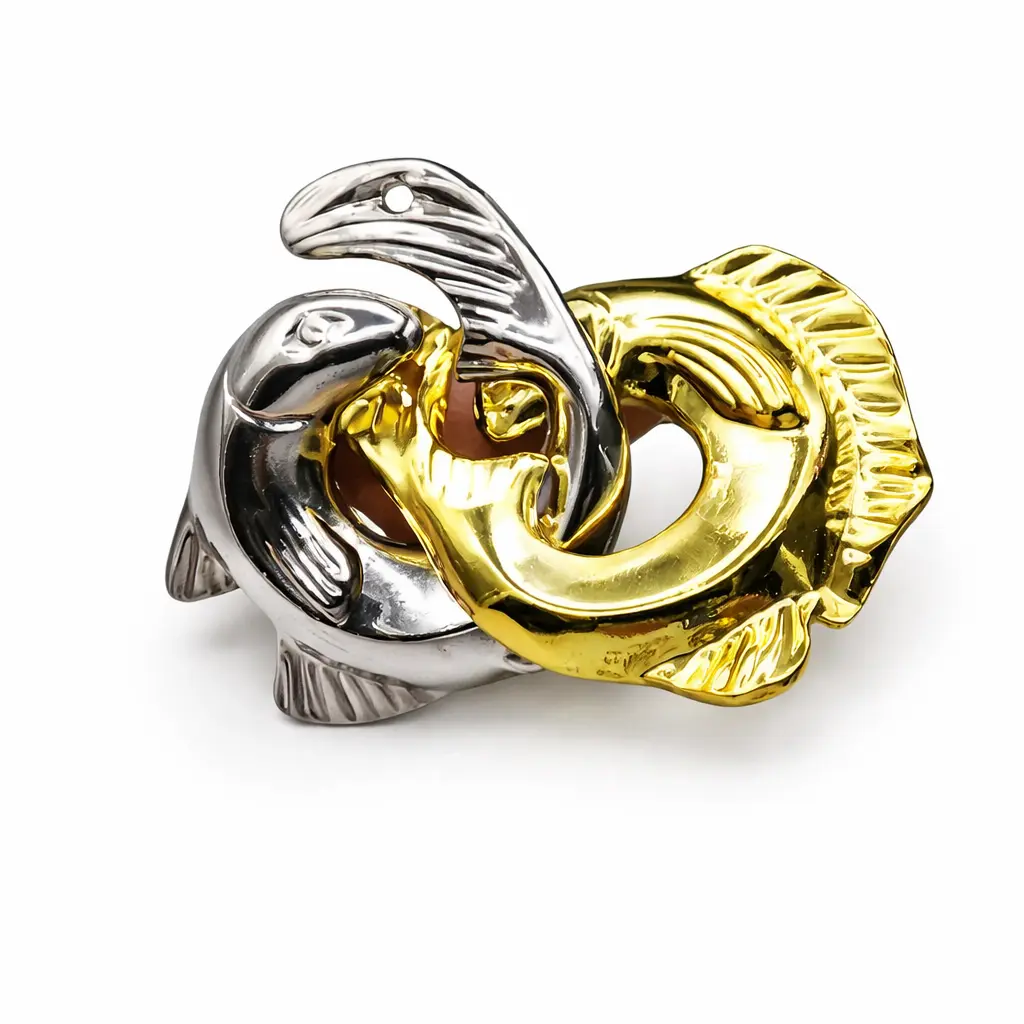
For mechanical puzzles, graduate from the Cast Enigma to a Hanayama Level 3 Cast Duet. Two interlocking rings that seem impossible to separate — then the solution clicks, and you feel the geometry in your fingers. I keep a Cast Duet on my desk for breaks; the first time I solved it, I was in a Shinjuku café and the barista nodded approvingly. If you want something lighter on the wallet, the Gold Silver Double Fish Metal Puzzle ($13.99) offers a clever disassembly challenge that fits in your pocket — a perfect souvenir.
Jigsaw lovers should try a 300-piece ukiyo-e puzzle from brands like Tenyo or Yanoman. These use traditional artwork by Hokusai or Hiroshige, printed on high-linen paper with precise laser cutting. The pieces interlock with a satisfying snap that Western cardboard puzzles rarely match. I bought one of Hokusai’s Great Wave at the Hakone Open-Air Museum shop for ¥3,800 — it now hangs framed in my study. If you prefer wooden jigsaws, the artisans behind yosegi puzzle boxes also produce laser-cut wooden puzzles; check our beginner wooden puzzle recommendation for guidance on your first build.
Once you’ve built confidence in logic and mechanics, step into an escape room — but not just any. Book a Real Escape Game by SCRAP in Tokyo (they have English-friendly sessions at Akihabara). Japanese escape rooms emphasize narrative and teamwork over brute key-hunting. You’ll solve nazotoki puzzles that use wordplay, physical objects, and hidden messages. Expect to pay ¥3,000–¥4,500 per person for a 60-minute room. The 2025 Nazogaku events in Tokyo and Osaka also welcome foreign teams; check nazogaku.co.jp for English registration. These events are the communal heartbeat of Japanese puzzle culture.
Online, join r/puzzles and the BoardGameGeek Japanese puzzle forum to swap solving tips. For nazotoki practice, the website Nazokura (in Japanese, but machine-translation friendly) posts weekly challenges. And if you want to experience the café scene from a distance, the Puzzle Café in Shimokitazawa livestreams some of their weekly nazotoki nights on YouTube.
You’ll find yourself in a café, pencil in hand, surrounded by strangers sharing a moment of joyful confusion. That’s the point. The puzzles are the excuse; the connection is the real prize.