The Silent Challenge on Your Desk: More Than a Paperweight
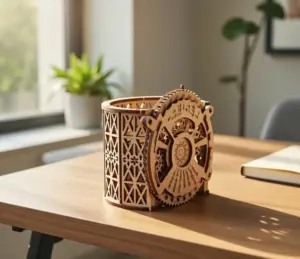
It has a weight you don’t expect. Solid, but not heavy. You pick it up, and your palm registers the smooth, cool touch of the wood grain. There’s a faint, earthy scent—laser-cut birch plywood or maybe solid mahogany—that feels both modern and ancient. You set it back down on your desk. It sits there, a flawless geometric shape, a miniature monument. But it’s not silent. Its very presence is a question.
Is it art? A sculpture of a Mayan pyramid, all clean lines and precise angles. Is it a vault? The term “wooden puzzle lockbox” whispers in your mind, suggesting a hidden secret within. Or is it something else entirely? The answer, frustratingly and delightfully, is that you have to solve it to find out. This is not a paperweight. It is an invitation.
This specific breed of pyramid puzzle box is a world apart from the 3D puzzles you might remember. Those are about assembly, following instructions to build a static model. This is about deconstruction. Your goal is not to build the pyramid, but to enter it. To find the secret compartment cleverly engineered into its core. The first clue is the utter absence of clues. There are no visible hinges, no keyholes, no apparent seams. Just a silent, wooden enigma.
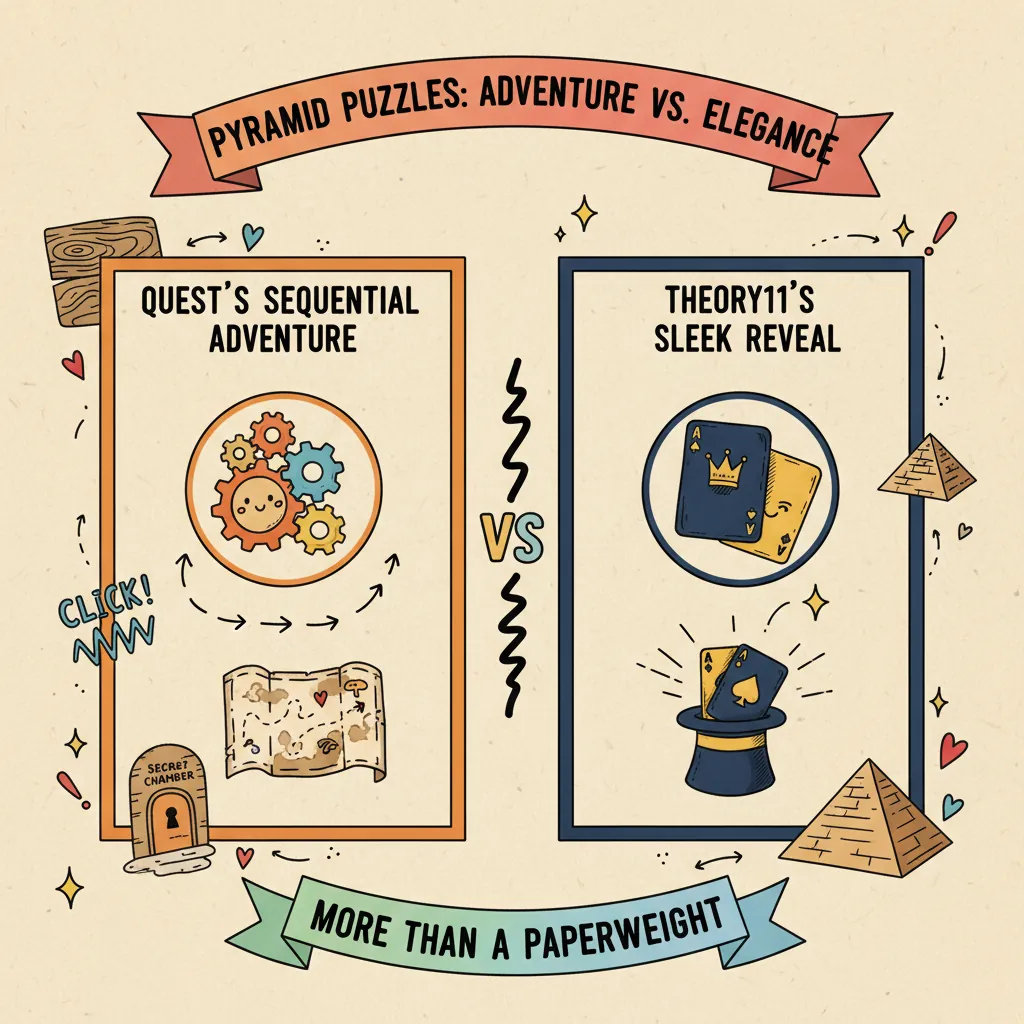
Two archetypes dominate the landscape, setting the parameters for this solo escape room experience. On one end is the intricate, multi-stage adventure like the Quest Pyramid. It’s a sequential discovery journey where each solved step unlocks the next, a true narrative in wood and mechanism. On the other is the sleeker, more direct challenge like the theory11 pyramid box, famous for containing a rare deck of cards inside its chamber. Both share the same promise: a hidden chamber, but offer wildly different paths to reach it.
(The first thing you’ll do is pick it up and try to turn the top. It won’t budge. You’ll push on the panels. Nothing. This is the first lesson: nothing is obvious. The solution is a logical order of operations, a sequence hidden in plain sight.)
Typical dimensions—somewhere between six and nine inches tall—make it a perfectly portable paradox. It demands to be handled, turned, examined. The construction is precise; you can feel the tight tolerances as you run a finger along the edges. There is no rattle, no give. It is a sealed system. The initial frustration is a designed feature, a necessary barrier between the casual observer and the solver. You are no longer just a person at a desk. You are an archaeologist at the door of a tomb, a detective with a very peculiar piece of evidence. The game has already begun, and you haven’t even found the first move.
Decoding the Allure: Why a Pyramid? (And Why ‘Sequential Discovery’ Is Addictive)
This initial confrontation with the silent, stubborn object leads to a deeper question: why does this particular shape, the pyramid, hold such gravitational pull for puzzle designers and solvers alike? The answer lies in a potent blend of symbolism and structural ingenuity. As a former museum exhibit designer, I’ve seen how form shapes narrative. The pyramid is an icon of ancient civilizations—think Egyptian tombs or Mayan pyramid temples—immediately evoking secrets, hidden chambers, and architectural mastery. This symbolic weight transfers perfectly to a wooden puzzle lockbox; it doesn’t just sit there, it implies a history, a mystery waiting to be unraveled.
Structurally, the pyramid is a gift to a puzzle maker. Its four triangular faces and apex offer multiple planes for concealing mechanisms. There is no obvious door or hinge. Every side is a potential entry point, yet none are correct on their own. This forces interaction from all angles, making the solver engage with it as a true 3D object. But here’s the critical distinction: a pyramid puzzle box is not the same as a 3D puzzle you assemble from pieces. The latter is a test of spatial assembly—once built, it’s done. The puzzle box is about logical deconstruction. Its core mechanic is sequential discovery.
Sequential discovery is the heart of the experience. It transforms a static object into a dynamic narrative. You don’t just solve one riddle; you trigger a chain of events. A slide moves, revealing a symbol. That symbol aligns a hidden internal component, allowing a panel to shift. Each solved step physically unlocks the next, creating a tangible cause and effect. This is why it’s accurately called an escape room in a box. The satisfaction isn’t merely in finding the secret compartment; it’s in the journey of sequential riddles that gets you there. It’s addictive because it taps into our fundamental love for story and progression. Every faint click is a plot twist.
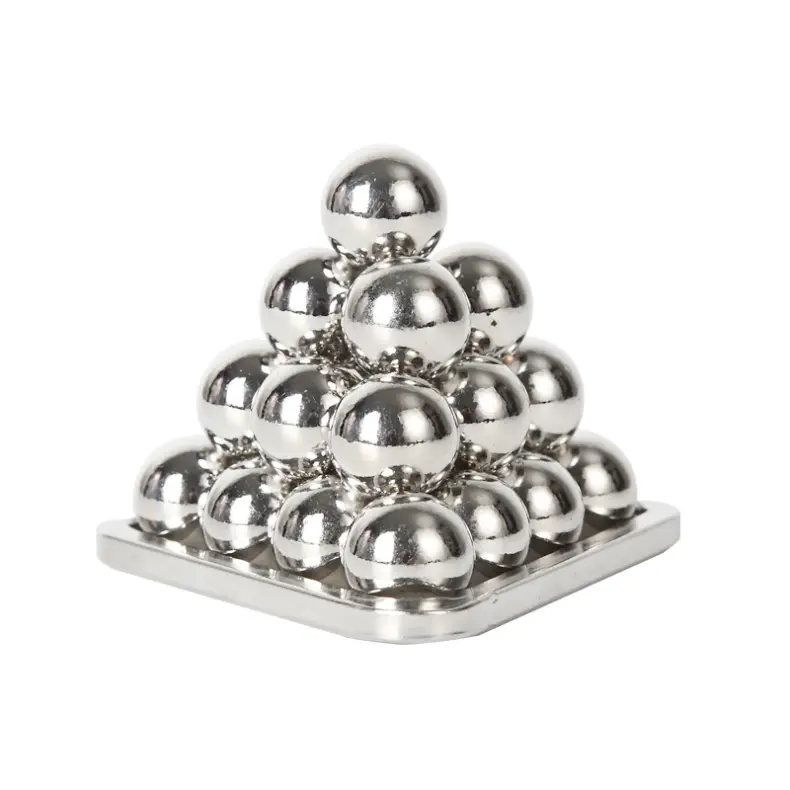
Not every pyramid-shaped puzzle operates on this principle. Some are static brain teasers that challenge dexterity or logic in a single, non-sequential step. For example, puzzles that involve manipulating balls or disentangling pieces offer a different kind of challenge—often more about tactile manipulation than layered deduction.
The true mechanical wooden box, however, is defined by this sequence. The pyramid form excels here because its internal geometry can house intersecting slides, pins, and levers that are accessed in a specific logical order. (A design tip: listen closely. The quality of a puzzle box is often audible in the precision of its clicks.) This mechanic creates a unique cognitive engagement. You’re not just thinking; you’re interacting, and the box responds. It’s a conversation in wood and mechanism. That responsive dialogue—the “aha!” moment followed immediately by a new, deeper mystery—is what turns casual curiosity into determined obsession. The pyramid isn’t just a shape; it’s the perfect stage for a silent, wooden play where you are both audience and protagonist.
From Intrigue to Triumph: The Emotional Map of a Solve
That responsive dialogue with the puzzle box is where the real journey begins. It’s a personal expedition with a distinct emotional topography, starting the moment you first pick it up. Understanding this map—the predictable shift from intrigue to triumph—is key to appreciating the escape room in a box experience. This isn’t just about opening a container; it’s about navigating your own curiosity and persistence.
Intrigue & Curiosity begin with inspection. The pyramid is a silent, sculptural statement. You turn it over, feeling its heft, tracing the seams where panels meet. Is this just a solid block? Your fingers probe for inconsistencies, a slight gap, a panel that feels different. Your mind races with possibilities: magnets, slides, pressure points. This phase is a quiet, observational puzzle, a brain teaser for your sense of touch and spatial reasoning before any mechanism even moves.
Then comes the first, inevitable Frustration. You press a likely panel. Nothing. You try twisting the apex. It’s fixed. The box offers no instructions, no “start here” label. For the first ten or twenty minutes, it feels like an inscrutable wooden artifact. This is the critical juncture where many people put it down. (A crucial tip: if you hit this wall, set it aside for an hour. Your subconscious will work on it.) The perceived difficulty level of a pyramid puzzle box is most acute here, in the silent rejection of your initial, logical guesses.
Determination sparks with the first discovery. It might be accidental—a certain tilt produces a faint internal rattle. Or a deliberate, systematic search reveals a panel that depresses a millimeter more than the others. You apply pressure. It clicks. A panel shifts a quarter-inch. This is the pivot. The object has responded. You’re not just manipulating it; you’re communicating. Your goal shifts from “How does this open?” to “What did that action unlock?” This is the heart of sequential discovery.
What follows is a chain of Surprise. Each solved step unveils a new, previously invisible problem. The sliding panel reveals a hidden symbol. Rotating the base in alignment with that symbol releases a catch. A new seam appears. The pyramid begins to feel less like a static object and more like a miniature quest room unfolding in your hands. The “aha!” moments come in waves, each one re-contextualizing the entire structure. You realize the initial, frustrating inspection was actually teaching you the rules of its internal language.
Finally, Triumph. After a sequence of precise movements—the correct order of slides, turns, and presses—there is a definitive, satisfying final click or clunk. A section of the pyramid, often the entire base or a side panel, swings open. The hidden secret chamber is revealed. It’s a quiet, personal victory. The rush isn’t about what’s inside (the compartment is often empty when you buy it); it’s about the solved path, the decoded logic. You held a wooden puzzle lockbox and successfully conducted its silent orchestra of mechanisms.
So, how long does this journey take? For a classic Quest Pyramid-style multi-step box, a first-time solve for a determined adult typically ranges from 45 to 90 minutes. Simpler, single-mechanism boxes might yield in 15-30. The most complex sequential riddles in pyramid form can demand hours or even multiple sessions. This variance is why the frank discussion of difficulty is so important—what feels “satisfyingly hard” to one person can be “maddeningly opaque” to another. The experience is deeply personal, a solo archaeological dig on your desk.
The arc concludes with Contemplation. You stare into the small secret compartment, pondering what to place inside—a slip of paper with a message, a single small trinket. Then, you reset the steps, feeling the mechanisms engage in reverse, returning the pyramid to its enigmatic, whole state. It’s ready for the next explorer, or for you to solve again in a few months, tracing the now-familiar path like revisiting a favorite story. This reset and replay function transforms it from a one-time brain storm into a lasting piece of interactive craftsmanship. For more general strategies on navigating this journey, from the initial frustration to eventual mastery, guides like our complete guide from frustration to mastery can offer helpful, spoiler-free frameworks.
A Tactile Deep Dive: The Language of Clicks, Shifts, and Wood Grain
This deeply personal journey from intrigue to triumph is conducted through your fingertips. The transition is a shift from the cerebral to the physical; you move from looking at the 3D wooden pyramid puzzle to truly listening to it. This is where the designer’s intent becomes palpable, and your role changes from observer to investigator, decoding a silent language of pressure and resistance.
The first discovery is often auditory: a faint, solid click. It’s a punctuation mark in your exploration. This isn’t the plastic snap of a cheap toy; it’s the sound of a precisely cut wooden latch finding its home, a tiny hammer falling in a wooden puzzle lockbox. That sound is your first true feedback, a direct, unambiguous “yes.” It validates a hypothesis, turning random prodding into directed action. It’s the moment the pyramid stops being a static object and becomes an interactive mechanical wooden box.
But the vocabulary is richer than just clicks. There’s the smooth, deliberate slide of a panel moving along an unseen track, offering just enough resistance to feel intentional, not loose. There’s the subtle vibration that travels through the structure when you apply pressure to the right spot—a faint hum through the handcrafted wooden pieces that signals a mechanism engaging, even if nothing visible has moved yet. This tactile feedback is the core dialogue of the sequential puzzle box. A misstep yields nothing—a silent, stubborn “no.” The correct maneuver speaks clearly. (An insider tip: work in a quiet room. The sounds are part of the data.)
Then there’s the wood itself. The wood grain is often dismissed as mere aesthetics, but for a keen solver, it’s part of the puzzle. A seemingly decorative line might mask a seam. A variation in the grain’s pattern can be the only visual cue for a panel’s true boundary, forcing you to rely on touch to confirm what your eyes suspect. In more intricate designs, like those evoking a Mayan pyramid, etched symbols and sliders aren’t just for theme; they are guides for alignment, their ridges and valleys providing purchase for your fingertips. You learn to read the surface with a gentle sweep of a thumb, distinguishing between a solid plane and a cleverly disguised, movable element.
This constant, delicate manipulation raises a practical puzzle box review question: does it wear out? The answer hinges on quality. A well-made box, with laser-cut precision and high-quality wooden construction, will withstand hundreds of solve-and-reset cycles. The mechanisms will retain their satisfying snap. However, on some models, repeated solving can very slightly polish the contact points of moving parts, making slides a hair smoother. It’s not a flaw—it’s a patina of use, the story of your interactions written into the material. The assembled size and solidity matter; a heavier, denser pyramid of solid wood pieces will generally feel more enduring than a lightweight construct of thin plywood.
This physical conversation—the search for the click, the interpretation of grain, the assessment of weight and wear—is what separates a true sequential discovery experience from a simple brain teaser. It’s an escape room for your hands, where every solved step is confirmed not by a screen, but by a vibration you feel in your bones. The final reveal of the hidden compartment is triumphant not just because you found it, but because you felt your way to it, one precise interaction at a time. For those seeking a more structured approach to this tactile language, a good step-by-step guide to solving the secret can be invaluable.
What’s in the Chamber? The Practical (and Poetic) Use of Secrets
That final, deep click resonates in your palm. It opens. You look inside. The culmination of your sequential discovery journey is not a vast treasure vault, but a slender, precisely-engineered void. The hidden compartment is, first and foremost, a reality check. Its dimensions are modest—typically a sliver of space measuring about 1.3 by 3.1 inches, often less than a centimeter deep. You will not be hiding a ring in its setting, a watch, or any traditional jewel box fare. The secret compartment is a space for secrets, not heirlooms.
So, what fits? The practical inventory is specific: a tightly folded note or a slip of paper with coordinates, a single USB drive (the ultimate modern secret), a spare key, a small, flat piece of jewelry like a pendant without its chain, or a single, meaningful coin. This is not a storage solution; it’s a ceremonial space.
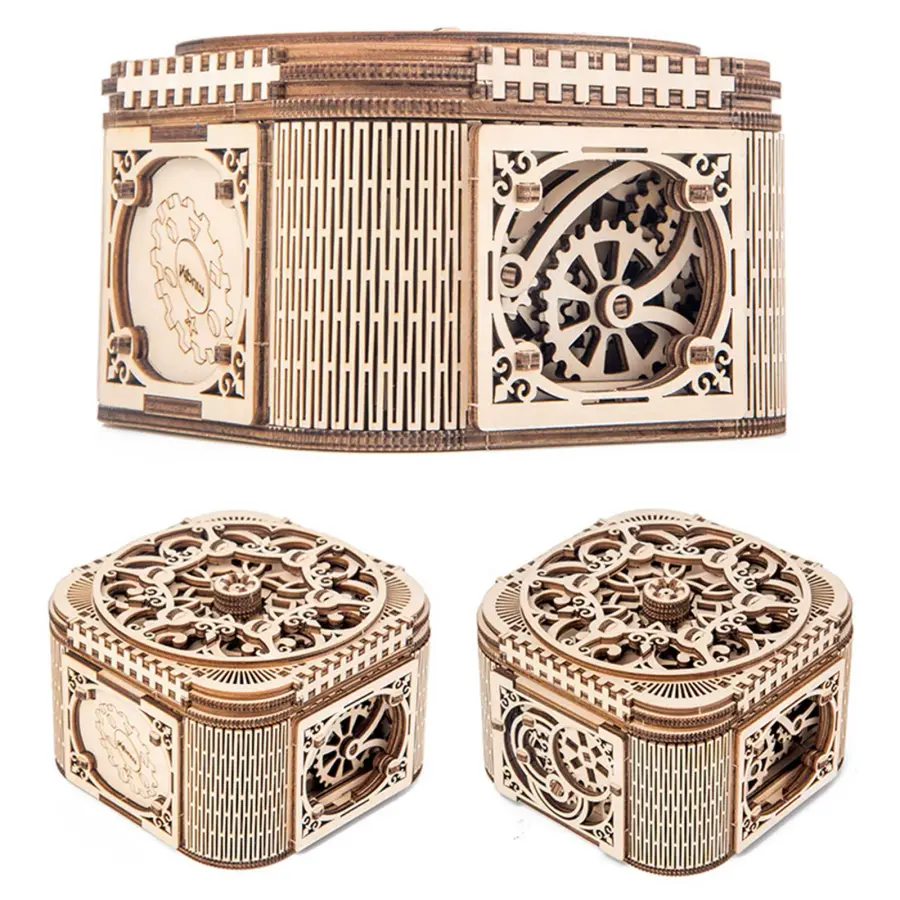
This brings us to the notable exception: the theory11 pyramid box secret. This model inverts the premise. Its compartment is pre-filled, containing a rare, collectible deck of playing cards. Here, the puzzle isn’t about hiding your own item, but earning a specific, curated hidden treasure. The value proposition shifts; you’re paying for a premium wooden puzzle lockbox and a sought-after deck, making the solve a gateway to another hobby. (For those buying it just for the cards, be warned: you still have to solve the puzzle to reach them.)
After the triumph fades, you face the empty chamber. This is the contemplative phase. Its purpose becomes what you assign it. For some, it’s a genuine hidden treasure spot for a physical cryptocurrency key. For others, it’s a temporal capsule—solving it on an anniversary to place a new message inside, then resetting it for the next year. Often, the most satisfying use is to leave it empty. The compartment’s existence is the point; it is proof of concept, the Q.E.D. of the mechanical wooden box‘s cleverness.
This leads to the critical, often overlooked feature: the reset and replay. A good pyramid puzzle box must close and re-lock, restoring its enigmatic silhouette. This transforms it from a one-time novelty into a reusable ritual. You can pass it to a friend with your secret inside, or simply challenge yourself to the solve again months later, when the sequential riddles have faded from muscle memory. The hidden compartment, therefore, is not an end, but a pivot—from the pursuit of a secret to the stewardship of one. To understand this psychological dimension better, consider reading about why every puzzle box with a hidden compartment is a filter for focus.
The Great Pyramid Divide: Quest’s Adventure vs. theory11’s Elegant Reveal
The purpose you assign to the empty chamber often dictates which kind of pyramid puzzle box you should seek. The landscape isn’t monolithic. It’s dominated by two distinct philosophies of engagement, each creating a radically different escape room in a box experience. Understanding this divide is crucial: it’s the difference between a week-long expedition and a single, elegant revelation.
On one side, you have the Quest Pyramid archetype—exemplified by brands like Idventure’s ‘Pyramid of the Sun’. This is a miniature quest room. The goal isn’t just to find the compartment; it’s to survive the journey there. It unfolds through sequential riddles. You’ll decode symbols and sliders, discover hidden tools, and follow a logical order of operations that feels less like solving a lock and more like translating an ancient mechanism. The solving time isn’t measured in minutes, but in hours, sometimes spread over days. (The first-time solve for something like the Pyramid of the Sun can easily take 3-8 hours, a fact that excites some and deters others.) It’s for the player who craves narrative, who wants to feel like an archaeologist piecing together a tomb’s secrets. The hidden treasure isn’t just an object in the chamber—it’s the series of ‘aha!’ moments along the way.

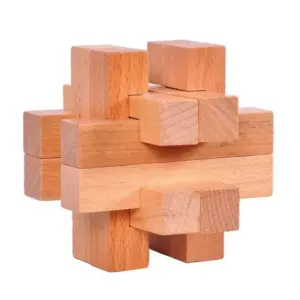
It’s important to note that simpler decorative items, like this Wooden Bead Pyramid, inhabit a different category altogether. They are 3D puzzles to assemble, not mechanical wooden boxes with secrets to discover. They’re about construction, not sequential discovery. They serve as great desktop decor but don’t offer the same layered challenge. If you’re interested in that specific type of puzzle, our wooden bead pyramid puzzle expert guide offers a focused look.
On the other side stands the theory11 model. Here, the pyramid is a beautiful, minimalist vessel for a specific prize—usually a rare deck of cards. The design philosophy is about elegant concealment. The mechanism is often a single, satisfying sequence: a combination of presses, slides, or twists executed in a precise order. The focus is on the drama of the final reveal. The whole experience is condensed, often solvable in 15 to 45 minutes. It’s not about a long brain storm; it’s about the tactile pleasure of a perfect mechanism and the thrill of the contained surprise. This style asks: is the joy in the protracted hunt, or in the flawless execution of a clever trick?
The reset and replay factor further separates them. A complex Quest pyramid puzzle solution path can be a labyrinth to retrace. Resetting it requires you to walk the solution backwards, which is its own puzzle. It’s doable, but it demands attention. The theory11-style reset is typically straightforward—a click, a slide, it’s locked. This makes the latter far more suitable for a gift you intend to pass around a group, while the former becomes a personal, repeatable challenge for when you’ve let the solution fade from memory.
So, who is each for? Choose the Quest archetype if you want an immersive, time-consuming adventure. Choose the theory11 style if you appreciate minimalist design, a quicker but no less satisfying payoff, and a tangible reward (that deck of cards). One is a novel you live inside. The other is a perfect short story. Both prove that the best wooden puzzle lockbox isn’t just a container, but a carefully engineered experience.
The Buyer’s Spectrum: From Ornament to Obsession
So, with that brain storm of styles fresh in your mind, the big question remains: which of these wooden enigmas is right for you or your gift recipient? It’s less about finding the “best” and more about matching a puzzle to a personality. The market spans from simple decorative objects to complex, obsession-fueling mechanisms. Let’s segment it by desired experience.
For The Curious Decorator (The ‘Beautiful Paperweight’ Buyer)
You’re drawn to the geometric form, the handcrafted wooden aesthetic. The puzzle is secondary; you want an intriguing home decoration that sparks conversation. Your priority is a visually striking Mayan pyramid puzzle box or sleek modern design that looks good on a shelf. The mechanism here is often a single, elegant trick—a magnetic slide, a subtle twist. It opens in minutes, revealing its small secret compartment. It’s a satisfying, low-friction experience. Price is typically lower (~$25). This is a fantastic entry point, and the ease of reset and replay makes it a gracious guest at family game night.
For The Puzzle Novice (The ‘I Want a Taste’ Buyer)
You’re intrigued by the idea of a sequential discovery challenge but wary of multi-day frustration. You need an approachable wooden puzzle lockbox that teaches you the language of clicks and shifts. Look for models advertised with a moderate solving time (30-90 minutes) and clear, logical progression. These boxes have a few steps in a logical order, offering tangible “Aha!” moments without dead ends.
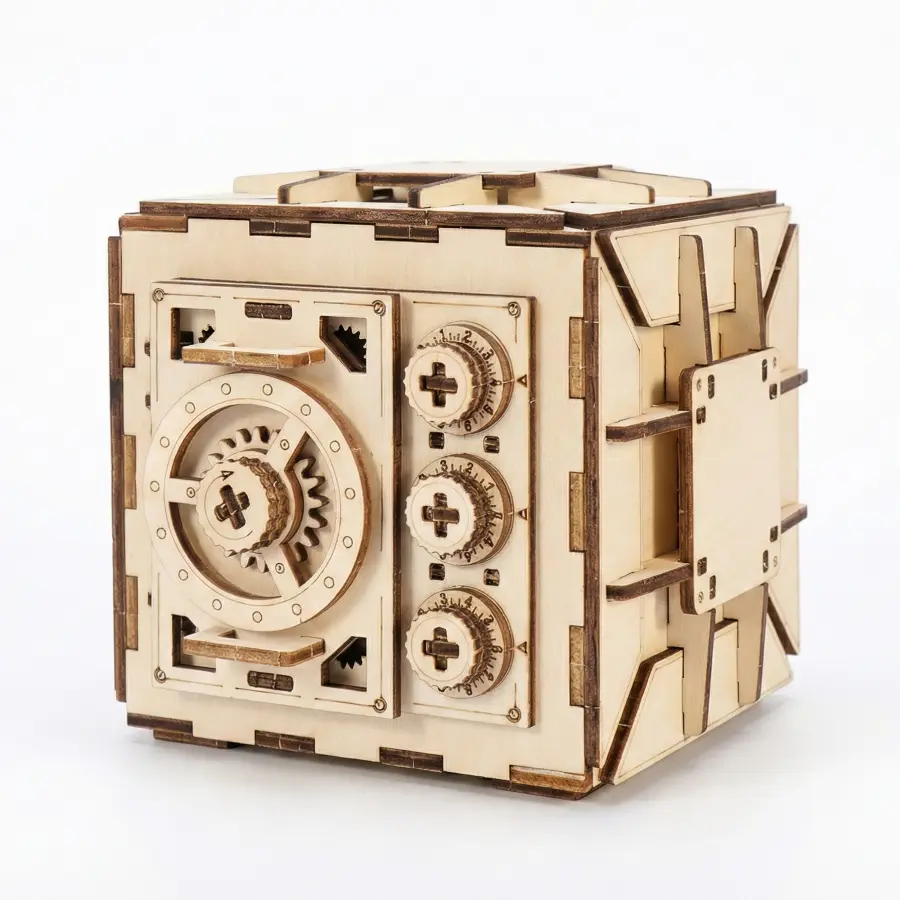
Think of boxes like the one above—they blend the 3D puzzle assembly thrill with a simple locking mechanism. It’s more about construction than cryptic sequential riddles. Is it more for display or play? For this group, it’s both: a solved trophy and a reusable secret keeper. (For more vetted, beginner-friendly options, our guide to puzzle boxes for adults that reward your patience is a great next read.)
For The Escape Room Aficionado (The ‘Quest’ Buyer)
You crave the full narrative arc. The Quest Pyramid and its kin are your targets. This is the escape room in a box experience, involving symbols and sliders, multiple stages, and a miniature quest room feel. It’s satisfyingly hard. Is the Quest Pyramid too hard for a beginner? For a true novice, yes—it can be daunting. But for someone who enjoys layered logic and doesn’t mind a multi-hour (or multi-session) investment, it’s perfection. This is the wooden puzzle lockbox you buy to solve, not just to own. Prices hit the higher end (~$65). Remember, the reset process here is part of the challenge.
For The Collector (The ‘Craftsmanship Connoisseur’ Buyer)
You see beyond the puzzle. You appreciate dovetail joints, exotic woods, and silent, precise mechanisms. You might seek out rare editions, like the theory11 pyramid box with its rare deck, or artisanal boxes from niche makers. The hidden secret is almost secondary to the object itself. This segment answers the question of long-term value: a well-made box won’t wear out; its tactile feedback only improves with handling. It’s a functional sculpture. (Our deep dive on best wooden box puzzles that actually deliver caters directly to this discerning eye.)
Your choice defines the experience. A simple pyramid is a moment of delight. A complex one is a journey. Match the box to the mind, and you don’t just give a puzzle—you give a story waiting to unfold.
Stuck? A Spoiler-Free Guide to Getting Unstuck (And Knowing When to Reset)
Choosing the right box is one thing. Actually solving it is another. Even the most logically ordered sequential discovery path hits a wall. The silence of the wood feels like mockery. Your fingers, once curious explorers, now just push fruitlessly. This is not failure; it’s a feature. The pyramid puzzle box is designed to teach you its language. Here’s how to listen.
First, change the channel. You’re not solving right now; you’re examining. Put it down. Pick it up. View it from every angle. Trace the wood grain—does it conceal a seam? Apply pressure not with force, but with varying intent: a gentle squeeze, a slight twist, a tap. Listen for a difference. Is there a panel with a slightly different give? This is detective work, not brute force. (My old museum habit: treat it like a suspicious artifact. Your goal is documentation, not revelation.)
If observation fails, walk away. Seriously. The subconscious is a powerful solver. A fifteen-minute break for coffee can dismantle a mental block your conscious mind built over an hour. When you return, start from the beginning. Retrace the steps you know are correct. Often, the next clue was hiding in plain sight, masked by your own frustration.
Some walls, however, are meant to be permanent roadblocks for the wrong sequence. A true sequential puzzle box operates on logic, not luck. If you’ve been fiddling for over an hour with no new feedback, you may have missed a foundational step. This is the time for a full reset. This is a critical, often overlooked skill. For simpler boxes, it might mean reversing your steps until everything snaps home. For complex ones like the Quest Pyramid, it may require a specific procedure (often found on the maker’s site). Mastering the reset and replay is what transforms a one-time trick into a lasting mechanical wooden box you can enjoy—or gift anew.
Knowing when to reset is as important as knowing how to solve. It’s the promise of a fresh start, the hidden secret restored, and the journey waiting to be taken again. For more structured strategies on navigating this mental maze, our guide on how to solve a puzzle box without losing your mind delves deeper into the psychology of the solve.
The Final Verdict: Is This Wooden Enigma Worth Your Curiosity?
So, after the reset, after the triumph, and after the contemplation—you’re left with the original, silent pyramid on your desk. But it’s no longer a mystery. It’s a story you’ve lived. This transformation is the core value proposition of a pyramid puzzle box.
The question of worth hinges entirely on what you value. If you seek a disposable thrill or a mere container, look elsewhere. This is an investment in an experience. For roughly the cost of a dinner for two, you purchase hours of focused engagement, a tangible narrative of discovery, and a handcrafted wooden artifact that remains long after the final “click.”
Who should buy one immediately? The puzzle-curious adult who relishes a logical challenge. The person who values tactile objects in a digital world. The gift-giver seeking something far more memorable than another gadget. If you’ve ever felt the pull of a miniature quest room, the satisfaction of sequential riddles, or the simple pleasure of a well-made mechanical wooden box, this is for you. The Quest Pyramid is your ticket for a multi-hour adventure; the theory11 variant is a more accessible, elegant gateway with a collector’s bonus inside. For a comprehensive look at similar options, our wooden puzzle box with hidden compartment review offers broader context.
Who will likely regret it? Anyone seeking instant gratification or a large, practical secret compartment. Those who are easily frustrated by a lack of obvious progression, or who prefer collaborative experiences over solo, quiet deduction. It is not a brain teaser you solve in five minutes; it is a wooden puzzle lockbox that demands patience.
Ultimately, its worth isn’t measured in the size of its hidden chamber, but in the weight of the experience. It is an escape room in a box you can revisit, a conversation piece with a secret history only you know, and a quiet testament to clever design. The pyramid on your desk is no longer an enigma. It’s a landmark in your personal landscape of curiosity, waiting to either guard a new hidden secret or simply stand as a reminder: sometimes, the most satisfying journeys are the ones you hold in your hands.
Your next step is simple. Place your order. Clear an evening. Let the silence of the wooden puzzle begin.
The pyramid puzzle box is part of a long tradition of mechanical puzzles designed to challenge and delight through physical interaction. To learn more about this fascinating category, you can explore the general history of mechanical puzzles and the specific legacy of the puzzle box.