The Reliquary in Your Hand: First Impressions & Craftsmanship
The first thing you notice isn’t the Arthurian glyphs or the precise woodwork. It’s the weight. This birchwood cube feels less like a toy and more like a reliquary holding a secret. Hefting the Cluebox 4: The Trial of Camelot for the first time is a tactile declaration: you are not opening a flimsy trinket. You are initiating a ritual. The 195 birch wood pieces fit together with the satisfying thunk of a well-made lock, a sound that signals both finality and a promise of hidden mechanisms waiting within. As a former escape room designer, I assess an object by its ability to command a table’s presence; this one dominates it.
Examine the surfaces. The laser-cut components are immaculate, free of the fuzz or burn marks that plague cheaper wooden puzzle boxes. The finish is smooth, sanded to a degree that respects your fingertips through hours of potential manipulation. The iDventure branding is subtle. Your focus is drawn instead to the enigmatic iconography—a chalice, a sword, a crown—etched with clean, deliberate lines. This is not mere decoration; it is puzzle grammar, the visual vocabulary of the challenge ahead. It whispers Camelot before you even know the rules.
This level of craftsmanship creates an immediate distance from mass-market brain teasers. Compare it to a typical tin puzzle or a flimsy plastic maze. The Trial of Camelot has a density, both physical and intellectual, that demands respect. It’s the difference between reading a comic book and handling a medieval manuscript. You find yourself turning it slowly, not to solve it yet, but to simply appreciate it as a mechanical puzzle engineered for discovery. Each seam is a question. Each symbol is a silent prompt. (A pro-tip from my designer days: before you try to solve anything, just listen. Shake it gently. The quiet, precise rattle of internal components is your first clue that this is a multi-step puzzle of considerable depth.)
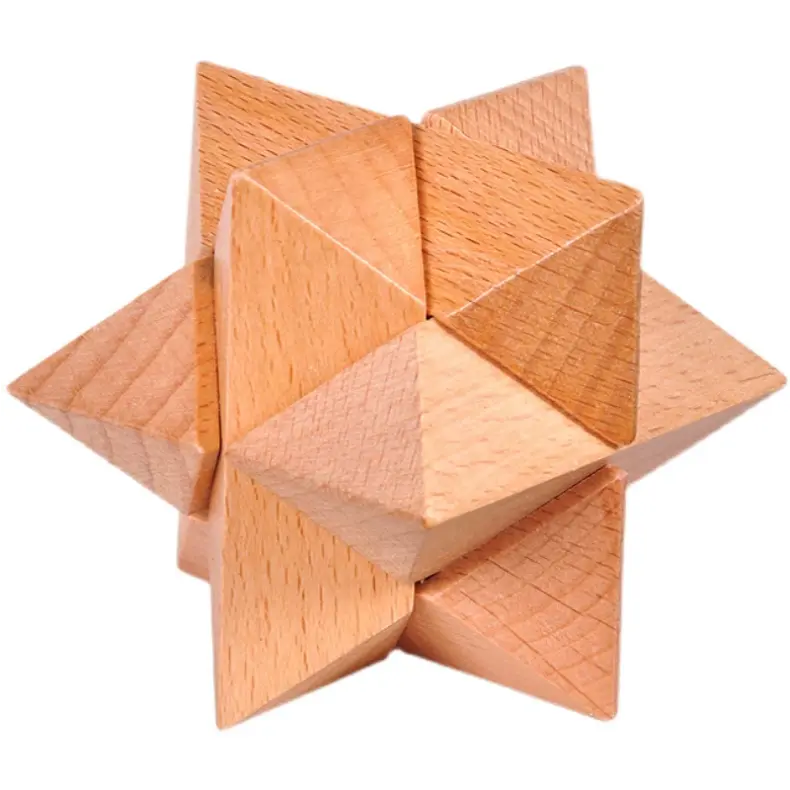
This artifact sits in a different category than a clever disentanglement or twisty puzzle. Its value proposition is clear from unboxing: you’re paying for narrative, for engineering, for an escape room in a puzzle box. It justifies its ~$50 price tag not with cheap “hours of fun” but with the serious, quiet gravitas of a challenging 3D puzzle. For collectors or those seeking a unique gift idea, this first impression is everything. It feels like a permanent object, something you’d solve, reset, and display long after cheaper puzzles have been relegated to a drawer. If you’re considering your entry into higher-end wooden puzzle boxes, understanding this quality benchmark is crucial, as explored in guides like The Artisan’s Riddle.
Look. Listen. Turn. The Trial of Camelot doesn’t beg for your attention; it assumes it. The journey from intrigued observer to determined knight-errant begins with this solid cube in your palm. The weight is the first clue, and it’s a telling one: the secrets inside are substantial.
Merlin’s Gamble: How the Arthurian Legend Drives the Puzzles
That initial, physical impression—the weight, the solidity—sets the stage. It tells you this is a vessel for a story. Unlike many puzzle boxes where the theme is a thin veneer slapped onto an abstract mechanism, the Trial of Camelot uses its Arthurian legend as the very blueprint for its sequential puzzle logic. You are not just solving a box; you are undergoing the Trial of Merlin, a quest to prove your worth to join the fabled knights. This premise transforms the experience from a sterile test of logic into a narrative you physically uncover, piece by piece.
The names etched into the birch wood construction—Galahad, Lancelot—are not mere decoration. They are signposts, characters in your solitary quest, and integral components of the puzzle grammar. The legend provides the foundational “why” for your actions. Why are you manipulating this particular glyph? Why does this sequence make sense? The answers often lie in the lore itself, requiring you to think not just as a logician, but as a knight deciphering an ancient, mechanized riddle. This deep thematic integration elevates it beyond a simple brain teaser into a tabletop escape game with a coherent soul.
As a former escape room designer, this is where my respect for the Cluebox 4 design truly crystallized. In a cheap escape room, puzzles are often arbitrary—find a four-digit code because there’s a lock that needs one. Here, the discovery feels earned and narrative-driven. A step that involves perception might be framed as “seeing the truth like the pure Sir Galahad.” A stage requiring deduction of order may call upon the legendary sequence of knights’ deeds. The Camelot theme isn’t in the way; it’s the way through. This makes it a premier puzzle box for adults who appreciate context; the challenge is mental, but the satisfaction is almost mythic.
This narrative through-line is what makes the multi-step puzzle feel fair, even at its most perplexing. The puzzles rarely demand illogical leaps because the logic is grounded in the story and the physical object itself. You are learning the rules of Merlin’s trial as you go, and those rules are consistent. (A warning for purists: a very basic familiarity with Arthurian legend—names, symbols, the idea of a trial—is helpful, but you won’t need a doctorate in medieval literature.)
The result is a brilliant blurring of form and function. The quest is the mechanism. When you finally trigger a step and hear that satisfying thunk of a hidden component moving, it doesn’t just feel like solving a puzzle—it feels like completing a trial, unlocking a piece of the legend that was physically trapped within the wood. This transforms the wooden puzzle box from a static display piece into an active artifact, a story engine you hold in your hands. It’s a mechanical puzzle that understands its own lore is its greatest asset, not just a marketing bullet point.
Mapping the Fortress: The Six-Side Anatomy of an Escape Room
This blurring of form and function is where the escape room in a puzzle box promise is truly tested. In a physical escape room, you move through space; here, the space—the wooden puzzle box itself—moves and changes around you. The genius of the Cluebox 4 is that it maps a full, multi-room adventure onto the six static faces of a cube. Your quest isn’t to escape the box, but to progress through its layered secrets, side by sequential side. To understand this, you must learn its puzzle grammar.
In sequential discovery, the solution to one puzzle isn’t just an answer—it’s a key, literally or figuratively. It grants you a physical tool, reveals a new surface, or fundamentally alters the state of the mechanical puzzle, unlocking the grammatical “sentence” of the next challenge. The Trial of Camelot is a masterclass in this grammar. Each of its six sides functions as a distinct chapter in Merlin’s trial, and you cannot read Chapter Two until you’ve solved the grammatical puzzle of Chapter One.
So, how do you start? The initial, daunting silence of the cube is your first puzzle. Forget searching for a hidden latch or a loose panel. The puzzle grammar here is about observation and inference. Your starting point is understanding that every side has a purpose, a theme hinted at by its laser cut components and enigmatic glyphs. One face may present a symbolic riddle, another a tactile maze, another a coded mechanism. Your job is to determine which side is the prologue. (A non-spoiler tip from the Reddit trenches: Start with the most visually communicative side. If one face seems to be “speaking” to you more directly than others, it probably is.)
Let’s map the conceptual flow. Imagine the cube as a stone fortress. The first side you successfully engage acts as the outer gate. Solving its puzzle doesn’t just “do a thing”—it grants you access to the mechanism of the next side. Perhaps a component slides free, becoming a tool you must use elsewhere. Maybe solving a alignment on Side A allows a previously blocked section of Side B to move. This is the core loop: Observe a clue on face X, which allows an action on face Y, which reveals a clue for face Z. The complexity builds elegantly, as tools found early are used in unexpected ways later, and clues you glanced at hours before suddenly snap into focus with new context.
The feedback is brilliantly tactile and auditory. You’ll experience subtle clicks, the smooth shift of birch wood panels, and the occasional, immensely satisfying thunk of a major internal component shifting. This isn’t random; it’s the box’s language. A soft click might mean you’ve correctly aligned something. A deep thunk signals a gate has been passed, a new “room” in the fortress is now open. Learning to listen and feel this feedback is as crucial as solving the visual puzzles. For a broader understanding of this intricate craft, consider reading the ultimate guide to mechanical puzzle mastery.
This multi-stage challenge evolves from deduction to manipulation to, eventually, a kind of physical choreography. The final stages often require you to hold the entire cube in a specific state, managing components on multiple sides simultaneously. It’s here that the two-player dynamic shines—having a partner to “hold that” while you “try this” can be the difference between triumphant flow and fumbling frustration. The design ensures the challenging 3D puzzle never feels cheap; every step is logically anchored in the mechanisms you’ve already learned and the Arthurian theme guiding you.
By deconstructing the cube into this six-phase anatomy, the seemingly insurmountable becomes manageable. You’re not just staring at a block of wood; you’re systematically mapping a fortress, learning its rules, and patiently unlocking its chapters. The puzzle grammar turns confusion into a structured investigation. When you finally comprehend this internal map, the Trial of Camelot transforms from an opaque object into a navigable, deeply rewarding journey. The next step is understanding how to navigate its notorious difficulty.
The Dragon in the Details: Decoding the Notorious Difficulty
Understanding the puzzle box’s anatomy is the map, but the journey is still through a forest of deliberately confusing signposts. The central question from every forum and buyer’s guide is the same: how hard is trial of camelot puzzle box? The answer, parsed from countless Reddit threads and my own quest, is a spectrum. For a total newcomer to sequential discovery, it is a formidable gatekeeper. For an experienced solver, it is a supremely satisfying, weekend-consuming campaign. The community consensus pegs the average solve time between 4 to 8 hours, often spread across multiple sessions. This isn’t a quick-hit brain teaser; it’s a commitment.
To contextualize this, you must look at the iDventure cluebox 4 vs others in the series. Having communed with the spirits of Davy Jones and Tropicana, I can chart the family’s difficulty curve. The general hierarchy, as agreed upon in r/PuzzleBox circles, places the tropical-themed Tropicana as the gentlest introduction to the series’ logic. The pirate-themed Davy Jones steps it up significantly, introducing more complex mechanisms and misdirection. The Trial of Camelot, however, is widely regarded as the pinnacle of the mainline Cluebox 4 series in terms of layered complexity and thematic integration. Its challenges are less about brute-force trick locks and more about synthesizing information across the entire cube. Where Davy Jones might have a devious single-step puzzle, Camelot asks you to remember a clue from Side A to apply to a mechanism on Side C two stages later.
This brings us to the dragon most slayers face: the fear of the illogical leap. You will get stuck. The question is whether the sticking point feels unfair. From my design background, I can confirm the puzzles are fair. Every necessary clue is physically present on or within the wooden puzzle box. The “unfair” feeling typically arises from a solver’s assumption, not the designer’s omission. A common pitfall is overcomplicating a glyph’s meaning or searching for a hidden button when the solution requires a simple, precise manipulation you’ve already discovered. The design philosophy here punishes frantic random exploration but richly rewards meticulous observation and patience. Listen for the satisfying thunk—it’s your best auditory clue that you’re on the right path.
When that path becomes overgrown, knowing when to seek help is a skill in itself. The iDventure hints official system is a masterclass in non-spoiler guidance. It’s a tiered structure: Level 1 hints gently nudge your perspective; Level 2 offers more direct clues; Level 3 reveals the core mechanic without the final execution; and the full solution is the last resort. My advice? If you’ve stared at a single stage for over 90 minutes, fruitlessly re-examining every surface, take the Level 1 hint. It’s not cheating; it’s collaborating with the designer to get you back into the flow. The goal is the “aha!” moment, not months of shelf-bound resentment.
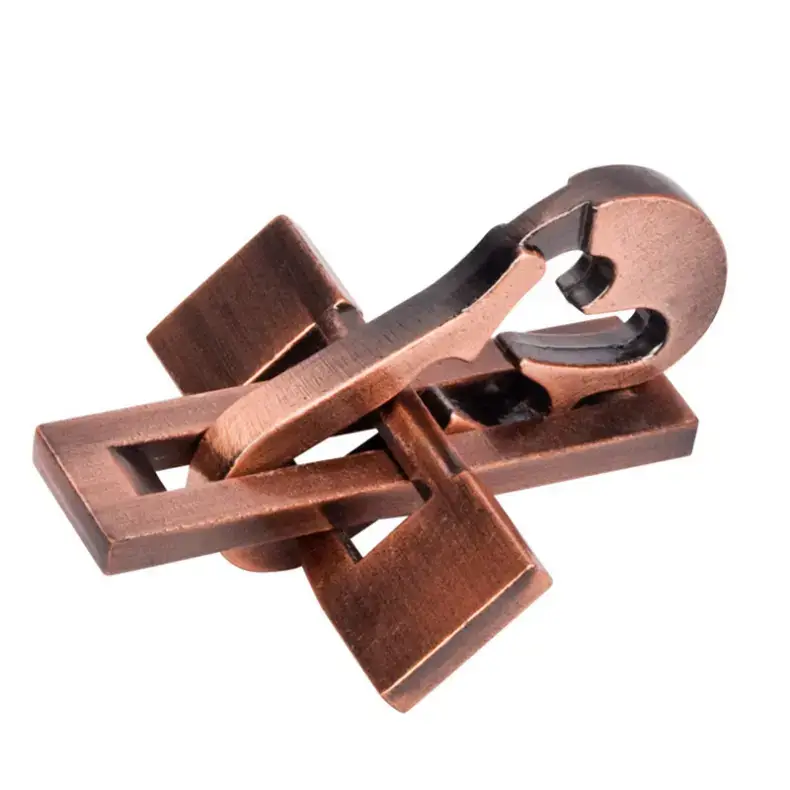
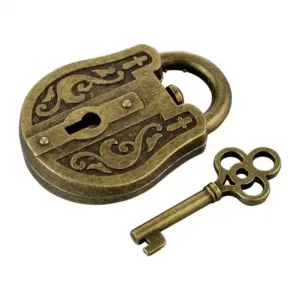
Yangqin Lock Puzzle — $12.66
This brings us to the optimal party size. Is this a solo vs. duo endeavor? The box suggests 1-2 players, aged 14+, and this is its most honest specification. Solving alone is a deeply personal, meditative challenge—a true test of your own puzzle grammar comprehension. However, the multi-step puzzle design naturally fosters collaboration. Two minds can divide inspection duties, debate interpretations of the Arthurian glyphs, and physically manage the cube in later stages. A partner also acts as a crucial rubber duck; explaining your stuck thought process to them often reveals its flaw. For couples or friends, it’s a superb shared campaign. For the purist who wants to test their mettle against Merlin’s trial alone, it’s equally valid, just prepare for a longer, more intense engagement.
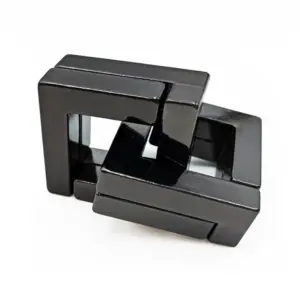
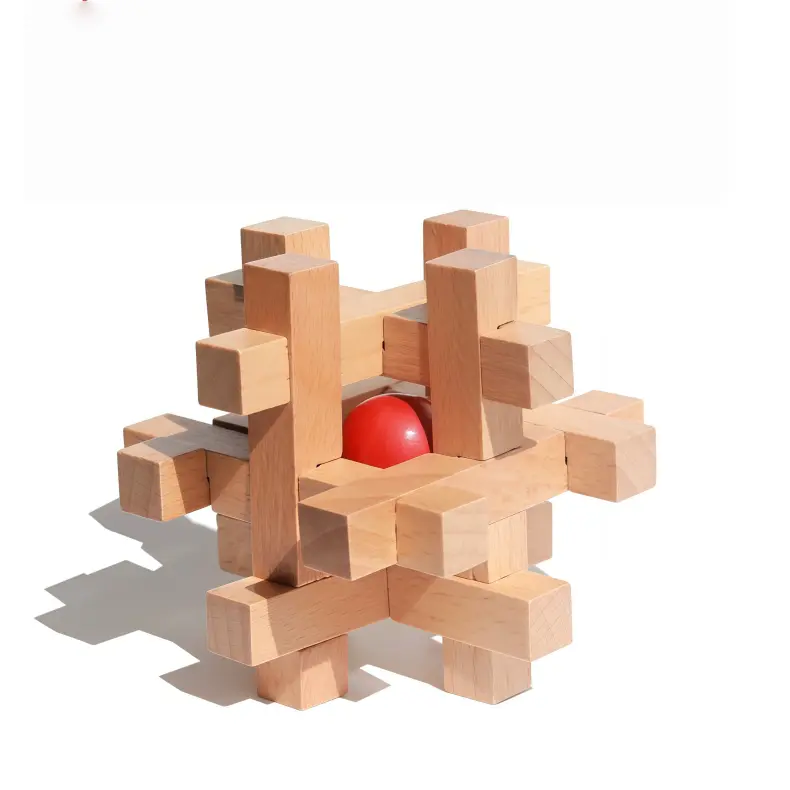
Let’s be clear: the trial of camelot puzzle difficulty is its primary feature, not a bug. It is a challenging 3D puzzle meant to be a landmark in a collector’s journey. Its value is in the struggle and the eventual, hard-won revelation. If you seek a lighter, quicker tactile fix, there are brilliant alternatives in the mechanical puzzle space, like the deviously simple Yangqin Lock Puzzle or the endurance-testing 54 T Cube.
But for the target solver—the one who reads the legend of the Trial of Merlin and feels a pull—the difficulty is the entire point. It’s the dragon guarding the treasure. Respect the beast, prepare your mind, and the victory is all the sweeter. Once you’ve claimed it, however, a new practical challenge emerges: how do you put the dragon back in its cave for the next knight? The answer lies in the often-overlooked art of the reset.
Your Grail Quest Guide: Non-Spoiler Strategies & Mastering the Hint System
You’ve mapped the fortress and sized up the dragon. Now comes the quest itself, where hours can dissolve into a haze of fruitless turning and quiet despair. Every solver, from novice to knight, hits a wall. The critical skill isn’t avoiding the wall—it’s knowing how to scale it without ruining the view from the top. This is your field guide for that climb.
First, the mindset. You are not breaking this wooden puzzle box; you are conversing with it. Listen. The satisfying thunk of a piece seating correctly is your reward. A faint slide or click is your clue. Document. Keep a notepad. Sketch unusual symbols. Log sequences. What seems trivial at minute 30 may be the Rosetta Stone at hour 3. Explore. Apply gentle, consistent pressure to every surface. Rotate the cube. Examine seams in different light. The 195 birch wood pieces are precision-cut; a hidden seam is a design choice, not a flaw. This principle of patient exploration is what makes a wooden puzzle’s challenge last.
Now, the puzzle grammar. A sequential discovery box like this Cluebox 4 is a logic chain. If you’re stuck, ask: “What have I just unlocked?” The new movement or revealed space is your only valid tool for the immediate next step. The designer isn’t asking you to reinvent the wheel; they’re asking you to use the newly gifted spoke. Force nothing. If it feels like you’re brute-forcing, you’ve missed a clue. Back up.
But what if you’re truly, utterly be-calmed? This is where iDventure’s official support system becomes your greatest ally—or your ruin, if misused. The official hints are not a monolithic solution. They are a meticulously tiered lifeline.
Here’s a clear, strategic guide to using them without self-sabotage:
The iDventure Hint System: A Tiered Approach
1. The Nudge (Tier 1): These are principle-based prompts. They won’t tell you what to do, but reframe how to think about your current obstacle. Example: “Consider the orientation of all elements.” Use this when you feel you’ve examined everything but might be overlooking a relationship.
2. The Clue (Tier 2): More direct, pointing you toward a specific mechanism or observation you should investigate. Example: “The sound is different when tapped on the left side.” Use this when the Nudge feels too abstract, but you still want the “Aha!” for yourself.
3. The Reveal (Tier 3): This explains the exact action required to proceed. Using this will almost certainly spoil the personal discovery of that step. Deploy it only if frustration is edging into resentment and you risk abandoning the quest entirely.
4. The Full Solution: The complete walkthrough. This is your nuclear option. Using it ends the journey for that section. Reserve it purely for post-solve curiosity or if a mechanism has genuinely failed (a rare occurrence).
My Strategic Advice: Bookmark the online hints page on your phone before you start. When stuck, set a 20-minute timer. If no progress, allow yourself one Tier 1 hint. Read it, then put the phone away and ponder. This mimics the “gamemaster hint” in a live escape room in a box. It preserves the solve as your own. The community on Reddit often advises this disciplined approach; leaping to Tier 3 hints is the equivalent of reading the last page of a mystery novel.
Remember, the puzzle difficulty is calibrated for persistence. The solve time varies wildly because some spend 30 minutes stuck on a step others solve in 30 seconds. There’s no shame in the hint system. It’s part of the iDventure design, a built-in mercy rule for when your own wits are temporarily in exile. Use it wisely, and you’ll cross the finish line with your sense of accomplishment—and the mechanical puzzle itself—fully intact.
Passing the Torch: The Critical (and Often Messy) Reset Process
After the final, satisfying thunk of the last mechanism, you’re left holding an open box and a quiet sense of triumph. But the journey of a great sequential discovery puzzle isn’t truly complete until you’ve restored it to its original, enigmatic state. This is where the Cluebox 4 transitions from a personal quest to a shared artifact. The promise of being “resettable” is a major selling point, but what does that entail in the practical, post-solve glow?
Simply put, resetting The Trial of Camelot is a puzzle in itself. It’s not a matter of pressing a button. You must retrace your steps in reverse, a mental exercise that reinforces the brilliant, interlocked design of the multi-stage challenge. This reverse-engineering is crucial: every slider, every rotated panel, every released component must find its way back to its starting position. One misstep, and the puzzle grammar breaks; the first move for the next solver will be impossible. (My advice: Keep the official hint page open. The ‘Reset’ tab provides a clean, step-by-step reversal guide. Use it.)
The process reveals the minor wear inherent in any mechanical puzzle of this complexity. You’ll notice certain birch wood pieces have a slightly smoother travel, a faint shiny spot where your thumb worked a latch. This isn’t a defect—it’s a patina of solved history. However, it underscores a key point for gifting: a reset Cluebox 4 is functionally pristine for the next knight-errant, but it is not factory-fresh. The tactile feedback will be subtly different.
Here is a proven method for a clean reset: Work on a large, clean, well-lit table. As you disassemble the final stages, lay each small component or noted glyph side up in a line, in the order removed. This physical timeline is your map back. When following the official reset instructions, perform each action deliberately. Listen for the same clicks and feels you noted during your solve. When you place the final external piece back, securing the escape room in a box once more, you’ll experience a unique closure.
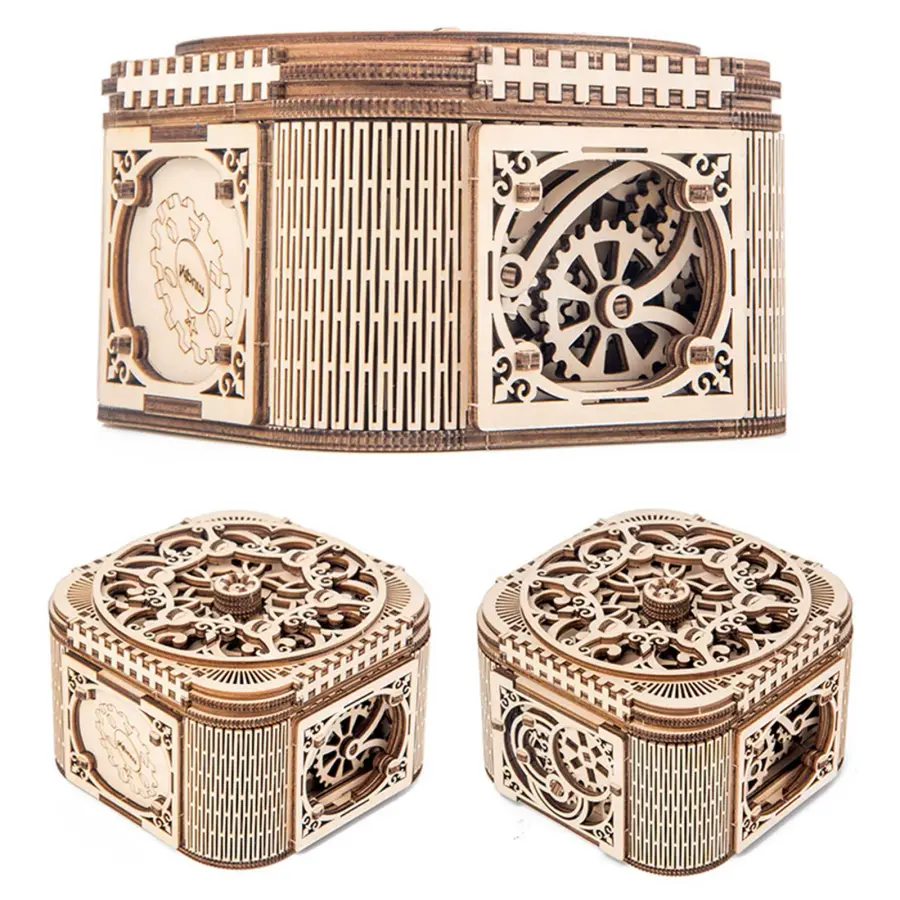
Once reset, its afterlife begins. For many, it becomes a handsome display piece, a conversation starter that hints at the labyrinth within. For others, it’s a unique gift idea to be passed to a worthy friend—the ultimate test of a puzzle lover. This is its core value proposition beyond the solve: it’s a renewable experience. Unlike a one-and-done escape room kit, this wooden puzzle box can challenge a dozen different minds. For those who enjoy the marriage of mechanism and utility, exploring a hands-on guide to a mechanical wooden treasure box offers a different, but related, kind of satisfaction.
When considering it as a gift, understand the recipient. This is not a casual brain teaser. It’s for the person who relishes a sustained, tactile challenge. If you seek a beautiful but less intense mechanical puzzle with storage utility, simpler puzzle boxes exist. But for creating a lineage of solvers, for passing a literal torch from one to another, the reset Trial of Camelot is peerless. You’re not just giving an object; you’re anointing the next questing knight, ensuring the trial continues. Just be sure to include a discreet link to the hint system. Your friendship may depend on it.
The Round Table Verdict: Who This Puzzle Box Crowns (And Who It Exiles)
After anointing a new knight by resetting the box, you’re left with the foundational question: is this quest worth your gold and time? The answer, like the puzzle itself, is sequential. It depends entirely on who you are at the round table of solvers.
For the escape room in a puzzle box enthusiast, the Cluebox 4 is a grail. If you live for the click of a hidden latch, the slow revelation of a mechanism, and the narrative drip-feed of a themed challenge, this is your artifact. It crowns the patient solver, the one who understands that puzzle grammar isn’t about brute force but about listening to the tactile feedback of 195 birch wood pieces. It’s for the duo who treat a Saturday afternoon as a collaborative campaign, or the solo ponderer who appreciates a multi-step puzzle that demands observation, logic, and a touch of theatrical intuition. In short, it’s the best puzzle box for escape room fans because it faithfully miniaturizes that experience’s pacing and “aha” crescendo onto your desk.
Conversely, it exiles the casual dabbler. If your ideal brain teaser is a five-minute fiddle with a Hanayama metal puzzle—satisfying but succinct—this wooden puzzle box will feel like a siege. It is not for the frustration-averse, the seeker of instant gratification, or the absolute beginner to sequential discovery (start with an iDventure Cluebox like Tropicana, knights-errant). It’s also a poor fit for traditional game night; its solve time is measured in hours, not rounds. The theme immerses, but it doesn’t entertain a crowd. This is a focused pilgrimage, not a party.
So, is Trial of Camelot worth it? On pure value, the $50 ask is justified. You are not paying for a disposable activity. You are investing in a precision mechanical puzzle, a display-worthy challenging 3D puzzle, and a renewable experience. Compare it to a $15 Hanayama Cast puzzle: you get a brilliant, portable logic loop, but not a journey, a story, or a resetable heirloom. The Trial of Camelot offers density—of craft, of steps, of concept. Compared to pricier, artisan puzzle boxes that can cost hundreds, it delivers astonishing complexity at an accessible entry. It’s the sweet spot for the serious-but-not-obsessive collector.
The verdict crystallizes around three buyer scenarios.
For the Puzzle Collector: This is an essential chapter in the modern sequential puzzle canon. Its design philosophy—using each solved step to literally unlock the tool for the next—is a masterclass in elegant, laser-cut components engineering. It earns its place on the shelf as a benchmark of the form. (For a broader survey of worthy challenges, lists like 11 Puzzle Boxes For Adults That Actually Reward Your Patience often feature it as a pinnacle.)
As a Gift for a Puzzle Lover: It transforms from a product to a provocation. Gifting this box says, “I trust your intellect and your perseverance.” It is a unique gift idea for the person who has everything but craves meaningful challenge. The resetability is key here; your gift can become their gift to another, creating a chain of solved trials. Just ensure they’re the type to relish a multi-hour tabletop escape game at home. For the right recipient, it’s unforgettable. For the wrong one, it’s a beautiful source of anxiety.
For the Escape Room Aficionado Seeking a Home Challenge: This is the closest you can get to the real thing without booking a session. The Camelot theme isn’t wallpaper; it’s woven into the puzzle DNA, from glyphs to narrative payoff. If you miss the physical interaction of room escapes—the searching, the manipulating, the collective deduction—this iDventure box delivers that somatic satisfaction. The puzzle difficulty is on par with a mid-tier professional room, making the final satisfying thunk a genuine victory.
In the end, the Trial of Camelot doesn’t simply occupy space on a table. It proposes a covenant. It asks for your time, your attention, and your willingness to be stumped. In return, it grants the profound satisfaction of unraveling a meticulously crafted secret, the pride of joining an order of solvers, and a tangible artifact that remembers nothing of your struggles once reset. It is not a must-have for every household, but for its rightful heir—the patient, curious, and tactile-minded solver—it is nothing less than a modern legend cast in birch and ingenuity. Your quest awaits. Choose wisely.
Acquiring the Artifact: A Buyer’s Guide to Price, Sellers, and Pitfalls
So, the verdict is in, and your quest is chosen. The final step is not a puzzle, but a practical one: procurement. With a mechanical puzzle of this intricacy, where you buy can be as important as why.
The market price for the Cluebox 4: The Trial of Camelot is anchored around $50 USD. Consider this your baseline. For that sum, you are acquiring 195 precisely engineered birch wood pieces and the condensed ingenuity of an escape room in a puzzle box. It’s a value proposition rooted in craftsmanship and engineered experience, not mass-produced plastic.
Your primary, reputable sources are a short list. Buying direct from iDventure ensures they receive full margin and you get a factory-fresh unit, a solid choice for purists. Major online retailers like Amazon offer convenience and often quicker shipping, but be scrupulous: verify the seller is listed as “iDventure” or “Amazon.com” itself to avoid third-party markups or, worse, counterfeit risks. Specialty retailers like ArtofPlay are also excellent, trustworthy outlets for wooden puzzle box enthusiasts; their curation is a mark of quality.
A critical warning: beware of sellers significantly undercutting the $50 mark. This puzzle box’s laser-cut components and precise tolerances are not easily replicated. A cheap imitation will lack the satisfying thunk, the precise tactile feedback, and the flawless reset mechanism—the very soul of the experience. You are not buying a commodity; you are commissioning a knight’s trial for your coffee table.
When you finally have the artifact in hand, the real work—and joy—begins. Remember, the journey from confusion to clarity is part of the design. If you ever feel utterly lost, revisiting the fundamental principles in a complete guide to opening puzzle boxes can provide a helpful mindset reset without spoiling this specific quest.
In the end, the where to buy decision mirrors the puzzle’s own philosophy: the direct path (iDventure) is clear and supported, the convenient path (Amazon) is reliable if you check your sources, and the enthusiast path (specialty shops) comes with trusted context. Avoid the dark, discounted alleys of unknown sellers.
Your final action is simple. Choose your seller. Complete the purchase. Then, clear a space. Soon, you will feel it—that initial, promising weight. Your trial begins not with a clue, but with a delivery notification.
Note: The “Cluebox 4: The Trial of Camelot” is a specific example of a modern mechanical puzzle, a category with a long and fascinating history you can explore on Wikipedia. Similarly, the tradition of the puzzle box itself spans cultures and centuries, detailed further in its own dedicated entry.