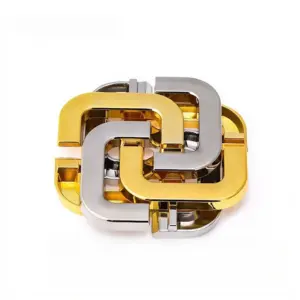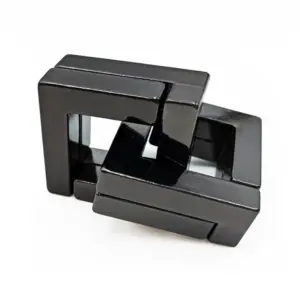
The clock on my desk just ticked past midnight, and the only sound in the room is the rhythmic, metallic snick-clink of two pieces of zinc alloy sliding against each other. I’ve been holding the Cast Keyhole Gold & Silver for exactly forty-two minutes. My thumb is slightly sore from pressing against the polished chrome edge, but I can’t put it down. There is a specific point in a metal puzzle’s solve—usually about thirty minutes in—where the frustration transforms into a strange, meditative focus. You stop trying to force the pieces and start listening to them.
Metal puzzles are the ultimate truth-tellers of the mechanical world. Unlike wooden puzzles, which can occasionally be “cheated” with a bit of humidity-swollen force, metal is uncompromising. It either fits or it doesn’t. After testing over 200 of these objects, I’ve realized that the best ones aren’t just about the “Aha!” moment of separation; they are about the “Oh no” moment of trying to put them back together. This is a hobby of precision, patience, and the occasional realization that your spatial reasoning isn’t quite as sharp as you thought it was.
My thesis is simple: A great metal puzzle should feel like a piece of jewelry but act like a locked vault. It should punish impatience and reward the kind of light-touch observation that we rarely use in our screen-saturated lives. If you are looking for a way to reclaim your attention span, you’ve come to the right place.
The Uncompromising Physics of the Disentanglement Puzzle
Most people start their journey with wire puzzles—those twisted bits of steel you find in gift shops. But the real meat of the hobby lies in “cast” puzzles. These are high-pressure die-cast pieces, often finished in gold, silver, or bronze tones. The mechanical puzzle as we know it today owes a massive debt to these casting techniques because they allow for internal mazes and hidden tolerances that wire simply can’t replicate.
When you pick up a piece like the Gold Silver Double Fish Metal Puzzle ($13.99), you immediately notice the weight. There is a psychological weight to metal that wood lacks. It feels permanent. The Double Fish is what we call a “disentanglement” challenge. The goal is to separate the two halves, but the path is rarely a straight line. It’s a series of rotations, slides, and pivots. I often tell beginners that if they feel like they need to use more than two fingers of pressure, they are doing it wrong. Metal doesn’t forgive force; it just scratches.
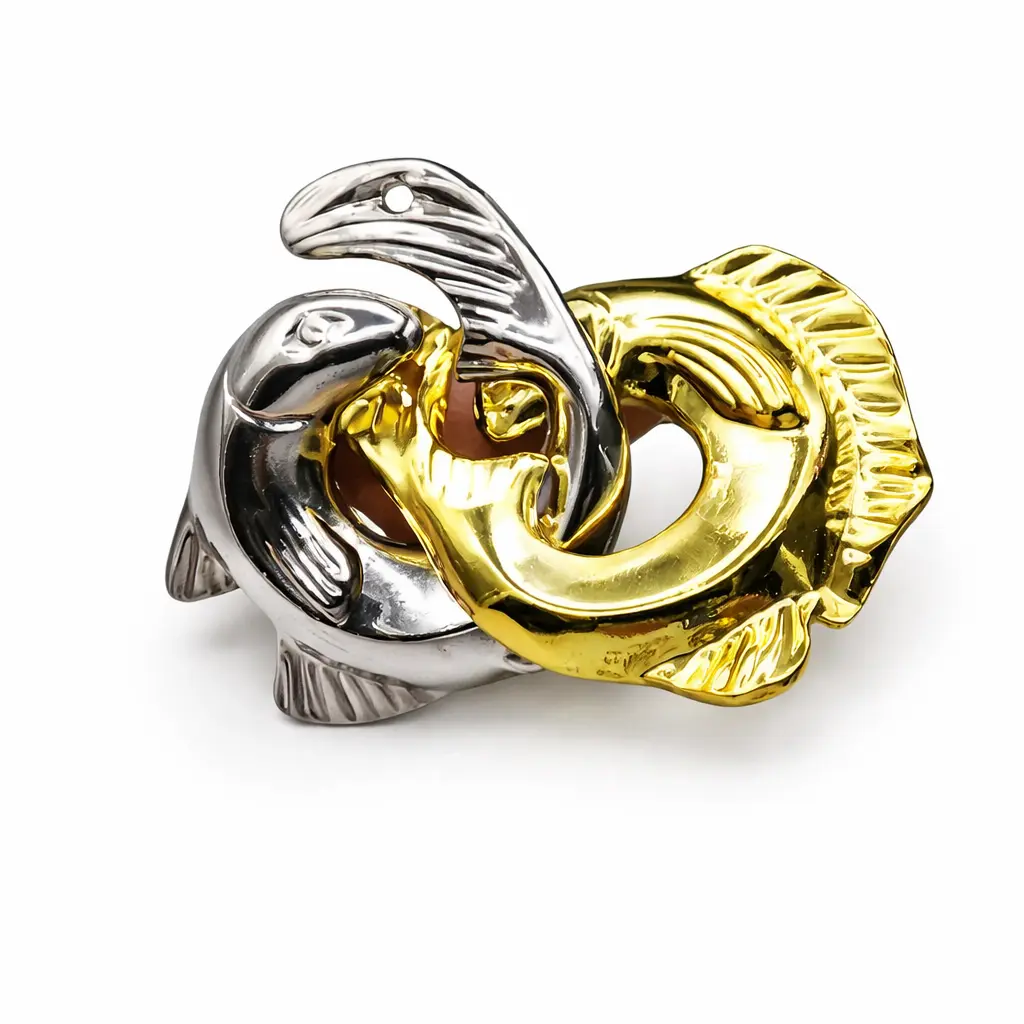
The beauty of these objects is that they function as “fidget toys” for the intellectually curious. While you’re on a long conference call, having something like the Metal Starfish Puzzle Ring ($13.99) in your hand provides a tactile anchor. I’ve found that my brain actually processes complex information better when my hands are occupied with a low-stakes mechanical problem. It’s a way of offloading nervous energy into a 60mm piece of chrome.
Why Your First Solve Is Usually an Accident
There is a phenomenon in the puzzle community called “The Accidental Solve.” It happens most often with puzzles that rely on gravity or hidden internal tracks. You’re fiddling with it while watching a movie, and suddenly—clink—the pieces fall apart in your lap. You look down, horrified, because you have no idea how you did it.
This happened to me with the 5 Piece Cast Spiral Metal Puzzle. I was trying to explain the concept of “interlocking wedges” to my nephew, and the thing just disintegrated in my hands. The real challenge of the Spiral isn’t taking it apart; it’s the reassembly. Because each of the five pieces is nearly identical, you have to find the specific “key” piece and the exact sequence to lock the disc back together. It’s a lesson in reverse engineering.
For those who find themselves constantly taking things apart just to see how they work, these puzzles are a safe outlet. You aren’t going to void a warranty here. You are simply engaging with the history of mind puzzles, which dates back centuries. Some of these mechanisms are based on ancient Chinese designs that have been refined by modern CAD software to have tolerances within fractions of a millimeter.
Cast Keyhole Gold & Silver
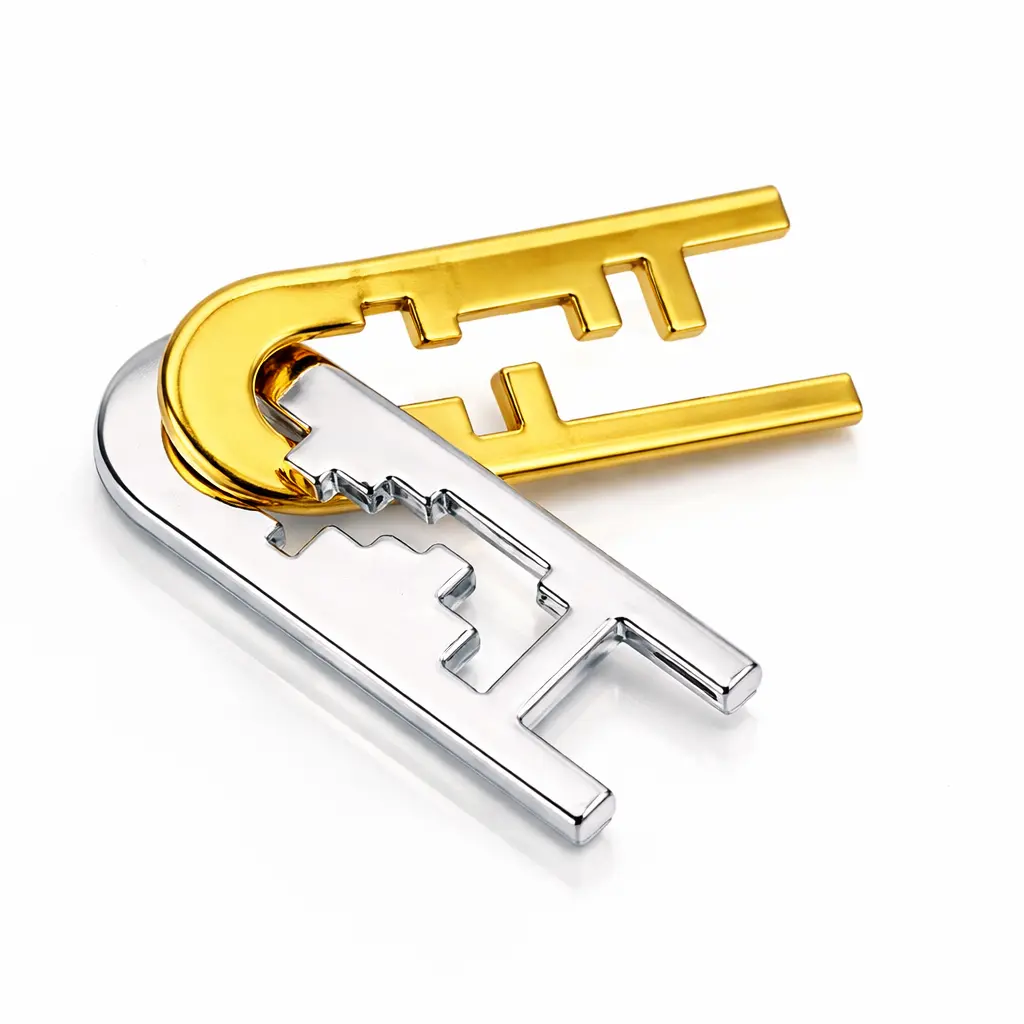
The Cast Keyhole Gold & Silver ($13.99) is the puzzle I hand to people who think they are “too smart” for brain teasers. At first glance, it looks like two flat pieces of metal with some notches. It seems like it should just slide apart. But the “keyhole” name is a hint—it’s a 3D maze disguised as a 2D object.
When I first unboxed this, I spent twenty minutes just sliding the silver piece back and forth against the gold one. The finish is exceptionally smooth, which is actually a tactical disadvantage because you can’t feel the “grip” of where the internal maze begins. You have to visualize the hidden grooves inside the flat surfaces. It’s a 75mm masterclass in spatial logic. I’d recommend this for anyone who enjoys “hidden path” puzzles. The only downside? The polished finish is a fingerprint magnet. If you’re obsessive about aesthetics, keep a microfiber cloth nearby.
5 Piece Cast Spiral Metal Puzzle
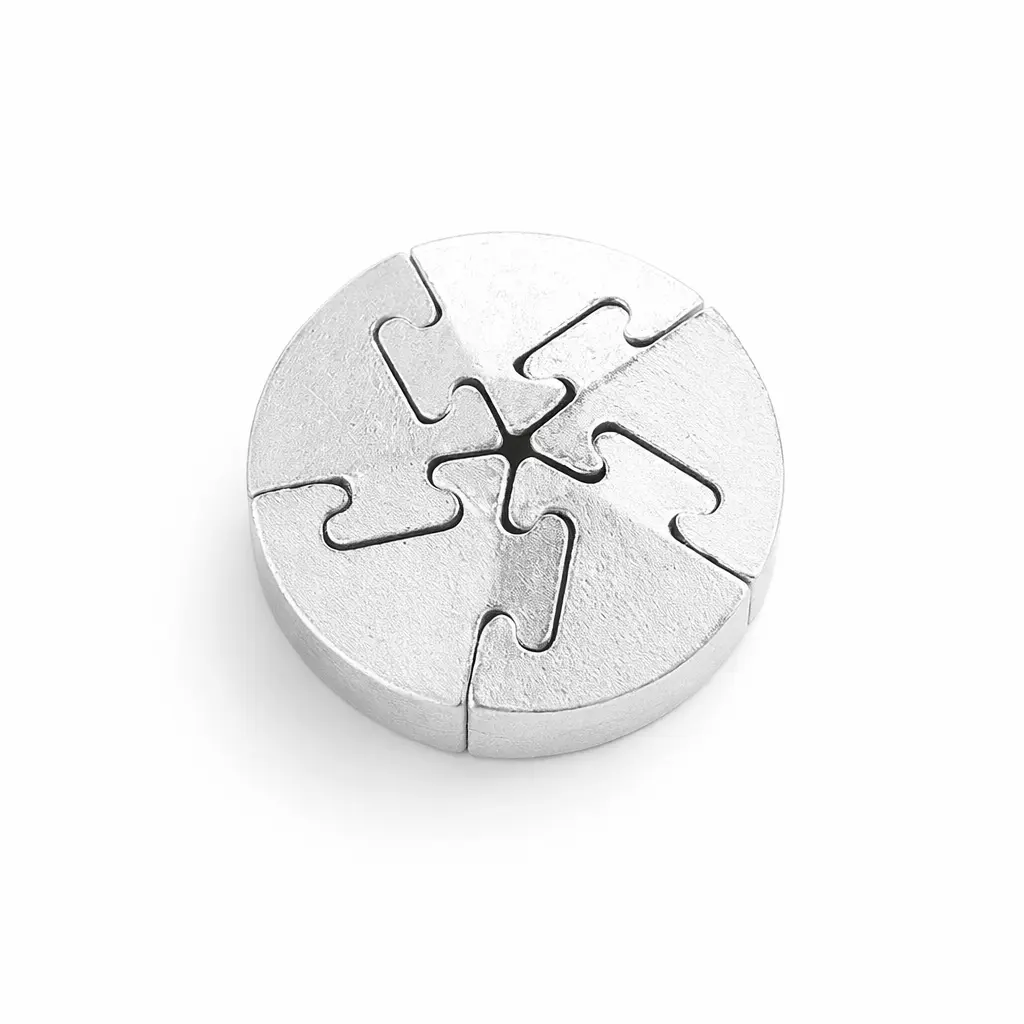
The 5 Piece Cast Spiral Metal Puzzle ($14.99) is a deceptive little beast. It’s a 4cm disc that fits in that tiny pocket of your jeans—the one no one uses. Most puzzles have a clear “start” and “end.” The Spiral is a loop. You have to find the one wedge that has a slightly different internal geometry.
I’ve had this on my coffee table for three months. It’s the only puzzle that has stumped every single guest who has visited. One friend, a mechanical engineer, spent an hour with it and eventually declared it “mathematically impossible” right before the pieces finally slid apart. The genius of the design is that it requires you to move multiple pieces simultaneously. It isn’t a sequential discovery; it’s a coordinated collapse. If you want something that feels like a magic trick once you master it, this is the one.
Dual Seahorse Gold & Silver Brain Teaser
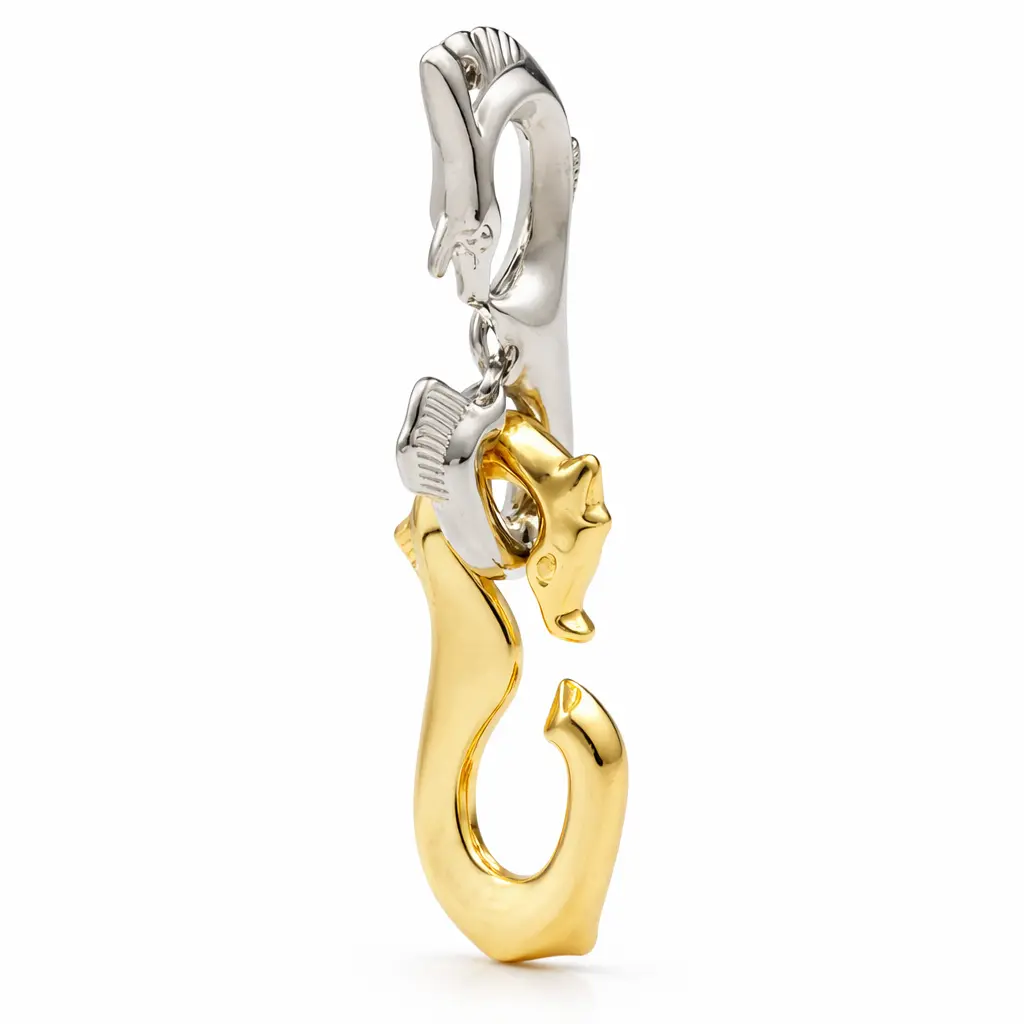
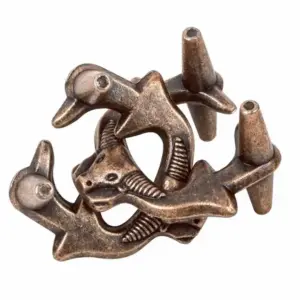
If the Spiral is about geometry, the Dual Seahorse Gold & Silver Brain Teaser ($14.99) is about hidden mechanics. This is a “twist” puzzle. It looks like a simple disentanglement, but there is a threaded screw mechanism hidden within the “tails” of the seahorses.
I’ll be honest: I usually dislike puzzles that look like “art,” as the aesthetics often mask a boring solution. The Seahorses are the exception. The weight distribution is perfect, and the mirror-polished finish makes it feel more like a high-end paperweight. It’s rated for ages 14+, but I’ve found it’s a great “intro” puzzle for adults because the solution is logical rather than lucky. You aren’t fishing for a random movement; you are uncovering a machine. It’s a perfect companion to translucent assembly challenges if you’re building a diverse collection.
Magic Golden Mandarin Lock
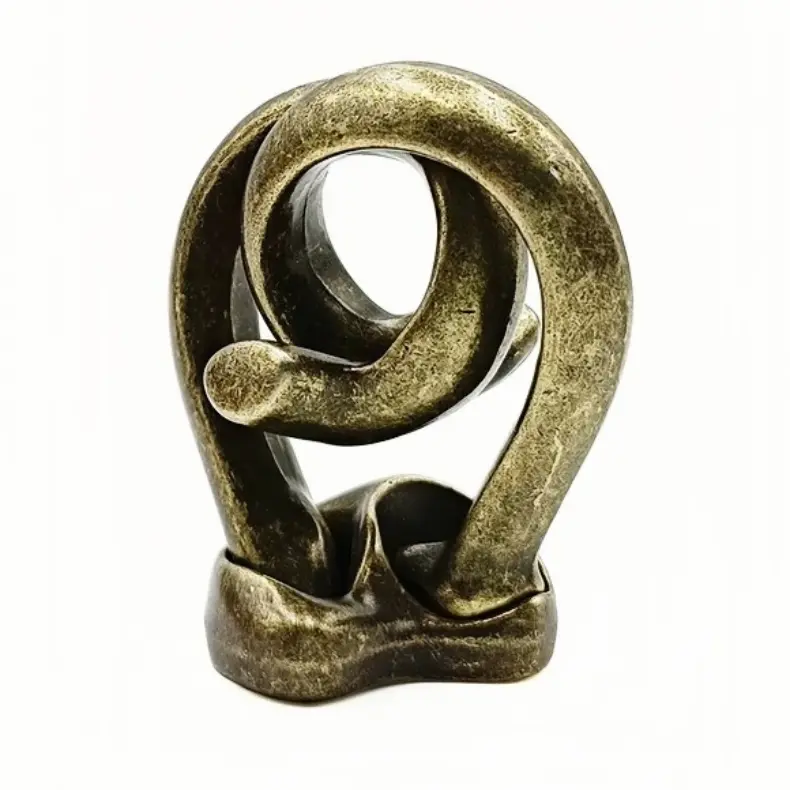
The Magic Golden Mandarin Lock ($18.98) taps into the deep history of Joseph Needham and his research into Chinese technological ingenuity. This isn’t just a puzzle; it’s a cultural artifact. It consists of a base and two curved columns that seem fused together.
Solving this feels like picking a lock from the 18th century. You have to find the “concealed paths.” I’ve noticed that people who are good at chess or ancient numerical logic games tend to gravitate toward this one. It requires a high level of concentration and a very light touch. If you pull too hard, the mechanism jams. It’s a test of temperament as much as intelligence. At nearly $19, it’s one of the more expensive items in this category, but the “Golden” finish and the complexity of the three-component interlock justify the price for a serious collector.
Metal Screw Interlock Riddle
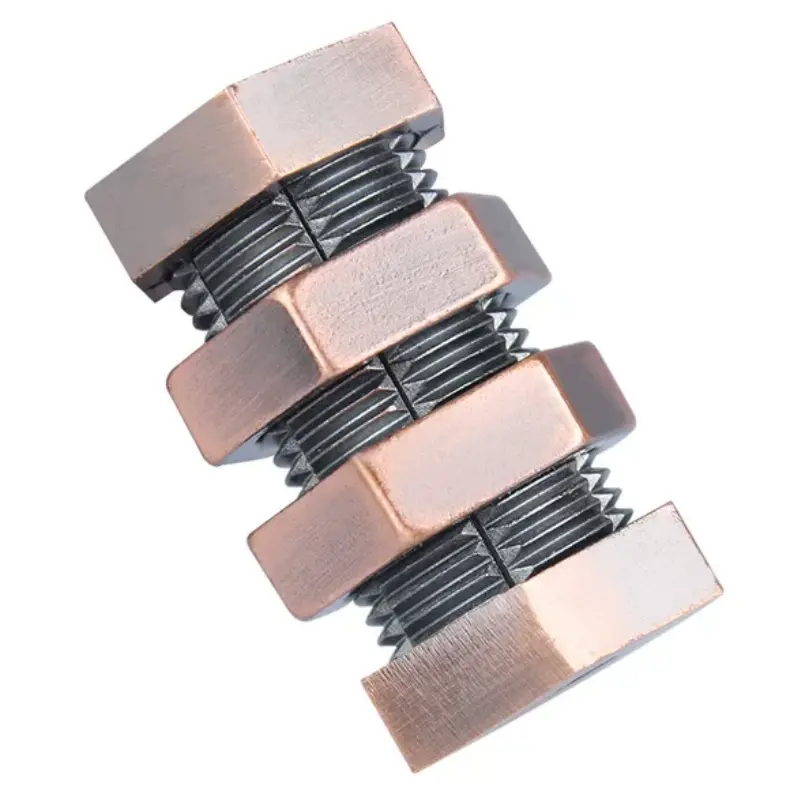
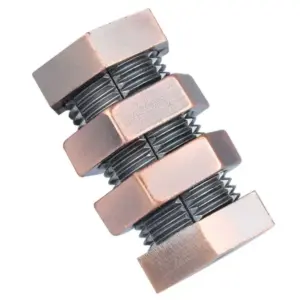
The Metal Screw Interlock Riddle ($13.98) is the blue-collar worker of the puzzle world. It’s a bolt and a nut that refuse to do what bolts and nuts are supposed to do. This is a “sequential movement” puzzle, meaning you have to perform a specific series of twists and presses in the correct order.
I keep this one in my car’s center console. It’s the perfect “waiting in the parking lot” activity. The precision is impressive—the threads are clean, and there’s no “slop” in the mechanism. One wrong turn really does make it harder, as you can accidentally reset your progress without realizing it. It’s a great gift for the “handyman” in your life who thinks they know everything about hardware. For a different kind of mental workout, you might also enjoy math-based educational tools that use similar logic in a flat format.
The Peak Moment: The 10-Year-Old vs. The Engineer
I promised you a peak insight into why we solve these things, and it comes down to a Sunday afternoon last year. I had two people in my living room: my neighbor, a senior aerospace engineer, and my 10-year-old niece. I handed them both a copy of the 5 Piece Cast Spiral Metal Puzzle.
The engineer immediately began looking for seams. He was talking about “tolerances” and “shear points.” He was trying to outthink the designer. He was frustrated within ten minutes because the metal wasn’t behaving according to his mental model of rigid structures.
My niece, on the other hand, just started “petting” the puzzle. She was moving the pieces gently, feeling where they wanted to go. She wasn’t trying to solve it; she was exploring it. She had it apart in four minutes.
The lesson? Metal puzzles are designed to exploit our assumptions about how hard materials should behave. We assume metal is fixed, but in a puzzle, metal is fluid. The most successful solvers are the ones who can stop “thinking” and start “feeling.” This is the “Peak” of the hobby—the moment you realize that your adult brain, with all its degrees and experience, is actually a hindrance to basic spatial discovery. To get better, you have to unlearn the urge to dominate the object and instead learn to dance with it.
The Aesthetics of Frustration: Metal as Decor
One reason I prefer metal over plastic or even high-end wood is the “desk appeal.” A solved Silver Heart Lock Puzzle ($18.89) doesn’t look like a toy. It looks like a piece of modern sculpture.
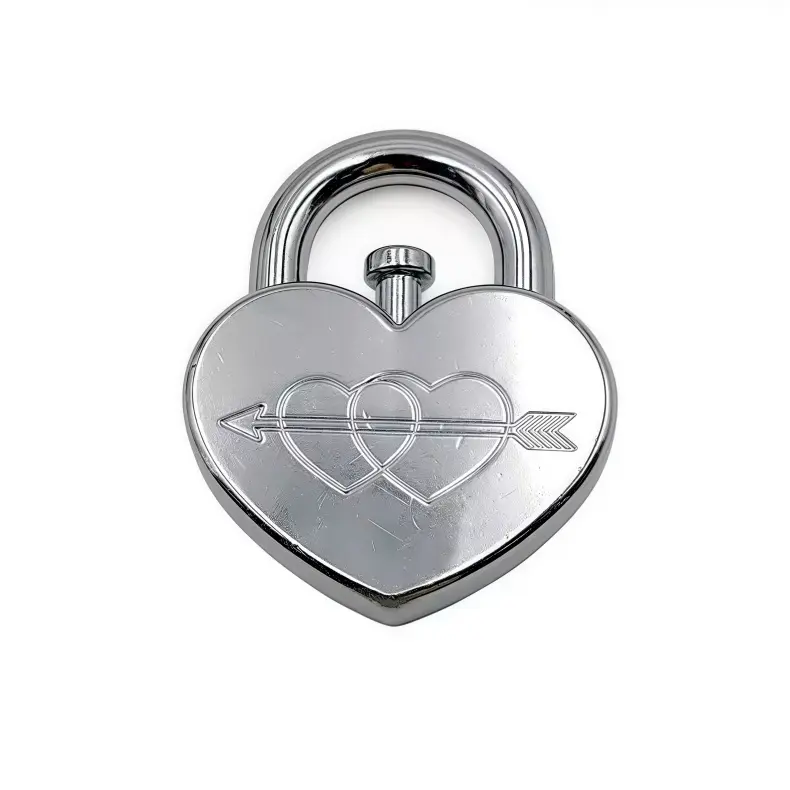
Silver Heart Lock Puzzle — $18.89
The Silver Heart Lock is particularly good for this. It’s silver-plated and has a weight that makes it feel like an heirloom. I often suggest this as a “long-distance” gift. You send it to someone you love, they solve it, and then it sits on their dresser as a reminder of the challenge. It’s a “cultural symbolism” piece that bridges the gap between a brain teaser and a romantic gesture.
For those who prefer a more traditional look, the Golden Chinese Knot Metal Puzzle ($12.98) offers a 3D take on ancient cordage.
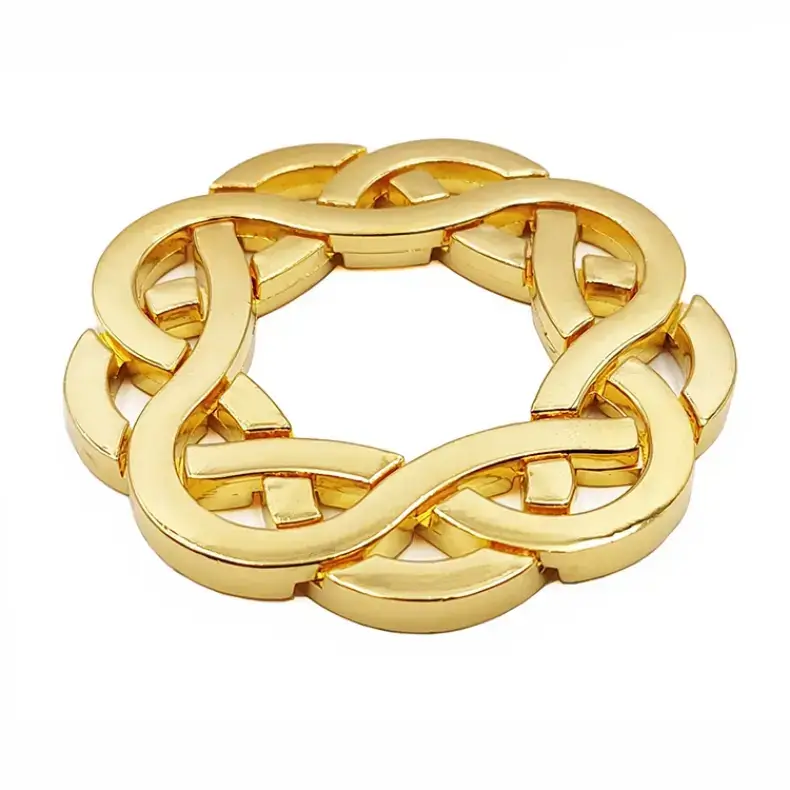
The Chinese Knot is a logic and dexterity challenge that looks stunning under a desk lamp. It’s one of the few puzzles I own that I haven’t put away in a drawer. It stays out because the gold-tone finish catches the light in a way that makes it look far more expensive than its twelve-dollar price tag. If you’re looking for a place to store these solved masterpieces, consider some tactile metal storage solutions to keep the dust off the polished surfaces.
Gifting: How to Avoid Being the “Mean” Friend
Gifting a metal puzzle is a delicate art. If you give someone a puzzle that’s too hard, it will sit in a drawer, unsolved and mocking them, for a decade. If it’s too easy, they’ll solve it in thirty seconds and feel like you bought them a toddler’s toy.
For the “I’ve seen everything” person, go for the Take the Thorn Out of the Cage Puzzle ($10.99).
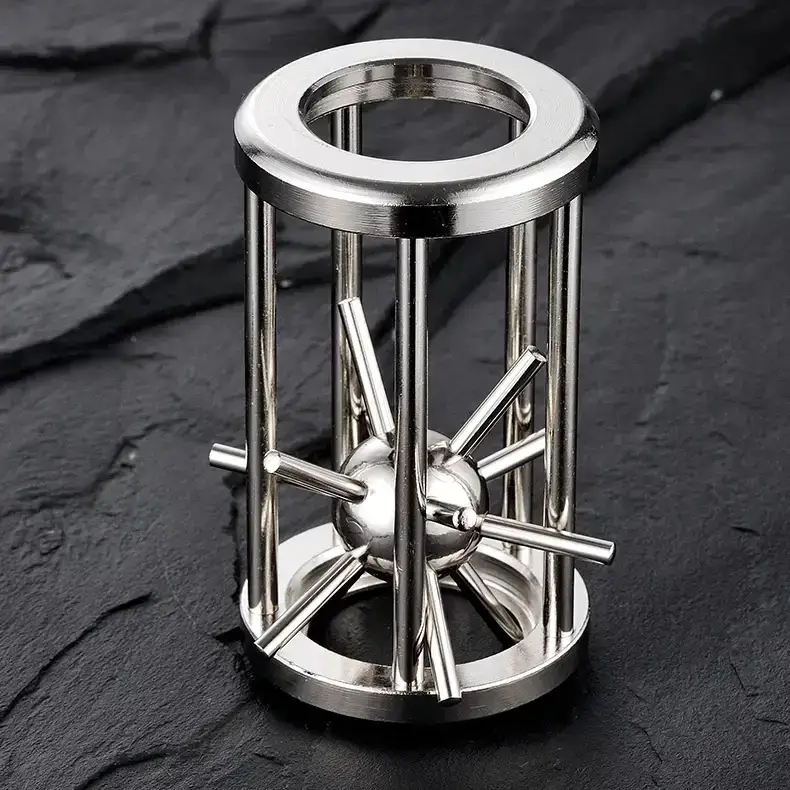
This is a classic “cage” design where you have to manipulate a spiked object through a narrow opening. It looks aggressive, but the solution is elegant. It’s a durable alloy build that can survive being dropped—which will happen when the person inevitably gets frustrated. At just over ten dollars, it’s the best “stocking stuffer” or “Secret Santa” option in the lineup. It’s also a great way to introduce someone to the concept of kinetic metal physics toys that require similar manual dexterity.
If you’re buying for a coworker, the Metal Starfish Puzzle Ring ($13.99) is the safest bet.
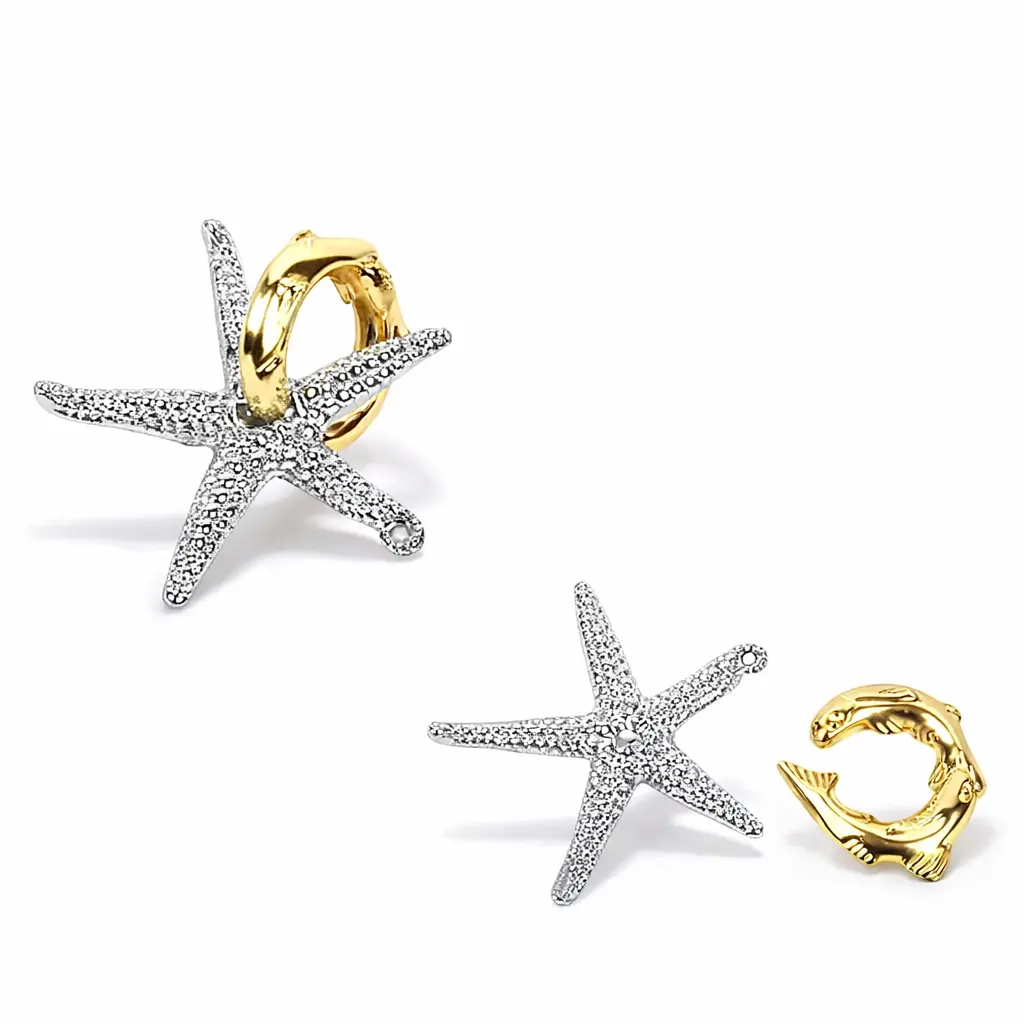
Metal Starfish Puzzle Ring — $13.99
It’s approachable. People see a “ring” and a “starfish” and they intuitively know what to do. There’s no intimidating “instruction manual” feel to it. It’s a five-to-fifty minute solve depending on the person’s patience level. It’s the kind of object that starts conversations. I’ve seen people pass this around at dinner parties, and it always results in a crowd of people leaning in, trying to offer “helpful” advice.
Quick-Reference Comparison Table
Metal Puzzle FAQ: Everything You’re Afraid to Ask
How do I solve a metal puzzle without the instructions?
The secret is in the tolerances. Hold the puzzle up to a bright light and look for the smallest gaps. These are your pathways. Most beginners make the mistake of pulling too hard. Instead, try to “float” the pieces. If you hit a dead end, don’t just back up—rotate the pieces as you move them. Many cast puzzles use a “screw” or “helix” motion that isn’t obvious from the outside. If you find yourself truly stuck, put it down for 24 hours. Your brain will continue to process the spatial map while you sleep.
Why do some metal puzzles have two different colors (gold and silver)?
Aside from looking great on a shelf, the two-tone finish is often a functional hint. In puzzles like the Cast Keyhole Gold & Silver, the color helps you track which piece is currently moving through the internal maze. It allows you to visualize the “map” in your head. If both pieces were the same color, the difficulty would spike significantly because you’d lose your orientation every time you flipped the puzzle over.
Are metal puzzles better than wooden ones?
“Better” is subjective, but metal is certainly more durable. Wooden puzzles can be affected by humidity—they swell in the summer and shrink in the winter, which can change the difficulty or even make them impossible to solve. Metal is consistent. Also, metal allows for much smaller, more intricate designs. You can fit a complex metal puzzle in your pocket, whereas a wooden puzzle of the same difficulty would likely be the size of a grapefruit. However, wood offers a warmth and “click” that metal can’t replicate. Many collectors enjoy translucent assembly challenges as a middle ground between the two.
What should I do if my metal puzzle gets stuck?
First, stop pulling. If it’s stuck, you’ve likely forced a piece into a position it wasn’t meant to be in. Most cast puzzles are made of zinc alloy, which is strong but can be bent if you use pliers (please, never use tools on a puzzle). Try applying a tiny drop of dry lubricant or even just a bit of dish soap if you think there’s grit in the mechanism. Usually, the “stuck” feeling is just the puzzle’s way of telling you that you’ve taken a wrong turn in the maze.
Can these puzzles help with anxiety or ADHD?
While I’m a puzzle reviewer and not a doctor, there is significant anecdotal evidence in the community that “fidgeting” with a mechanical challenge can help ground the mind. The tactile feedback of metal—the weight, the temperature, the sound—provides a sensory anchor. It’s a form of “productive distraction.” Instead of scrolling through a feed that creates anxiety, you are focusing on a solvable, physical problem. It’s a closed loop of effort and reward.
Are metal puzzles safe for children?
Most cast puzzles are recommended for ages 14 and up. This isn’t because they are dangerous, but because they require a level of patience and fine motor control that younger children might not have developed yet. There’s also the risk of small pieces being a choking hazard. For younger kids, I usually recommend starting with math-based educational tools to build the logic skills first.
How do I clean my metal puzzles?
Finger oils can dull the finish over time, especially on “gold” or “bronze” plated pieces. A simple wipe with a microfiber cloth after a long session is usually enough. If a puzzle has a lot of intricate grooves, like the Golden Chinese Knot Metal Puzzle, you can use a soft-bristled toothbrush to clear out any dust. Avoid harsh chemicals, as they can strip the plating.
Is it “cheating” to look up the solution on YouTube?
I respectfully disagree with the purists on this one. If you have been stuck on a puzzle for three weeks and it’s no longer bringing you joy, look up the first 10 seconds of a solution video. Sometimes you just need to know the first “move” to unlock your brain’s ability to see the rest of the path. The goal is to learn, not to suffer. However, once you see the solution, you can never “un-see” it, so use this as a last resort.
What is the most difficult type of metal puzzle?
Generally, “sequential discovery” puzzles are the hardest. These are puzzles where you have to find hidden tools (like a small pin or a magnet) inside the puzzle itself to use on other parts of the mechanism. Among the ones listed here, the 5 Piece Cast Spiral Metal Puzzle is the most difficult because it requires simultaneous movement of multiple parts.
Do metal puzzles lose their “challenge” once solved?
The first solve is about discovery. The second solve is about mastery. I find that I enjoy a puzzle most the third or fourth time I solve it, because that’s when I finally understand the logic of the designer. It’s like learning a piece of music. The first time is a struggle, but eventually, it becomes a fluid, satisfying motion. Plus, the real fun is handing it to a friend and watching their brain melt.
Why are some puzzles so much more expensive than others?
It usually comes down to the complexity of the mold and the quality of the finish. A puzzle with multiple interlocking parts and a high-polish plating, like the Magic Golden Mandarin Lock, requires more manufacturing steps than a simpler disentanglement piece. You’re also paying for the design—many of these are created by world-class mathematicians and artists.
Can I travel with metal puzzles?
Yes, they are great for planes and trains. However, be aware that a solid lump of metal in your carry-on might trigger an extra bag check at TSA. I’ve had to explain what a “cast puzzle” is to more than one security agent. They usually find it interesting once they realize it’s just a brain teaser.
What 40 Hours of Brass and Frustration Actually Taught Me
If you’ve read this far, you probably realize that this isn’t just about buying a toy. It’s about choosing a specific kind of frustration. We live in a world that tries to make everything “frictionless.” Our apps are designed to be easy; our services are designed to be instant. Metal puzzles are a deliberate injection of friction into your day. They are a reminder that some things worth doing—like understanding a complex system—take time and can’t be bypassed with a “skip” button.
When I finally solved that Cast Keyhole Gold & Silver ($13.99) at 1:15 AM, I didn’t feel like a genius. I felt like I had finally learned how to listen to the material. I had stopped fighting the zinc and started following it. That is the ultimate lesson of the hobby: the solution is already there, hidden in the geometry. Your job is just to get out of your own way.
If you’re ready to start your own collection, I recommend beginning with the Cast Keyhole. It’s the perfect balance of aesthetic beauty and “just one more try” gameplay. It taught me more about patience than any self-help book ever could. And once you’ve mastered the metal, you might find that you have the focus to tackle even more complex tactile metal storage solutions or dive into the history of mechanical design. The rabbit hole goes deep, and the metal is always waiting.