
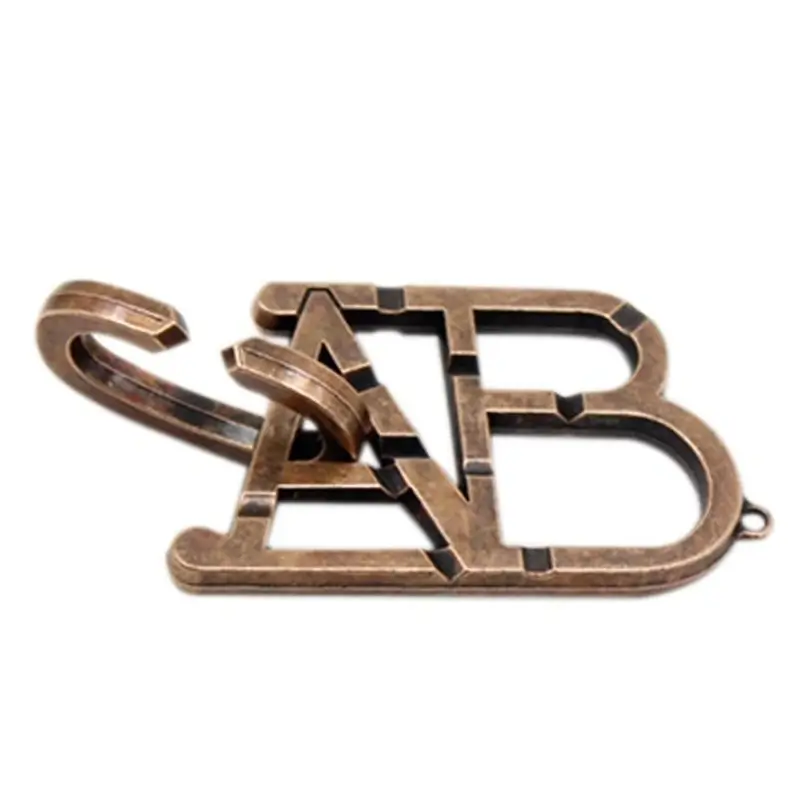
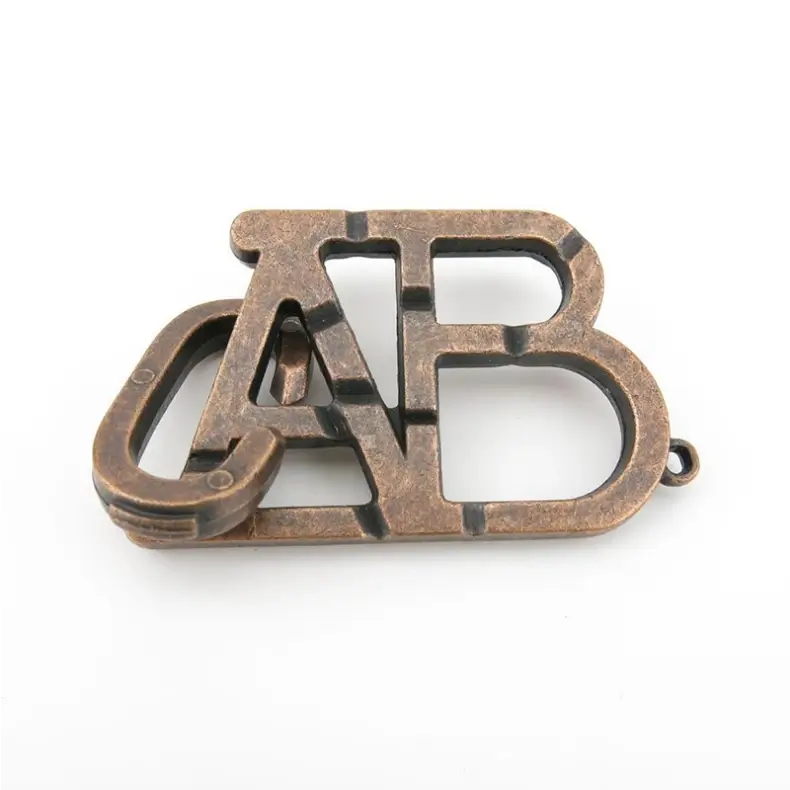
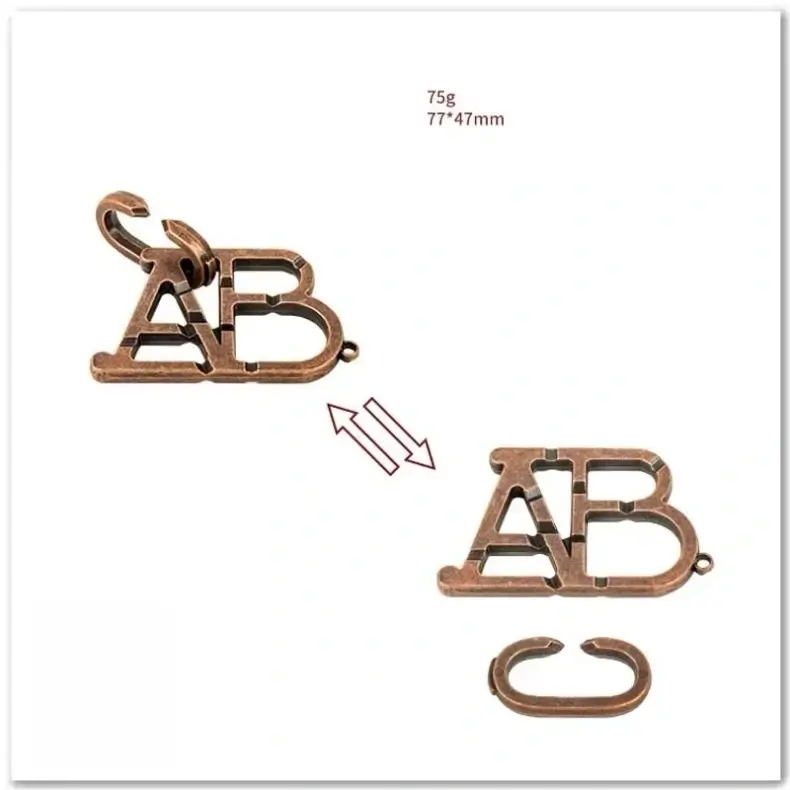
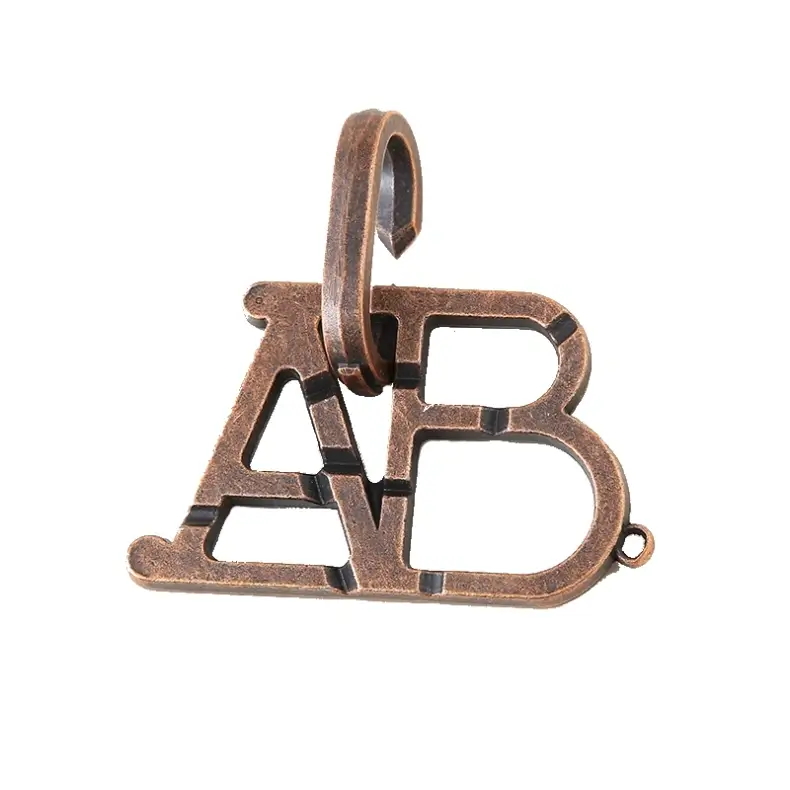
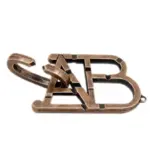
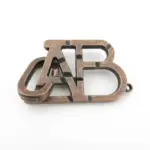
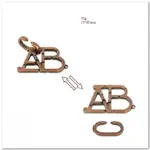
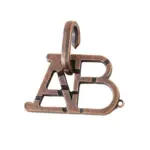
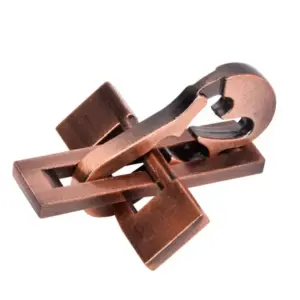
The ABC Maze Lock is a three-piece metal secret-lock puzzle from Tea-Sip, descended from the Luban lock family of ancient China. Three interlocking components shaped like the letters A, B, and C form a three-dimensional maze; your goal is to free the C piece. It rewards observation and spatial reasoning over force — no batteries, no screens.
Specifications
| Material | Metal |
|---|---|
| Mechanism | Secret lock — hidden-sequence maze |
| Pieces | 3 interlocking components shaped like the letters A, B, and C |
| Objective | Separate the C piece from the interlocked A and B |
| Power | None — fully mechanical |
| Price | $12.99 |
How It Plays
Pick it up and the first thing you notice is the weight — solid metal, with smooth, precisely-cut edges that let the pieces move without sticking or jamming. Your fingers naturally start by tugging at the C piece. That never works — the design defeats direct pulling entirely. So you turn the puzzle over, feel how each letter shifts against the others, and start mapping the internal maze by touch.
The common sticking point: treating a sequence problem as a strength problem, repeating the same moves harder instead of hunting for a new one. The breakthrough comes from slowing down: watch how the channels align, chain the movements in the right order, and the C slides free with almost no resistance — the aha moment this Luban-family design has delivered for centuries.
Who It’s For
For children, it is a screens-free, battery-free introduction to mechanical movement and structural integrity. For adults, it works as a focused desk break: a physical challenge that demands complete presence. It fits classrooms, family puzzle sessions, and personal brain training, and its metal construction and Luban-lock heritage make it a substantial small gift for anyone who enjoys classic mechanical puzzles.
FAQ
How long does it take to solve?
There is no fixed time. It is a sequence puzzle: solvers who keep pulling stall indefinitely, while those who study how the three pieces move against each other progress much faster. The difficulty is finding the order of moves, not executing them.
Is it safe for kids?
It is a solid metal puzzle with no batteries, screens, or electronic parts, and the design is used to introduce children to mechanical movement and spatial reasoning. Younger children should play with adult supervision.
What should I do if I get stuck?
Stop forcing it — direct pulling never succeeds by design. Set it down, come back fresh, and work in small movements while watching how the pieces line up. Tea-Sip’s rule of thumb: if a move needs muscle, it is the wrong move.
Can it be reset and solved again?
Yes. Reassembling the A, B, and C pieces runs the discovered sequence in reverse — a second puzzle in itself. The durable metal construction holds up to repeated take-apart cycles, and handing it to someone new restores the full challenge.
Keep exploring: Metal Puzzles · Alloy S Lock Puzzle · Alloy Triangle Lock Puzzle

Carol Lee –
I love the heritage behind the ABC Maze Lock. It¡¯s not just a puzzle; it¡¯s a piece of history that challenges your mind. A perfect mix of art and engineering!
Bob Johnson –
The craftsmanship of this ancient puzzle is impressive. Every move requires thought and precision¡ªjust what I needed to unwind. Highly recommended for any puzzle enthusiast!
David Kim –
The ABC Maze Lock truly lives up to its reputation. Its intricate design and historical roots make it a rewarding mental challenge. An excellent decorative and educational piece!
Alice Smith –
I was captivated by the ABC Maze Lock¡¯s blend of history and clever engineering. Its deceptive simplicity made each twist a delightful challenge. Truly a conversation starter!
Eva Brown –
A brilliant puzzle that marries ancient craftsmanship with modern intrigue. Every twist surprises you with a new challenge. A must-have for those who appreciate intellectual puzzles!