
A Pocket-Sized Challenge That Goes Where You Go
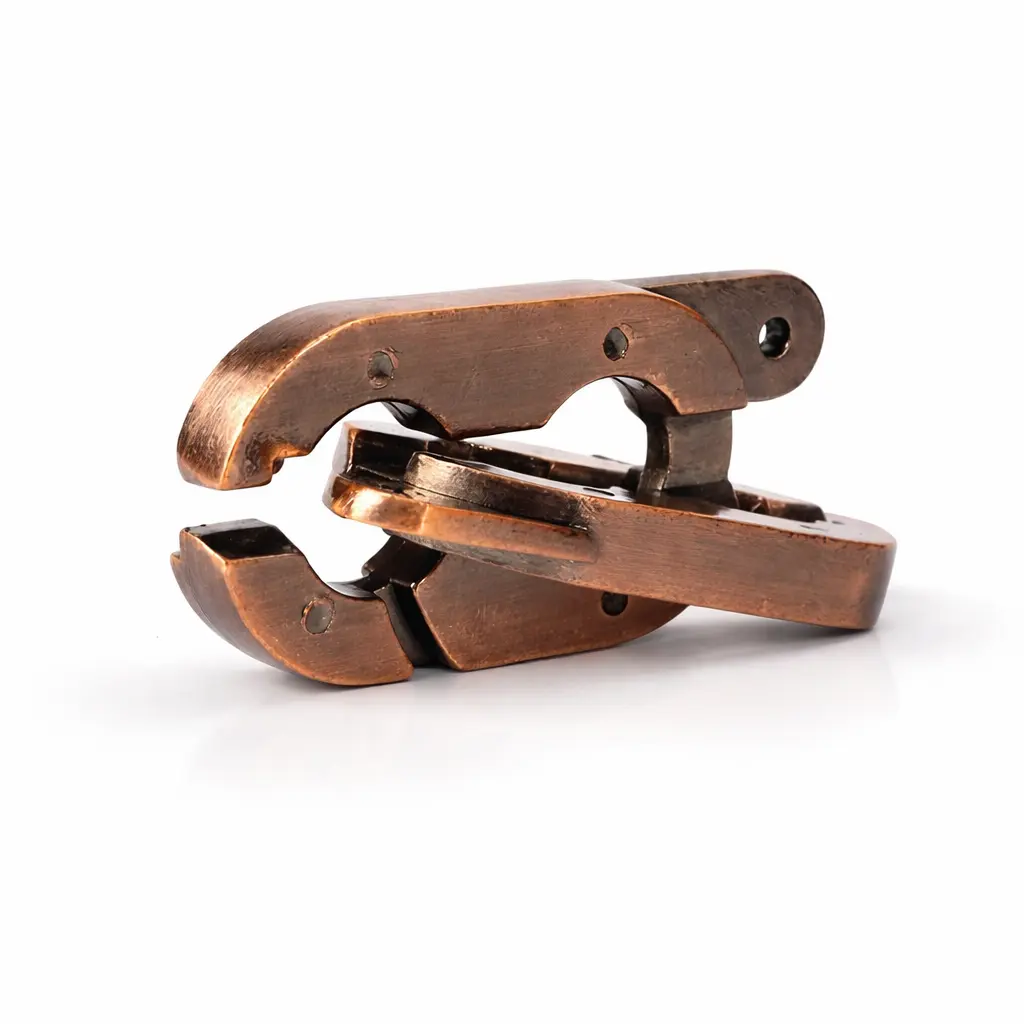
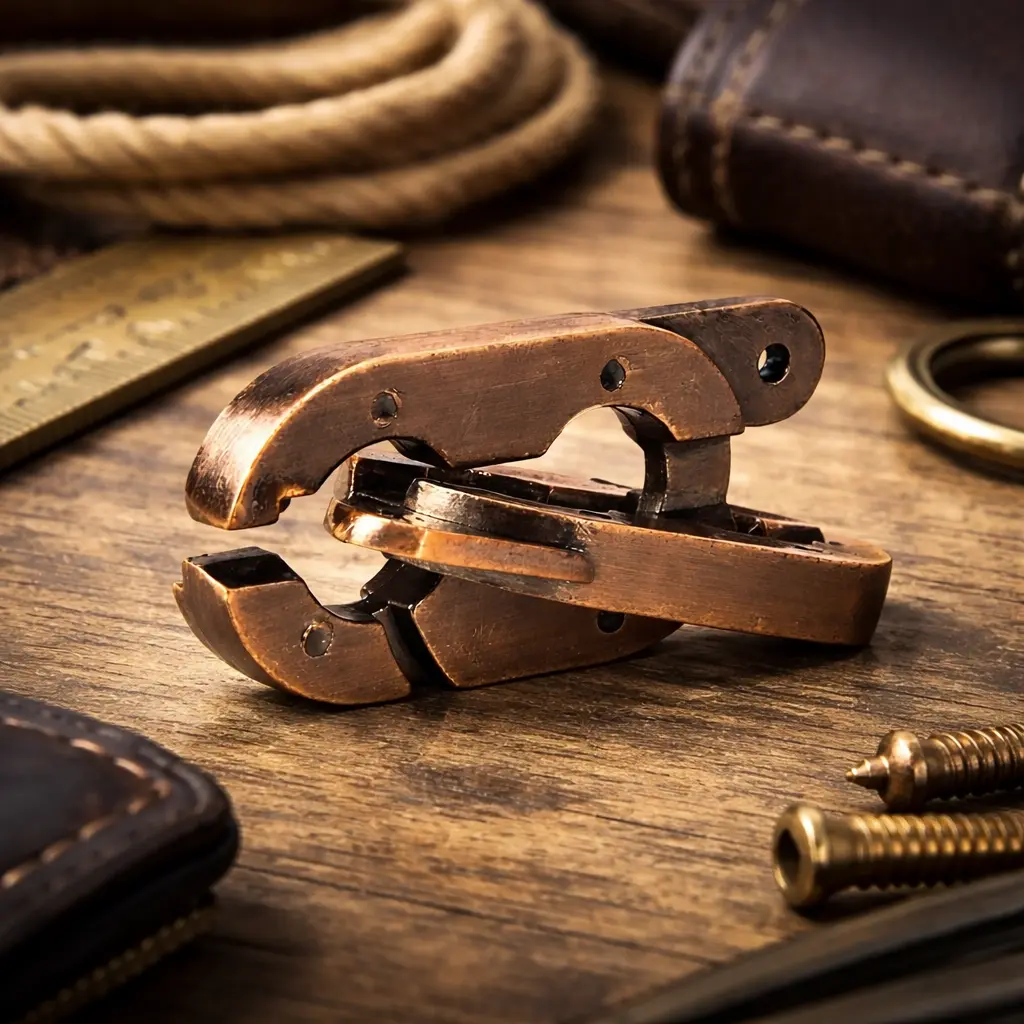
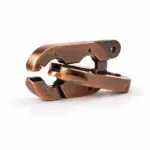
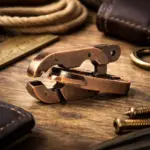
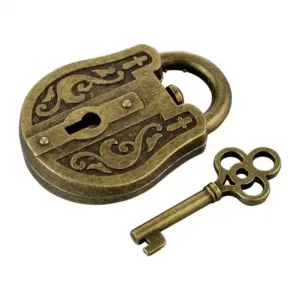
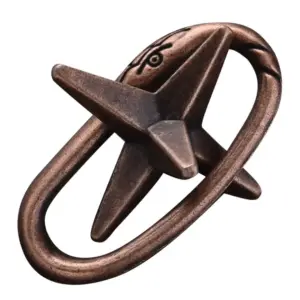
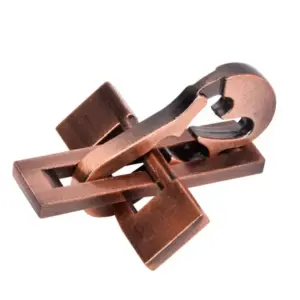
The first thing you notice is the weight. This isn’t stamped sheet metal or a hollow novelty—it’s solid cast alloy settling into your palm with the kind of heft that signals actual craftsmanship. The antique bronze finish catches light differently depending on the angle, revealing subtle patina variations that suggest hand-finishing rather than factory uniformity.
Two pieces. One hidden sequence. No moving parts beyond the pieces themselves.
Rotate the puzzle slowly, and you’ll start to understand its logic. The mechanism doesn’t announce itself—it waits for you to discover the path through patient observation rather than aggressive manipulation. There’s something almost meditative about it: the solution reveals itself to those who stop forcing and start listening.
The deepest waters don’t rush. They settle low, and everything flows toward them.
This isn’t the puzzle that screams for attention on your desk. It’s the one that earns its place through quiet usefulness—always within reach when your hands need something to do, always ready to reset when you need another five minutes of focused distraction.
What It Feels Like to Solve
Your first instinct will be to pull. Everyone pulls. The pieces resist with a stubbornness that suggests either genius design or permanent fusion—you won’t know which until you stop forcing and start observing.
Somewhere between the third rotation and the fifth experimental twist, something shifts. Not physically, at least not yet. Something in your perception. The puzzle stops looking like two random shapes welded together and starts revealing its logic.
When separation finally happens, it arrives with a quiet metallic whisper rather than a dramatic snap. Satisfying, but understated. The kind of moment that makes you immediately want to reassemble and repeat.
Reassembly, it turns out, demands the same sequence in reverse—but with less visual guidance. This is where most solvers discover whether they actually understood the mechanism or just got lucky.
For those who enjoy two-piece puzzle challenges, the keyring format adds a practical dimension: clip it to your bag, and you’ve got a waiting-room fidget that doubles as a conversation piece.
Built to Be Handled
Cast metal puzzles earn their reputation through weight and durability. Unlike plastic alternatives or thin wire brain teasers, solid alloy construction means you can toss this in a bag without worrying about bent components or cracked housings.
The antique bronze finish appears designed for daily contact. Over time, handling develops subtle patina character—the kind that puzzle collectors sometimes seek out deliberately. Each piece carries that warmth differently, making your puzzle genuinely yours after months of use.
Run your finger along any edge, and you’ll find consistent polish rather than the rough seams that plague cheaper imports. Important when something’s going to live in your pocket next to keys and coins.
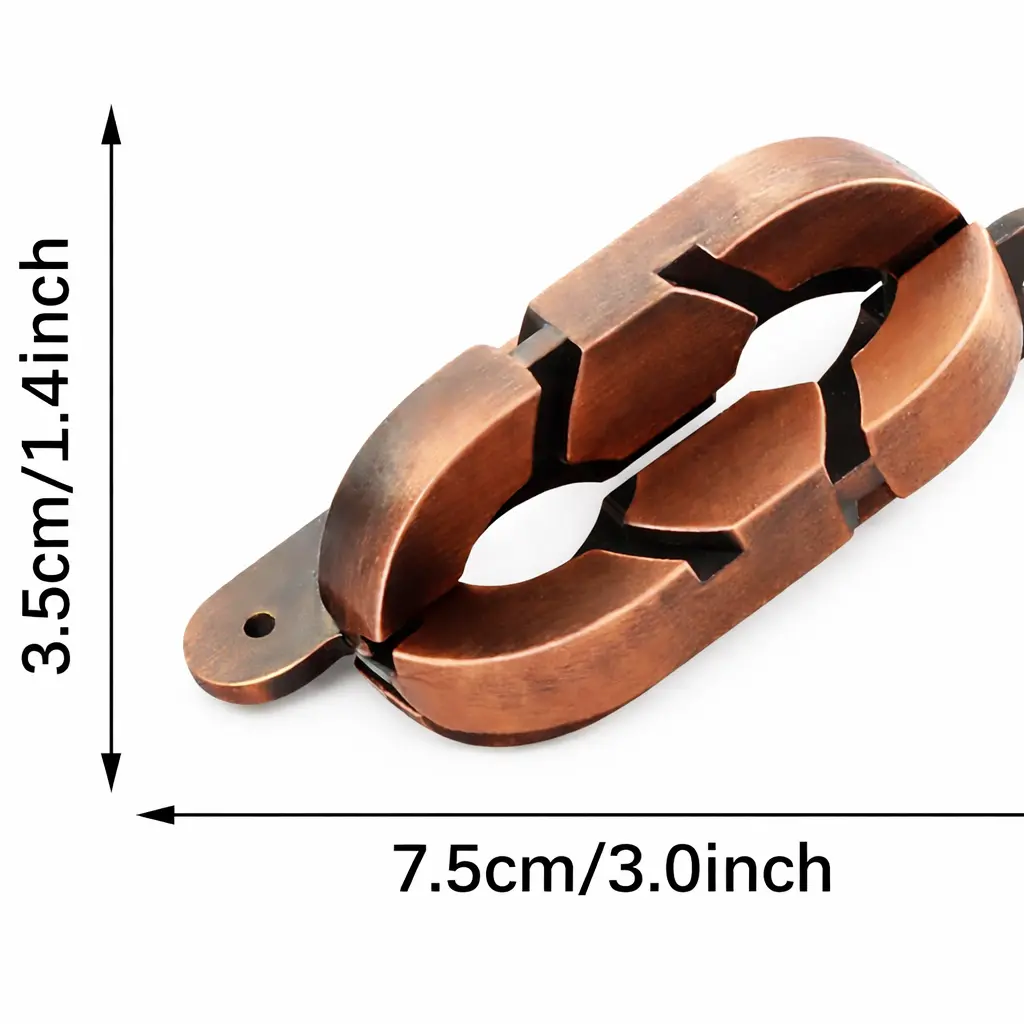
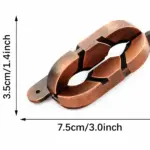
If you appreciate how cast metal puzzles work, the keyring design represents clever engineering: attachment holes positioned to avoid interfering with the mechanism, geometry that allows the puzzle to function whether attached or free.
Who This Puzzle Fits
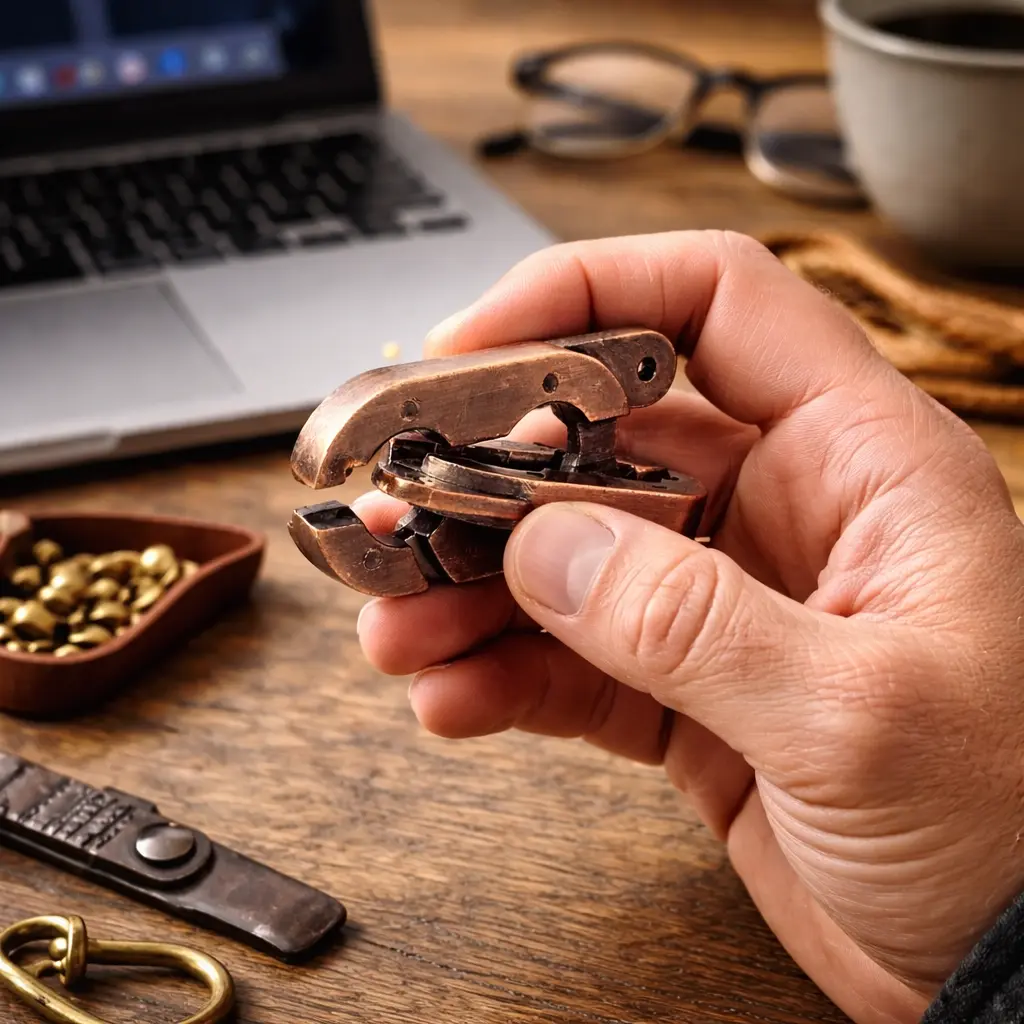
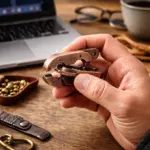
The Commuter Subway delays, airport gates, waiting rooms—dead time that begs for something better than phone scrolling. A metal keyring puzzle clips to your bag and offers a tactile break whenever you need one. Small enough to solve one-handed, quiet enough for shared spaces.
The Desk Fidgeter You know who you are. Click pens, spin rings, tap rhythms during conference calls. This puzzle gives restless hands something constructive without the sounds that annoy nearby coworkers. Several solvers report it helps maintain focus during audio-heavy work.
The Gift-Giver Stuck on what to buy for the person who seems to have everything? A metal brain teaser collection offers unexpected challenge. This particular puzzle lands in the sweet spot: difficult enough to be interesting, approachable enough not to intimidate.
The Puzzle Dabbler Not everyone wants a 1000-hour wooden burr puzzle. Some people want five minutes of satisfying challenge between tasks. The keyring format signals “casual”—this isn’t homework, it’s a mental palate cleanser.
The Collector Already have a two-key lock puzzle or ABC maze lock? The keyring adds another mechanism style to your rotation. Different shape, different hand feel, same quality tier.
What to Expect (Honest Assessment)
The Good
It’s genuinely portable. Clips to keychains, fits in pockets, travels without damage. Many metal puzzles are desk-bound by size or fragility—this one earns its “keyring” name.
The difficulty hits a useful middle ground. First-time puzzle solvers can crack it with patience. Experienced solvers appreciate the clean mechanism design. Neither group feels patronized or overwhelmed.
Reassembly matters. Unlike some disentanglement puzzles where separation is the whole game, this one stays interesting through the rebuild. The reverse sequence tests whether you understood or just stumbled.
The bronze finish ages well. Patina development means your puzzle gains character rather than losing it. A year from now, the bronze tones will be uniquely yours.
True strength doesn’t need to announce itself. It supports without demanding recognition.
The Limitations
No solution included. If you get truly stuck, you’ll need to search online or commit to solving through experimentation. Some buyers consider this a feature; others find it frustrating.
The mechanism isn’t revolutionary. Puzzle veterans will recognize the general movement pattern from similar lock-style brain teasers. The satisfaction here comes from execution quality rather than novel mechanics.
Not for young children. Small parts and the challenge level make this unsuitable for kids under 8. Even older children should have adult supervision during initial solves.
Only available in bronze. If you specifically wanted silver or gold tones, this puzzle comes only in the antique bronze finish shown.
Who Should NOT Buy This
- Impatient solvers who quit after five minutes of no progress. This puzzle requires rotational thinking, not force.
- Anyone expecting a keychain first, puzzle second. The weight adds up if you’re minimizing pocket bulk.
- Collectors seeking extreme difficulty. This sits at easy-to-medium range. For genuinely hard metal puzzles, explore higher-piece-count options.
- Gift buyers uncertain about the recipient’s interest. Puzzle gifts work best for people who’ve shown prior curiosity. Random brain teasers often become drawer clutter.
- Those who need immediate instructions. The discovery process IS the experience. If frustration without guidance bothers you, consider puzzles that include solution cards.
Tips for Solving (Spoiler-Free)
Slow rotation reveals more than fast manipulation. The mechanism relies on specific alignment, and forcing past resistance achieves nothing except frustration.
Watch how light catches the edges during rotation. Gaps that appear closed might be passage points from a different angle. The puzzle’s solution often hides in geometry that only becomes obvious when you stop assuming fixed relationships between the pieces.
If you’ve spent fifteen minutes without progress, set it down. Many solvers report breakthrough moments arriving after stepping away—something about unconscious processing that focused attention interrupts.
For more approaches, our puzzle solving experience guides cover general metal puzzle strategies without spoiling specific solutions.
Frequently Asked Questions
How difficult is this metal keyring puzzle for beginners?
The difficulty likely falls in the easy-to-medium range. First-time puzzle solvers can expect to spend anywhere from 10 minutes to an hour on initial separation, depending on spatial reasoning comfort. The mechanism rewards observation over force—if you’re willing to rotate slowly and watch how pieces interact, the solution reveals itself gradually.
Can I actually use this as a daily keyring?
Yes, the attachment holes are positioned for functional keyring use. However, consider the weight—solid cast metal adds noticeable heft to your keys. Many owners clip it to bag straps or belt loops rather than standard keychains, enjoying the accessibility without the pocket bulk.
Will the bronze finish wear off or tarnish?
The antique bronze finish may develop natural patina with extended handling—many collectors consider this desirable rather than degradation. The patina that develops through regular use gives your puzzle unique character over time. Avoiding prolonged moisture exposure helps maintain the finish quality.
Is reassembling harder than separating the pieces?
Expect reassembly to take roughly the same time or slightly longer than initial separation. The challenge shifts from “finding the path” to “remembering the path without visual cues.” Successfully rebuilding confirms actual understanding rather than lucky accident. Explore honest puzzle difficulty discussions for more context.
Are small parts a choking hazard?
Yes. The two separable pieces could pose choking risk for children under 8. This puzzle is designed for older children and adults. Keep separated pieces secured during breaks to avoid loss or accidental ingestion by young children or pets.
Does this puzzle come with a solution guide?
Based on similar products in this category, a solution may not be included. The design philosophy typically emphasizes self-discovery. If you become genuinely stuck, online communities and video tutorials cover common metal puzzle mechanisms. Consider the absence of solutions as intentional—the “aha moment” loses impact when instructions reveal it prematurely.
What if the pieces get stuck or won’t come apart?
The mechanism prevents true permanent jamming under normal manipulation. If pieces feel stuck, you’re likely applying force along an incorrect path. Return to neutral position, rotate 90 degrees, and try again. Never use tools or excessive force—if the puzzle requires hammer strength, you’re not solving it, you’re breaking it. Browse our metal puzzles collection for alternatives if this style doesn’t suit you.
Is this puzzle available in other colors?
Currently, this metal keyring puzzle is available only in the antique bronze finish shown. The warm copper-bronze tones develop subtle patina character with handling over time. If you’re looking for silver or gold-toned options, explore our wider puzzle collection for alternatives.
Trust & Support
Questions about your order? Our support team responds within 24 hours at the contact page. Whether you need shipping updates, have product questions, or want recommendations for your next brain teaser challenge, we’re here to help.
Every puzzle ships with care to protect the bronze finish during transit. If anything arrives damaged, reach out immediately—we make it right.
Complete Your Collection
Looking for your next challenge after mastering this one? These desk-friendly brain teasers offer similar satisfaction:
- Alloy Triangle Lock Puzzle — Different shape, similar mechanism philosophy
- Three Brothers Lock Puzzle — Steps up the difficulty with three interlocking pieces
- Cast Coil Pocket Puzzle — Another pocket-friendly option for travel
- Snake Mouth Escape Puzzle — Disentanglement style with organic shapes
Browse our full puzzle guides and reviews for detailed solving experiences and gift recommendations.
Ready to test your spatial thinking? Add to cart and discover why some puzzles deserve permanent pocket space.

Lucas Allen –
This puzzle keyring is a perfect little addition to my space. It’s so easy for a beginner to start and twist it around, which keeps my mind engaged without feeling frustrated. Great for quick breaks at home.
Lucas Allen –
I put it on my desk and loved how it held up over time. The interlocking pieces really made it interactive, turning a simple metal key into a fun challenge. Definitely a smart buy for families.