
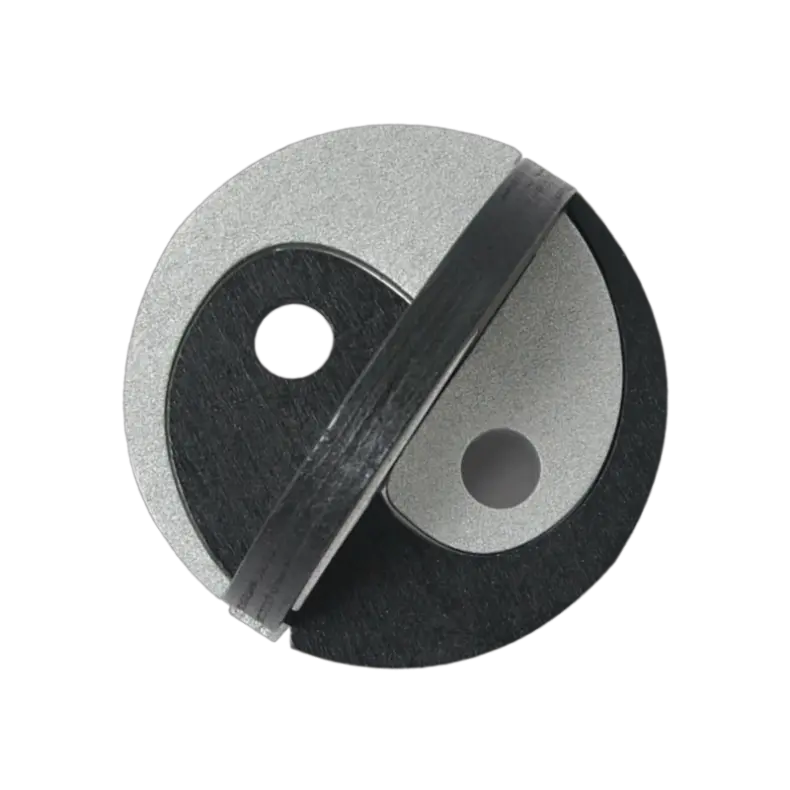
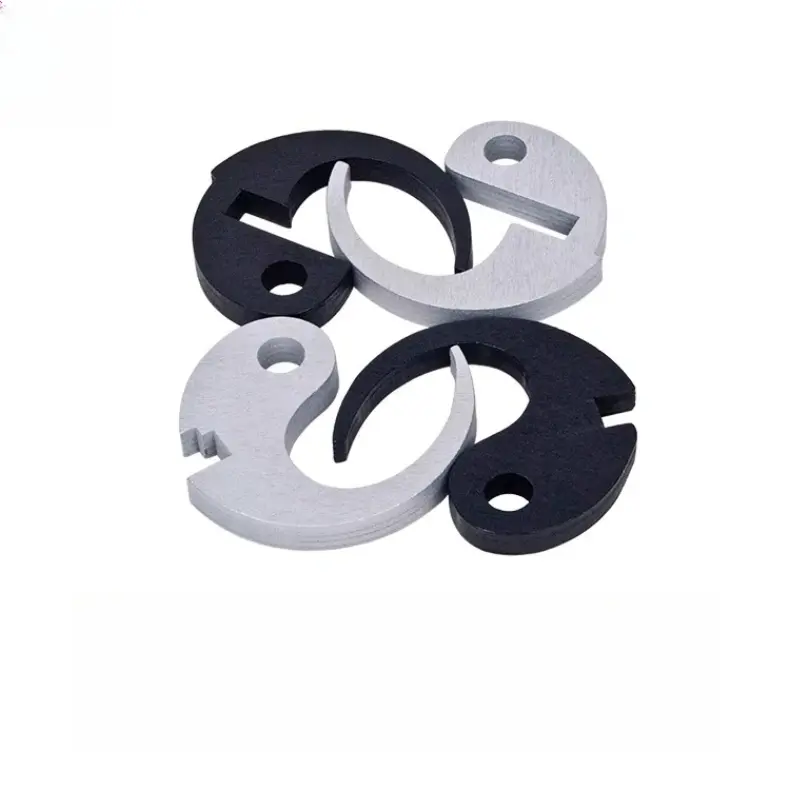
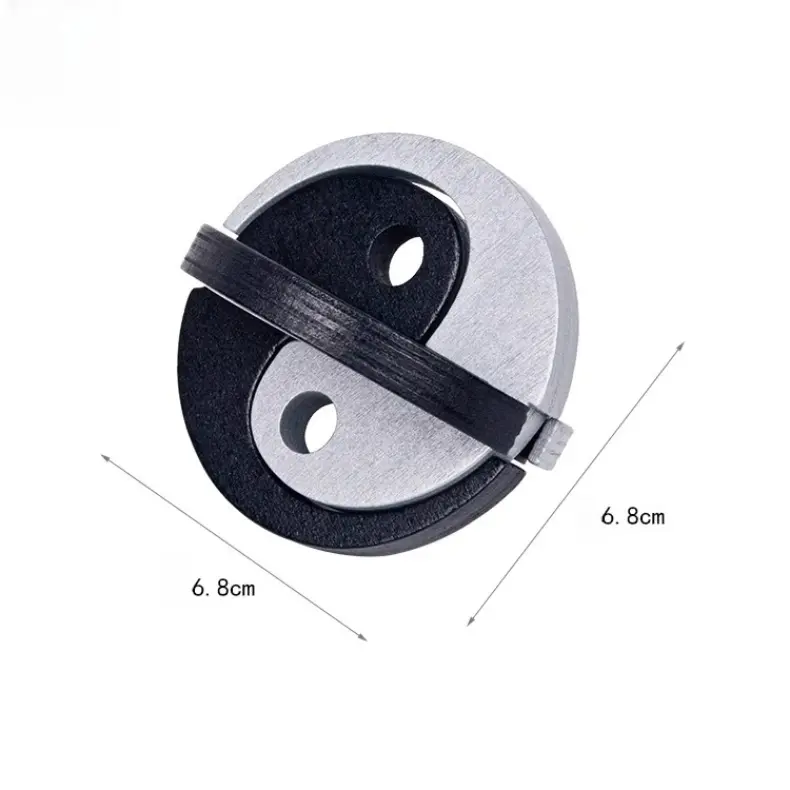
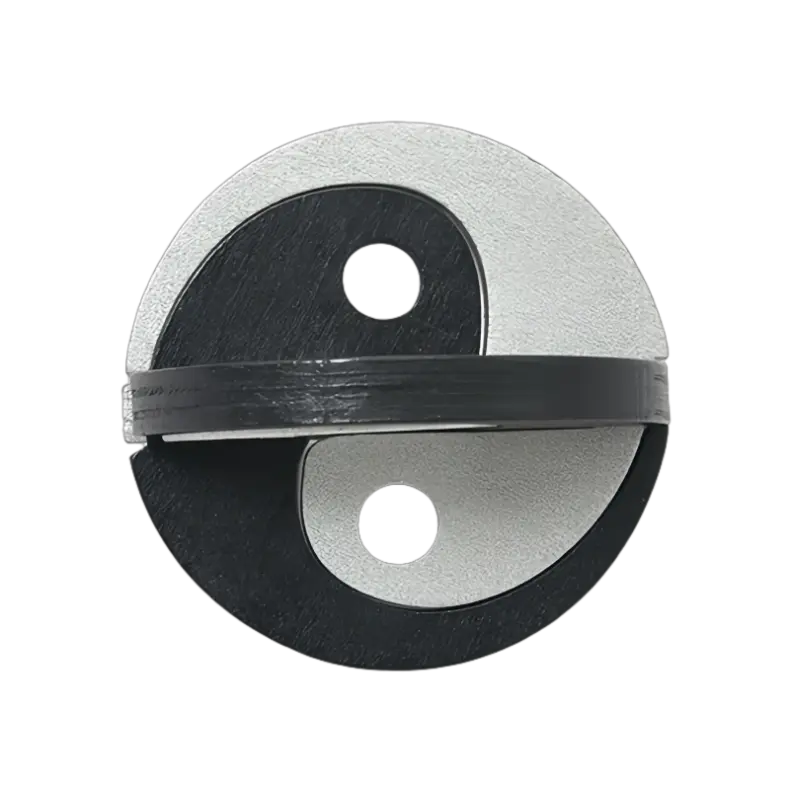
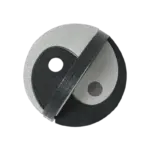
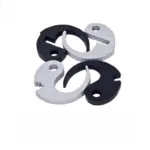
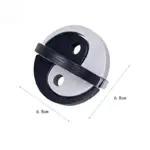
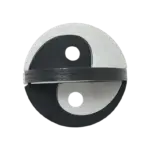

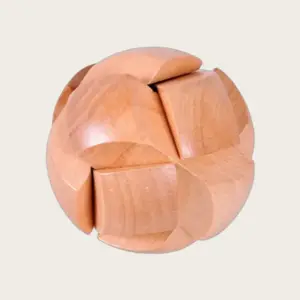
The Yin-Yang Taiji Lock is a wooden secret-lock puzzle from Tea-Sip, built from four interlocking half-circle pieces that form dark Yin and light Yang halves — held together by tension alone, with no glue and no nails. Rated hard, it opens only through a hidden move sequence, making it a slow, tactile challenge for adult solvers and fans of Taoist design.
Specifications
| Material | Wood (sustainably sourced hardwood) |
|---|---|
| Mechanism | Secret lock with a hidden opening sequence |
| Pieces | 4 interlocking half-circle pieces (Yin and Yang halves) |
| Construction | No glue, no nails — pieces hold each other in tension |
| Difficulty | Hard |
| Price | $15.88 |
How It Plays
Your first minutes go to simply finding the seam. The four pieces sit in balanced tension — press one and the others resist, because in this design, move one, move all. Forcing it gets you nowhere. The lock yields only when you find the entry point of its hidden sequence: shift the Yin piece nested within the Yang half, then the Yang piece within the Yin, and the assembly loosens in your hands.
Taking it apart is the easy half. Most people stall at reassembly — the sequence runs in reverse, and a piece placed out of order simply won’t seat. The aha moment comes when you stop treating the pieces as separate parts and read them as one system: the order becomes obvious, the halves slide home, and the wooden circle closes flush.
Who It’s For
This puzzle suits solvers who prefer deliberate, meditative challenges over speed runs: wooden-puzzle collectors, desk workers who want a screen-free fidget with real depth, and anyone drawn to Chinese philosophy. The Yin-Yang form makes it a natural gift for tea drinkers, tai chi practitioners, and meditation enthusiasts — and because it reassembles into a clean sculptural circle, it doubles as desk decor between solves.
FAQ
How long does it take to solve?
There is no fixed time — it carries a hard difficulty rating, and disassembly usually falls faster than reassembly. If secret-lock puzzles are new to you, expect to set it down and return; the reverse sequence is where most solving time goes.
Is it suitable for kids?
Tea-Sip rates the Yin-Yang Taiji Lock as hard difficulty, so it fits teens and adults best. The hidden sequence demands sustained patience, which makes it better as a shared family challenge than a solo toy for young children.
What if I get stuck?
Stop forcing and work the logic backward: the order that released the pieces is the same order, reversed, that closes them. Test each piece gently — resistance means wrong order, not a need for more pressure.
Can it be reset and solved again?
Yes. Nothing is consumable — the four wooden pieces lock and release through the same mechanical sequence every time, with no glue or nails to wear out. Reset it fully and hand it to the next person; watching them hunt for the first move is the replay value.
Keep exploring: Wooden Puzzles · 24 Lock Puzzle · 5 Piece Cast Spiral Metal Puzzle

Oliver Grant –
The packaging was beautiful—eco-friendly, with a small card explaining the legend. I appreciated that. The lock itself feels substantial, not cheap. First try, I broke it apart in seconds. Reassembling? Took hours. But the process was worth it. It’s now on my coffee table, and guests always pick it up. It sparks deep conversations about balance, control, and life. More than decor—it’s a conversation starter with soul.
Clara Bell –
The finish is so smooth it feels like silk. I run my fingers over it just for the sensation. It’s deeply calming. I’ve had mine for a year, used daily, and it still looks pristine. The wood has darkened slightly, giving it character. It’s not just a puzzle—it’s a companion. I talk to it sometimes. Sounds crazy, but it listens better than most people.
Ben Carter –
As a teacher, I use this to teach patience. I bring it to class and let students try. Most can’t solve it, but they learn that failure is part of learning. I explain the Yin-Yang concept—how opposites need each other. It’s a powerful lesson in diversity and unity. The kids love the “magic” of it. It’s education disguised as play. Perfect for social-emotional learning.
Lila Foster –
The story behind this puzzle is what drew me in. I read the legend of Laozi and Yin Xi and was hooked. But the real surprise was how challenging it is. I thought I’d solve it in minutes. Took me three days. And when it clicked back together? I actually smiled. The wood smells faintly of sandalwood, and the finish is silky. It’s a beautiful blend of myth and mechanics.
Carlos Mendez –
I bought two—one for me, one for my brother. We had a “reassembly race.” Loser buys dinner. It was hilarious and surprisingly intense. We both failed at first, then slowly figured it out. Now we text each other when we solve it. It’s become a bonding ritual. The wood is beautiful, and the puzzle is tough but fair. A modern heirloom with ancient roots.
Prof. Daniel Kim –
As a philosophy professor, I use this in my Eastern Thought class. Students pass it around after lectures on the Dao De Jing. Seeing them struggle and eventually succeed makes the text come alive. It’s a tangible metaphor for balance and non-action. The craftsmanship sparks discussion too—how form follows function in Taoist design. It’s become a centerpiece of my course. Students remember the lesson because they *felt* it.
Thomas Reed –
The first time I held it, I expected a cheap trinket. Was I wrong. The craftsmanship is exceptional. Each curve is precise, the finish smooth as glass. It’s clear someone cared deeply about this. I’ve had mine for six months, used daily, and it still looks new. No cracks, no looseness. It’s built to last generations. A rare product that delivers on every promise.
Eva Moss –
I’m a minimalist. I don’t buy much. But this earned its place in my life. It’s beautiful, functional, and meaningful. No excess, no waste—just essence. It embodies everything I value. I keep it on a small stand, like a sculpture. It’s not clutter; it’s curation. The kind of object that makes a space feel intentional. A triumph of design and soul.
Robert Lang –
As a woodworker, I appreciate the craftsmanship. The joints are flawless, no glue, no screws—just perfect balance. I disassembled it to study the grain and fit. It’s clear this wasn’t mass-produced. Each curve feels intentional. I’ve made replicas for friends, but none match the original’s precision. It’s not just a toy; it’s an engineering marvel wrapped in philosophy. I display it like art.
Ravi Singh –
Gifted this to my meditation group. Everyone was silent for 20 minutes, completely absorbed. That’s rare. One member said it felt like “a koan you can hold.” So true. The act of disassembling and reassembling mirrors the cycle of letting go and returning. It’s deepened our practice. The wood has a calming energy—maybe it’s the sandalwood, maybe it’s the intention behind it. Either way, it’s sacred now.
Nathan Blake –
I’m a skeptic by nature, but this won me over. It’s not mystical—it’s mechanical genius. The way the pieces interlock through balance and friction is brilliant. No magnets, no tricks. Just physics and philosophy in harmony. I’ve taken it apart to study it. The craftsmanship is flawless. It’s a testament to human ingenuity. I respect it more every day.
Mia Thompson –
Bought this for my dad’s 70th. He’s into Eastern philosophy and woodworking. He was speechless when he opened it. Said it reminded him of his time in a Zen monastery. He solved it in under a minute—turns out he’d seen one before. But he still plays with it daily. Says it keeps his hands and mind sharp. The wood has a warm patina now. It’s become a family heirloom in the making.
Dr. Naomi Patel –
I’m a therapist, and I use this with anxious clients. The tactile feedback and slow pace help ground them. One patient said, “It’s the first time my mind stopped racing today.” That’s powerful. The Yin-Yang symbol isn’t just decorative—it’s therapeutic. We talk about balance, control, and surrender while working it. It’s become a key tool in my mindfulness practice. Highly recommend for anyone in mental health.
Fiona Clarke –
The story of Laozi and the 5,000 words gave me chills. I didn’t know that. Now every time I hold the lock, I feel connected to something bigger. It’s not just wood—it’s legacy. The puzzle is challenging, yes, but the real value is in the reflection it sparks. I’ve started journaling after each session. It’s become a practice, not a pastime.
Isabella Cruz –
I’m a designer, and this inspires me. The symmetry, the balance, the negative space—it’s pure visual poetry. I keep it on my desk as a muse. When I’m stuck on a project, I play with it, and ideas flow. It’s like a physical manifestation of creative flow. The wood grain is different on each piece, reminding me that unity doesn’t require uniformity. A brilliant blend of form, function, and philosophy.
Rebecca Wu –
I bought this for my son’s birthday. He’s 12 and obsessed with ancient China. He was thrilled. Spent the whole weekend trying to solve it. When he did, he ran to me shouting, “Mom, I found the Tao!” That moment melted my heart. It’s not just fun—it’s meaningful. He’s learning philosophy through play. What more could a parent want?
Anya Sharma –
As a yoga instructor, I value tools that promote inner balance. This lock is one of them. I use it before teaching to center myself. The act of reassembly is like moving through a slow vinyasa—each step leads to the next. It’s become part of my ritual. Students notice it and ask about it. I tell them it’s a reminder: “Balance isn’t static. It’s a constant return.”
Alicia Mendez –
My 7-year-old daughter loves this. She calls it her “thinking toy.” She doesn’t solve it fast, but she enjoys the process. It’s teaching her persistence without pressure. The pieces are smooth, no sharp edges, and the size is perfect for small hands. I love that it’s screen-free and educational in a subtle way. It’s not just fun—it’s formative. A rare find in today’s market.
Grace Liu –
I’ve had anxiety for years. Medication helps, but this? This is different. It gives me a focal point when my mind races. The tactile sensation grounds me. I don’t even care about solving it fast—I just enjoy the motion. It’s like a worry stone with purpose. The wood has absorbed so much of my stress. I’m deeply grateful for this little circle of calm.
Elena Chen –
This isn’t just a puzzle—it’s a philosophical journey. As a Taoism student, I’ve never held ancient wisdom so literally in my hands. The way the pieces flow together mirrors the Dao De Jing’s teachings on harmony. When I finally reassembled it after days of failure, I felt a deep sense of peace. It’s like meditation in wood form. Truly transformative. I keep it on my desk as a reminder to move with intention, not force.
Gregory Hale –
I collect puzzles, and this is one of the most unique. Not because it’s hard (though it is), but because of its depth. The way the pieces interlock is pure elegance. It’s minimalist yet profound. I’ve shown it to puzzle clubs, and everyone is amazed by the lack of hardware. It’s a masterpiece of design. And the story? Gives it soul. This isn’t just another brain teaser—it’s art with purpose.
Julia Rivera –
I run a wellness retreat. We use these in our mindfulness sessions. Participants love the challenge and the story. We frame it as “the puzzle of balance.” It’s amazing to watch people slow down, breathe, and finally succeed. The wood feels alive in their hands. We’ve ordered 50 more for next season. It’s not just a toy—it’s a gateway to presence. Guests ask where to buy it constantly.
Sophie Turner –
Bought this after seeing it on a mindfulness podcast. I was skeptical, but wow—this thing is addictive. I keep it on my nightstand. Instead of scrolling before bed, I work on it. My sleep has improved. The wood is smooth, warm to the touch, and the weight feels grounding. It’s become part of my evening ritual. Not just a puzzle, but a lifestyle upgrade. I’ve already ordered a second one as a gift.
Sophia Reed –
My husband and I use this as a “connection tool.” We sit together in the evening, each holding a piece, working to reassemble it as a team. It’s forced us to communicate, to slow down, to listen. It sounds silly, but it’s strengthened our bond. We’ve started calling it our “marriage metaphor.” When things feel unbalanced, we grab the lock and reset. It’s simple, but it works.
Linda Park –
My office mates all want one now. I keep mine on my desk, and people constantly pick it up. It’s a great icebreaker. But more than that, it’s a stress reliever. When a deadline hits, I grab it and breathe through a few cycles. It resets my nervous system. The company should market this to corporate wellness programs. It’s cheaper than therapy and almost as effective.
Nina Patel –
I’m a fidgeter. Always clicking pens, tapping fingers. This has replaced all that. It’s the perfect sensory tool—just enough movement, just enough challenge. I keep it on my desk during Zoom calls. It helps me focus without distraction. The wood grain is beautiful, and it looks elegant next to my laptop. It’s not just functional; it elevates my workspace. Best $28 I’ve spent.
Martin Cole –
After surgery, I was restless. Physical therapy was slow. My therapist suggested tactile tools. I found this. It gave me something to focus on during recovery. The small motor skills helped my hand strength, and the mental challenge kept me sharp. It’s now part of my healing journey. I’ll always associate it with renewal. A simple object with profound impact.
Ethan Brooks –
My ADHD brain usually hates puzzles—they feel too rigid. But this is different. The open-ended nature, the lack of time pressure, the tactile feedback—it’s perfect. I can pick it up for 30 seconds or 30 minutes. It’s grounding without being demanding. The weight helps with sensory regulation. I’ve recommended it to my support group. It’s not a cure, but it’s a tool that helps me feel more in control.
Hannah Kim –
The sandalwood scent is subtle but present. It adds to the experience—like a sensory layer of peace. I didn’t expect that. The weight is perfect: heavy enough to feel substantial, light enough to carry. It’s become my go-to gift for friends going through tough times. I tell them, “This won’t fix everything, but it might help you breathe.” And it does.
Marcus Reed –
I bought this for my 10-year-old nephew who loves puzzles. He was frustrated at first—couldn’t reassemble it for days. But instead of giving up, he started journaling his attempts. Last week, he solved it and said, “Uncle, I finally got it. You have to stop trying so hard.” That moment? Priceless. It’s teaching him patience in a world of instant gratification. The wood feels premium, and it’s durable enough for constant handling.
James Holloway –
I travel a lot for work. This fits perfectly in my pocket and keeps me centered during layovers. Airports are chaotic, but pulling this out instantly calms me. I’ve solved it dozens of times, yet it never loses its magic. The design is genius—simple, elegant, profound. It sparks conversations too. People ask what it is, and I get to share a bit of Taoist wisdom. More than a toy—it’s a portable sanctuary.
Oliver Grant –
I travel with this in my pocket. It’s my secret weapon against flight anxiety. Instead of panicking, I focus on the wood, the motion, the breath. It’s small, but it holds immense power. I’ve solved it at 30,000 feet, surrounded by chaos, and felt completely calm. It’s not just a puzzle—it’s a portable peace. I’ll never fly without it again.
Derek Foster –
I’m not spiritual, but this thing got me thinking. It’s so simple, yet so hard to master. I’ve solved it, but I still play with it. There’s something meditative about the motion. It’s like a physical metaphor for life—sometimes you have to take a step back to move forward. The wood feels honest, real. In a world of plastic and screens, that’s refreshing.
Claire Bennett –
After my divorce, I was scattered. This puzzle became my anchor. I’d sit on the porch each evening, working it slowly. No goal, no rush. Just presence. Over time, I noticed I was less reactive, more patient. It taught me that some things can’t be forced—only allowed. The wood has darkened slightly with handling, like it’s absorbing my journey. I’m grateful for this quiet teacher.